
A blazer with visible repair can look smarter than a brand-new one. It brings personality, story, and polish to everyday work outfits.
When your jacket shows careful mending, you get style plus a practical plan for your wardrobe. It feels fresh, looks intentional, and still works with office basics.
1. Patchwork Elbow Confidence
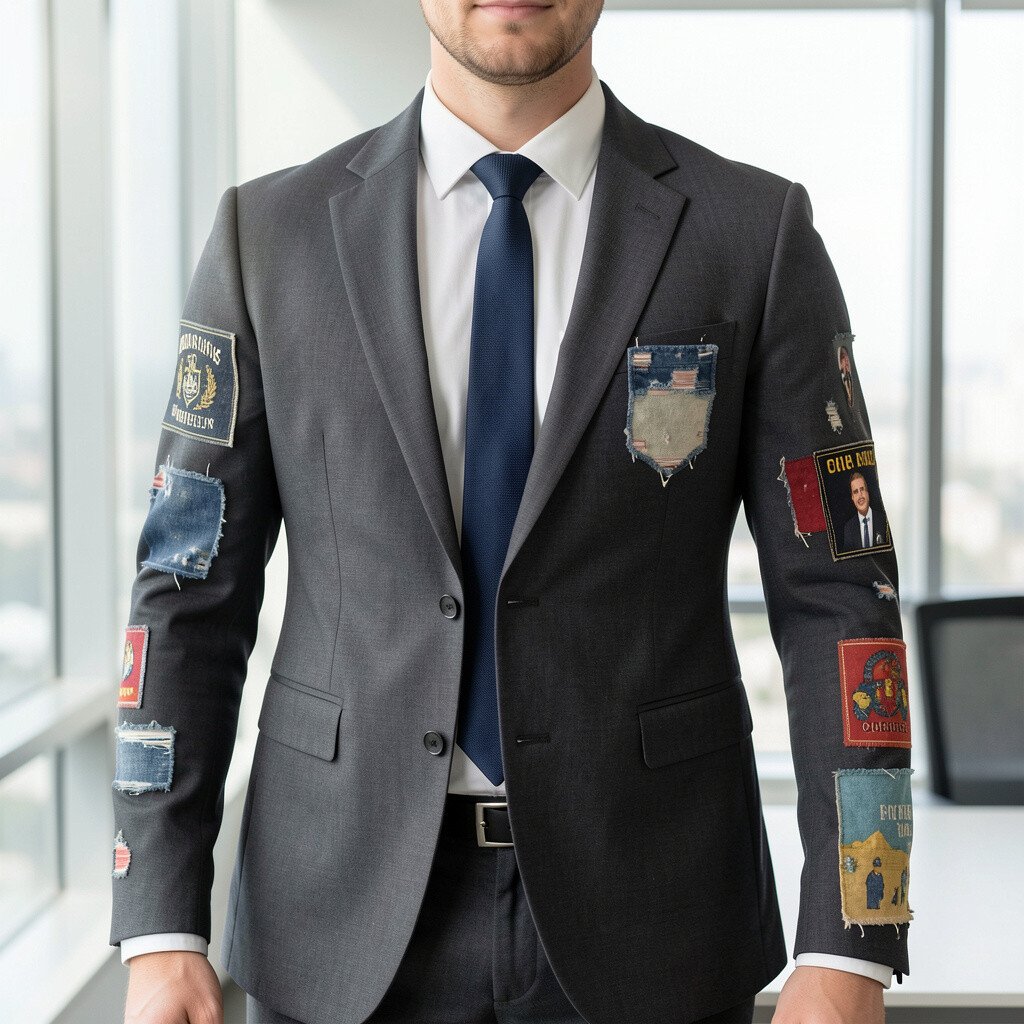
Picture a navy blazer with small elbow patches stitched in a contrasting tone that still matches your shoes. The repair lines catch light when you move, so the jacket feels lively even in a plain office room.
You get a stronger blazer where elbows usually wear first, which means longer use without constant replacement. Pair it with a crisp white button-down and slim trousers for a clean, balanced silhouette.
2. Contrasting Thread Collar Detail

Your blazer can look freshly styled when the collar repair uses neat, bright thread. Imagine the stitch work framing the neckline like a subtle border that makes your face stand out.
This small update brings focus to your upper body, which is perfect for meetings and presentations. For a smooth finish, keep the repair fabric in the same color family as your shirt or tie.
Choose a thread color that flatters your skin undertone, like warm amber for golden tones or cool teal for rosy tones. If you want it to feel more subtle, use a thread that is close to your blazer shade but not identical.
3. Reinforced Cuff Drama for Daily Wear

Think of cuffs repaired with soft patches that peek out when you roll your sleeves just slightly. The visual texture makes even a simple look feel designed, not accidental.
Reinforcing the cuff zone helps your jacket keep its shape where buttons and fabric often tug. Wear it with a solid knit top and a midi pencil skirt for an office-ready outfit that still feels comfortable.
If your workplace allows relaxed dress, try a thin striped blouse underneath to make the repaired cuff match the pattern. For personalization, choose a patch fabric with a tiny weave so it reads refined instead of loud.
4. Color-Matched Underpatches at the Placket

When repairs happen inside the blazer placket, the result can look like intentional tailoring. A hidden underpatch in matching fabric keeps the front crisp while still giving you extra strength at the stress points.
This kind of repair supports your daily buttoning routine without adding bulky texture. Style it with a fitted blouse and a waist belt so the front stays smooth and polished.
If you’re worried about visibility, keep the underpatch tone extremely close to the blazer. A small amount of contrast near the inner edge can add a fashion touch without drawing too much attention.
5. Leather-Trim Repair at the Pocket Edge

Imagine a blazer with a worn pocket seam fixed using slim leather trim in a classic brown or black. The repair reads like a planned design line, especially against wool or thick cotton.
The leather edge adds durability exactly where you slide your hands and stash small items. Pair the blazer with tailored trousers and a clean tote for a look that feels grounded and professional.
If you want to personalize it, choose a leather trim that matches your belt hardware or watch strap. Consider cost too, since leather trims can be pricier, but they often last a long time.
6. Geometric Stitch Lines on the Side Panel
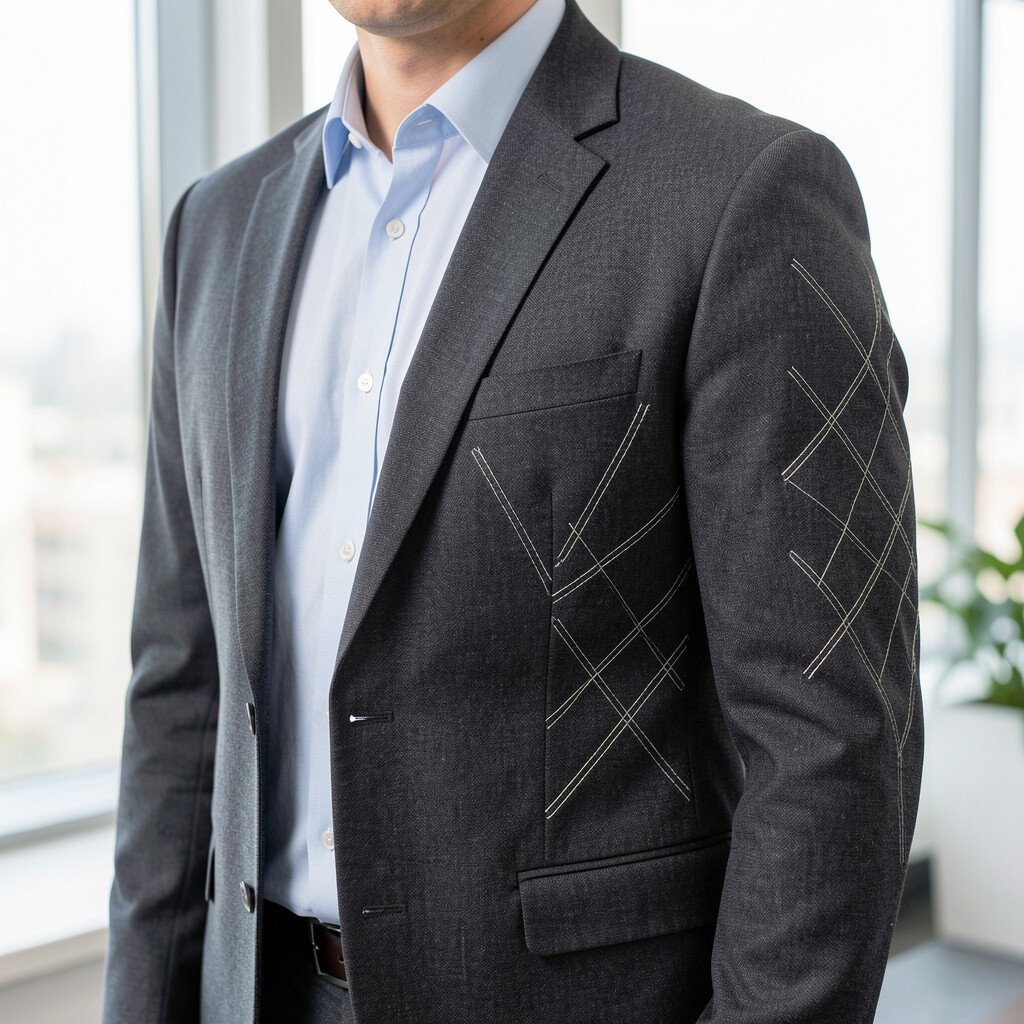
A side panel can become your style canvas with neat geometric stitching that repairs a tear or seam. The lines look modern, like a subtle map, and they give structure to the silhouette.
Geometric repairs help you blend the fix into the design instead of hiding it away. Wear the blazer with a solid top and straight-leg slacks so the stitch lines remain the main detail.
7. Repaired Lining That Peeks When You Move

Your lining can tell the story when your blazer shifts as you walk. Try repairing a torn lining section with a fabric that coordinates with your scarf or bag, so the reveal feels intentional.
This is a fun way to add uniqueness without changing your main outer look. Keep the outer fabric simple, then let the lining bring color when you turn your desk chair or reach for a folder.
For practical comfort, choose a lining repair fabric that breathes and doesn’t feel scratchy. A good lining also helps your blazer stay comfortable during long workdays, which is a real benefit.
8. Tonal Patchwork in Soft Earth Colors
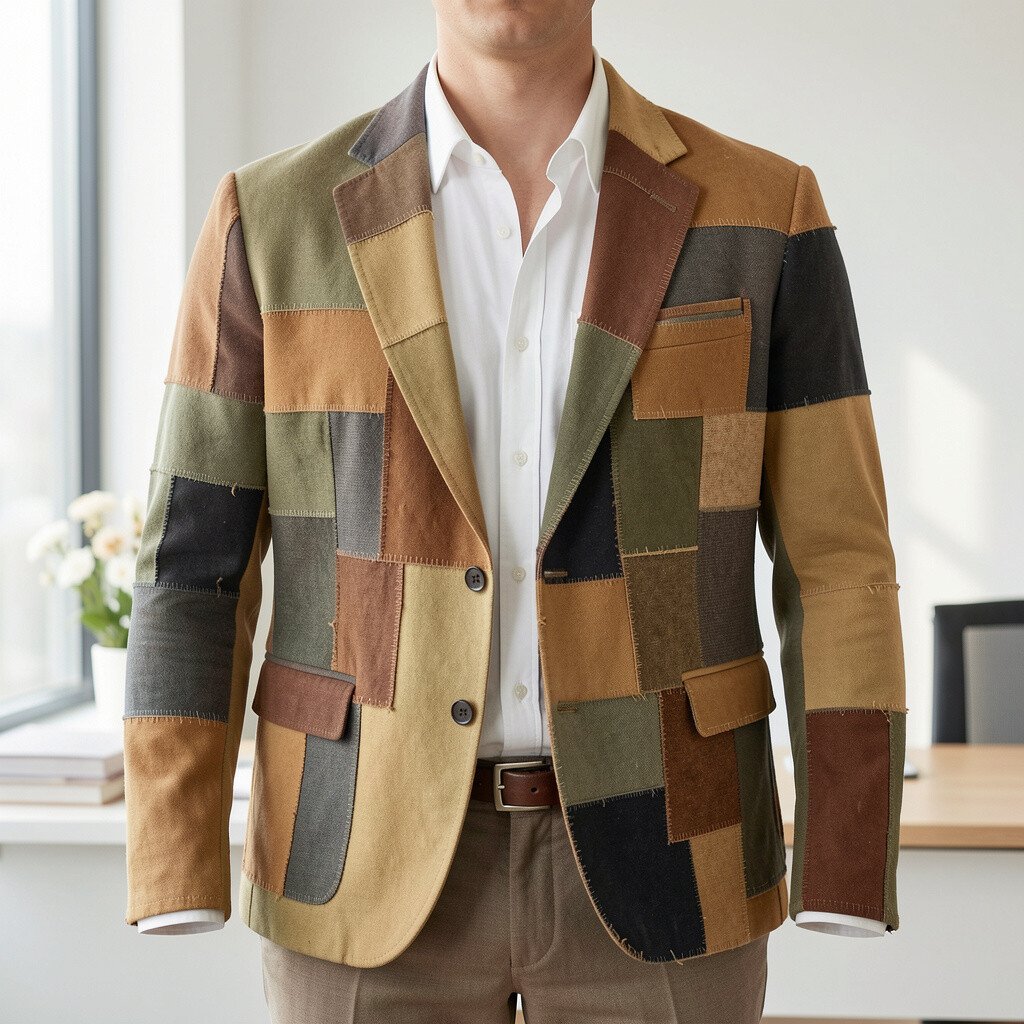
Patchwork repairs can look classy when they use tonal earth shades like oatmeal, clay, and olive. Picture a blazer with small squares or rectangles that are close in tone so the overall look stays elegant.
This approach keeps the repair from feeling too playful and makes it office-friendly. Pair it with a cream blouse and dark navy pants for a polished, grounded outfit.
9. Subtle Monogram Stitch at the Repair Site

If you want a personal touch, add a tiny monogram stitch right at the repaired area. The result can look like clever craftsmanship rather than a plain patch, and it’s something only you will fully notice.
This kind of detail turns a repair into a signature, which makes your blazer feel uniquely yours. Choose thread that matches your overall palette and keep the lettering small so it stays professional.
To make it wearable for meetings, style with simple basics and let the monogram be the only extra. If your blazer is a neutral color, a matching monogram thread keeps it calm and refined.
10. Seam-Swapped Panels for a Sleeker Fit

Sometimes a repair can also improve fit, especially when a seam has stretched over time. Imagine swapping in a repaired panel that restores the shape along the waist or shoulder, making the blazer look sharper.
You get both style and function because a better fit helps you move with ease and look confident. Wear it with tailored trousers and a fitted top so the restored seam line reads clearly.
11. Repairing a Shoulder Slip with Fine Contrast

Shoulders often show wear from bag straps or repeated movement. A repaired spot on the shoulder can be made to look chic when the patch uses fine contrast fabric that blends smoothly.
This keeps the blazer looking tidy at all the important angles, especially when you raise your arms. Style it with a structured blouse and a skirt that hits at the knee for a classic office look.
If you choose a patch fabric with a similar texture, it feels seamless even up close. For cost planning, ask a tailor for an estimate based on patch size so you can keep repairs budget-friendly.
12. Repaired Pocket Flap with Matching Buttons
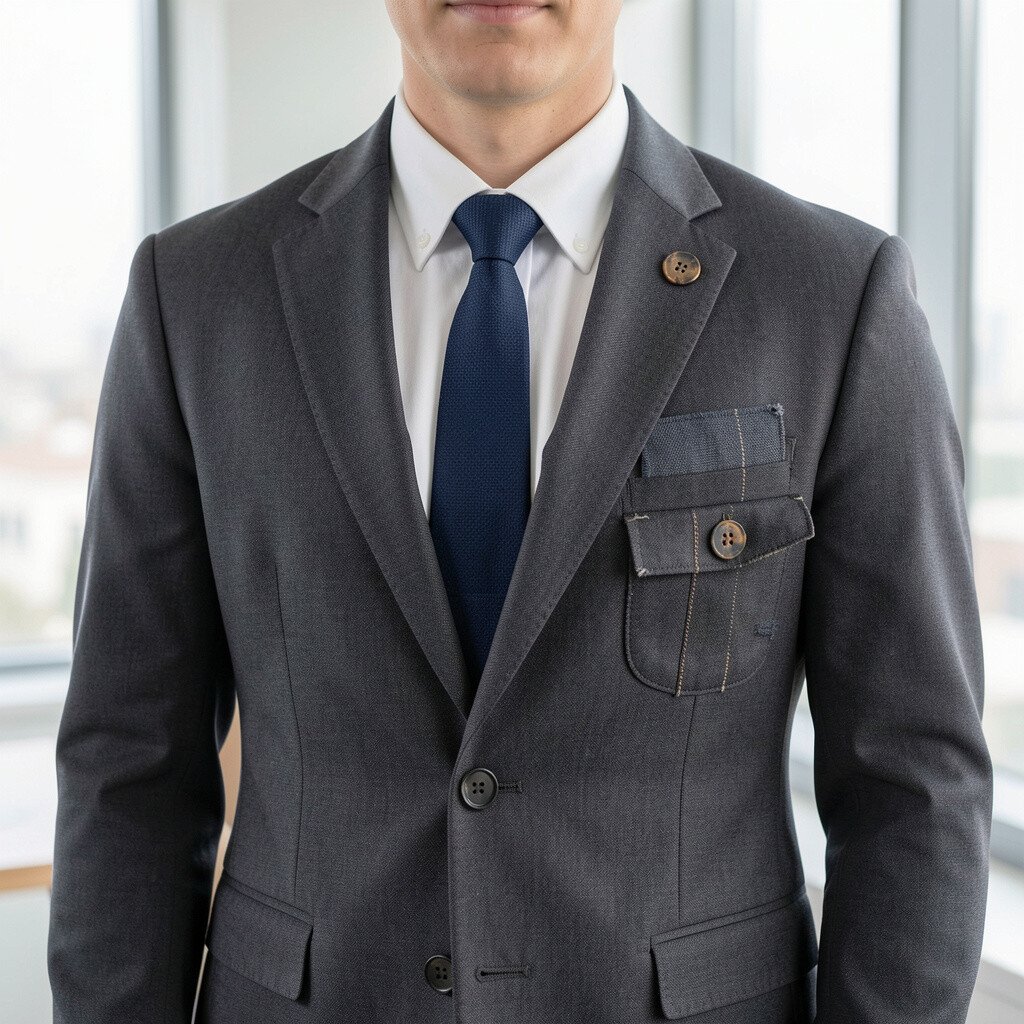
Your blazer pocket can become the star when the flap is repaired and secured with matching buttons. Picture the buttons aligned neatly so the repair looks like a refreshed detail rather than a patch.
This gives you a practical benefit because pocket openings take daily stress. Pair the blazer with a blouse tucked in slightly so the pocket area sits smoothly and looks intentional.
13. Upside-Down Applique for a Clever Hidden Fix
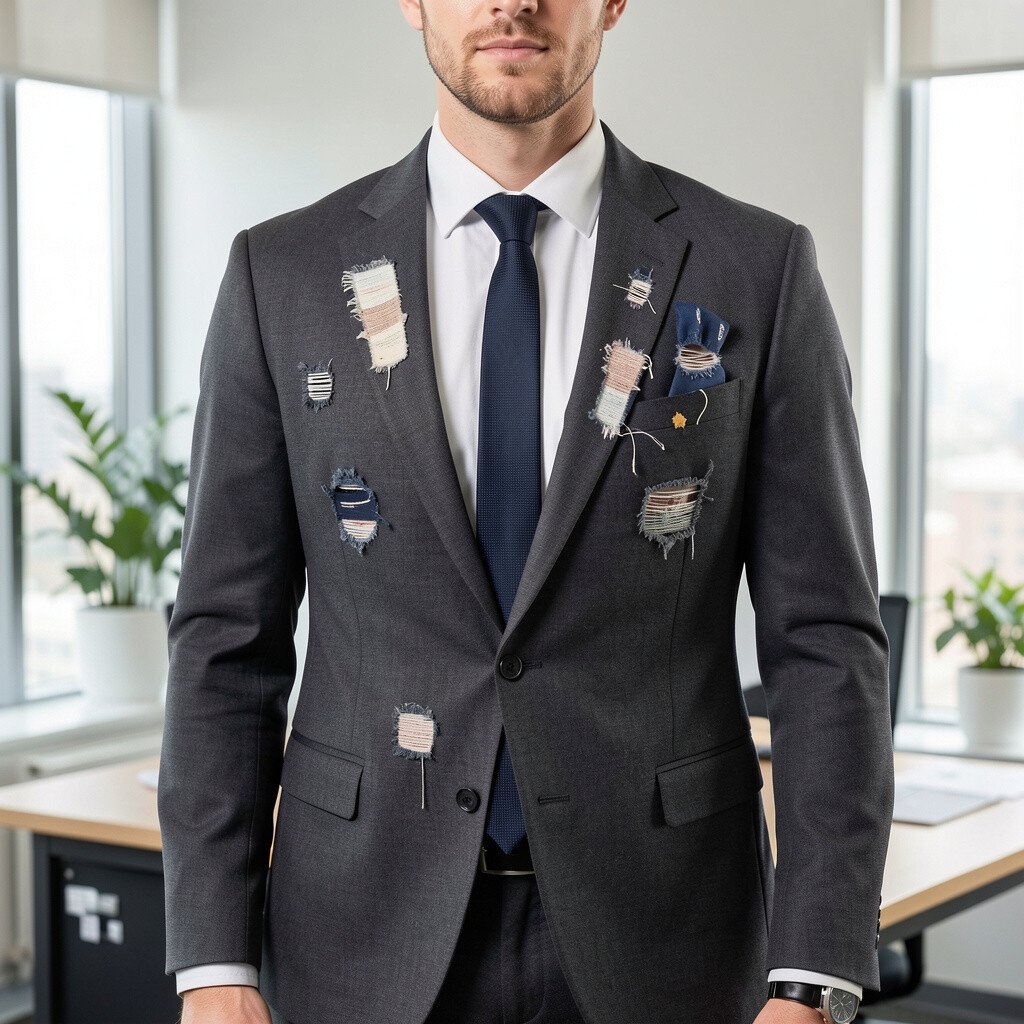
An upside-down applique repair can look like design because the pattern sits at an unexpected angle. Think of a small emblem-shaped patch that covers a tear but also adds a playful, clever edge to your blazer.
The benefit is that the fix stays secure while the look feels creative and modern. Keep the rest of your outfit simple, like a solid sweater and straight trousers, so the applique doesn’t fight your other details.
If you’re worried about office rules, choose an applique shape that feels classic, like a small shield or leaf. This kind of personalization makes your blazer feel like art, but it still works at work.
14. Repairing a Small Hole with Satin Edge Binding
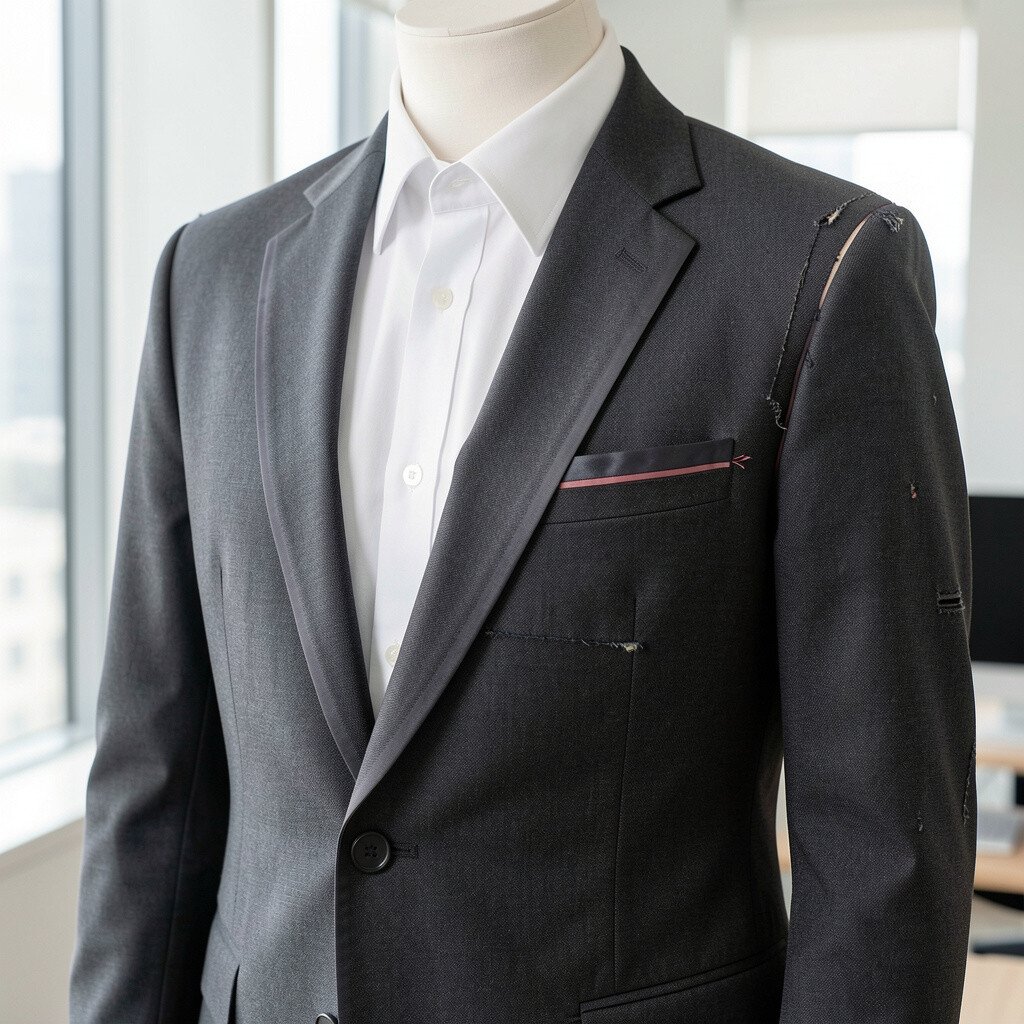
A small hole can be repaired with satin edge binding that frames the area neatly. The glossy trim catches light in a gentle way, giving your blazer a dressier mood without adding bulk.
This upgrade is great when you want repairs to look clean and intentional from every angle. Wear the blazer with a soft knit top and tailored pants for a comfortable day that still looks polished.
15. Plaid Patchwork That Matches Your Tie or Scarf
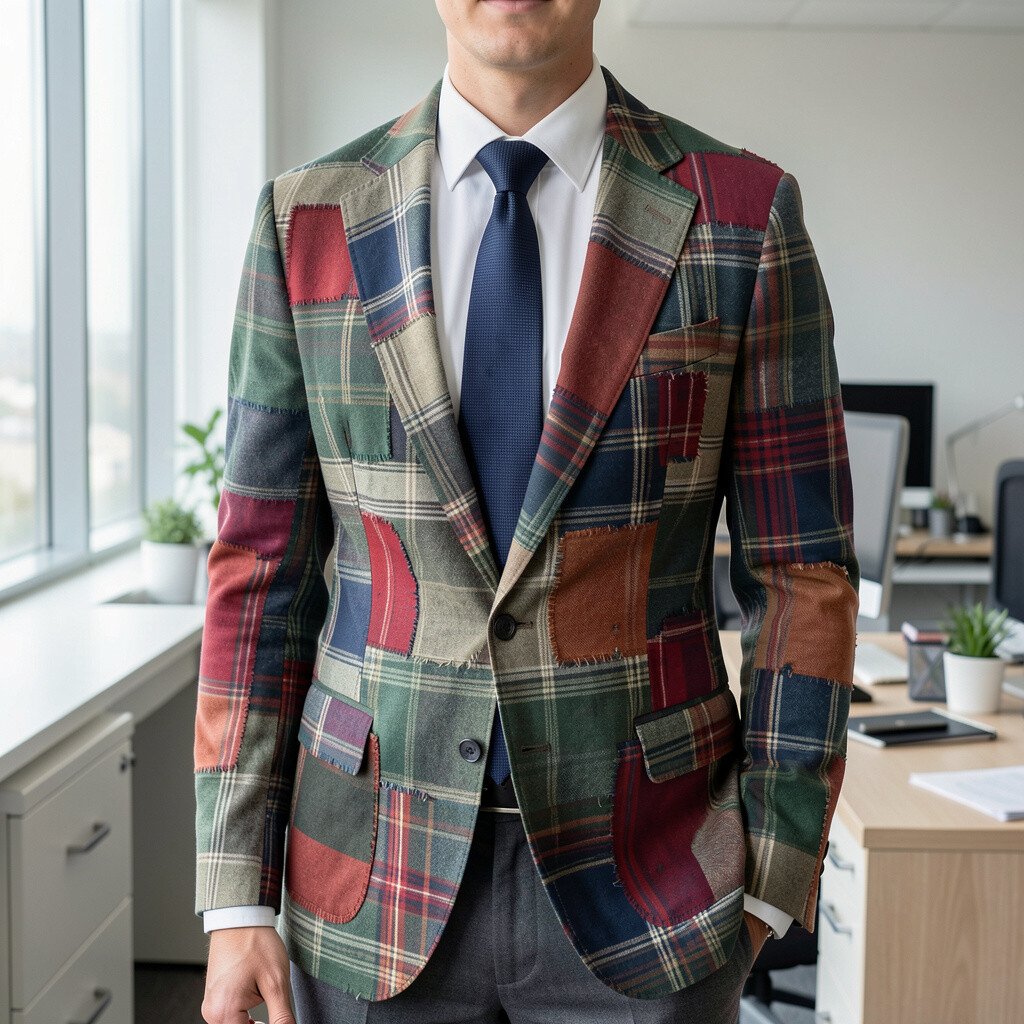
If you own a tie or scarf with plaid, use that same pattern for a blazer repair patch. The visual link makes the whole outfit feel coordinated, and the blazer looks like it’s part of a planned wardrobe.
Matching patterns is a powerful style trick because it makes the repair feel seamless. For personalization, choose the patch location near a pocket or sleeve where the plaid can line up nicely.
Consider cost by reusing fabric you already have, like an old scarf or leftover lining cloth. That way you get uniqueness without paying extra for brand-new materials.
16. Reinforced Vent Repair for a Professional Back Line

Back vents take a lot of motion from sitting and standing, so repairing them can instantly improve how your blazer hangs. Picture a repaired vent with stitching that restores the opening and keeps it lying flat.
This helps your blazer look sharp when you walk away from your desk or turn to talk to someone. Pair it with a blouse that falls cleanly and a pencil skirt or tailored trousers so the back line stays smooth.
17. Contrast Lining Strips for a Modern Movement Effect
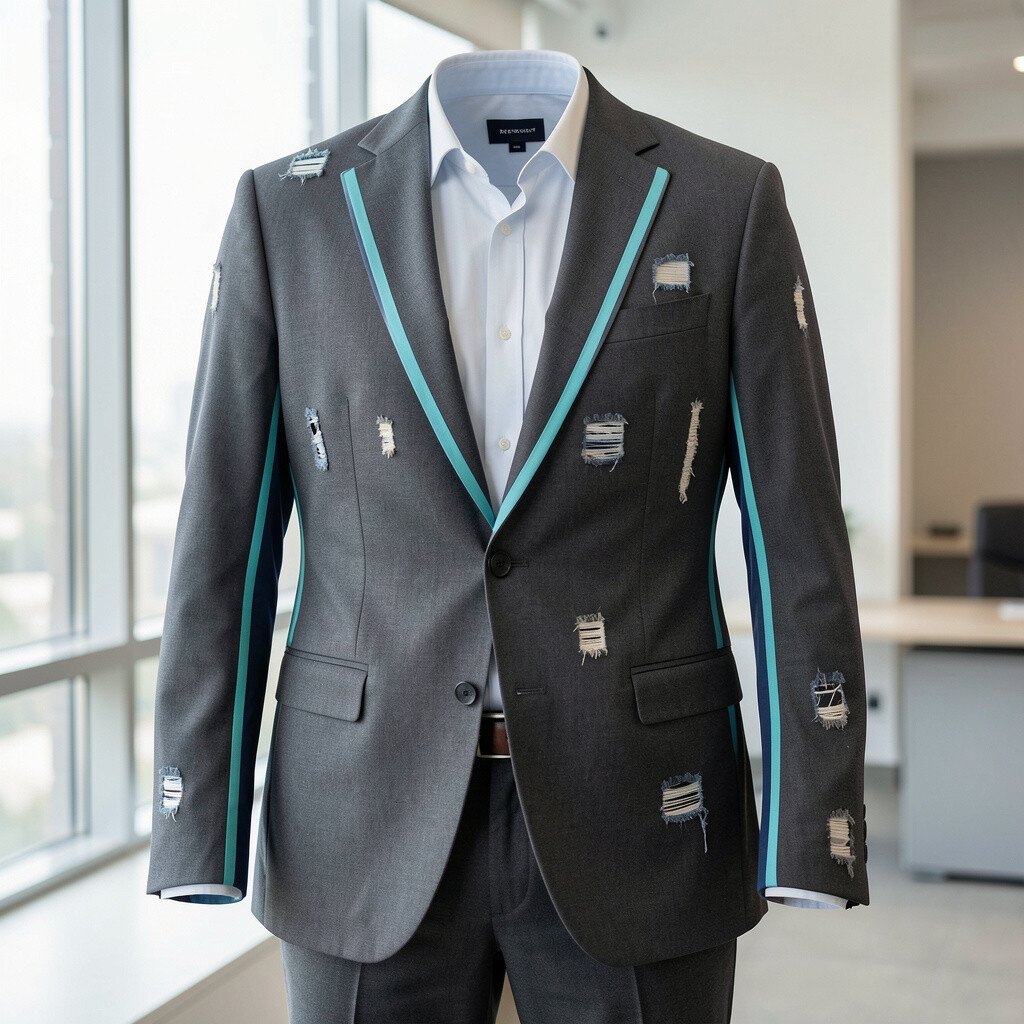
Add repaired lining strips along the inside edges so they show only when you move. Imagine a thin band of color along the inner seam that peeks out when you reach or adjust your posture.
This brings a modern trend vibe while still keeping the outer layer office-appropriate. Keep the outer blazer color neutral, then choose lining strips in a color that matches your bag or lipstick shade.
If you want to keep it subtle, use a very narrow strip and keep the color tone within the same family. It’s a smart personalization that doesn’t require a full makeover.
18. Patch Placement That Mimics Pocket Design
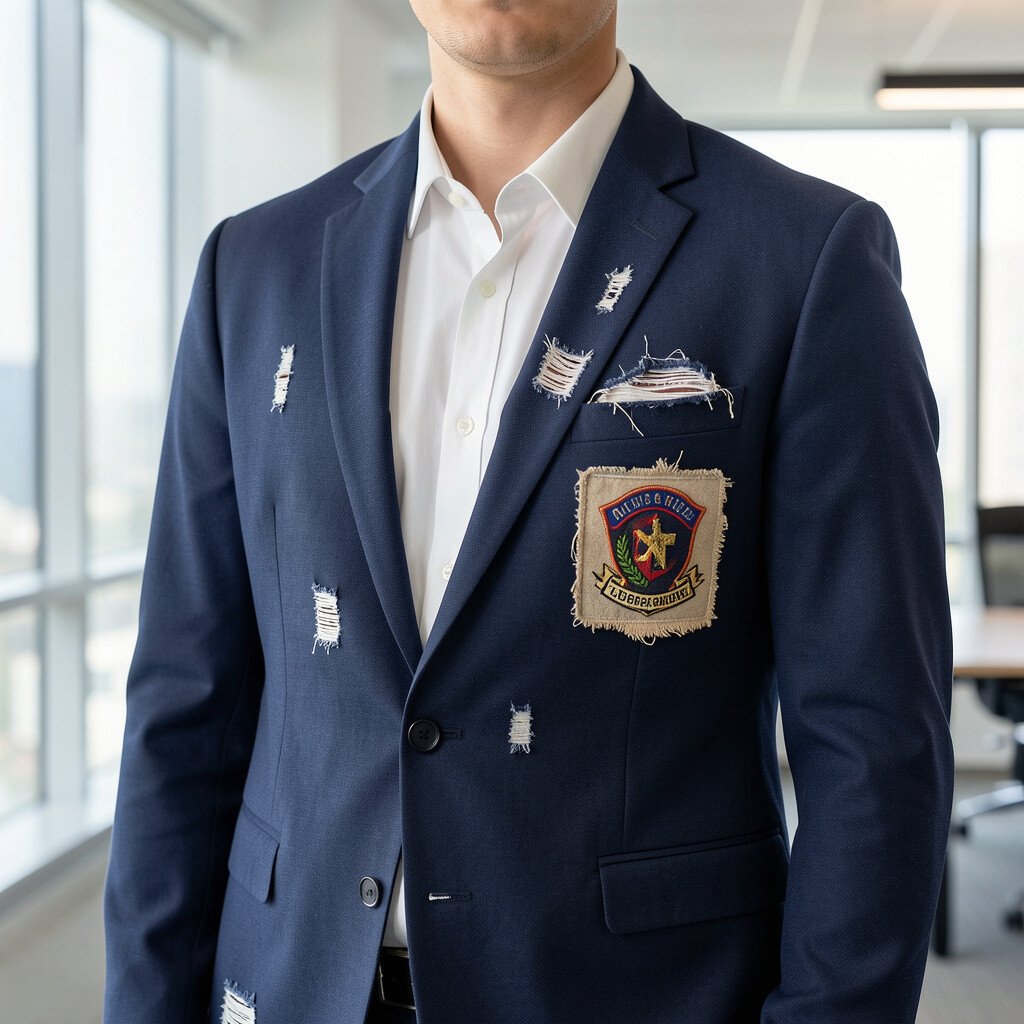
Repairs can look designer when patches are placed to imitate a pocket style. Picture a repaired elbow or side tear that’s framed like a pocket flap, giving the jacket a structured, intentional look.
This design choice helps your blazer look symmetrical and balanced, even if repairs are necessary. Wear it with a simple blouse and a skirt with a clean hem so the jacket details stand out in a classy way.
19. Tailor-Perfect Hem Repair with Hidden Matching Fabric
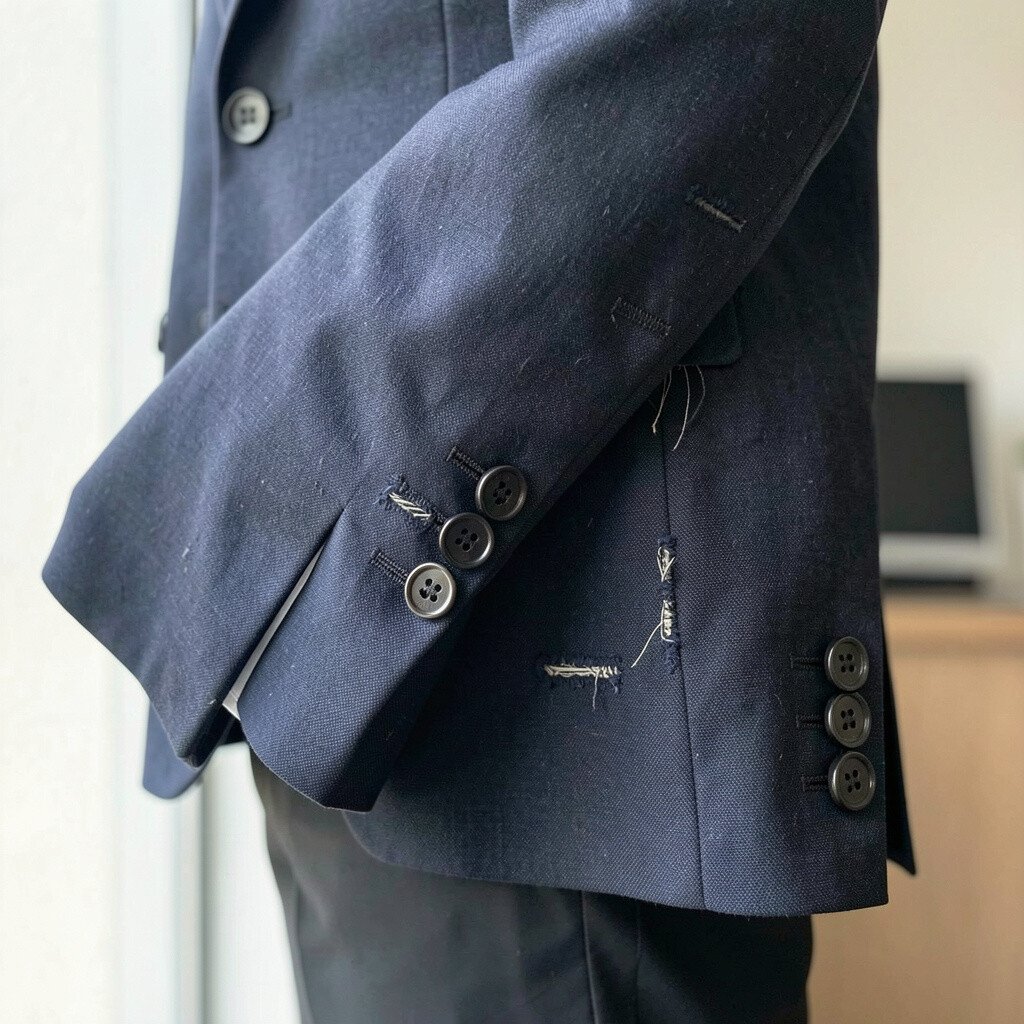
A hem repair can look invisible when the tailor uses matching fabric and careful stitching. Imagine the bottom edge corrected so it falls at the exact spot you want, making your blazer look newly tailored.
This is one of the most practical repairs because hemlines affect how professional you look instantly. Pair it with dress shoes and a tucked-in top so the repaired hem stays crisp all day.
For cost considerations, hem repairs are often more affordable than larger patchwork, especially when only the edge needs work. Personalize it by choosing a thread color that matches your blouse or by using a subtle lining fabric that keeps the interior special.