The patio you choose can quietly cut waste while making your outdoor space feel special. The right materials also help you enjoy fresh air without second thoughts.
1. Reclaimed Brick Pavers
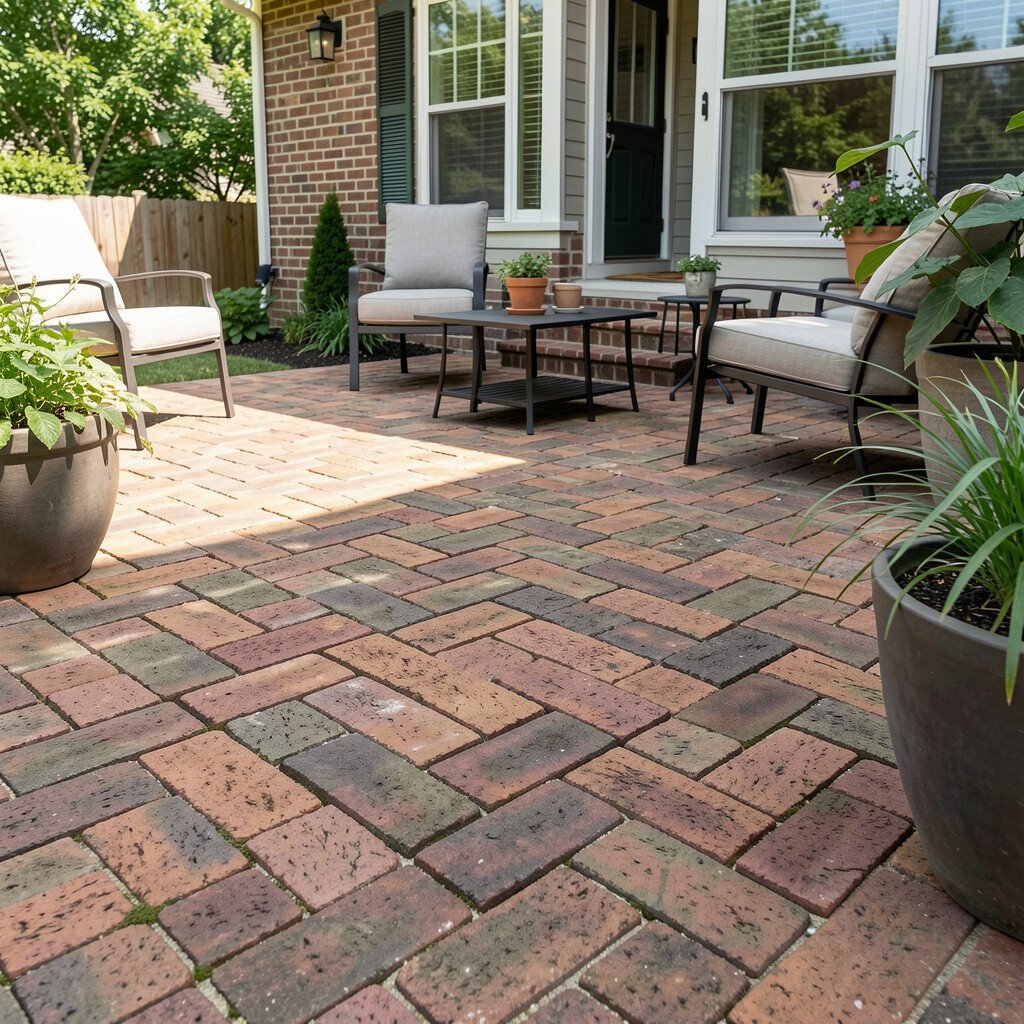
You’ll often find reclaimed brick with warm, slightly uneven coloring that looks like it has stories to tell. When the sun hits, the surface glows and the texture feels grounded and timeless.
Brick is durable, so it can take years of foot traffic with little fuss. Sourcing reclaimed pieces can lower new mining and reduce construction waste, and the mortar can be chosen to match your budget and local rules. For a practical upgrade, lay a simple permeable base and use joint sand that drains well, then add matching edging to keep everything neat.
2. Salvaged Concrete Slabs
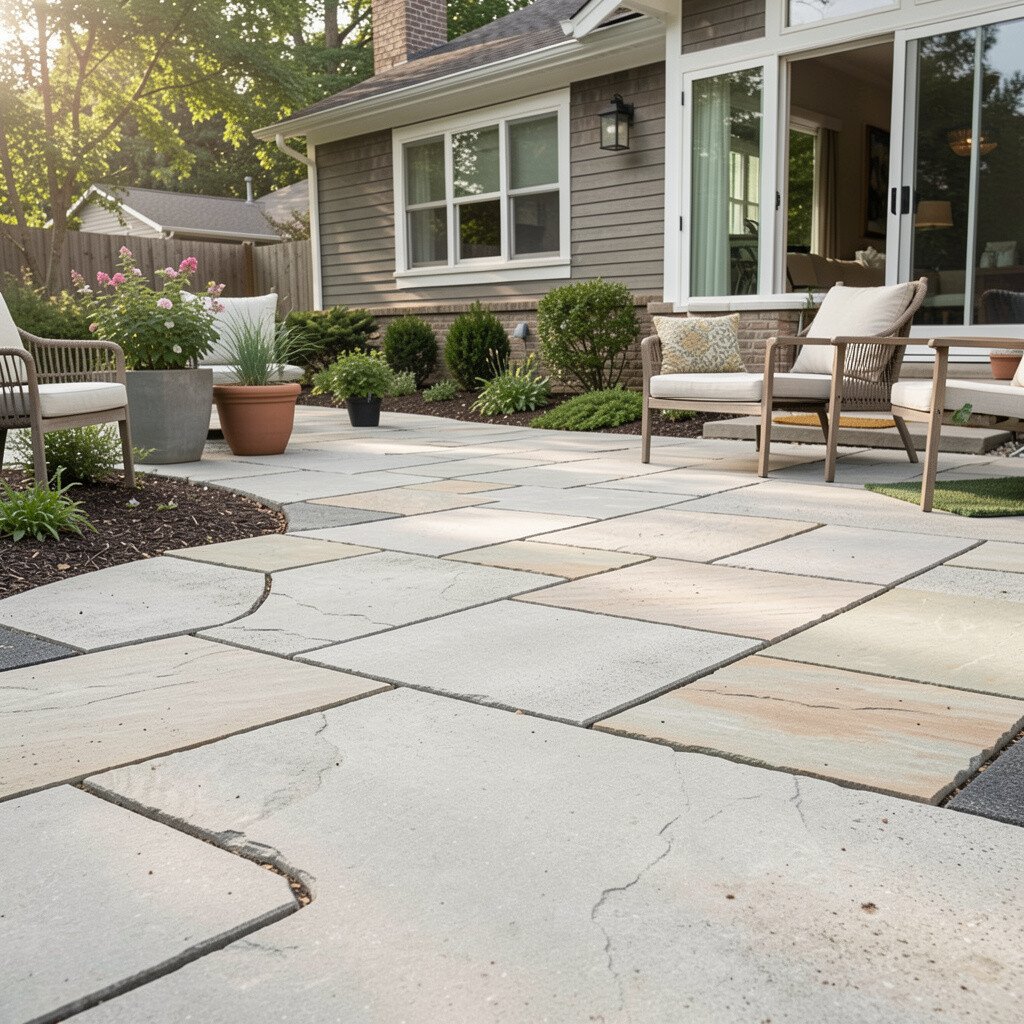
Old concrete slabs have a cool, solid look that can feel modern and sturdy at the same time. You can mix slab sizes for a casual pattern that still looks tidy.
Using salvaged slabs can keep heavy materials out of landfills and reduce demand for brand-new casting. Because concrete can be heavy, measure your patio area carefully and plan for proper support so it stays level over time. If you want a softer feel, pair the slabs with low-growing groundcover in the seams and select outdoor sealant made for breathable masonry so moisture can escape.
In many places, homeowners see rising interest in “industrial garden” styles, and salvaged concrete fits that vibe well. When planning costs, check local demolition sites and resale markets since pricing varies widely based on thickness and condition. For personalization, paint edges with an eco-friendly masonry stain or add removable stepping inserts so you can refresh the look later.
3. FSC-Certified Decking Boards
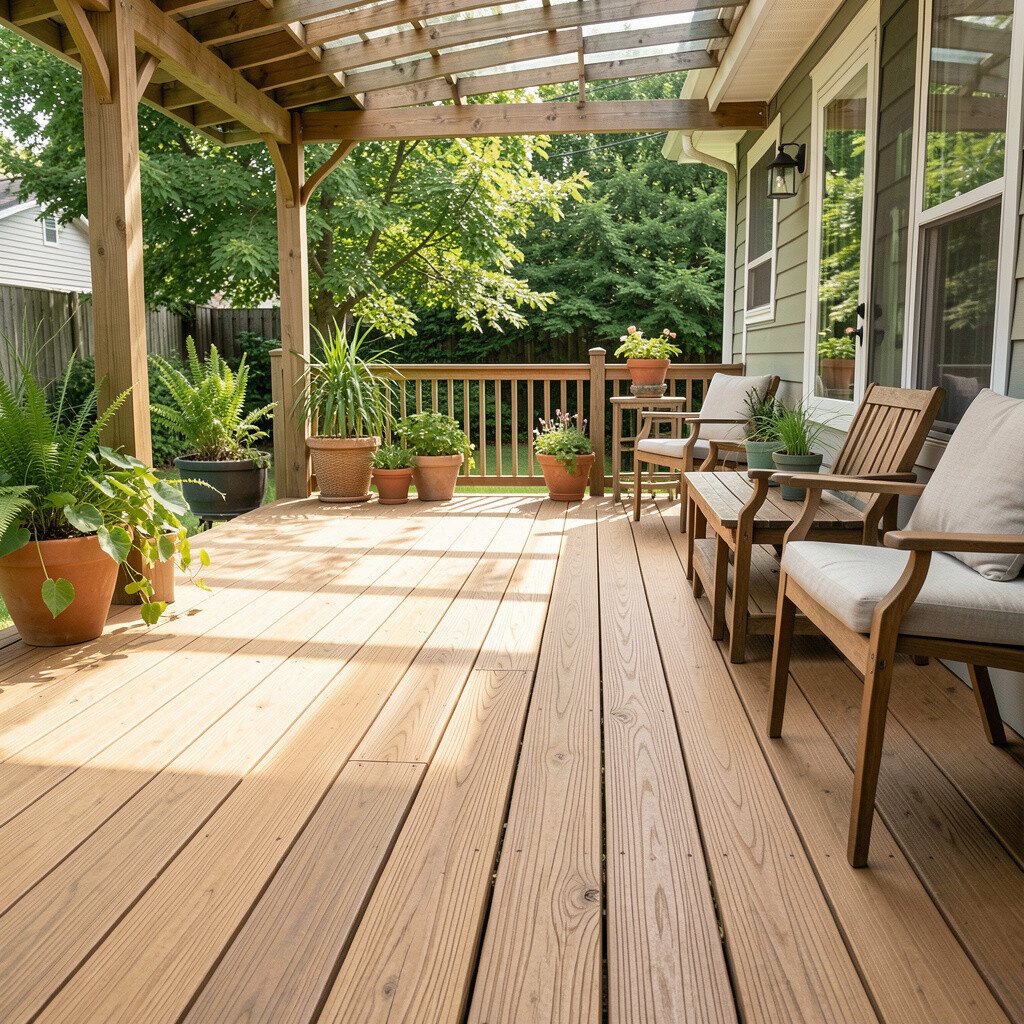
FSC-certified wood decking brings a natural grain that looks calm under string lights. You can choose lighter tones for a beachy vibe or deeper hues for a more dramatic feel.
When you select certified lumber, you support more responsible forestry and help keep habitats healthier. A wood deck also feels welcoming under bare feet and works great for gathering spaces. To make it last, use stainless or exterior-rated screws, keep airflow under the deck, and apply a water-based finish that matches your local climate.
Many homeowners are moving toward decks that feel like “outdoor rooms,” and FSC wood pairs nicely with planters and modular seating. Costs usually come down when you order during off-seasons and plan cuts in advance to reduce scrap. For a personal touch, stain a small sample board first, then repeat the shade across the entire deck for a consistent look.
4. Thermally Modified Wood
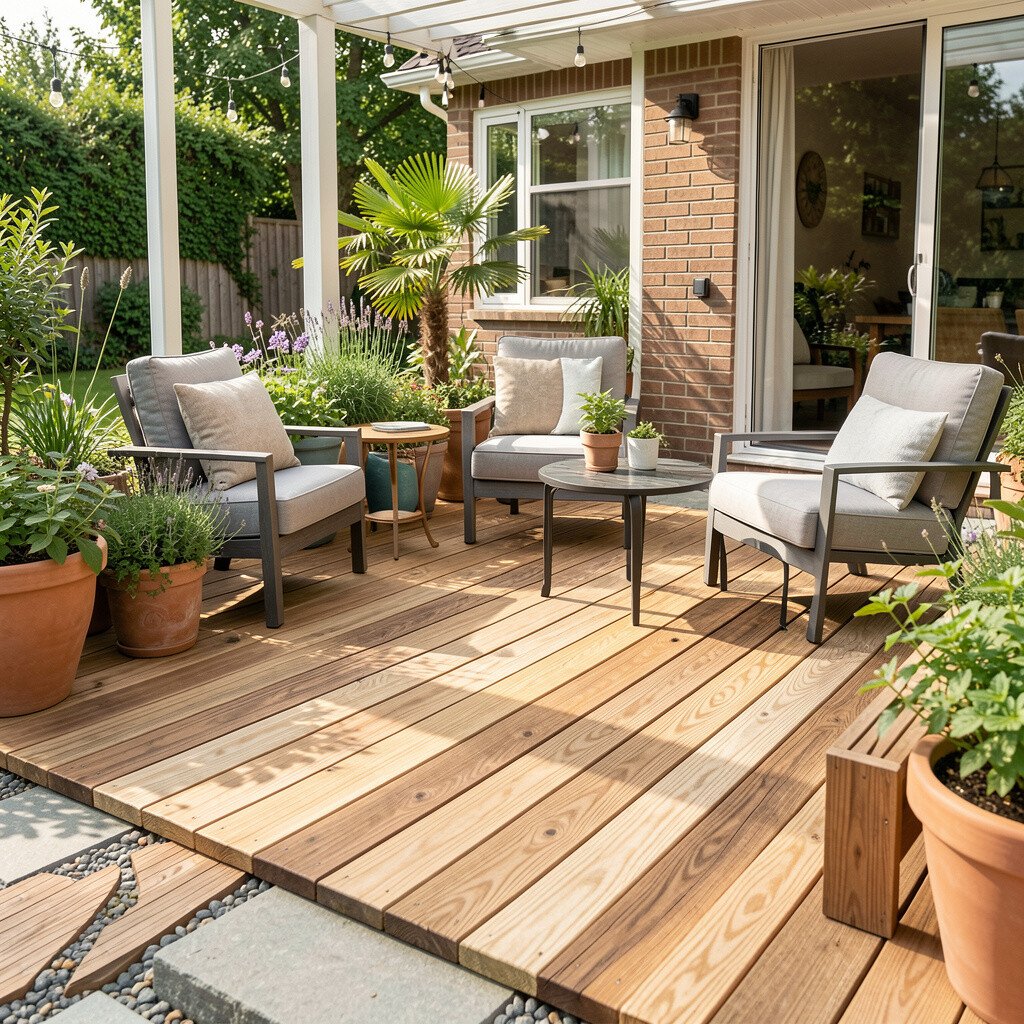
Thermally modified wood has a darker, toasted tone that looks beautiful next to stone and metal accents. The boards often feel more stable, with less movement from seasonal weather.
This material is heated to improve durability, which can mean better resistance to moisture without relying heavily on harsh chemicals. You’ll still want thoughtful installation, like correct spacing and a solid substructure, to protect the deck long-term. For practicality, choose boards with an easy-to-maintain surface and plan for regular cleaning rather than constant re-coating.
Homeowners who love low-maintenance outdoor living tend to like this option because it holds its shape and color longer. Cost can be higher than basic lumber, but many people find it balances out with fewer repairs over time. Personalize your patio by pairing the decking with wide gravel bands and outdoor rugs that can be washed or replaced.
5. Bamboo Patio Flooring
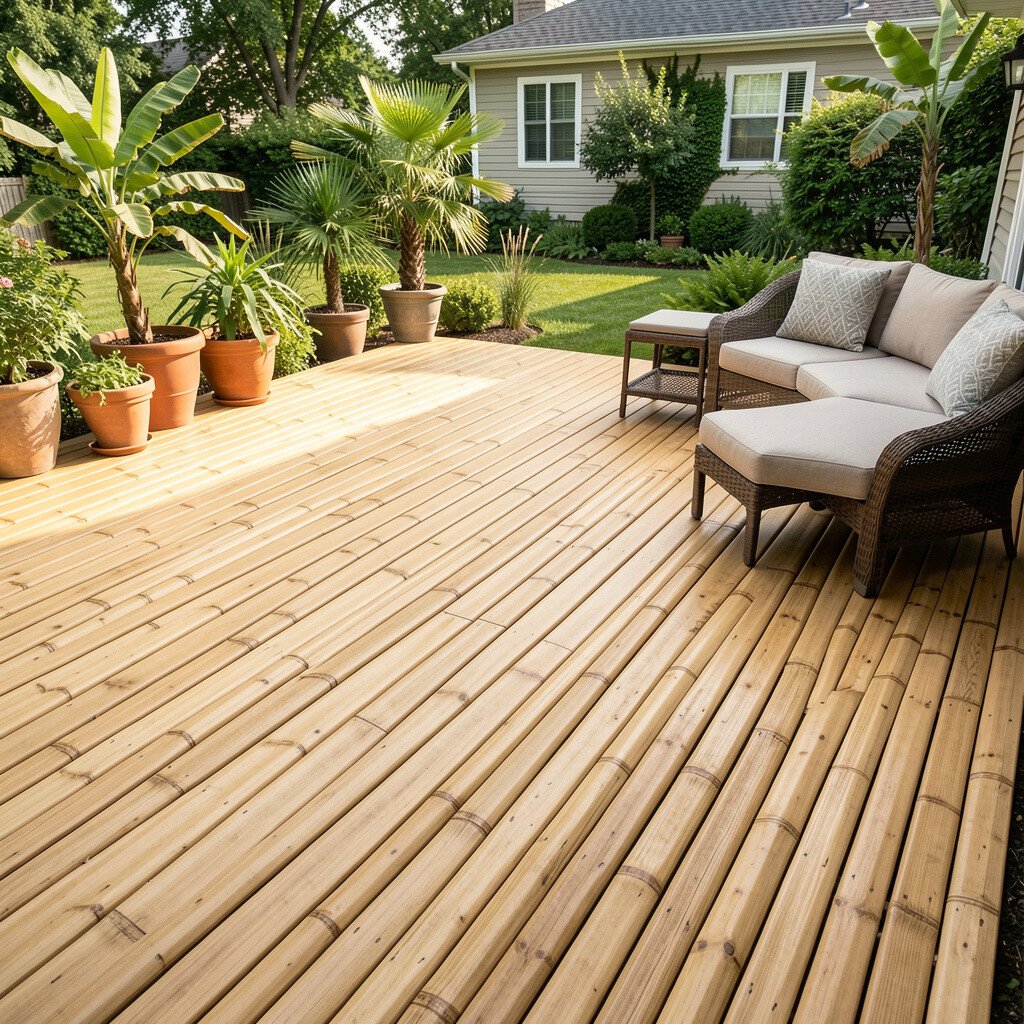
Bamboo brings a bright, modern texture that looks especially good with minimalist furniture. Its color can range from pale honey to rich caramel, so you can match many design styles.
Bamboo can grow fast, which makes it attractive for eco-conscious builds when it is sourced responsibly. Choose products made for outdoor use and check certifications that point to safe processing. For practical care, sweep often, keep it away from constant standing water, and use non-toxic cleaners so you don’t damage the surface.
Right now, many patios are leaning into light, airy looks with natural tones, and bamboo fits that trend nicely. While costs vary by brand and board thickness, buying fewer larger pieces can reduce waste. For personalization, add built-in planters along the edge so your patio feels like a living border instead of an empty platform.
6. Recycled Plastic Lumber
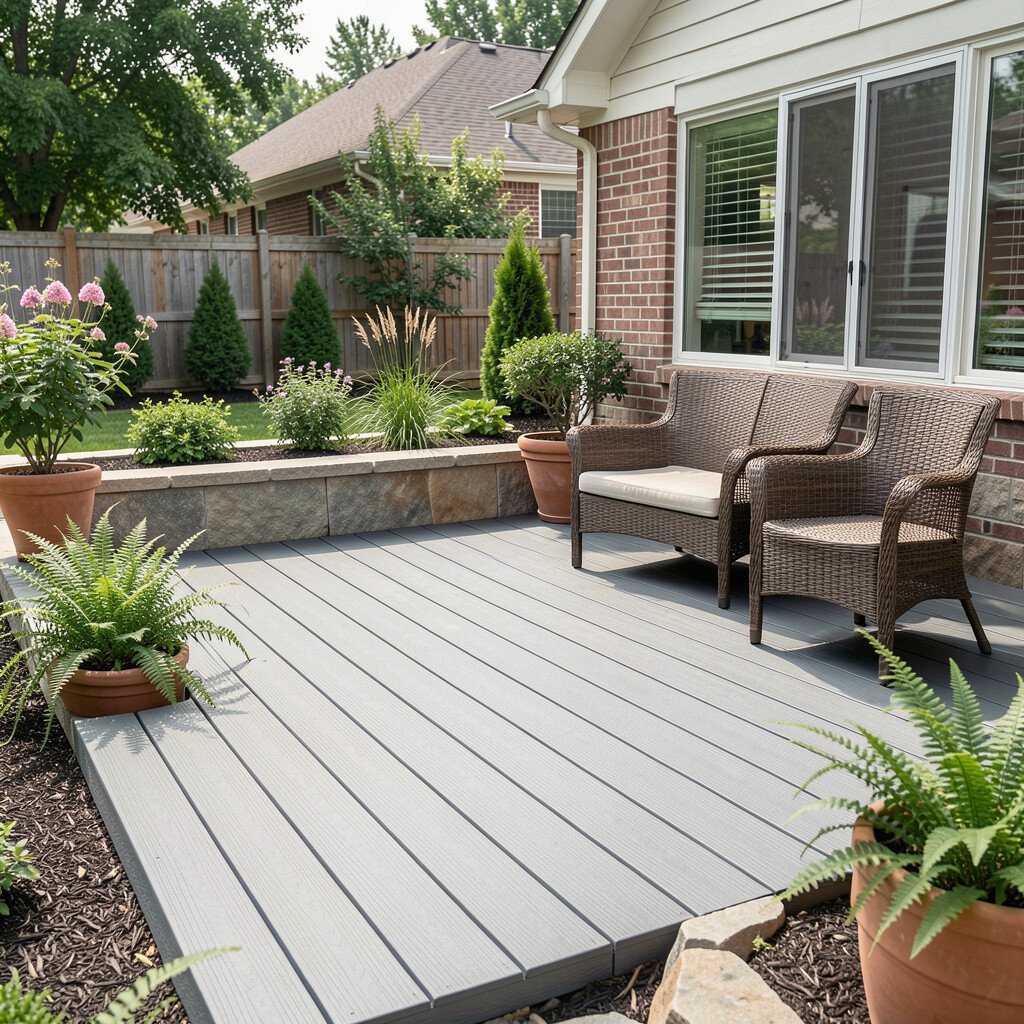
Recycled plastic lumber has a smooth, consistent feel that looks clean and polished. Colors stay fairly steady, so your patio can look great without constant sanding.
This option can reuse plastic that might otherwise end up in landfills. It also tends to resist rot and splintering, which makes it handy for families and pets. For practical tips, use proper ventilation under the boards and follow the manufacturer’s spacing so moisture doesn’t get trapped.
Many people like how this material supports “worry-free” outdoor living, especially in rainy regions. Cost can be higher upfront than basic treated wood, but the maintenance savings can help balance the choice. Personalize your patio by selecting a deck color that echoes your siding or fence, then add contrasting metal railings or planters.
7. Natural Stone From Local Quarries

Local stone has a built-in authenticity because it fits the landscape you already have. The colors often match the soil tones around your home, creating a calm, cohesive look.
Choosing stone from nearby sources can reduce transportation emissions and support regional businesses. Stone is also long-lasting, which helps you avoid frequent replacements. For practicality, ask about the stone’s slip resistance for wet areas and consider a sealed surface that won’t block vapor movement.
Trendy patios often lean into “regional realism,” where materials look like they belong to the neighborhood. Costs can swing based on stone type and thickness, so compare estimates for both the slab and installation base. Personalize by mixing two complementary stone shades or adding a narrow border that frames your seating zone.
8. Flagstone With Smart Bedding
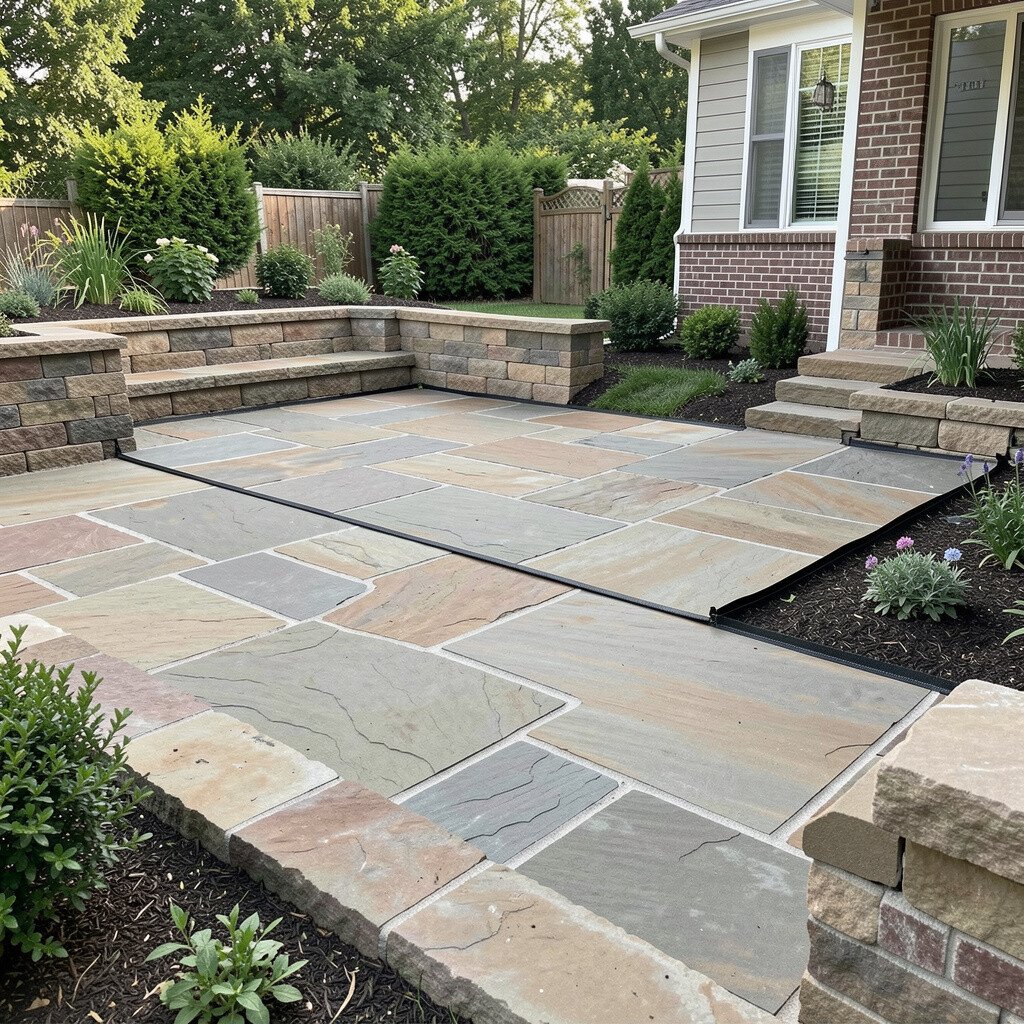
Flagstone looks like a patchwork of rugged shapes, and it can make a patio feel handcrafted. The joints catch light and create a natural rhythm that looks great even with simple décor.
Flagstone can be a good eco choice because many varieties are mined locally and used for years with minimal replacement. Installation matters, so using a well-draining bedding mix helps prevent cracking and weeds. For practical tips, aim for consistent thickness and keep the base slightly sloped to manage water flow.
Homeowners love flagstone for outdoor kitchens and dining areas because it pairs well with both rustic and modern styles. Costs often depend on availability and whether you need cutting, so plan layouts that minimize waste. Personalize by choosing a grout or joint material that suits your style, such as fine sand for a clean look or small gravel for extra texture.
9. Porcelain Pavers With Low Water Absorption
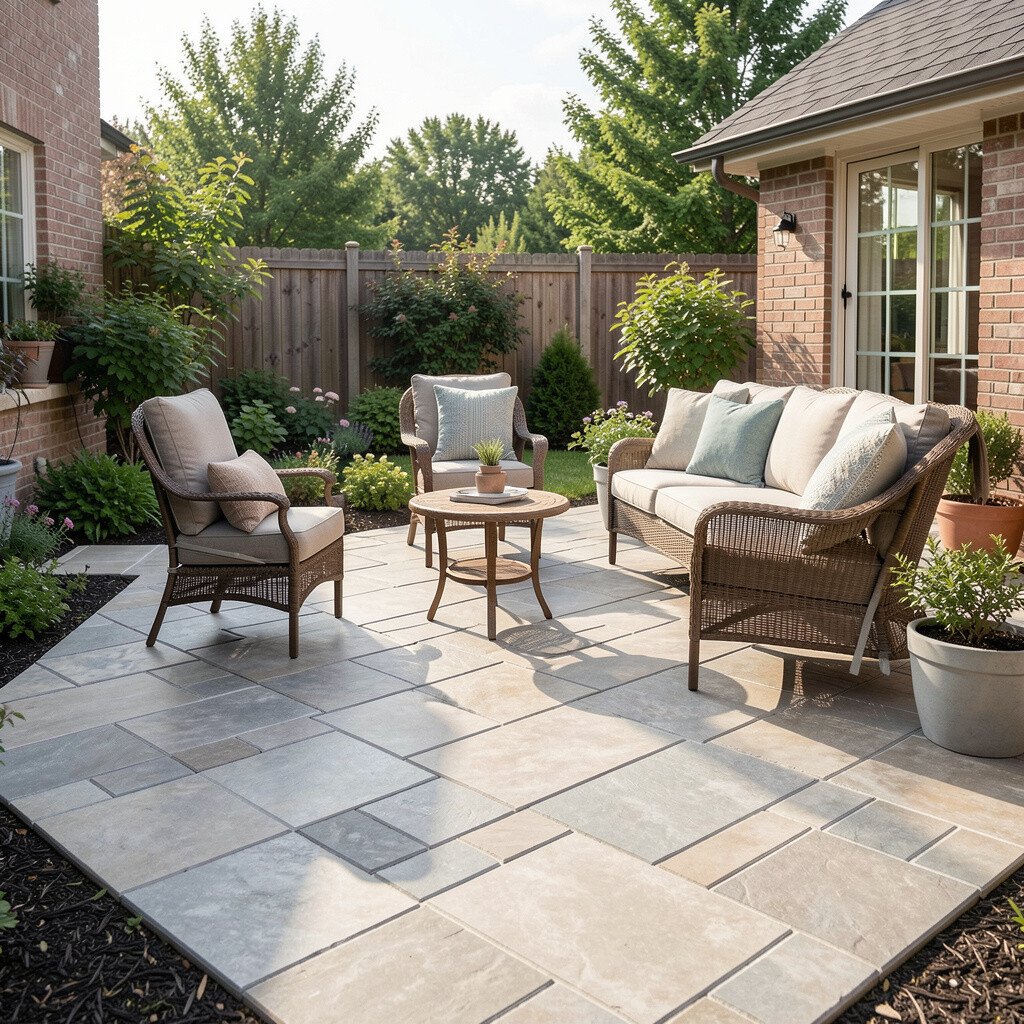
Porcelain pavers have a smooth, sleek look that can mimic stone or concrete while staying uniform. They also tend to resist stains, which makes them feel crisp and easy to maintain.
Many porcelain products are designed to be low-absorption, which helps reduce freeze-thaw damage in colder climates. Picking quality pavers can lower the chance of replacement, which supports long-term sustainability. For practical installation, use a permeable base and proper spacers so water can move without undermining the surface.
This material is popular in current patio designs because it supports clean lines and modern outdoor layouts. Costs can be moderate to high depending on finish and thickness, so compare similar looks across brands. Personalize by selecting a matte finish for better traction and pairing it with warm wood furniture for contrast.
10. Terrazzo Made With Recycled Aggregate

Terrazzo can look like tiny pieces of colored glass and stone held together in a smooth, artistic surface. In outdoor spaces, it often feels fresh, bright, and a little luxurious.
When terrazzo uses recycled aggregate, it can reduce demand for new raw materials. It also tends to be durable, which helps you avoid repeated repairs and patch jobs. For practical planning, choose an outdoor-rated finish and ensure the surface drains well so it doesn’t hold puddles.
Many homeowners are leaning toward “handmade” aesthetics, and terrazzo offers that creative character without extra upkeep. Costs may be higher because it depends on the mix and installation method, so request quotes for both full coverage and partial patterns. Personalize by matching terrazzo tones to planters, cushions, or outdoor art so everything feels coordinated.
11. Gravel Patios With Geotextile Underlayment
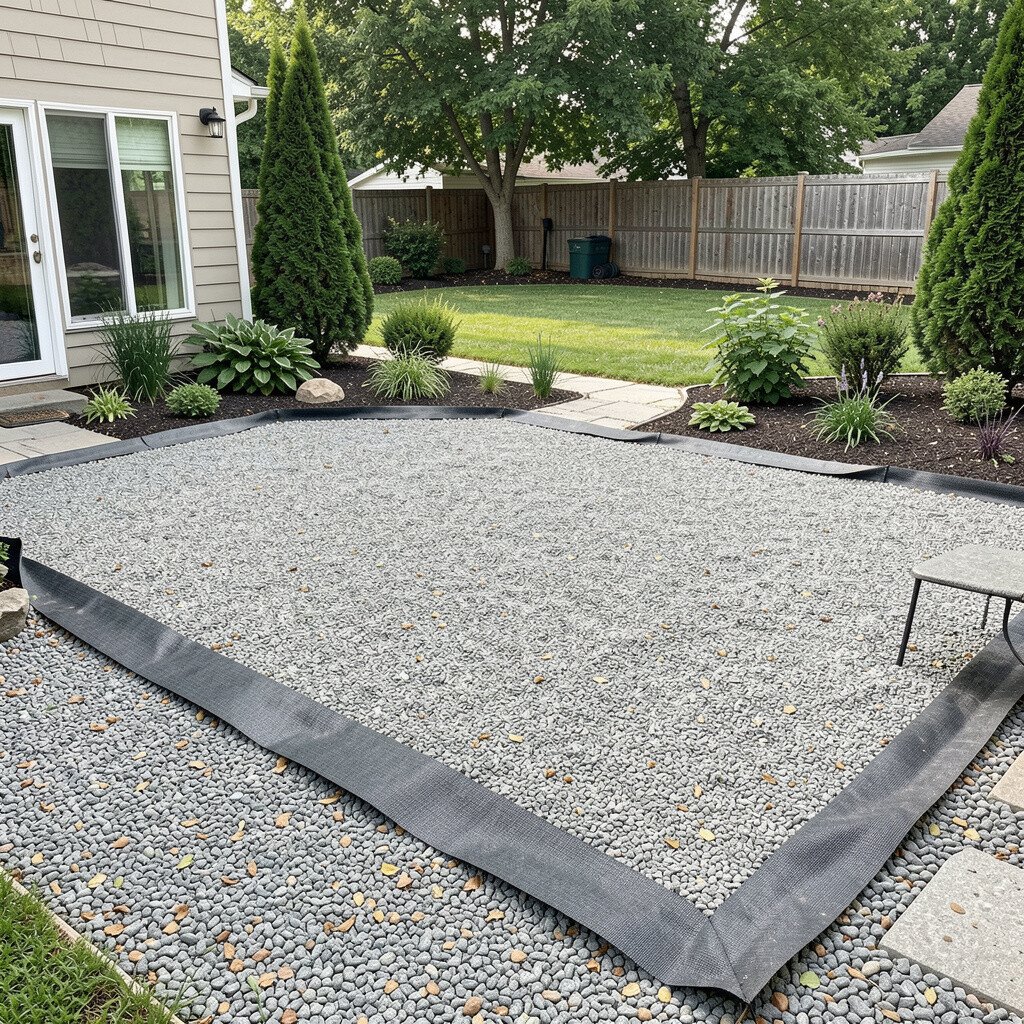
A gravel patio has an easygoing, casual look that feels natural from day one. You can picture how it sounds underfoot, like a soft crunch that’s lively but not harsh.
Gravel can be a budget-friendly option, and it supports drainage better than many solid surfaces. Using geotextile helps keep weeds down, while still allowing water to pass through. For practicality, choose the right size gravel for your climate and maintain a level surface by raking and topping up as needed.
This is a popular choice right now for eco-conscious landscaping because it reduces the need for heavy excavation and can blend into garden beds. Costs depend on material depth and delivery distance, so get local quotes for consistent pricing. Personalize by outlining the patio with stones or metal edging and adding seating pads that bring comfort to the space.
12. Crushed Recycled Glass Aggregate
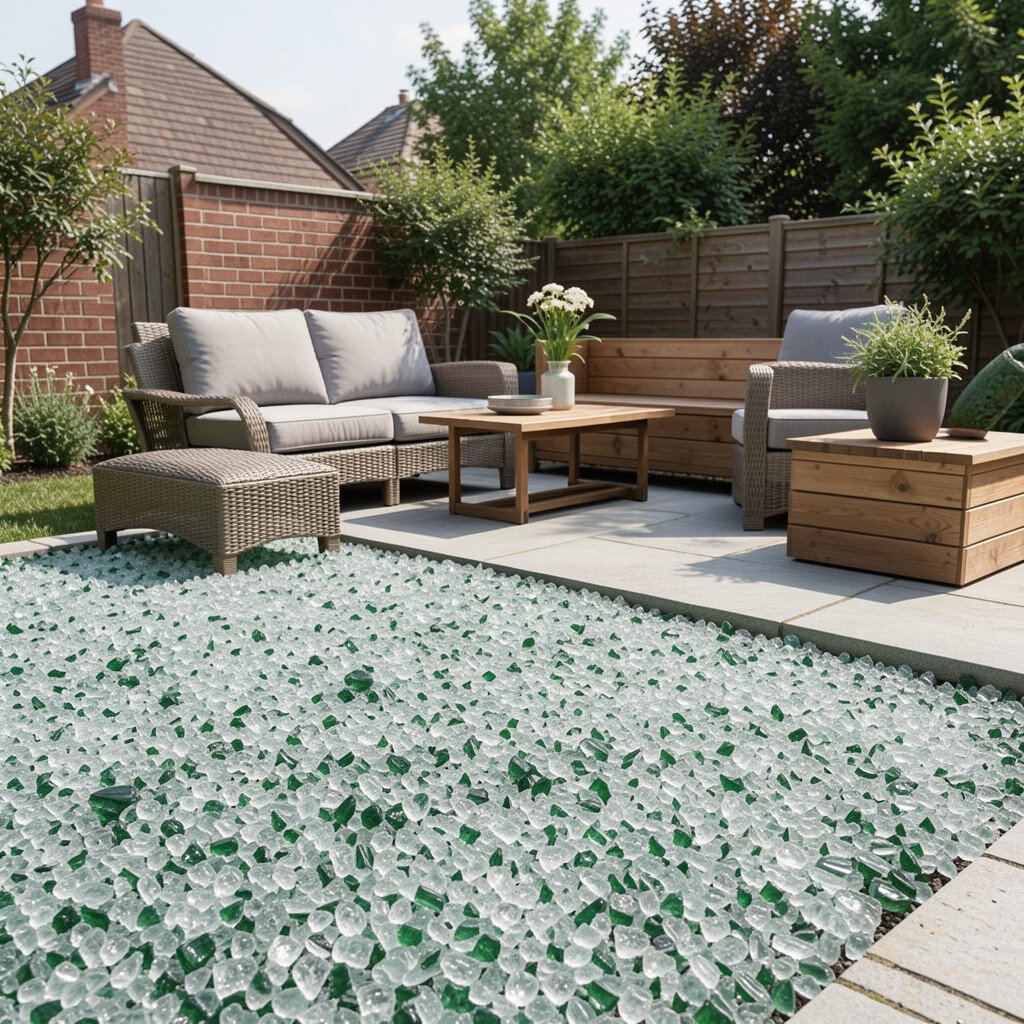
Crushed recycled glass can sparkle subtly, especially when the sun hits it at angles. It gives a patio a playful personality while still feeling sleek and modern.
Using recycled glass reduces waste and can keep problematic materials out of landfills. It also offers excellent drainage when installed over a proper base. For practical tips, select a stabilized base, use the correct underlayment, and avoid sharp edges by choosing products designed for foot traffic.
Many design trends are leaning toward reflective accents, and glass aggregate fits that vibe beautifully. Costs can vary based on color choices and processing, so ask if mixed-color blends offer the best value. Personalize with a color theme, like sea-glass greens and blues, and add planters that echo the same palette.
13. Living Roof-Style Patio Planters and Pavers

When you build your patio with planter-forward materials, the whole space feels alive and shaded. You can create a layered look with pavers above growing beds and trailing plants around the edges.
Using soil-friendly planting pockets supports biodiversity and helps manage stormwater through natural absorption. It can also reduce heat around seating areas by cooling the air through evapotranspiration. For practical planning, use a lightweight growing medium, ensure drainage layers are installed, and choose plants that match your sun exposure.
Eco-conscious homeowners often love this approach because it turns a patio into an ecosystem rather than just a surface. Costs can rise due to soil depth and structural considerations, so start by focusing on a smaller section before expanding. Personalize by selecting fragrant herbs, pollinator-friendly flowers, or edible greens so the patio feels useful every day.
14. Travertine With Responsible Sourcing
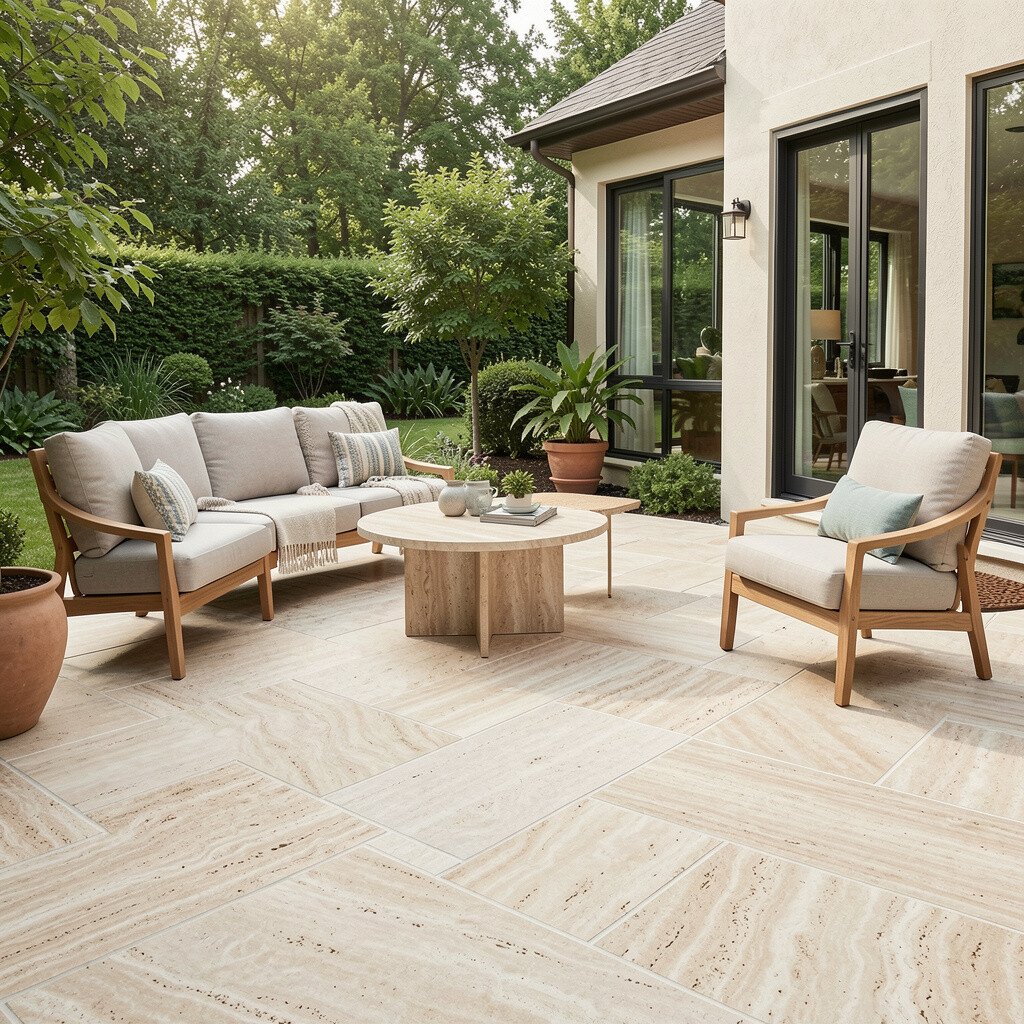
Travertine brings a soft, speckled elegance that looks warm in almost any light. Its natural pores and veining give it a gentle, spa-like feel.
Responsible sourcing can reduce the environmental footprint, especially when you choose suppliers that follow safer quarrying practices. Travertine is also strong and can last for many years when sealed properly. For practical care, seal it with an appropriate outdoor product and clean with mild solutions to prevent damage.
This material is often seen in current luxury patio looks, but you can still keep it eco-minded with responsible purchasing. Costs may be mid to high, so compare the price per square foot and factor in sealing and installation. Personalize by choosing honed finishes for a calmer look or using tumbled stones for a more vintage feel.
15. Lime-Sand Mortar Surfaces
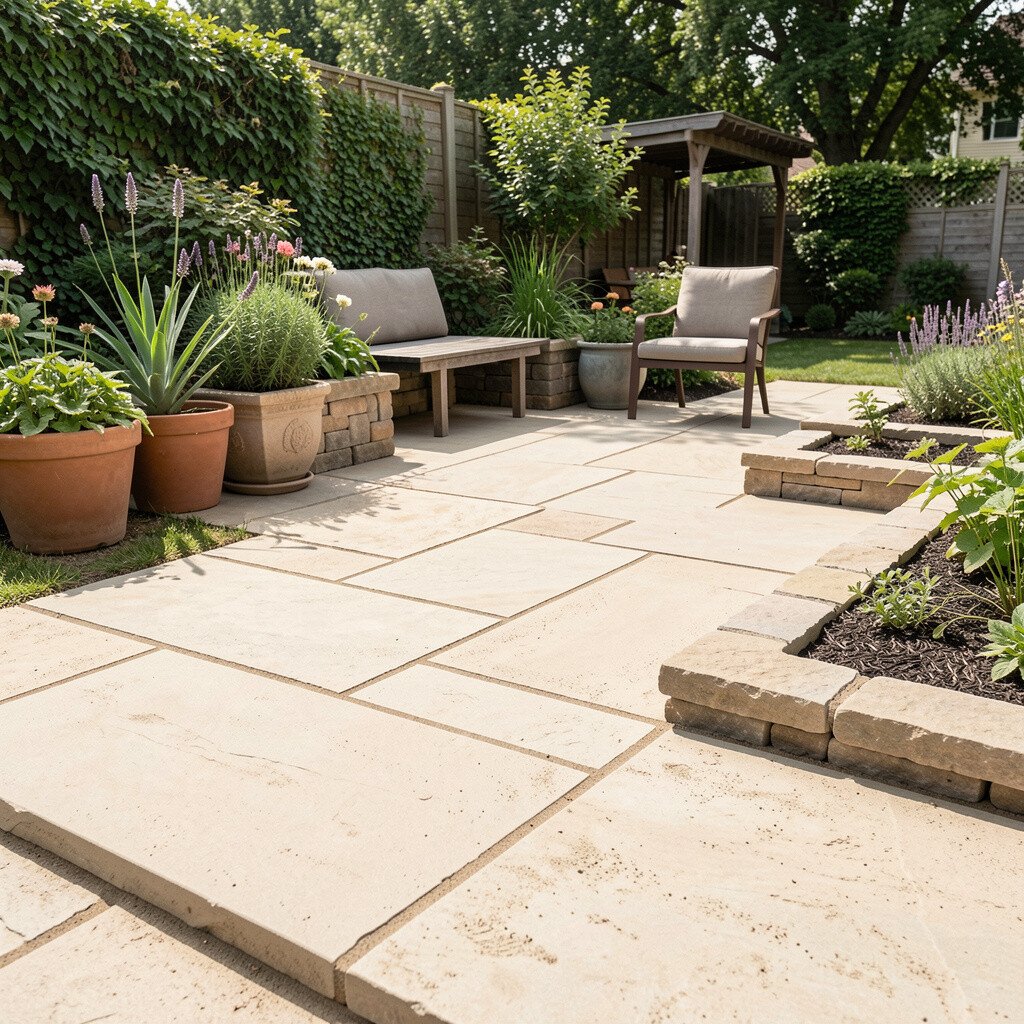
Lime-sand surfaces have a gentle, earthy appearance that feels both classic and calm. The color often looks like sun-warmed plaster, which pairs well with greenery.
Lime-based materials can be breathable, helping manage moisture in a way that many cement-heavy systems can’t. Choosing lime-sand mixes can support a more natural building approach and reduce cracking when used correctly. For practical tips, ensure proper base preparation and use compatible finishing layers so the surface stays stable.
Homeowners who like rustic modern aesthetics often choose lime-sand because it feels handmade and soft. Costs depend on local availability and whether you use a specialist installer, so get multiple quotes. Personalize by adding color pigments that stay subtle, then pair with matching lime-washed planters for a cohesive theme.
16. Calibrated Timber Sleepers as Stepping Zones
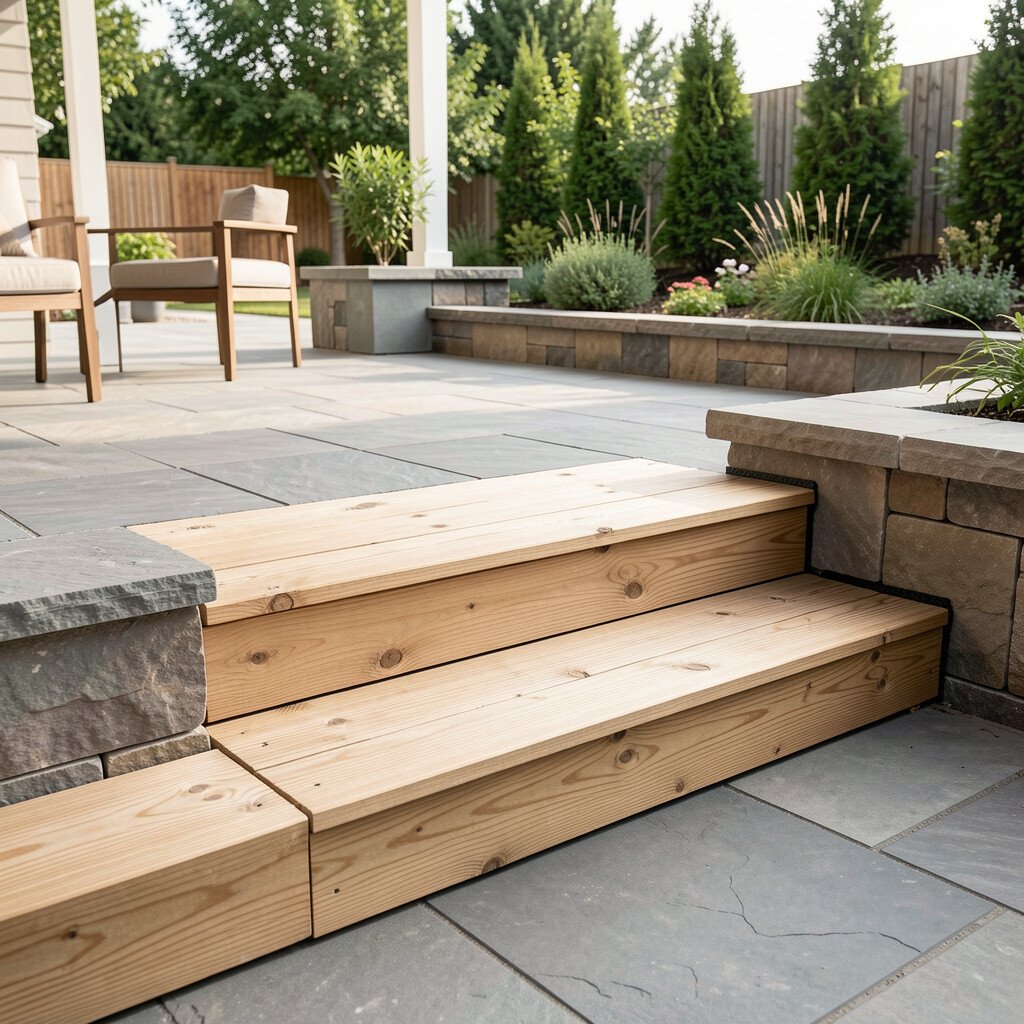
Timber sleepers can create bold, linear shapes that look great with garden beds. When used as stepping zones, they add character without covering the entire patio area.
Using reclaimed or certified sleepers can reduce pressure on forests and keep usable wood in service longer. This approach also lets you mix materials, such as gravel between sleepers, which helps drainage and lowers paving costs. For practical installation, check for rot, stabilize each sleeper properly, and treat only as needed with exterior-safe products.
Many patios are trending toward “zone design,” where dining, lounging, and walking paths feel separate. Calibrated sleepers fit that style beautifully because they guide movement clearly. Costs can be manageable if you buy reclaimed pieces and plan the spacing to match your foot stride, reducing cutting and waste.
17. Cork Underlay Panels for Outdoor Flooring Systems
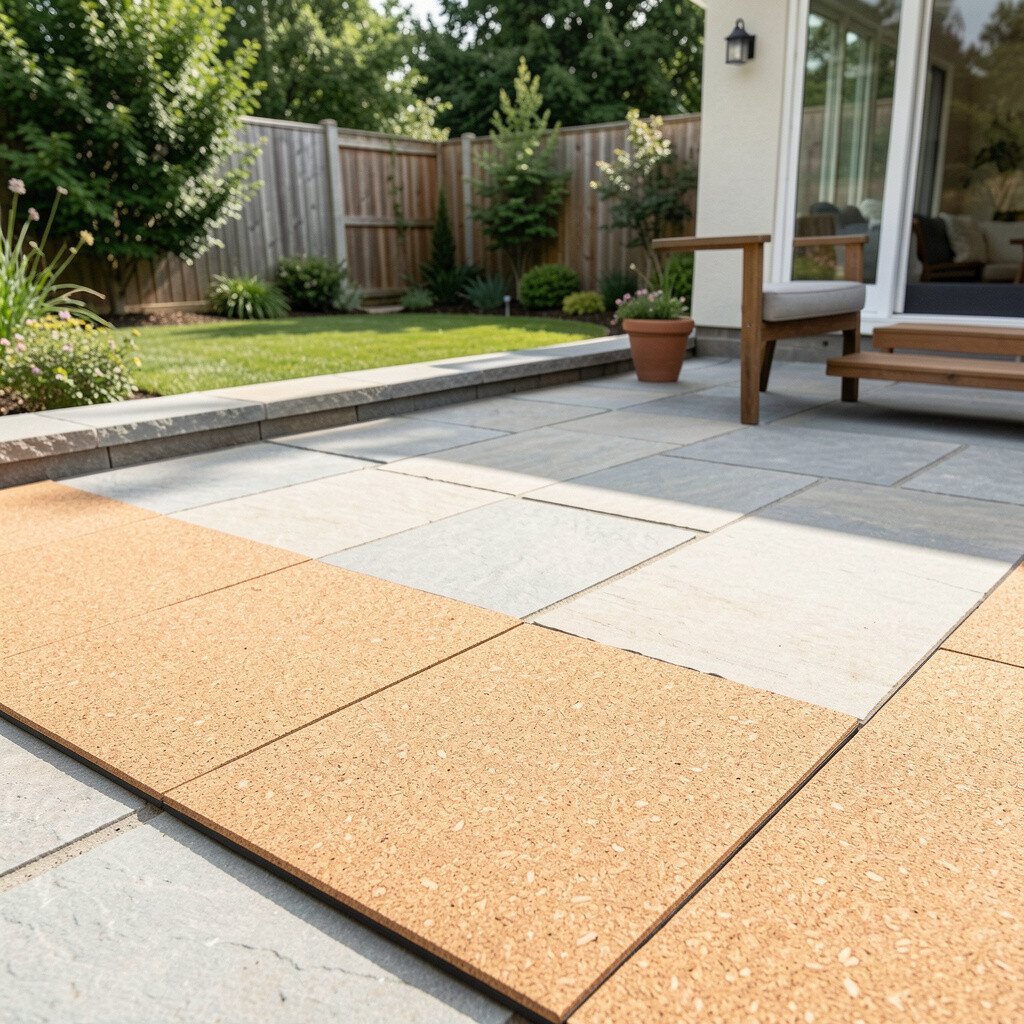
Cork panels can look simple and warm, and they add a springy feel underfoot. They’re especially nice for lounging zones where comfort matters as much as style.
Cork is a renewable material harvested from living trees, which supports a more sustainable supply chain. When used as underlay in an outdoor flooring system, it can add insulation and reduce sound. For practical tips, choose outdoor-rated panels and pair them with a suitable top layer so rain and standing water don’t soak the cork.
This kind of material is gaining attention because homeowners want comfort, not just durability, in eco-friendly designs. Cost varies by product type, but you can often control spending by limiting cork to key sections like transitions or seating areas. Personalize the patio by arranging furniture to highlight the soft zones, then use natural textiles that blend with the warm tone.
18. Plant-Based Composite Deck Tiles
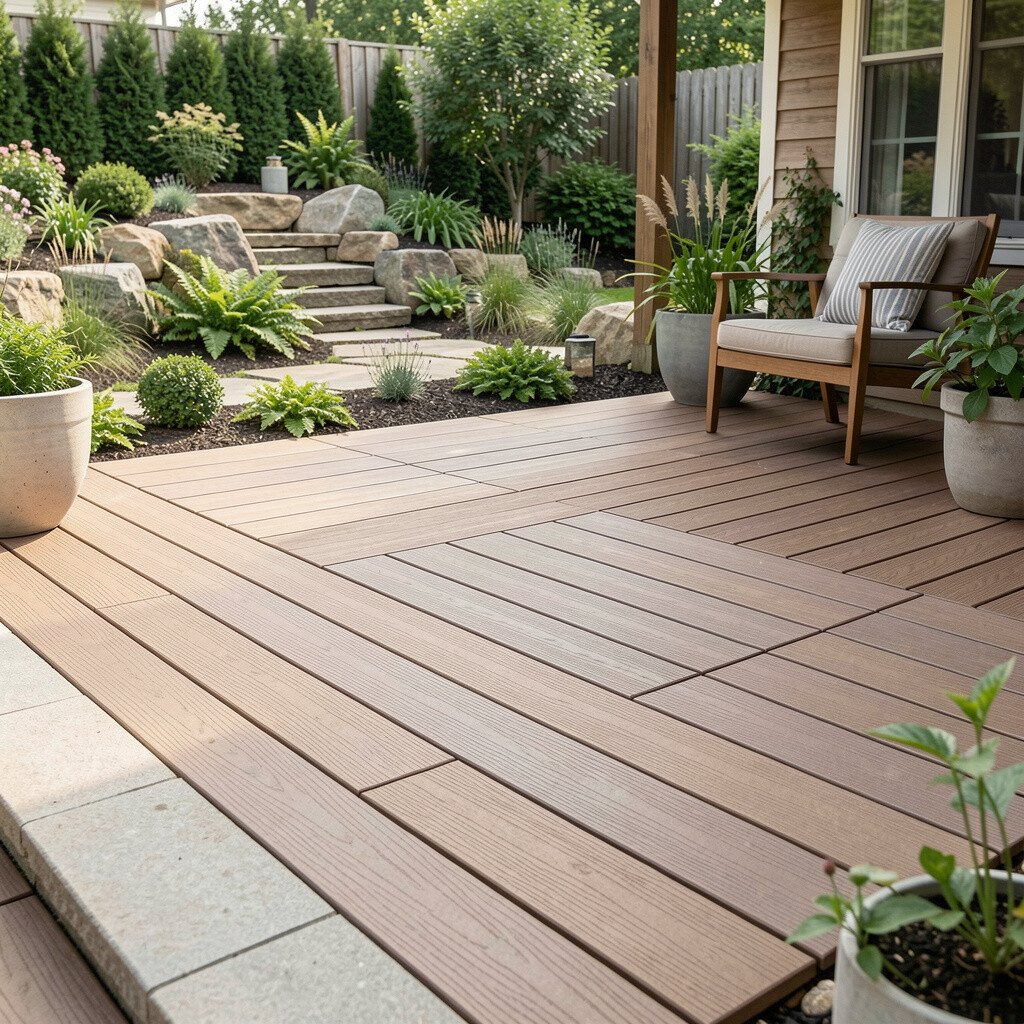
Plant-based composite deck tiles offer a crisp look with a modern, built-in feel. You can arrange them in patterns that make the patio look intentional instead of patchy.
Many composite tiles include bio-based content, which can reduce reliance on purely fossil-based plastics. Tiles also offer flexibility, because you can replace individual pieces instead of rebuilding everything. For practical installation, ensure the base is level, allow airflow underneath, and follow the manufacturer’s guidance for expansion and cleaning.
Current patio trends often include modular upgrades, and deck tiles support that idea well. Costs may be moderate to high, but the easier maintenance can help you stay within budget over time. Personalize by choosing tile shades that match your outdoor cushions and by adding planter boxes to frame the seating area.
19. Recycled Metal Paver Panels

Recycled metal paver panels can create a distinctive industrial shimmer that looks great with dark furniture. Their edges can add a clean, architectural line to the outdoor space.
Reusing metal helps keep valuable materials circulating longer, which can cut down the need for new mining. Metal also handles heat and weather well, making it a solid choice for many climates. For practical safety, choose panels designed for outdoor traction and use a stable base so the surface doesn’t rock or shift.
This option feels unique because metal patios aren’t as common as stone or wood. Costs can vary based on panel thickness and finish, so get quotes for both raw and coated versions to compare long-term durability. Personalize by adding a surrounding border in wood or stone so the metal feels intentional rather than stark.
20. Earth-Friendly Permeable Concrete Alternatives
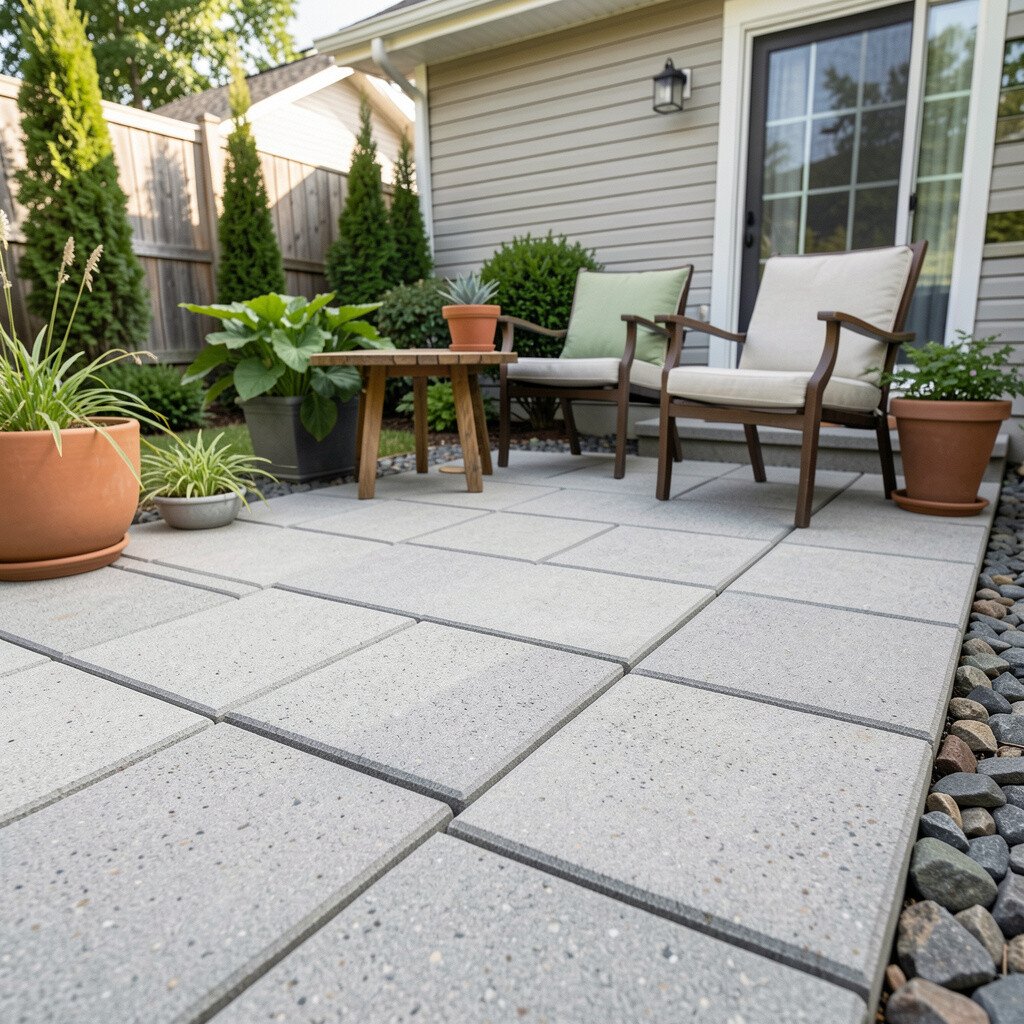
Permeable concrete alternatives can have a clean, smooth look while still letting water move through. They help your patio work with rainfall instead of pushing it into puddles or runoff.
Using permeable systems can support healthier drainage and may reduce strain on local stormwater infrastructure. Many mixes use recycled components or optimized aggregates, which can lower environmental impact. For practical tips, keep the surface clear of debris, ensure proper base grading, and confirm the system meets local drainage rules.
Eco-conscious patios are increasingly designed around water management, so permeable styles fit today’s thinking. Costs depend on the system type and installation method, so compare not only the material price but also the labor and base preparation. Personalize by finishing edges with natural stone borders and adding rain-loving plants along the patio perimeter so the whole landscape performs together.