Your classroom can feel like a playful story without losing its structure. When labels match the vibe, students naturally handle materials with care.
Below are whimsical ways to organize everything from supplies to shelves, using themed labels that are fun to read and easy to follow.
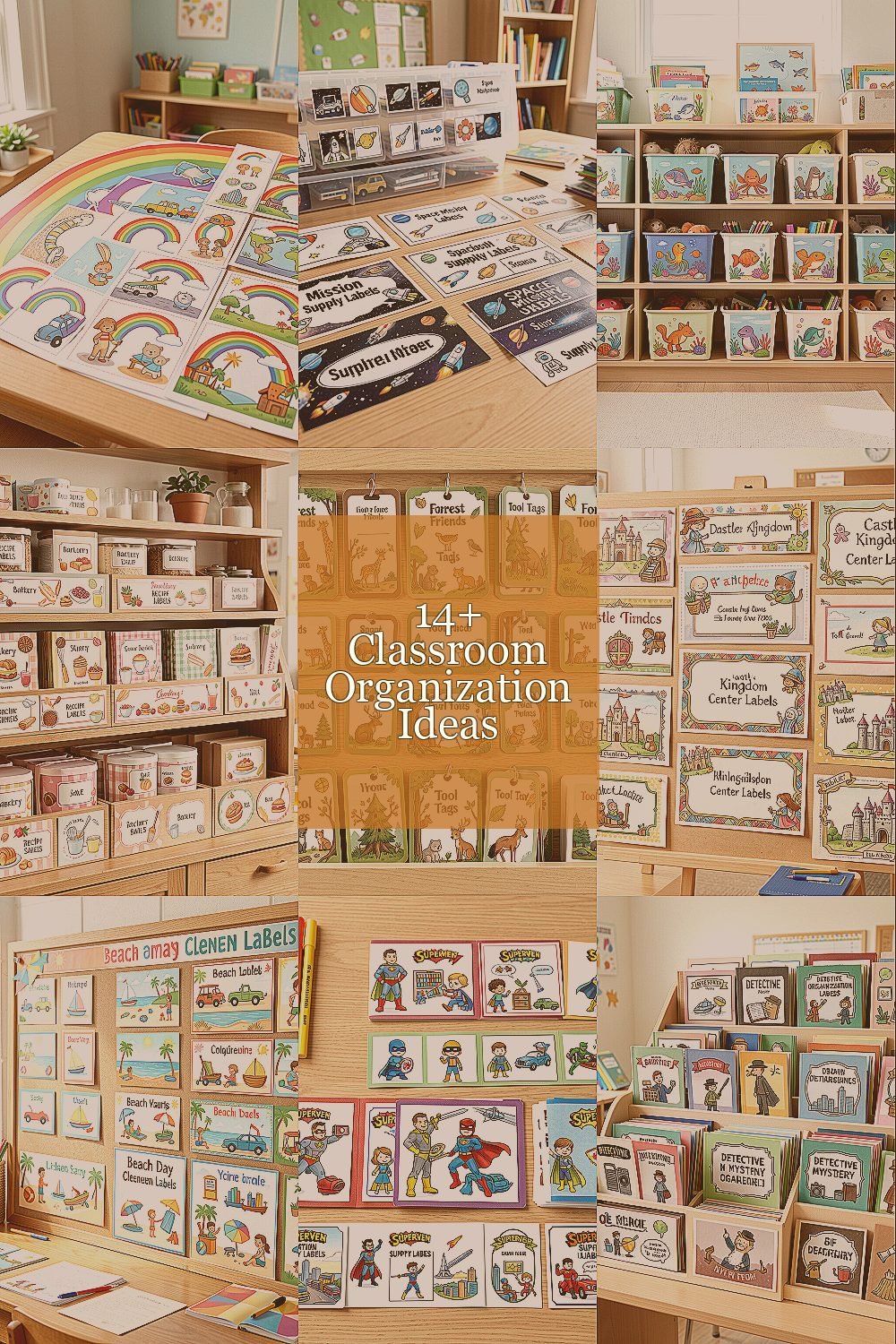
1. Rainbow Travel Station Labels
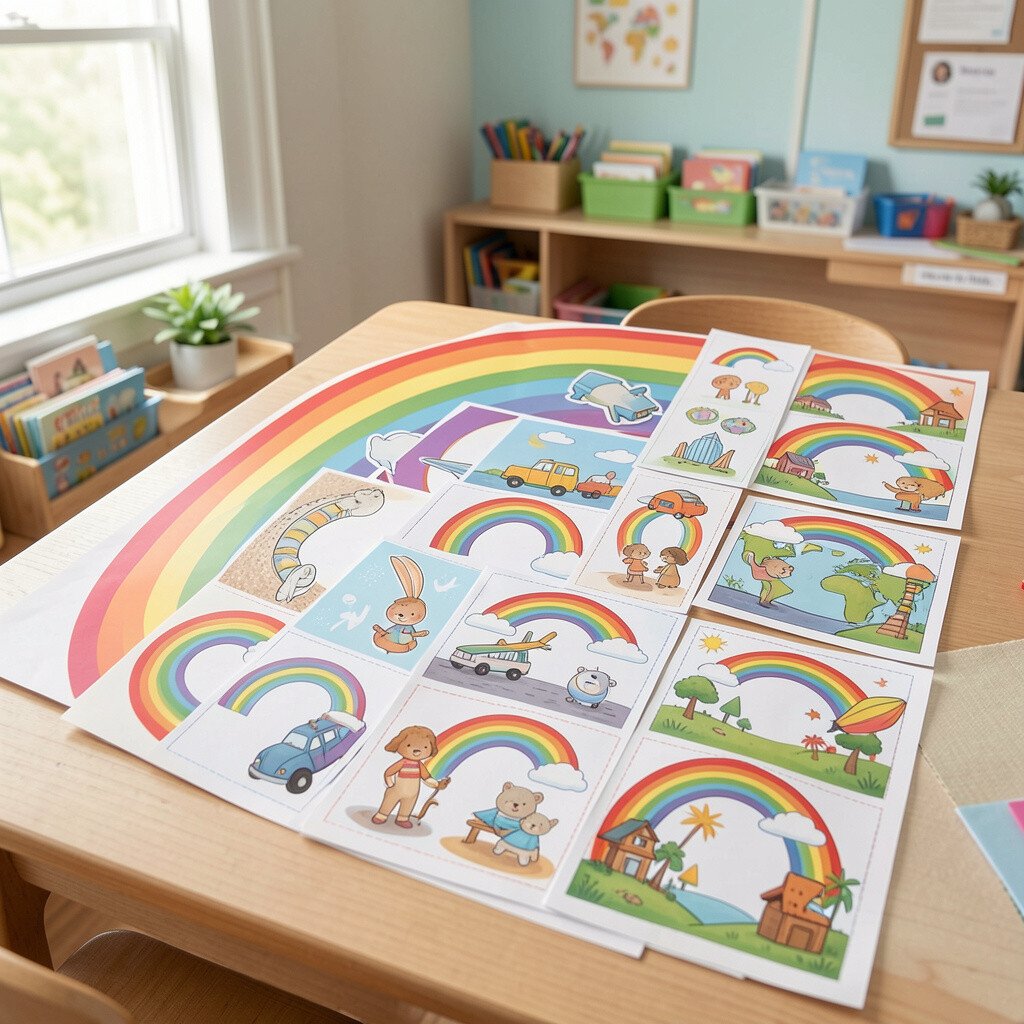
Picture a wall of materials labeled like train stops, with each label in a different rainbow color. Students look up, find the “next stop,” and place items back where they belong.
Use short text like “Stop: Red Markers” and add a tiny icon, such as a train wheel or cloud. Choose a few color groups that match how your classroom already sorts supplies, like writing tools, paper, and classroom helpers.
For a practical setup, start with the most used centers and label only those first, then add more as students get comfortable. Lamination helps the labels survive sticky hands, and thicker cardstock holds up better in daily use.
2. Space Mission Supply Labels

Turn storage into a friendly space outpost with labels like “Galactic Glue” and “Rocket Paper.” Each bin can have a planet graphic so it feels exciting to return materials.
To make it work in real life, print labels large enough for quick scanning and place them at eye level. If you teach younger students, use pictures that clearly match the bin contents, such as stars for craft glitter and a simple rocket for scissors.
Try personalizing labels with student names during the first month, so their supplies feel like “their crew.” Keep cost in mind by printing black-and-white labels and adding color with markers or crayons for a low-spend, high-joy look.
3. Undersea Critter Cubbies
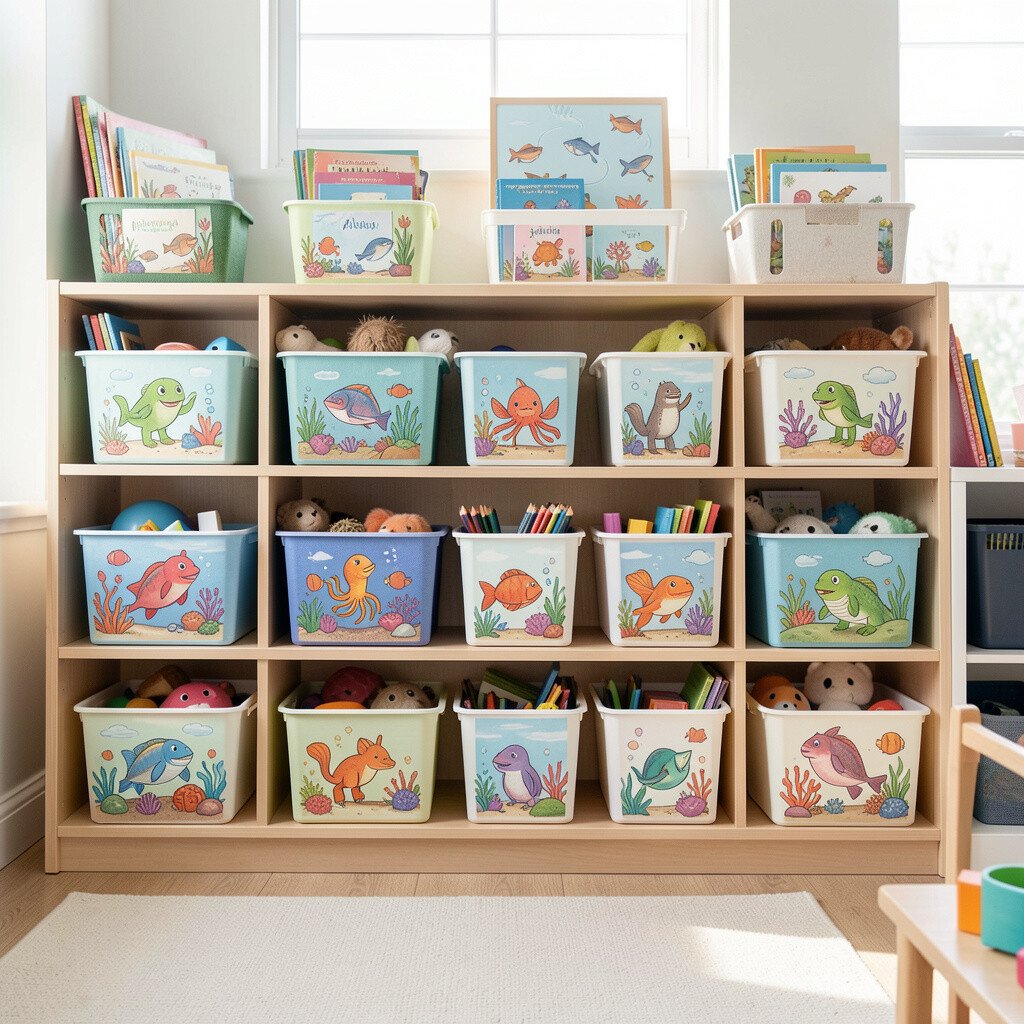
Imagine every cubby as a coral home, with labels showing fish, shells, and seaweed. The visual cue helps students instantly match the spot with the type of item inside.
Create labels for reading, art, and classroom jobs using ocean themes, and keep the wording simple. When students can picture where something belongs, routines become smoother and fewer items go missing.
Laminate the labels and round the corners so they last through drops and daily handling. You can also add a small “tidy wave” icon that reminds students to clean up before a new activity starts.
If you want a trend that fits modern classrooms, consider using QR codes on a few bins that link to short classroom expectations, as long as your devices and access are consistent. Students love “special missions,” and the labels can act like mini prompts for behavior.
4. Bakery Shelf Recipe Labels
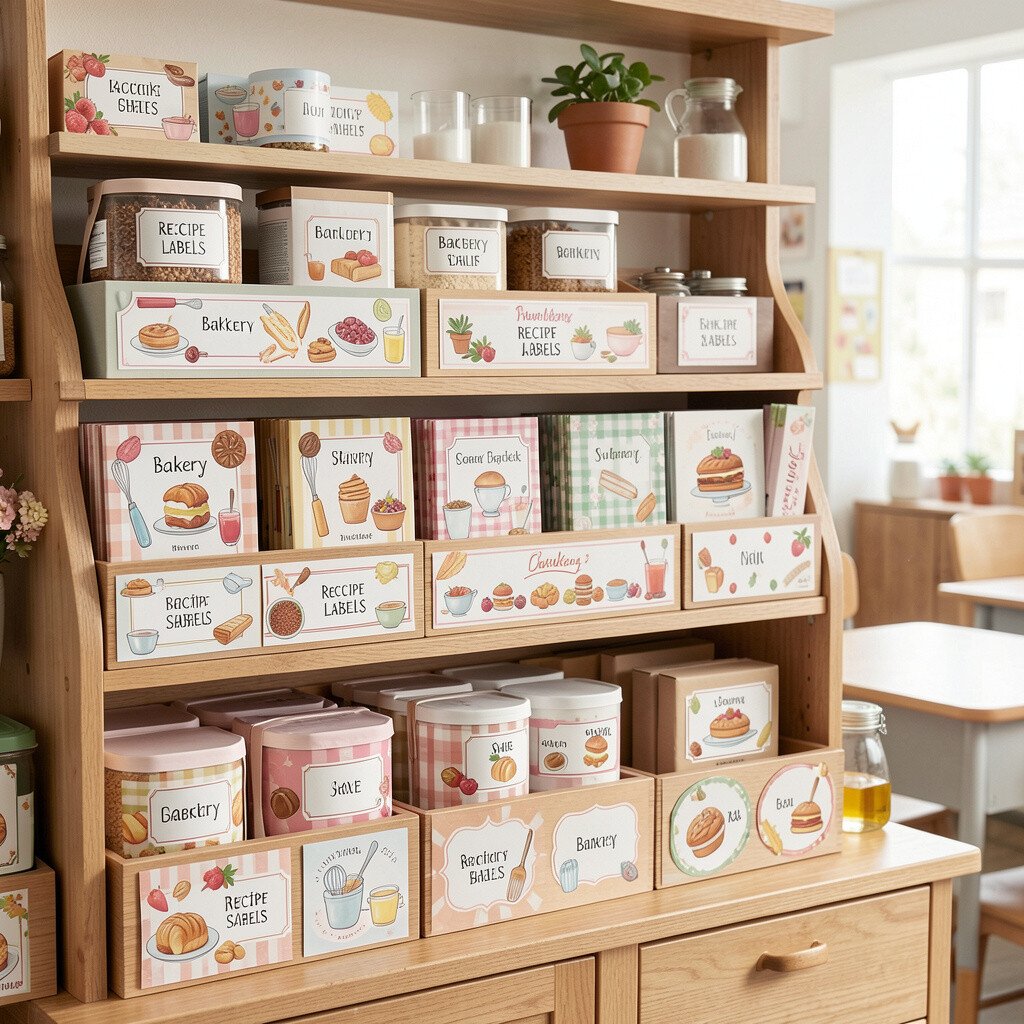
Give shelves a cozy bakery theme with labels that look like little recipe cards. A bin labeled “Mixing Bowl: Scissors” can be both silly and useful.
Use a consistent format across the room so students learn the pattern, such as “Make Room for…” followed by the supply type. Add tiny icons for measuring spoons, flour bags, or cookies to make the meanings clear at a glance.
To personalize, let families or students write a short favorite food name on each label border, then swap names when the school year changes. This small touch makes the classroom feel welcoming and community-focused.
For cost, print plain label sheets and decorate with craft stickers or stamps instead of buying expensive pre-made sets. If you reuse materials from year to year, store label sheets in a binder by theme.
5. Forest Friends Tool Tags
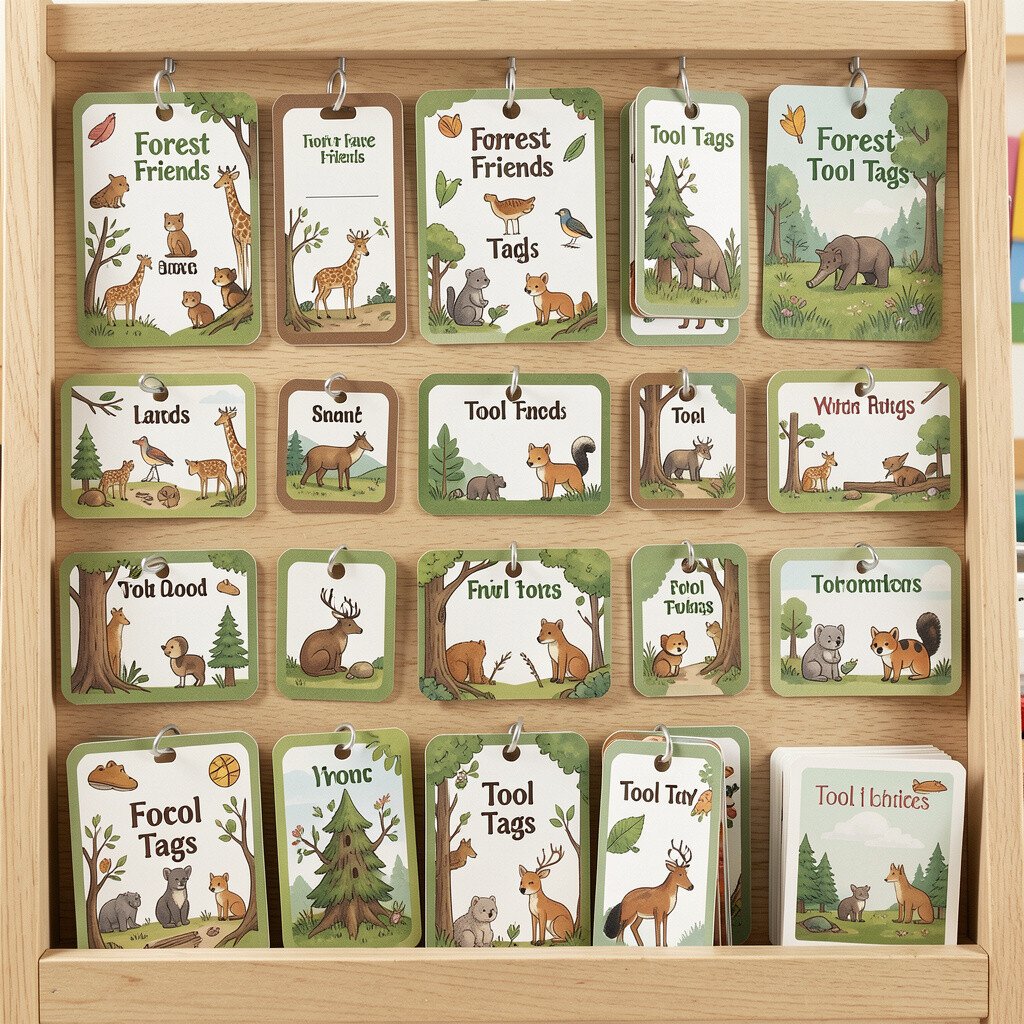
Think of your classroom like a friendly woodland where every bin is a tree home. Labels can show owls for books, bears for coloring tools, and squirrels for pencils.
Keep the system practical by grouping similar items, then naming each bin with both a theme and a clear item word. Students benefit when the label includes a simple picture plus a short description, because they can decode it even if they are still building reading skills.
Uniqueness comes from mixing animals and seasons, like “Autumn Acorns” for project paper or “Winter Wolves” for writing journals. You can also rotate themes each quarter to keep the room feeling fresh without changing the whole organization system.
If you’re worried about supplies getting mixed, use color-coded labels that match how you already sort materials. This keeps the playful look while still supporting clear routines.
6. Castle Kingdom Center Labels
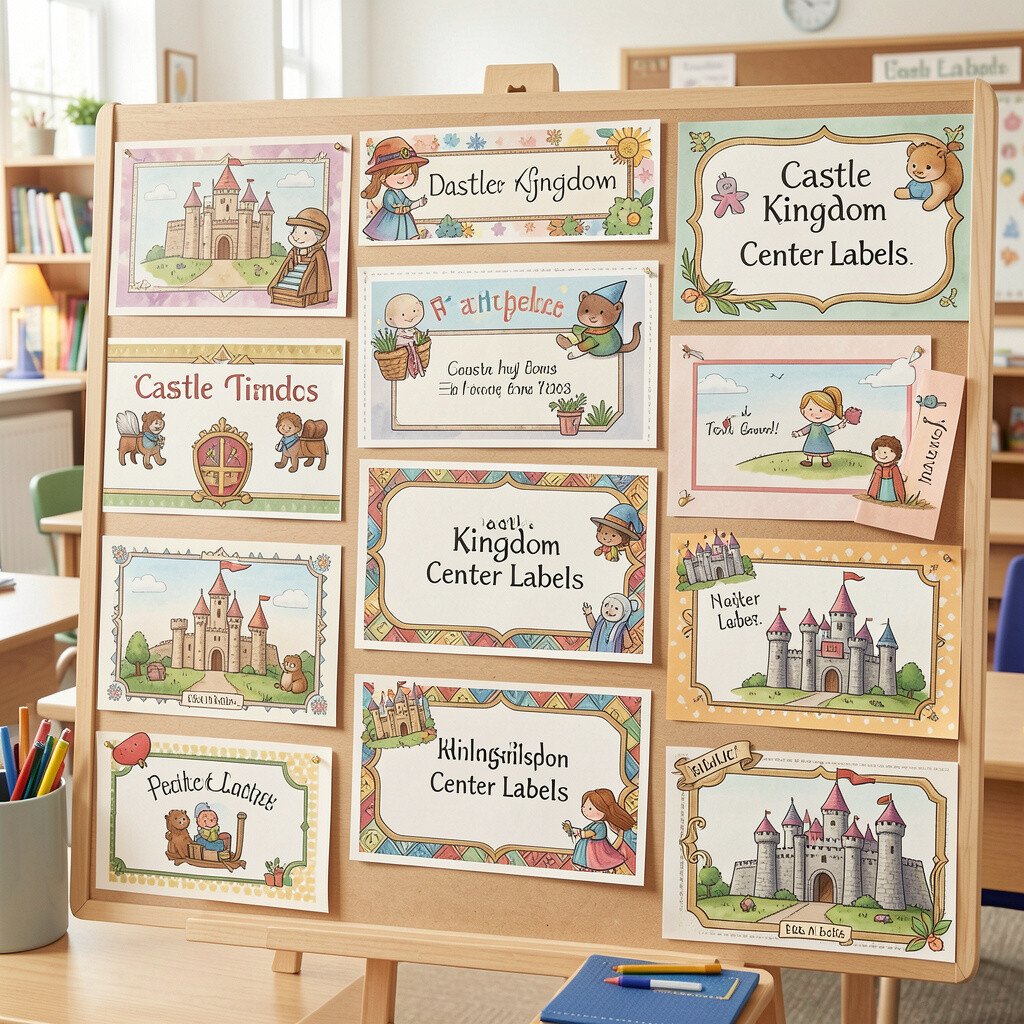
Turn classroom centers into a kingdom with labels that feel like royal commands. A bin called “Knight’s Notes” or “Dragon’s Drafts” helps students remember where their work tools go.
Place labels on storage fronts and also add a small matching sign near the instruction area. This supports students during transitions, because they can check the label before walking away.
Personalize by using students’ favorite roles, like “Wizard’s Word Cards” or “Explorer’s Map Worksheets,” for certain centers. You can also let students vote on which castle theme to use each term, which makes buy-in feel natural.
7. Beach Day Cleanup Labels
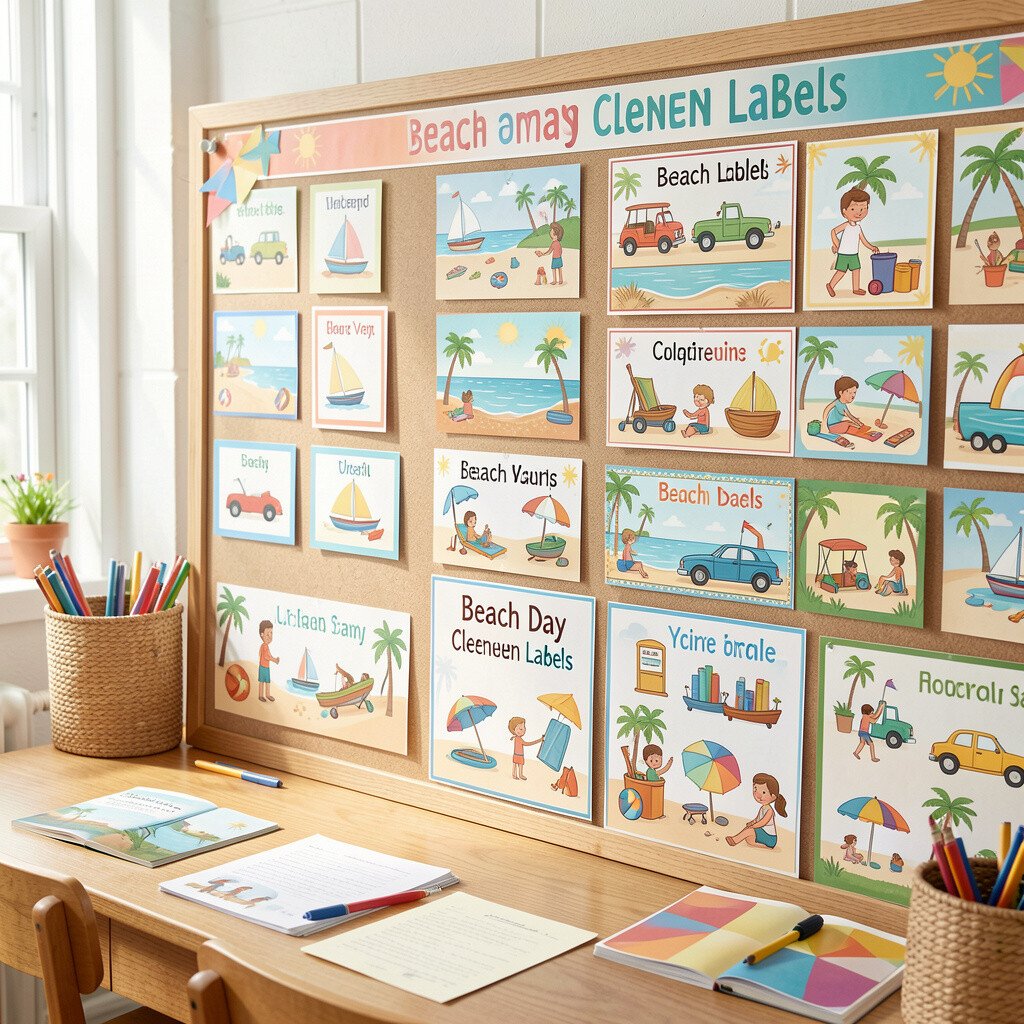
Imagine bins labeled like beach gear, with icons for sand buckets, towels, and shell treasures. When students see “Shovel Tools” or “Tidy Towels,” cleanup feels like part of the fun.
Use weather-friendly visuals, like sunny stickers and wave borders, to keep the look cheerful and clear. Practical organization improves when labels include the type of item, not just the picture, so everyone understands quickly.
For a low cost approach, reuse old beach-themed party items such as sticker packs or themed paper scraps. You can also draw waves and shells yourself and print only the main text, saving ink and time.
8. Superhero Station Supply Labels
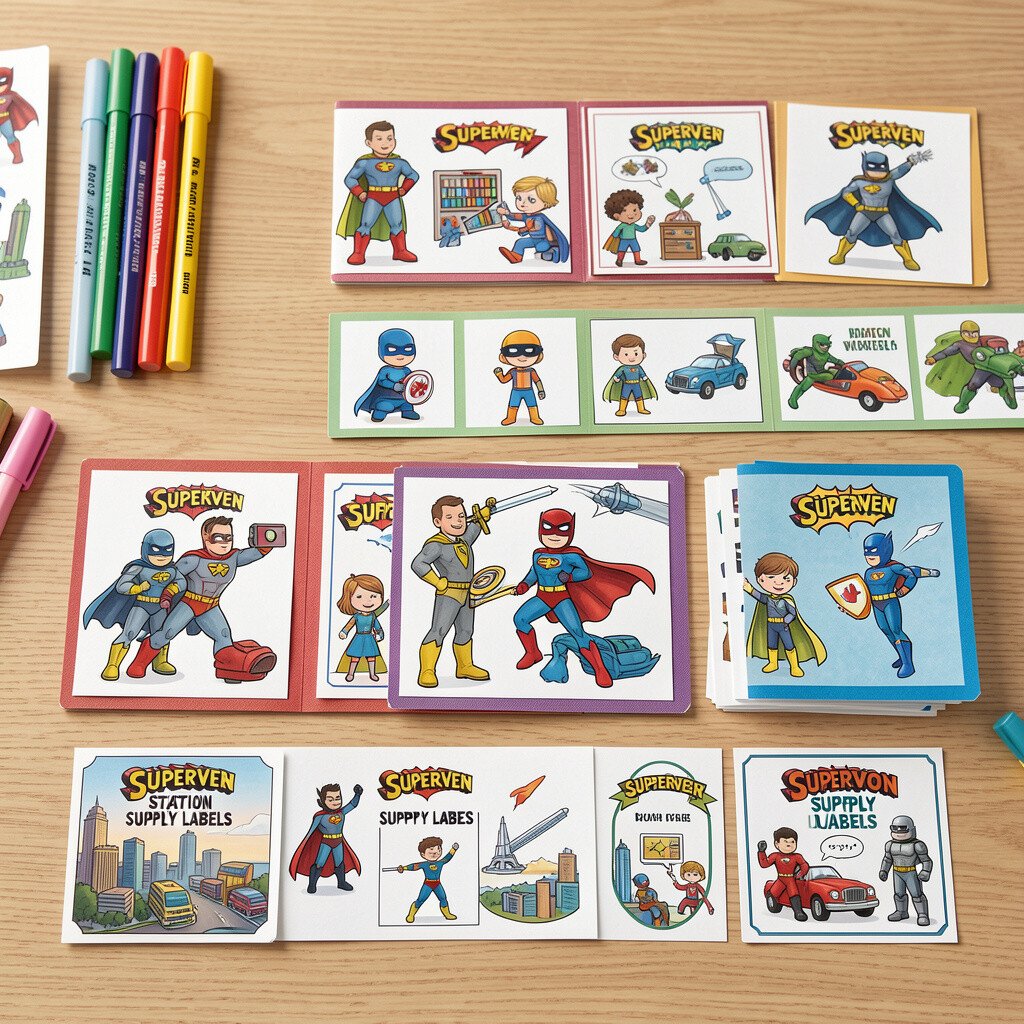
Create a heroic sorting system where each bin represents a power. “Brain Booster Books” and “Strength Sponge Supplies” are silly, but the clear item words still keep things organized.
Choose a consistent design style, like a bold emblem shape around each label, so the room looks tidy and intentional. Students benefit because the visuals guide them, even during busy times.
Uniqueness is easy by customizing emblems for student groups or table teams. You can also add a small checklist icon that reminds students to check in items before storing them.
To match current trends, consider using matte label paper that reduces glare under bright lights. That makes labels easier to read and gives the room a polished, modern look.
9. Detective Mystery Organization Labels
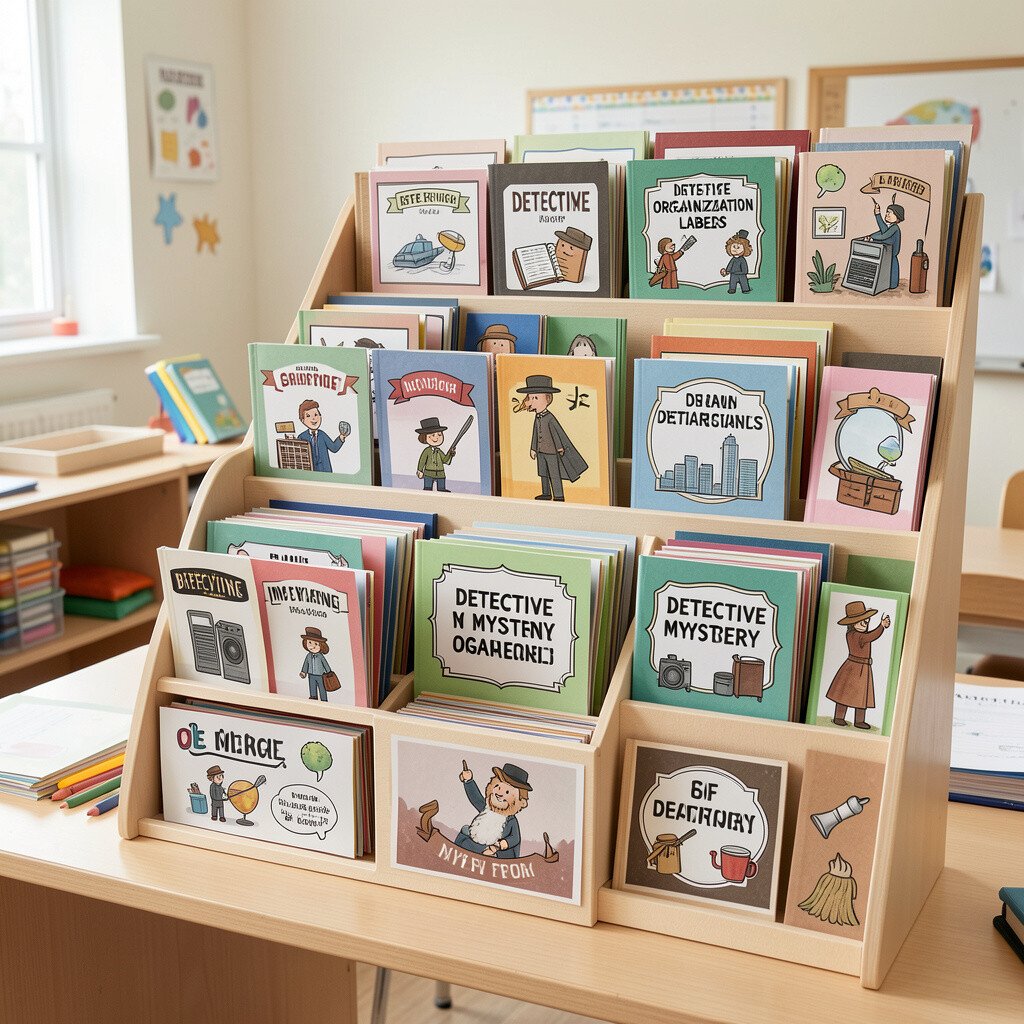
Make storage feel like a case file with labels that look like mystery folders. Items can be placed under cases like “Clue Crayons” or “Evidence Erasers,” which turns tidying into a game.
For the best routine, keep the label text short and direct, with one main item per bin. When students can find the right “clue,” they place materials correctly faster and with less confusion.
Personalize by letting students help design one label each, using drawings or handwriting that reflects their own style. It’s a great way to build ownership without making the classroom chaotic.
Cost considerations are manageable because you can write on label tape or print simple tags and decorate with only a few marker colors. Using waterproof tape can help labels last through wipes and accidental spills.
10. Music Studio Sound Labels
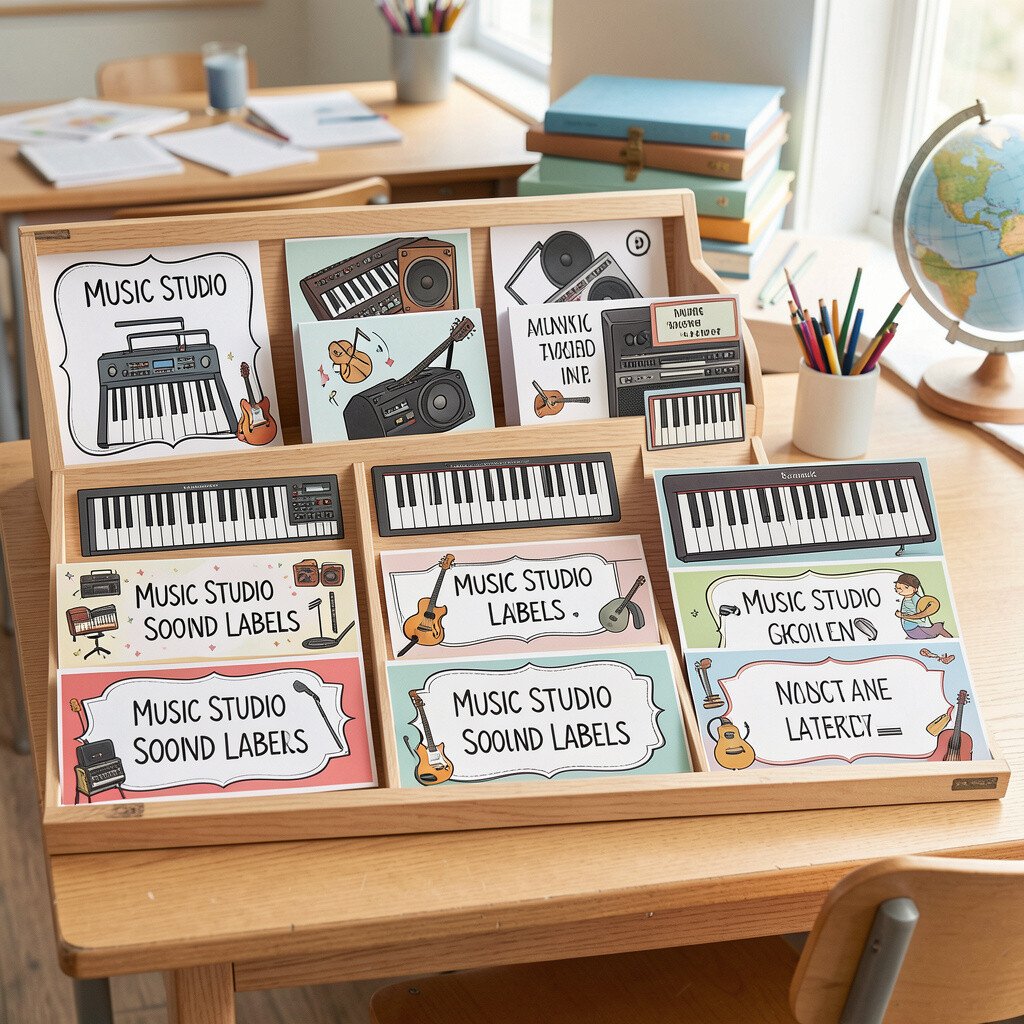
Give every shelf a music vibe with labels that name the “instrument” of the day. “Melody Markers,” “Rhythm Reading,” and “Harmony Highlighters” make organization feel like a fun rehearsal.
Use icons like treble clefs, drums, and headphones to support early readers. Visual cues help students locate bins quickly, and that saves time when you’re moving between activities.
To personalize, link labels to weekly themes, such as “Jazz Journals” for writing week or “Rock & Roll Resources” for art supplies. Students stay engaged when the room changes in small, predictable ways.
For a practical setup, keep the label placement consistent across shelves and bins. When the system stays steady, students don’t have to relearn where things go each day.
11. Bakery-Style Lunchbox Labels for Classroom Jobs
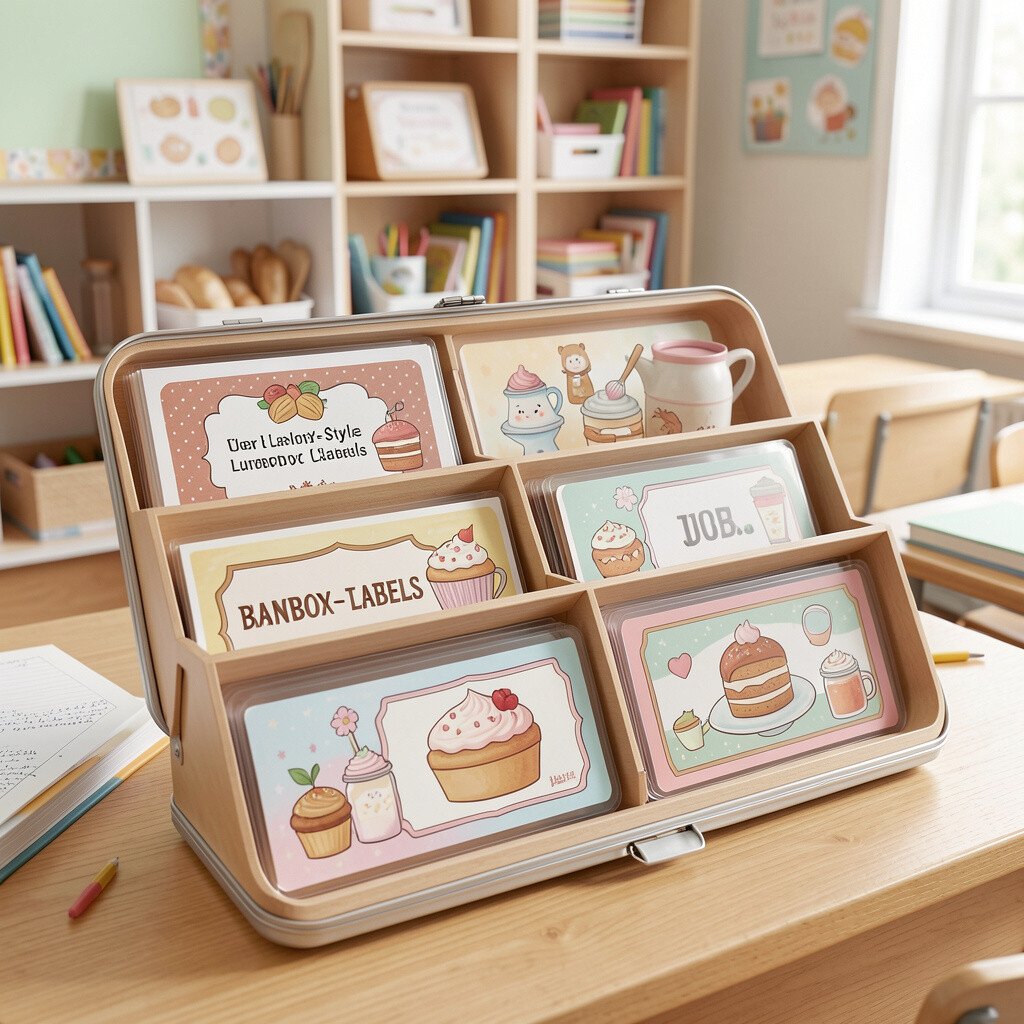
Picture lunchbox cards that label classroom jobs like “Helper Heater,” “Snack Captain,” or “Paper Patrol.” Using themed labels makes responsibility feel like a role students wear proudly.
Write the job name and include the exact materials tied to that job, such as pencils to distribute or supplies to restock. When labels link a task to a specific container, students understand the steps without extra reminders.
Uniqueness comes from rotating job themes, like switching from “lunchbox” to “pirate galley” later in the year. Students like seeing familiar routines with fresh costumes, and it helps keep motivation high.
12. Weather Watch Supply Labels
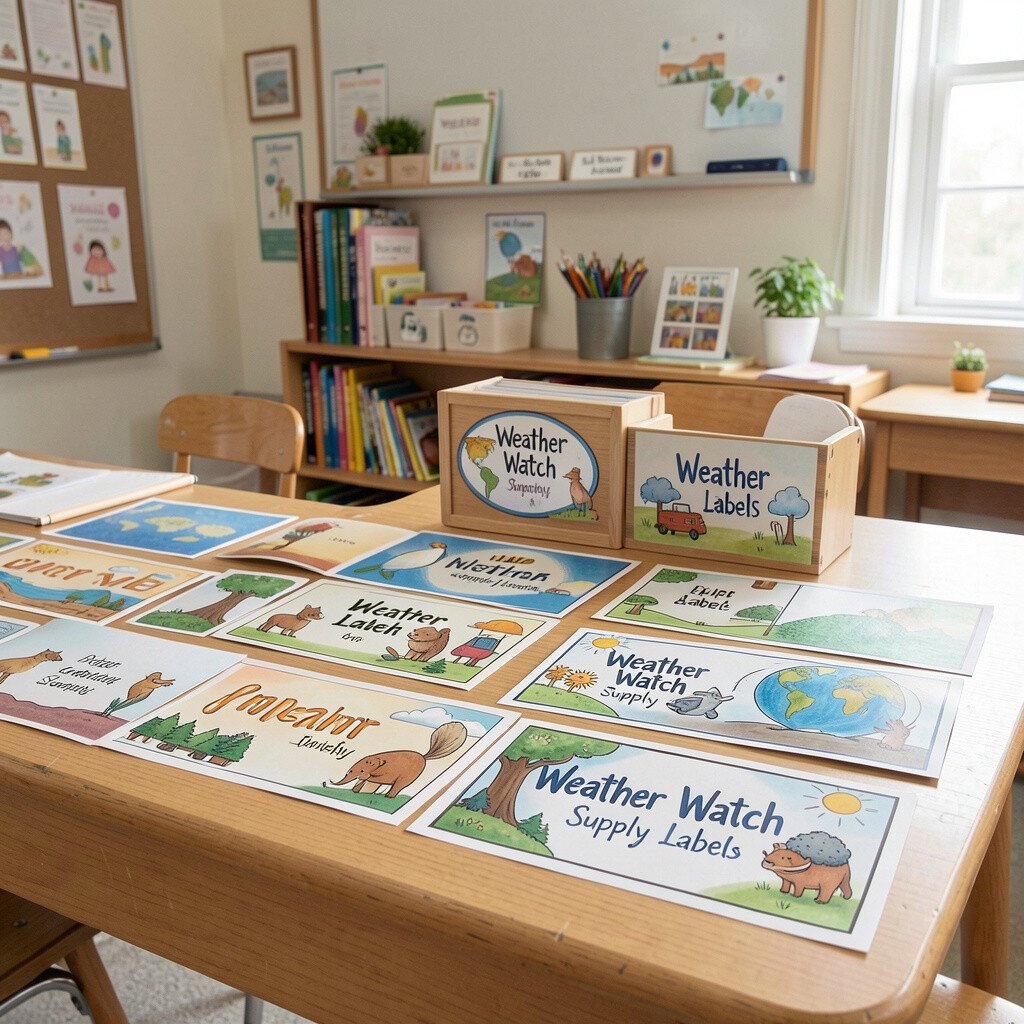
Organize with a weather theme where bins match forecasts and seasons. Labels like “Rainy Day Rulers” and “Sunny Sentence Strips” help students remember the purpose of each storage area.
Make it actionable by placing matching visuals on both the inside and front of containers when possible. Students benefit from seeing the label where they reach, not only where they look first.
For cost, print weather icons in black-and-white and color them with inexpensive markers or colored pencils. This also adds a handmade feel that looks warm and inviting.
13. Toy Robot Coding Labels
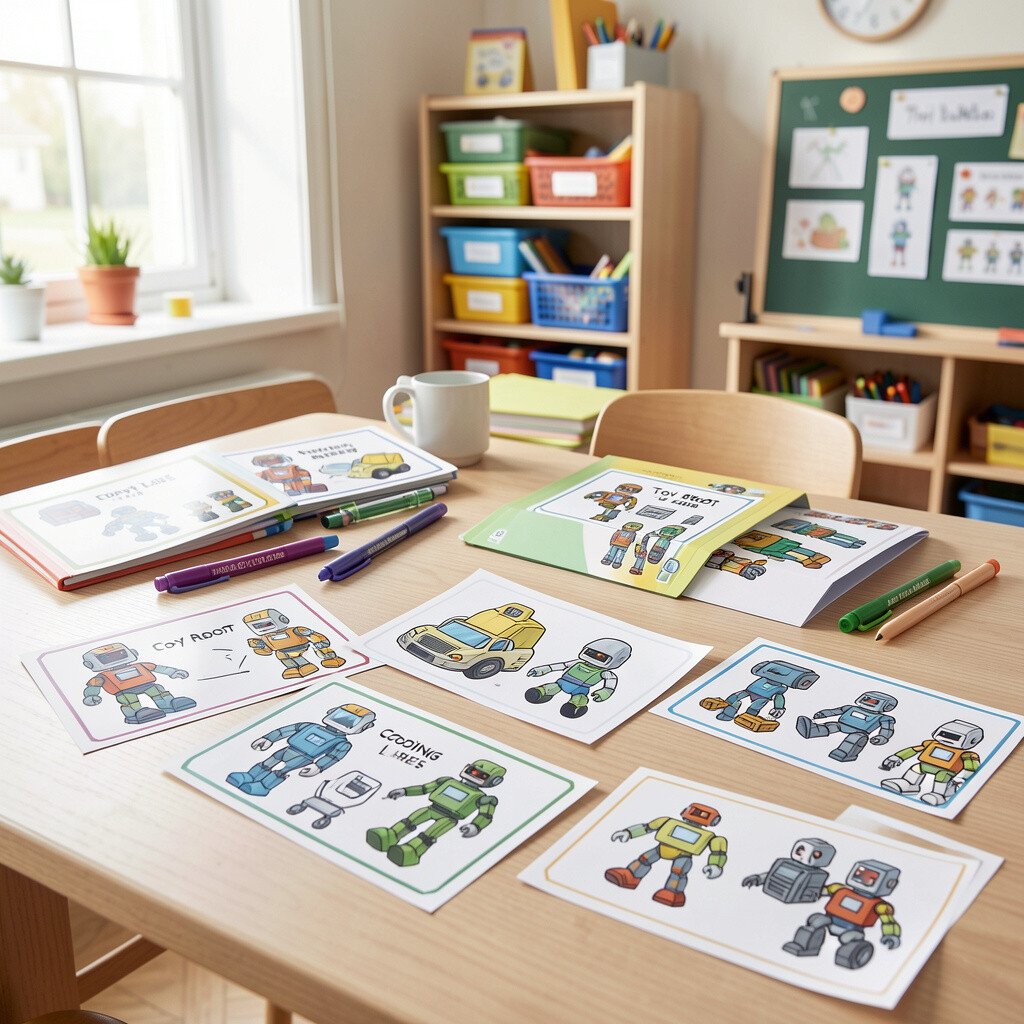
Turn storage into a kid-friendly coding world with labels like “If/Then Flashcards” and “Bug Fix Books.” Even if students aren’t learning coding yet, the theme makes the bins memorable.
Use simple pictures to pair with each label so students who are still reading can match items correctly. Clear visuals reduce frustration, especially during transitions when you want calm and quick cleanup.
Personalize by letting older students create a few label designs based on what they’re learning. That creates a sense of teamwork and connects classroom organization to academic growth.
To keep the system sturdy, use label sheets with strong adhesive and test them on your shelf surfaces first. This small step helps the labels stay put without constantly replacing them.
14. Art Studio Gallery Frame Labels
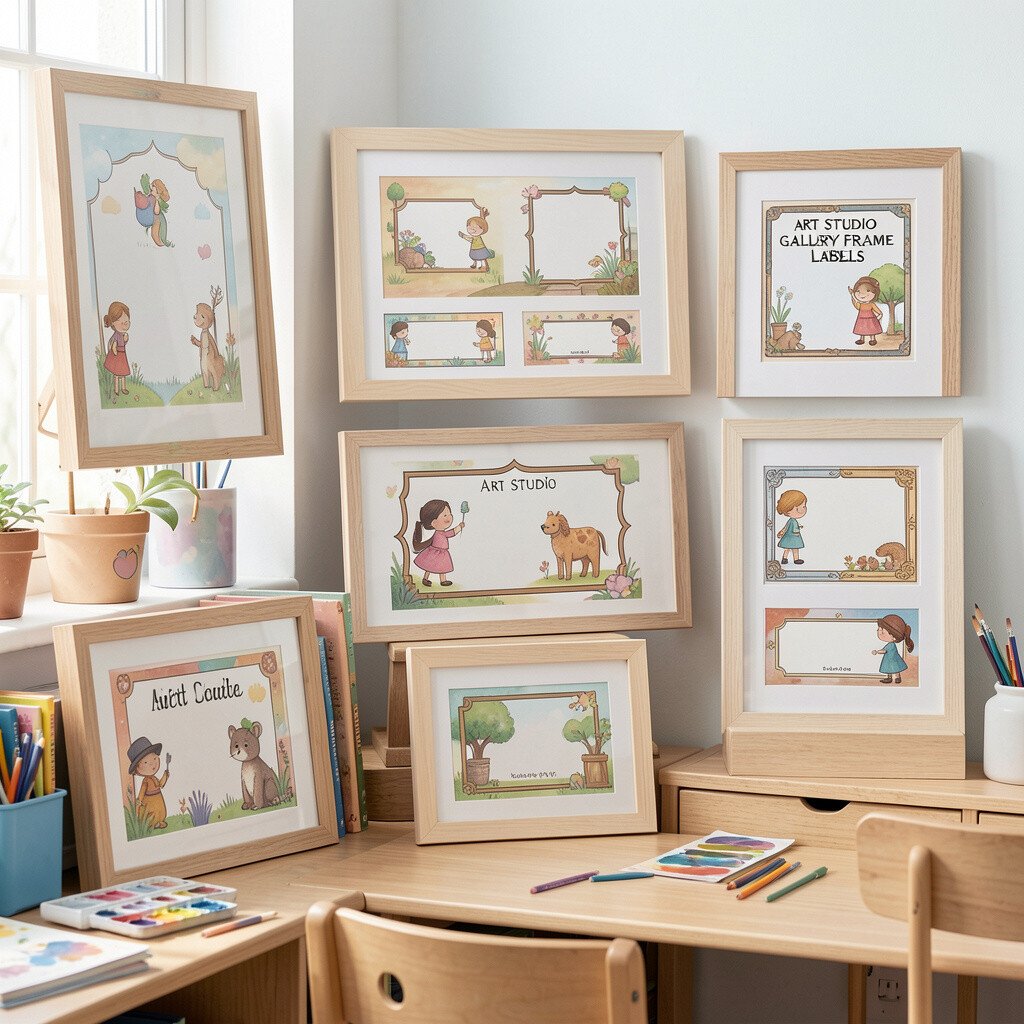
Imagine shelves lined like a gallery, with each bin wearing a frame-style label. You can label “Sketch Corner Paper,” “Clay Capabilities,” and “Painting Precautions” in a way that feels like an art show.
Use color palettes that match the art supplies inside, such as warm colors for crayons and cool colors for markers. When the labels match the colors students see, picking items becomes quicker and more accurate.
For practicality, attach labels securely and keep the text large. Students benefit when the label stays readable from a seated spot, especially for students who need extra time.
Cost considerations are friendly because you can use inexpensive picture frames from craft stores for display labels and then swap the inner card with new text. This keeps the look consistent while letting you update themes throughout the year.
15. Time Traveler Schedule Supply Labels
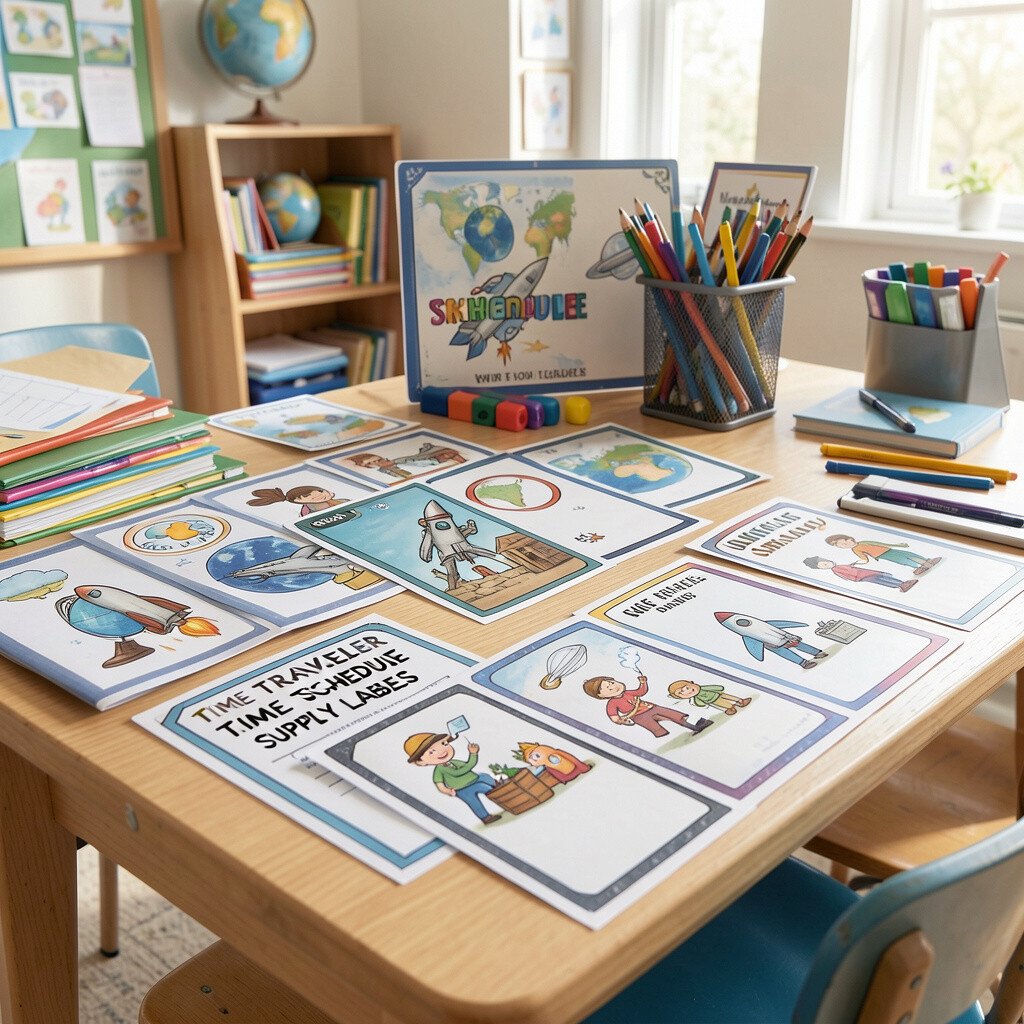
Create a time-travel theme with labels that feel like eras and timelines. “Past Papers,” “Present Practice,” and “Future Projects” help students place materials according to what they’ll use now or later.
Make it practical by sorting supplies by use, not by fancy design alone. Students gain independence when bins are grouped by when they need the materials, like homework folders for today and spare supplies for later.
Personalization ideas can include adding small “time stamps” with student initials, so they know which bin is tied to their work. This also makes it easier for them to check their own belongings during class.
If you want a current trend, incorporate minimal QR scavenger hunt labels for a few rotating bins, so students can scan and find instructions or quick reminders. Just keep the content short and reliable so it stays fun instead of frustrating.
For durability, choose waterproof label materials and avoid placing labels where they might get rubbed by carts. With a little care, the labels keep their crisp look for the whole year.