The stairs are often the first thing you see, and the last thing you notice as you rush by. With the right wooden accessories, they can start feeling like part of the whole home’s personality.
You can make them warmer, safer, and more styled without major renovations.
1. Hand-Carved Wooden Stair Treads
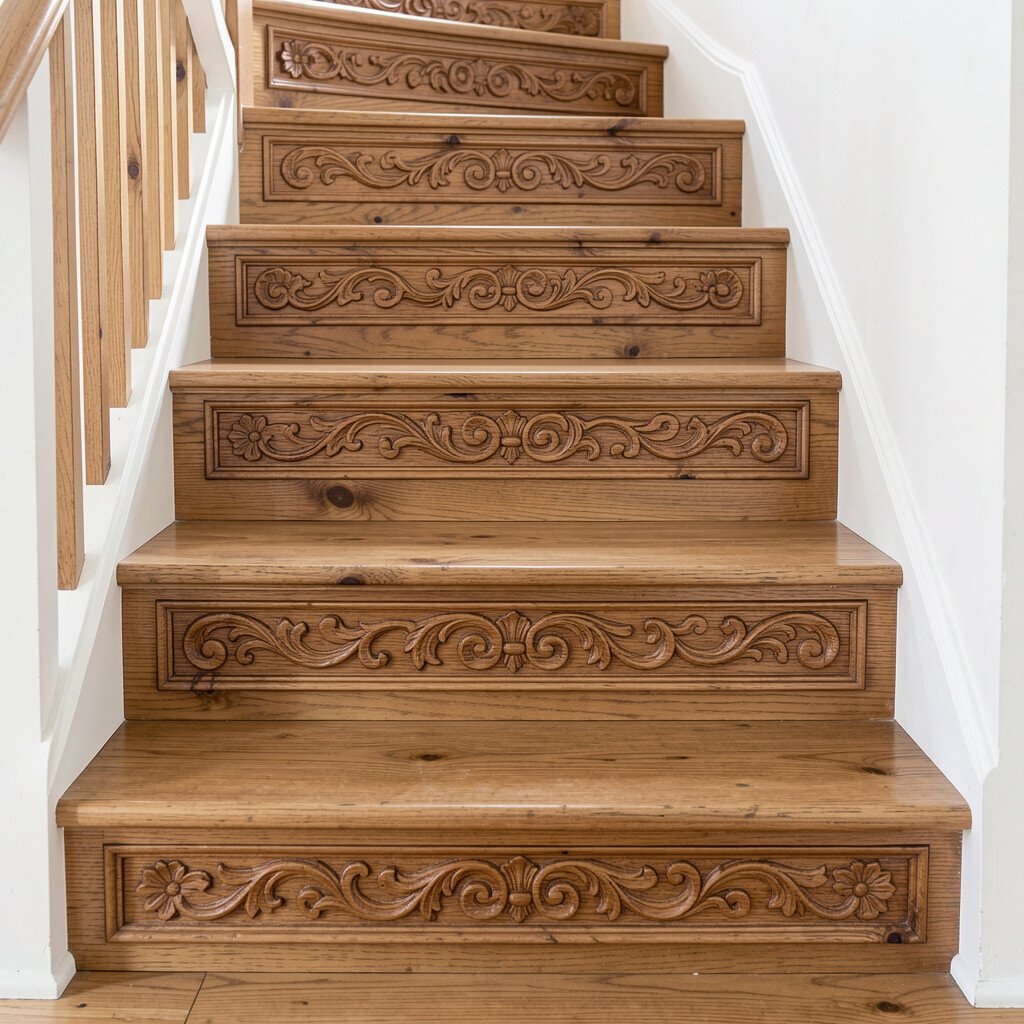
Imagine stepping onto treads that catch the light and show fine grain lines. Each carved edge can look like a small piece of art right under your feet, and it instantly makes the staircase feel custom.
They also add a layer of grip and comfort, which helps on days when floors feel a bit slick. For best results, choose carvings that are shallow enough to feel smooth, not rough. If you like a matching look, bring the same wood tone into nearby trim so everything blends naturally.
2. Rustic Matching Wooden Stair Risers
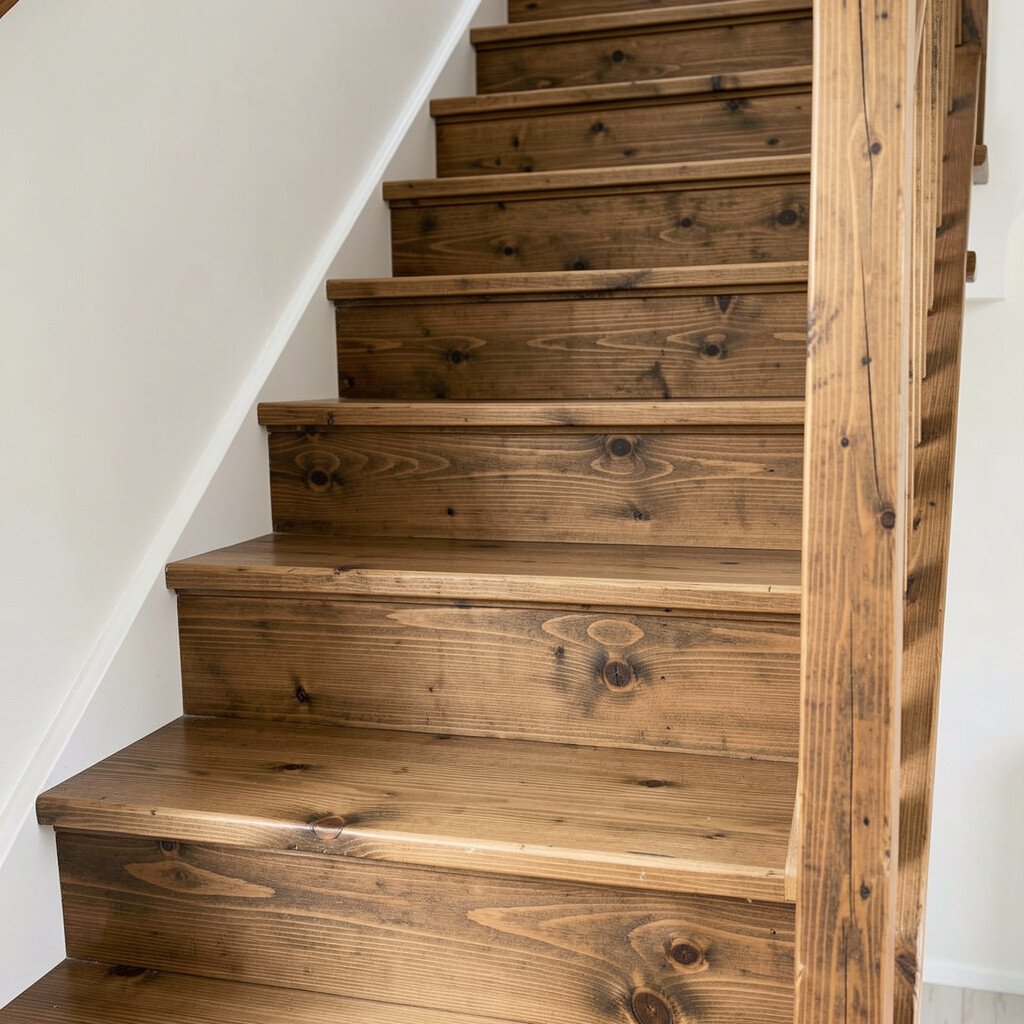
When wooden risers line up cleanly, the whole staircase looks neat and intentional. You can spot how the lines visually organize the steps, especially in hallways with bright light.
Risers also help hide gaps and wear that show up over time. Many homeowners like adding slim wooden strips or full riser panels to refresh the look without rebuilding the stairs. Pick a finish that matches your floors, and test a small hidden spot first so the color turns out exactly how you expect.
If you want it to feel personal, consider a slightly darker stain on the risers and a lighter tone on the treads for gentle contrast. Today’s homes often lean toward warm wood blends and natural matte finishes rather than heavy gloss.
3. Stair Rail Balusters With Wood Grain Character
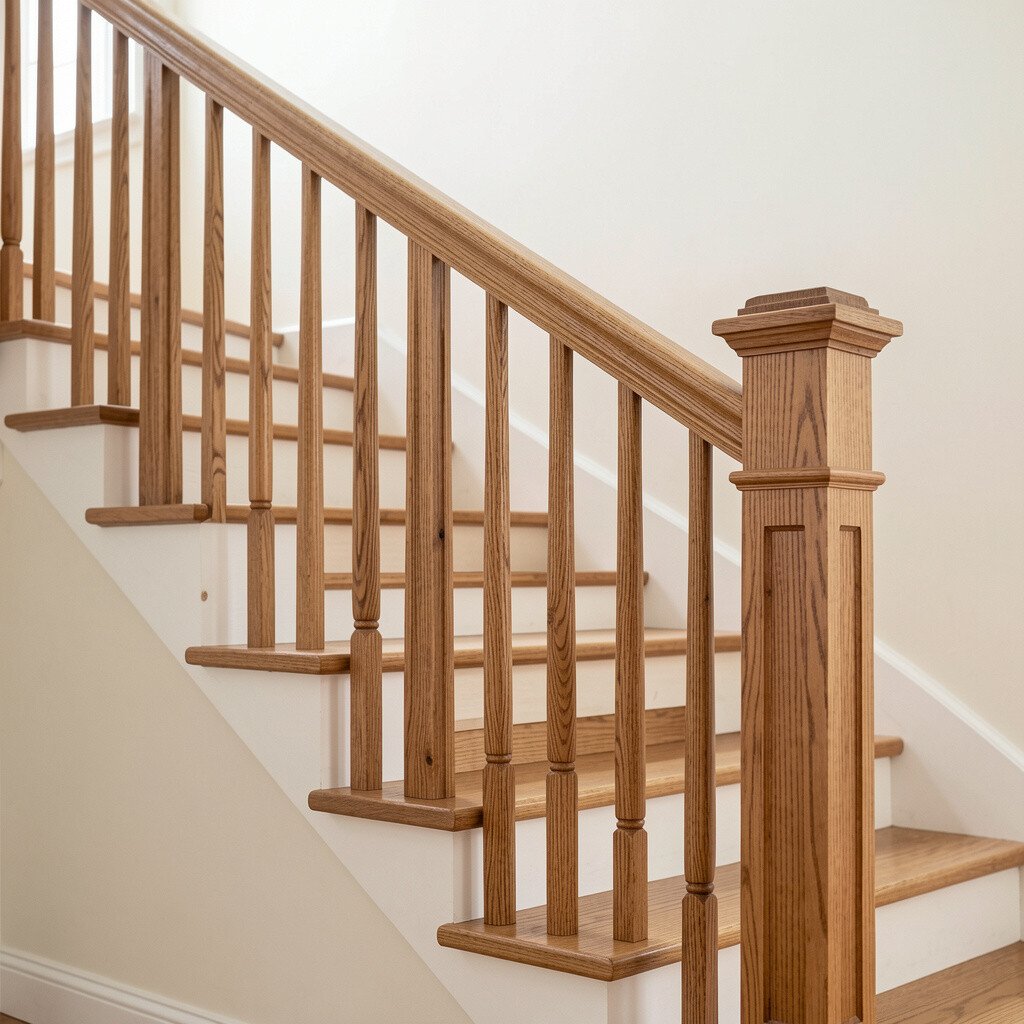
Balusters can change the vibe of a staircase more than most people realize. Even when the rail stays the same, wooden balusters with bold grain can make the design feel richer and more alive.
They help with safety by creating sturdy support while you climb. For practicality, choose balusters that are sized to fit securely and are sanded smooth at hand height. If you have kids or frequent guests, focus on comfort and rounded edges rather than sharp decorative shapes.
To personalize, mix two wood species for a subtle two-tone effect, like walnut accents with lighter oak. Many modern interiors also pair wooden balusters with simple metal rail brackets, keeping the look updated without losing warmth.
4. Wooden Stair Spindles With a Modern Twist
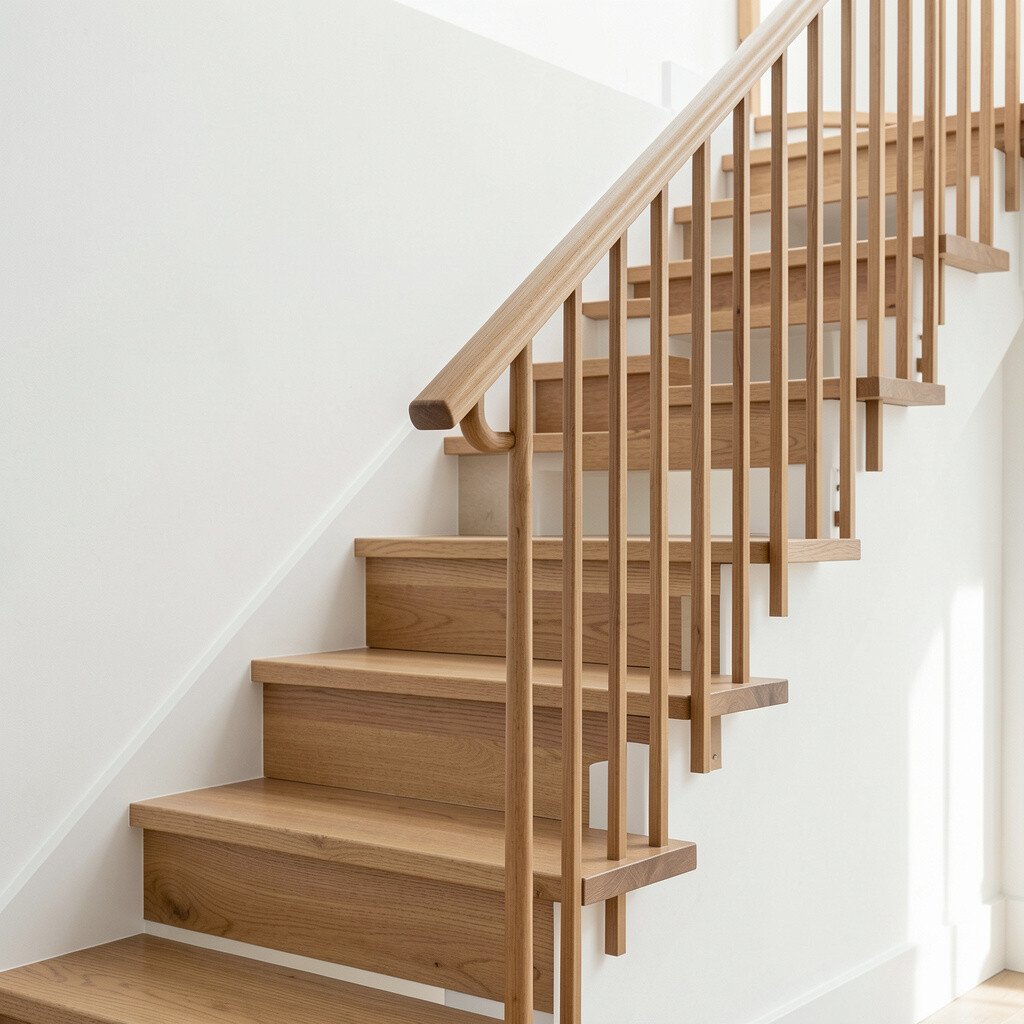
Think of spindles as the “frame” for your staircase. When they have clean lines or gentle curves, the stair rail looks sleek while still feeling handmade.
Swapping to spindles with a consistent shape can also make the staircase look more balanced. If you’re working on a budget, focus on replacing just the most worn or mismatched pieces first. Choose a finish that resists scuffs, especially in busy homes with pets.
For personalization, paint only the rail posts while keeping spindles natural, or stain spindles darker for a dramatic, airy look. A current trend is mixing warm wood with minimalist styling so the stair area feels calm instead of busy.
5. Stair Edge Molding and Trim in Matching Wood
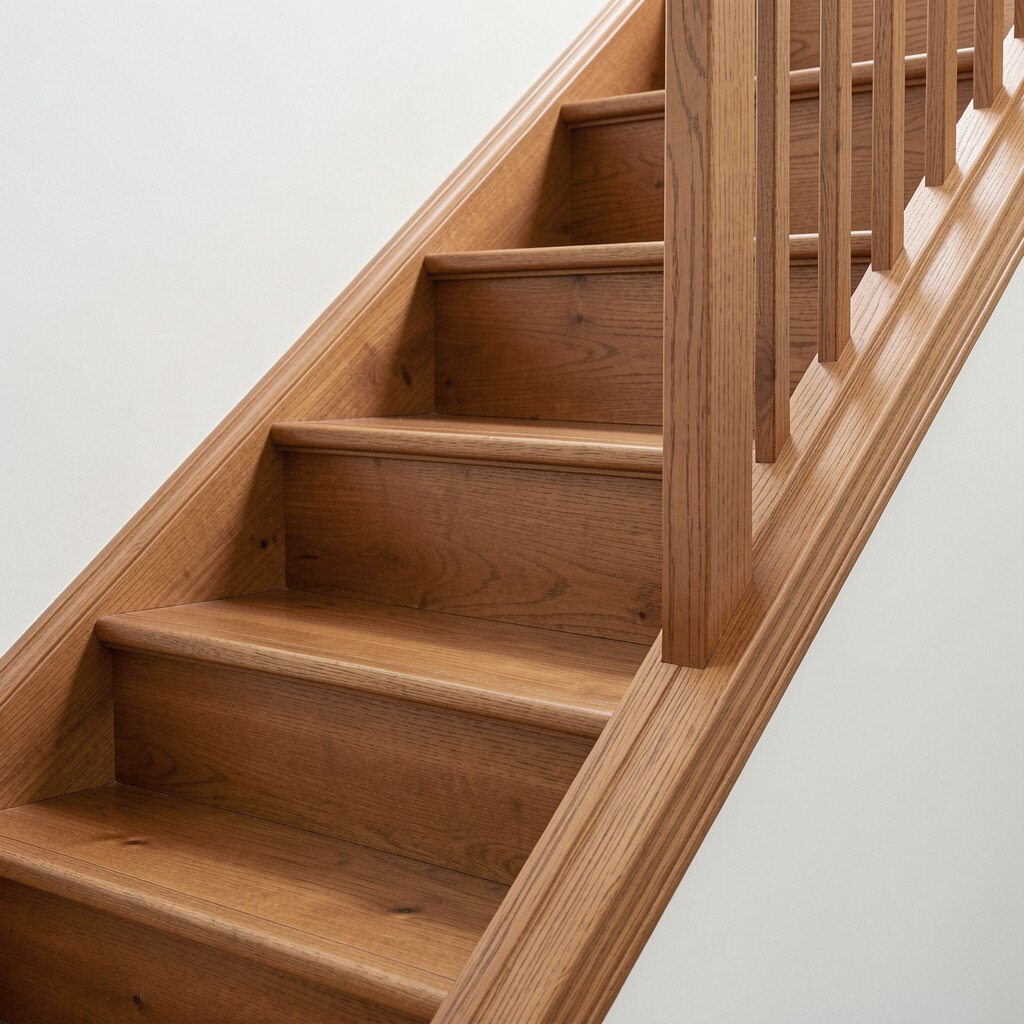
Stair edge molding is one of those small details that makes everything look finished. When the trim lines are straight and the color matches, the steps feel sharper and more elegant.
It can also protect the edges from daily scuffs, which helps preserve the wood underneath. Measure carefully and buy trim pieces that fit your stair thickness so installation stays smooth. If you’re not sure, a thin trim is easier to work with than something wide and heavy.
To personalize, consider a slightly lighter trim than the stairs to create a soft border effect. Many homeowners now choose matte finishes and simple profiles that feel modern but still warm.
6. Wooden Stair Stringer Accent Panels
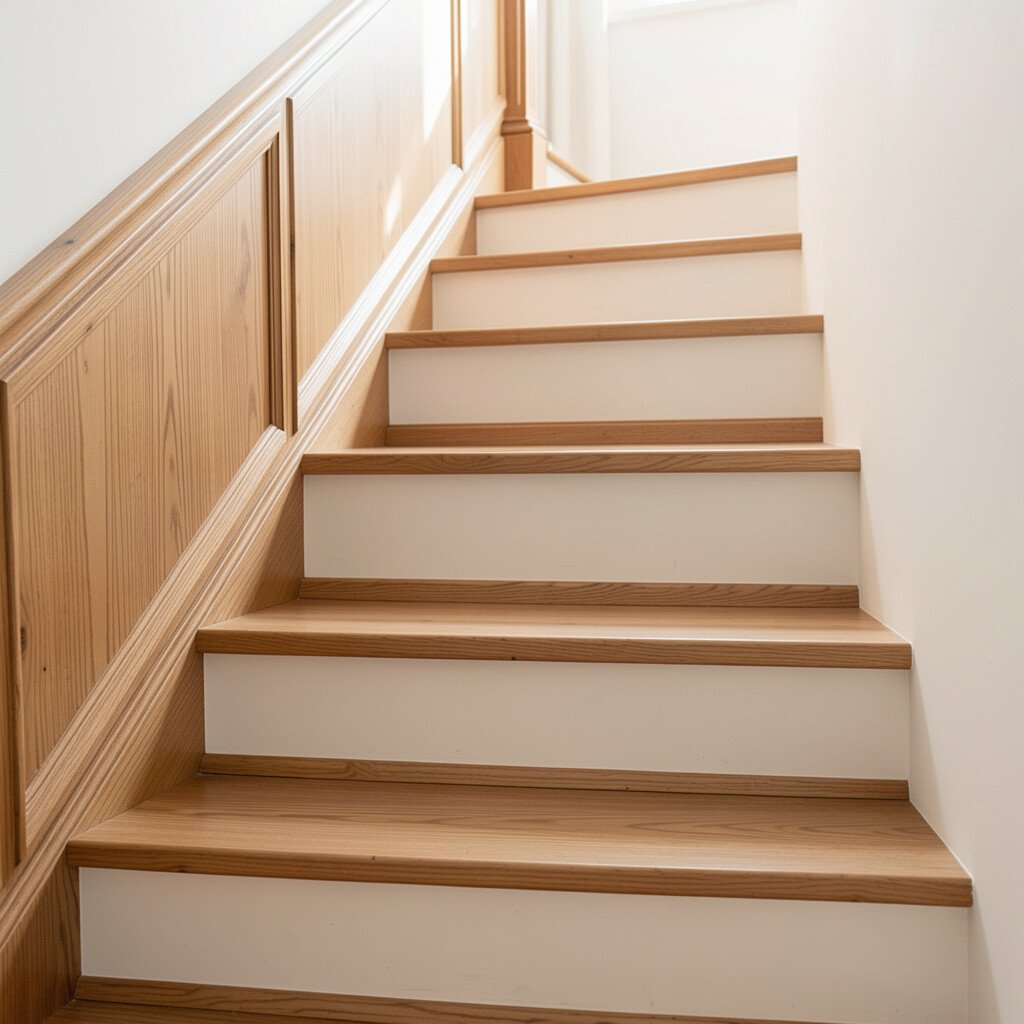
The stringer is the side frame that usually fades into the background. Add an accent panel, and suddenly that entire wall of the staircase becomes a design moment.
These panels can hide uneven surfaces and create a cleaner look. They’re also a smart way to add storage-friendly styling ideas if you plan lighting or decor along the landing. When choosing wood, look for a grain pattern that feels calm rather than overly busy, since the staircase already has many visual lines.
For cost control, you can use slimmer panels or panel sections instead of covering everything at once. A trend in current home design is creating warm vertical textures, and stair stringer accents fit that style beautifully.
7. Decorative Wooden Stair Nosing Caps
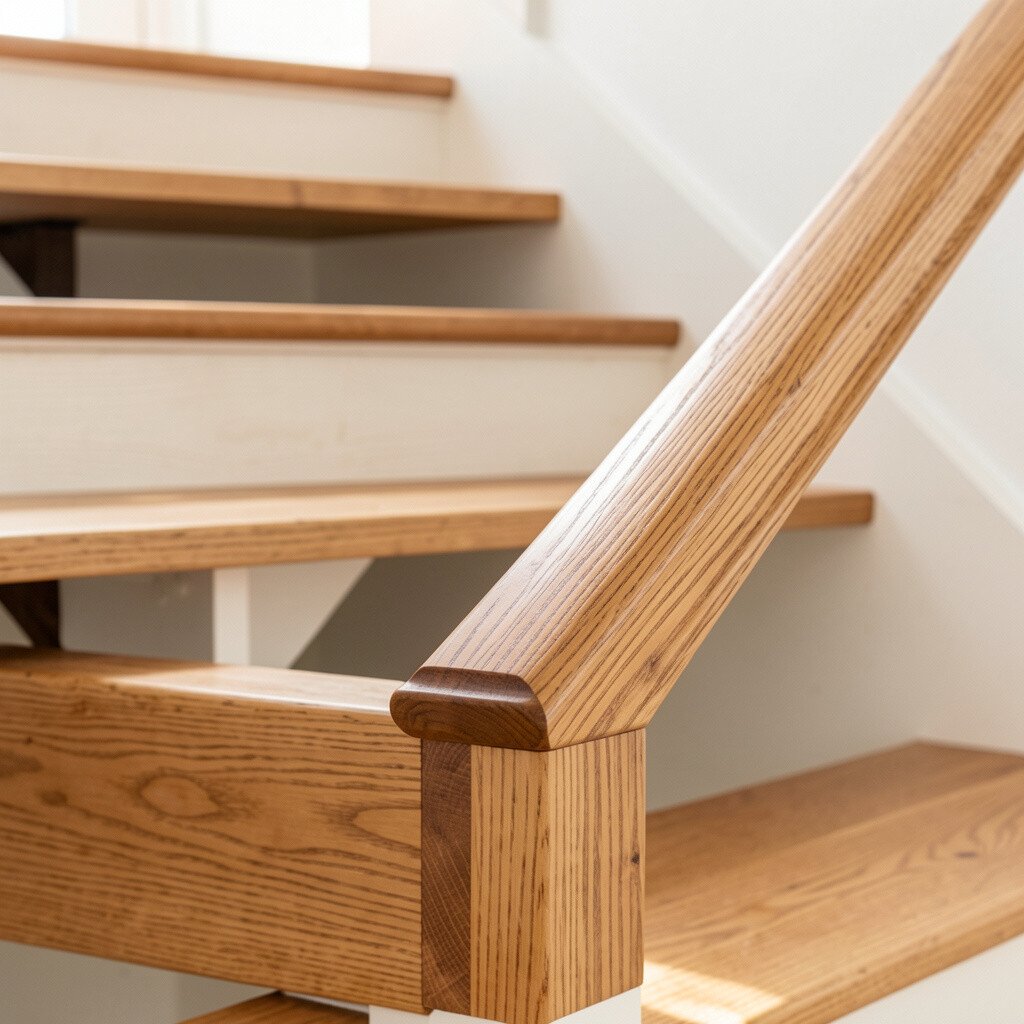
Nosing caps sit right at the front edge of each step, and they catch your eye every time. A well-chosen cap adds a defined line and can make the stair look thicker and more substantial.
They’re also helpful for wear, since the step edge takes the brunt of daily foot traffic. Look for caps that are smooth and securely fastened so you don’t feel any uneven edges underfoot. If you can, choose caps made for stairs specifically, because sizing matters for comfort.
8. Wood and Fabric Stair Runner with Matching End Caps
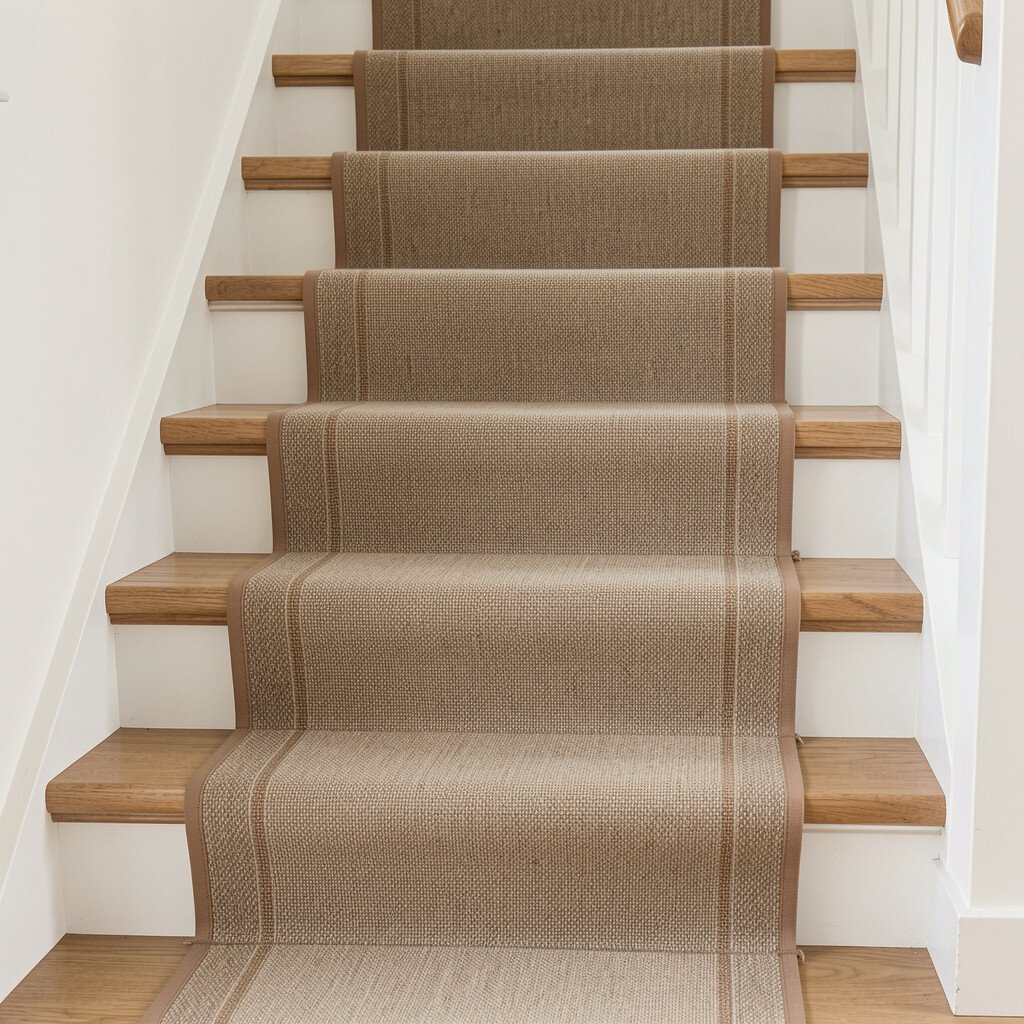
A stair runner is cozy, and wood ends make it look styled instead of temporary. When you pair the runner edges with wooden end caps, the whole staircase looks planned and tidy.
Runner setups can reduce slipping and soften sound, which is great for busy households. For a practical approach, pick a runner with a low enough pile to clean easily and a pattern that hides everyday dust. Secure the runner properly so it stays flat and doesn’t curl at the edges.
To personalize, choose end caps that match your rail and stain so the runner feels like part of the original design. Right now, many homes are leaning toward textured neutral runners with warm wood tones, especially in living spaces that flow into hallways.
9. Wooden Stair Wall Hooks and Coat Rails
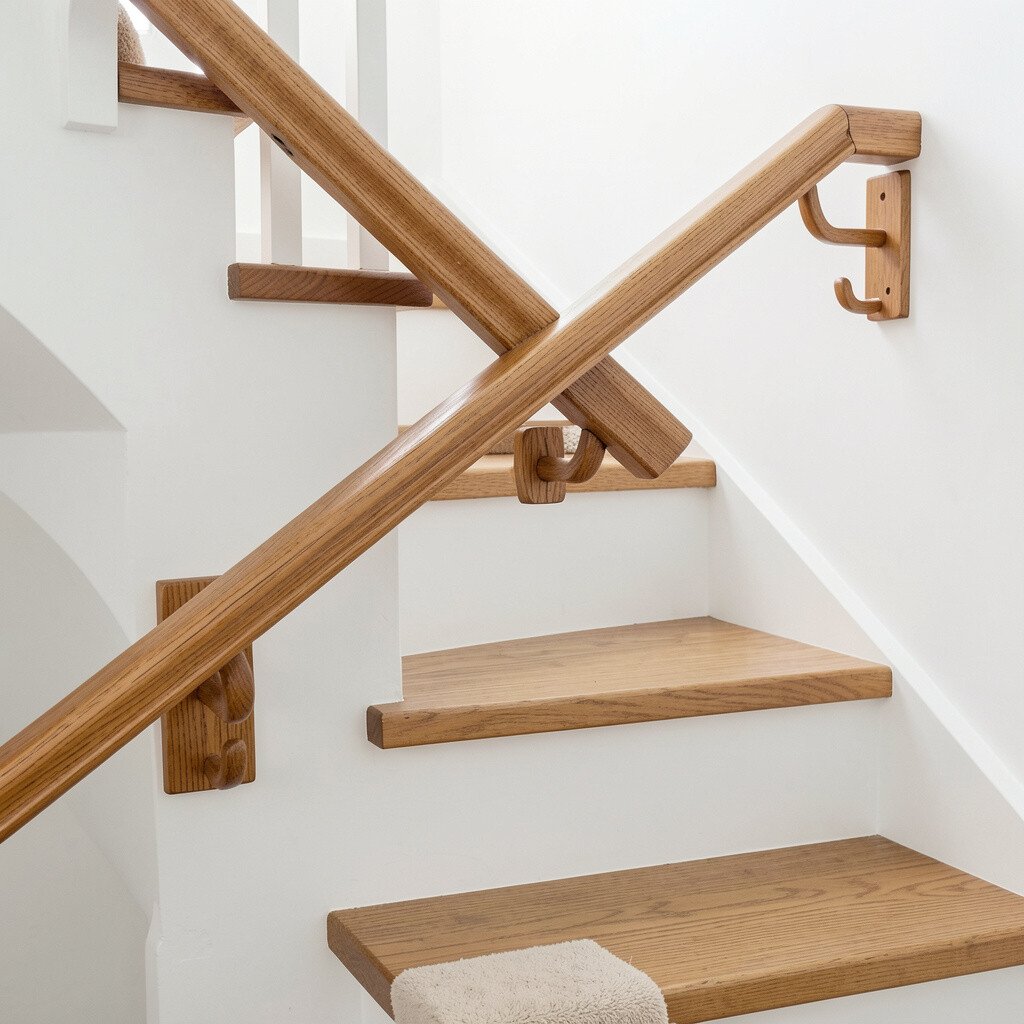
It’s easy for entryways to feel cluttered when coats and bags pile up near the stairs. Wooden hooks and small coat rails add function while keeping the area visually warm.
These accessories make daily life simpler by giving everyone a spot to hang things quickly. Install them at reachable height and use strong anchors that match your wall type. If your staircase landing has a blank wall, this is a perfect place to add a natural focal point.
10. Ladder-Style Wooden Storage Shelves for Stair Corners
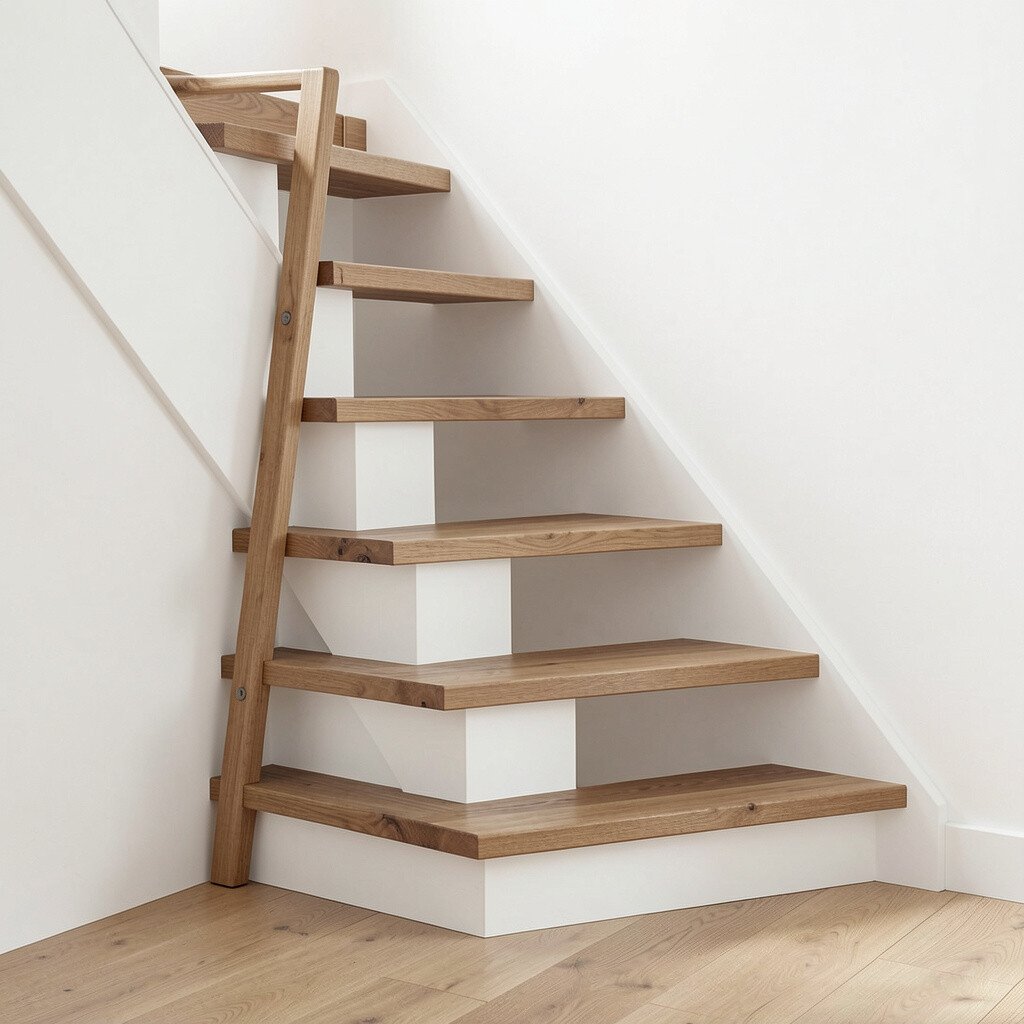
Some stair corners are awkward, and they can make a home feel unfinished. A ladder-style wooden shelf structure uses that space and gives you a place for baskets, books, or small decor.
It also helps keep the area organized, which makes the staircase look clean even on busy days. Choose shelves with a finish that matches your banister so the corner feels intentional. A helpful trick is to place a few taller items on the bottom shelves and smaller items on top to keep visual balance.
For personalization, add woven baskets that match your curtains or throw blankets. On trend, people are mixing wood shelving with natural fibers for a cozy, lived-in look.
11. Wooden Stair Lighting Clips and Warm LED Strips
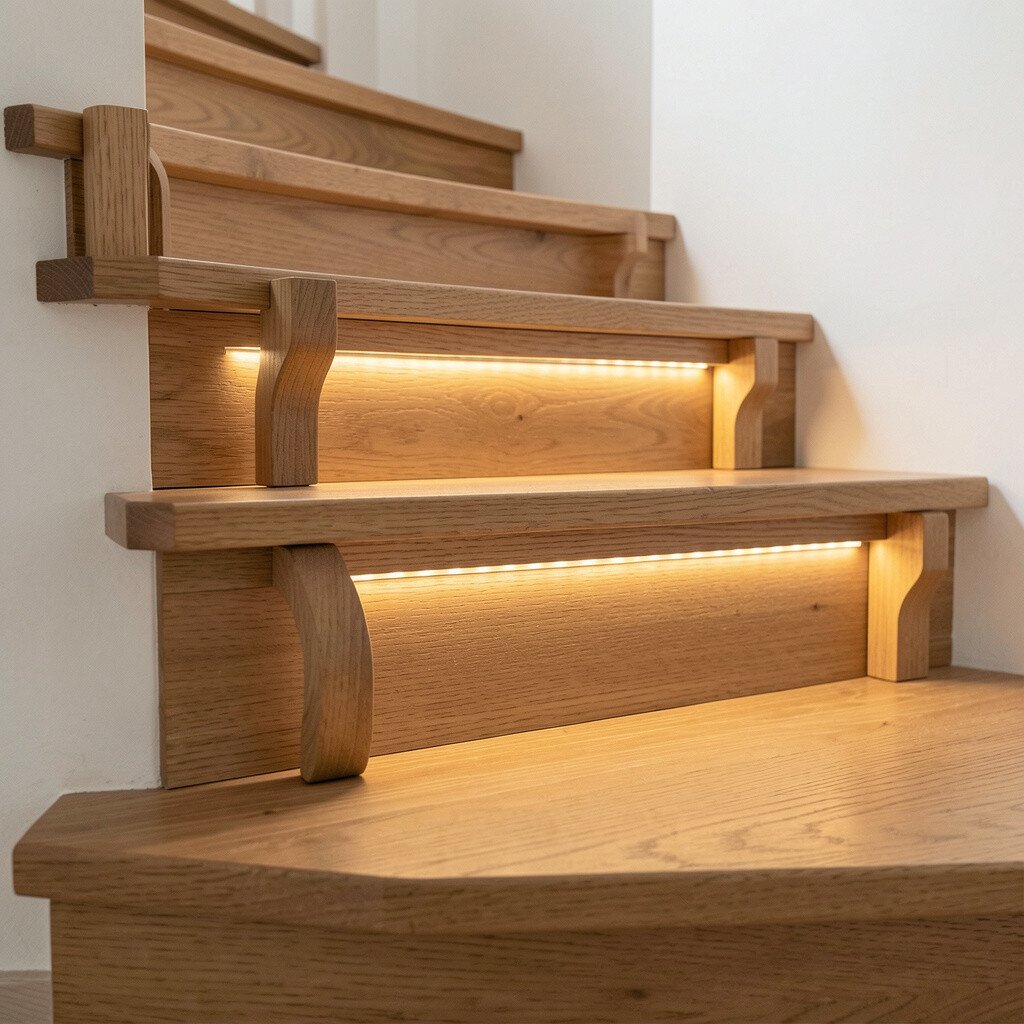
Good lighting makes wood look richer, and stairs are a perfect place to use that trick. Warm LED strips tucked neatly along the rail or clipped near step edges can glow like soft highlights.
This kind of lighting improves safety by helping you see the steps clearly at night. Choose clip-friendly setups that don’t require heavy drilling, especially if you’re renting or want low mess. If you’re wiring in a new setup, consider hiring a pro for the electrical part, then handle the placement yourself.
12. Wood-Tone Stair Cleaning Brushes and Dust Trays
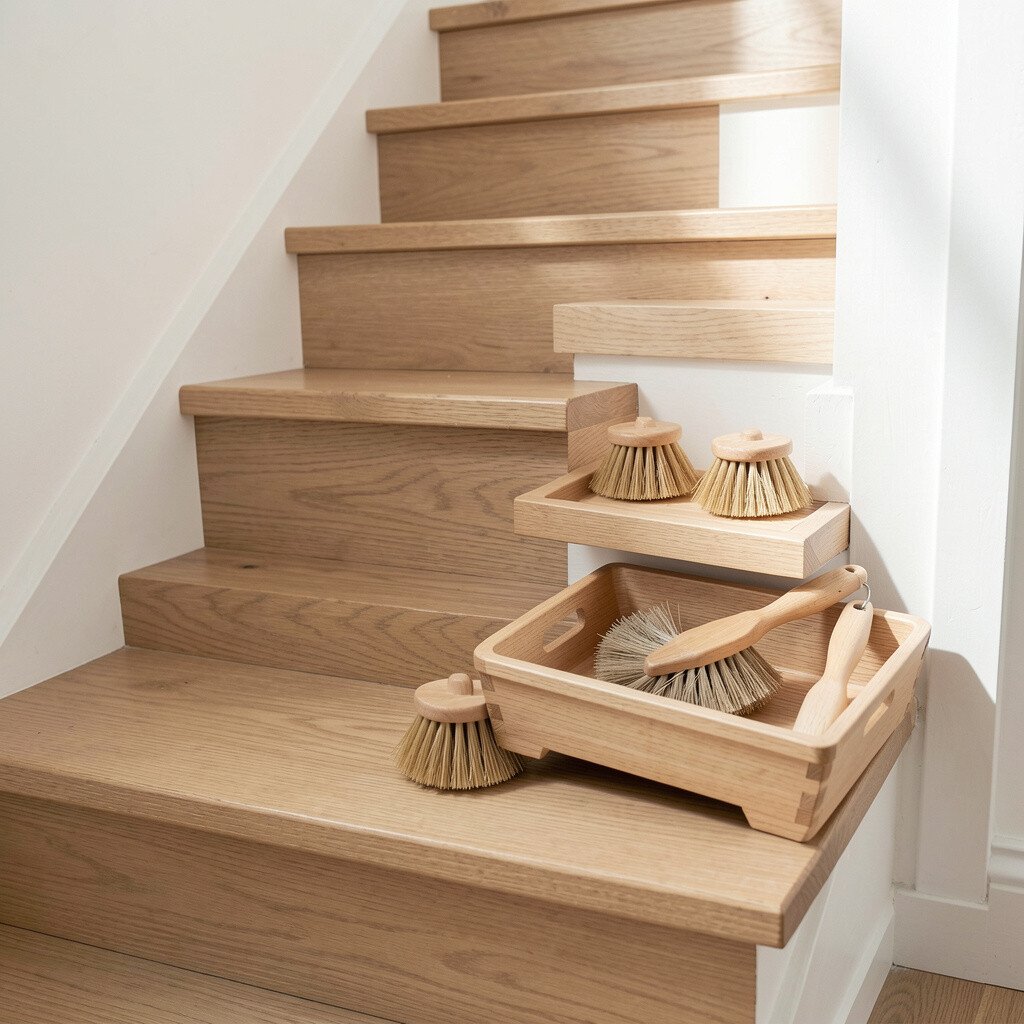
Even beautiful stairs can look dull if dust gathers in corners and along edges. A matching wooden brush and a small dust tray make cleaning feel more organized and more pleasant.
They help you keep stair details looking sharp between deep clean days. Look for tools with comfortable handles and bristles that suit wood surfaces without being too harsh. Store the brush in a cabinet or tuck it near the wall so it stays part of your routine instead of becoming clutter.
For personalization, pick a brush handle color that matches your stain and add a small tray that matches your entry decor. This “small ritual” approach is popular now because it makes maintenance feel easier and more enjoyable.
13. Wooden Stair Balustrade Base Covers and Trim Liners
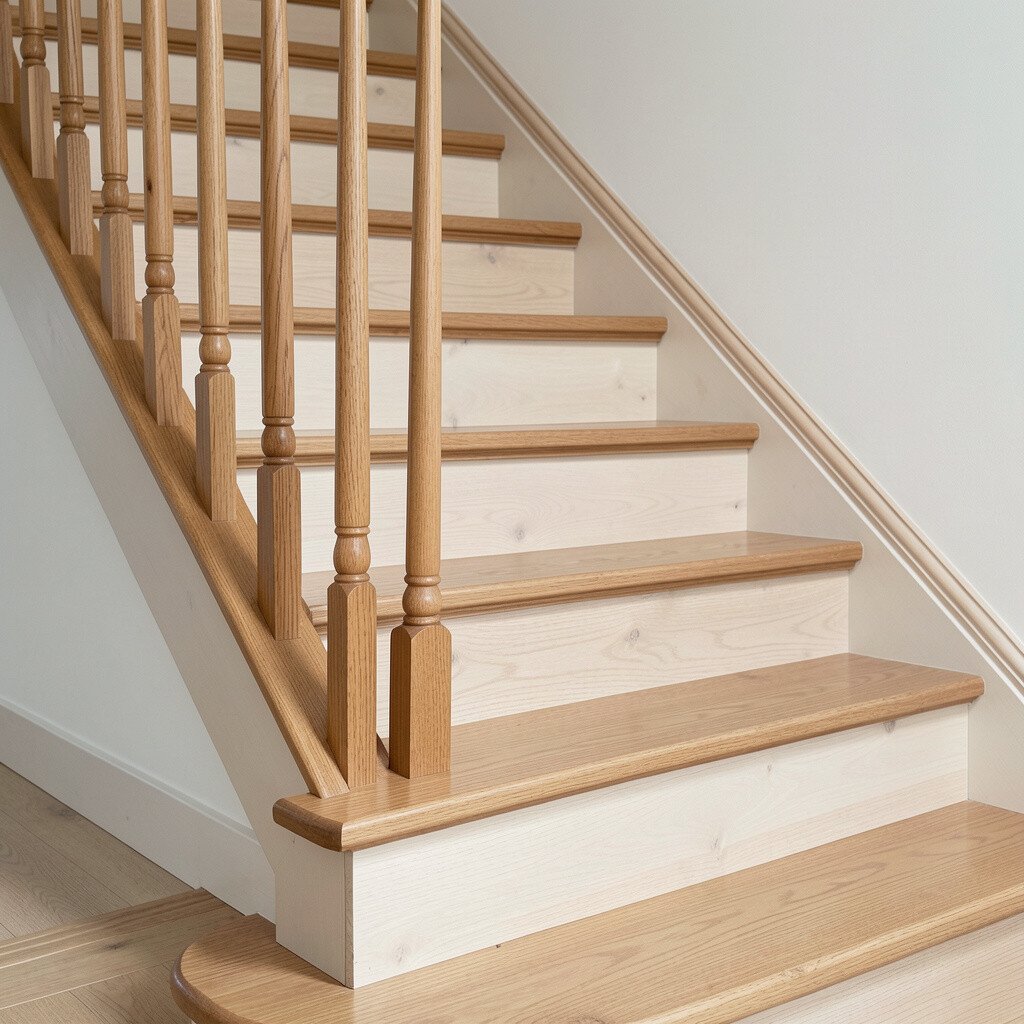
Base covers and trim liners help remove the rough look that happens where the rail meets the floor. When the bottom edge is clean and aligned, the staircase looks cared for from every angle.
They also reduce scuffing from shoes and vacuum wheels, which can save you time on repairs. Measure the length carefully and choose pieces that fit your stair rail style and thickness. If you want an easy upgrade, pick pre-cut trim sections that match common stair configurations.
14. Personalized Wood Nameplates on the Stair Landing
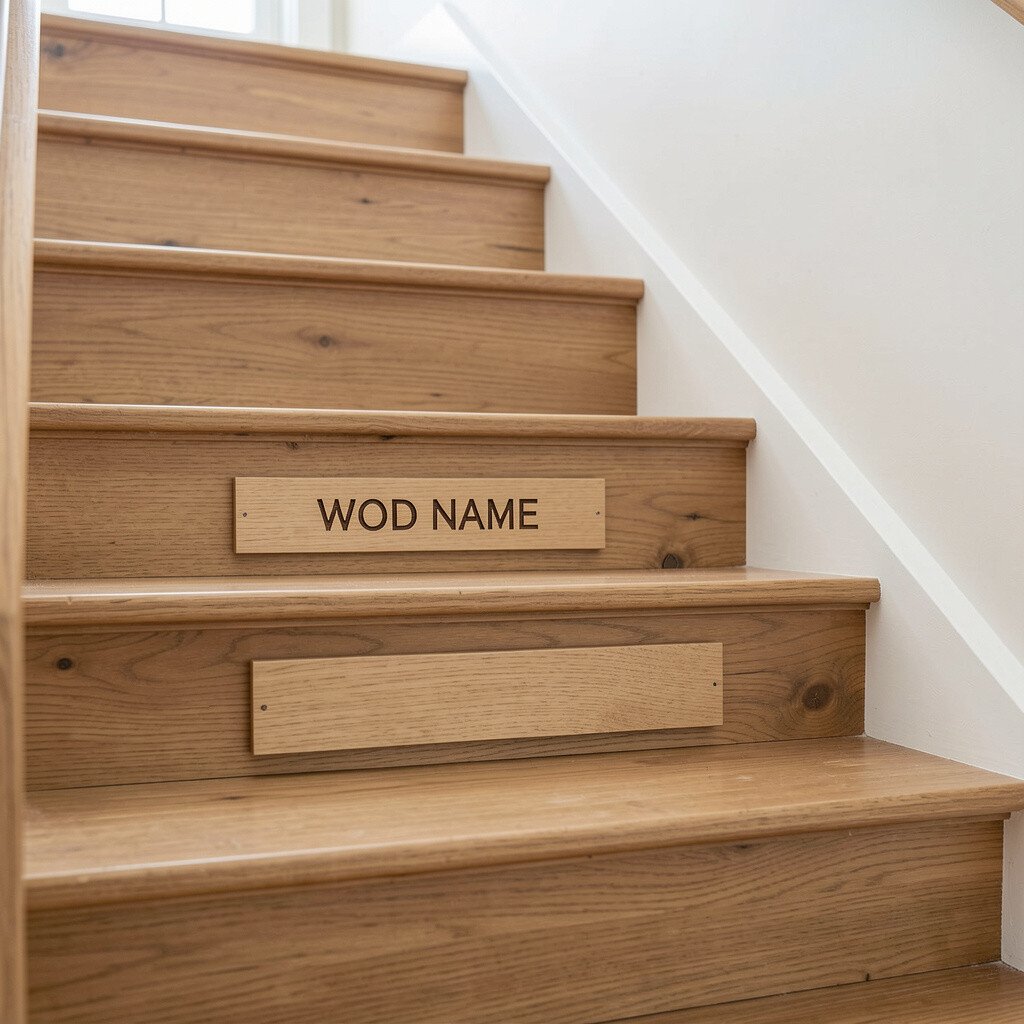
A stair landing is a natural “pause spot,” and nameplates make it feel like home. A wooden nameplate with a simple carved or engraved look adds warmth without needing bold colors.
It gives your staircase a unique signature that visitors will remember. For practical placement, mount it where it won’t be bumped by bags or seasonal decor. Choose a finish that handles dust and light cleaning, since nameplates collect fingerprints in high-traffic homes.
To personalize, use your family name, the year you moved in, or a small phrase that fits your style. Current trends favor subtle, natural lettering and minimal designs rather than flashy signage.
15. Wooden Stair Corner Protectors and Scroll Work Guards
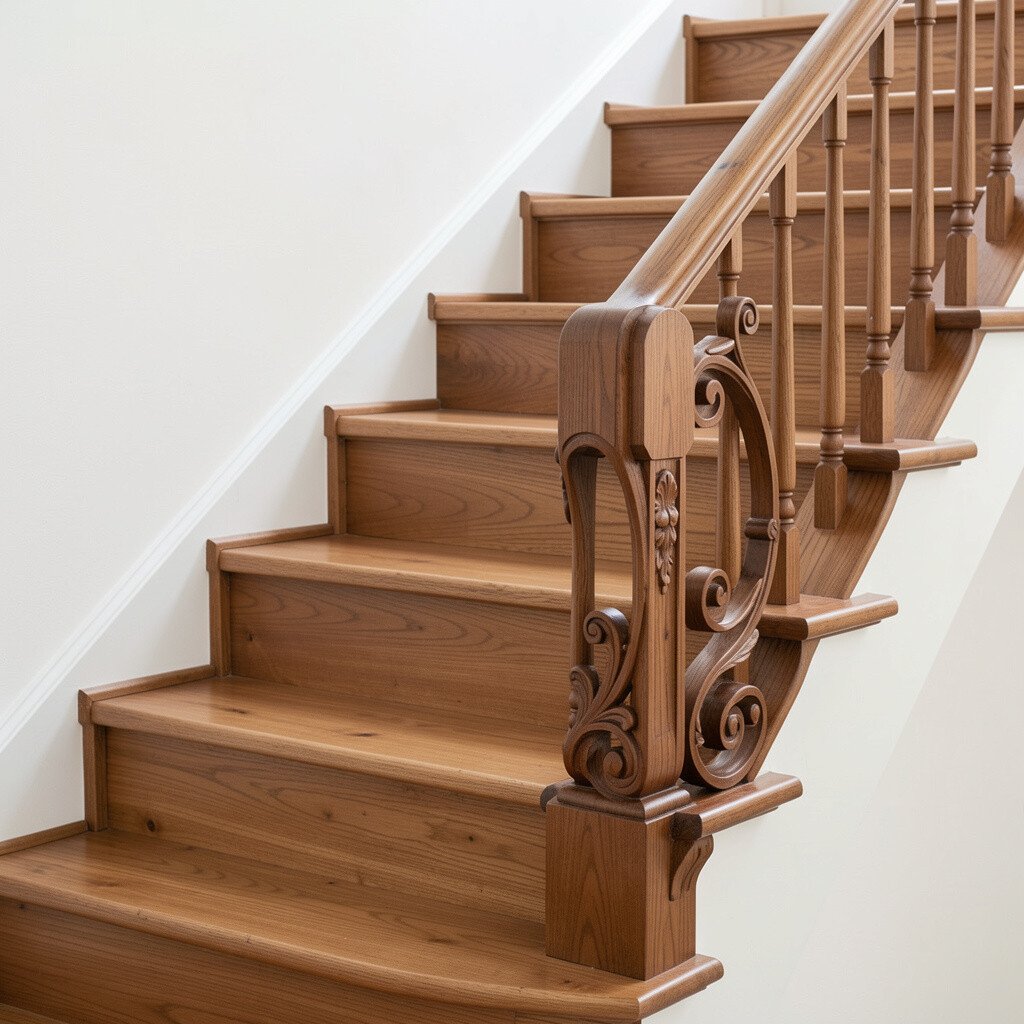
Corner protectors are the unsung heroes that keep wear from turning into damage. Add wooden guards with gentle scroll work, and you get safety along with decorative detail.
They protect the areas most likely to chip when furniture legs or shoes bump the stair edges. Choose smooth designs that won’t snag clothing, and make sure the protector sits flush so it feels tidy. If you have pets, this is especially helpful since they tend to hop and bump more than you expect.
For personalization, match the scroll pattern to other wood accents in your home, like picture frame edges or door trim. Many people are returning to classic details now, because they add charm without feeling outdated.
16. Wooden Stair Landing Décor Trays and Display Stands
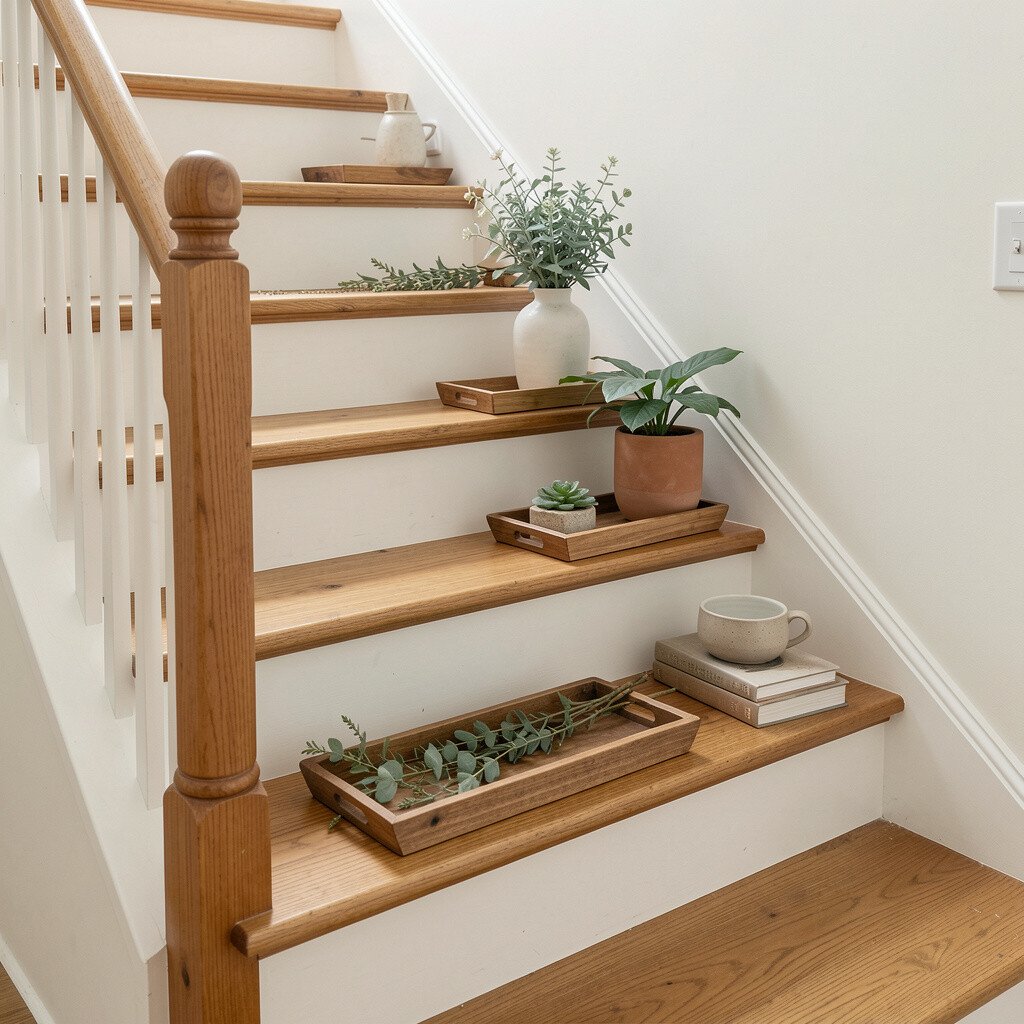
The landing is a small stage, and a wooden display stand gives it a purpose. When you set a tray there, you create a spot for flowers, candles, seasonal greenery, or everyday items like keys.
This makes the staircase area feel welcoming and functional at the same time. Use a stable tray with raised edges so items don’t slide, especially in homes with pets or kids. If you want easy change-ups, choose a stand that can hold multiple décor sizes without looking crowded.
For cost considerations, a single versatile tray can replace several separate decorative items, especially if you rotate what’s on it throughout the year. A popular trend is warm, minimal styling with natural touches, so keep the base simple and let the seasonal items bring the color.