Bright stairs can make a playroom feel like a little adventure park. They also help kids move with confidence while adding cozy color to the room.
1. Painted Rainbow Step Ladder
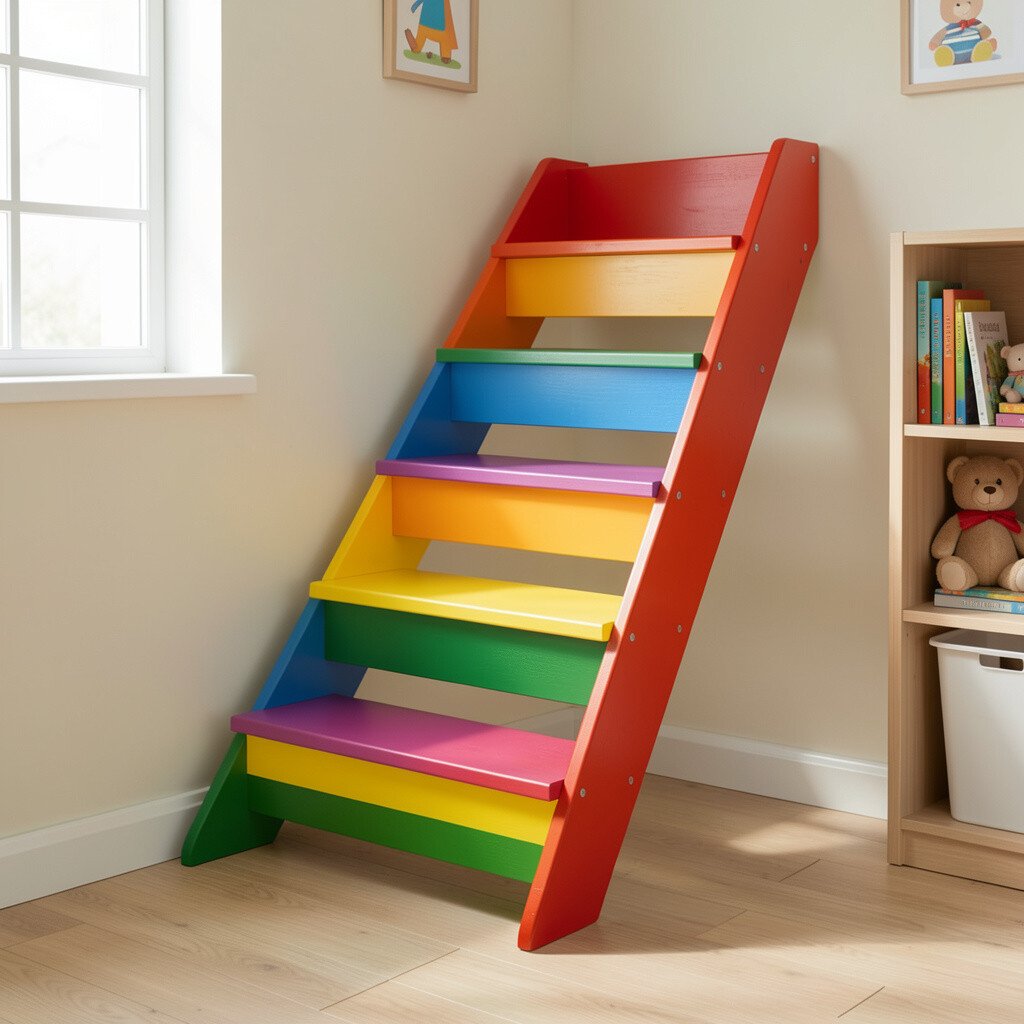
A simple ladder-step shape painted in rainbow colors turns walking into a fun game. Kids love spotting their favorite hues as they climb up and down.
Use washable wall paint mixed for bright coverage, and seal it with a kid-safe clear coat so it stays fresh. Round off any sharp edges and make sure each step is steady before letting children use it. Place the ladder near books or soft play mats so climbing feels like part of storytime and play. For personalization, match the ladder colors to your playroom bins or wall art for a neat, coordinated look.
2. Pastel Cloud Steps With Soft Edges

Pastel cloud-shaped steps can look like fluffy stepping stones across the floor. The gentle colors feel calm, yet they still brighten the whole play area.
Choose foam or cushioned step blocks with rounded edges for safer play, especially for younger kids. A soft surface helps children feel comfortable practicing balance. You can cover steps with removable fabric slipcovers in light blues, pinks, and creams for easy cleaning. For cost-friendly ideas, search for kids’ play foam blocks and use craft fabric plus velcro closures to refresh the colors.
To keep it practical, anchor the setup with non-slip pads underneath each piece. Add a small basket of “cloud treasures” nearby so kids can do a pretend search each time they reach the top. This kind of step station fits current playroom trends that favor cozy textures and sensory-friendly materials.
3. Big Block Steps in Primary Colors

Oversized block-style stairs in bold primary colors make a room look instantly playful. Each bright face stands out, and the design feels sturdy and classic.
Stack modular foam blocks or use wooden blocks painted in red, blue, and yellow for a simple build. Kids can climb, pretend they are building a fortress, and even use the steps for sorting toys by color. If you want a quick upgrade, add thick non-slip tape to each top surface. For a unique touch, stamp small star or circle patterns on the front edges using craft paint.
Practical placement matters, so keep the steps close to a soft rug to reduce slips. When choosing materials, consider how often you will wipe them down after messy snacks or craft time. This idea works well if you like a clean look but still want energetic color.
4. Vertical Stripe Steps for a Playroom Pop
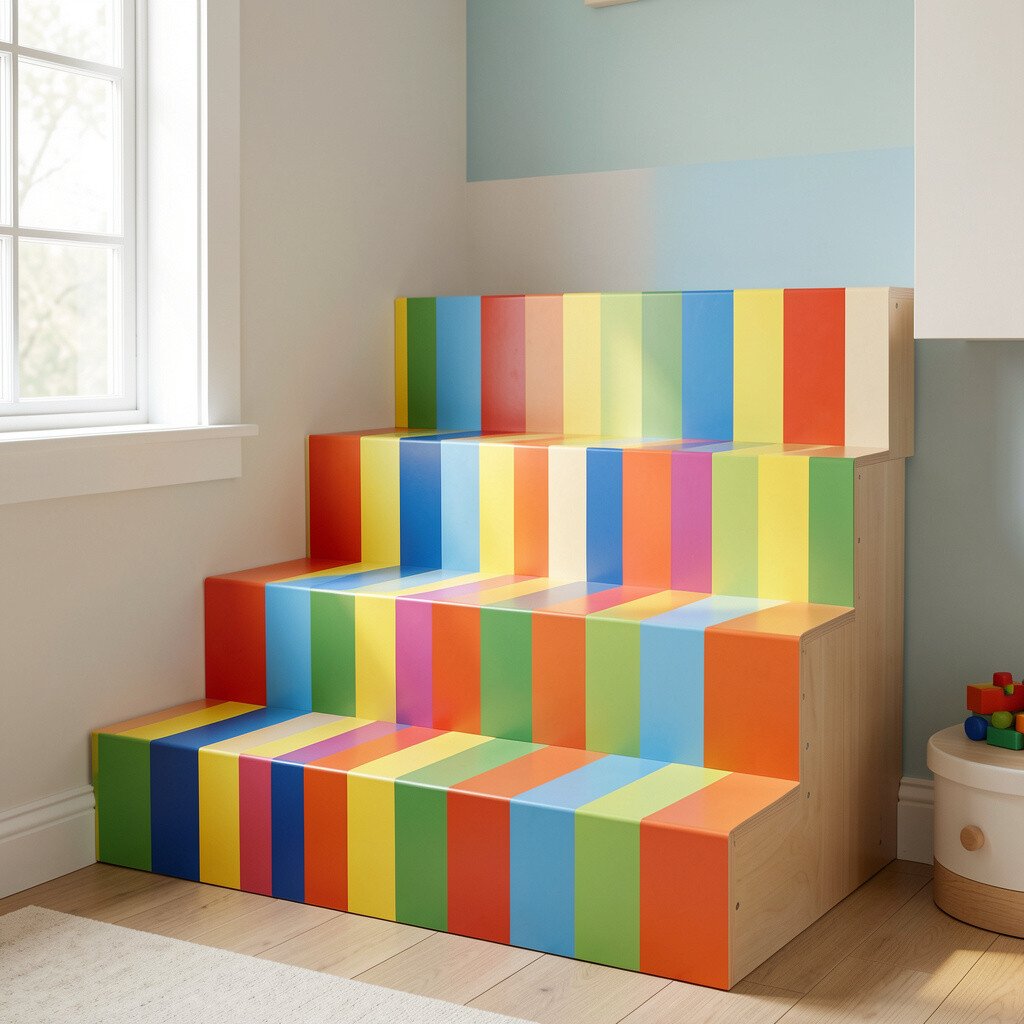
Vertical stripes on stairs create a lively “look up and move” feeling. The pattern draws attention upward, so kids naturally want to climb to see what’s next.
Paint alternating stripes in two or three colors, then add a simple clear top coat to protect the finish. Use painter’s tape for crisp lines, and let each coat dry fully to avoid smudges. Keep the stair width comfortable for little feet, and place them along a wall to help kids steady themselves. If you rent or want flexibility, consider removable vinyl stripes that you can swap for new seasons.
5. Sunburst Steps With Yellow Highlights
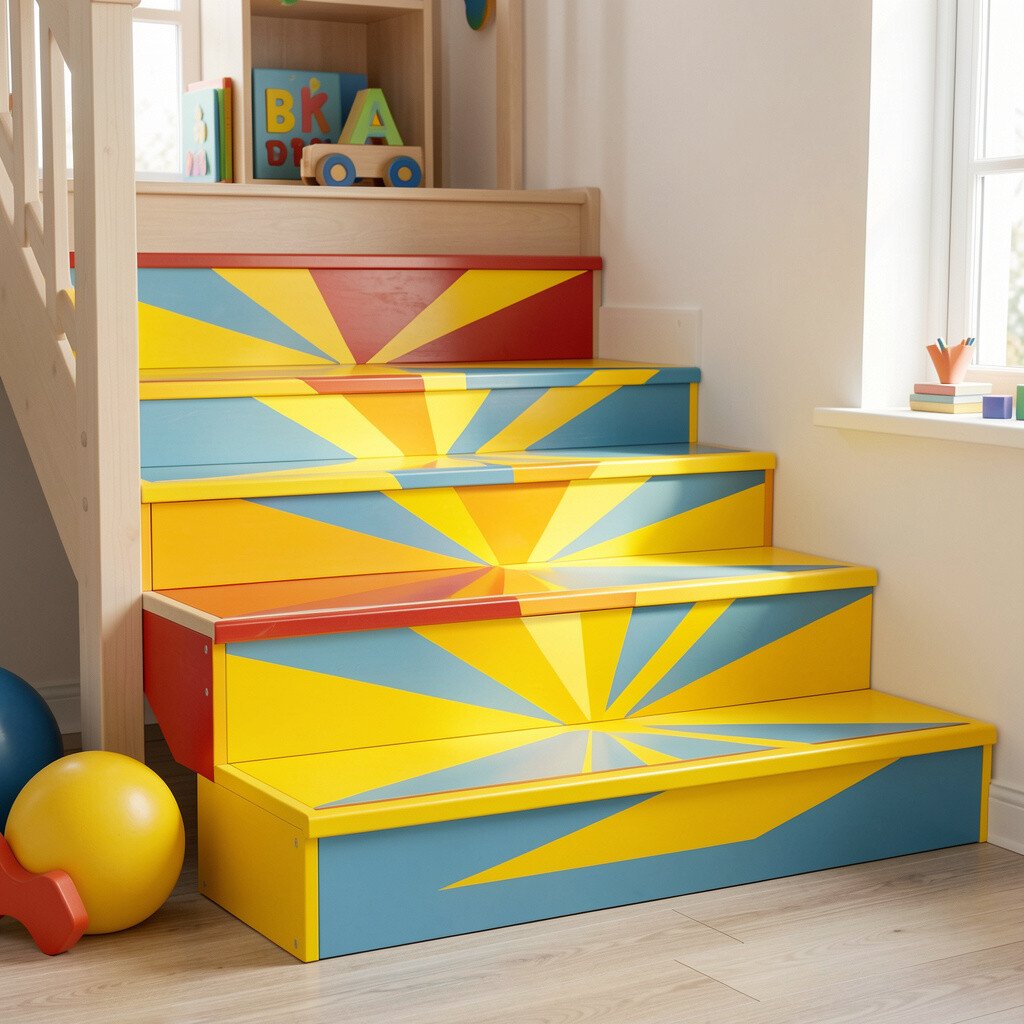
Sun-shaped color details can turn basic stairs into a cheerful focal point. Bright yellow highlights feel warm, like morning light bouncing around the room.
Use a sturdy frame and paint the steps, then add sunburst rays on the front risers. Even a simple hand-drawn ray pattern can look charming, especially with a mix of thicker and thin lines. Seal everything with a kid-safe finish so the colors resist scuffs. For practical cleaning, wipe with a damp cloth and avoid harsh chemicals that dull paint.
Kids benefit because the design encourages purposeful climbing and reinforces confidence. Position the steps near art supplies so they can grab a crayon from the top or step up for a “tiny gallery” moment. If you want a cost-smart approach, repaint an old shelf-step unit instead of buying new pieces. This style also matches current trends that mix playful shapes with bold, happy color.
6. Two-Tone Steps With a Gentle Ombre
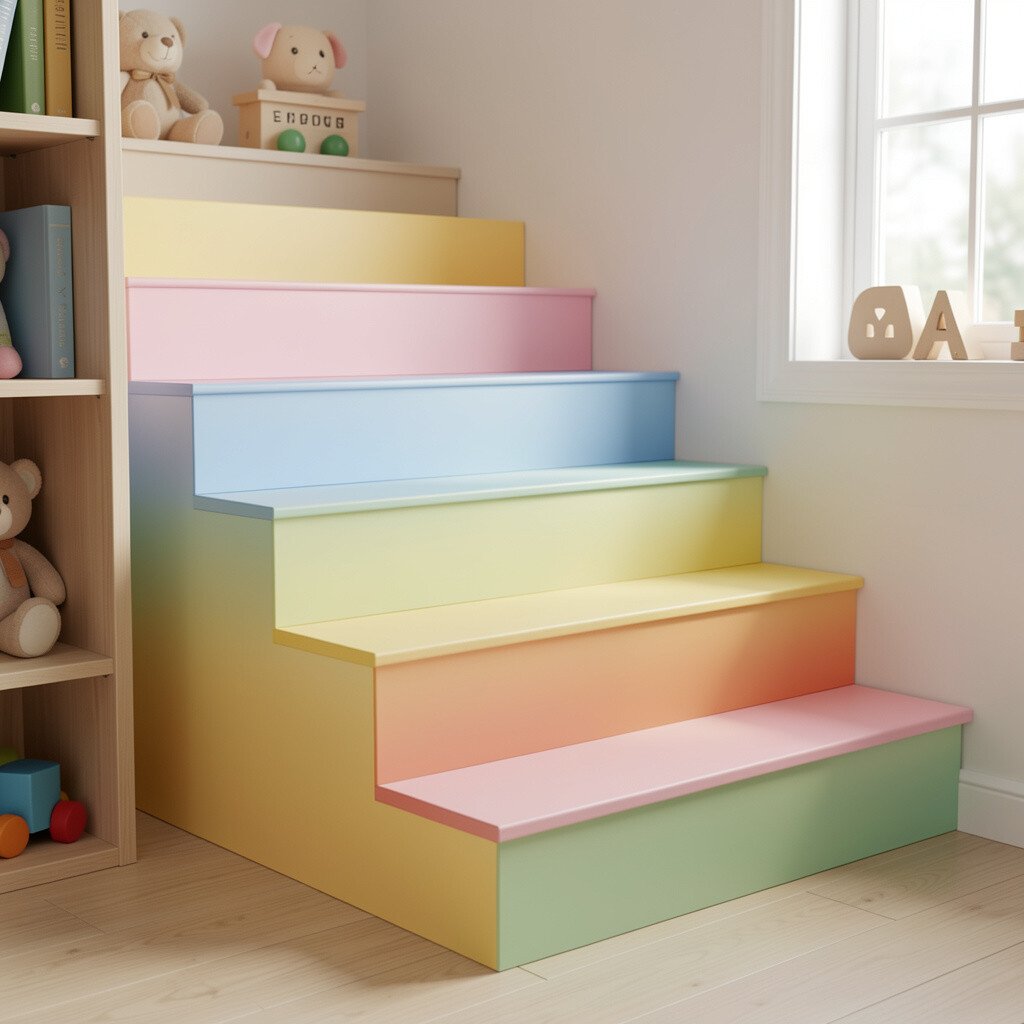
Two-tone stairs with a soft ombre look stylish while staying kid-friendly. The gradual color shift feels soothing, yet it still makes the climb feel special.
Pick two coordinating colors like teal and mint, or lavender and pink, and blend the shades across steps. You can sponge-paint or use a gradient brush technique to keep the finish smooth. Add a non-slip finish layer so little feet stay confident. A great personalization idea is to echo the ombre colors in wall decals or curtain accents so the whole corner feels designed.
7. Woodland Animal Step Faces
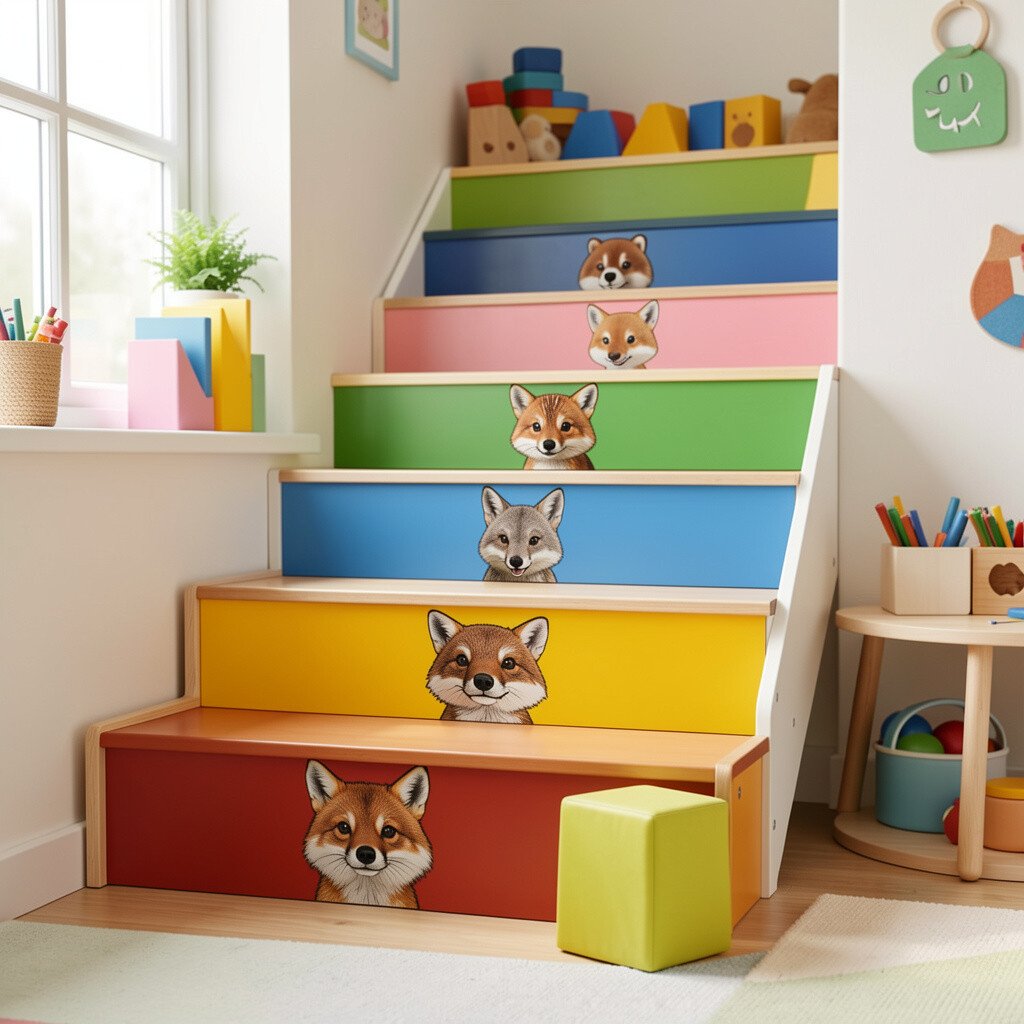
Imagine opening each step like a tiny character in a story. Adding simple animal faces to the front of each riser makes the staircase feel like a friendly den.
Use washable paint or removable stickers for cheeks, eyes, and simple ears. Kids will enjoy naming each animal as they climb, which can also support early language practice. Keep facial details bold and easy to see at a child’s height. For uniqueness, choose animals that match your room theme, like owls for a reading nook or foxes for a nature corner.
For practical safety, make sure any decorations are flat and sealed so nothing peels off. Place a small bin of “animal clues” nearby, like toy leaves or picture cards, to make the climb a game. If cost is a concern, try painting fewer details and rely on colorful step backgrounds to carry the look.
8. Scrabble-Like Alphabet Stair Treads

Alphabet stairs add a learning rhythm to everyday movement. Bright letters on each step can turn climbing into a fun practice for reading and spelling.
Paint steps a solid cheerful color, then add large, clear letters with stencils. Use contrasting colors like turquoise with orange letters so kids can spot them easily. A practical tip is to outline each letter in a thin border so it looks crisp even after regular wiping. Keep the letter set consistent, then personalize by matching the alphabet style to a theme your child likes, such as jungle letters or space letters.
Kids benefit because they can associate climbing with making sounds and building word confidence. To fit current trends, use educational-friendly color blocking that looks modern rather than cluttered. If you have a limited budget, start with just a few letters and add more later as your child grows.
9. Candy-Stripe Stair Edges
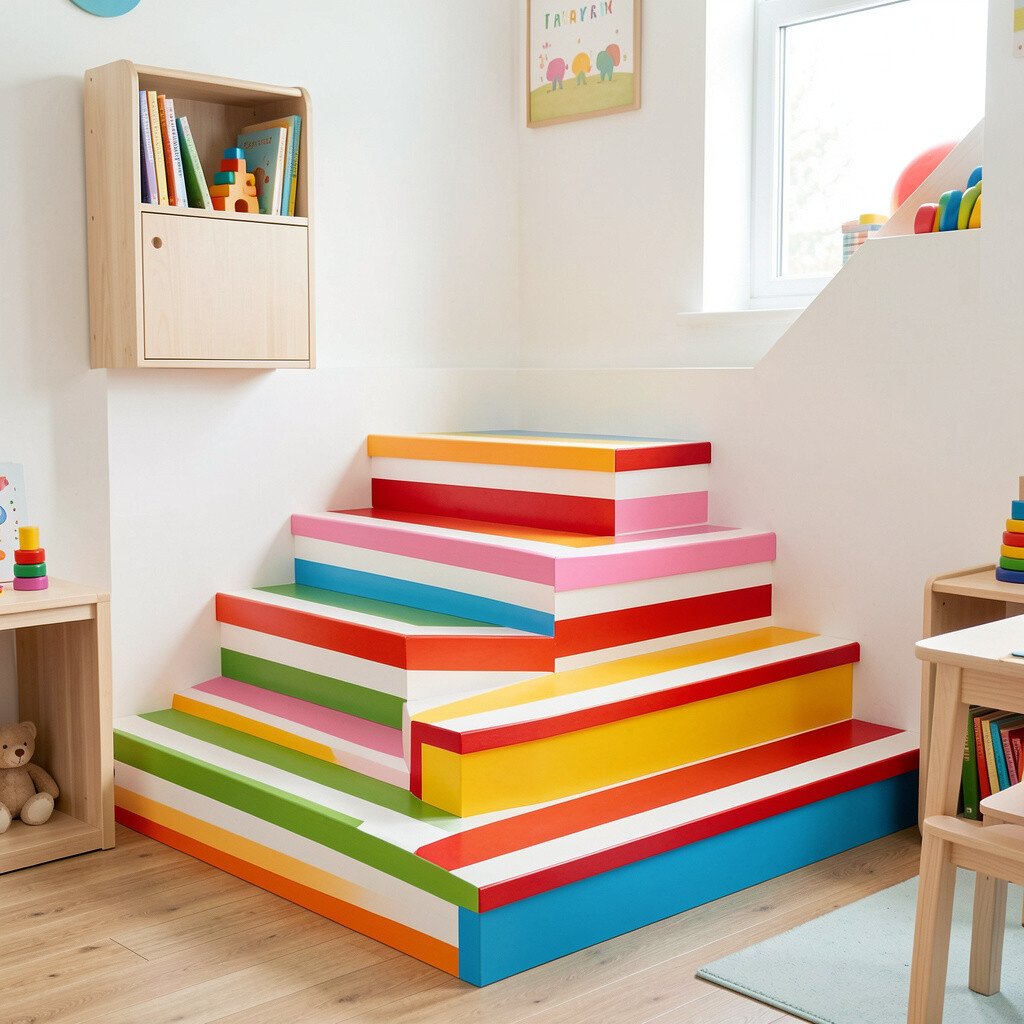
Candy-stripe edging makes stairs feel sweet and playful without making the whole room too busy. The idea works great when your playroom already has lots of colors, because the stripes add focus.
Paint the step body in a simple solid color, then wrap the edges in diagonal stripes. Choose colors that complement your wall paint and rug, like coral with cream or teal with sunshine yellow. Use painter’s tape for clean lines and seal with a clear coat for durability. For personalization, swap stripe colors for holiday seasons or themes, such as red and green for winter or bright pastels for spring.
To keep it practical, add non-slip pads to the top of each step since edging designs can still look smooth. Kids benefit from the clear visual boundary, which helps them place their feet with care. If you’re working with an existing set of steps, repaint only the edges for a low-cost upgrade.
It also feels unique because diagonal stripes look energetic even in small spaces. Pair the stairs with a simple storage shelf so the corner stays tidy and ready for play.
10. Mini Color Block Ramp Steps

Ramp-like stairs in color blocks can be easier for younger kids who are still learning how to climb. Smooth, gradual movement feels comfortable and reduces sudden steps.
Build a gentle ramp from lightweight plywood or use a soft foam ramp, then paint blocks of color across the surface. Use thick, bright blocks like red, blue, green, and yellow so each section feels like a mini stop. Add grips or non-slip tape along the ramp path for safer traction. A fun personalization idea is to number the blocks with simple dots so kids can follow a “color route” for treasure hunts.
Kids benefit because ramps often feel less intimidating than vertical steps. This format also fits many current playroom trends that focus on gross-motor practice with gentle, safe designs. For cost considerations, consider using foam play accessories you already own and repainting or covering them with durable contact paper made for crafts.
11. Geometric Triangle Steps in Bright Blocking
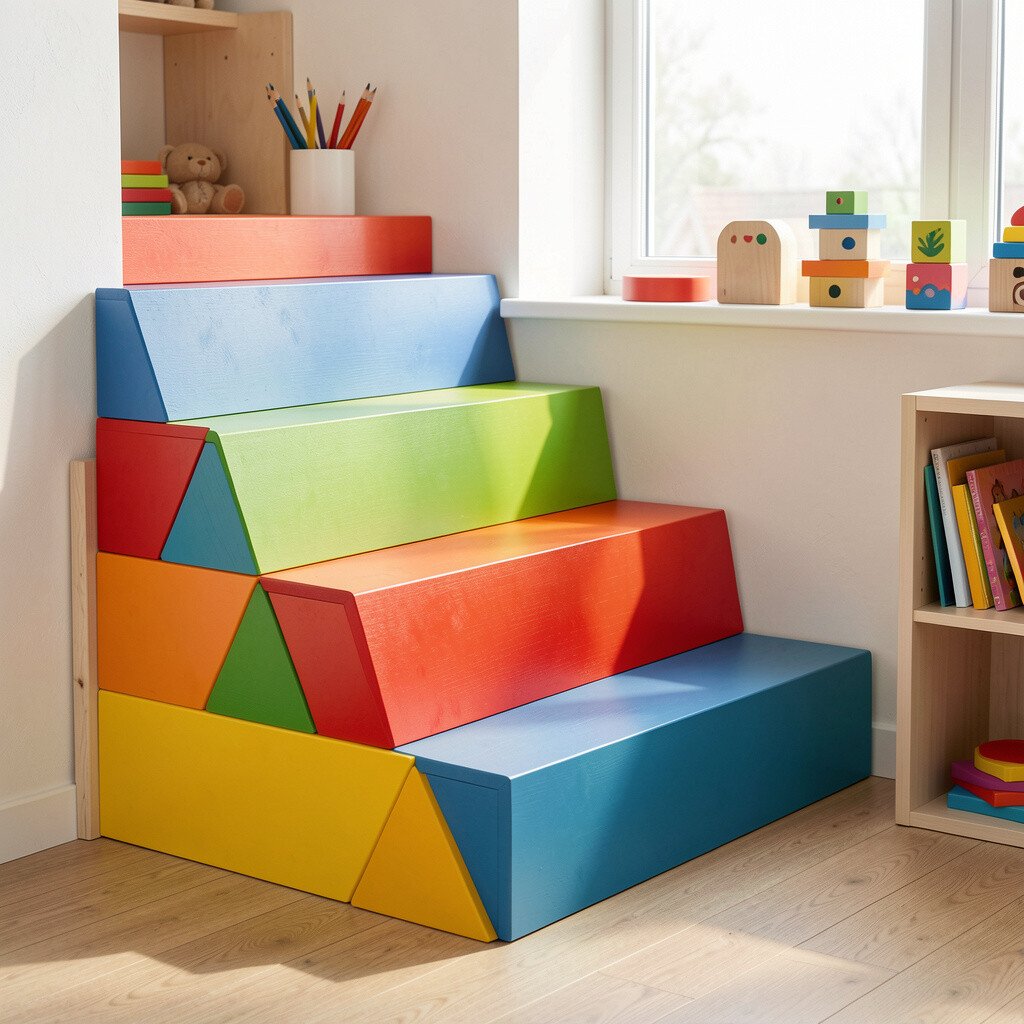
Geometric triangle patterns make stairs feel modern and bold. Bright blocking creates a clean look that still feels playful and child-centered.
Paint each step with triangles in different colors, like lime green, hot pink, and sunny orange. You can use triangle stencils or tape to create sharp shapes that look crisp. Seal with a kid-safe finish, and make sure each triangle pattern is smooth so shoes and socks don’t snag. For uniqueness, rotate the triangle direction on each step so kids feel like they are climbing through a changing design.
Practical placement is key, so align the stairs near a wall or low shelf to keep the space organized. Kids benefit from strong visual cues that help them predict where to step next. If you need a budget-friendly approach, use craft paint and cover only the visible sides instead of painting the entire unit.
12. Floating Shelf Steps With Bright Underlighting
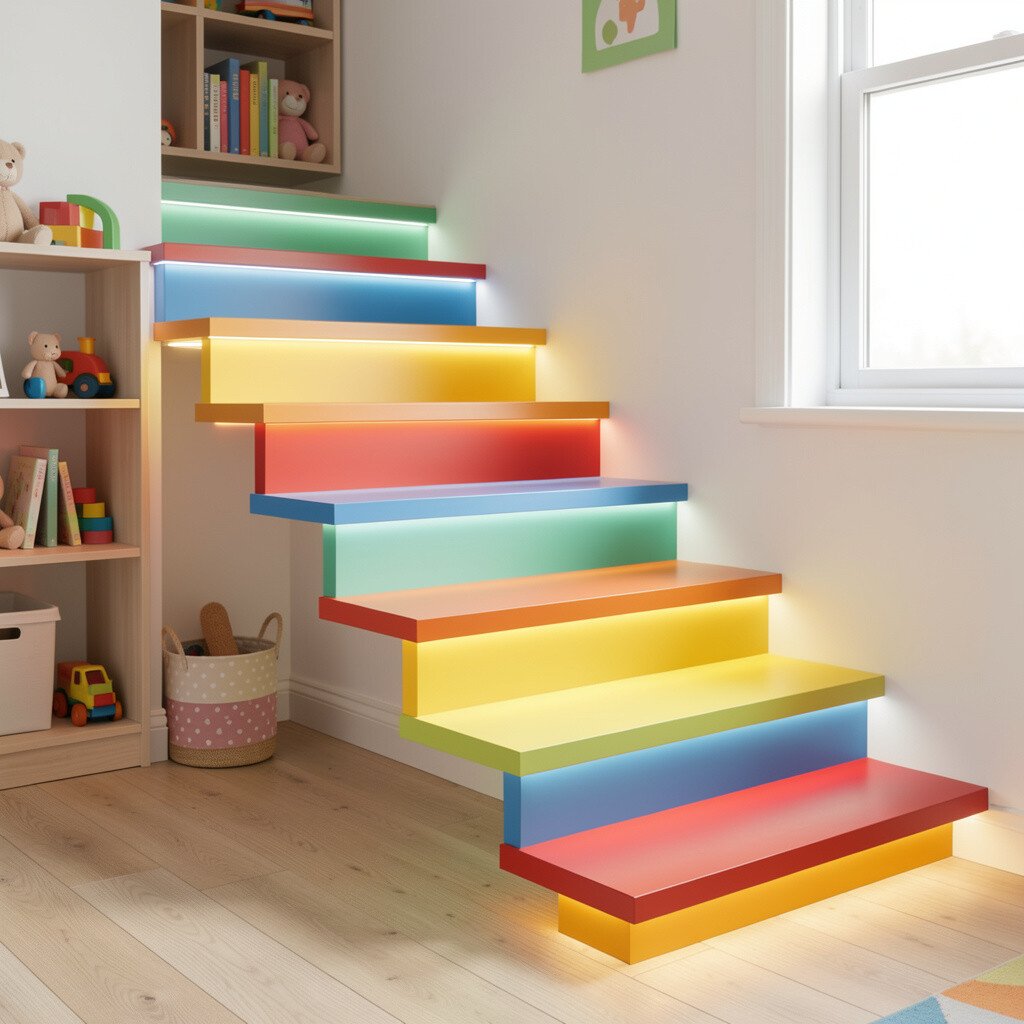
Steps that feel like they float can look magical in a playroom. Bright color underlighting adds a dreamy glow that makes the staircase a nighttime-friendly feature.
Install or arrange shallow step platforms that look like shelves, then add battery LED lights underneath for a soft colorful halo. Choose kid-safe LED strips designed for indoor use and secure all wiring so it’s out of reach. Keep the steps sturdy and use non-slip mats on top. This idea benefits older kids who like building tiny scenes, since they can stage toys on each shelf level.
For personalization, match the underlighting colors to your room’s vibe, like aqua for calm evenings or warm pink for a playful atmosphere. Cost varies depending on your setup, so you can start with inexpensive battery LEDs and upgrade the platforms later. Current trends often highlight gentle lighting and “wow” corners, and this design fits that style while staying simple.
13. Rainbow Checkerboard Steps for Fast Visual Fun
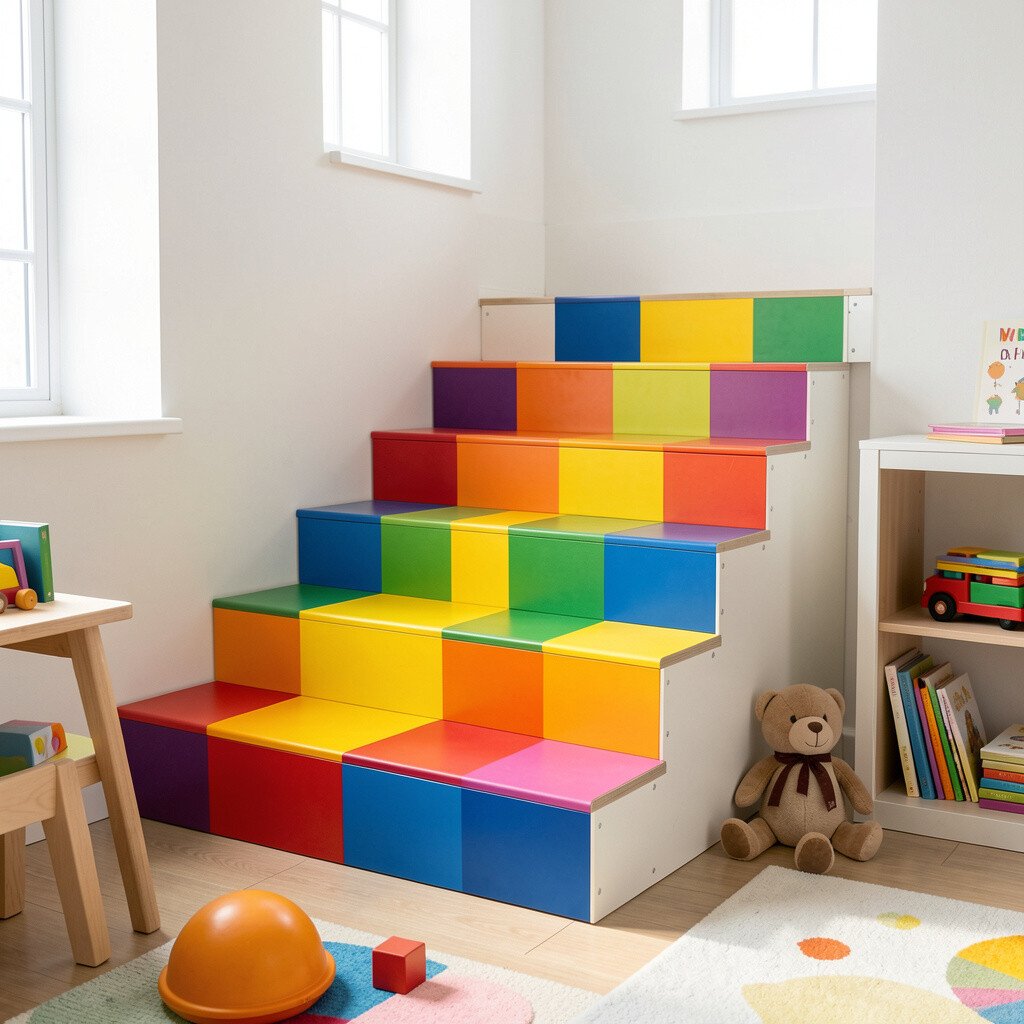
Checkerboard stairs bring instant energy to a children’s playroom. The repeating pattern helps the eyes stay busy, which makes climbing feel like a game.
Use alternating squares in bright colors on the front faces or the step tops. A simple two-color checkerboard can look striking without needing too many supplies. Add non-slip finish to the top surfaces, and seal painted squares to keep them clean. For practical tips, keep each square size consistent so the pattern stays neat even after touch-ups.
Kids benefit because the pattern helps them line up their steps and stay focused on each landing. If you want uniqueness, add small icons like a heart, star, or smile inside one square on each step. Personalize it by choosing colors that match your playroom theme, such as ocean blues or jungle greens.
14. Sea Glass Steps With Speckled Finishes
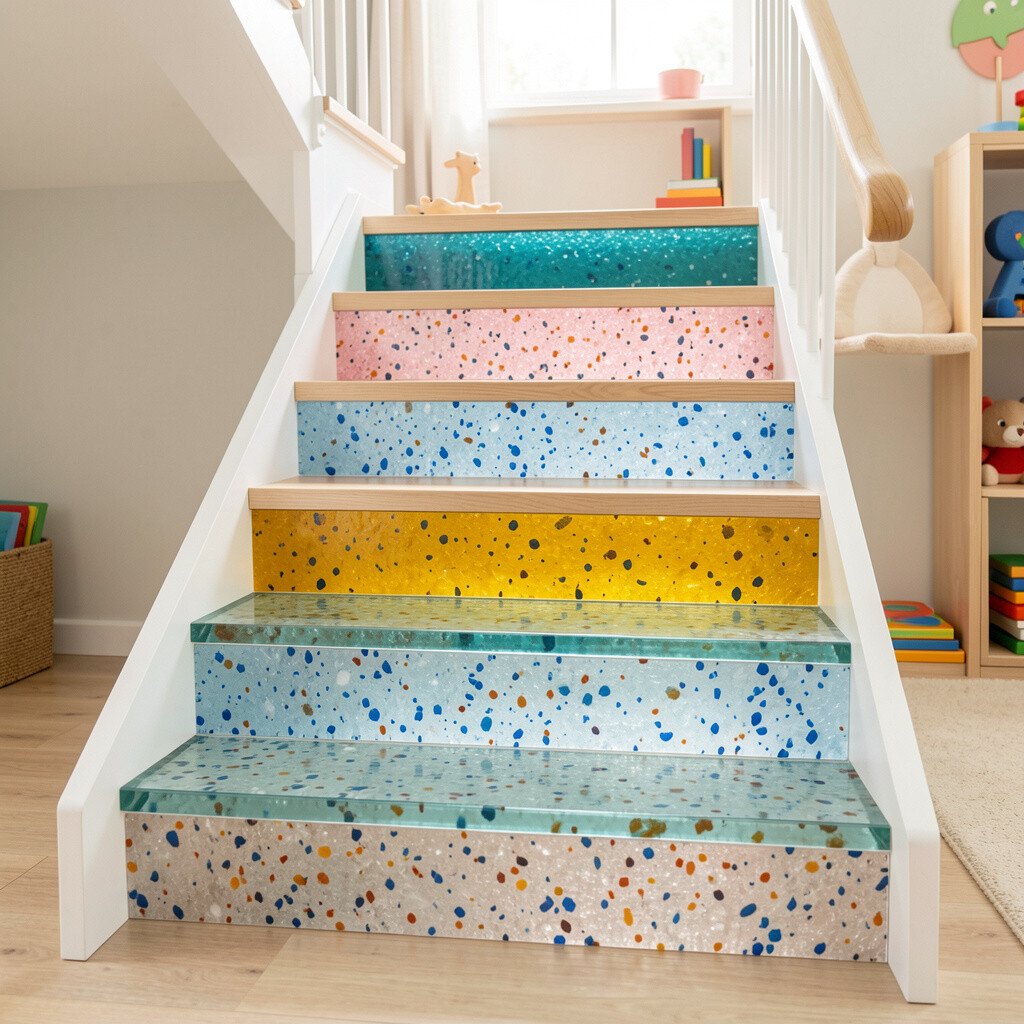
Speckled sea glass steps feel refreshing and artistic. The mix of pale greens, soft blues, and tiny flecks creates a texture that looks natural and unique.
Paint the step base in translucent-looking pastel tones, then sprinkle a contrasting speckle using a toothbrush or craft sprayer. Seal the finish for durability so the speckles don’t chip off. Add a smooth, non-slip top layer so kids can climb safely while enjoying the look. For personalization, blend colors from your room’s wall art or bedding, so the staircase feels like part of the design story.
Kids benefit because textured designs encourage slow, careful climbing and “look closely” attention. Cost considerations are simple here because you can make a big impact with paint and basic craft tools. This style also fits current trends toward nature-inspired decor with gentle color palettes and tactile charm.
15. Flower Garden Steps With Raised Petal Details
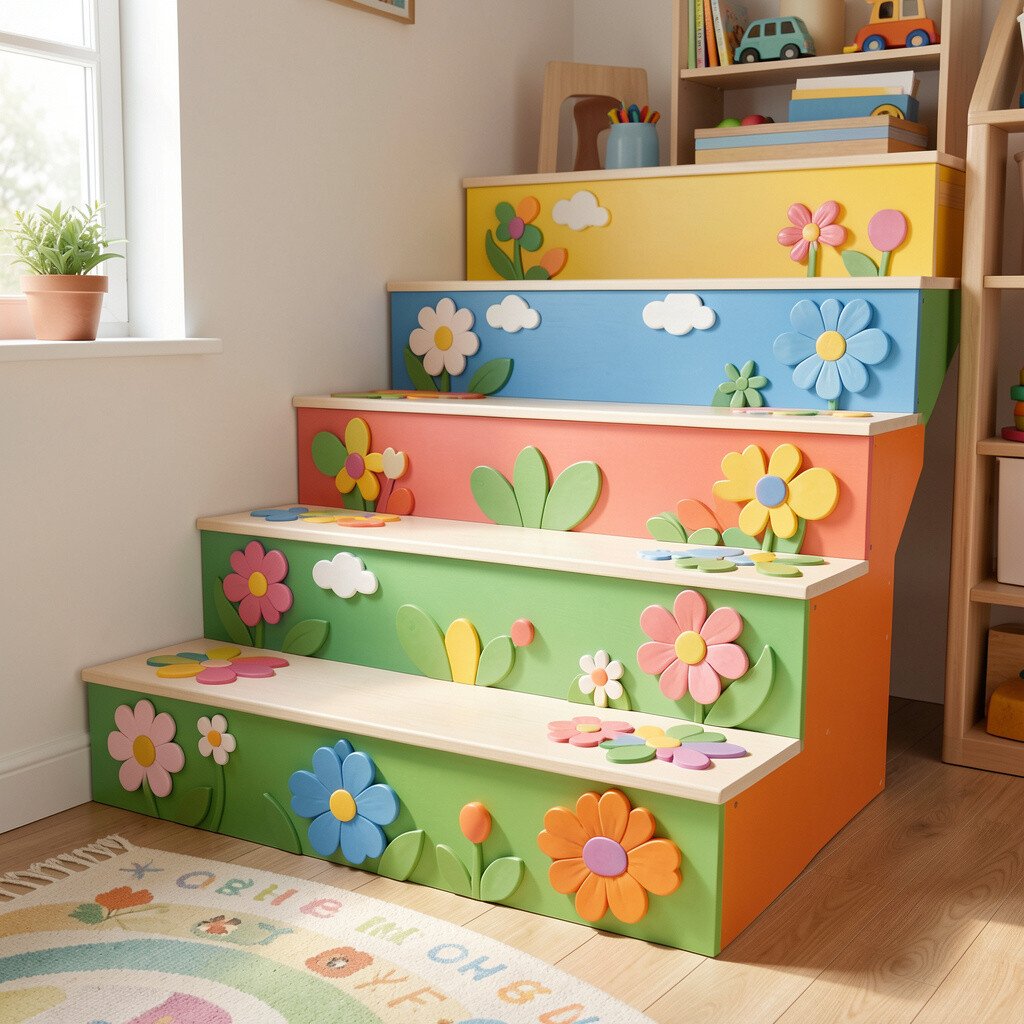
Flower garden steps feel like a tiny backyard you can climb. Raised petal shapes on the front can look sweet and make each step feel special.
Create flower outlines using craft foam or add textured clay details on the front risers, then paint them in bright pinks, purples, and sunny yellows. Make sure any raised parts are securely attached and fully sealed for safety. Kids benefit because they get a playful landmark that helps them remember which step is next. For practical tips, keep the petal details only on the front so feet stay on smooth, non-slip surfaces.
Personalize the garden theme by adding a child’s favorite flower type or by painting tiny ladybugs on a couple of risers. If you are watching your budget, you can reuse existing step frames and focus your spending on paint, sealant, and a few decorative craft materials. This idea stands out because it adds a tactile “almost real” feel without needing a complicated build.
Place the steps near a pretend garden play set, like watering cans and toy seeds, so the theme becomes part of daily play. Kids will naturally connect climbing with imaginative story actions, which makes the whole corner feel alive.
16. Bold Color Frame Steps With Matching Storage Bins
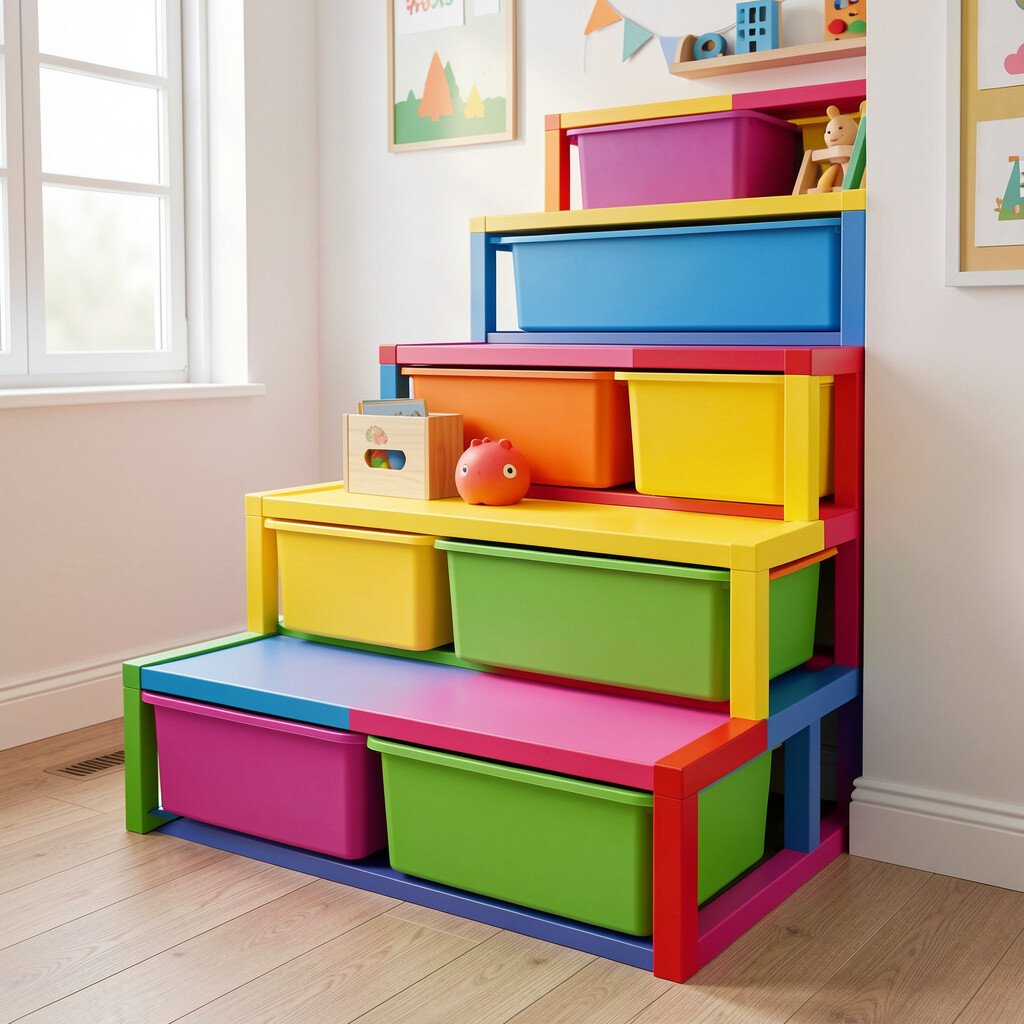
Frame-style stairs with bright side panels can look clean and modern while still feeling fun. When you pair them with matching storage bins, the whole playroom corner looks finished.
Use a simple stair base, then paint the side frames in a bright color like turquoise or bold red. Add matching bins underneath or beside the steps so toys have a clear home. This benefits kids because they learn a simple routine, climb to play, then store items neatly afterward. For personalization, choose a color that matches your child’s favorite character or room theme and repeat that color across the bins and wall art.
Cost considerations can be friendly here because you can use basic storage and update it with paint or contact paper made for surfaces. If you want current-trend appeal, aim for tidy color coordination and simple shapes rather than lots of small patterns. To keep it practical, use non-slip mats under the stairs and sturdy, wipeable bin materials so daily messes are easy to handle.
When the stairs and storage match, kids are more likely to use both, and the room stays brighter and calmer at the same time.