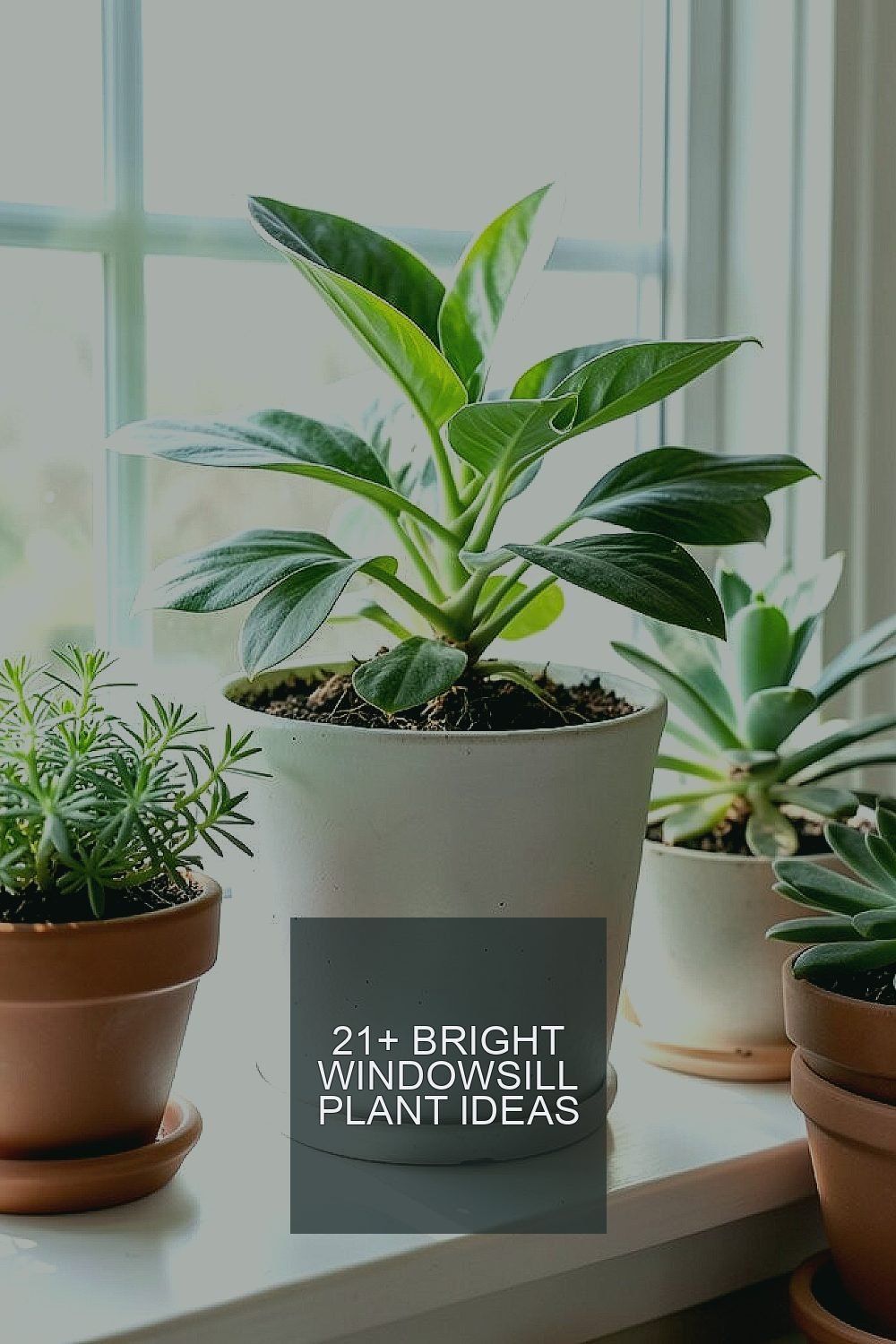
Bright light has a way of turning even a cramped corner into something calm and alive. With a smart plant lineup, your windowsill can feel like a tiny garden you actually use every day.
Here are creative, space-friendly ways to style plants so they look good, stay healthy, and fit real budgets. Each idea includes practical steps you can try right away, plus easy ways to make it feel like you.
1. Sunbeam Micro-Garden on a Tray
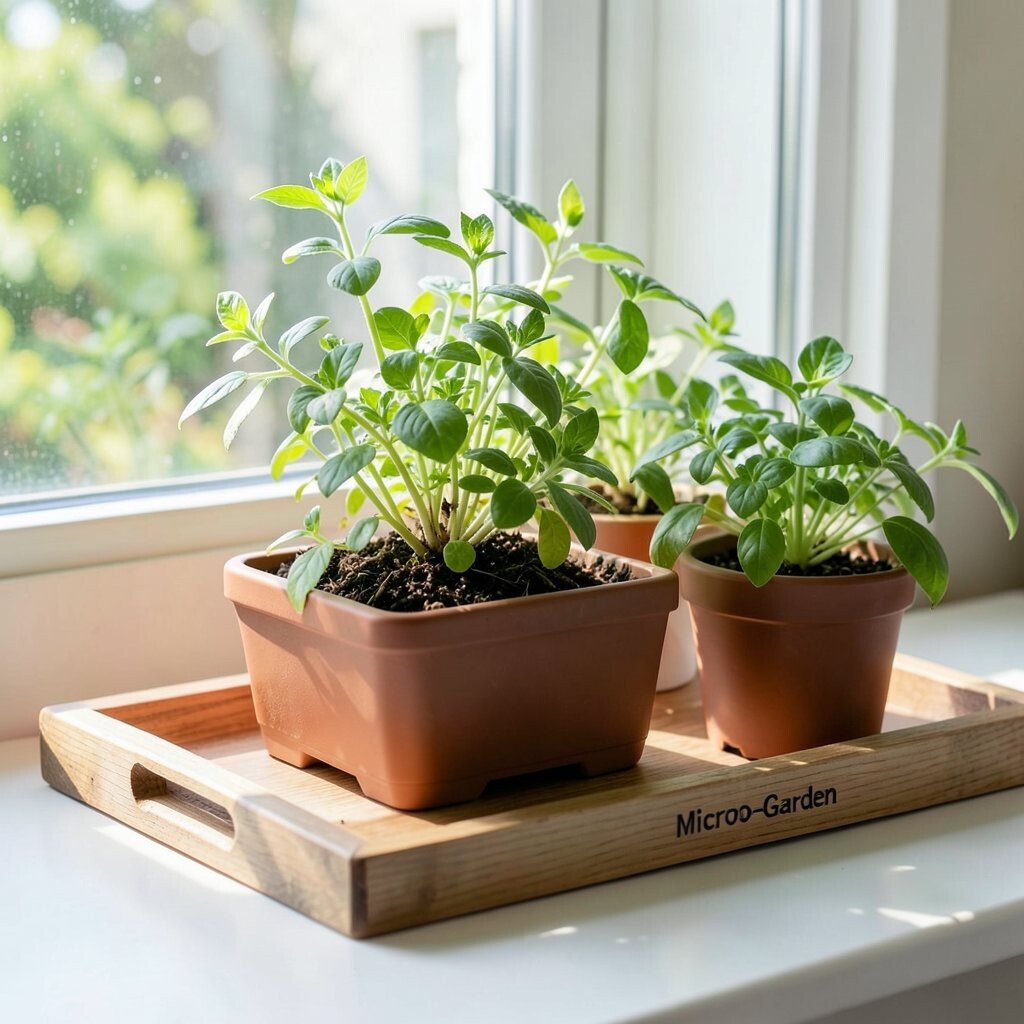
Gather a shallow tray, a few small pots, and place everything right in the strongest window light. You’ll get a neat, glowing look that also helps you control water in a small space.
Use a tray with a raised edge so runoff stays contained, then rotate pots every week for even growth. Pair one upright plant for height and two trailing plants for softness. This setup is budget-friendly because you can start with small cuttings or thrifted starter plants.
2. Staggered Heights With One Statement Plant
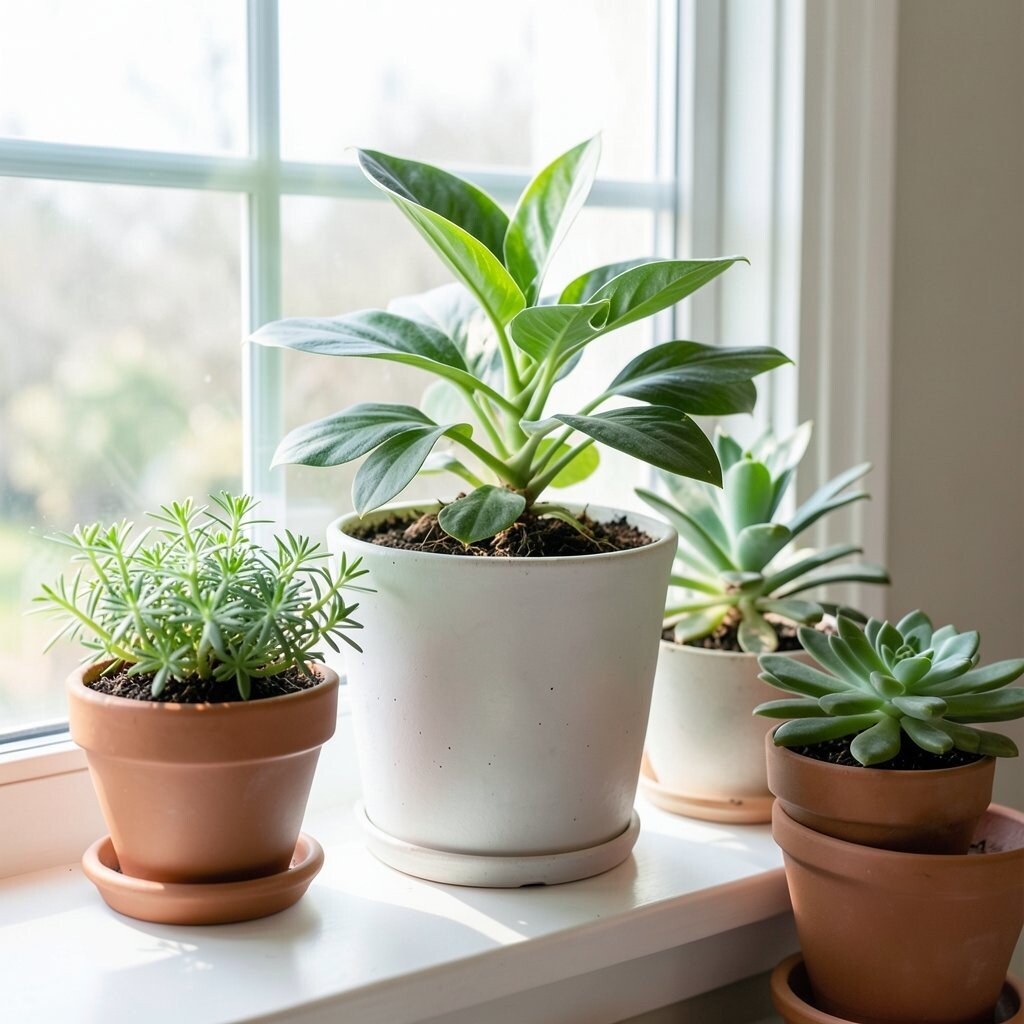
Pick one bold plant you love, then surround it with smaller friends that sit slightly higher or lower. The visual effect feels intentional, even on a narrow sill.
Place the statement plant in the center, add a compact plant on one side, and let a trailing variety spill toward the front. Regularly pinch back fast growers to keep the shape tidy and prevent crowding. If you want personalization, choose a color theme by matching pot colors to your curtains or dishes.
For cost control, start with one splurge plant and fill the rest with inexpensive seedlings. Popular trends right now include airy, modern silhouettes that look great in bright windows without taking over the room.
3. Three-Pot Color Block With Herbs
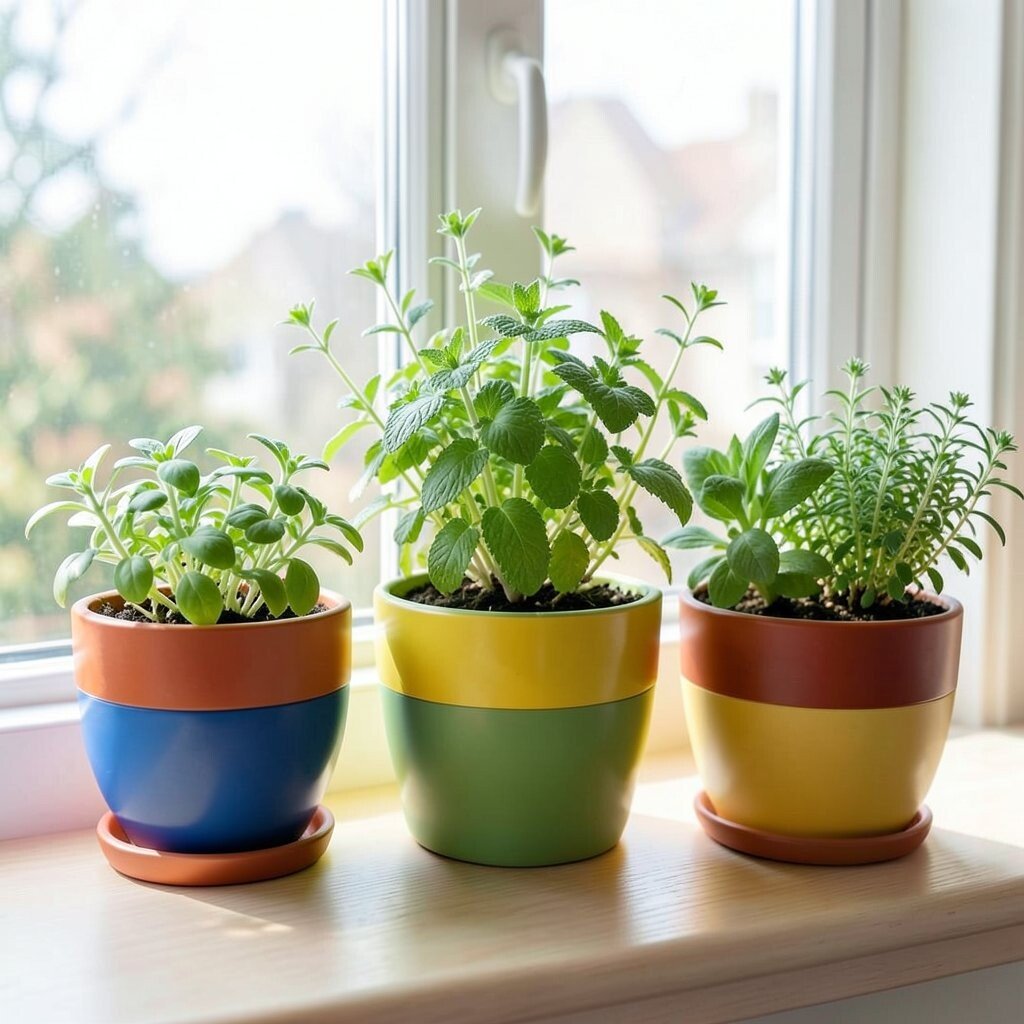
Arrange three pots in a tight row, using herbs like basil, thyme, or mint for a fresh, lively vibe. Their green tones and tiny leaves look great in daylight and feel practical, too.
Keep them close to the glass but avoid direct scorching midday rays by using a sheer curtain if needed. Trim herbs often so they stay bushy instead of leggy, and use kitchen scissors to harvest small amounts. This arrangement is unique because it combines beauty with everyday usefulness.
Choose pots in matching tones such as white, terracotta, or matte black for a clean look. If space is really tight, use one deeper pot for two herbs and keep the third in a smaller container. The cost can stay low since many herb plants regrow after careful harvesting.
Try rotating pots every few days if one herb seems to lean toward the light. A mini misting on dry days can help seedlings, but never soak the roots.
4. Hanging-from-the-Sill Tiny Trellis Look
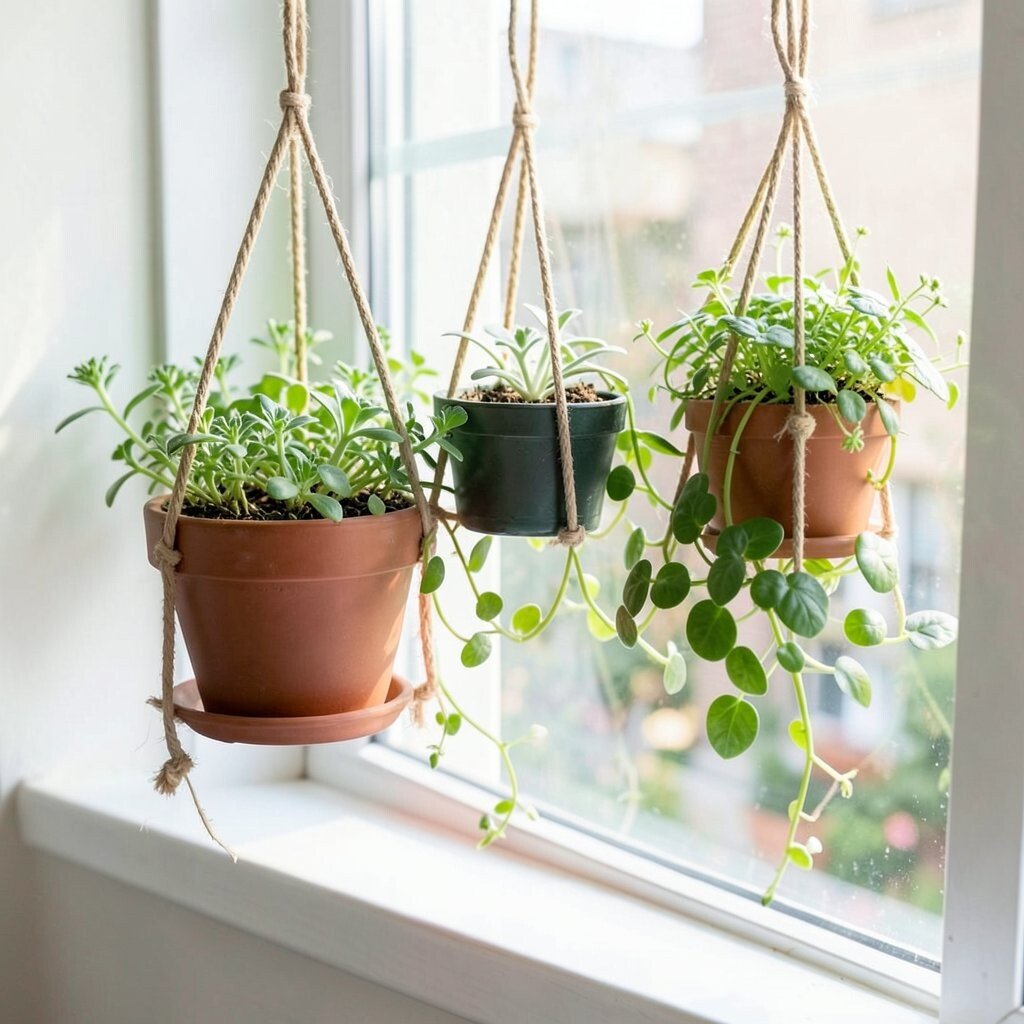
Install a small trellis or suction hooks to create a vertical moment, then place compact plants at the base. The result looks airy and modern, which is perfect when floor space is limited.
Let a climbing plant or a trailing variety grow toward the support, and tuck a low, bushy plant beside the pot for contrast. Keep the stems gently guided so they don’t tangle, especially if you have pets or tiny hands around. This idea is easy to personalize by choosing a trellis color that matches your décor.
Water carefully and make sure the roots have drainage, because windows can dry pots faster than you expect. For budget-friendly options, look for inexpensive trellis kits or repurpose simple wire frames. Current trends lean toward “vertical gardening” even indoors, and a sill trellis gives that look in a small footprint.
5. Glass-Window Terrarium in Mini Jars
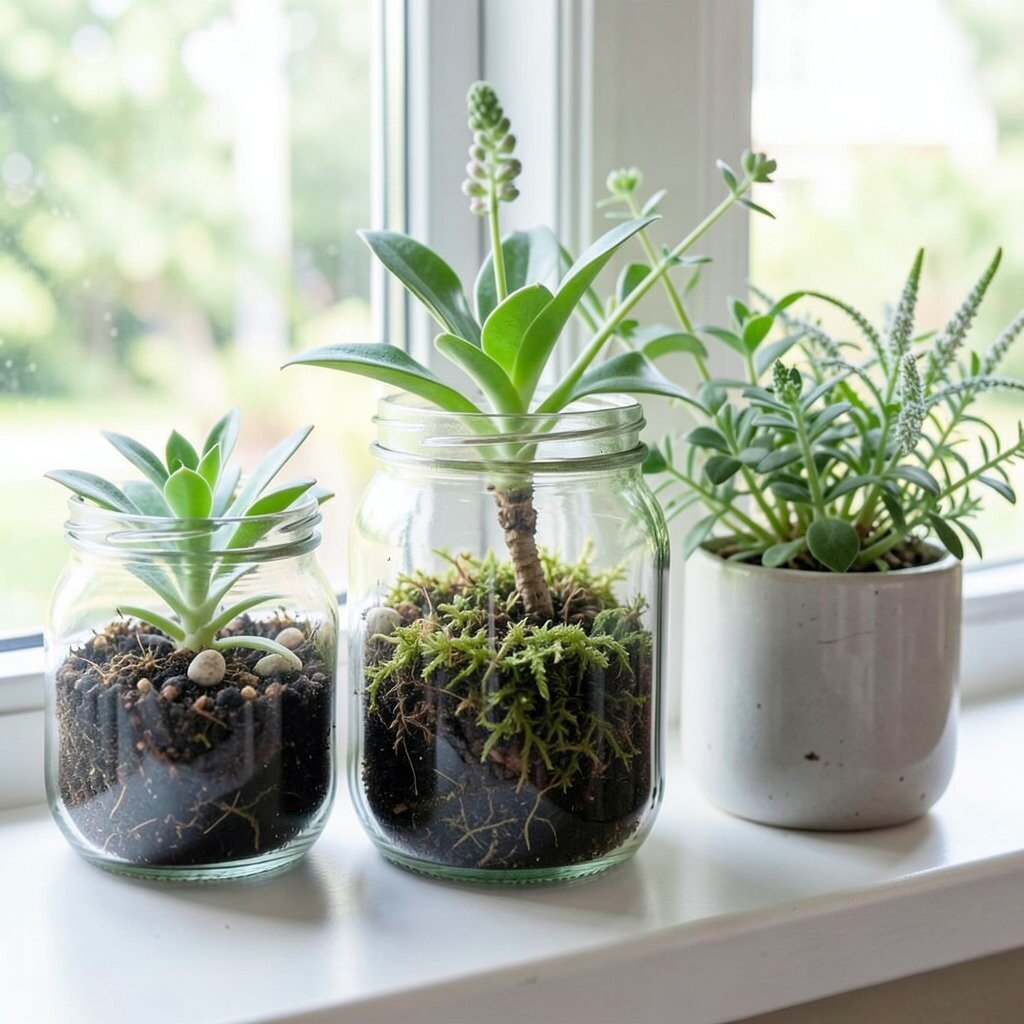
For a softer, storybook feel, use clear jars or small glass cloches with small plants that enjoy bright light. The glass makes the greenery look extra vivid, like a little display case.
Use breathable soil and keep lids off if the plants need airflow, then mist lightly only when the soil feels dry. Choose hardy, compact varieties such as peperomia or fittonia to match the cozy environment. You’ll get a unique look with a bit of sparkle from the light passing through the glass.
To keep this practical, place a tray under the jars and use a small watering can with a narrow spout. This is often a moderate cost option because containers can be reused, but plants still vary in price. Personalize the style with pebbles in a color that fits your room, such as pale sand or small dark stones.
6. Corner Cascade With a Single Long Pot
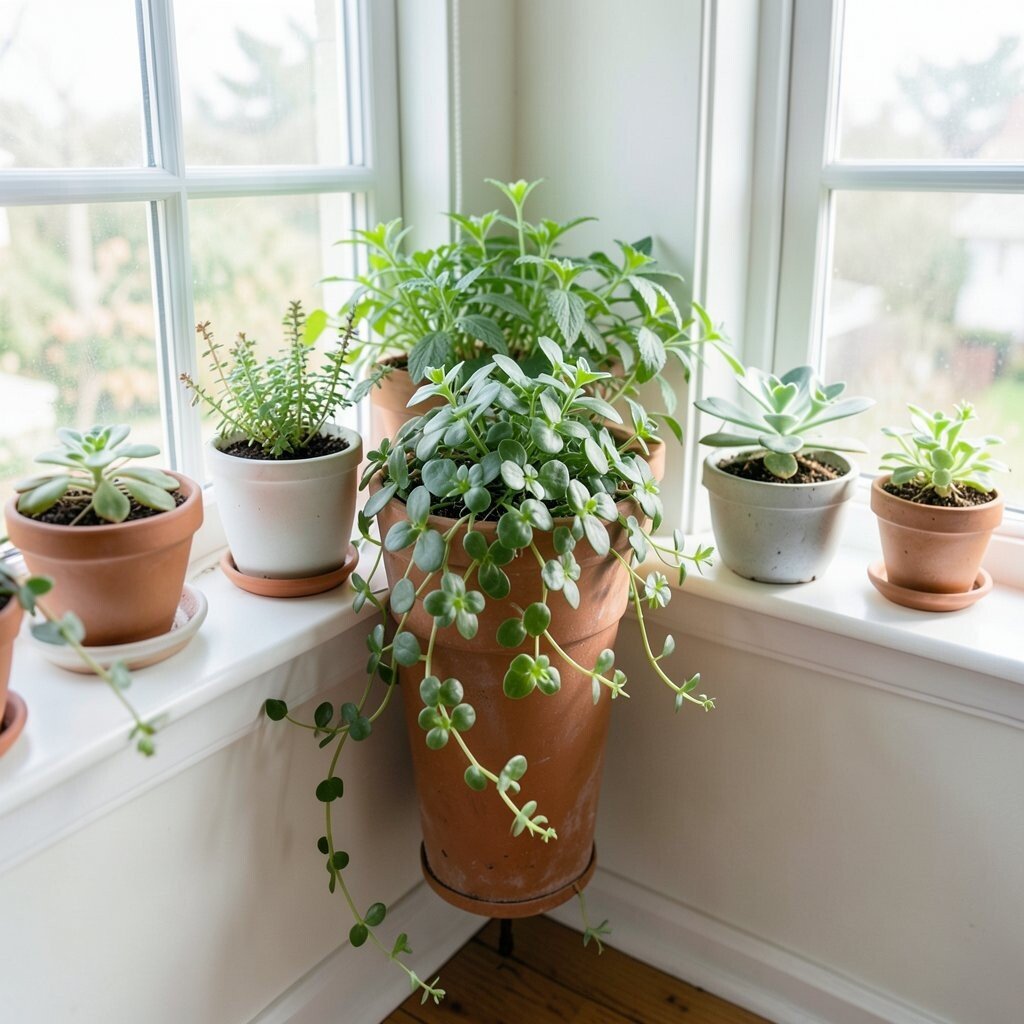
Use one long window pot or planter box so a cascade effect can stretch across the corner. When a few plants spill in different directions, it looks naturally lush without needing many separate spots.
Choose trailing plants with similar light needs, like pothos varieties, trailing succulents, or small string-of-pearls types. Tuck taller plants at one end and let the rest drape toward the center for a relaxed silhouette. This arrangement helps small spaces feel fuller because the plants occupy length, not width.
Keep the soil evenly moist for non-succulents, and use a finger test before watering. For personalization, adjust the spacing so each plant creates its own little “wave” of greenery. Costs can stay reasonable since long planters often hold several cuttings or small starters.
7. Two-Shelf Windowsill Grid Using a Compact Ladder
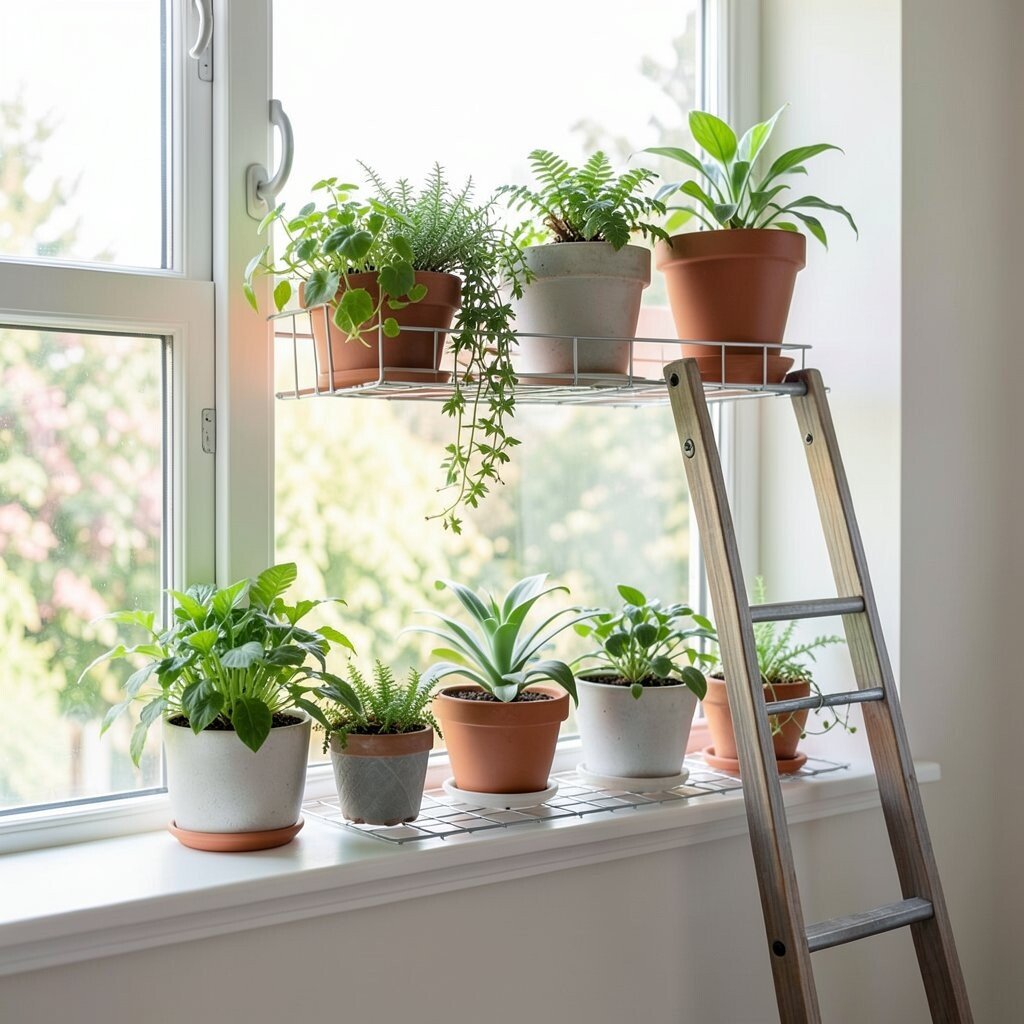
If your sill is narrow, adding a simple mini ladder shelf can double your planting space. You’ll see more layers right away, which makes the window feel brighter and more alive.
Place one shelf with plants that like steady moisture and the other with plants that prefer to dry a bit more between waterings. Keep taller items on the bottom shelf so nothing blocks light from reaching smaller pots. This setup is unique because it turns a flat surface into a vertical gallery.
Secure the shelf so it doesn’t wobble, and use saucers or drip trays to protect your window area. Personalize by mixing pot textures such as smooth ceramic with woven baskets. Budget tips include buying one sturdy shelf and starting with thrifted or propagated plants rather than many new ones.
8. Minimalist White Pots With Soft Green Texture
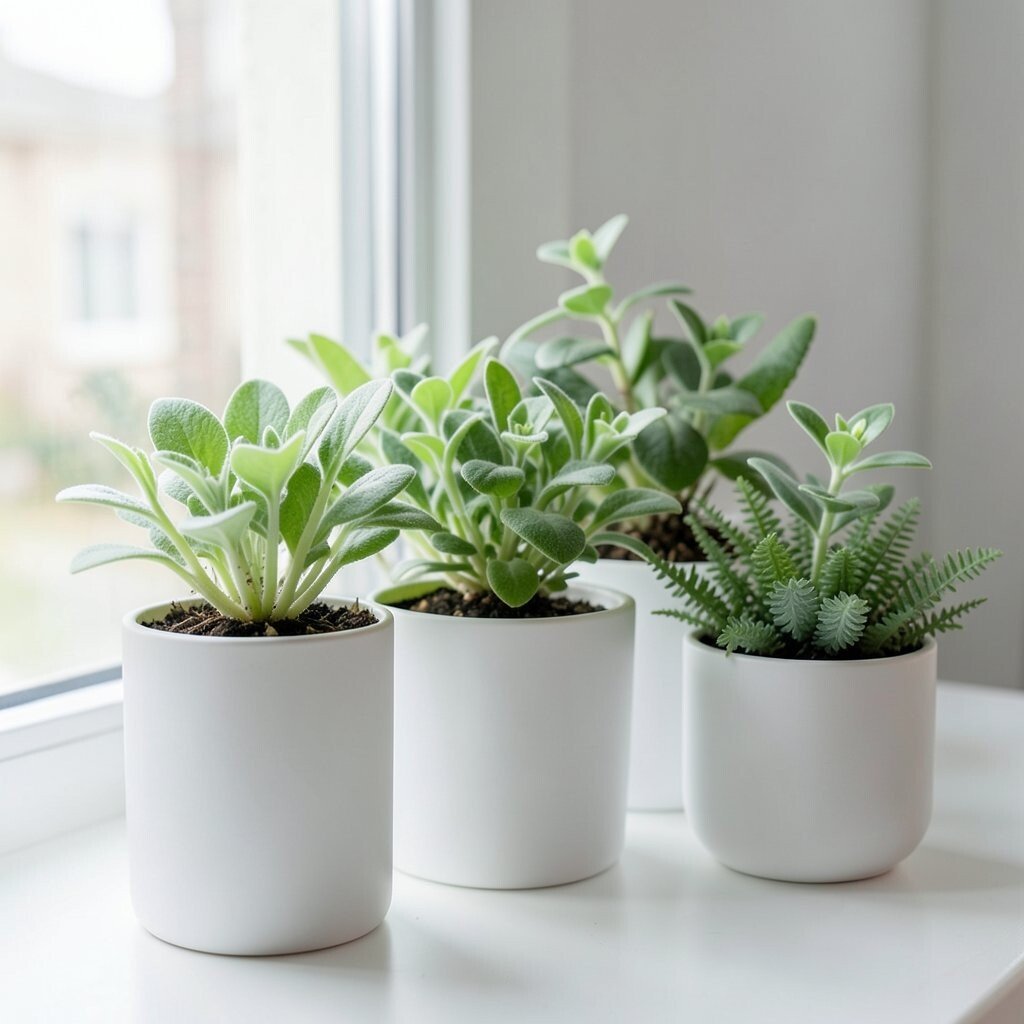
Choose a consistent pot color, then focus on plant texture for a clean, calm windowsill. White pots make greens look sharper, especially in bright daylight.
Mix plants with different leaf shapes, such as a smooth-leaf plant, a slightly ruffled one, and one trailing accent. Give each pot enough spacing so airflow stays good and leaves don’t rub. This arrangement is practical because it reduces clutter and makes watering easier to track by pot shape and size.
Rotate the pots regularly to keep growth even, and wipe dust from leaves so light can hit them clearly. For personalization, add one small decorative item like a smooth river stone or a simple plant label using card stock. Costs are controllable since you can reuse plain pots and invest in better soil or a quality grow light if your window is tricky.
9. Herb-and-Flower Mix With a Tiny Watering Routine
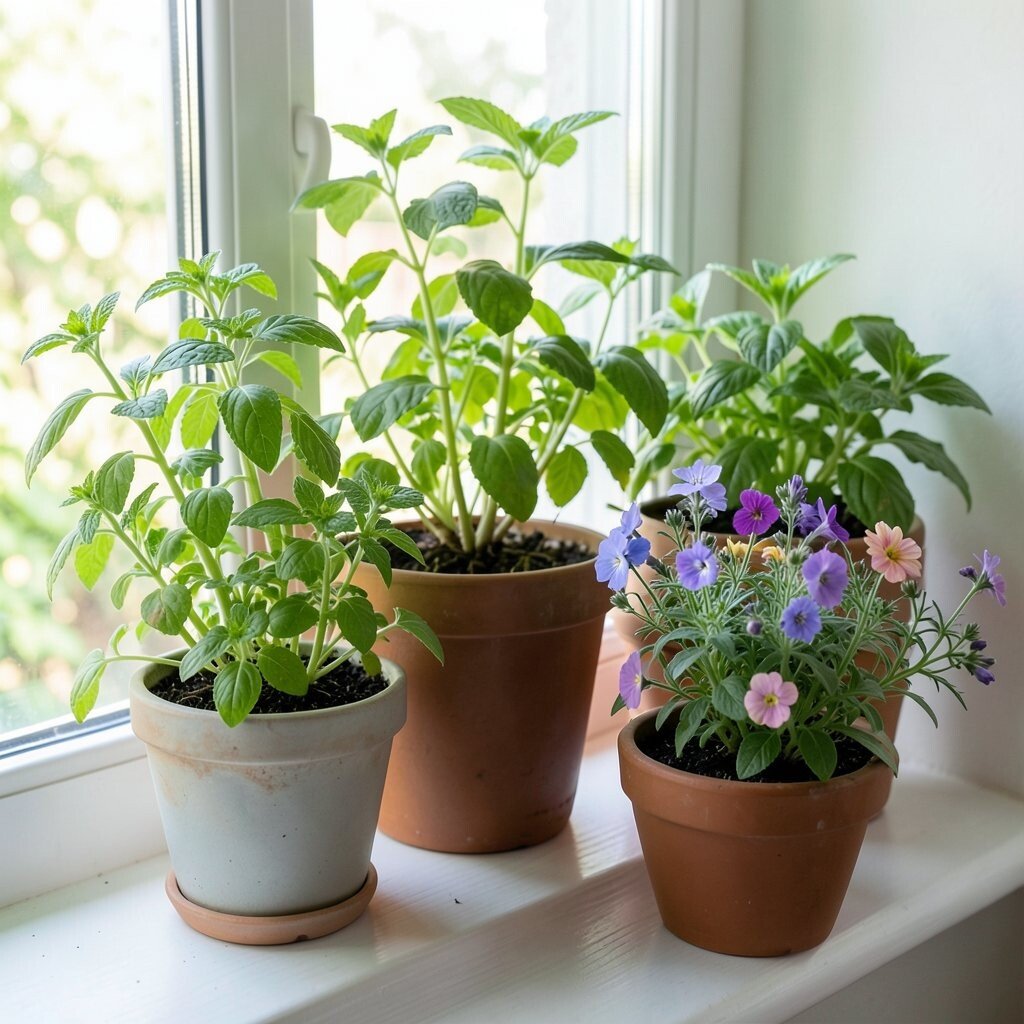
Combine kitchen herbs with a small flowering plant to create a windowsill that looks cheerful and useful. The herbs bring a familiar scent, while blooms add a little surprise when the light is right.
Use a consistent watering routine by checking soil moisture before adding more water. When you harvest herbs, you also encourage new growth, which keeps the whole arrangement looking fuller. This is unique because it blends practicality with a gentle “wow” factor.
Pick flowering plants that won’t outgrow your window quickly, such as small African violet types or compact seasonal blooms if you can find them. Keep pots near the glass but away from drafts, especially in colder months. For cost considerations, start with one flowering plant and fill the rest with herb starters, then propagate any cuttings you take.
10. Color-Coded Plant Tags for Easy Care
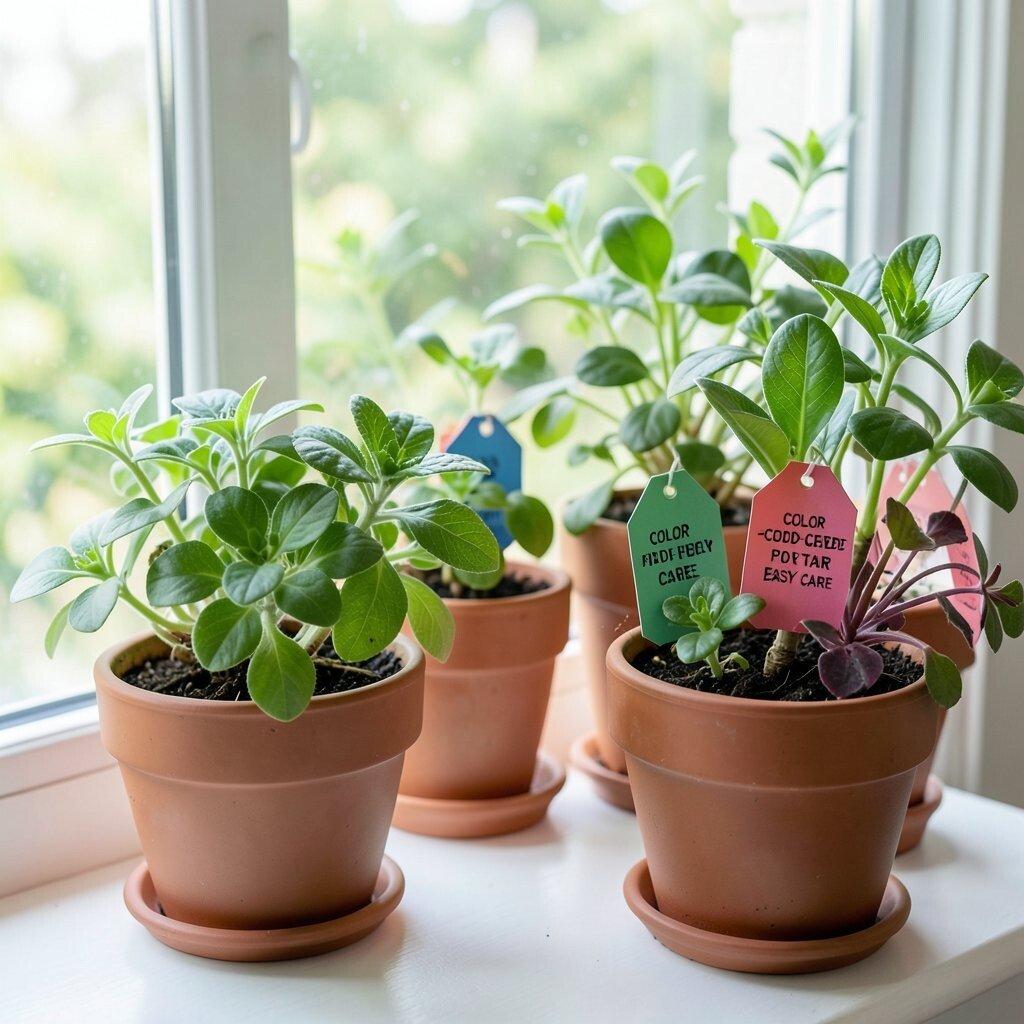
Style your windowsill like a tidy system by adding small colored tags to each pot. It may sound simple, but it makes day-to-day care less stressful when you’re juggling several plants.
Group plants by watering needs, then match tag colors to your routine so you always know what to check first. Visually, the tags also add a playful pop that feels personal and modern. This arrangement benefits your plants because you’re more likely to water at the right time.
Use waterproof markers on plain cardstock or purchase cheap plant labels, then keep tags visible at pot level. Personalize it by using colors that match your decor or seasonal mood. Costs are low because tags are inexpensive, and the payoff is better plant health.
11. Symmetry With Two Identical Plants and One Accent
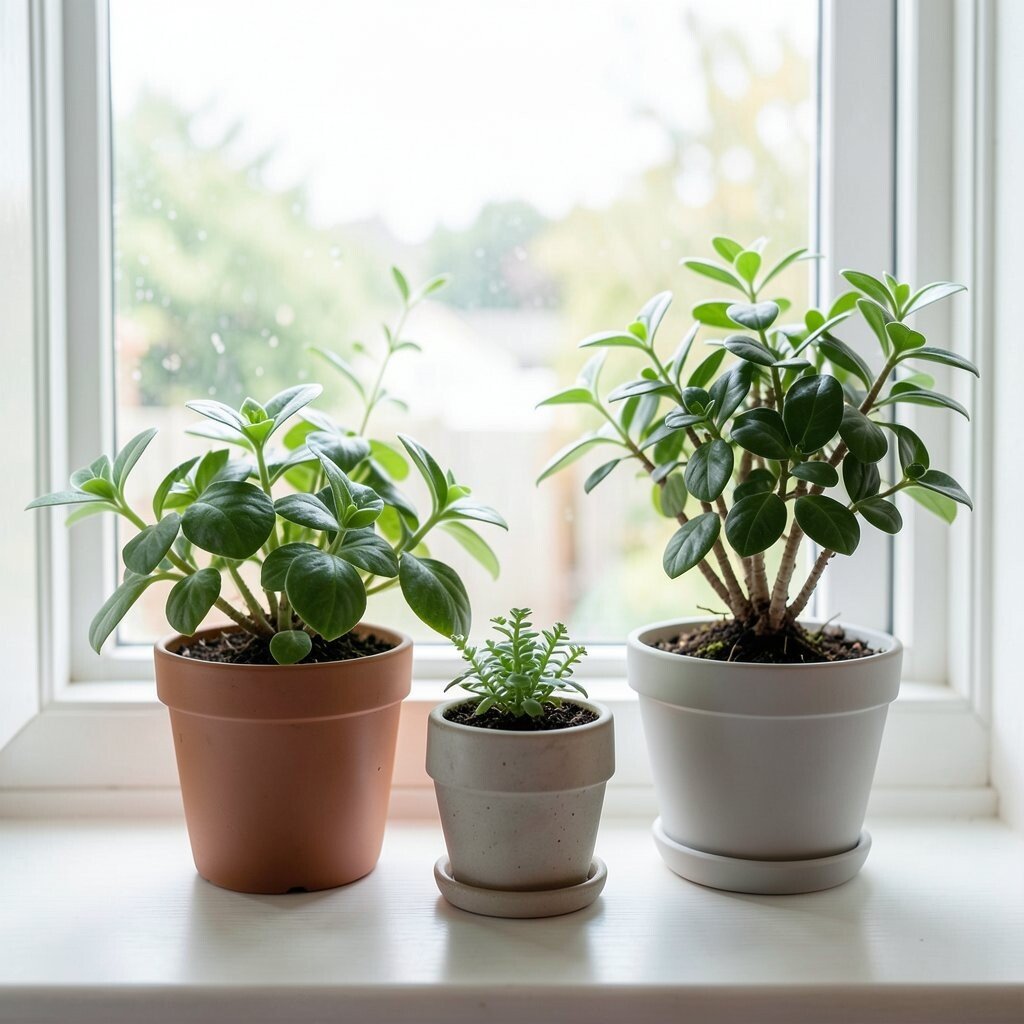
Create a calm, balanced look by placing two identical plants on either side of the window. Add one small accent in the center to break the symmetry in a fun way.
Choose plants with similar care needs so both sides grow at the same pace, then rotate pots to prevent leaning. The visual benefit is clear: your sill looks styled instead of crowded. This arrangement is unique because it turns two “regular” plants into a designed feature.
Personalize the accent by choosing a plant with a different leaf shape or color, such as a darker foliage variety or a small trailing plant. For budget, split from cuttings or choose similar plants from the same shop so the setup feels cohesive without overspending.
Keep the center pot slightly smaller so the main plants stay the focus. Good drainage and consistent light make this kind of symmetrical setup thrive.
12. Bright Window Succulents in a Shallow Bowl
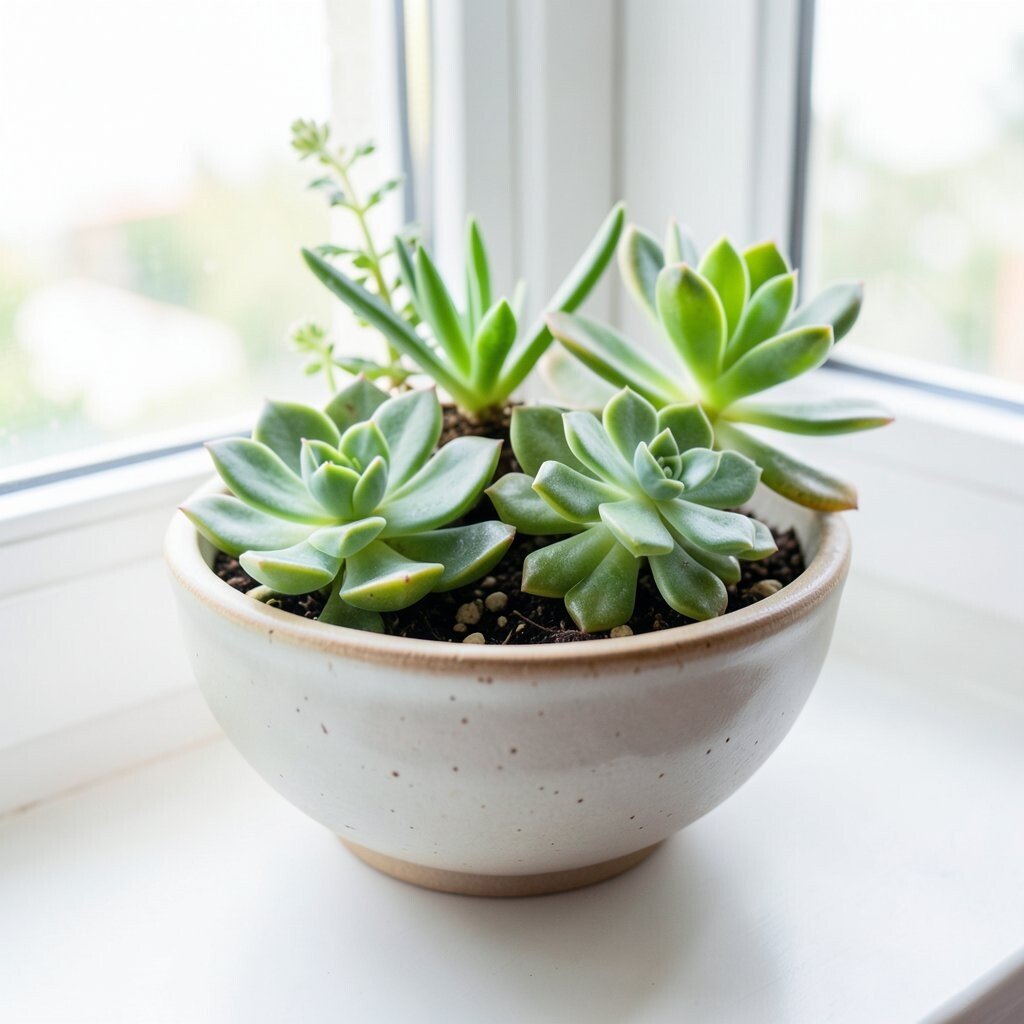
Succulents look stunning in bright light, and a shallow bowl makes them feel like a curated collection. The wide surface shows each rosette clearly without requiring a lot of depth.
Use fast-draining cactus mix and water sparingly, only when the soil is dry. Arrange plants by height and color, placing larger rosettes near the back and smaller ones toward the front. This benefits your plants by lowering the risk of root rot and gives you a tidy, low-maintenance display.
For personalization, try a “rainbow” of leaf tones, from silvery blue to deep green. Costs can be kept down by buying a variety pack or starting with a few affordable cuttings. Current trends often favor minimalist succulent bowls that look clean and modern on small windowsills.
13. Layered Plant Steps With a Bookcase-Style Stand
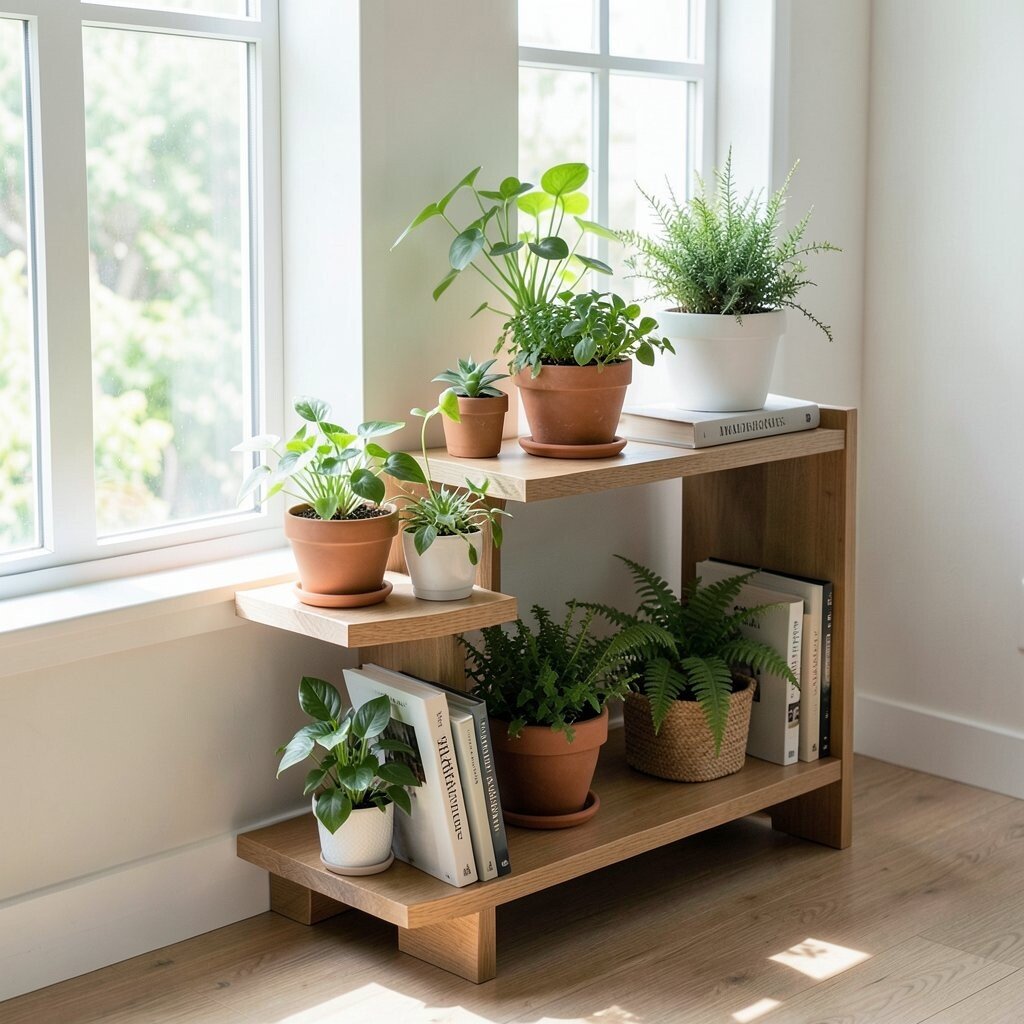
Stack a small stand with multiple levels, then place pots on each tier like mini steps. The layered look makes a tiny windowsill feel taller and more dramatic.
Choose plants that tolerate bright indoor light, but mix in a slightly tolerant trailing plant on the top level for interest. Keep the heaviest pots on the bottom so the stand stays stable. This arrangement is practical because it spreads pots out, reducing the tight crowding that can block light.
Personalize by using a wood stand, metal stand, or acrylic shelf depending on your style. For cost considerations, you can find inexpensive tier stands online or DIY one using sturdy shelf brackets. If your window light changes during the day, rotate tiers so every plant gets a fair share.
Water with a narrow spout so you don’t splash higher pots, and always empty saucers quickly to protect surfaces.
14. Radiant Window Sill With a Row of Small Pothos
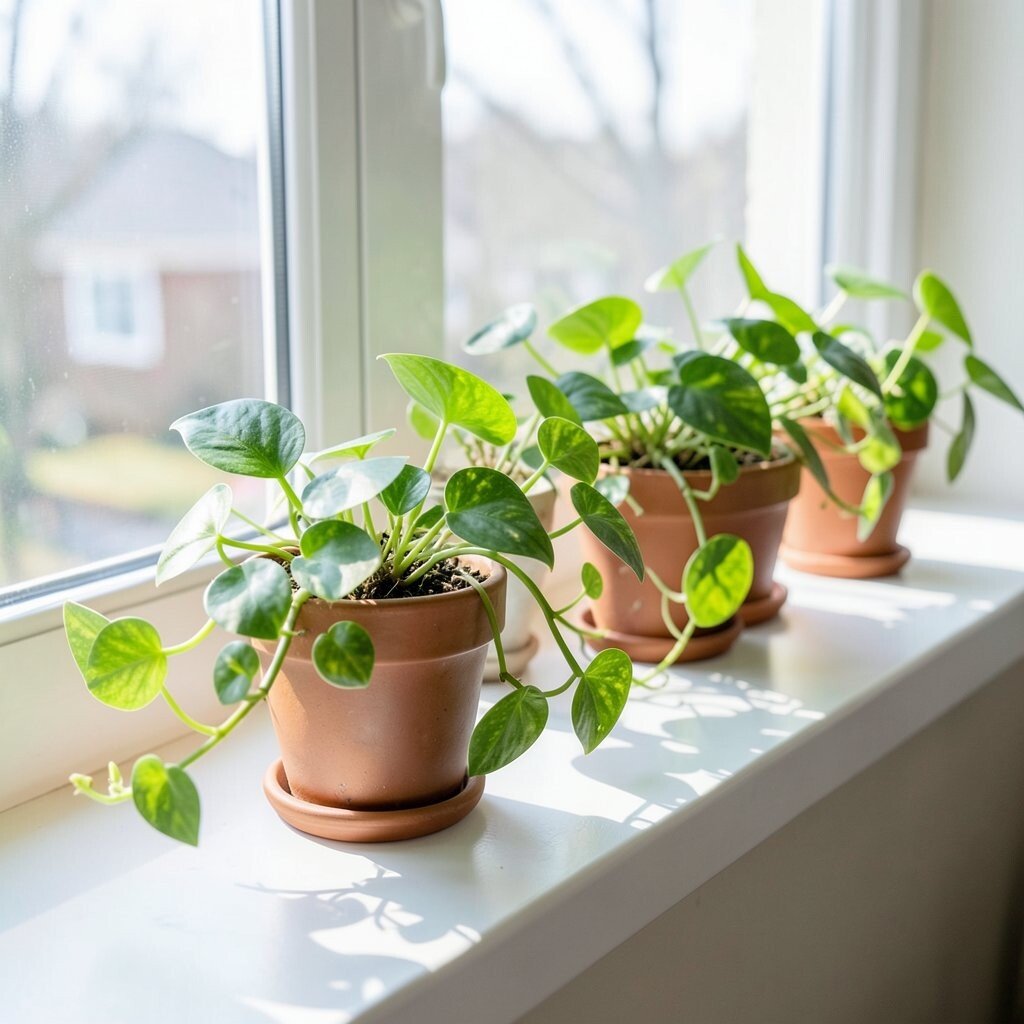
Nothing says “bright and friendly” like pothos, and a row of small pots can look like a green ribbon. When leaves catch the light, they look glossy and energetic.
Train each pothos to grow slightly differently by guiding vines with soft ties or small stakes. The visual uniqueness comes from uneven draping, which feels natural and abundant rather than stiff. This is also a practical approach because pothos is forgiving if you’re still learning your plant routine.
To keep it manageable in a small space, choose small pots with drainage and water only when the top inch feels dry. Personalize by selecting different leaf patterns, such as solid green and marbled varieties, so you get variety without extra plant types. Costs can stay reasonable because pothos cuttings root easily in water, letting you grow your collection over time.
A bright window helps pothos, but you should avoid harsh direct sun that can scorch leaves. Keep vines trimmed if you need the sill to stay neat.
15. Plant Bowl With a Decorative “Soil Topper” Theme
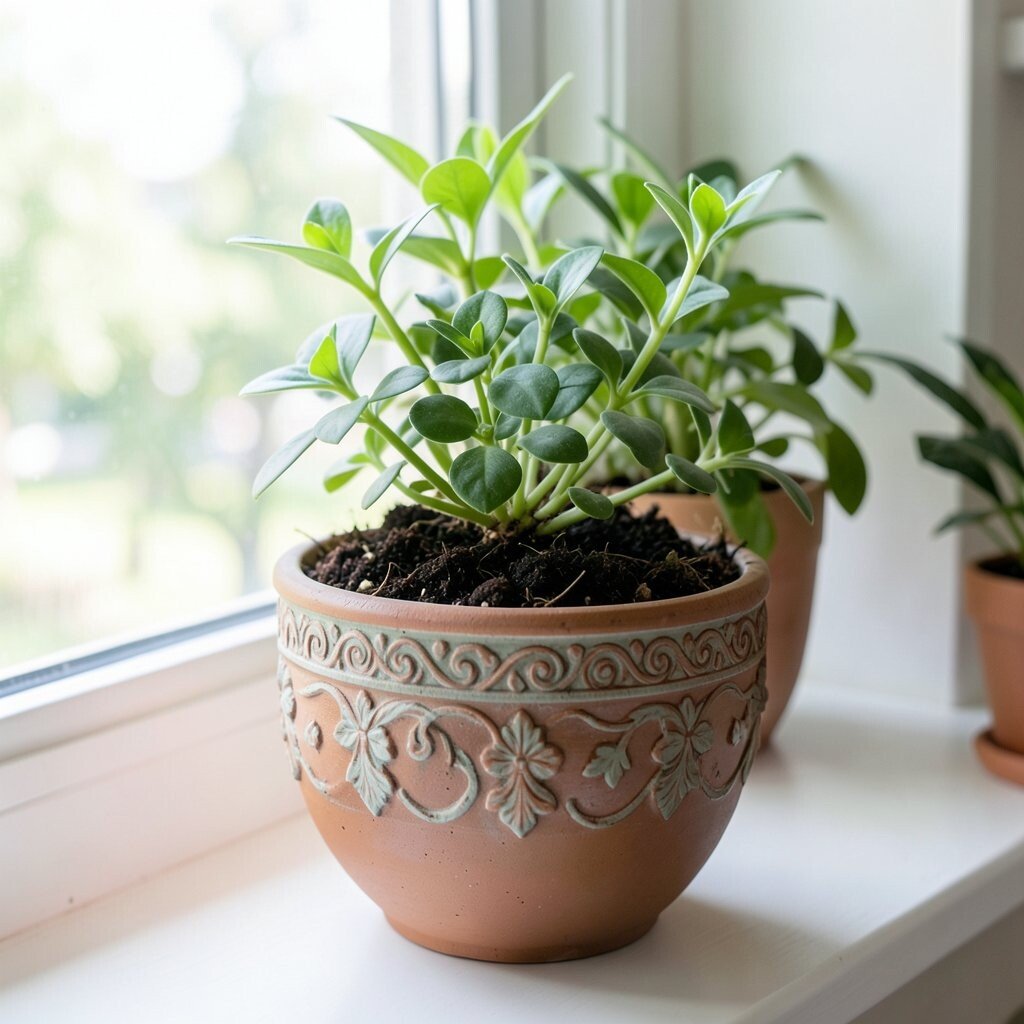
Give your pots a polished look by adding a soil topper like moss, pebbles, or decorative bark. The effect is immediate, especially in a windowsill where light highlights texture.
Use a topper that suits the plant, such as moss for moisture-loving plants and small stones for succulents. This benefits your setup by helping reduce soil splash and keeping the surface visually tidy. The uniqueness is in the theme, like beachy tones or a modern monochrome look.
Personalize with colors that match your room, and keep the topper thin so it doesn’t smother the base. Costs depend on what you choose, but many toppers are affordable, and a little goes a long way. Current trends favor natural textures, so pebbles and moss-like finishes often look especially on-trend.
When watering, avoid soaking the topper so water doesn’t pool on top. If the topper is decorative bark, check moisture underneath so roots stay healthy.
16. Mixed Pot Trio With One Trailing, One Upright, One Compact
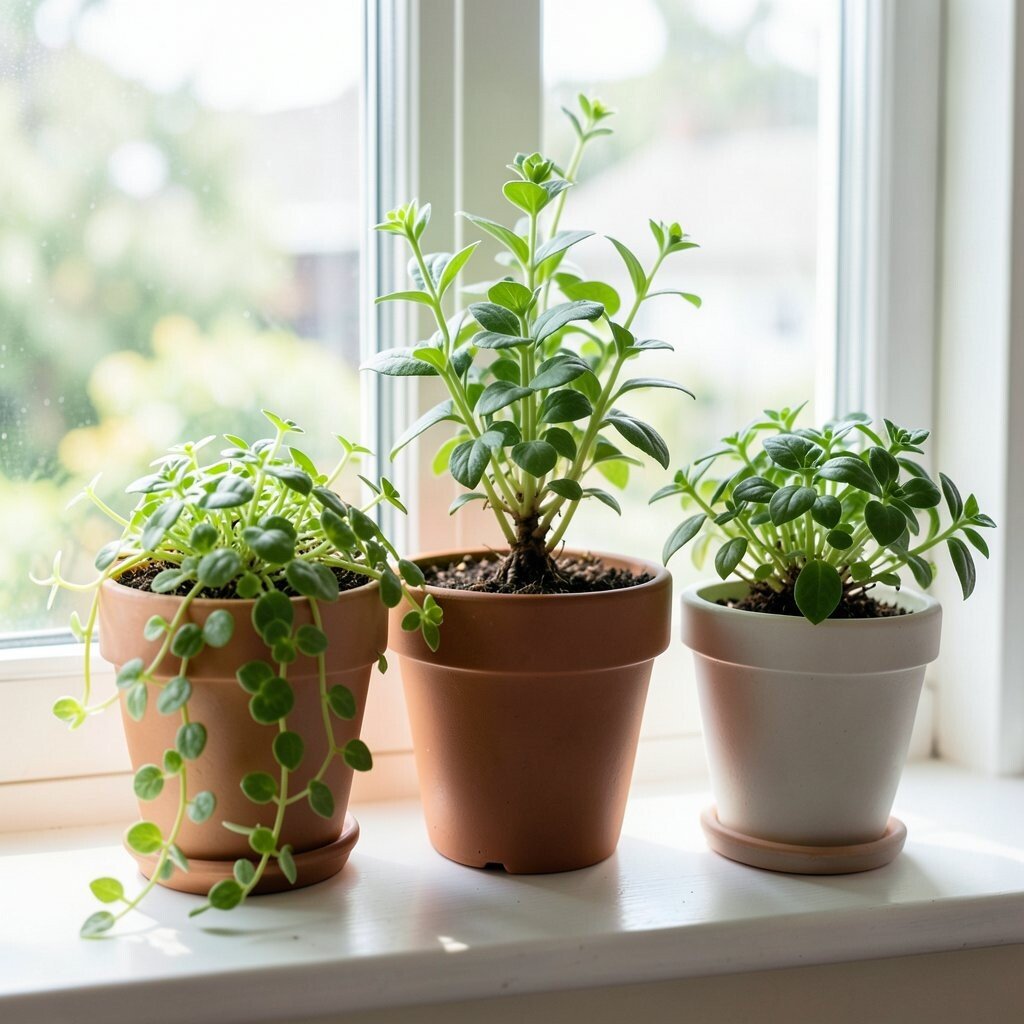
Build a simple “plant triangle” by combining one upright plant, one compact bushy plant, and one trailing plant. The arrangement looks balanced, even when your window space is tight.
Place the upright plant at the back, set the compact plant in the middle, and let the trailing plant spill toward the front edge. This improves airflow and reduces leaf rubbing, which helps prevent common indoor issues. It’s unique because the structure creates a mini ecosystem of shapes.
Personalize by choosing a theme such as warm tones or cool tones, then match leaf colors across the three plants. For practical care, use pots with drainage and keep a small saucer under the most water-prone plant. Costs can be managed by using a single larger plant and filling in with cuttings for the other positions.
Rotate the triangle every week so the trailing vine doesn’t lean and the upright plant stays symmetrical.
17. Window Sill Starter Set With a Grow Light Clip
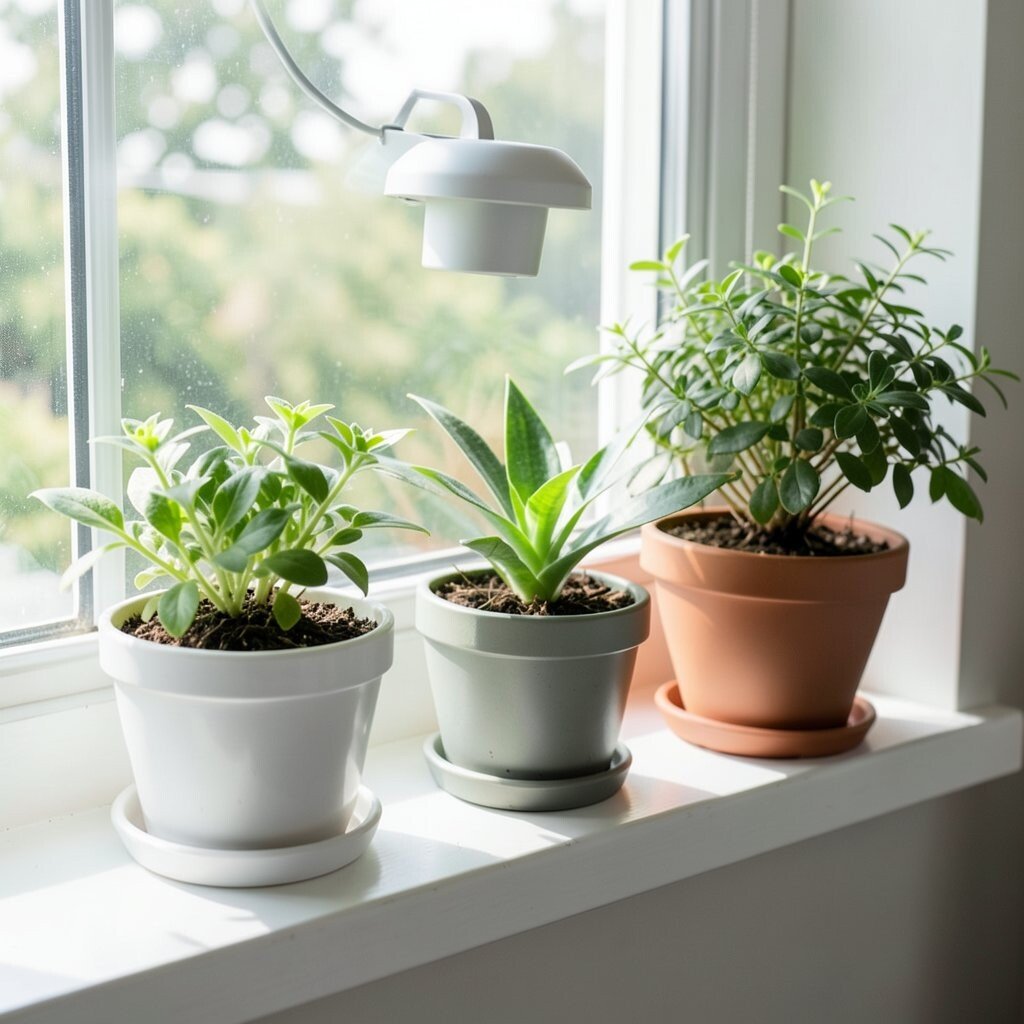
If your window light is inconsistent, clip on a small grow light and style your plants around it. The glow makes the arrangement look purposeful and keeps plants from getting too leggy.
Position the light above the center of the arrangement and use a timer if you can, so care is predictable. Keep pots evenly spaced so the light reaches each plant. This arrangement benefits your health goals because healthier plants look better and stay fuller.
Personalize by choosing a warm-toned grow light for a cozy vibe or a neutral tone for a crisp look. Costs can be a factor, but grow lights often last a long time and can save you money by preventing plant loss. Current trends include compact grow setups for apartments, and a clip light is one of the easiest ways to join in.
18. Upcycled Canister Planters for a Bright Rustic Look
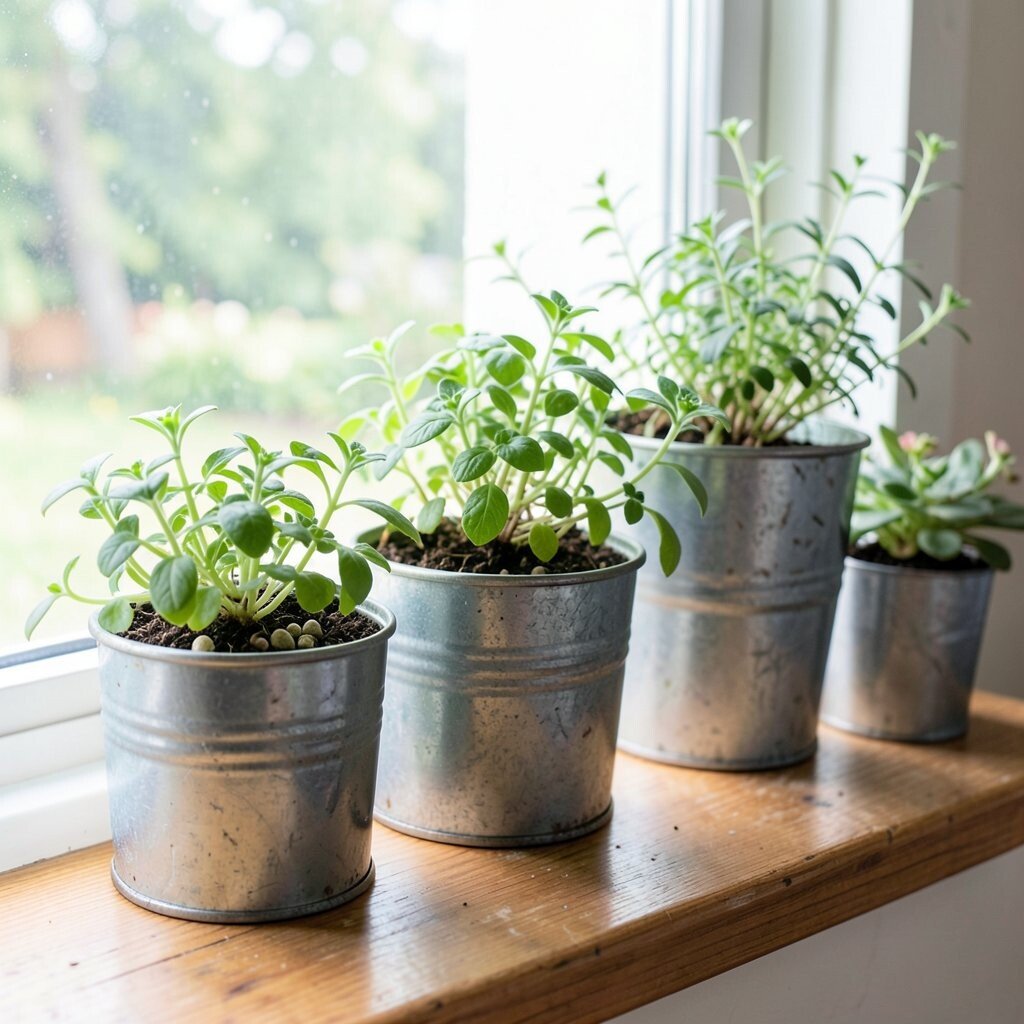
Reuse small containers like clean glass canisters or vintage-style tins to hold plants on your windowsill. The upcycled look feels charming, and it’s a fun way to personalize without buying new décor.
Make sure each container has drainage, using a separate nursery pot inside if the canister doesn’t drain. This keeps roots healthy while still giving you the visual charm of the upcycled outer shell. The uniqueness is strong because your planters become part of your story.
For practical tips, label the inner pots so you know which ones dry out faster. Costs can be low since containers come from your home, and plants can be bought in smaller sizes to keep spending under control. If you love current trends, look for rustic finishes and warm metals that blend with most interiors.
Wipe the outside canister often because windowsills gather dust that dulls the shine.
19. Terracotta-Only Arrangement for Classic Warmth
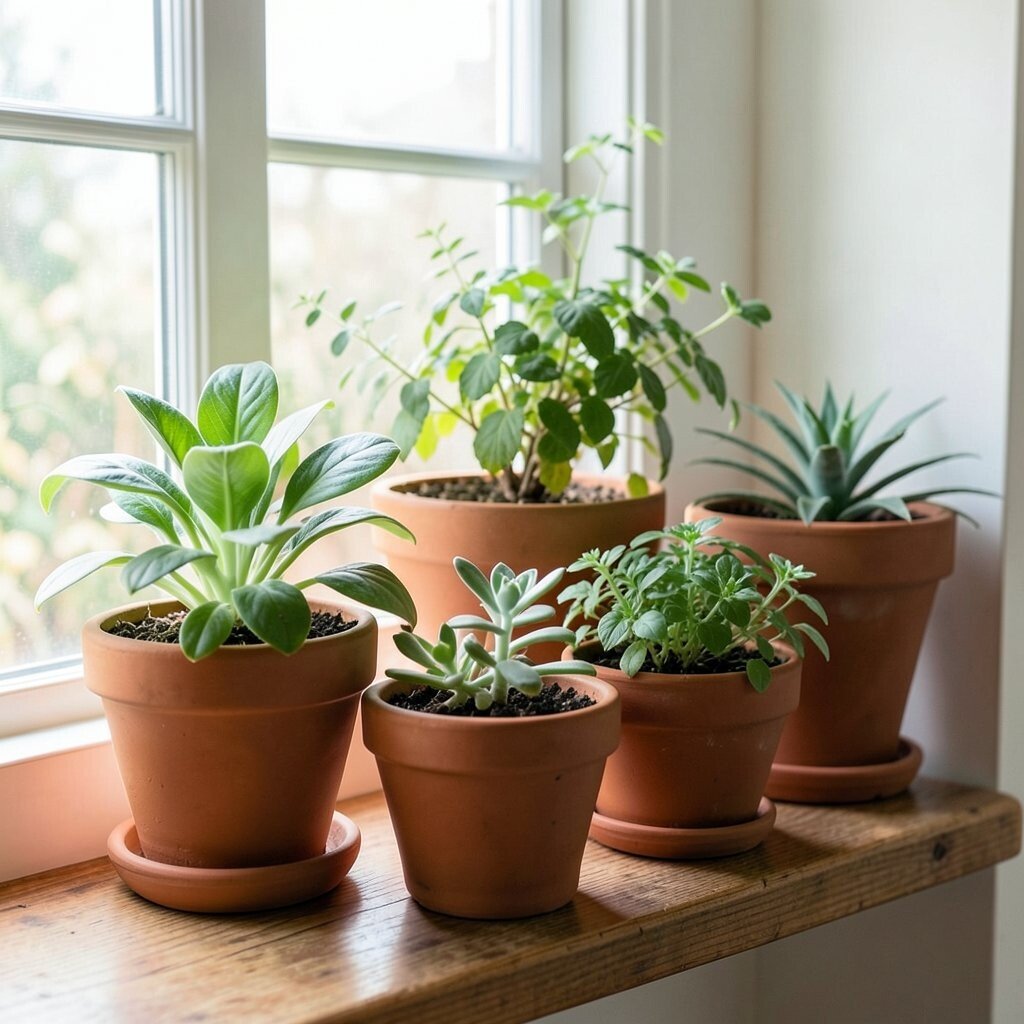
Choose terracotta pots only, then arrange plants with similar light needs so your sill looks cohesive. The earthy color adds warmth, and terracotta naturally supports healthy airflow around roots.
Set slightly thirstier plants in the center and drier-tolerant ones near the sides, since edges can dry out faster near drafts. Benefits show up in steadier growth and fewer surprises when you water. This setup feels unique because it looks classic yet still fresh when paired with bright leaves.
Personalize by painting one or two pots with a subtle color or leaving them natural for a minimalist style. Cost considerations are easy because terracotta pots come in many budgets, and you can add plants gradually as you learn what thrives. Current trends often favor natural materials, so terracotta fits right in with modern home styles.
Rotate plants every couple of weeks and keep saucers handy so you don’t stain your sill.
20. “Window Garden Library” Using a Small Plant Book Stand
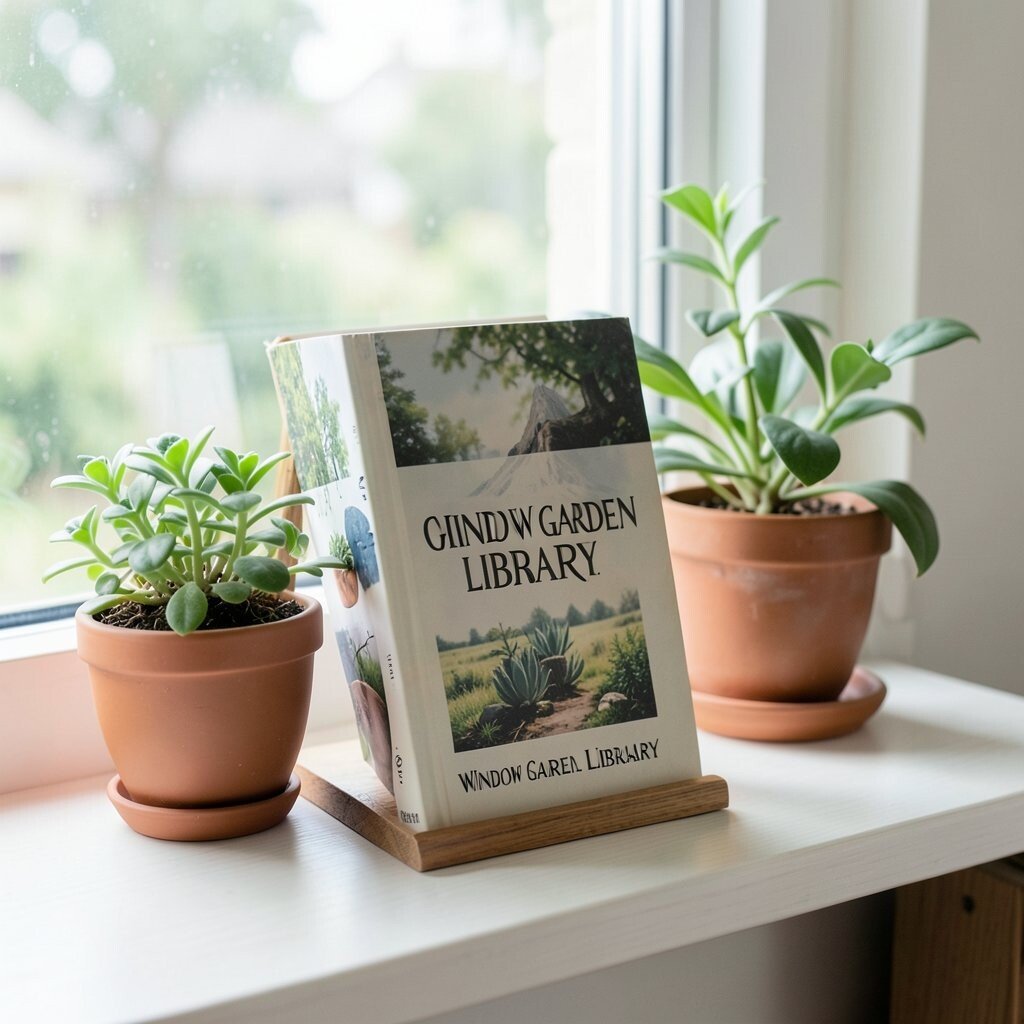
Place a slim book stand or display stand near the window, then create a plant lineup along the top and side. The shape gives you a stylish, gallery-like look that still stays practical for small spaces.
Use compact plants with tidy growth, like small ferns, fittonia, or compact succulents, depending on your light level. Add one trailing accent that can hang over the edge for softness. This arrangement is unique because it borrows the idea of a bookshelf, but your “books” are living.
Personalize by choosing a stand that matches your home, such as black metal for modern spaces or light wood for cozy ones. Costs stay manageable if you repurpose a piece you already have or find a cheap stand. For tips, secure plants so they don’t tip when you move the stand to clean.
Wipe the stand regularly since water splashes can leave marks in bright light.
21. Candle-Holder Grid With Tiny Pots for Maximum Sparkle
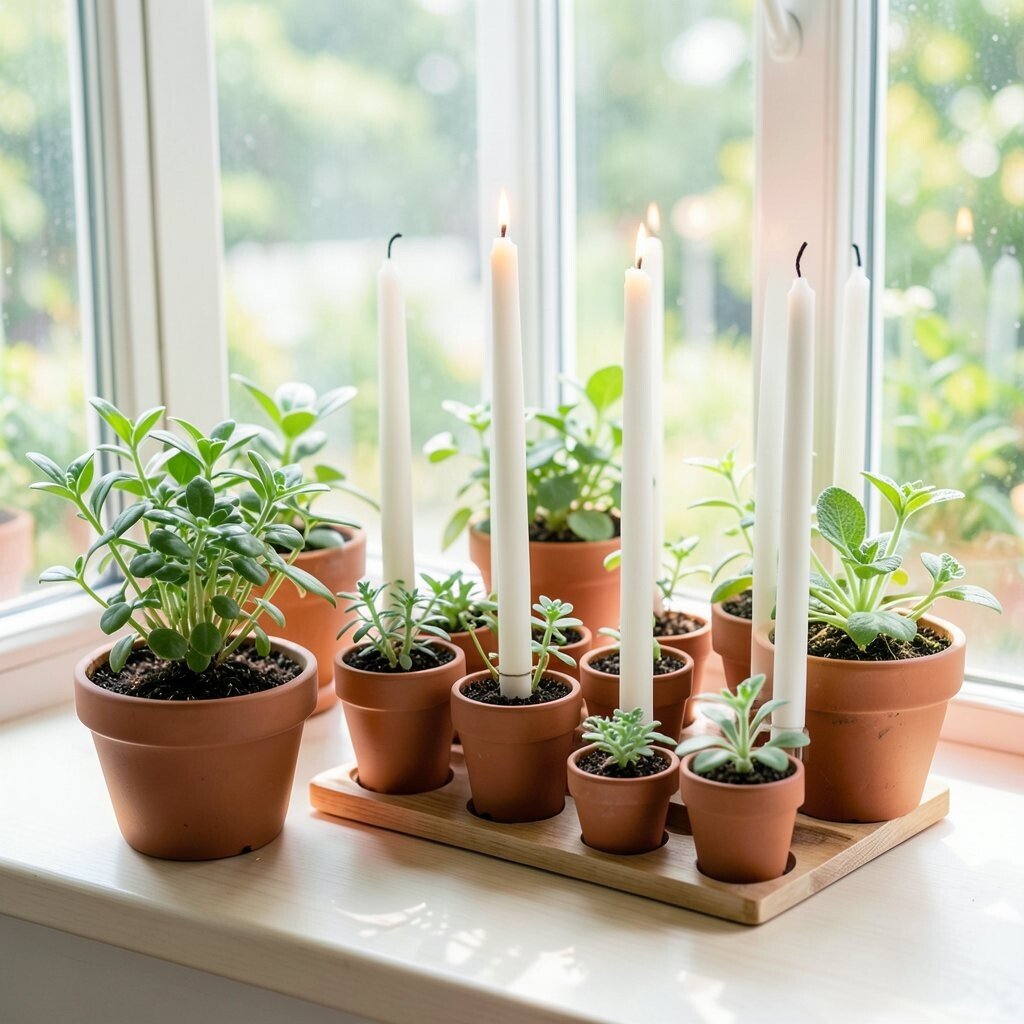
Turn your windowsill into a twinkly display by using small candle holders or pedestal steps to lift tiny pots. Even small plants look brighter when elevated and spaced on a grid-like pattern.
Use the same pot size for an organized look, then vary plant leaf colors for interest. This arrangement benefits you because it improves visibility and makes it easier to spot which pots need water. The uniqueness is in the playful “mini podium” style that feels light and fun.
Personalize with seasonal picks, like a fresh herb starter in spring and a low flowering plant in winter. Cost considerations are good because tiny pots and small plants are often affordable, and you can rearrange often. Current trends lean into cute, curated displays, and this one looks charming without feeling cluttered.
22. Seasonal Rotate Plan With a Ready-to-Swap Shelf
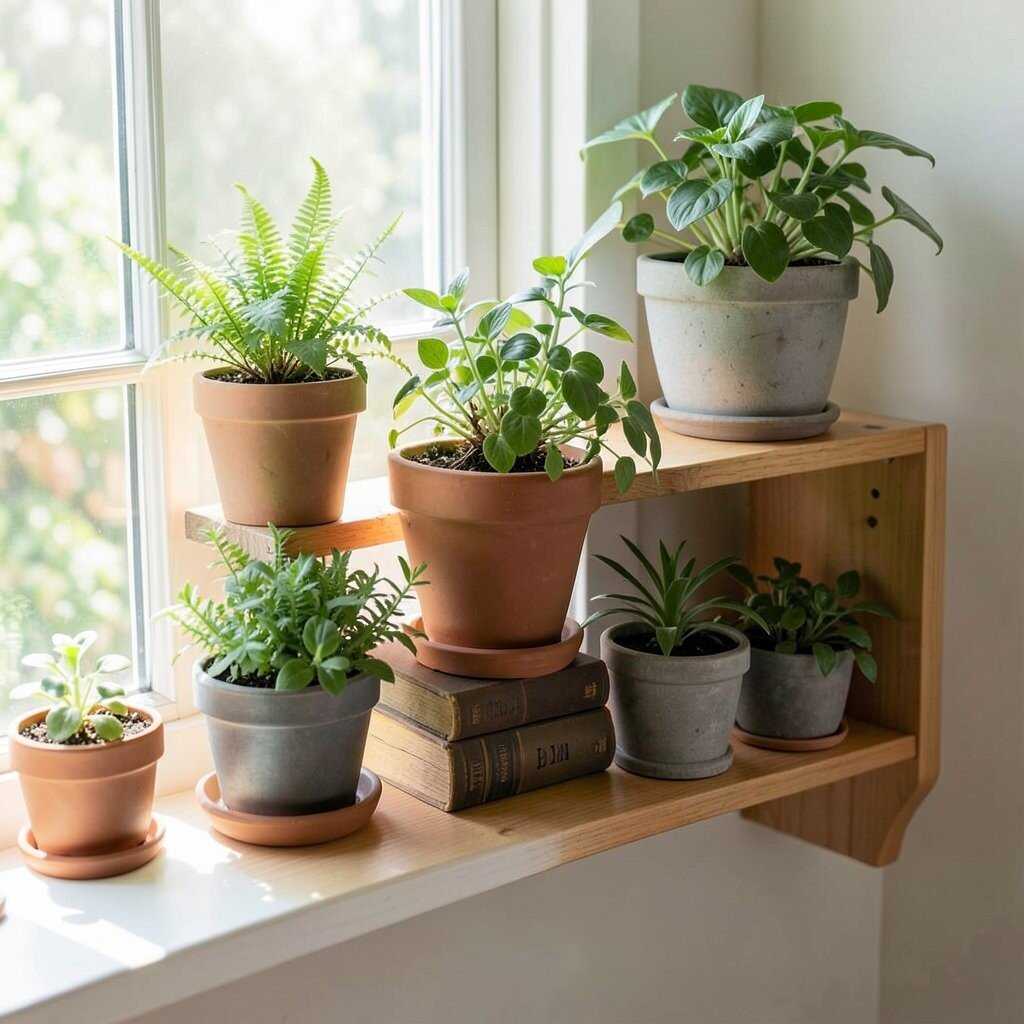
Set up a simple shelf or slim organizer near the window so you can swap plants by season. When you rotate new greenery, your space always feels fresh without needing a brand-new setup each time.
Choose plants that match your current light conditions, then move them into place with minimal fuss. Rotate the order of pots so every plant gets time in the best lighting spot. This benefits your plants because they stay strong during seasonal light shifts rather than struggling all year.
Personalize the whole routine by saving favorite pots and replanting them with different combinations. Cost considerations are easier because you can buy one seasonal plant at a time and reuse your containers. A lot of current home styles celebrate “living change,” and rotating plants is one of the simplest ways to match that feeling.
Keep a small checklist in your head by remembering which plants prefer more moisture and which prefer drier soil. When you swap plants, wash saucers and check roots quickly so you start clean.