The street noise can sneak in like it owns the place. The right shutters can help your home feel calmer, one window at a time.
Below are practical options that look great and work hard, even when traffic is loud.
1. Double-Layer Acoustic Shutters With Air Gaps
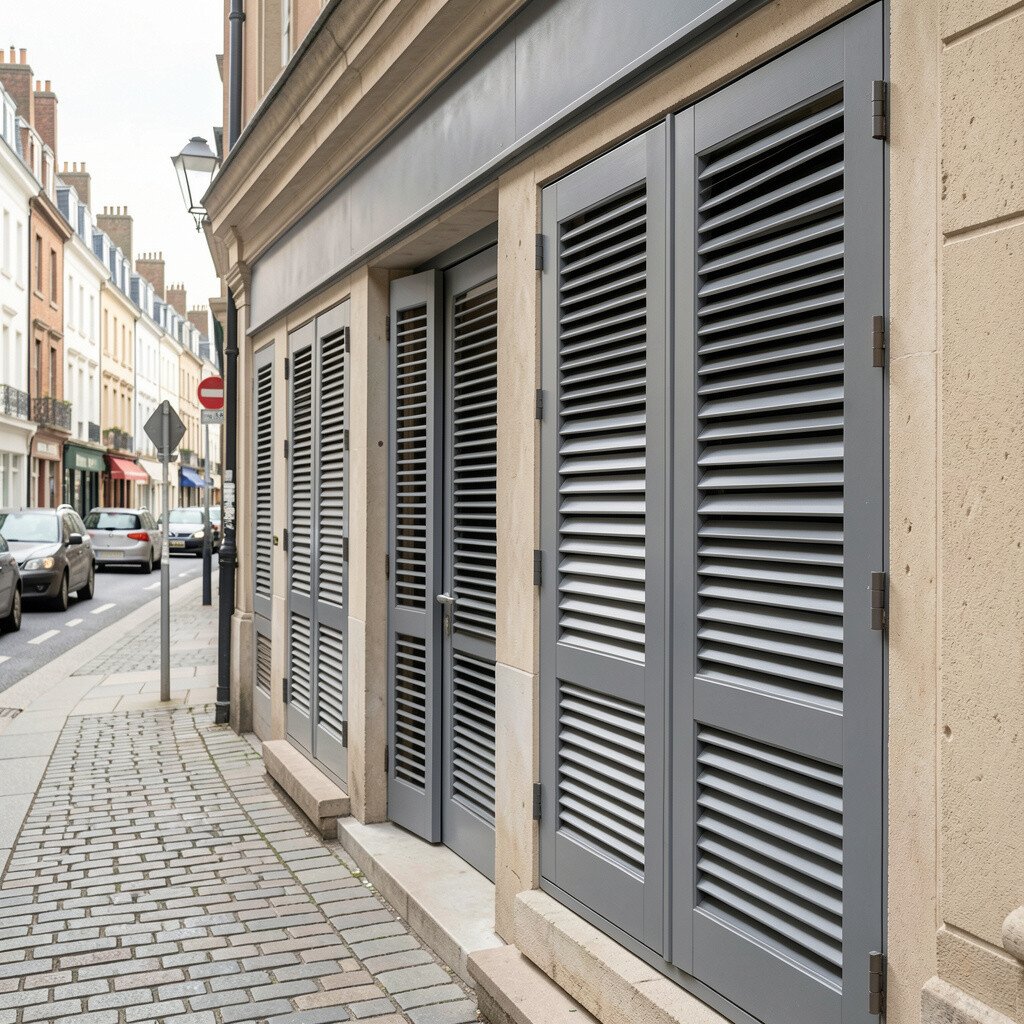
These shutters use two layers with a small space in between, which helps block sound waves. You can often picture the thicker look, with a neat, architectural frame that still feels tidy on the outside.
They tend to make a noticeable difference for constant noise like car whoosh and distant voices. For best results, measure your window width carefully and leave the smallest possible gaps around the edges. Add soft interior curtains behind the shutters for even more control, especially if your room has bare walls or hard floors.
2. Heavy Vinyl Composite Shutters For Low-Fuss Noise Control
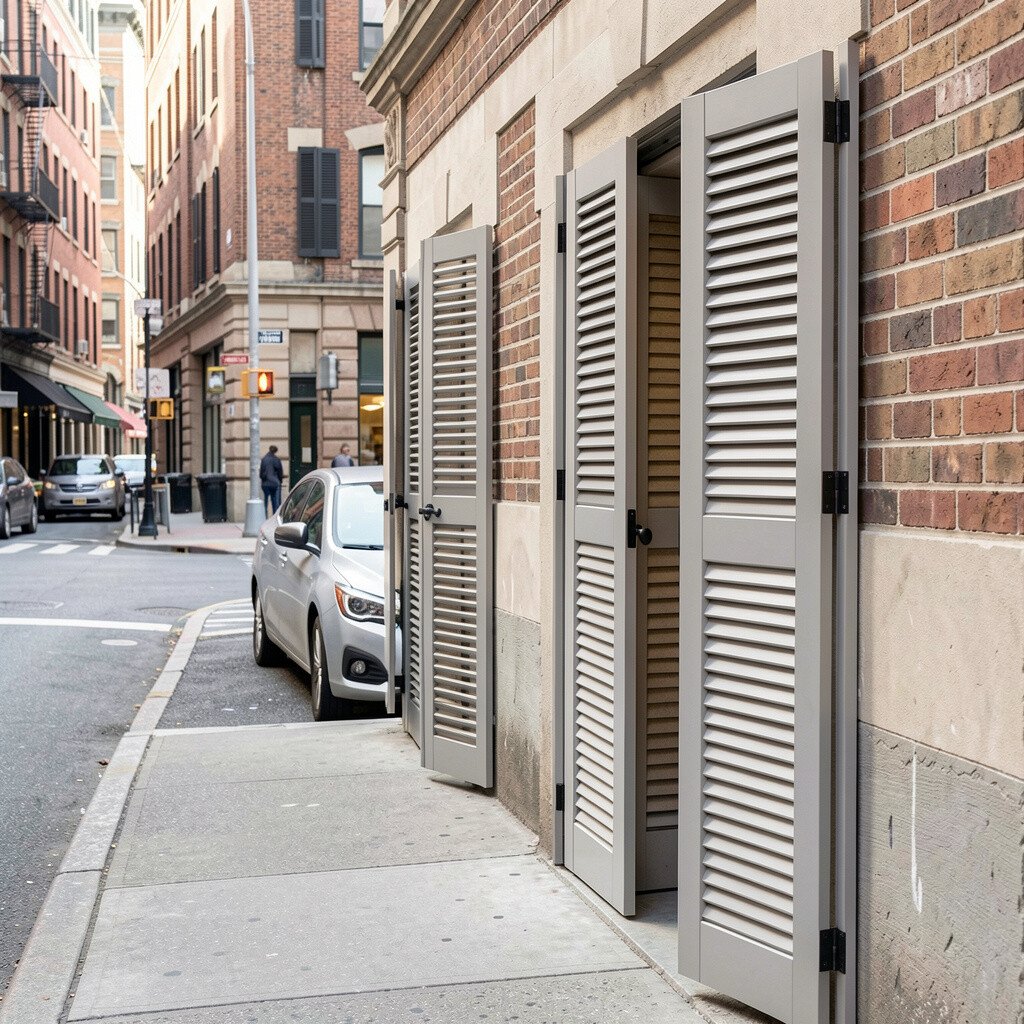
Thick vinyl composite shutters can look smooth and modern while adding mass against street sound. In daylight, they often show a clean finish that pairs well with siding, brick, or stucco.
They are usually easier to maintain than wood and can handle humid weather better. To personalize the look, choose a color that matches window trim, and consider a slightly darker shade for a strong curb appeal. If you want to keep costs friendly, compare thickness options and focus on models with better sealing details rather than only decorative thickness.
For practical setup, install them with sturdy hardware and check that the shutter closes flush. You will get the best sound reduction when the shutter system is airtight around the frame and not just held in place loosely.
3. Plantation-Style Louver Shutters With Sound-Blocking Latches

Traditional plantation louvers can still help with sound when they include better seals at the closing points. You get that classic visual rhythm, with slats that catch light and add charm to front-facing windows.
The sound benefit comes from tighter lock hardware and the way the slats break up noise paths. Make sure the louvers can be set to fully close, and prioritize latch designs that press evenly across the frame. You can also add weatherstripping tape along the frame so the louvers meet more snugly.
For a personalized touch, paint or stain them to match your trim, then coordinate the hardware color. This style often suits living rooms and bedrooms where you want a cozy look without making the window feel too heavy.
4. Solid Wood Sound Barriers In Classic Exterior Frames
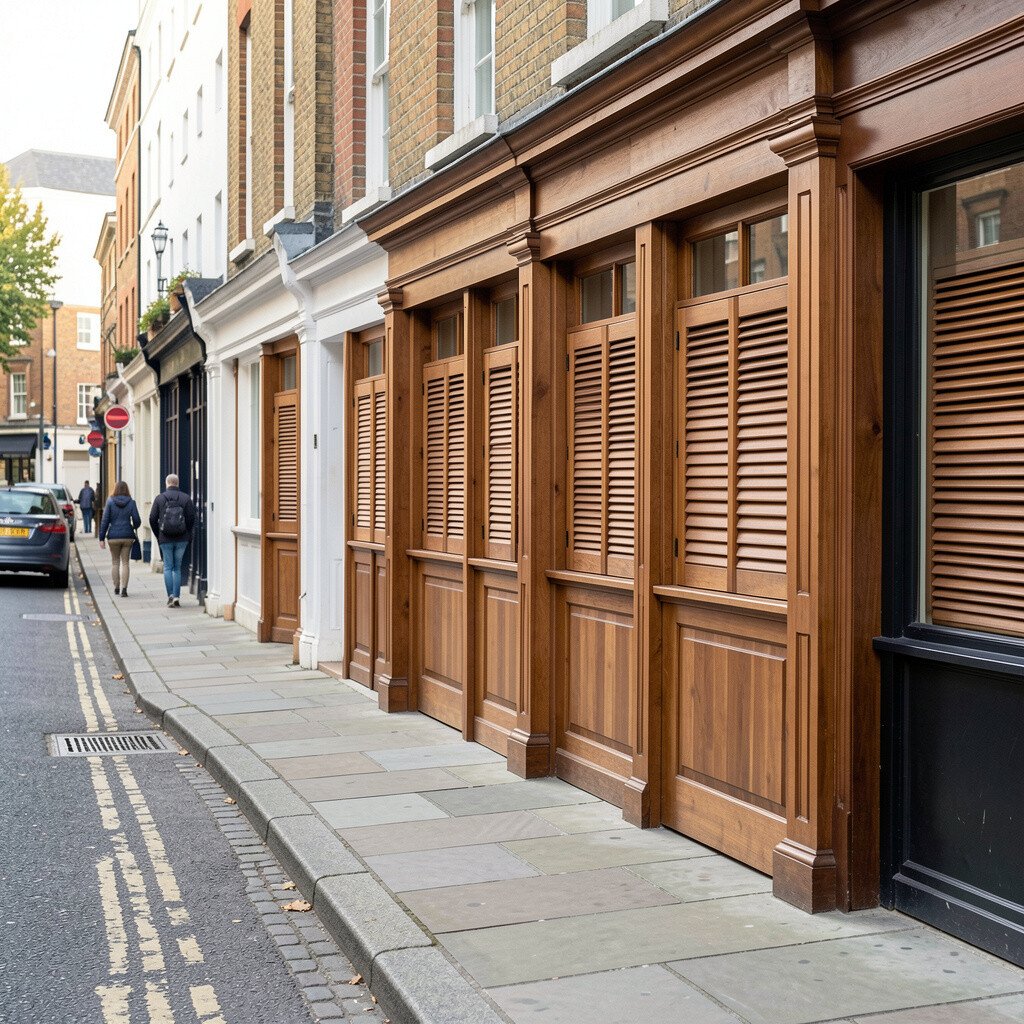
Solid wood shutters feel warm and natural, and that look alone can make a busy street feel less harsh. You can picture rich grain, sturdy hinges, and a finish that blends into many home styles.
Wood adds density, which helps reduce transmission, especially for mid-range noise like talking or music. Choose thicker boards and a tight fit around the frame, and use quality weather seals where the wood meets the wall.
If you live in a place with changing weather, pick wood grades and finishes meant for outdoor use. For practical installation, align the frame first, then adjust the hinges so the panels close evenly every time. This kind of shutter often costs more than basic vinyl, but many homeowners feel the long-term durability is worth it.
5. Accordion-Fold Noise Shutters For Wider Windows
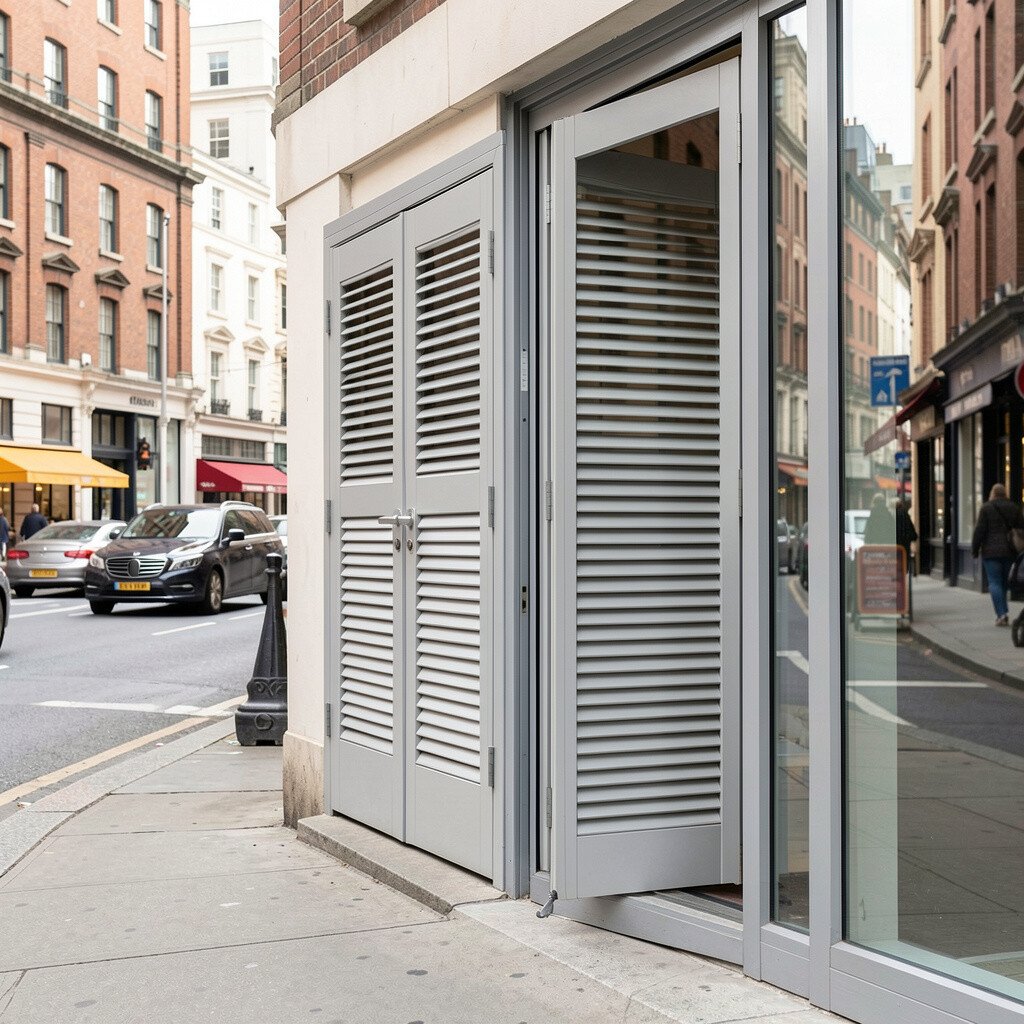
Accordion-fold shutters can cover large spans and create a strong barrier with a smooth, modern profile. When closed, they look neat and continuous, which helps the whole opening feel more enclosed.
They are handy for wide windows, patios, or dining areas where standard panels might be awkward. Look for versions with layered materials and dense inserts, then pay attention to how the folds seal against the track.
For practical tips, make sure the track is firmly mounted and that the fabric or panel edges compress smoothly when shut. Personalize the color to match your wall tone, and consider adding an inside curtain layer for rooms that get lots of direct noise from traffic lanes.
6. Exterior Shutters With Interior-Fit Storm Seal Systems
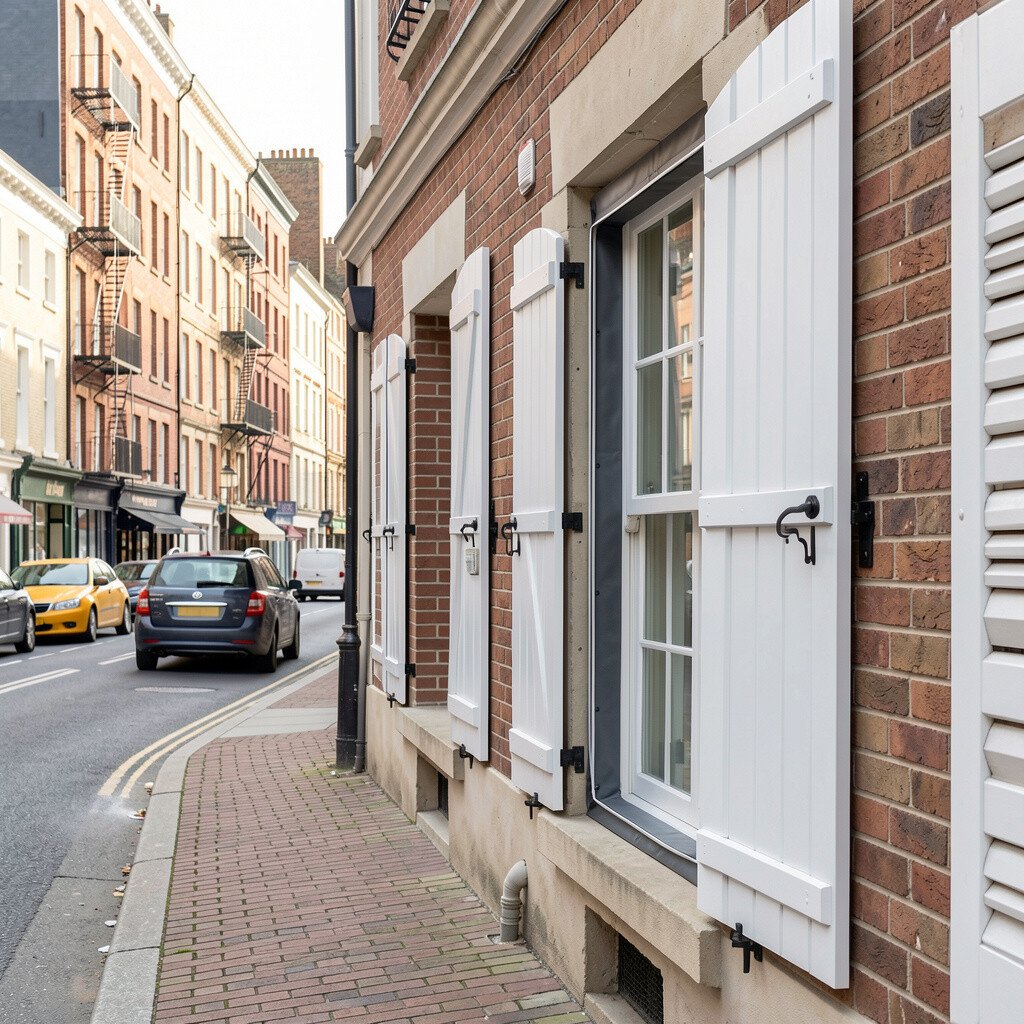
Some shutter systems include a secondary seal that presses against the window opening. Visually, this can look like a sleek exterior shutter with a crisp edge that sits tight to the frame.
The advantage is simple: fewer cracks mean less sound leakage. Choose a model that pairs with high-quality weather stripping, and inspect the seal for flexibility so it maintains contact when temperatures change. For practical setup, check the perimeter after installation and tweak alignment if you see any uneven contact.
This approach can be a smart cost option when you already have standard shutters you like. You may spend more on a seal kit than on basic shutters, but it can deliver real improvements without redesigning your entire window look.
7. Motorized Acoustic Shutters For Nighttime Quiet
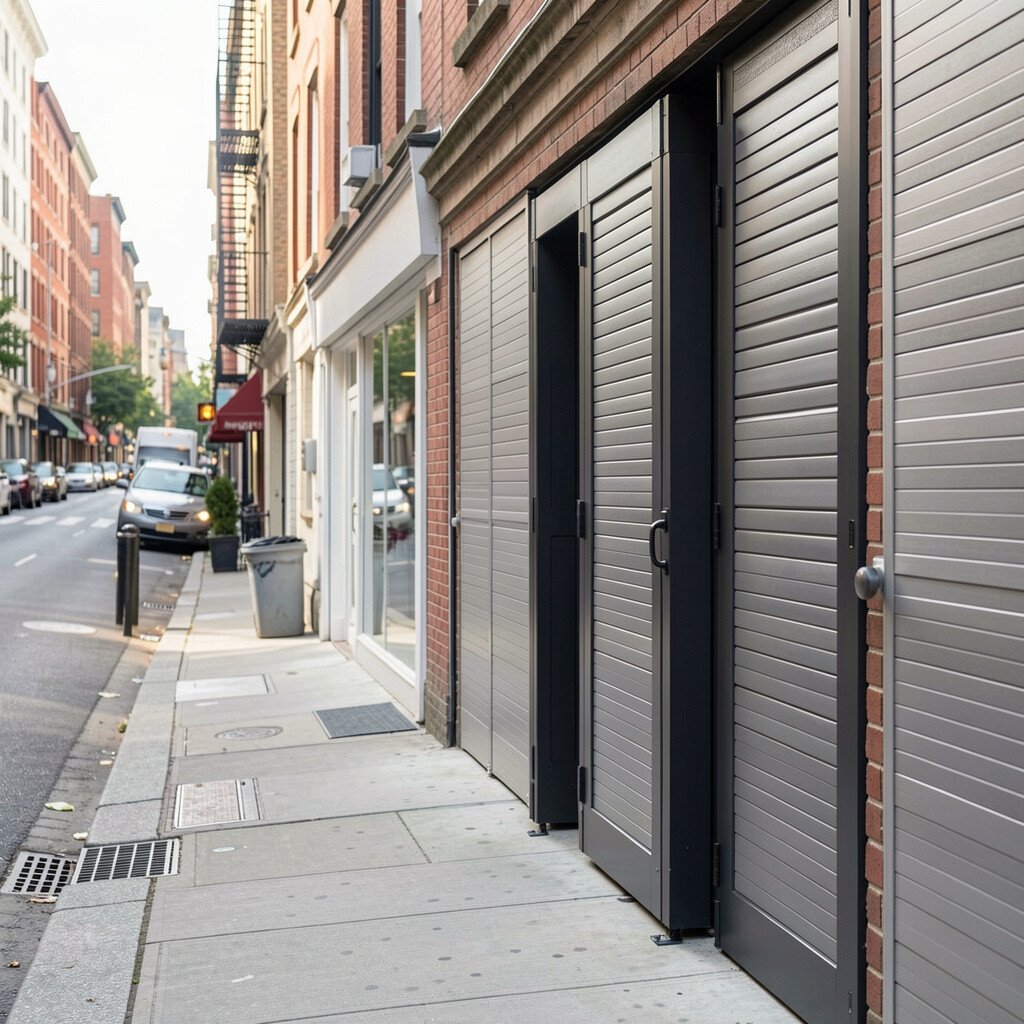
Motorized shutters feel futuristic, but they also make daily sound management effortless. You might imagine the smooth, quiet glide as they close over your windows before traffic noise peaks.
They can help you keep sound out consistently, especially if you often forget to close manually. Pair motorized operation with full-closure accuracy, and choose sensors or timers so the panels stay aligned and sealed.
For personalization, select finishes that match your home and decide whether you want a matte or glossy look. Cost can run higher for motorized systems, but many people feel it is worth it when it boosts both comfort and convenience.
8. Louvered Shutters With Thick Felt-Lined Interiors
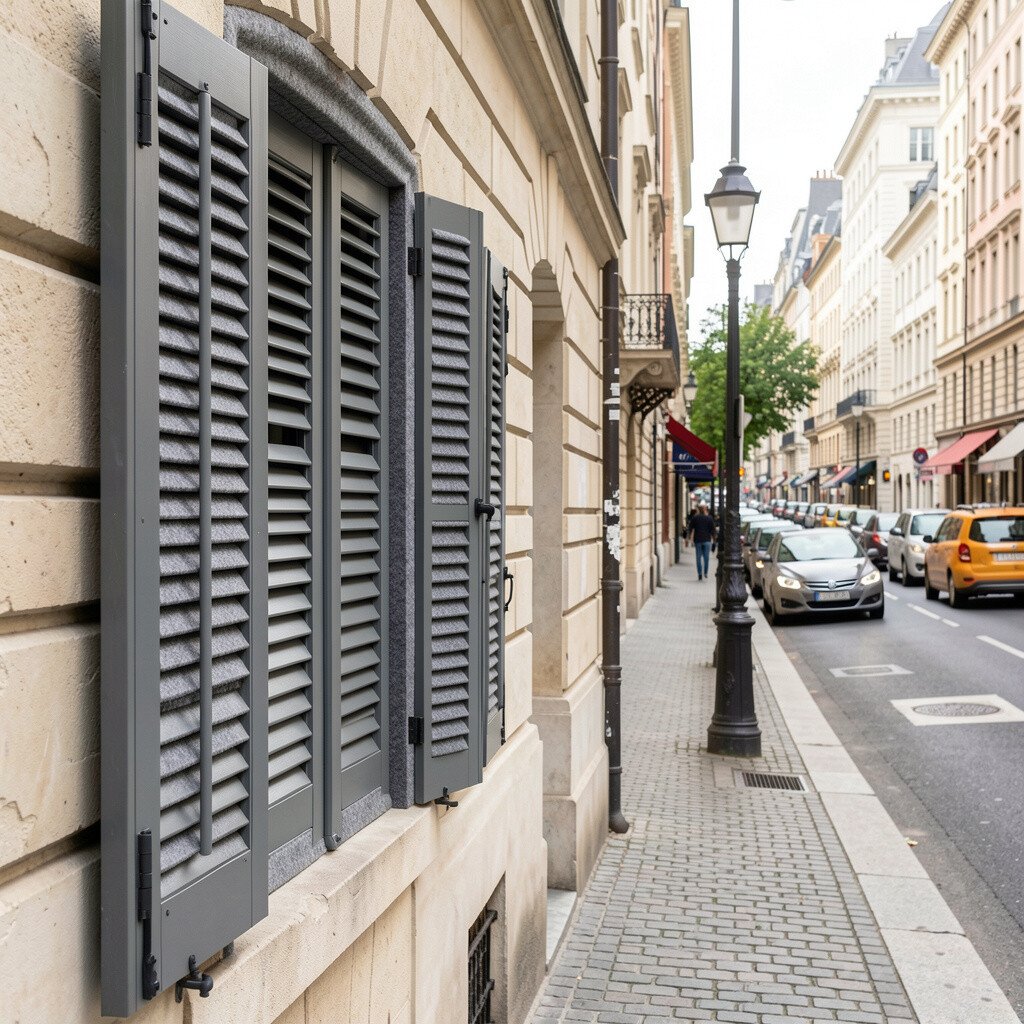
Felt lining inside louvers creates a soft barrier that helps absorb some of the sound energy. The exterior still shows classic slats, while the inner padding adds a hidden layer you can feel when you open them.
This design can be great for bedrooms because it can reduce harsh clatter and help soften echoes. When you install them, ensure the lining is thick enough and mounted so it stays in place after repeated use. Personalize with stain or paint outside, then select neutral lining colors inside for a clean look.
For budget thinking, consider felt-lined options when you want more sound comfort without the highest price tag of fully solid barrier shutters. It is also a good fit for older homes where you want to keep the exterior style but add comfort improvements.
9. Metal Shutters With Sound-Deadening Backing Boards

Metal shutters can look sleek and crisp, especially on modern homes and industrial-style facades. The reflective surface can catch sunlight, giving your windows a sharp, updated look.
On their own, metal can sometimes ring, so the real win comes when you pair it with sound-deadening backing boards. Look for systems that include foam layers or dense composite sheets behind the metal to reduce vibration. For practical tips, ensure the backing board covers the full area and is mounted so it does not shift.
Cost considerations often lean mid-range, but custom sizing can change the price. If you are working with a consistent window style across your house, ordering matched sizes can help you keep costs steadier.
10. Windowsill-Plus Shutters With Extended Side Closures
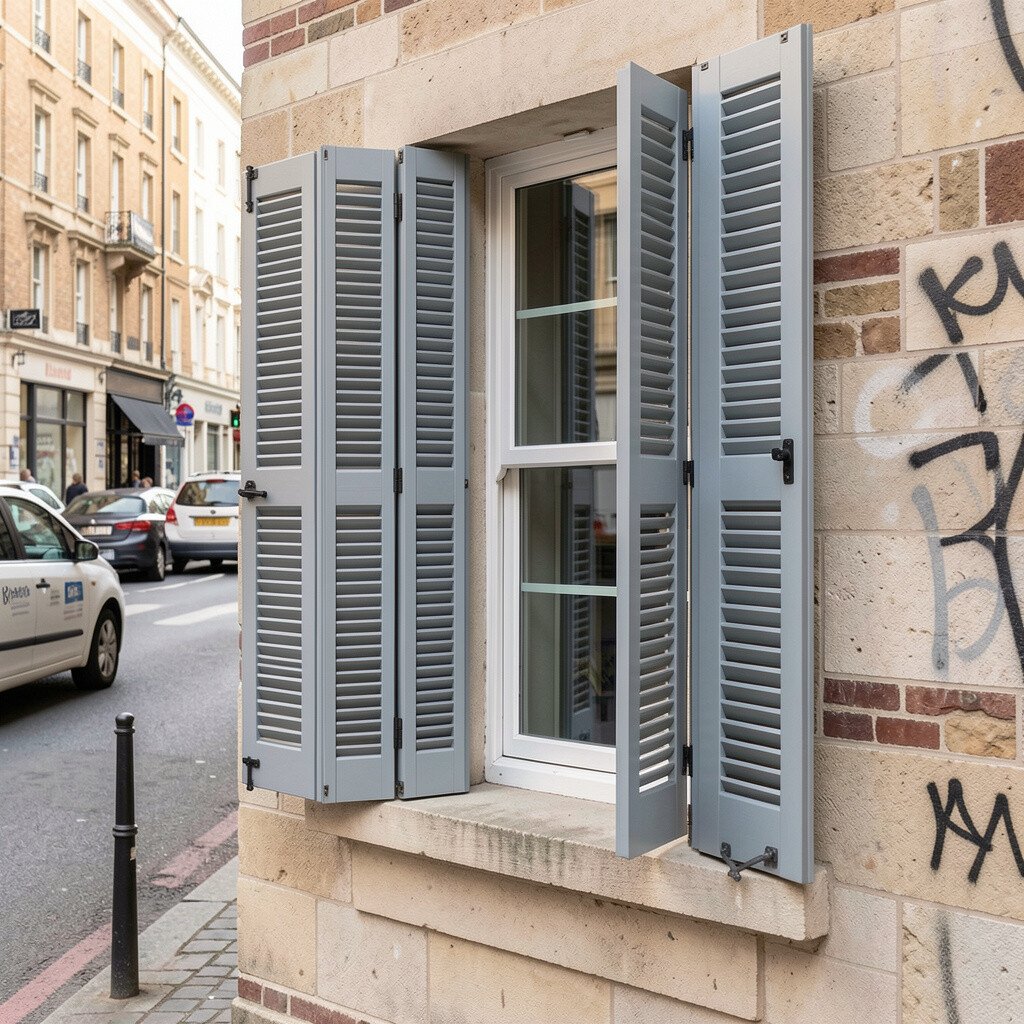
Some shutters include extended side panels that reduce edge leakage, which is where sound often sneaks through. Visually, you will notice extra coverage around the sides, making the shutter look extra substantial.
This can be a strong choice for homes with older frames or small gaps that are hard to fix. For best results, choose extended side closures that press firmly and do not leave thin open seams. You can also add silicone-friendly weatherstripping where movement is expected with seasonal changes.
Personalize by selecting a finish that complements your trim and consider matching shutter hardware with light fixtures. While the extra side coverage can add cost, many homeowners find it provides better performance than simply going thicker on the main panel.
11. Reversible Acoustic Panels Under Removable Shutter Covers
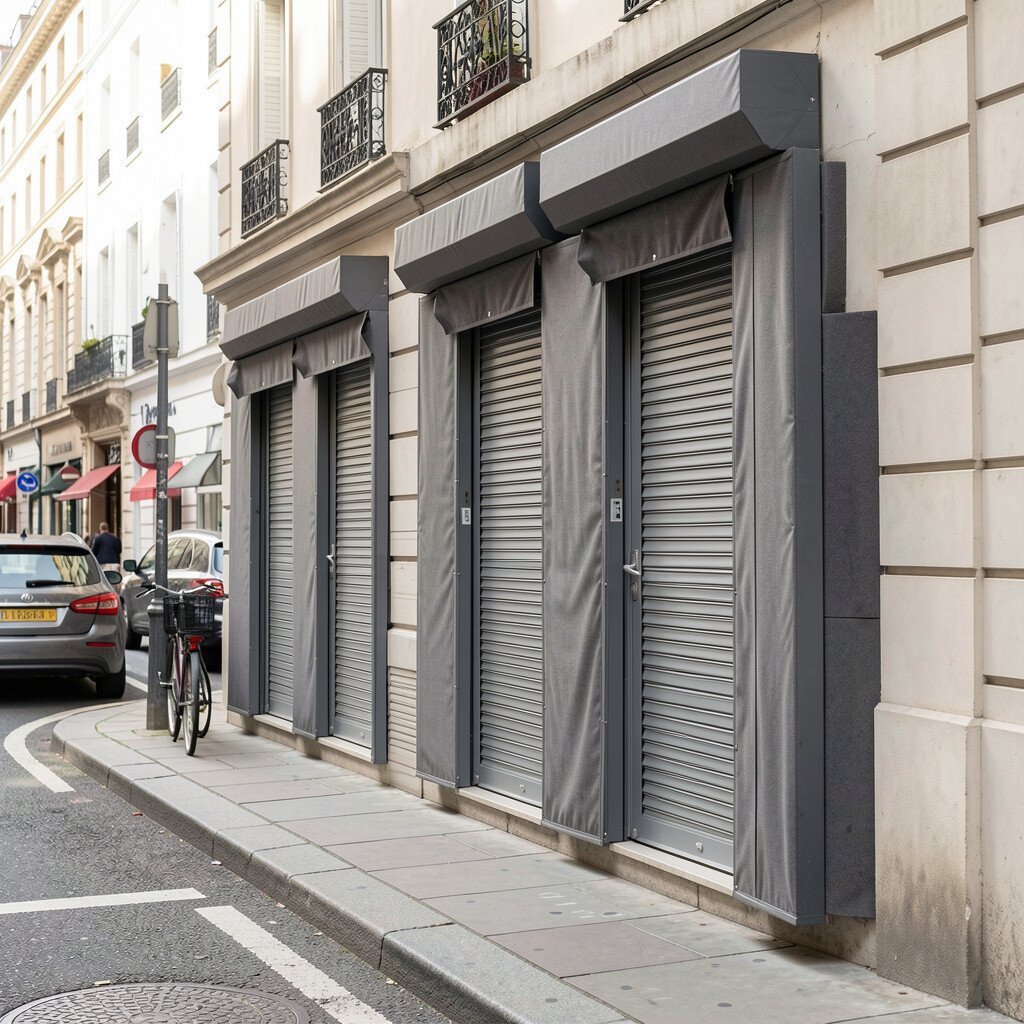
If you like flexibility, reversible acoustic panels can let you adjust comfort by season and usage. Imagine a shutter cover that stays neat outside, while an inner layer can flip or swap to change how much sound you block.
This setup is useful when you want lighter coverage on calmer days and deeper blocking when traffic is heavy. Choose panels made for durability and easy handling so you will actually use them instead of leaving them forever.
For practical installation, make sure the removable parts sit securely and do not rattle when the wind picks up. You can personalize by picking an interior fabric or neutral surface that looks good if you ever glimpse it from inside.
Cost can vary, but the modular approach may spread your spending over time instead of buying only the highest-end one-piece system.
12. Board-By-Board Wood Shutters With Tight Tongue-And-Groove Seams
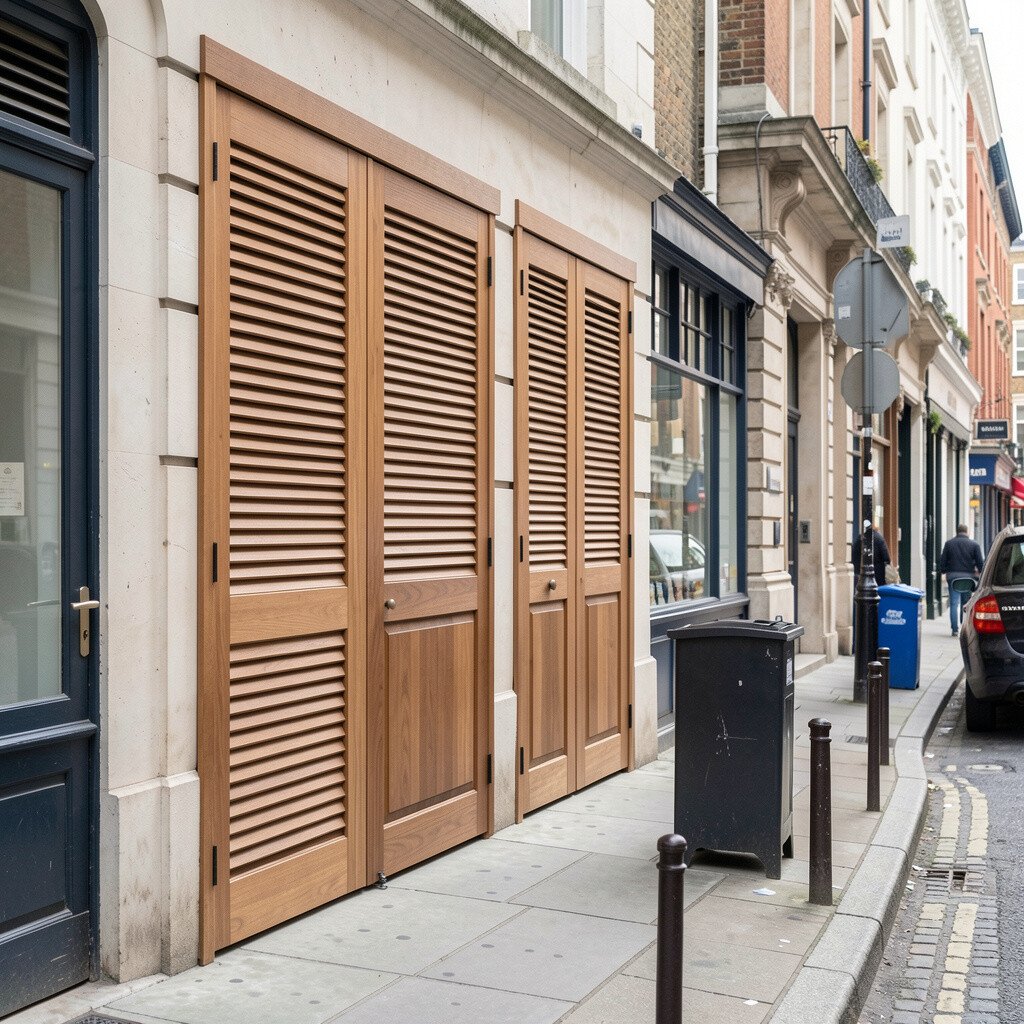
Tongue-and-groove boards can create a continuous barrier that looks handcrafted and sturdy. From outside, the clean seams and aligned edges can give your window a high-end finish.
The main benefit is that fewer tiny cracks means less sound transmission. When you install them, keep attention on seam quality and make sure each board sits flush. If your home has slightly out-of-square openings, take the time to prep the frame so the shutters close evenly.
For personalization, you can stain for a natural look or paint for a crisp modern feel. This option often sits in the mid-to-higher range for cost, but its sound-blocking potential and timeless appearance can justify it for long-term homes.
13. Sliding Barn-Door Style Shutters With Heavy Track Sealing
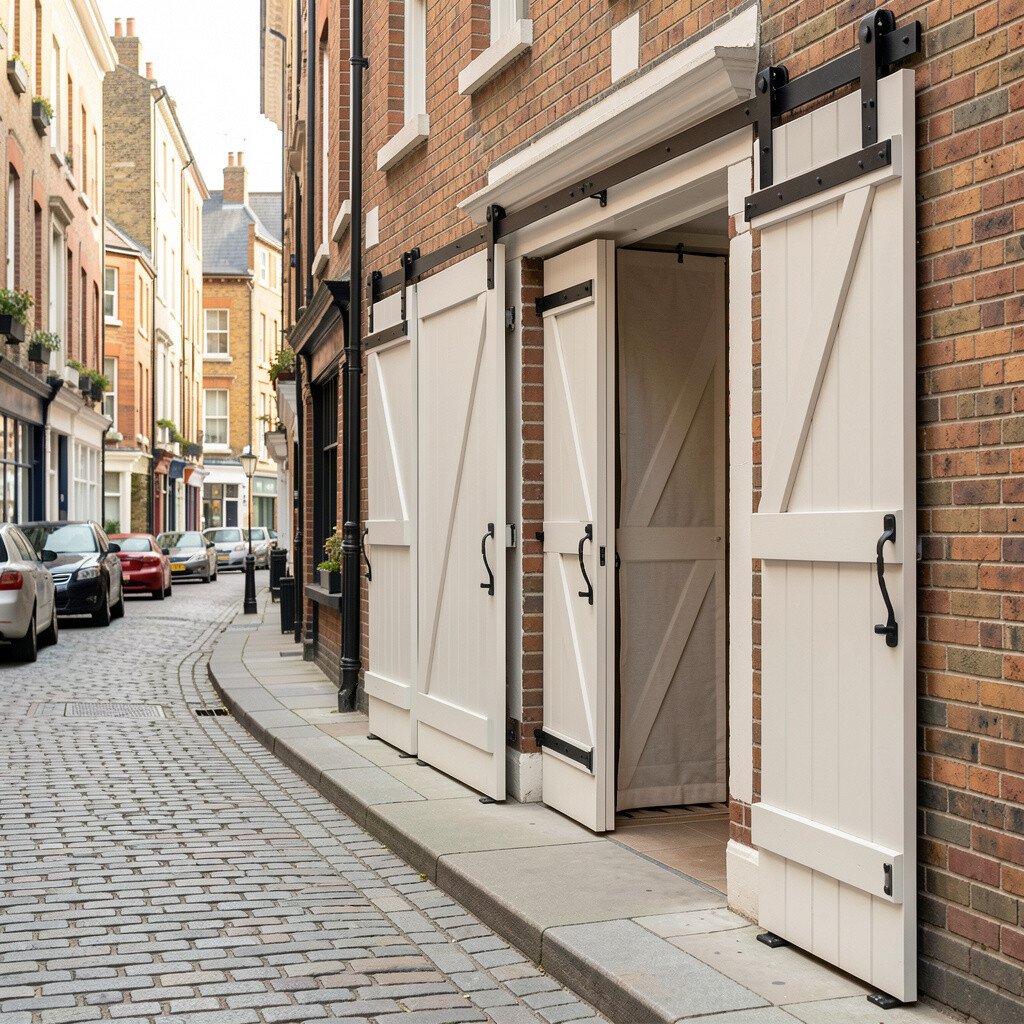
Sliding barn-door style shutters bring a rustic-modern feel and move smoothly along a track. You can picture a thick, solid panel that glides, while the track area looks deliberate and sturdy rather than flimsy.
The sound advantage depends heavily on the track sealing and the contact points when the shutter closes. Choose tracks designed for compression seals and make sure the shutter meets the side stops evenly. For practical tips, do periodic checks on the rollers so the shutter stays aligned and continues to press shut without drifting.
Cost considerations often reflect the hardware quality, so invest in strong track components rather than bargain rollers. Personalize the look with hardware finish, like matte black or brushed metal, to match your interior style.
14. Breathable Exterior Shutters With Controlled Vent Gaps
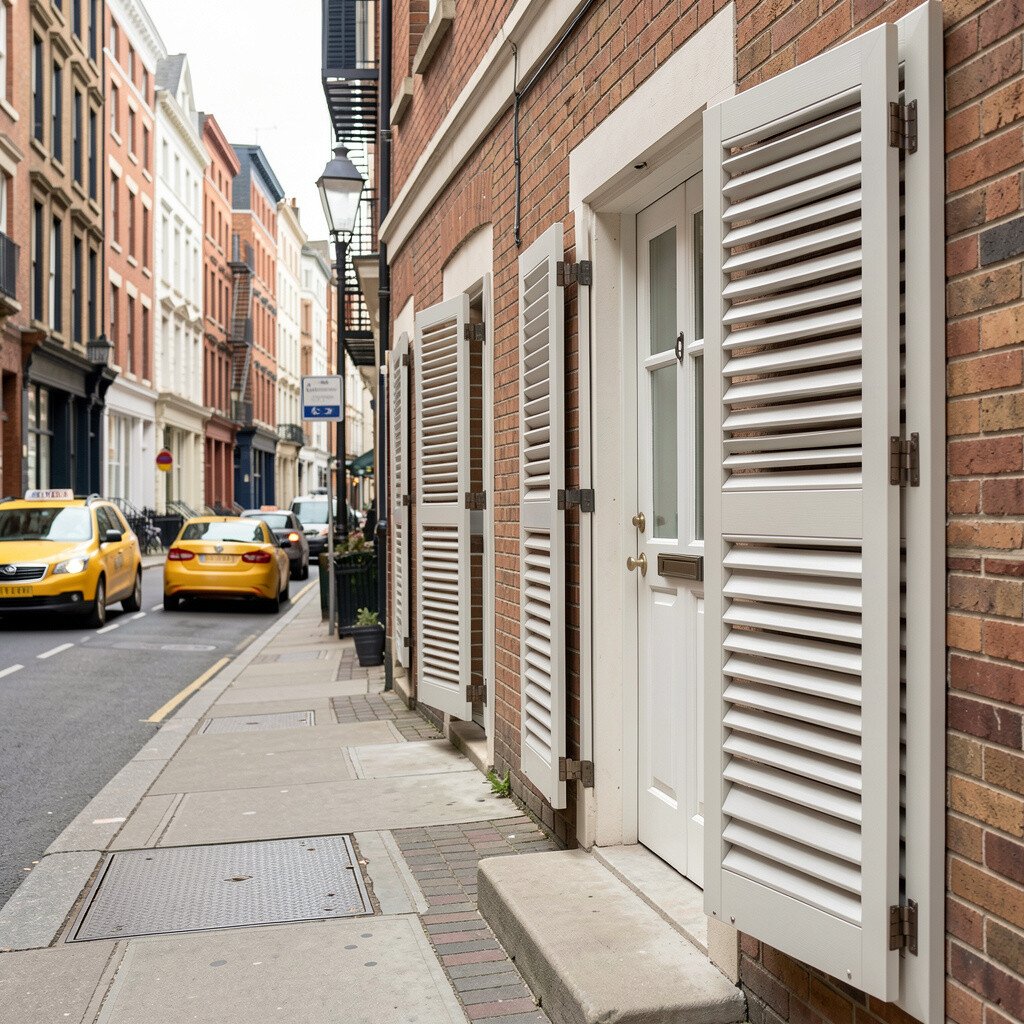
It sounds surprising, but some soundproofing shutters include controlled vent gaps that can help airflow without letting noise fully pass through. Visually, they can resemble functional exterior shutters with subtle perforations or tuned channels.
This is a helpful option if you worry about stuffiness, especially in bedrooms. Look for designs that manage airflow with acoustic baffles, so the sound path becomes longer and less direct. For practical setup, confirm the vent system is sized for your window and wall, not just randomly adjusted.
Personalize the exterior finish to match your home while keeping the functional vents hidden from close view. Cost can be higher than basic shutters because of the engineered interior baffle design, but it can be worth it if comfort and humidity matter to you.
15. Glass-Infused Shutter Fronts With Laminated Layers

Some shutters incorporate glass-like panels or laminated inserts that give a polished, high-tech look. When sunlight hits, the surface can shimmer softly, making the window area feel brighter while still adding structure.
Sound reduction improves when the laminated layers are designed to reduce vibration and echo. Choose shutters with laminated components meant for noise control rather than purely decorative inserts, and ensure the shutter closes tight around the frame.
For practical tips, consider placing these on rooms where noise is most annoying, like a home office facing the street. Cost can be higher due to laminated materials, but the upgraded look and strong performance can make it a standout choice.
16. Custom-Fit Shutters With Multiple Closure Modes
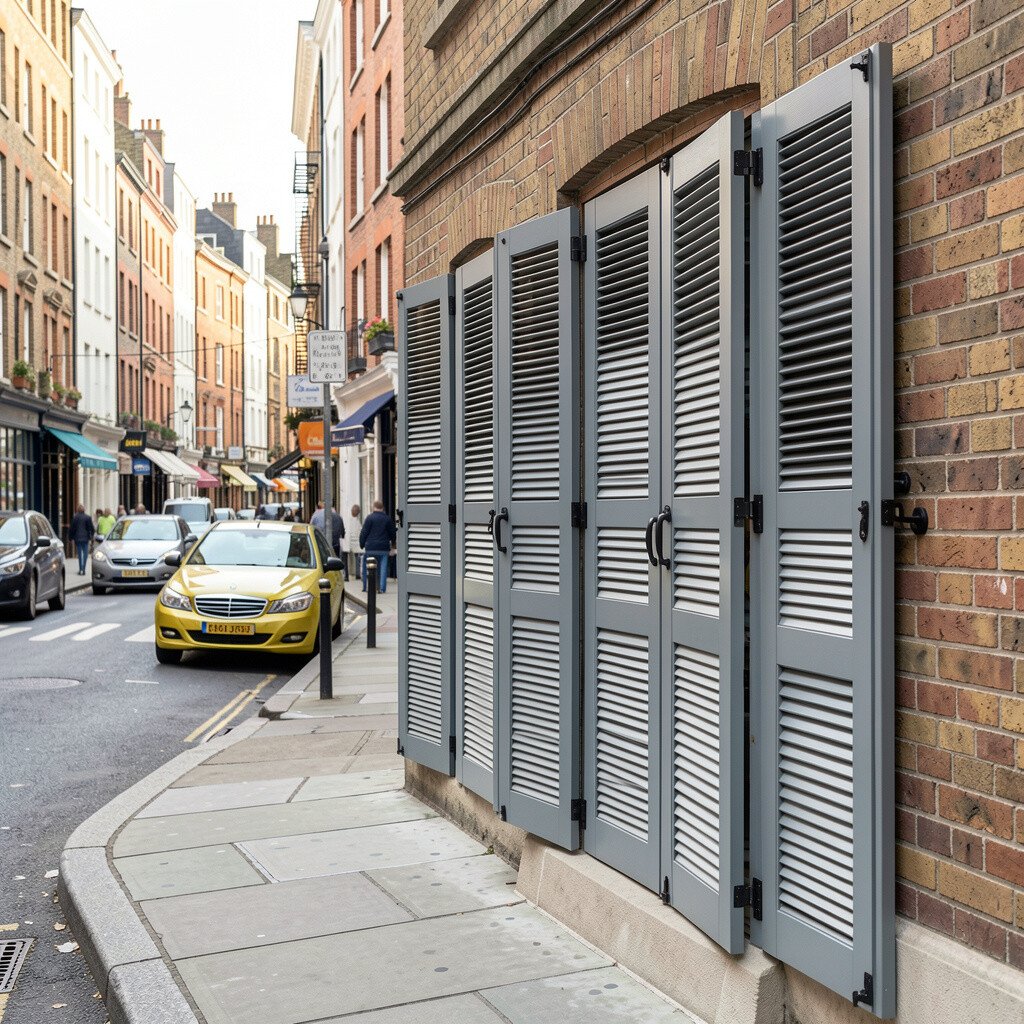
Custom-fit shutters let you target your exact openings, and the result can look like it was always part of the home. You will see smooth alignment, consistent spacing, and a closure style that matches your window geometry.
Multiple closure modes, like panel-to-panel overlap plus edge compression, can help reduce sound more than one basic latch. Choose a system that seals around the entire perimeter and offers a way to adjust pressure over time. For practical upkeep, keep hinges lubricated, and clean seals so they keep their grip.
Personalize by selecting the shutter style that matches your architecture, then add trim details that match your entryway hardware. Cost can vary widely with custom work, but if you are doing several windows, batching the measurements and ordering together can help you manage the budget.
For a modern trend, many homeowners now pair custom shutters with smart timers or remote control so the closure happens automatically during peak traffic hours.