Slate roofs have a way of making any home feel quietly special. With the right details, that classic look can feel fresh for years.
1. Deep Charcoal Scaled Slate With Matte Finish
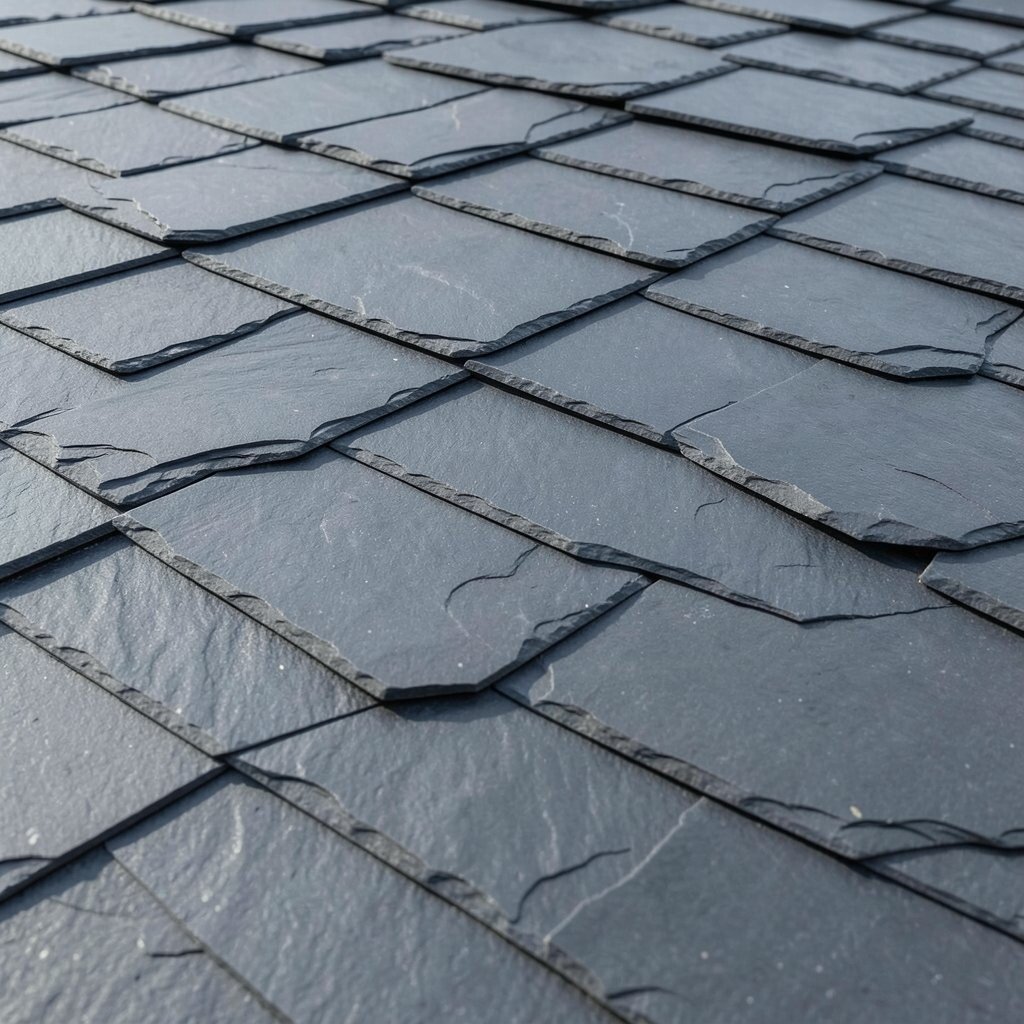
Picture shingles that look like layered stone tiles, each one slightly darker than the last. The matte texture reduces glare and helps the roof blend into trees, brick, and weathered stone.
This choice gives you a timeless silhouette without looking too heavy. It also helps hide minor dust, pollen, and small imperfections that show up on shinier surfaces. For practical installation, ask the roofer to verify slate thickness and fastening spacing so the roof stays strong in wind and freeze-thaw cycles.
2. Warm Grey Slate Paired With Cream Trim
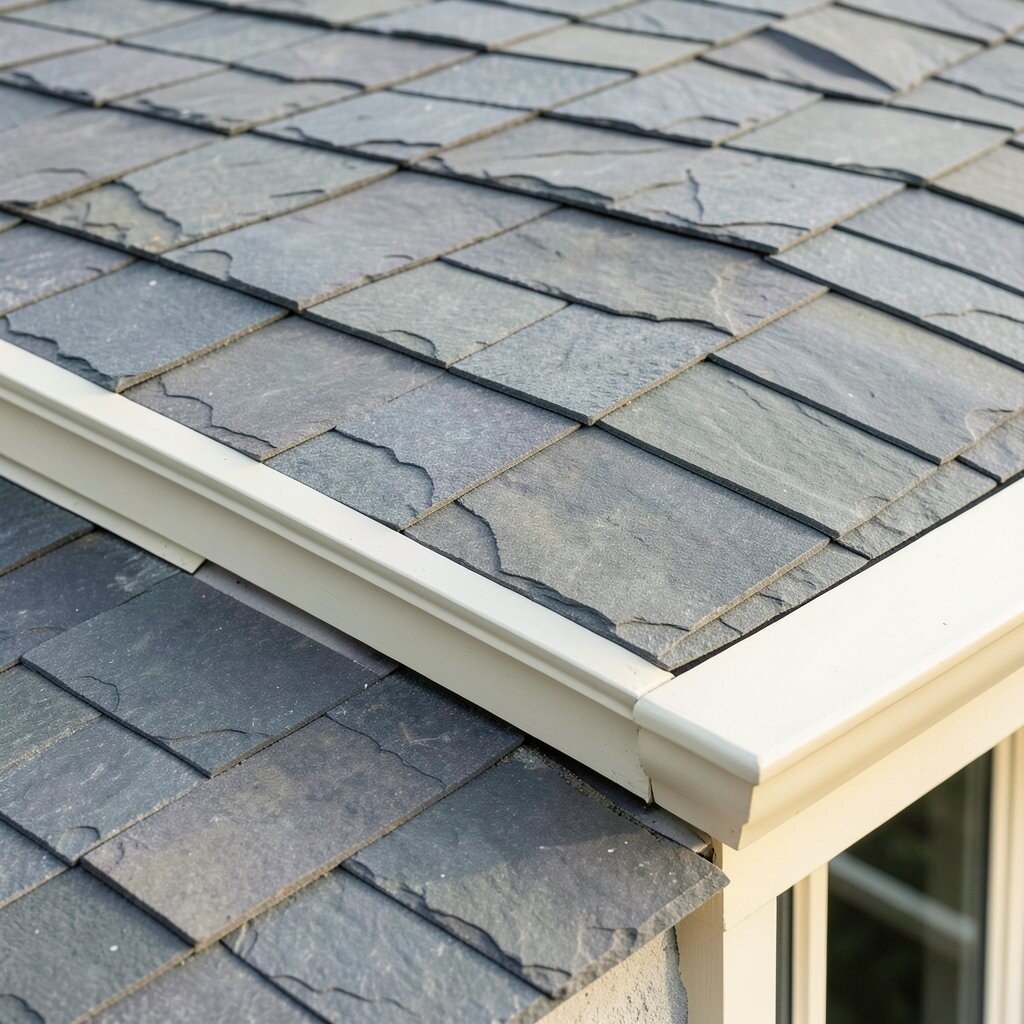
Warm grey slate looks softer than cool blue greys, especially against light siding. You’ll notice how the roof pulls the whole exterior together like a calm background.
Cream trim makes the roof color feel intentional instead of random. If you want a practical win, choose a slate shade that matches your door and window frames within a few tones, since it reduces the “patchy” look that happens when colors fight. For cost planning, request options with similar color families so you can balance budget against material availability without sacrificing the overall harmony.
To personalize, add a subtle gutter color that matches the trim and consider slightly wider fascia boards for a crisp line under the eaves. A current trend is keeping exterior palettes simple, then adding interest through texture rather than bold paint colors.
3. Smooth-to-Split Transitions for Natural Character
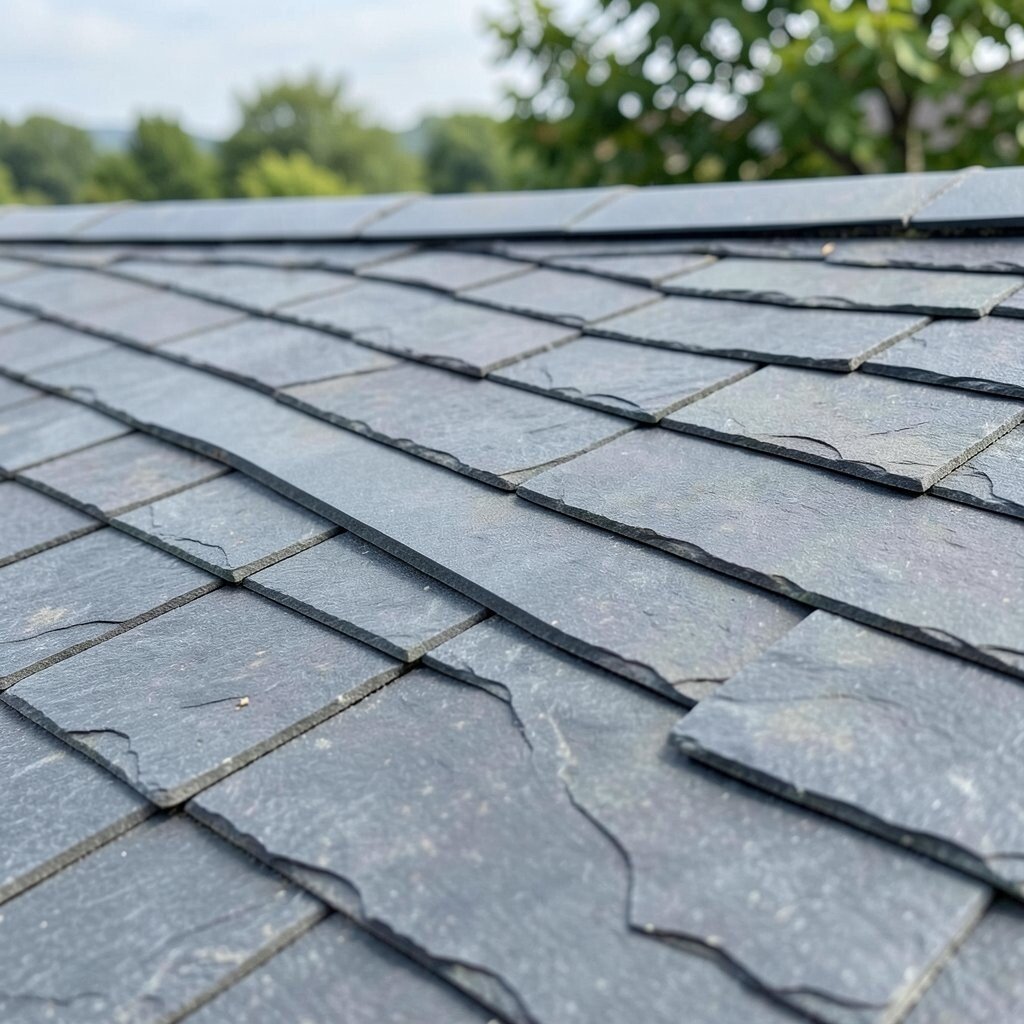
Some slate pieces are cut smoother, while others are naturally split, and that contrast can look like refined craftsmanship. When placed well, the roof surface becomes lively instead of perfectly uniform.
You get uniqueness right on the roof plane, which is hard to duplicate with other roofing materials. For practical tips, work with a designer or installer who understands how to mix gauge and orientation, because uneven mixing can create visible waves. Ask to see a sample panel of how the split texture will appear in your light conditions, including morning shade and afternoon sun.
To keep it timeless, limit the contrast and let the roof read as one cohesive stone field. This approach often costs a bit more when careful sorting is needed, but many homeowners feel the look is worth the extra labor and materials.
4. Graduated Slate Lengths for a Soft Visual Rhythm
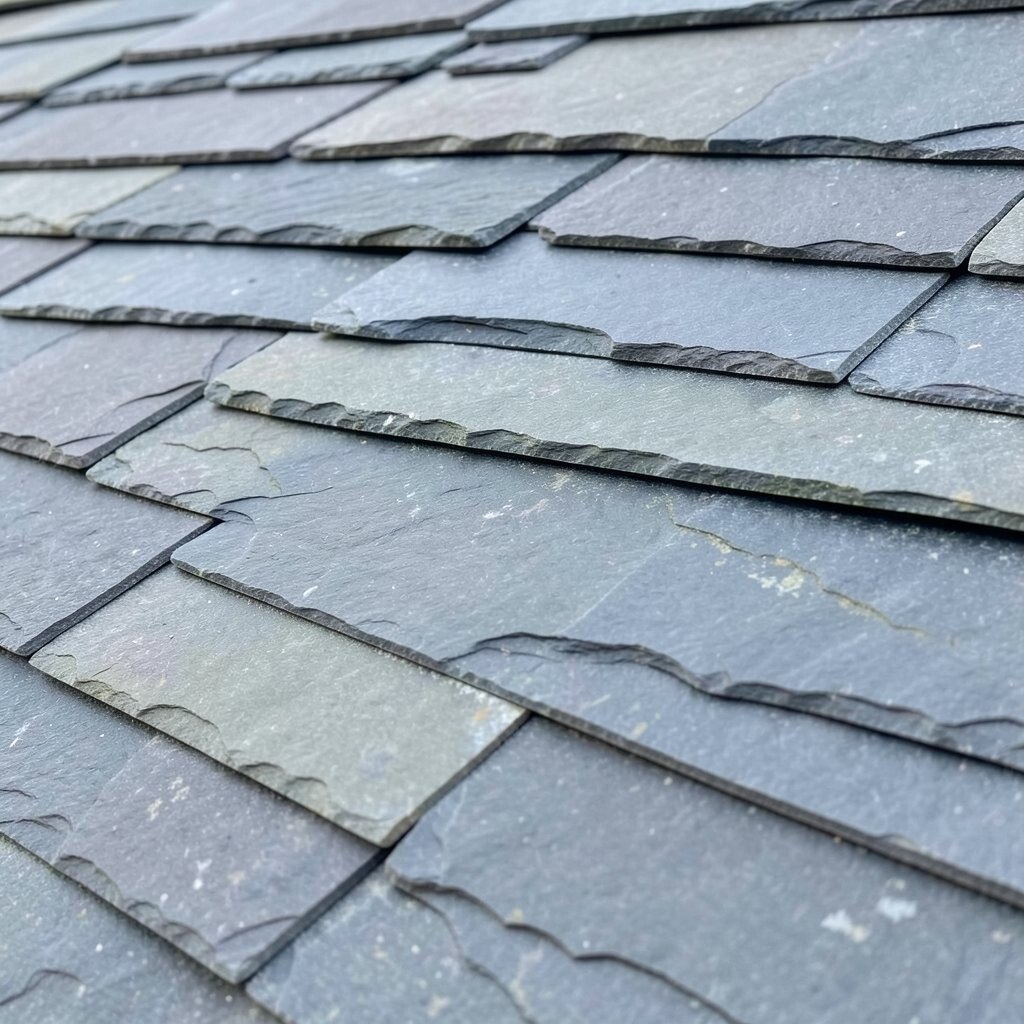
Varying slate lengths can create a gentle rhythm, like ripples across a pond. The key is choosing a gradual change so the roof looks balanced from the street.
This style adds visual interest without turning the roof into a patchwork. For practicality, confirm that the layout follows proper water-shedding courses so the roof remains watertight. You can personalize by matching the graduation pattern to the roof pitch, which makes the design look purposeful rather than accidental.
5. Steep Pitch Slate With Crisp Rake Lines
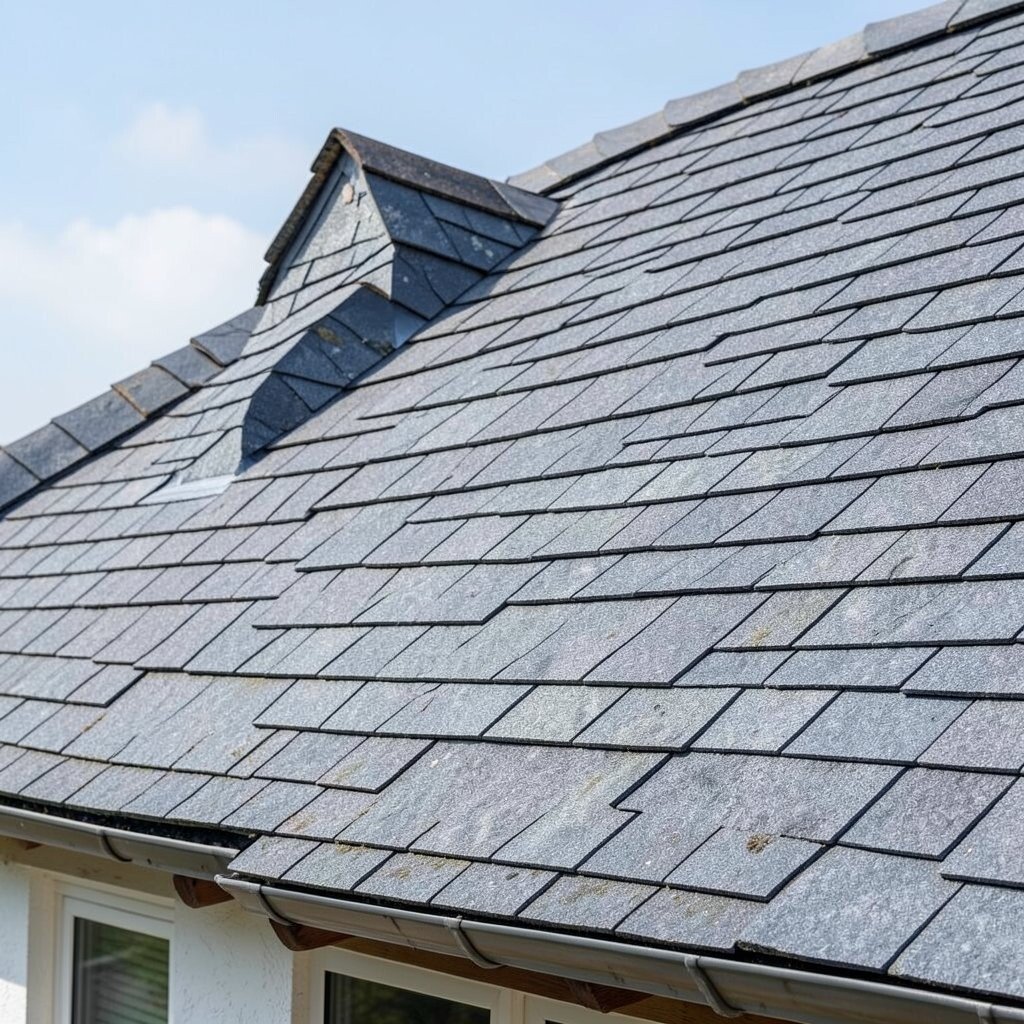
A steep pitch makes slate look dramatic, and crisp rake lines help it feel neat and intentional. From the curb, the roof reads like a clean wedge that frames the house.
Steeper roofs often shed rain and snow faster, which can be a practical benefit for maintenance. If your home sits in a snowy or windy area, talk to your roofer about underlayment choices and ventilation so the attic stays dry. For personalization, pair the steep look with simple window trims and keep colors restrained to keep the roof as the hero.
In recent exterior design trends, homeowners are leaning toward bold roof geometry paired with calm siding colors, and slate fits that idea beautifully. Budget-wise, steep roofs can increase installation time, so get a clear quote that includes safety gear and scaffolding.
6. Blue-Grey Slate With Black Hardware for Contrast
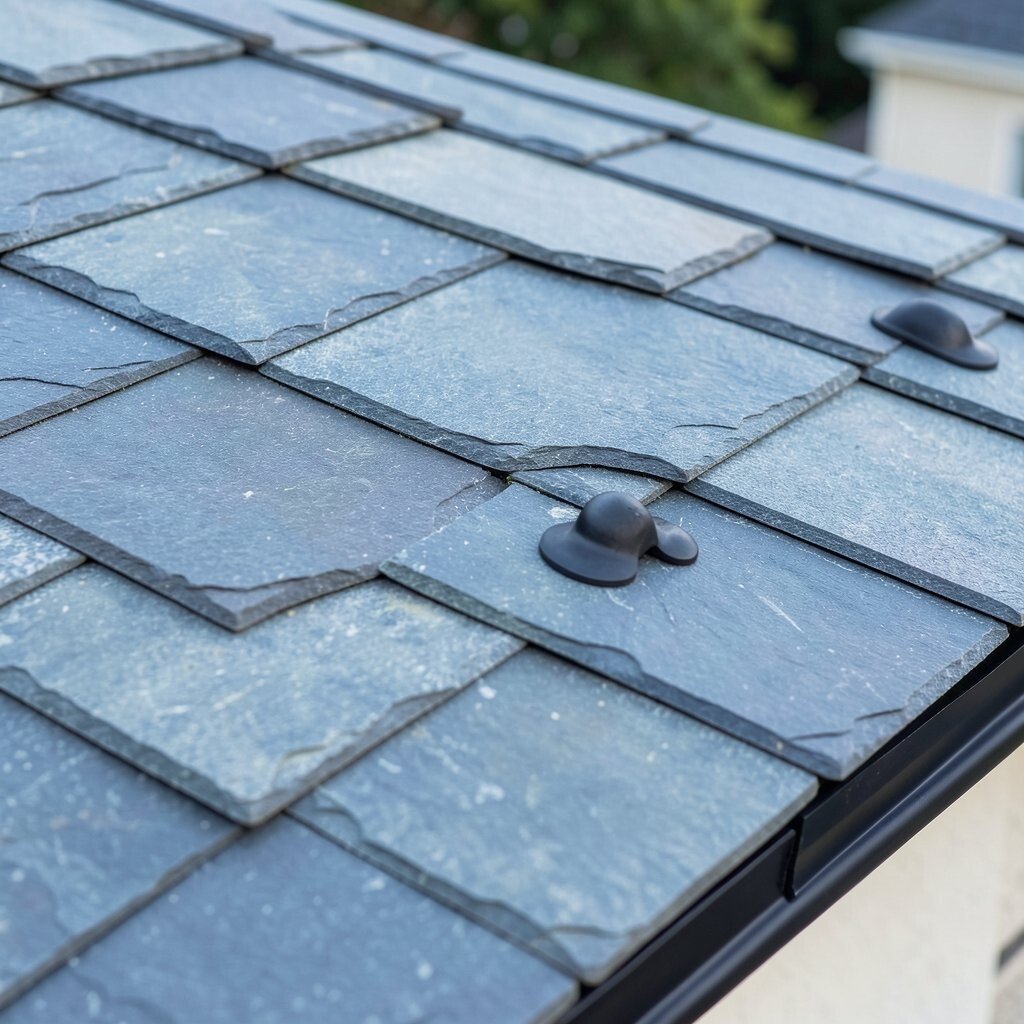
Blue-grey slate has a cool, refined tone that looks striking with black gutters and metalwork. The contrast draws the eye to edges and details like dormers and chimneys.
You get a sharp, modern contrast while still keeping the roof classic. To make it last, choose corrosion-resistant flashing, fasteners, and ridge hardware, since matching the hardware quality helps protect the stonework. For personalization, add black window shutters or a black front door to tie the palette together without overdoing it.
7. Slate With Subtle Through-Color Variation

Some slates have faint streaks and color depth that feel like natural weathering. When those variations are subtle, the roof looks timeless and never flat.
This kind of stone character hides wear and small hail marks better than fully uniform slabs. A practical tip is to ask for slates that have consistent thickness and splitting behavior, because variation in thickness can affect course alignment. If you’re cost conscious, you can often achieve this look with mid-range slate while still getting a rich appearance through careful selection.
To personalize, choose a color family that matches your stone walkway or porch posts. Many homeowners today like to “match by undertone,” meaning warm slate with warm accents and cool slate with cool accents for a smoother overall look.
8. Classic Random Slate Pattern With Tight Layout
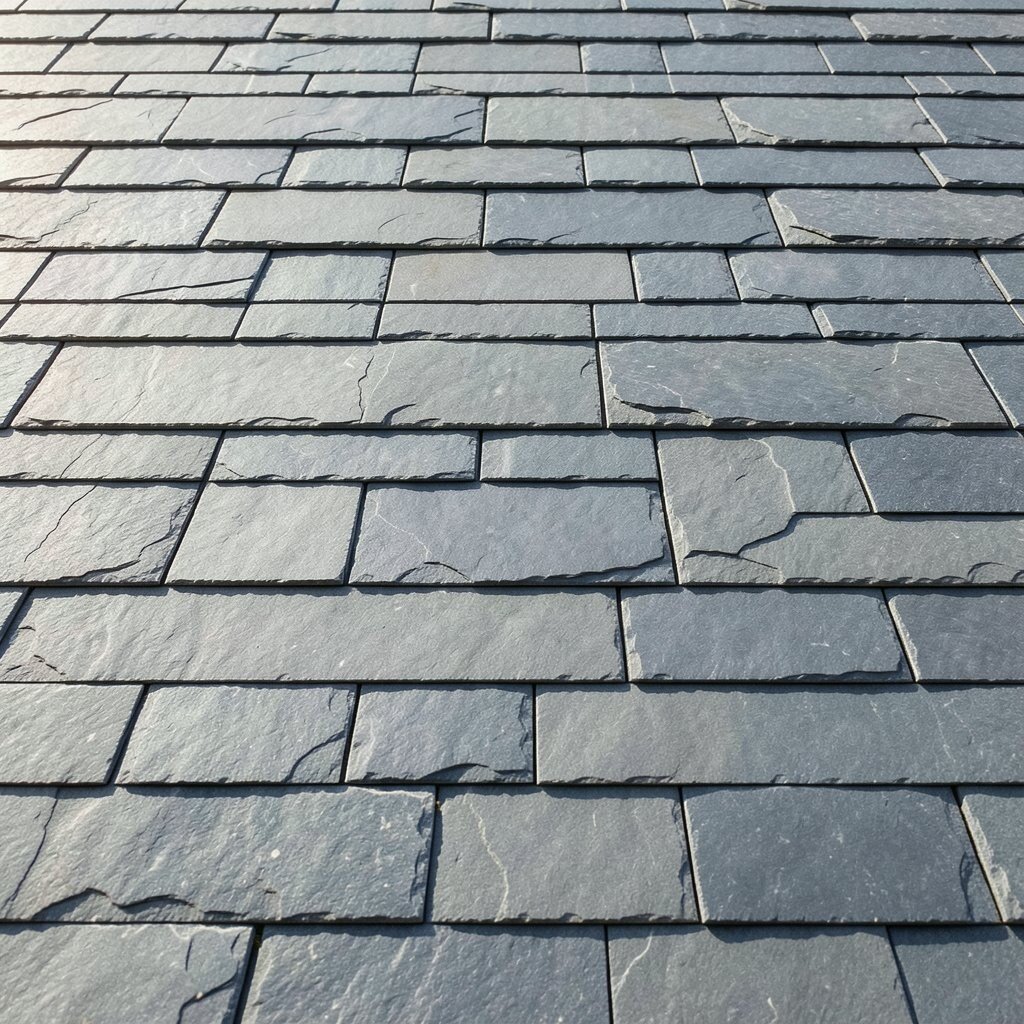
A classic random pattern can still look orderly when the slate sizes and courses are laid with intention. The roof becomes a field of natural stone that feels organic, not messy.
This style is one of the most recognizable slate looks, and it stays timeless across changing home trends. For practical tips, pay attention to how the installer handles coursing so water channels remain clear and consistent. You can personalize by selecting slate that leans slightly lighter on upper slopes for a gentle gradient effect from attic level to the eaves.
9. Vermont-Style Rough-Cut Slate for Rustic Elegance
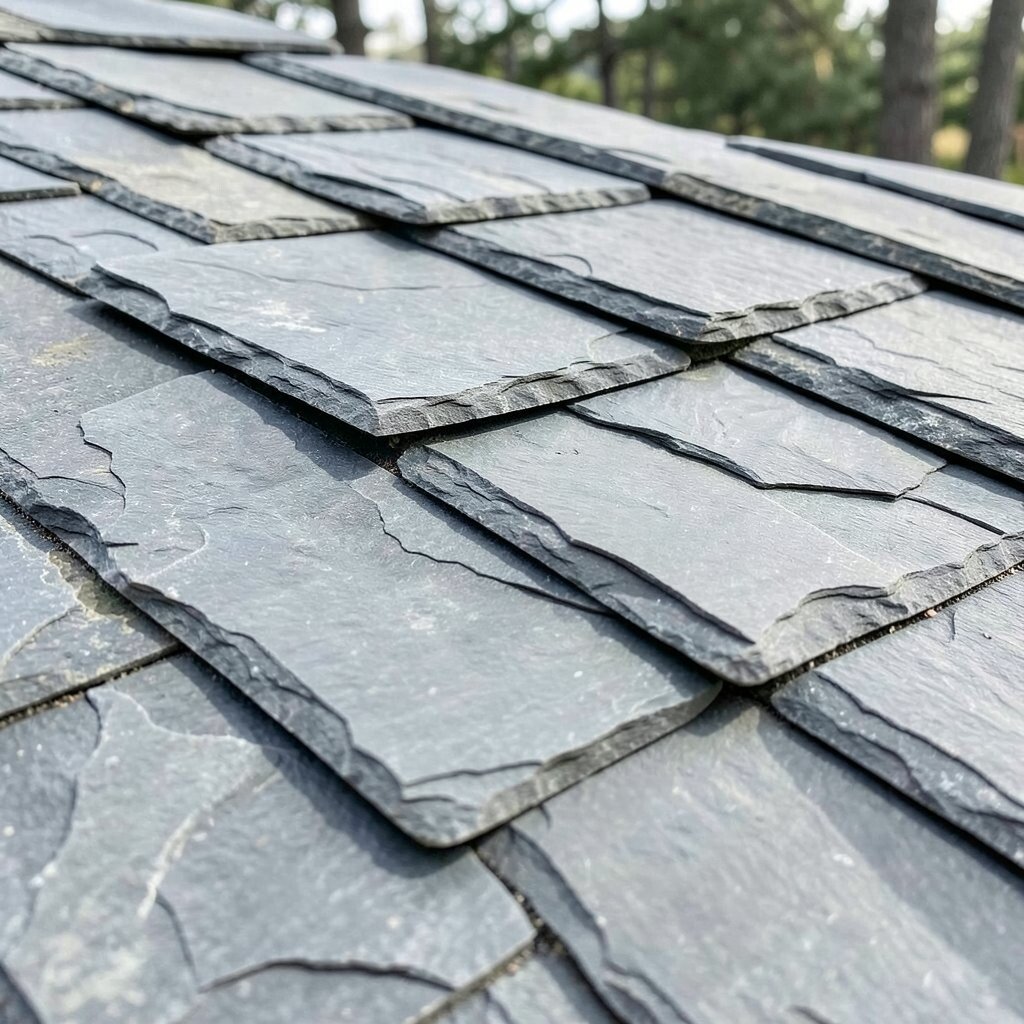
Rough-cut Vermont-inspired slate looks handcrafted, with edges that catch light and create micro-shadows. It gives cottages, farmhouses, and historic-style homes a cozy, grounded feel.
The benefit here is warmth and authenticity, because the roof looks like it belongs to the landscape. For practical planning, keep an eye on coverage and waste since rough-cut material can vary piece-to-piece. Talk to your contractor about sorting and minimizing breakage, which can affect total cost and timeline.
Personalization can be as simple as choosing warm mortar tones and matching the chimney brick to nearby stonework. Current trends favor blending old-world texture with clean lines, and rough-cut slate delivers the texture while modern detailing keeps it crisp.
10. Smooth Grey Slate With Clean Parapet Lines
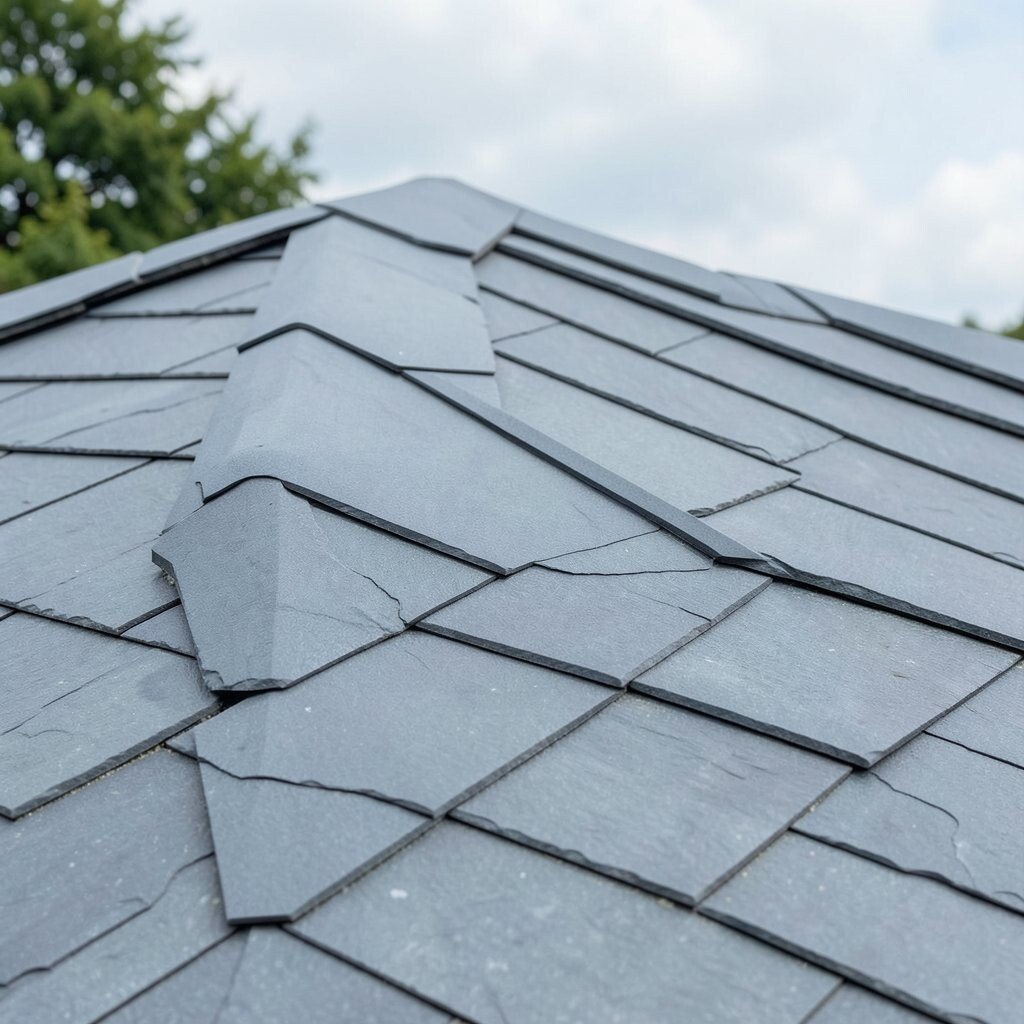
If your home has a parapet or boxy roof edges, smooth grey slate can look sleek and architectural. The uniform surface helps sharp lines stay sharp instead of visually busy.
This look can make a smaller home feel more upscale because the roof reads like a designed element. For practical benefits, smooth slate may be easier to maintain in terms of debris visibility, since dirt contrast is less dramatic. Ask about proper underlayment and step flashing so the roof transitions stay watertight at parapet joints.
11. Slate Banded With a Thin Contrast Course
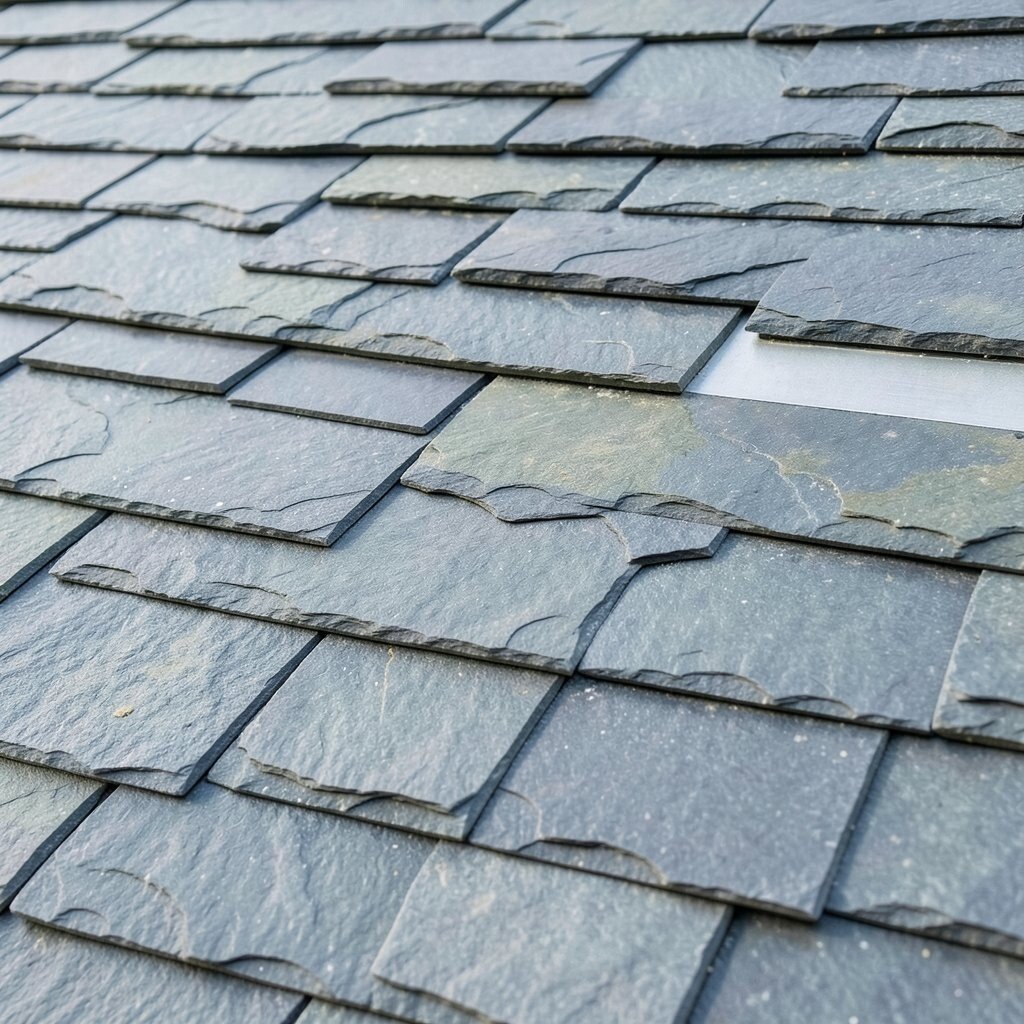
A thin band of contrasting slate adds a quiet “signature” to your roof. It can be placed near the roofline or around dormers for a subtle frame effect.
You get uniqueness without needing bold colors, since the band can be only a few shades different from the main field. For practical tips, use consistent band height and verify alignment from each elevation so the line looks straight in photos. Budget-wise, contrast slate can cost more per square, so ask for the smallest area needed to get the look you want.
To personalize, match the band color to a brick undertone or to metal accents like a rail or light fixtures. Many homeowners are leaning toward small design “tells” that feel custom but remain timeless.
12. Slate With Copper Flashing for Natural Aging Patina
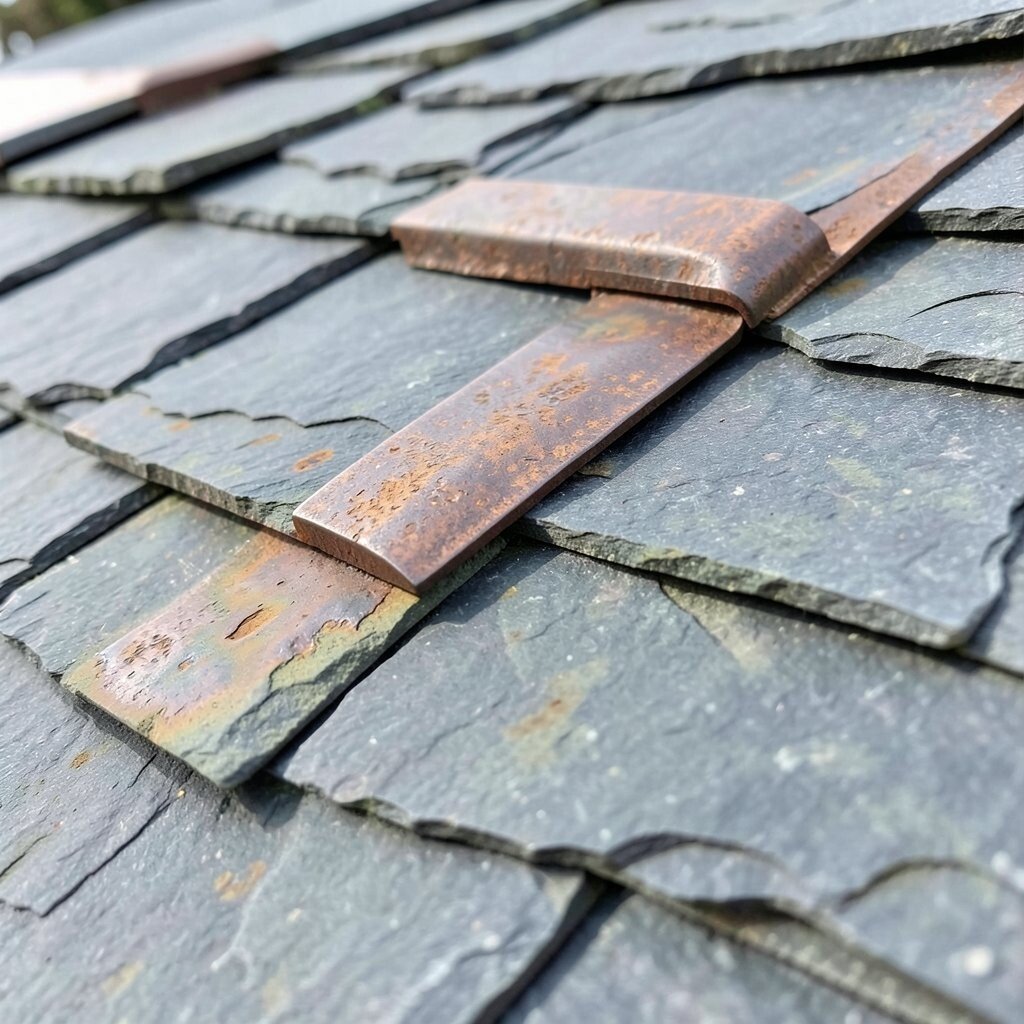
Copper flashing and valley details can add a warm glow that slowly changes over time. At first it looks bright and polished, then it settles into a softer patina that looks like it grew there.
This is a timeless combination because copper and slate naturally belong together. The practical benefit is that copper can hold up well around joints and transitions when installed with correct profiles and sealants. For personalization, choose copper trims that echo your landscape features, like brass-toned outdoor hardware or warm-toned siding.
13. Dormer-Centered Slate With Symmetry and Shadow
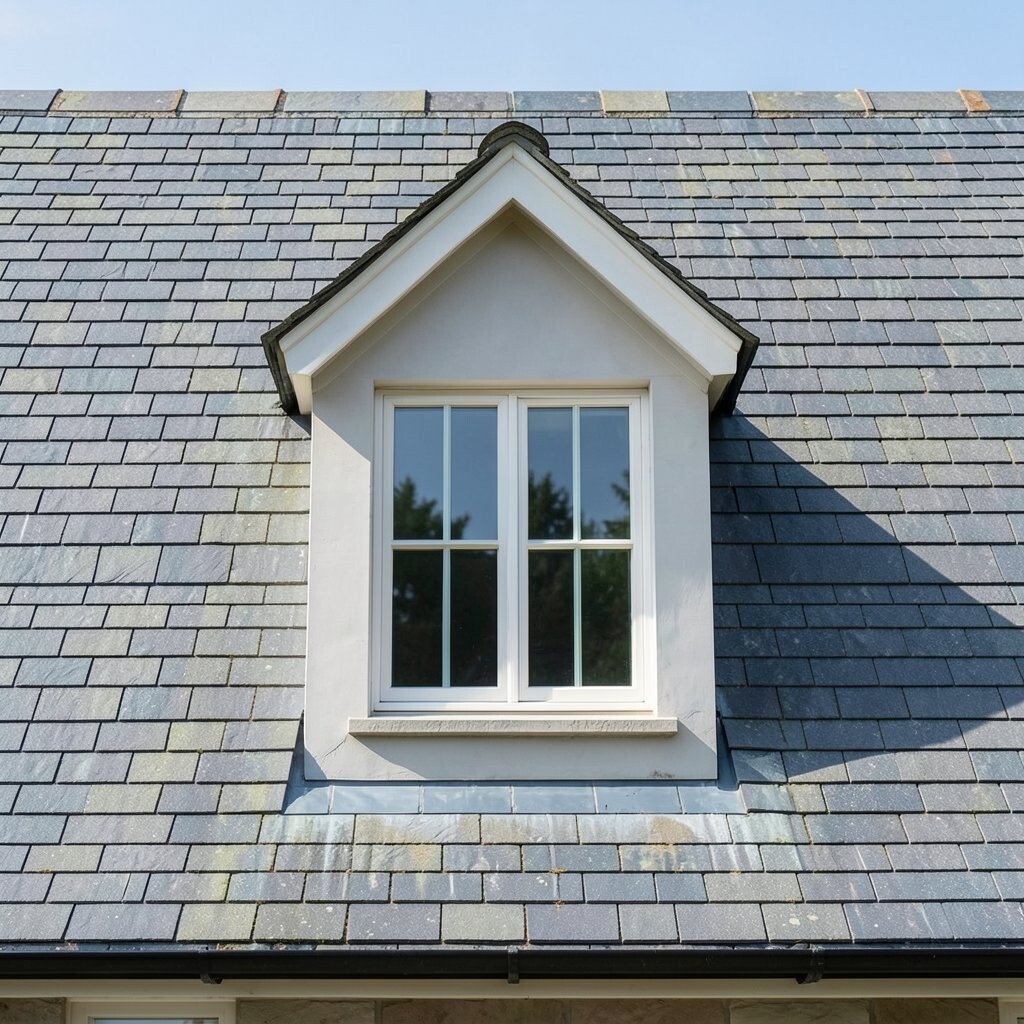
Dormers are perfect for showing off slate texture, and centering them can make the whole house feel balanced. When the slate runs cleanly into dormer cheeks, the rooflines create pleasing shadows.
You gain visual structure, especially on multi-story homes where the roof can otherwise feel scattered. For practical tips, ensure the installer uses careful flashing around dormer valleys and cheeks, since those spots see more water exposure. If you want personalization, choose slate colors that match the dormer trim and consider slightly deeper window recesses for a more dramatic look.
14. Slate Roof With Decorative Ridge Cap and Finials
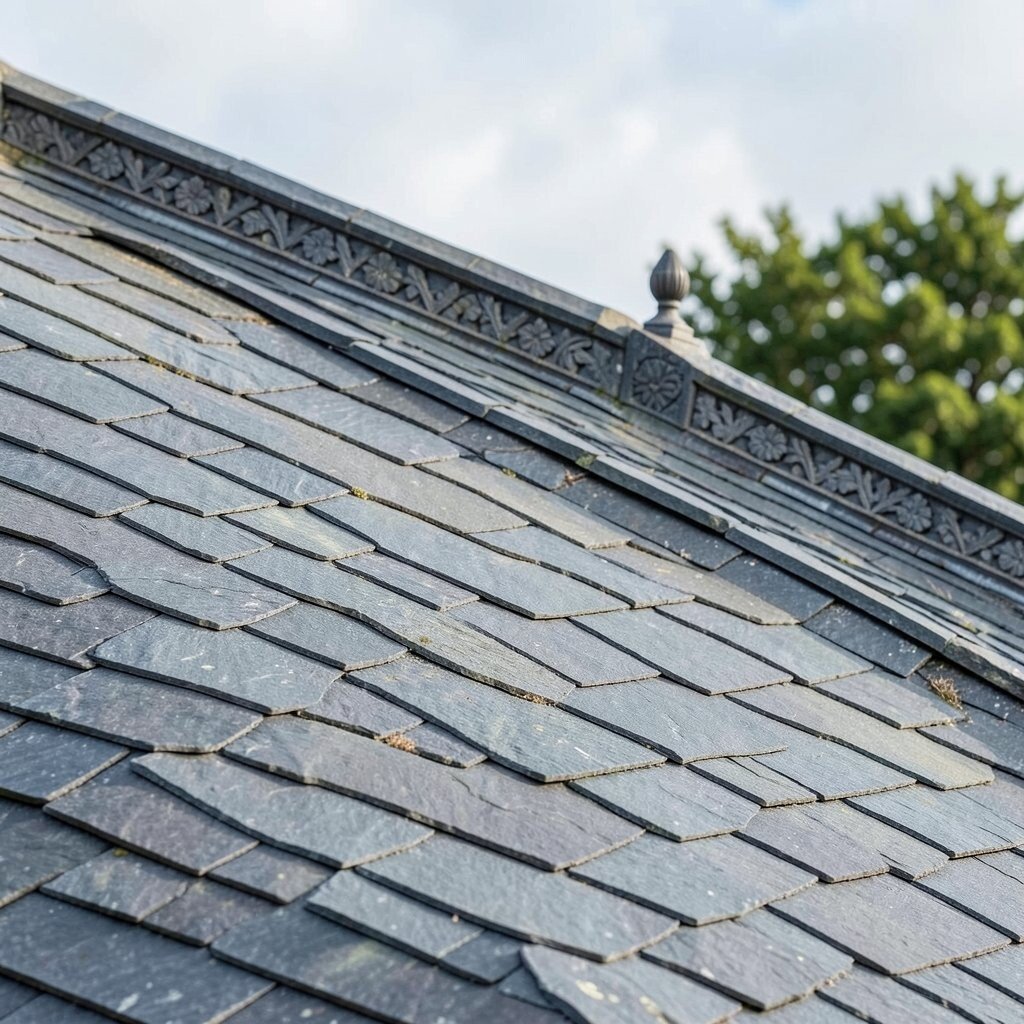
A well-chosen ridge cap can make a slate roof feel finished, like the final brushstroke of a painting. Finials and decorative caps add personality at the roof’s highest point, where they’re easy to notice.
This idea offers a unique look without changing the main roof color or pattern. For practical considerations, make sure the ridge system is rated for your climate and wind conditions, because ridge lines take real stress. To personalize, choose metal color that matches your gutters and chimney hardware, and keep the style consistent with your home era.
If you’re watching costs, remember that decorative pieces add material and labor, but they can be a high-impact upgrade compared to changing the entire slate selection. A current trend is mixing classic stone roofing with subtle architectural metalwork, and ridge details are the easiest place to do it.
15. Multi-Planed Slate Layout for Cross-Gabled Depth
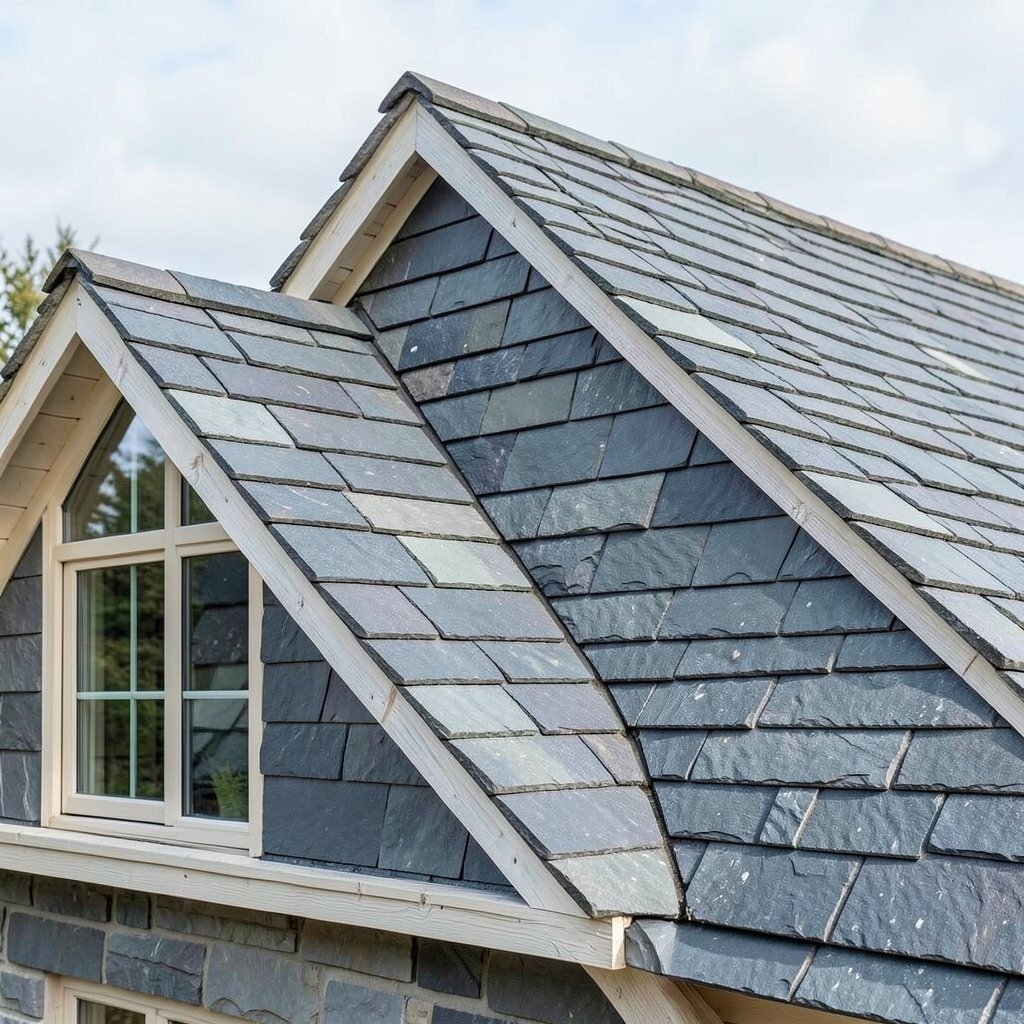
Cross-gabled roofs can look more three-dimensional when slate is organized to emphasize each plane. Clean lines between gable sections create depth that feels architectural, not complicated.
This style helps your home read as designed, especially from wider angles. For practical tips, plan roof penetrations carefully around skylights, vents, and chimneys so the slate layout doesn’t look cramped. Personalization can come from choosing one dominant slate color and letting the different planes carry the same shade for a calm, cohesive look.
16. Light Slate With Dark Valley Lines for Crisp Definition
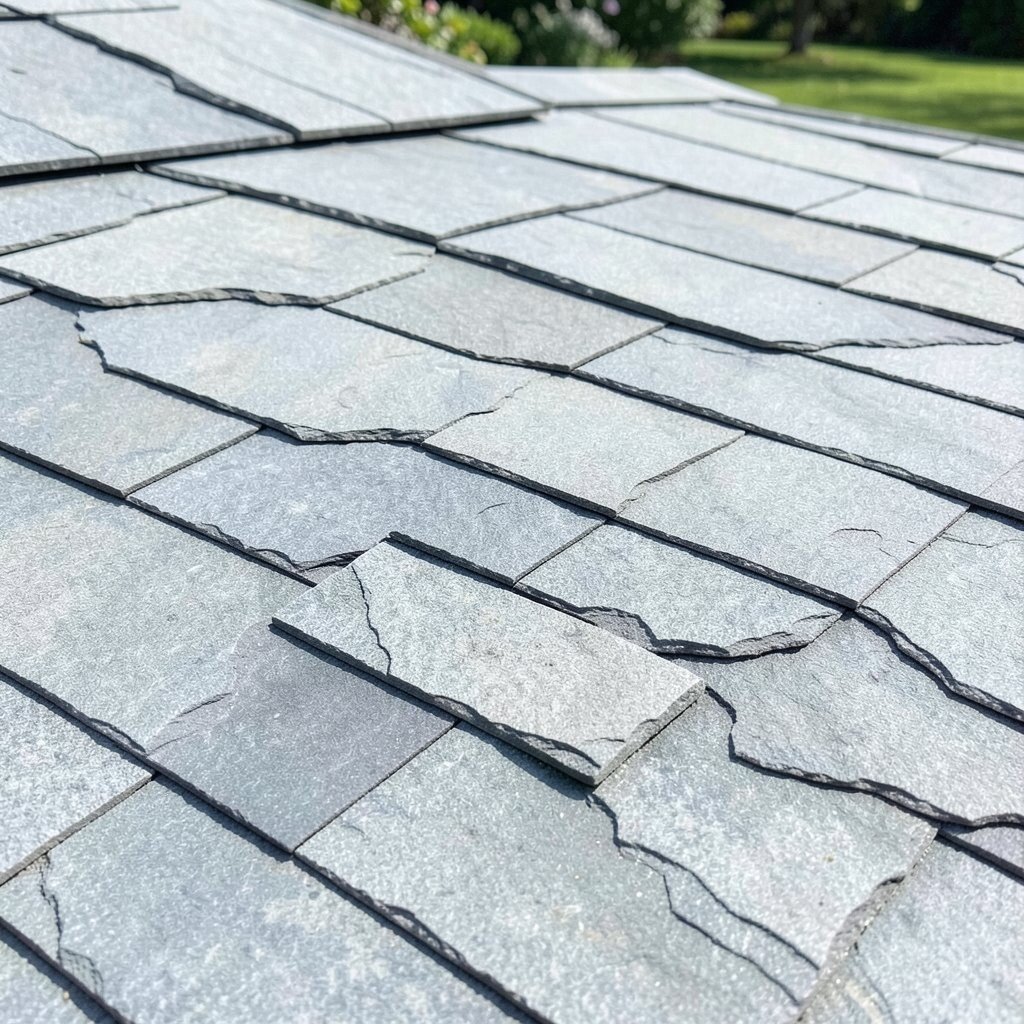
Light slate can make the home feel airy, while darker valley lines add crisp definition where water flows. The contrast helps the roof’s geometry stand out in a clean, modern way.
You get clarity from street view, which is a benefit when you’re trying to showcase a complex roof shape. For practical considerations, valleys need extra attention, so insist on high-quality flashing and correct ice-and-water protection. If you want personalization, align valley tone with your front door hardware or mailbox for a small but effective tie-in.
Cost can vary, but light slate often covers well because homeowners can choose a shade that looks rich even with mid-range material grades. This look aligns with current trends toward lighter exteriors balanced by darker architectural accents.
17. Slate Roof With Thoughtful Ventilation and Balanced Underlayment
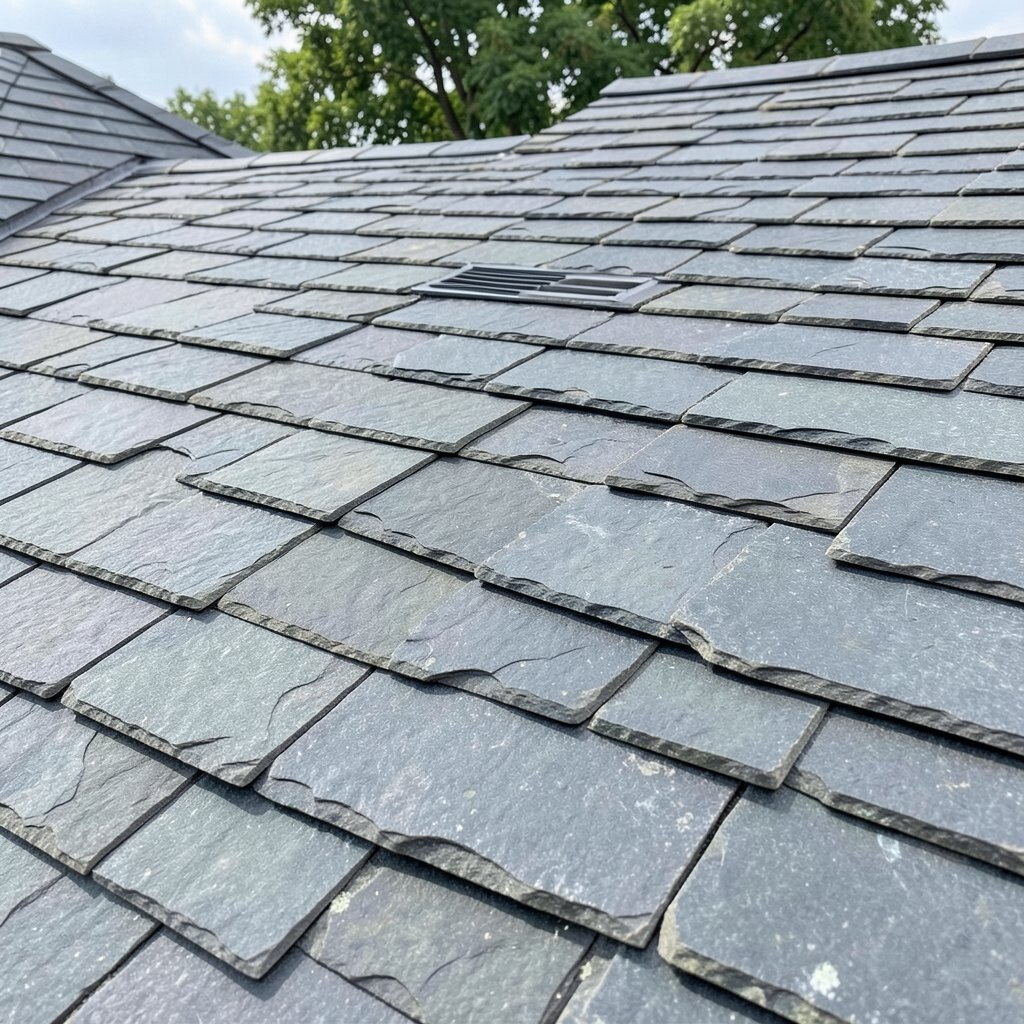
A timeless roof isn’t only about looks, it’s also about how it performs, and ventilation is part of the beauty. When airflow and underlayment are done right, the slate can age evenly without hidden moisture problems.
This benefit shows up over time as fewer surprises during inspections and fewer repairs around flashing and penetrations. For practical tips, ask your contractor about ridge venting, soffit intake, and the underlayment system used beneath the slates. Personalization can be simple too, like matching vent cap colors to your gutters so the roof stays clean and cohesive.
Even if you’re focused on style, smart ventilation planning can affect overall cost by reducing future work. The current trend toward “quiet performance” pairs classic materials with modern detailing, and slate is a perfect match for that mindset.