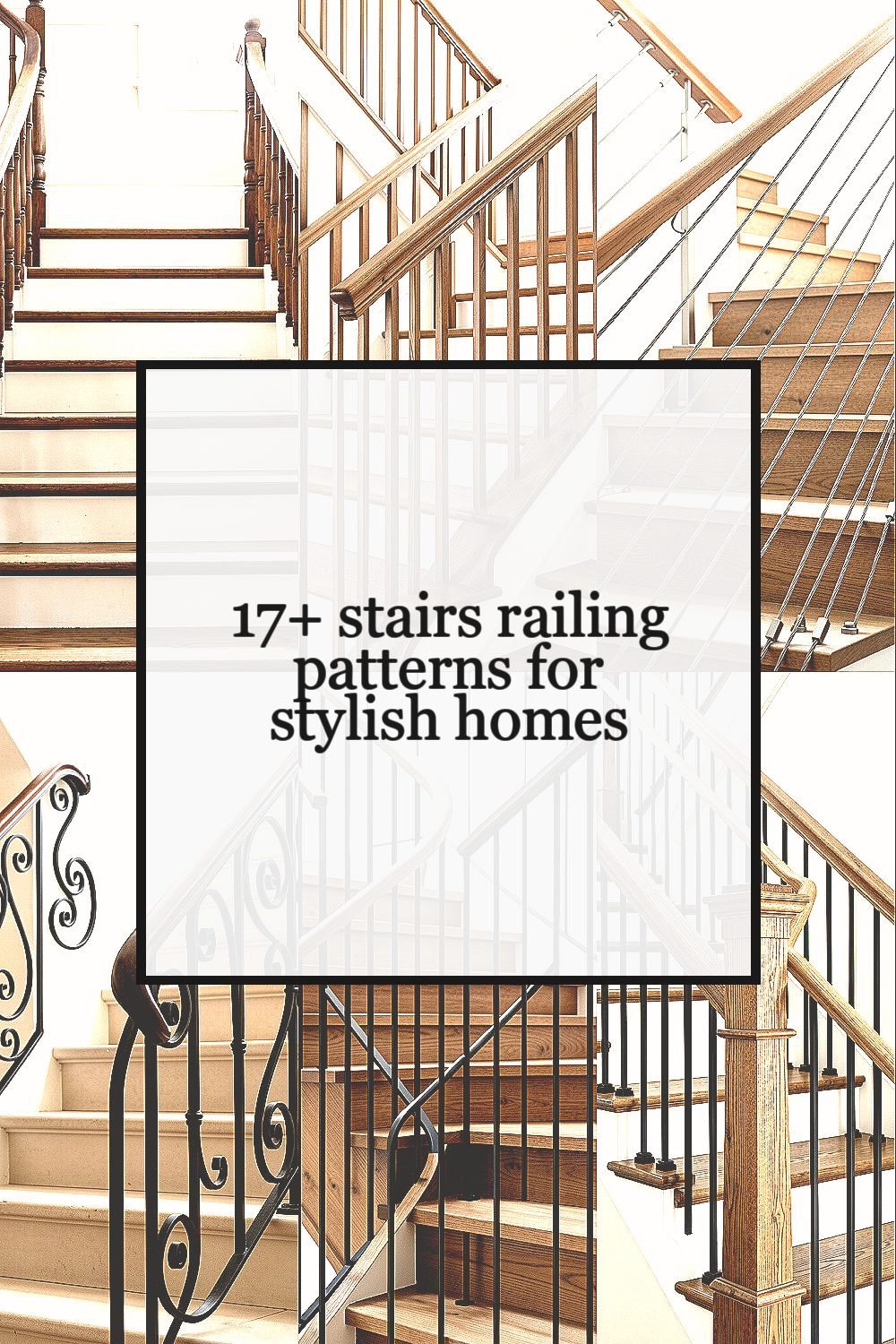
Your staircase can feel like a whole design moment. The right railing pattern adds safety, style, and personality at the same time.
1. Classic Spindle Symmetry

A row of slim spindles creates calm balance from top to bottom. When each piece matches in width and spacing, the stairs look tidy and timeless.
This pattern works especially well in homes with traditional trim, crown molding, or classic door frames. It also gives you solid hand support while letting light move through the space. For a practical upgrade, measure the gap between spindles and match it to your local safety guidelines.
2. Wide Baluster Grid
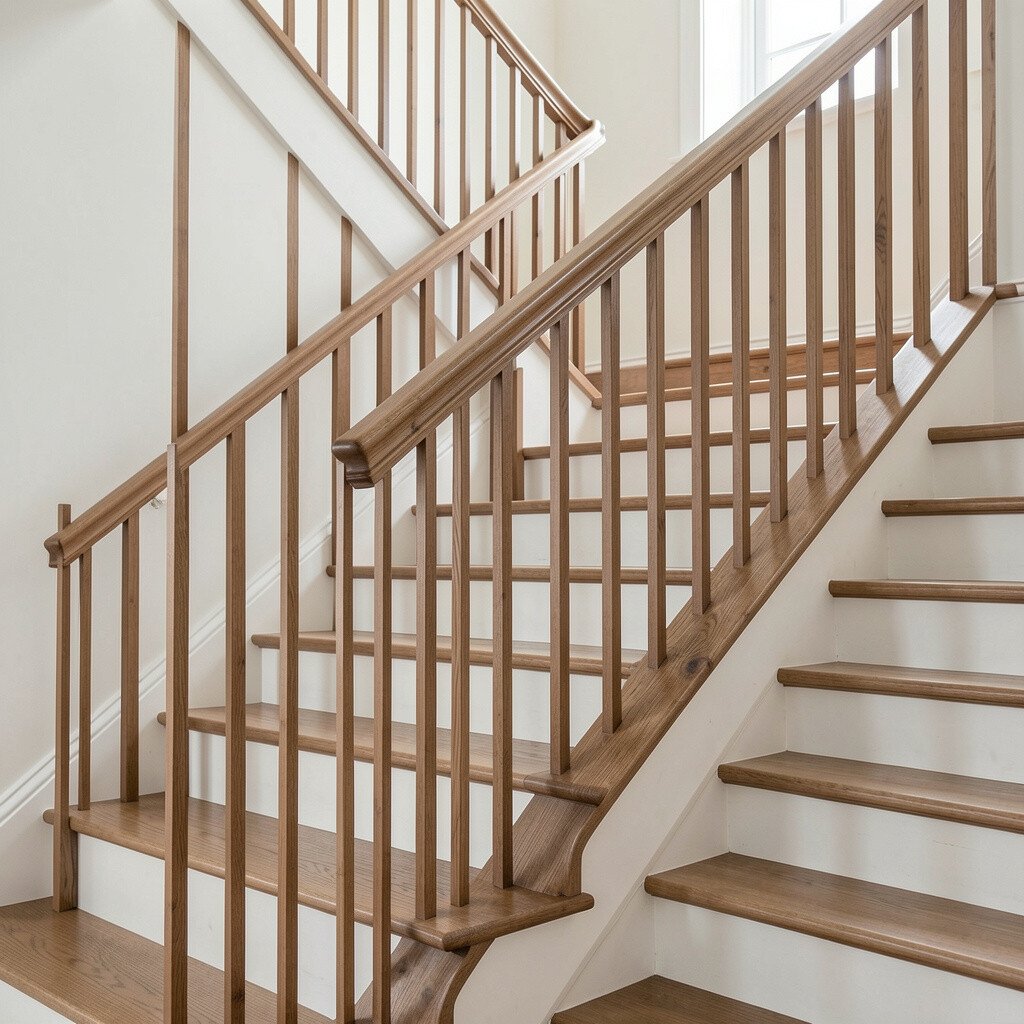
Wide balusters set in a grid-like rhythm can give your staircase a modern, architectural feel. The thicker vertical lines catch the eye and make the wall space look more intentional.
You get a bold look without needing complicated shapes. It can also make a smaller stair hall feel more organized because the pattern reads clearly from the first step to the landing.
To personalize the look, choose a finish that fits your room, like warm wood for cozy spaces or matte black for crisp contrast. If you are budget-minded, ask about pre-made baluster sizes so you avoid custom milling costs. A quick check on your staircase width helps you plan a layout that looks even instead of stretched.
3. Diagonal Cable Lines
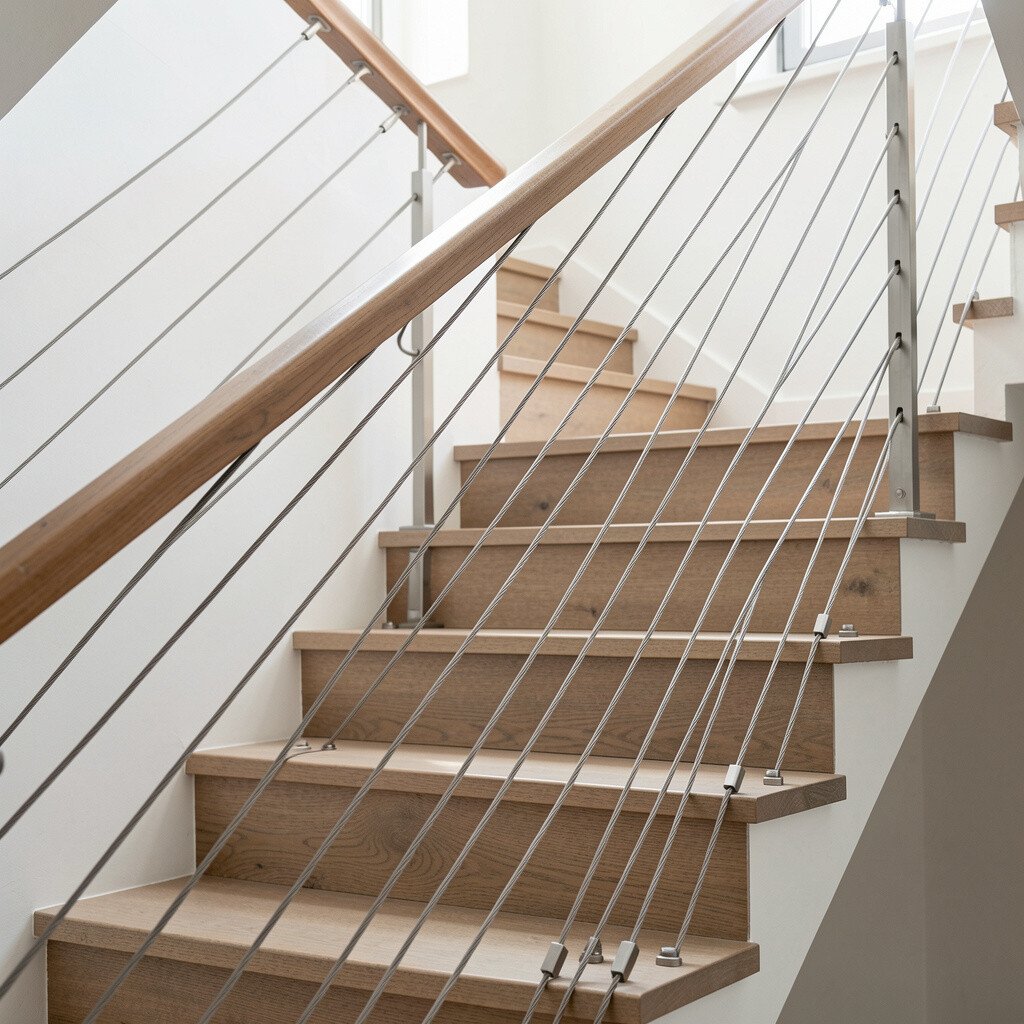
Cable railings with diagonal lines look light, sleek, and a little futuristic. The tensioned strands form crisp lines that feel energetic even when they stay perfectly straight.
These railings also keep sightlines open, which is great when your hallway connects to a bright living room. You can enjoy the view while still having a steady hand to hold. For everyday use, route the cables so your hand naturally meets the top rail at every turn.
To keep installation smooth, confirm the mounting spacing and use the correct hardware for the cable type you choose. Many homeowners like adding a wood top rail for warmth, since metal cables can feel cold in winter. Costs can vary based on cable materials, so it helps to compare options like stainless steel versus coated finishes.
4. Scrollwork With Soft Turns
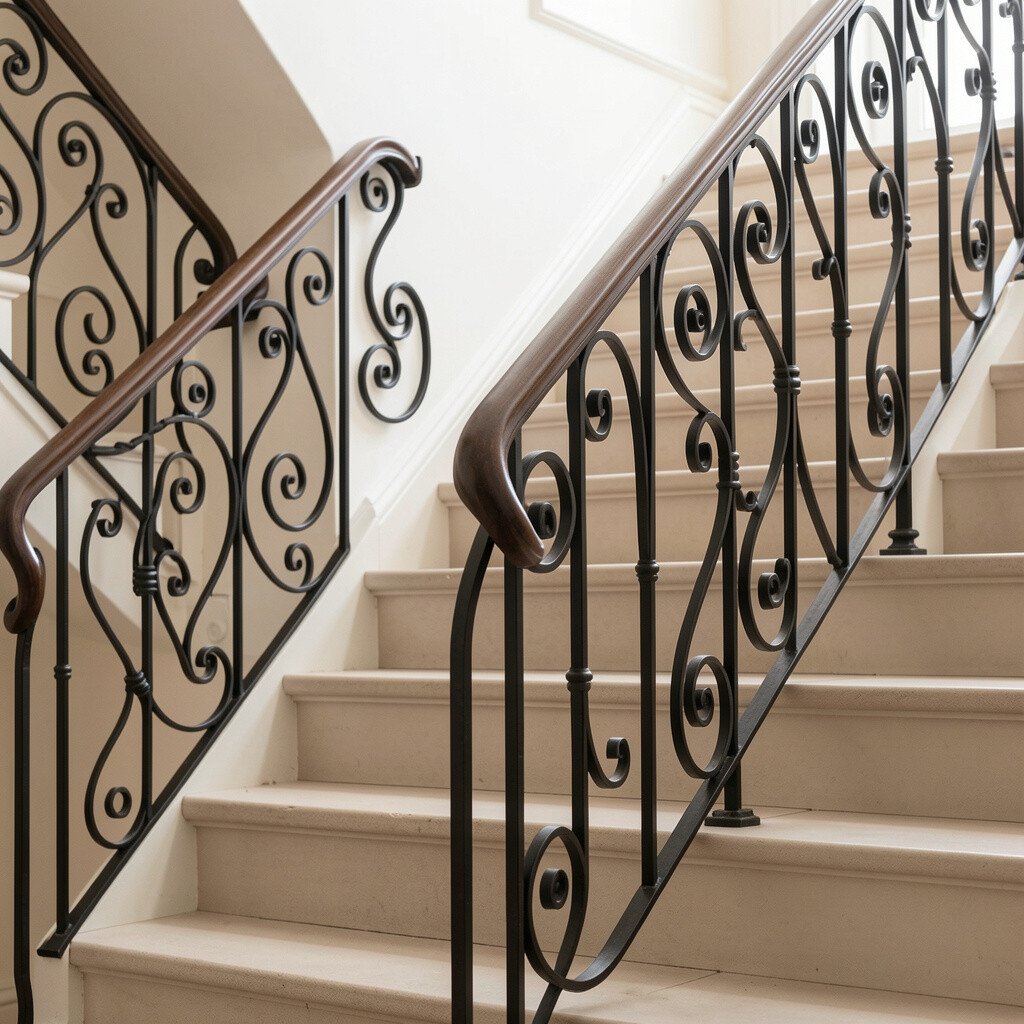
Decorative scrollwork brings an old-world charm that still feels charmingly at home today. With curved curls that follow the staircase curve, the railing looks like it was drawn in one flowing line.
This style helps hide small uneven spots along the run because the design draws attention. It also adds texture and depth, which is especially beautiful under warm lighting. If you want it to feel less heavy, choose a simpler scroll profile and pair it with a clean top rail.
5. Minimal Vertical Rails
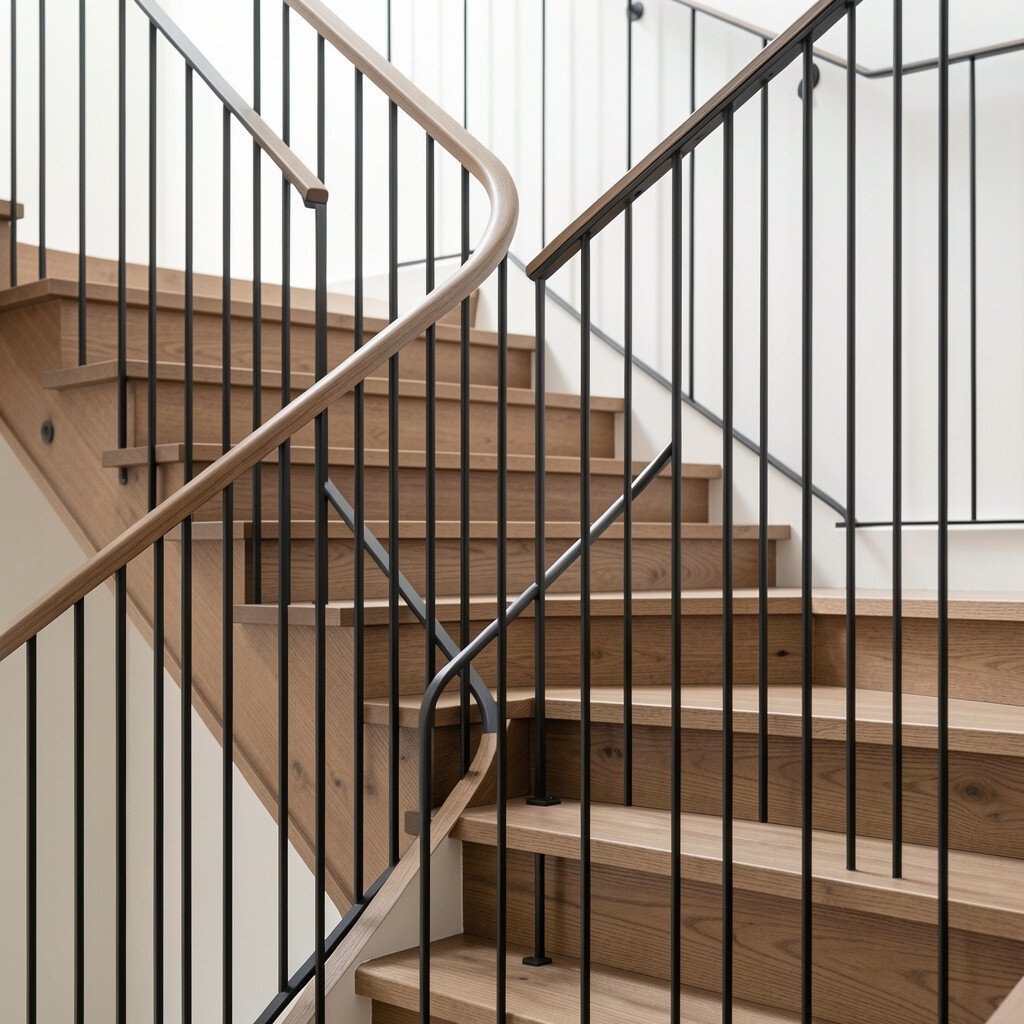
If you love a clean look, minimal vertical rails keep the staircase calm and airy. Slim, evenly spaced lines create a modern border without cluttering the view.
This pattern is great for contemporary homes with large windows and neutral walls. It can also make maintenance easier because fewer ornate parts collect dust. When you plan your spacing, keep an eye on hand comfort so the top rail feels smooth and friendly.
For personalization, play with a satin finish or a gentle wood grain instead of glossy surfaces. Staying within budget is often easier with simple straight members, especially when you can use standard lengths. A quick measurement of the stair angle helps the installer order panels that fit with fewer adjustments.
6. Farmhouse Chunky Posts
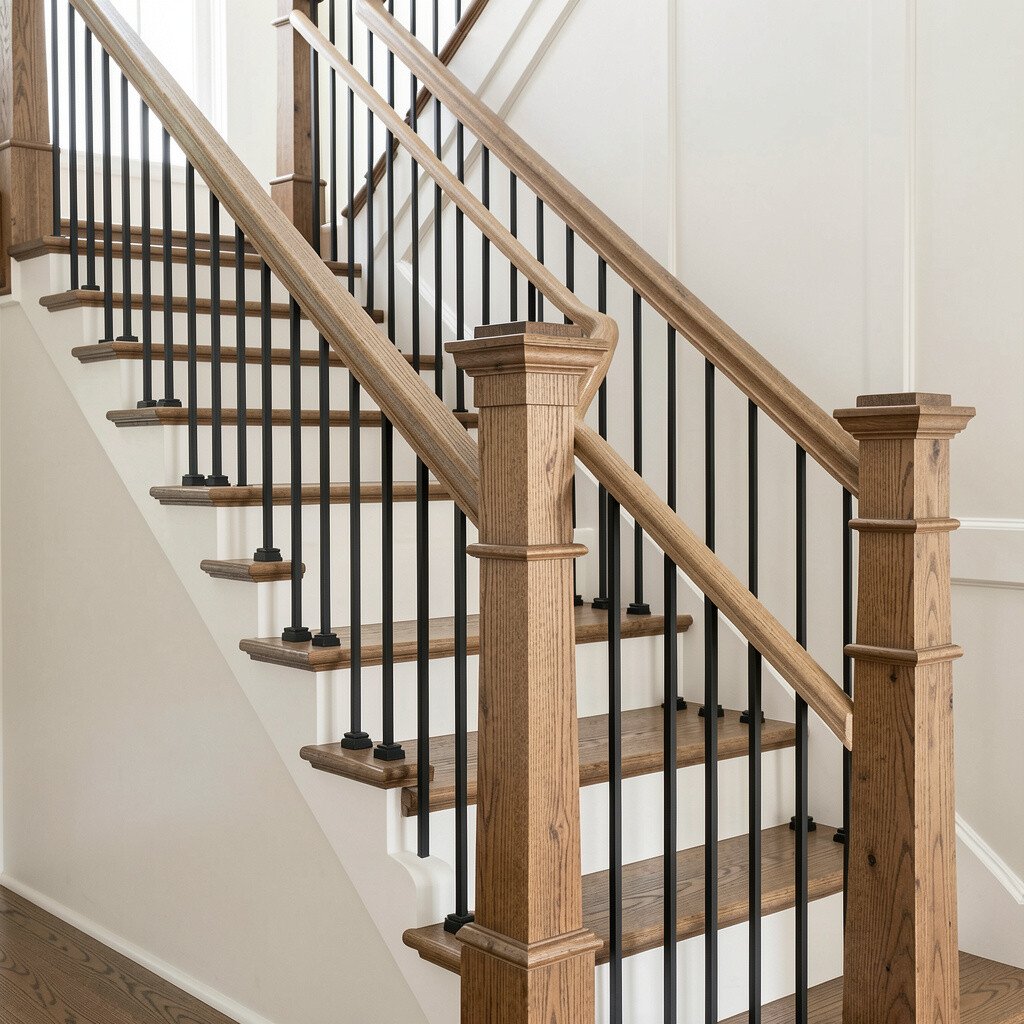
Chunkier posts and sturdy rails instantly give a farmhouse mood. The thick shapes feel grounded, and the stairway looks ready for everyday life.
You can pair the posts with simpler balusters or even wood panels for a more private, cozy vibe. The benefit is both visual and practical since strong posts can make the whole railing feel more stable. If your home has shiplap or beadboard, this pattern looks especially at home.
7. Mixed Materials Ladder Look
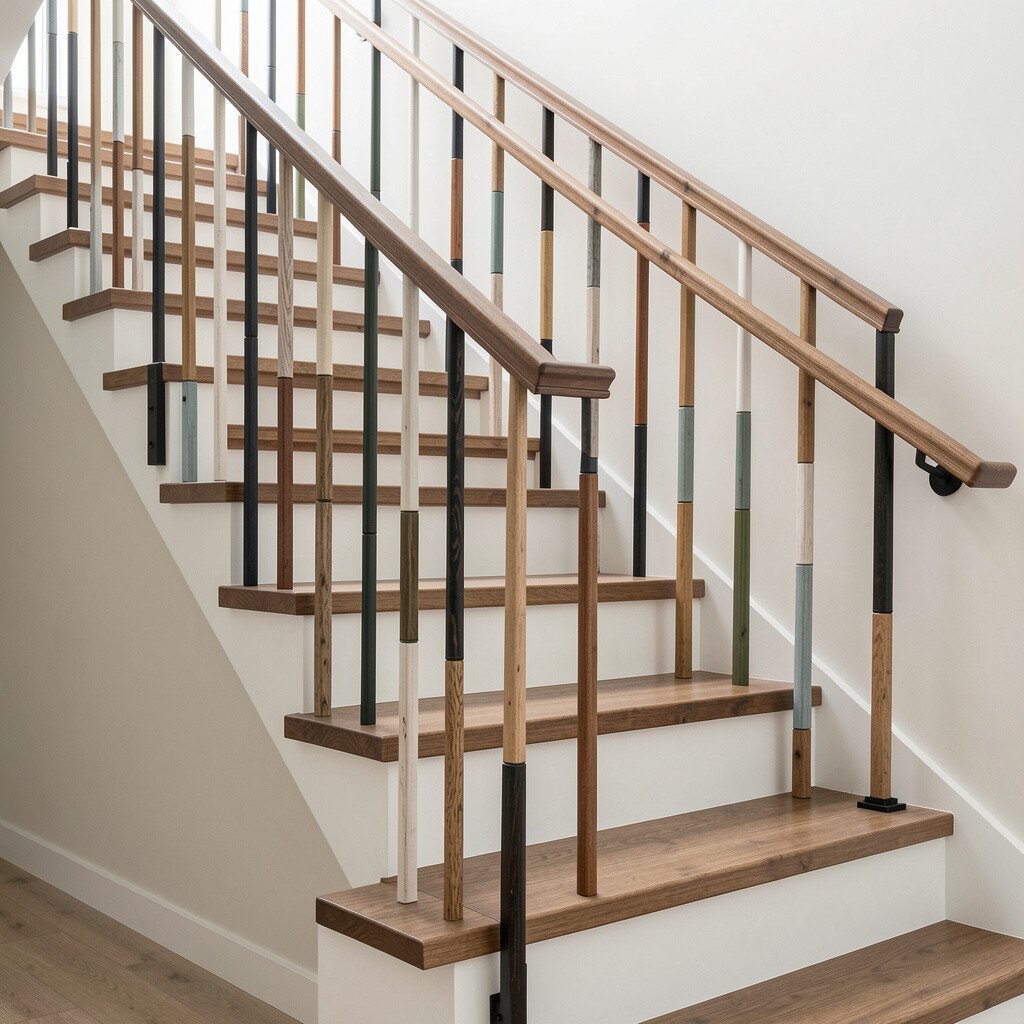
A ladder-style railing blends horizontal and vertical lines for a graphic, balanced look. When materials mix, like metal bars and wood rails, the staircase feels custom and warm.
This pattern stands out because it mixes textures instead of repeating one surface. It also supports a comfortable grip since the hand rail stays continuous even with the open framework. For practical planning, decide which material should take the most wear, often the top rail, and choose it accordingly.
If you want personalization, match the metal color to your kitchen hardware or choose wood that echoes your flooring. Costs can rise with custom mixes, so consider using off-the-shelf metal framing paired with a chosen wood top rail. Ask for lead times early, since wood finishing can affect scheduling.
8. Round-Tube Railing With Rings
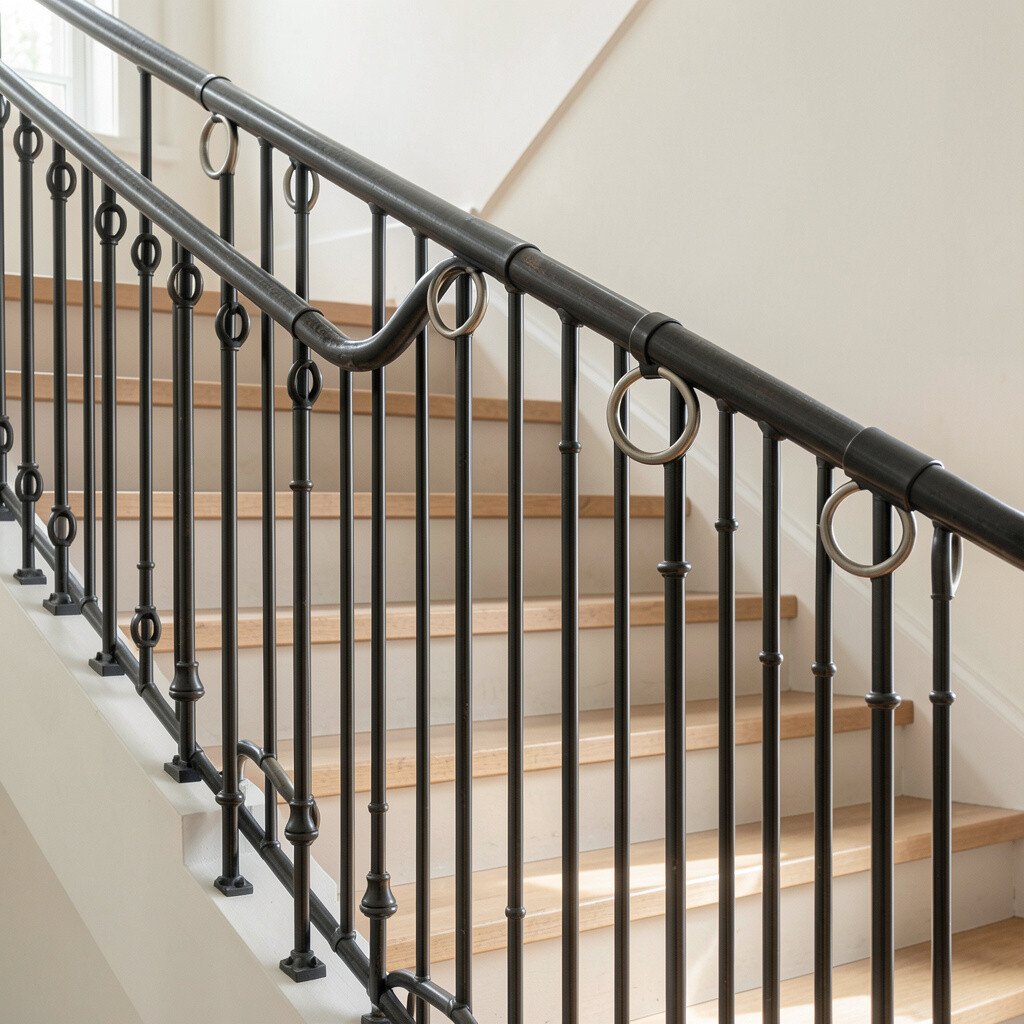
Round tubes create a smooth, friendly silhouette that many homeowners find easy to live with. Adding ring details can make the railing feel playful without turning it into a heavy ornament.
This pattern works well in homes that like soft edges, such as spaces with rounded furniture or curved wall arches. The round shape can also feel safer in hand because it is easy to grip firmly. For a neat finish, align rings so they follow the same rhythm as the stair treads.
9. Geometric Diamond Pattern
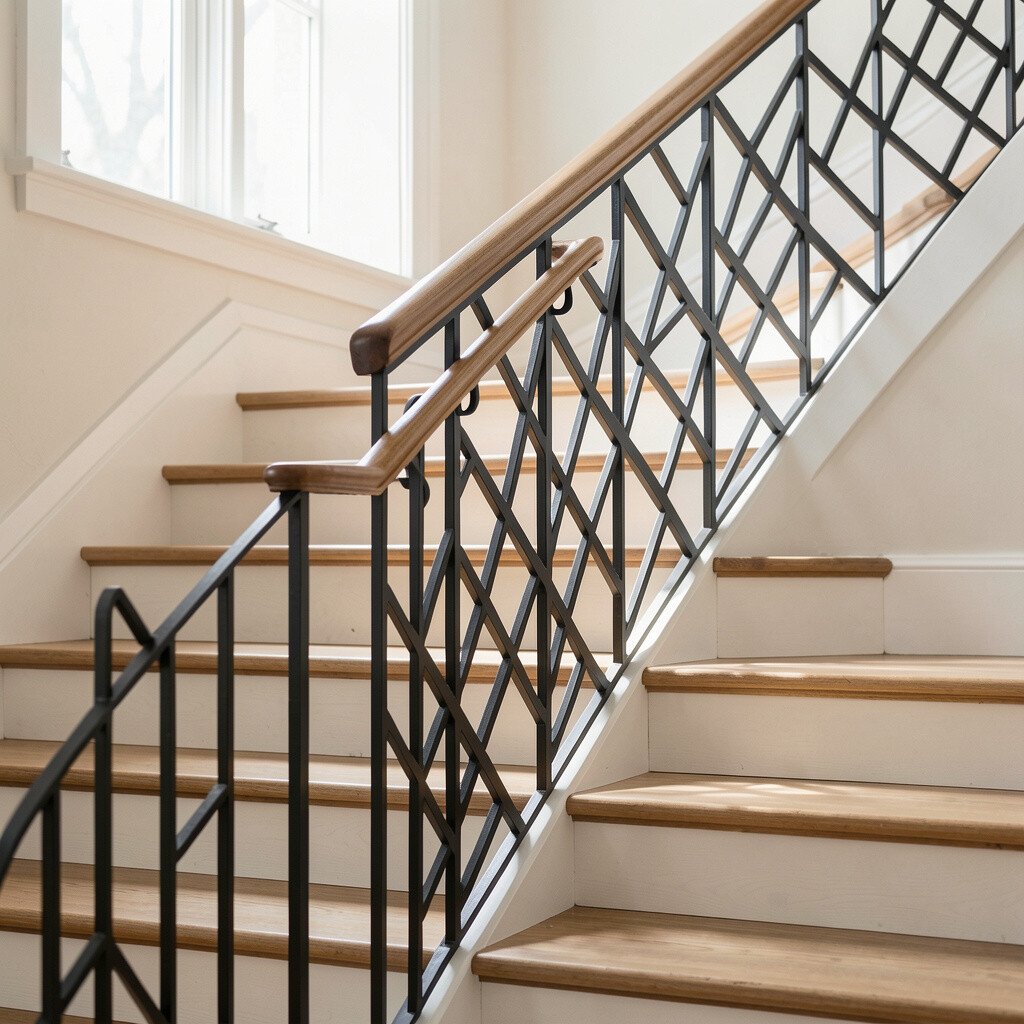
Diamonds on a railing bring a crisp, modern look that feels bold and intentional. The repeating shapes create a visual rhythm that helps the staircase look taller and more stylish.
You can enjoy the open feeling while still adding structure, because the design uses negative space. This is a great choice if you want privacy from a distance but keep the hallway bright. For practical tips, ensure the diamond openings meet safety standards and choose a strong frame that resists warping.
To personalize, consider a metal finish that matches your lighting, like bronze, pewter, or brushed nickel. Costs may depend on whether the diamond sections are laser-cut panels or welded in place, so compare options early. Current trends often favor darker metal tones paired with warm lighting, so this style pairs well with soft bulbs and layered sconces.
10. Art Deco Fan Panels
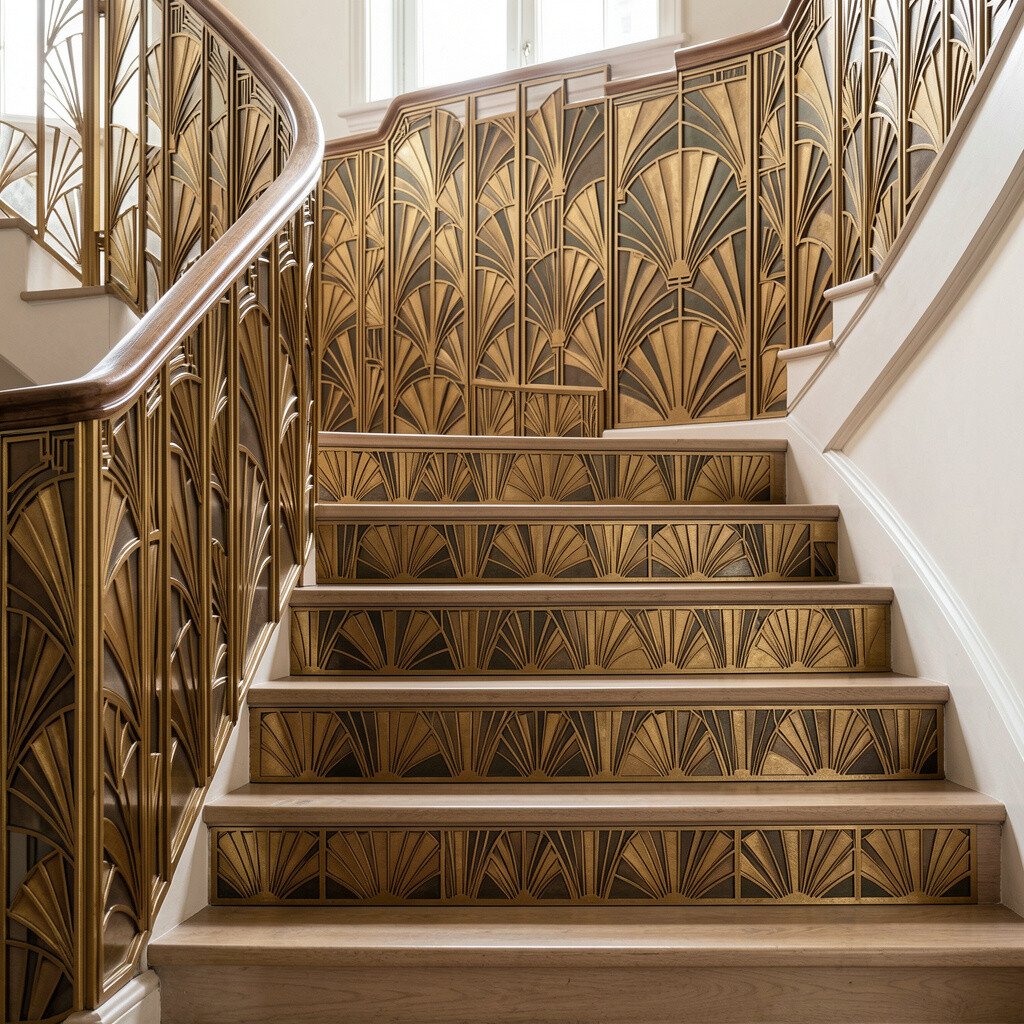
Art Deco fan shapes turn a staircase into a statement piece. With repeating curves and stepped details, the railing can feel glamorous without needing a full renovation.
This pattern is unique because it balances symmetry with decorative flair. It also helps your entry hall feel more curated, especially if you use matching motifs in lighting or mirror frames. For best results, choose a top rail that stays simple and smooth so the design looks refined instead of busy.
11. Lattice Side Panels
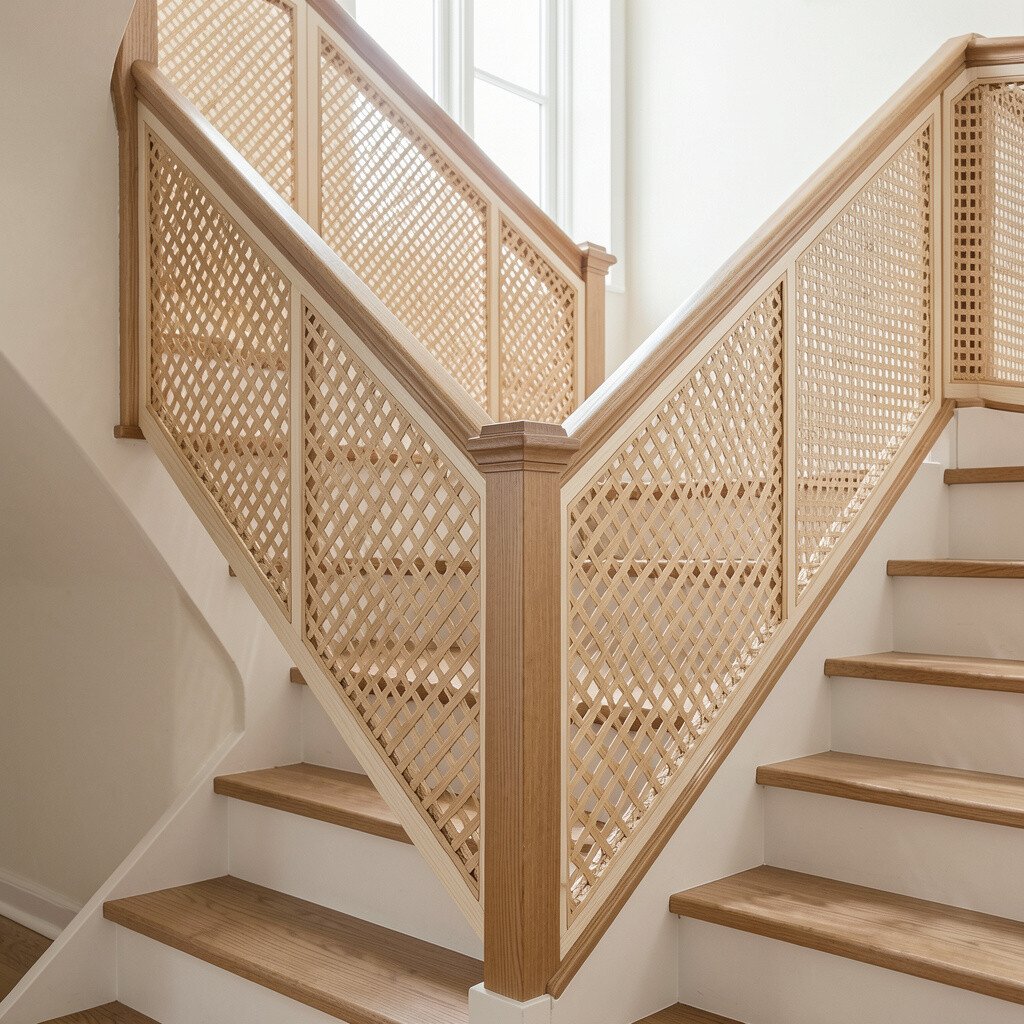
Lattice panels on the sides of the stairs add charm and a hint of cottage elegance. The crisscross pattern softens the look of a straight stair run and makes the rail feel custom.
This choice gives you more coverage than a fully open railing while still letting light travel through the space. It is a great way to add privacy without making the staircase feel closed in. If you want a practical upgrade, seal and finish the lattice well so it holds up to daily touch and cleaning.
For personalization, paint the lattice to match trim or keep it stained to highlight wood grain. Costs can be reasonable if you choose a lattice kit that fits standard panel sizes. A good tip is to plan for the width of your handrail, since the lattice must align neatly with the top edge.
12. Vertical Slat Modern Linework
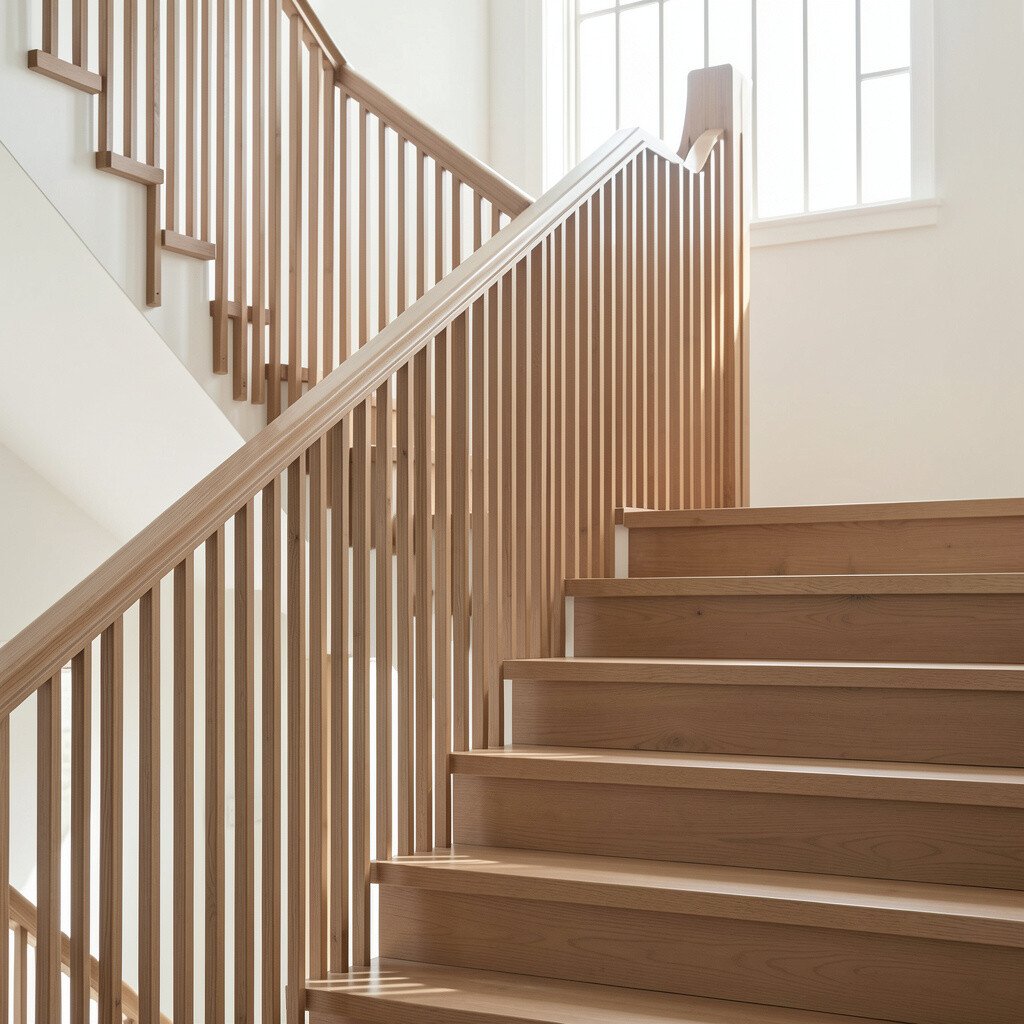
Vertical slats create a strong modern look that feels calm and orderly. When the slats run in a clean column pattern, the staircase becomes a sleek design element.
This style works especially well with modern homes because it echoes other linear features like window muntins and cabinetry lines. The benefit is easy upkeep, since straight slats are simple to wipe clean. For personalization, experiment with slat thickness and spacing to get the exact level of openness you want.
If you are working with a tighter budget, select slats in standard sizes to reduce fabrication time. Matching the slat color to your door hardware helps it feel cohesive throughout the home. You can also soften the look by choosing a lighter finish and pairing it with a warm wood top rail.
13. Woven Rattan-Inspired Accent
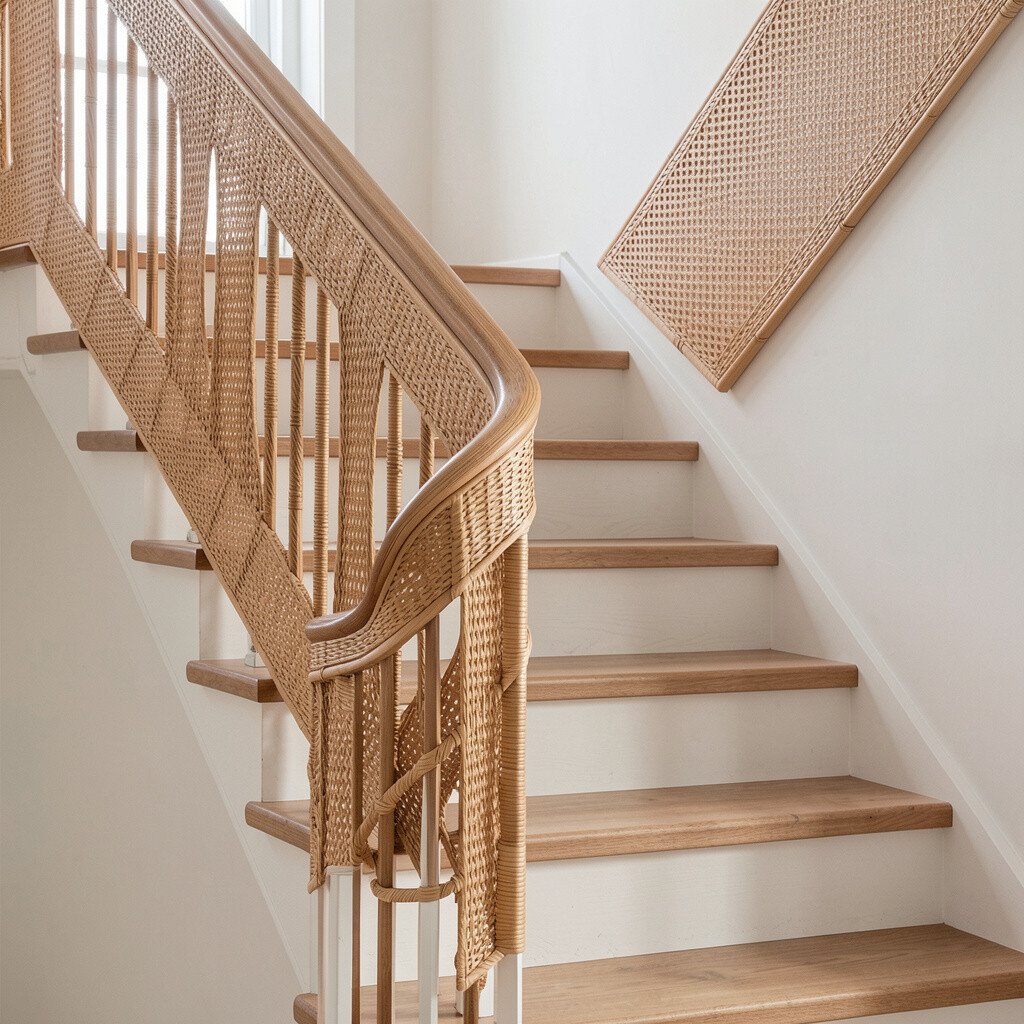
Rattan-inspired accents can bring a soft, airy vibe to stair railings. When woven textures meet sturdy rails, the result feels inviting and a little vacation-like.
This pattern is unique because it adds visual warmth without changing the overall structure of the staircase. It can also make the staircase feel less industrial, which many people appreciate in minimalist rooms. For practical use, make sure the woven section is placed where it will not take direct heavy pressure from hands.
To personalize, choose the weave style that matches your interior, like tight braid for a polished look or looser weave for casual charm. Costs vary based on whether the texture is real rattan, composite, or metalwork meant to mimic weaving. If you want a trendy look with less maintenance, look for composite woven panels that resist moisture and wear.
14. Curved Wave Rail Lines
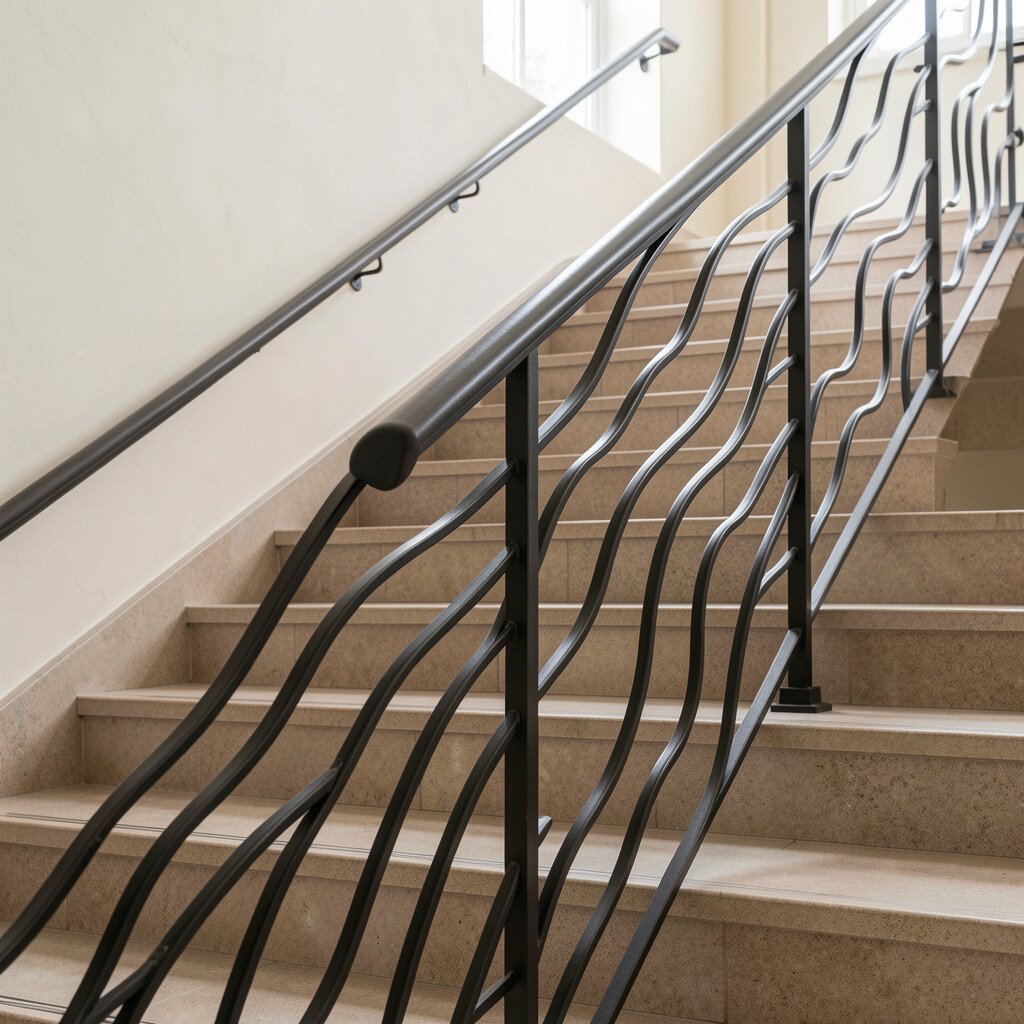
Curved wave rail lines can make your staircase feel like it moves with the home. Instead of straight repetition, the pattern creates a gentle flow that catches light as you walk.
This design feels special because it turns a simple handrail into a visual journey. It also improves the feeling of comfort since the curved waves can guide your hand naturally along the rail. A practical tip is to decide early how dramatic the wave should be, because bigger curves can look amazing but may cost more to fabricate.
For personalization, pair the wave rail with a clean base baluster so the waves remain the star. If you are watching costs, choose a wave profile that uses fewer custom bends. Good planning also includes checking clearance, since wave shapes can add visual depth that affects how the stairs feel in a narrow hall.
15. Checkerboard Infill Panels
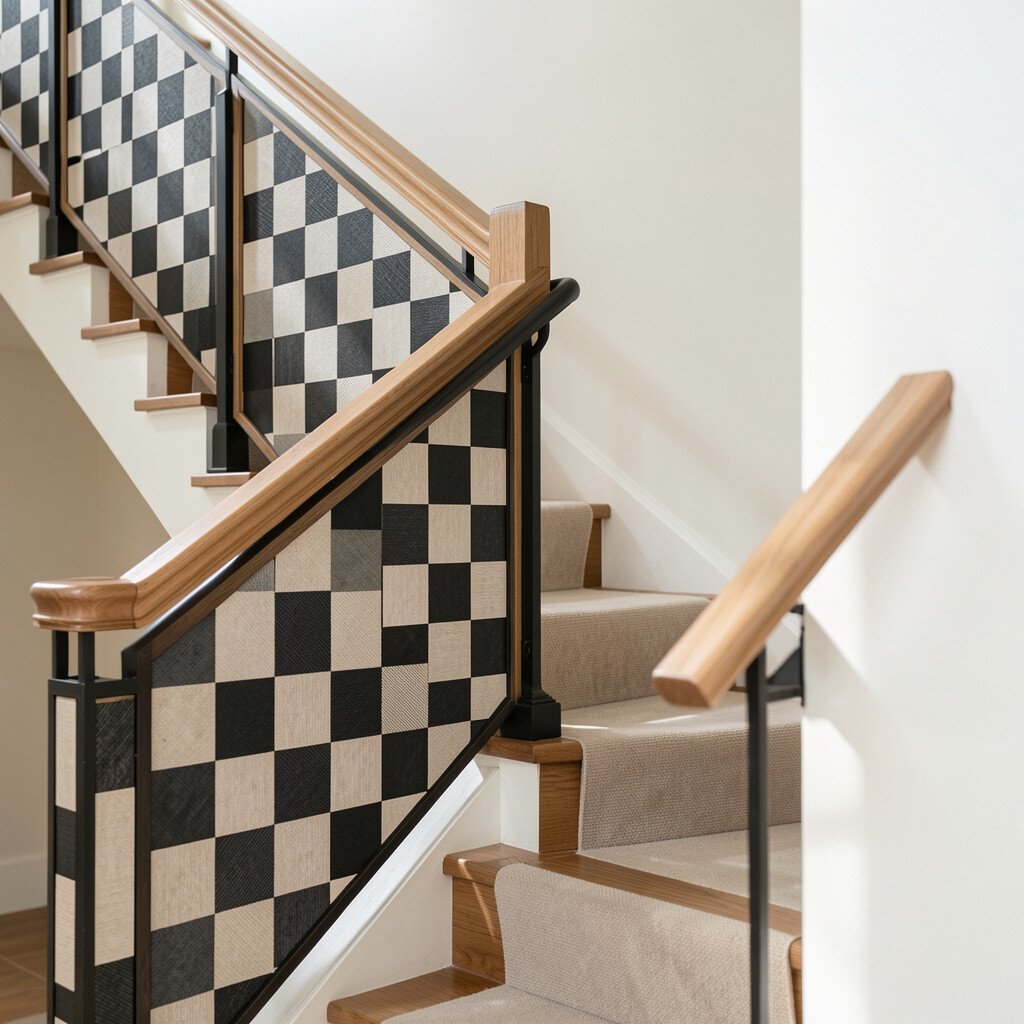
A checkerboard infill gives your staircase a lively, patterned look with strong visual contrast. Each square adds structure, so the railing feels like a design grid rather than a plain barrier.
This pattern is easy to personalize because you can vary the square size and the finish colors. It can also be practical because solid infill areas help reduce the feeling of exposed space. If you want a friendly vibe, use warmer tones like walnut and bronze rather than harsh black and white.
Costs can climb when infill panels require custom fabrication, so consider starting with a standard panel system. A good planning tip is to mock up the pattern on paper or with a simple sketch so you can see how it lines up with each step. Many current trends lean toward bold patterns in entry spaces, and a checkerboard railing fits that spirit nicely.
16. Horizontal Tube Bench Style

Horizontal tube rails create a low, modern look that feels almost like a sleek bench. When the tubes sit parallel, the staircase appears streamlined and designer-ready.
This style is helpful because it offers a solid grip surface that can feel comfortable for many hand sizes. It also pairs well with minimalist interiors where you want fewer decorative details. To make it practical, choose tubes with a smooth finish and consider rounded edges for easy cleaning.
For personalization, add vertical supports only at key points so the horizontal lines stay clean. If you want to manage costs, ask about using standard tube sizes and cutting lengths to match your stair run. Matching the railing color to your flooring or wall paint creates an instant sense of unity.
17. Ornate Scroll Rail Caps
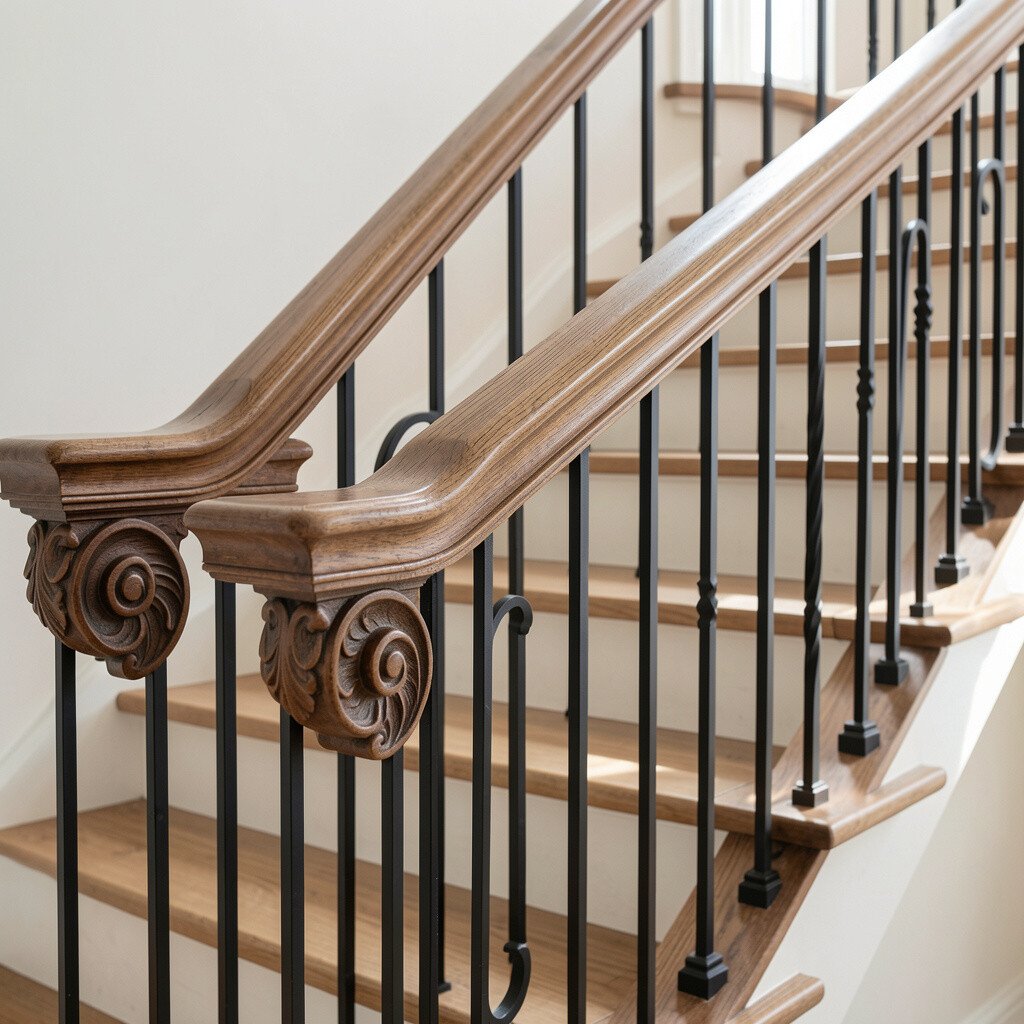
Ornate rail caps focus decoration on the top, so the rest of the staircase stays simple. The result looks elegant because your eyes catch the detail right where your hand rests.
This pattern is unique because it blends comfort with style in one place. You can enjoy the benefits of a more minimal framework while still adding personality. For practical tips, make sure the cap detail is securely fastened and that no sharp edges are left behind after finishing.
To personalize, choose cap motifs that echo your home style, like leaf-like curves for a nature feel or geometric curls for a modern twist. Cost considerations often depend on whether the caps are purchased as pre-finished components or custom welded on-site. A smart approach is to invest in beautiful caps and keep the balusters simpler to balance budget and impact.
18. Stained Wood Panel With Metal Trim
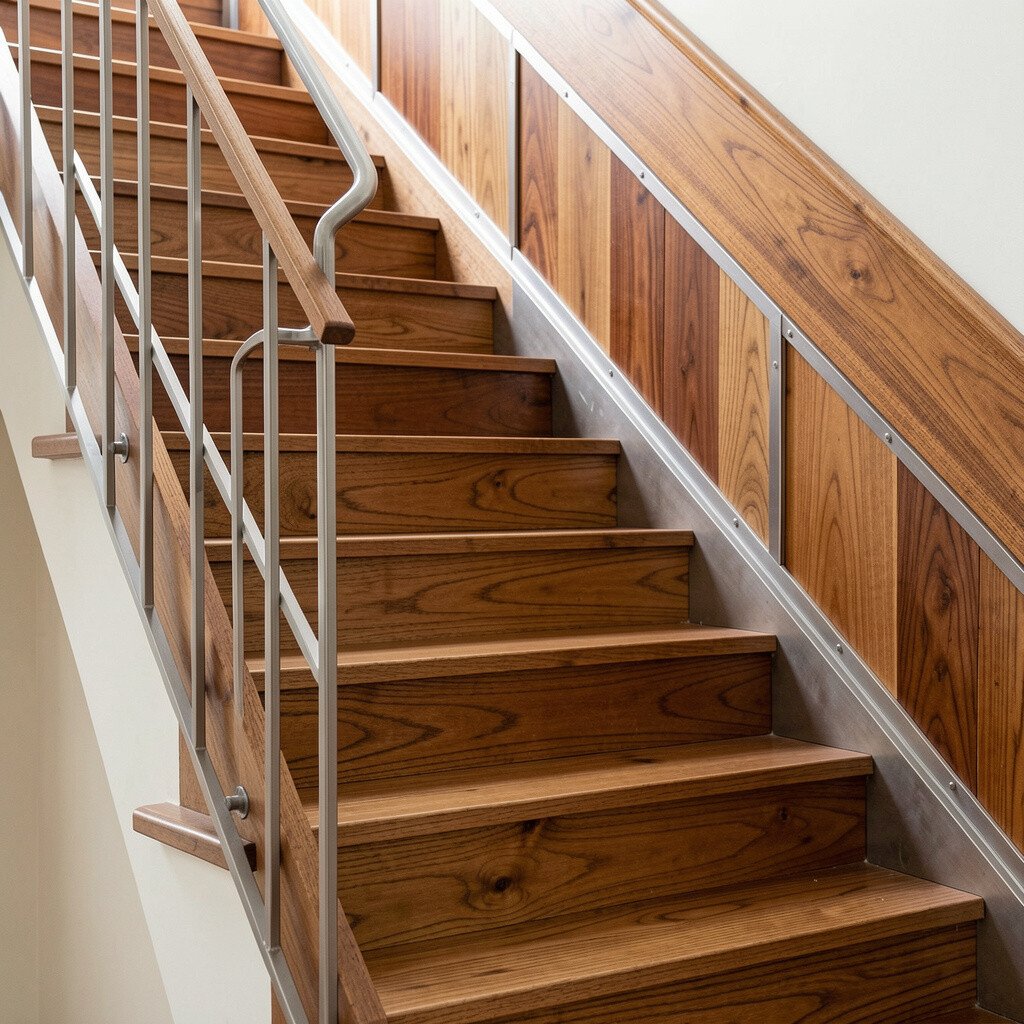
A stained wood panel railing with metal trim feels warm and polished at the same time. The wood brings comfort, while the trim adds crisp lines and a modern edge.
This blend is great for homeowners who want a stylish look without going fully metal or fully wood. It also helps hide small construction gaps because the trim frames the panel neatly. For practical planning, seal the wood well and choose a trim finish that resists fingerprints and scratches from daily use.
To personalize, pick a stain shade that matches your other wood tones, like honey oak, walnut, or a deeper espresso. Costs can be more moderate than fully custom carvings, especially if you choose panel sizes that are commonly stocked. Current trends also love contrast, so pairing dark trim with lighter wood or lighter trim with rich wood can look amazing in bright stair halls.