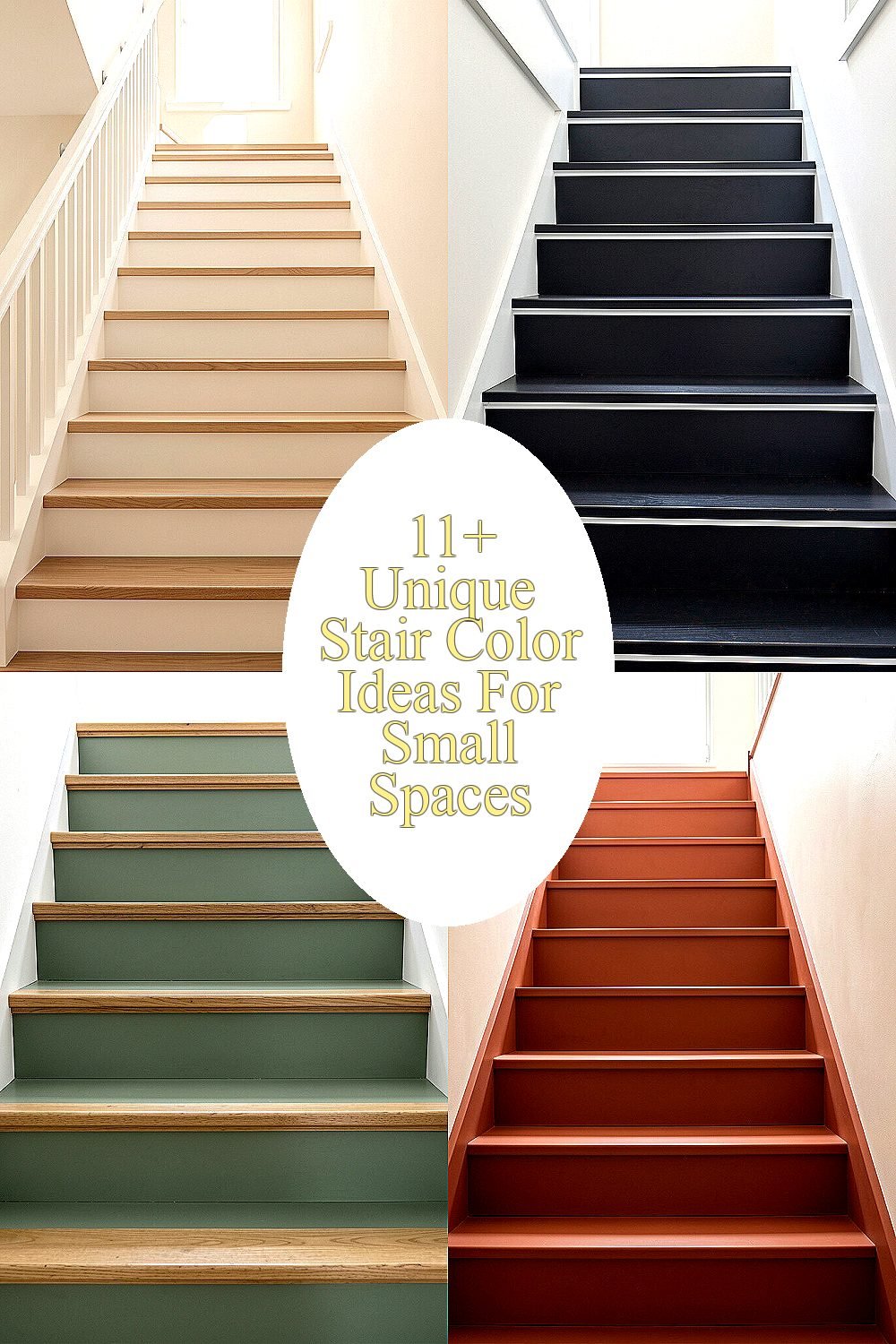
Stairs can feel cramped, but color can change the whole mood. With the right shade, even a tight staircase can look bright, calm, and surprisingly stylish.
Below are creative ways to color small-space stairs that feel personal and practical at the same time. Each idea includes details you can picture, plus tips for making it work in real homes.
1. Warm White With Soft Beige Undertones

Warm white is like a gentle morning light for stairs. It keeps every step feeling open without turning the space into something stark.
Choose a warm white paint and pair it with soft beige or greige undertones on the risers. This combo helps the staircase look tidy, while the subtle warmth flatters nearby walls and floors. For small spaces, lighter tones also make shadows less harsh, which can make narrow hallways feel longer and calmer.
Start by checking your lighting. North-facing light can look cooler, so test swatches in the morning and evening before you commit. If you’re using wood steps, a paint made for stairs or a good primer can help it last longer. For personalization, add a thin stained line on the edges or paint only the risers warm beige to create a soft rhythm.
Cost is usually manageable because warm neutrals are easy to match and don’t require fancy color mixing. A roller and angled brush often cover the surface quickly, which saves time. In current home style, creamy whites remain popular because they work with many decor looks, from modern to classic.
2. Deep Charcoal With Crisp White Edging
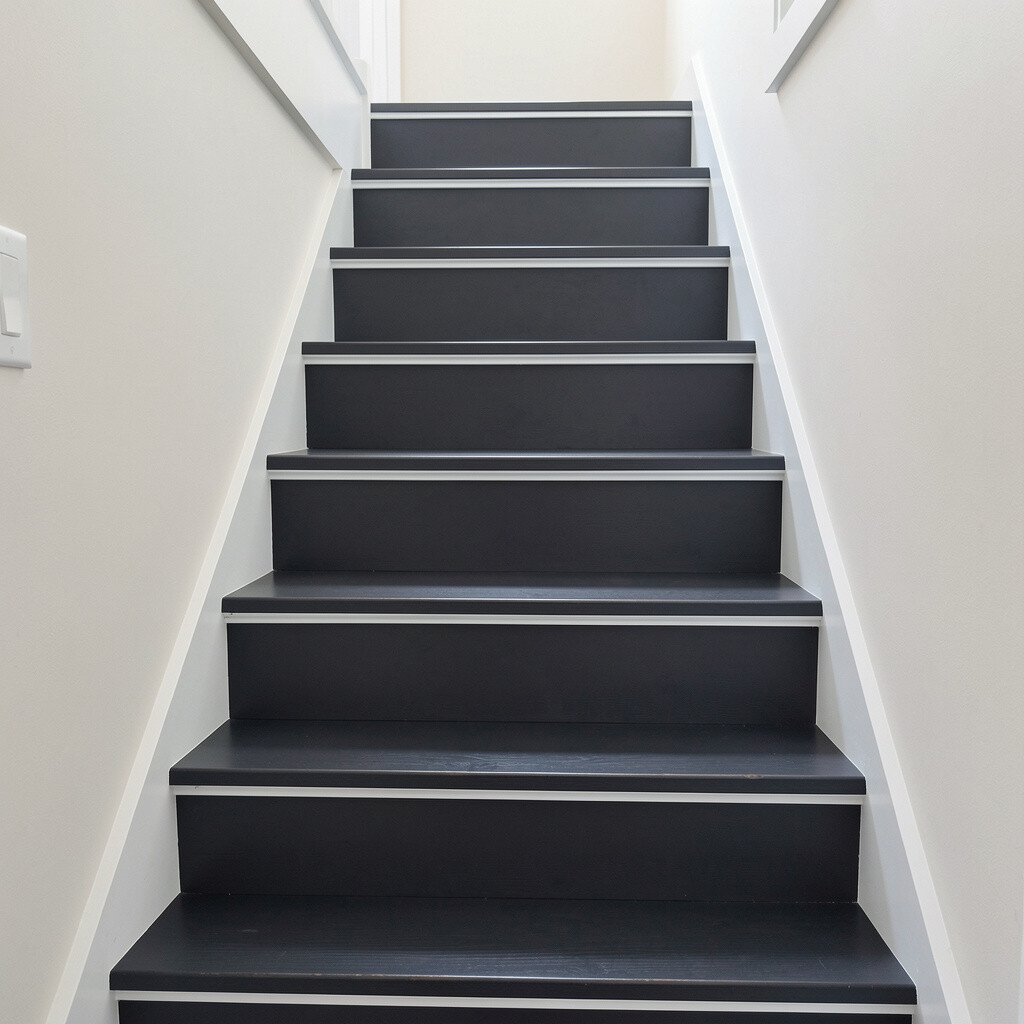
Charcoal stairs can look bold, even in a small space. The key is to keep the contrast clean so the staircase still feels crisp, not heavy.
Paint the treads in deep charcoal and outline the edges with crisp white. This creates a clear “grid” effect that visually separates each step. When you use bright edging, your staircase reads as intentional and neat, which is great for tight spaces where details matter.
To make it practical, use a semi-gloss or satin finish on treads since it helps with scuffs and light cleaning. Add a runner in a solid light tone if you want extra grip and a softer feel underfoot. You can personalize the vibe by swapping the white edging for a pale taupe if you prefer a softer contrast.
From a cost point of view, you may spend a bit more on durable paint and a quality primer, especially for darker colors that benefit from even coverage. Charcoal and white continues to be a trend because it looks modern and photographs beautifully. For best results, tape the edges carefully and don’t rush the first coat, since charcoal often looks patchy if coverage is uneven.
3. Sage Green Treads With Natural Wood Risers
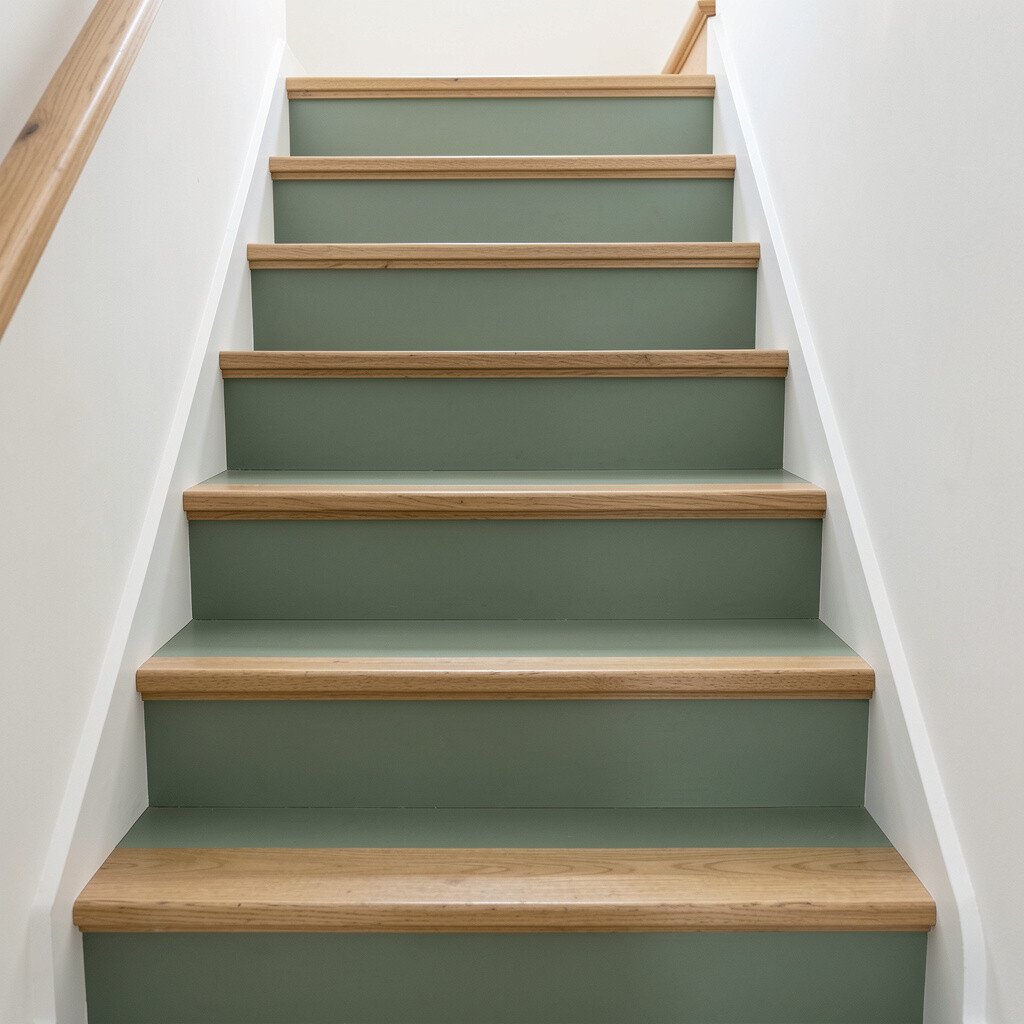
Sage green brings a fresh, calm feel without shouting. It pairs beautifully with wood, which means you can keep warmth while adding personality.
Paint only the treads in sage green, then leave the risers natural wood or stain them to deepen the tone. This approach makes each step feel layered, like a simple design plan rather than an all-over change. Small spaces benefit because the visual focus stays on the walking surface, while the risers maintain warmth and height.
For practical traction, consider applying a clear topcoat made for floors or using a non-slip additive. You can also choose a slightly muted sage instead of a bright green to avoid a too-loud look near stairs. Personalization can be as easy as adding a thin stripe in a warmer sand color at the top edge of each riser.
Cost can be lower than painting everything if you keep the risers in their natural finish. Wood-stain touch-ups are often simpler than full repainting, and you can target only spots that look worn. Sage remains a current favorite because it feels earthy, cozy, and easy to style with neutral walls and warm metals.
4. Terracotta Tones With Matte Finish
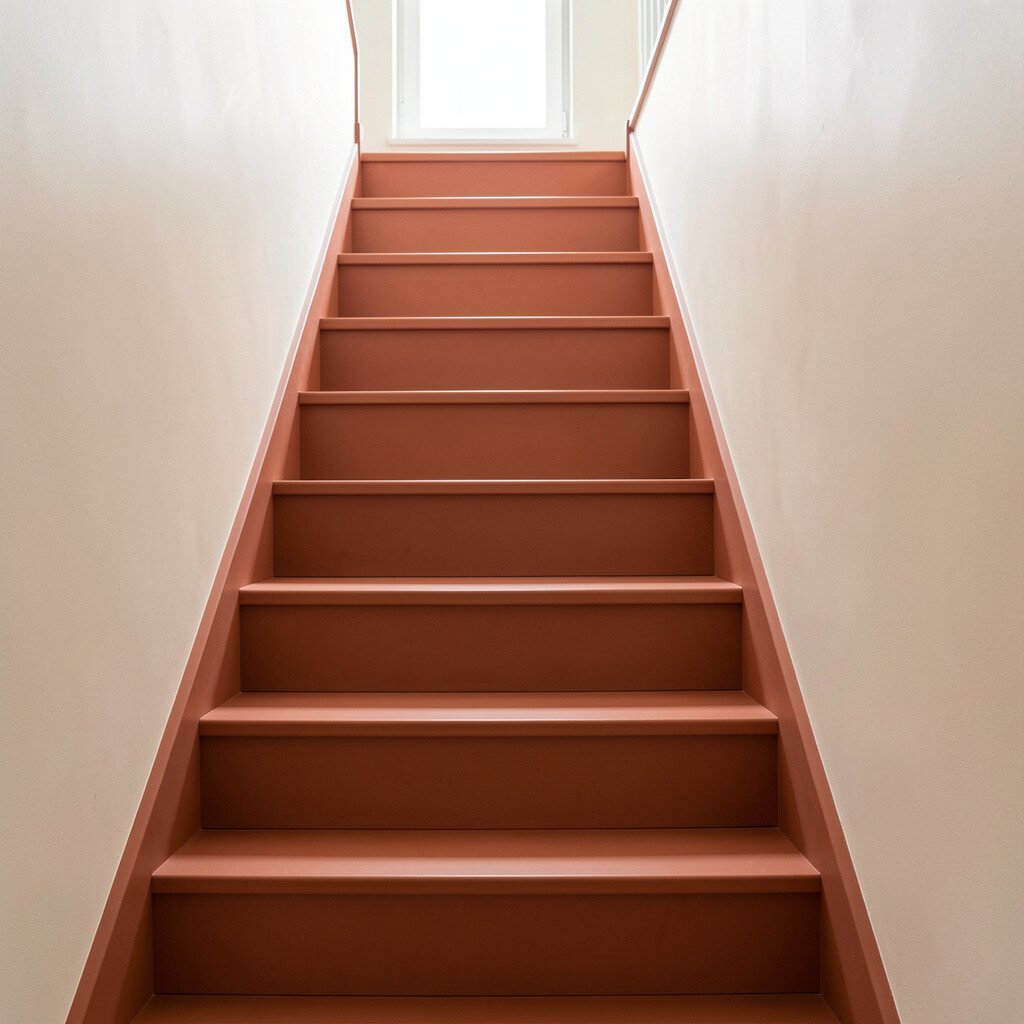
Terracotta adds instant warmth, like a sun-baked tile in your hallway. In a small home, it can make the staircase feel welcoming instead of narrow.
Pick a terracotta paint for the risers and use a lighter warm neutral on the treads. That way, every step still feels bright where you need grip, while the risers bring color up and around. A matte finish hides scuffs more than shiny paint, which is helpful in real life.
To make it safer and more practical, consider a durable clear coat on tread surfaces where shoes land. If the staircase gets lots of foot traffic, a runner can add extra traction and protect paint. For personalization, blend a few tones by using a slightly lighter terracotta on every other riser, creating a subtle alternating pattern that feels modern.
Terracotta can be budget-friendly because you often need only one main shade, plus a neutral for balance. The trend right now leans toward warm earth colors, especially in small homes that want comfort. Test samples first, since terracotta can read more red or more orange depending on your existing wall color.
5. Navy Stairs With Gold Hardware Details
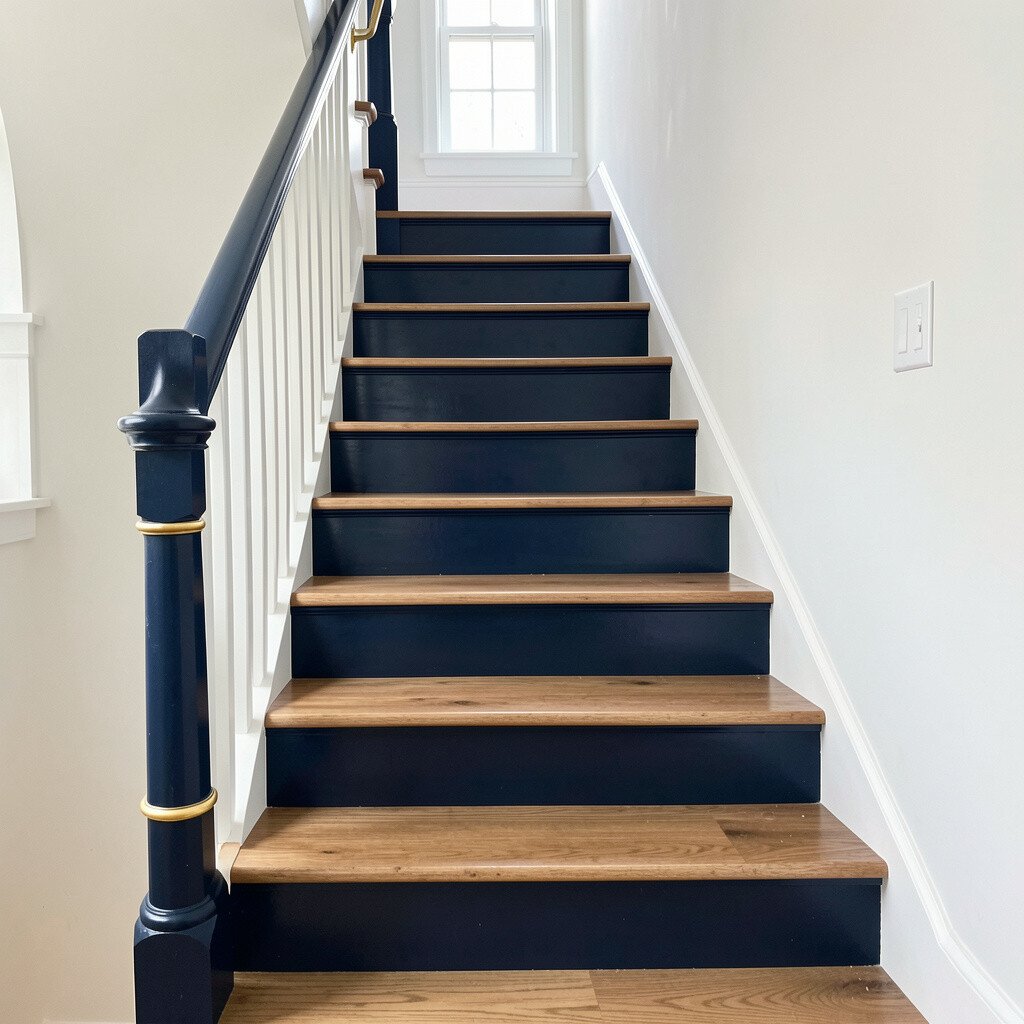
Navy is dramatic in the best way, and it can make stairs feel like a design feature. When you keep surrounding colors light, the result stays elegant rather than overwhelming.
Paint treads in deep navy and use lighter risers or keep risers white for contrast. Then, bring in gold accents through stair spindles, handrail details, or small trims. This combo makes each step feel finished, like a boutique staircase.
To keep it practical, choose a paint that resists scuffs and consider a non-slip additive for tread areas. If you have a handrail, a fresh coat can tie everything together and make the navy feel intentional. Personalize by adding a thin gold line along the top edge of risers or by using brass-toned stair rods if you have a runner.
Cost can range depending on whether you’re updating hardware, but the paint itself is usually the main expense. Dark blues remain popular because they pair well with both warm and cool decor, from creamy whites to soft grays. For best results, ensure strong lighting so the staircase doesn’t feel dim, and consider using light wall paint nearby to balance the depth.
6. Two-Tone Light Gray With Clean Vertical Panels
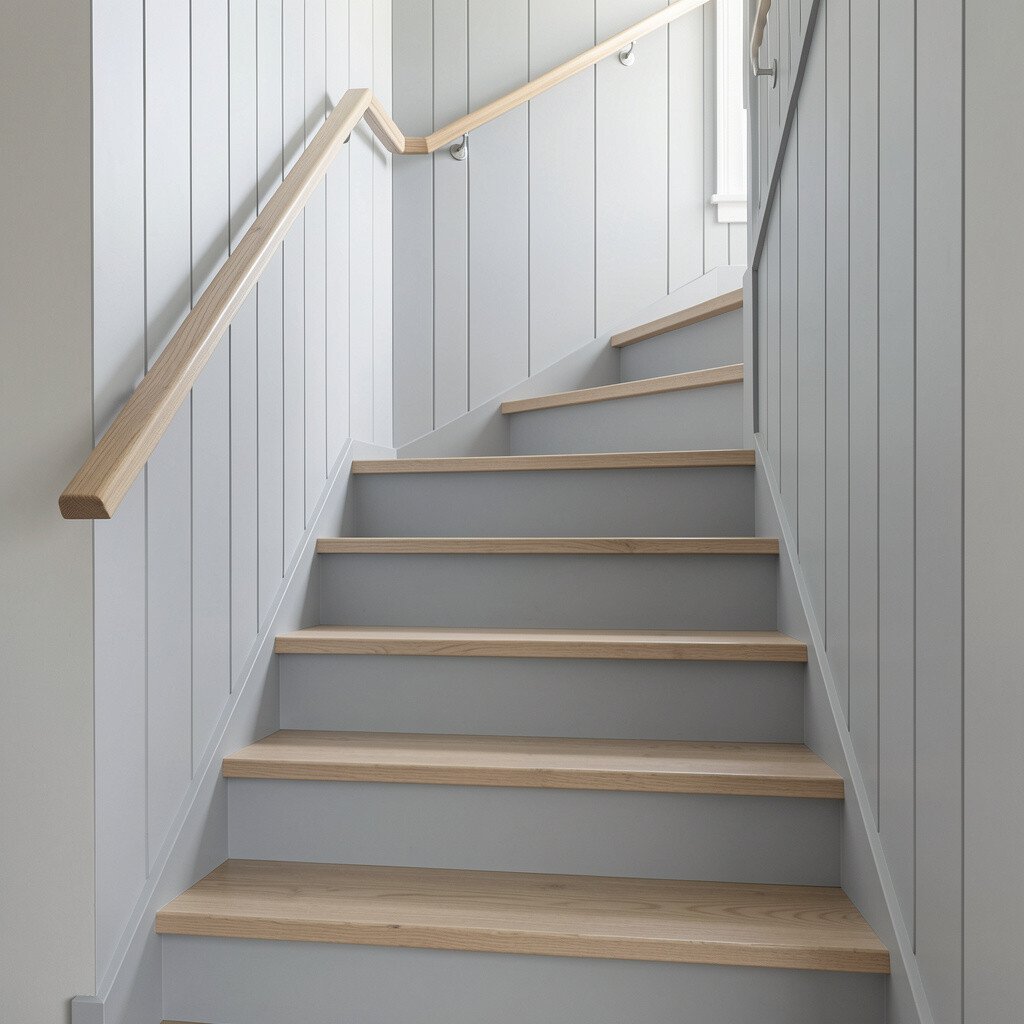
If you want a tidy, modern look, two-tone light gray works wonderfully. It’s subtle enough for small spaces but still creates visual style.
Use a lighter gray on treads and a slightly darker gray on risers. Then, add a simple vertical panel effect on the risers using thin painter’s tape. Even without fancy tools, tape lines can create a “designed” feel that makes the staircase look custom.
For practical tips, make sure you let paint cure fully before heavy use. Use a satin sheen for durability and easier wipe-downs, especially near entryways. Personalization can come from matching the gray tones to nearby cabinetry or trim so everything looks like one cohesive set.
Cost is usually reasonable because gray shades can be mixed or matched easily. This look fits current trends toward clean lines and minimal contrast. Keep panel spacing consistent for a polished effect, and consider choosing a slightly warmer gray if your floors lean honey or golden.
7. Soft Blush Pink With Off-White Risers
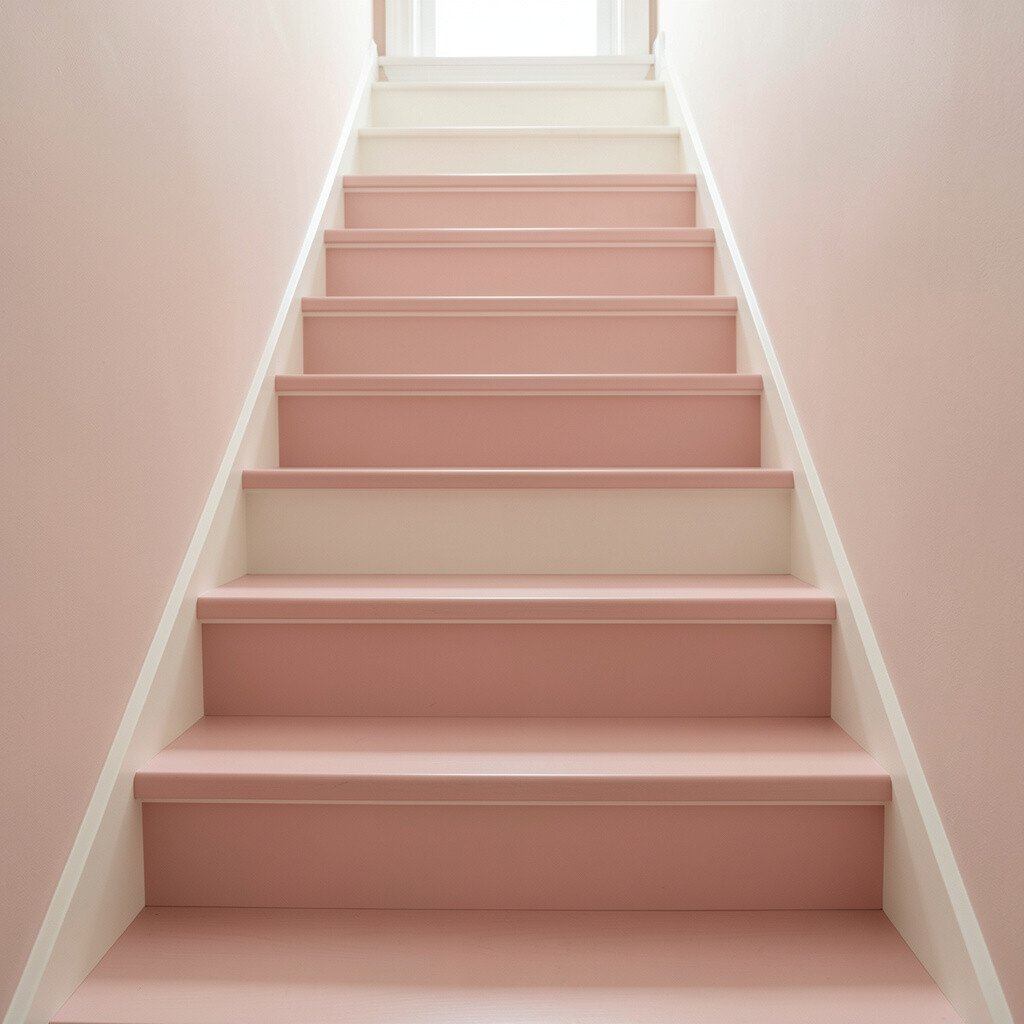
Soft blush pink can make a staircase feel friendly and bright. It works especially well in small spaces because it adds warmth without making the area feel crowded.
Paint risers in a muted blush while keeping treads off-white or a creamy light shade. The walking surface stays light and forgiving, while the pink brings personality up where your eyes naturally go. This contrast helps prevent the stairs from looking like one flat block.
For safety and daily life, use a durable paint on treads and consider a runner if you want extra grip. You can personalize the tone by adjusting how rosy it looks, ranging from very pale to slightly more vibrant. If your home style is modern, keep it minimalist; if it’s cozy, pair it with warm textiles and matte metal accents.
In terms of cost, blush paint might be a little more expensive depending on whether you need custom tinting, but it’s still a straightforward single-color choice. Pink in home decor has stayed popular because it feels playful while still soothing when used in gentle shades. Test swatches in your stair lighting since blush can shift from peachy to rosy quickly.
8. Butter Yellow With Crisp White Steps
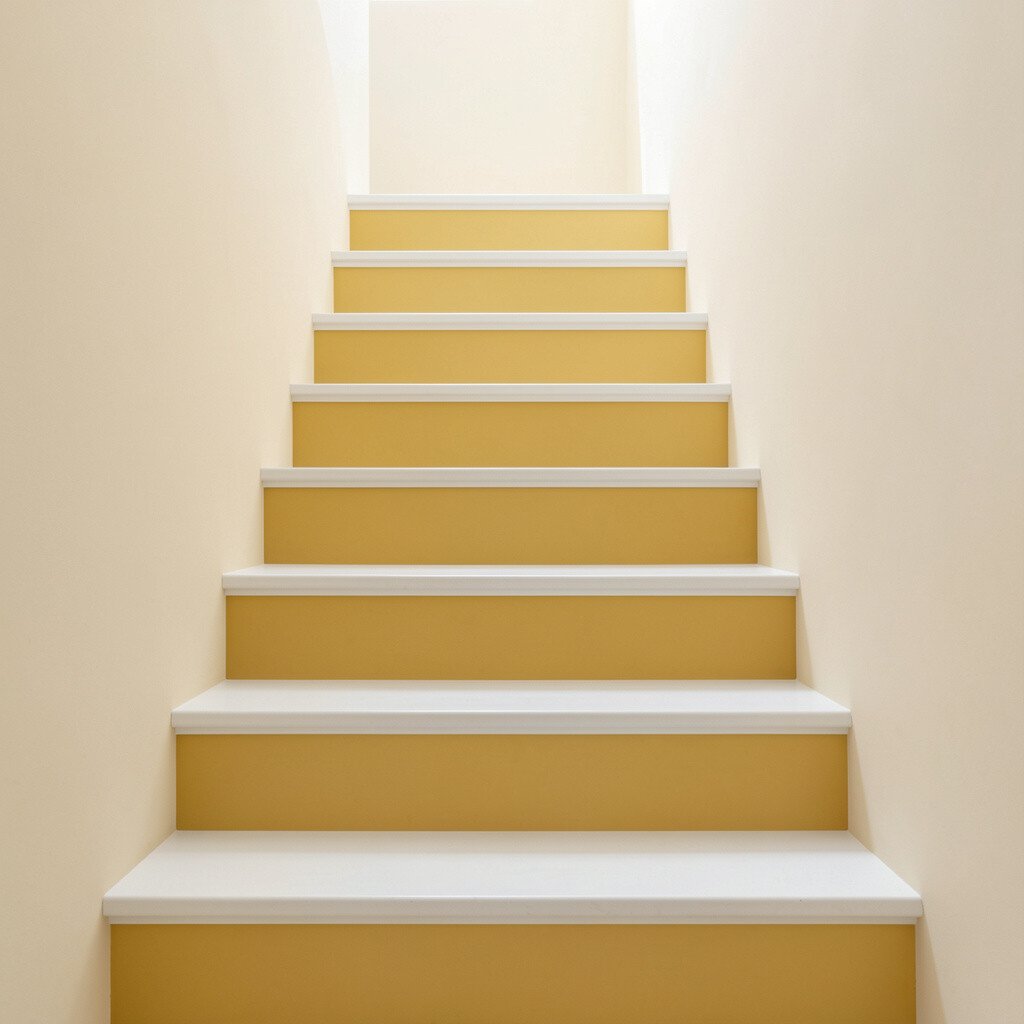
Butter yellow instantly adds cheer to a stairway that might otherwise feel plain. Used thoughtfully, it can make small spaces feel brighter and more alive.
Try crisp white on treads and a butter yellow on risers. This lets the yellow show up clearly without making the walking path too bright or visually busy. You can also choose a slightly muted butter tone so it feels warm rather than neon.
For practical tips, use a primer that helps the color bond well and a topcoat that stands up to scuffs. If you’re painting over older glossy surfaces, lightly sanding first can help paint adhere better. Personalization ideas include matching your yellow to a nearby throw pillow or artwork palette, so the staircase feels like part of a larger story.
Cost considerations are usually friendly because yellow paint is often used in just riser sections for a balanced look. Current trends include warm, sunny accents that feel uplifting, especially in small apartments. If your space gets little natural light, butter yellow can be a smart choice because it reflects light in a soft way.
9. Olive Green Ombré From Bottom to Top
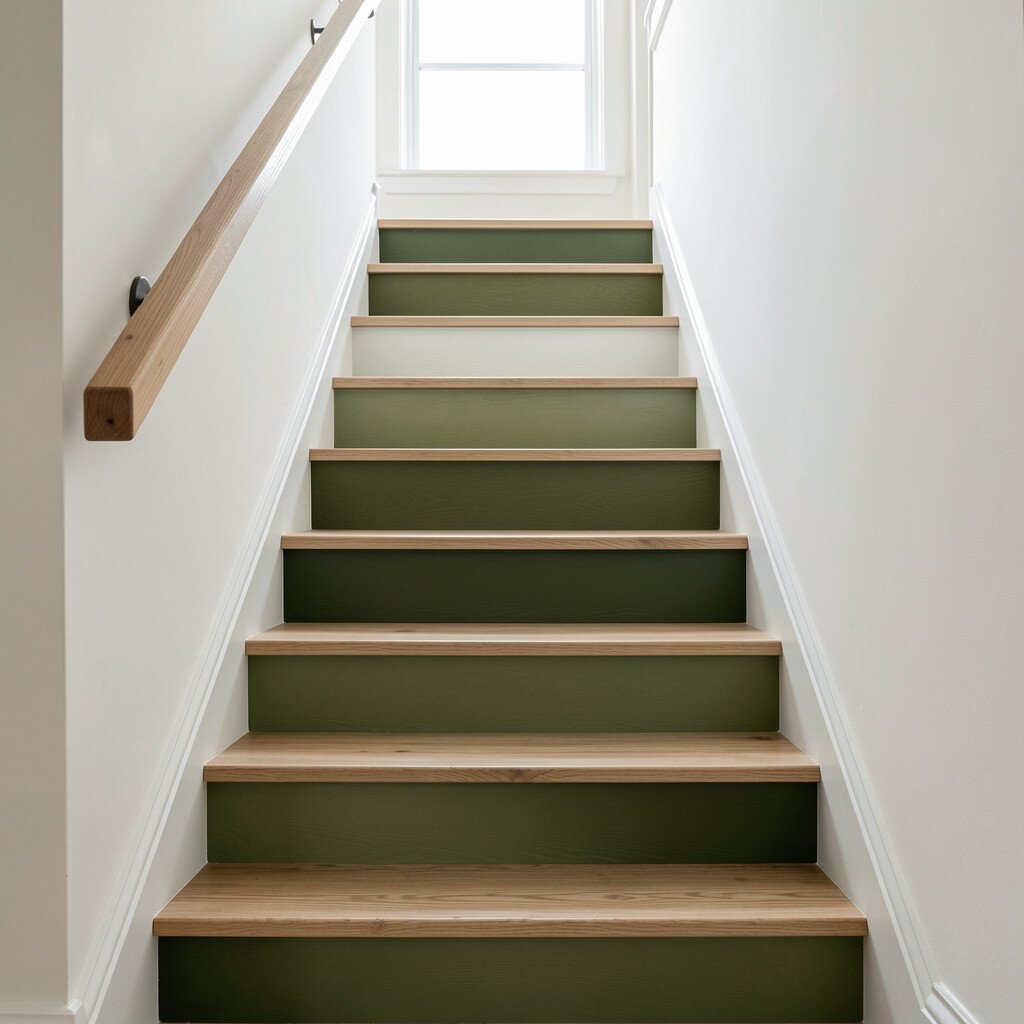
Ombré color on stairs can look artsy and high-end. In a small space, it also gives your eyes a smooth visual path upward, which can make the staircase feel taller.
Choose a base olive and blend it gradually from a lighter green at the bottom to a deeper shade at the top. You can paint risers in gradient steps by slightly changing the mix for each row, or you can blend with a sponge for a softer fade. The gradient adds movement and makes the staircase feel like intentional decor.
To make this practical, plan your mix ratio before you start so colors look consistent. Use painter’s tape to keep edges sharp and consider a clear sealant that protects the painted surface from everyday wear. Personalize the gradient by adding a hint of gray for a modern muted feel or a touch of brown for an earthier vibe.
Cost may be a bit higher because you’ll need multiple paint tones, or you’ll need enough of one paint plus mixing supplies. Even so, it can still be cost-effective compared to buying decorative wall art, since the stairs become the art. Gradient looks are popular right now because they feel soft, artistic, and comforting instead of rigid.
10. Monochrome Walnut Stain With Painted Nosing
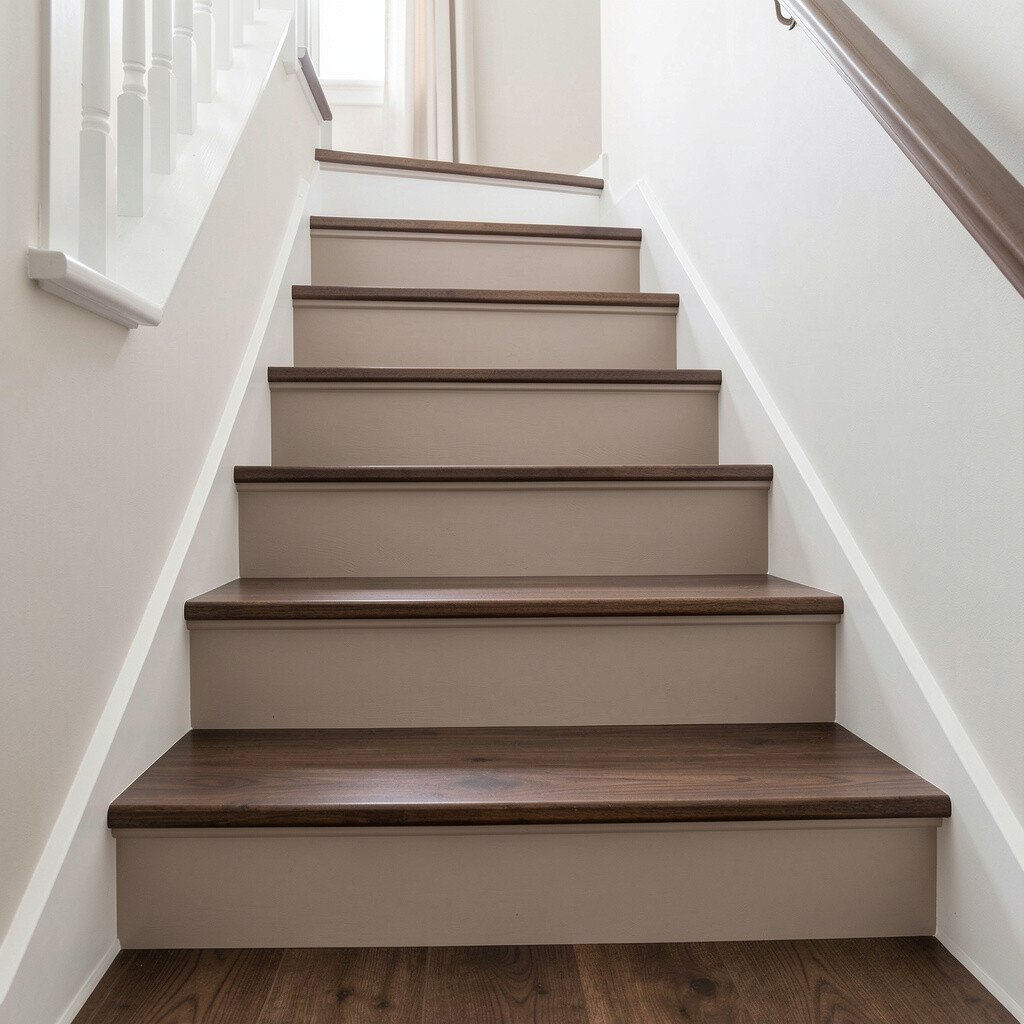
Staining stairs can keep the space looking warm and natural while still giving it a fresh update. If you like wood, this idea keeps the beauty while adding a small, modern twist.
Use a rich walnut stain on the steps and risers, then paint the nosing edges in a complementary neutral like cream or light taupe. This highlights the edge of each tread and helps your eyes track steps safely. In small spaces, the combination of stained warmth and light edging can prevent stairs from feeling bulky.
For practical tips, sand evenly and stain in thin coats so the finish looks smooth rather than blotchy. Seal the stain with a durable topcoat meant for high-traffic areas. Personalization is easy by selecting a slightly cooler walnut tone for modern rooms or a warmer brown walnut for classic spaces.
Cost is often reasonable because staining can be less labor-intensive than full repainting every surface. Also, stain naturally hides some minor imperfections, which can save time on prep. This look fits the current love for warm neutrals and natural textures, especially when paired with matte walls and simple furniture.
11. Teal Accents With a Subtle Patterned Runner Look
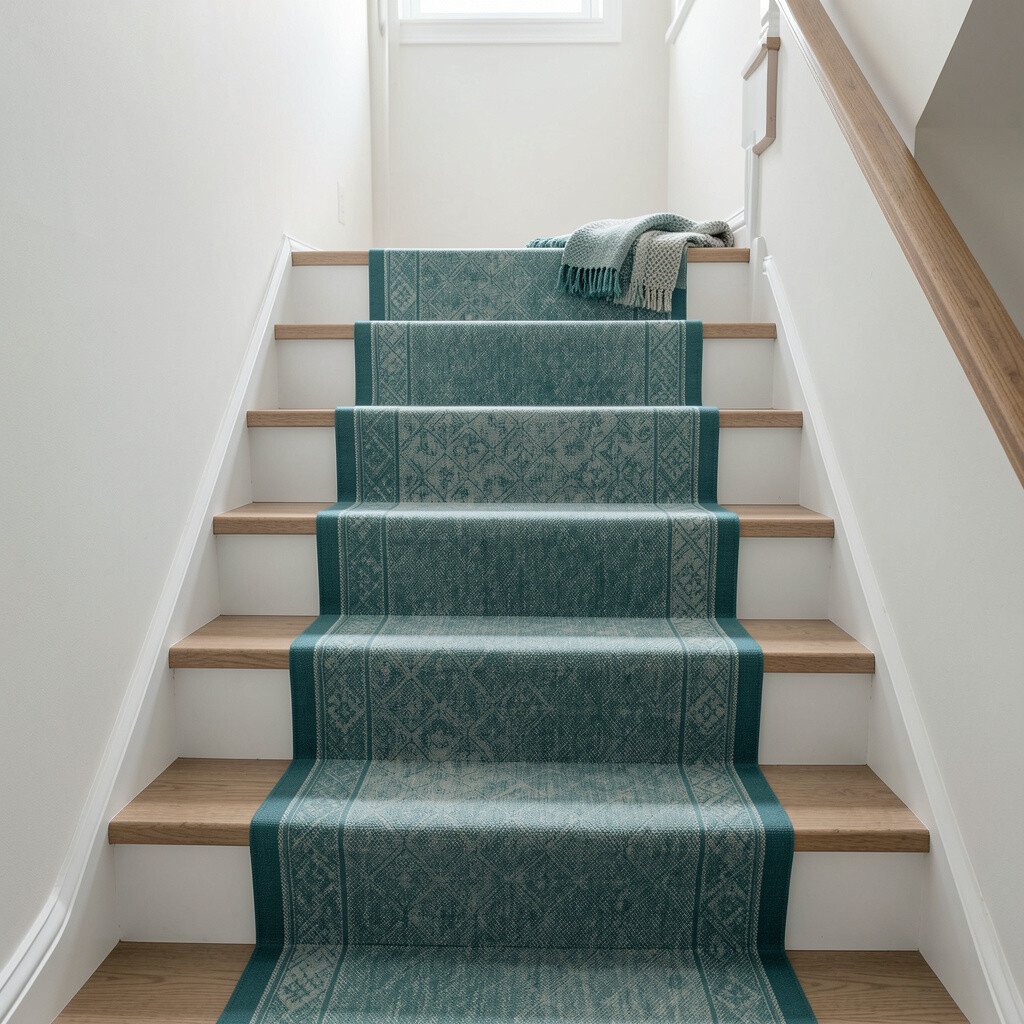
Teal accents can add a refreshing pop without needing an all-over paint job. The trick is to keep the pattern subtle so small spaces stay light and uncluttered.
Paint risers in a calm teal and keep treads a neutral light gray or off-white. Then, create a gentle pattern effect by adding thin lines or small repeating shapes along the risers using painter’s tape. Even a simple geometric rhythm can mimic the look of a patterned runner while still letting the stairs do the styling.
For practicality, choose a durable finish and consider a runner for extra grip. You can personalize the pattern scale, making it larger for a bold look or smaller for a more delicate feel. If you love variety, match the teal to a decorative item you already own, like a lamp base or curtain fabric.
Cost can be controlled because you’re not painting the entire staircase in many colors. The current trend toward subtle patterns is perfect for small spaces since it adds style without requiring lots of extra decor. Just be careful with line consistency so the design looks crisp rather than messy.
12. Black Treads With Light Gray Risers and Soft Texture
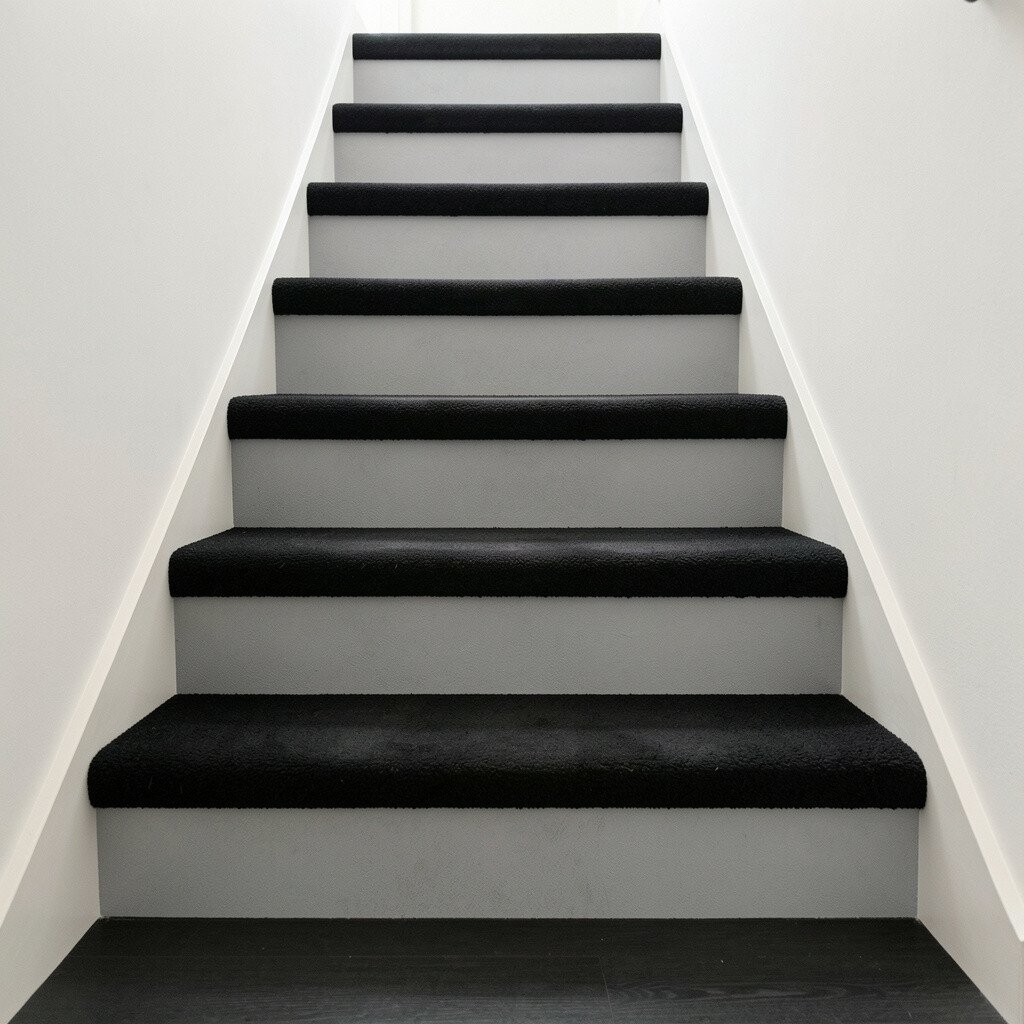
Black treads can feel sleek and modern, especially when paired with light risers. In small spaces, the contrast looks intentional, and it can make the stair edges easier to see.
Paint the treads black and the risers light gray for balance. Add a soft textured finish to the treads, either through paint additive texture or by using a finish with gentle grip properties. Texture helps with slip resistance and hides tiny scuffs that happen over time.
To make it practical, seal everything with a protective topcoat and avoid overly glossy finishes on the tread area. Personalization can come from selecting the undertone of gray, like warmer greige or cooler stone gray, depending on your floors and trim. For a finishing touch, add matching black details to a handrail bracket or spindle cap so the look feels cohesive.
Cost considerations are usually moderate because the design uses two main colors instead of many. Black remains a strong trend for stair styling because it creates a clear focal point while still working with almost any decor palette. Before you paint, confirm your lighting and consider a runner if you want extra cushioning and sound reduction for footsteps.