
The first step is always the prettiest one. Vintage stairs turn everyday movement into something you actually look forward to.
1. Wide Plank Runway with Hand-Planed Ridges
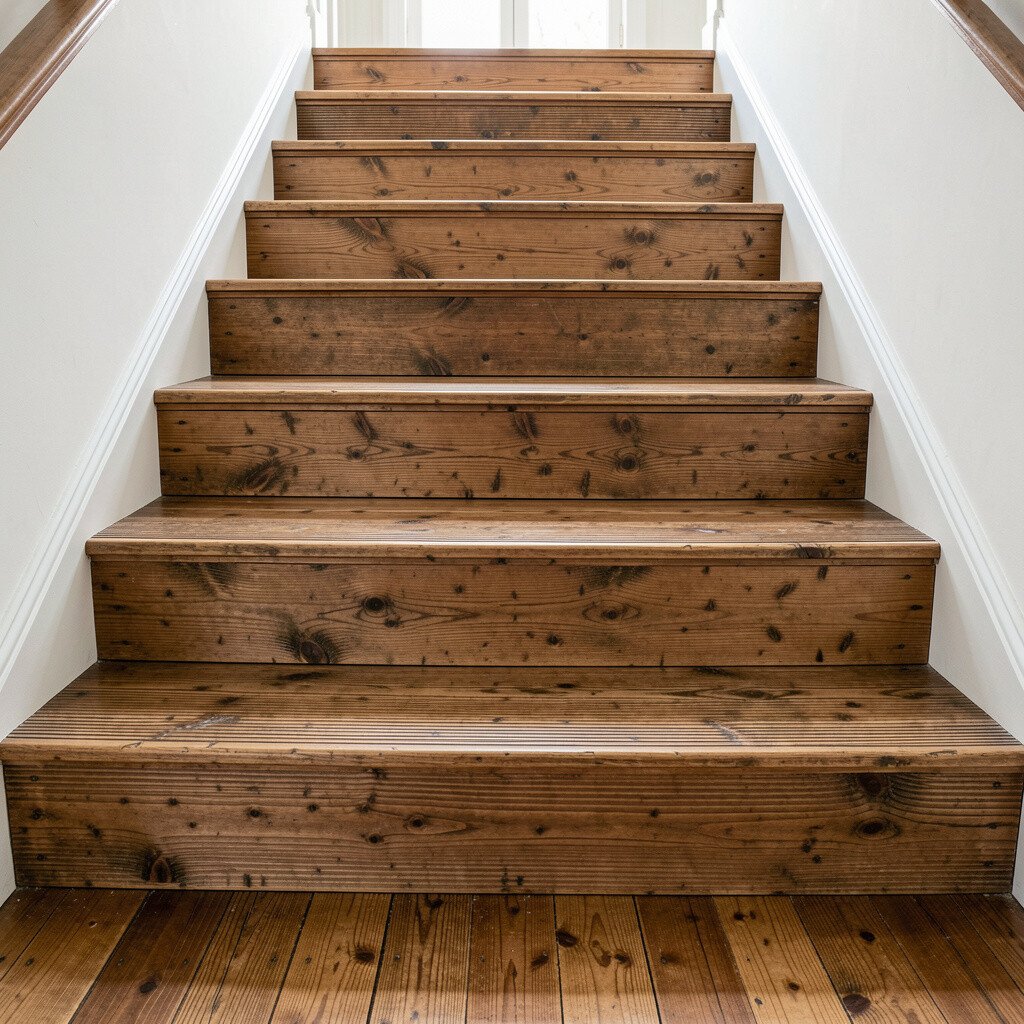
Picture a stairway that looks like it was carved from an old barn door. Each step shows gentle ridges where the wood was planed, and the grain moves like a story from tread to tread.
Reclaimed wood adds character that new boards simply can’t copy. You’ll also get a surface that feels warm underfoot, especially with a matte finish. For practical upkeep, seal the treads lightly and recoat as needed so the edges stay crisp and safe.
2. Herringbone Accent on the Landing
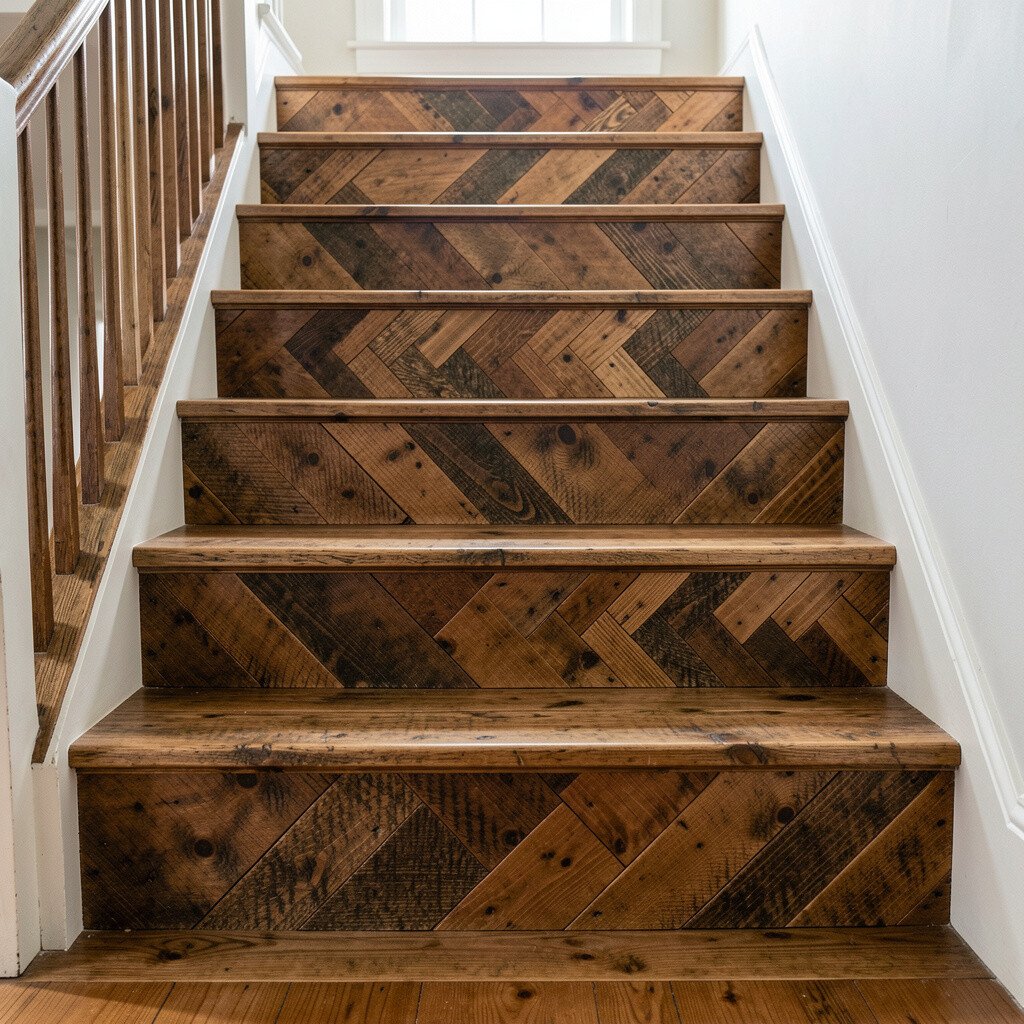
At the top of the stairs, the landing becomes a small gallery. A herringbone band made from reclaimed boards draws the eye and makes the space feel designed, not patched together.
This style gives you a strong focal point without replacing the entire staircase. Use boards with similar thickness for a tidy pattern, and leave a narrow border around the herringbone for a clean transition.
Because the pattern uses only a portion of the wood, it can fit a range of budgets. Scavenge a bundle of shorter lengths, then cut them to consistent widths so the lines land neatly.
3. Reclaimed Wood Risers with a Soft Painted Skirt

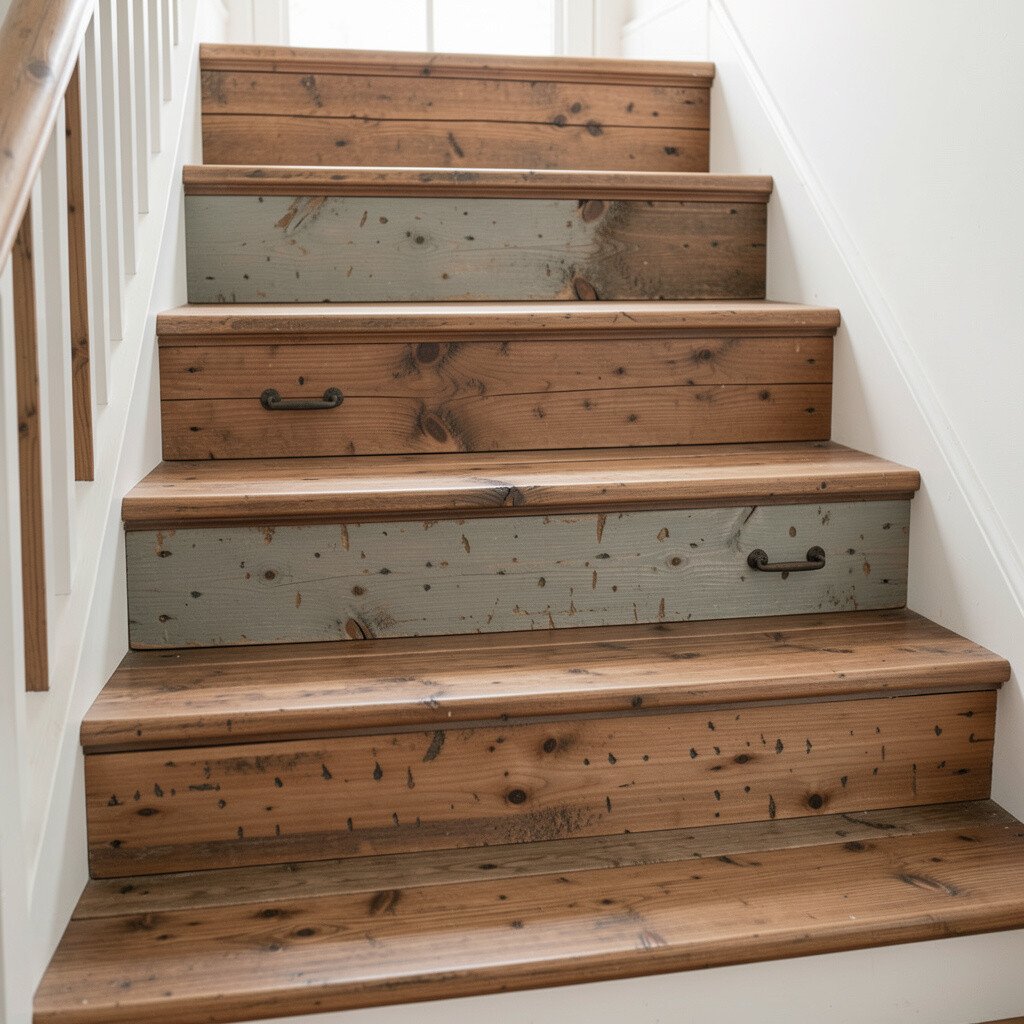
Instead of making every surface wood, blend reclaimed treads with risers in a calm color. The result looks like a vintage portrait, where the frame is painted and the center is warm grain.
Painting the riser face helps hide scuffs and keeps the staircase looking fresh longer. It also lets you match the stairs to nearby trim, doors, or a favorite rug tone.
For personalization, try muted sage, chalky blue, or soft greige that won’t fight with your floors. Sand the reclaimed wood, then prime and paint in thin coats for even coverage.
If you’re watching cost, keep paint jobs limited to the risers and invest in a durable clear coat for the treads. That way, the wear surface stays protected while the design stays bold.
4. Mixed Species Reclaimed Treads with Matching Hardware
Imagine steps made from different reclaimed woods, each with its own shade and texture. Walnut, oak, and weathered pine can sit side by side, creating a rich mosaic that still feels cohesive.
This mix brings uniqueness instantly, because every stair turns into a one-of-a-kind set. You can keep it practical by choosing woods that feel similar in hardness so the wear looks even over time.
To keep the look intentional, pick a unified finish color such as honey, smoke, or espresso stain. Use matching rail hardware so the variety in wood doesn’t feel chaotic.
If you want a budget-friendly approach, look for reclaimed offcuts that still have good grain. You can arrange the pieces to hide small defects on the edges rather than in the tread center.
5. Barrel-Stave Edge Details for a Coastal Vintage Feel
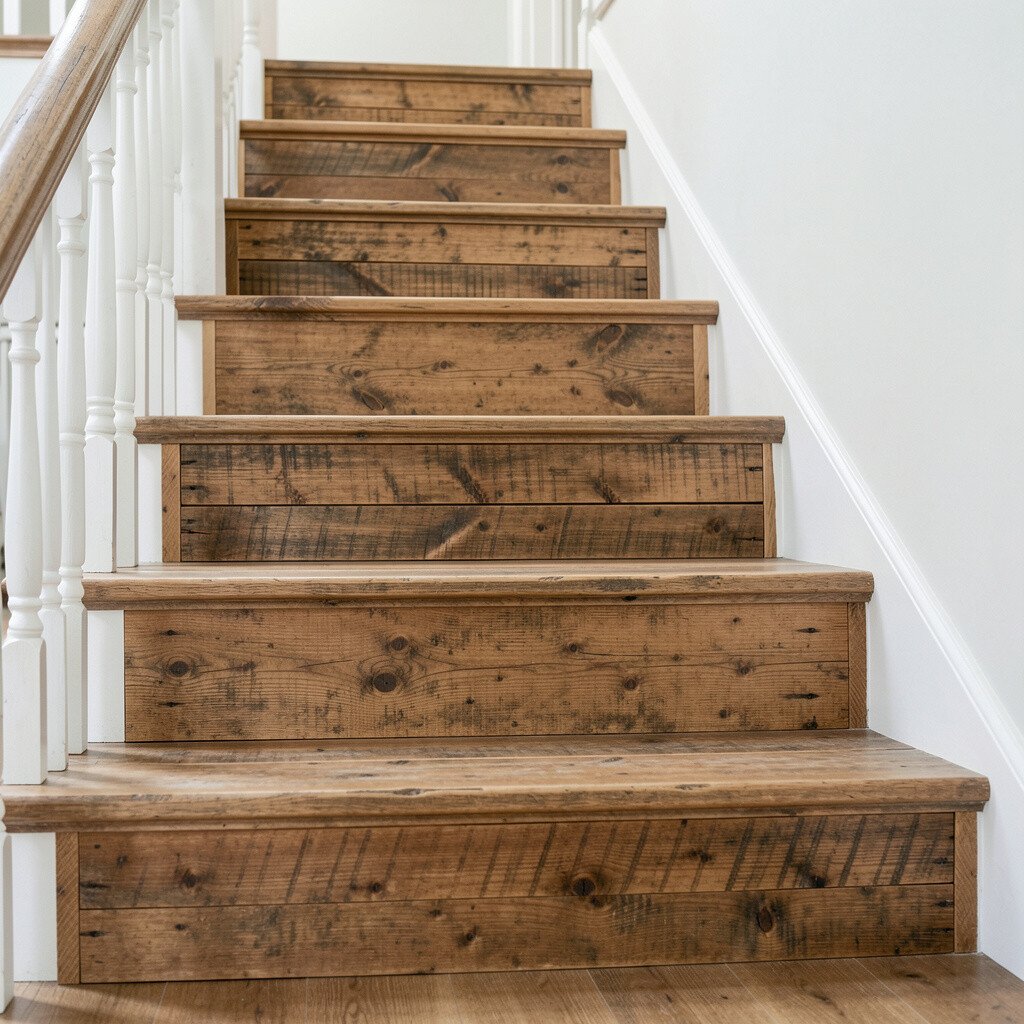
Some reclaimed planks still carry the shape of old barrels, with curved edges that feel playful. When those edges wrap the sides of each stair, the whole staircase starts to look like a shoreline memory.
This design stands out because it borrows a craft detail from historic woodworking. It also gives extra visual depth, especially when you use a lighter stain that shows the grain clearly.
For safe and practical building, make sure the curved edges are sealed and smooth, not splintery. A clear coat with UV protection helps keep the lighter wood from fading unevenly.
6. Salvaged Stair Nosings with Metal Caps

Walk up and you can almost hear the old workshop when you see a metal-capped nosing. The reclaimed treads look classic, and the metal edge adds a touch of modern toughness.
This pairing is great for high-traffic homes because metal resists dents better than bare wood. It also creates a clear line that helps with grip and reduces the chance of slipping.
Choose metal in a finish that matches your rail hardware, like blackened steel or brushed bronze. Install the metal caps with secure fasteners and make sure the transition is flush for comfortable feet.
If costs feel tight, consider using metal caps only on the most worn edges. That small upgrade can make a big difference in how long your treads stay looking new.
7. Charcoal Stained Reclaimed Wood with Crisp White Risers
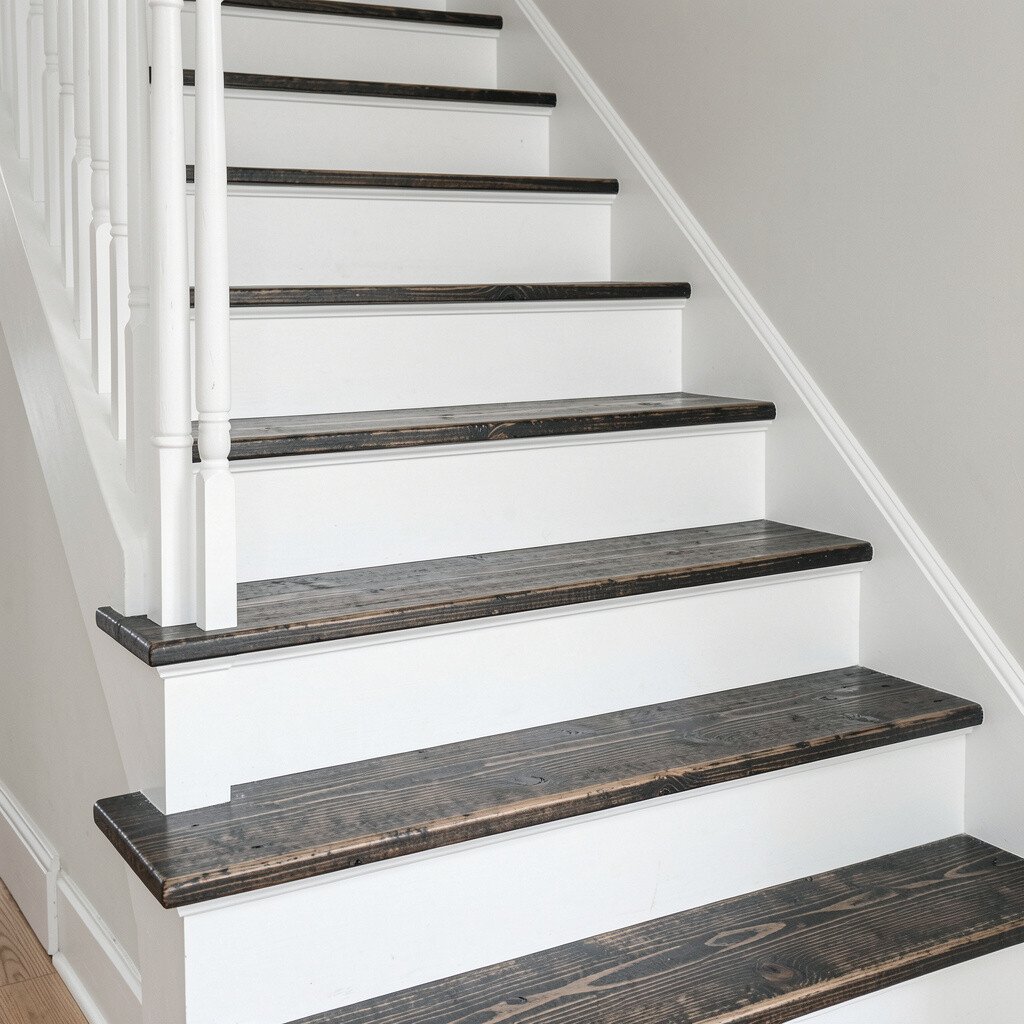
When reclaimed wood is stained deep and charcoal, the grain turns dramatic. Add crisp white risers and the staircase looks crisp, clean, and quietly bold.
This combo feels current because contrasts are trending in modern vintage interiors. You get the warm texture of real wood while the dark stain hides everyday scuffs better than lighter colors.
For practical results, use a stain that soaks in evenly, then seal with a durable topcoat. Wipe the treads with a soft cloth and avoid harsh cleaners that can dull the finish.
8. Patterned Skirting Boards Made from Reclaimed Offcuts
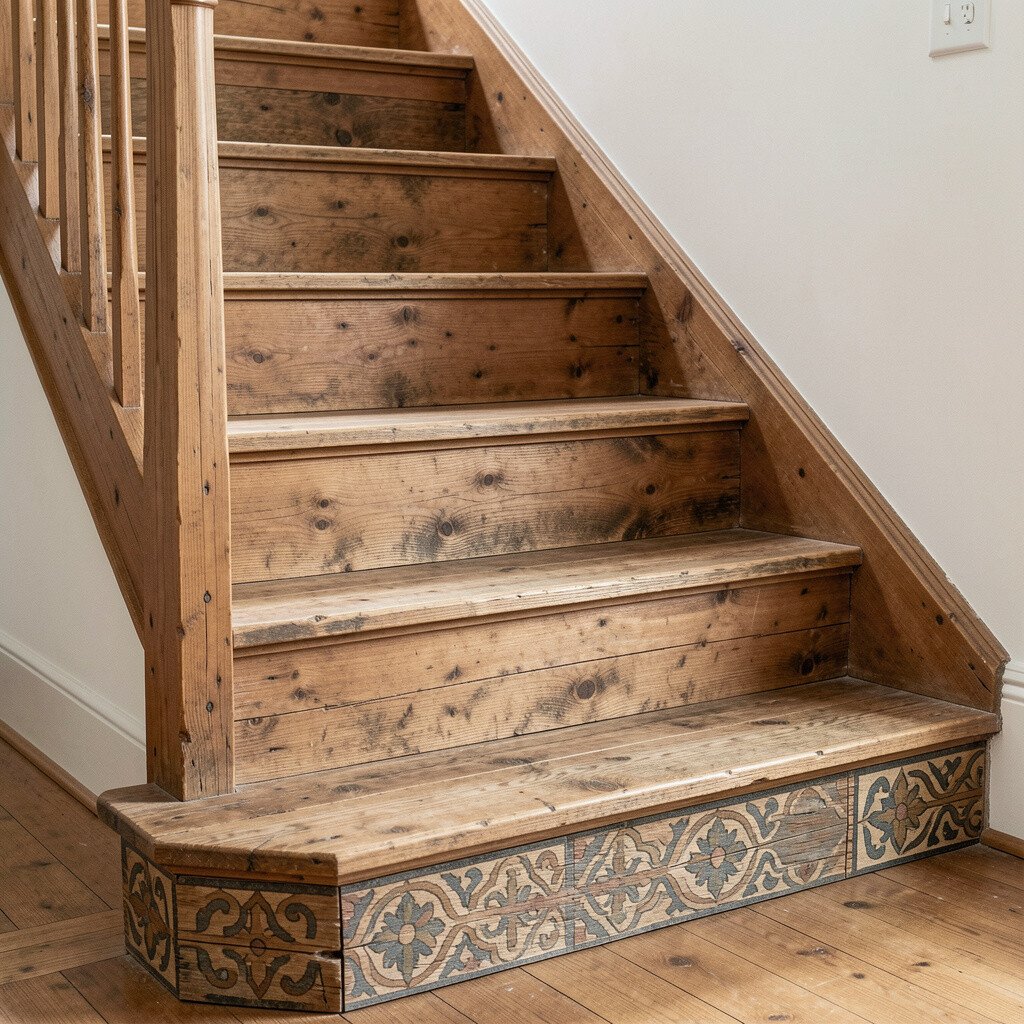
Look at the wall side of the stairs, and you can turn it into a design moment. Reclaimed offcuts can become a patterned skirting board that runs along the stringer line like a stitched quilt.
This approach is unique because the pattern comes from scraps, not perfectly uniform boards. It’s also a smart way to use materials you might otherwise toss, making the project feel both personal and responsible.
Keep it practical by organizing boards by thickness and sanding them so the profile stays even. Seal everything, then paint the base trim in a shade that complements your wood tone.
If you want to control costs, build a skirting section only where it’s most visible, like from the hallway angle. That way, the look stays big while the budget stays steady.
9. Tongue-and-Groove Reclaimed Boards with a Hand-Rubbed Finish
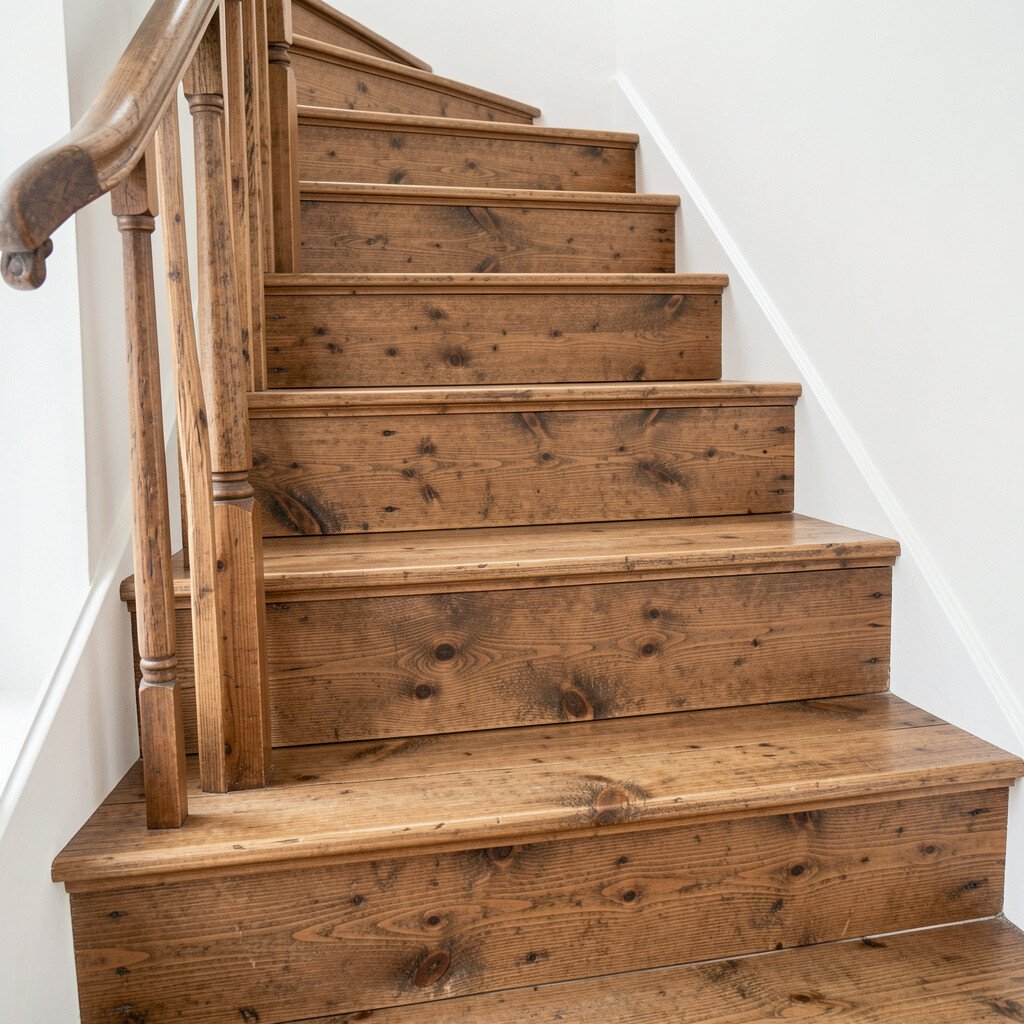
There’s something cozy about seeing tongue-and-groove boards on stair treads. The grooves catch light in a gentle way, and the whole staircase feels like it belongs in a vintage cabin.
This style offers visual richness without needing extra decoration. Because the boards interlock, they can feel sturdy when installed correctly, and the details hold up well over time.
To keep it wearable, use a hand-rubbed oil finish or a satin clear coat that won’t turn sticky. Your feet will glide comfortably instead of catching on a too-glossy surface.
Personalize by mixing board lengths so the grooves don’t repeat in a single pattern. Even a small section at the top landing can set the tone for the rest of the staircase.
10. Vertical Wood Stacking on the Stringers for a Gallery Look
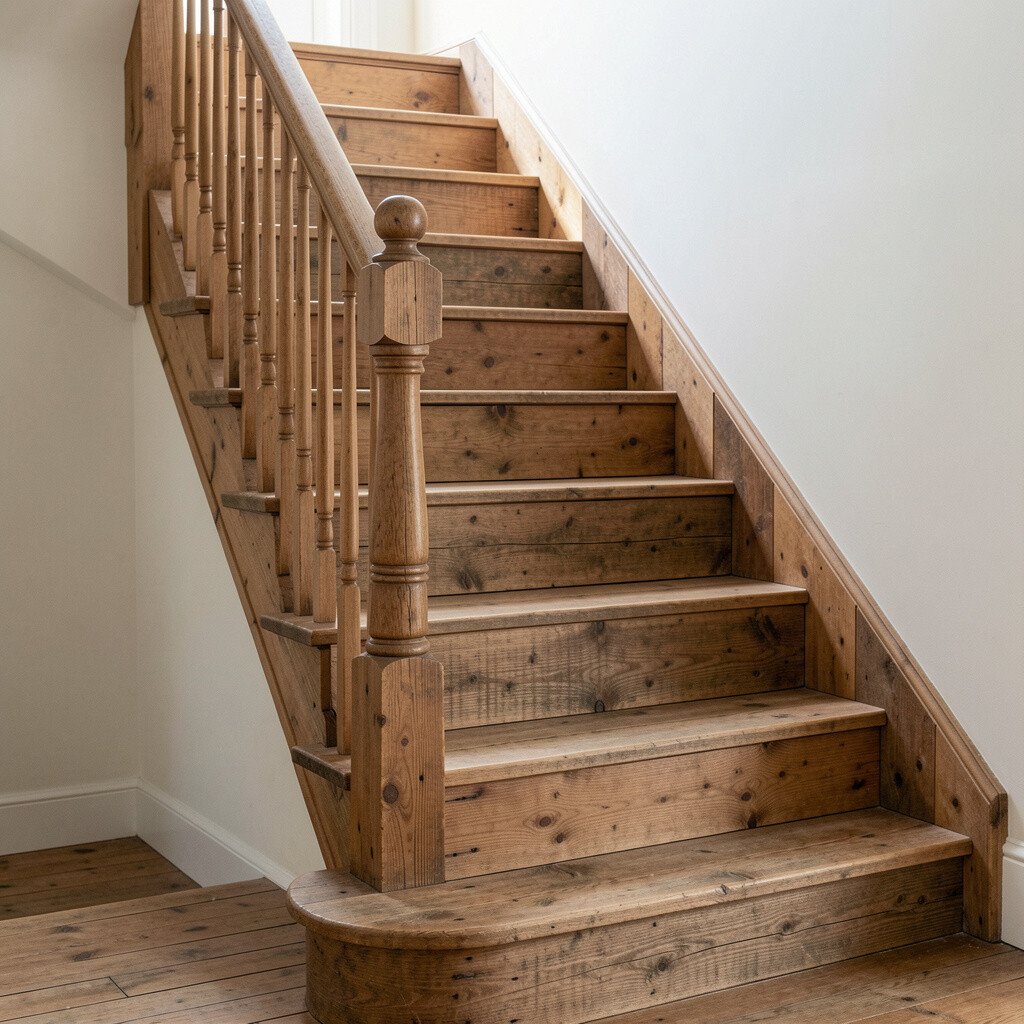
Instead of a smooth stringer, you can add vertical reclaimed slats that line up like a gallery wall. The stairs become a feature piece, with rhythm and texture that looks stunning from every angle.
This design creates strong vertical lines, which can make tight spaces feel taller. It also lets you use slimmer reclaimed pieces, which can be easier to source.
For practical building, fasten slats securely and keep spacing consistent so the line stays clean. Sand the faces thoroughly, then seal to prevent splinters and moisture swelling.
If you’re thinking cost, this option can be budget-friendly because slimmer materials often cost less than full-thickness treads. You can also focus the most detailed slat work on the front-facing portion for maximum impact.
11. Vintage Distressed Treads with Visible Nail Heads
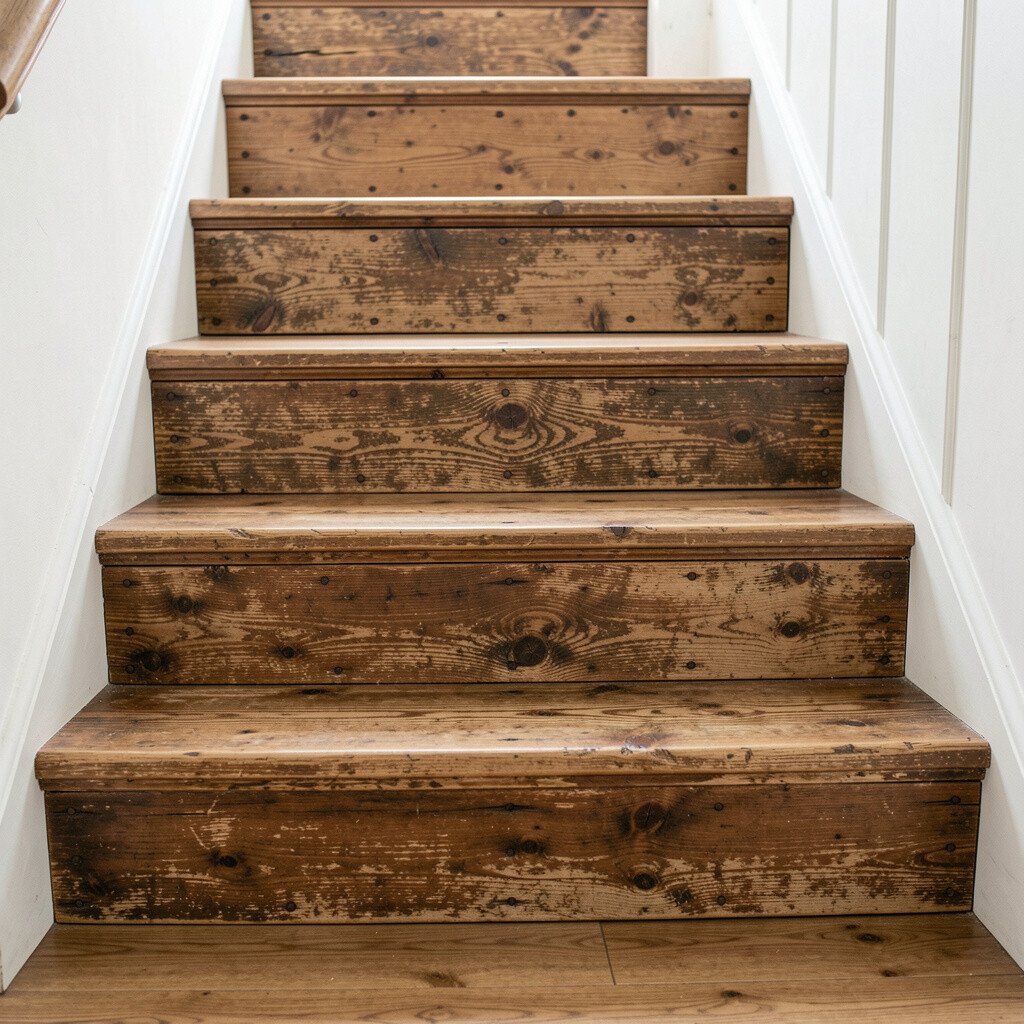
Some reclaimed boards come with old nail holes or hardware marks, and those tiny details can look amazing. When you preserve certain nail heads or place new ones in the same style, the stairs gain instant history.
The benefit is straightforward: you get authenticity that feels intentional, not accidental. It also helps you hide minor imperfections because the “distressed” look blends wear into the design.
To personalize, choose nail head spacing that matches your rail posts or follows the same rhythm as the balusters. Use matching finishes so the metal details tie into your overall look.
12. Light-Tone Reclaimed Wood with Clear Finish for “Barely There” Vintage
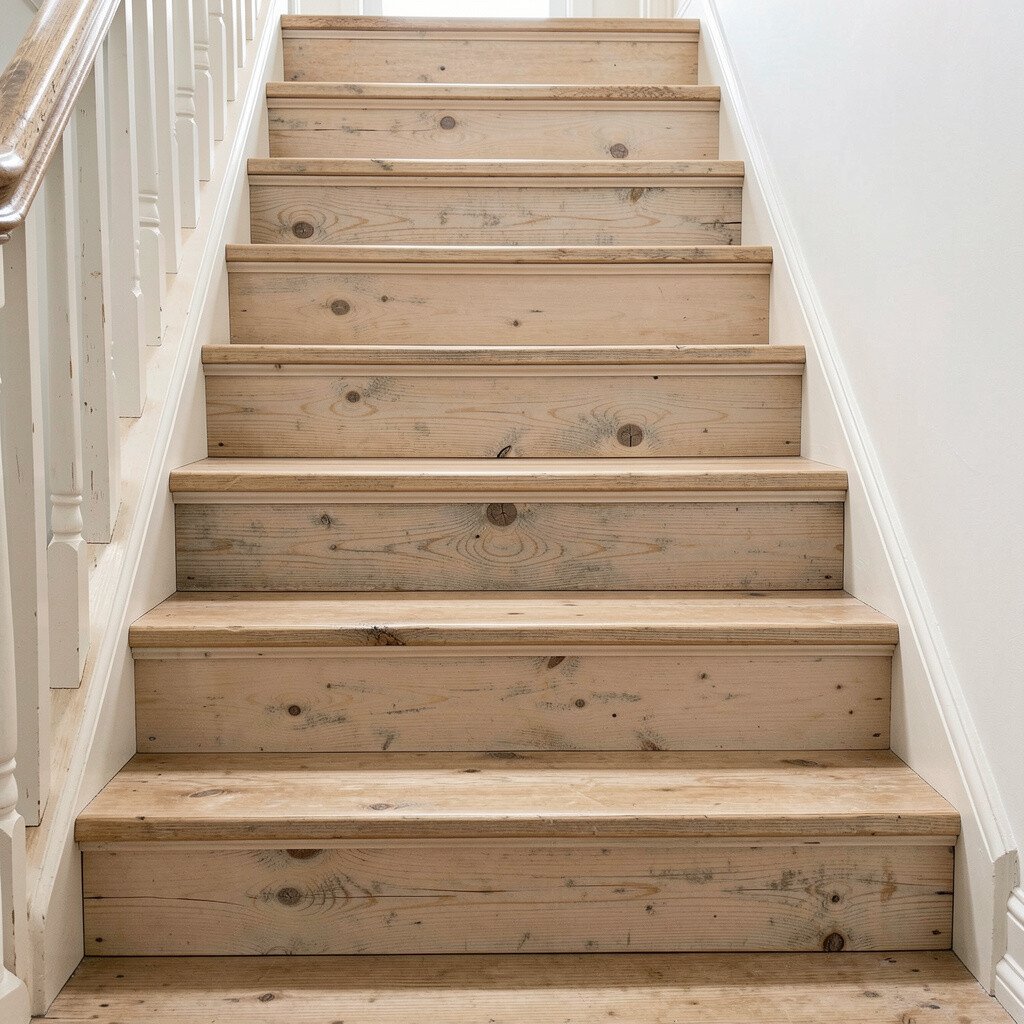
If you love wood but want a bright, airy feel, choose reclaimed boards in lighter tones. Apply a clear finish that keeps the grain visible, so the staircase reads as warm and natural instead of heavy.
This trend fits well with modern homes because it keeps spaces feeling open. It’s also practical because light tones make it easier to spot where the finish needs touch-ups.
To keep maintenance easy, clean with a gentle wood-safe cleaner and recoat when water spots appear. Match the tread finish to your other wood pieces, like handrails, window trim, or shelving.
Cost considerations can be favorable if you source reclaimed boards that are already close to the shade you want. Skipping heavy staining can save money and time while still giving that vintage charm.
13. Corner Stair Nook Steps with Reclaimed Wood and Built-In Storage
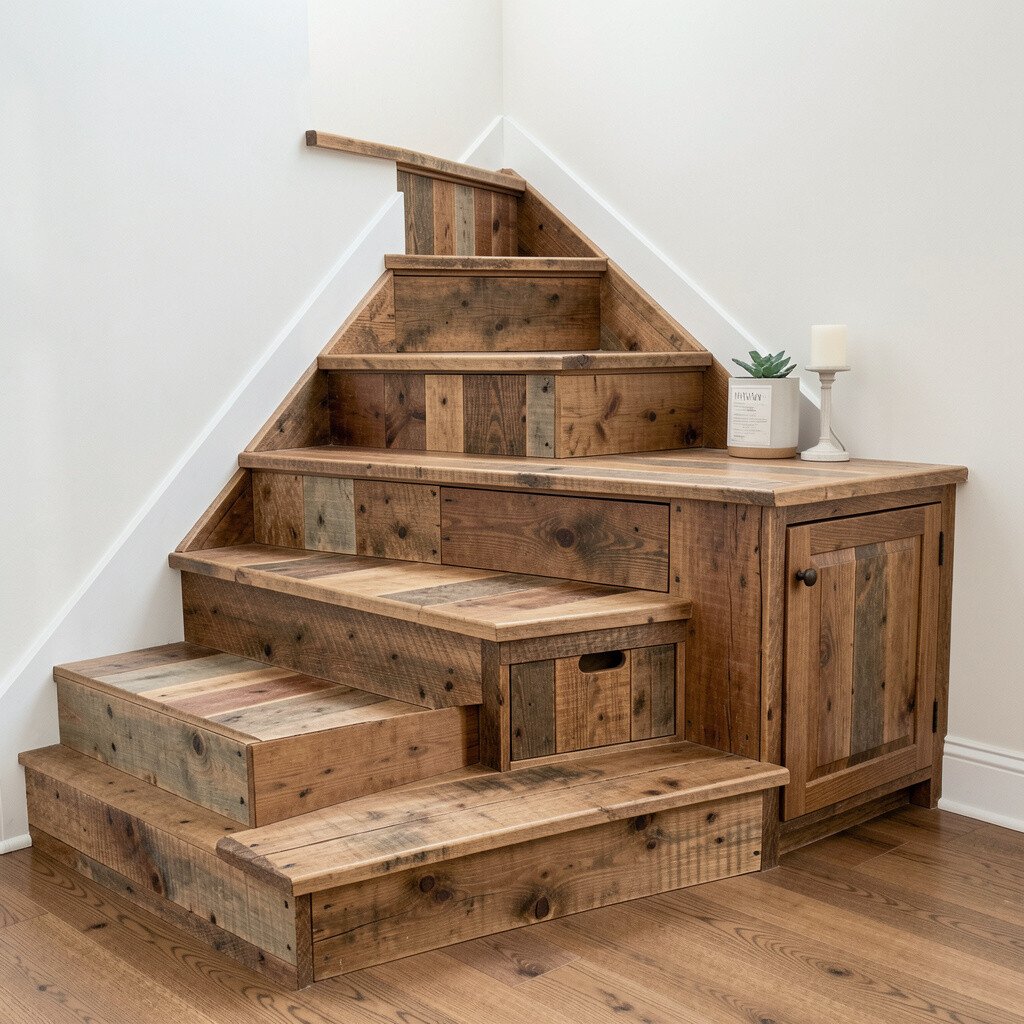
On many staircases, the corner area is underused and full of wasted space. By using reclaimed wood for the steps near the nook, you can combine warmth with smart storage that feels like part of the stair itself.
This idea is unique because the design isn’t only about what you step on. It also gives you a place for shoes, small books, or seasonal items, which keeps entry areas tidy.
Make it practical by planning clearances carefully so doors and bins slide smoothly. Use durable reclaimed boards for visible fronts and moisture-resistant backing for the storage interior.
For personalization, stain the step treads and paint the storage panel doors in a contrasting shade. If you’re cost-conscious, build the storage where it’s most useful and keep the rest of the staircase straightforward.
14. Reclaimed Wood Step-by-Step with Custom Stain Mapping
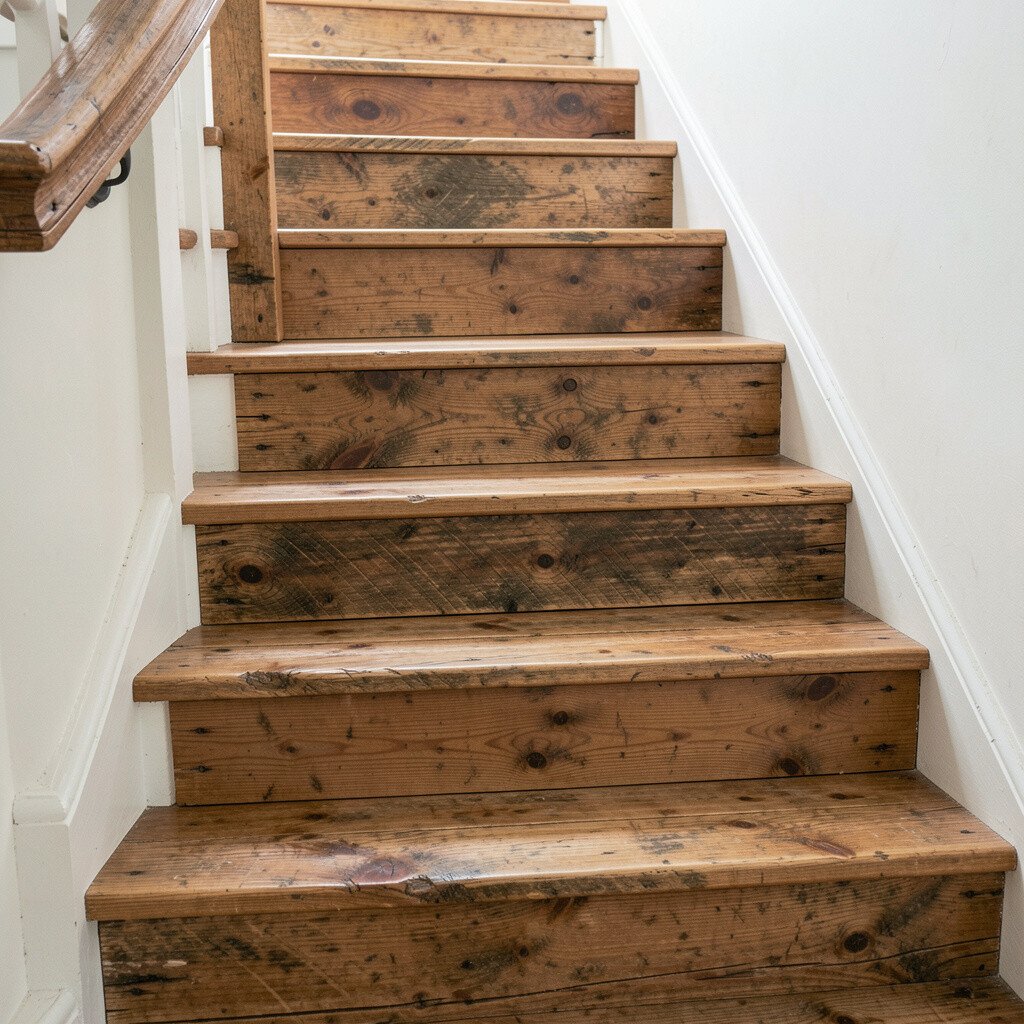
Instead of staining every tread the same, you can create a “mapped” look where tones shift gradually. Imagine the bottom steps starting lighter, then deepening as you climb, like sunset moving across the wood.
This approach feels custom and artistic because it treats the stairs as a continuous design line. It also helps you hide uneven weathering from reclaimed boards by blending tones through the sequence.
For practical tips, test stains on scrap boards from the same batch first. Apply the stain in controlled steps, then seal every tread the same way so the sheen stays consistent.
Cost considerations are usually manageable because you’re using the same reclaimed wood, just finishing it strategically. You’ll get high visual impact from careful selection and finish work rather than from expensive structural changes.
When trends shift, this style still stays relevant because it’s rooted in craft and personalization. It’s the kind of staircase that guests notice immediately, and it’s also the kind you’ll love walking on every day.