11+ Window Box Combinations For A Cohesive Home Exterior
The right window box can make a home feel finished, warm, and cared for. When your choices look planned, your whole exterior starts to feel like it belongs together.
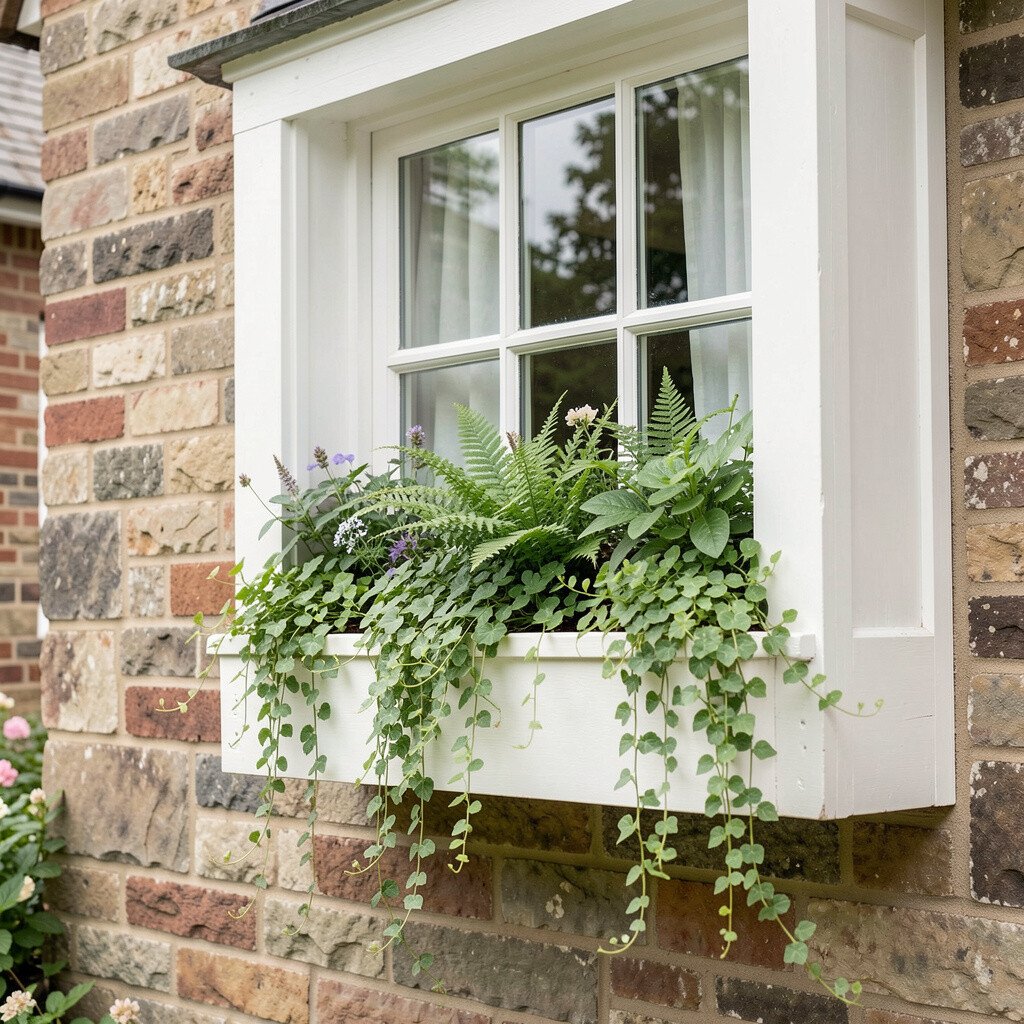
Start with a lush window box that feels like it has been there forever. Picture dusty-moss greens spilling over the edges, with gentle blooms peeking out like little surprises.
Choose trailing plants such as creeping jenny or sweet potato vine, and pair them with compact fillers like boxwood-style evergreens or small ornamental grasses. Add a few seasonal flowers in a faded color palette, such as pale pink, creamy white, or light lavender, so the box looks natural rather than loud. This setup helps your curb appeal because it creates movement and softness, especially near entryways, porches, and front windows.
For practical results, keep the plants slightly grouped by height so the spill looks intentional. Water deeply after planting, then check soil moisture every couple of days during hot weeks, since window boxes dry out faster than in-ground beds. If you want personalization without extra cost, reuse the same plant colors in both front and side windows so the exterior feels cohesive.
2. Modern Line With Tall Spikes and Neat Mounds
Modern Line With Tall Spikes and Neat Mounds
If your home style is clean and modern, your window box can follow the same rule. Think of crisp, upright lines against siding, with green shapes that look tidy even from the sidewalk.
Use one or two tall plants in the back, like ornamental grasses or spiky dracaena varieties, and balance them with compact mounded plants such as dwarf conifers or small succulents. Add a small amount of structured color with red or bronze accents to keep the design from feeling flat. This combination looks unique because it prioritizes form over abundance, and it also reduces maintenance since you won’t need to constantly deadhead everything.
Try using a long, narrow planter in a simple color like black, charcoal, or bronze to match modern hardware. For cost considerations, fewer plants can still look full when you space them correctly and choose slow-growing varieties that hold shape. A practical trick is to rotate the box every few weeks so the sun exposure keeps growth even, which helps the upright lines stay straight.
3. Classic Red-White Balance for Front-Door Pop
Classic Red-White Balance for Front-Door Pop
Nothing says “welcome” like bold, classic color near the place you step in. Imagine bright flowers repeating the colors of a door trim, with greenery tying it all together.
Pair deep green foliage with red geraniums or sweet alyssum that leans white, depending on how strong you want the contrast. For personalization, match the exact red tone to your door wreath ribbon or the shade used in your house numbers. This helps your exterior feel cohesive because the window box echoes what’s already there, instead of introducing a completely new color story.
To keep the look sharp, use a planting mix with good drainage and consider slow-release fertilizer so the plants keep growing evenly. Budget-wise, geraniums can be a pricier start, but you can often find strong starter plants in spring and reuse the soil next season if you refresh it. If you want a trend-forward touch, mix in a few airy fillers like white lobelia or light, feathery foliage so the red looks less heavy.
4. Earthy Neutrals With Warm Texture Layers
Earthy Neutrals With Warm Texture Layers
For a calm, natural exterior, build your window box like a miniature landscape. Picture tan, soft green, and warm beige tones working together, with texture you can almost feel.
Choose plants that look good in muted colors, such as sedum, dusty miller, and compact herbs like thyme or rosemary where climate allows. Add one or two plants with warmer undertones, like chocolate foliage or coppery leaves, to give the design depth. This combination feels unique because it looks elegant without needing bright colors, and it often stays attractive longer because many of these plants handle heat and light well.
Keep it practical by using potting mix with extra aeration and ensuring your planter has drainage holes. During dry spells, water at the base and avoid wetting leaves, which can reduce issues and help the box look clean. If you’re trying to stay within a budget, herbs and drought-tolerant plants can be reused for years, especially if you take cuttings at the end of the season.
5. Coastal Breeze With Blue Accents and Watery Greens
Coastal Breeze With Blue Accents and Watery Greens
Bring a seaside mood to your home, even if you live far from the coast. Imagine sea-glass blues and airy green leaves that seem to sway in the light breeze.
Use blue tones through lobelia, blue fescue, or flowering plants that lean sky-blue, then soften the look with trailing greens like bacopa or creeping varieties. Add white blooms to keep the palette bright and fresh, especially on shaded porches where color can look muted. The benefit here is that coastal colors pair easily with many exterior materials, including light brick, pale siding, and stone steps.
For personalization, repeat the blue in small ways like matching the window box flowers with the same shade in outdoor cushions or a planter on the porch. Cost-wise, blue flowers can vary, so watch for healthy multipacks and choose one “hero” plant for blue color instead of filling the entire box. A current trend in outdoor design is lighter, brighter palettes, and this combination fits that perfectly while still feeling timeless.
6. Spring Garden Mix With Seasonal Color Swaps
Spring Garden Mix With Seasonal Color Swaps
Think of your window box as a front-porch calendar that changes with the year. You’ll love how the exterior stays interesting when you swap plants for each season.
Start with a base of sturdy evergreen or long-lasting foliage so the box looks good even between bloom cycles. Then add seasonal stars like tulip-like spring bulbs in pots, pansies, or early flowering annuals for a fresh burst. This setup is unique because it never has to be “one-and-done,” and it gives you a reason to step outside and notice your home in a new way as months pass.
For practical tips, plant in layers so early flowers don’t get buried and late-season plants still have room to grow. Use a mix of heights, with taller plants in the back and low spillers near the front edge, so the box looks full from every angle. If you want to control cost, keep the sturdy base plants and replace only the color layers when they finish blooming.
7. Monochrome Green With Different Shades of Leaves
Monochrome Green With Different Shades of Leaves
If you love a tidy, soothing look, monochrome green is hard to beat. Picture multiple shades of green, from bright lime tips to deep evergreen shadows, all in one unified box.
Choose plants with varied leaf shapes, such as boxwood accents, variegated ivy, and trailing vines with fine textures. Add one plant with a different leaf form, like a fern-like filler, to make the composition feel intentional rather than repetitive. The benefit is that this design stays cohesive even as seasons change, because greens blend naturally with siding, brick, and stone.
To personalize, pick one green tone that matches your landscaping, like the same hue used in nearby shrubs. This can also save money since you can buy small plants and grow them out over a season, then trim lightly to keep the shape. A practical trick is to pinch trailing plants occasionally so they fill gaps without becoming tangled, which keeps the box looking neat.
8. Bold Tropical Mix With Big Leaf Energy
Bold Tropical Mix With Big Leaf Energy
Want your home exterior to feel playful and confident? A tropical window box delivers instant personality, like bright energy gathered right under the window.
Combine large-leaf plants such as caladiums, sweet potato vine, or colocasia-style foliage with lighter trailing fillers that soften the edges. Add splashes of color through flowers like canna blooms or bright, compact tropical annuals where your climate allows. This combination is unique because it becomes a focal point, especially if your house has simple lines and you want visual warmth near the front.
For practical planning, ensure your planter is deep enough for root systems and use a quality potting mix that holds moisture without turning soggy. Budget considerations matter with tropical looks, so start with one or two bold plants and let trailing fillers do the heavy lifting for a full look. If you’re following current trends, tropical-inspired containers are popular, and the trick is to keep the palette tied to your exterior colors so it still feels cohesive.
9. Cozy Farmhouse Blend With Flowering Layers
Cozy Farmhouse Blend With Flowering Layers
Farmhouse styling works because it feels friendly, lived-in, and rich with texture. Imagine soft blooms, a bit of greenery, and a relaxed shape that doesn’t look overly perfect.
Use flowering plants like marigolds, petunias, or daisies in warm tones such as golden yellow and gentle peach, then add a sturdy filler like dusty miller or creeping thyme for structure. A key benefit is that this blend looks great on porch columns, farmhouse siding, and classic window trims. It also feels unique when you repeat smaller details, like choosing the same flower style across boxes on multiple windows.
For practical tips, avoid overcrowding and use a spacing guide so airflow stays good and plants don’t fight for water. If you’re budget-minded, choose fewer varieties but repeat them consistently, because repetition makes a window box look designed. To personalize, tuck in a small herb plant where you can reach easily, which adds charm and can even help you use fresh flavors later.
10. Elegant Monochrome Blooming Combo in Pink or Purple
Elegant Monochrome Blooming Combo in Pink or Purple
When you want romance without chaos, monochrome bloom tones are a beautiful move. Picture pink or purple flowers rising from a soft green base, with a gentle spill that frames the window.
Pick one main color family and use plants that share that tone, such as purple calibrachoa, pink geraniums, or lilac-toned lobelia. Keep greenery consistent with a mix of compact foliage plants so the blooms look rich but still tidy. This design feels cohesive because it relies on a clear color message that matches neighboring landscaping and exterior trim.
For personalization, echo the chosen color in small outdoor accents like a doormat, planter on the step, or hanging basket ribbon. Cost considerations can be managed by selecting plants that grow and fill in quickly, so you start with a smaller number and gain fullness over time. A current styling trend is “soft impact,” where a single color story makes the scene feel curated, and this combo delivers that without requiring extra pieces.
11. Shade-Friendly Box With Ferny Volume and Soft Blooms
Shade-Friendly Box With Ferny Volume and Soft Blooms
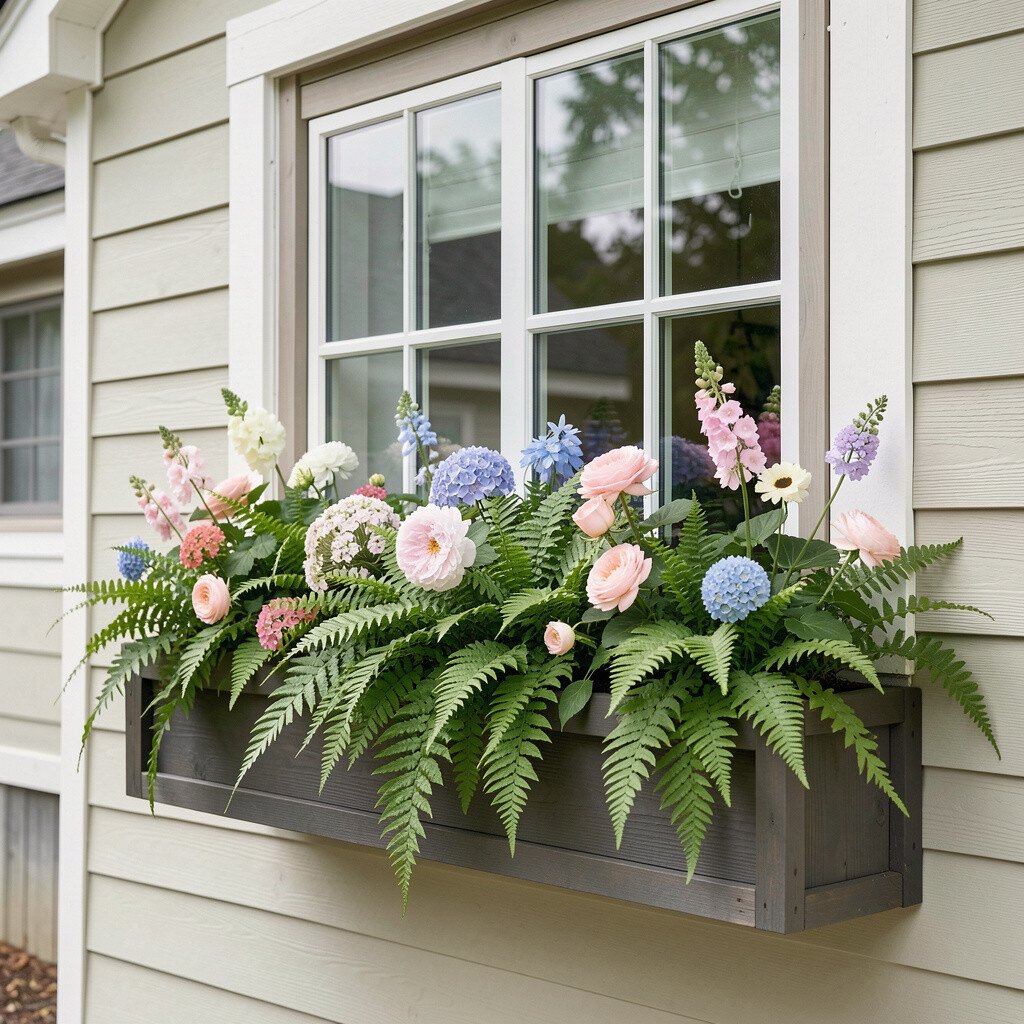
Not every home gets sun, but shade doesn’t mean your window box has to look empty. Imagine feathery leaves and gentle flowers creating fullness even in cooler, dimmer light.
Choose shade-friendly plants like ferns, begonias, and impatiens, plus trailing options that handle lower light, such as creeping varieties that won’t get leggy. Add a small splash of color with white, pink, or red blooms so the box still pops against darker siding. The benefit is that shade plans reduce the frustration of struggling plants, and they also look more natural because leaf textures fill space well.
For practical tips, use a planter with consistent moisture and consider a mulch top layer to slow evaporation. If you notice drooping, it’s often a watering timing issue rather than a plant problem, so check soil moisture before adding more plants. To personalize, match bloom colors to your porch lantern glass or seasonal wreath color, and keep foliage tones consistent across nearby windows so everything feels planned.
12. Matching Metals and Plants With Warm Bronze and Crisp Whites
Matching Metals and Plants With Warm Bronze and Crisp Whites
Your exterior details matter more than you think, and window boxes are a great place to repeat them. Picture warm bronze planters with crisp white flowers, all framed by tidy green leaves.
Choose planter colors that match visible hardware like railings, light fixtures, or door hardware, then pick plant colors that keep the scene bright. White blooms like white alyssum or petunias pair beautifully with bronze-toned planters, while green foliage provides balance so nothing feels too stark. This combination is unique because it connects the look from the metal details to the living plants, making the whole exterior feel intentionally coordinated.
For cost considerations, a high-quality planter can last longer than cheap ones, and fewer replacements save money over time. Use a potting mix with slow-release fertilizer so plants keep steady growth without repeated feeding. For a personalization idea that looks elevated, add a small amount of trailing greenery near the front edge and keep taller plants slightly behind so the shape stays crisp even as everything grows.