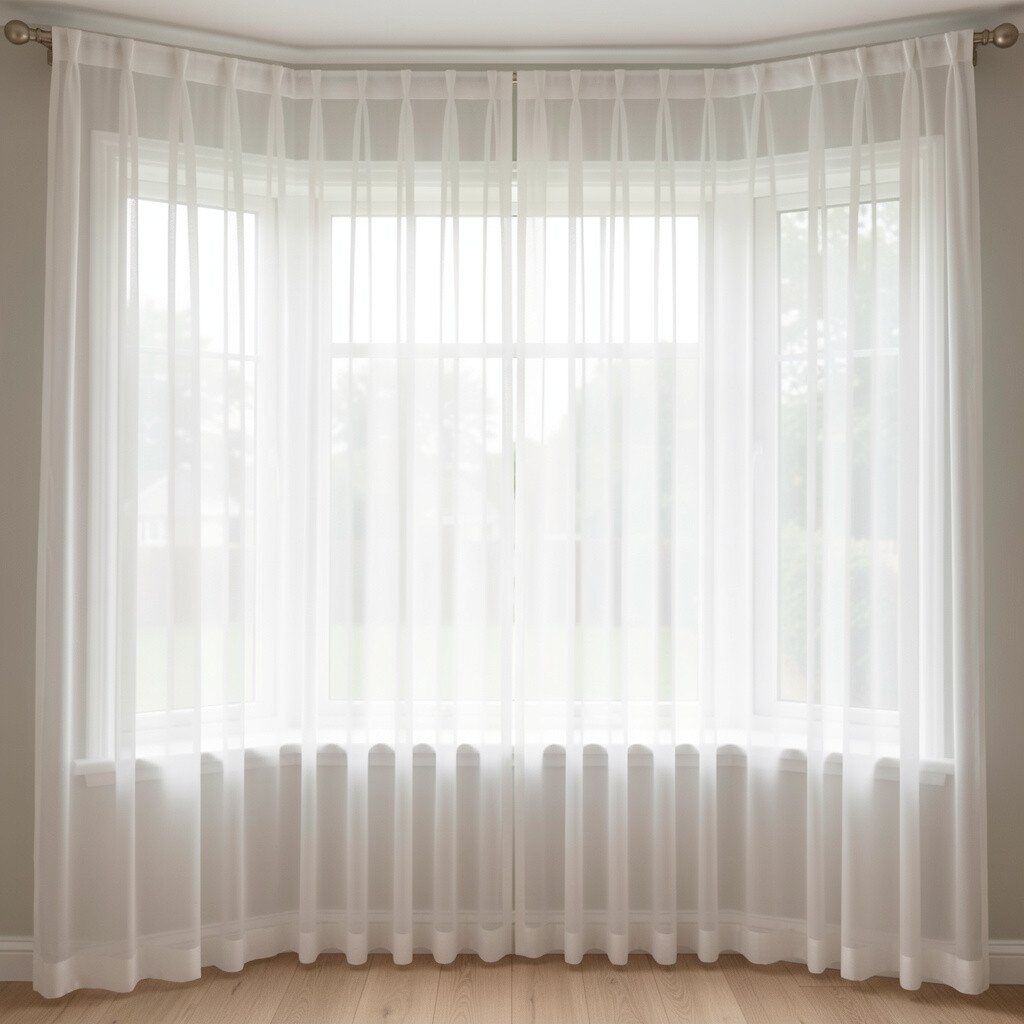
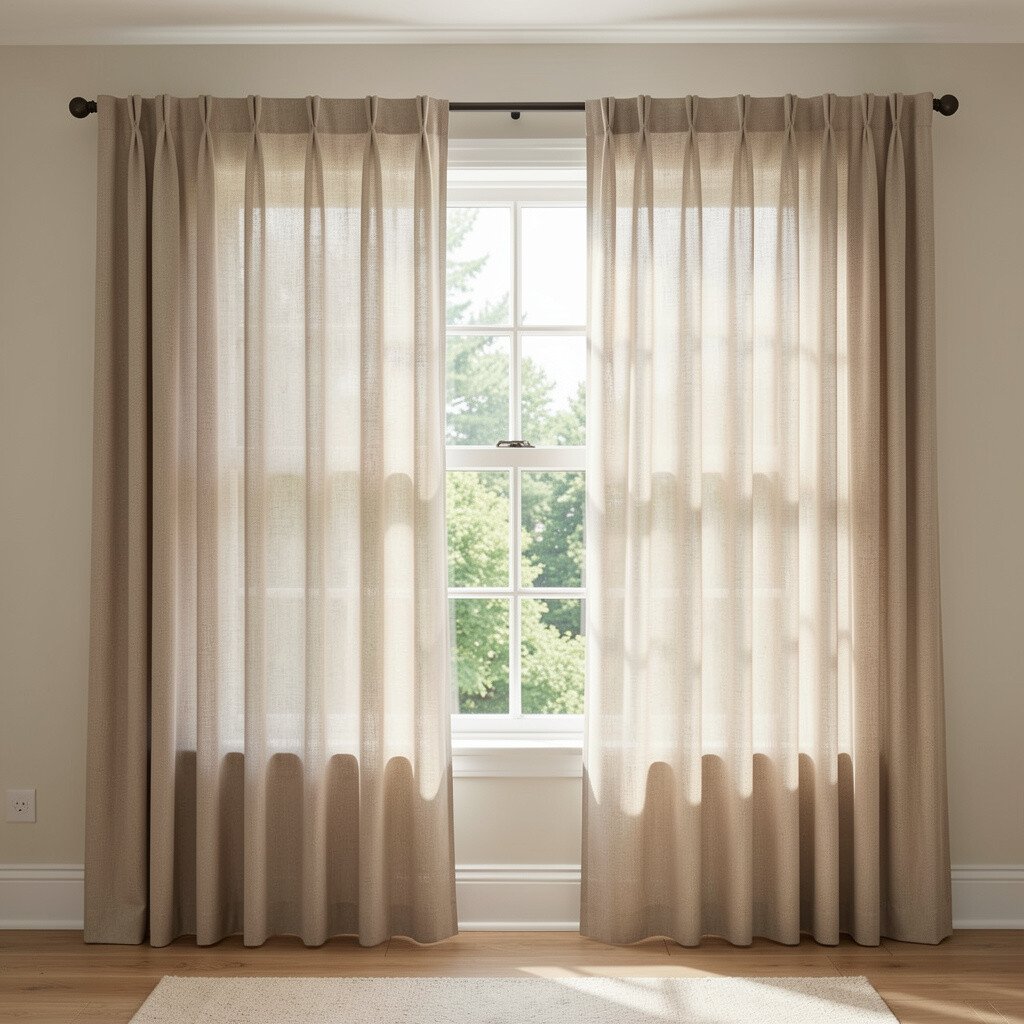
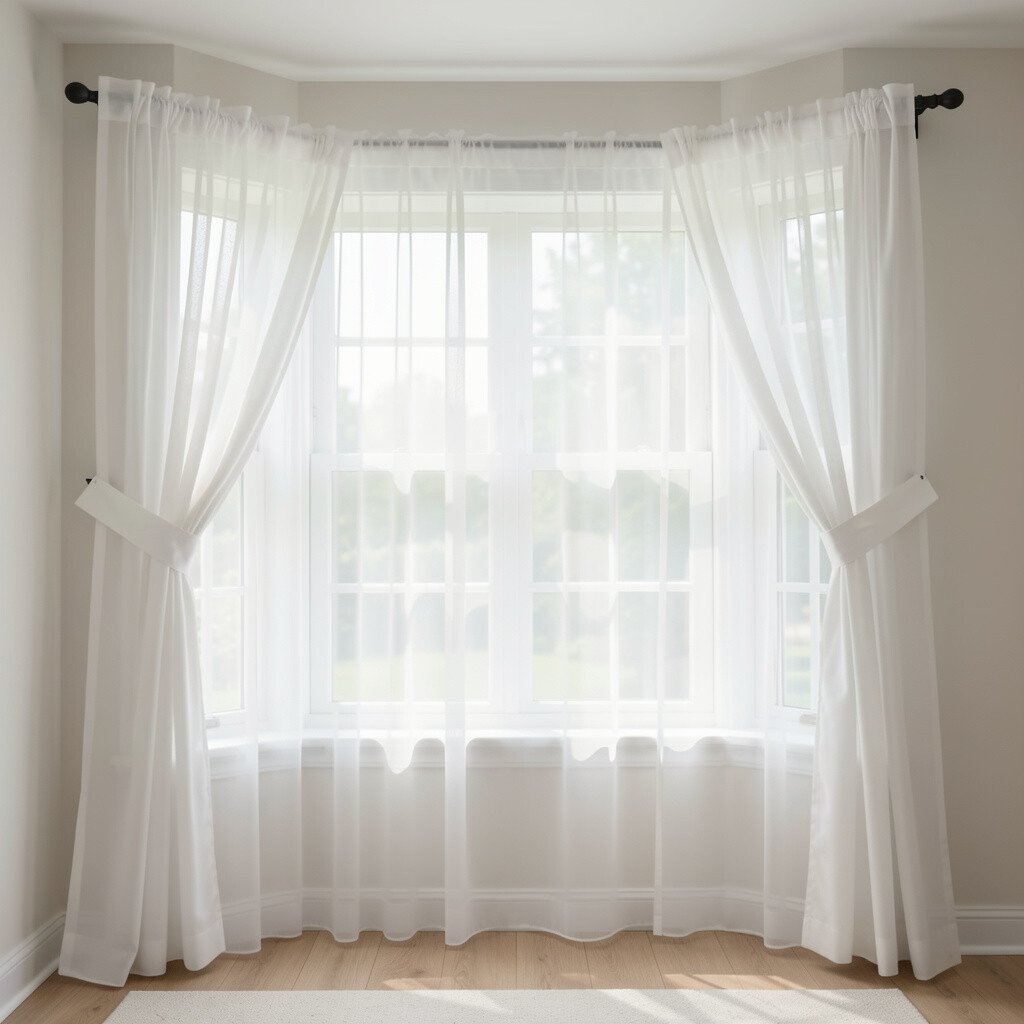
Picture airy fabric that floats near the window while the room stays bright. When the sun hits, the sheer panels create a gentle glow across the walls.
You get privacy at a comfortable level during the day without blocking the view. For practical control, add a second layer using blackout or light-filtering drapes that you close in the evening. Consider choosing a warm white or pale linen tone to keep the light feeling soft, not harsh. If you rent or move often, use an extra-tall tension rod so setup stays easy and reversible.
2. Roller Shades for Clean Lines
Roller Shades for Clean Lines
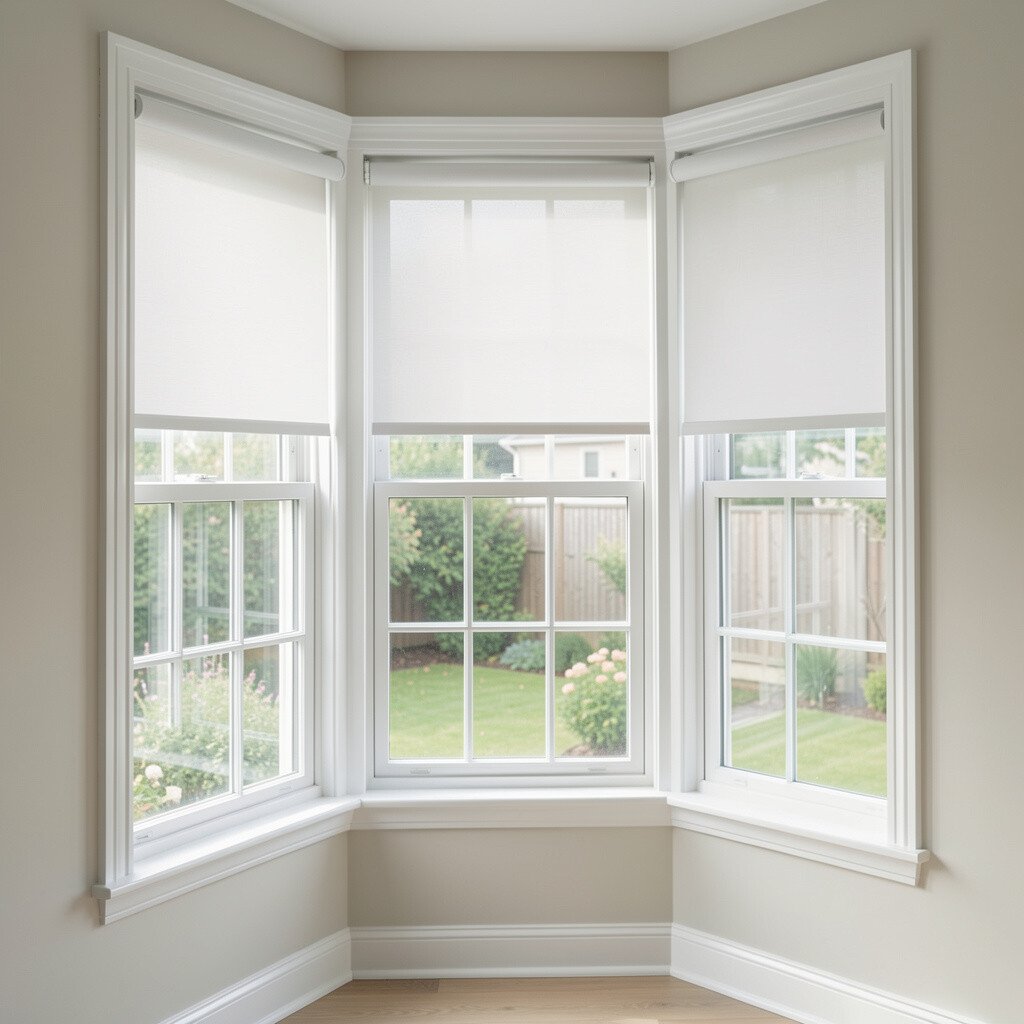
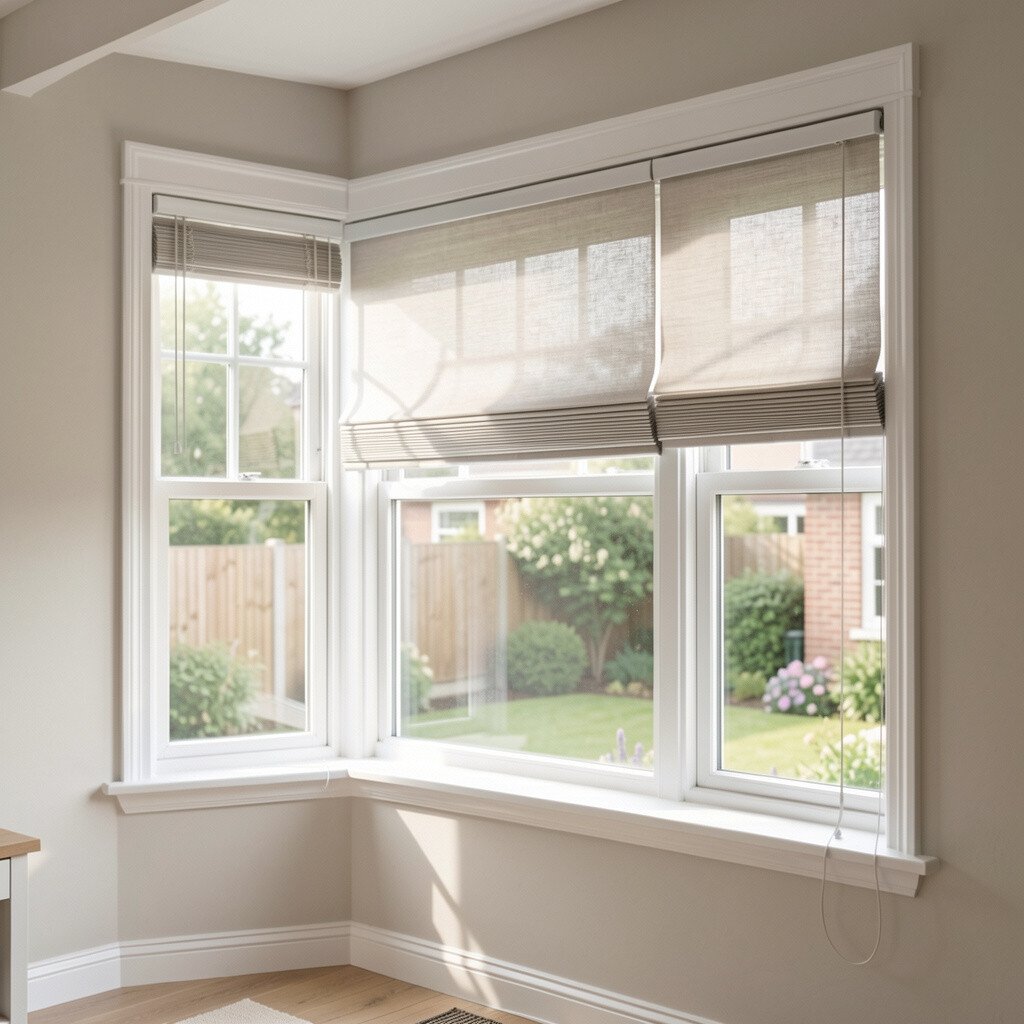
Roller shades make bay windows look crisp and tidy, especially when the fabric matches your walls. They roll smoothly along the glass, so the light stays intentional instead of messy.
This works great if you like modern rooms or want a simple look that won’t fight your furniture. For best results, measure each window section and choose a shade width that covers the frame edges when pulled down. Many homeowners enjoy neutral tones like sand, oatmeal, or light gray because they keep the space feeling open.
To personalize, pick a fabric with a subtle texture so it doesn’t look flat. In terms of cost, basic roller shades are usually budget-friendly, and upgrading to motorization is the most common splurge for convenience.
3. Roman Shades for Tailored Warmth
Roman Shades for Tailored Warmth
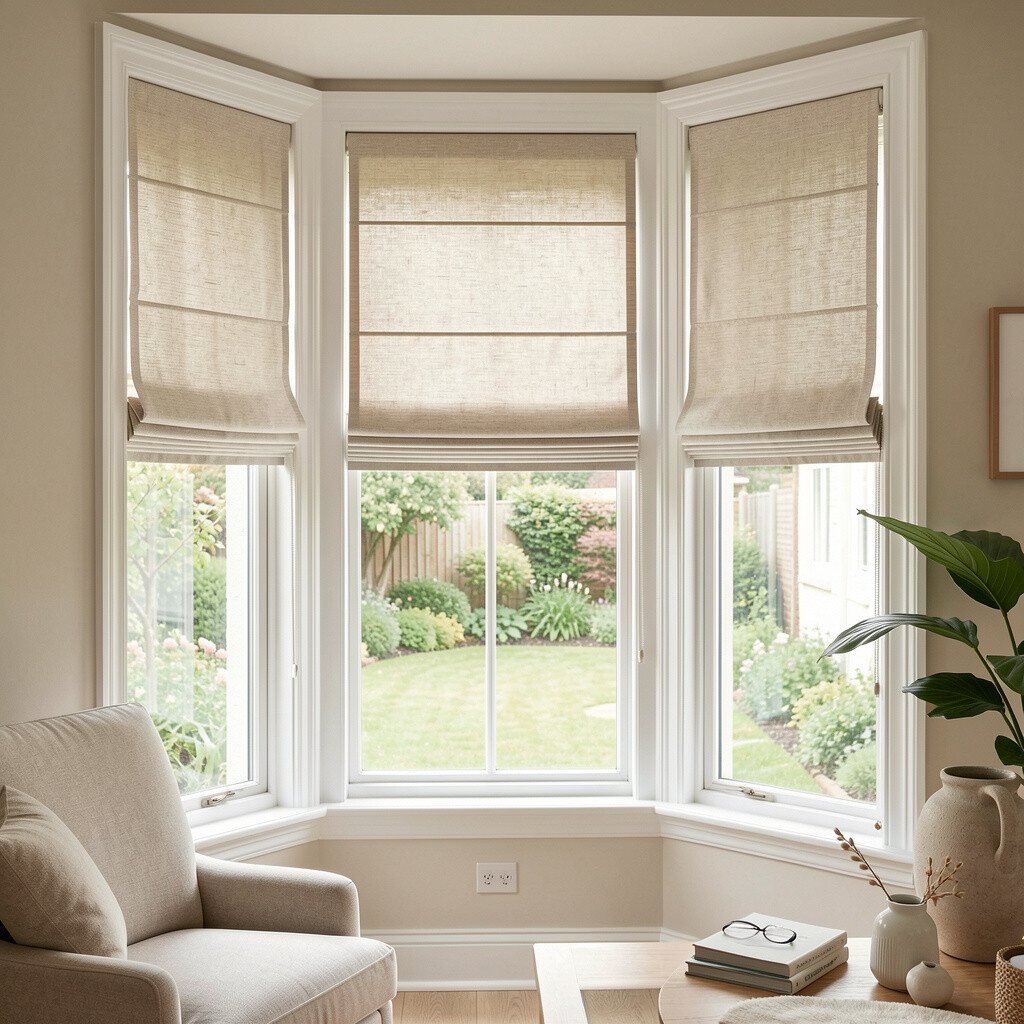
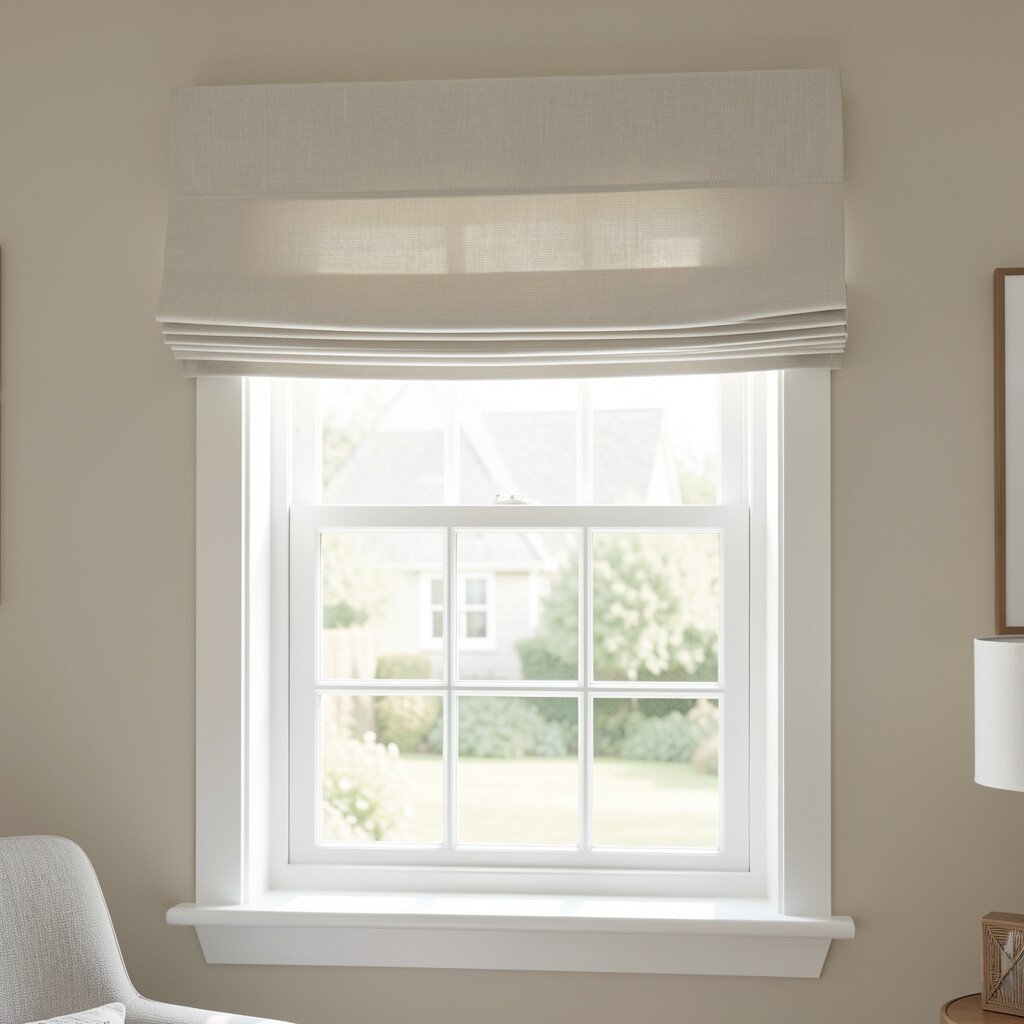
Roman shades fold into neat, flat layers that feel cozy without adding clutter. In a bright bay, they look especially charming when they sit higher up and frame the window like a picture.
You can balance privacy and daylight by choosing a light-filtering weave that blurs outdoor views. When you want darker evenings, switch to a lined option so the folds hold their shape and block more light. A great practical move is to mount the shade slightly inside the bay so it follows the curved shape cleanly.
To keep it unique, choose a pattern inspired by your room colors, like a small geometric print or a gentle botanical. Budget-wise, roman shades tend to cost more than basic sheers, but the tailored look can feel like an upgrade to the whole room.
Current styling often leans toward calm earth tones and natural textures, which Roman shades deliver beautifully.
4. Patterned Valances for a Playful Pop
Patterned Valances for a Playful Pop
A valance adds personality right at the top, where your eye naturally lands in a bay window. Choose a playful print and let it bring energy while the lower area stays light.
Layer a simple sheer beneath so the valance acts like a decorative crown, not a heavy curtain. For practical coverage, make sure the valance is wide enough to cover the top curve and hide rods or tracks. If you worry about glare, use a fabric that filters light instead of fully blocking it.
5. Floor-to-Ceiling Drapes for Hotel-Style Elegance
Floor-to-Ceiling Drapes for Hotel-Style Elegance
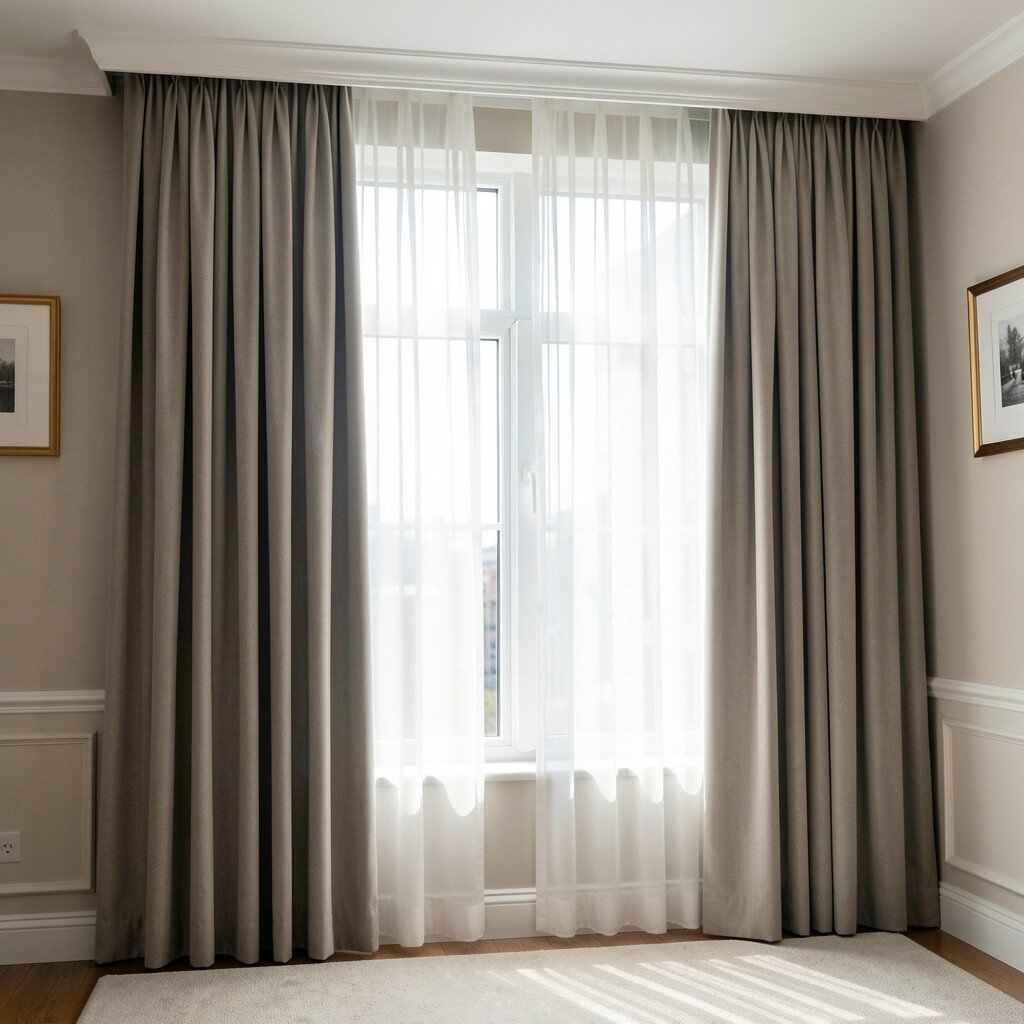
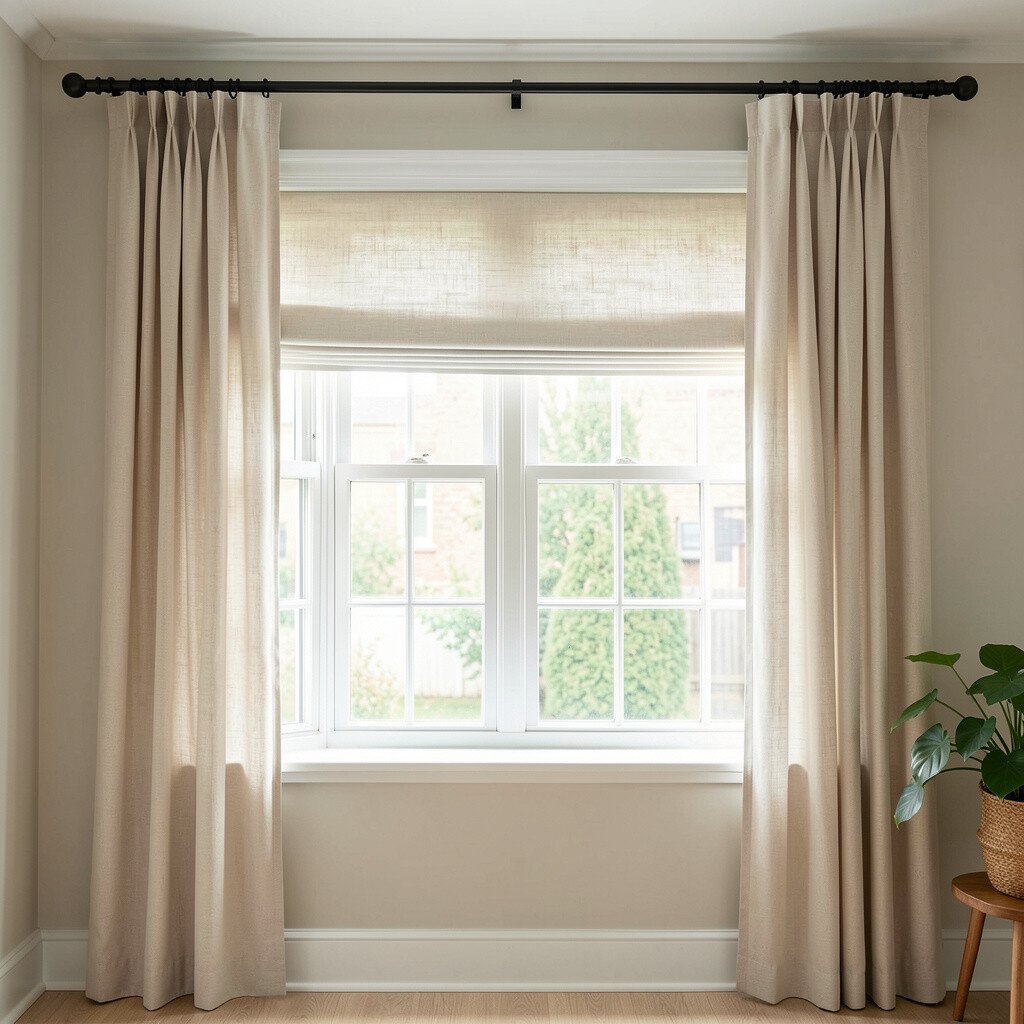
Long drapes that reach the floor make a bay window feel grand and welcoming. When they hang straight with soft pooling at the bottom, they create a refined silhouette.
This style is excellent for benefits like sound-softening and added warmth, especially in cooler months. Install the rod a bit higher than the bay’s top edge so the window feels taller and more open. For practical tips, use a liner and consider weights at the hems so the fabric drops neatly.
To personalize, pick a fabric that matches your vibe, from airy cotton to heavier velvet for a richer look. In cost terms, custom drapes are pricier, but ready-made panels can still look tailored with the right rod and proper measurements.
6. Cafe Curtains for Daytime Privacy
Cafe Curtains for Daytime Privacy
Cafe curtains cover the lower half, giving you privacy without shutting the room down. You can still enjoy the view and keep daylight moving freely through the upper glass.
It’s a practical choice for kitchens, breakfast nooks, and small seating corners inside a bay. Look for a fabric that’s easy to clean, like cotton blends, so everyday life stays simple. For personalization, try a stripe or check pattern to add charm while keeping the overall look light.
If you’re cost-conscious, cafe curtains are often a smart pick because they require less fabric than full drapes. Current trends favor small-scale patterns and soft whites, which pair nicely with the breezy bay-window feel.
When mounting, use a rod that fits each bay section closely so the top edges sit evenly around the curve.
7. Dual-Track Systems for Maximum Control
Dual-Track Systems for Maximum Control
A dual-track setup lets you manage sheers and blackout layers with a smooth, coordinated look. The bay window can stay bright during the day and properly shaded at night without changing the whole style.
This gives you strong benefits like glare control, better sleep, and a polished, layered appearance. A practical tip is to choose consistent curtain hardware across the bay so the movement looks seamless. If you enjoy hosting, you can keep the sheers open for ambience while closing the blackout layer only when needed.
To personalize, use sheers in a soft texture fabric and choose a darker blackout color that feels cozy. In cost considerations, dual-track systems might cost more upfront, but the daily convenience often makes it worth it. Many current designs use light-neutral sheers paired with deeper earth tones for a balanced contrast.
8. Custom Side Panels for Bay Curves
Custom Side Panels for Bay Curves
Side panels that follow the bay curve make the window feel built-in, not added-on. The visual payoff is big because the fabric lines up with the architecture instead of cutting across it.
This style offers clear benefits, including fewer light leaks and a more finished look. Practical installation matters, so consider custom sizing or templates that match the curve. If you’re DIY-friendly, use measuring tips like checking the widest point of each segment so the panels hang without pulling.
9. Cellular Shades for Cozy Insulation
Cellular Shades for Cozy Insulation
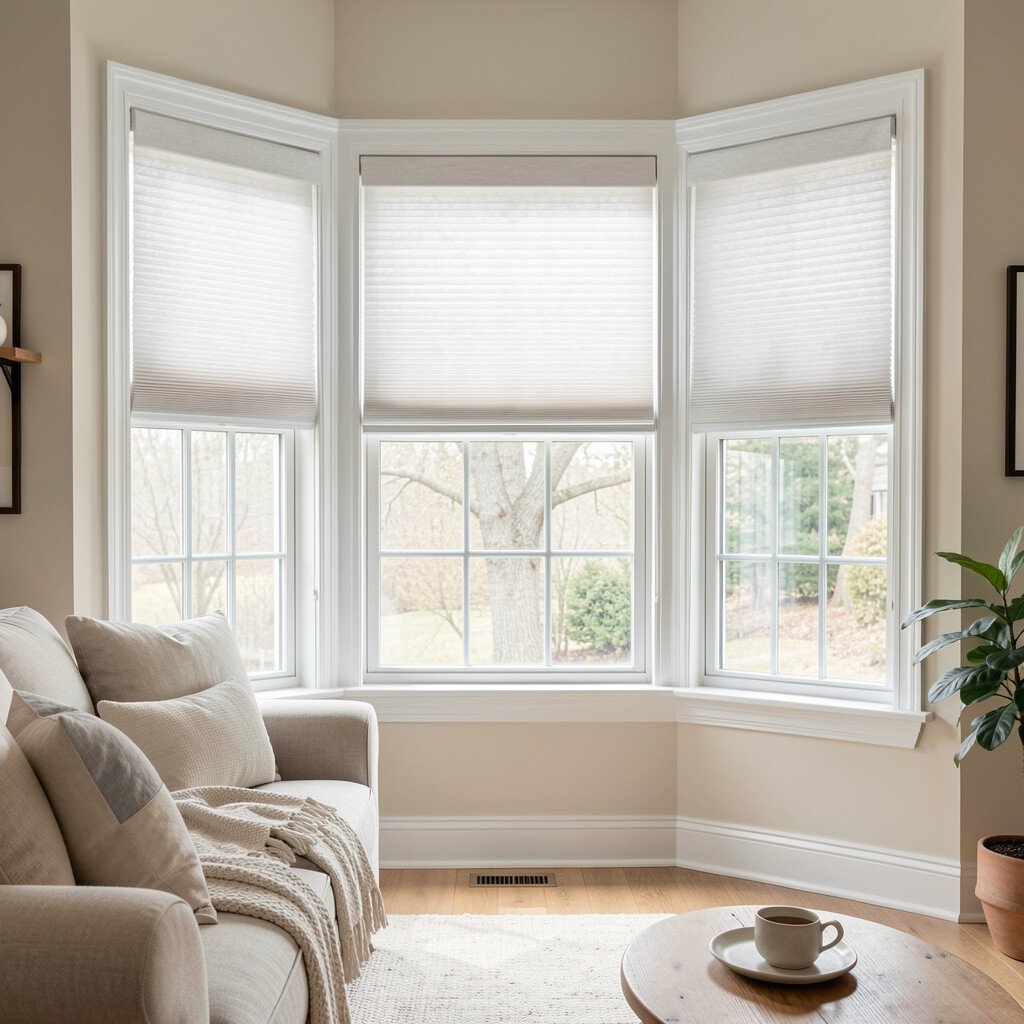
Cellular shades, also called honeycomb shades, trap air and help rooms feel more comfortable. In a bright bay, they keep the space from feeling too hot in summer and too chilly in winter.
You get useful benefits like energy savings and reduced outside noise, all while keeping the window looking sleek. For practical tips, choose a light-filtering style if you want daylight, or a room-darkening option for bedtime comfort. Many people like to mount them inside the frame so the fabric seals around edges and looks neat.
To personalize, pick colorways that match your wall undertones, such as cool white for crisp rooms or warm cream for cozy spaces. Cost considerations vary, but cellular shades can be a worthwhile upgrade because they blend beauty with real comfort. Current trends often highlight functional textiles, and this one fits right in.
Keep an eye on light direction, then choose the panel opacity that matches your sun exposure.
10. Sheer Voiles With Bowbacks
Sheer Voiles With Bowbacks
Voiles with bowbacks add a soft, romantic touch while keeping the window airy. The little fabric gathers create a delicate frame that looks lovely in daylight.
This treatment gives benefits like gentle light diffusion and a tidy, styled appearance without heavy coverage. A practical tip is to use tiebacks that secure consistently so the bows don’t droop as the day goes on. Choose fabric that drapes well, because some lighter weaves can cling and look uneven.
To personalize, pick a subtle color shift, like blush that flatters warm sunlight or cool white for a fresh look. In cost terms, voiles are usually more affordable than full custom drapes, which makes them great for budget-friendly upgrades. For current styling, many homes use soft neutrals and minimal patterns to keep bright spaces feeling open.
11. Tension Rods for Rent-Friendly Flexibility
Tension Rods for Rent-Friendly Flexibility
If you want a quick style change without drilling, tension rods can make bay-window decorating easy. They hold light fabrics in place, and you can adjust the look whenever you want.
The benefits include low commitment, easy removal, and a lighter visual feel that keeps the room bright. For practical tips, pick strong rods with enough grip and use fabric weights or clips so panels don’t slip. Measure carefully, especially for bay windows that curve, so the rod fits each section securely.
Personalize with a mix of textures, such as combining a sheer layer with a short valance panel. Cost considerations usually favor this approach because you avoid hardware installation and can start with simple fabric options. Many trend-forward spaces lean into layered neutrals, and tension rods make layering simple.
12. Blackout Curtains for Theater-Like Comfort
Blackout Curtains for Theater-Like Comfort
Blackout curtains can turn a sunny bay into a cozy, evening-ready spot. Even in bright rooms, closing them creates a calm, hotel-like mood.
You get benefits like better sleep, less glare on screens, and improved privacy at night. For practical tips, choose a track or rod mount that fully covers the window edges so light doesn’t sneak through. Hanging the rod higher and using wider panels helps the fabric stack neatly.
To personalize, select blackout fabric in warm charcoal or deep navy for a rich contrast with lighter walls. Cost considerations depend on fabric thickness and whether you choose custom sizing, but ready-made panels can work if you measure well. Current trends often mix blackout function with stylish color, so you don’t have to sacrifice beauty.
Keep the folds crisp by using curtain ties or weights so the drapes look intentional.
13. Layered Linen With Matching Tiebacks
Layered Linen With Matching Tiebacks
Linen layers bring a naturally textured look that suits bright spaces perfectly. When the fabric catches sunlight, you see subtle movement instead of a flat, shiny surface.
This choice offers benefits like light filtering, a relaxed feel, and better privacy depending on the opacity you choose. For practical tips, use tiebacks positioned at consistent heights across each bay section. That keeps the curved look balanced and prevents one side from hanging differently.
To personalize, blend two linen shades, like oat and sand, for a gentle tonal story. Cost considerations can be higher if you choose premium linen, but cotton-linen blends can provide a similar effect at a friendlier price. Current trends highlight natural fibers, and linen remains a top favorite for bright, airy interiors.
If you want easy care, look for blended fabrics that resist wrinkling.
14. Bamboo or Woven Shades for Earthy Texture
Bamboo or Woven Shades for Earthy Texture
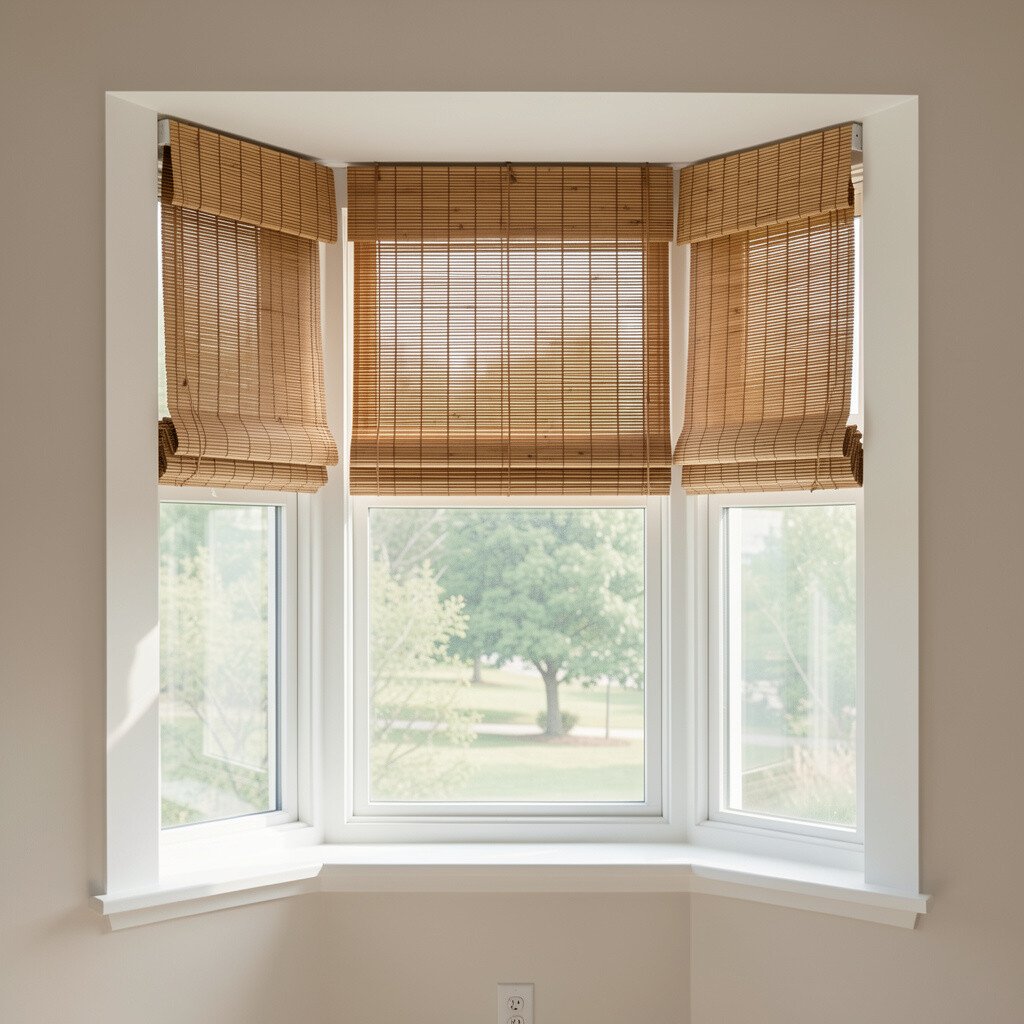
Woven shades add warmth and a natural rhythm to a bay window. The texture makes even a simple living room feel styled, especially when sunlight creates shadow patterns.
This gives benefits like soft light, a cozy atmosphere, and a touch of nature indoors. For practical tips, choose a style that can handle humidity if your bay is near a kitchen or dining area. Many woven materials need gentle care, so check cleaning instructions and use a vacuum brush regularly.
Personalize by selecting bamboo tone depth, from pale blond to rich walnut shades. In cost considerations, woven shades can range widely, but you can often find quality options in ready sizes. Current styling favors natural materials and global-inspired textures, making this a strong fit for many homes.
15. Plantation Shutters for Timeless Structure
Plantation Shutters for Timeless Structure
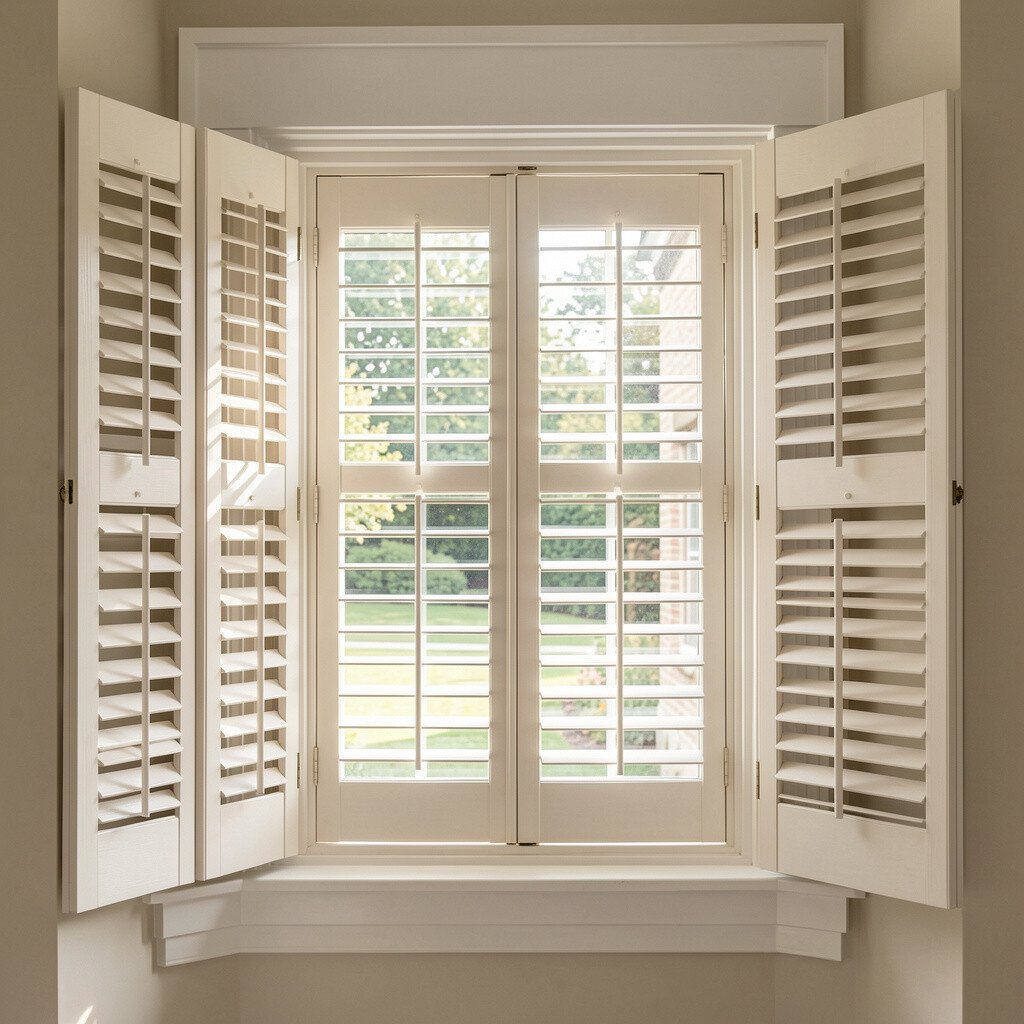
Plantation shutters give a bay window a strong, architectural look that never feels outdated. The slats guide light in a controlled way, so your room stays bright without glare.
You’ll enjoy benefits like durability, long-term value, and smooth operation for adjusting privacy. Practical tips include choosing the right tilt range so daylight spreads evenly across the room. For bay windows, custom shutters are the usual route, but the investment often pays off in comfort and resale appeal.
To personalize, pick a paint finish that matches your trim, like crisp white or a soft warm tone. Cost considerations are usually higher than fabric options, but shutters can outlast many window treatments. This is also aligned with current trends that favor timeless structure paired with modern simplicity.
Keep the look cohesive by selecting the same hardware style as other window fixtures in your home.
16. Grid-Style Curtains for a Modern Look
Grid-Style Curtains for a Modern Look
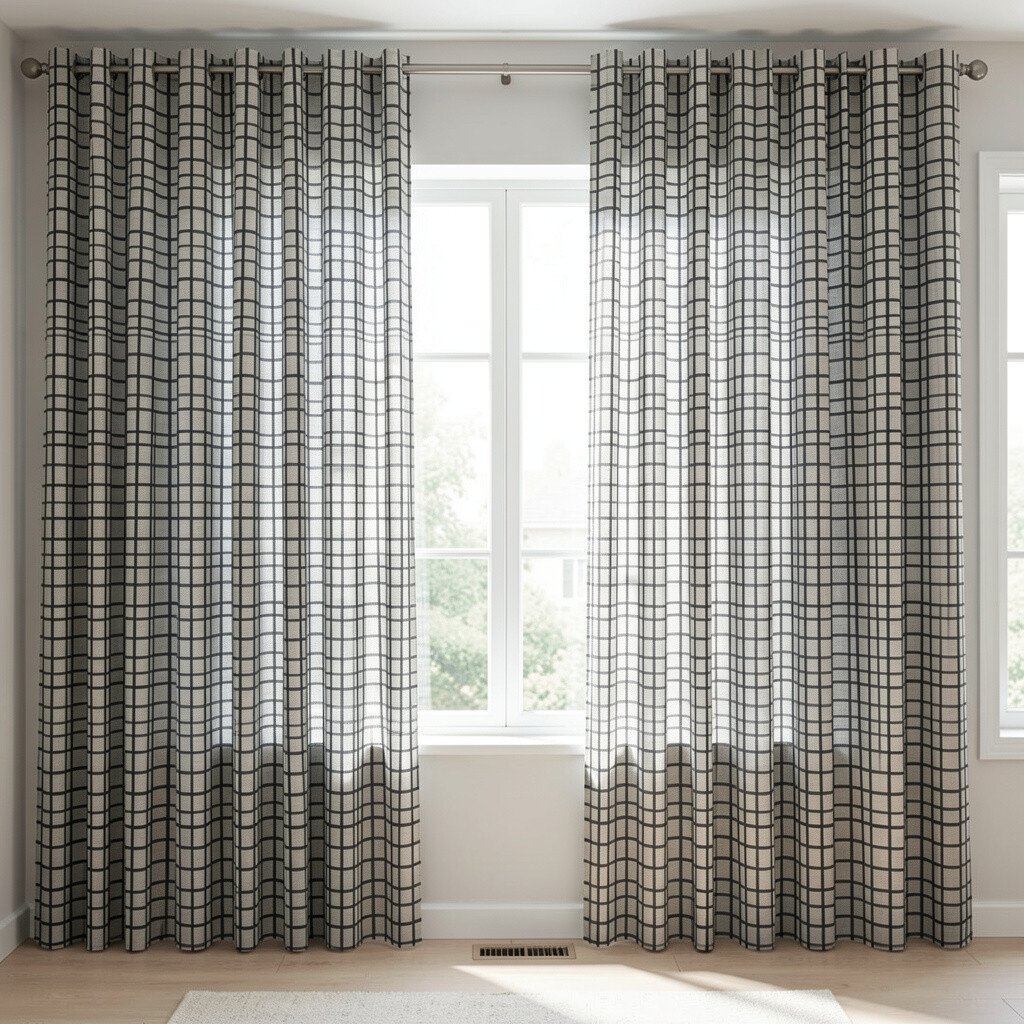
Grid-style curtains bring a crisp visual pattern that pairs well with modern furniture. In a bay window, the lines feel structured while the fabric still softens the space.
The benefits include easy coordination with other patterns and a clearer sense of shape in the room. For practical tips, choose curtain widths that fully cover the window when closed, and use a rod that supports the fabric weight. If you prefer a brighter feel, choose a semi-sheer grid pattern rather than heavy blackout style.
Personalize by selecting grid colors that echo your rug or accent pillows, such as muted navy or sage green. Cost considerations vary, but you can often find stylish grid curtains in ready lengths. Current trends often blend minimal design with slightly bold prints, and this treatment fits that balance well.
17. Outdoor-Style Linen Curtains With Weighted Hems
Outdoor-Style Linen Curtains With Weighted Hems
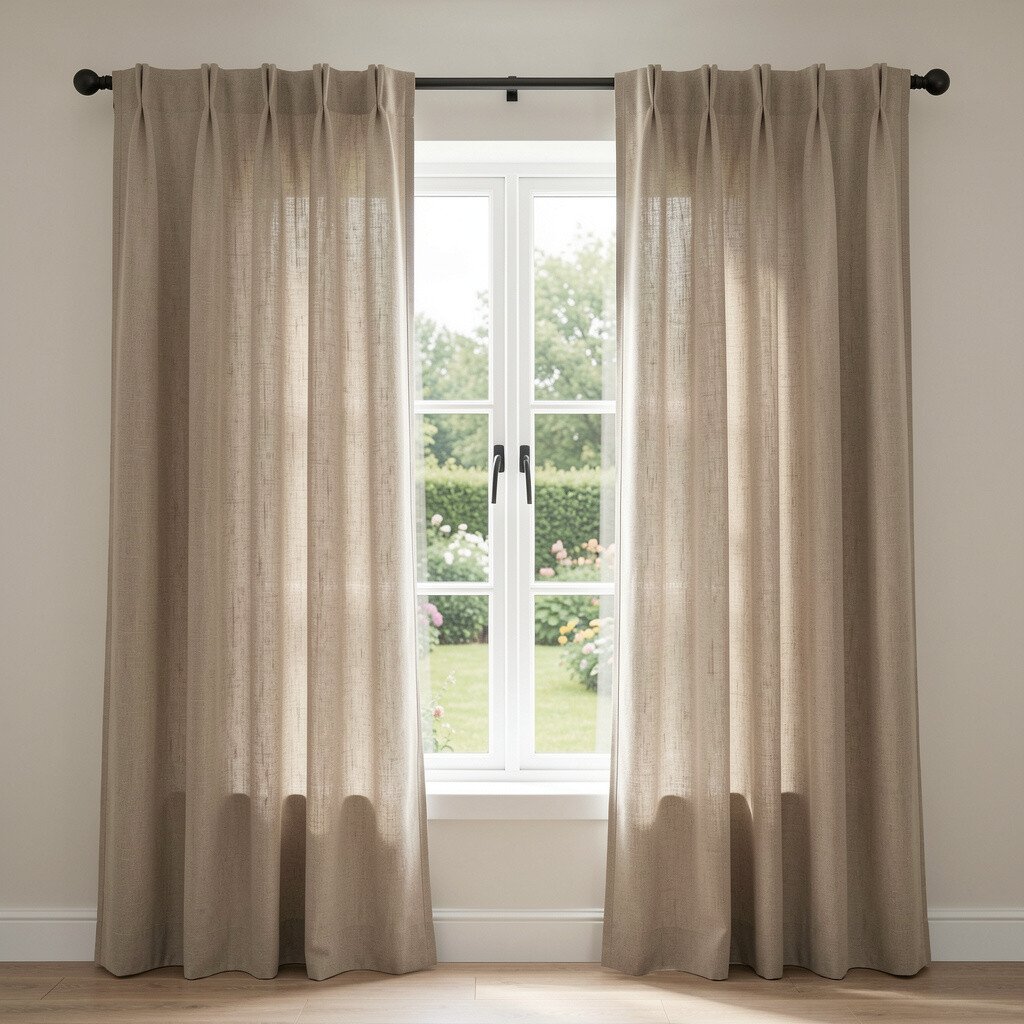
Think of sun-faded, coastal linen that feels breezy even on the brightest days. Weighted hems help the panels hang straight, so your bay window looks styled instead of floppy.
You get benefits like a relaxed, airy look plus better light filtering without fully blocking the view. For practical tips, use a washable fabric if your bay sits near cooking areas or gets lots of dust. Weighted hems also reduce drafts, which can matter near entry-like windows.
To personalize, pick subtle stripes or plain solids with a slightly textured weave. Cost considerations can be friendly if you choose ready panels with weights built in. Current trends love coastal and coastal-modern themes, and this treatment delivers that look while staying bright and comfortable.
Keep the folds looking neat by steam-drying or pressing lightly before hanging.
18. Transparent Sheers With Soft Curtain Rods
Transparent Sheers With Soft Curtain Rods
Transparent sheers can make a bay window feel almost weightless. When they hang from a gentle, slim rod, the look becomes pure and minimal while still giving coverage.
This style offers benefits like privacy in daylight and a soft blur for outdoor views. For practical tips, choose sheers with a bit of density so they don’t become too see-through at certain angles. Pairing them with curtains that open easily means you can swap moods quickly as seasons change.
To personalize, select a sheer with a slight tint, like warm ivory or cool pearl, to match your lighting. Cost considerations are usually low to mid, because sheer fabric is simple and hardware-forward. Current trends often favor minimal layers, and this option keeps bright spaces looking fresh.
19. Roman Shade Top Treatment With Hanging Panels
Roman Shade Top Treatment With Hanging Panels
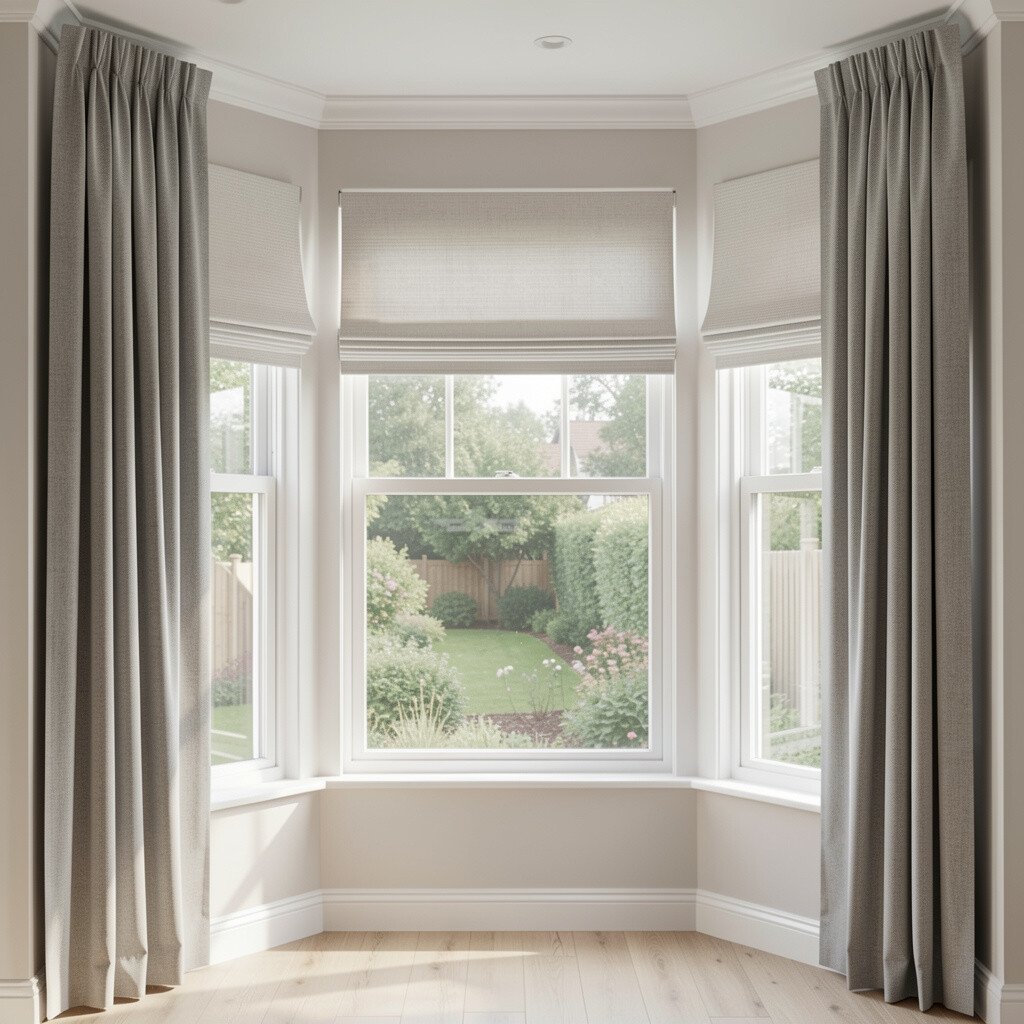
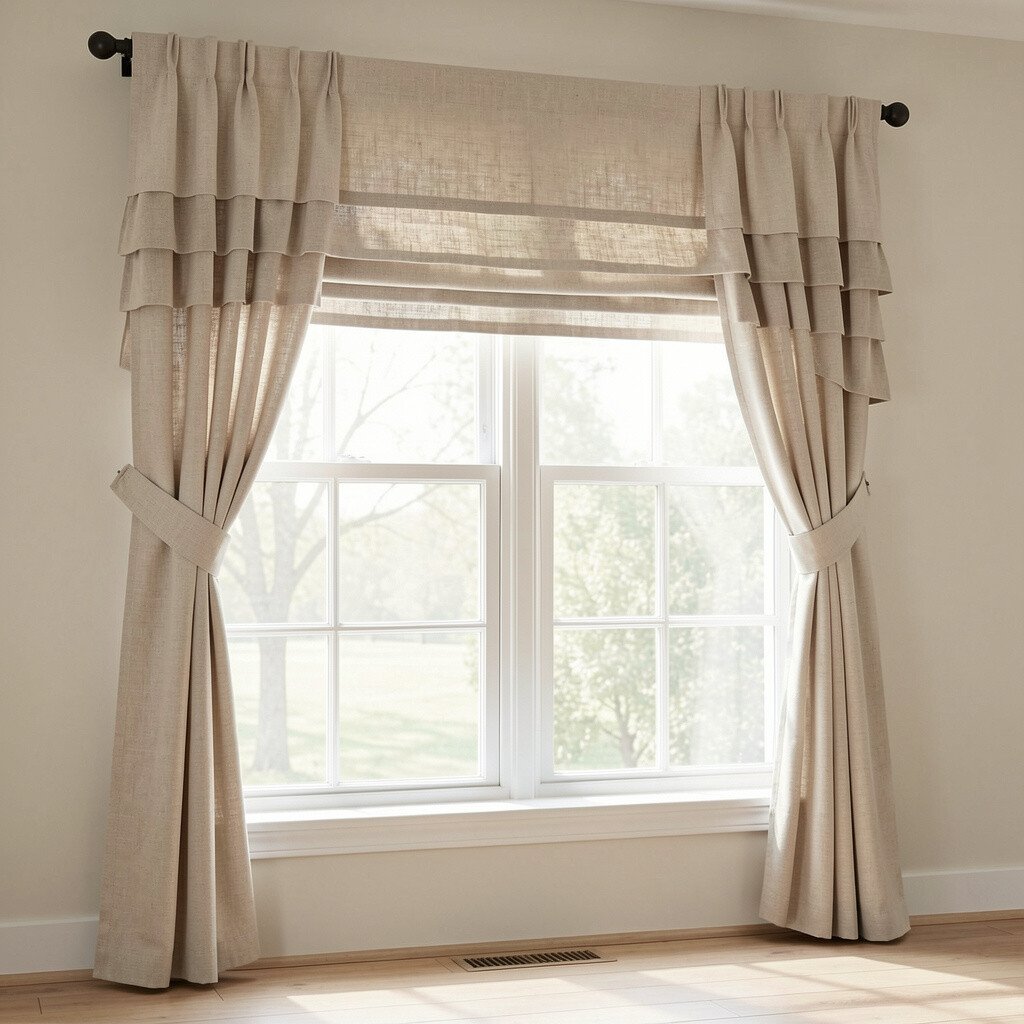
Combining a roman shade at the center with hanging panels along the sides creates a layered, curved look. The roman fabric gives clean folds, while the side panels add softness and motion.
This approach offers benefits like strong control for glare and privacy, plus an elegant style that fits both traditional and modern rooms. For practical tips, coordinate color and fabric so the layers feel like one set rather than random pieces. Many people also like to keep the hanging panels slightly longer so they visually connect the window to the floor.
To personalize, match the roman shade color to your sofa or rug undertones and use a complementary pattern for the side panels. Cost considerations can rise because you’re buying multiple components, but the result often looks custom without needing full custom pricing. Current trends favor mix-and-match styling, so this combo feels very current when colors stay cohesive.
Measure carefully for bay curves so the panels don’t bunch at the corners.
20. Color-Blocked Curtains for Bold Brightness
Color-Blocked Curtains for Bold Brightness
Color-blocked curtains bring a playful twist that still works in bright rooms. You can use two or three shades to highlight the bay’s curve and make the window the star of the space.
This treatment offers benefits like personality, a clearer focal point, and flexible privacy depending on how thick the fabric is. For practical tips, choose color tones that echo existing accents so the look feels intentional rather than chaotic. If you want it lighter, use a semi-sheer color-block fabric, and if you want more privacy, go with a lined option.
To personalize, try a gradient from light near the edges to deeper color toward the center, which visually balances the bay. Cost considerations depend on fabric yardage and whether you opt for custom panels, but you can often recreate a similar look by sewing or styling ready-made sections. Current trends lean into cheerful color and confident styling, and this idea delivers that bright, modern energy.
For a clean finish, keep hem lengths consistent and use the same rod height across all sections.