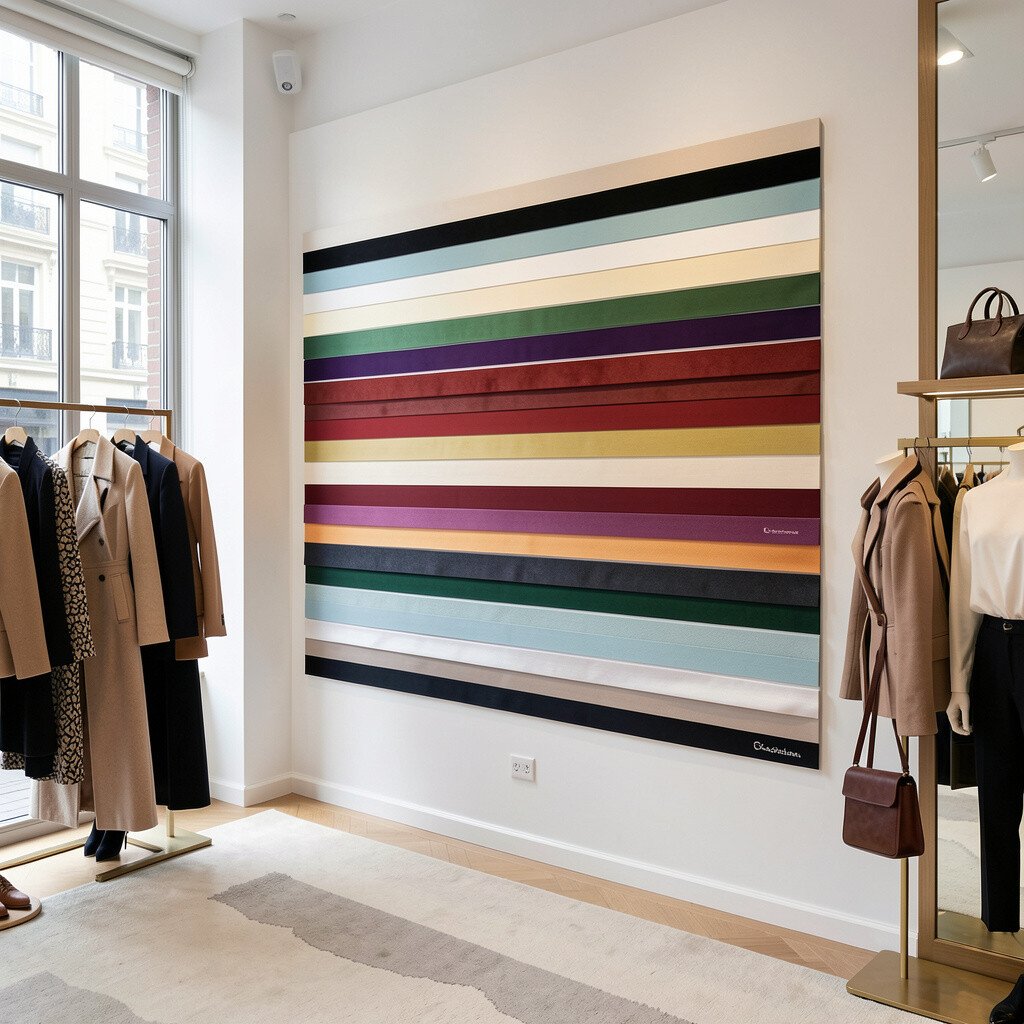
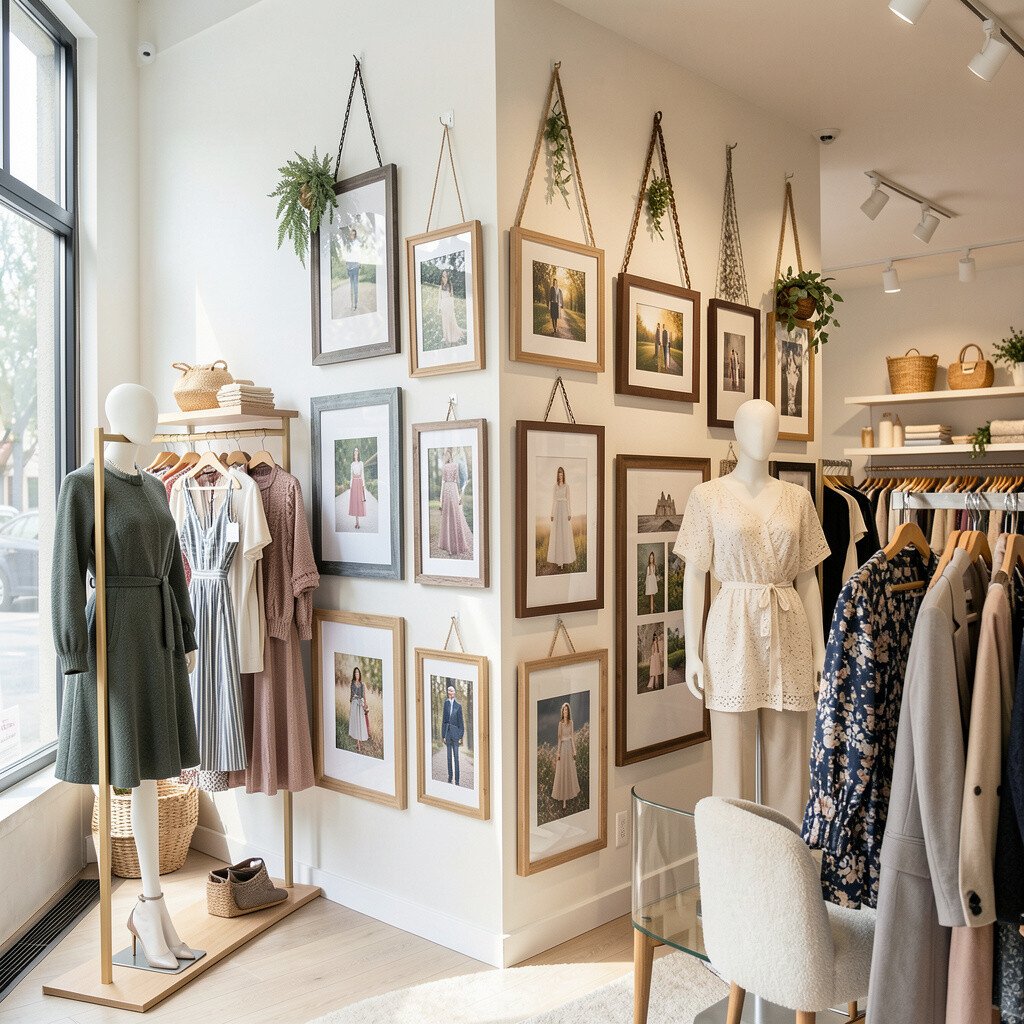
Imagine a display wall where each season is shown through a clean sweep of color. Soft blush beside deep berry can make your newest arrivals feel instantly coordinated.
Use fabric or matte paper panels to create wide horizontal bands, then add framed photos of the outfits that match each shade. This setup helps customers scan fast and it makes your store look polished even when you’re busy. For practical styling, keep one band reserved for “easy outfit” pieces like tees, midi skirts, or lightweight cardigans so shoppers can build looks without thinking too hard.
2. Gallery-Style Shadowbox for Statement Pieces
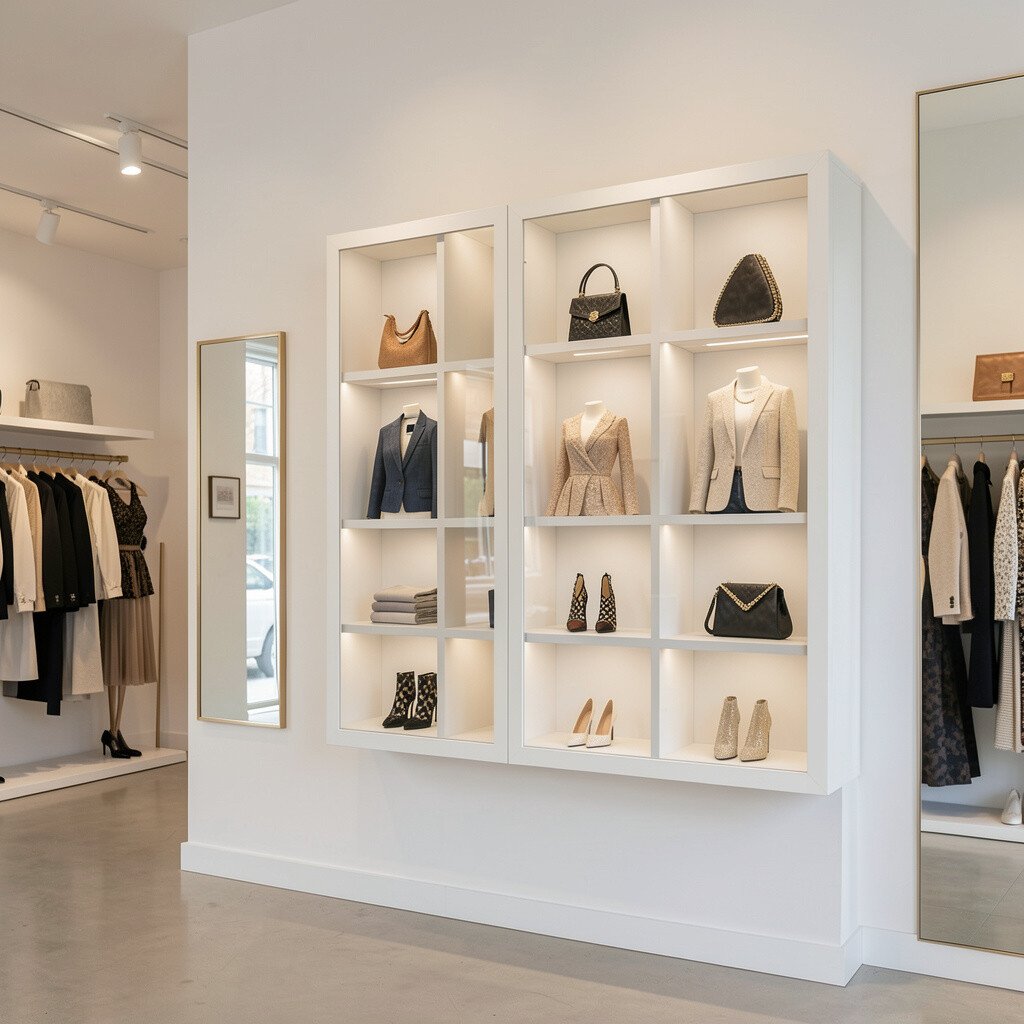
Gallery-Style Shadowbox for Statement Pieces
Set up a wall of shadowboxes that hold one standout item at a time, like a hero bag or a bold scarf. The glassy front and tight spacing give everything a museum-like glow that feels chic.
Place items at eye level and rotate them weekly so the wall never looks old. Shoppers love uniqueness, and a curated shadowbox wall makes your boutique feel special without clutter. To keep costs reasonable, start with a few boxes for your most profitable accessories, then expand only when you see which items move quickly.
Personalize the wall by choosing a theme each month, such as “city night” or “sunny weekend,” and style each shadowbox with one matching accessory. Keep the background neutral so the piece stays the focus, and use soft spot lighting or a small LED strip to highlight texture. This kind of display also pairs well with current trends like quiet luxury, because it lets quality details show clearly.
3. Turned-Profile Grid With Mini Outfit Cards
Turned-Profile Grid With Mini Outfit Cards
Think of a grid wall made from slim rails where you hang clothing by profile, not by size. A row of sleeve shapes, hemlines, and necklines can look neat and fashion-forward.
Add mini outfit cards beneath each section so customers can copy the look in seconds. For example, you can pair a fitted top with wide-leg trousers, then add a card that suggests one shoe and one layer. It helps people who feel unsure about styling, and it keeps your wall practical instead of just pretty.
For personalization, write the cards in your own voice, like “try this with a cropped jacket” or “wear it with a casual sneaker.” Keep costs in check by using sturdy faux wood or metal rails and printing cards in small batches. The current trend toward “capsule wardrobe” styling fits perfectly here because the grid makes mix-and-match options feel effortless.
4. Mirror-Framed Lookbook With Floating Clips
Mirror-Framed Lookbook With Floating Clips
A mirror-framed lookbook wall brings light to the space and makes outfits feel larger than life. When you add floating clips, you can pin a blouse or dress like it’s part of a living magazine.
Choose a frame with a slim border to keep the design chic, then attach a rotating set of clear acrylic cards or fabric swatches. This display offers benefits beyond style, because it helps customers see how colors work together in real life lighting. Keep the system practical by using only three clip sizes so you can update quickly without hunting for equipment.
5. Texture Wall With Layered Fabric Swatches
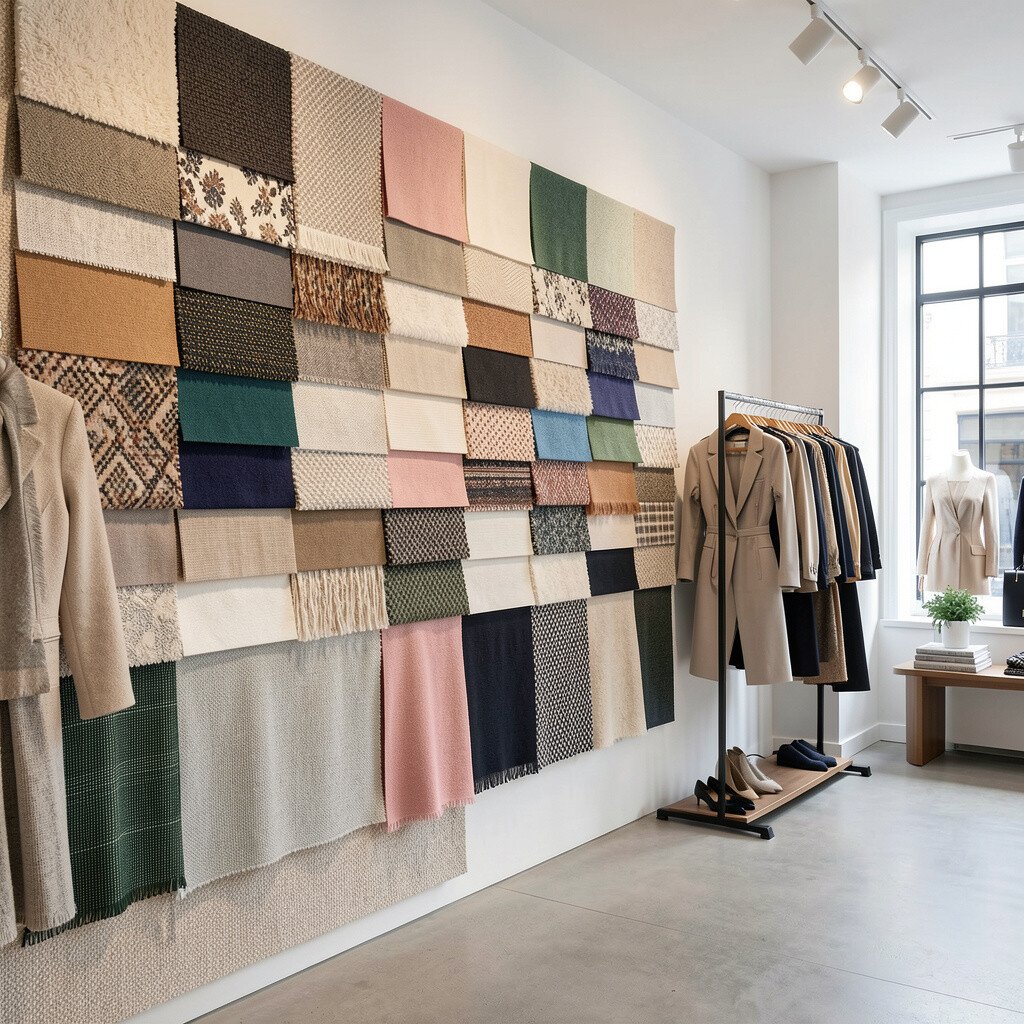
Texture Wall With Layered Fabric Swatches
Build a texture wall using layered fabric swatches that hang like curtains, with each swatch representing a key material in your store. Think cotton gauze, satin, denim, rib knit, and boucle, all arranged for a satisfying visual rhythm.
This kind of setup is unique because it teaches customers by touch and sight, even if they’re still deciding. It also helps your team explain why a piece feels different when someone asks about comfort or drape. To keep it affordable, you can use small cuttings from sample pieces or leftover fabric and stitch or fuse edges so everything looks neat.
For personalization, match swatches to the vibe of your boutique, like coastal, romantic, or modern minimal. Pair the swatches with small captions that describe the best styling, such as “great for airy layers” or “perfect for structured shapes.” This aligns with current trends in fabric storytelling, where shoppers want to know what they’re buying and why it matters.
6. Height-Stacked Styling Pedestals
Height-Stacked Styling Pedestals
Use a series of slim pedestals at different heights so your display wall looks like a set of steps. Group items by height, not just by category, and the whole area will feel intentional and easy to browse.
Stack your best sellers into mini stories, like a top, a skirt, and a shoe, then add one finishing accessory for contrast. Customers benefit because they can quickly understand the full look, and you get more outfit questions that often lead to sales. To make it practical, keep pedestal inventory small and switch the groups when items start to slow down.
For cost considerations, choose affordable display risers and paint or finish them to match your store. If you have limited budget, use crates lined with fabric for a similar stepped effect, then keep everything clean and uniform. Add seasonal touches by swapping in color-coordinated details, like a silk bow in spring or warm-toned knit accents in cooler months.
7. Color-Matched Wall Hooks for Everyday Outfits
Color-Matched Wall Hooks for Everyday Outfits
A color-matched hook wall makes your boutique feel instantly organized and friendly. When hooks are arranged by tone, customers can find their favorite color without searching the whole store.
Mix your hook wall with short outfit groupings, such as a “workday neutrals” cluster or a “weekend brights” cluster. This creates uniqueness because the wall feels like a personal styling service, not a random rack. For personalization, let your customers choose a color mood and offer a small pairing, like a belt, a bag, or a scarf to complete it.
It’s also trend-aware since shoppers keep leaning into coordinated sets and color dressing. Keep costs reasonable by starting with a limited palette and adding hooks only when you have enough items that fit the plan. Update weekly with fresh hangings so the wall stays lively and never looks abandoned.
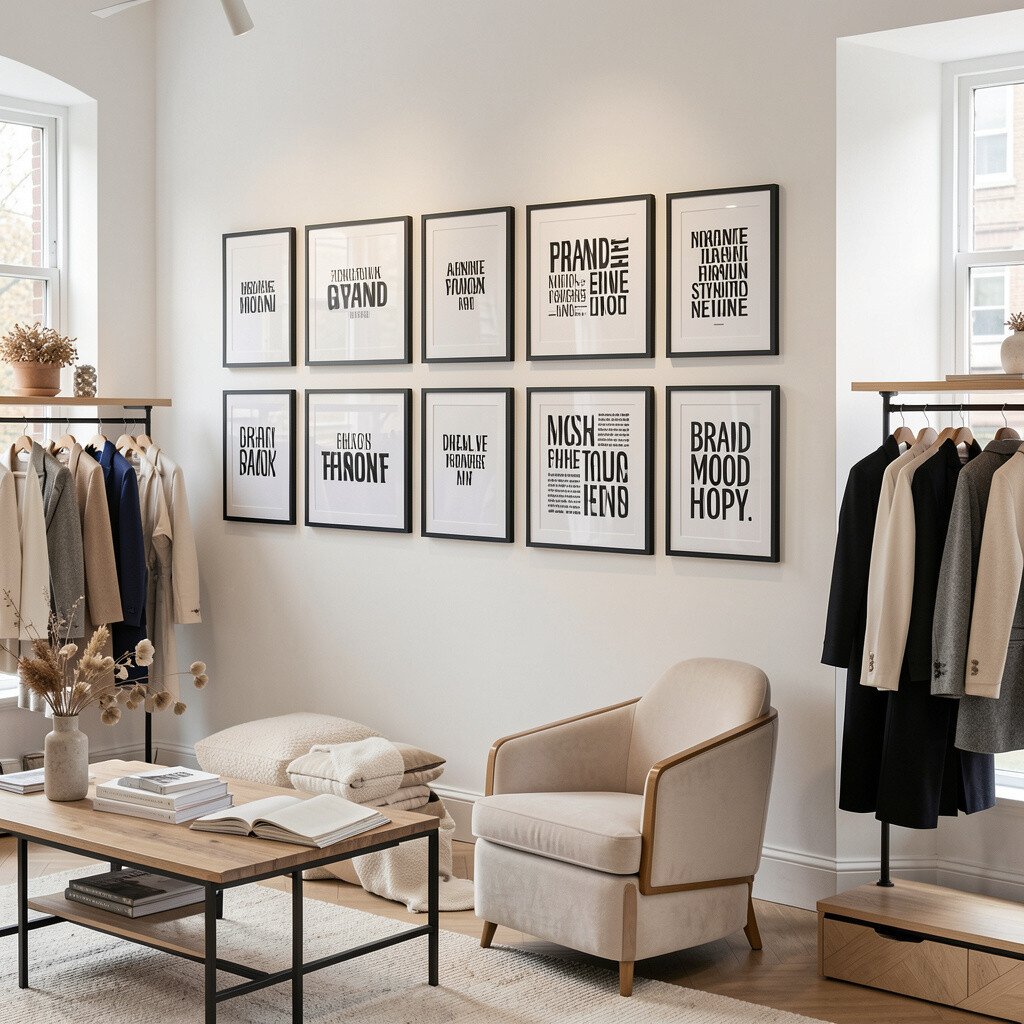
Install framed typography panels that show your boutique mood, like “soft tailoring” or “bold everyday.” Even minimal phrases, paired with small outfit photos, can make your display wall feel curated and high-end.
Use calm, legible fonts and keep the color palette consistent so the wall doesn’t overwhelm shoppers. The benefit is that customers instantly understand your style direction, and it can speed up decisions when they’re unsure what to pick. To keep it practical, rotate one framed phrase per month while keeping the rest of the wall stable so updates are easy.
9. The Statement Bag Halo Display
The Statement Bag Halo Display
Create a halo effect with a circular rack or curved rail dedicated to bags and small accessories. When bags sit in a ring, they look like a featured collection and shoppers naturally gravitate toward the center.
This approach is unique because it turns accessories into a focal event instead of background extras. It also gives real benefits for upselling, since bags are often the finishing touch that completes an outfit. For cost considerations, use a single strong display base and keep only your most versatile colors in the rotation, like black, cream, and cognac.
Personalize by styling each bag with a matching small accessory, such as a charm, a scarf loop, or a mini wallet. Tie your presentation to current trends by highlighting top handle shapes, crescent silhouettes, or crossbody styles that customers ask about. Add a small card near the display that mentions the best use, like “day-to-night” or “weekend travel,” in plain language customers can understand quickly.
10. Seasonal Window-Style Hanging Frames
Seasonal Window-Style Hanging Frames
Even without a real window, you can create a window feel using hanging frames that resemble shopfront displays. Add sheer curtains or neutral backdrops behind each frame to give depth and movement.
Hang outfits like they’re curated storefront mannequins, but keep the pieces movable so you can swap them fast. Customers benefit because the wall feels like a mini show, which makes them want to step closer. To personalize, match the backdrop color to your inventory, then add a small “story” element like a bouquet, a watch, or a folded scarf.
For practical styling, keep the composition simple and follow a consistent layout so the wall stays clean. Cost can stay controlled by reusing frame materials and updating only the fabric backings or printed cards. This also works nicely with trends in visual merchandising, where shoppers expect lifestyle cues, not just hanging garments.
11. Monochrome Chic Wardrobe Wall
Monochrome Chic Wardrobe Wall
Design a monochrome display wall where each section stays within one color family, like all cream tones or all slate grays. The clean look feels modern, and it makes textures the main character.
This is especially unique because monochrome dressing highlights knit patterns, embroidery, and fabric thickness. It gives a benefit when customers want to build a capsule wardrobe, since everything works together. For personalization, allow one small “spark” accent per section, like a single gold button or a burgundy bag, so the wall doesn’t feel flat.
Keep costs considerations in mind by focusing on layering pieces that repeat across seasons, like cardigans and blazers. Stay trend-aware by emphasizing quiet luxury silhouettes and refined neutrals that remain popular in current collections. When you rotate the wall, update only a few sections at a time so your best pieces still get repeated visibility.
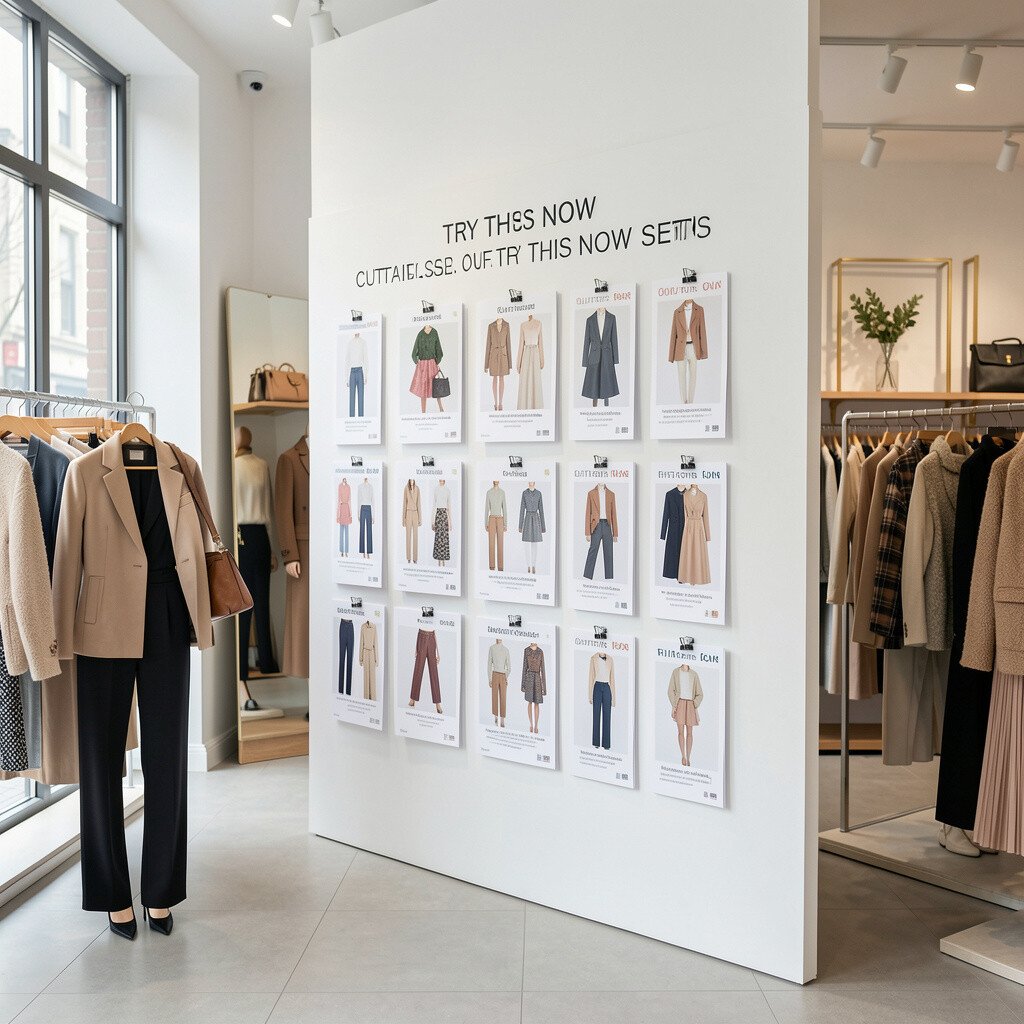
An outfit calendar wall helps your boutique feel current and encourages action. Display a small set of “try this” looks that you change often, so customers feel like they’re stepping into what’s new.
Use simple grid cards and place each set with one top, one bottom, and one optional layer, plus a note about the vibe. The benefit is that customers stop thinking about how to style and start imagining themselves wearing it. For practical tips, keep the sets realistic for your local climate and your customer’s lifestyle so the looks don’t feel far-fetched.
Personalize your calendar by using names like “Friday polish” or “Sunday comfort,” based on what your community responds to. Costs can be managed by using printed cards and swap sleeves instead of new frames each time. This setup also fits current trends that emphasize “outfit formulas,” because it turns shopping into quick decisions with a clear path.
13. Lighting-Led Fabric Spotlight Wall
Lighting-Led Fabric Spotlight Wall
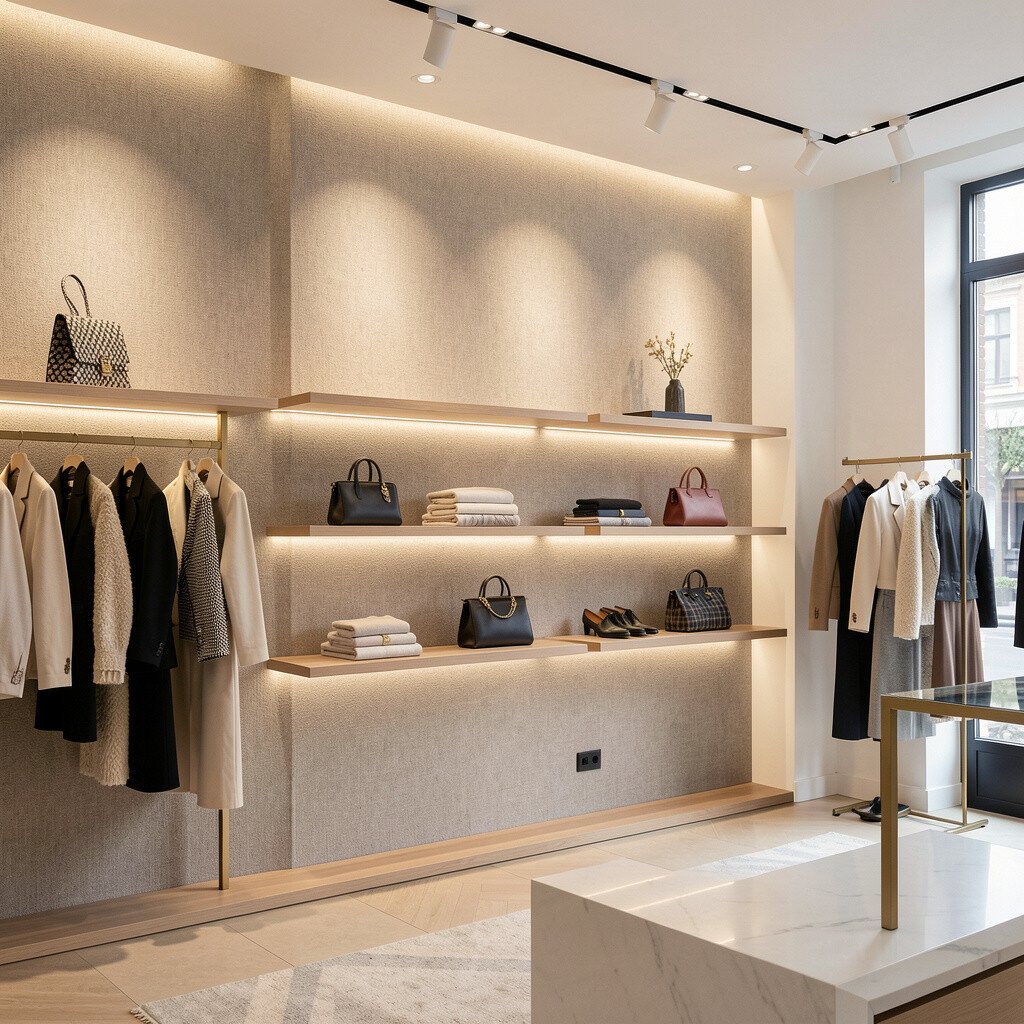
Create a fabric spotlight wall with focused lighting that makes materials glow like they’re being photographed. Place spotlight fixtures above key sections so satin sheen, denim wash, and knit texture all look extra rich.
This display feels unique because it’s more about mood and detail than just arrangement. Customers benefit because they can see quality clearly, which helps reduce uncertainty and returns. To keep things practical, choose one or two spotlight zones and rotate the spotlighted pieces instead of lighting the entire wall.
Personalize the effect by matching the spotlight choices to what sells best, like showing silky tops near evening bags or highlighting cozy sets near layering accessories. Cost considerations matter here, so start with affordable LED spot options and make sure your mounting stays safe and secure. Stay aligned with trends in elevated basics by highlighting quality fabrics and clean silhouettes that look sharp in any lighting.
14. Custom Nameplate Wall for Local Signature Style
Custom Nameplate Wall for Local Signature Style
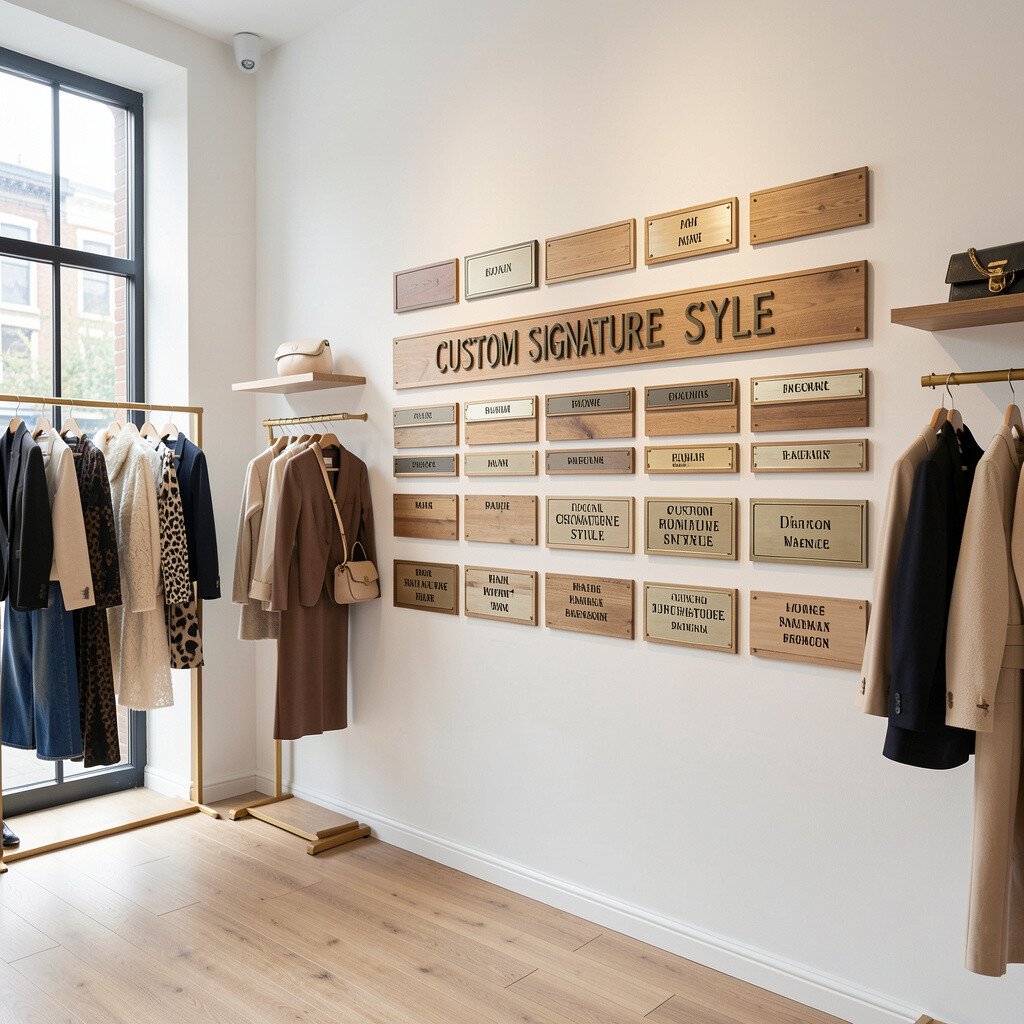
A nameplate wall celebrates your boutique identity by adding small labels with your signature styling names. It can feel elegant and welcoming, especially when the labels are written in a warm tone that sounds like you.
Include small photo swatches or product shots beside each nameplate so the labels don’t feel decorative only. The benefit is strong personalization, because customers remember your style language and begin to associate it with outfits that fit them. Keep the setup practical by limiting the number of “signatures” you rotate, like three style moods that you update with new arrivals each month.
For cost considerations, use simple metal or acrylic nameplates and print your images in-house or through a local print shop. Make it unique by collaborating with local artists for one seasonal set of visuals or patterns, which adds community energy. Current trends in personalization and brand storytelling make this wall especially effective, since shoppers want to feel seen and understood when they walk into a boutique.