Pick one main “frame” for the dining moment, like a large picture frame leaned behind the seating or an archway made from thin wooden strips. Then build the place settings to match the frame’s look, using matching plates, bold linens, and a color palette pulled from nearby artwork.
Choose a few repeated shapes, such as circular coasters or rounded napkin rings, so everything feels like a set. Keep the height varied by adding a tall candle cluster near the back and low bud vases near the front. For a personal touch, print small gallery-style labels on textured cardstock to sit beside dishes, but write the wording in your own friendly voice.
2. Build a Gallery Shelf Centerpiece With Rotating Finds
Build a Gallery Shelf Centerpiece With Rotating Finds
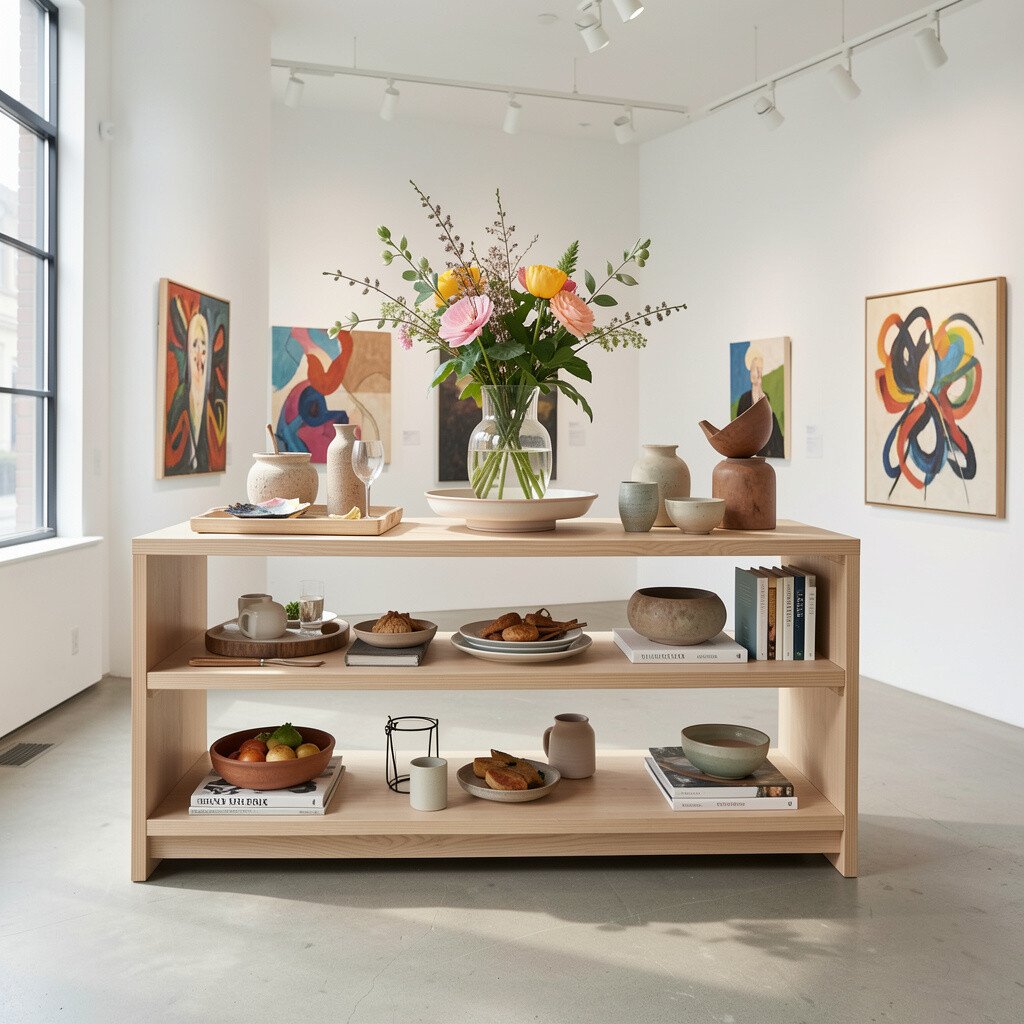
Use a narrow wall shelf or floating ledge to display edible “sculptures” that guests can admire before they eat. Stack items like citrus slices, herb bundles, and small jars of sauces so they look neat from every angle.
Rotate your shelf every course so the dining area stays fresh and surprising. For practical planning, place plates at the side of the shelf so servers can clear space quickly without bumping the display.
Choose durable materials like glass jars and ceramic bowls, because they handle movement better than delicate props. Add a trend-forward touch by mixing one unexpected texture, such as glossy pickles beside matte bread chunks. For cost control, reuse jars from pantry staples and focus money on one statement shelf or one standout serving board.
3. Turn a Corner Into a Mini “Still Life” Table Scene
Turn a Corner Into a Mini “Still Life” Table Scene
Dedicate one corner of the gallery to a still life that looks painted, even though it’s actually edible. Set a draped cloth over a small table and arrange fruits, flowers, and bread like a classic painting.
Work with contrasts, such as deep plum berries near bright greens, to make the scene pop in photos. Include one “anchor” object like a vintage pitcher or a sculptural ceramic bowl so the eye knows where to rest.
Personalize by adding one small piece of your story, like a spoon from your kitchen collection or a local market label on each jar. Keep it practical by using food-safe containers and covering anything messy with a clear runner or tray.
4. Make the Plates Look Like Art Cards With Color Studies
Make the Plates Look Like Art Cards With Color Studies
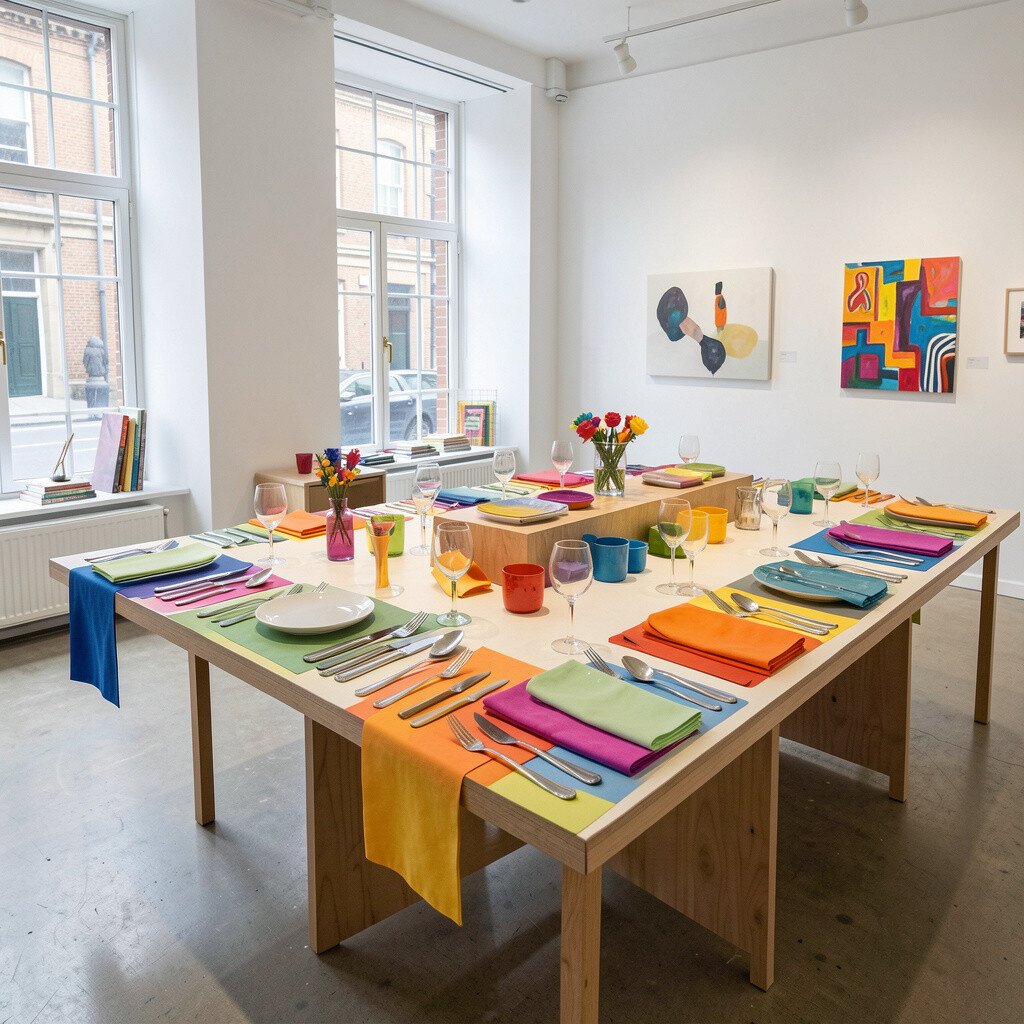
Instead of standard place mats, try color-study cards that mimic gallery signage. Use thick paper or thin cardstock to create small panels under each plate, using paint swatches or simple block colors that match your art wall.
Then tie the food styling to the same color study so the display looks intentional, not accidental. A great benefit is that guests can quickly find their seats, especially in busy events.
5. Create a “Shadow and Light” Dining Path Across the Floor
Create a “Shadow and Light” Dining Path Across the Floor
Plan your dining arrangement so light makes patterns across the tablecloth and the wall behind it. Use floor lamps, string lights, or candlelike LEDs and place them at angles that create long shadows.
When guests walk in, the lighting becomes part of the welcome, and the dining display looks more dramatic without extra décor. Keep it practical by using stable bases and cool-to-touch bulbs, especially if kids or long dinners are involved.
For uniqueness, consider projecting soft shapes from a gobo or a small projector onto a plain wall, then echo those shapes in napkin folds. This trend of “atmosphere-first” dining styling is especially popular because it makes even simple meals feel cinematic.
6. Use a Long Communal Table Like a Gallery Walkway
Use a Long Communal Table Like a Gallery Walkway
Set up a long table so guests feel like they’re strolling through a corridor of art. Choose one steady line from end to end and keep the centerpiece rhythm consistent.
Benefits show up right away because communal seating encourages conversation and makes the space feel lively. For personalization, scatter small framed photos of your menu origins, like where herbs were grown or what bakery you love.
To keep costs reasonable, focus on one large runner and a few repeated vessel styles, like the same glass tumblers in different heights. This is a current style move that pairs well with minimalist galleries because it looks clean and modern.
7. Make Place Settings “Collectible” With Mini Art-Tags
Make Place Settings “Collectible” With Mini Art-Tags
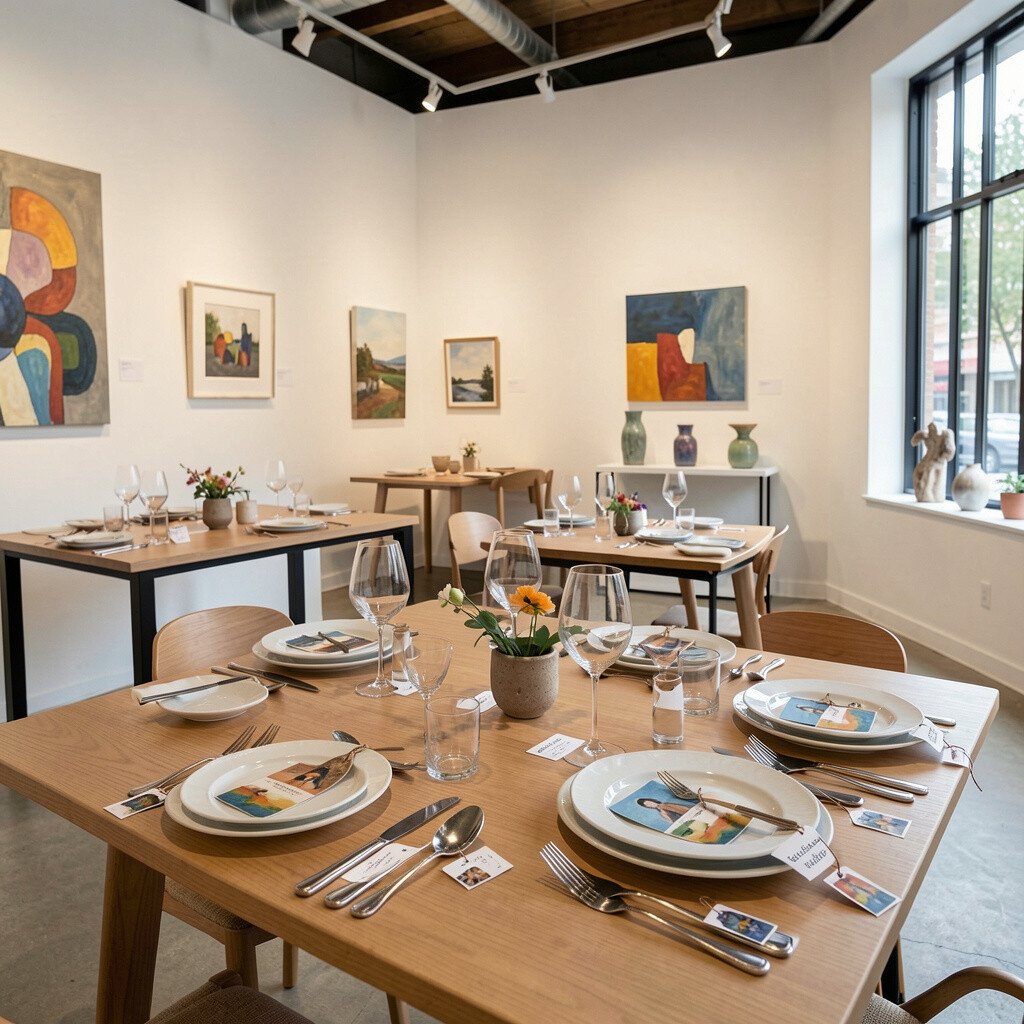
Give each guest a tiny art-tag that sits under their napkin like a museum label. Write short, warm notes that connect to the dish, your venue vibe, or the artist theme you’re working with.
Guests love this because it turns a basic seat into a small keepsake moment. Keep it practical by using tags made from waterproof material or lamination so spills don’t ruin them.
For personalization, let each tag match the guest group, like kid-friendly messages, vegetarian highlights, or a “bring your own story” prompt. It also helps guests remember flavors, which can lead to easy compliments and repeat orders.
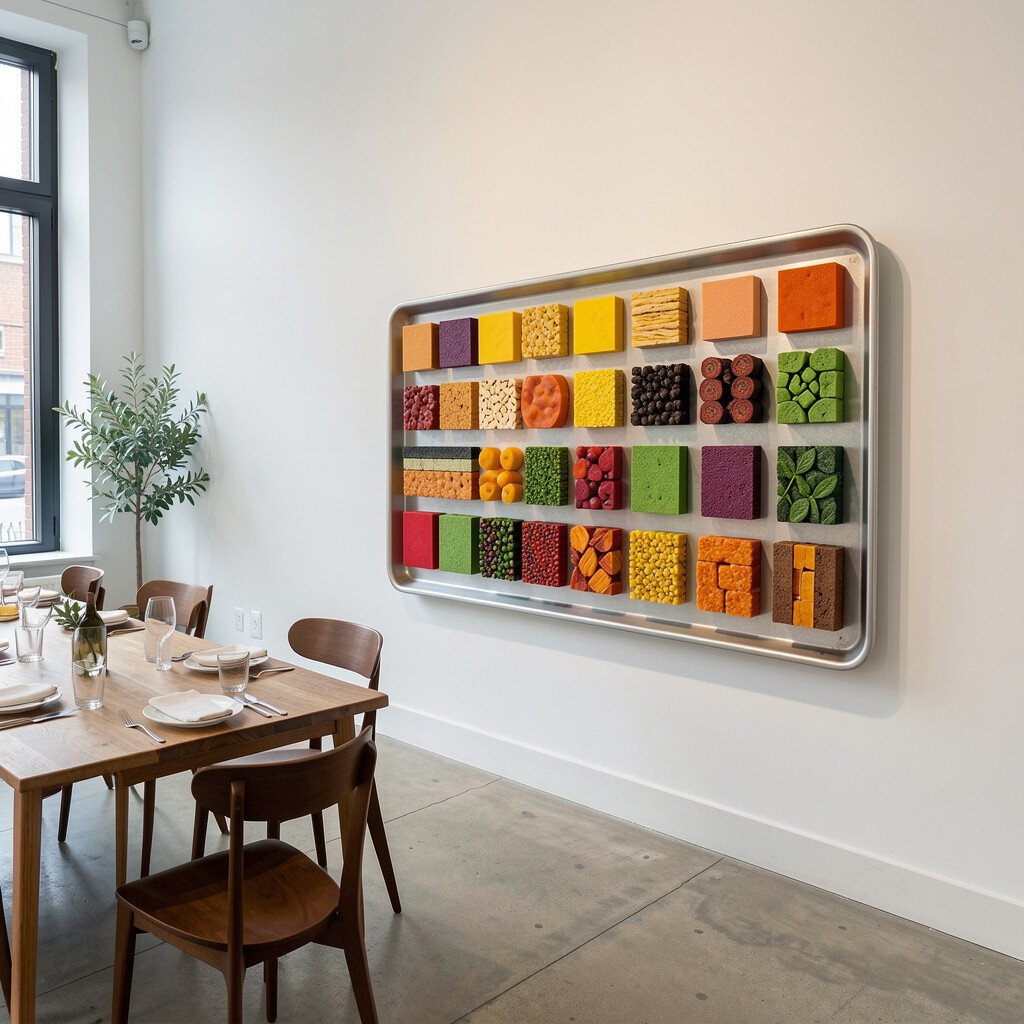
Hang or lean a series of small trays on the wall behind the dining area, each tray holding a different color grouping. Think of it like a color-block painting, except the paint is edible.
Use bright elements like roasted peppers, layered dips, and sliced vegetables so the colors feel bold and fresh. This approach is unique because it turns the wall into a living menu board.
9. Use Sculptural Vessels for Utensils and Napkins
Use Sculptural Vessels for Utensils and Napkins
Choose unusual holders for utensils, such as ceramic cups with handles, carved wood bowls, or tall glass cylinders. Arrange napkins with folds that look intentional, then anchor the whole look with those sculptural vessels.
This gives instant visual depth and makes the dining display feel designed, not merely decorated. For practical tips, keep utensils easy to grab by grouping them the same way at every place setting.
Consider cost by using thrifted pieces and doing a quick wipe-down and polish. Personalize by painting one small set of vessels to match your event color, then keep the rest neutral so the painted ones feel special.
10. Pair Vintage Frames With Serving Platters
Pair Vintage Frames With Serving Platters
Slip serving platters or trays into vintage frames so food looks like a framed exhibit. Place the framed platters along a wall or over a display credenza near the seating.
Choose frames with different sizes for a playful gallery mix, but keep the platter shapes consistent for order. Guests benefit from clear “where to serve” visuals that reduce crowding around the food table.
11. Create a “Botanical Poster” Table With Herbs as the Design
Create a “Botanical Poster” Table With Herbs as the Design
Design your table like a botanical poster by using herbs, edible flowers, and leafy greens as the main styling elements. Arrange them in layered bands across the table so it feels graphic and organized.
This benefits the whole experience because herbs add real scent, which makes the gallery mood feel warm and inviting. For a unique twist, use colored stems and vary leaf shapes so the table looks like it’s illustrated.
Personalize by labeling the herbs with tiny strips of paper tied around stems, but write the notes in your own style. Cost considerations are easier here because herbs can be grown, bought in bunches, or sourced from a community garden.
12. Make Dessert a Planned “Exhibit Wall” Instead of a Single Table
Make Dessert a Planned “Exhibit Wall” Instead of a Single Table
Turn dessert into a set of small stations placed along a wall like separate artworks. Use staggered heights with cake stands, risers, and clear trays so each dessert feels like its own feature.
This design choice boosts uniqueness because guests can choose what to see first, and it reduces bottlenecks. Keep it practical by labeling allergens clearly in a simple card style so people feel safe and informed.
For personalization, include a signature dessert that matches your venue art theme, like citrus for a bright abstract show. Current trends favor “small bites with big styling,” so mini pastries on tiered stands fit right in.
13. Arrange Cutlery and Napkins Like a Colorful Installation
Arrange Cutlery and Napkins Like a Colorful Installation
Lay napkins in neat, bold folds and position cutlery with the same careful spacing you’d see in a gallery installation. Choose one dominant accent color and repeat it through napkin bands, candle sleeves, or ribbon ties.
Guests feel the benefit because the dining area looks tidy and intentional, which makes the meal feel smoother. To keep it practical, prepare napkin folds in advance and store them stacked so they stay crisp.
14. Create a Drink Station With Glassware “Collections” by Theme
Create a Drink Station With Glassware “Collections” by Theme
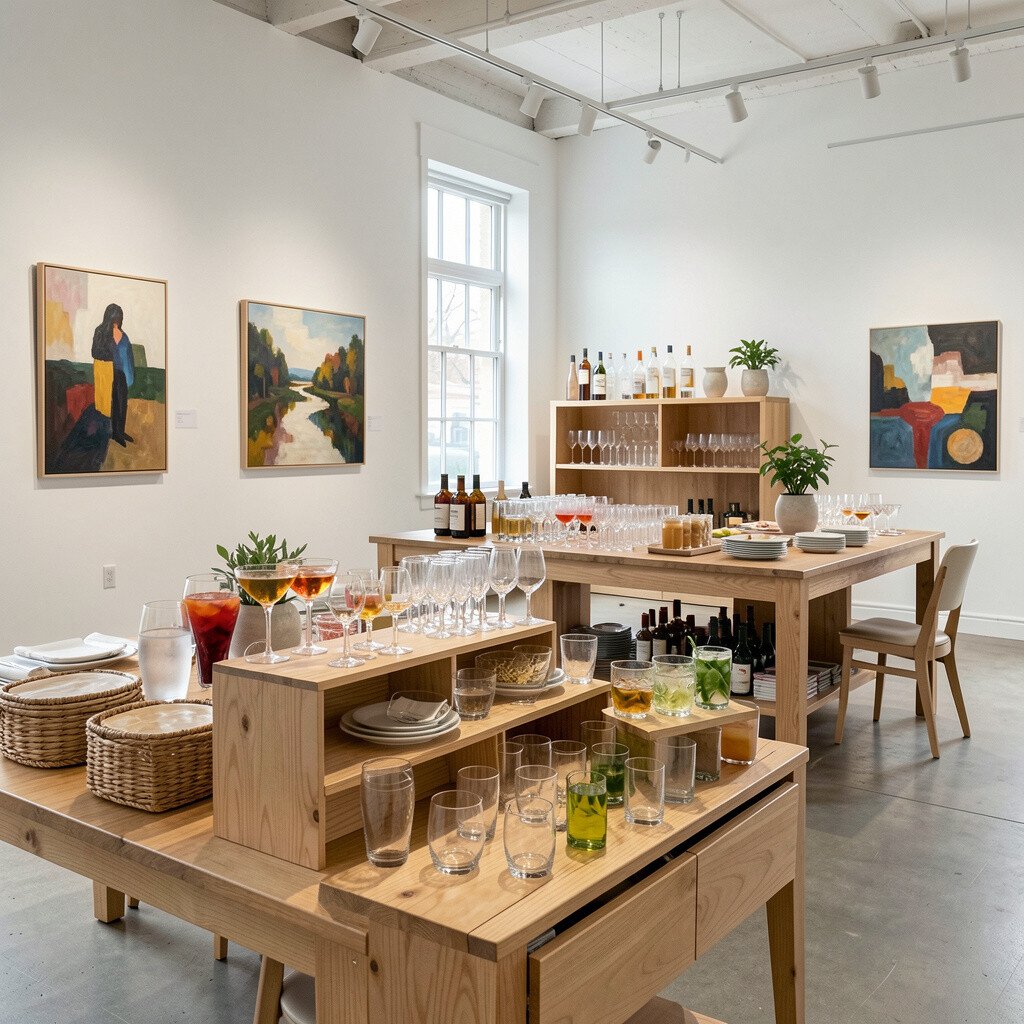
Set up a drink station where glassware is grouped by theme, like clear tumblers, amber goblets, or tinted wine glasses. Arrange them on risers and trays so the collection looks like a curator’s shelf.
This is a friendly way to add personality because guests can pick a glass that matches their mood. For cost considerations, mix thrifted pieces with a few matching sets, then keep the most expensive glasses for signature drinks only.
Personalize by adding small stir sticks with tiny charms or by labeling each drink with a short line inspired by the artwork. A practical tip is to keep water accessible in a separate, easy-grab pitcher station so everyone stays comfortable.
15. Use Clear Acrylic Runners to Float the Centerpieces
Use Clear Acrylic Runners to Float the Centerpieces
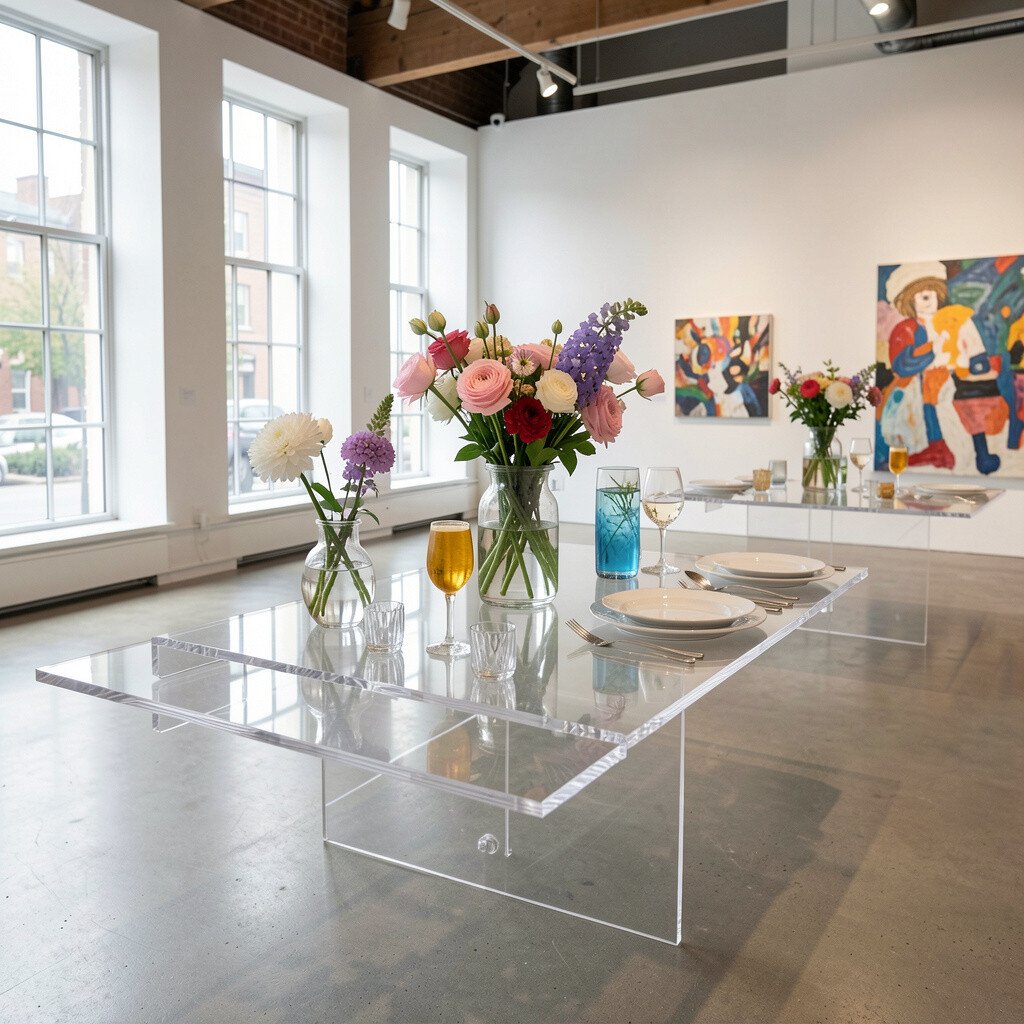
Try a clear acrylic runner on the table so centerpieces appear to “float” above the surface. Place shallow bowls, thin slices of fruit, or reflective elements on top so light catches them as people move.
This creates a modern, gallery-like look that feels light and clean, even with lots of dishes. Keep it practical by using non-slip pads under the acrylic and placing heavier items near the center for stability.
16. Stage a Shared “Seasonal Market” Display Beside the Seating
Stage a Shared “Seasonal Market” Display Beside the Seating
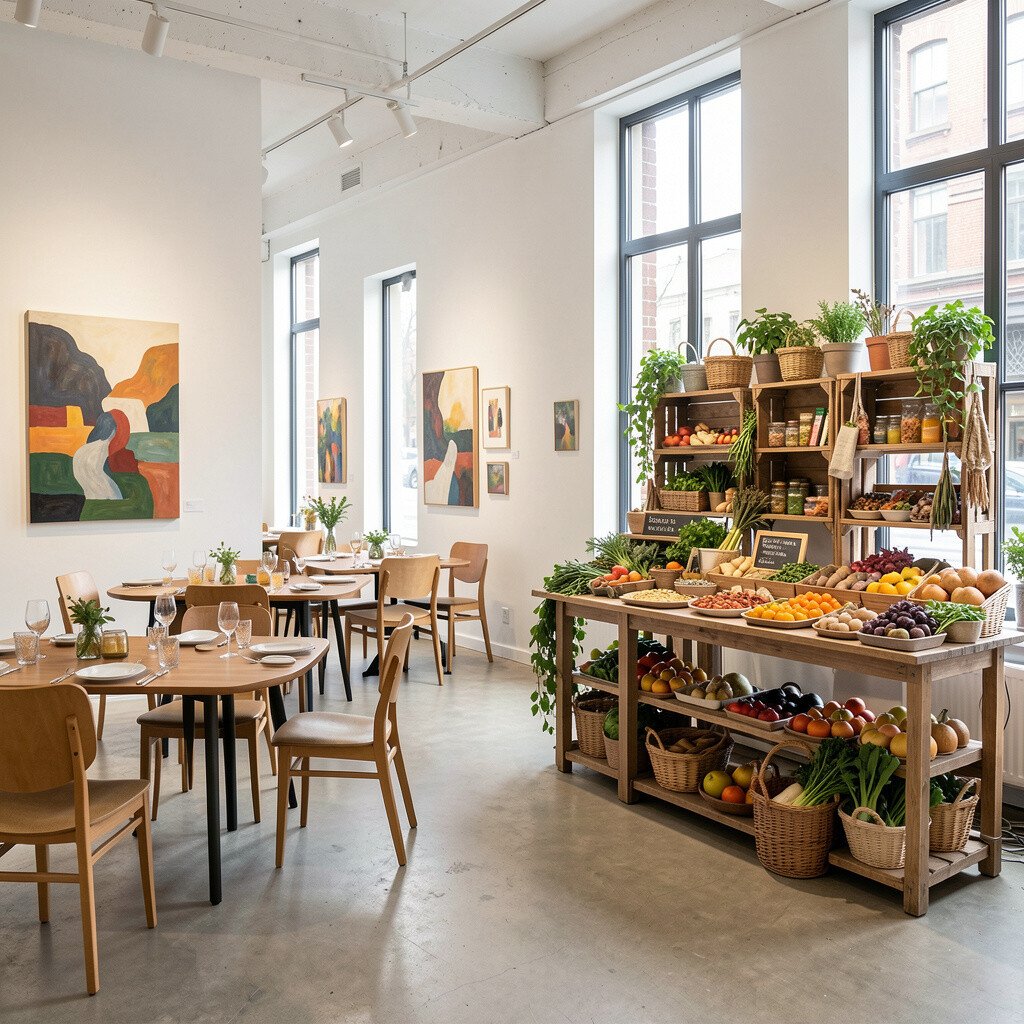
Create a market-style display with seasonal produce, bread, and small jars placed close enough to feel interactive. Add a few baskets, wooden crates, and simple handwritten cards that match the gallery vibe.
The benefit is that guests can build plates at their own pace, which lowers the pressure during busy moments. Personalize the display by including one local favorite, like a regional cheese or a community-made jam.
For uniqueness, shape the produce into gentle patterns, such as a rainbow curve or a repeating spiral of greens. Cost considerations can stay friendly when you buy in bulk for items that look high-end, then use smaller portions of pricier ingredients as finishing touches.
17. Let One Wall Artwork “Host” the Dining Styling
Let One Wall Artwork “Host” the Dining Styling
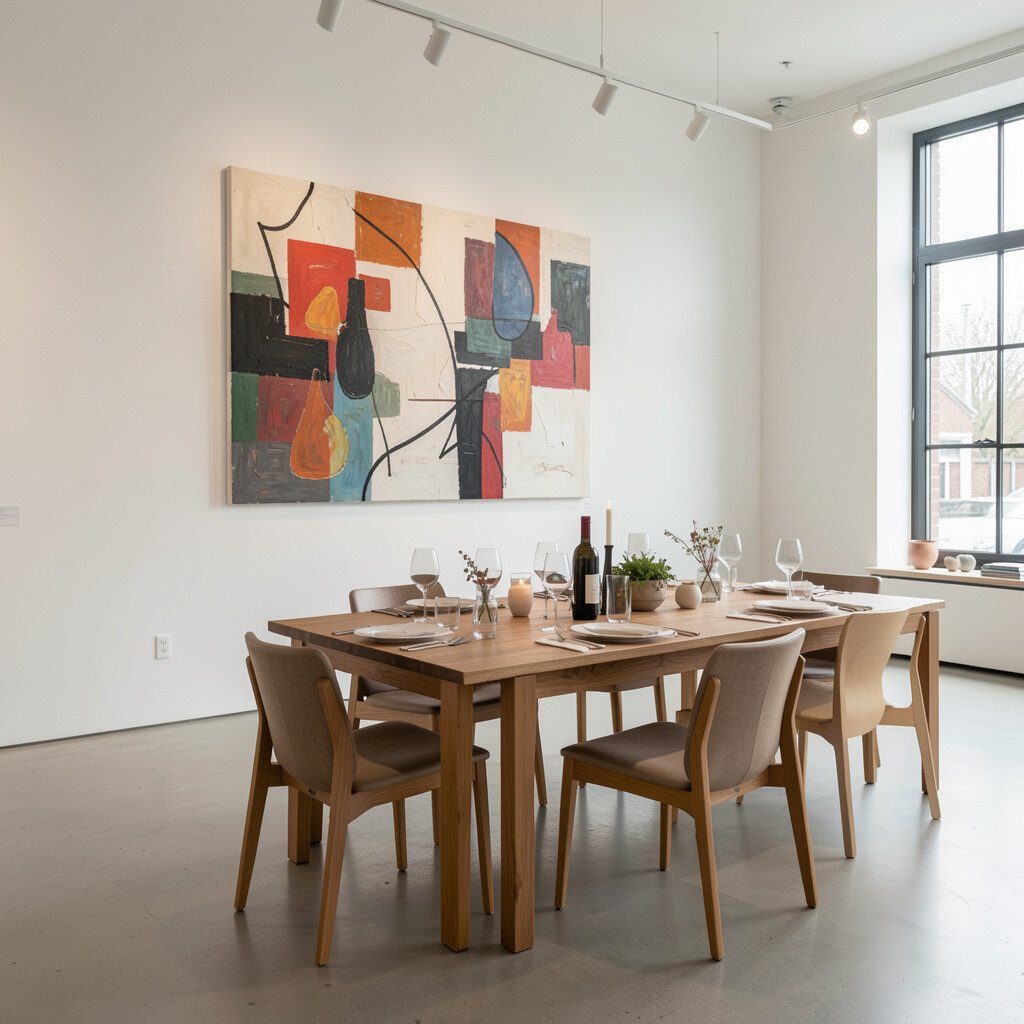
Pick a single standout artwork and build your table styling to echo it, like using the same dominant colors or the same visual shapes. If the art has circles, use round crackers, circular coasters, and round fruit slices. If the art is sharp and angular, choose crisp garnishes and geometric napkin folds.
This method feels uniquely curated because it ties the dining moment to the gallery story. Guests benefit because the entire space feels cohesive, not like separate rooms glued together.
For practical tips, place the tallest centerpiece slightly off-center so it doesn’t block sightlines to the artwork. Personalize by adding a small “menu inspired by” note that relates to the piece, and choose cost-friendly materials like linen, glass, and seasonal produce to keep the look high impact.