A great workbench surface can make your whole setup feel ready for anything. The right material also helps you work cleaner, safer, and with more pride in every project.
With a few thoughtful choices, you can match your bench to your tasks, your tools, and even your style. Let’s get into practical ideas you can picture in your own space.
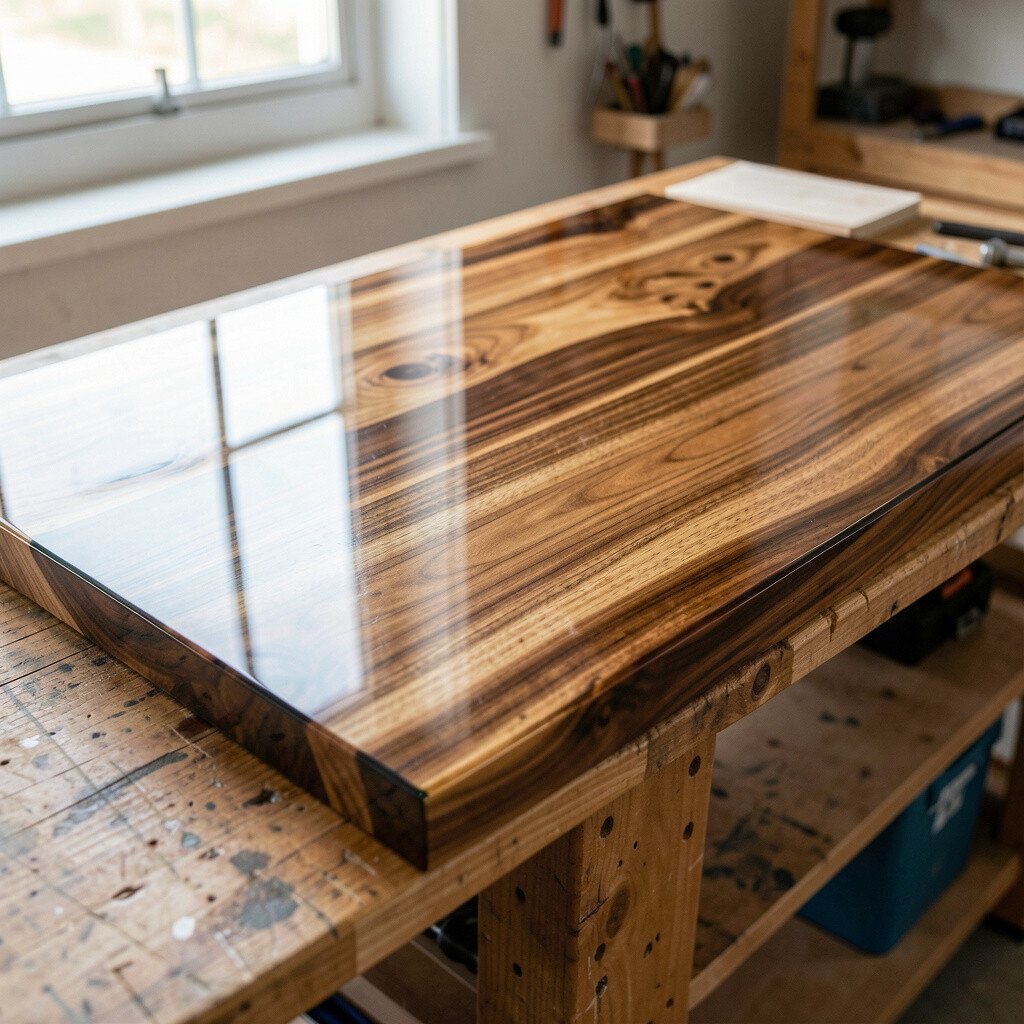
Imagine opening your drawer and seeing a warm wooden edge under a smooth, shiny top. An epoxy coating turns everyday lumber into a surface that looks sleek and stays easy to wipe down.
You get a glossy finish that resists spills from water, glue, and light workshop messes. For best results, seal the wood well, pour in thin layers, and use a dust-free curing area so it turns out clear and even. If you like personalization, tint the epoxy with a subtle color or add faint flecks for a “river rock” look. Budget-wise, it costs less than many stone options, but it does require patience and careful prep. A current trend is using tinted epoxy with minimalist tool setups because it photographs beautifully and hides wear.
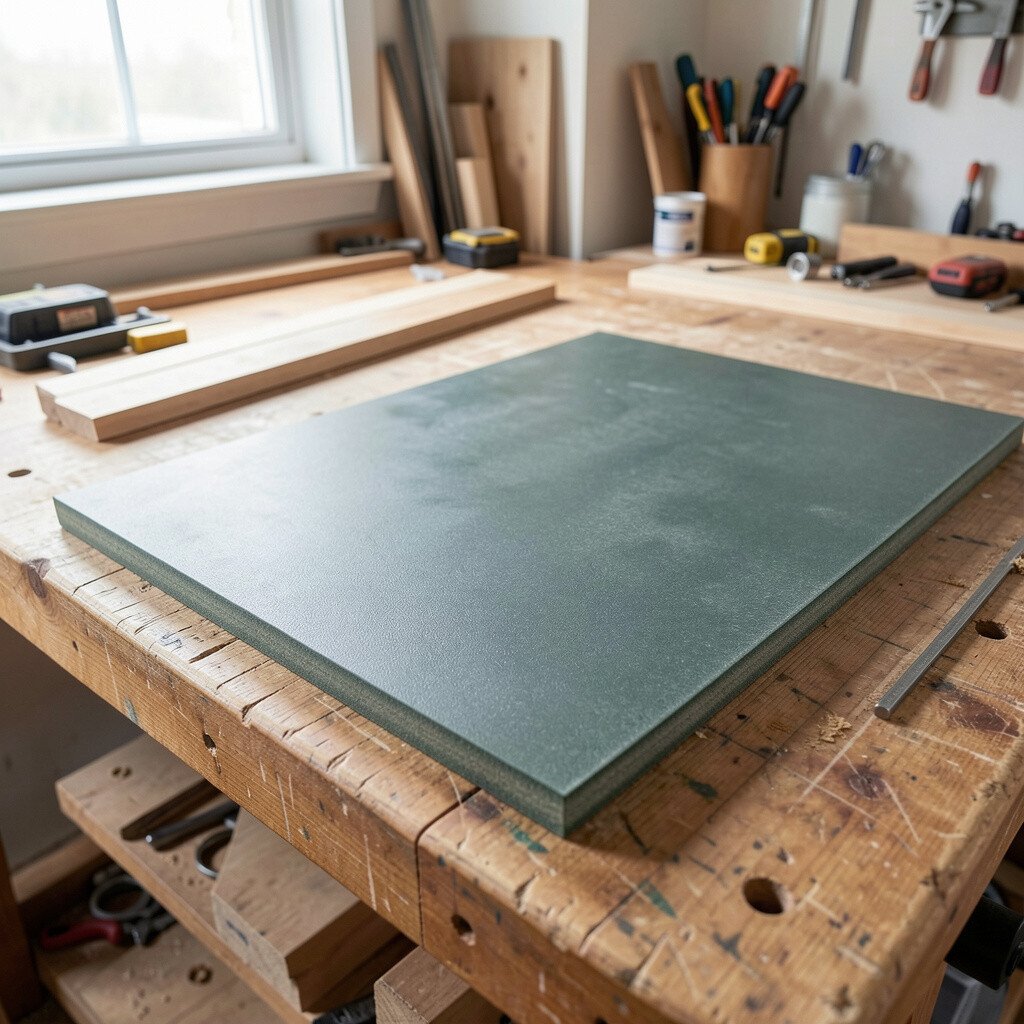
2. Replaceable Cutting Mats Embedded Flush
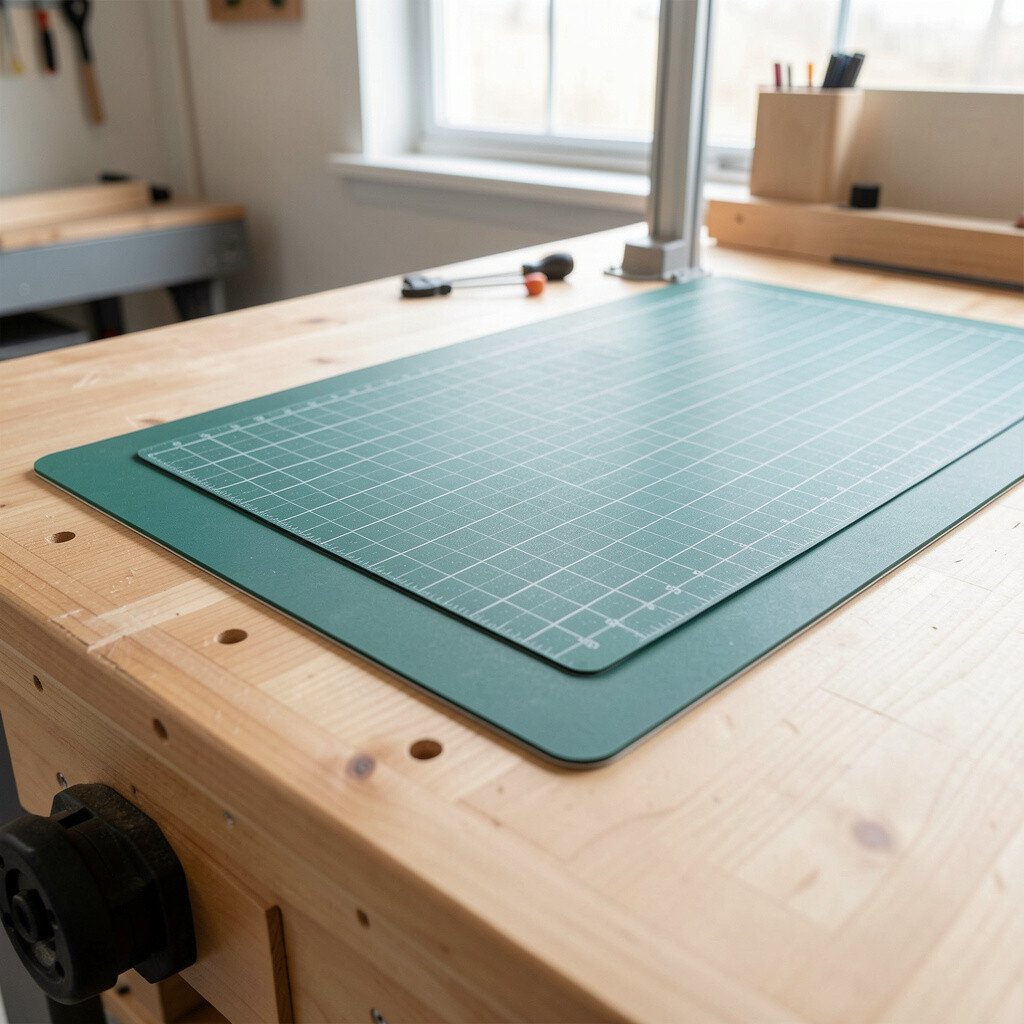
Replaceable Cutting Mats Embedded Flush
Picture a work surface that stays tidy even when projects get messy. Installing replaceable cutting mats flush with the top gives you a built-in sacrificial layer for sharp tools.
This setup helps prevent deep nicks and makes cleanup quick because you swap worn mats instead of sanding the whole bench. Choose a grid-friendly mat so measurements feel natural and consistent.
For personalization, pick mat colors that match your workshop theme, like muted greens or warm neutrals. Keep costs reasonable by choosing the mats that fit your bench dimensions and buying a few extras upfront. Many makers now prefer modular tops because they reduce downtime and keep the bench looking new longer.
3. Stainless Steel Sheet With Rounded Edges
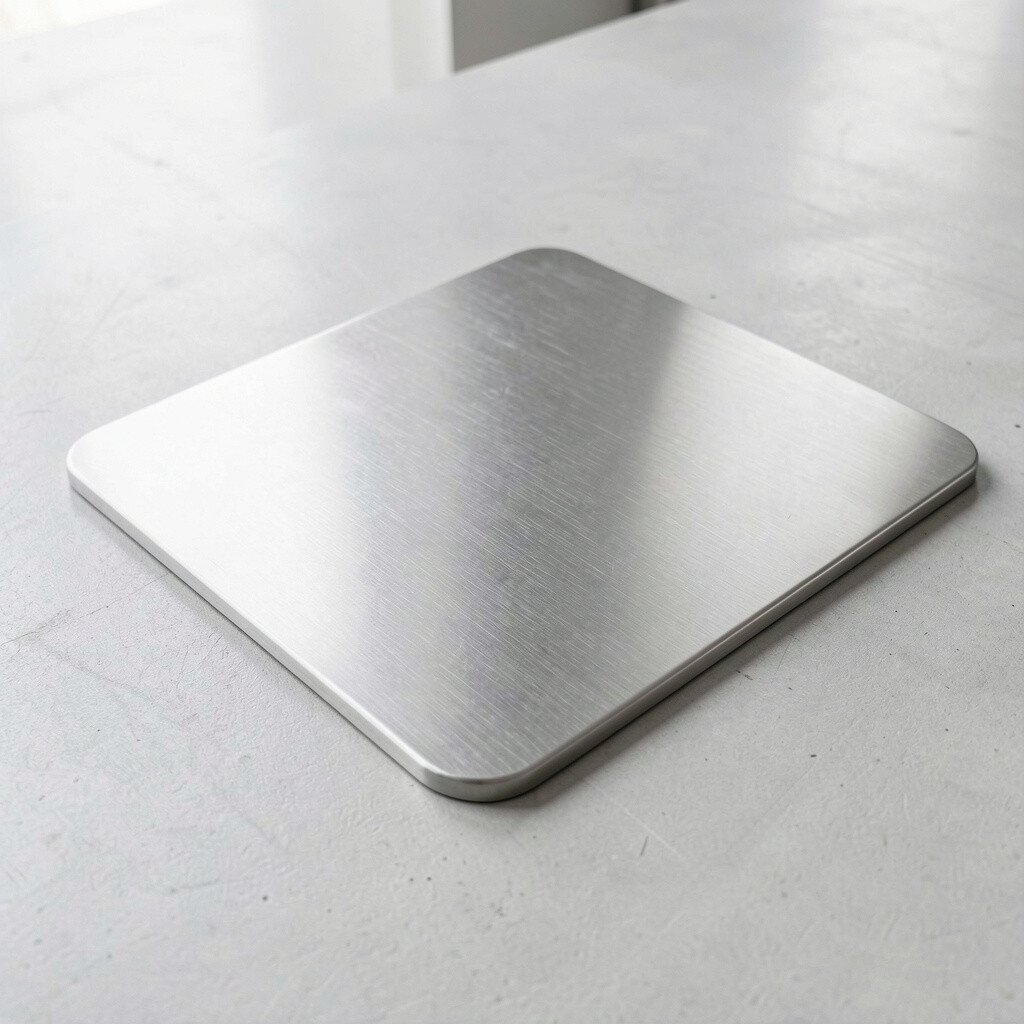
Stainless Steel Sheet With Rounded Edges
Think of the crisp look of a shop-grade bench where every spill wipes away with ease. A stainless steel sheet makes your work area feel tough, modern, and ready for metalworking and wet tasks.
You get a non-porous surface that resists rust and handles oils and cleaners without stains. Round over the edges or add a protective lip so dropped tools don’t chip corners.
For practical tips, attach the steel over a rigid base so it won’t flex and cause dents, and consider a sound-dampening layer underneath. Personalize by choosing brushed steel for a softer look or adding subtle layout marks on the surface. Cost considerations depend on thickness and size, but it often pays off with long-term durability. A current trend is the “clean shop” aesthetic, where stainless pairs nicely with organized tool walls and bright lighting.
4. Cork-Backed Work Surface For Quiet Accuracy
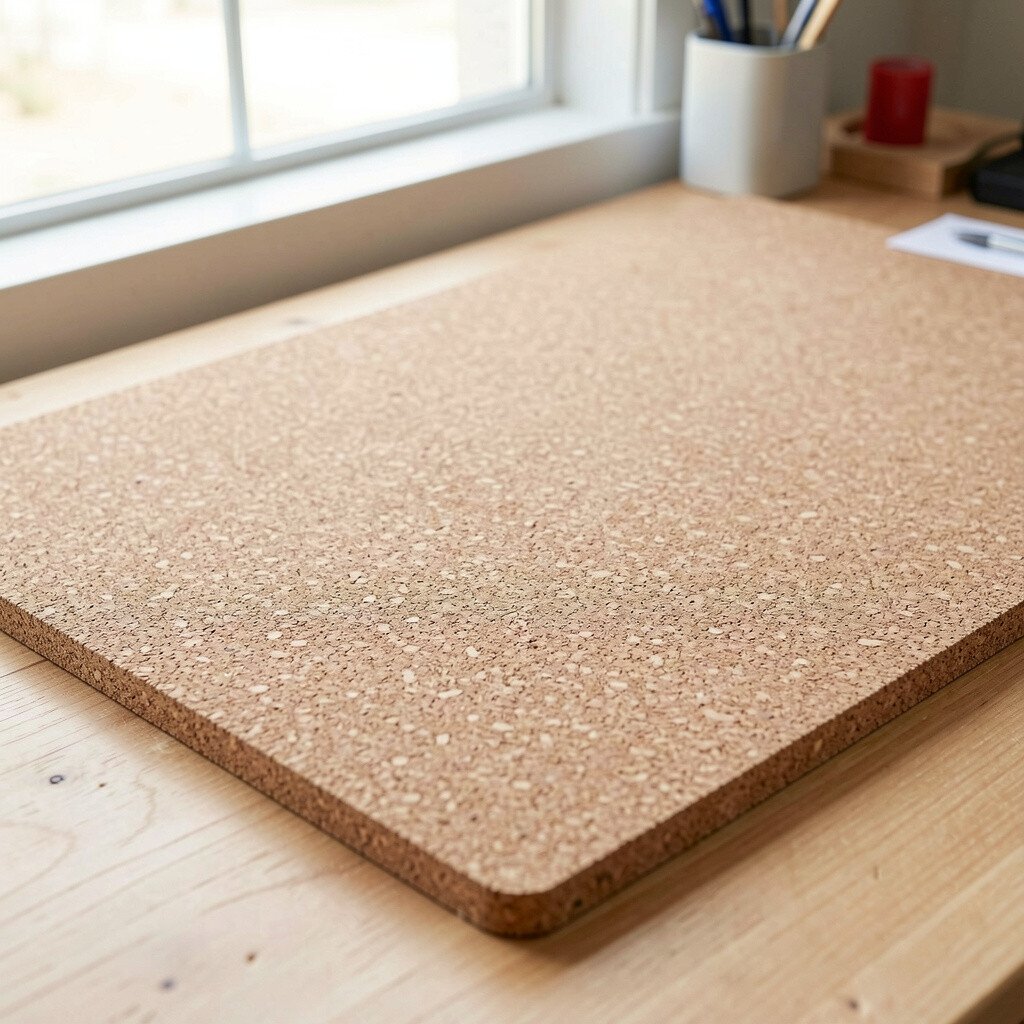
Cork-Backed Work Surface For Quiet Accuracy
Imagine a bench top that absorbs tiny impacts and keeps parts steady when you’re doing careful work. A cork-backed surface feels warm under your hands and helps reduce slip.
This is especially helpful for delicate assembly like small boxes, model pieces, and sanding between steps. Use cork sheets on top of a stable board, and finish with a thin seal so it stays wipeable.
5. Magnetic Steel With Removable Inserts
Magnetic Steel With Removable Inserts
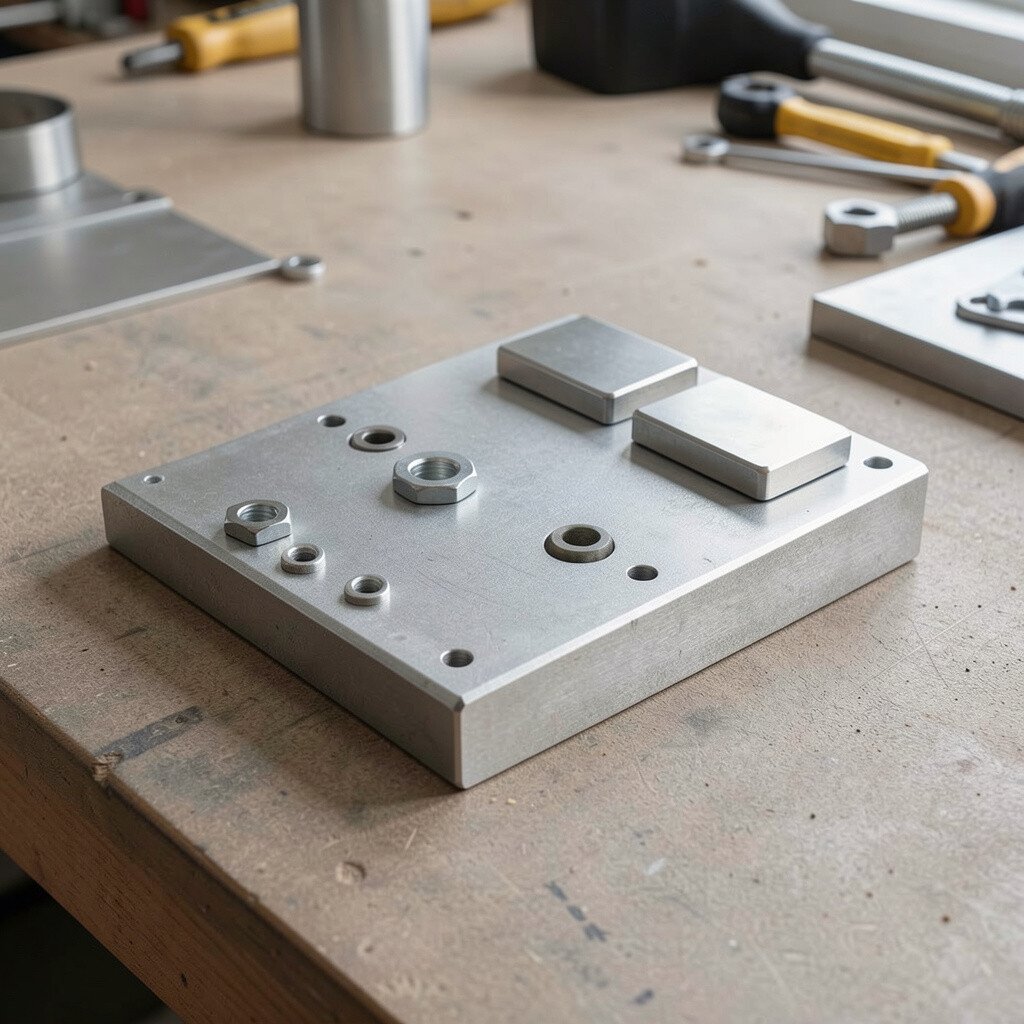
Picture a surface where tools and small metal parts snap into place like they belong there. A magnetic steel top with removable inserts keeps your workspace organized and makes setup faster.
You benefit from reduced clutter because screws, clamps, and little gauges stick where you need them. Choose inserts made for different tasks, such as a smooth area for layout or a rough area for grip.
For personalization, label magnets with simple color dots so you can grab the right size quickly. Consider cost by starting with a smaller magnetic sheet area and expanding later. Current trends favor “zones” inside one bench top, and removable panels are a clean way to create that look without building a whole new workstation.
6. Reclaimed Barn Wood With Epoxy Sealed Zones
Reclaimed Barn Wood With Epoxy Sealed Zones
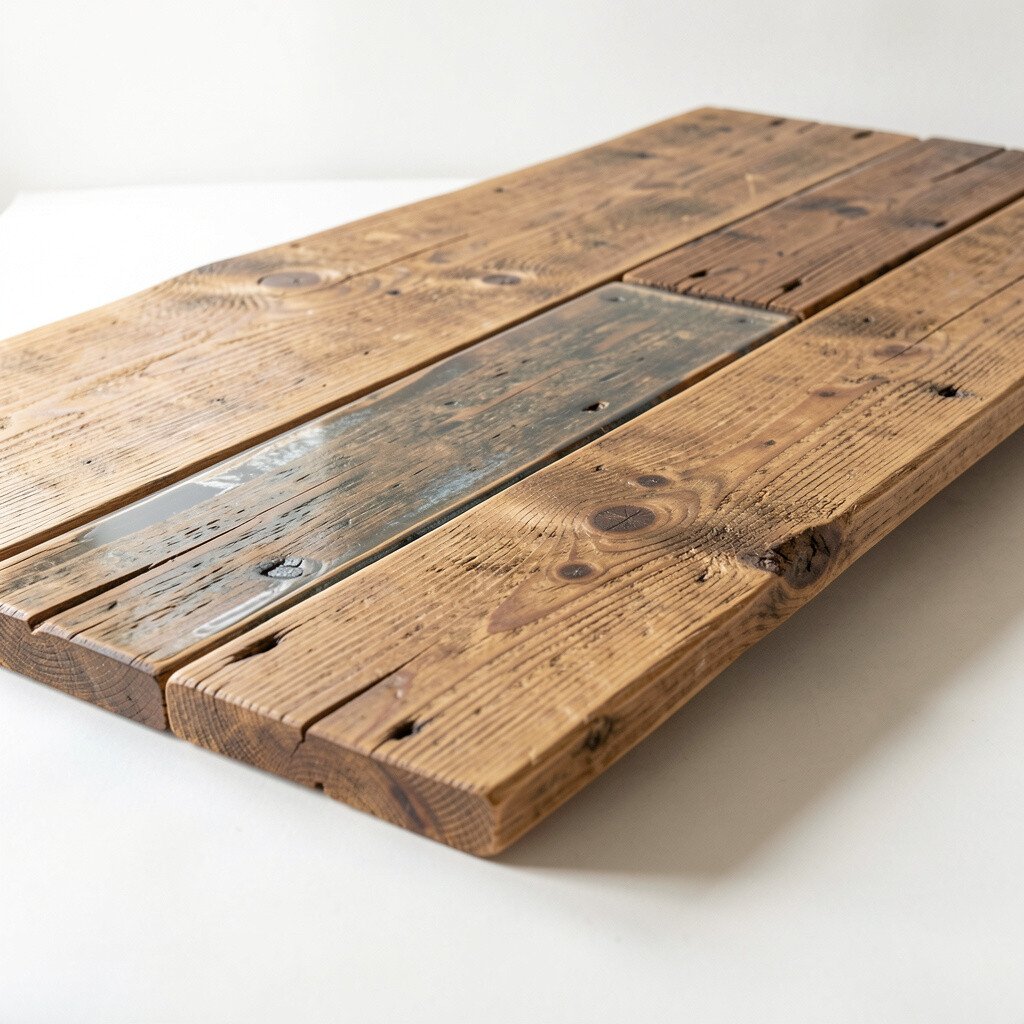
Imagine a bench that carries history and shows gentle grain lines even after years of use. Reclaimed barn wood brings character, and sealing it in zones keeps parts of the top protected.
You get a warm, rustic feel that makes the entire workspace look lived-in and inviting. Use epoxy only where messes happen most, like the center for gluing and cutting, while leaving lighter areas for layout.
7. Butcher Block With Oil Finish And Deep Conditioning
Butcher Block With Oil Finish And Deep Conditioning
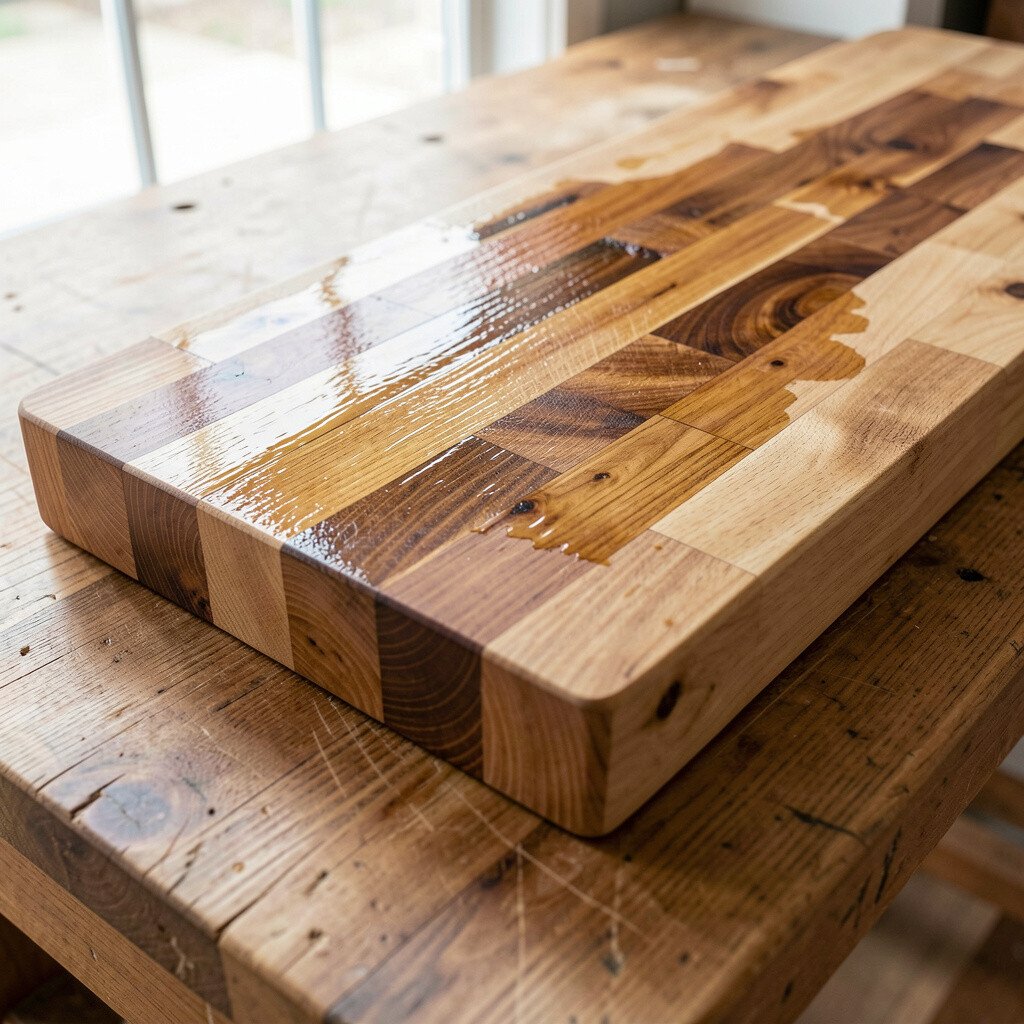
Picture thick wood with a honey tone, warm enough to feel friendly even on long workdays. A butcher block top is classic for a reason, because it’s solid, easy to refresh, and comfortable to stand at.
The benefit is natural resilience, so minor dings can be sanded out later. For practical tips, oil it regularly, wipe up spills quickly, and avoid soaking it with water or strong solvents. Personalize by staining the edges darker while keeping the top lighter for a two-tone look. Cost varies by wood type, but you can often find quality options without going overboard. A current trend is using “maintenance-friendly” surfaces, where periodic oiling is built into a routine instead of ignored.
8. Slate Or Stone Tile Set Into A Sturdy Base
Slate Or Stone Tile Set Into A Sturdy Base
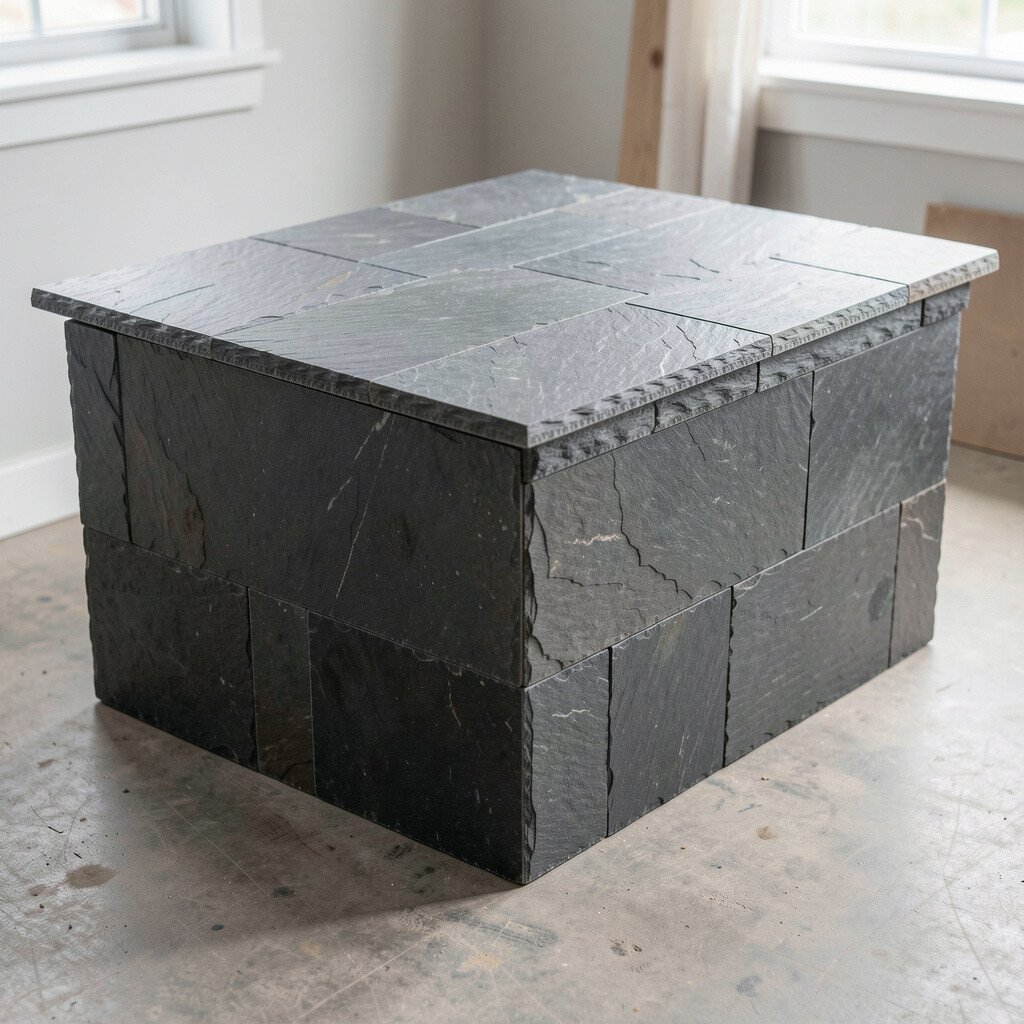
Imagine a cool, flat surface that stays steady when you’re measuring, tracing, or working with heat. Stone tile insets give you a premium look and make the bench feel like a serious studio.
You benefit from hardness and scratch resistance, and a tile top helps protect the underlying base from heavy use. Grout and adhesive choices matter, so use a strong, appropriate setting system and consider sealing the tile surface.
9. Laminated HPL With Impact-Resistant Top Layer
Laminated HPL With Impact-Resistant Top Layer
Think of a bench that looks bright and clean, with a top that wipes down in seconds. High-pressure laminate gives you a durable layer that handles everyday workshop wear.
This option works well for mixed projects because it resists stains and keeps a smooth feel under hand tools. For practical tips, use an impact-resistant laminate and seal the edges so moisture and spills don’t creep in. Personalize with patterns like matte black, speckled finishes, or subtle wood-look textures. Cost considerations are usually friendly compared to metal or stone, and you can often build the top as a DIY panel. A current trend is using bold laminate colors in small workshops because it makes the space feel fresh without major renovations.
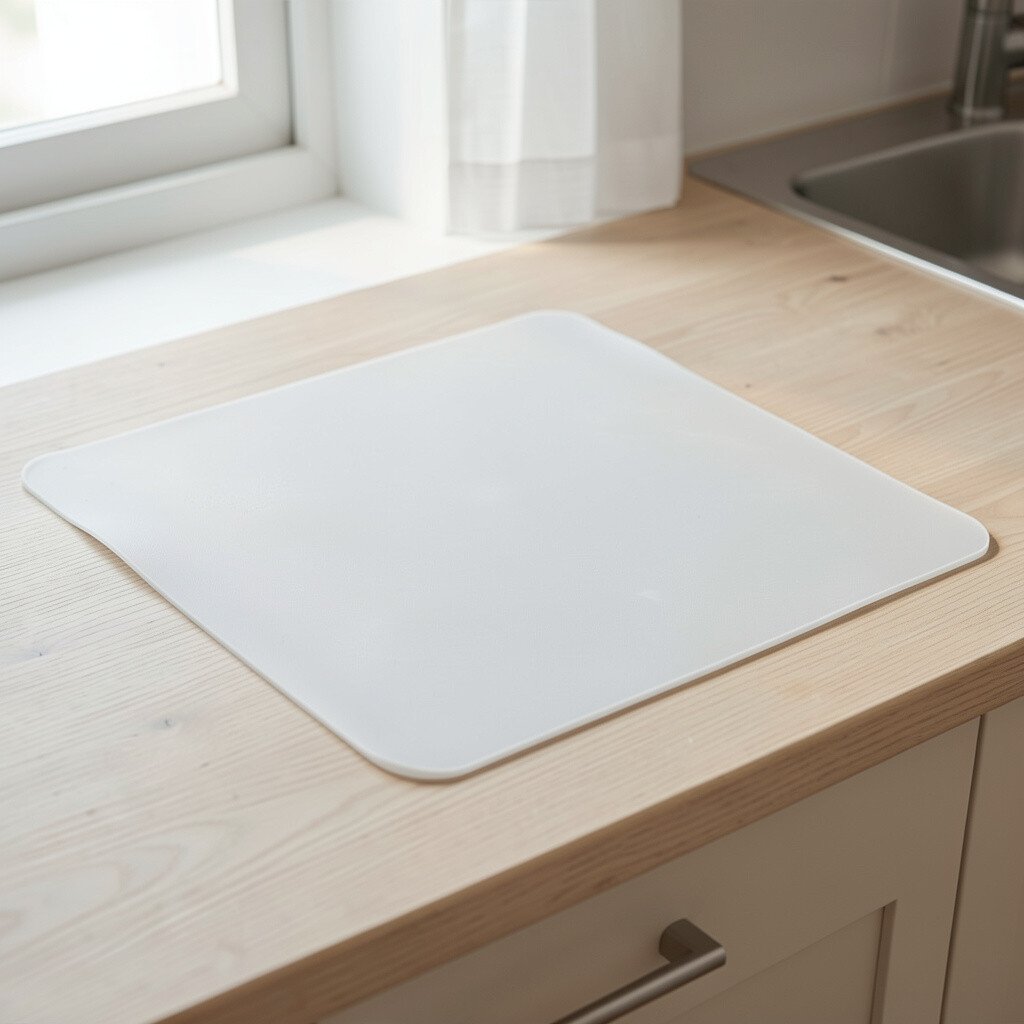
10. Silicone Baking Mat Top For Heat And Spill Control
Silicone Baking Mat Top For Heat And Spill Control
Imagine a flexible surface that gently grips clamps and helps you catch small spills without drama. Laying a silicone baking mat over a stable board creates a soft, protective working layer.
You get easy cleanup, good heat tolerance for small tasks, and a non-stick feel when you’re working with adhesives. For practical tips, secure the mat with removable straps or corner anchors so it stays flat while you work. Personalize by trimming to size and using a mat color that matches your tool organizers. Cost is typically low to mid, and you can replace the mat often without guilt. This approach is trending in maker spaces because it’s practical, reversible, and great for people who want quick setup changes.
11. Fiberglass Or Resin-Backed Shop Panel
Fiberglass Or Resin-Backed Shop Panel
Picture a bench surface that looks smooth like a garage worktop, but still feels tailored to your projects. A fiberglass or resin-backed panel provides a tough skin for high-traffic workshops.
You benefit from strong resistance to moisture, small impacts, and chemical spills from common workshop products. Practical tips include installing on a rigid base, sanding edges carefully, and sealing any cut seams. Personalize by choosing a color finish that matches your lighting and storage so the bench feels like part of the room, not a separate island. Cost considerations are often reasonable when you buy panels from reputable suppliers, and you can avoid expensive custom fabrication. A current trend is using durable composite surfaces because they look modern and keep maintenance simple.
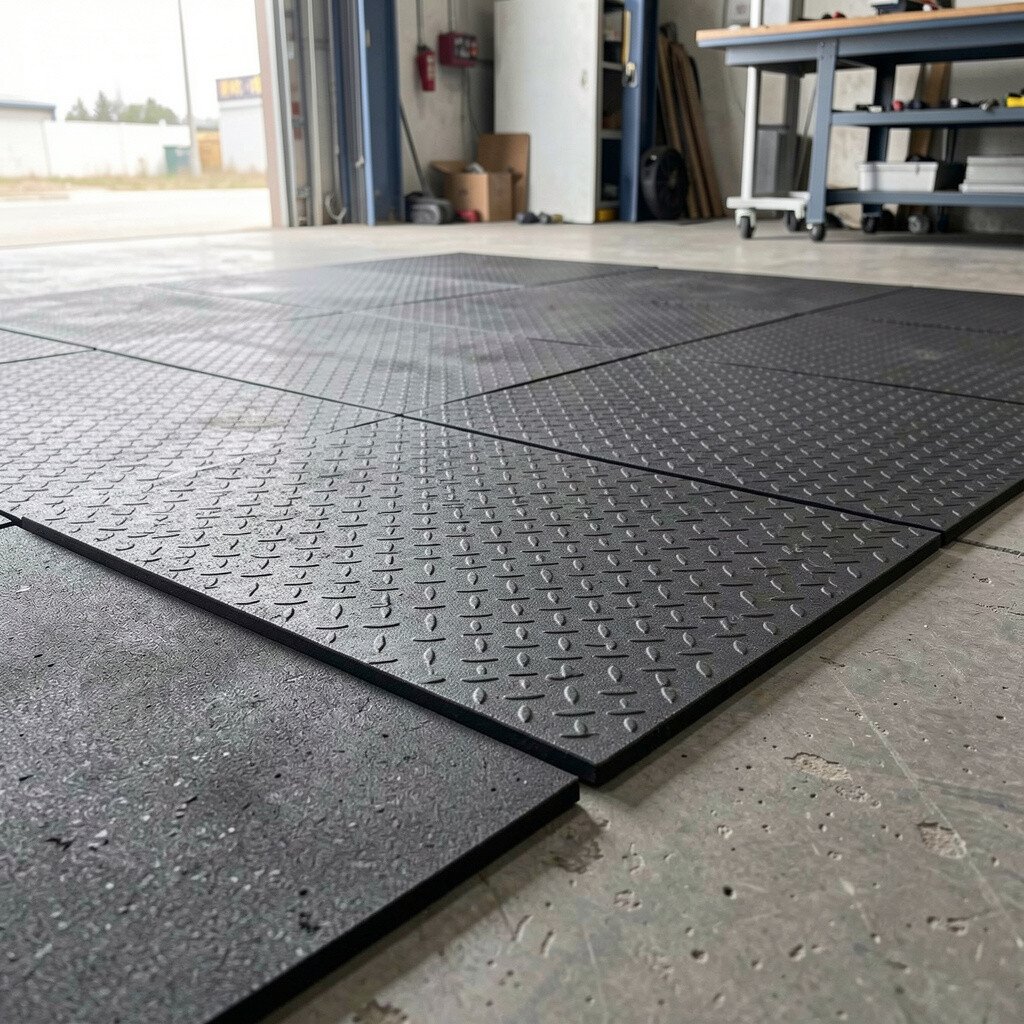
12. Industrial Rubber Flooring Tiles For Grip And Comfort
Industrial Rubber Flooring Tiles For Grip And Comfort
Imagine working for hours with a surface that feels steady and forgiving under dropped tools. Rubber flooring tiles bring extra grip and reduce bounce when you’re using small machines or hand tools.
You benefit from noise reduction and safer part handling, especially when smaller pieces slide easily on smooth wood. For practical tips, lay tiles tightly and trim clean edges so you don’t create gaps where dust collects. Personalize with color choices, like dark graphite or warm caramel, and combine tile sizes to form “task blocks.” Rubber is often cost-friendly compared to stone, and you can swap one tile if it wears out. Many current workshops lean toward rubberized surfaces because they protect both tools and feet while keeping the bench comfortable.
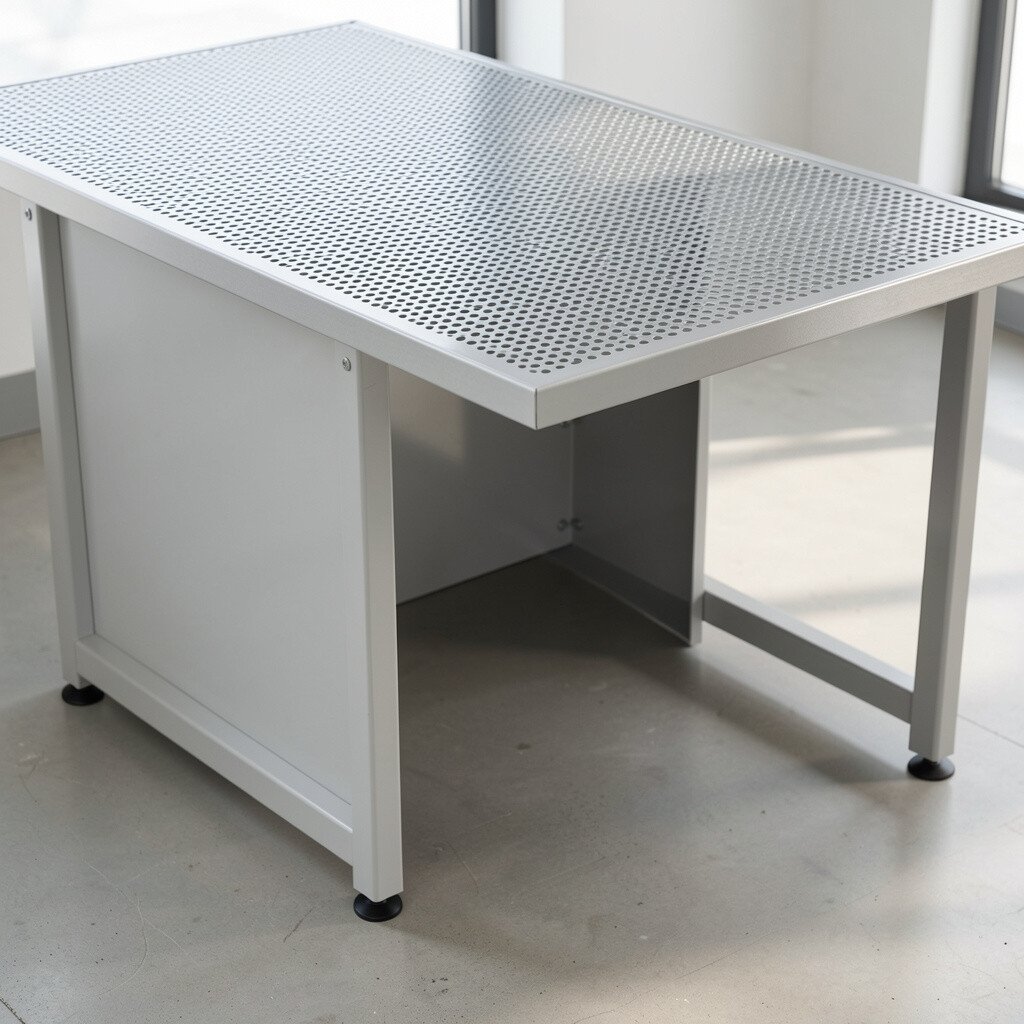
13. Perforated Metal Top With Under-Bench Access
Perforated Metal Top With Under-Bench Access
Picture a top that looks like a mini shop island where dust has a clear path to escape. A perforated metal surface lets debris drop through, which can help keep your bench cleaner during drilling or sanding.
You benefit from airflow and faster cleanup, and you can pair it with a storage or vacuum line under the bench. For practical tips, reinforce the structure so it doesn’t flex when you press down, and choose hole sizes that match the kind of mess you make most. Personalize by adding removable trays under specific zones so you can catch metal filings or keep screws from disappearing. Cost depends on metal type, but it can be competitive because it uses less material than a solid plate. A current trend is “smart cleanliness,” where surfaces and storage work together to make messes smaller and easier to manage.
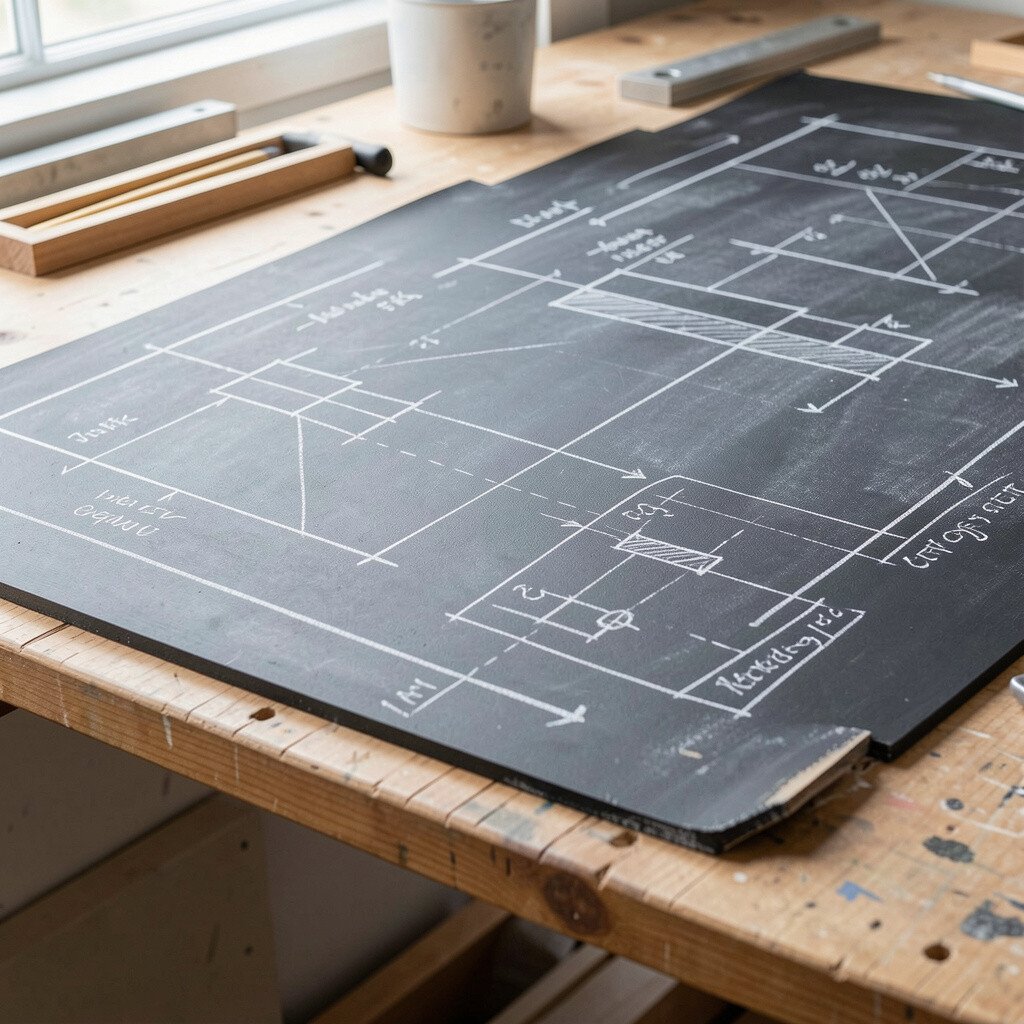
14. Chalkboard Paint For Layout, Notes, And Quick Markups
Chalkboard Paint For Layout, Notes, And Quick Markups
Imagine starting a project and having a writable surface that helps you plan right on the bench. Chalkboard paint gives you a matte area for sketches, measurement notes, and simple reminders.
You get flexibility because you can erase and reuse the top, which is helpful for repeat tasks and iterative designs. For practical tips, apply multiple coats and cure fully before writing, and use a board-safe chalk or chalk markers. Personalize by adding a clear coat in only certain areas if you need wipeable protection near spills. Cost is usually low, and it’s a great option if you enjoy changing layouts often. A current trend is pairing chalkboard surfaces with strong organization systems, like labeled drawers, so the whole workspace feels like one workflow.
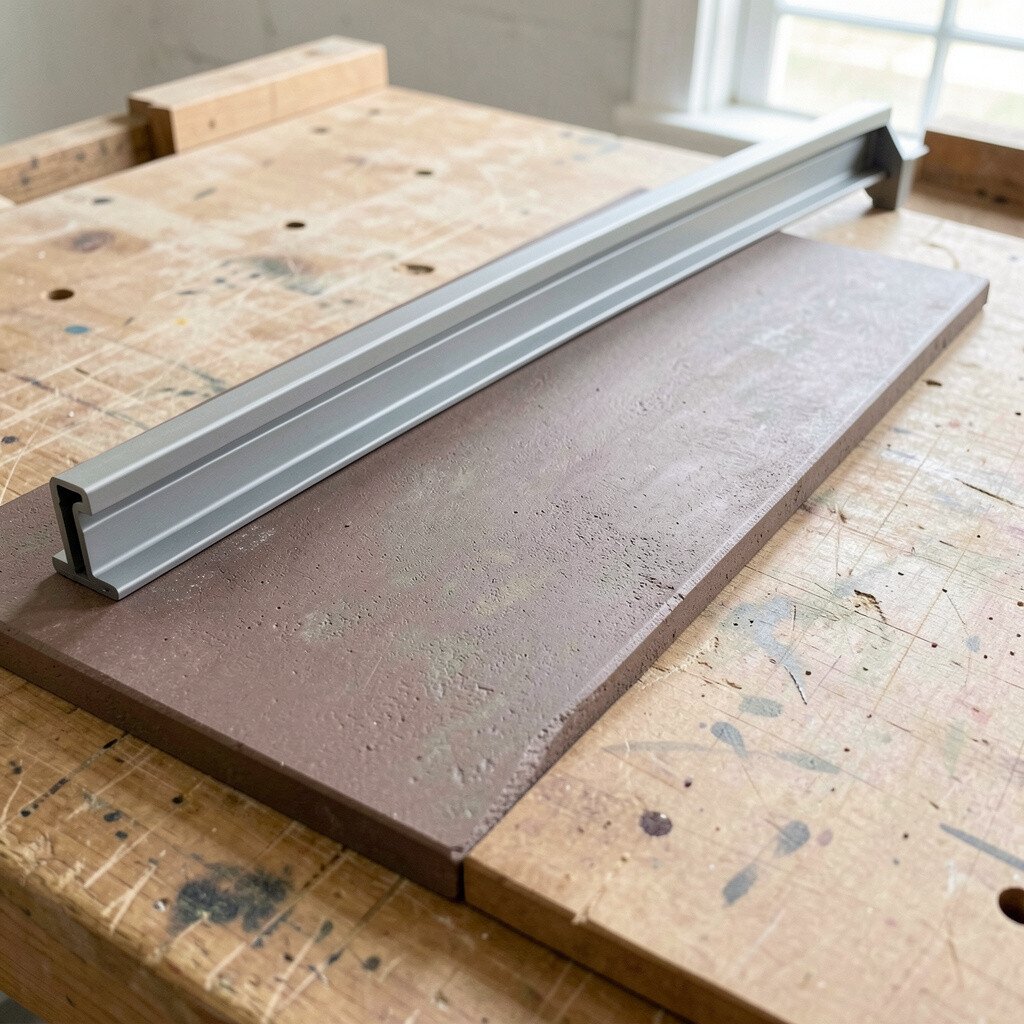
15. Heatproof Fireclay Or Ceramic Panel With A Protective Guide Rail
Heatproof Fireclay Or Ceramic Panel With A Protective Guide Rail
Picture a steady, heat-tolerant panel that helps you handle hot parts without panic. Fireclay or ceramic tiles mounted to a sturdy top can create a reliable station for small thermal tasks.
You benefit from strong resistance to heat and easy wipeup of residue, especially when you work with soldering tools or adhesives that need time to set. For practical tips, mount carefully, use proper insulation under the panel, and add a small guide rail to keep items from sliding toward edges. Personalize by choosing a tile finish that fits your style, like light speckle for a clean look or a darker glaze for a moodier workshop. Cost considerations vary, but buying a smaller panel for the hot zone keeps spending under control. Current trends often include mixing “hard zones” with “comfort zones,” so this idea pairs well with a softer surface for the rest of the bench.
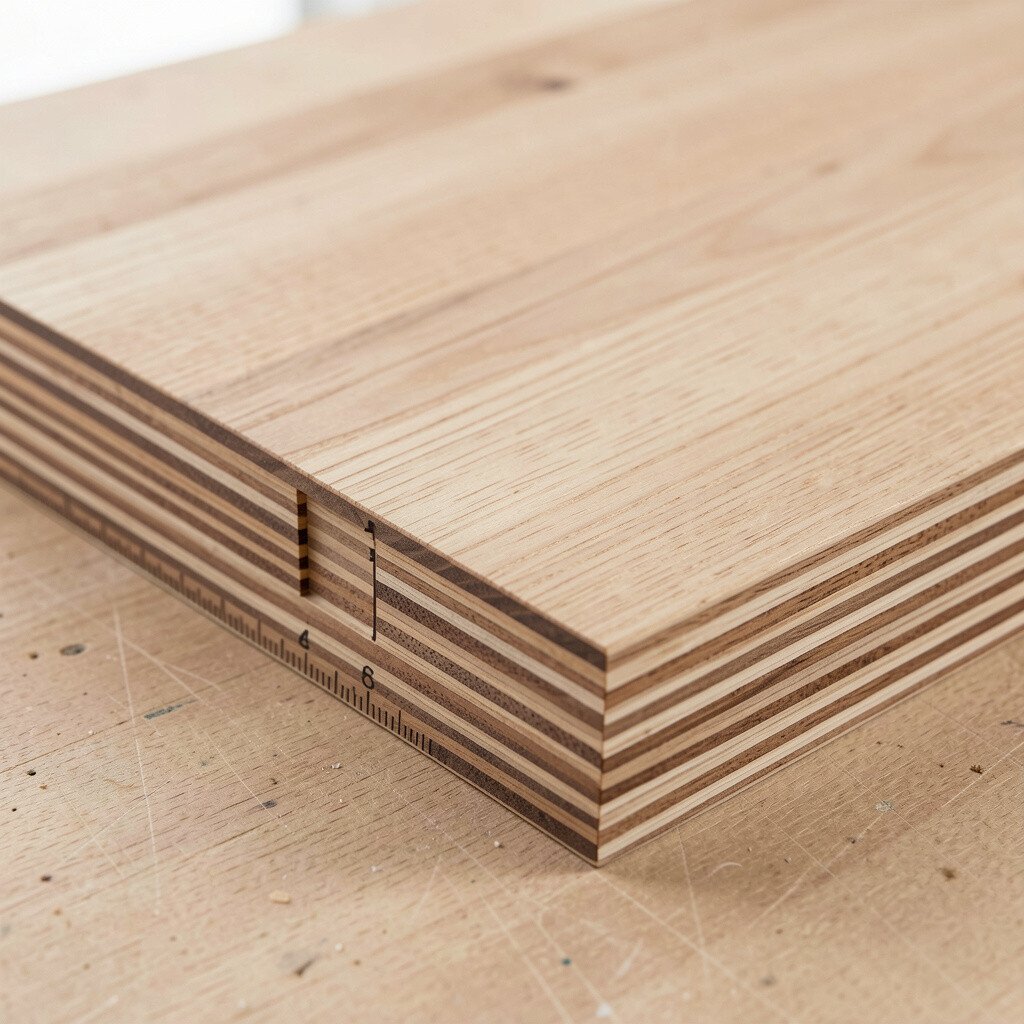
16. Layered Wood With A Built-In Ruler Edge
Layered Wood With A Built-In Ruler Edge
Imagine a bench that helps you measure naturally, without hunting for a tape every time. Building layered wood with a built-in ruler edge makes it feel custom and makes layout faster.
You benefit from a stable working area and a handy measurement reference that stays where you need it. For practical tips, embed a metal measuring strip or engrave markings on a sealed ruler edge, then protect it with a clear top coat. Personalize by matching the wood layers to your room, like warm maple layers over a darker base for contrast. Cost is usually moderate since you’re mostly using common lumber and finish supplies. This fits current trends where makers add small smart features instead of full high-tech systems.
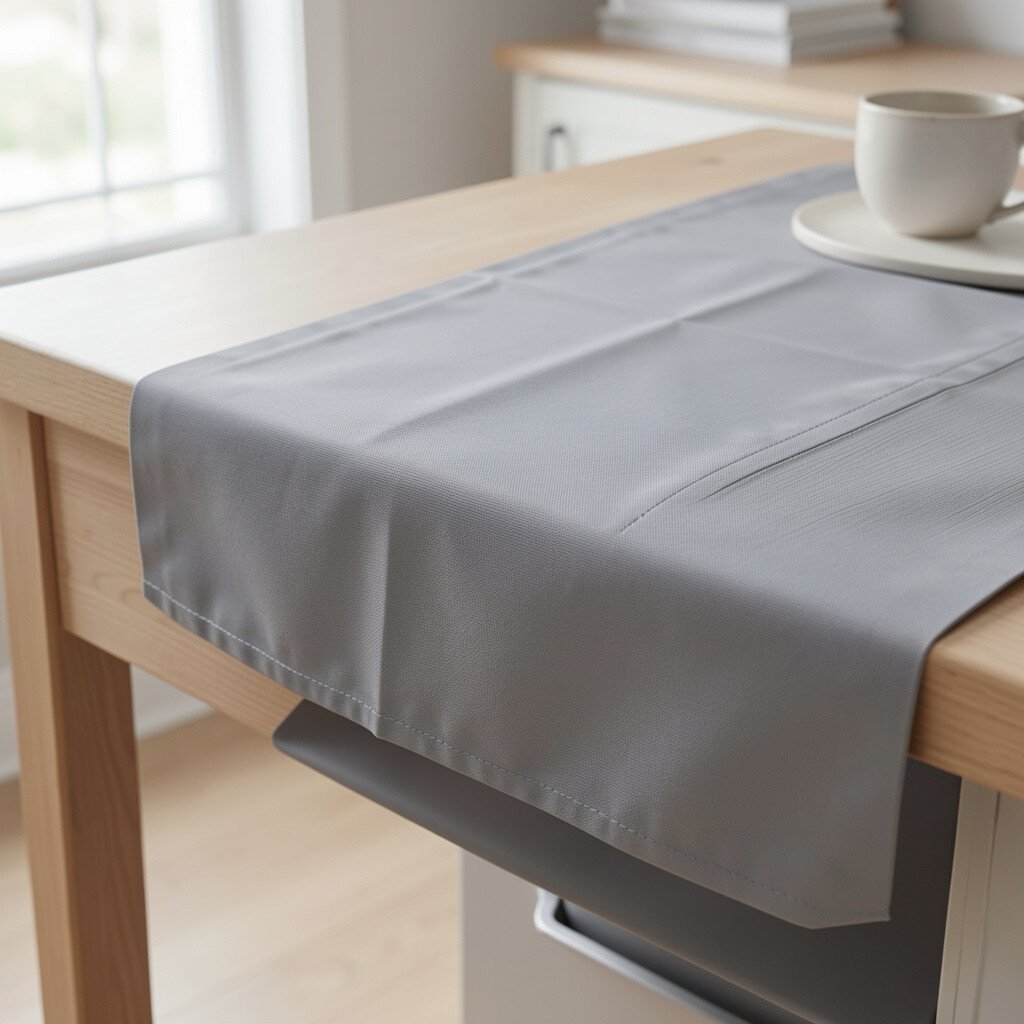
17. Washable Fabric Or Oilcloth Runner Over A Rigid Base
Washable Fabric Or Oilcloth Runner Over A Rigid Base
Picture a bench top where the work zone feels soft and forgiving, but the base stays solid. A washable fabric runner, like oilcloth, laid over a rigid board creates a protective layer for glue, paint, and quick messy tasks.
You benefit from comfort and easier cleanup because the surface can be lifted, wiped, or replaced. For practical tips, use strong non-slip backing or corner weights so the runner doesn’t shift while you work. Personalize by choosing patterns like subtle checks or muted florals if you want your workshop to feel more playful. Cost considerations are typically low, especially if you buy extra fabric for future swaps. A current trend is making workspaces adaptable, and a removable runner is one of the simplest ways to change the vibe without remodeling.
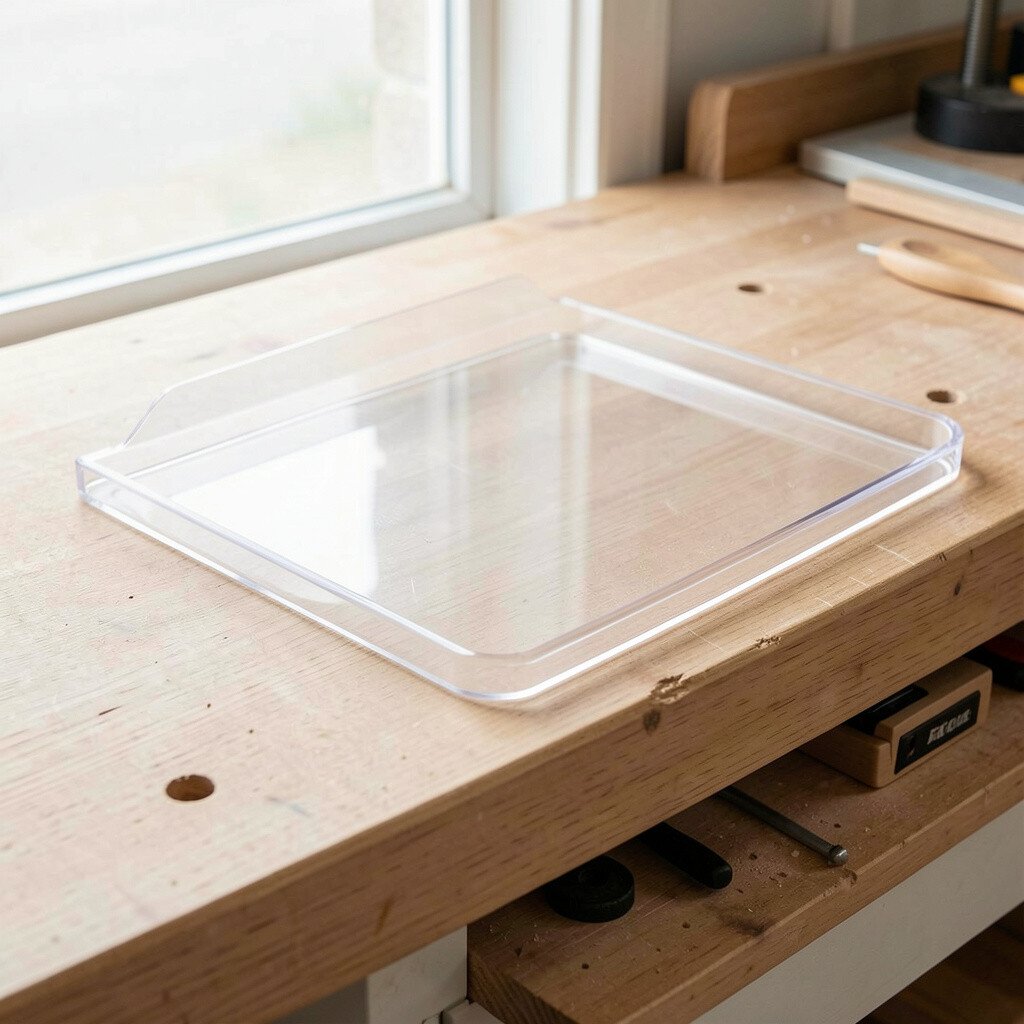
18. Transparent Polycarbonate Protector Over Your Favorite Top
Transparent Polycarbonate Protector Over Your Favorite Top
Imagine keeping the look of your existing bench while upgrading protection in minutes. A clear polycarbonate protector adds a glossy shield that helps prevent stains and scratches on the underlying surface.
You benefit from an easy-to-clean layer that catches everyday wear, and you can remove it later if you want the original wood or laminate to shine again. For practical tips, choose a thick, durable sheet, round corners, and install with clips so it expands and contracts safely. Personalize with a slight tint or edge framing that matches your tool storage for a cleaner, finished look. Cost considerations often land in a budget-friendly range because it’s usually less expensive than replacing an entire top. Current trends include “layered protection” since people want their bench to look great while still using it hard.
Measure carefully, keep the surface dust-free during installation, and wipe with gentle cleaners so it stays clear and attractive.