14+ Blue Wall For Bedroom Ideas To Inspire Your Space
The right blue wall can make your bedroom feel calmer the moment you walk in. A few smart choices can also make it look more stylish without a huge makeover.
From soft skies to deep navy drama, blue works with nearly every decorating mood. The trick is matching the shade, light, and finish to how you want to feel at night.
Picture a pale powder blue wall that looks like the sky on a clear morning. In your room, it will feel airy, and the white trim will sharpen everything into clean lines.
Powder blue is a great pick if you want a soothing bedroom that still looks fresh. It pairs well with light wood floors and simple bedding, so your space stays calm instead of crowded.
To make it look finished, choose satin or eggshell paint because it reflects light gently. Add white curtains and a cozy knit throw, then layer in one muted accent color like pale gray or dusty blush.
2. Dusty Periwinkle With Warm Beige Bedding
Dusty Periwinkle With Warm Beige Bedding
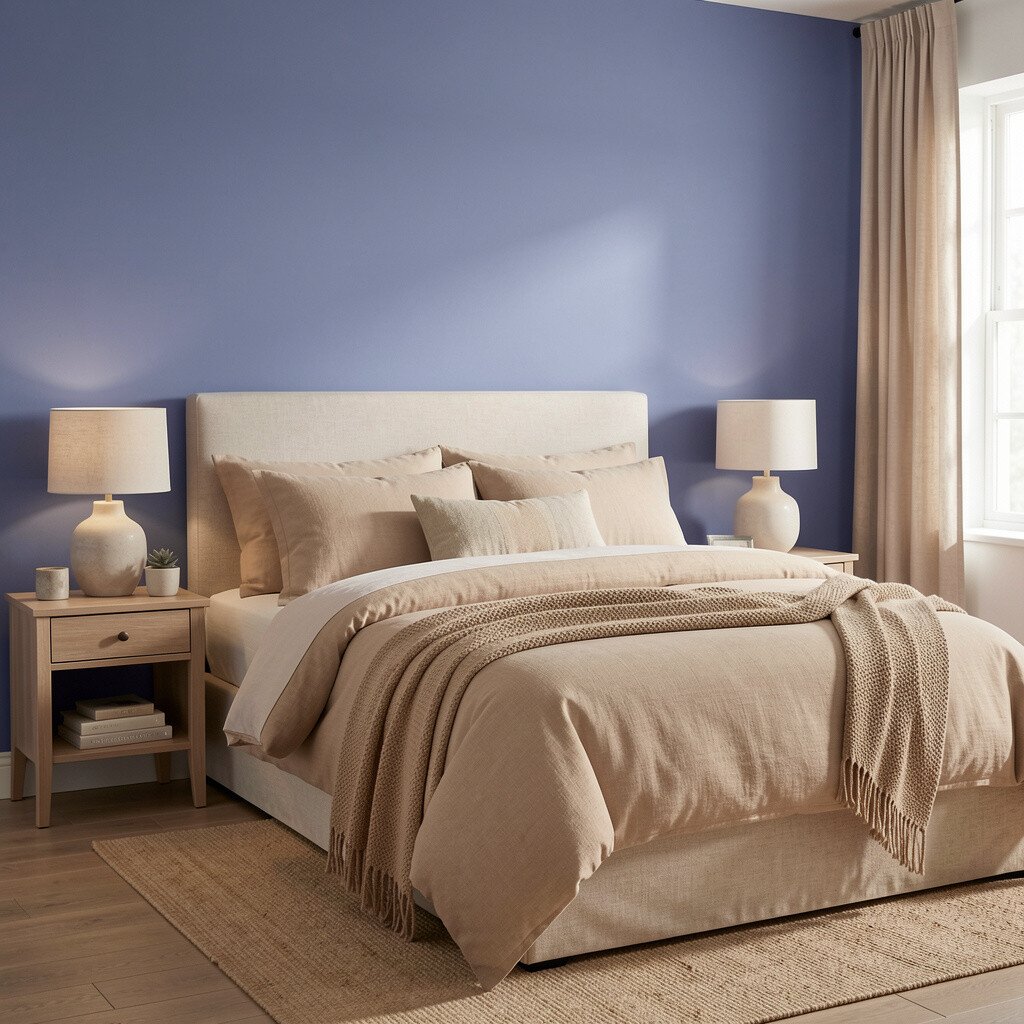
Dusty periwinkle feels like a gentle whisper of color, not a loud statement. When it hits natural light, it softens your whole bed area and keeps the room feeling cozy.
This shade is unique because it mixes cool and warm in a flattering way. It helps your bedroom feel peaceful while still giving a little charm and personality.
Go for warm beige bedding, cream pillows, and textured accents like linen or boucle. If you want a modern touch, keep hardware and frames in brushed brass or matte black for contrast without harshness.
For cost, a single accent wall can give you the look while keeping paint spending under control. If you paint the whole room, use a primer first and expect two coats for smooth coverage.
3. Navy Statement Wall With Gold Lighting Moments
Navy Statement Wall With Gold Lighting Moments
A navy blue wall can look dramatic in the best way, like a deep night sky behind your bed. With the right lighting, it turns your bedroom into a cozy retreat with a high-end vibe.
Navy brings a strong sense of uniqueness because it changes the mood depending on the time of day. In the evening, it can make warm lamp light feel richer and more inviting.
Keep the rest of the room lighter to balance the depth, such as off-white walls, light curtains, and a soft rug. Add gold details through wall sconces, a mirror frame, or picture frames to make the navy feel elegant.
If you’re worried about making the room too dark, try navy on only the wall behind your headboard. You’ll get the impact without shrinking the space.
Think beyond the wall by painting a sky blue ceiling accent above your bed. The color feels like open air overhead, and it makes the room feel taller and lighter.
This idea stands out because it uses blue in an unexpected way. It can also help you create a calm mood at bedtime since your eyes naturally rest upward when you’re relaxing.
Use a lighter shade than your wall color and keep the ceiling edges crisp with clean painter’s tape. Pair it with sheer curtains and a simple white canopy or headboard for a dreamy, airy look.
5. Coastal Blue With White Shiplap Texture
Coastal Blue With White Shiplap Texture
Coastal blue looks fresh when it’s paired with white shiplap or paneling. The texture adds depth, so your wall isn’t just a flat color but a layered backdrop.
This style feels unique because it blends seaside calm with tidy structure. It works especially well if you love relaxing visuals, like wicker baskets, nautical stripes, and natural rope details.
If you want a practical approach, paint over existing paneling or add peel-and-stick shiplap panels for easier installation. Finish with a semi-gloss topcoat on the panels so wipeable surfaces stay looking neat.
Keep bedding in white, cream, or soft aqua, and add one piece of warm wood furniture to keep the coast feeling balanced. A few framed prints of waves or simple botanical art will make it feel personal.
6. Teal-Blue Ombre That Softens the Whole Wall
Teal-Blue Ombre That Softens the Whole Wall
Imagine a gradient wall where blue deepens slowly from top to bottom. An ombre effect can make the room feel artistic while still being soothing to the eye.
Teal-blue ombre is unique because it feels custom, even when you use off-the-shelf paint colors. It’s also a great way to add personality without cluttering your decor.
Choose two or three shades that are close together, like light teal, mid teal, and soft navy. Blend them with a sponge or roller in gentle passes, then step back often so the transitions look smooth.
To keep it cozy, use warm neutrals in your bedding and choose lighting with soft bulbs. This style looks especially good with layered textures like plush pillows and a chunky knit blanket.
7. Mid-Century Blue With Statement Mid-Sized Art
Mid-Century Blue With Statement Mid-Sized Art
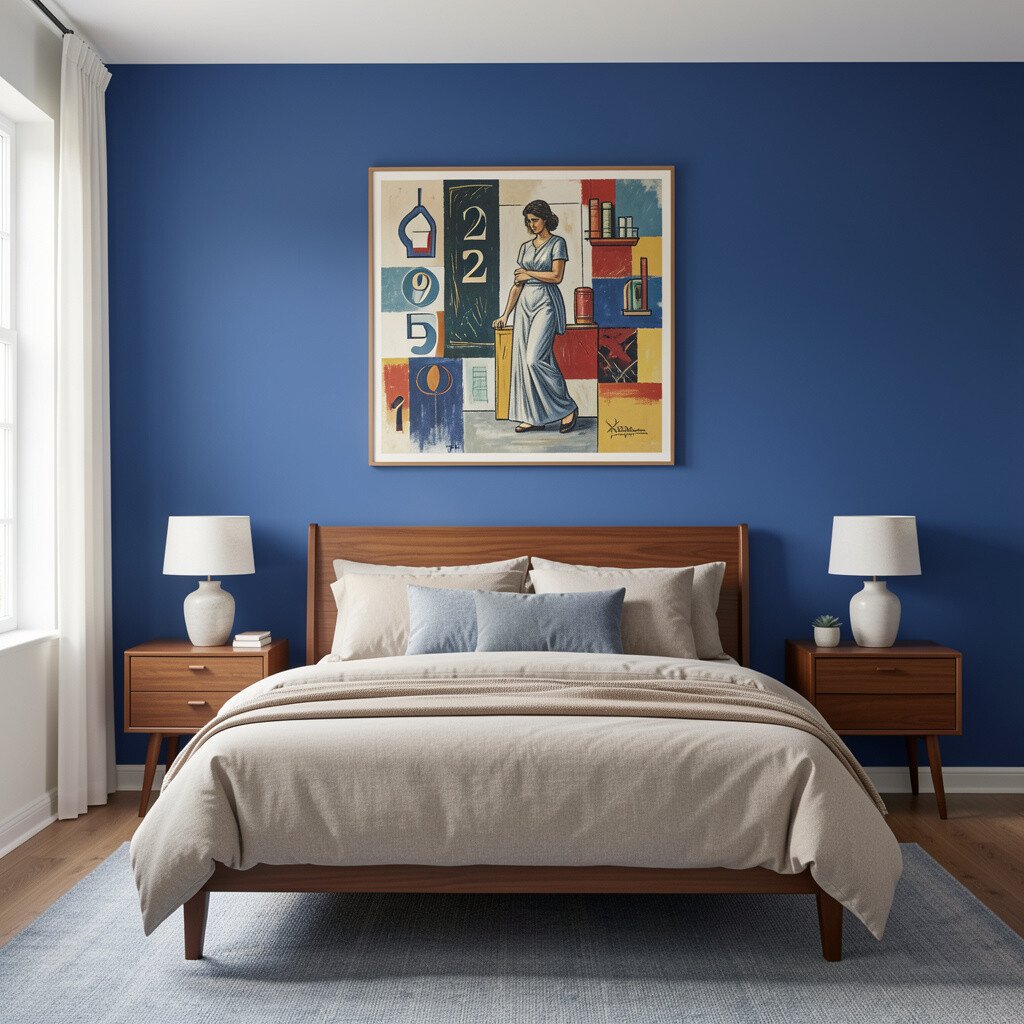
Mid-century blue walls feel bold but grounded, like a tasteful retro magazine cover. The best part is that blue helps your furniture and art look more intentional.
This idea is distinctive because the wall color becomes a backdrop for shapes and patterns. When you add a mid-sized framed art piece above the bed, everything feels coordinated instead of random.
Go for a satin finish to keep the surface smooth and slightly luminous. Choose bedding in creamy whites with simple geometric patterns, then balance the look with walnut or teak-toned nightstands.
For personalization, hang art that matches your style, like abstract prints, landscape scenes, or a gallery of smaller frames. If you want budget-friendly changes, start by painting only the wall behind your headboard and use thrifted frames with a fresh coat of paint.
8. Blushed-Blue With Pinkish Undertones for Gentler Contrast
Blushed-Blue With Pinkish Undertones for Gentler Contrast
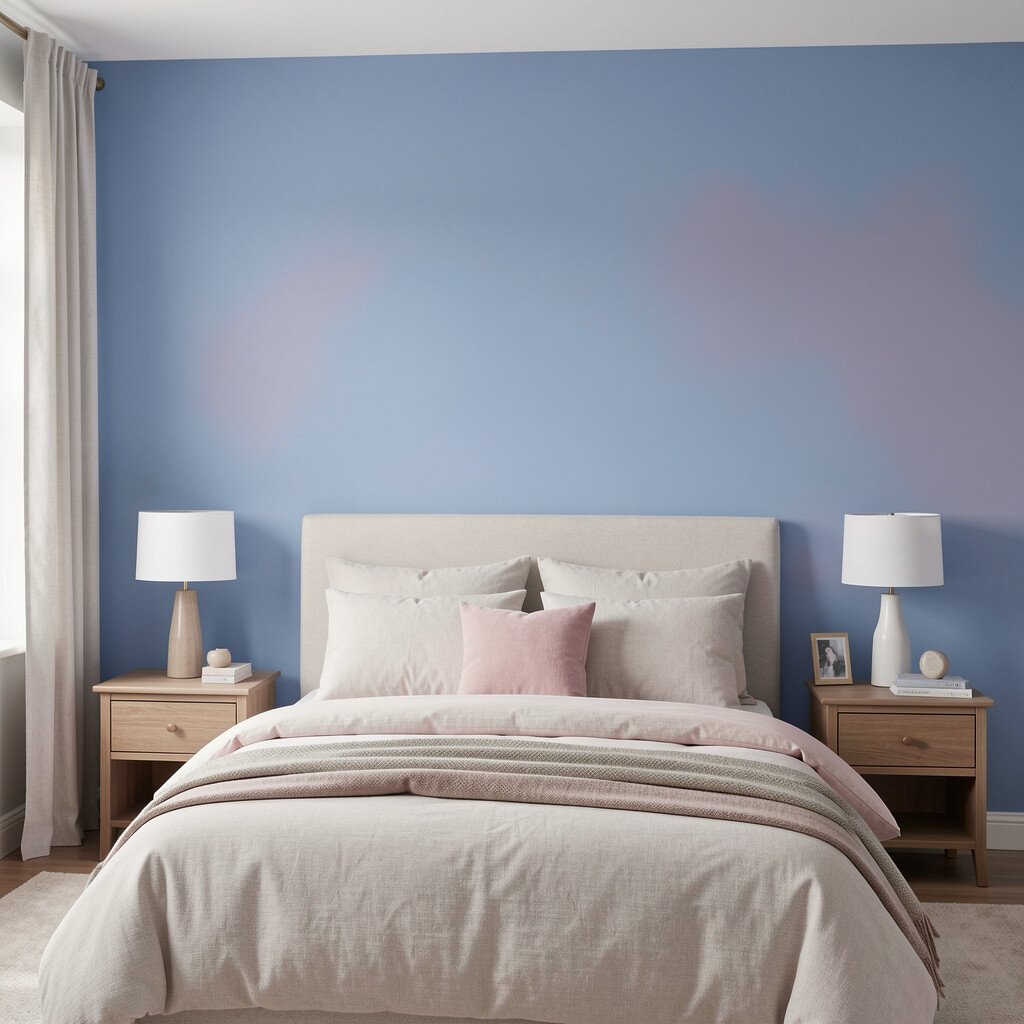
Some blues lean toward purple or a light pink undertone, and that subtle mix can feel incredibly comforting. A blushed-blue wall looks soft and dreamy, especially with warm lighting at night.
This shade is unique because it doesn’t feel purely cool, so it pairs nicely with blush, rose, and warm taupe. It’s a good choice if you want blue but still like a gentle, romantic bedroom vibe.
Use white bedding with a slightly warm tone, like ivory, and add accents like dusty rose pillow covers or a textured linen duvet. If you love plants, this color will make green leaves look extra fresh.
Keep the room grounded with a neutral rug and simple curtains, then add one accent color like brass or soft gold. A single accent wall keeps the cost down while still letting the color do the work.
9. Powder Blue Behind the Headboard With Floating Shelves
Powder Blue Behind the Headboard With Floating Shelves
Painting only the wall behind your headboard is an easy way to highlight where your eye lands first. Powder blue in that spot creates a calm focus area while the rest of the room stays neutral.
This setup feels practical because it’s targeted and visually powerful. Floating shelves over a blue backdrop can make styling simple, and it will look tidy even when you add small items.
Choose shelves in light wood or matte black, then style them with a small lamp, a couple of framed photos, and a plant in a ceramic pot. To personalize without overdoing it, rotate seasonal decor like candles, a vase with fresh greenery, or a stack of books with pleasing covers.
For cost considerations, this is one of the most budget-friendly painting options since you cover less wall space. If you rent or want flexibility, you can use removable hooks and shelf brackets to keep everything reversible.
10. Regal Indigo With Dark Wood and Leather Textures
Regal Indigo With Dark Wood and Leather Textures
Regal indigo brings a luxurious feel, especially when paired with dark wood furniture. The blue looks rich and sophisticated, and leather textures can make it feel warm instead of cold.
This idea is unique because it balances deep color with sturdy, grounded materials. When you add a leather headboard or a faux leather bench at the foot of the bed, the contrast feels intentional.
Keep your palette consistent with black-brown tones, like walnut, espresso, or dark espresso frames. Add soft lighting like warm LED bulbs in sconces or a floor lamp, so the indigo glows rather than absorbs everything.
If you want a smoother look, use a durable paint finish such as eggshell for walls that get daily touch. To manage cost, focus indigo on one main wall and let the rest of the room stay lighter to save paint and brighten the space.
11. Blue-Grey Walls With Layered Gray Textiles
Blue-Grey Walls With Layered Gray Textiles
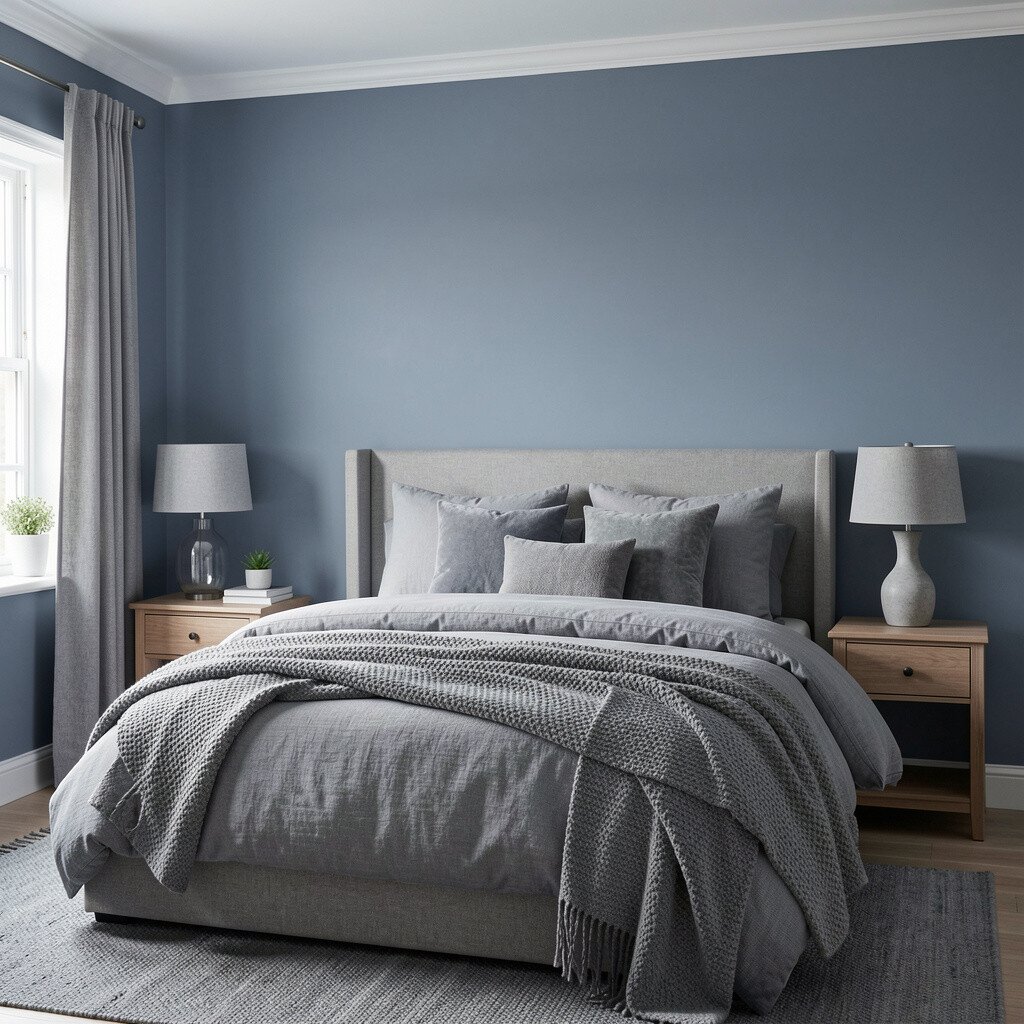
Blue-grey walls are calm, modern, and easy to style because they sit between blue and neutral. You can pair them with many colors, but they shine with layered gray textiles and soft fabrics.
This shade is unique because it feels neither too icy nor too bold. It works well for people who want a cool color but don’t want the room to look overly themed.
Choose bedding with different depths of gray, then add a few cool accents like silver, slate, or smoky blue. A textured rug with a subtle pattern can keep the room from feeling flat.
To personalize, use a single vibrant pop like cobalt in a pillow or a framed print so your eyes have a focal point. For practical results, select an eggshell finish and take time with prep, since blue-grey shades show roller lines more easily.
12. Charcoal-Navy With High-Gloss Trim for Crisp Drama
Charcoal-Navy With High-Gloss Trim for Crisp Drama
If you love bold style, pair charcoal-navy walls with crisp high-gloss trim. The glossy edges make the room look sharp, almost like a boutique hotel suite.
This idea stands out because the contrast between matte and shine creates a clean, architectural feel. It’s especially striking when your bedroom has simple furniture and minimal patterns.
Use painter’s tape carefully and apply primer for best coverage. Keep walls eggshell or matte, then use semi-gloss or gloss on trim for that glossy pop.
For personalization, add large-scale art with white or light cream frames so it reads clearly against the dark wall. Cost-wise, you can keep spending reasonable by painting trim yourself, then hiring out only if you need help with cutting-in.
13. Light Aqua With Rattan and Natural Woven Details
Light Aqua With Rattan and Natural Woven Details
Light aqua walls can feel playful and refreshing, especially when you bring in natural textures. Rattan, woven baskets, and airy curtains make the color look even more inviting.
This choice feels unique because aqua adds a cheerful energy, while natural materials keep everything grounded. It’s a great fit for bedrooms that need a brighter mood without using harsh saturated blues.
Style with a woven pendant lamp, a rattan headboard accent, or a basket set for blankets. Add white sheers and choose bedding in soft cream so the aqua remains the star.
If you want an easy personalization trick, paint one corner shelf or a small wall niche in the same aqua for a coordinated look. For cost, focus on paint and a few woven upgrades rather than expensive furniture, since blue walls do most of the heavy lifting.
14. Blue Wallpaper With Subtle Texture and Tiny Patterns
Blue Wallpaper With Subtle Texture and Tiny Patterns
Wallpaper can give your blue wall dimension right away, especially when it has a subtle pattern. Think small geometrics, gentle florals, or a textured look that catches light without overwhelming the bed.
This idea is unique because it adds detail without needing many accessories. The texture and pattern help the wall feel designed, even when you keep your decor simple.
Pick a wallpaper with a matte finish for a soft, cozy look. For practical tips, measure your wall carefully and dry-fit the first strip, then plan around outlets and switches so the layout looks neat.
To personalize, choose one wall behind the bed as the feature wall, then keep other walls in a matching paint color. This can help manage cost because you’re using wallpaper in a smaller area.
15. Personalized Gallery Wall With Blue Color-Blocking
Personalized Gallery Wall With Blue Color-Blocking
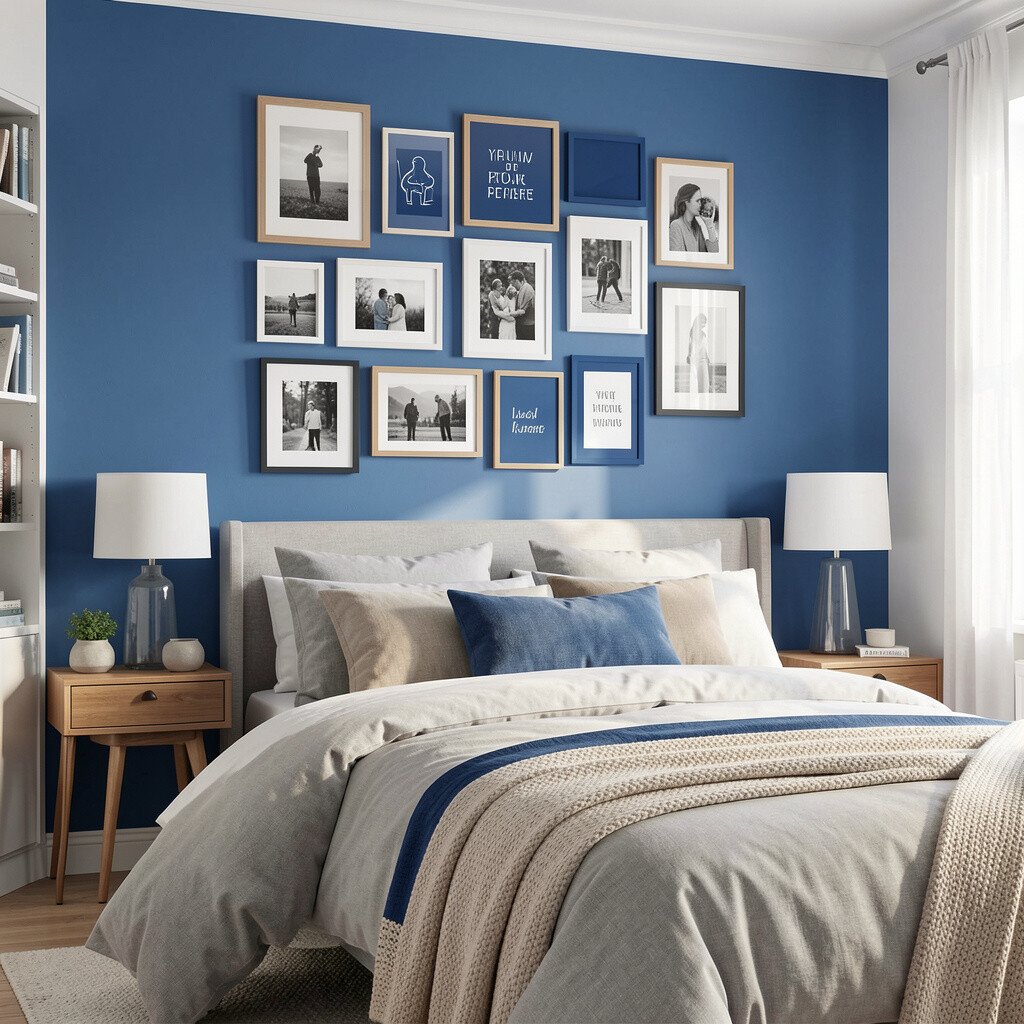
Color-blocking blue around a gallery wall can make your bedroom feel creative and organized. Instead of one solid color, you frame photos, prints, or a headboard zone with blue shapes.
This approach is unique because it combines art and color in a way that feels tailored to you. You can keep it elegant or playful depending on your shapes and the shades you choose.
Start by picking one blue for the main block and a lighter or darker shade for smaller accents. Use painter’s tape to form clean lines, then paint in layers for crisp edges.
For personalization ideas, hang black-and-white photos, mix in one favorite landscape print, and add a few small mirrors for light. Cost considerations are helpful here because you can update your style with paint and frames rather than replacing furniture, and you can adjust the layout as your tastes change over time.