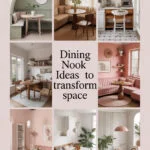
The quiet corners of a home can become your creative shelter. When your nook feels safe, your ideas arrive faster.
Below are cozy, introvert-friendly setups that make making art feel gentle and doable. Each idea includes visual details and practical ways to tailor the space to you.
Picture a curved window seat with chunky cushions in warm oatmeal tones. A sheer curtain glows beside it, and the light pools like honey on your sketchbook.
Keep a small side table close for pencils, erasers, and a cup that never spills. Choose a lap-friendly lamp with a warm bulb so your eyes stay comfy during long sessions. Add a folded throw with a visible texture so you can tuck in quickly when the mood hits.
2. Compact Corner Studio Behind a Divider
Compact Corner Studio Behind a Divider
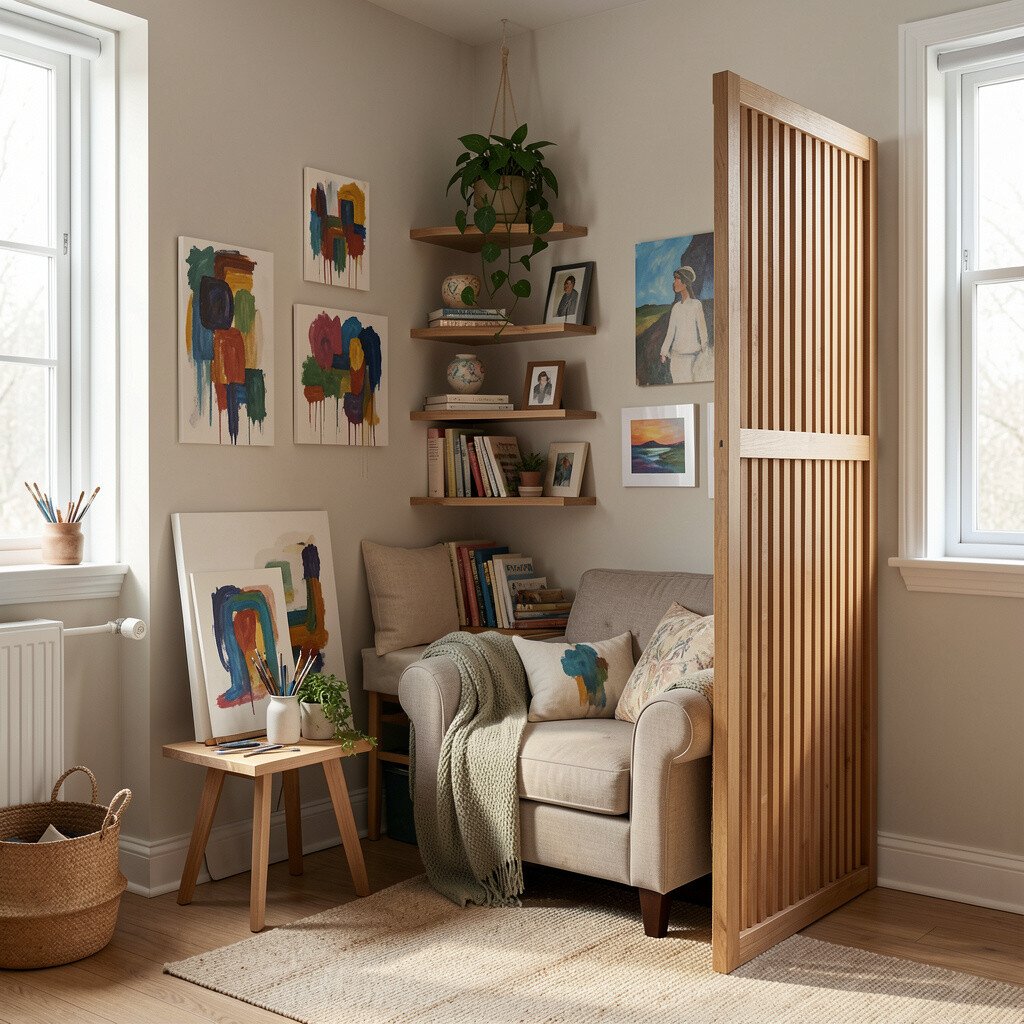
Imagine a quiet corner tucked behind a fabric divider that filters sound. On one side, you see a slim desk, and on the other, a hanging shelf with neatly stacked supplies.
Use a divider you can move, like a folding screen or thick curtain panel. This gives you a sense of privacy without needing a full room makeover. Keep your “in use” materials visible, and store the rest in covered bins to reduce visual noise.
A helpful trend right now is modular storage, where small pieces snap into a system you can adjust later. For cost control, search for secondhand dividers or repurpose a bookshelf as a partial wall. Personalize it with your favorite fabric color so the nook feels like you, not like a showroom.
3. Closet-Scale Art Cave With Fairy Lights
Closet-Scale Art Cave With Fairy Lights
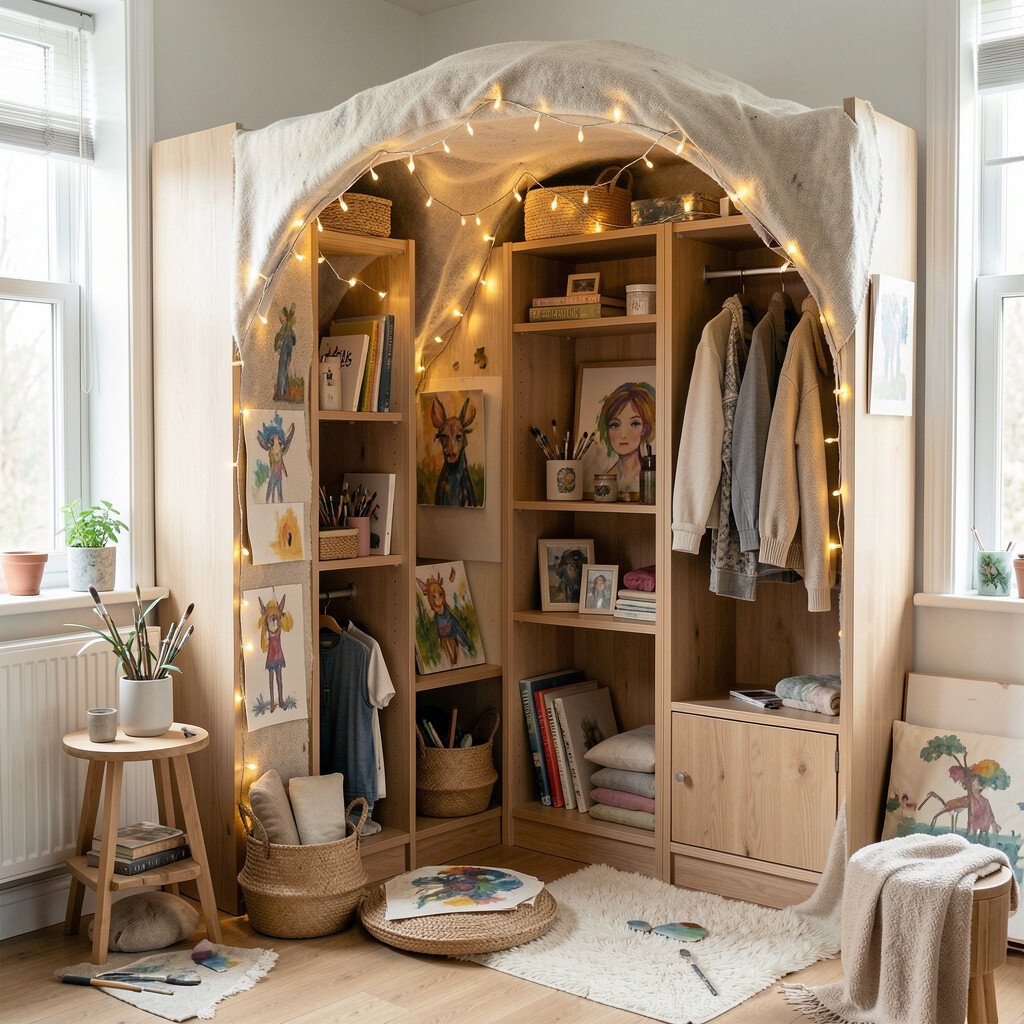
Think of a small closet converted into a cozy cave, with warm string lights like tiny stars. A peg rail holds tools, and a cork board frames your latest sketches in soft order.
Line the floor with a washable mat so spills don’t turn into panic. Use shallow organizers so every paintbrush has a home, even in tight spaces. When you close the door, the outside world fades, and your focus stays protected.
For uniqueness, choose a color theme you love for the lights, like amber, blush, or cool white. If you worry about cost, start with a short strand and expand only after it feels right. Add a small fan on low for ventilation if you use inks or mediums that need airflow.
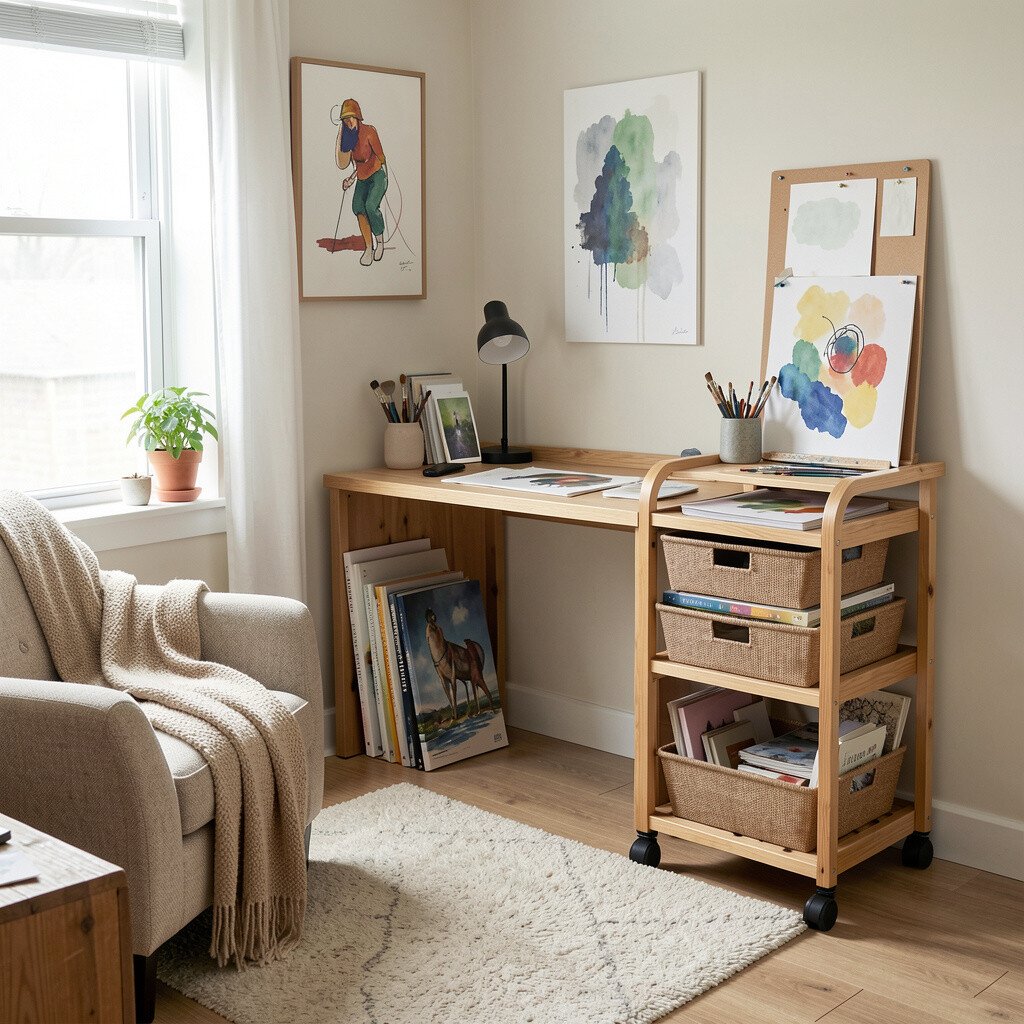
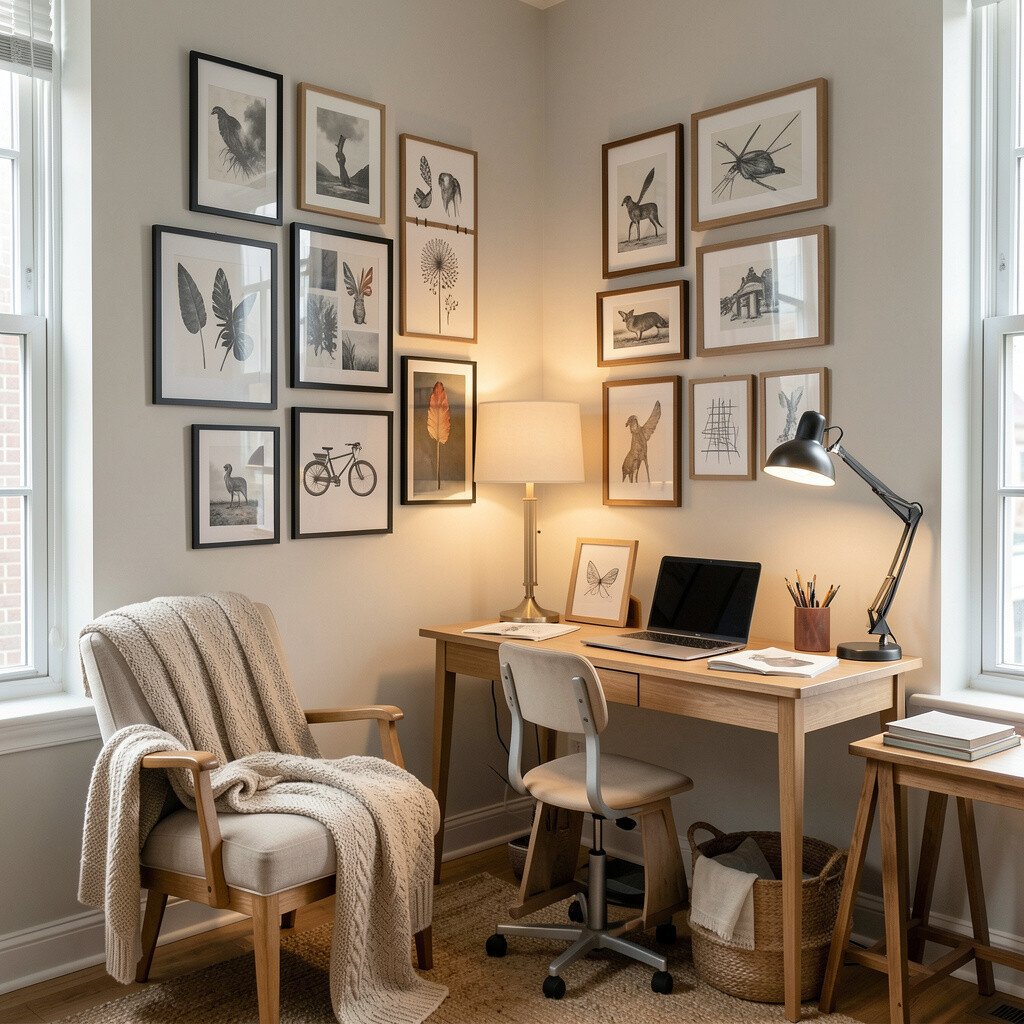
Visualize a desk placed in the corner, with a simple art rail above it. Overhead, you can hang drying canvases, clip paper in progress, and keep brushes in a neat line.
Using an overhead rail helps you stay organized without taking up floor space. It also creates a satisfying “studio rhythm” where everything is visible and ready. Choose lightweight hangers so you can adjust the layout as your art grows.
If you like current trends, look for minimal rails with clean lines that match modern interiors. For cost, try buying only the rail and using sturdy binder clips for the rest. Personalize the rail by adding a small banner or ribbon with your favorite phrase on it.
5. Floor-Friendly Studio With a Rolling Storage Cart
Floor-Friendly Studio With a Rolling Storage Cart
Imagine sitting low on a cushioned mat while a rolling cart glides beside you. The cart holds paper, tools, and a small tray for paint, all within arm’s reach.
A mat-based setup feels gentle for introverted artists because you can get comfy fast and start creating without fuss. Put down a washable cover so your workspace stays clean and calming. Roll the cart away when you’re done so the room stays peaceful.
Keep one drawer for “daily basics” like pens, markers, and erasers, and another for “special tools” like texture gels. This makes personalization simple because you can adjust the cart to your style. To keep costs reasonable, buy the cart first, then add organizers only as you run into real clutter.
6. Bedside Sketch Station With a Book-Only Shelf
Bedside Sketch Station With a Book-Only Shelf
Picture a bedside setup where your sketchbook rests on a firm stand near the lamp. Above it, a shelf holds art books, references, and a few journals that look inviting.
Keeping your art station close to rest helps you create when you feel mentally ready. Choose a small tray for tools so you don’t have to search. A desk lamp with a dimmer lets you match the lighting to your mood.
7. Sound-Softened Studio With Thick Rugs and Curtains
Sound-Softened Studio With Thick Rugs and Curtains
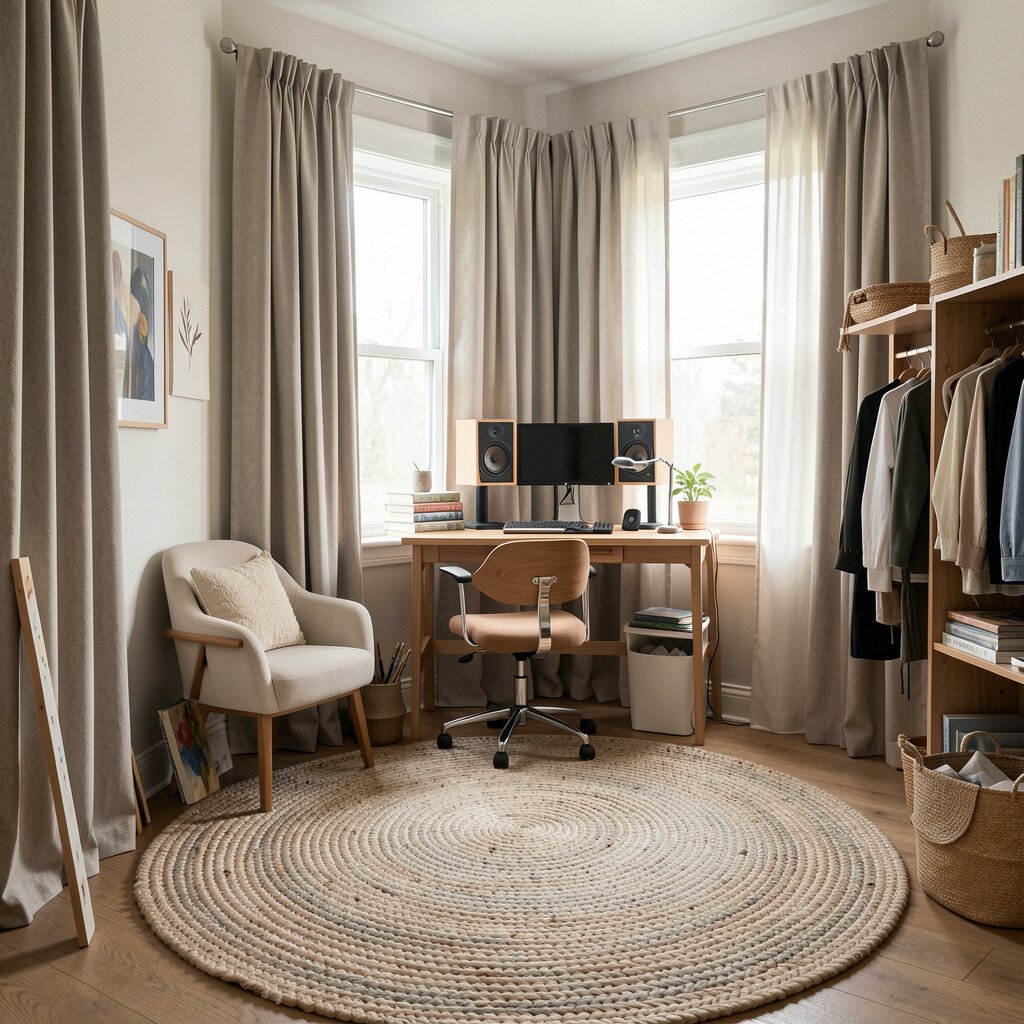
Imagine stepping into a space that feels quiet, like your footsteps are muted. A thick rug softens the floor, and heavy curtains block outside noise and harsh light.
Introverted artists often work better when distractions fade, so sound comfort matters. Try layering a rug over the existing floor and adding a curtain near your workstation. Keep your lighting warm and steady so your brain feels safe and calm.
For uniqueness, pick a pattern that looks like something you’d draw, such as flowing lines or subtle waves. If cost is a concern, start with one thick rug and swap the curtain later. Personalize by hanging a small framed print that feels grounding to you.
8. Reading Lamp Gallery Wall for WIP Inspiration
Reading Lamp Gallery Wall for WIP Inspiration
Visualize a wall near your nook covered with pinned sketches, color swatches, and mini studies. A gentle reading lamp casts light so the wall looks like a gallery at night.
Seeing works in progress can reduce creative stress because your brain remembers what you planned. Use clear push pins or removable tape so you can change the wall often. Keep your newest pieces near eye level so you feel encouraged every time you sit down.
Current trends favor magnetic boards and modular display systems, which can keep your setup flexible. For budget, try using inexpensive poster frames from a thrift store. Personalize the arrangement with a color path, moving from cool shades on one side to warm shades on the other.
9. Tea-Scented Maker Station With a Closed Supply Cabinet
Tea-Scented Maker Station With a Closed Supply Cabinet
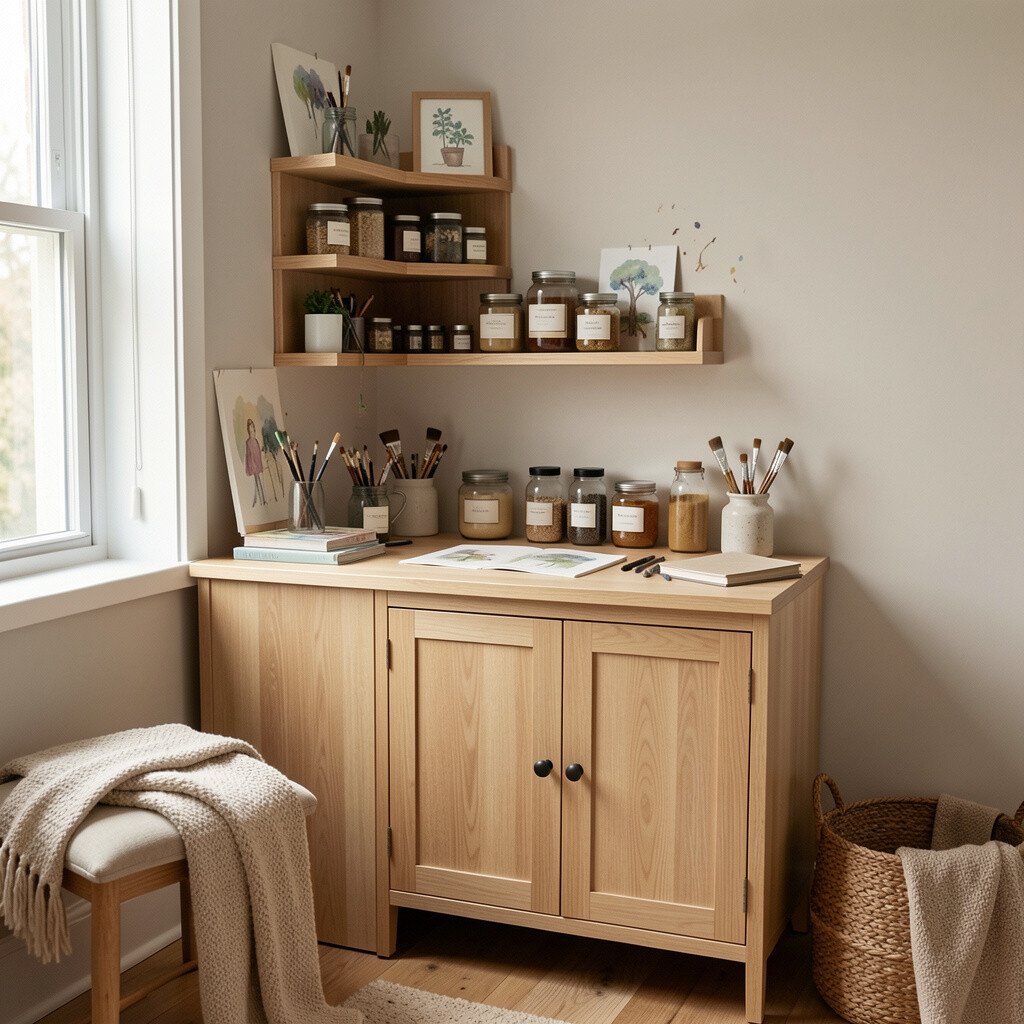
Picture a small maker station where a closed cabinet hides messy supplies. On top, a tidy mug warmer or simple tray holds your favorite tea items in neat order.
When your art tools are hidden, your mind stays calmer, especially during messy phases. Store papers upright, keep paints capped, and use a lidded container for scraps. A consistent cozy scent can make the space feel like a ritual that signals your brain to begin.
For practical setup, place the cabinet within reach so you don’t stand up and lose momentum. If you use solvents or strong-smelling mediums, choose unscented options or ventilate well. Personalize by selecting tea colors that match your palette, such as soft creams, honey golds, or deep browns.
10. Window-Lit Easel Spot With a Foldable Stool
Window-Lit Easel Spot With a Foldable Stool
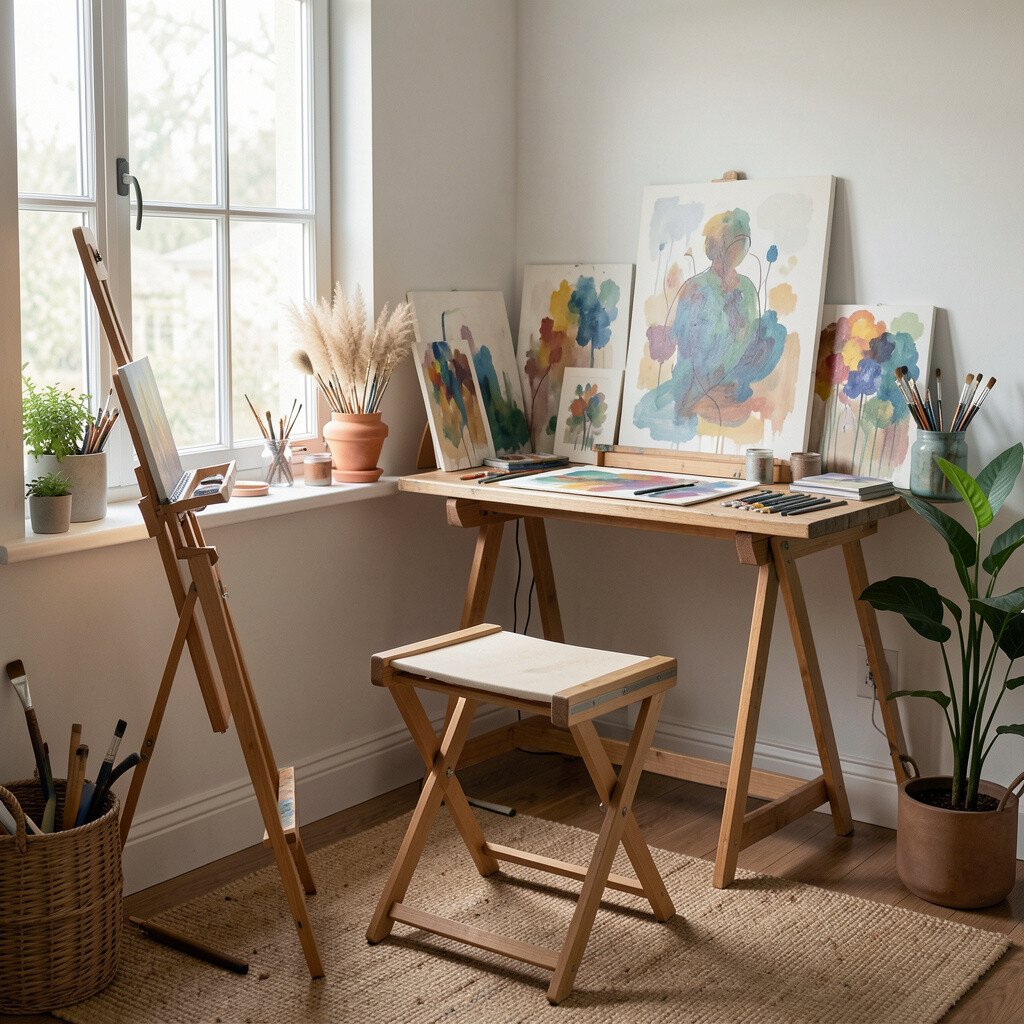
Imagine an easel placed directly where daylight lands, like a moving spotlight. A foldable stool tucks under the easel, and your paints sit in a lidded caddy.
Natural light helps with color accuracy, and it also feels uplifting for introverted creators. Position a lamp for evenings so you keep the same working vibe after sunset. If space is tight, use a foldable stool and a slim paint holder to save room.
To keep it unique, hang a simple curtain in a matching tone so the light feels softer. Consider current trends like compact easel designs that fold flat for easy storage. For cost, look for secondhand easels and refresh them with a wipe and new clips.
11. Cozy Workshop With Pegboard and Labeled Zones
Cozy Workshop With Pegboard and Labeled Zones
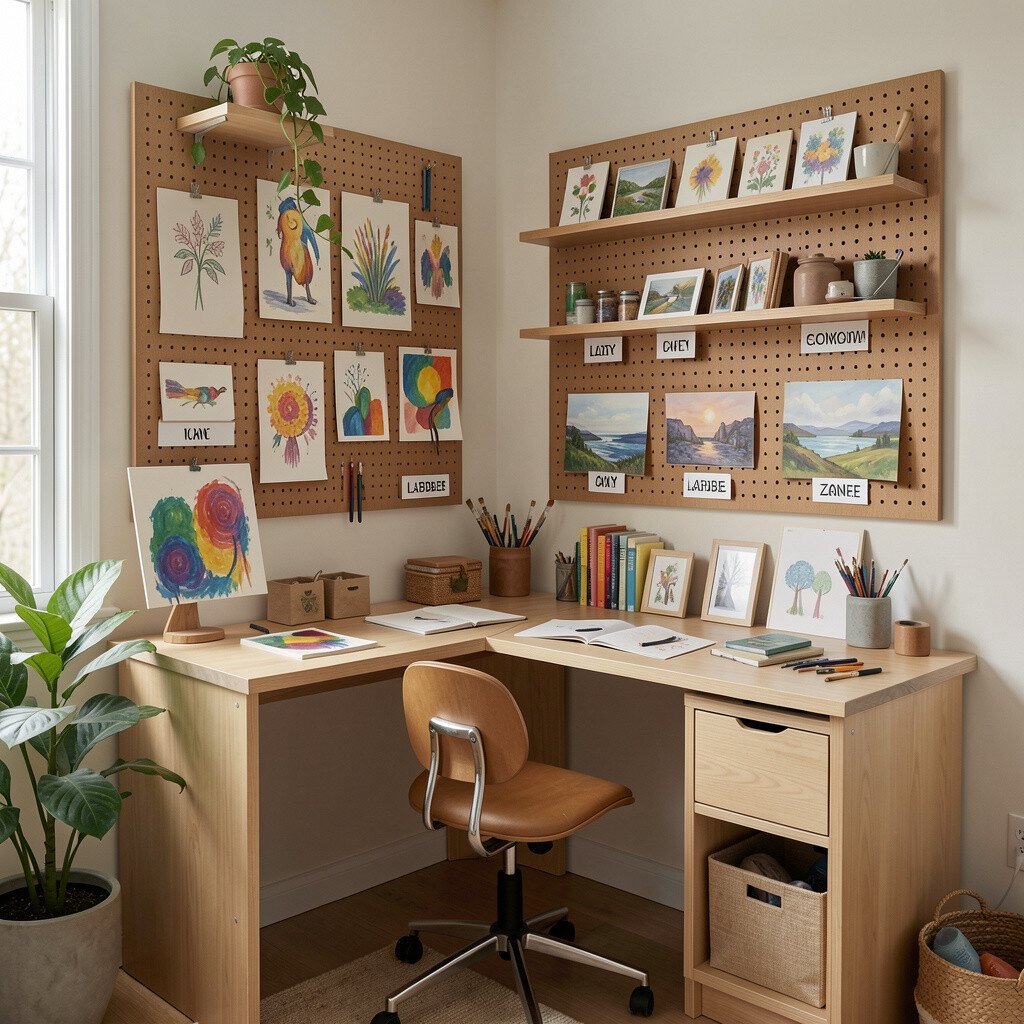
Picture a pegboard behind your desk with tools hanging in satisfying rows. Small baskets hold paper, and colored clips point to your current project.
Pegboards are practical because you can see your tools instantly and put them back quickly. Use labeled zones with removable tags so you can change them as your habits evolve. A gentle visual system reduces mental load, which helps introverted artists stay in the flow.
For personalization, use different clip colors for sketching, painting, and crafting tasks. If you want to keep costs down, make a “good enough” zone first and expand later. Trends in maker spaces often favor modular peg accessories, so you can add hooks without replacing the whole board.
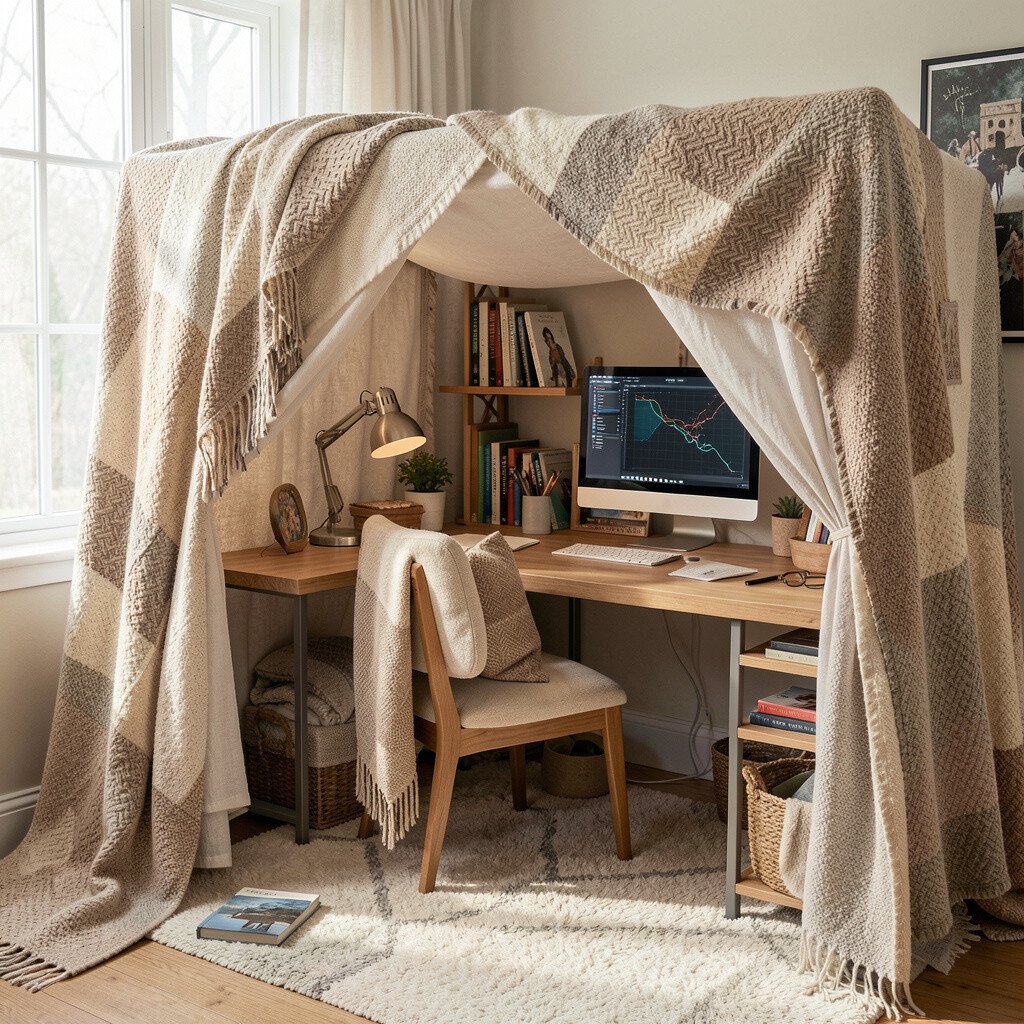
12. Blanket Fort Desk With Low-Tech Cozy Rules
Blanket Fort Desk With Low-Tech Cozy Rules
Imagine a desk surrounded by blankets, pillows, and soft walls made of fabric. From your seat, you can see a warm lamp glow and a small shelf with your supplies.
This setup feels uniquely introvert-friendly because it creates a private bubble without requiring construction. Set low-tech rules like one project at a time on the surface so your space stays calming. Use a small fan or open window sometimes so you don’t feel trapped in the cozy.
To personalize, choose blanket textures that feel good to your hands, like fleece, knitted cotton, or soft wool blend. Cost considerations are easy here since blankets are often affordable and easy to swap. A current comfort trend is “soft structure,” where cozy fabrics replace hard dividers for a gentler look.
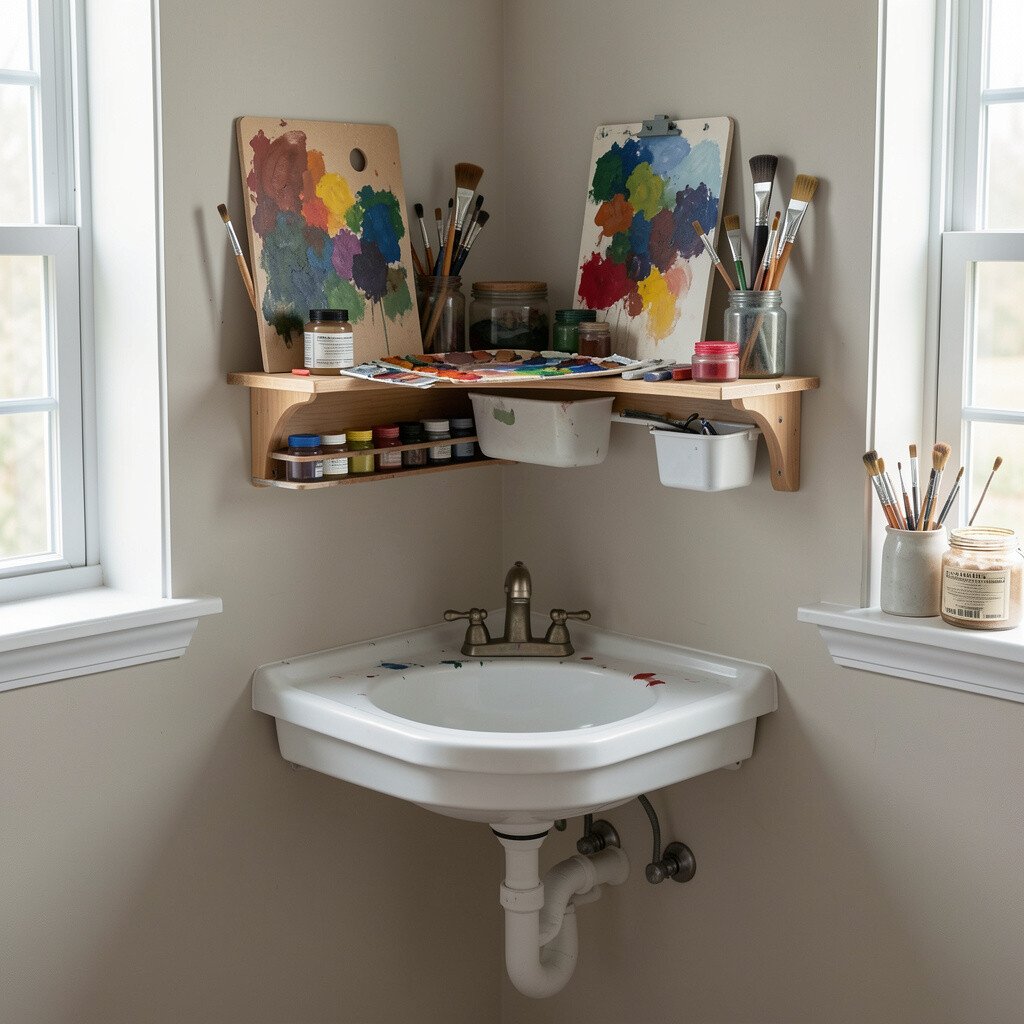
13. Wall-Mounted Palette Shelf With Under-Sink Storage
Wall-Mounted Palette Shelf With Under-Sink Storage
Visualize a wall-mounted shelf holding palettes, jars, and your favorite brushes. Under the shelf, a covered cabinet or under-sink organizer hides everything that looks messy.
This arrangement keeps your surfaces tidy, which helps you start working faster. Use shallow jars for mediums so you can grab what you need quickly. Keep a small rag holder nearby for quick cleanups between sessions.
For practical personalization, sort tools by motion, like brushes for blending on one side and line tools on the other. If you’re watching costs, reuse containers you already own and focus money on strong shelf brackets. It’s also a current trend to reduce clutter visually, so a clean wall shelf can make your nook feel more like a real studio.
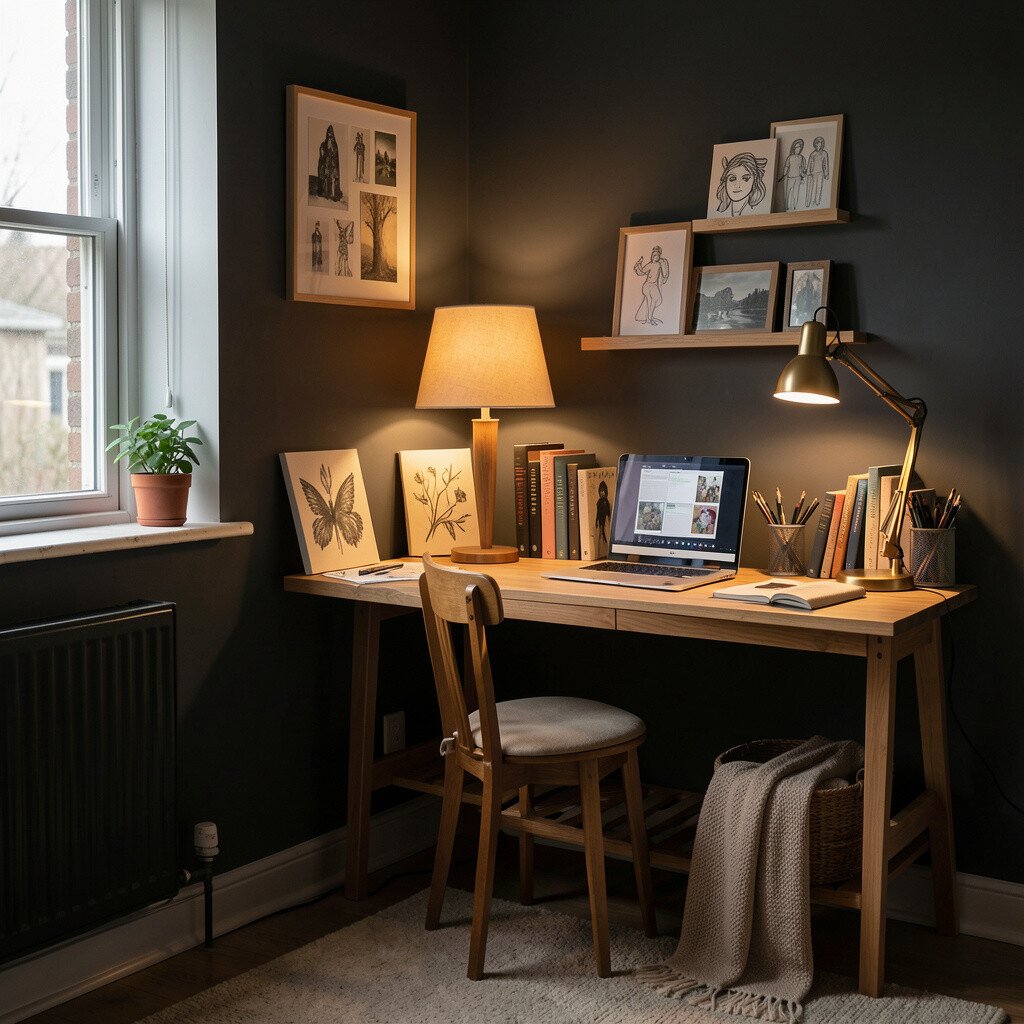
14. Dark Cozy Studio Corner With Warm Lamp Lighting
Dark Cozy Studio Corner With Warm Lamp Lighting
Imagine a studio corner that feels cozy because it’s softly lit and never harsh. A warm lamp with a shade glows over your desk, while deeper colors on the wall make everything feel calm.
Introverted artists often love lower glare because it helps them concentrate for longer. Try using a warm bulb and positioning the lamp so it doesn’t shine directly into your eyes. Add a small diffuser shade to make the light gentler.
For uniqueness, paint or cover the wall with a muted tone like deep sage, warm charcoal, or rich terracotta. Cost considerations can stay low by using removable peel-and-stick wallpaper for accent sections. Personalize with a calming print or a handmade poster that you can swap when your style shifts.
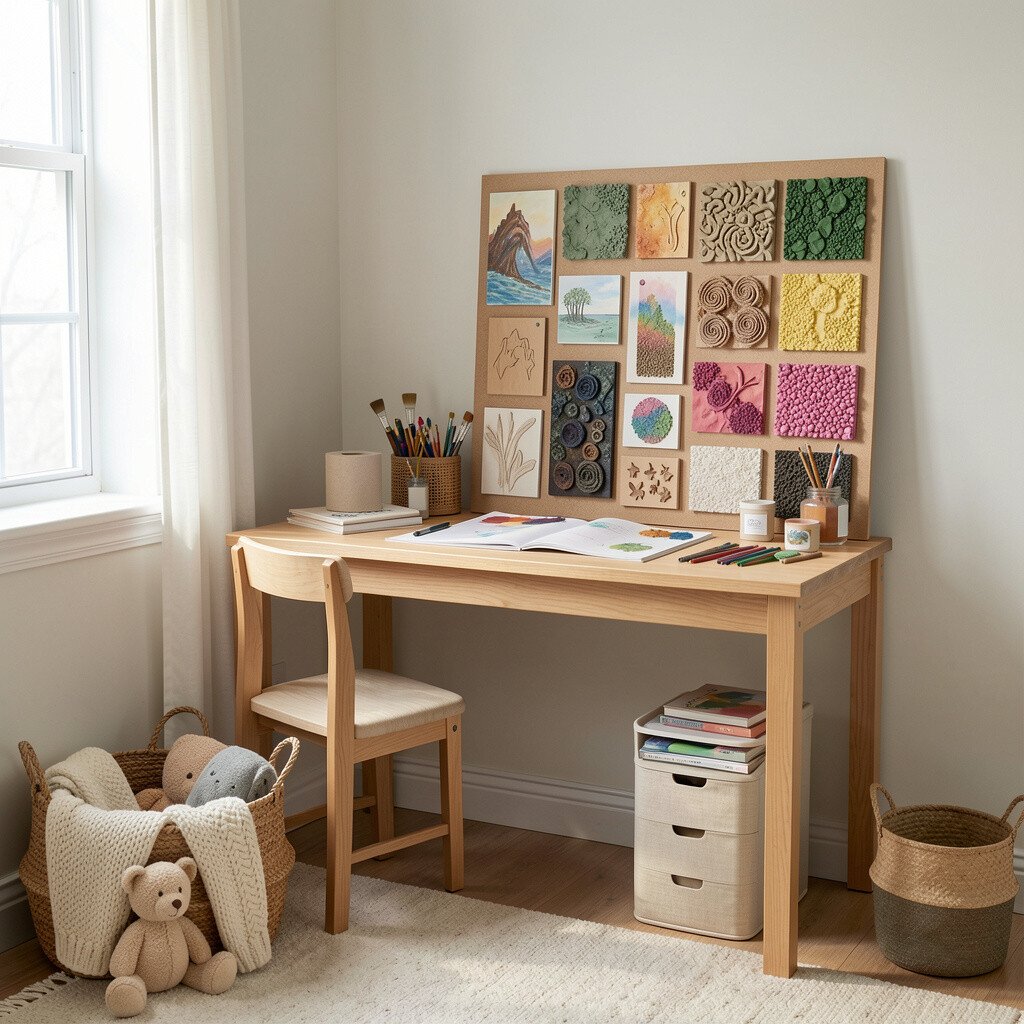
15. Sensory-Friendly Craft Station With Texture Boards
Sensory-Friendly Craft Station With Texture Boards
Picture a craft station where textured boards sit beside your workspace like calm companions. You can touch fabric scraps, paper samples, and small wooden pieces, and each texture suggests a new direction.
Adding texture invites creativity in a low-pressure way, especially when your mind feels quiet but not blank. Keep a tray of swatches so you can compare materials while you sketch or plan. This also helps you choose the right surfaces for your next piece without overthinking.
For practical tips, store textures in labeled, lidded containers to prevent clutter. If you want a trend-aligned angle, consider the current popularity of mixed-media planning boards and tactile mood boards. Personalize by building your tray around your favorite materials, like watercolor paper, linen, embossed cardboard, and soft yarn, within a budget that feels comfortable.