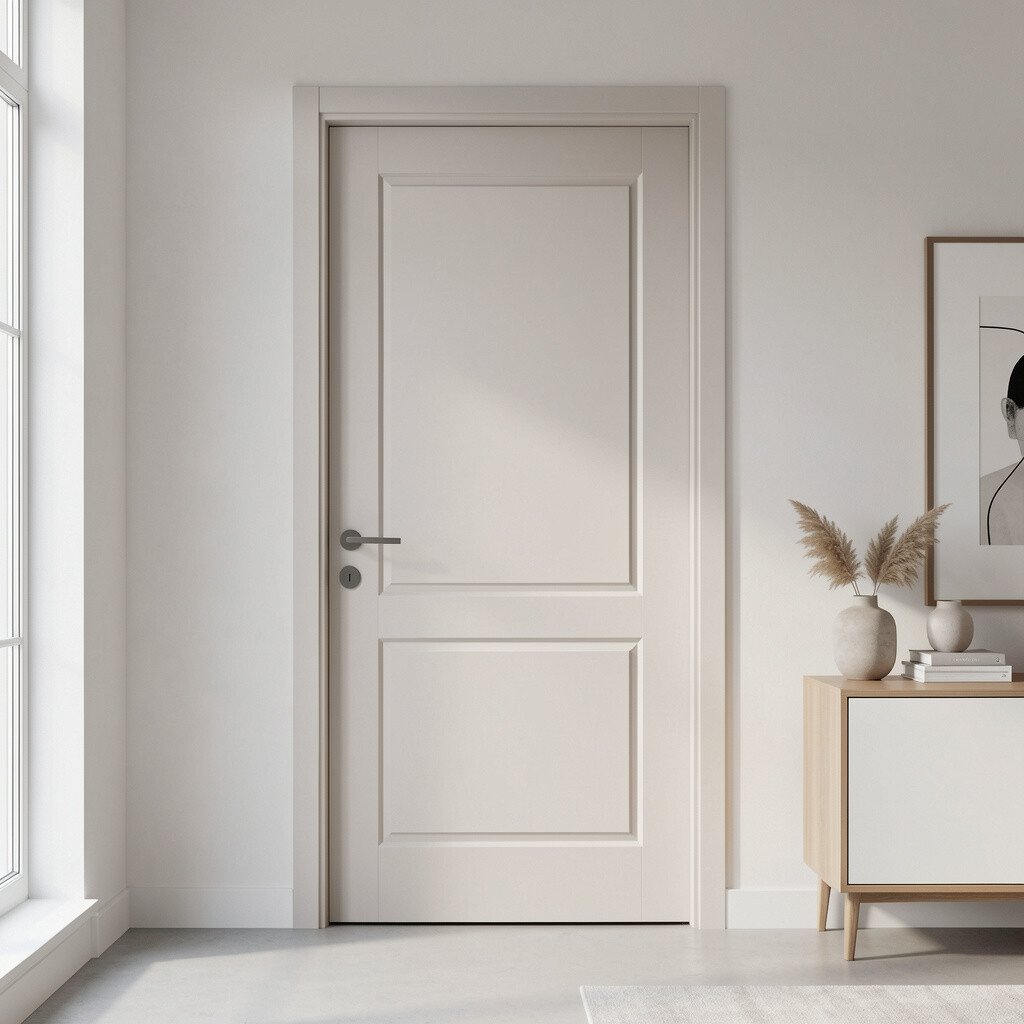
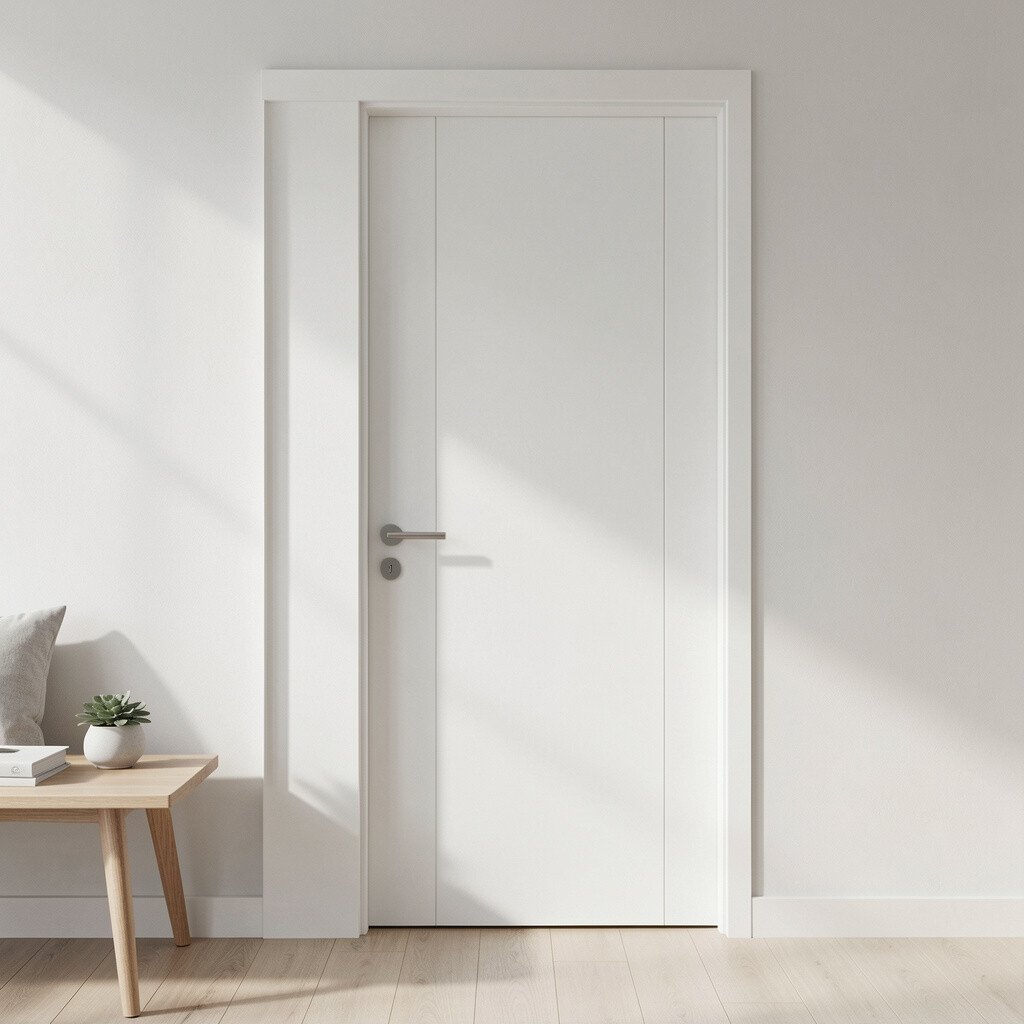
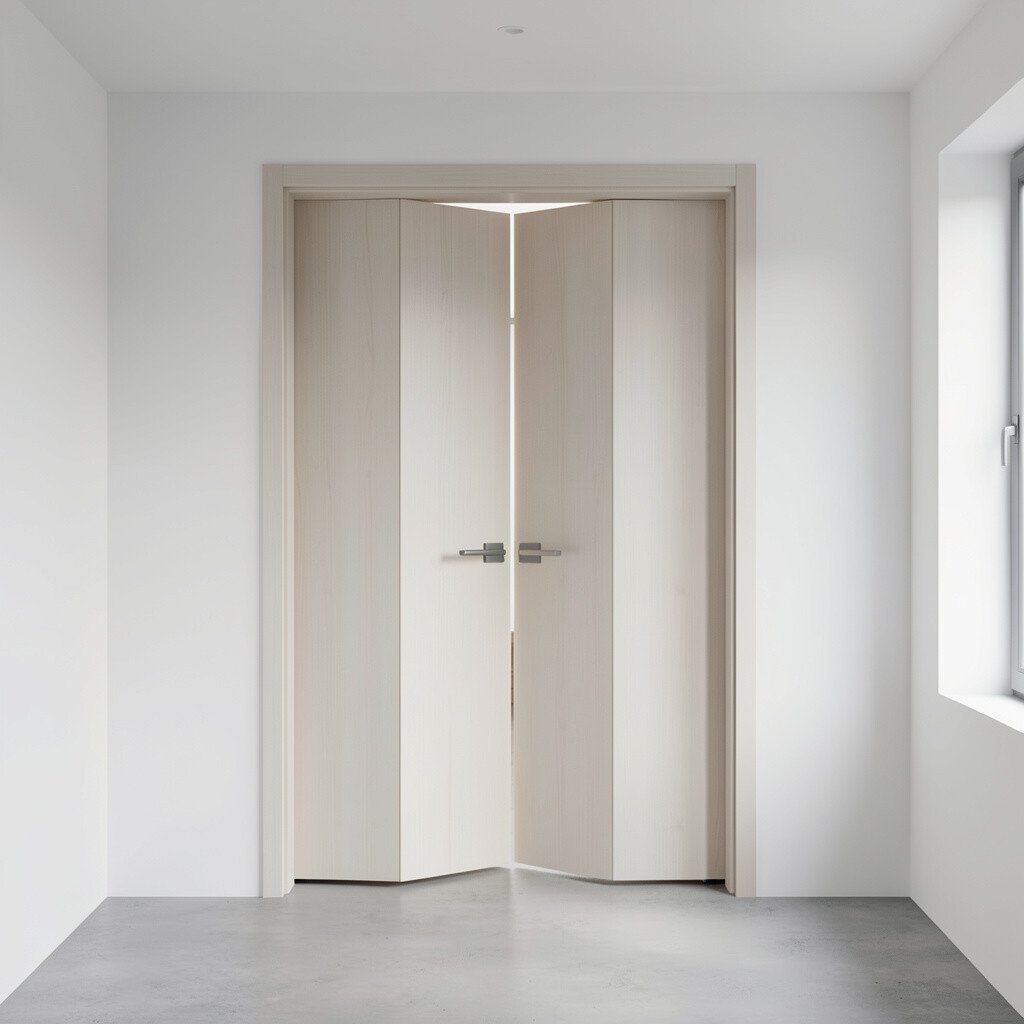
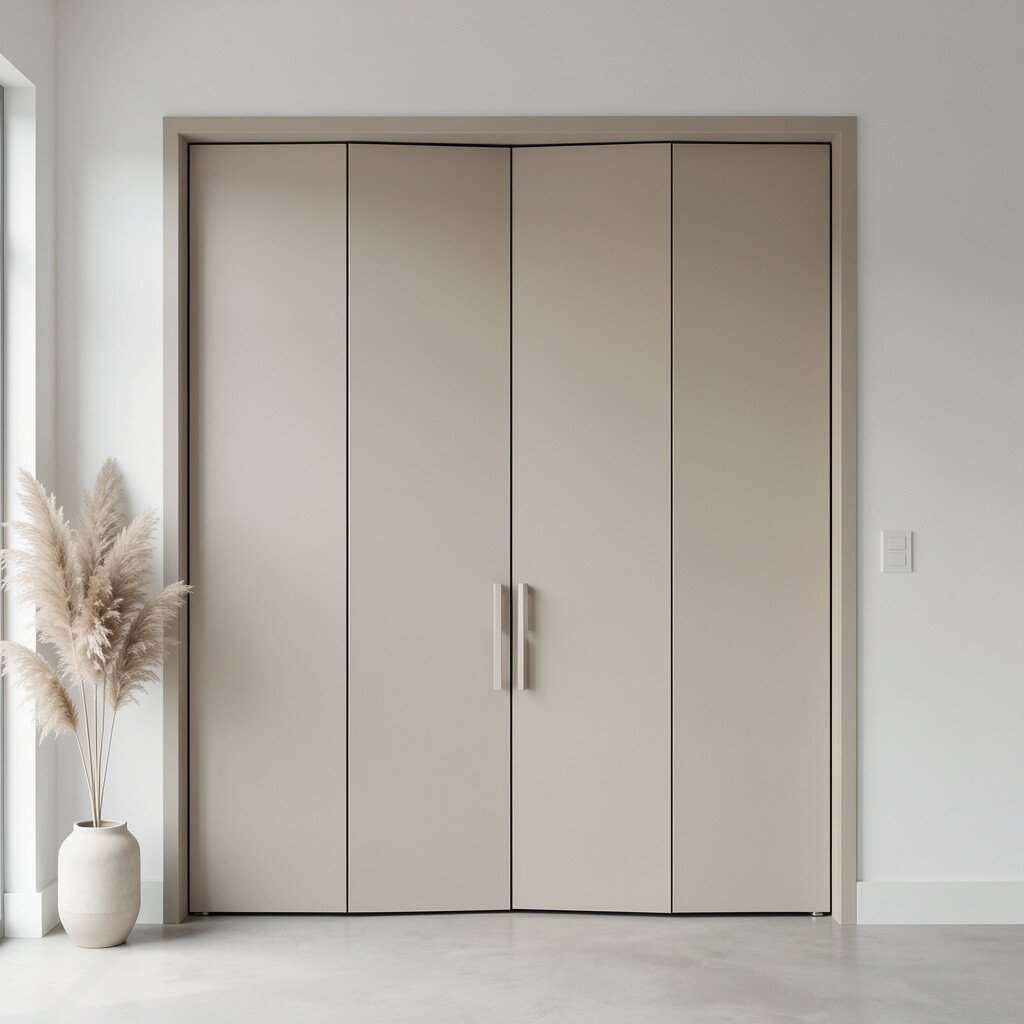
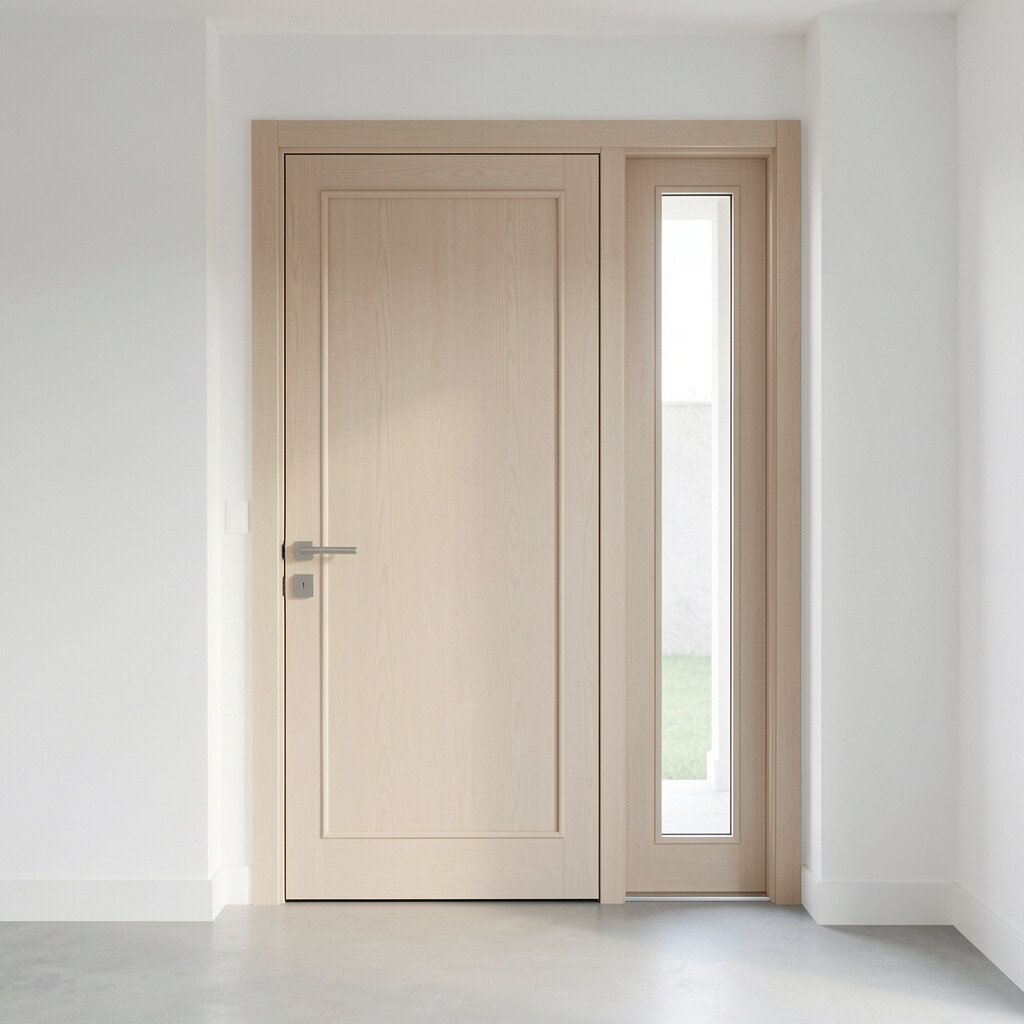
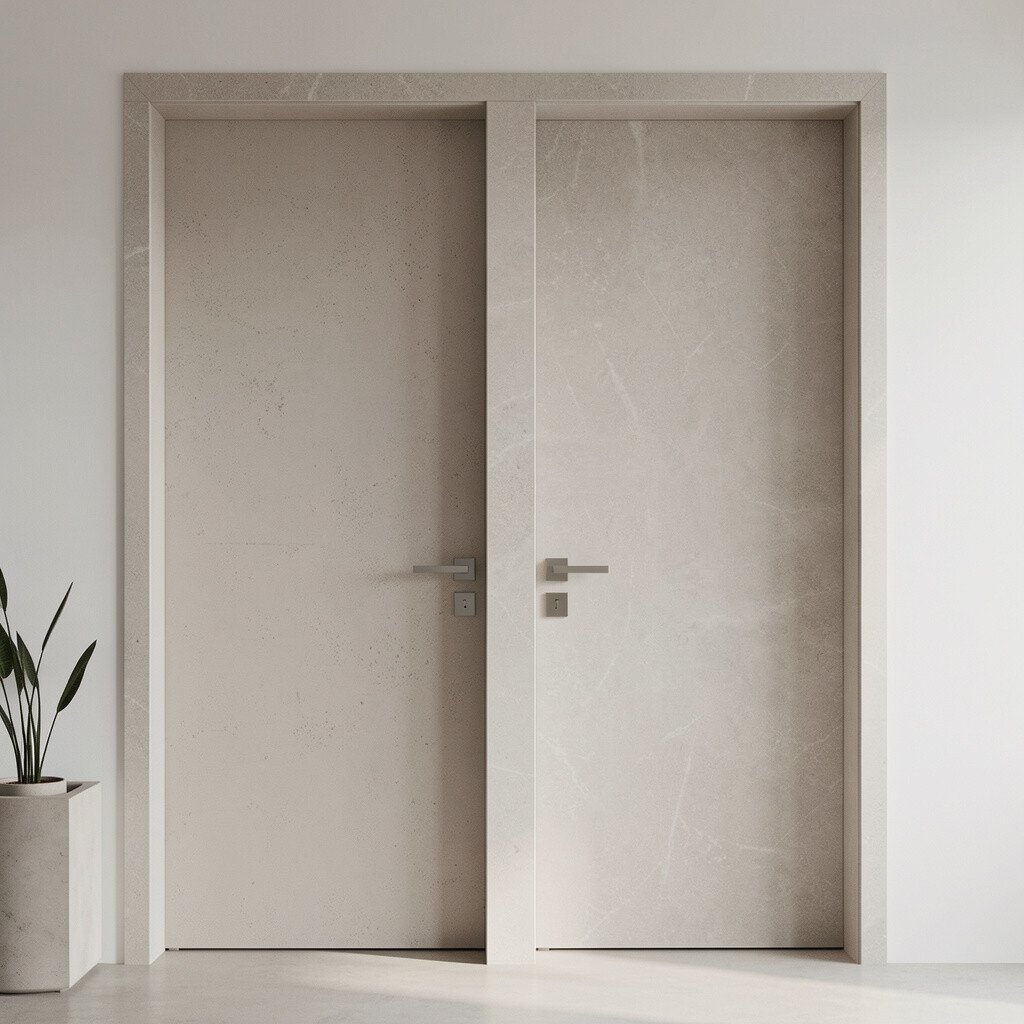
Think of a door that disappears into the wall like it belongs there. A flush surface with concealed hinges keeps lines clean and shadows soft.
This style looks modern and helps busy rooms feel calmer. For practical results, measure the opening carefully and choose a door size that leaves even gaps all around.
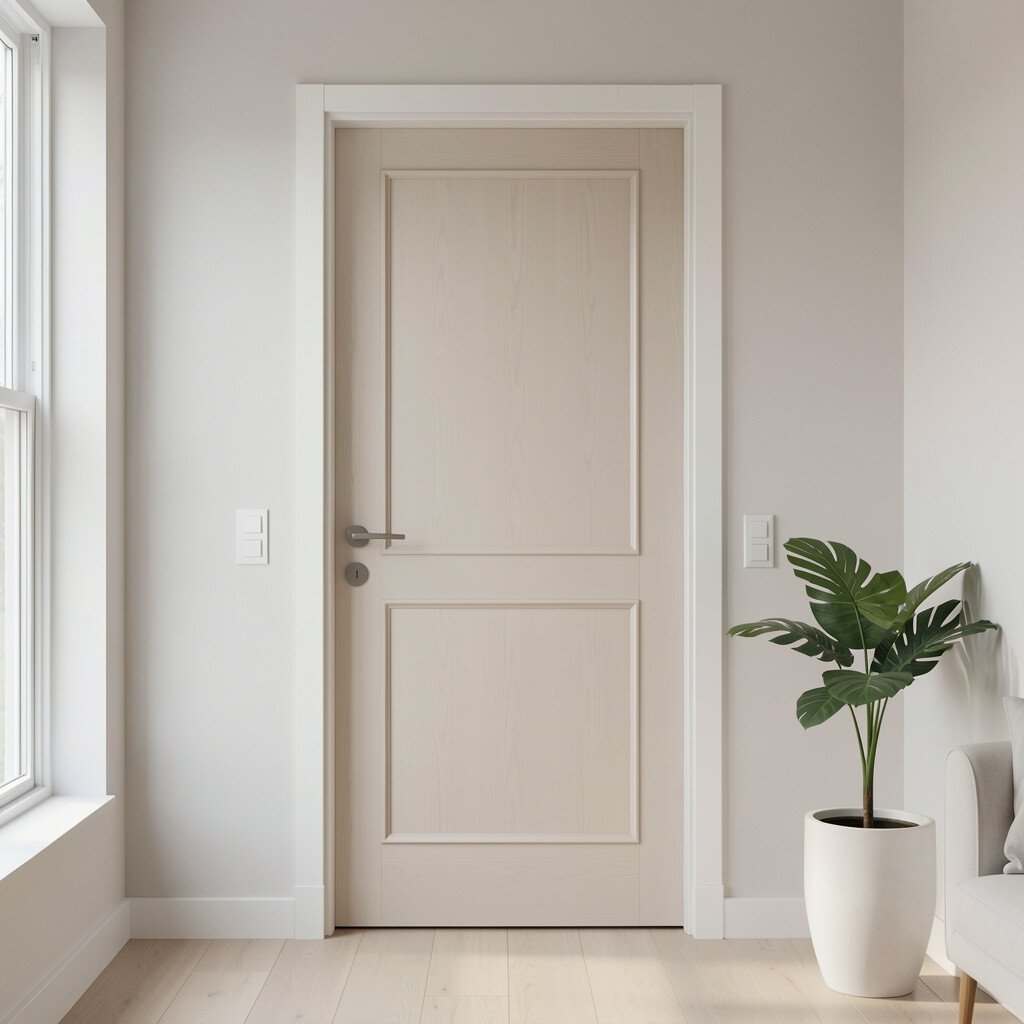
2. Matte-Finish Wood Doors With Soft Grain
Matte-Finish Wood Doors With Soft Grain
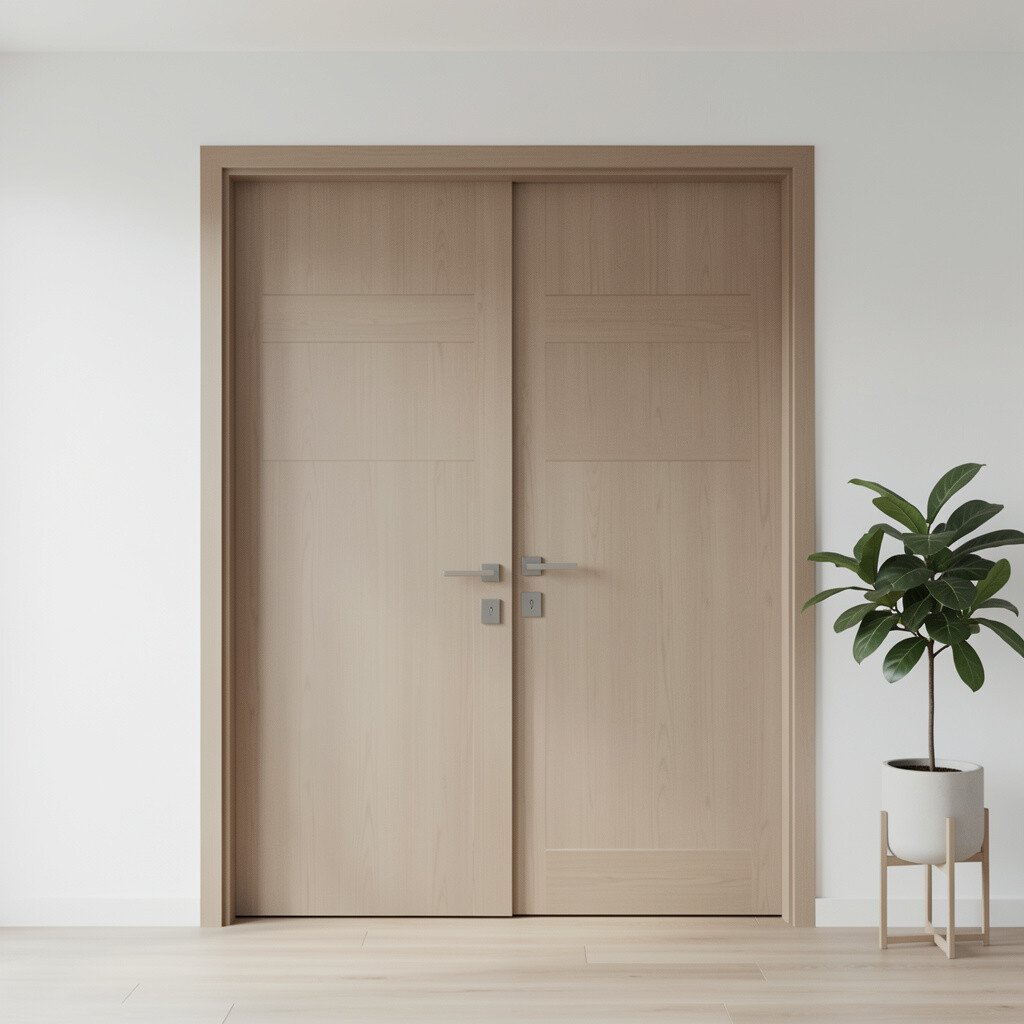
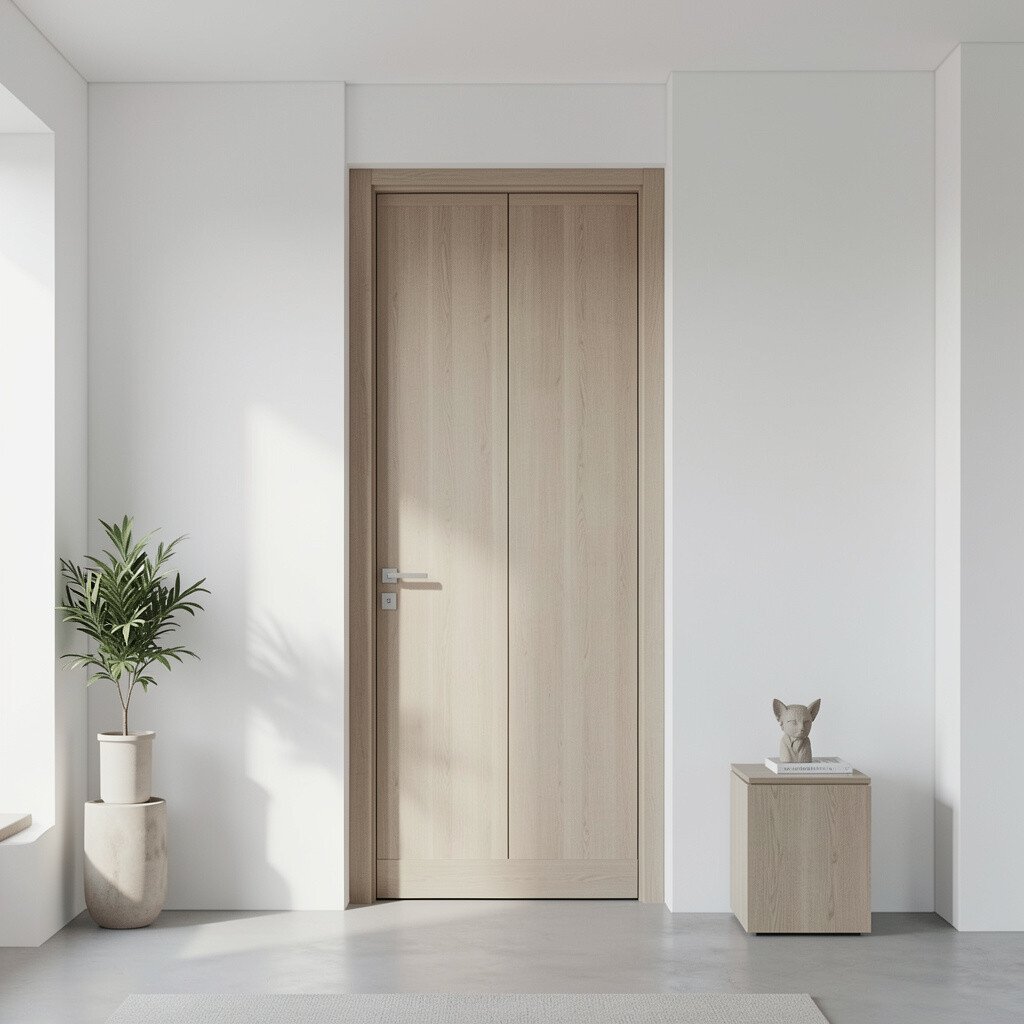
A matte wood door feels warm even when the room is mostly neutral. You might see gentle grain patterns that look natural without stealing attention.
It adds texture without visual noise, which is a big win in minimalist decor. If you want it to last, use a low-sheen topcoat and clean with a damp cloth instead of harsh cleaners.
For personalization, match the wood tone to your floors or choose a slightly lighter shade to brighten hallways. Keep an eye on cost by selecting standard plank widths and common wood species at local retailers.
3. Pocket Doors With Clear, Unbroken Track Lines
Pocket Doors With Clear, Unbroken Track Lines
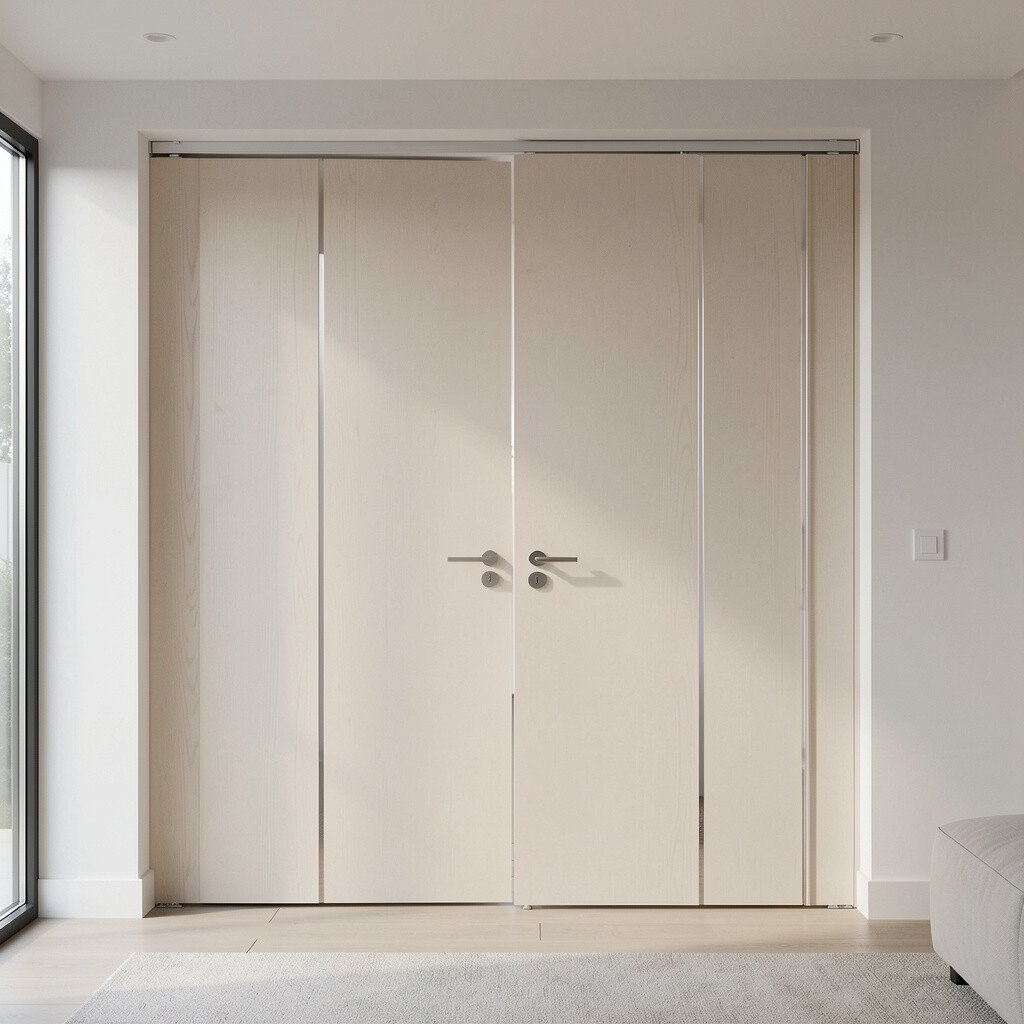
When a door slides away into the wall, the hallway feels more open. The best pocket designs keep the track area neat so your view stays clean.
This option is great for small spaces because it saves swing space. To make it work smoothly, plan for the wall thickness you need and check that the opening width fits the door core.
You can add a simple handle in the same finish as your light fixtures for a cohesive look. Pocket doors are a current favorite in modern layouts, especially in apartments where every inch matters.
For budgets, ask about standard sizes and simple track kits, since custom carving and specialty hardware raise the price quickly.
4. Sliding Barn-Style Doors in Brushed Steel
Sliding Barn-Style Doors in Brushed Steel
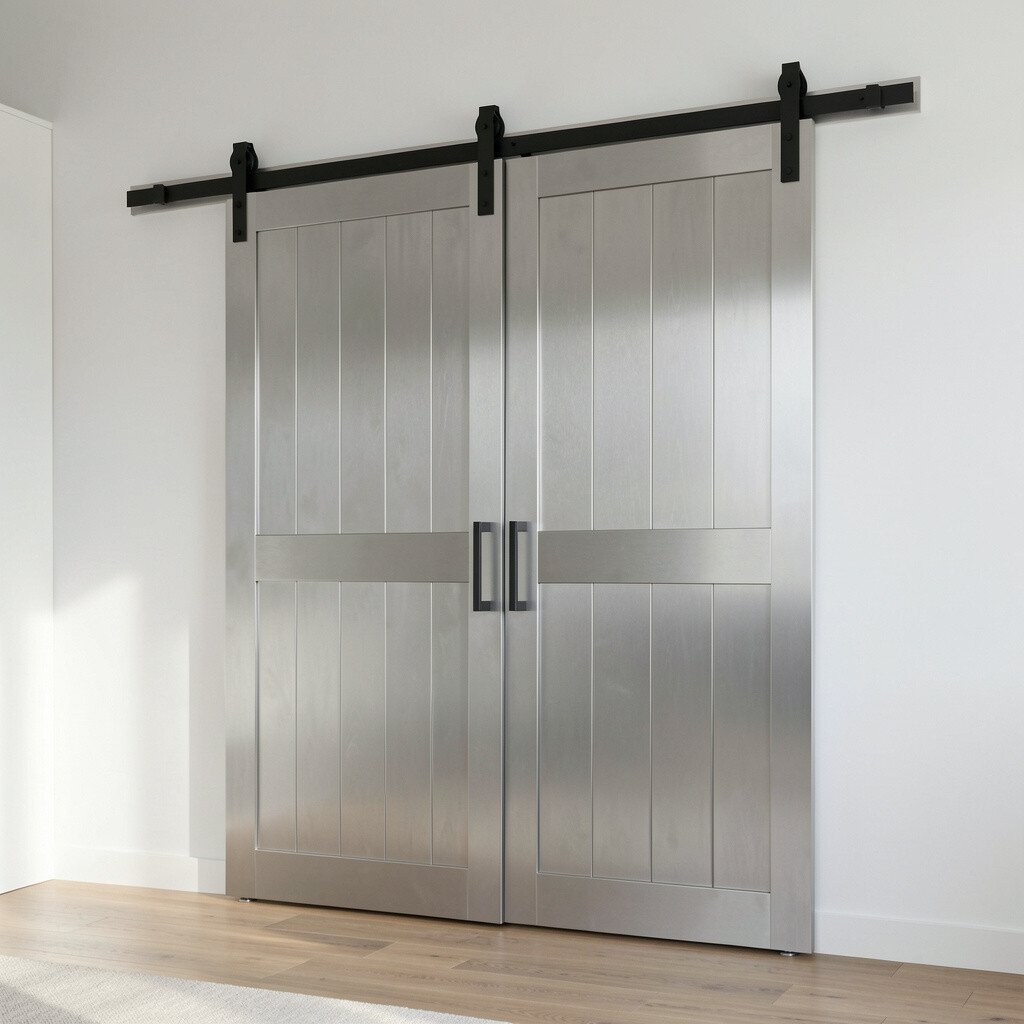
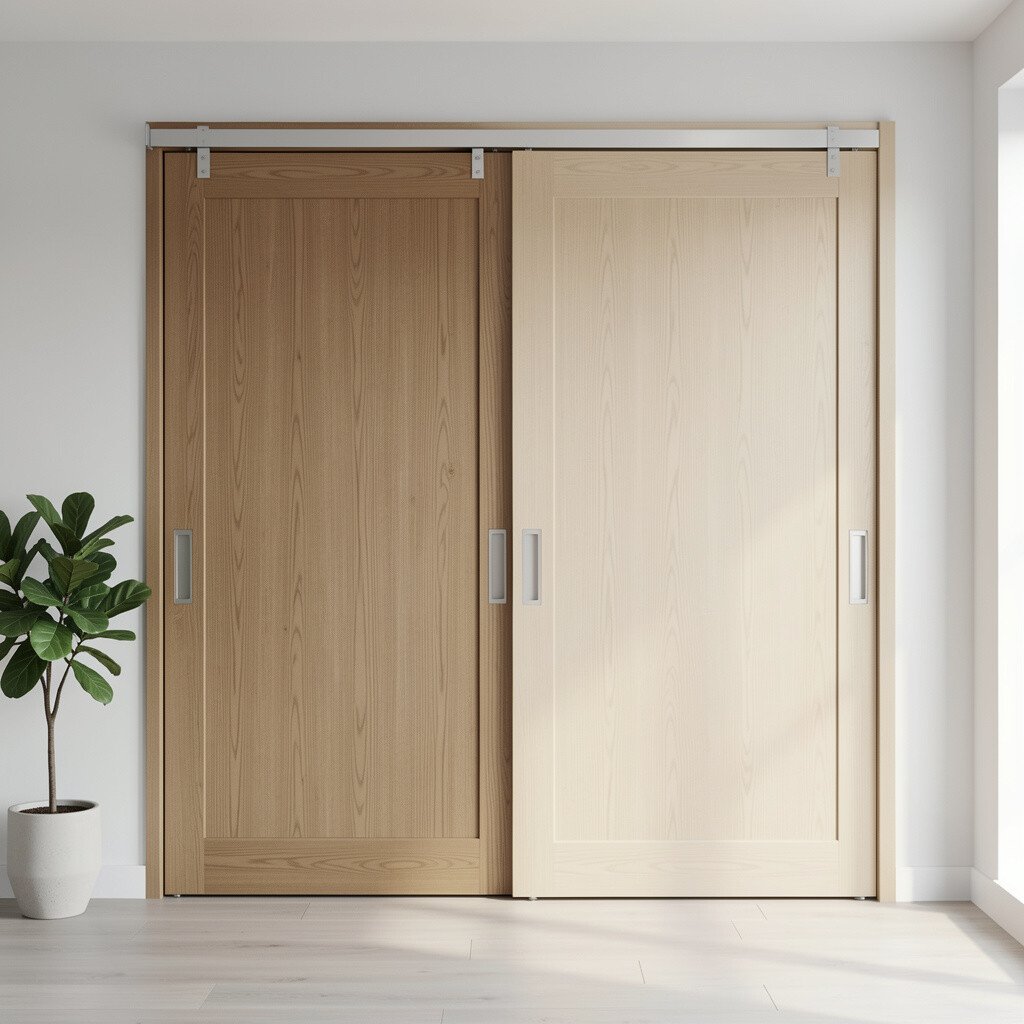
A minimalist barn-style door can still feel sleek when the hardware is slim and straight. Brushed steel tracks catch light in a quiet way, adding character without heavy clutter.
It offers practical separation while letting you keep an airy feel in the room. Aim for a door panel that is simple and flat, then let the hardware be the only standout detail.
5. Monochrome Painted Doors With Crisp Edges
Monochrome Painted Doors With Crisp Edges
Painting a door to match the wall makes it look like part of the architecture. Crisp edges help the surface feel sharp, especially under natural light.
This creates an instant calm mood and reduces visual contrast in busy homes. Use a primer made for wood or existing paint, then choose a satin or eggshell finish for easy cleaning.
If you want personalization, pick a slightly deeper shade than the wall color to add subtle depth. For cost control, repaint during a low-cost season and buy sample cans first to avoid surprises.
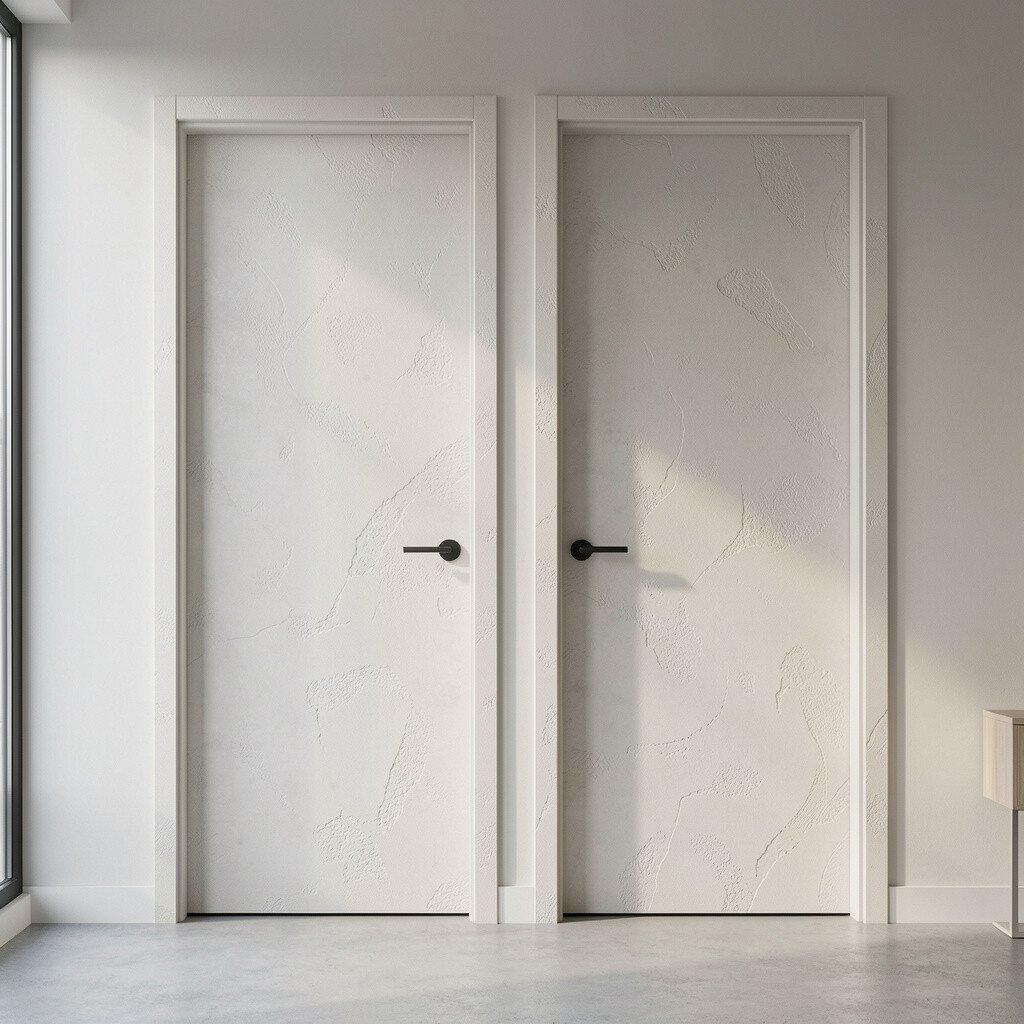
6. Textured Plaster-Style Doors for Soft Depth
Textured Plaster-Style Doors for Soft Depth
Some doors look like smooth plaster even though they are made from durable panels. The gentle texture makes shadows look richer and gives a room a handmade feel.
This works well in minimalist spaces because it adds interest without bold patterns. Choose a finish that is scuff resistant, and wipe with a microfiber cloth to keep it looking fresh.
For personalization, you can coordinate the texture level with your wall finish so the whole room feels intentional. If you are watching budget, compare ready-to-install textured doors versus custom coatings, since custom work often costs more.
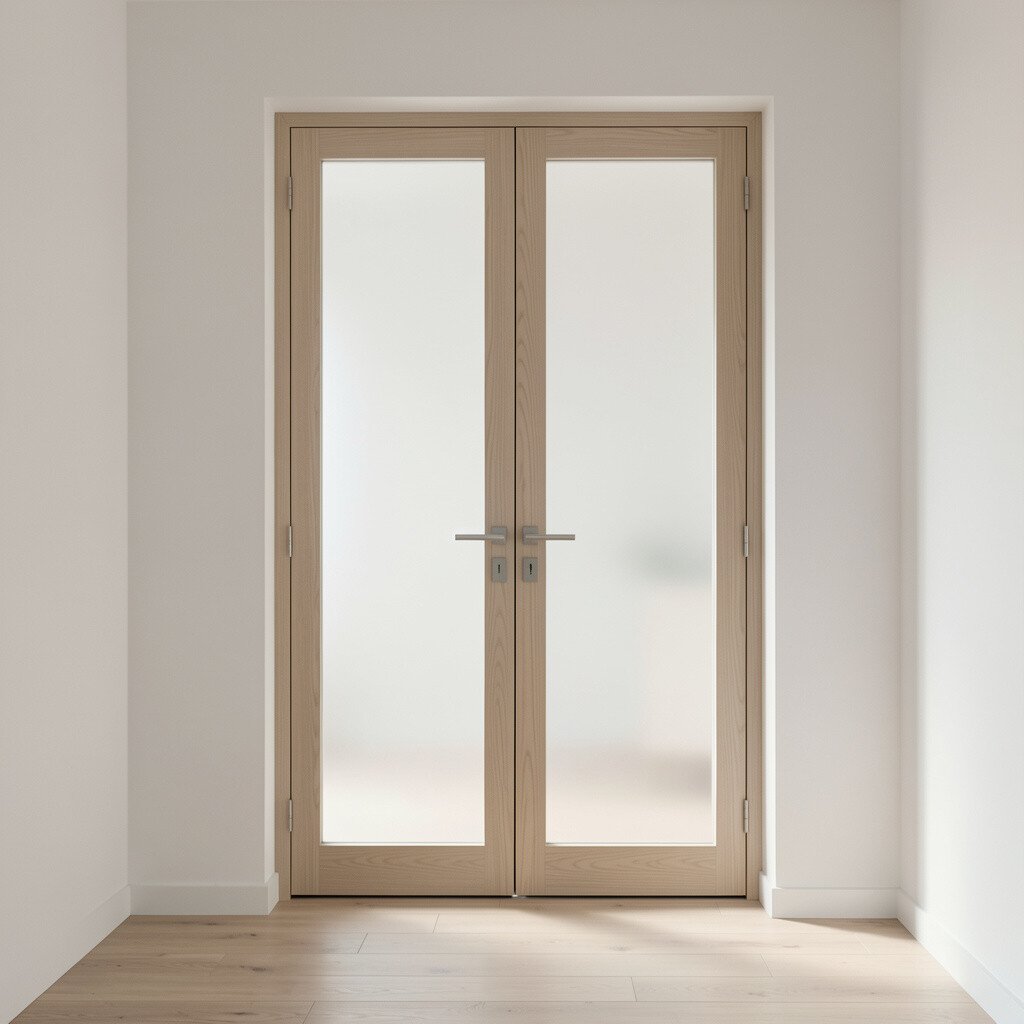
7. Glass-Insert Doors With Opaque Frosted Panels
Glass-Insert Doors With Opaque Frosted Panels
Frosted glass inserts let daylight travel while keeping privacy. You get a clean, modern look that still feels open and bright.
This is especially helpful for offices, bedrooms, and entryways where you want light but not full visibility. For best results, pick frosted glass that is uniform and sturdy, and confirm thickness so the door stays solid.
Personalize by choosing a subtle grid pattern through the glass or keeping it plain for the purest minimalist look. Frosted inserts are also a current trend because they balance openness with calm boundaries.
As for cost, glass options vary a lot, so compare the price of inserts versus a full door replacement before committing.
8. Leaned-Look Minimal Doors With Shadow Gap Detailing
Leaned-Look Minimal Doors With Shadow Gap Detailing
Some designers create a “shadow gap” around the door so it feels slightly floating. The thin line of darkness makes the door look crisp and intentional.
This gives your room depth while staying quiet and uncluttered. To get the effect, plan for proper trim alignment and use consistent spacing all the way around the opening.
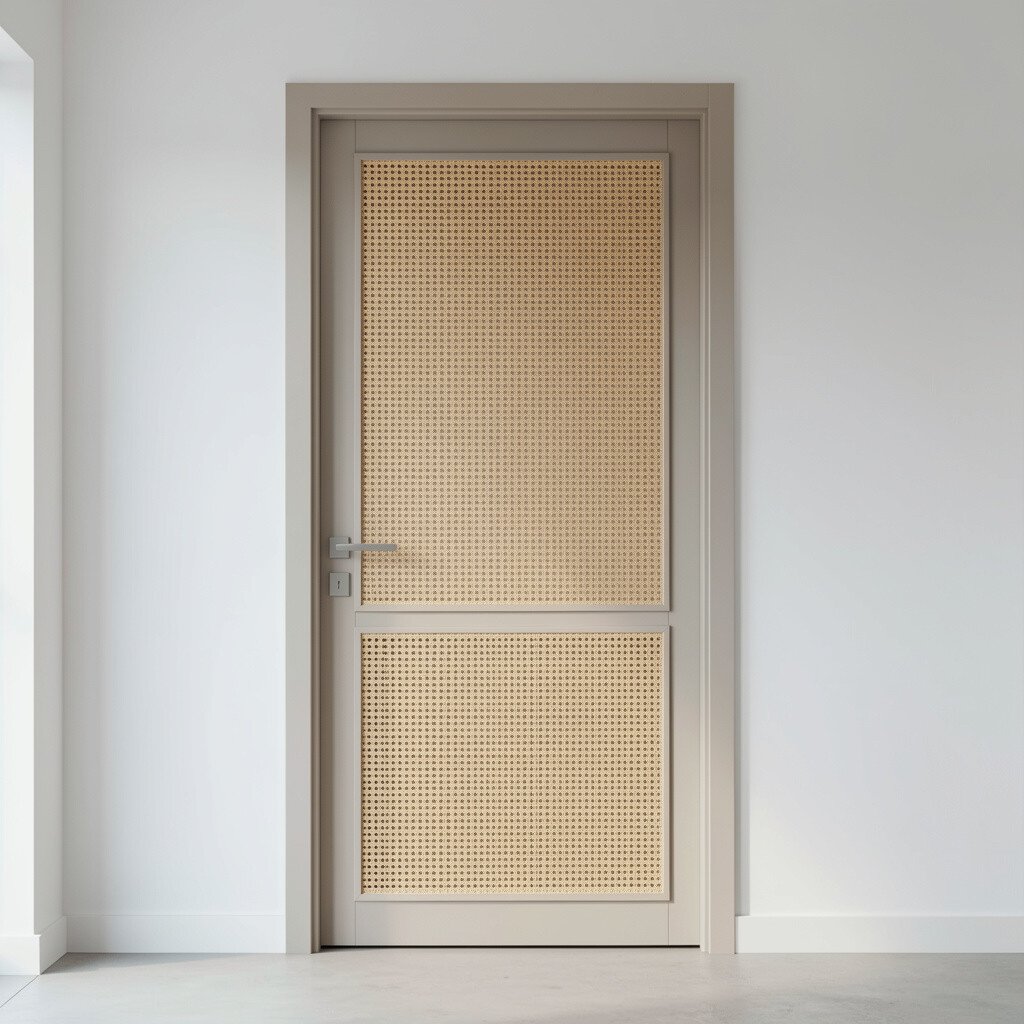
9. Natural Cane or Woven Inserts in Neutral Frames
Natural Cane or Woven Inserts in Neutral Frames
Woven cane inserts bring a light, airy look even in a minimalist home. The pattern is subtle, and the tones often blend with warm woods and soft fabrics.
It adds texture, breathability, and visual interest without loud colors. For practicality, choose inserts designed for interior doors so they do not sag or loosen over time.
You can personalize by selecting a frame finish like matte black or warm oak, depending on your style. If cost matters, compare cane inserts as panels within an existing door setup versus buying fully custom doors.
This idea also fits current trends that favor natural materials and gentle warmth over stark surfaces.
10. Sleek Metal Mesh Doors for Industrial-Minimal Contrast
Sleek Metal Mesh Doors for Industrial-Minimal Contrast
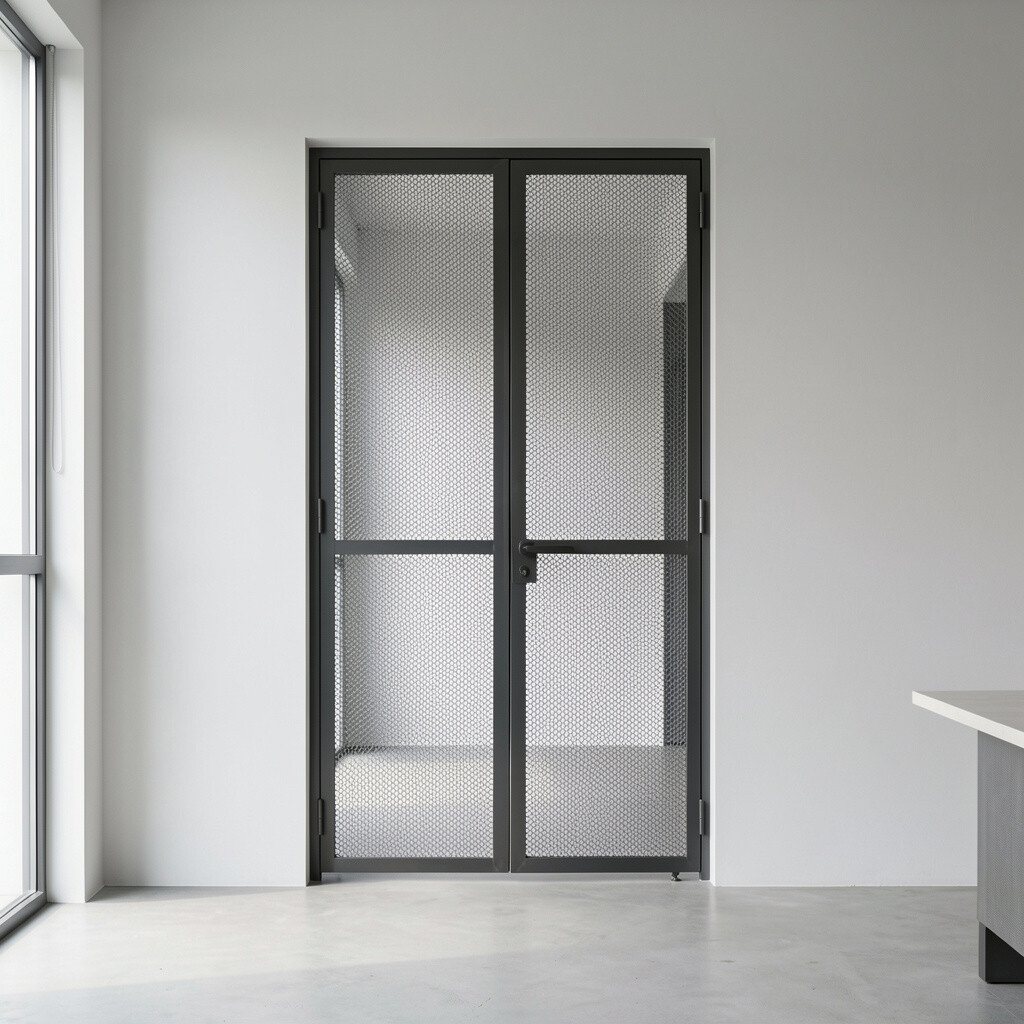
Metal mesh doors can look surprisingly clean when the grid is fine and the frame is slim. The door adds a hint of industrial edge while still staying minimalist.
This kind of door works well for utility areas, studios, and even modern wardrobes. When choosing a mesh door, check for smooth edges and a coating that resists fingerprints and rust.
11. Single-Handle Minimal Doors With No-Show Hardware Aesthetic
Single-Handle Minimal Doors With No-Show Hardware Aesthetic
A minimalist door does not need many details to look great. Sometimes a single, well-placed handle is all the hardware your space needs.
This helps your eye rest and makes the room feel tidy. For practical tips, use an ergonomic handle shape and keep the height consistent across all doors for easy daily use.
Personalize by matching the handle finish to your faucets and cabinet pulls. If you are budget-conscious, swapping hardware is often cheaper than replacing the entire door.
12. Tall Doorways With Nearly Floor-to-Ceiling Panels
Tall Doorways With Nearly Floor-to-Ceiling Panels
When the door runs tall, the space feels higher and more elegant. The clean panel lines also create a strong visual rhythm without adding clutter.
This is a powerful choice for modern homes because it stretches the eye and makes rooms feel grand. Plan carefully by checking for ceiling height and flooring clearance so the door opens smoothly.
Personalization is easy with a simple slab design, then choose a finish that matches your trim or walls. Tall doors can cost more due to special sizing, so ask about standard “almost tall” options if you want to stay on budget.
13. Reversible Sliding Doors With Two Finishes
Reversible Sliding Doors With Two Finishes
Imagine a door that can look different on each side, yet stays minimal. One side might be wall-matched while the other side uses a warm wood tone.
This setup gives you flexibility for different rooms and changing moods. For practical planning, confirm the door is truly reversible and that mounting hardware supports both looks securely.
Personalize by choosing a neutral matte paint on one side and a natural finish on the other. Reversible designs may cost a bit more upfront, but they can save money later if you redecorate.
14. Pivot Doors With a Clean, Centered Silhouette
Pivot Doors With a Clean, Centered Silhouette
A pivot door swings on a central axis, giving it a calm, architectural feel. With the right finish, it becomes a simple focal point rather than a bulky one.
This is great for open-plan spaces where you want a statement that still feels minimal. For practical use, make sure the door’s weight and hinge setup match your wall type and flooring height.
Personalization can be as small as choosing a discreet pivot plate finish that matches your lighting hardware. Pivot doors often carry a higher price tag because installation is more specialized, so budget for professional fitting.
15. Bi-Fold Doors With Minimal Seams in Neutral Colors
Bi-Fold Doors With Minimal Seams in Neutral Colors
Bi-fold doors can still feel streamlined when the panels are thin and the seams are consistent. A neutral color keeps them from looking busy even when they fold.
This style is useful for closets, pantries, and home offices where you want partial flexibility. To keep it tidy, choose hardware that folds smoothly and maintain even panel spacing.
For personalization, align the door color with your wall or pick a slightly different tone for a subtle layered look. In terms of cost, standard bi-fold door systems are often more affordable than custom sliders.
It also fits current trends that favor flexible layouts without heavy visual barriers.
16. Side-Lite and Door Pairing With Matching Frame Lines
Side-Lite and Door Pairing With Matching Frame Lines
A door paired with a slim side-lite creates a balanced, modern entrance. When the frame lines match, the whole opening looks intentional and neat.
This brings in light and makes nearby rooms feel bigger, even with minimalist styling. For practical tips, choose a frame profile that matches your trim and use privacy glass if it faces a hallway.
Personalize by selecting a frosted or patterned side-lite that keeps the look airy but private. Cost can vary widely based on glass type, so consider simpler privacy glass options if you want to manage your budget.
17. Low-Gloss Sealed Doors in Soft Stone Tones
Low-Gloss Sealed Doors in Soft Stone Tones
Soft stone tones like warm greige, pale taupe, or light clay can feel soothing and grounded. A low-gloss sealed finish makes the surface look calm and modern.
This choice supports minimalist decor because it keeps everything understated while still adding personality. For durability, use a sealant made for doors so it resists scuffs from daily touch.
Personalize by pairing the door tone with matching textiles like curtains or towels. Cost is usually manageable when you pick standard colors, since custom-mixed paint can raise the total.
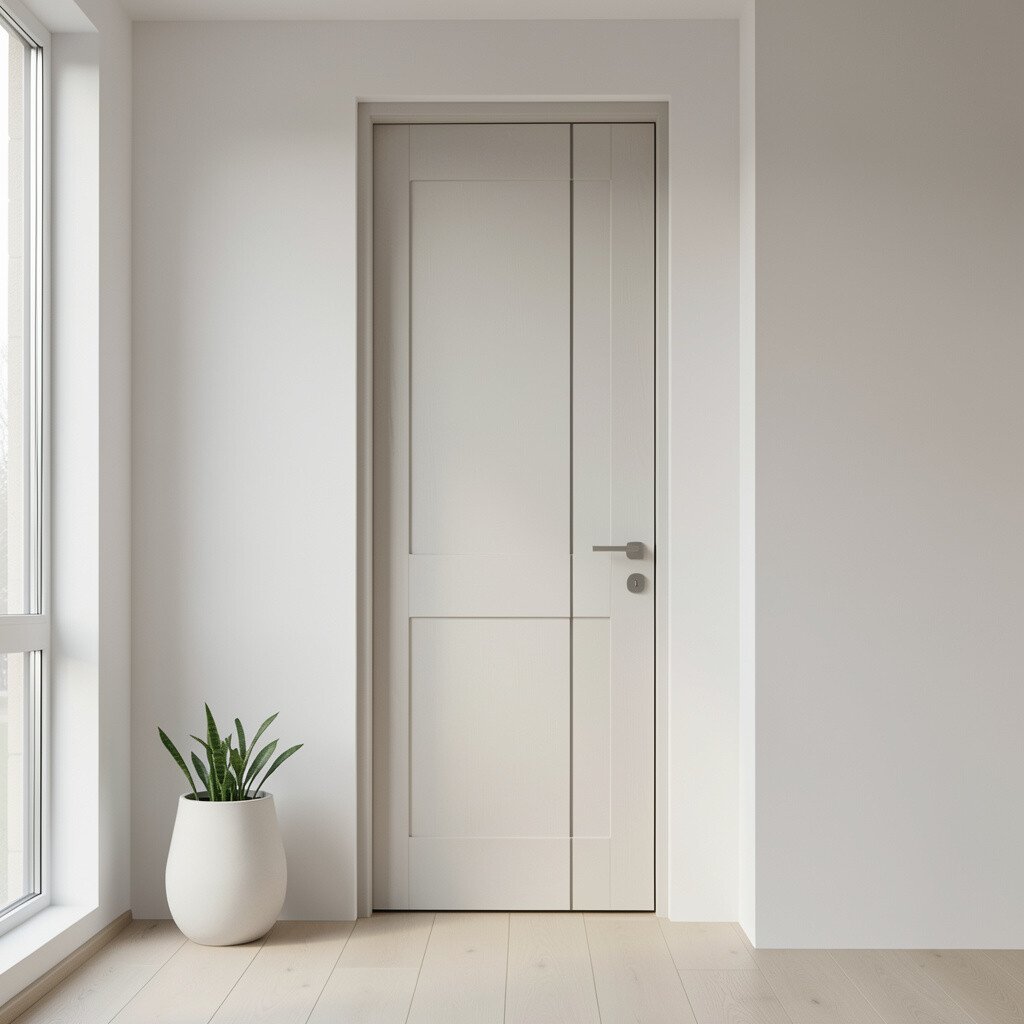
18. Custom Door Inserts With One Thoughtful Detail
Custom Door Inserts With One Thoughtful Detail
The simplest minimalist door idea is to keep the door mostly plain and add one meaningful detail. A single recessed panel, one vertical strip, or a centered inset can be enough to make it feel special.
This approach gives you uniqueness without clutter, because the design stays quiet. For practical tips, choose the inset depth carefully so it does not look heavy, and make sure the detail is easy to clean.
Personalize the one detail to match your home, such as using a material from your flooring or a finish from your fixtures. If you are mindful about cost, opt for a design that can be done on standard door stock rather than fully bespoke construction.
This kind of tailored minimalism is popular right now because it feels personal, neat, and easy to live with.