15+ Before And After Simple Door Ideas To Refresh Your Home
Your front door makes the first impression, even before anyone steps inside. Small changes can make it feel fresh and special fast.
With a few budget-friendly tweaks, you can change the look and feel of every doorway in your home. The best part is that these updates often need simple tools and easy materials you can find locally.
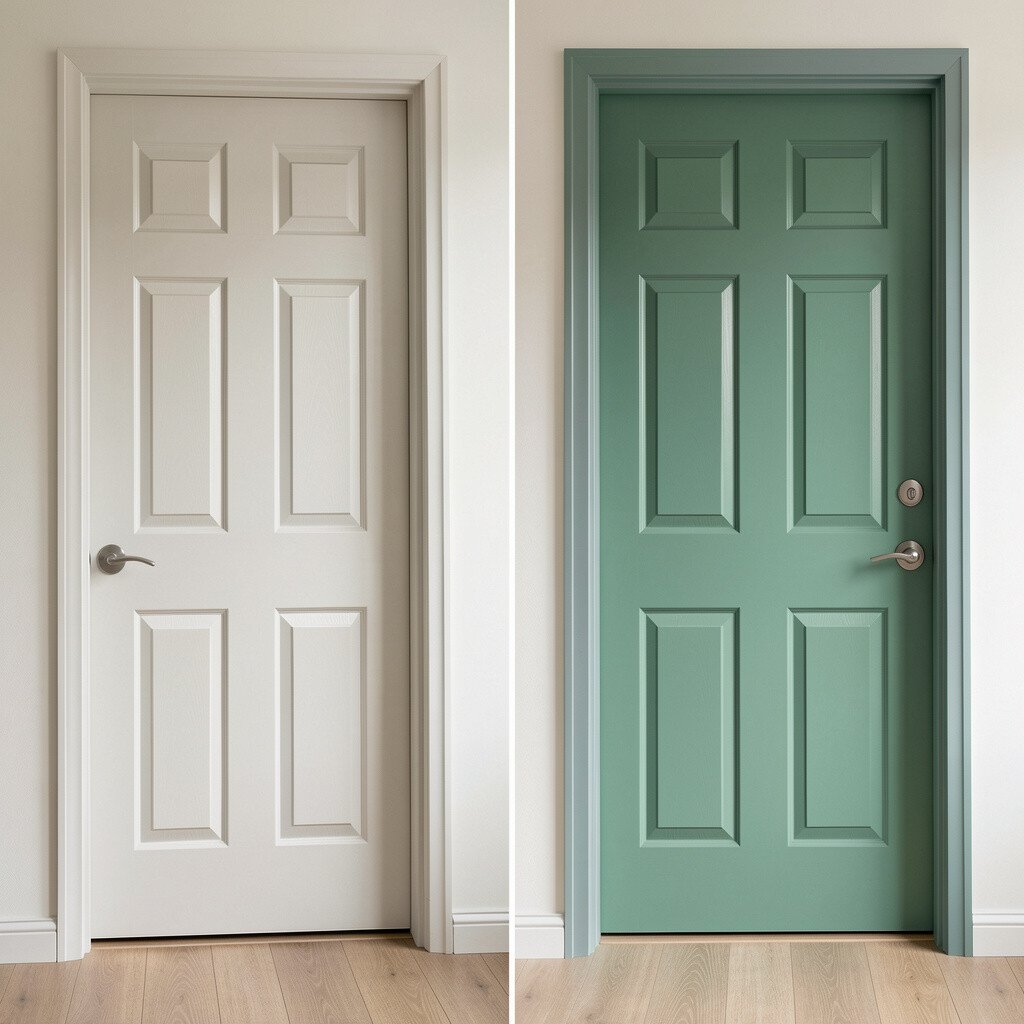
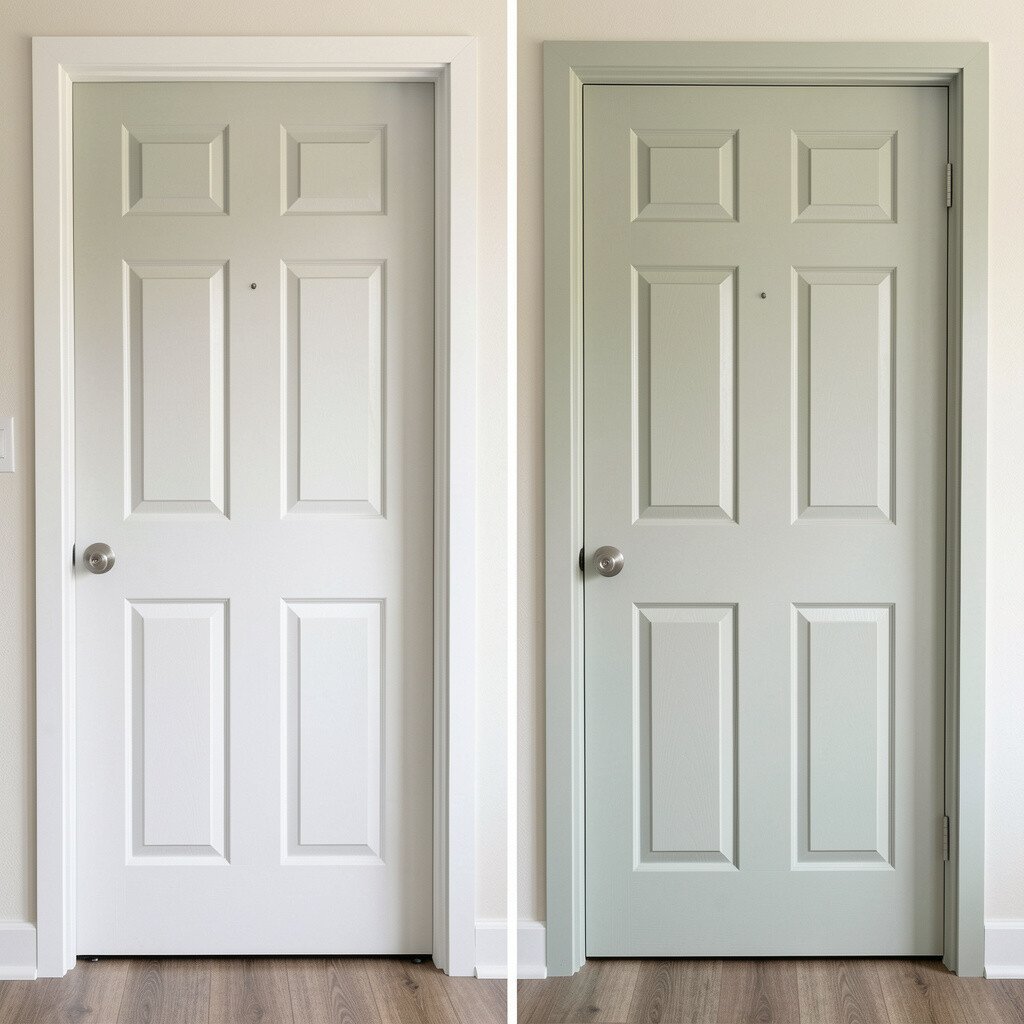
1. Paint the Door and Frame for an Instant Glow-Up
Paint the Door and Frame for an Instant Glow-Up
Before the change, the door blends into the wall and can look a little tired in daylight. After painting, the whole entry feels brighter and more welcoming right away.
Choose a door color that matches your style and your home’s vibe, like warm navy, soft sage, or classic black. Paint the door and the trim so the lines look crisp and intentional. If your door gets lots of sun, use an exterior paint made to resist fading and scuffing.
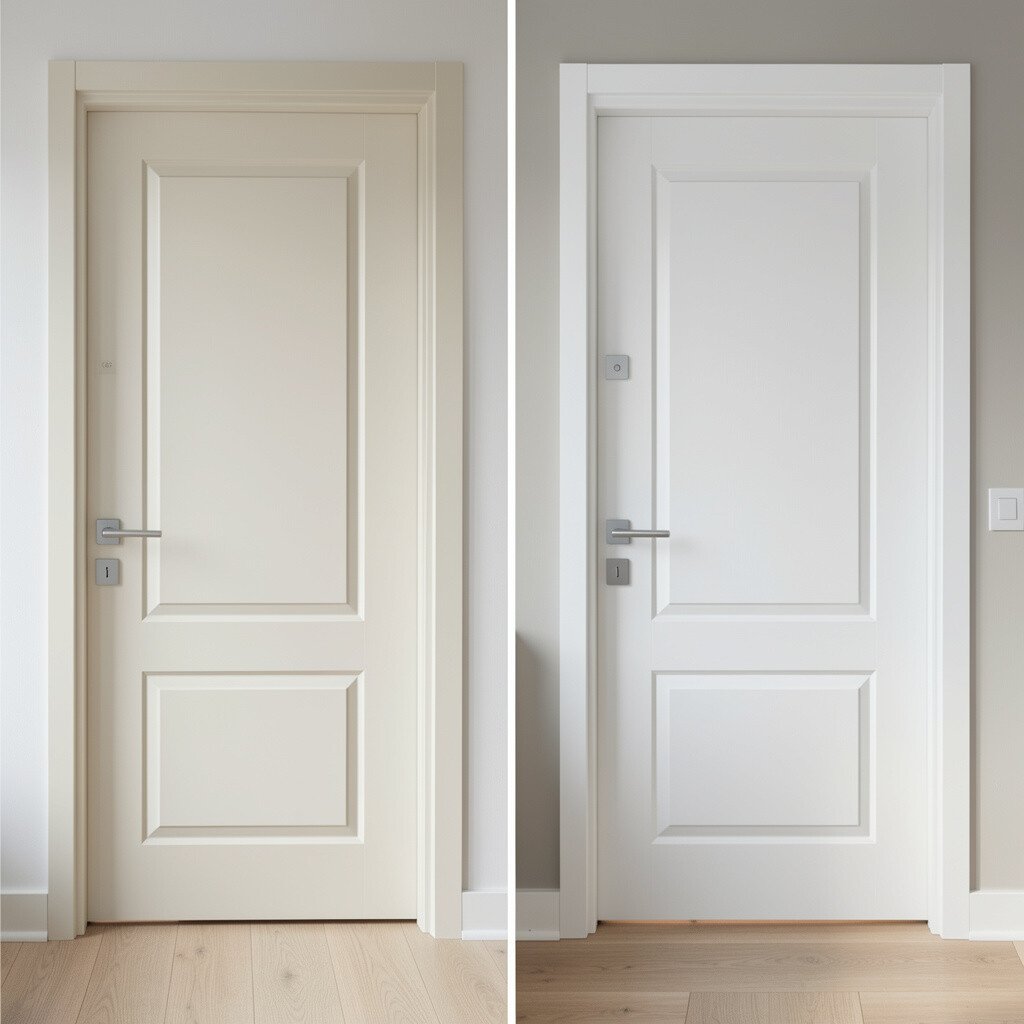
2. Swap Out the Hardware for a Cleaner, Modern Look
Swap Out the Hardware for a Cleaner, Modern Look
Old knobs and worn hinges can make a door look dated, even if the door itself is in good shape. After updating the hardware, the details suddenly look neat and cared for.
Pick finishes that work together, like brushed nickel with matching hinges or matte black with a dark accent door. For a smooth change, measure the existing hole spacing so you buy the right fit. Tighten everything firmly, and consider using a quick-turn screwdriver bit to save time.
Many homes today mix finishes, like pairing a warm brass knob with darker accents, as long as they repeat elsewhere. You can also upgrade to a better latch or smoother handle for daily comfort. This kind of refresh is usually one of the lowest-effort options with noticeable visual impact.
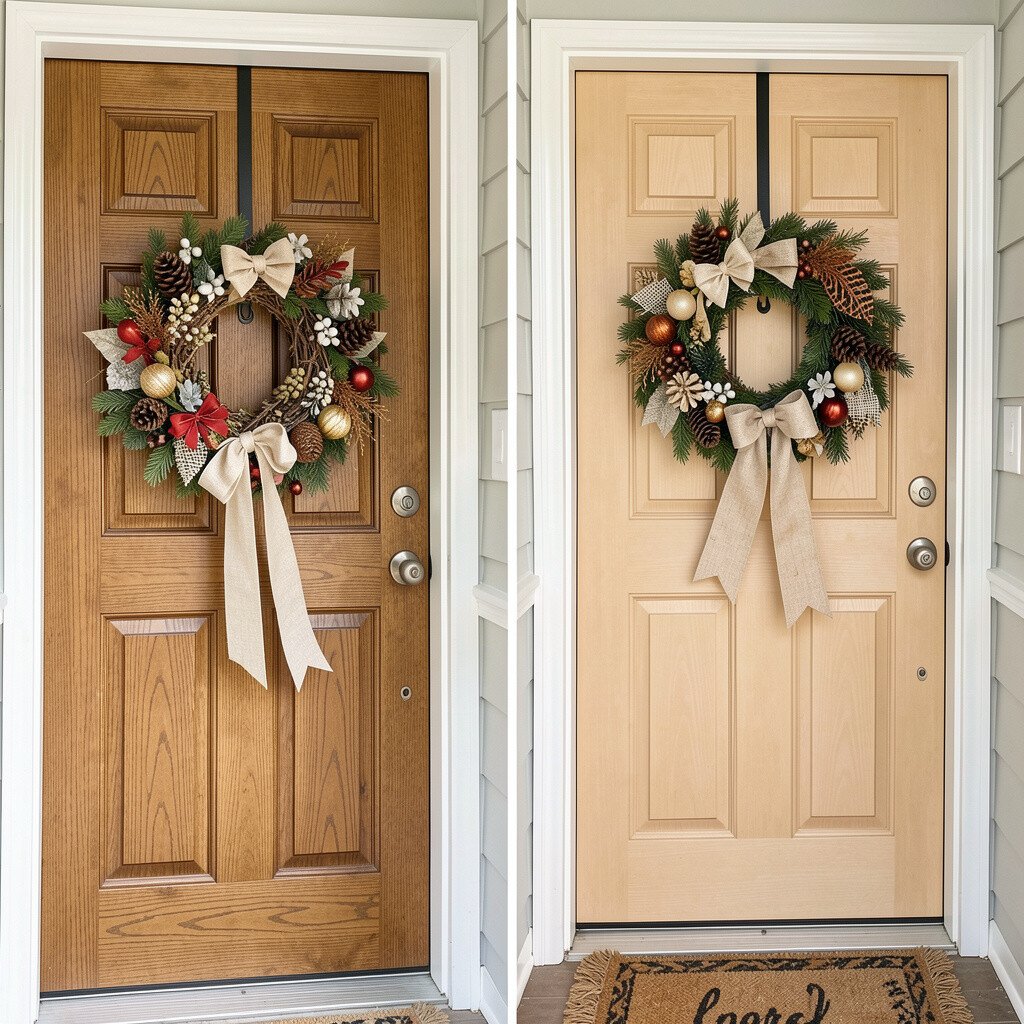
3. Add a Welcome Wreath or Door Décor That Fits the Season
Add a Welcome Wreath or Door Décor That Fits the Season
A plain door can feel flat, especially during holidays or changing weather. After adding décor, your entry looks lively and personal like it has a story.
Try a simple wreath, a seasonal arrangement, or even a fabric bow that you can switch out often. When you hang décor at the same height each time, the door always looks tidy. If you want a more modern look, choose one large statement piece instead of many small items.
Personalize it by weaving in your favorite colors or using materials that match your home, like greenery, dried flowers, or simple wood elements. A wreath can also protect the door from light dust and reduce fingerprints on the area you touch most. Keep it budget-friendly by using a reusable base and swapping only the outer parts.
Right now, lots of people are leaning into natural textures, soft neutral tones, and décor that feels handmade. You can match that trend without spending much by shopping sales for stems or using what you already own.
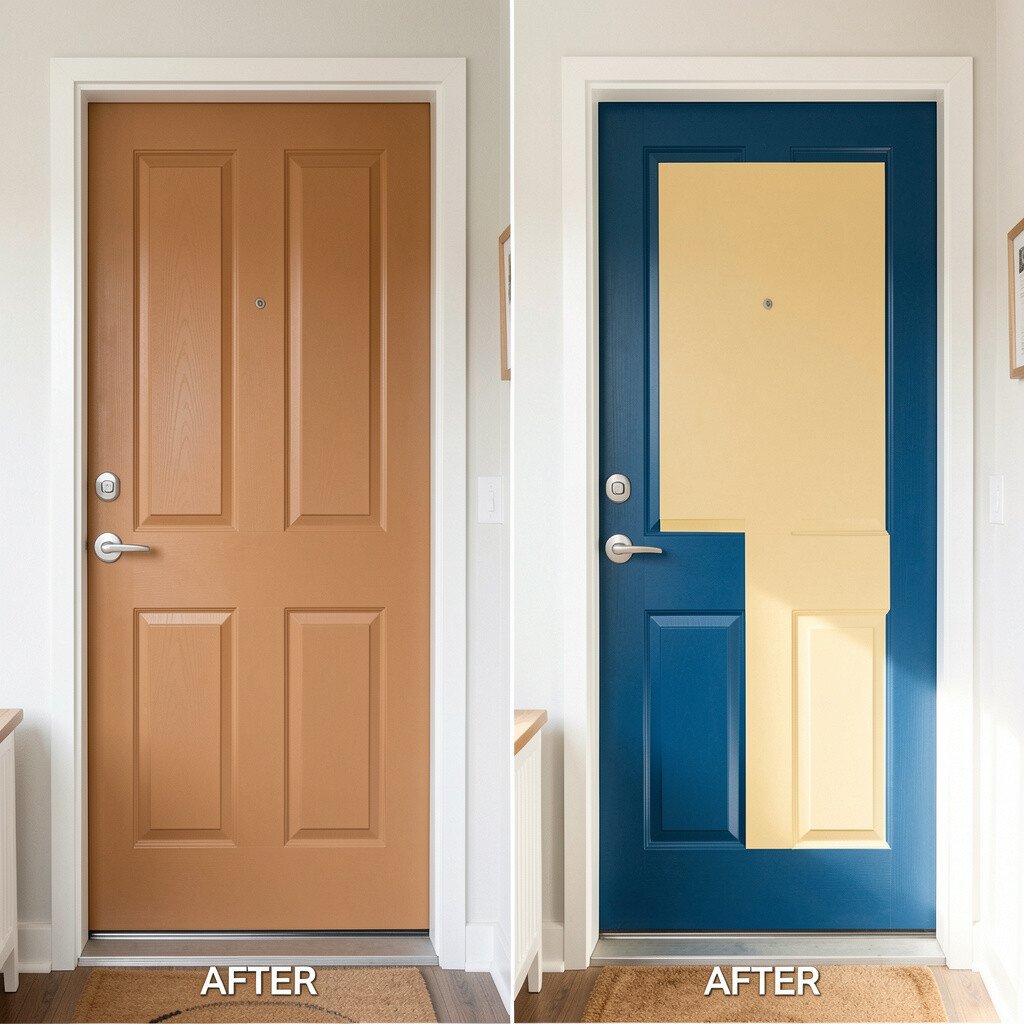
4. Refresh the Door Color with a Bold Accent Panel
Refresh the Door Color with a Bold Accent Panel
Some doors are the right color but still look too plain, like they are missing a focal point. After adding a contrasting panel, the door suddenly looks designed and stylish.
Use painter’s tape to section a simple inset, then paint an accent color that pops against the main shade. A sunburst, arched, or geometric panel can look striking while still staying simple to do. Keep the shapes consistent with your home’s lines, such as matching window shapes or existing trim details.
5. Stain or Refinish a Wood Door for Rich Warmth
Stain or Refinish a Wood Door for Rich Warmth
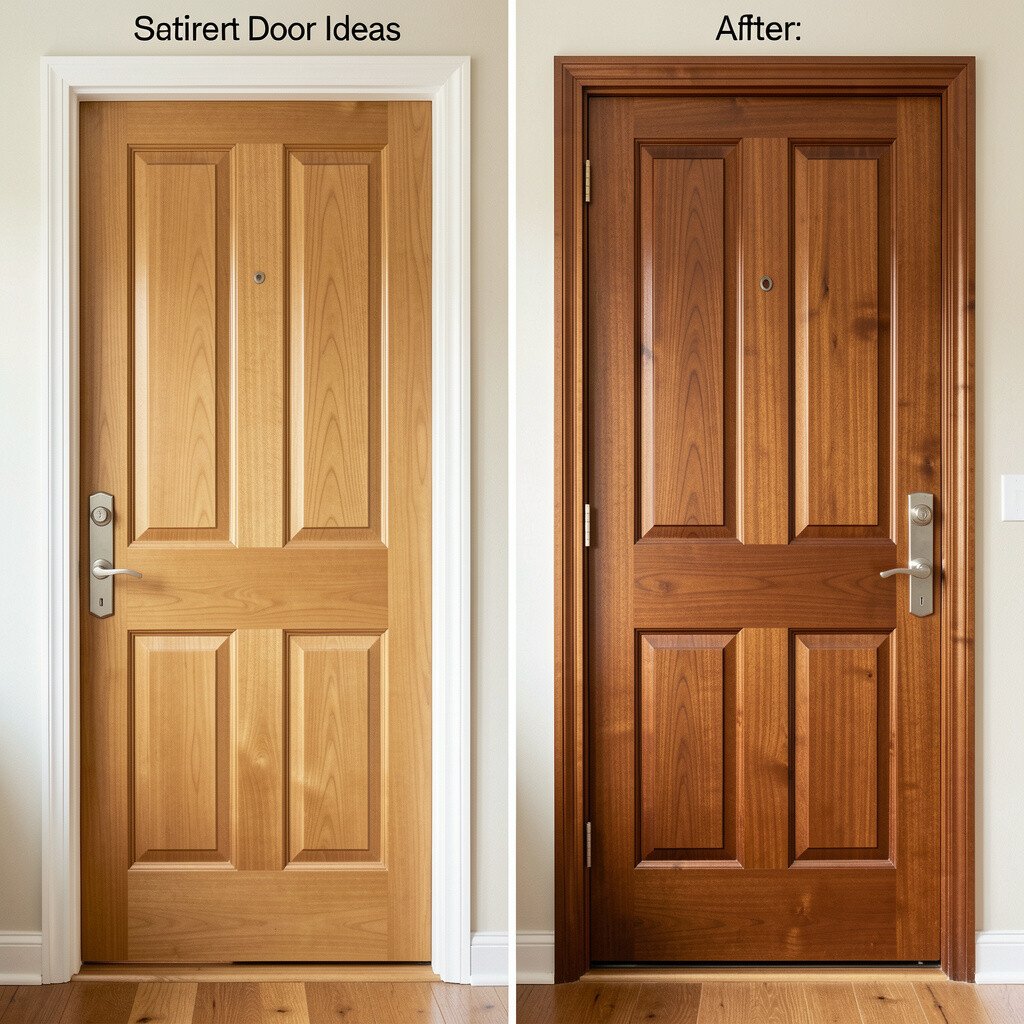
If your wood door looks dull, it can make the entry feel chilly even in warm months. After refinishing, you’ll see the grain come alive and the space feels cozy again.
Start by cleaning the door well, then sand lightly to remove roughness and old finish. Choose a stain that matches your floors or furniture, like honey oak tones, medium walnut, or a darker espresso look. Seal it with a clear coat for protection, especially if your door faces strong weather.
This update looks unique because no two wood grains match exactly, and your door becomes one-of-a-kind. For practical care, wipe the door often and avoid harsh cleaners that can strip the finish. Many homeowners also love the current trend of “natural wood” looks, which can feel modern and timeless at the same time.
6. Add Peel-and-Stick Window Film for Privacy and Style
Add Peel-and-Stick Window Film for Privacy and Style
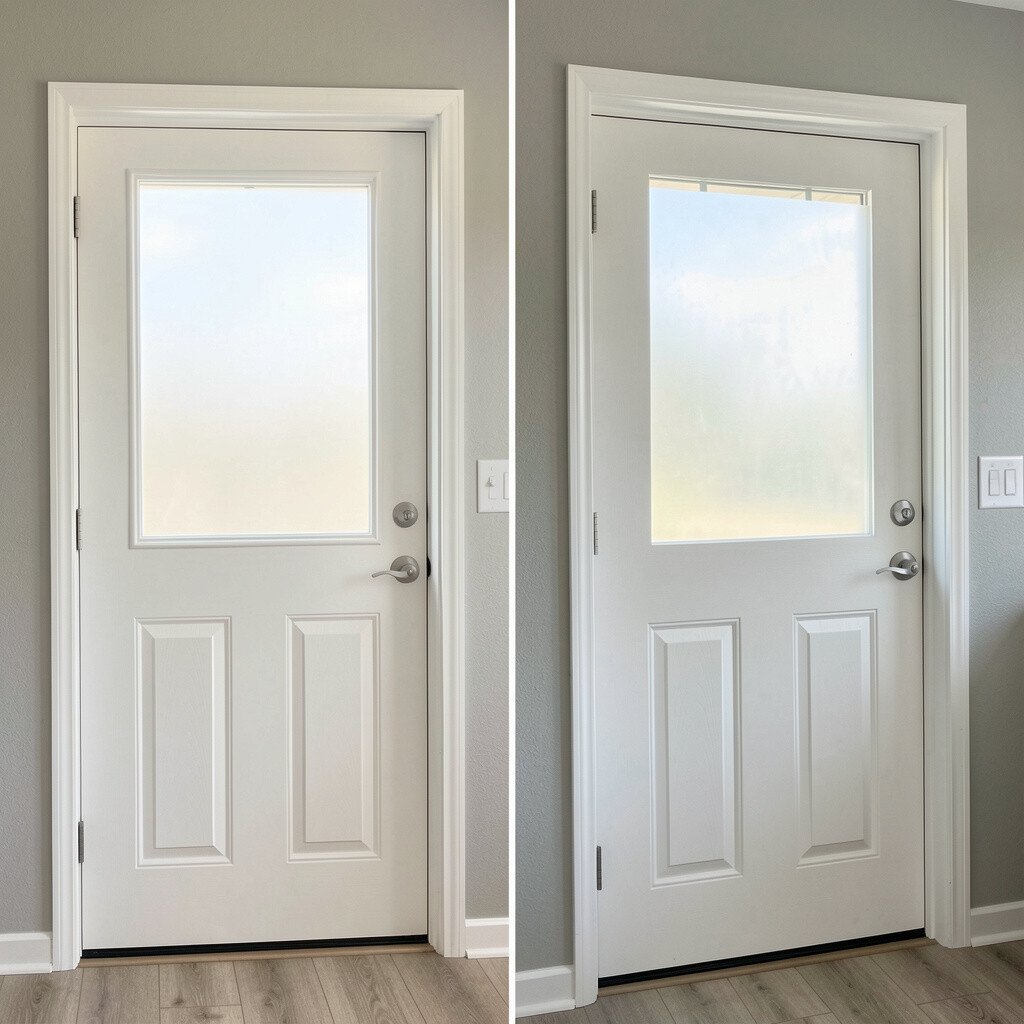
Before, the glass in a door might give little privacy, or it can look plain without decoration. After adding film, the light looks softer and the doorway feels more finished.
Pick a pattern that matches your style, like frosted swirls, subtle dots, or clean geometric lines. The film is easy to apply, and it instantly updates the look without paint. Make sure the glass is very clean so the film sticks smoothly and doesn’t lift at the edges.
You can personalize by choosing a pattern that echoes your existing décor, like matching the shapes in your rug or wall art. This is also a practical choice if you share your entry with kids or pets and want less visibility. It can cost far less than replacing a full door while still giving a big visual change.
7. Replace the Door Mat and Planters for a Ready-Made Welcome
Replace the Door Mat and Planters for a Ready-Made Welcome
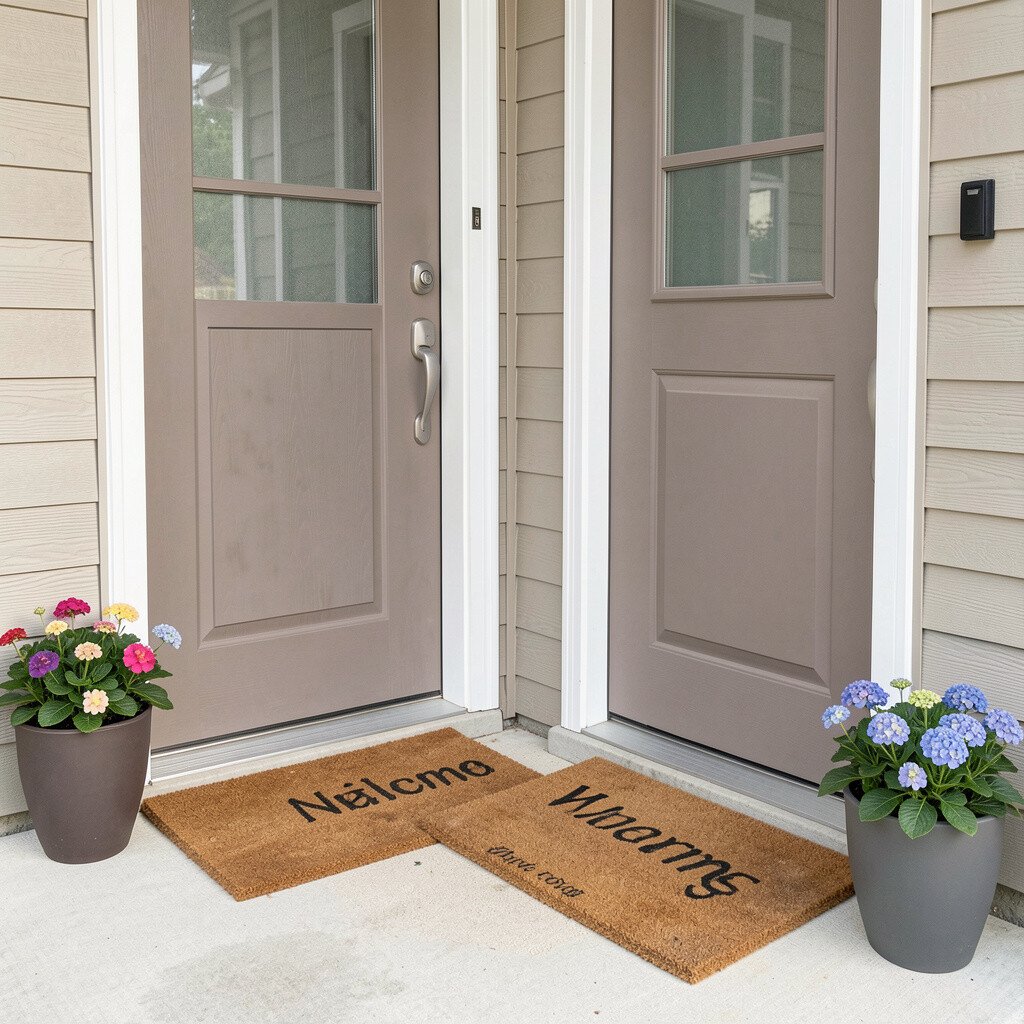
A door can look “almost right” but still feel unfinished with the wrong mat or empty planters. After updating these items, the entrance looks styled and cared for.
Choose a doormat that fits your door area size and doesn’t curl at the edges. Add planters in matching colors, like terracotta with greens or black pots with silver accents. Keep the plants simple, like low-care greenery, because the goal is consistency and ease.
Right now, many homes lean into layered entry styling, with a mat plus a tall and short planter for a balanced look. You can make it personal by repeating colors from inside your home, such as the shade of your curtains or throw pillows. This refresh is usually inexpensive, and you can change it seasonally without major work.
8. Try a Simple Door Kick Plate for Extra Protection
Try a Simple Door Kick Plate for Extra Protection
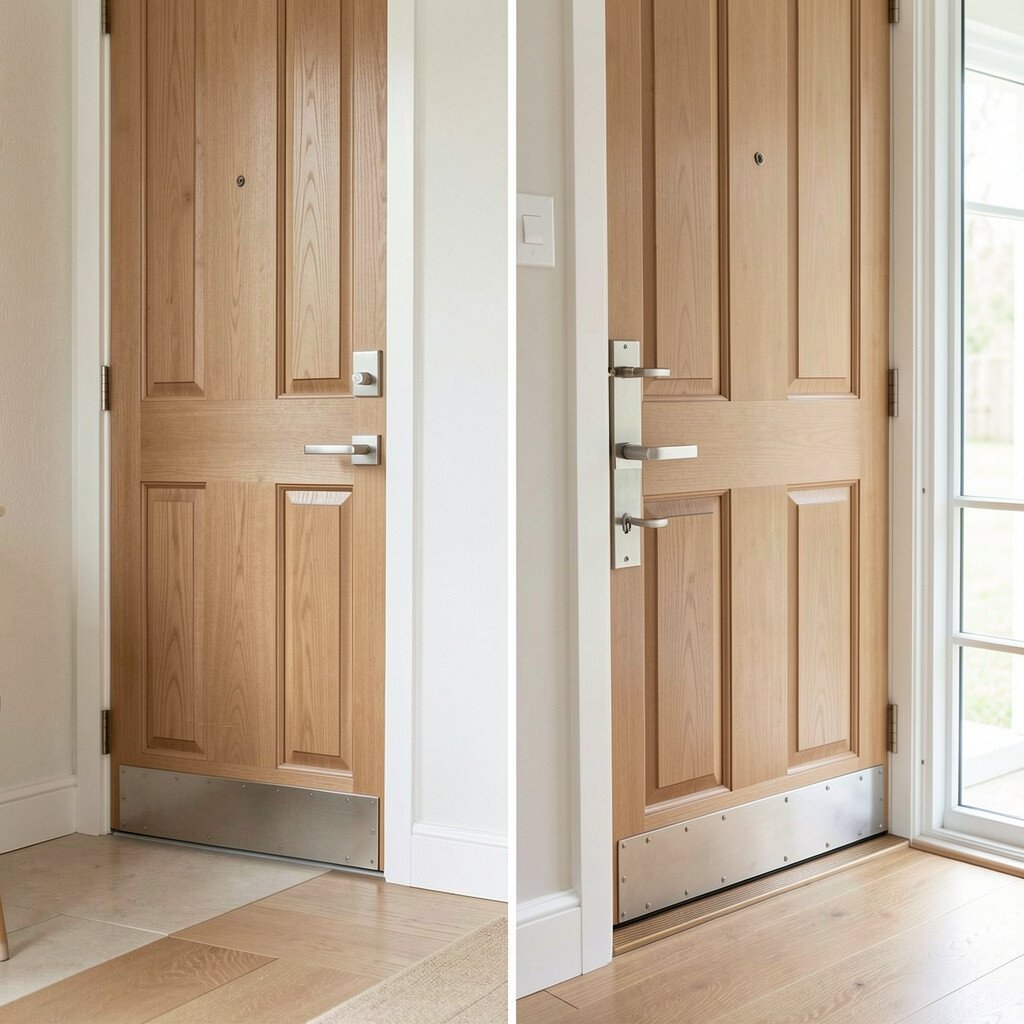
High-traffic doors often show scuffs near the bottom where shoes brush by. After adding a kick plate, the door stays cleaner and looks newer for longer.
Choose a finish that matches your hardware, like stainless steel, matte black, or brushed brass. It’s practical because it protects from everyday wear, and it’s also a small design detail that can look intentional. Install it carefully at the same height you like, then wipe it down regularly for best shine.
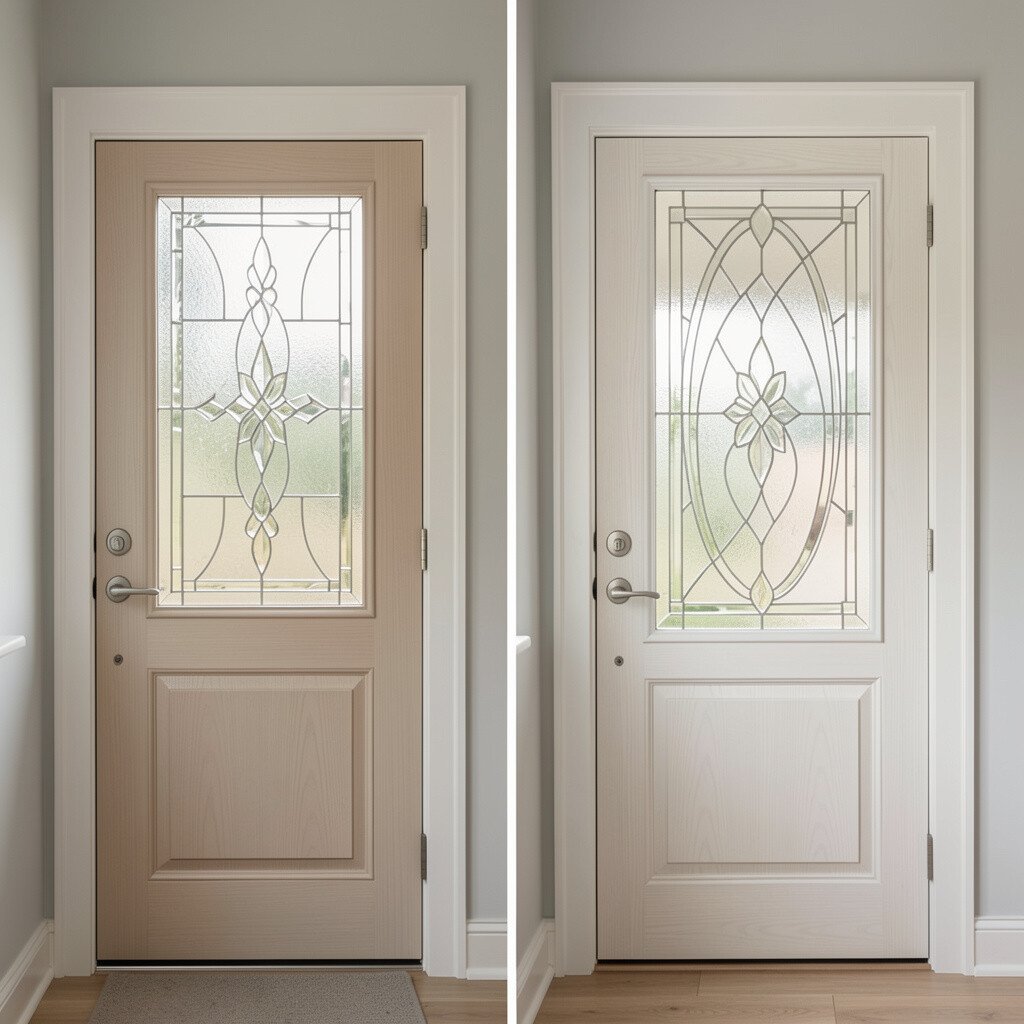
9. Add a Glass Insert or Decorative Overlay for a Custom Feel
Add a Glass Insert or Decorative Overlay for a Custom Feel
If your door is solid and heavy-looking, it can make the entry feel closed off. After adding a glass insert or decorative overlay, more light appears and the door feels lighter.
You can use a pre-made panel or a simple decorative insert that fits your door style. For a safer, beginner-friendly option, choose something that doesn’t require major carpentry and can be installed with basic tools. Pick a pattern that gives privacy but still lets daylight flow in.
This is a uniqueness moment because the final look depends on your door shape and the insert design. It also helps your space feel brighter without changing the whole layout. If budget is a concern, look for door accessories or affordable inserts that work with your existing setup instead of full door replacement.
Many current home trends favor “light entry” vibes, and a glass upgrade supports that goal without big construction.
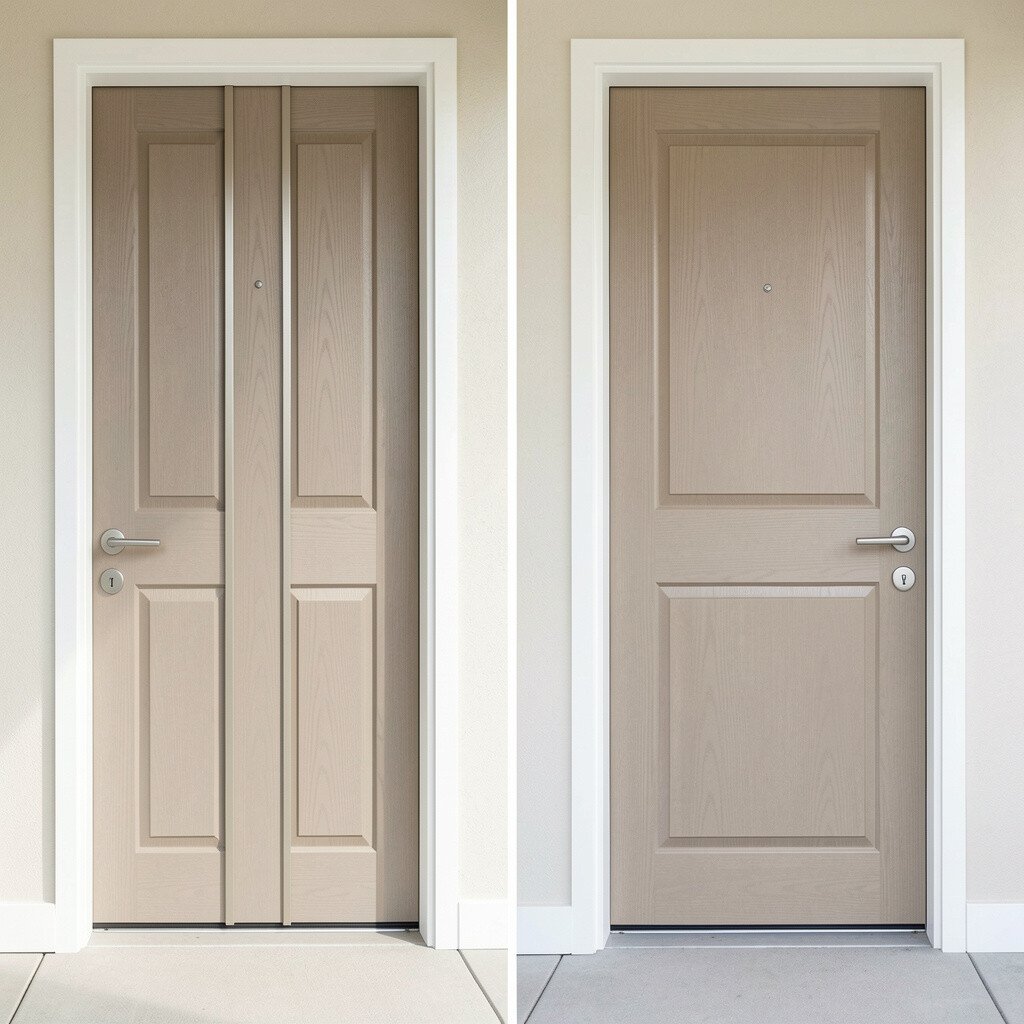
10. Use a Long Vertical Runner on the Inside of the Entry Door
Use a Long Vertical Runner on the Inside of the Entry Door
Sometimes the doorway looks great outside but feels plain once you step in. After adding a runner, the space feels warmer and more styled from the first step.
Choose a runner with a simple pattern so it blends with your flooring and doesn’t fight your décor. Make sure the runner length works with your entry area so it stays flat and secure. For practical stability, use non-slip pads or rug tape so it doesn’t shift.
You can personalize by matching colors to your door paint or hardware finish, like echoing navy, black, or natural wood tones. This is also a smart trick if you want comfort underfoot because it helps reduce how cold floors feel. Compared to larger renovations, it’s usually a low-cost update with a big visual effect.
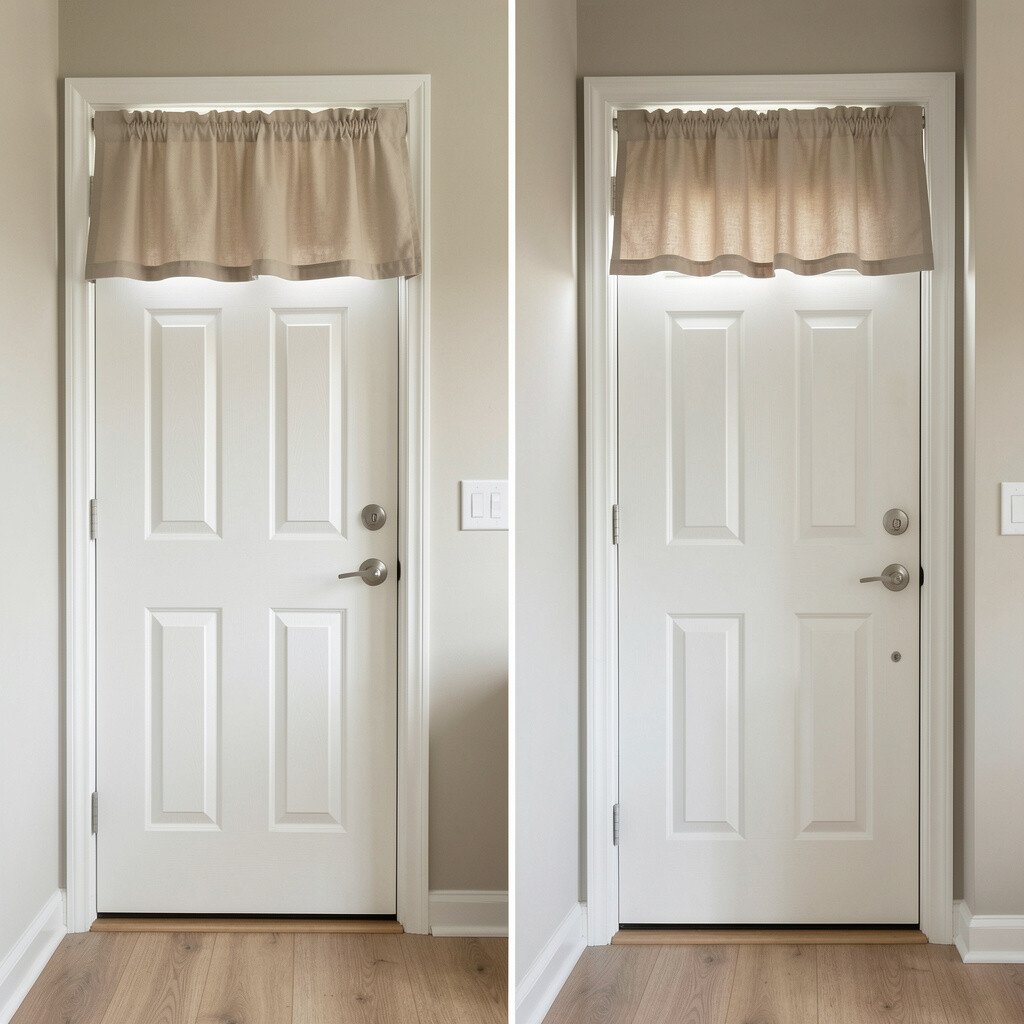
11. Hang Curtains or a Short Valance Near an Interior Doorway
Hang Curtains or a Short Valance Near an Interior Doorway
An interior door can sometimes feel too stark, especially in hallways or small rooms. After adding soft window-style fabric, the doorway looks gentle and lived-in.
Try a short curtain panel on a tension rod, or use a simple valance that frames the top area. Light fabrics help the space feel open, while thicker fabric adds cozy texture. Match the fabric color to your curtains or bedding so everything looks like a set.
Personalize the vibe by choosing a subtle stripe, small pattern, or solid color that matches the room theme. This approach also helps hide gaps around the doorway and can reduce drafts if the fit isn’t perfect. It’s a budget-friendly upgrade that makes the whole hallway feel warmer with very little effort.
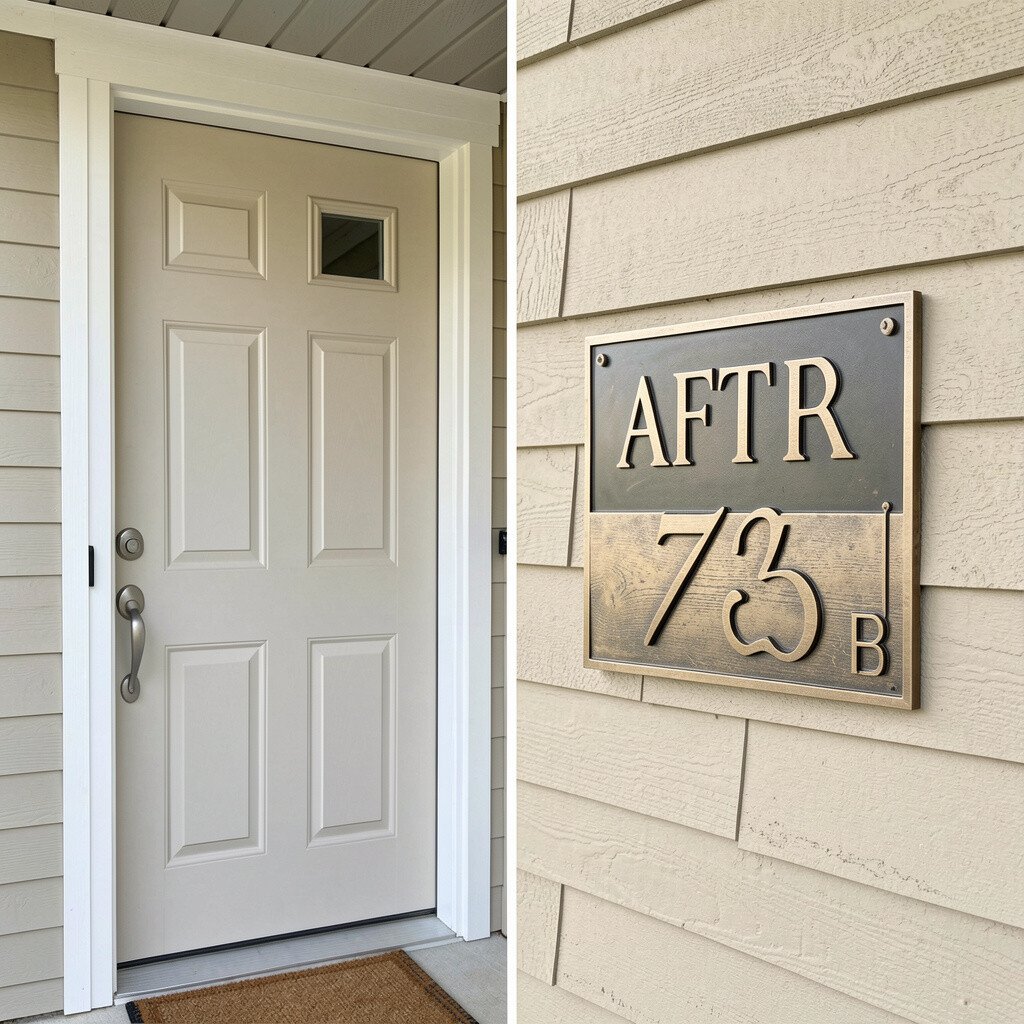
12. Add a Statement Plaque or House Number Sign
Add a Statement Plaque or House Number Sign
Before, it might be hard to spot your house number or the entry can feel generic. After adding a plaque or sign, the doorway gains character and clarity.
Choose a style that matches your home, like a modern metal sign, a rustic wood plaque, or a classic ceramic number tile. Place it at eye level so guests can see it easily. Secure it with hardware that fits the wall material, and avoid mounting too high or too low.
This detail becomes your personal signature because your number style can match your favorite colors and finishes. It also improves curb appeal, which many people value more lately when planning gatherings or weekend showings. If you’re watching costs, look for signs at local craft markets or discounted home improvement sections.
13. Paint the Door Liner or Behind the Door for Surprise Style
Paint the Door Liner or Behind the Door for Surprise Style
Doors inside your home can hide a lot of unused space, especially on the side you see when opening them. After painting that area, you get a subtle pop that feels like a secret upgrade.
Use paint that complements the room, like a muted teal, warm cream, or deep plum. A semi-gloss finish helps it wipe clean after daily touch. When you open the door, the color makes the entry look intentional instead of random.
This idea feels unique because it’s unexpected and it changes how the room feels when you move through it. It’s also easy to personalize with patterns using painter’s tape if you want a gentle design. For cost, this is just a small paint job, so it won’t feel like a big budget hit.
Many homeowners enjoy these hidden details now because they add charm without needing a full remodel.
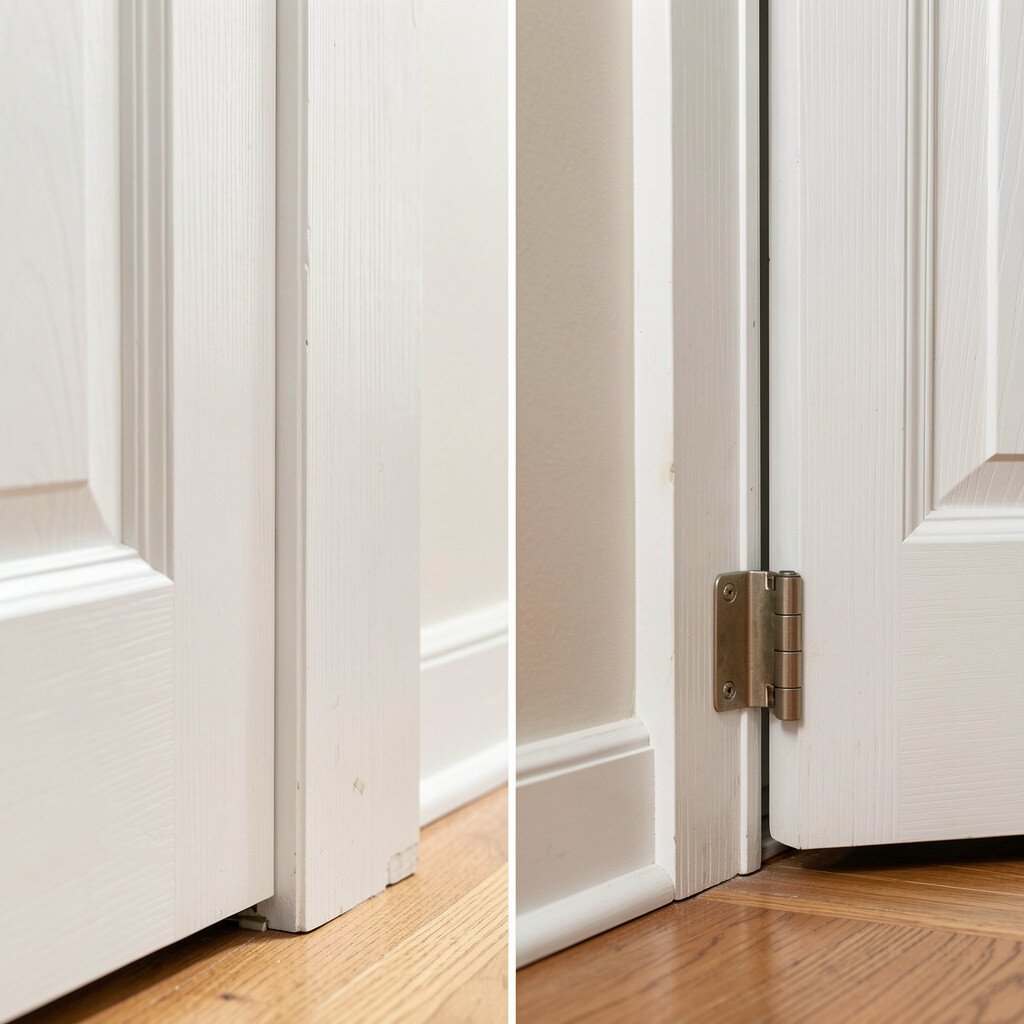
14. Upgrade the Door Stop and Add Soft Close Hinges for Ease
Upgrade the Door Stop and Add Soft Close Hinges for Ease
Before, a door might slam too loudly or swing too far, which can be annoying and even damage walls. After installing a better door stop or soft close hinges, the door movement feels smooth and controlled.
Choose a door stop that fits your style and protects the wall, then check the alignment so it hits consistently. Soft close hinges can be a bigger upgrade, but the comfort is noticeable every day. Make sure you measure and follow the install instructions to avoid gaps or misalignment.
This update benefits daily life because quieter doors reduce stress, especially in homes with kids or work-from-home schedules. It also keeps the finish on walls and trims looking better longer. If you want to stay budget-friendly, start with a quality door stop and add soft close later if you’re ready.
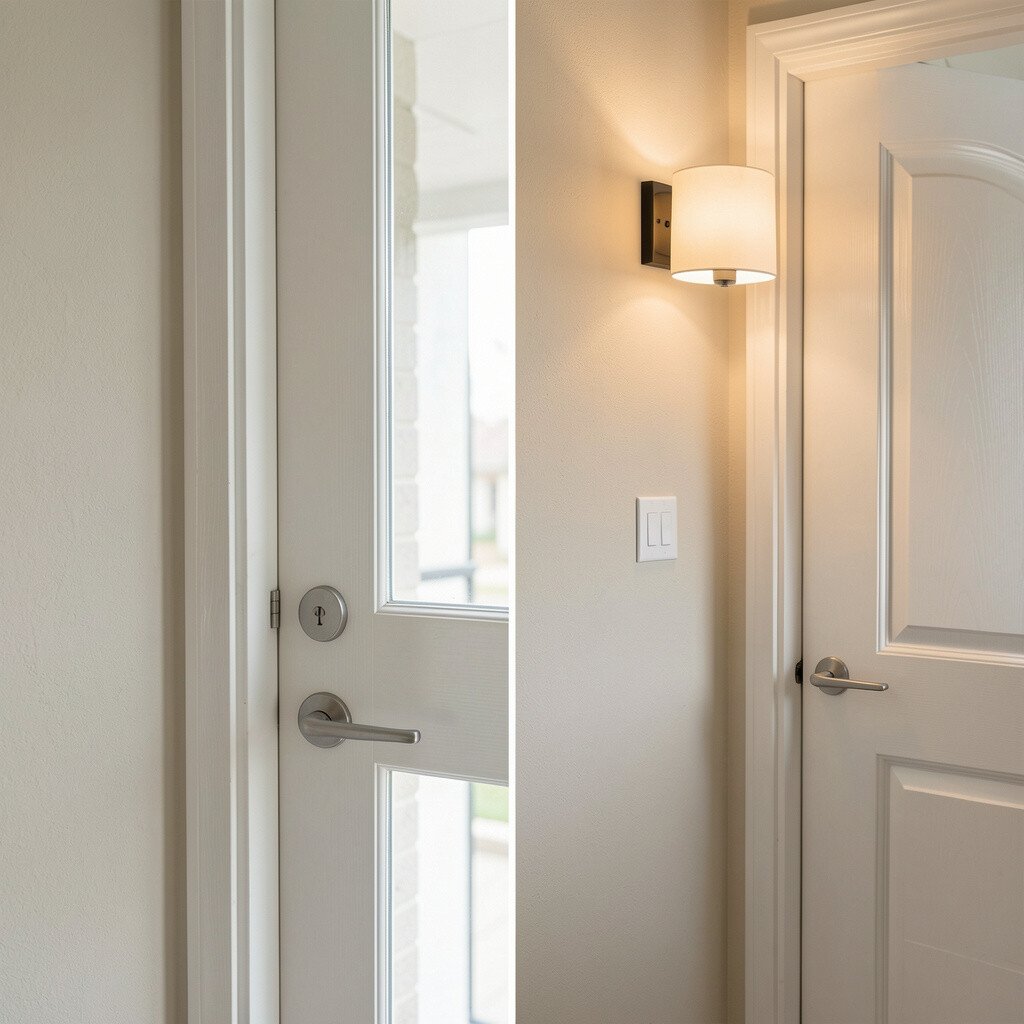
15. Hang a Simple Door Sconce or Wall Light for Extra Warmth
Hang a Simple Door Sconce or Wall Light for Extra Warmth
When the entry area is dim at night, even a pretty door can feel less inviting. After adding or upgrading a wall light, the doorway glows and highlights your décor.
Pick a light style that matches your hardware, like lantern shapes, sleek modern cylinders, or classic bell fixtures. Warm bulbs often look better for comfort, making the entry feel cozy instead of harsh. Position the light so it shines across the door, not just up and down the wall.
This is a practical change because better lighting helps visitors find the handle and steps safely. It also adds drama, which many current designs aim for using warm tones and layered light sources. If electricity work feels intimidating, choose a fixture that works with existing wiring or hire a professional for the safest install.
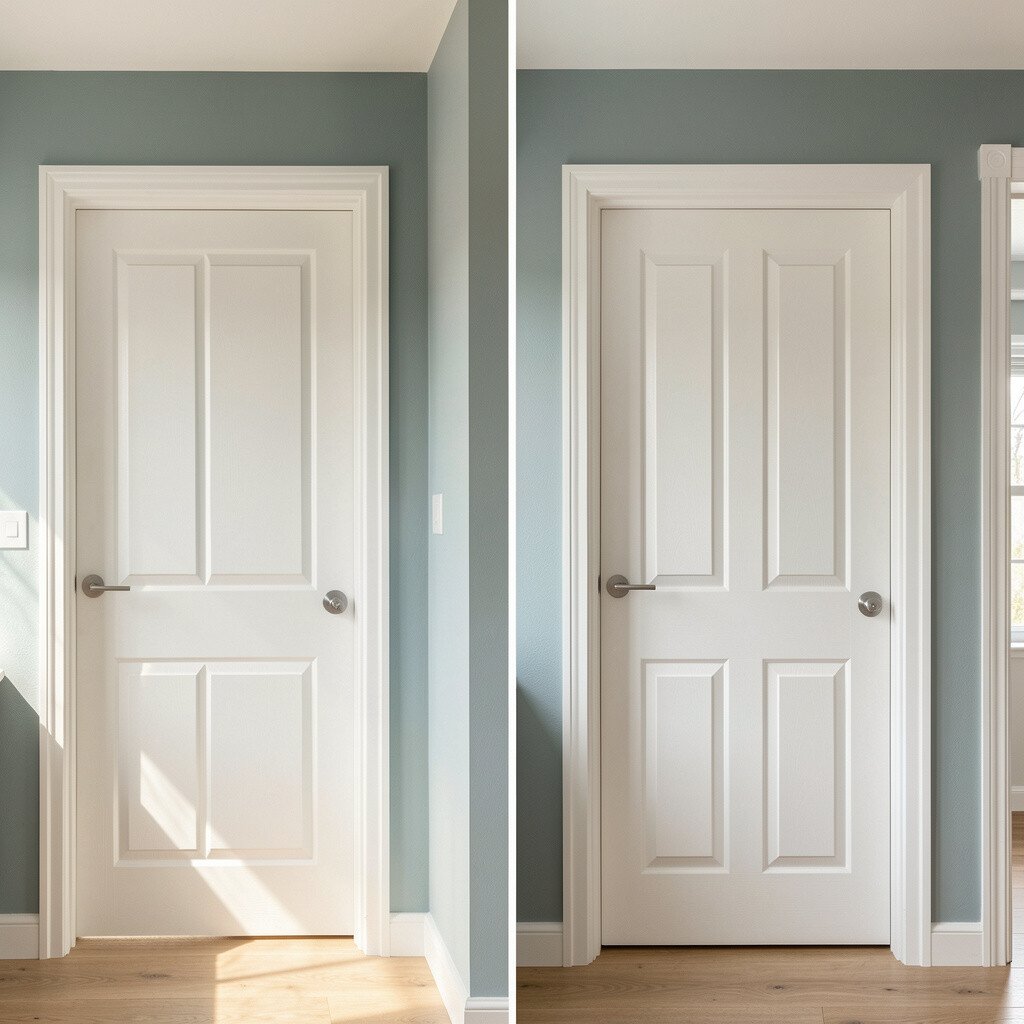
16. Create a Mini Accent Wall by Painting the Surrounding Space
Create a Mini Accent Wall by Painting the Surrounding Space
Before, the door might sit in a plain space that doesn’t match its personality. After painting the area around the door, the entry feels framed and complete, like a picture.
Choose an accent color that fits your home’s overall palette, such as warm terracotta, muted charcoal, or soft linen. Use tape carefully around trim lines, and consider using primer if the wall shows stains or uneven tone. Keep the finish consistent with nearby walls so the transition looks smooth.
You can personalize this by adding subtle texture or a light pattern using a sponge technique. The benefits go beyond looks, because a framed door draws attention to your hard work and makes your space feel more coordinated. Cost is usually manageable since it’s mostly paint and tape, and it can be done room by room on a weekend.
For a trend-forward touch, many homeowners are choosing moody accent walls with simple door colors so the contrast feels clean and stylish.