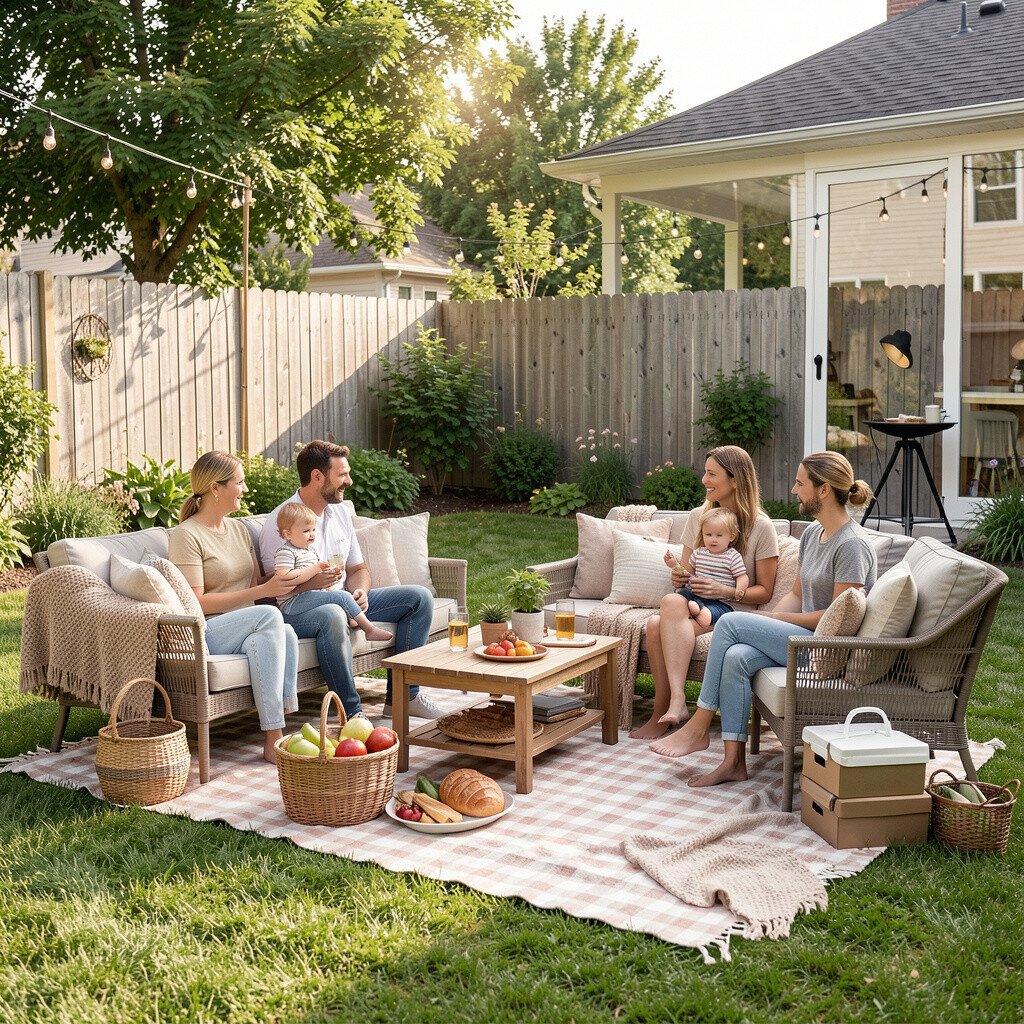
Picture the sun on the grass and a blanket spread out like a welcome mat. Kids can run in small circles while adults chat without feeling pulled in every direction.
Set up a clear seating zone with a mix of blankets, folding chairs, and a shaded spot for anyone who wants a break. Serve easy finger foods and let people build their own plates, which keeps things relaxed and lively. For personalization, add name cards on small cups, a simple snack station sign made from colored paper, or a family photo line with clothespins.
2. Public Park Playtime With a Family “Mission” Game
Public Park Playtime With a Family “Mission” Game
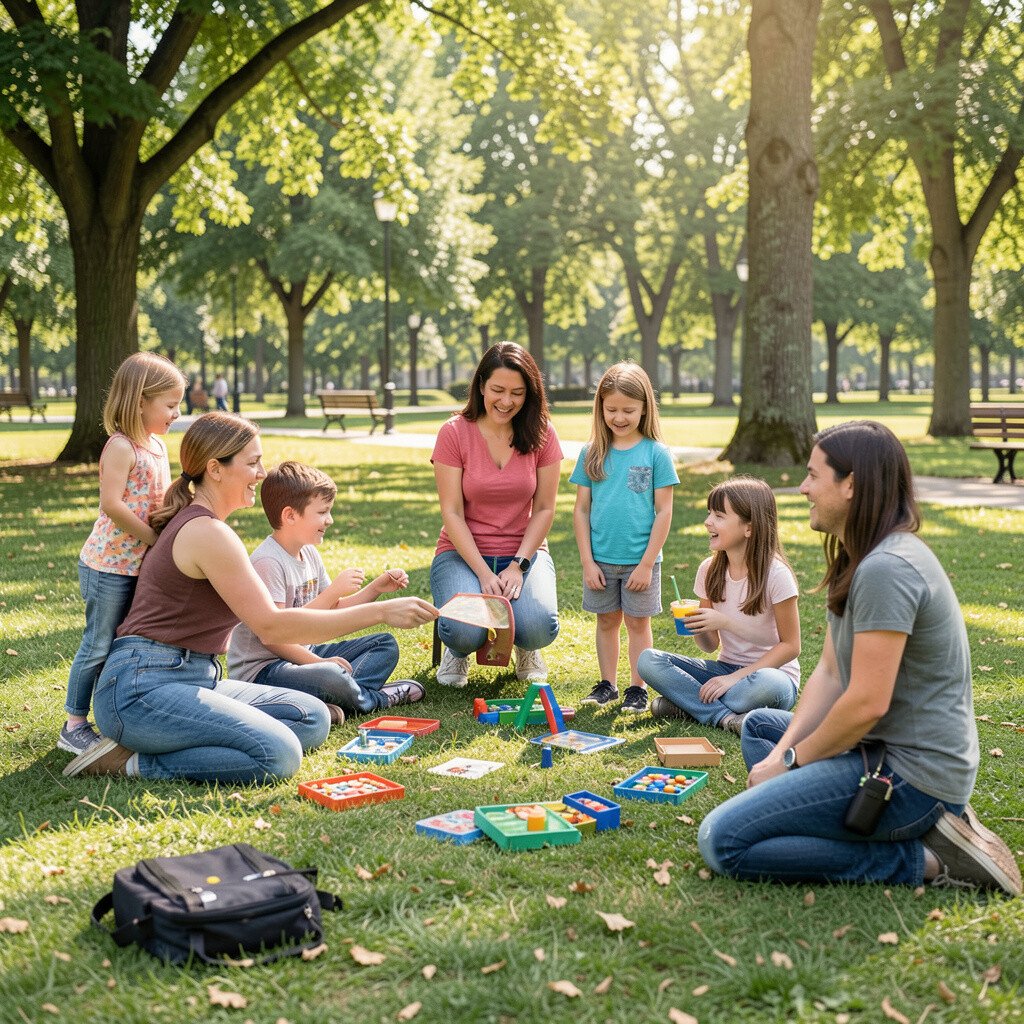
Imagine a wide path, bright fields, and the sound of laughter bouncing off trees. A park gives space for movement while still offering calm corners for talking.
Create a gentle mission game that fits everyone, like a scavenger list of things to spot such as leaves, birds, or interesting rocks. Bring a small bag for collecting safe items or just for checking them off on a phone photo list. Keep costs low by packing water, sandwiches, and a light snack, and add a small prize like stickers or a favorite dessert topping.
To make it unique, choose a theme based on the season, such as “fall colors” or “winter sparkles,” and let each person suggest one item to look for. This type of playful structure often helps shy relatives join in without feeling pressured.
3. Local Community Center for Games and Potluck Together
Local Community Center for Games and Potluck Together
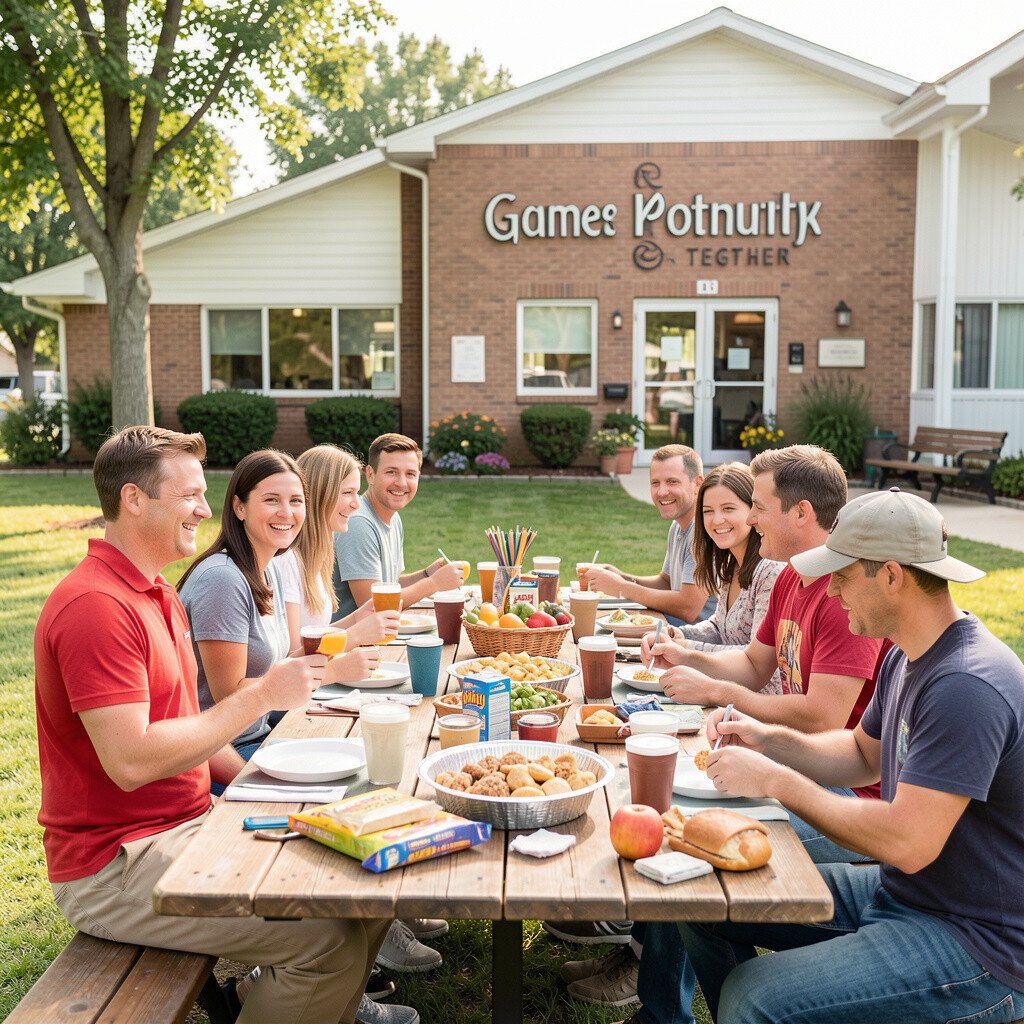
Think of warm lights, familiar faces, and a room where everyone can hear each other clearly. Community centers are built for gathering, so you can plan without worrying about space.
Look for open gym time, game nights, or craft sessions that match your family’s energy. Pair it with a potluck so everyone contributes something simple, like a salad, fruit bowl, or homemade cookies.
For cost considerations, ask about free or low-cost events and bring store-bought items if cooking isn’t possible. Personalize by labeling dishes with short notes about what inspired them, like “made by Grandma last week” or “my favorite after-school snack.”
When families share food in the same room, conversations tend to start naturally and last longer.
4. Beach Day With a Simple Setup and Safe Play Rules
Beach Day With a Simple Setup and Safe Play Rules
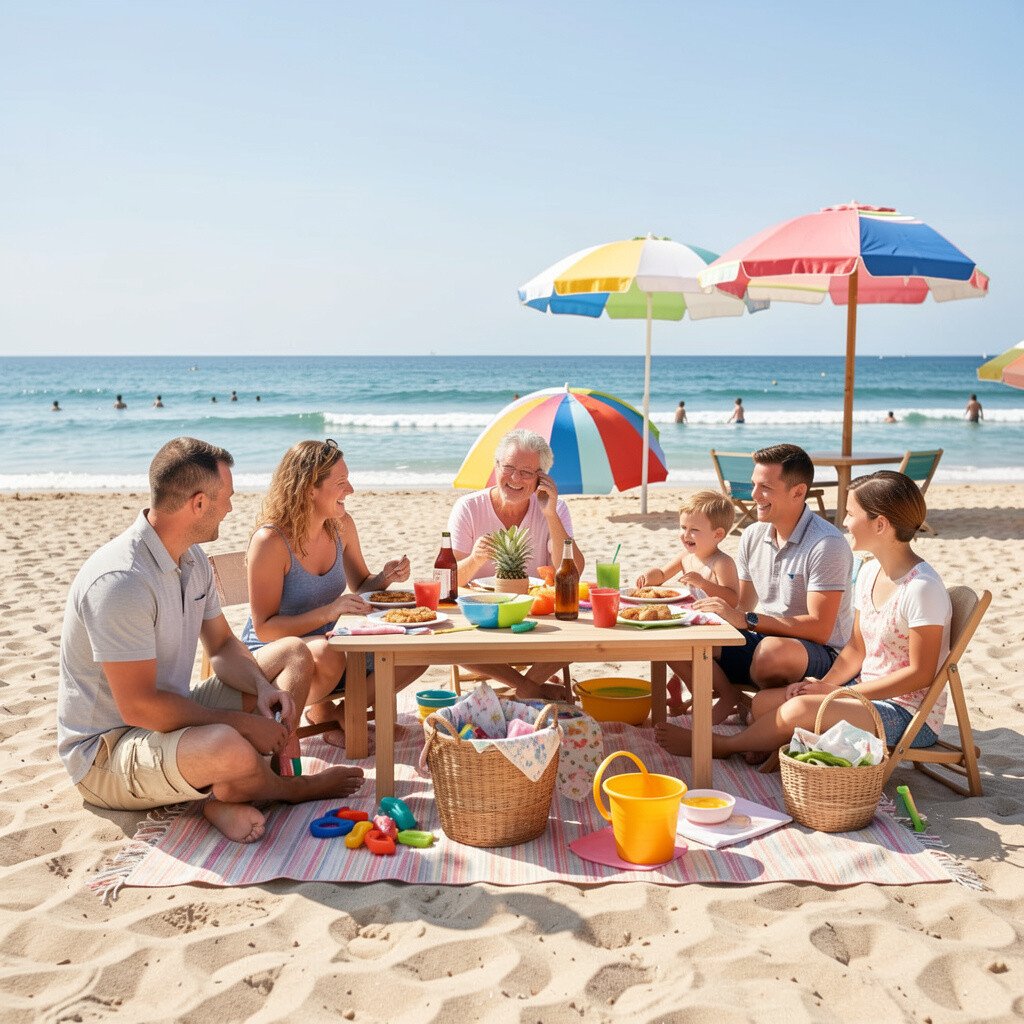
Picture waves rolling in and everyone walking slowly with sand sticking to their shoes. The beach feels like a vacation, even when you stay close to home.
Bring a folding beach shelter, a cooler, and a few buckets so kids can dig, fill, and pour. Choose a spot with gentle water access and set clear boundaries, such as where the kids can play and where adults can relax. Keep the mood light by bringing a small playlist and a few games like beach bowling or a frisbee toss.
5. Lake or River Picnic With a Fishing-Style “Look and Learn” Plan
Lake or River Picnic With a Fishing-Style “Look and Learn” Plan
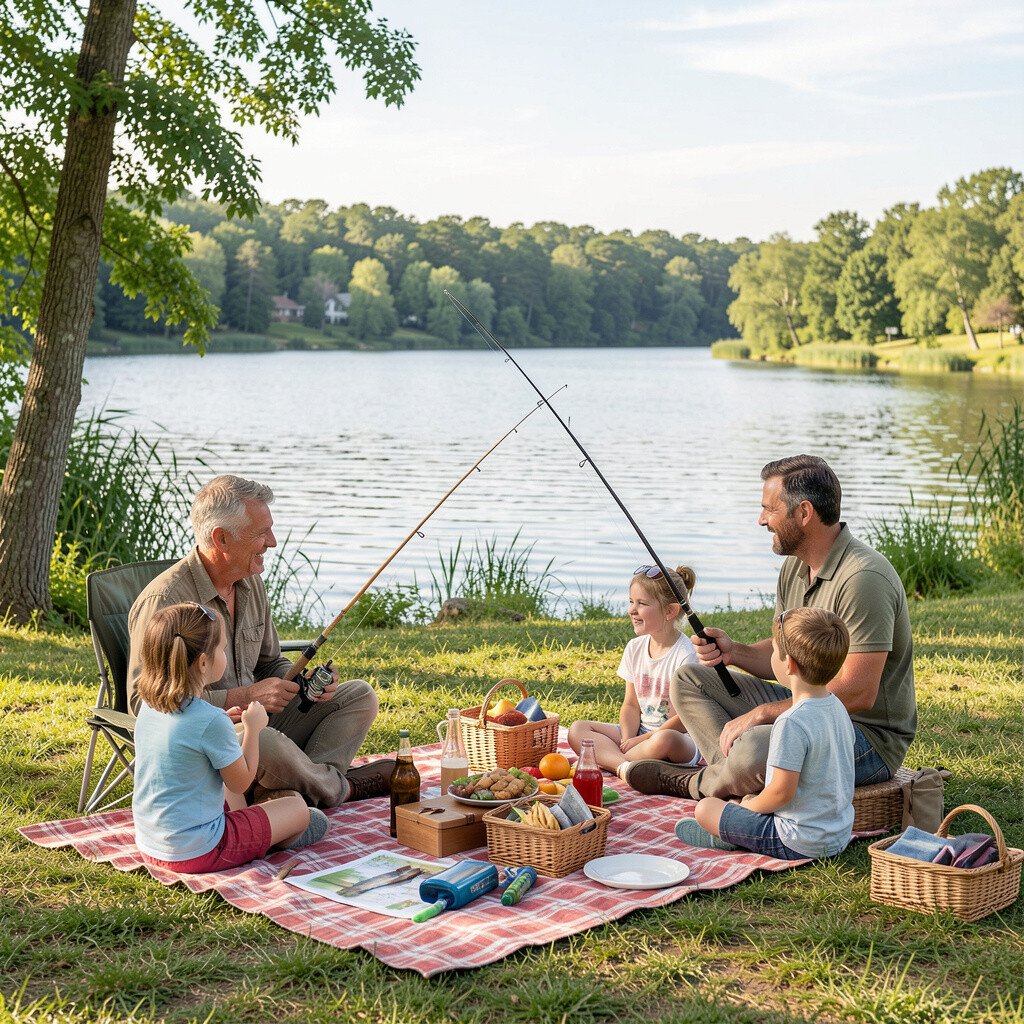
Imagine a calm shoreline, reflections on the water, and the smell of breeze in the air. Being near water helps people slow down and talk more.
Even if no one is fishing, you can plan a “look and learn” activity, like observing water plants, spotting floating leaves, or watching for birds. Pack binoculars, a simple field guide, and snacks that travel well, such as trail mix or sandwiches wrapped in foil. For personalization, let each person pick one nature topic and share what they notice for a few minutes.
To keep costs reasonable, bring reusable water bottles and borrow gear if possible. Many areas offer low-cost rentals or community fishing introductions during certain seasons.
6. School Gym or Auditorium for Family Talent Moments
School Gym or Auditorium for Family Talent Moments
Think of a stage, big open space, and the comfort of sound carrying clearly. A gym or auditorium gives a ready-made “event feel,” even without fancy decorations.
Host a casual family talent moment with singing, storytelling, silly skits, or short instrument breaks. Encourage everyone to participate in a way that fits their comfort level, including non-performers who can help with props, timing, or cheering.
Bring a simple snack table and plan a start time that doesn’t stretch too late for younger kids. Personalize with a family slideshow on a laptop and a homemade banner made from cut paper shapes.
Cost can be kept low by using existing school equipment and asking about community access days. This spot also fits current trends like short “micro shows” that feel fun rather than formal.
7. Hiking Trail With Bench Breaks and a “Story Stop” Schedule
Hiking Trail With Bench Breaks and a “Story Stop” Schedule
Picture the trail curving past wildflowers, and everyone pausing to catch their breath. A hike creates natural togetherness because you share the same path and pace.
Plan a few bench breaks or shaded stops, then assign each stop a short family story prompt. For example, one person shares a childhood memory, another shares a funny family rule, and someone else tells a current “small win.” Pack simple snacks and water, and consider comfort items like hand warmers or bug spray based on the weather.
To keep it unique, choose a route that ends near a playground or a calm viewing area. Personalize by letting each person bring one “trail treasure,” like a small rock, leaf, or photo to show the group.
8. Restaurant With a Private Area or Easy Kid-Friendly Seating
Restaurant With a Private Area or Easy Kid-Friendly Seating
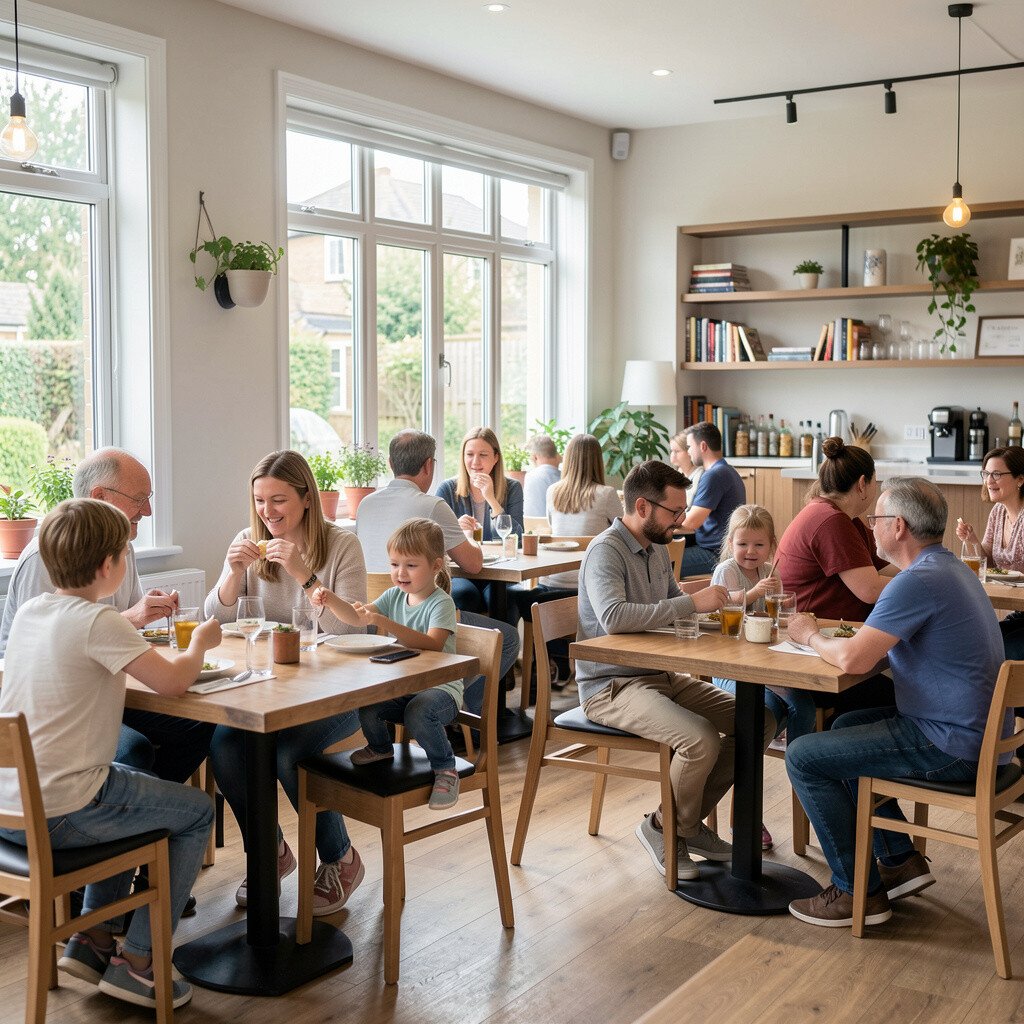
Imagine the cozy hum of a restaurant where everyone can relax without cooking. Choosing a kid-friendly layout helps adults keep chatting while kids feel comfortable and seen.
Pick a place that offers booths, a private corner, or flexible seating so families can stay together. Choose menu items that reduce decision stress, like build-your-own pasta bowls, taco nights, or kid meals that adults can also enjoy. For cost considerations, check for early dining deals or family combo options and consider ordering a couple of shareable starters.
Make it personal by letting each person choose one item and one side, then everyone tries a bite swap. Current trends like casual “everyone shares” meals make the gathering feel modern and welcoming.
9. Home Movie Night With a Theme and Family Trivia Mix
Home Movie Night With a Theme and Family Trivia Mix
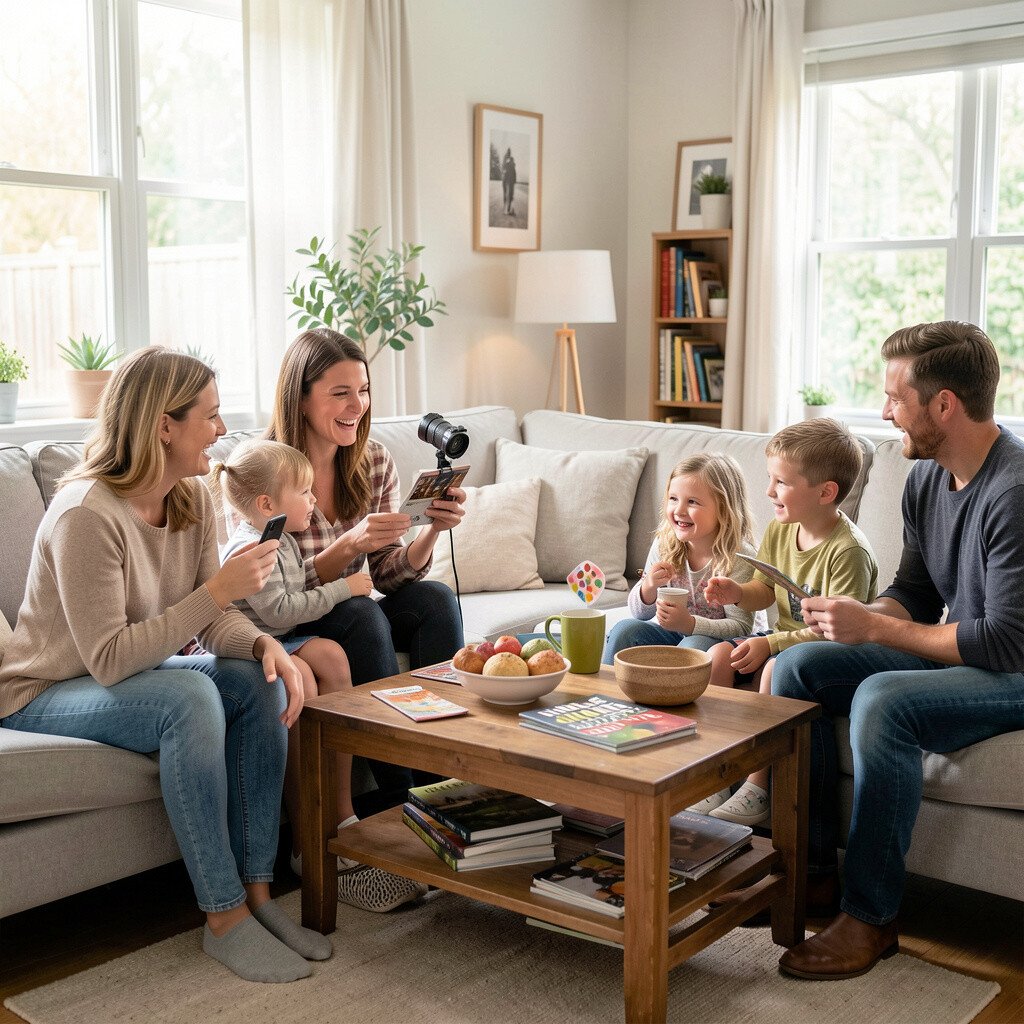
Picture warm lights, blankets piled on the couch, and the quiet excitement before the first scene. Movie nights bring everyone into the same mood without needing big planning.
Choose a family-safe theme such as adventures, favorite classics, or “stories set in places we’ve visited.” Add simple trivia cards with questions about the plot, the actors, or family inside jokes that fit the movie.
To personalize, let one relative pick the movie and another pick the snack, so both feel included. Keep costs down by using streaming services, borrowing a DVD, or making a “double feature” from a shared library.
This spot feels especially good for connection because people share reactions and talk during pauses, not just after.
10. Local Library Meeting Room for Crafts and Quiet Conversation
Local Library Meeting Room for Crafts and Quiet Conversation
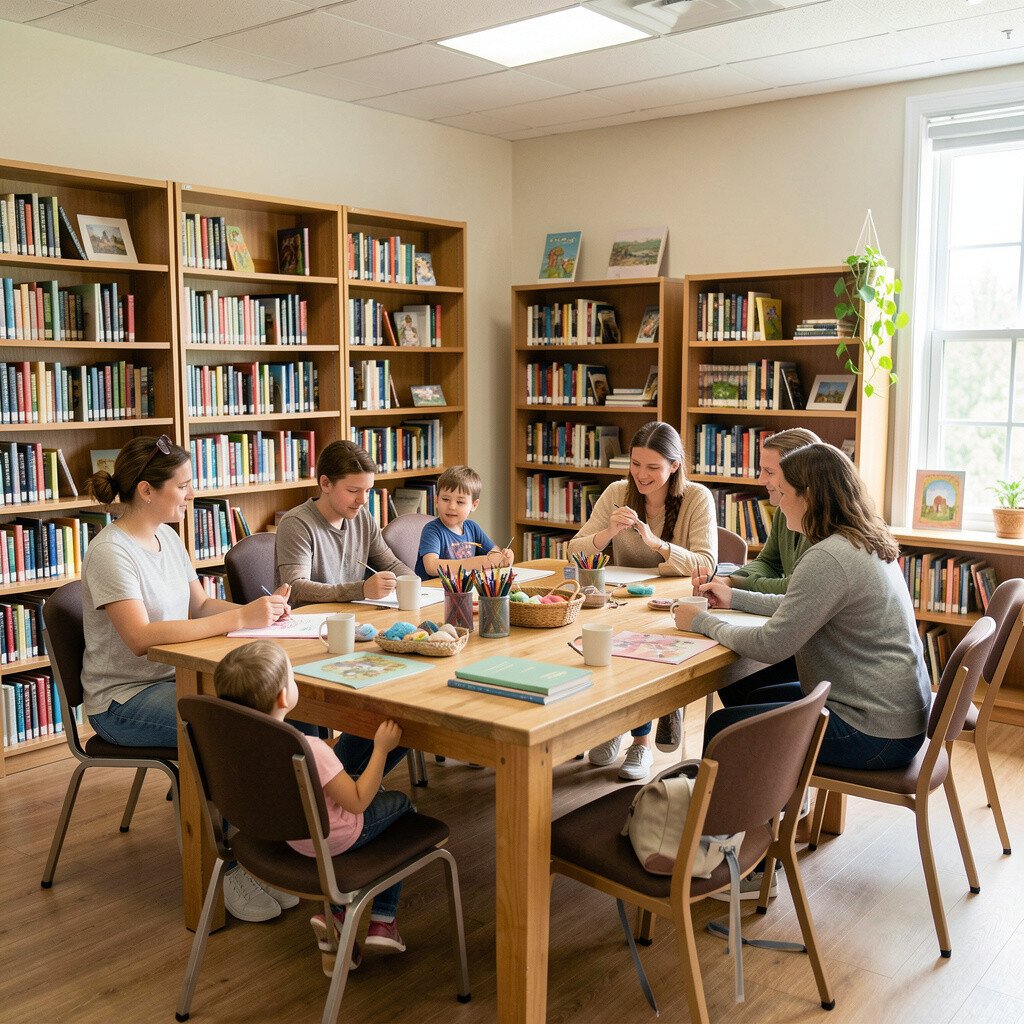
Think of bright shelves, calm corners, and the comfort of rules that keep things orderly. Libraries also offer a cozy vibe that helps conversations feel thoughtful.
Check for community rooms where families can craft, read together, or play simple board games without distractions. Bring craft supplies you already have, like markers, paper, and glue, or pick a small kit that fits different ages.
To make it unique, choose a craft that ties to reading, such as bookmark making, mini comic strips, or a family recipe card zine. Cost can stay low because many items are cheap, and you can reuse supplies across gatherings.
Personalize by collecting one quote from each person and putting it into a “family book” you store for next time.
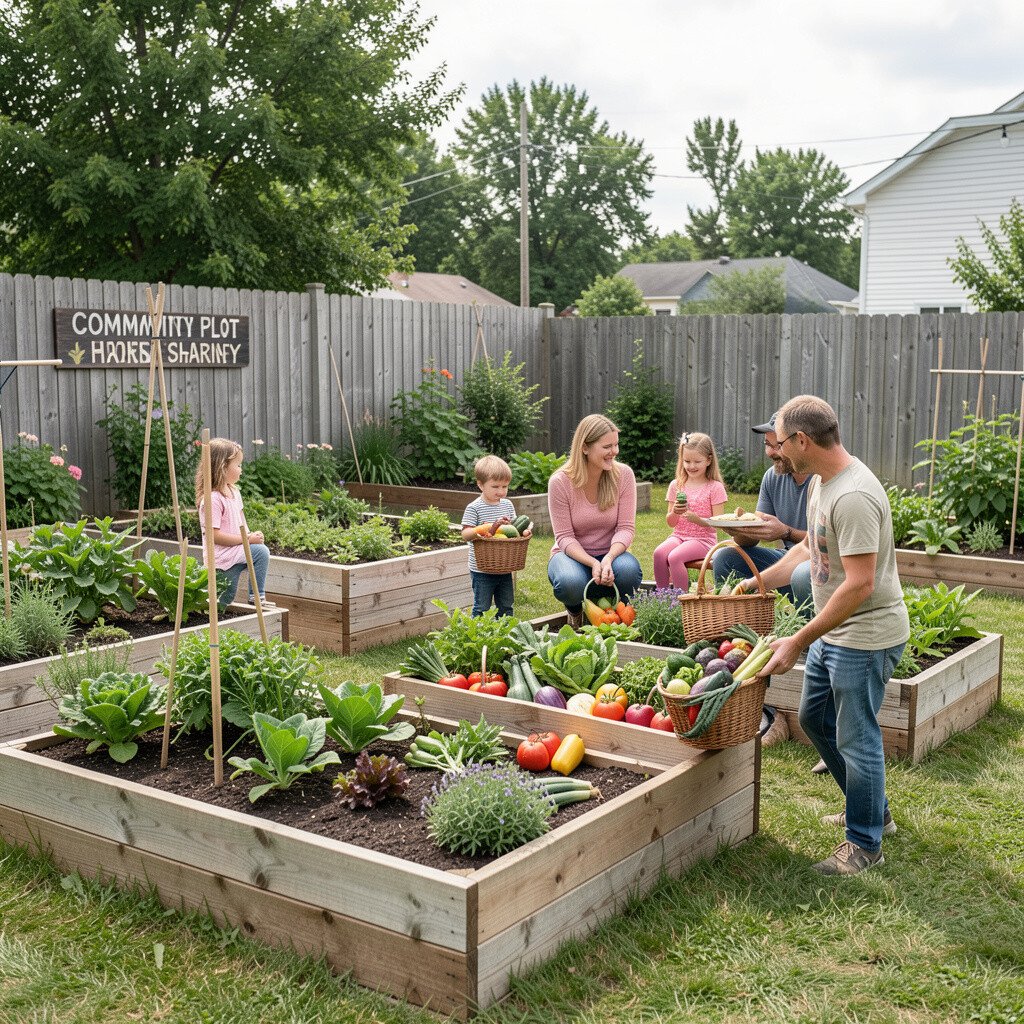
11. Backyard Garden or Community Plot With Harvest Sharing
Backyard Garden or Community Plot With Harvest Sharing
Picture raised beds, colorful herbs, and the pride of seeing something grow. A garden gathering feels grounded and gives everyone a role.
Invite family to harvest together, even if it’s just herbs, berries, or a few easy greens. Bring small containers, gloves for anyone who needs them, and a plan for what happens after picking, like washing herbs and making a simple sauce or salad.
For benefits, garden time encourages teamwork and gives kids a hands-on lesson without feeling like school. Keep costs reasonable by using what you already have, like planters and seed packets, and by focusing on seasonal crops.
Uniqueness comes from the family harvest ritual, where each person gets to name the dish they helped make. Personalize by adding a “taste test” so everyone rates a homemade herb blend.
12. Sports Field or Track for Tag Games and Family Cheer Signs
Sports Field or Track for Tag Games and Family Cheer Signs
Imagine running lanes, crisp air, and the satisfying energy of movement. A sports field helps families bond through play, not planning perfection.
Choose a simple game like tag variations, relay races, or a soft-ball throw with gentle rules. Bring cones, a ball, and a few quick stations so different ages can join in smoothly.
Personalize by handing out homemade cheer signs, like paper letters or hand-drawn mascots, and let kids decorate them during the first few minutes. Cost considerations are easy here since equipment can be borrowed, and you can reuse items across seasons.
For current trends, many families are leaning into “active play” events that reduce screen time while keeping the vibe fun and safe.
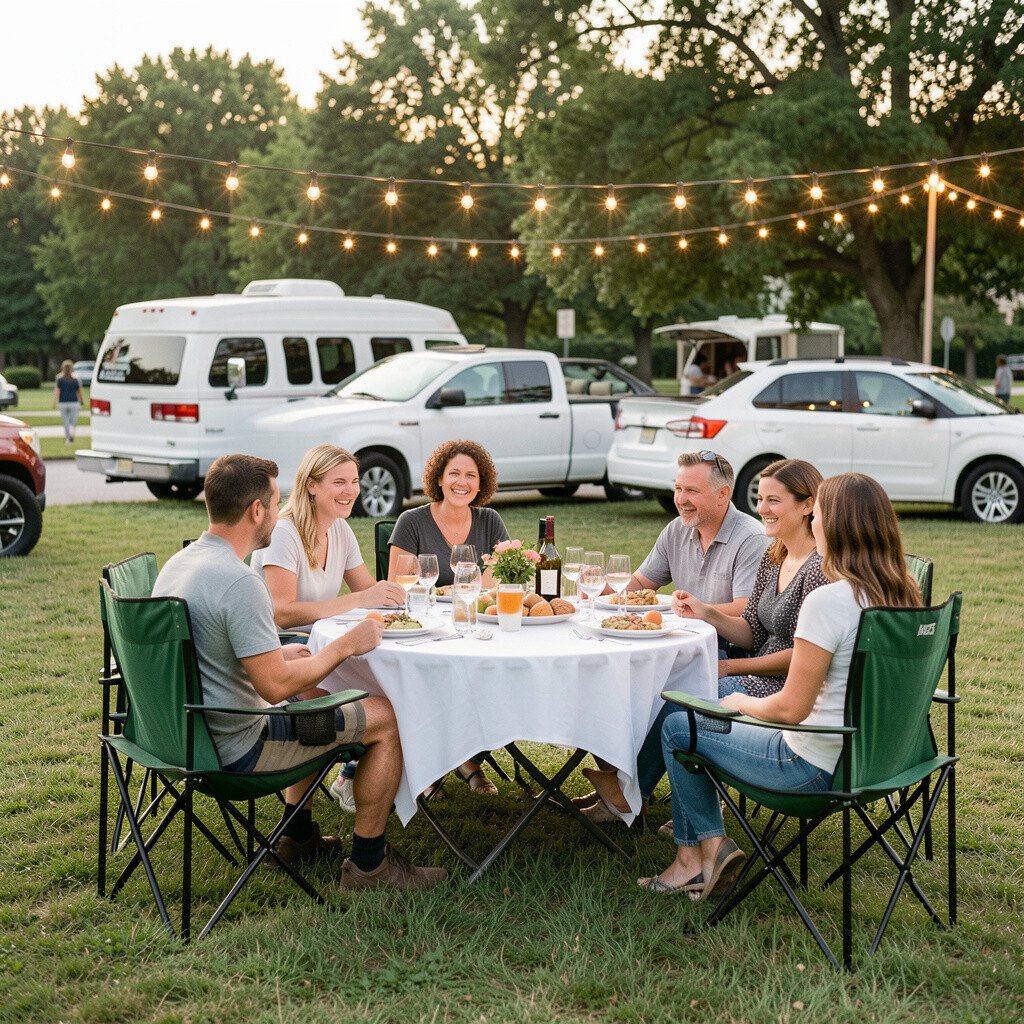
13. Drive-In Style Dinner at Home With Lawn Chairs and Sparkly Lights
Drive-In Style Dinner at Home With Lawn Chairs and Sparkly Lights
Picture string lights glowing in the yard and everyone parked their lawn chairs facing a screen. A drive-in at home turns your space into a mini theater.
Set up a projector or TV with speakers, then create “parking spots” with painter’s tape so kids know where to sit. Serve easy dinner like hot dogs, pizza slices, or build-your-own taco bowls, and keep it simple so you can focus on the gathering.
For personalization, let each person bring a small “ticket” note with their name and a favorite movie snack, even if it’s just popcorn. Keep costs controlled by using free movies from streaming catalogs or family-owned DVDs.
This idea feels unique because the seating choice helps everyone settle in together instead of drifting around the kitchen.
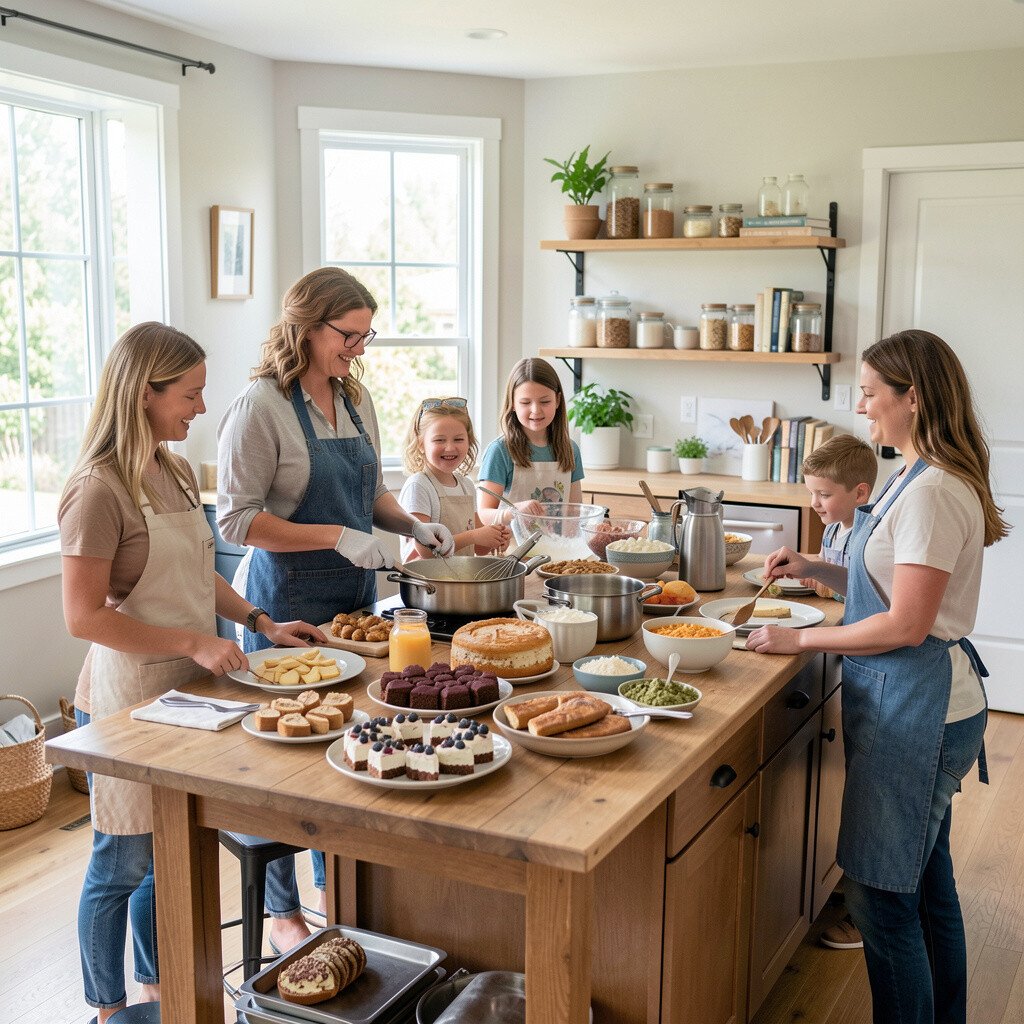
14. Cooking or Dessert Bar at Someone’s House With Rotation Helpers
Cooking or Dessert Bar at Someone’s House With Rotation Helpers
Picture a kitchen busy with bowls, warm smells, and friendly hands passing ingredients. Cooking together turns waiting time into conversation.
Set up a dessert or snack bar with a few simple choices, like topping stations for waffles, decorating cupcakes, or making sundaes. Assign rotation helpers based on comfort level, such as mixing, measuring, stirring, or plating, so everyone has a clear job.
Benefits show up fast since teamwork makes people chat more, and kids feel proud when they contribute. Keep costs reasonable by using store-bought bases and adding your own toppings, like fruit, chocolate chips, sprinkles, or nuts.
To personalize, ask each person to create a signature combo with a name, then write it on a card for next time. This is also a current trend since many families enjoy “choose-your-own” food stations for flexible tastes.
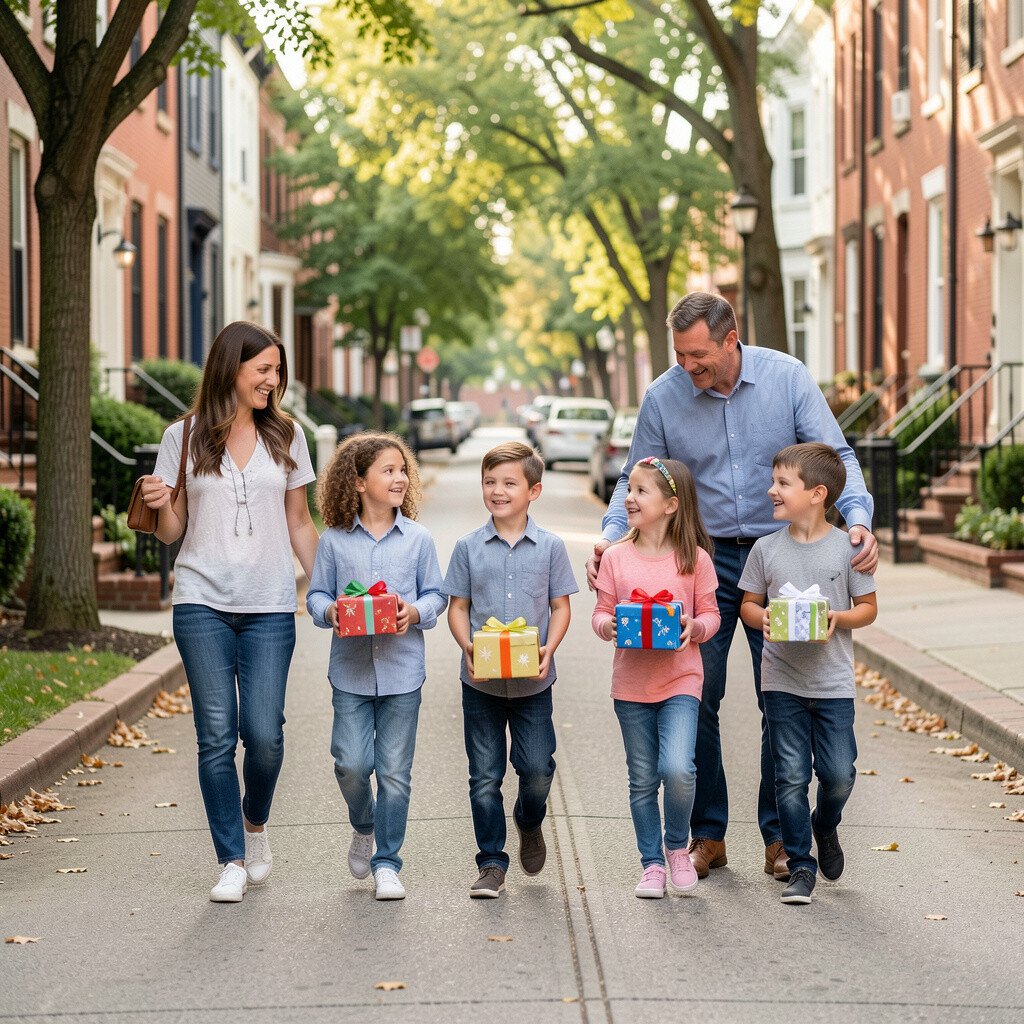
15. Family Art Walk Through a Neighborhood With One Small Gift Each
Family Art Walk Through a Neighborhood With One Small Gift Each
Imagine sidewalk chalk art, porch lights at dusk, and people stopping to admire small creative moments. A neighborhood art walk can feel safe and exciting when planned well.
Create a route with a few approved spots, then let each person bring a small card or drawing to share along the way. Keep it fun by making the gifts small and easy, like a tiny thank-you note, a simple sketch, or a sticker that matches the art theme.
For uniqueness, pick a theme such as “things we love about our home” or “favorite childhood memories.” Personalize by having each household add one short message to a shared board, like “warm and kind” or “strong and playful.”
Cost considerations are simple since most art supplies are cheap and you can reuse paper. The benefit is that the walk encourages gentle conversation while still giving structure to the evening.
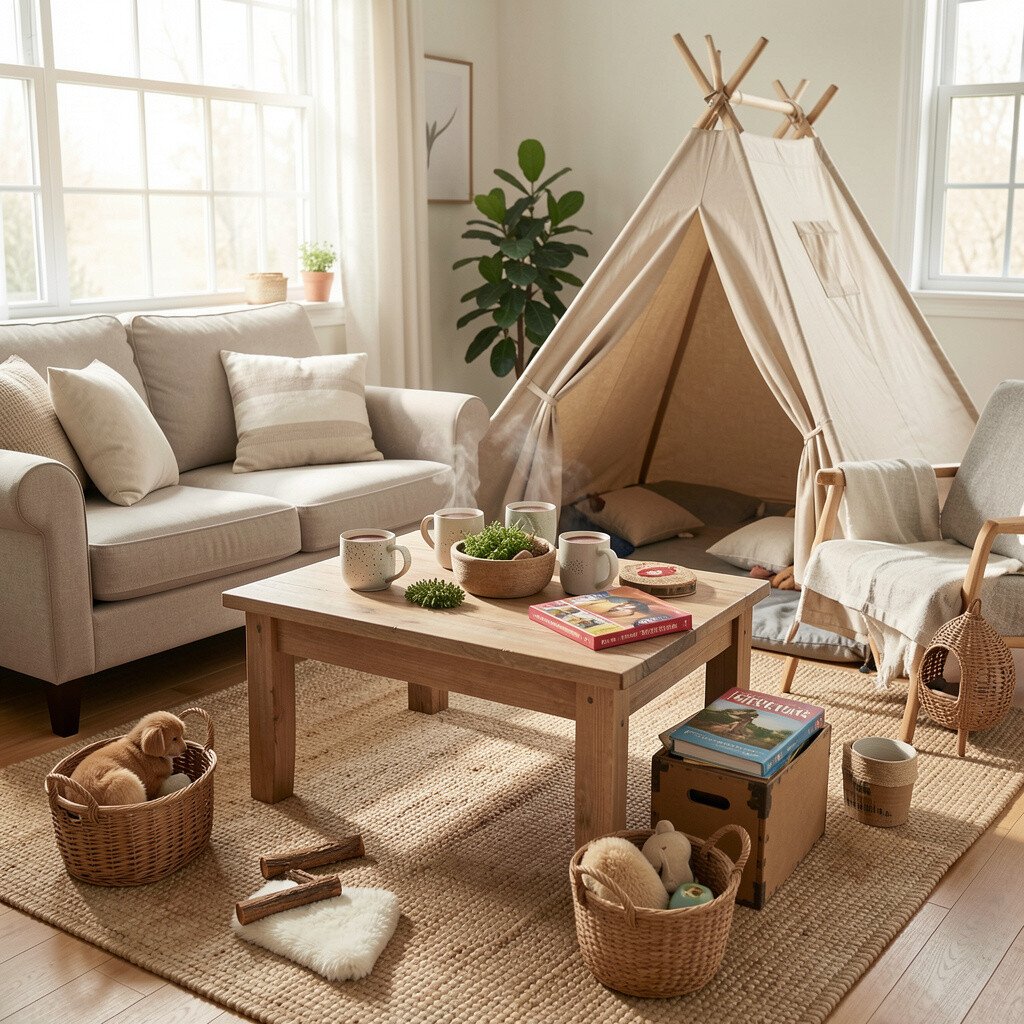
16. Camping-Themed Setup in a Living Room With Hot Cocoa and Games
Camping-Themed Setup in a Living Room With Hot Cocoa and Games
Picture a tent in the corner, blankets like sleeping bags, and the cozy glow of a lantern. This spot works even during rainy days and makes staying home feel special.
Set up a camping-themed gathering with easy games, like charades, scavenger rounds inside the house, or a family board game everyone can learn fast. Serve hot cocoa or warm cider, and add toppings that let people personalize, like whipped cream, cinnamon, or chocolate drizzle.
To keep it practical, use battery lanterns, keep snacks on one tray, and plan a short, predictable schedule so kids aren’t overstimulated. Cost is often low because you can borrow or reuse decorations, and many supplies can come from home.
This idea is unique because it turns a normal room into a “destination” and invites storytelling long after the game ends.
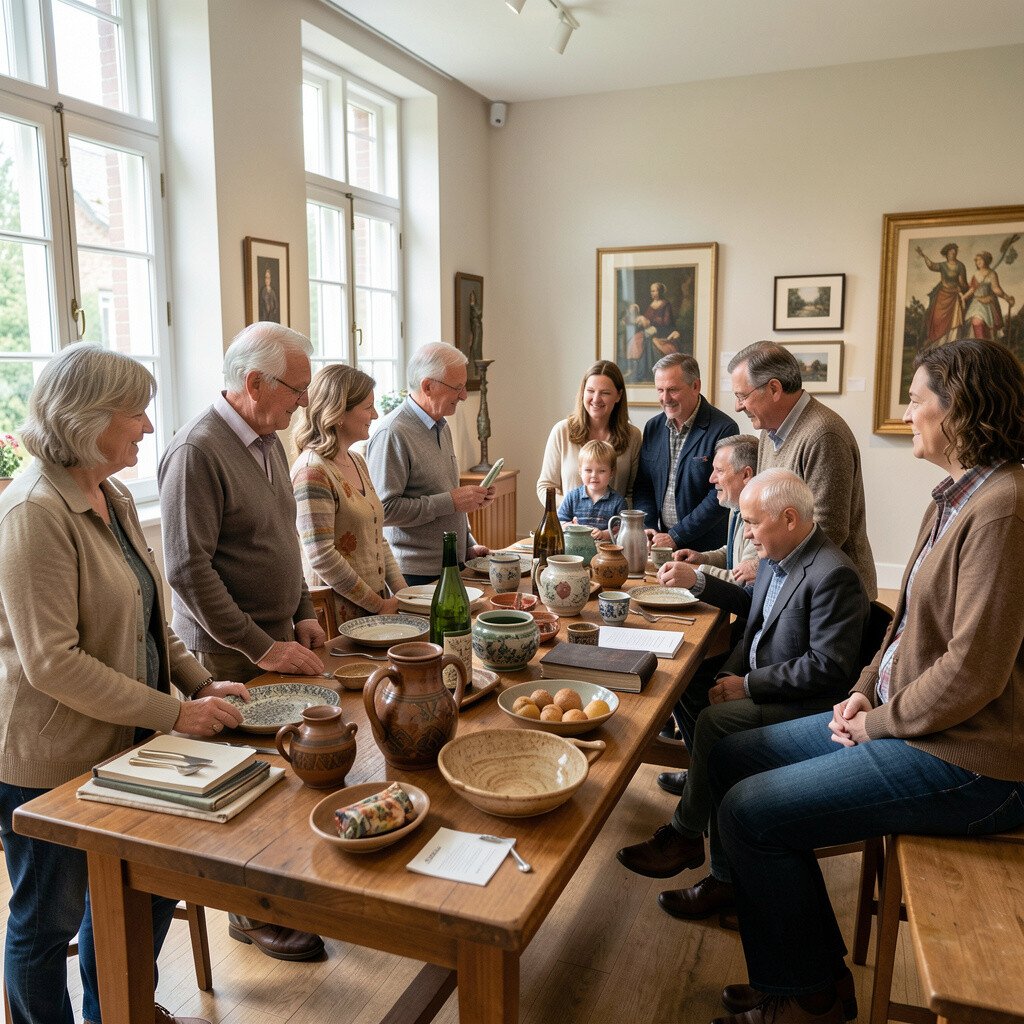
17. Heritage Day at a Museum or Cultural Center With Shared Family Objects
Heritage Day at a Museum or Cultural Center With Shared Family Objects
Imagine walking through exhibits, seeing colorful crafts, and hearing stories connected to real people. A museum or cultural center adds a learning feeling that still stays fun and social.
Bring small family objects if allowed, such as a recipe card, a photo print, or a fabric sample, and use them to spark conversation as you move through exhibits. Plan a simple challenge where everyone picks one exhibit that feels meaningful and shares why it stands out.
For benefits, shared meaning makes connection deeper than small talk, especially for families who don’t meet often. Cost considerations vary by location, so look for free admission days, member discounts, or special family rates and plan your visit around them.
Personalize by ending with a craft or quick snack inspired by what you saw, like making a simple bracelet, writing a family timeline, or tasting a small treat tied to the theme. Current trends favor hands-on, short activities during museum visits, and this plan fits that style.