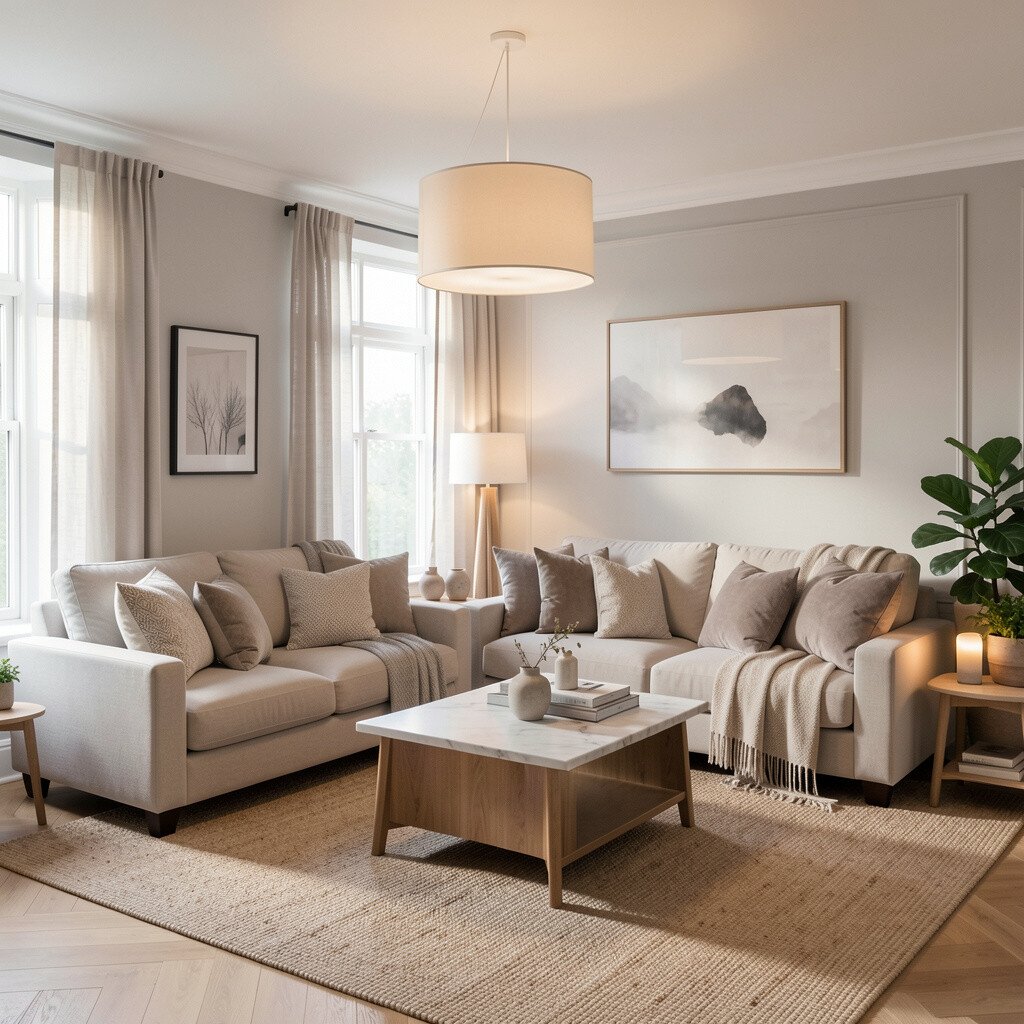
Warm light has a gentle way of easing your mind. When you choose more than one kind of lamp, the room feels calmer from every angle.
Try a mix of floor lamps, table lamps, and dimmable overhead fixtures so your space can match your mood. Use light shades in cream, oatmeal, or light beige to keep the glow soft instead of harsh. If you work or read at home, place a focused lamp near your favorite spot to reduce eye strain and improve comfort.
2. Choose a Calm Color Palette That Still Feels Alive
Choose a Calm Color Palette That Still Feels Alive
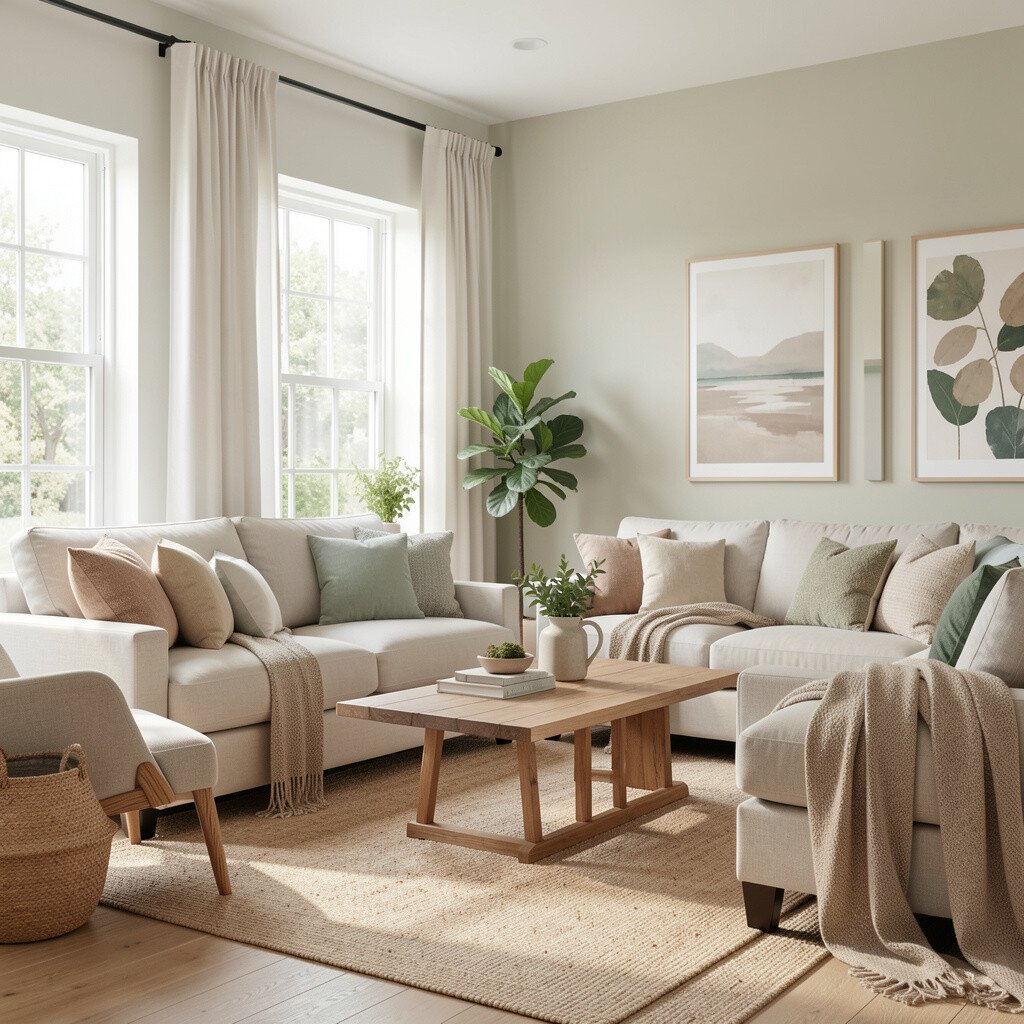
Colors shape how you feel before you even notice. Think of calm tones like muted greens, soft blues, sandy neutrals, and warm greiges.
Keep the palette consistent across walls, large curtains, and major furniture pieces so your eyes can relax. Add small bursts of color with throw pillows, a ceramic vase, or a framed print so the room stays interesting without feeling busy.
For a practical approach, pick one main neutral, one supportive color, and one accent you love. If you rent or want low-cost changes, swap textiles first since paint can wait.
3. Bring in Natural Texture for Instant Comfort
Bring in Natural Texture for Instant Comfort
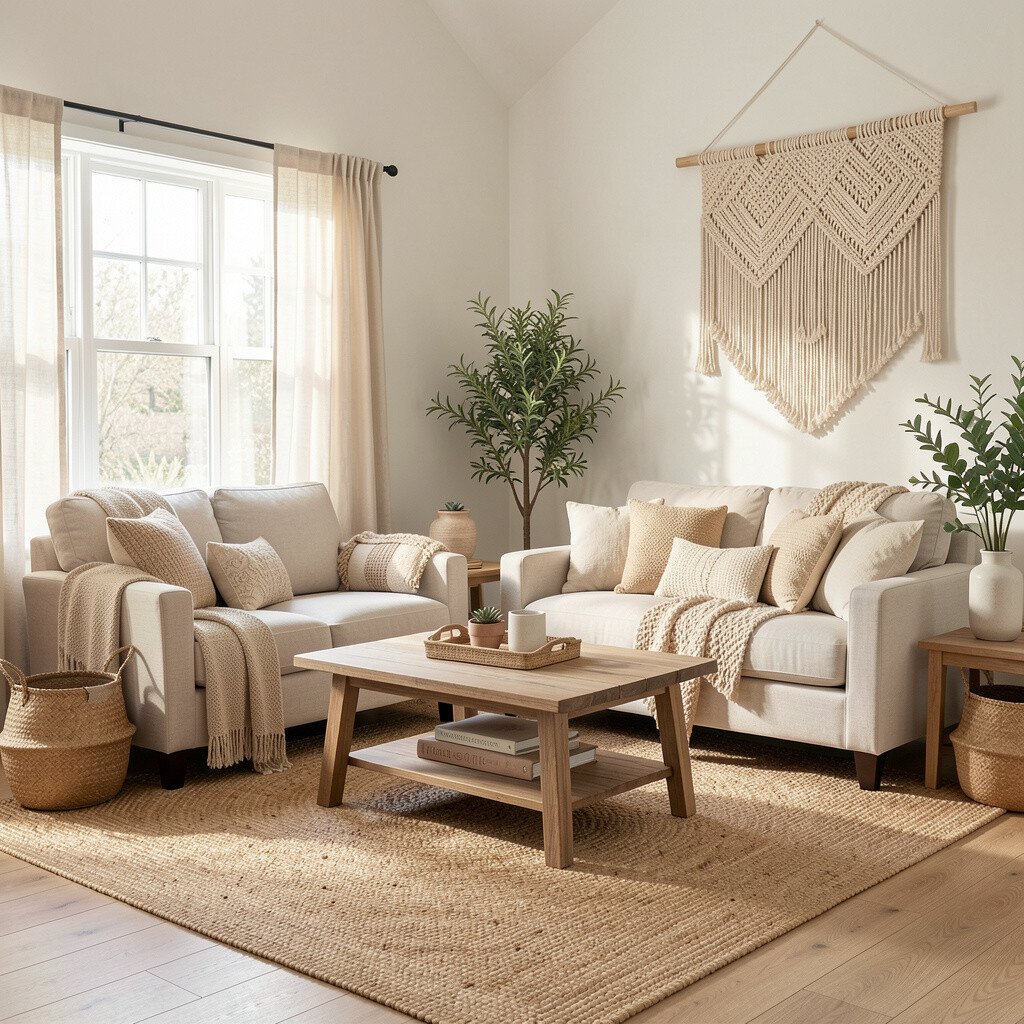
Texture is a fast path to coziness because it makes a room feel lived-in. When you mix materials like linen, boucle, and woven wood, the space feels kinder.
Use a chunky knit throw, a jute or flatweave rug, and a light wood coffee table to add depth without visual clutter. Even small details like a basket for remotes or a soft bath mat can help the room feel more organized and restful.
If you want a unique look, match textures in the same color family rather than buying lots of random patterns. A low-budget route is to focus on one hero texture, like an oversized rug, and then echo it with smaller items.
4. Set Up a Cozy Reading Corner With Real Purpose
Set Up a Cozy Reading Corner With Real Purpose
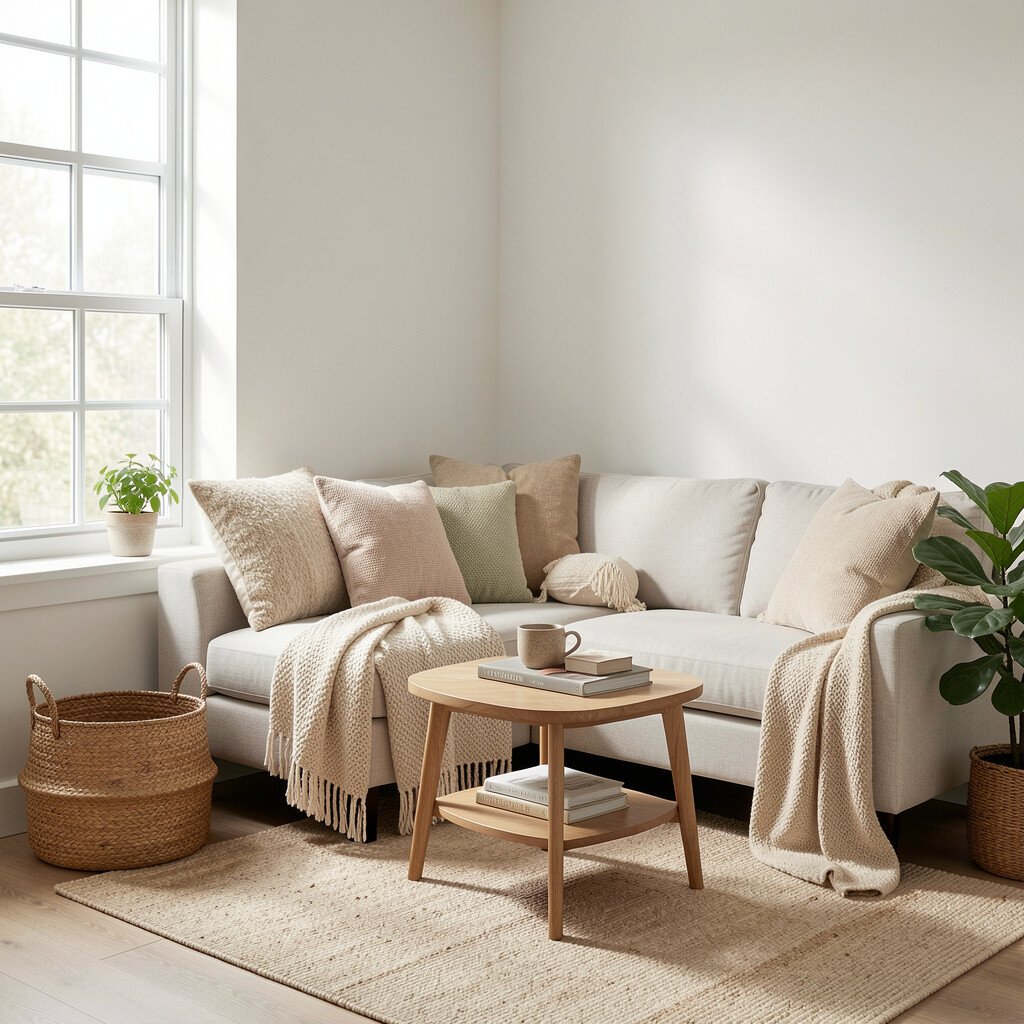
A calm space needs a place you actually use. A reading corner turns your home into a daily retreat rather than a “someday” idea.
Choose a chair or window seat that feels comfortable after a long day. Add a small side table for a water glass, a warm lamp, and a basket for books so the area stays tidy.
5. Use Curtains to Soften Sound and Shape the Room
Use Curtains to Soften Sound and Shape the Room
Even in a bright room, curtains can make the air feel calmer. Thick drapes reduce glare and can also help muffle noise from outside.
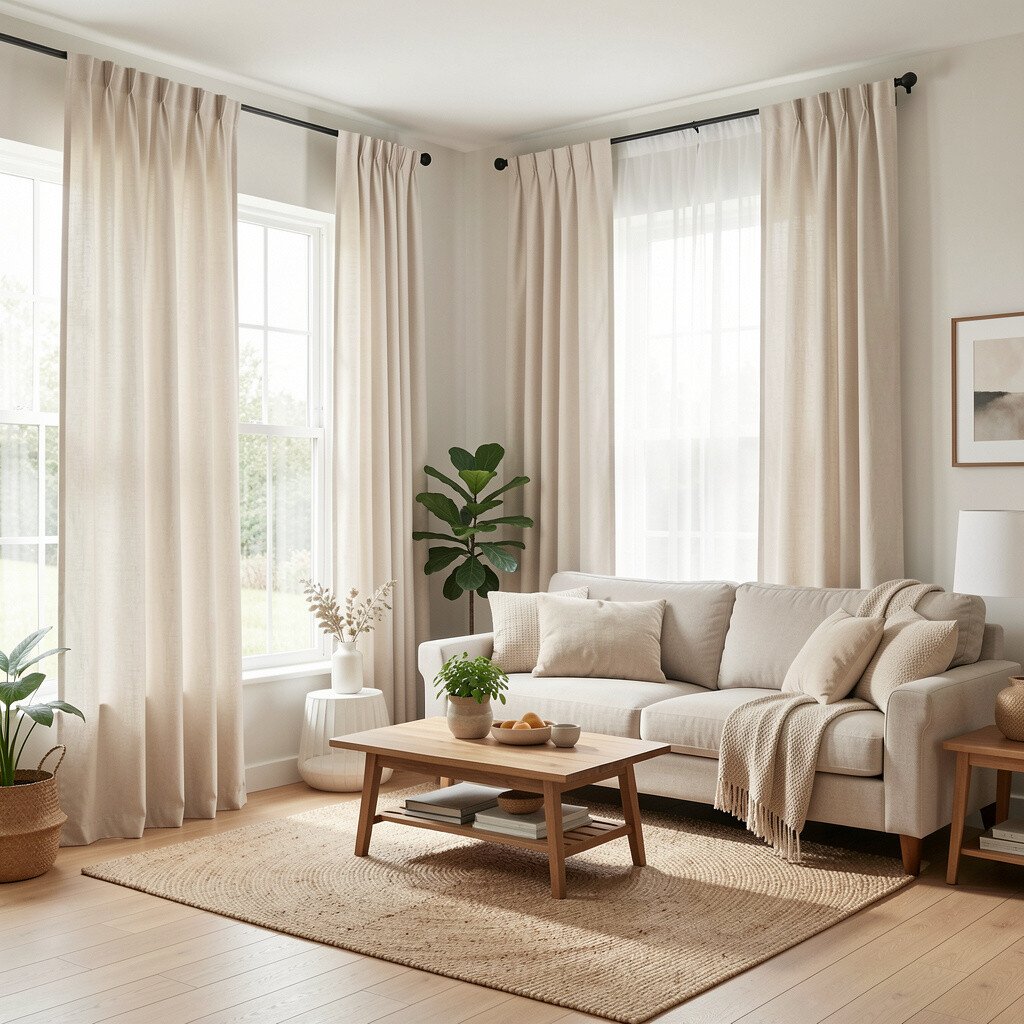
Hang curtains closer to the ceiling and wider than the window so the room looks taller and more open. Opt for breathable fabrics like linen blends for an airy feel, or choose heavier curtains when you want extra coziness.
If you’re on a budget, consider ready-made panels and add clip-on weights for a smooth look. For personalization, pick a fabric color that matches your accent tone so the whole room feels connected.
6. Create a Clear Visual Path With Less Clutter
Create a Clear Visual Path With Less Clutter
Clutter can make your brain scan the room for problems. When you simplify surfaces, the home feels lighter and easier to breathe in.
Try keeping walkways open and store daily items in closed bins or drawers. A simple landing area near the door can also reduce stress by giving keys, mail, and bags a home.
Go one step at a time by clearing just a single surface each day. You’ll notice the calm right away because your eyes stop landing on small messes.
7. Add a Calming Scent With Gentle, Safe Choices
Add a Calming Scent With Gentle, Safe Choices
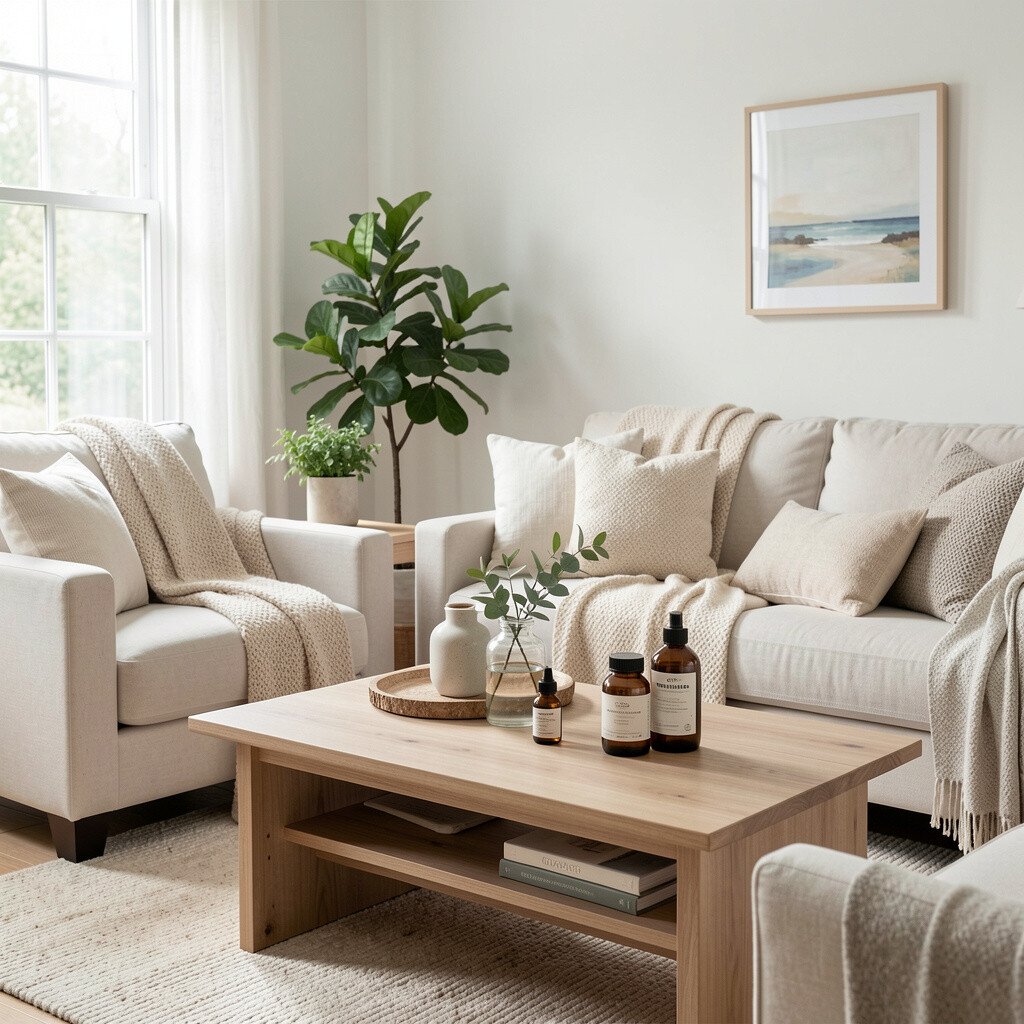
Scent is one of the quickest ways to shift your mood. Soft notes like lavender, cedar, citrus peel, or warm vanilla can help your space feel more soothing.
Use candles sparingly, or choose flameless warmers and room sprays for easy control. Try placing scent sources near seating areas so you experience them naturally while you relax.
To personalize without going overboard, rotate scents with the season. Keep ventilation in mind and avoid strong aromas if you share the space with someone sensitive.
8. Install Thoughtful Storage That Looks Good Too
Install Thoughtful Storage That Looks Good Too
Storage isn’t only about hiding things. It also helps you keep your home styled in a calm, intentional way.
Consider open shelving for a small curated display, but balance it with cabinets or baskets for items you don’t want to see. Labeling baskets and using matching containers can make organization feel smoother, especially in busy households.
If you’re designing on a budget, repurpose furniture you already own by adding bins, shelves, or simple drawer organizers. A fresh coat of paint or stain can make older pieces look modern and aligned with current trends like warm woods and simple lines.
9. Choose Flooring and Rugs That Feel Warm Underfoot
Choose Flooring and Rugs That Feel Warm Underfoot
Cold floors can make a room feel less welcoming, even when the rest is perfect. Rugs add comfort, reduce echo, and create a defined calm zone.
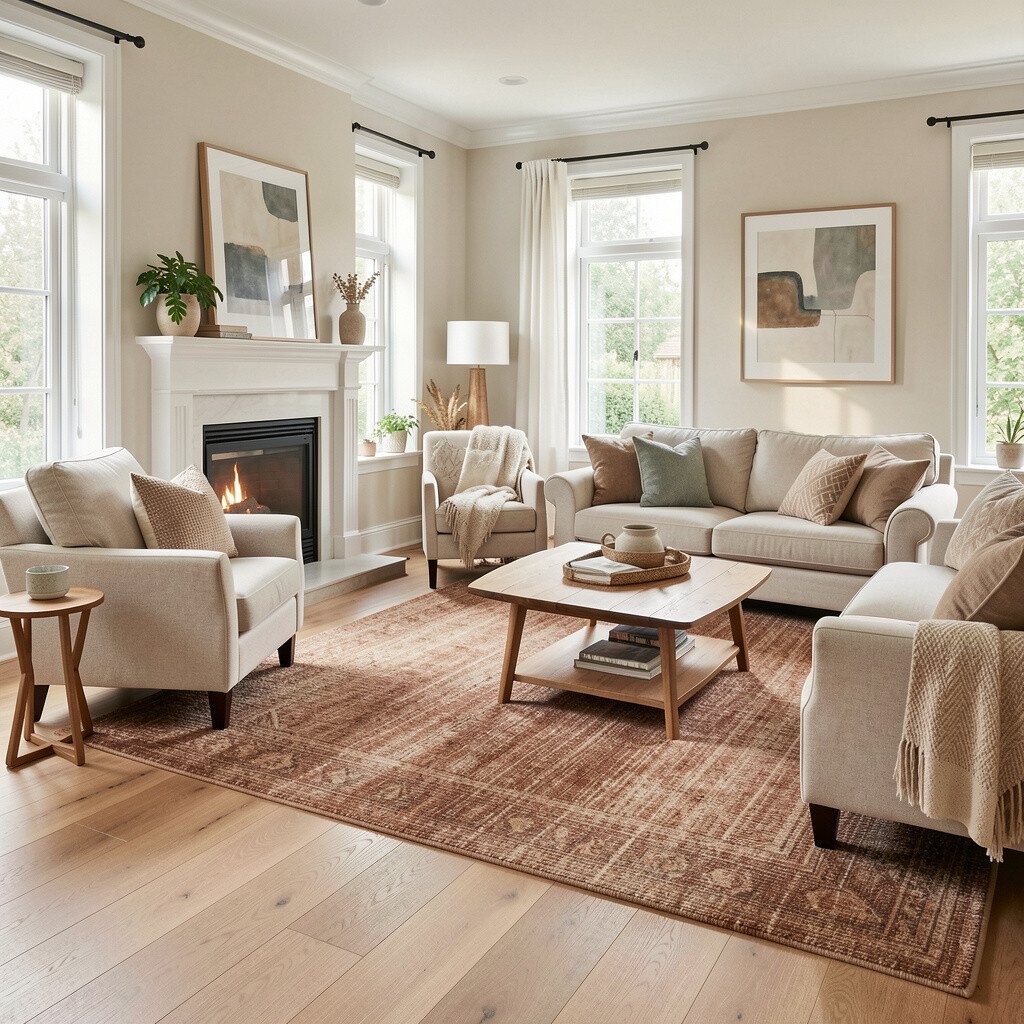
Pick a rug size that anchors furniture so the space feels grounded. For a gentle look, choose low-contrast patterns or solid tones with subtle texture like flatweave or wool blends.
If you don’t want to replace flooring, add layered rugs where you sit most often. One thicker rug plus a smaller runner can feel cozy and look designer without high cost.
10. Design a Nighttime Routine Zone for Better Rest
Design a Nighttime Routine Zone for Better Rest
Bedtime feels easier when your room supports it. A dedicated nighttime zone helps you unwind without hunting for things or fighting clutter.
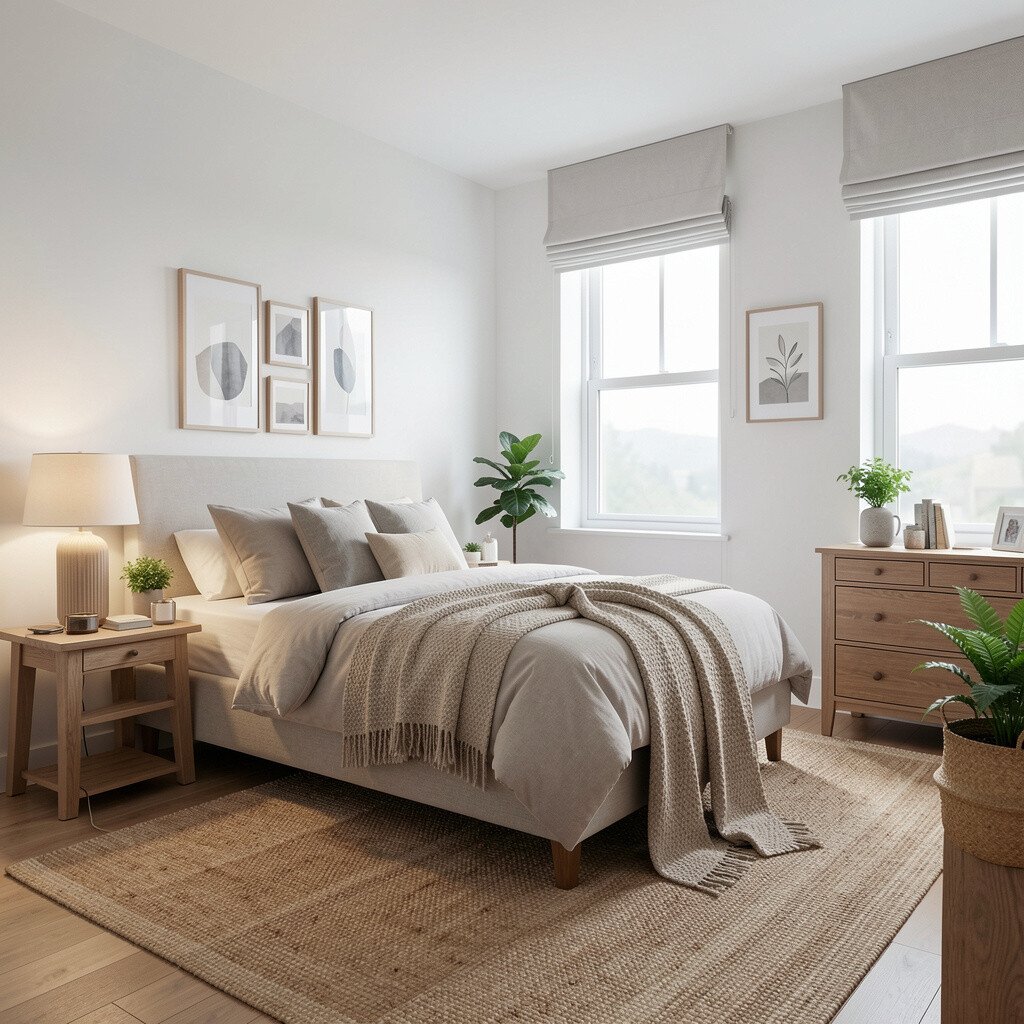
Place a small tray near your bed for daily essentials like water, lotion, and a book. Use a bedside lamp with a warm bulb and keep the area visually simple so it feels calm the moment you walk in.
For personalization, choose a calming artwork or a small plant that thrives in indoor light. If you want a cost-effective upgrade, swap your bedding for softer colors and breathable fabric like cotton or linen.
11. Bring In Plants That Match Your Light and Lifestyle
Bring In Plants That Match Your Light and Lifestyle
Plants soften a room and add living color, which feels naturally comforting. They also help you feel connected to something growing and steady.
Pick plants based on light and how often you want to care for them. Low-maintenance choices like snake plant, pothos, or ZZ plant work well for busy schedules, while herbs like basil or mint add a fresh touch if you like watering.
To make the look unique, group plants of different heights in matching planters. Use a simple plant stand to elevate one favorite so it becomes a focal point without taking over the room.
12. Add Art That Feels Like a Personal Exhale
Add Art That Feels Like a Personal Exhale
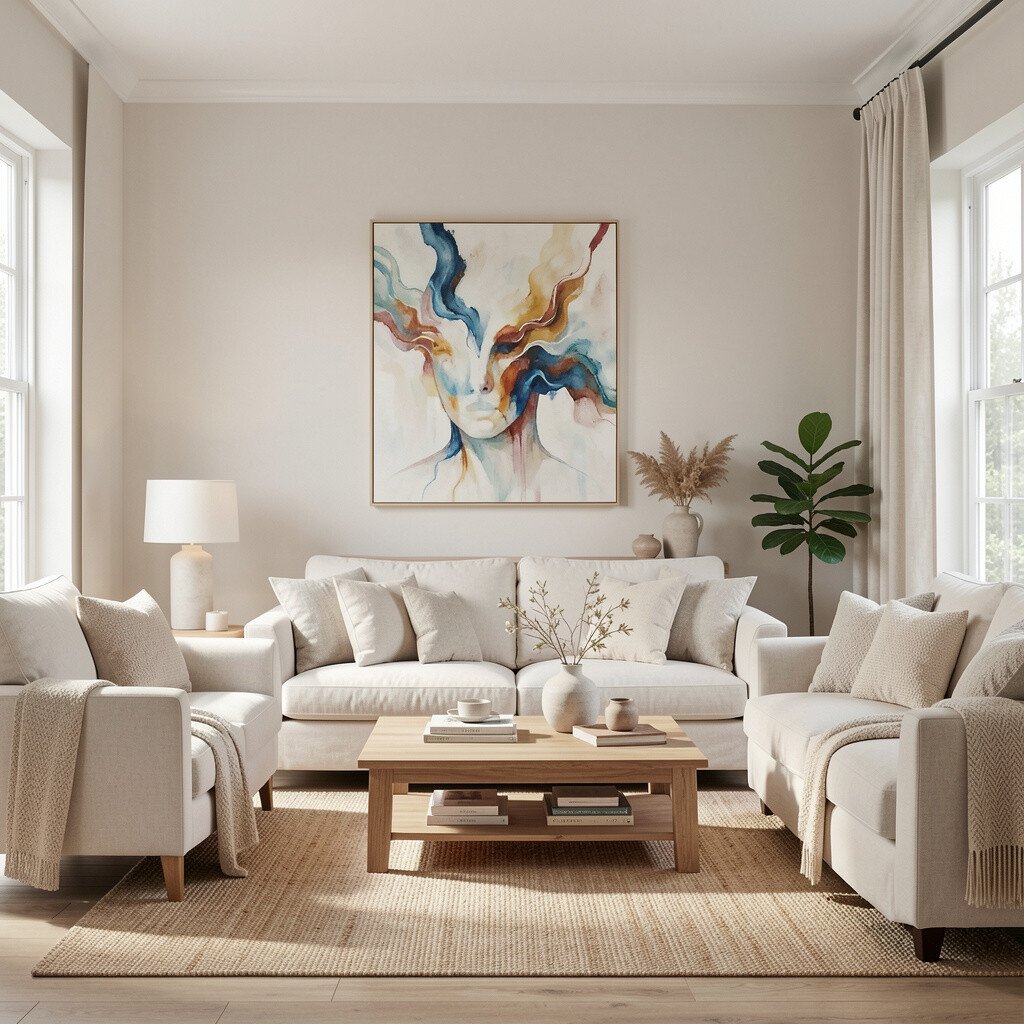
Art is powerful because it reflects how you want to feel at home. When you choose calming pieces, your space stops looking like a store and starts feeling like yours.
Try one larger artwork instead of many small prints if you want the calm effect to be stronger. Use frames in matte black, warm wood, or soft white to match your palette and keep the look tidy.
For practical styling, place art at eye level and pair it with calm lighting. If you love change, rotate seasonal prints or photo sets so your sanctuary evolves with your life.
13. Choose a Comfortable Seating Layout for Real Relaxing
Choose a Comfortable Seating Layout for Real Relaxing
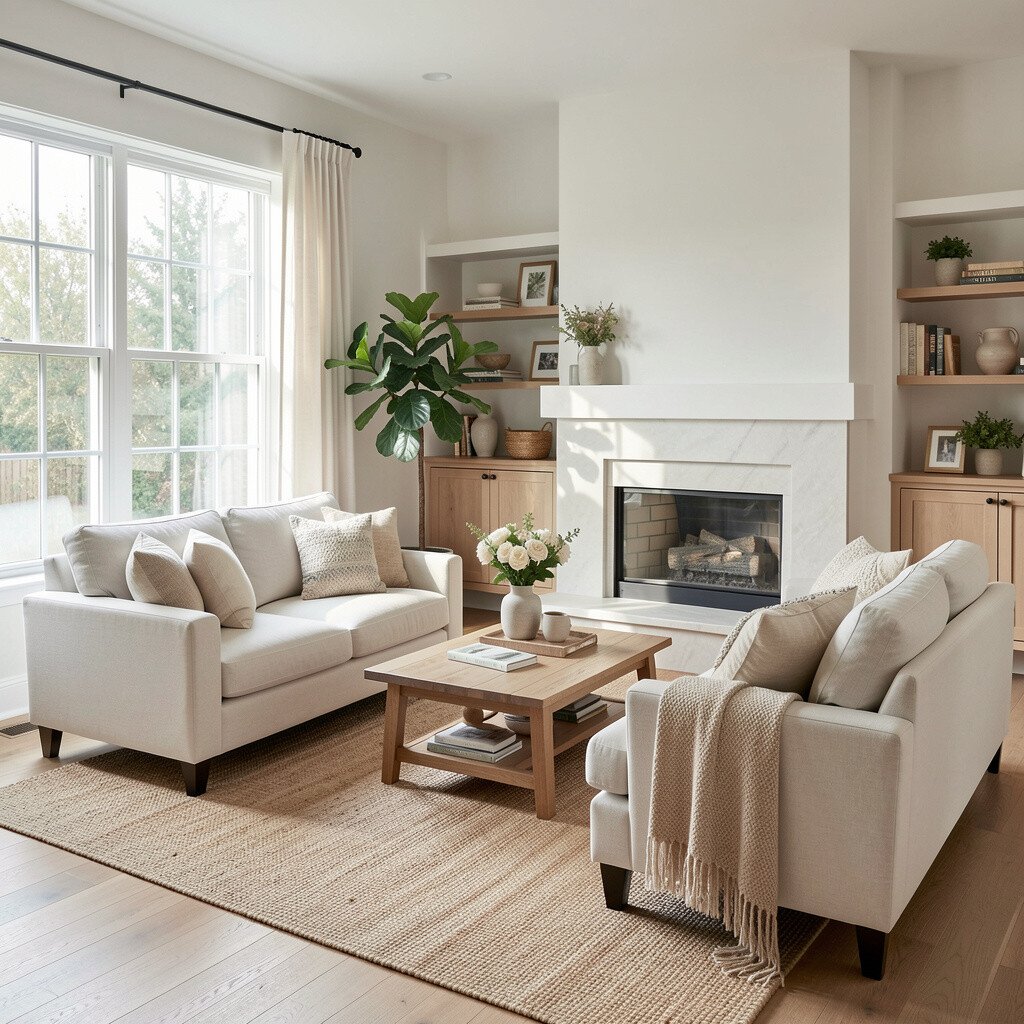
Calm spaces are made for lingering, not just passing through. When your seating feels inviting, you naturally slow down and breathe easier.
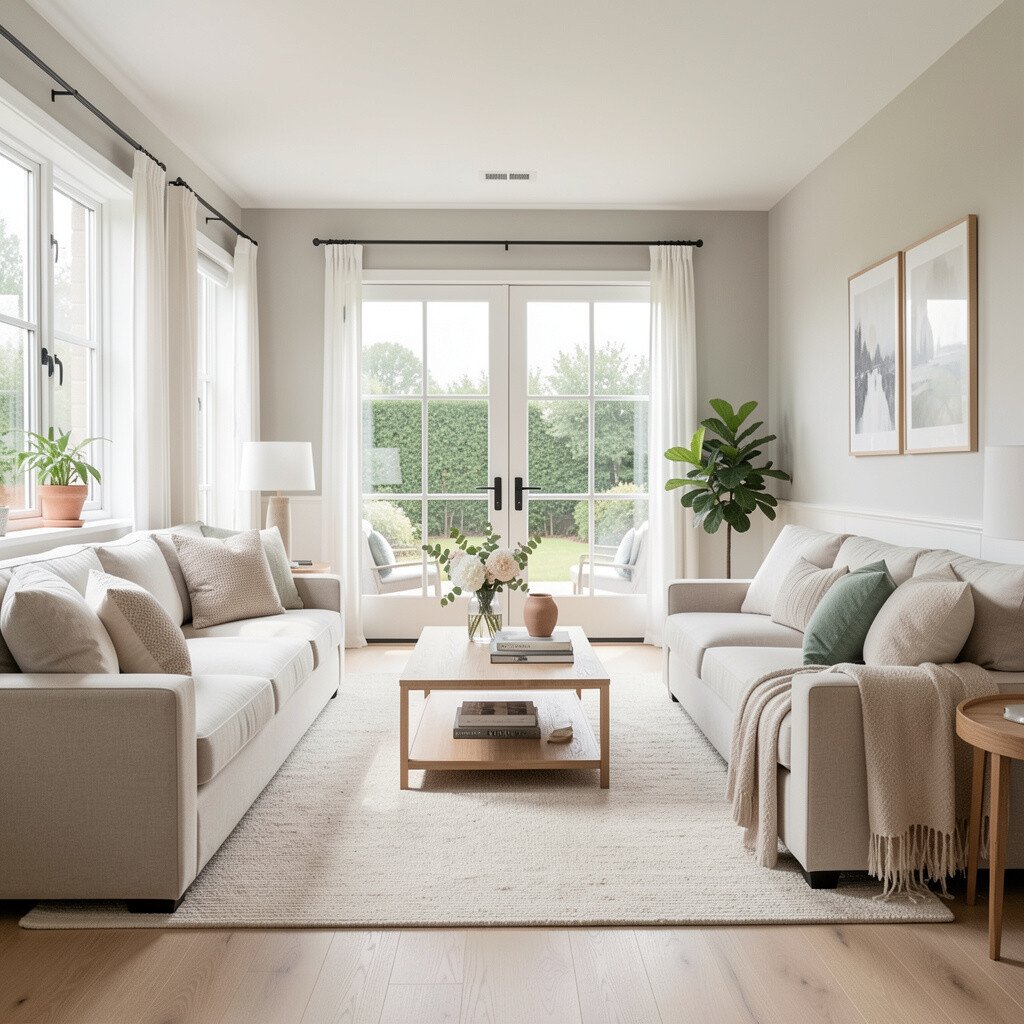
Arrange furniture so conversation or quiet reading feels easy, with a clear path around the room. Add pillows and a throw in matching tones to make the area feel ready the moment you sit down.
If you want a trend-forward look, choose modular seating or furniture with clean lines and soft fabric. It can be a mid-range cost, but you can start small by upgrading one chair or adding a new accent sofa cushion set.
14. Use Mirrors and Window Views to Brighten Without Stress
Use Mirrors and Window Views to Brighten Without Stress
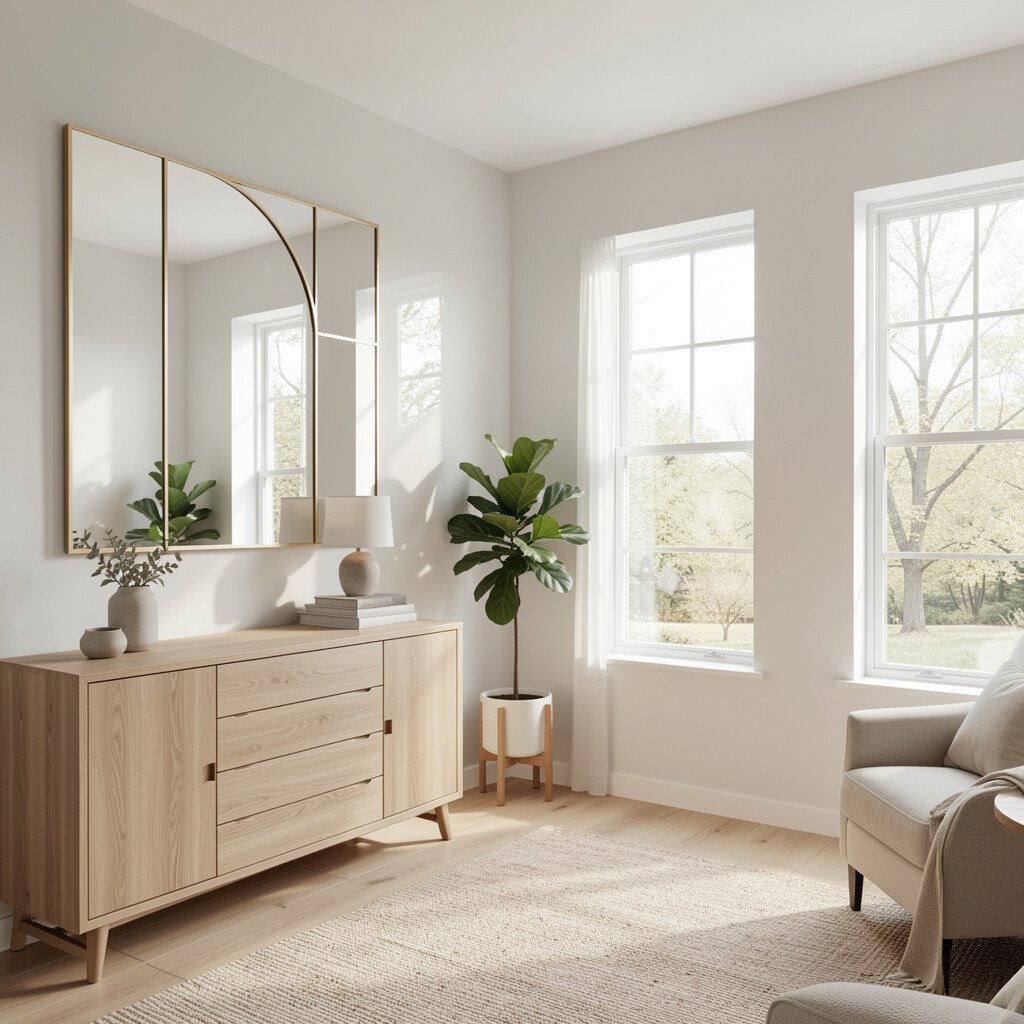
Mirrors can make a room feel larger and more open, which supports calm feelings. When they reflect soft light, they also help your space feel welcoming.
Place a mirror where it bounces natural light from a window onto a relaxing area like a sofa or reading chair. Choose frames with gentle shapes and warm finishes to keep the look soothing rather than sharp.
For personalization, use a grouping of small mirrors with matching frames or choose one statement mirror with an elegant arch. If you want low-cost upgrades, clean windows and adjust window treatments first since that changes how light moves throughout the day.