Imagine opening a cabinet door and seeing tidy spice jars lined up like little paint colors on a gallery rail. The kitchen wall becomes a clean display instead of a hidden mess.
A magnetic rail keeps jars off counters and reduces digging during cooking. It also lets you rotate what you use most, so your go-to spices stay at eye level. For best results, measure the rail length and check that your jars have metal lids or a removable magnetic ring.
2. Pull-Out Drawer Inserts That Lock In Order
Pull-Out Drawer Inserts That Lock In Order
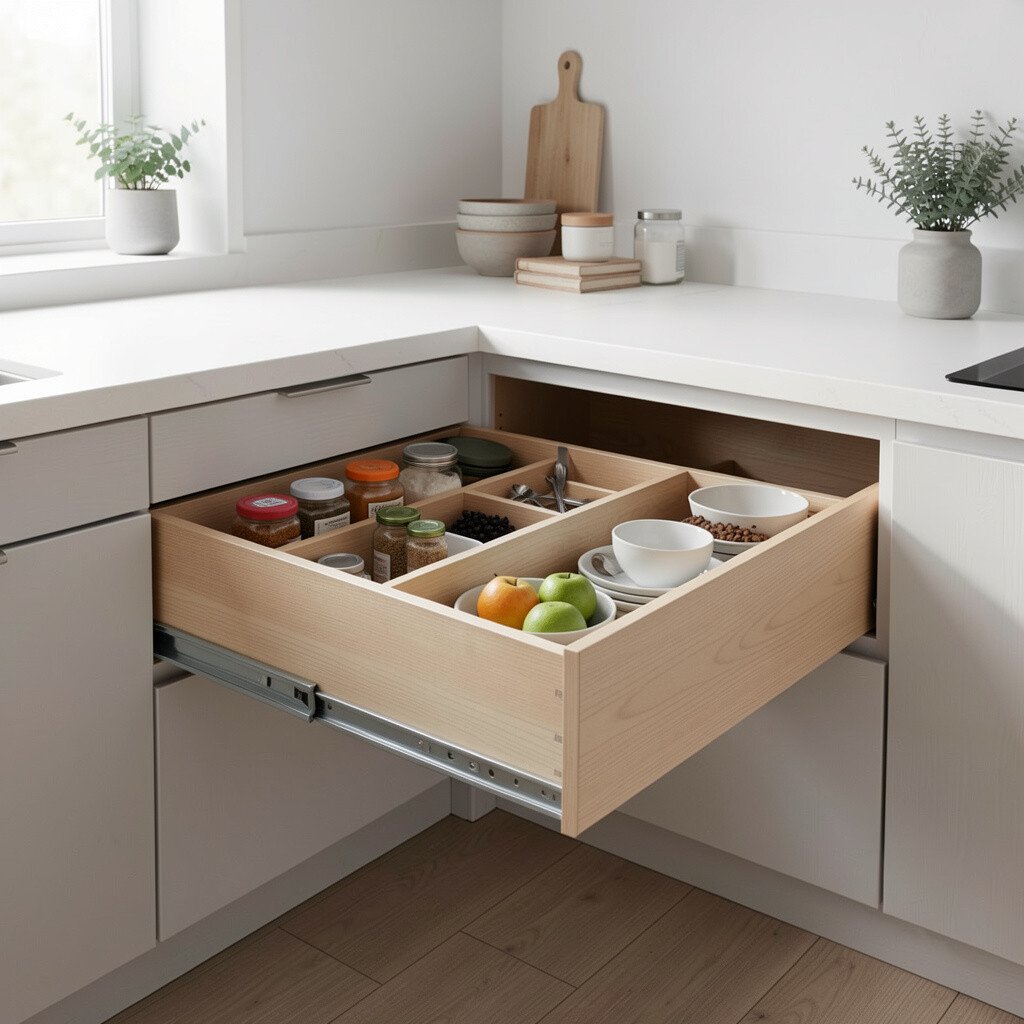
Picture a drawer that slides out smoothly, revealing every utensil and tool in its own snug home. Instead of items shifting around, everything stays put like it is holding hands.
Drawer inserts help you separate gadgets, baking tools, and everyday cutlery so you can find things fast. They also stop random clutter from creeping back in after a busy week. Choose inserts that fit your drawer width, and consider starting with just one drawer so the system feels easy to maintain.
If you have a mix of bulky and small tools, use a combination of wider slots and smaller compartments. A minimalist approach works best when you keep only the items you truly use, and donate the rest. If cost is a concern, you can buy basic inserts and add a few DIY dividers using sturdy cardboard wrapped in fabric or contact paper.
3. Under-Shelf Baskets for Everyday Pantry Extras
Under-Shelf Baskets for Everyday Pantry Extras
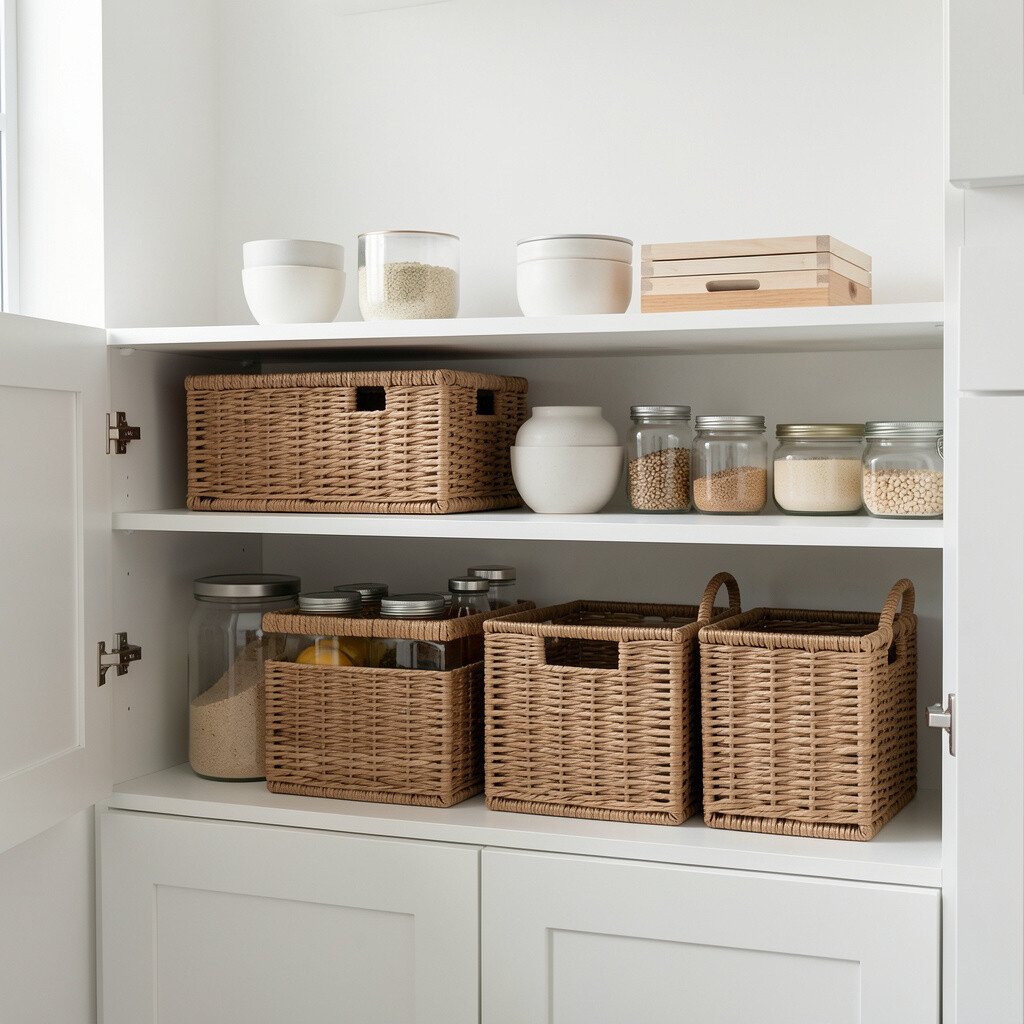
Think about the space under a shelf acting like a tiny staging area for your most-used items. You can see labels clearly while your countertops stay open and calm.
Under-shelf baskets pull weight from your shelves without taking over your room. They are great for snack bags, coffee filters, tea boxes, and spice refills you grab often. Keep the baskets shallow so items do not get buried, and group them by routine, like morning drinks or after-school snacks.
For personalization, pick baskets in matte black or soft white to match your kitchen mood. If you want a current trend feel, look for slim wire designs that keep airflow and look light. To keep costs down, search for multipack baskets that fit standard shelf rails, then measure twice before ordering.
4. Vertical Cutting Board and Lid Stand
Vertical Cutting Board and Lid Stand
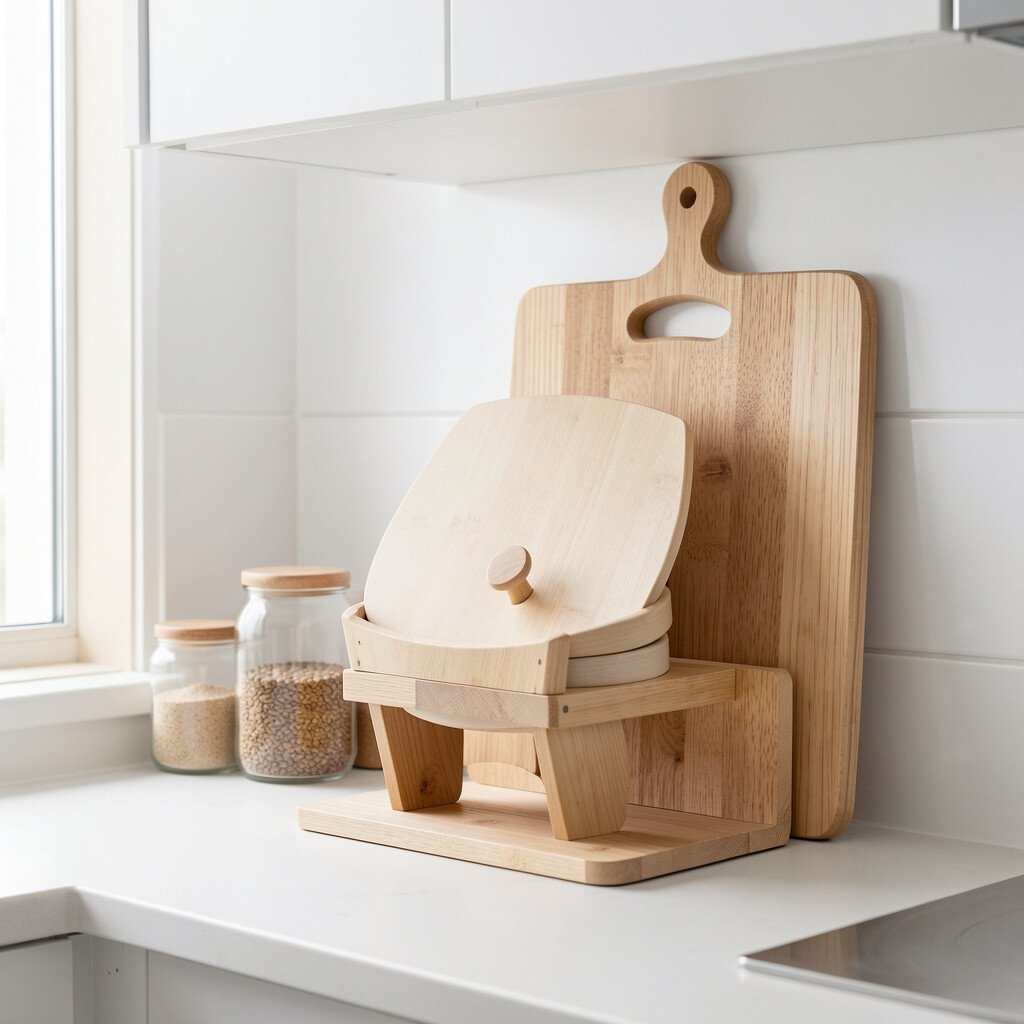
Visualize a narrow stand holding cutting boards upright like books on a shelf. Nearby, matching lids lean neatly so the kitchen stays clear and tidy.
A vertical stand clears counter clutter while preventing warped boards from piling up. It also makes it easier to grab the right lid for the right pot without rummaging. Choose a stand with non-slip feet, and place it near your stove so it becomes part of your cooking rhythm.
5. Tiered Shelf for Small Appliances You Actually Use
Tiered Shelf for Small Appliances You Actually Use
Picture a compact corner where your toaster, small kettle, or coffee maker sits on a stacked shelf. The setup feels intentional, not crowded, like a tiny café station.
Tiered shelves maximize height, which is the main advantage in tight kitchens. Keep only appliances you use weekly, and store the rest elsewhere to avoid a countertop takeover. For a minimalist look, pick one metal or one wood finish and stick to it.
If you are worried about cost, look for sturdy used shelving in good condition and test stability before loading. Add a small tray underneath the base to catch crumbs or drips so the shelf stays clean with little effort. This is also a nice way to follow the current trend of staged, functional “stations” that reduce constant moving around.
6. Hanging Utensil Bar With Hooks for Daily Tools
Hanging Utensil Bar With Hooks for Daily Tools
Imagine your spatula, ladle, and whisk hanging in a neat row above the stove. The sight alone feels tidy, and it saves you from hunting in drawers mid-cook.
A hanging bar keeps frequently used tools ready and reduces clutter in drawer space. It also frees room for pots and pans that you do not use every day. Use hooks that match utensil thickness so handles do not slip, and keep the bar close to your cooking area.
For uniqueness, choose colored silicone grips on hooks or mix wood and metal accents for a warmer vibe. If you rent, use a tension mount or strong adhesive hooks designed for kitchens. Consider cost by buying one bar and adding hooks gradually as you streamline your tools over time.
7. Lid Organizer Inserts for Stacking Without Chaos
Lid Organizer Inserts for Stacking Without Chaos
Picture a cabinet where lids no longer slide and clatter when you open the door. They sit in a neat set, separated just enough to grab quickly.
Lid organizer inserts prevent the “everything is stuck together” problem that wastes time during cooking. They also help you keep your pots and lids paired, which reduces guesswork. Measure your cabinet depth and stick to the insert sizes that match your typical lid diameter.
8. Appliance Garage-Style Storage That Stays Closed
Appliance Garage-Style Storage That Stays Closed
Imagine a slim cabinet niche where your everyday blender or mixer lives behind closed doors. When it is hidden, the kitchen looks calmer, even when you are not cooking.
Enclosed storage keeps small appliances from visually crowding your counters. It also helps protect items from dust and keeps your daily surfaces ready for food prep. If you cannot build a garage, use a tall cabinet with a door and add a shelf divider so cords and attachments stay contained.
For personalization, line the cabinet with a peel-and-stick liner in a subtle pattern that makes opening the door feel fun. A current minimalist trend favors concealed function, so your kitchen stays sleek. If budget is tight, repurpose a tall pantry door or add a simple tension shelf inside an existing cabinet.
9. Corner Shelf With a Lazy-Susan Base
Corner Shelf With a Lazy-Susan Base
Visualize a corner unit that spins, letting you reach spices and oils without twisting your body. The corner, which usually feels dead space, becomes a handy storage hub.
A Lazy Susan base makes it easier to access items that often hide behind bulky cookware. It also helps you group similar products, like baking supplies or breakfast condiments. When choosing one, measure the available diameter and select a model that fits through doorways if you need installation.
For uniqueness, use clear-lidded containers on the rotating tray so you can see what is inside at a glance. Keep the heaviest items on the bottom layer so the turn stays smooth. Costs can vary, so consider starting with a smaller rotating tray for oils and spices before upgrading the entire corner.
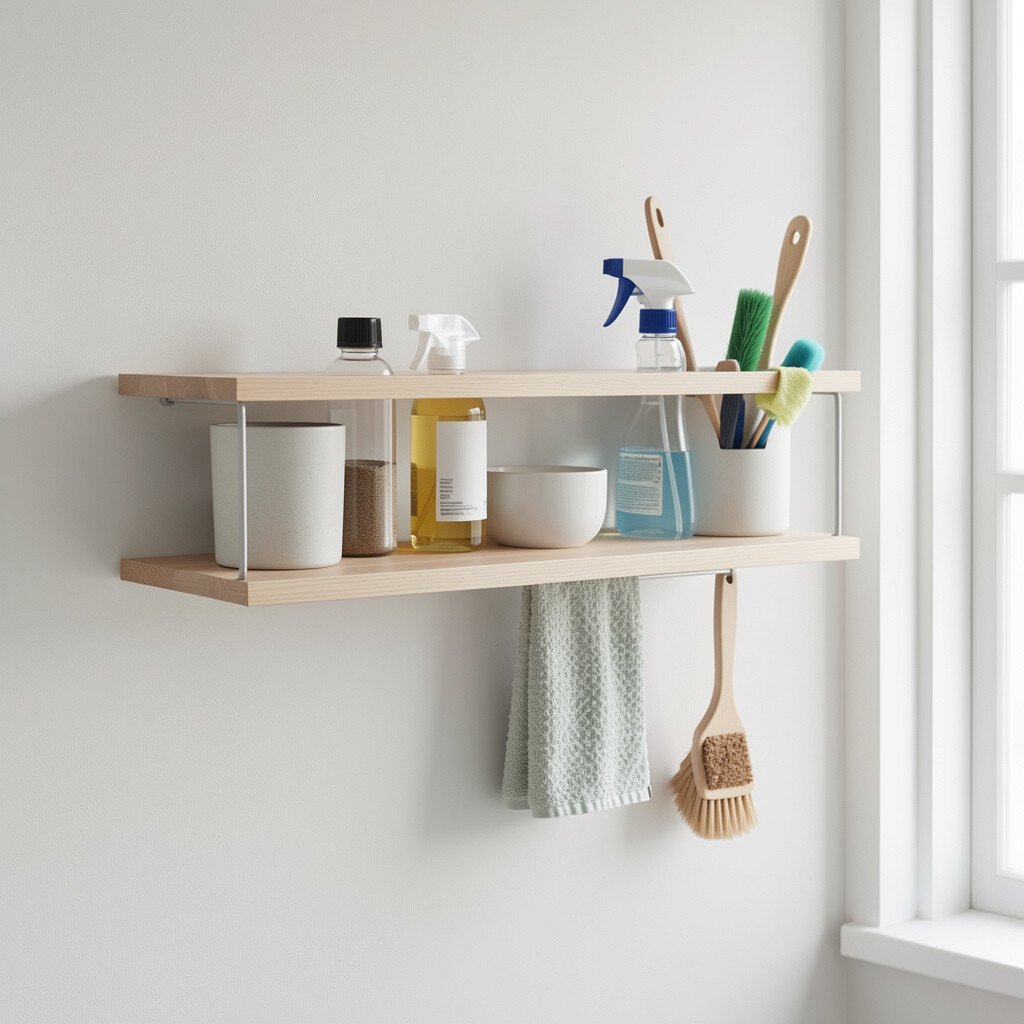
10. Slim Wall-Mounted Shelf for Cleaning Tools
Slim Wall-Mounted Shelf for Cleaning Tools
Picture your sponges, dish brush, and scrub pads resting neatly on a thin wall shelf. The sink area looks clean, and your cleaning routine feels faster.
A slim wall-mounted shelf keeps cleaning tools off countertops and stops water puddles from forming. It also makes it easier to dry brushes and replace sponges when needed. Look for a shelf with a small lip or built-in tray so drips stay contained.
11. Magnetic Knife Strip With a Minimal Cutting Setup
Magnetic Knife Strip With a Minimal Cutting Setup
Imagine a knife strip that looks like a clean line on the wall beside your prep area. Instead of hiding blades in drawers, they hang neatly and feel ready.
A magnetic knife strip saves drawer space and makes everyday cooking safer because knives are easier to find. It also encourages a minimalist workflow since you can set up a simple station for chopping. Choose a strip long enough for your blades and place it where you can comfortably reach while standing.
For personalization, match the strip to your hardware finish so everything blends. If cost is a concern, you can reuse an existing shelf-like rail and mount magnets to it carefully. Current kitchens often use wall organization to reduce clutter, and a knife strip is a bold but practical version of that trend.
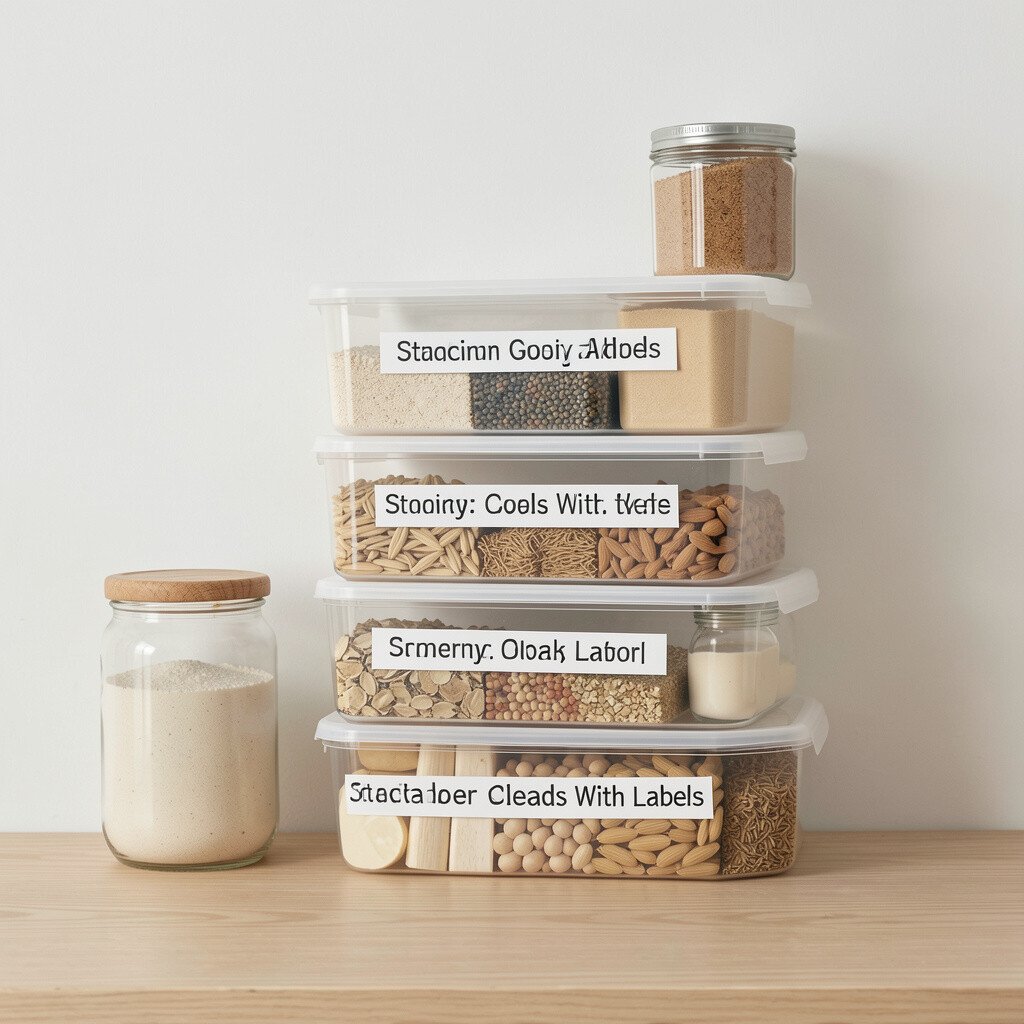
12. Stackable Clear Containers for Dry Goods With Labels
Stackable Clear Containers for Dry Goods With Labels
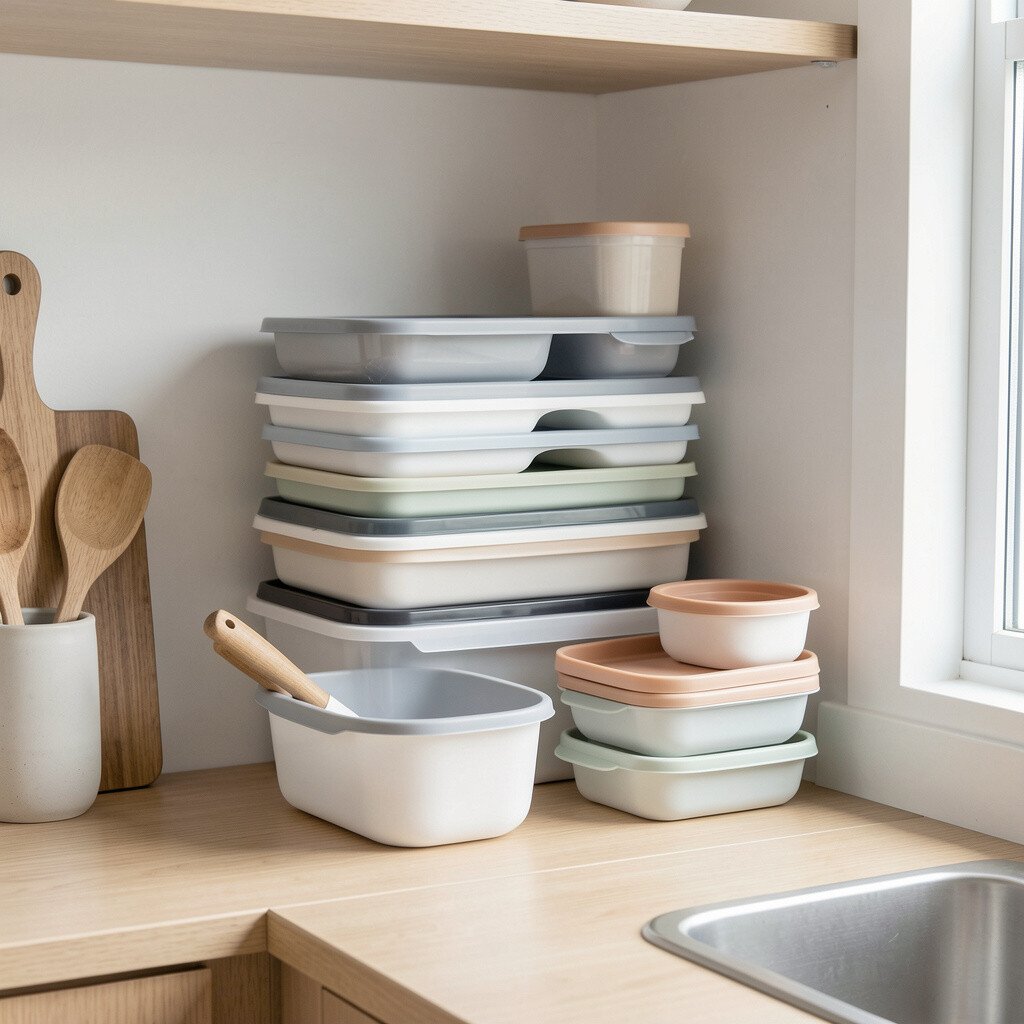
Picture your flour, rice, and pasta stored in clear containers that sit in orderly rows. The kitchen looks bright, and you can see exactly what is running low.
Clear containers reduce pantry searching and help you avoid buying duplicates. They also make portion control easier, which is great in small spaces where storage is limited. Use labels that you can update, and keep container sizes consistent for a clean look.
For uniqueness, choose a mix of container shapes for visual rhythm, like round for grains and tall for pasta. If you want to keep costs down, start with your top few staples and add more over time. This approach also aligns with current organization trends that favor sight-friendly storage over crowded bags.
13. Folding Step Stool Hidden in a Cabinet Base
Folding Step Stool Hidden in a Cabinet Base
Imagine a compact stool that slips out from the base of a cabinet when you need to reach the top shelf. After you grab what you need, it disappears again and the space stays sleek.
A folding stool makes high storage usable without turning it into a climbing risk. It also lets you store less-used items up high, freeing valuable middle space for daily cooking. Choose a model built for kitchen weight and install it securely so it stays stable.
For personalization, paint the stool to match the cabinet or use a protective mat to reduce scuffs. This is a smart minimalist move because it supports vertical storage while keeping the room tidy. Costs vary, but a single quality stool can replace the need for constant searching for chairs or ladders.
14. Over-the-Sink Tray for Mail-Style Drying and Prep
Over-the-Sink Tray for Mail-Style Drying and Prep
Picture a sleek tray sitting over the sink, catching water while you prep veggies or rinse herbs. It feels like a small work surface that keeps the counter dry.
An over-the-sink tray creates a dedicated area for drying utensils and draining washed produce. It also reduces the urge to place wet items on towels and surfaces, which can lead to clutter. Choose a tray that fits your sink width and includes grooves or a removable section for easy cleaning.
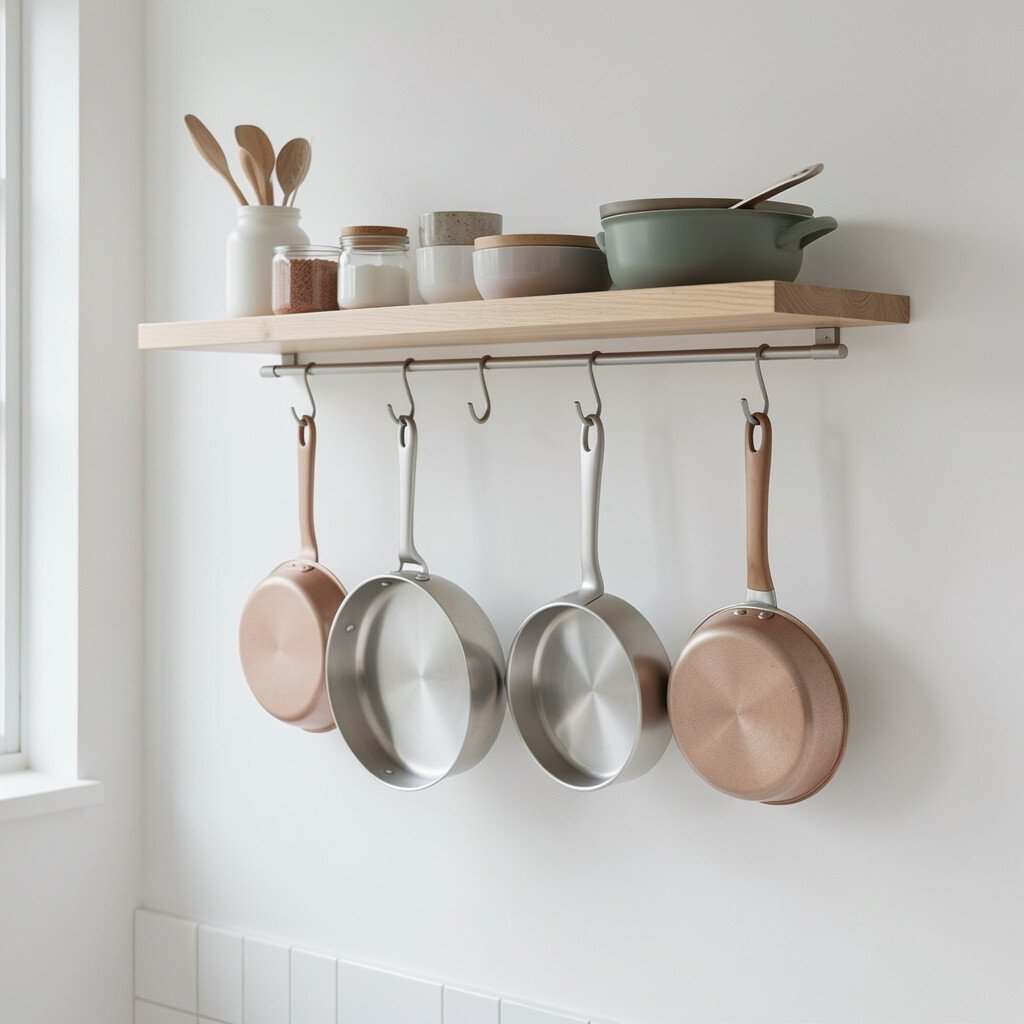
15. Pot Rack With Minimal Hooks and One Landing Zone
Pot Rack With Minimal Hooks and One Landing Zone
Imagine pots hanging neatly overhead, with each item facing the same direction. The visual stays consistent, and your cookware becomes easier to grab.
A pot rack uses vertical space that is usually wasted in tiny kitchens. It also encourages you to keep only what you need on the rack, which supports a minimalist style. For practical setup, choose one “landing zone” area where you hang frequently used pots and move the rest elsewhere.
For uniqueness, consider a rack with a simple, modern shape or a finish that matches your hardware. If you rent, look for freestanding options that do not require major installation. Cost matters here, so you can start with a smaller wall rack or partial solution and expand only if it truly fits your routine.
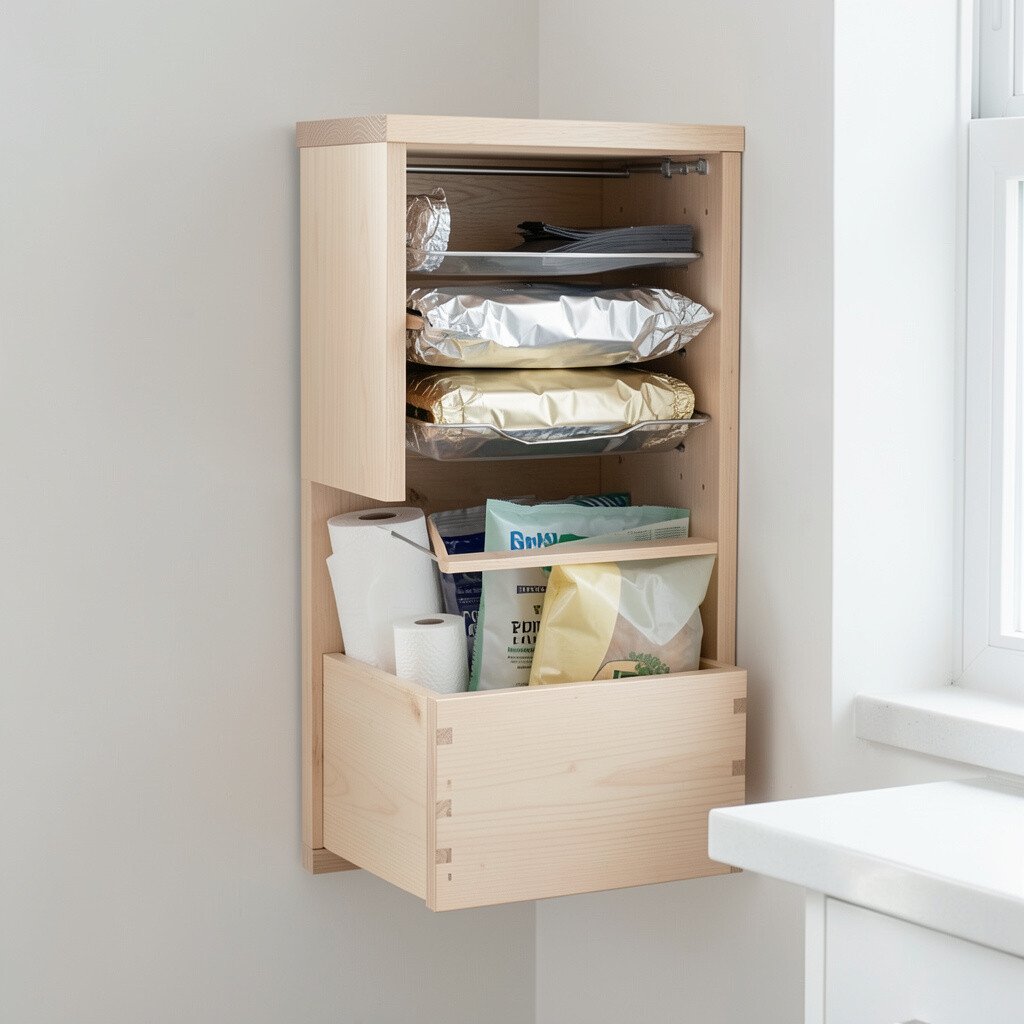
16. Drawer for Foil, Wrap, and Bags Using a Simple Vertical Organizer
Drawer for Foil, Wrap, and Bags Using a Simple Vertical Organizer
Picture a drawer where foil, parchment, and plastic wrap stand neatly like files. The tops are easy to reach, and the rolls do not unravel into a messy tangle.
A vertical organizer for wrap and bags stops the “where did it go” mystery. It also keeps sharp edges contained and makes it easier to tear off the right amount during cooking. Pick an organizer with adjustable dividers so you can fit different roll widths.
For personalization, choose a material that matches the vibe of your other organizers, like bamboo, matte plastic, or coated wire. If budget is tight, you can start by repurposing a few sturdy divider pieces and building a simple vertical grid. This is a good spot to follow today’s minimalist trend of hiding chaos inside structured drawers.
17. Small Pantry With a Sliding Door and Clear Front Access
Small Pantry With a Sliding Door and Clear Front Access
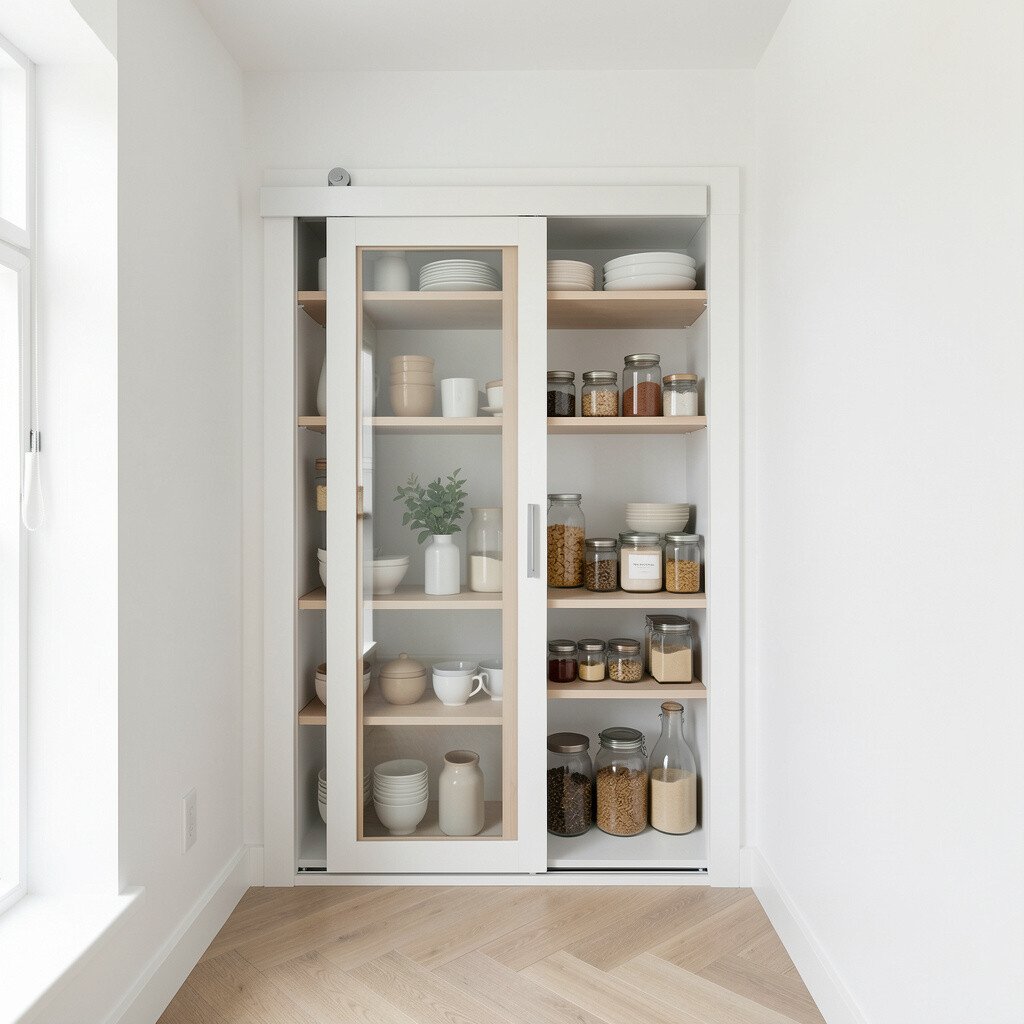
Imagine a narrow pantry space that slides open smoothly, revealing neatly arranged essentials. The door hides clutter, but you can still reach everything fast.
A sliding door or offset opening keeps the room feeling tidy without swinging doors taking up space. Clear front access helps you grab items without reorganizing every time you cook. If you already have a cabinet, add a shelf track kit or use a wall-mounted track system to create a similar effect.
For personalization, install a simple shelf liner and keep container heights consistent for a calm visual. Costs vary based on hardware, so consider using an existing shelf and focusing spending on good rails and smooth slides. This kind of concealed storage is a popular current approach for small kitchens that need both function and visual calm.
18. One Tray System for Each Category of Counter Items
One Tray System for Each Category of Counter Items
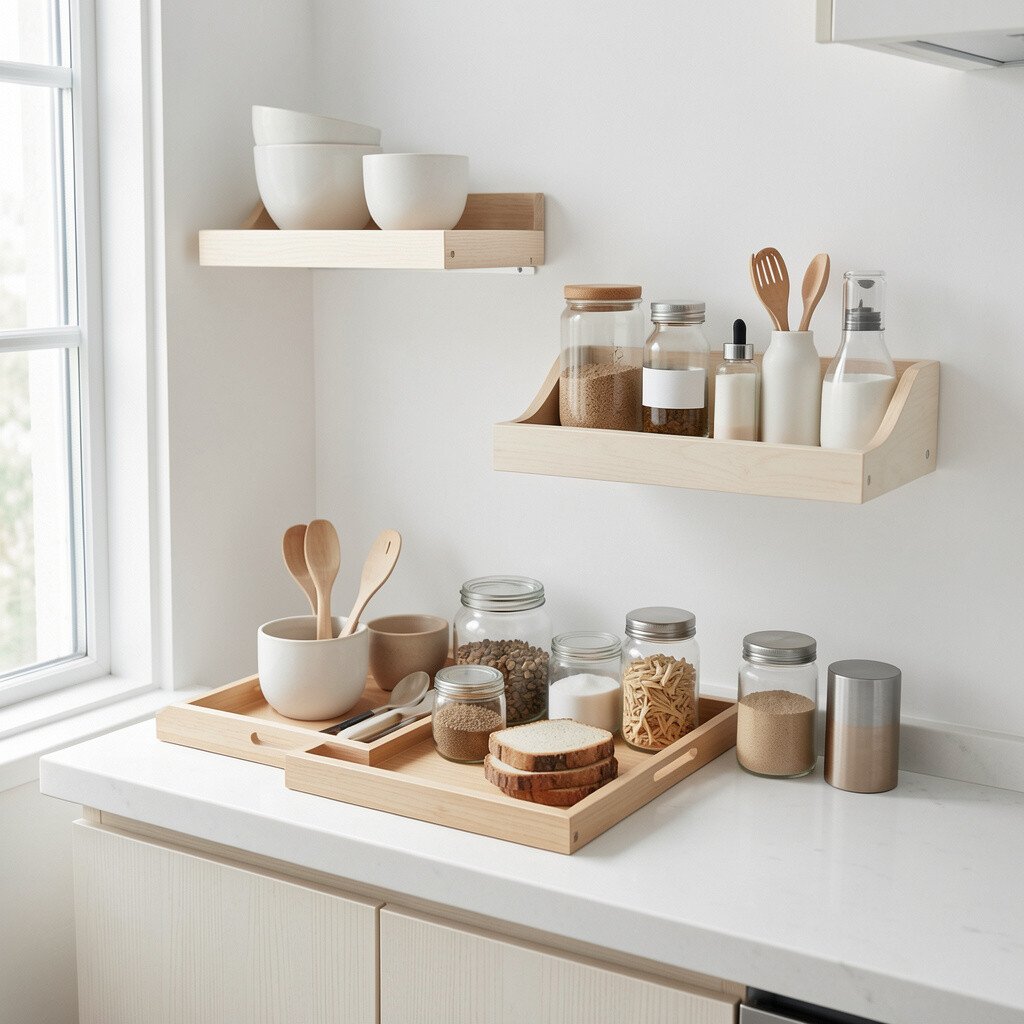
Picture your kitchen counters staying mostly clear because each category has a single tray. Oil, salt, napkins, or a small utensil set each live on their own tray instead of roaming around.
One tray system reduces daily clutter by giving items a consistent home that you can reset in seconds. It also makes your kitchen look styled without feeling staged. Choose tray sizes based on your counter width, and keep only items that earn their spot through frequent use.
For uniqueness, use different tray materials like wood, metal, or ceramic to match how each category feels in your routine. If cost is a concern, buy one good tray first and then repurpose shallow dishes you already own. The current minimalist trend of “contained zones” works especially well in tiny spaces because it turns scattered storage into a simple visual order.