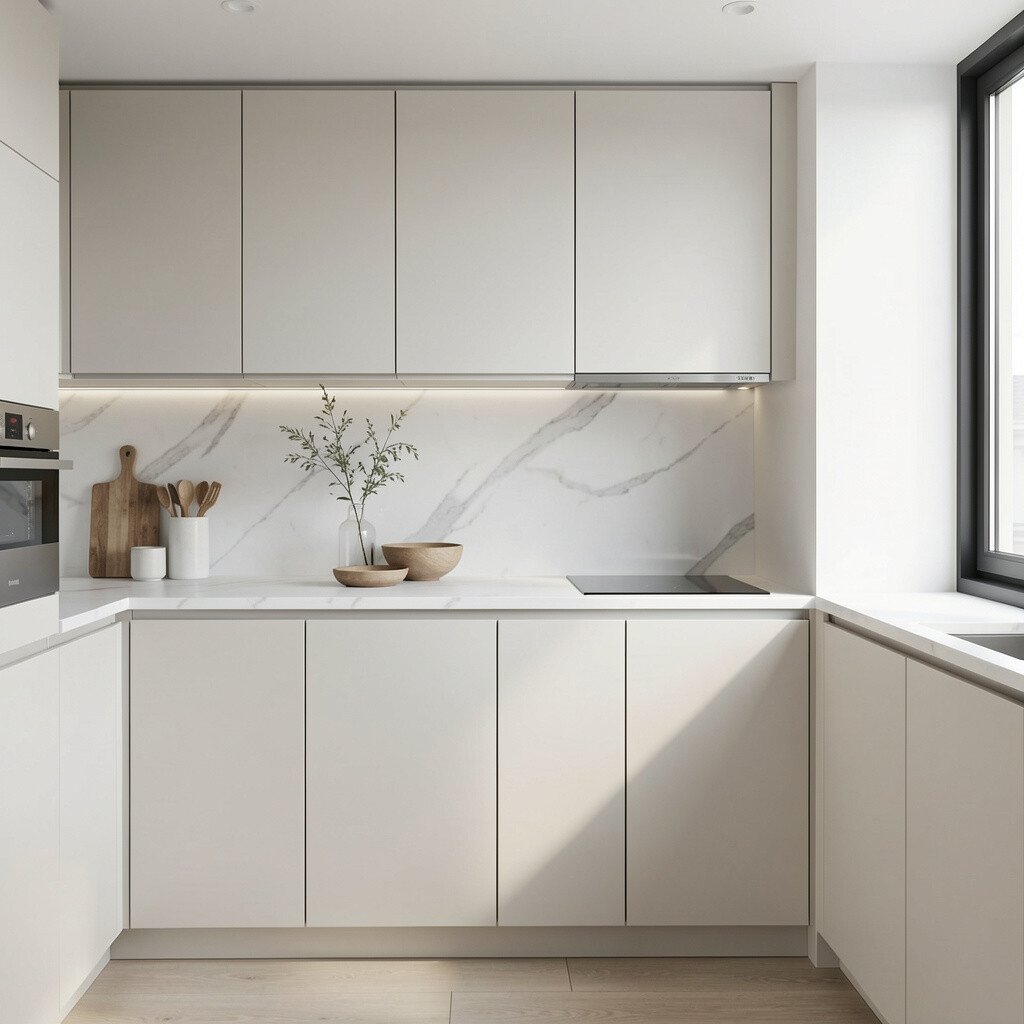
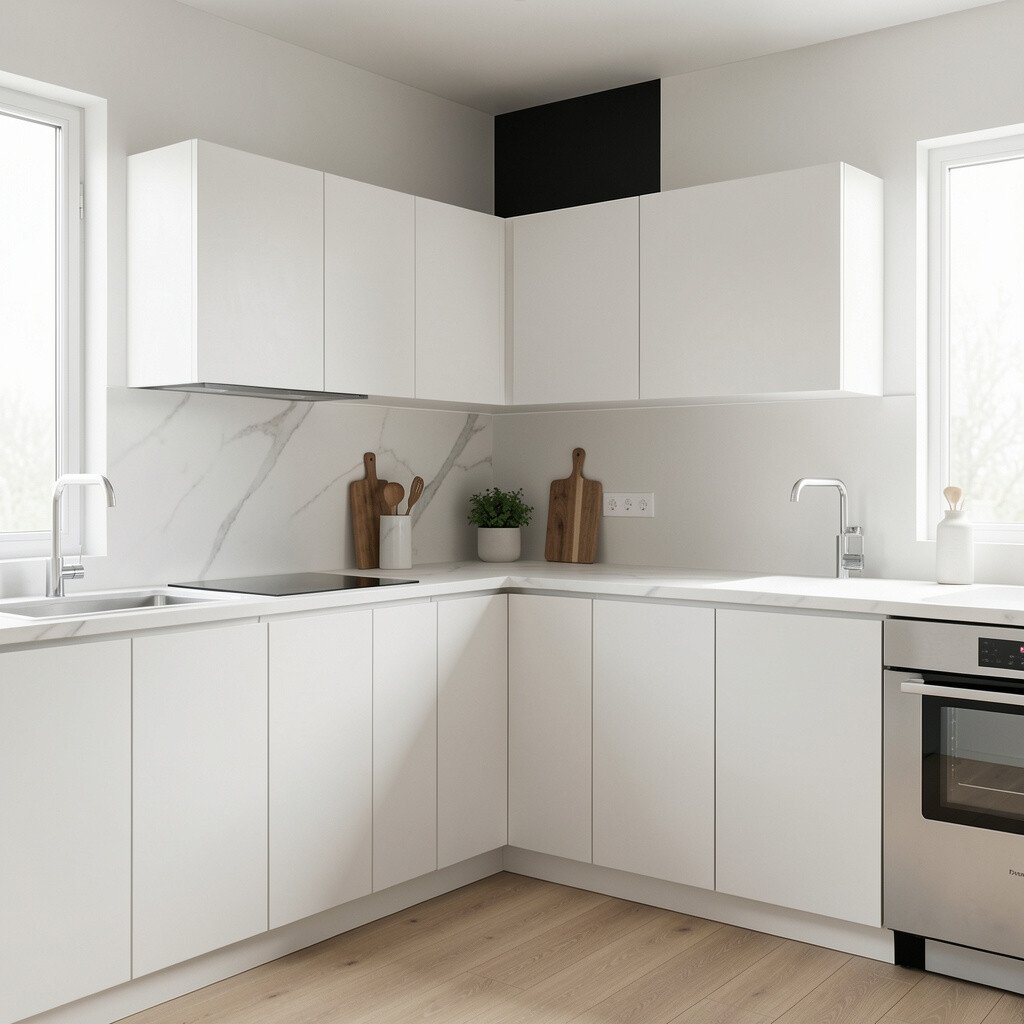
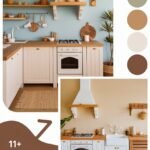
Picture a kitchen wrapped in soft white cabinetry, with clean lines and bright, even light. The space feels airy, so cooking and cleaning both seem less stressful.
Choose matte or satin doors to reduce glare and keep fingerprints easy to manage. For a practical touch, add slim metal pulls and keep the backsplash simple so your countertops stay the visual star.
2. Warm Wood Meets Quiet Surfaces
Warm Wood Meets Quiet Surfaces
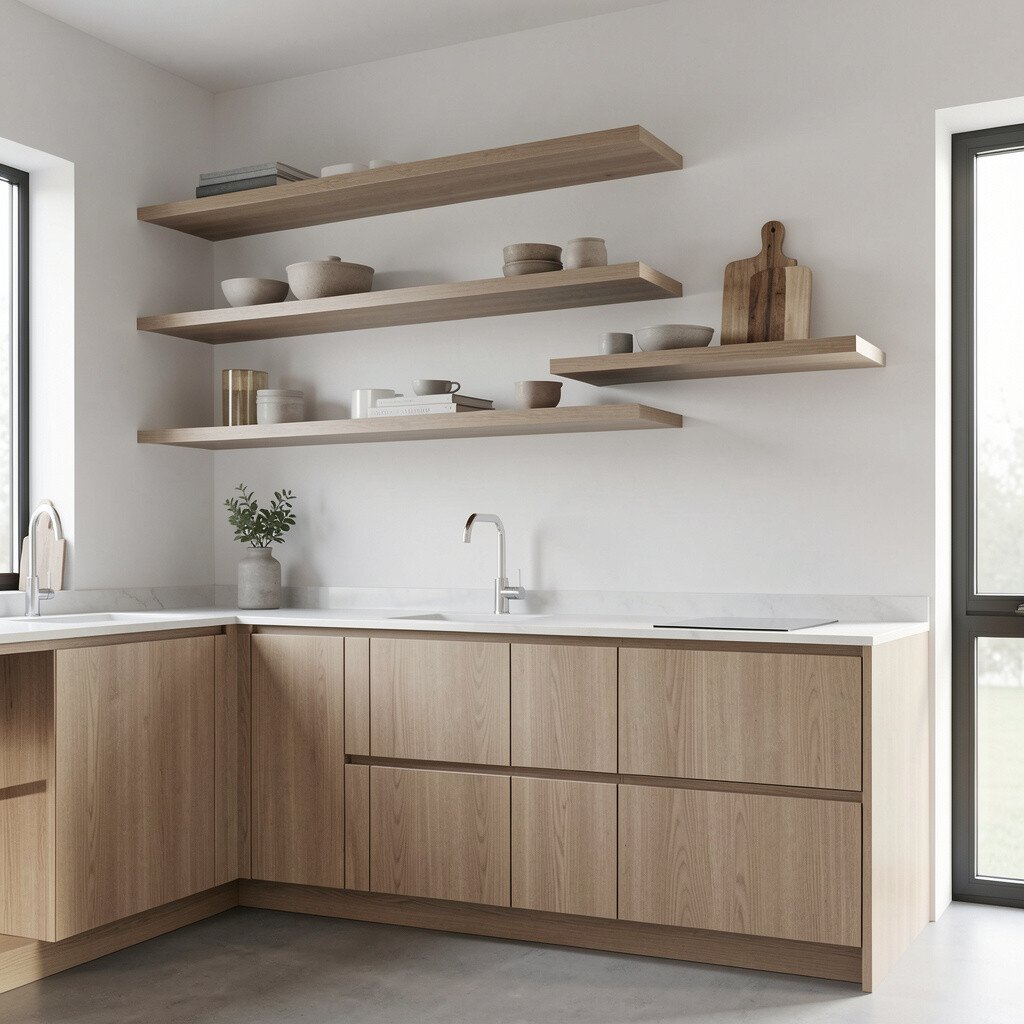
A minimalist kitchen can feel cozy when warm wood tones show up on purpose. Think light oak shelving or a walnut floating table that warms the whole room.
Pair wood with light stone or a smooth painted wall to keep the look balanced and not busy. Swap in a few natural textures like a linen runner or a simple bowl of fruit to make it feel lived in.
Consider wood finishes that are durable and wipe-clean, especially near the cooking area. If you want a budget-friendly version, paint existing cabinets and add wood contact panels on shelves instead of replacing everything.
3. Monochrome Black With Soft Lighting
Monochrome Black With Soft Lighting
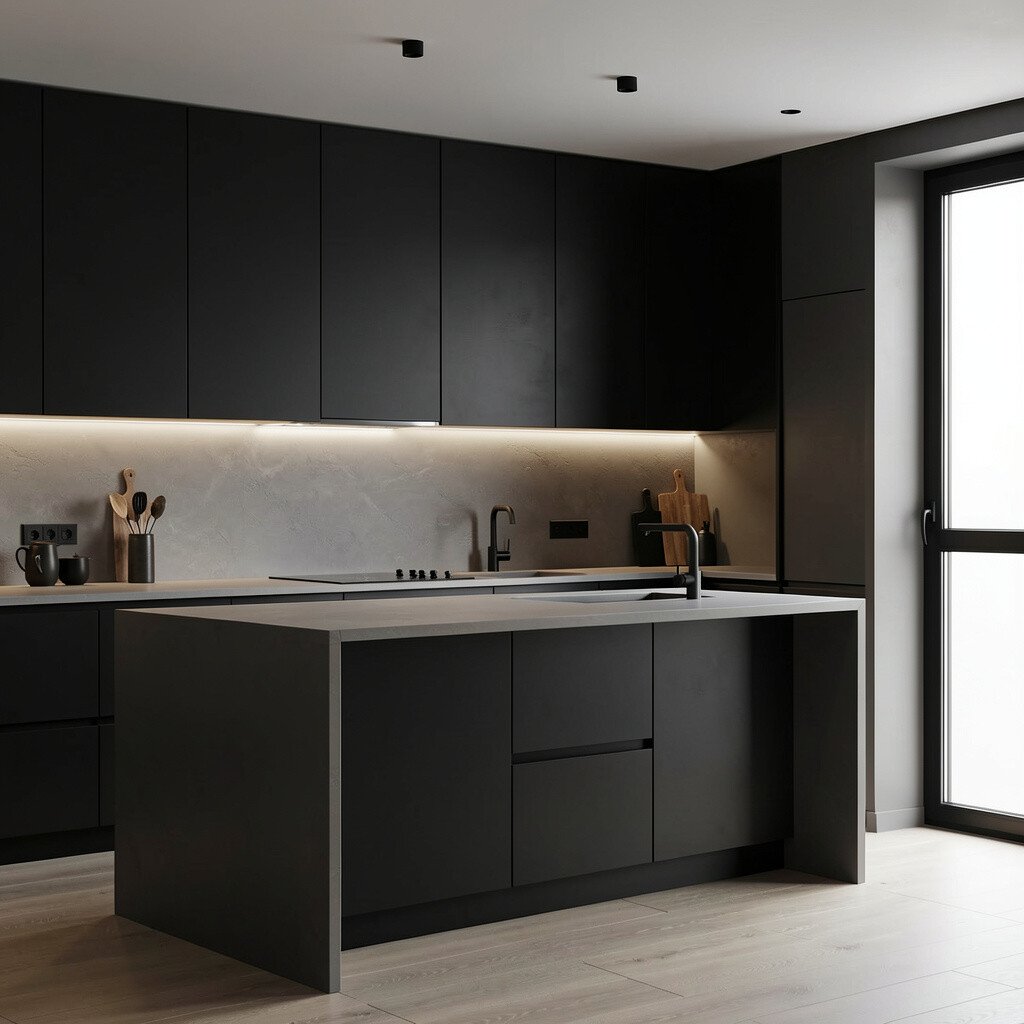
Imagine a kitchen where black cabinets and dark counters create a bold, calm backdrop. The key is using gentle lighting so the room never feels harsh.
Install under-cabinet lights and a warm ceiling fixture to add glow under shadows. Keep hardware minimal and choose a consistent finish so everything looks intentional.
Add contrast in small ways, like a light-toned backsplash or a clear glass jar set. This keeps the space unique while still staying minimalist, and it helps your everyday items look organized instead of scattered.
4. Floating Shelves Over Sleek Lines
Floating Shelves Over Sleek Lines
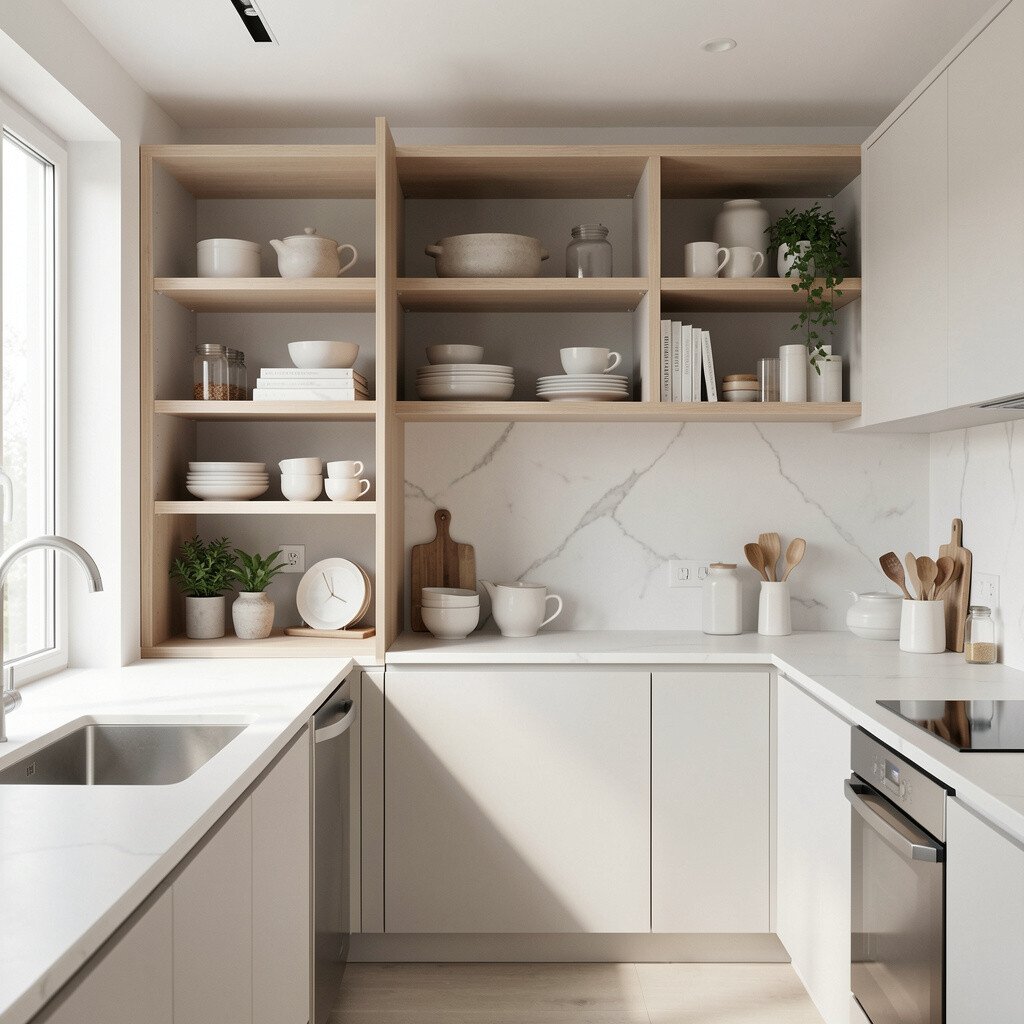
Floating shelves can make a minimalist kitchen feel open and modern. A few carefully chosen items on display look better than a wall full of storage.
Use closed storage for everyday clutter and keep shelves for decorative pieces that match your style. Try a matching set of cups, a single plant, and a tidy stack of plates to add personality without visual noise.
Handleless cabinets give a kitchen a smooth, uninterrupted look. Your eye moves across the room and nothing breaks the clean lines.
To make it practical, choose cabinets with quality push-to-open or touch latches. That small upgrade helps with daily use and keeps the minimalist look intact.
Pick a finish that hides wear well, especially if you have kids or do frequent cooking. Matte fronts look calm, while slightly textured surfaces can reduce the look of smudges.
6. Light Stone Backsplash Simplicity
Light Stone Backsplash Simplicity
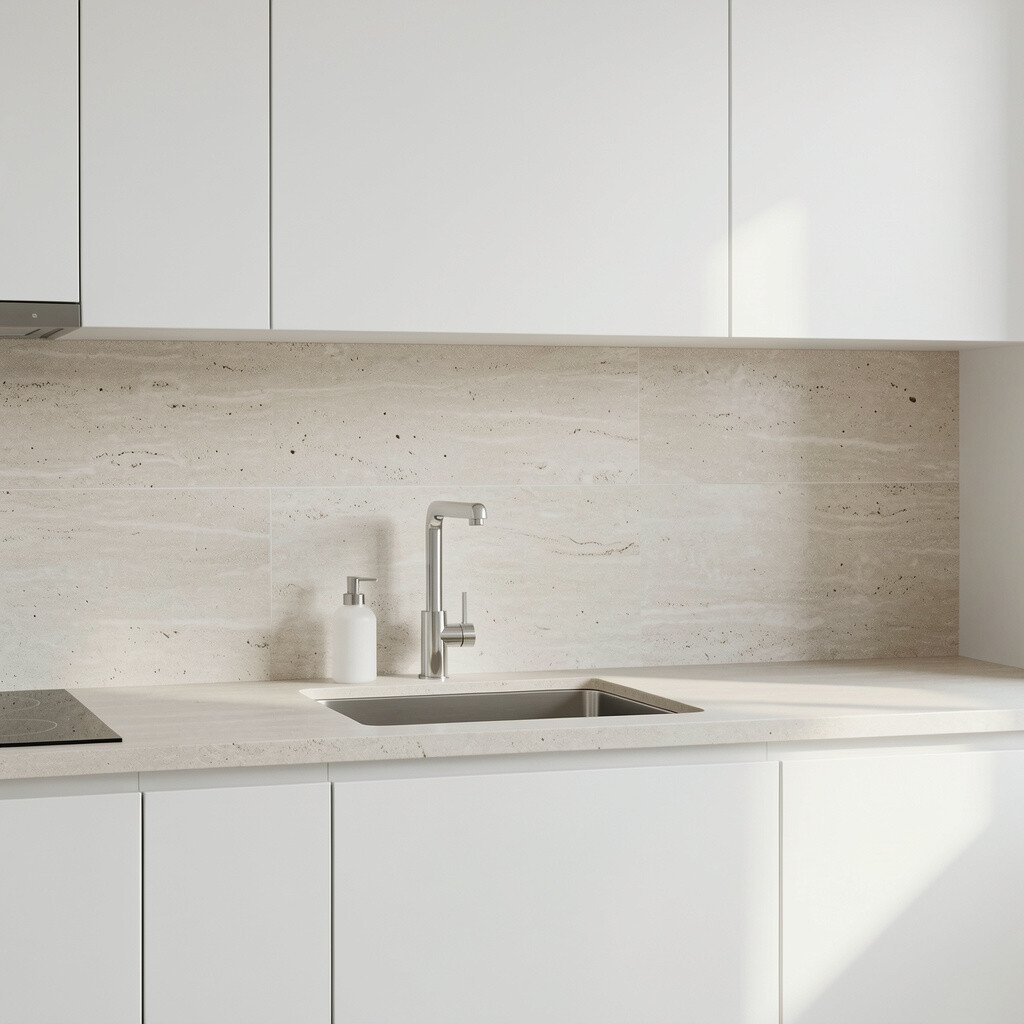
Think of a backsplash that looks like quiet stone, with subtle veining and a soft finish. It gives your kitchen depth without adding clutter.
Choose a large-format tile or a slab-style surface for fewer grout lines. Fewer lines mean easier cleaning and a more streamlined appearance.
Match the tones to your counters and flooring so everything blends naturally. If you want personalization, add a single contrasting strip of color along the edge of the backsplash niche.
7. Single Bold Accent in One Corner
Single Bold Accent in One Corner
A minimalist kitchen can still have a standout moment. One bold accent, like a patterned panel or colorful cabinet, makes the whole room feel more expressive.
Pick a spot like a pantry wall or the corner near the sink so the accent feels intentional. Keep the rest of the kitchen in calm neutrals to keep the overall design clean.
Use the accent to support your routine, such as placing a coffee station or spice wall there. This adds uniqueness without turning your kitchen into a busy showpiece.
8. Deep Drawers for Real-Life Organization
Deep Drawers for Real-Life Organization
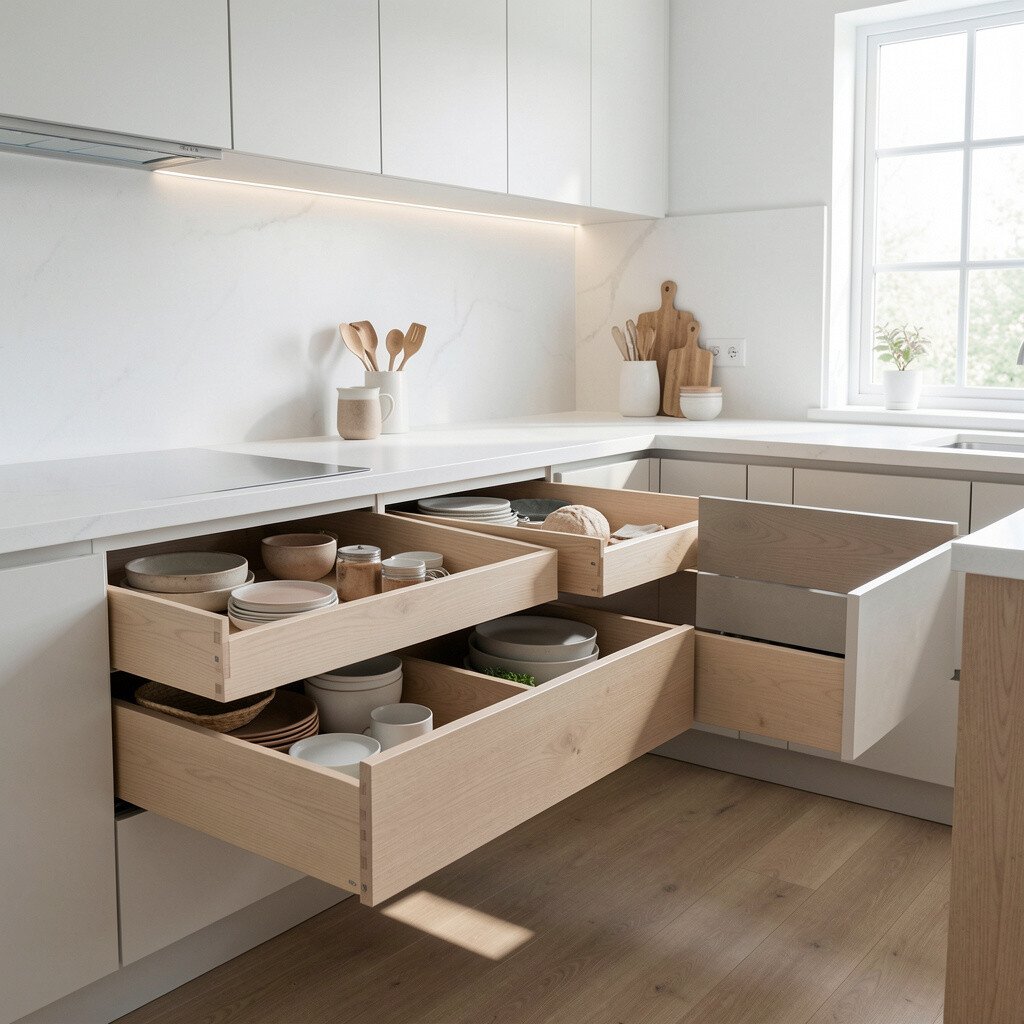
Minimalism is easier when your storage works hard. Deep drawers under the counter help you hide bulky items and keep the counters clear.
Plan the drawer layout around how you cook, not just what looks good. Keep everyday tools in the most reachable drawer and use dividers to stop everything from mixing.
9. Soft Beige With Curved Details
Soft Beige With Curved Details
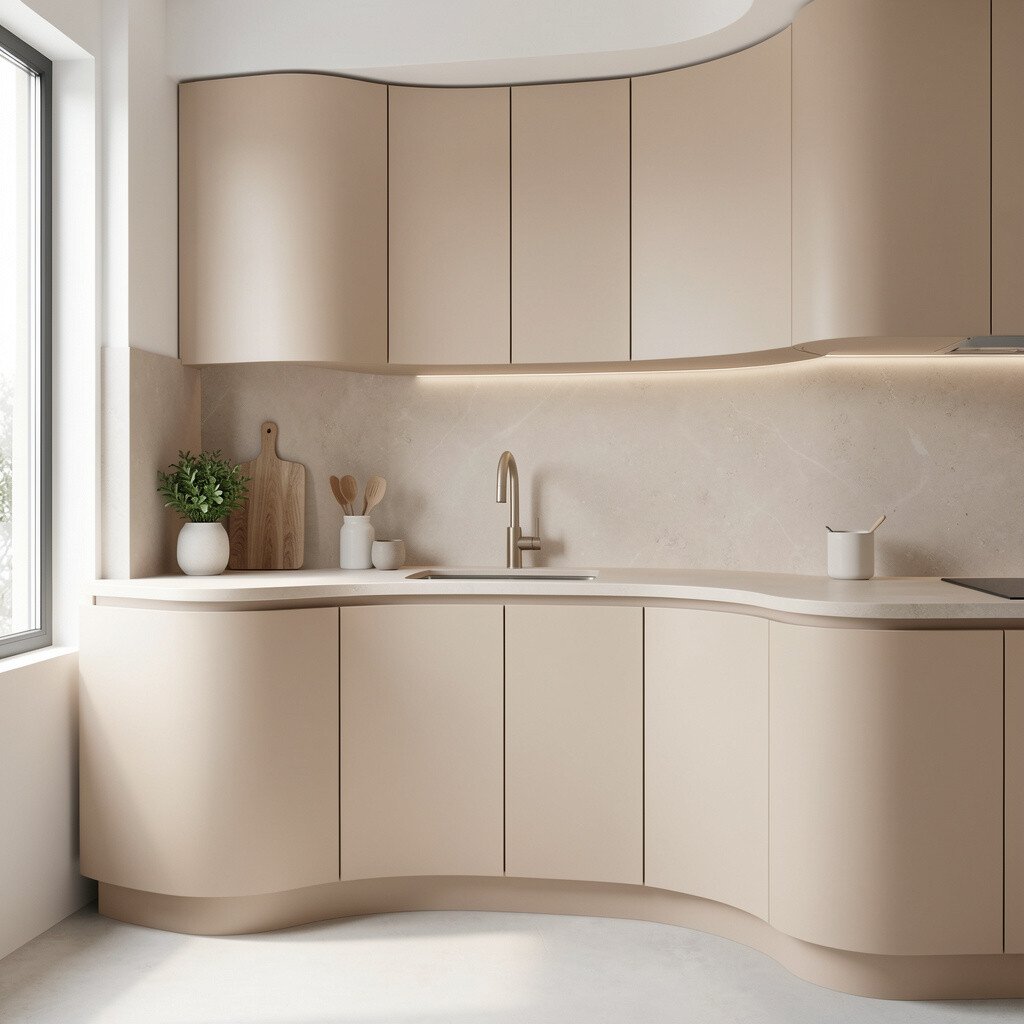
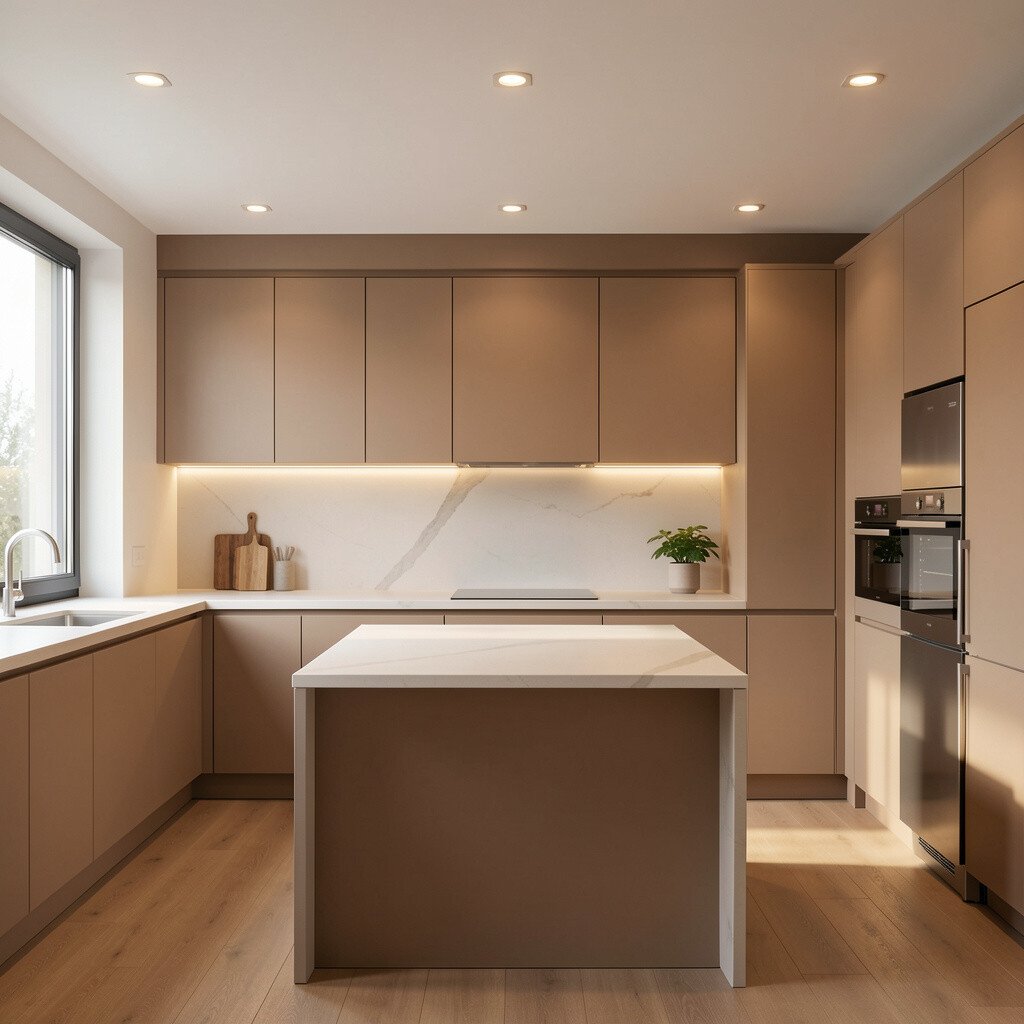
Soft beige cabinets can feel gentle and inviting while still staying minimalist. Curved details add a subtle modern touch without making the room look loud.
Look for rounded corners on islands or cabinets with minimal curves in the design. Pair them with warm lighting and simple bar stools for a relaxed look.
If you want personalization, choose a slightly different shade of beige for the island to create a quiet contrast. This keeps the design unique while still feeling cohesive.
10. Glass-Front Upper Cabinets With Limits
Glass-Front Upper Cabinets With Limits
Glass-front cabinets can show a neat kitchen without breaking the minimalist mood. The trick is to limit what you display and keep everything uniform.
Use clear glass or frosted panels so the inside feels calm rather than chaotic. Organize with matching containers so your shelves look curated every day.
Keep open shelving to a minimum if you tend to cook often, because steam and mess can show quickly. For a budget-friendly approach, refit existing cabinets with new glass panels rather than replacing the whole unit.
11. Matte Countertops That Hide Daily Life
Matte Countertops That Hide Daily Life
Matte countertops look calm, and they hide tiny marks better than high-gloss surfaces. They also make the kitchen feel less reflective and more relaxed.
Consider durable materials like matte quartz or a well-sealed solid surface. Choose a color that matches your cabinets and flooring so the room feels like one clean composition.
12. Slim Island With Clear Seating Space
Slim Island With Clear Seating Space
A slim island keeps the kitchen minimalist and still gives you a gathering place. By keeping it narrow, you preserve walking space and make the layout feel breathable.
Leave space under the island for seating so the design stays open. A simple pendant light above the island can add style while keeping the rest of the lighting straightforward.
Personalize with a tray that holds daily essentials like oils, salt, and a cutting board. It looks tidy and it keeps tools where you want them, right when you need them.
13. Monotone Flooring for a Continuous Flow
Monotone Flooring for a Continuous Flow
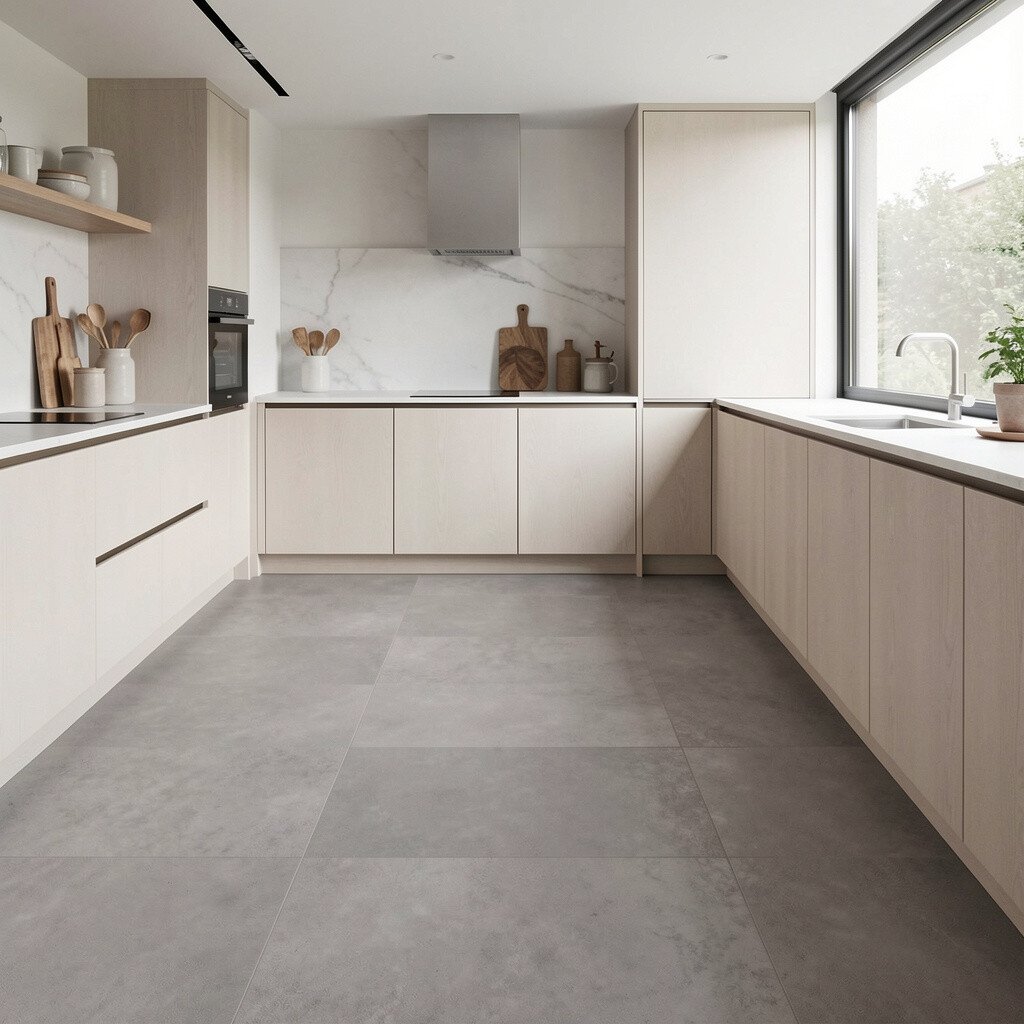
When flooring is monotone, your kitchen looks bigger and calmer. Even a simple wood tone or smooth stone pattern can do a lot for a minimalist feel.
Choose planks or tiles with consistent color and minimal variation if you want a very clean look. Keep transitions smooth from kitchen to dining so the visual flow stays uninterrupted.
If you want a practical upgrade, use slip-resistant finishes for safer steps during cooking. For cost considerations, refinishing existing floors can be cheaper than full replacement and still feel new.
14. Built-In Pantry Wall for Hidden Storage
Built-In Pantry Wall for Hidden Storage
A built-in pantry wall hides the things that make kitchens look messy. It creates a clean, uninterrupted plane that feels calm every time you walk in.
Use shelves and drawers for categories like baking items, snacks, and canned goods. Add pull-out racks so you can reach items easily without turning your pantry into a jumble.
To keep it unique, paint the pantry interior a slightly different neutral than the main cabinets. That tiny change makes the pantry feel special while still blending into the minimalist design.
15. Minimal Hardware, Maximum Function
Minimal Hardware, Maximum Function
Small hardware choices can make the whole kitchen feel more refined. When handles and knobs match, the room looks designed instead of assembled.
Pick finishes like brushed nickel, matte black, or warm bronze and stay consistent. Keep the same hardware on cabinets, drawers, and even the fridge handle area if possible.
Use hooks inside cabinet doors for measuring cups and spatulas so tools stay where they belong. That practical move reduces counter clutter and makes your kitchen feel instantly more organized.
Recessed lighting keeps your ceiling visually quiet and makes the space feel modern. When paired with warm color temperatures, it also keeps the kitchen inviting.
Use dimmers so you can shift from bright task light to softer evening glow. This is especially helpful if you like to cook at night or entertain with a relaxed mood.
If you want personalization, add one statement pendant over the dining corner while keeping the rest of the lighting minimal. The contrast gives your kitchen character without adding visual clutter.
17. Simple Color-Blocked Backsplash Niche
Simple Color-Blocked Backsplash Niche
A color-blocked niche can add a subtle burst of personality in a minimalist kitchen. Even a small recessed area can look stylish when the color choices feel intentional.
Pick one accent color that connects to your accessories, like a muted green or a soft terracotta. Keep the niche surfaces easy to wipe so it stays neat even with daily cooking.
Use the niche for a few items like a vase, a utensil crock, or a set of matching bottles. That keeps the look unique while still being practical and not overly decorative.
18. Kitchen Sink Wall With Clean Details
Kitchen Sink Wall With Clean Details
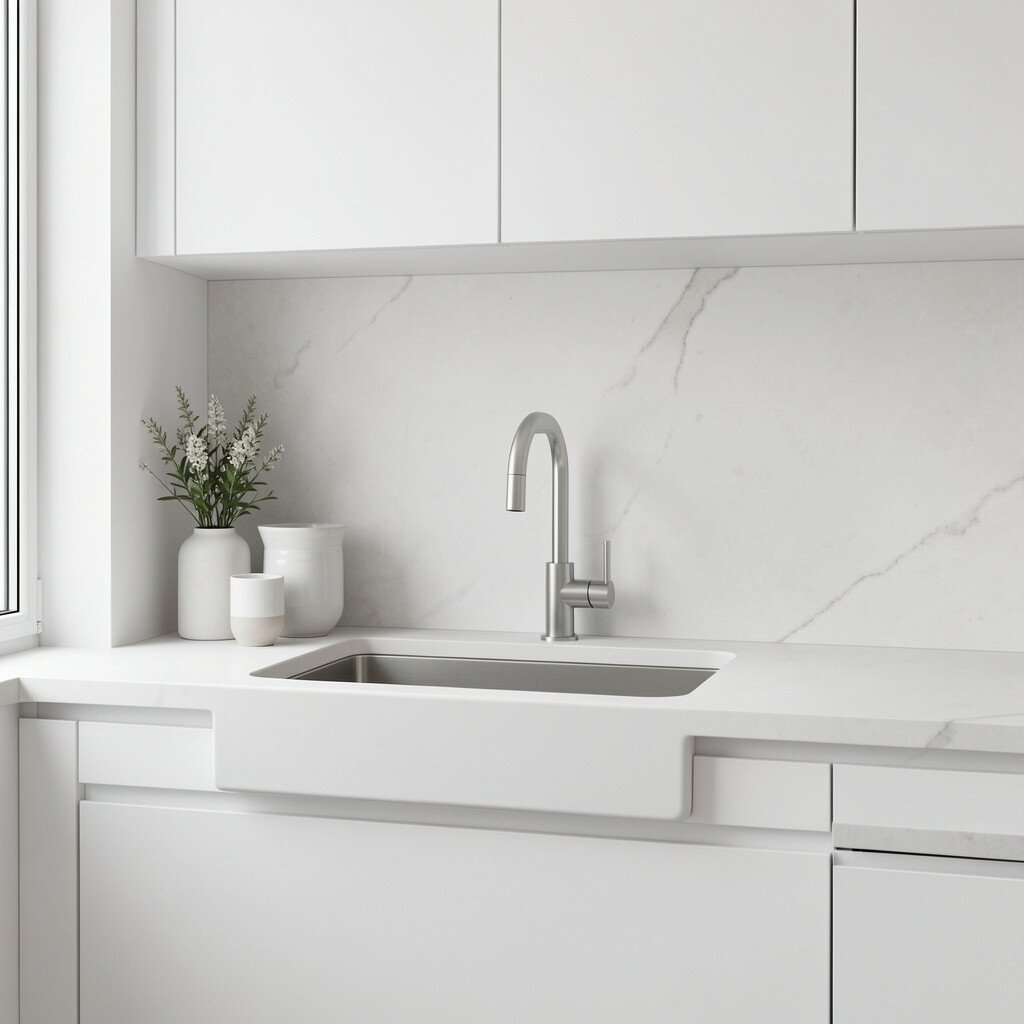
The sink wall is where daily life shows up first, so it needs to look organized. Minimalist sink designs keep everything streamlined and easy to maintain.
Choose a simple undermount sink and a slim faucet with a smooth finish. Add a solid backsplash that runs cleanly to the counter edge so splashes don’t turn into visual mess.
Keep a drying rack that matches your style and use a small caddy for soap and sponges. When everything belongs in one spot, the kitchen stays calm even on busy days.
19. Texture-Forward Minimalism With One Material
Texture-Forward Minimalism With One Material
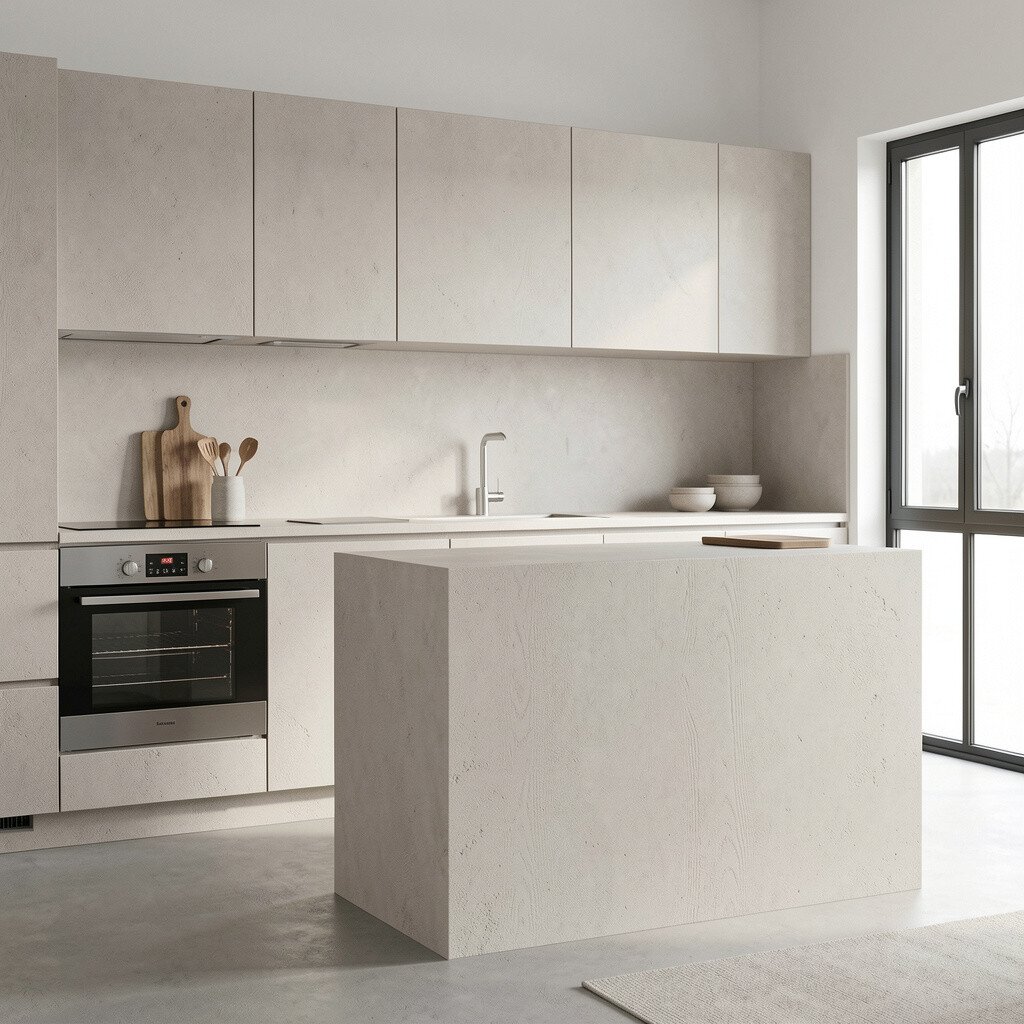
Texture can be the secret ingredient in minimalist kitchens. When you use one main material in a few finishes, the room looks layered without looking crowded.
Try textured plaster walls, a smooth stone counter, and slightly matte cabinet fronts. The mix of textures gives depth, while the consistent color palette keeps the design quiet.
Personalize with a single statement object like a textured ceramic bowl or a patterned dish towel. This adds your voice to the room without breaking the minimalist rhythm.
20. Low-Profile Storage With Tidy Countertop Rules
Low-Profile Storage With Tidy Countertop Rules
Low-profile storage helps your kitchen stay minimalist because nothing feels bulky. Think slim cabinets, narrow pantry units, and drawers that keep everything tucked away.
Create a simple countertop rule for yourself so it never looks chaotic. Keep only daily tools out, store appliances in cabinets, and use containers that match so items look consistent.
To manage cost, focus upgrades on what you touch most, like drawers, organizers, and lighting. You can often get a big visual change with smart storage layout choices rather than expensive full renovations.