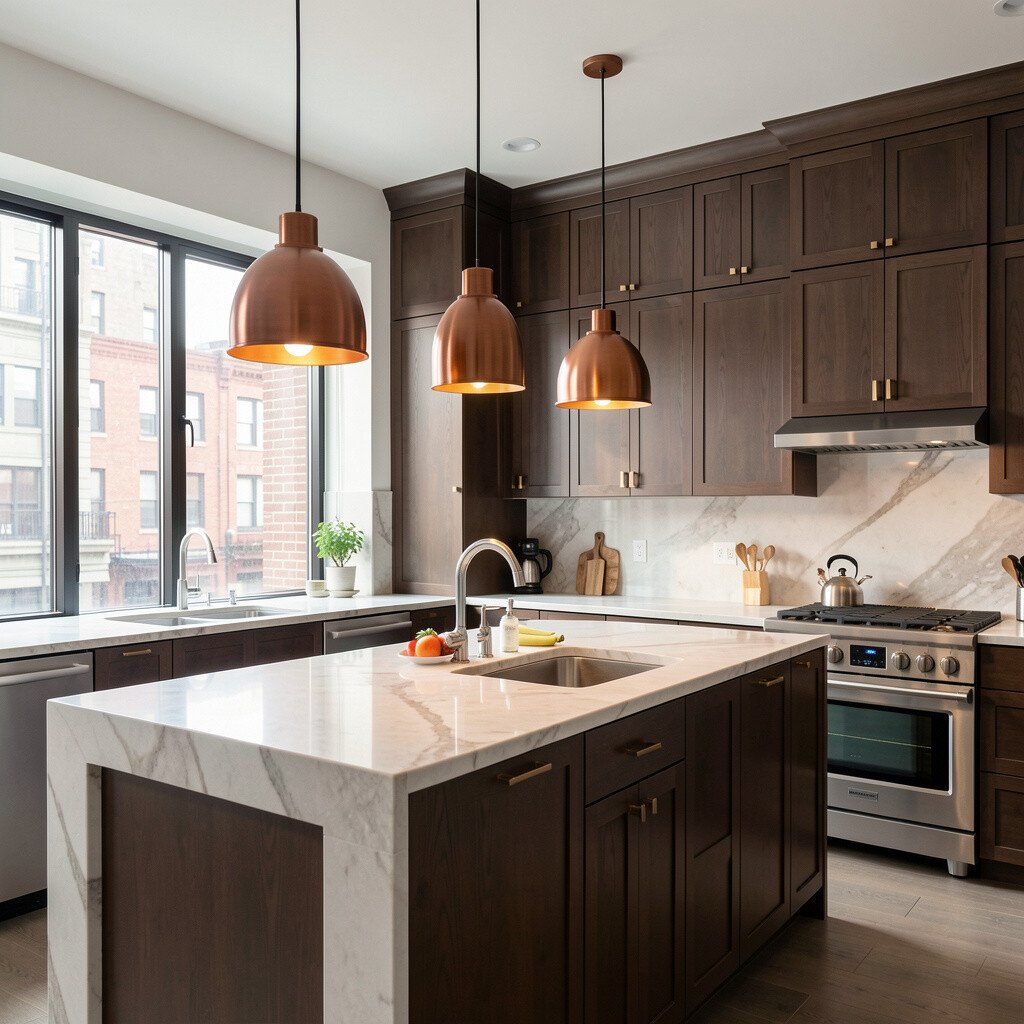
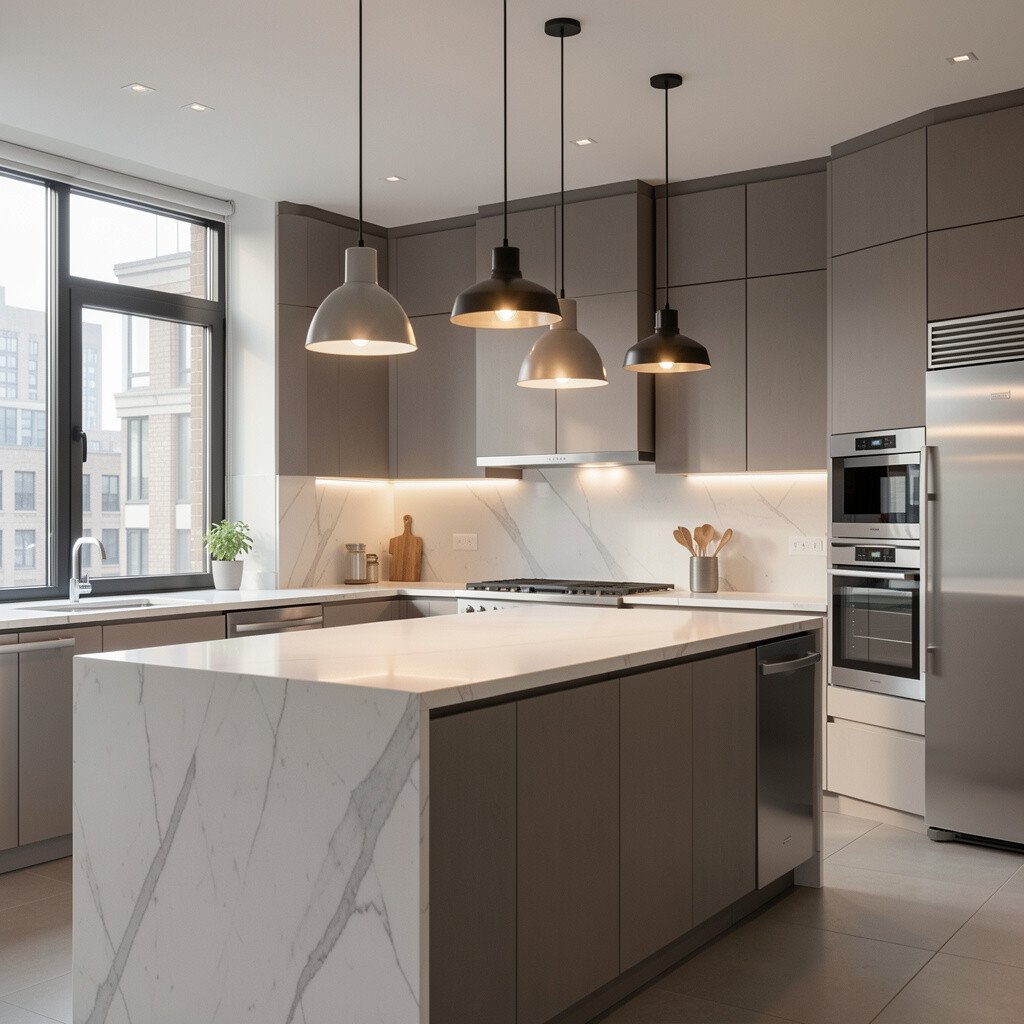
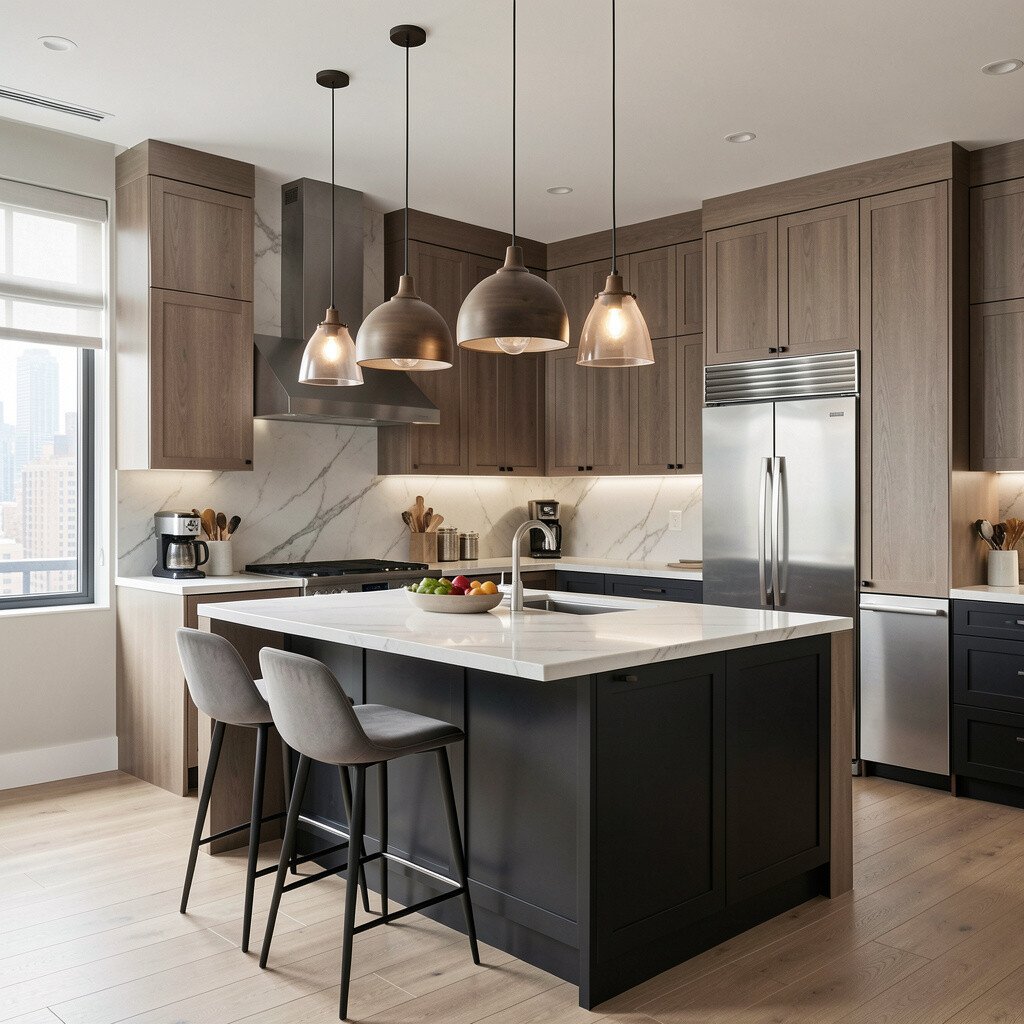
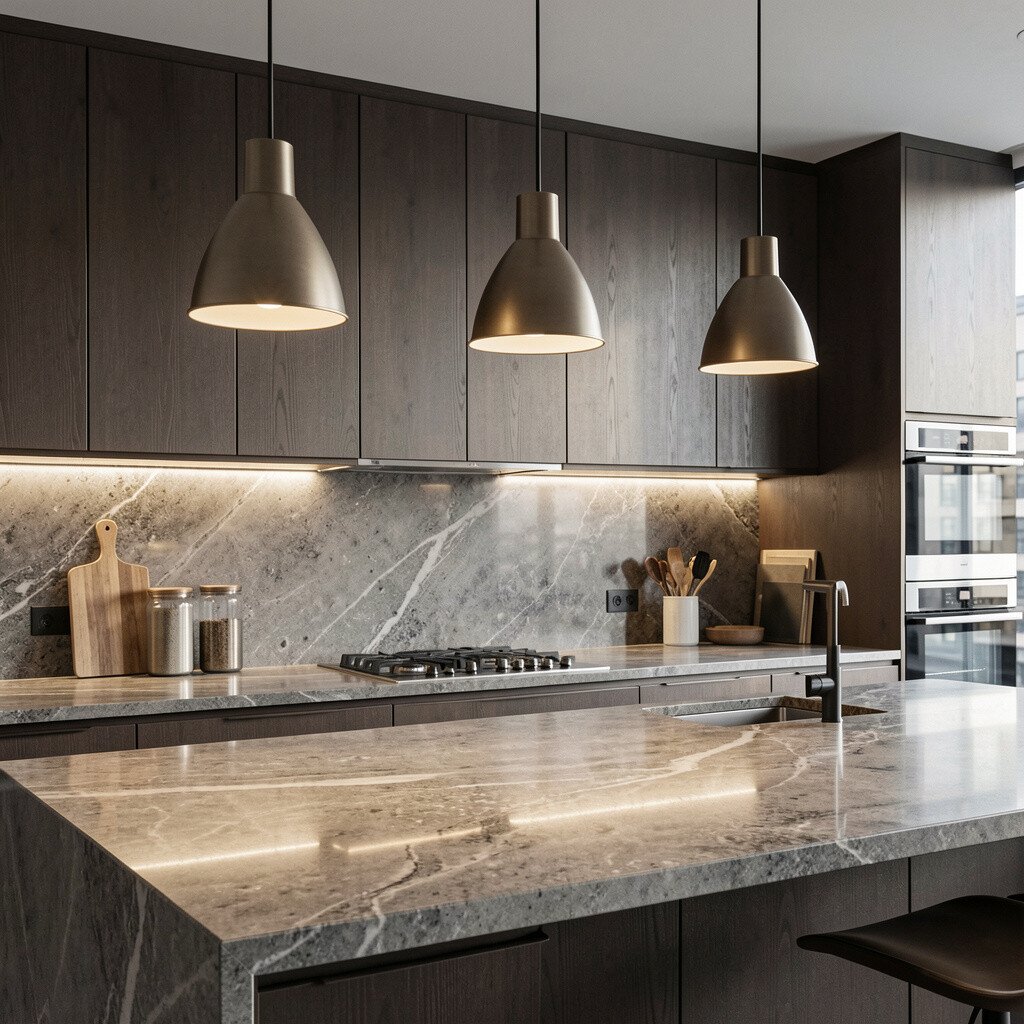
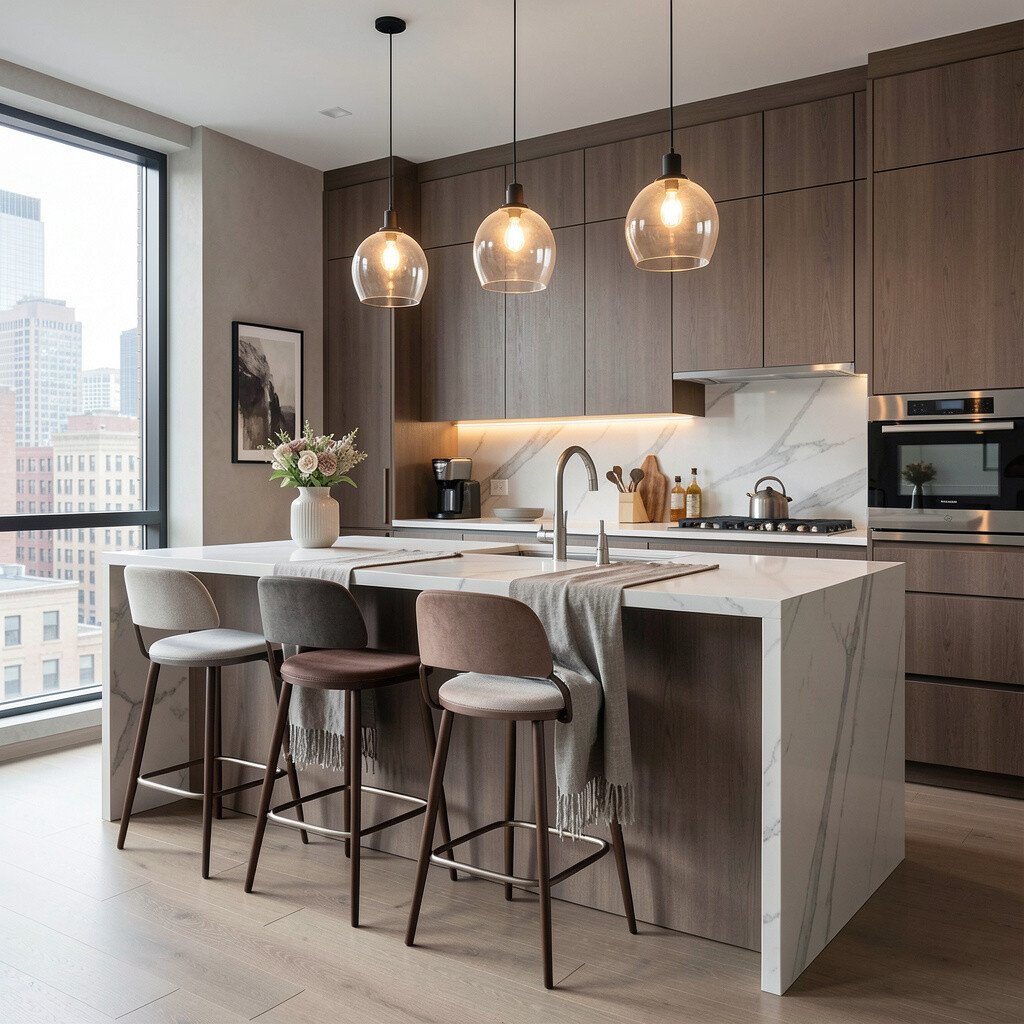
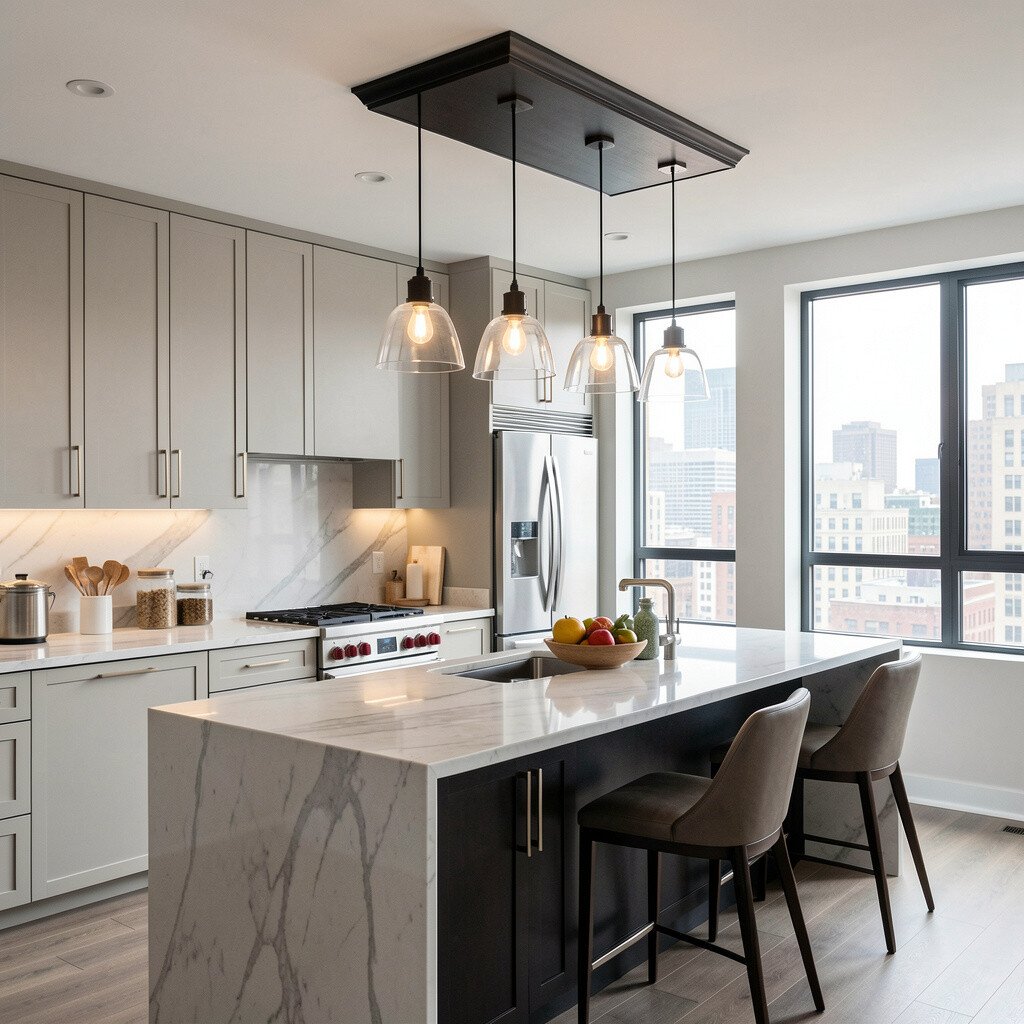
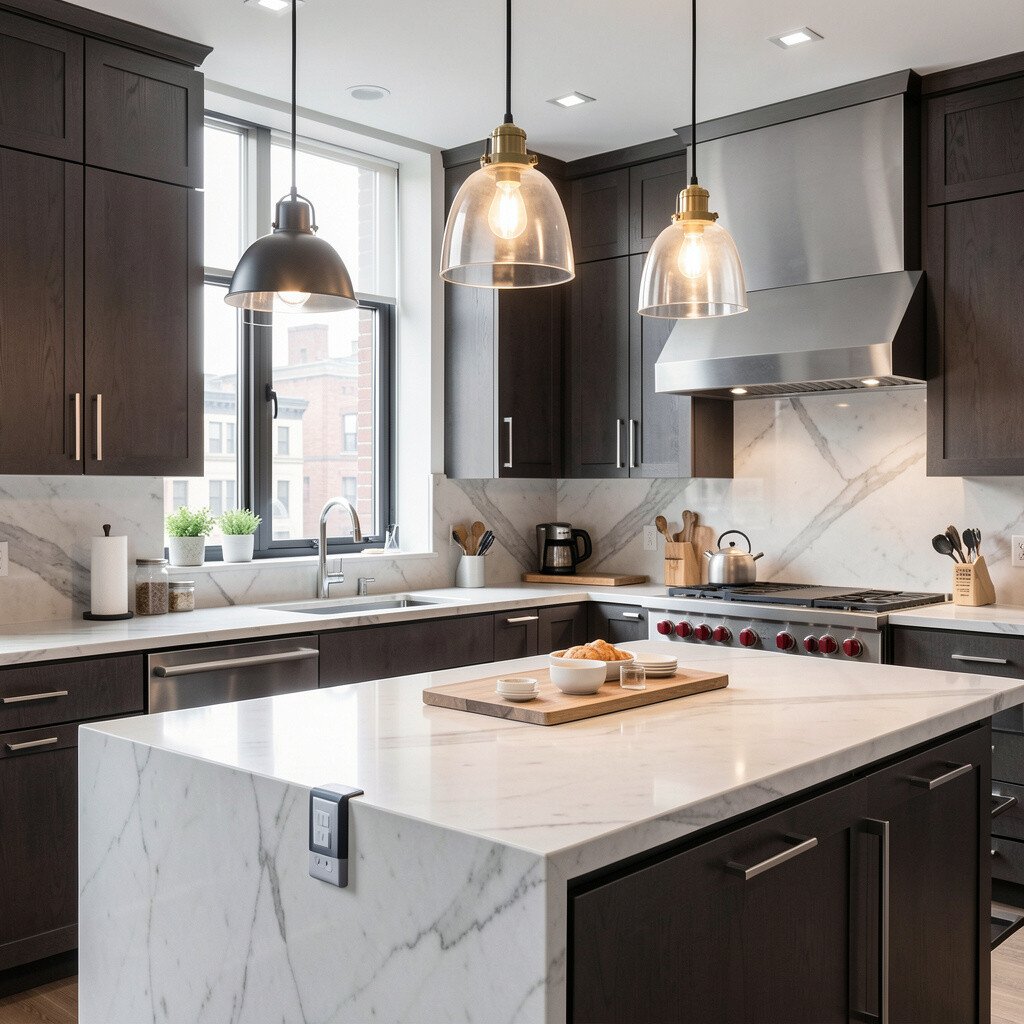
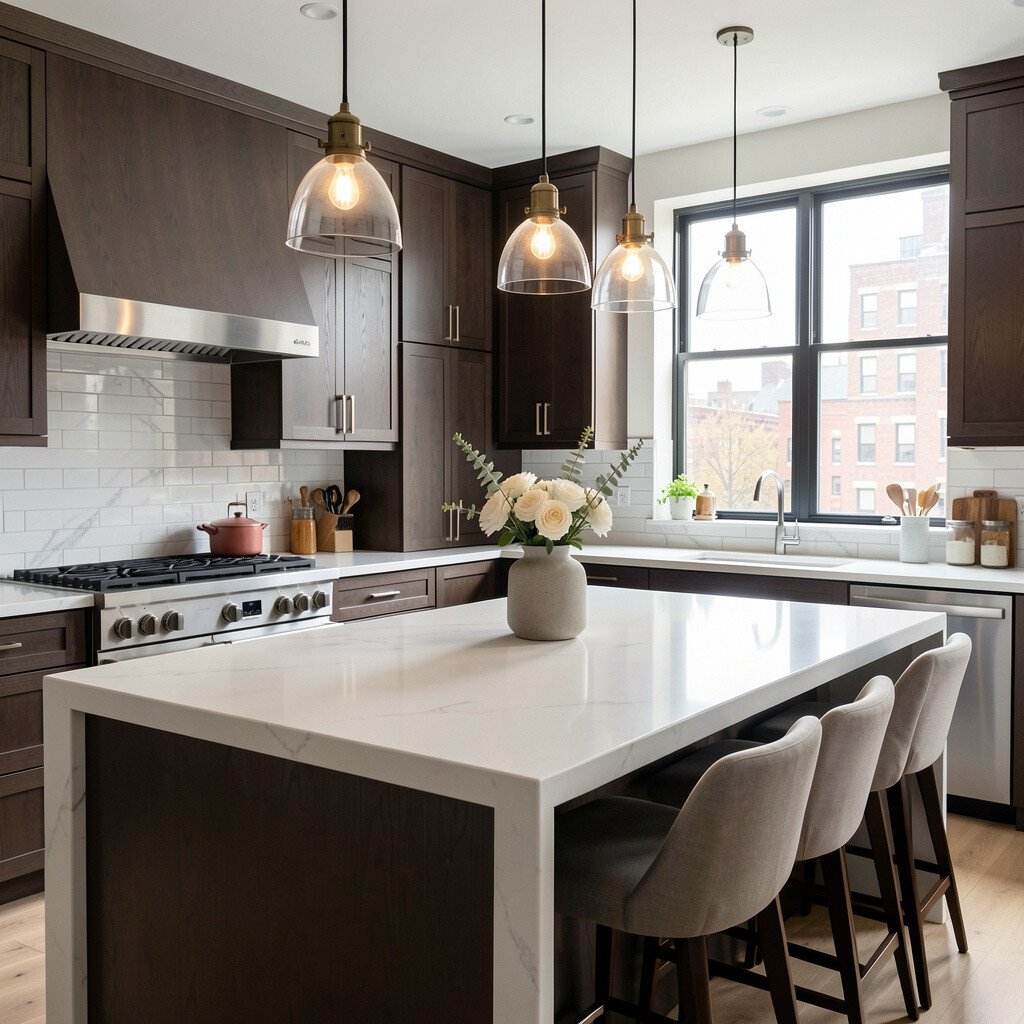
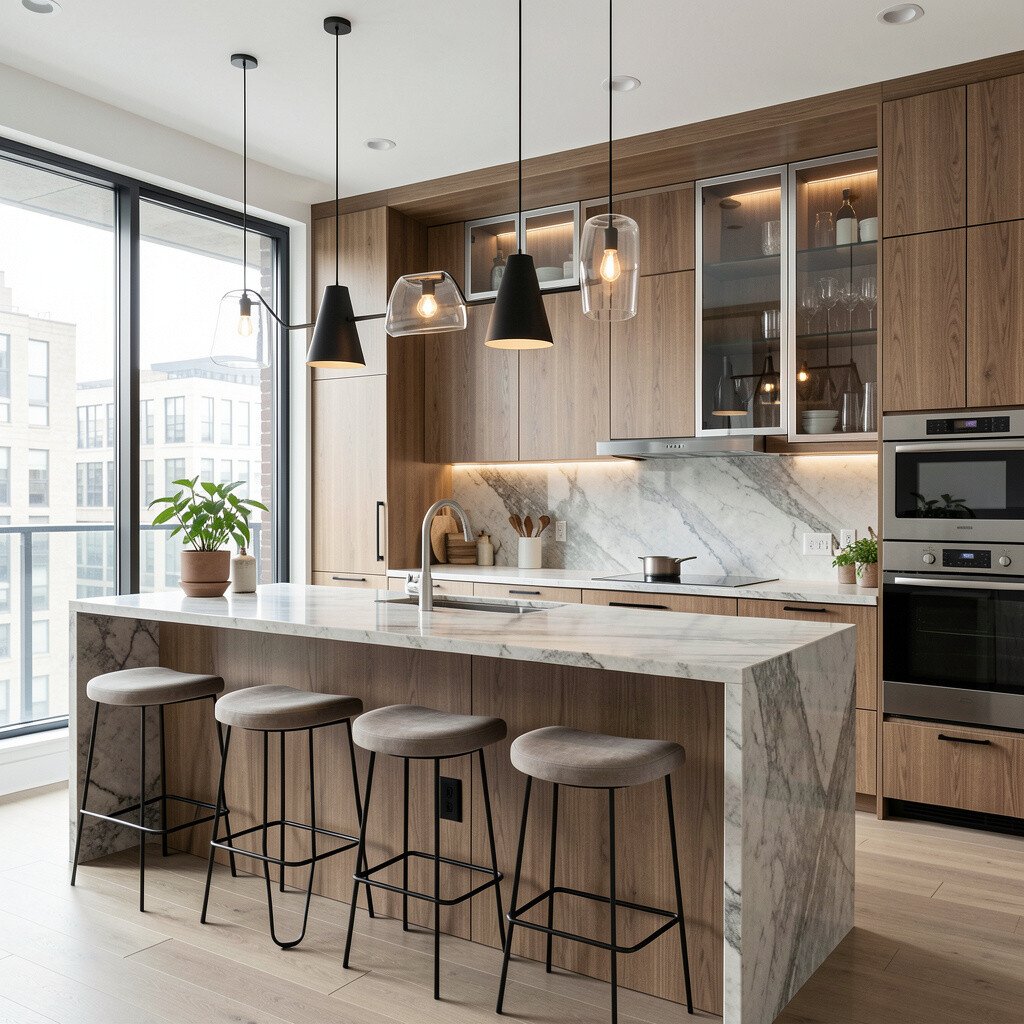
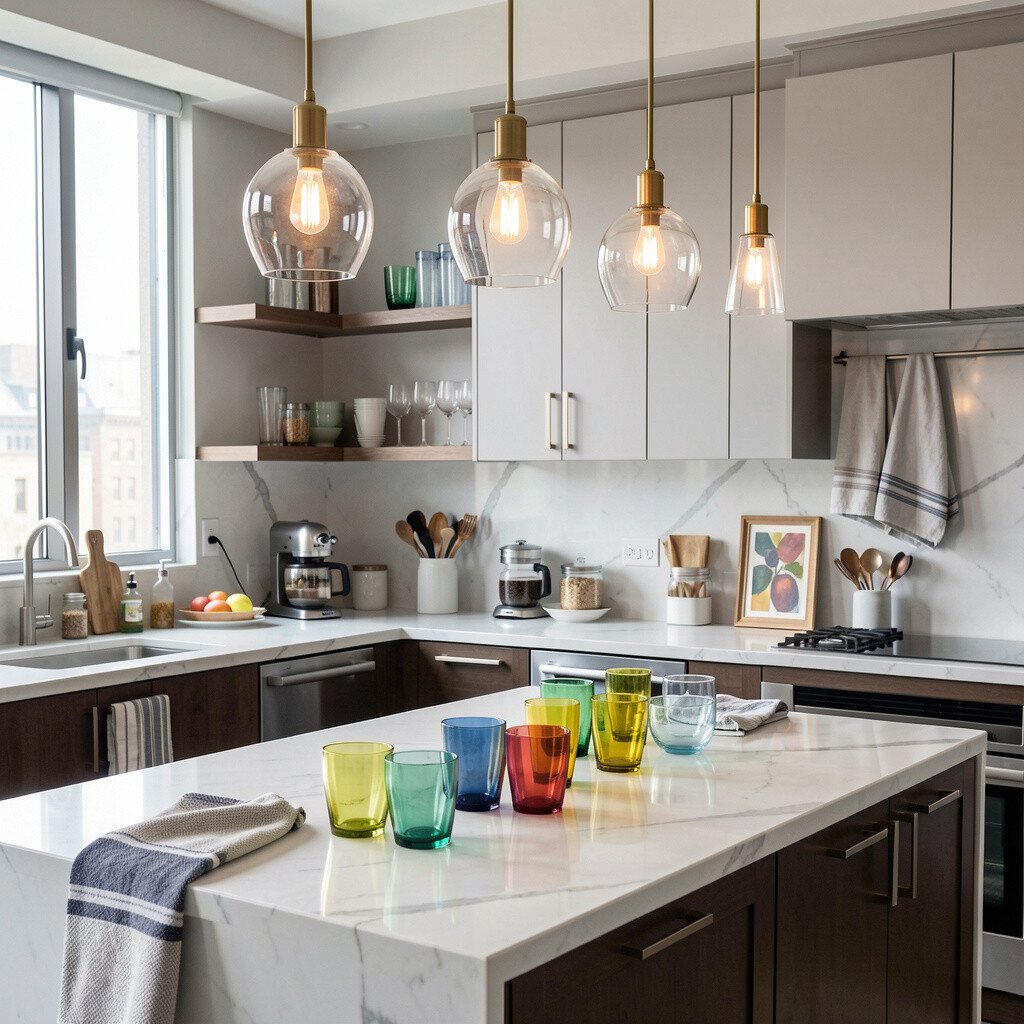
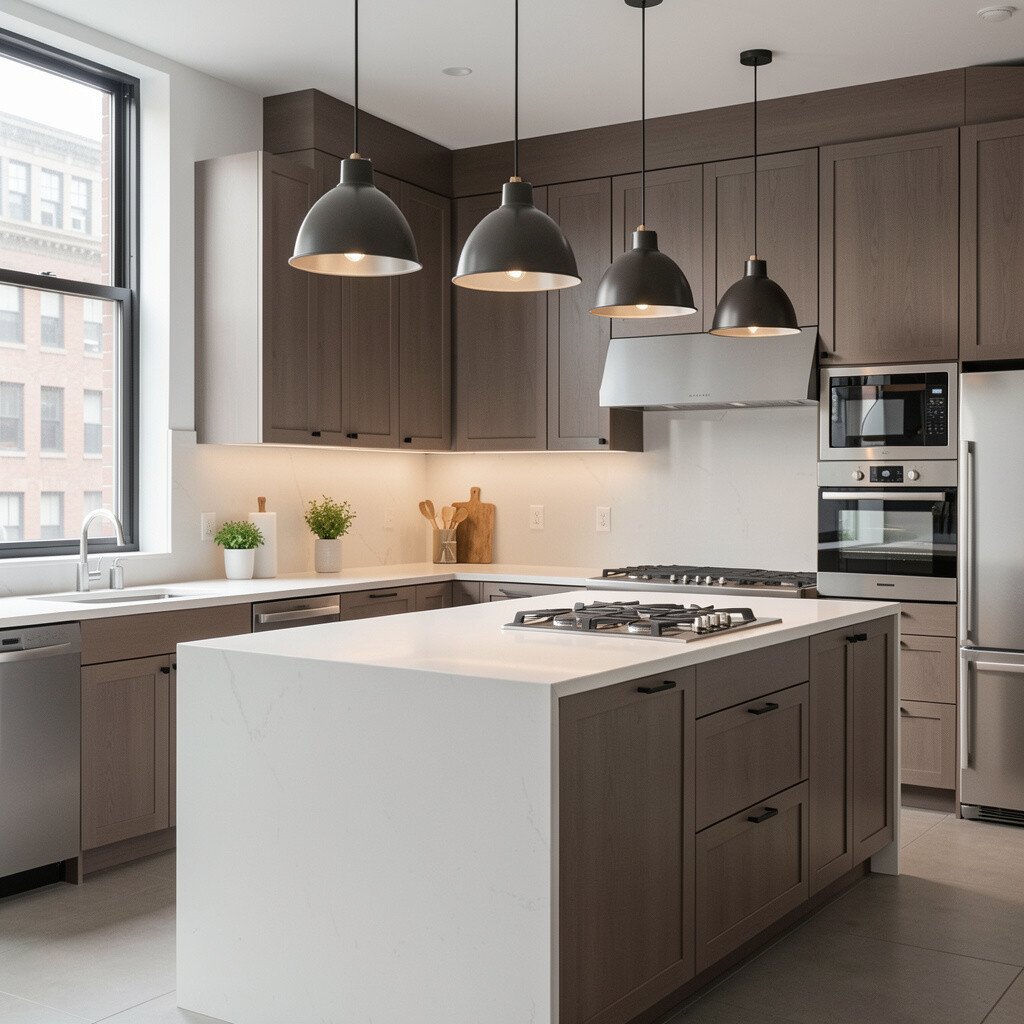
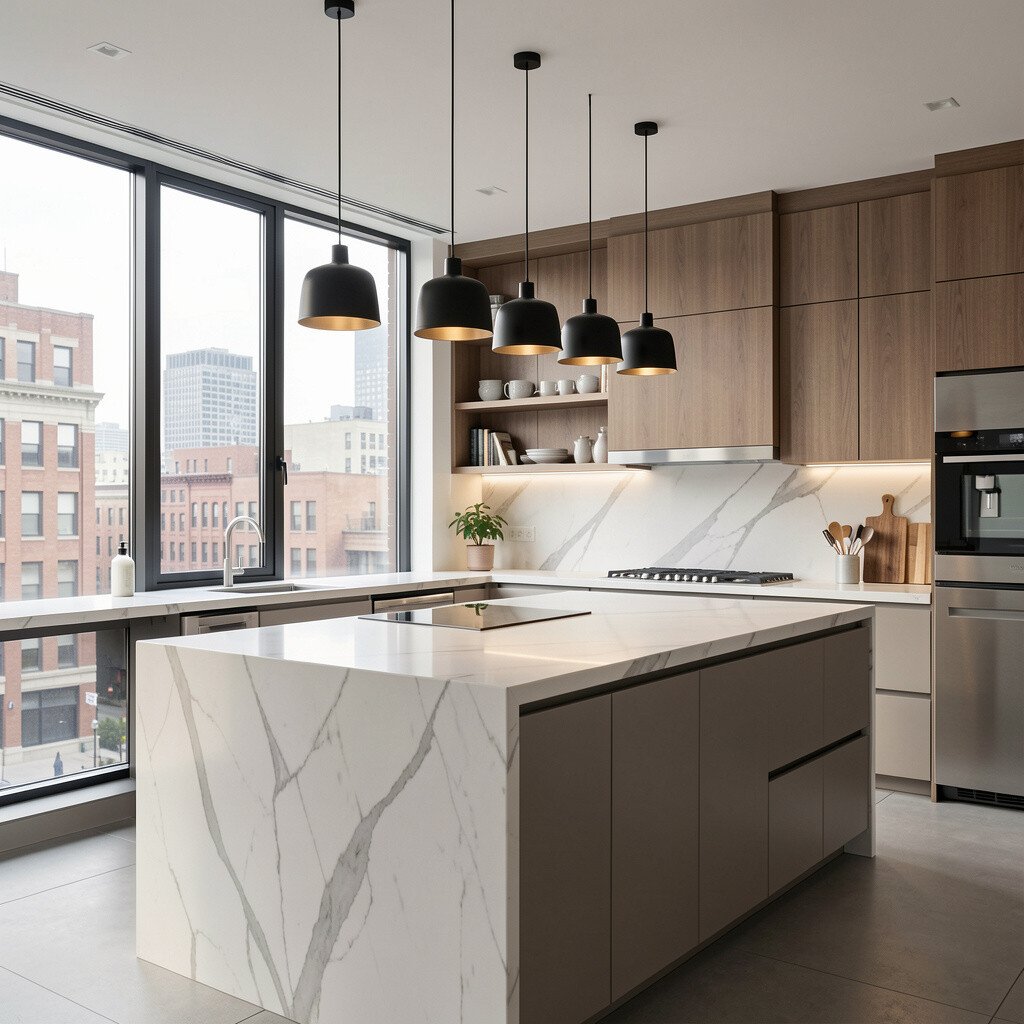
1. Choose a Warm Pendant Finish That Matches Your Hardware
Choose a Warm Pendant Finish That Matches Your Hardware
Look at your faucets, cabinet pulls, and cabinet hinges before you pick a pendant. When the finishes get along, the room starts to feel intentional and calm.
For a sophisticated urban kitchen, warm metals like brushed brass, aged bronze, or matte black with a soft tint often look great against modern cabinetry. Try to echo one metal tone across lighting, hardware, and maybe a tray or utensil holder. If you want it to feel more personal, mix textures gently, like pairing smooth pendant glass with lightly textured stone or wood.
2. Use Layered Lighting So Pendants Feel Like Part of a System
Use Layered Lighting So Pendants Feel Like Part of a System
Pendants look stunning, but your kitchen also needs day-to-day light at counter level. When you combine them with under-cabinet fixtures and gentle ambient lighting, cooking stays comfortable from morning to night.
Place the pendants over key zones such as the island or dining nook, then rely on recessed or track lighting for the rest of the room. Add dimmers so you can lower the brightness when you’re eating and raise it when you’re prepping. If your space is small, this layered approach helps it feel taller because the light spreads evenly instead of pooling in one spot.
3. Hang Each Pendant at the Right Height for a Clean, Lived-In Look
Hang Each Pendant at the Right Height for a Clean, Lived-In Look
The height of your pendant changes the whole vibe. Too high and it looks distant; too low and it interrupts sightlines across the kitchen.
A good starting point is to keep the bottom of the shade comfortably above the work surface while still letting the pendant become a focal point. For islands, consider adding a small visual buffer from countertop edges so food prep stays clear. If you frequently host, test a few positions with painter’s tape, step back, and watch how the light hits plates and the island surface.
When you get the height right, you also reduce glare on shiny countertops, which feels calmer when you’re cooking. You can also personalize the spacing by aligning the pendants with the island’s centerline and your main seating view.
4. Pick Shades That Soften Light for a More Expensive Feel
Pick Shades That Soften Light for a More Expensive Feel
Glass and fabric shades don’t just look pretty, they change how light lands on the room. Softer diffusion makes a city kitchen feel welcoming instead of harsh.
Choose opal glass, frosted acrylic, or fabric-like diffusers if you want a gentle glow around the island. If your kitchen has dark cabinets, light diffusion helps balance the mood. Keep the shade shape simple, like an hourglass or bell, and pair it with crisp lines from cabinetry or a sleek backsplash.
5. Match Pendant Scale to Your Island Size and Ceiling Height
Match Pendant Scale to Your Island Size and Ceiling Height
In a small urban home, pendant size matters more than you’d think. A tiny fixture can disappear, while a huge one can swallow your kitchen’s style.
Measure your island width and think about how many pendants you want in a row. If you have a long island, multiple fixtures often look balanced, but always leave space between them so the glow doesn’t overlap too much. For low ceilings, opt for slimmer profiles and shorter shades that won’t feel cramped.
When scale feels right, the lighting looks like it was planned from the beginning, not added last. If you’re updating on a budget, you can swap only the shades or bulbs first, then upgrade fixtures later.
6. Create a Focal Point With a Single Statement Pendant Over the Island
Create a Focal Point With a Single Statement Pendant Over the Island
Sometimes the smartest move is keeping it simple. One well-chosen pendant can make your whole island feel like a centerpiece.
A sculptural pendant with a clean shape can frame the island like modern artwork. Look for materials that feel premium, such as ribbed glass, hammered metal, or a hand-finished ceramic look. If you want a practical twist, choose a fixture with a modern stem and easy-to-access bulb access for maintenance.
This approach is great for smaller kitchens because it keeps the eye focused and prevents visual clutter. You can personalize it by selecting a color that ties into your backsplash tile or your favorite countertop pattern.
7. Build a Stylish Frame With a Range of Pendant Shapes
Build a Stylish Frame With a Range of Pendant Shapes
If you love design play, consider mixing pendant shapes in a controlled way. The key is to keep the finishes consistent so the look stays sophisticated.
Try pairing one taller shade with one slightly wider shade over the island, or use two different geometric silhouettes that share the same metal tone. This gives the kitchen an artsy feel without looking random. For practicality, ensure all pendants are on the same electrical line and use matching bulb types for consistent brightness.
8. Choose Bulbs That Match Your Mood, Not Just Your Fixture
Choose Bulbs That Match Your Mood, Not Just Your Fixture
The right bulb can make pendant lighting look cozy and high-end. Bright, cool bulbs can flatten color, while warmer bulbs make materials feel richer.
For a kitchen that feels upscale, consider warm white bulbs that bring out wood grain, stone veining, and tile tones. If you host often, dimmable bulbs pair well with dimmer switches for smooth transitions during dinner. Many people also like to test bulb types in the evening before finalizing, since the look changes dramatically under night lighting.
9. Let Pendant Lighting Highlight Backsplash and Countertop Texture
Let Pendant Lighting Highlight Backsplash and Countertop Texture
Your backsplash and countertops deserve a spotlight, and pendants are perfect for that job. When light grazes texture, the kitchen looks deeper and more layered.
Position pendants so they cast light across the backsplash line, especially if you have subway tile, small mosaic, or a stone slab with movement. If you have a patterned countertop, place the pendants so their light reduces harsh shadows over food prep areas. This gives your cooking space a styled, gallery-like feel without extra decor clutter.
10. Add a Runner or Stool Seating That Complements the Glow
Add a Runner or Stool Seating That Complements the Glow
Pendant lighting looks best when the surrounding seating area feels coordinated. In many urban kitchens, the island doubles as a dining spot, so comfort matters.
Choose a seat fabric or bar stool finish that looks good under warm light, like natural leather tones, woven textures, or matte finishes. A simple runner near the seating area can also soften the room and make the glow feel more inviting. If you want it to feel extra polished, pick one color from your backsplash or artwork and bring it into the seating fabric through cushions or seat pads.
This kind of personalization is often more budget-friendly than changing fixtures, yet it still makes the kitchen feel newly styled.
11. Use a Trimmed Canopy or Ceiling Plate for a Custom Look
Use a Trimmed Canopy or Ceiling Plate for a Custom Look
Even in a rental or older building, you can make pendants feel built-in. A ceiling canopy can hide basic wiring and create a cleaner connection that looks tailored.
Look for a ceiling plate in a matching finish, such as brushed brass or matte black, so the top of the pendant feels intentional. Some kits also come with extra hardware that helps the fixture sit flat and snug. This detail is especially helpful in urban homes where ceilings may have older electrical boxes or visible seams.
12. Go for Dimmable Controls to Match Cooking and Hosting
Go for Dimmable Controls to Match Cooking and Hosting
Urban kitchens often serve many roles, from quick breakfasts to long conversations. Dimming your pendant lighting helps you match the mood without changing the whole setup.
Use a dimmer switch when possible, so you can lower brightness for evenings and brighten during chopping or baking. If you have multiple pendants, try to use consistent dimming so the island doesn’t look uneven. It’s a small upgrade that can feel surprisingly luxurious because the light responds to you instead of the other way around.
13. Style the Island With a Simple Centerpiece That Works Daily
Style the Island With a Simple Centerpiece That Works Daily
Pendant lighting makes whatever sits on the island stand out. That means your everyday styling needs to be attractive and easy to live with.
Choose a tray for oils, salt, and utensils, then add one focal item like a ceramic bowl or a small vase with fresh greens. Keep items relatively low so the light isn’t blocked, and aim for a clean rhythm across the surface. If you love seasonal changes, swap the centerpiece for fall branches, winter pine, or spring herbs without redesigning the whole kitchen.
This helps your kitchen feel sophisticated even when you’re not in “staging mode,” which is the real goal of modern living.
14. Keep Wiring Neat With Cable Management and Straight Runs
Keep Wiring Neat With Cable Management and Straight Runs
In many city apartments, ceiling wiring can look messy if it’s not managed well. Neat lines make the pendant look custom and more upscale.
Use the fixture’s included canopy and route cables so they hang straight. If you’re adjusting heights, measure carefully to keep pendants aligned, especially for multi-light setups. Cable management may sound small, but it improves the overall visual order, which is a major part of a sophisticated look.
15. Create an Accent Zone With Glass, Wood, and Stone in One Story
Create an Accent Zone With Glass, Wood, and Stone in One Story
Urban kitchens shine when materials feel like they belong to one design story. Pendants can connect those materials by reflecting light across them.
Try pairing pendant glass with wood cutting boards, a stone bowl, and a backsplash that has subtle movement. The goal is not matching everything exactly, but choosing materials with similar visual weight. When the lighting catches these surfaces, the kitchen feels layered and rich, even in a compact footprint.
16. Personalize With Color Through Glassware, Towels, and Small Art
Personalize With Color Through Glassware, Towels, and Small Art
You don’t have to repaint cabinets to make the space feel like yours. With pendant lighting, small color choices show up nicely because the light pulls attention upward.
Use a set of matching mugs, a bright kitchen towel that ties into your backsplash, or small framed art near the dining area. Keep the palette limited so the look stays refined and not chaotic. If you’re renting, this is also a smart way to refresh your kitchen without major changes, and it’s usually a lower-cost path to a fresh feel.
When the lighting is warm and consistent, these personal touches look intentional instead of temporary.
17. Choose Easy-Clean Materials and Practical Placement for Busy Weeks
Choose Easy-Clean Materials and Practical Placement for Busy Weeks
A kitchen in the city gets used, and pendant lighting should keep up. Choose finishes that wipe clean and shapes that don’t collect dust easily.
Matte metals hide minor fingerprints, while glass shades can be cleaned with a gentle cloth and proper cleaner. Place pendants far enough from steam and splatter areas, especially if your stove is close to the island. If you cook often, consider whether you prefer shades with wider openings for quick access and bulb changes.
18. Plan for Future Changes With Modular Upgrades
Plan for Future Changes With Modular Upgrades
Great urban kitchens evolve, because your tastes, your storage needs, and your schedule change over time. Building a pendant setup that supports upgrades keeps your space feeling fresh.
Choose fixtures that allow shade swaps, bulb variety, or easy dimmer additions later. You can also plan a flexible lighting layout so you can reconfigure your island seating without replacing everything. This is a smart cost consideration because you’ll spend less later while still getting that sophisticated, updated look every season.
When you select pendants with timeless silhouettes and durable finishes, you’re personalizing for the long run, not just for the moment.