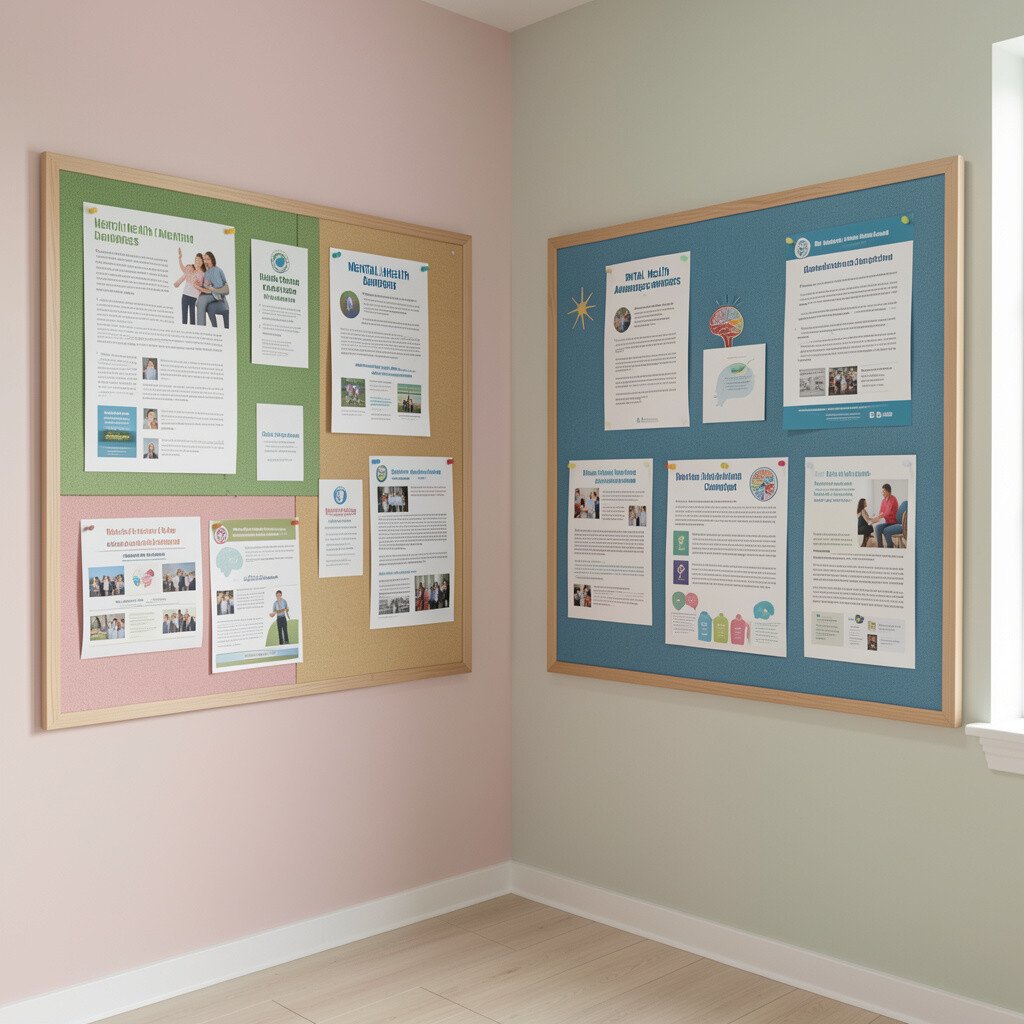
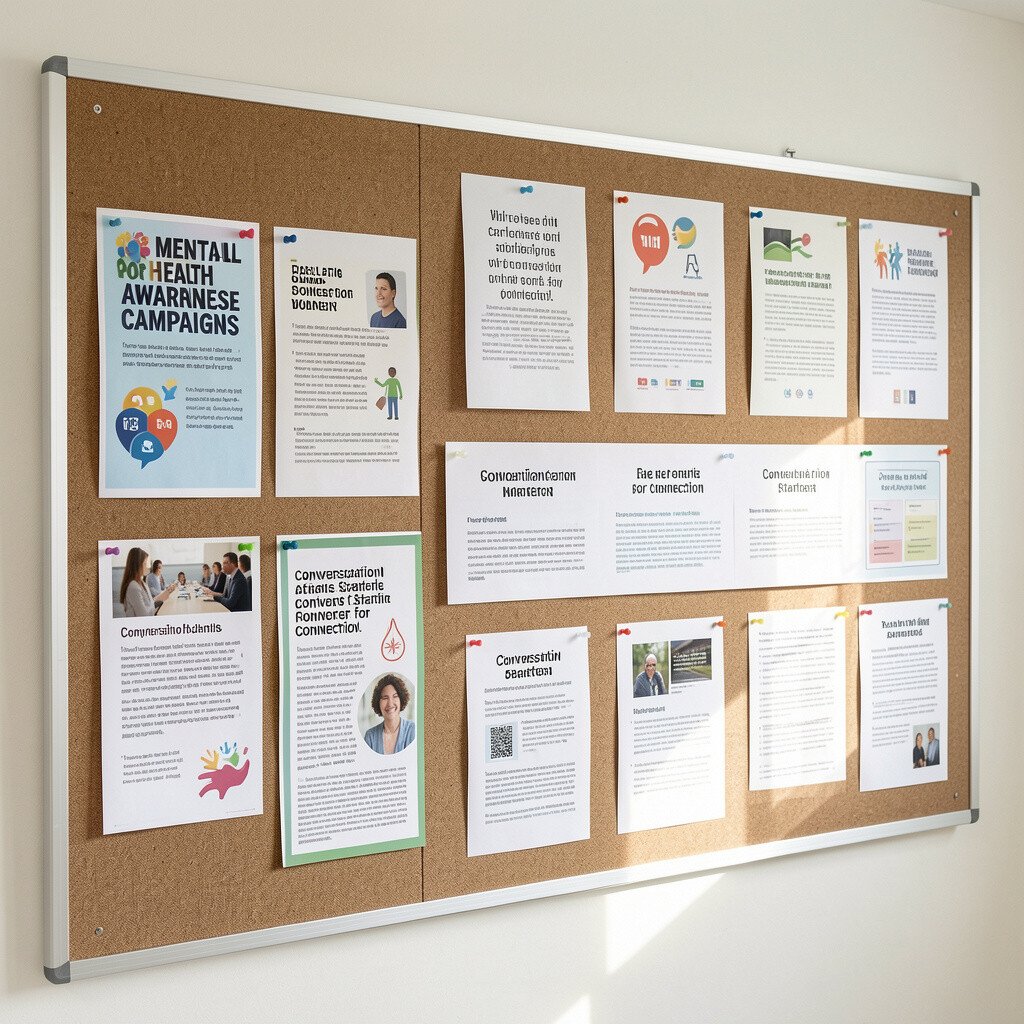
Paint the space with calm colors like dusty blue, warm beige, and gentle greens. Add a small photo collage of staff, students, or community members smiling in everyday moments.
Use fabric-like paper textures, such as felt borders or crepe paper swirls, so the board looks soothing instead of busy. People often slow down when the first thing they see feels safe. Keep a short “you belong here” message written in large, friendly letters that can be read from across the room.
2. Mindful Breathing Cloud Wall
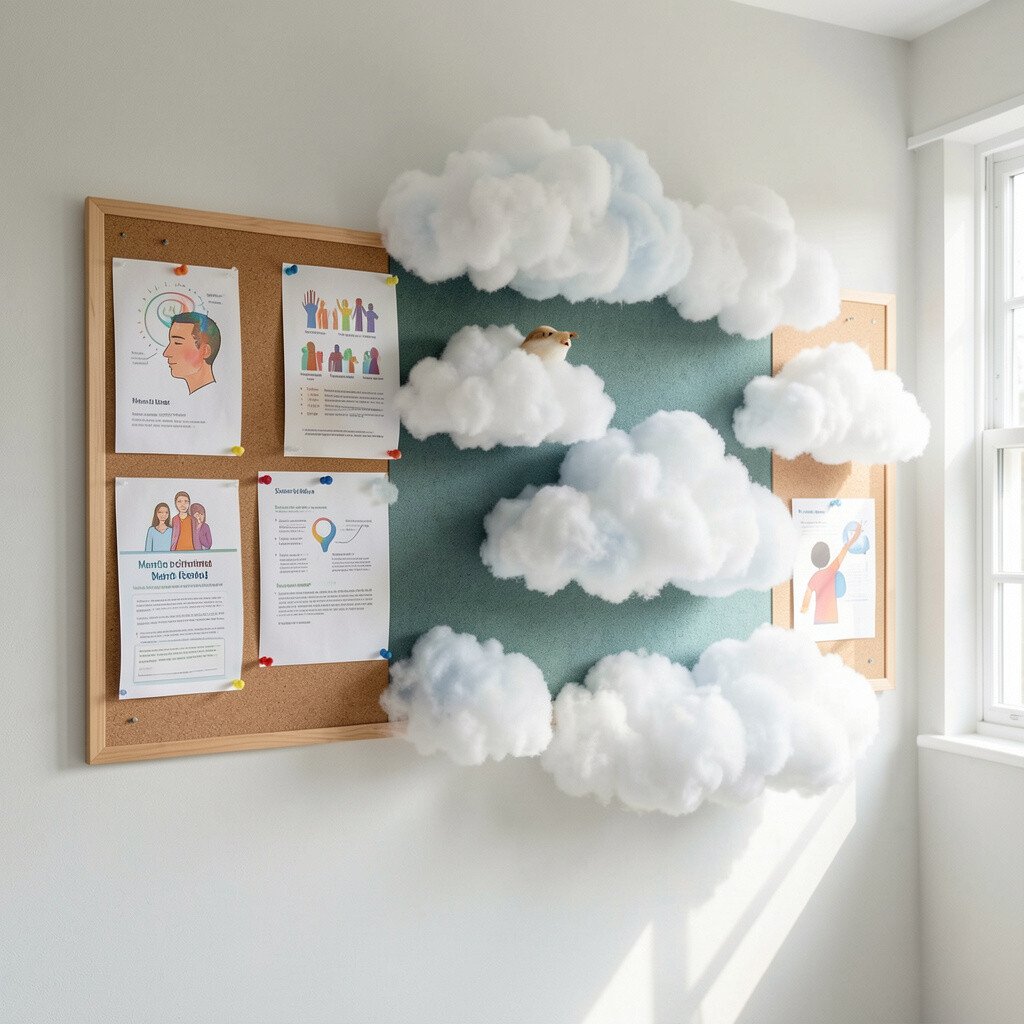
Mindful Breathing Cloud Wall
Create a cloud-themed board by cutting out layered paper clouds in different sizes. Place each cloud above a simple visual prompt like a smiling face with a gentle inhale and exhale arrow.
When someone watches the clouds for a moment, they can feel their body settle. To make it practical, swap prompts weekly based on what people need most. Include quick personalization by letting groups submit their own one-word feelings that match the colors.
For costs, paper, string, and markers are usually enough. A trend right now is using interactive visuals that encourage short pauses without heavy text. Keep the font large and avoid clutter so the breathing prompts feel effortless to follow.
3. Gratitude Jar With Moving Labels
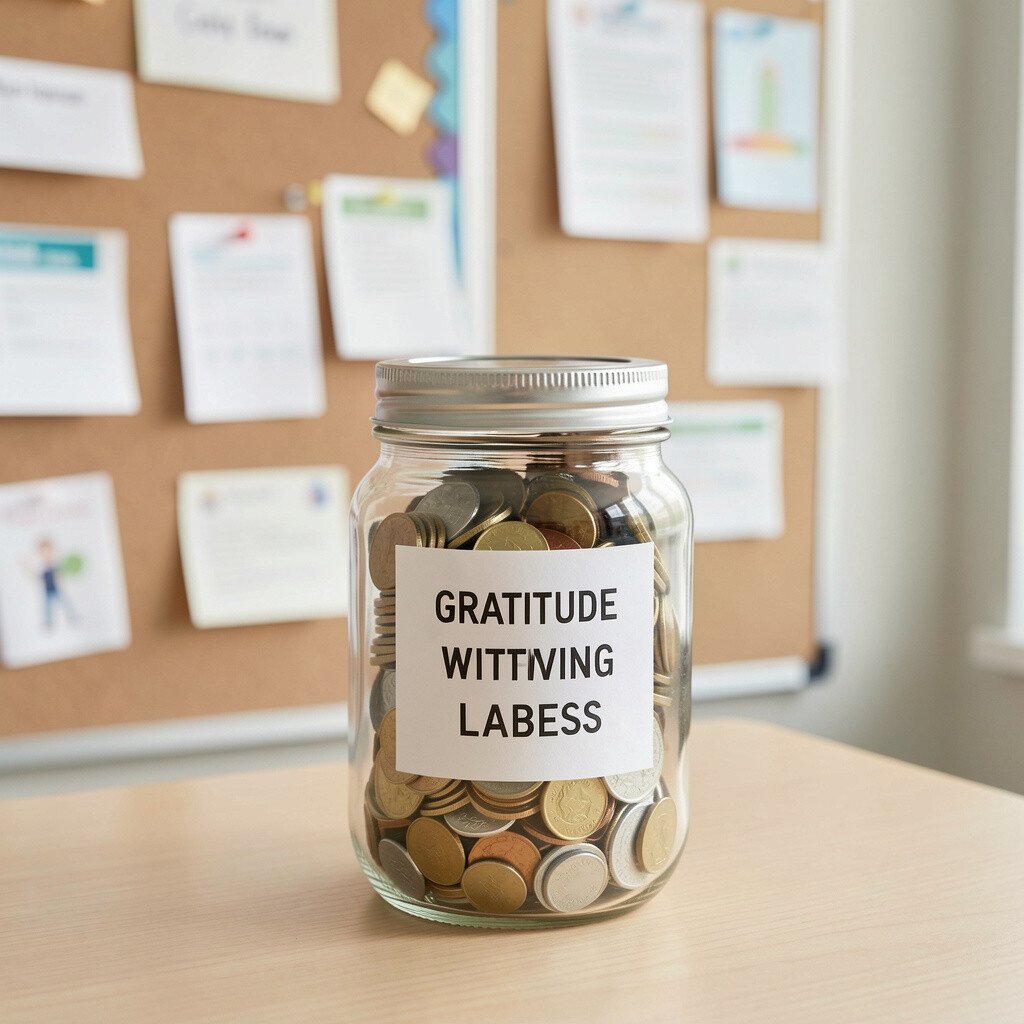
Gratitude Jar With Moving Labels
Design a bulletin board shaped like a jar with a cork top made from brown paper. Behind the jar, place a rotating set of small cards that look like slips of paper.
People benefit because gratitude practice can shift attention from stress to hope. Add uniqueness by creating themed slips such as “tiny win,” “kind moment,” or “something I learned.” Encourage practical use by making it easy to add new slips using pre-printed templates and a nearby basket.
Consider cost by printing cards in batches and using scrap paper for the slips. A current trend is “micro-joy” sharing, where small positives get celebrated often. Keep the jar area visible and light so it invites participation every day.
Personalize it for your community by using local landmarks or group names on the jar label. If you have different ages, adjust the writing prompts so they feel reachable. You can also swap the jar theme for seasons like back-to-school or winter comfort.
4. Feelings Thermometer Scale
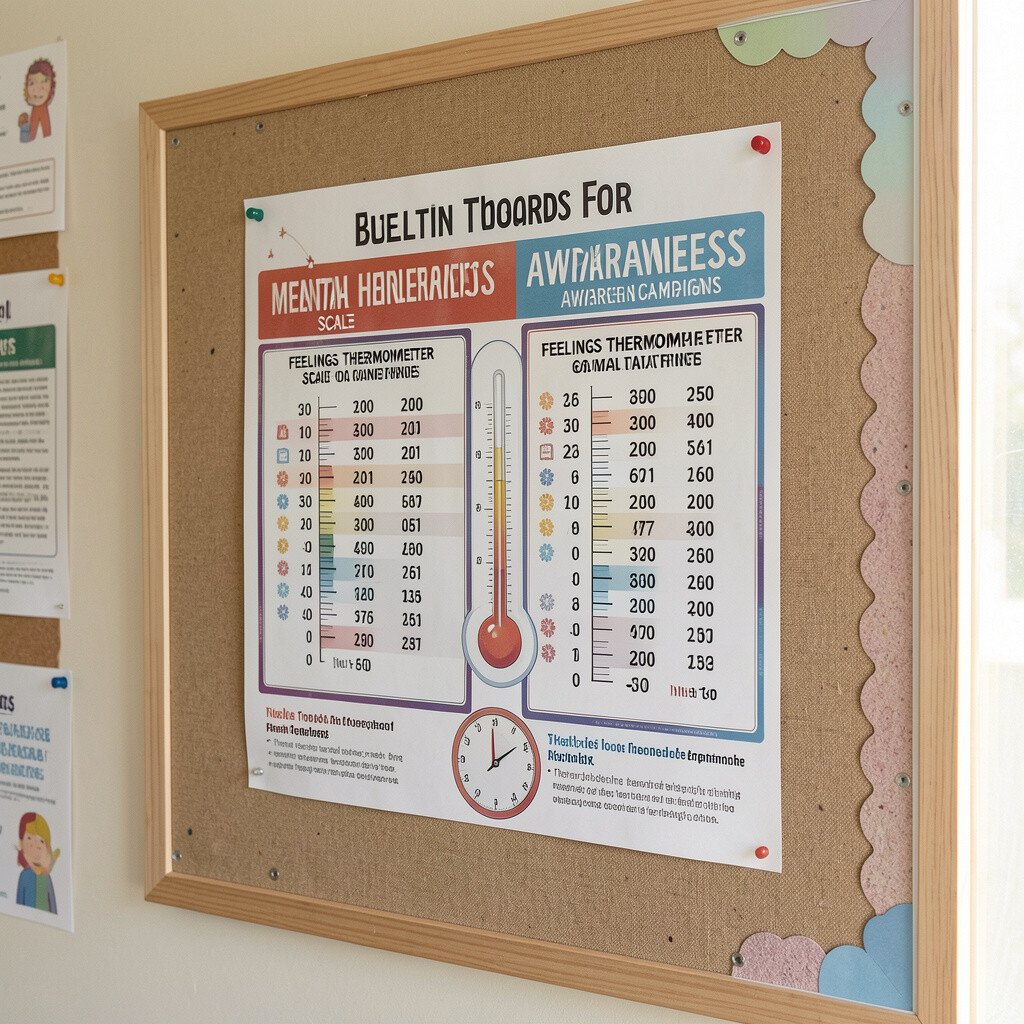
Feelings Thermometer Scale
Make a vertical thermometer graphic with warm colors at the bottom and cooler colors at the top. Add a moving marker with a paper arrow that points to how someone might feel right now.
This helps people recognize emotional intensity without using scary language. Keep the wording gentle, like “low,” “okay,” “high,” and “very high,” written in simple terms. For practical use, include one short coping suggestion near each range so the board offers help immediately.
Cost stays low with poster paper, cardboard, and washable markers. The uniqueness comes from how visual and nonverbal it feels, especially for younger students. Use sturdy materials so the marker can be moved safely by many hands.
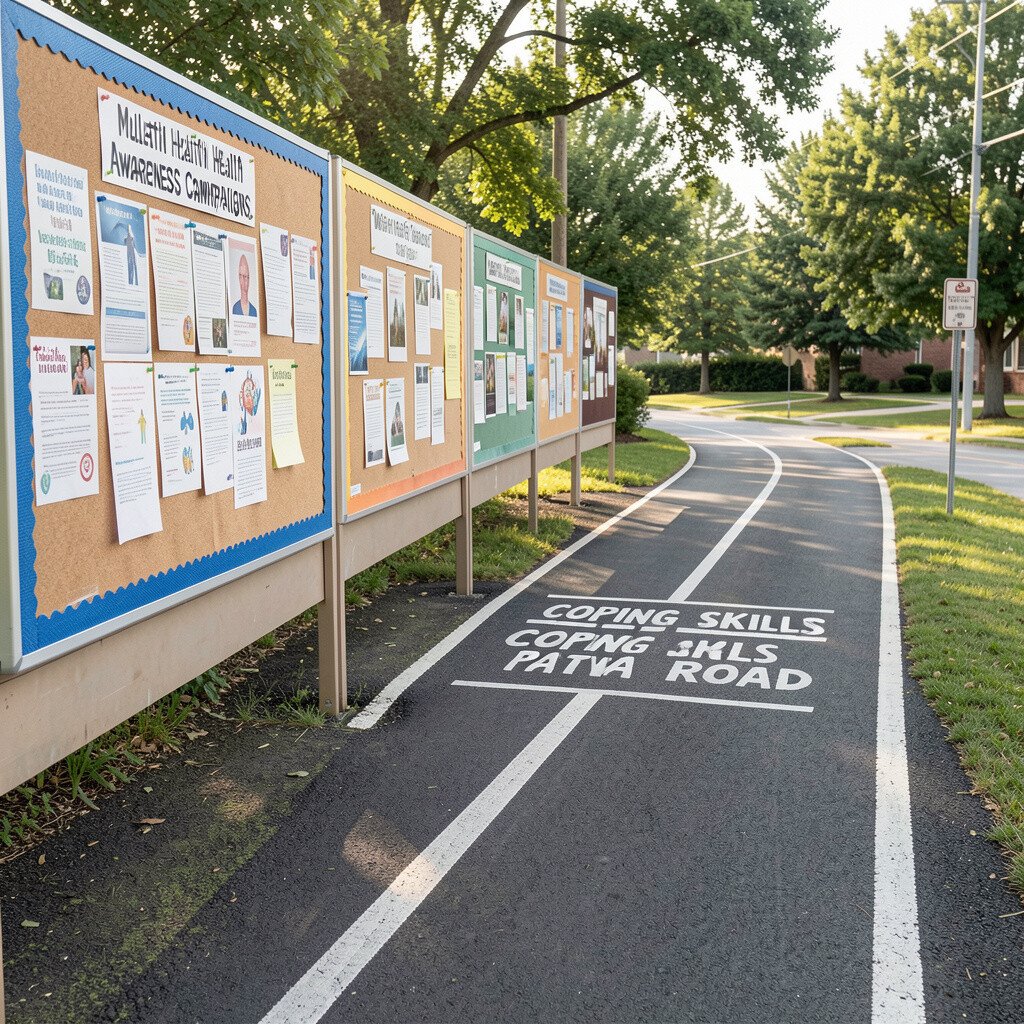
Draw a winding path on the board like a road that leads to calmer places. Add signposts made from cut paper that show activities such as stretch, water break, music, or breathing.
This kind of visual pathway makes coping feel like a journey instead of a hard lesson. Personalize the signs with what your group actually enjoys, like drawing, journaling, or going for a short walk. Keep it actionable by placing a small “start here” card at eye level.
For cost considerations, reuse old bulletin board borders and print simple icon cards. A current trend is using gamified choices, where people can pick the next step based on how they feel. Keep the path uncluttered so each sign is easy to read and choose.
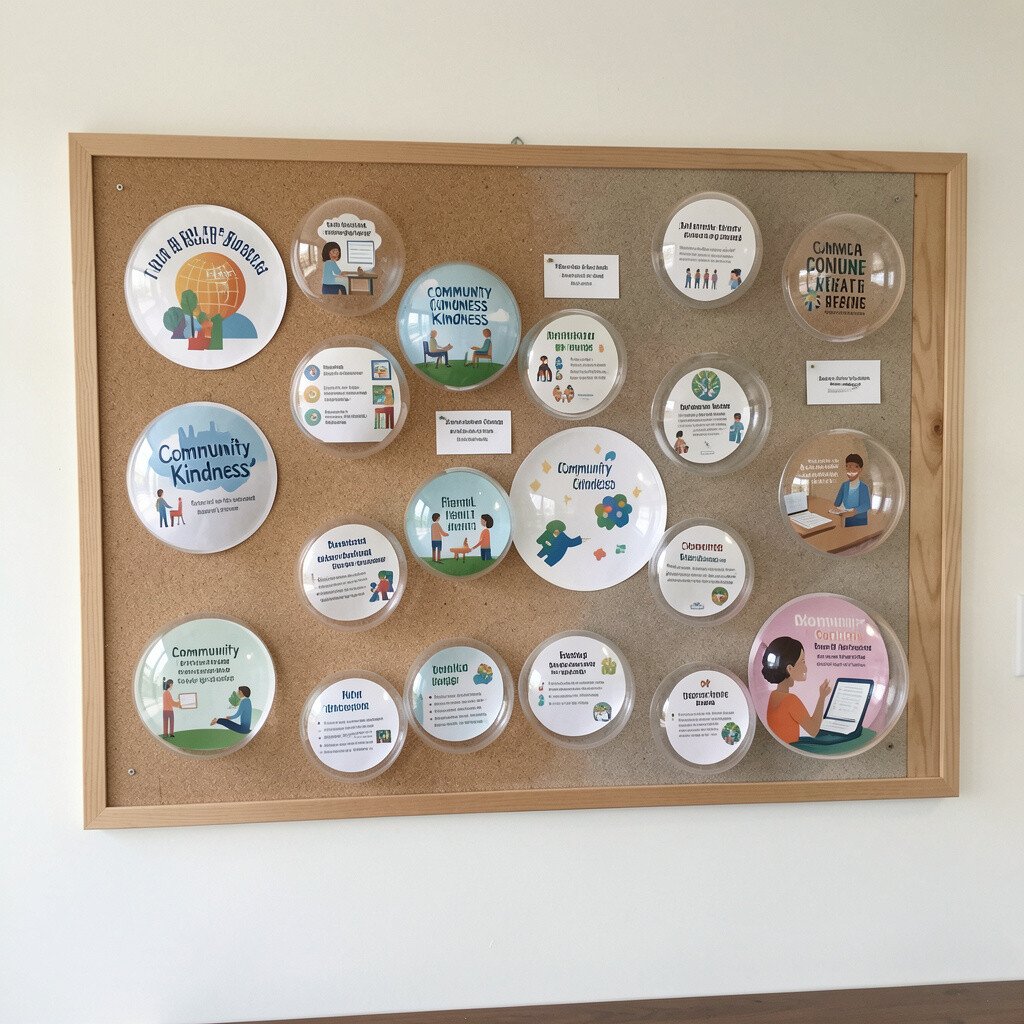
6. Community Kindness Bubbles
Community Kindness Bubbles
Create a background of soft blue paper and fill the board with bubble shapes made from circles of different sizes. Write kindness ideas inside each bubble, such as “check in,” “offer a seat,” and “thank you.”
When people see small kindness reminders often, they are more likely to use them. Keep benefits practical by linking bubbles to real actions, like a weekly “random kindness” moment. Make it unique by adding a few bubbles that match local slang or inside jokes your community loves.
For personalization, let different groups choose one bubble message each month. Costs stay gentle if you use free clipart-style icons and print them on colored paper. A trend lately is social connection signage, which supports belonging and reduces isolation.
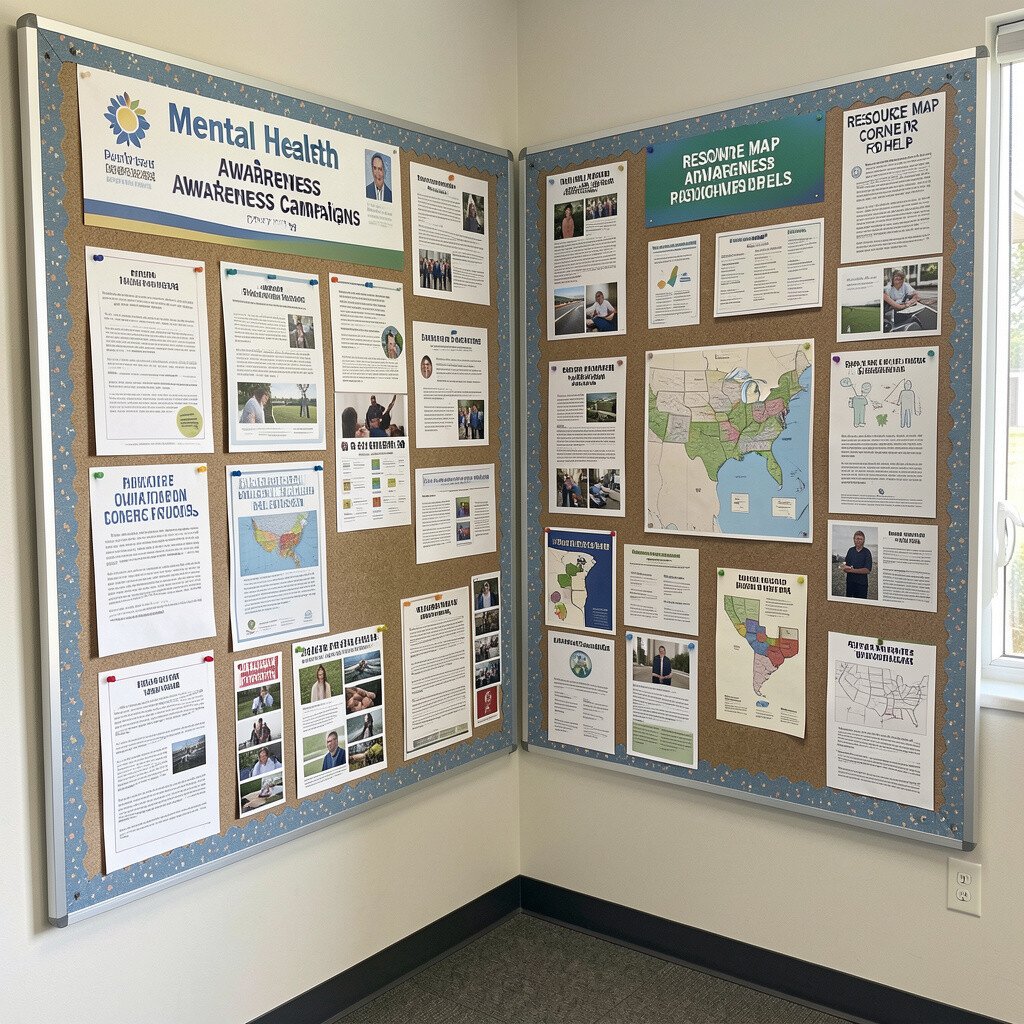
7. Resource Map Corner for Help
Resource Map Corner for Help
Build a simple map layout that points toward helpful options in your area or school. Use icons for hotlines, counseling offices, trusted staff, and supportive services.
Clear guidance benefits people by lowering the fear of asking for help. Include practical tips for what to say, written in normal language like “I need support” and “Can we talk.” Keep it unique by organizing the map by “who you can talk to” rather than by complicated categories.
Consider cost by printing one-page contact info sets and placing them in plastic sleeves. Current trends focus on reducing barriers, so the board should feel welcoming and easy to navigate. Make sure names and phone numbers are accurate and updated on a regular schedule.
8. Anxiety to Action Checklist Board
Anxiety to Action Checklist Board
Design a board with a checklist that turns scary thoughts into small next steps. Use bold headings that are short, like “What I feel,” “What I need,” and “What I can do next.”
People benefit because they get a structure when emotions feel overwhelming. Keep the tone supportive, not demanding, and write each item in calm language. Personalize the checklist with options that match your setting, such as “ask for help from a trusted adult” or “take a quiet break.”
To handle cost, use cardstock for the main template and print the checkboxes in bulk. A current trend is self-guided coping tools that feel like quick scripts. Make the board easy to update so it stays current and relevant.
9. Sleep and Reset Night Sky
Sleep and Reset Night Sky
Make a night sky bulletin board using black or navy paper, star cutouts, and soft glow stickers. Add phases of the moon or a simple bedtime routine timeline using icons.
Good sleep and calming routines support mental health, especially during stressful seasons. Include practical tips like “dim screens,” “warm drink,” and “read something easy,” written as gentle reminders. Keep the benefits visible by adding a short line about how rest helps mood and focus.
For uniqueness, let people add “my calm sign” stars where they write a comfort activity. Costs can be kept low by using paper stars and secondhand decoration items. A trend in many communities is “reset rituals,” where people share small habits that make nighttime feel safer.
Personalize the routine by offering choices like reading, stretching, or listening to calm music. Place the board near a place where students can pause without distraction. Make sure the tone stays encouraging, not like a homework task.
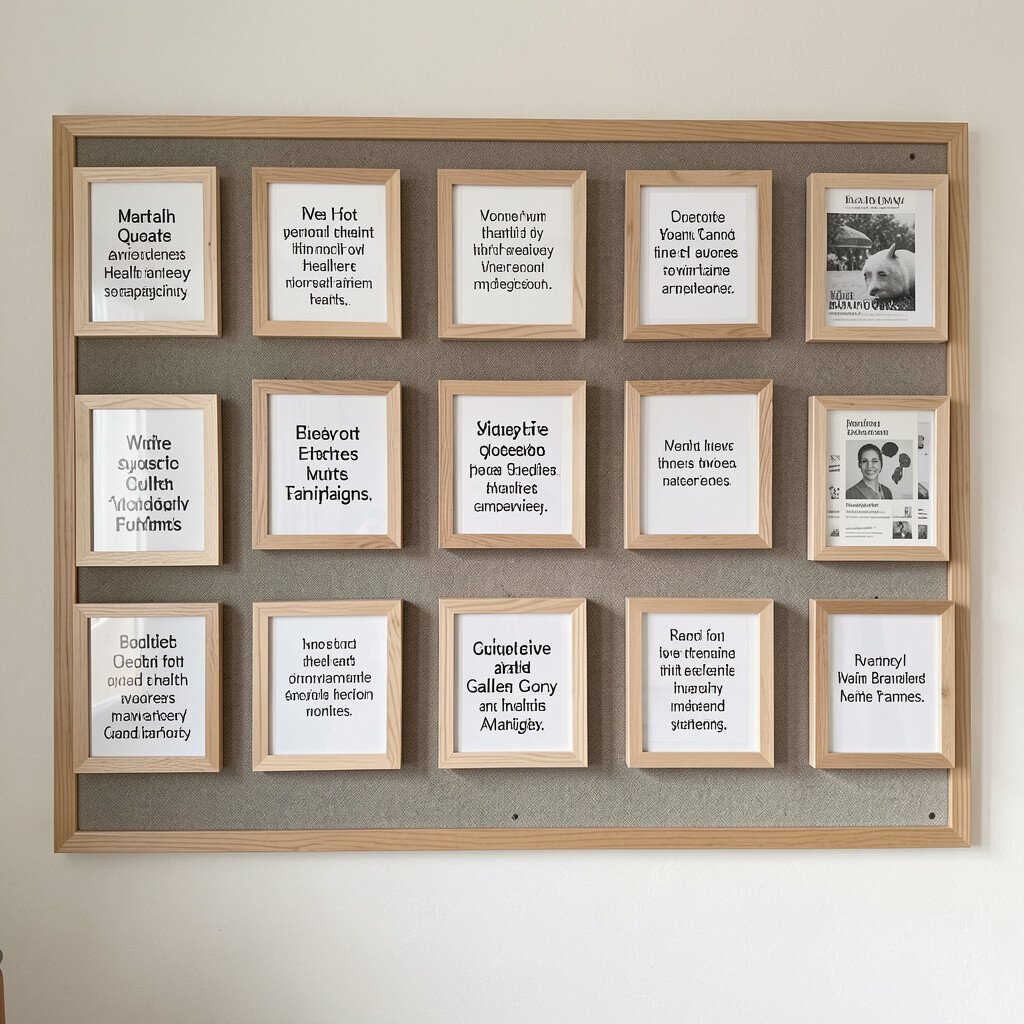
10. Supportive Quotes Gallery With Mini Frames
Supportive Quotes Gallery With Mini Frames
Create a gallery wall using small picture frames cut from cardboard and covered with bright tape edges. Inside each frame, put short mental health quotes that feel respectful and realistic.
This helps because strong words can guide people when they feel stuck. Keep it actionable by pairing each quote with a small visual icon, like a heart for connection or a hand for help. Choose benefits that match your community, such as building hope, encouraging empathy, and normalizing feelings.
For uniqueness, rotate frames weekly and include frames created by students or staff. Consider cost by using cheap frames, scrap paper mats, and printed quote cards. A current trend is using rotating micro-messages rather than one large poster everyone ignores.
11. Conversation Starters for Connection
Conversation Starters for Connection
Make a star-shaped board filled with “starter questions” that help people talk kindly. Use small star pockets where students can grab a card and read it at a table or during group time.
People benefit because conversation can reduce loneliness and make support feel natural. Write prompts that are easy to answer, like “What made you smile today?” and “What helps you feel calm?” Keep the tone friendly and avoid heavy topics that could overwhelm.
For personalization, let each class or team submit one question that matches their interests. Costs stay low because index cards and cardstock stars are inexpensive. A trend is “low-pressure connection,” where people share small moments without forcing deep disclosure.
To keep it practical, include a note encouraging respectful listening and giving space. Place the board where it can be used during community time, not hidden in a hallway corner.
12. Strengths Spotlight With Rotating Faces
Strengths Spotlight With Rotating Faces
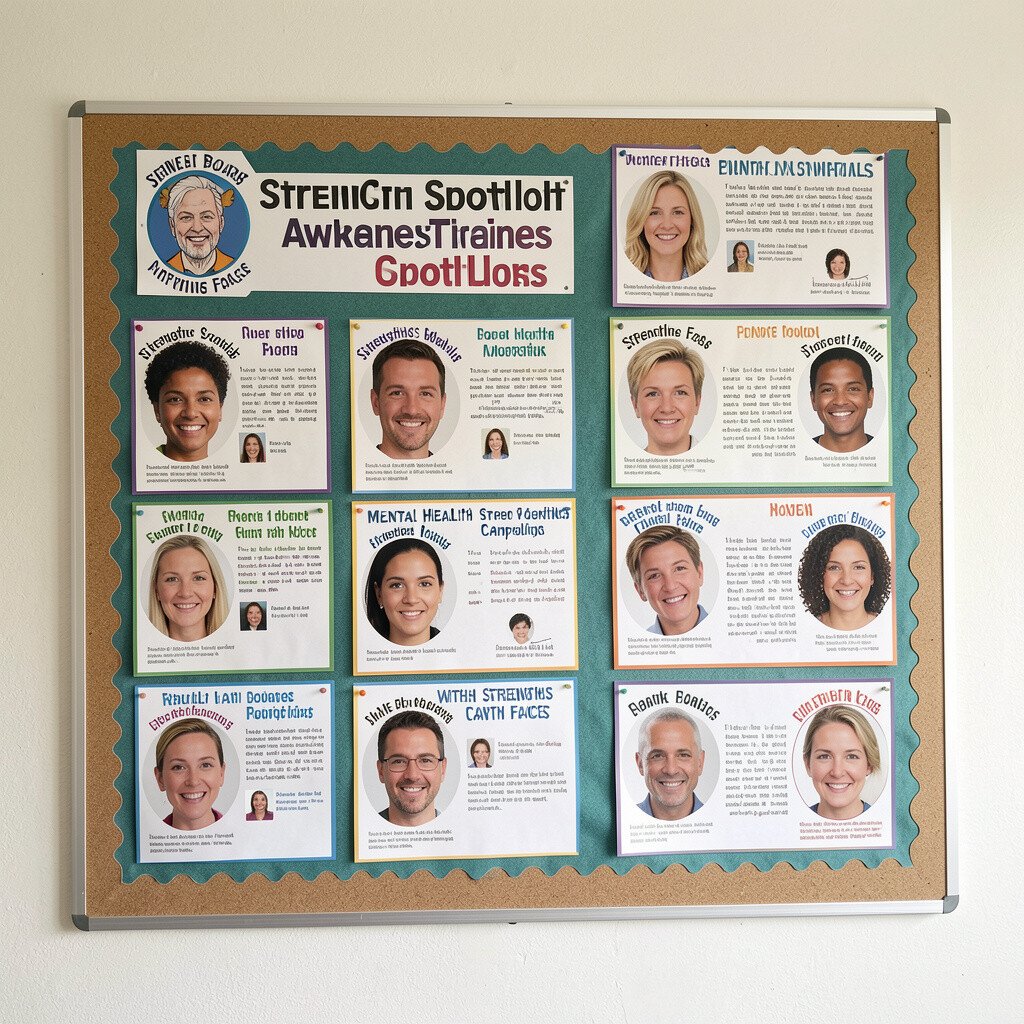
Build a spotlight effect using a circular paper frame with light rays around it. Place “strength badges” in the center featuring qualities like patient, creative, brave, or helpful.
This board supports mental health by helping people see themselves as more than one feeling. Make it practical by adding a section where teachers or peers can write a short strengths sentence for someone. Personalize by using names, team roles, or interests so it feels personal and real.
Cost considerations are simple since you can use printed badge templates and craft paper for the rays. A current trend is strengths-based language that supports confidence and positive behavior. Keep the visuals clean so each spotlight feels warm, not overwhelming.
13. Grounding Texture Garden
Grounding Texture Garden
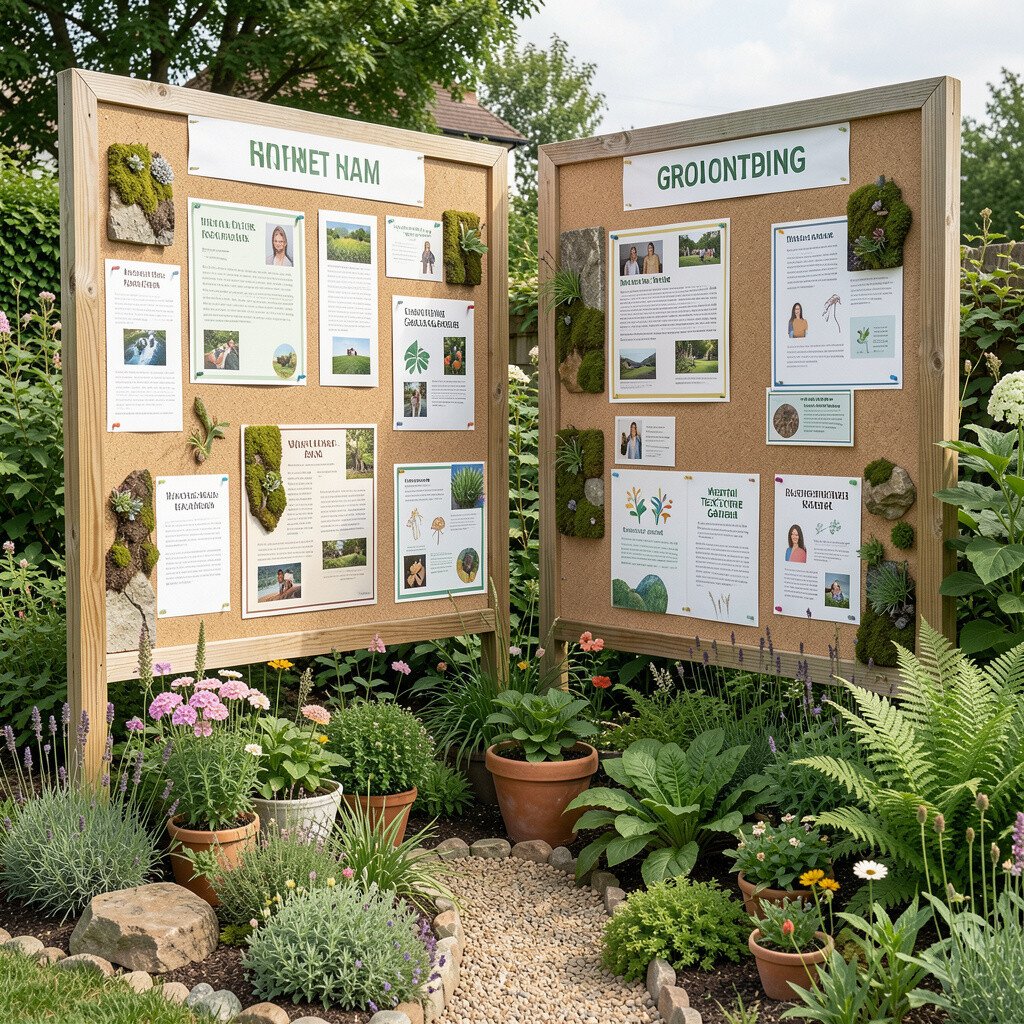
Create a garden layout on the board with leaves and flowers made from different textures. Use materials like sandpaper scraps, yarn, foam shapes, and crinkly paper borders where safe.
Grounding helps because it pulls attention into the present moment through the senses. Keep benefits practical by showing a “touch and breathe” sequence using icons and simple instructions. Personalize by adding a small tag that says which texture helps you feel calm.
For cost, gather safe scrap materials and reuse leftover craft supplies. Uniqueness comes from the sensory look, even if people cannot touch every piece. A current trend in mental health education is multisensory supports that feel gentle and human.
Arrange the garden so people can glance quickly and find the next step. If you want more interaction, add a “choose a leaf” section with removable note cards.
14. Feedback That Heals Wall
Feedback That Heals Wall
Design a board with two columns of speech bubbles showing “helpful feedback” and “hurtful habits” without shaming anyone. Use examples like “I noticed…” and “next time try…” written as positive scripts.
This helps mental health because words influence stress, confidence, and trust. Keep practical tips by offering a “repair phrase” people can use after mistakes, like “Thanks for telling me” or “I’m going to try again.” Benefits include healthier relationships and fewer misunderstandings.
For uniqueness, allow groups to create their own bubbles that match your community tone. Costs can be managed with printable script cards and craft paper bubbles. A current trend is teaching communication skills as part of wellbeing support, not as an extra lesson.
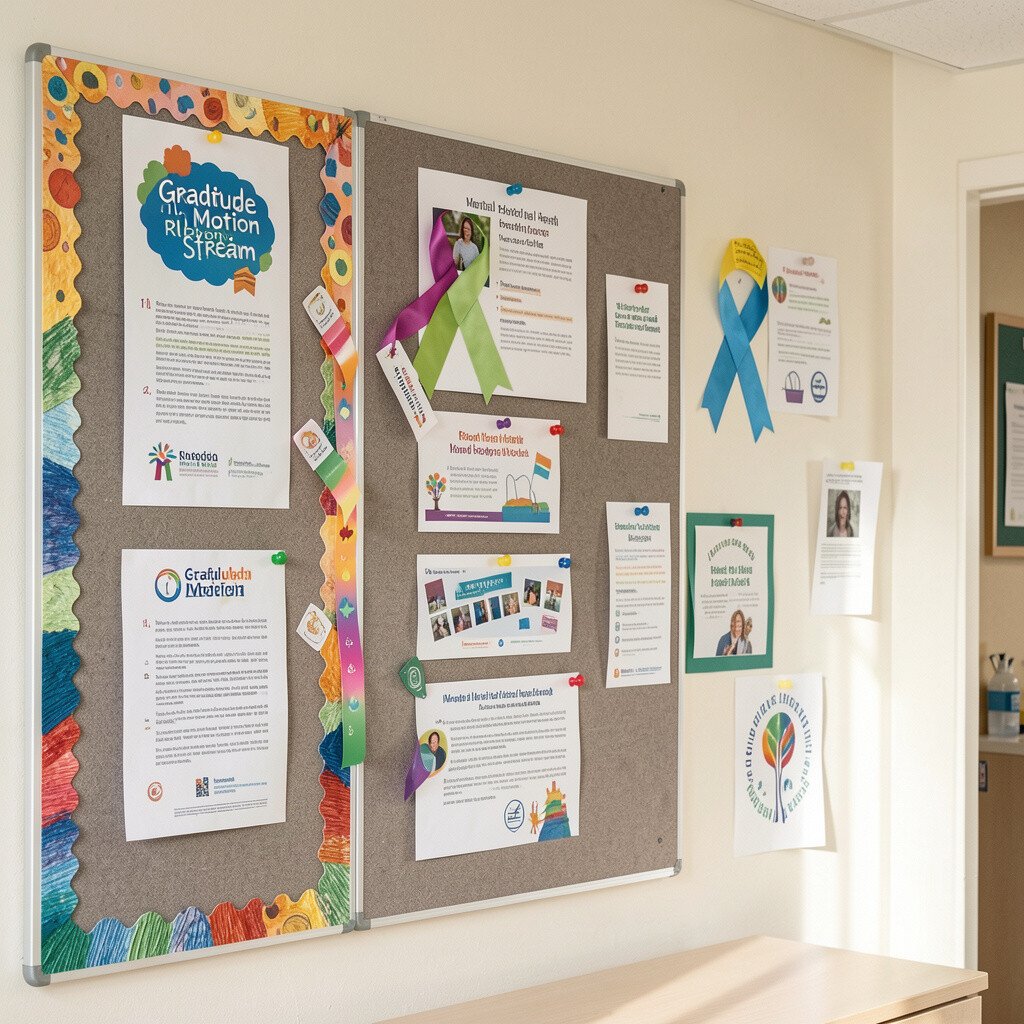
15. Gratitude in Motion Ribbon Stream
Gratitude in Motion Ribbon Stream
Make a ribbon stream board using long strips of paper that flow from one top point to a basket below. On each ribbon, write a short gratitude prompt that invites quick participation.
When people add ribbons regularly, they build a habit of noticing good moments. Keep it practical by updating the ribbon prompts weekly, such as “a helpful person,” “a kind message,” or “a calm place.” Personalize the ribbon color palette for different groups so it feels inclusive.
For cost considerations, cut long strips from colored paper and reuse yarn or string for the hanging effect. A trend right now is moving displays, which feel more alive than flat posters. Keep the basket accessible so people can add a ribbon without asking for permission.
To keep the board safe and sturdy, attach ribbons with reinforced tape or clips. You can also add a small “share quietly” option for anyone who prefers not to write their name.
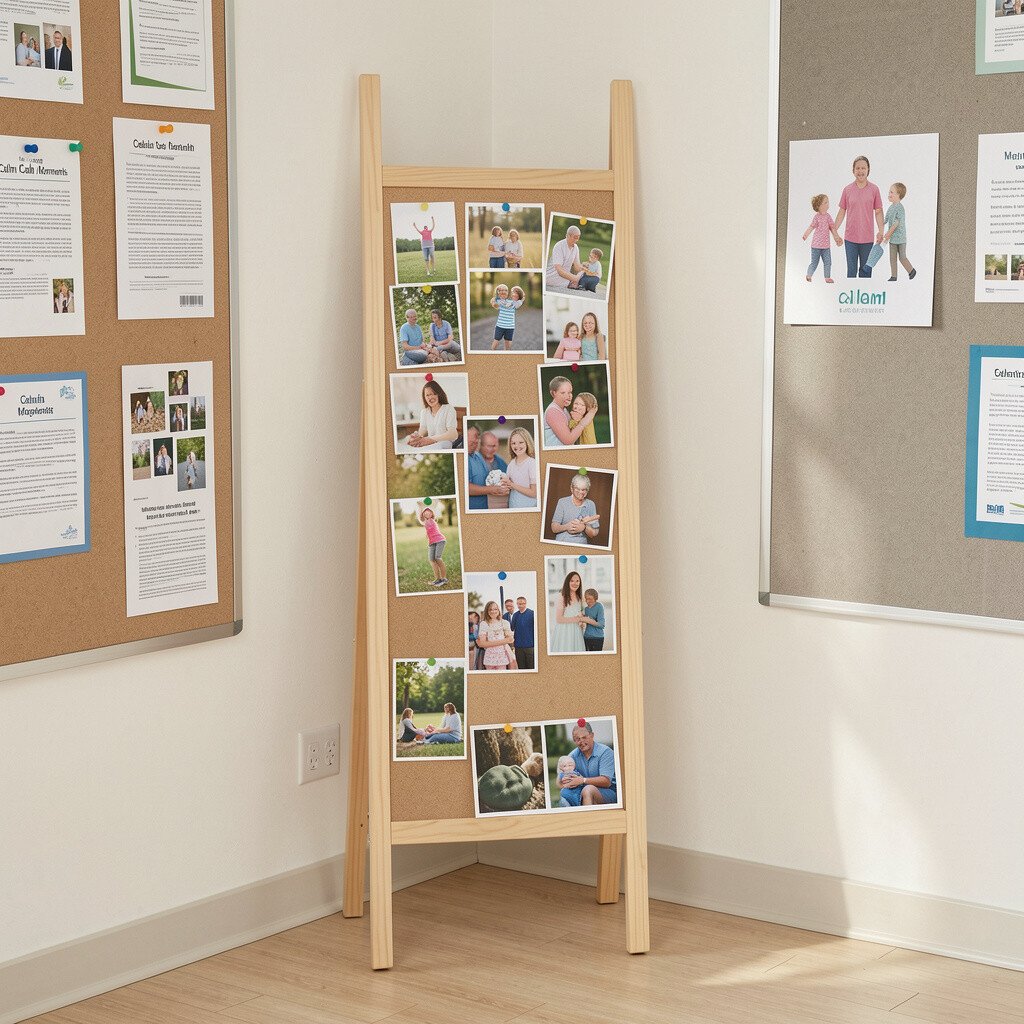
16. Celebrate Calm Moments Photo Ladder
Celebrate Calm Moments Photo Ladder
Create a ladder shape on the bulletin board with rungs labeled “pause,” “breathe,” “reset,” and “return.” Add photo placeholders or printed images that show calm routines, like quiet corners, walks, or reading time.
This board benefits mental health by showing that calm moments count as progress. Include practical tips such as how to use the quiet corner and when to ask for support. Personalize by featuring images from your own community so it feels authentic and familiar.
For uniqueness, make the ladder look like it’s lifting up with small paper steps that can be replaced each month. Cost stays reasonable with printed photos, cardstock, and simple borders. A current trend is recognizing wellbeing efforts publicly, which can reduce stigma and make support feel normal.
Keep the display inviting by using warm lighting colors like gold and soft orange. If you have privacy concerns, use first-name initials or anonymous visuals instead of full faces.