Window boxes can turn an everyday view into a cheerful moment every time you look out. Small changes, big color, and lots of personal style are all within reach.
Think of window boxes that look like a spring dress, with berry-pink flowers and gentle green foliage spilling over the edge. The color feels warm and friendly, even when the weather outside is chilly.
For a simple approach, choose petunias or geraniums that naturally trail, then anchor them with a few upright plants for height. Add a thin layer of compost at planting time to help the roots settle in quickly. If you want a polished look, keep deadheading light and consistent so blooms keep coming back.
2. Coastal Blue Lobelia With White Feather Accents
Coastal Blue Lobelia With White Feather Accents
Picture a bright seaside palette right on your windowsill, with deep blue lobelia paired with little white accents that sparkle in the sun. The contrast makes the whole box look lively, like waves with foam.
Use a fast-draining potting mix, because lobelia likes moisture but not soggy feet. Space the plants so air can move between them, which helps prevent leaf issues. When you water, aim at the soil and keep the leaves as dry as possible.
For personalization, mix in a few low silvery plants or add a small, decorative finial to echo coastal themes. In terms of cost, lobelia can be a mid-range choice depending on size, but starting with fewer plants and filling in over time often saves money. A current trend is using airy, swaying textures rather than heavy, bushy mounds.
3. Sunset Orange Marigolds In A Classic Terracotta Box
Sunset Orange Marigolds In A Classic Terracotta Box
Sunset orange marigolds bring instant glow, and the terracotta look makes everything feel grounded and welcoming. When the sun hits, the petals look almost golden.
Choose a box that has good drainage holes and consider adding a saucer for easier cleanup. Plant marigolds at a slightly staggered spacing so the color knits together as they grow. They’re also helpful around certain garden areas because many people like their naturally strong scent.
If you enjoy seasonal updates, keep extra marigold seedlings on hand for quick swaps. Marigolds are often budget-friendly, especially when you start with smaller plants. You can personalize by pairing orange flowers with dark green “nearly black” foliage plants for a bold, modern contrast.
4. Purple Sage Texture With Magenta Highlights
Purple Sage Texture With Magenta Highlights
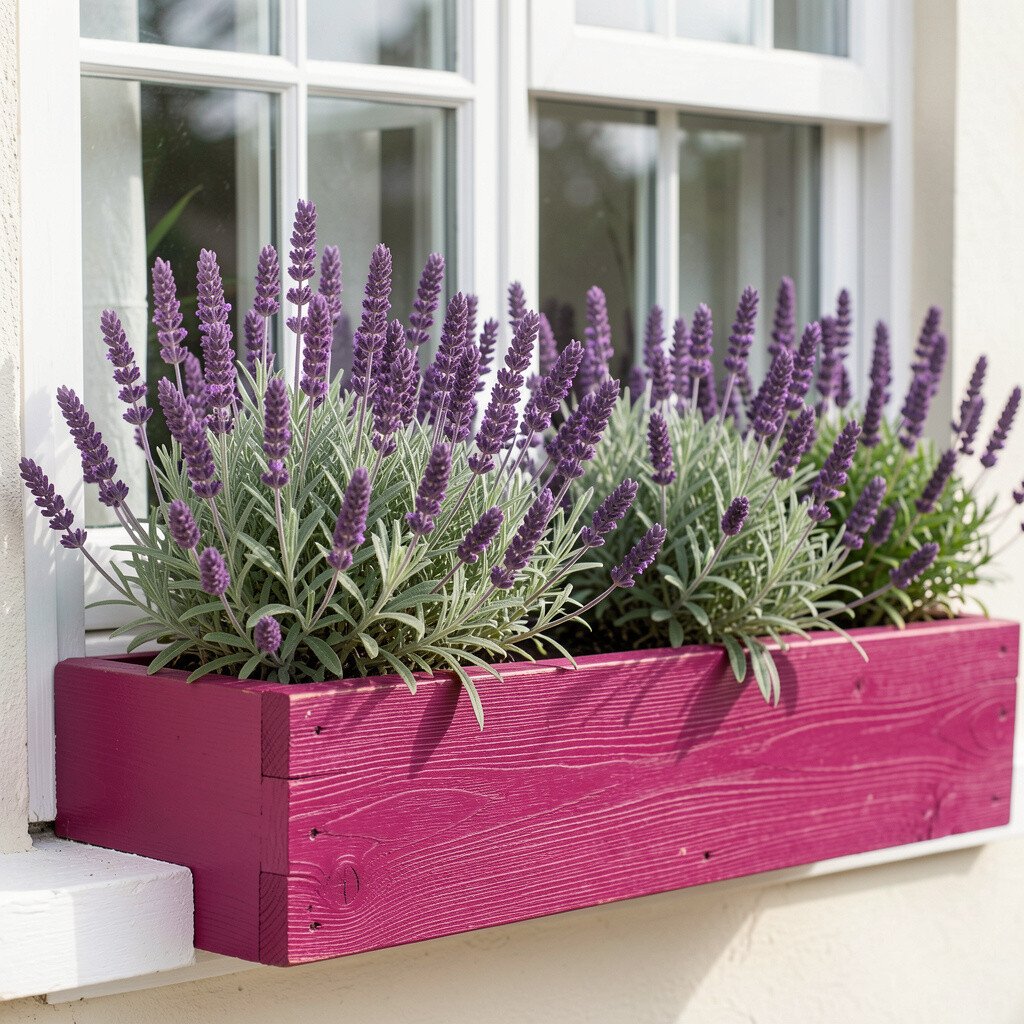
Purple sage-like foliage gives a box a calm, artsy look, and magenta highlights bring the energy. The combination feels like a well-styled canvas, not just a random mix of blooms.
Pick plants that tolerate heat and don’t demand constant fussing, especially if your window gets strong afternoon sun. Use a larger container so roots have room, and refresh the top layer of soil every season. For a neat finish, trim back straggly stems before they cross paths with the neighbors.
5. Bright Yellow Calendula With Evergreen Stripes
Bright Yellow Calendula With Evergreen Stripes
Yellow calendula looks cheerful and sunny, and it pairs beautifully with evergreen-like foliage that stays attractive all year. The stripes effect makes the box look intentional even when flowers aren’t at peak bloom.
Mix blooming calendula with tough, leafy plants that keep their color for longer stretches. Water steadily during the first few weeks, then adjust based on your weather and how quickly the soil dries. If your windows get windy, check the soil more often because containers dry faster outdoors.
For personalization, add a small chain or decorative hook detail near the box edge to match your home’s hardware style. Calendula seeds can be inexpensive, and they sometimes give you that extra joy of watching them sprout. A trend worth trying is using “stripe and burst” design, where you maintain steady foliage while the flowers pop in rows.
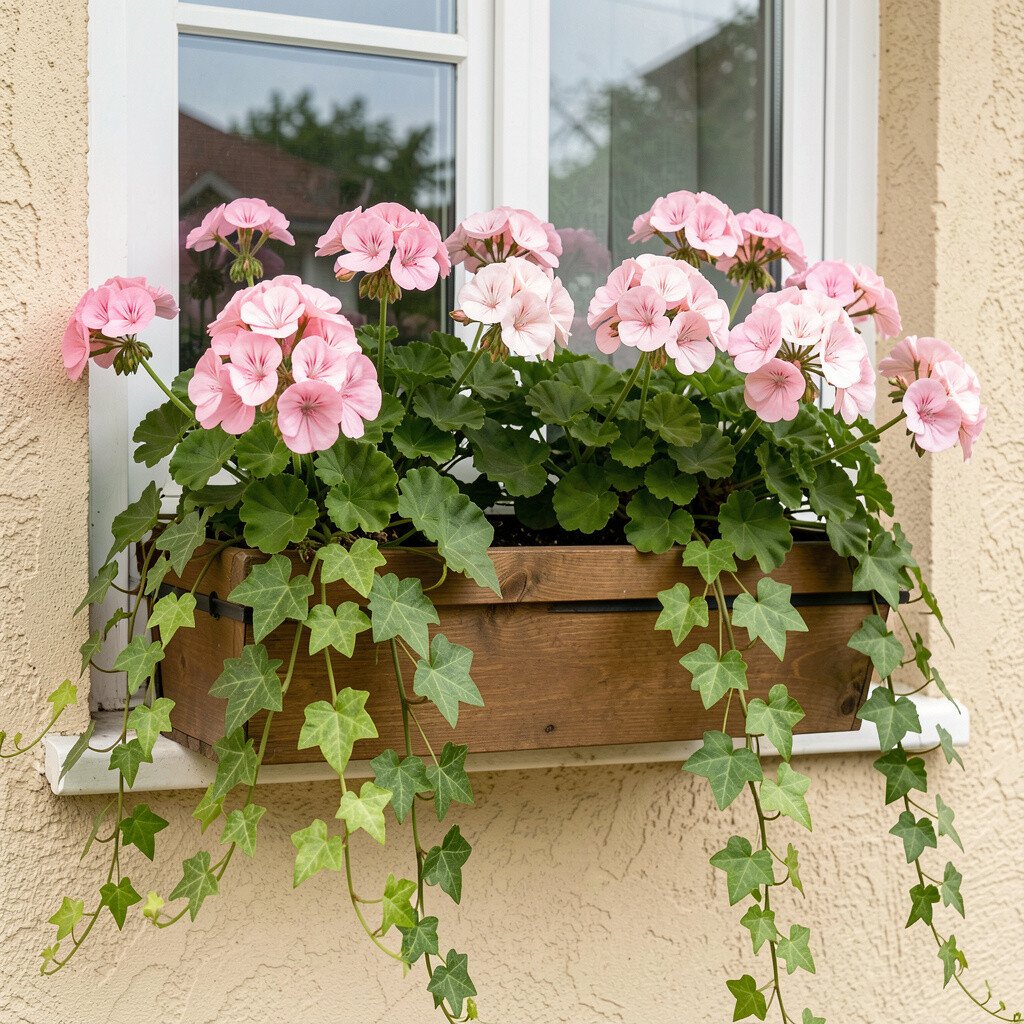
6. Blush Pink Geraniums With Trailing Ivy Vines
Blush Pink Geraniums With Trailing Ivy Vines
Blush pink geraniums look soft and classic, and trailing ivy vines add a gentle waterfall effect. Together, they make the front of your home feel polished without being stiff.
Plant geraniums as your main anchors, then let the trailing plants spill over the sides for movement. A good potting mix with added perlite helps keep moisture balanced for both types. When you water, do it in the morning so leaves dry faster and plants stay healthier.
To personalize, choose a geranium shade that matches nearby décor, like a door color or porch cushion tone. Geraniums can range in price, but you can stretch your budget by using fewer center plants and letting the vines cover the edges. Many people are leaning toward “one main flower, one trailing texture” designs because they’re easier to keep tidy.
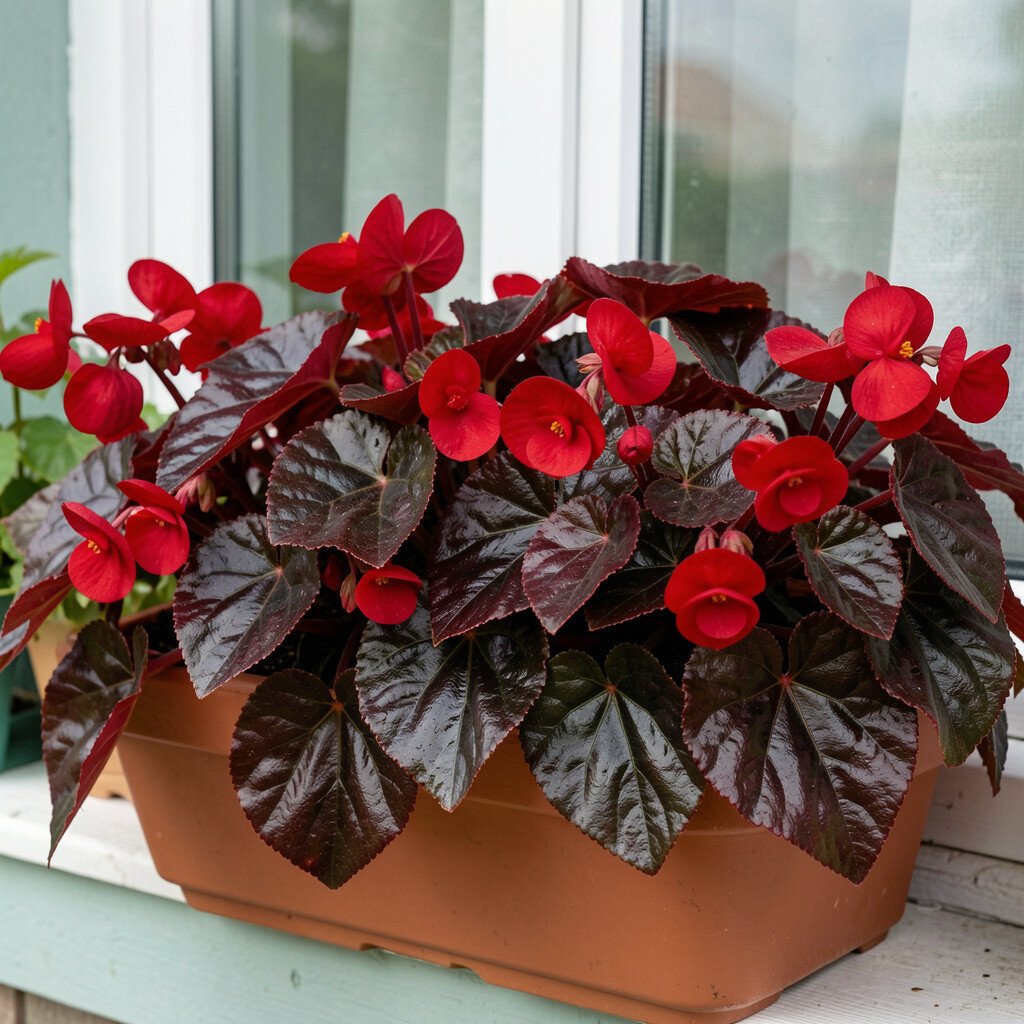
7. Deep Red Begonias With Glossy Dark Leaves
Deep Red Begonias With Glossy Dark Leaves
Deep red begonias feel rich and dramatic, and glossy dark leaves make the box look full even between blooms. From inside, you get a cozy pop of color that looks like a warm painting.
For best results, place begonias in bright, indirect light if your window runs hot in the afternoon. Keep the soil slightly moist, and avoid soaking the leaves. If you see a few leaves turning, remove them quickly so air circulation improves.
Personalization can be as simple as pairing the begonias with a few small white flowers to brighten the dark tones. Cost-wise, begonia starts can be pricier than some annuals, but they last a while and keep looking lush. A current style choice is using darker, jewel-toned plants for a moody, modern look.
8. White Daisy-Like Flowers With Butter Yellow Centers
White Daisy-Like Flowers With Butter Yellow Centers
There’s something instantly refreshing about daisy-like blooms with butter yellow centers. The bright white petals make the window look clean, like fresh linens on a sunny day.
Pick compact plants that fit the depth of your window box, then group them so the centers read as one bold patch. Use a slow-release fertilizer mixed into the soil to support steady flowering. Check the box for drainage regularly, especially after heavy rain.
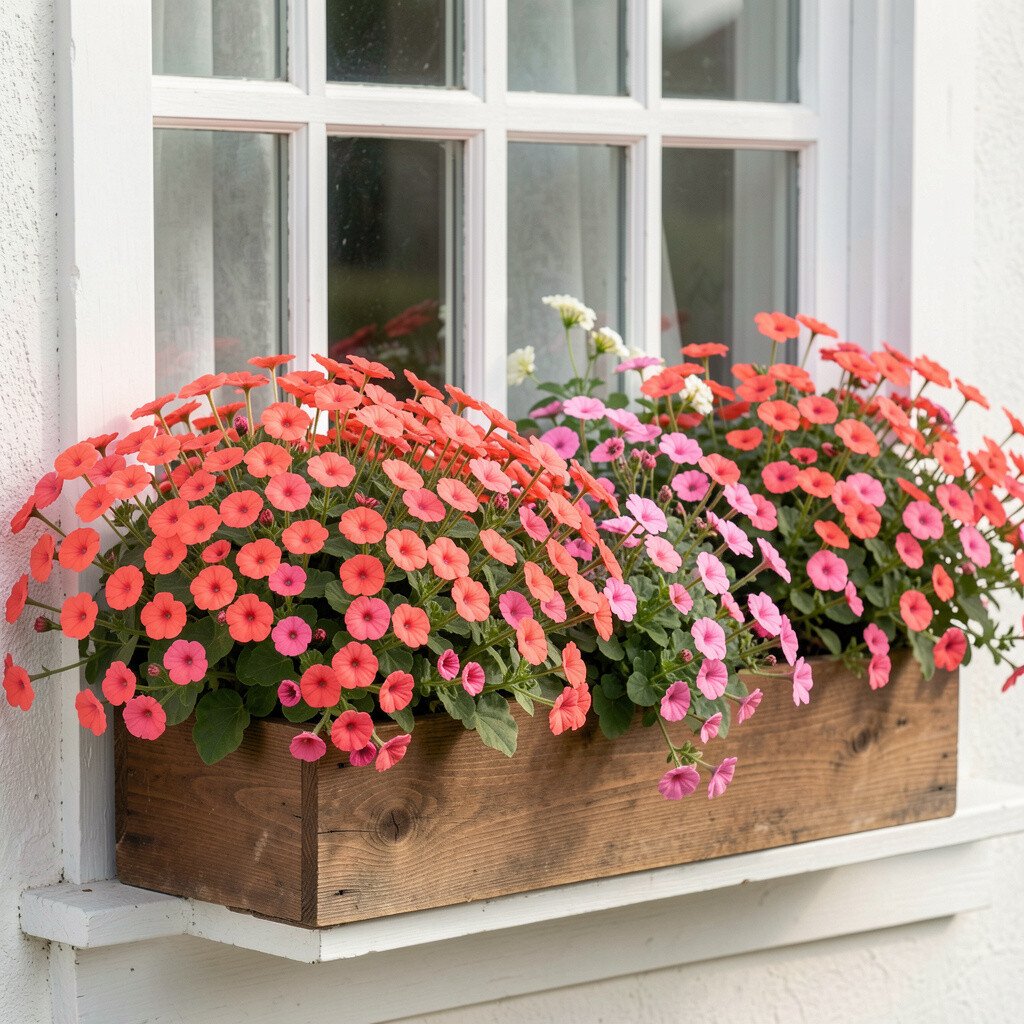
9. Coral Fuchsia Pop With Tiny Pink Petals
Coral Fuchsia Pop With Tiny Pink Petals
Coral fuchsia color can look like it’s glowing, and tiny pink petals add a delicate sparkle. It’s a playful combo that feels lively from both the street and the inside.
Choose fuchsia varieties that handle your light level, since some do better in partial shade while others tolerate sun. Keep plants evenly watered and pinch back new growth to encourage fuller shapes. If your window gets intense heat, consider a light-colored box to reduce temperature swings.
Personalize by weaving in a couple of small, upright plants so the box doesn’t become only trailing. Coral tones can be mid-range in cost, and you might save money by starting with fewer larger plants instead of many small ones. This kind of layered look is trending because it feels curated and lively rather than flat.
10. Green-and-Gold Croton Look With Orange Flower Dabs
Green-and-Gold Croton Look With Orange Flower Dabs
Croton-style foliage with green and gold stripes gives your window box a bold structure. Add orange flower dabs, and the whole arrangement looks like a sunset framed by leaves.
Plant foliage-forward plants as the foundation, because they stay attractive even when blossoms slow down. Make sure your box has enough room, since many colorful foliage plants grow wider than you expect. For easier maintenance, wipe down leaves occasionally to remove dust that can dull their colors.
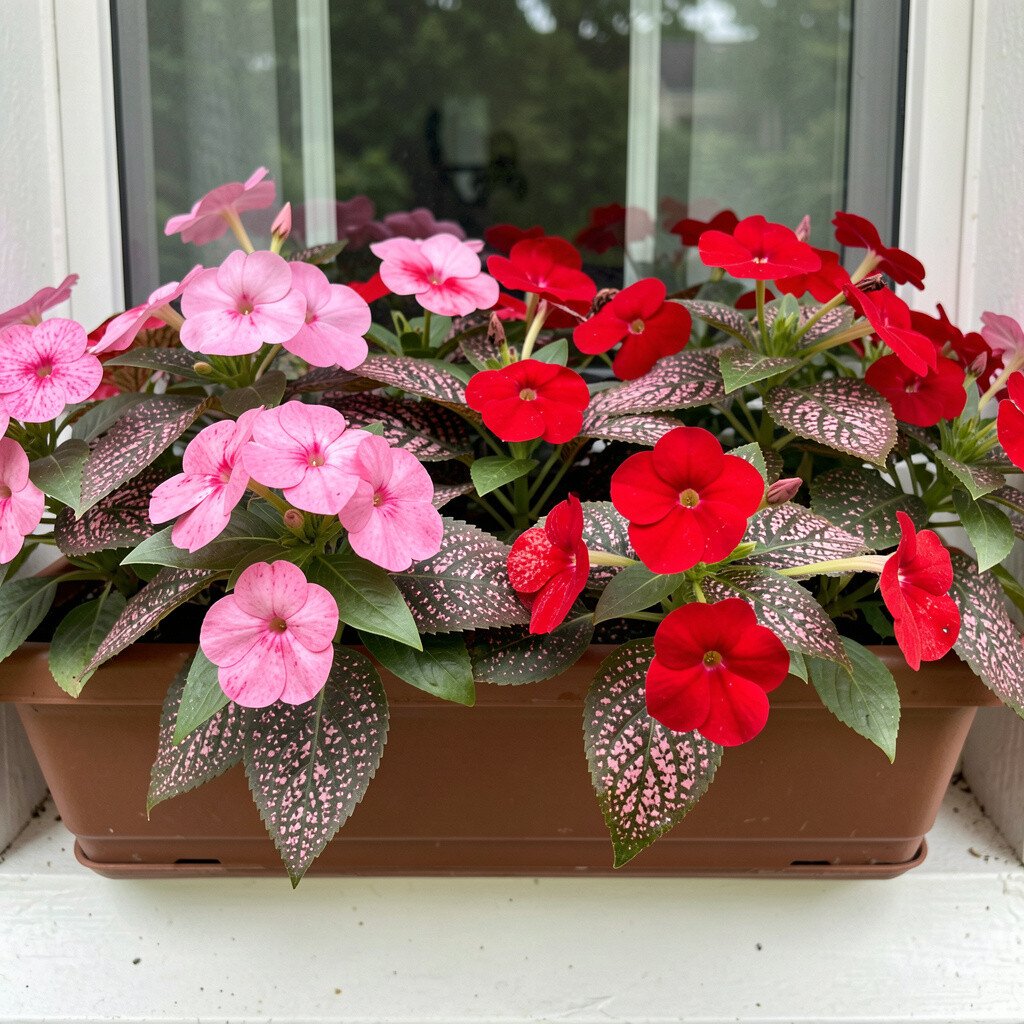
11. Pink-Red Impatiens With Speckled Leaf Charm
Pink-Red Impatiens With Speckled Leaf Charm
Impatiens bring a steady stream of color, and the pink-red shades look inviting even on cloudy days. Speckled leaf details add a little “hidden pattern” that makes the box feel special up close.
These plants often do well in bright shade, so they’re great for windows that don’t get all-day sun. Water when the top inch of soil feels slightly dry, then soak thoroughly until water drains. Keep the plants spaced so leaves can dry between waterings.
To personalize, match the flower color to a nearby accent like outdoor cushions or a planter on the steps. Impatiens can be a good value, especially when purchased as established plants for quick fullness. Right now, many homeowners prefer shade-friendly color because they want curb appeal without needing full sun.
12. Turquoise Sweet Alyssum With Soft Lavender Bloom
Turquoise Sweet Alyssum With Soft Lavender Bloom
Turquoise tones paired with soft lavender bloom create a calm, cooling effect. The tiny flowers feel airy, so your window box looks light and breezy.
Alyssum is great for filling gaps, so you can use it as the “cover” while adding a few slightly taller plants for structure. Keep soil evenly moist during establishment, then allow the mix to dry a bit between waterings. If you want a tidy look, trim back spent stems so it can regrow.
13. Hot Pink Petunias With Neon Green Spillers
Hot Pink Petunias With Neon Green Spillers
Hot pink petunias are pure energy, and neon green spillers make the colors feel louder in the best way. The effect is perfect for a home that likes cheerful, bold style.
Choose petunias with a trailing habit so you get a curtain of flowers without constant tying. Feed with a balanced fertilizer every few weeks during active growth to keep the blooms going strong. If you spot leggy stems, snip them back to encourage new side growth.
Personalize by using a box color that contrasts with the flowers, like black or white, so the pink pops harder. Petunias can be budget-friendly, especially when you buy them in clusters or flats. A popular trend is “high contrast modern” window boxes, where you lean into vibrant color blocks instead of subtle blending.
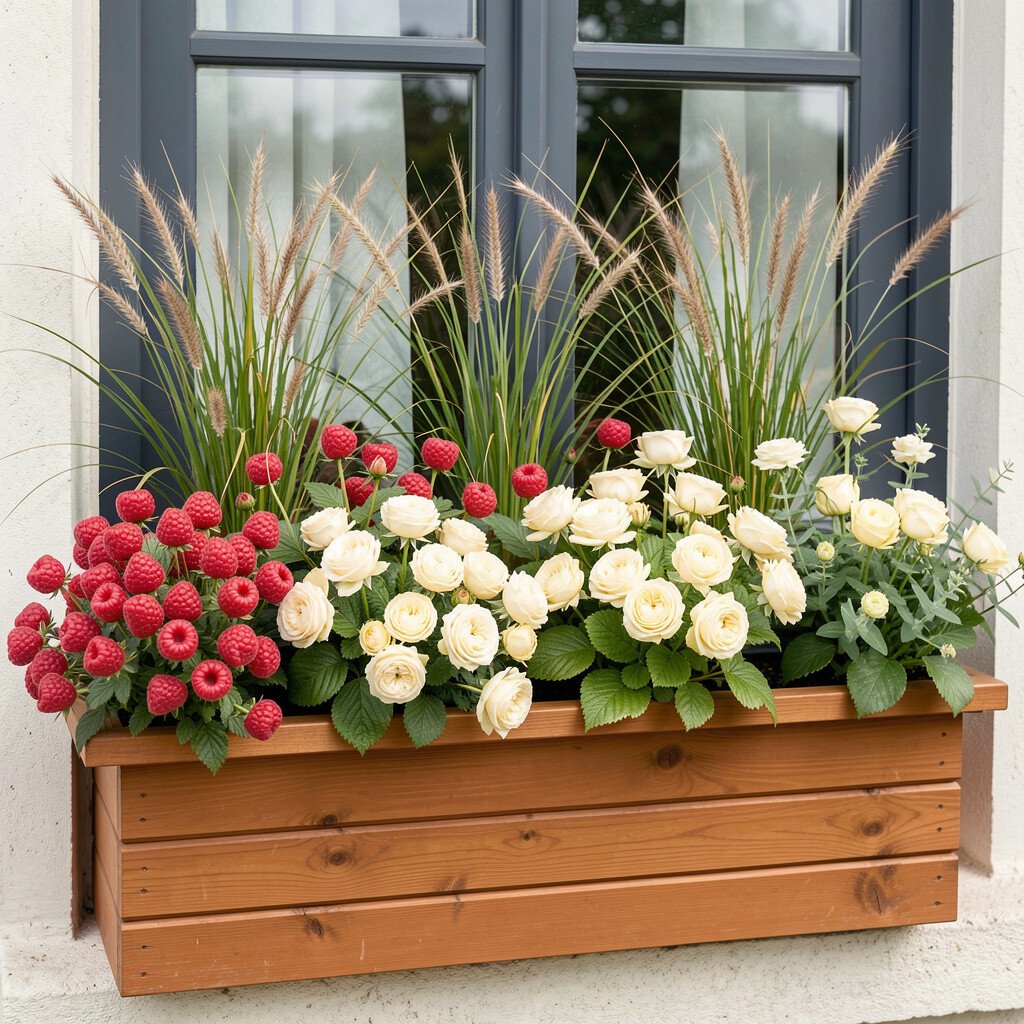
14. Raspberry and Cream Mix With Ornamental Grass Hush
Raspberry and Cream Mix With Ornamental Grass Hush
Raspberry and cream flowers look sweet and romantic, and ornamental grass adds a softer movement at the edges. The grass makes the arrangement feel more natural, like it belongs in a little meadow.
Use the grass like a frame rather than a filler, so it doesn’t crowd the flowers. Plant the grass slightly toward one side for a casual diagonal style. Water consistently the first season, then watch how it behaves during heat so you can fine-tune your schedule.
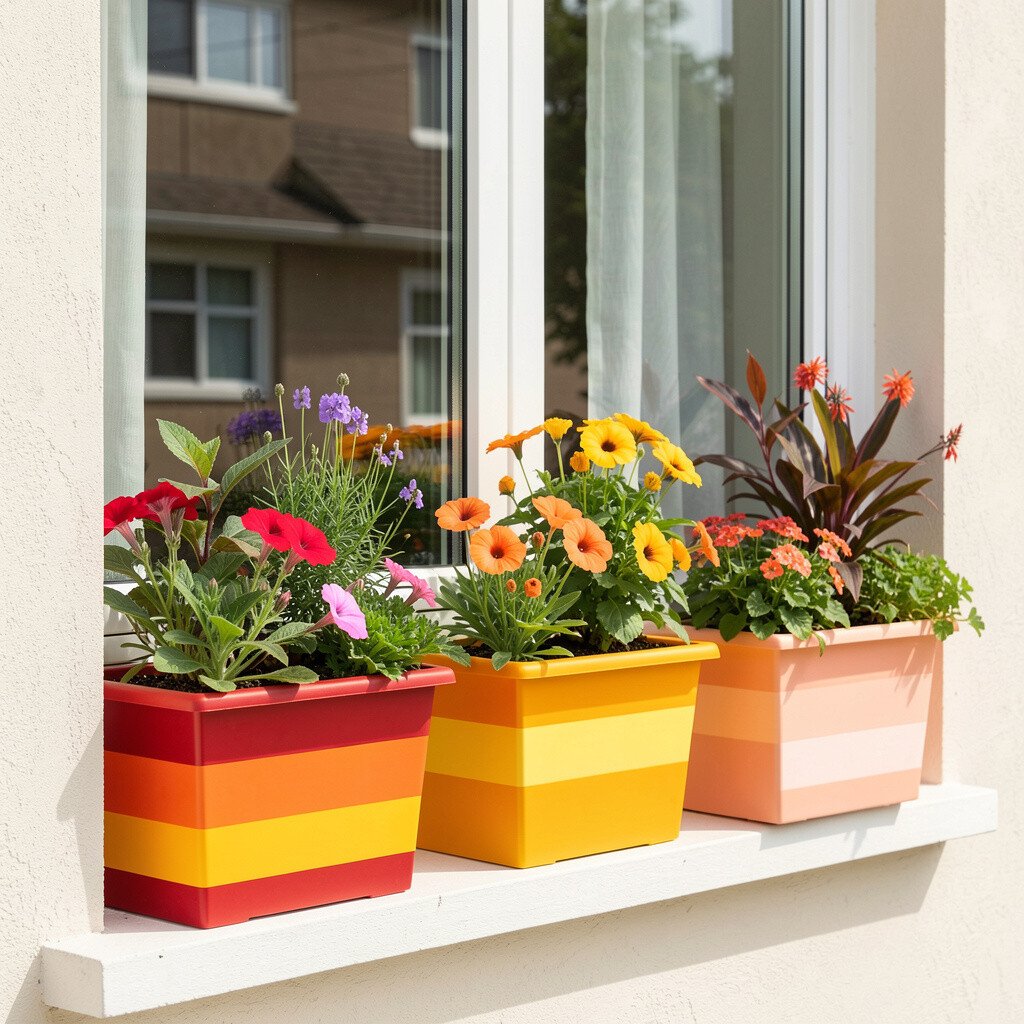
15. Sunset Stripe Planters With Red, Yellow, and Peach Stages
Sunset Stripe Planters With Red, Yellow, and Peach Stages
Think of your window box as a mini sunset strip, with red, yellow, and peach stages that blend smoothly from one side to the other. The layered color feels creative, and it draws the eye right away.
To make stripes look neat, map out where each color will go before planting. Use uniform plant heights within each color group so the transition looks clean. After planting, gently pat the soil and water slowly to avoid disturbing the pattern.
Personalization is easy here because you can match the palette to your porch decor. Cost can stay reasonable since you can mix a few larger “anchor” plants with smaller fillers. This “planned gradient” look is gaining attention because it feels like art you can maintain, not just something you set and forget.
16. Champagne-Gold Marigolds With Soft Lavender Edging
Champagne-Gold Marigolds With Soft Lavender Edging
Champagne-gold marigolds feel warm and welcoming, and lavender edging adds a gentle twist. The mix is elegant without being too formal.
Keep marigolds as the main presence, then tuck lavender-toned plants along the border so they look like a highlight. Ensure good airflow and drainage, because both types can struggle if the soil stays too damp. If your window box sits near a door, consider shielding it a little from heavy splashes during rain.
For personalization, use a decorative box liner that complements your home’s trim color. Marigolds are usually affordable, while lavender-style plants can vary, so it helps to balance cost by choosing fewer premium plants and more hardworking fillers. A current trend is pairing warm golds with cooler accents for a more layered, designer look.
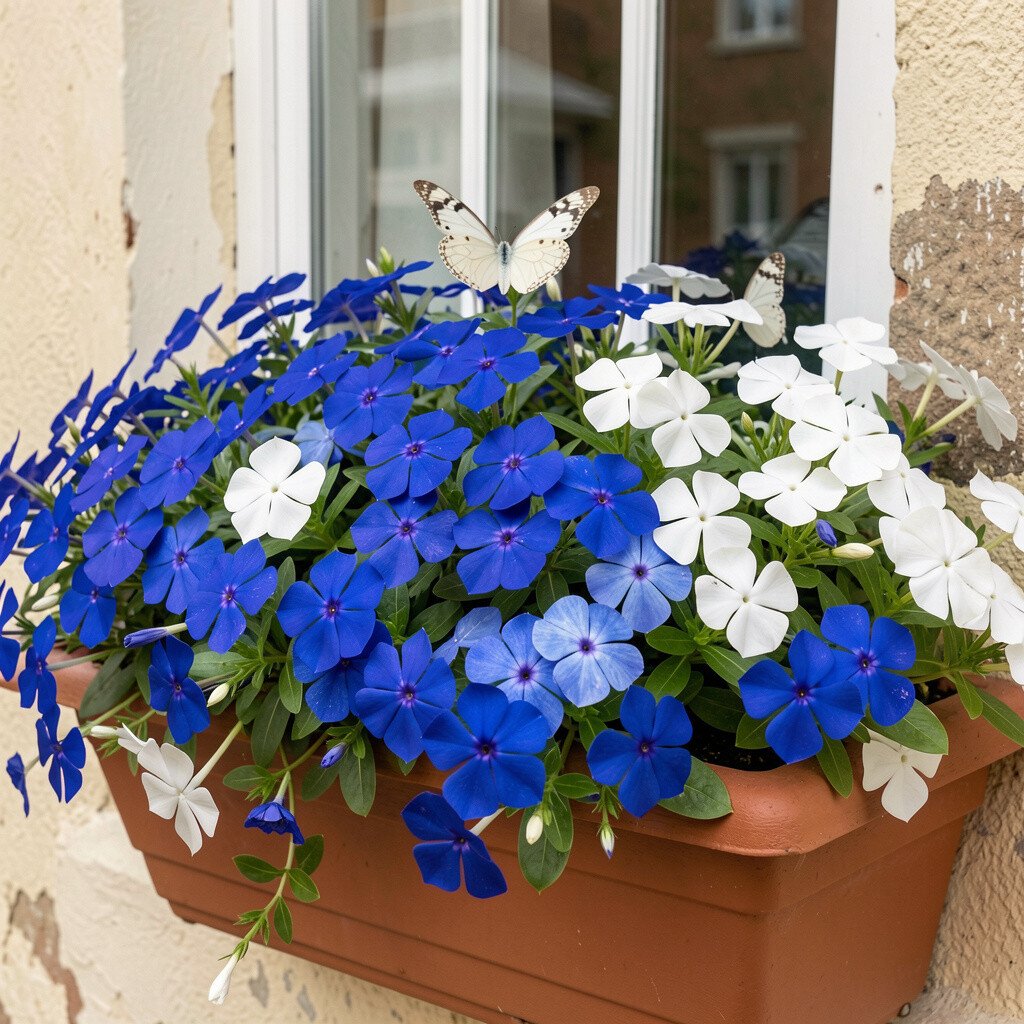
17. Royal Blue Vinca With White Flower Butterflies
Royal Blue Vinca With White Flower Butterflies
Royal blue vinca feels bold and steady, and white accents look like tiny butterflies landing on the surface. Together, the box looks crisp, tidy, and full of life.
Vinca often holds up well in bright conditions, making it a good pick for sun-facing windows. Plant in a consistent pattern so the white accents repeat, which makes the arrangement feel intentional. For maintenance, remove faded blooms to keep the display looking sharp.
Personalize by adding a couple of taller stems in the back to create a gentle tier effect. Vinca is often a reliable value plant, and it can reduce the need for frequent replacement. Many modern window boxes lean into “repeat and rhythm,” where repeating colors create a visually satisfying pattern.
18. Cranberry Red With White Pine-Like Foliage Texture
Cranberry Red With White Pine-Like Foliage Texture
Cranberry red flowers look cozy and festive, and pine-like foliage texture adds depth and structure. The result is a box that feels seasonal even when it’s not holiday time.
Choose foliage plants that stay compact so the texture doesn’t swallow the flowers. Water evenly, and avoid letting the soil completely dry out for long stretches. If you want a long-lasting look, use a mix of flowering plants and textured greens so you always have visual interest.
To personalize, match the cranberry shade to any seasonal wreath or outdoor lantern style. Cost considerations depend on whether you choose live evergreen-style texture plants, but you can often reduce expenses by focusing on a few premium pieces and using budget-friendly annuals for bloom. Right now, many homeowners are leaning toward “texture first” planting because it looks rich in photos and in real life.
19. Tropical Lime Foliage With Orange Hibiscus-Style Blossoms
Tropical Lime Foliage With Orange Hibiscus-Style Blossoms
Lime foliage brings a tropical vibe, and orange hibiscus-style blooms add a bold, vacation feel. Even a small window box can look like a mini getaway with this kind of energy.
Place the box where it gets plenty of light, and consider a larger container if the plants tend to grow quickly. Feed with a fertilizer that supports flowering so the blooms keep showing up. Keep an eye on humidity, because hot, dry air can stress tropical-style plants faster than you expect.
Personalize by choosing accessories that match the tropical mood, like woven accents or a fun planter stand. The cost can be higher for tropical-looking plants, but buying a few strong starters can be more cost-effective than filling the whole box with small seedlings. A current trend is bringing “vacation colors” to everyday spaces, especially for front porches.
20. Sage Green and Cream With Soft Rose-Colored Flowers
Sage Green and Cream With Soft Rose-Colored Flowers
Soft rose-colored flowers over sage green and cream foliage feel calm and refined. The color story is gentle enough for any home style, from classic to modern.
Use a neutral base of greenery, then choose rose-toned blooms to create the highlight. Plant slightly denser at the center and thin out toward the edges for a natural, flowing shape. Water at the base and keep leaves as dry as you can to prevent issues in humid weather.
For personalization, pick a rose shade that matches your interior artwork or bedding tones for a cohesive feel. Cost-wise, using a neutral base can help because some foliage plants are more budget-friendly than constant bloomers. People are also loving “quiet color palettes” lately because they look flattering in both daylight and evening porch lighting.
21. Mango Peach Flowers With Dark Purple Leaf Spines
Mango Peach Flowers With Dark Purple Leaf Spines
Mango peach flowers look juicy and warm, and dark purple leaf spines make the contrast feel striking. This is the kind of window box that gets compliments because it looks styled, not accidental.
Pair peach blooms with a few deep purple foliage plants so you get structure and a strong visual base. Use a potting mix with steady moisture control to help the peach flowers stay consistent without overwatering. If your window is windy, anchor the box well and check soil moisture more often.
To personalize, choose a box finish that matches your home’s door or rail color so the contrast feels intentional. Peach blooms can vary in price depending on the plant type, but you can keep costs down by selecting hardy perennials or well-performing annuals for your climate. A trend you’ll notice is “color pairing with drama,” where warm fruit tones meet dark foliage for an elevated look.
22. Sapphire Lobelia With Silver Dusty Millers
Sapphire Lobelia With Silver Dusty Millers
Sapphire lobelia combined with dusty millers looks like a starry night scene with a silvery glow. The plants create a cool, textured look that feels crisp and clean.
Dusty millers add sparkle because their leaves catch light, while lobelia provides deep color that stays eye-catching. Keep lobelia’s watering steady, but avoid soggy soil by using a mix that drains well. If you want a fuller box, plant in small clusters rather than one straight line.
Personalize by adding a small seasonal accent, like a simple ribbon tie or a lightweight charm, and keep it easy to remove when you switch seasons. Cost considerations are usually favorable because dusty millers can be affordable, and lobelia often fills out quickly once established. This combination is popular in modern landscaping because it looks fresh, detailed, and photo-ready.