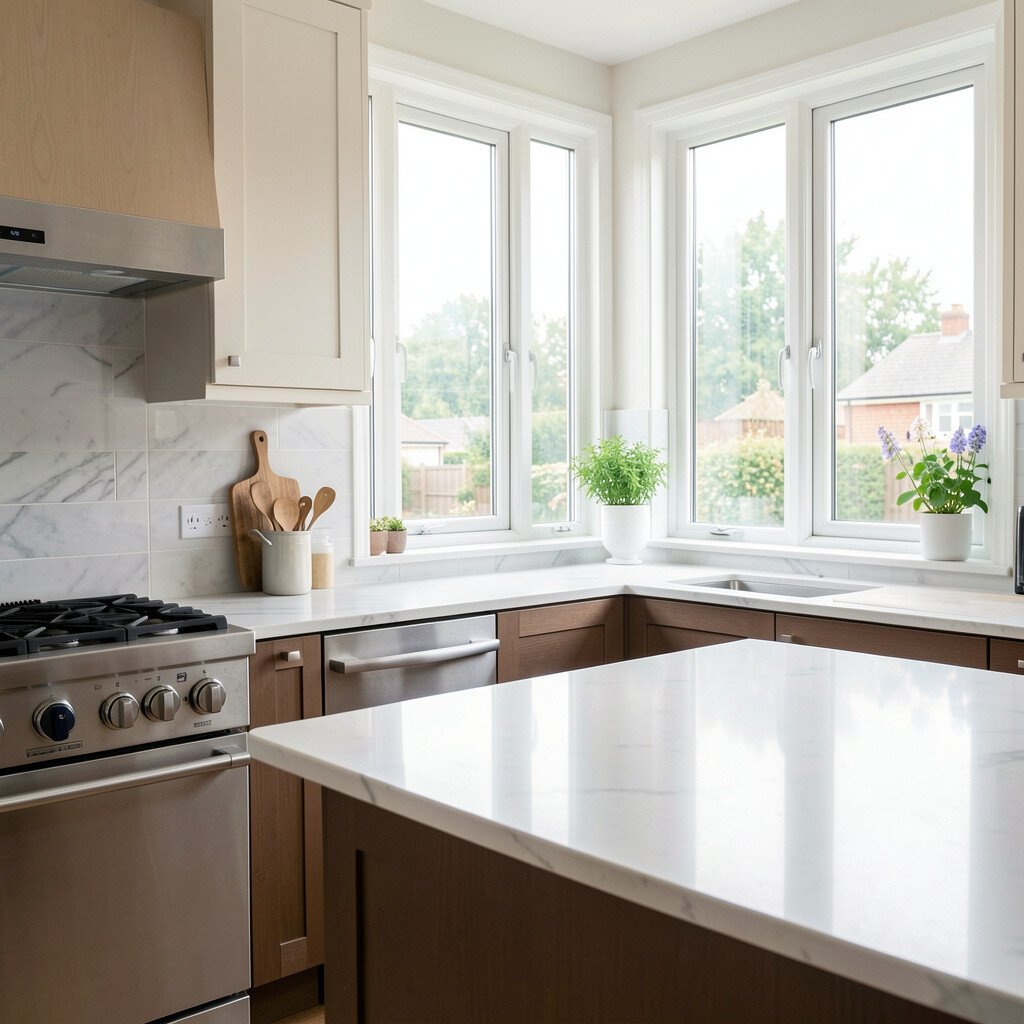
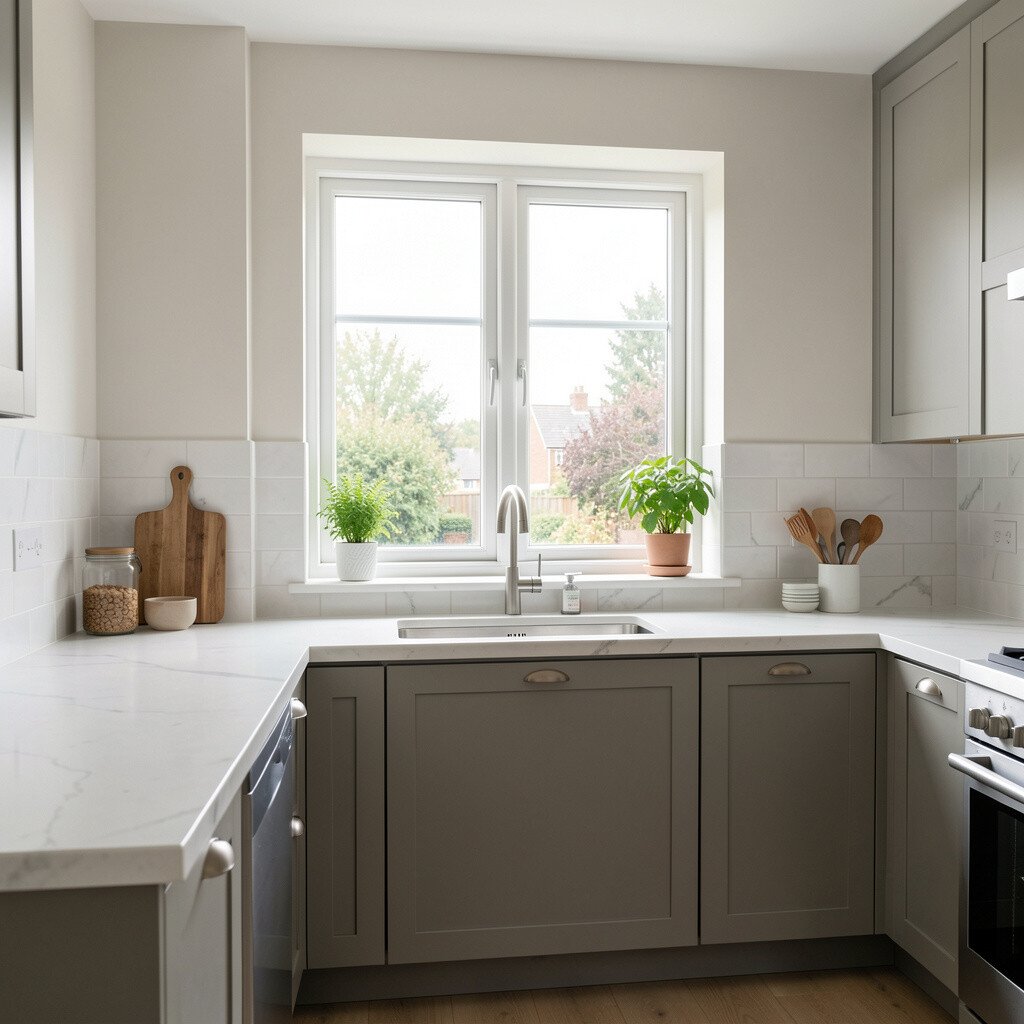
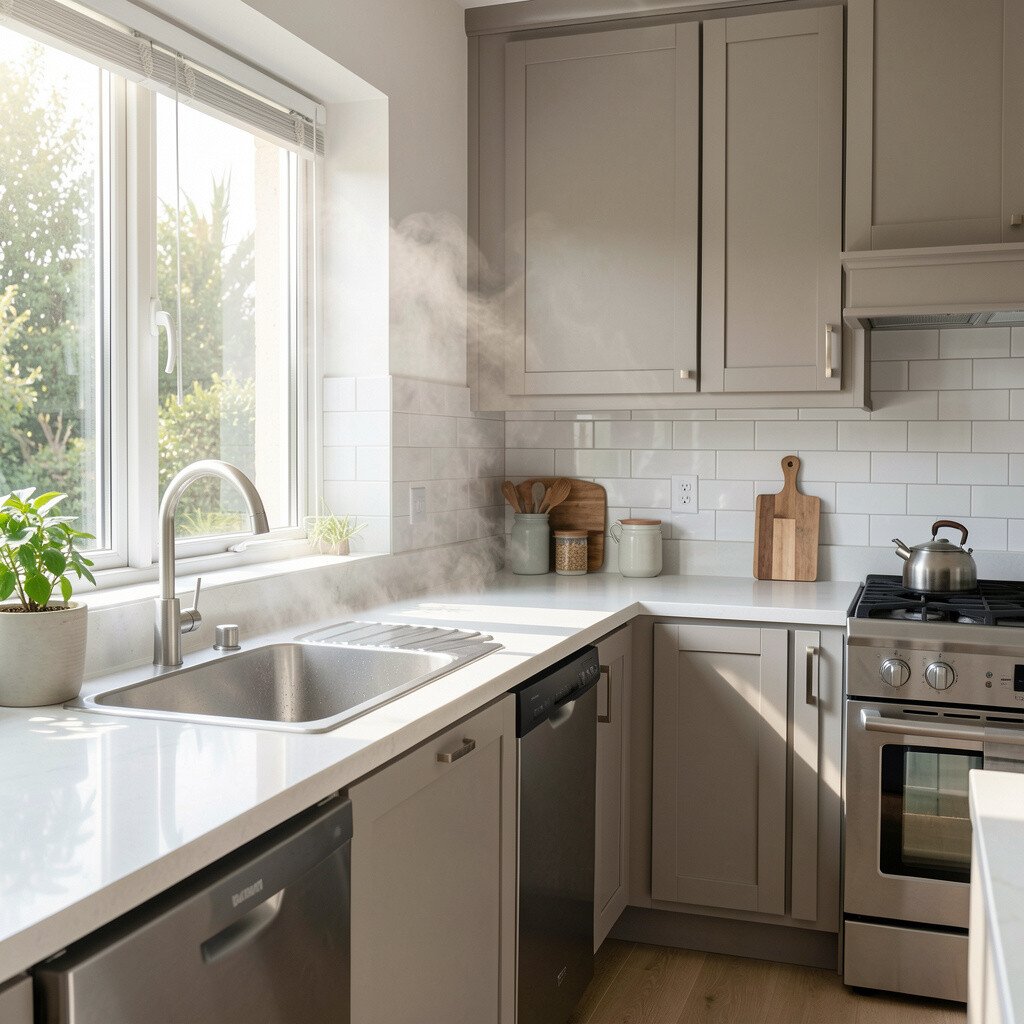
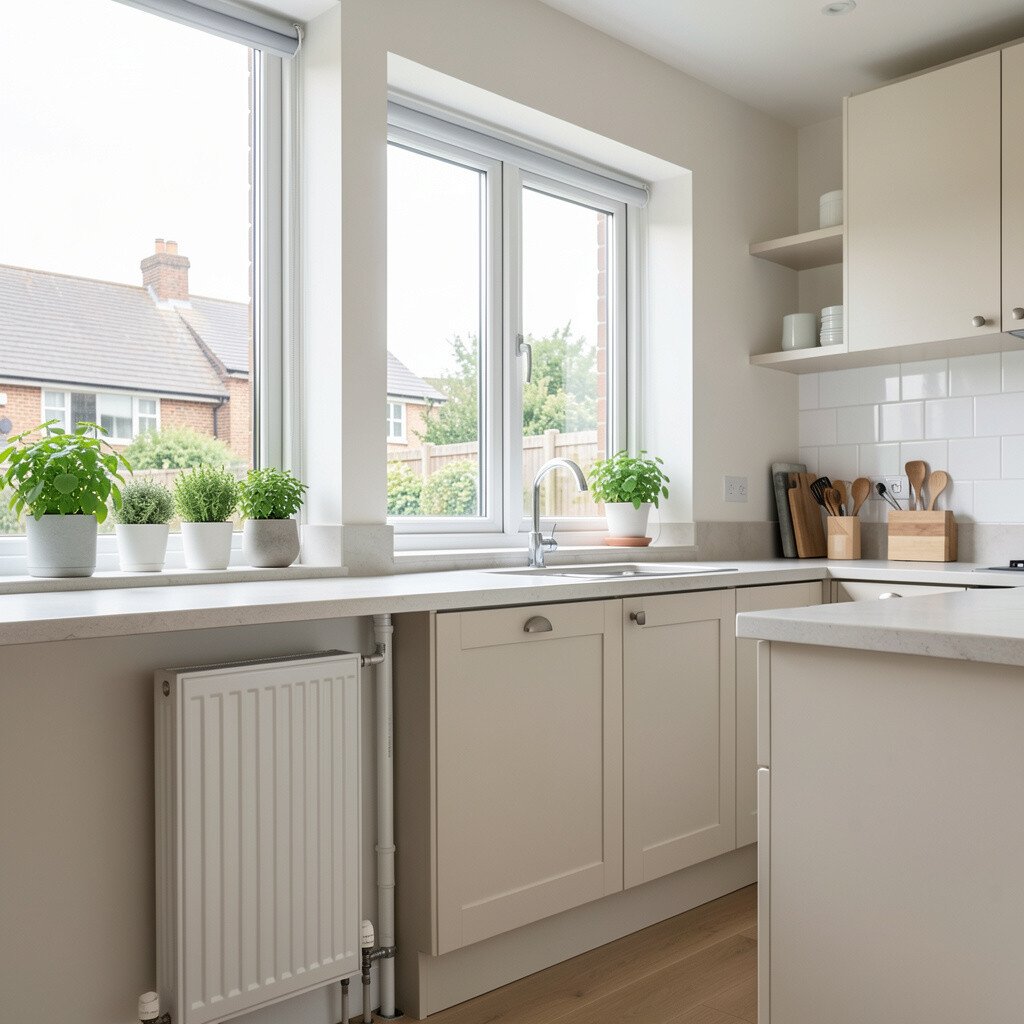
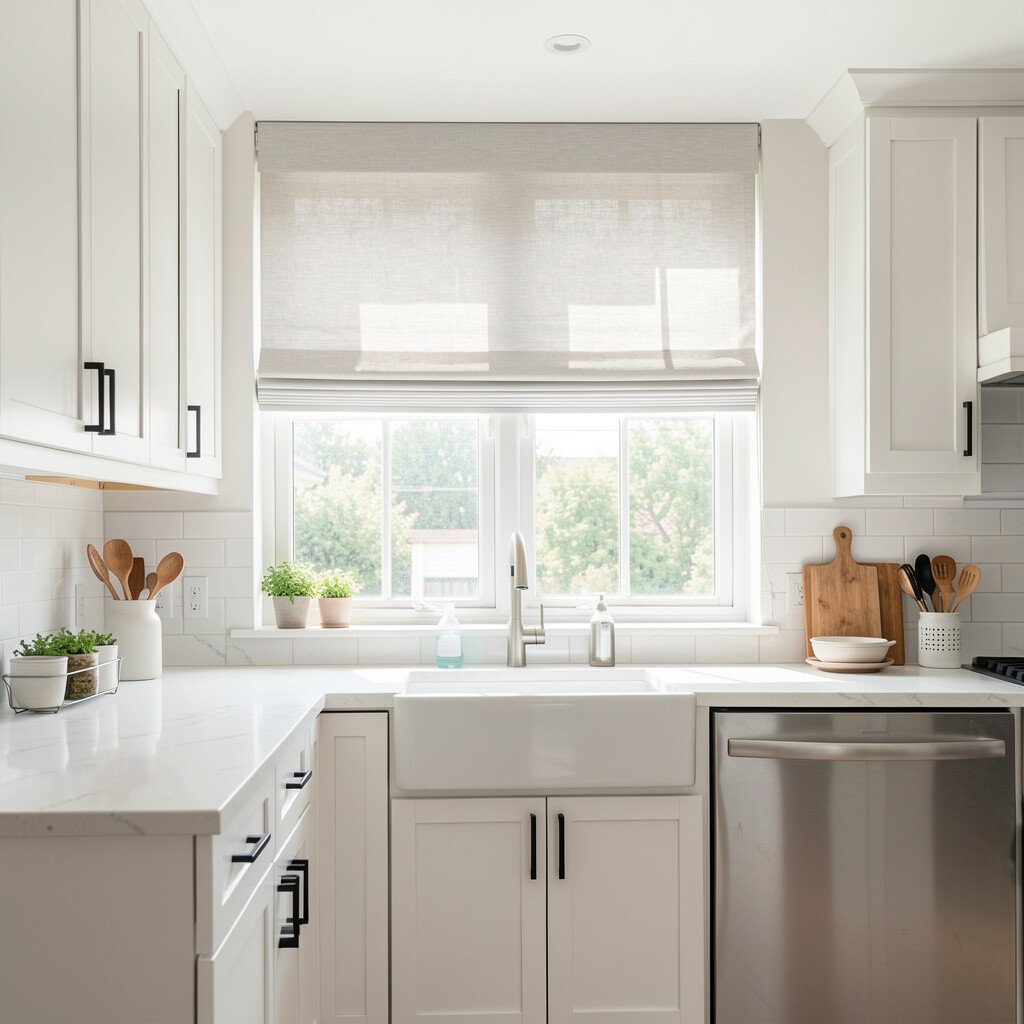
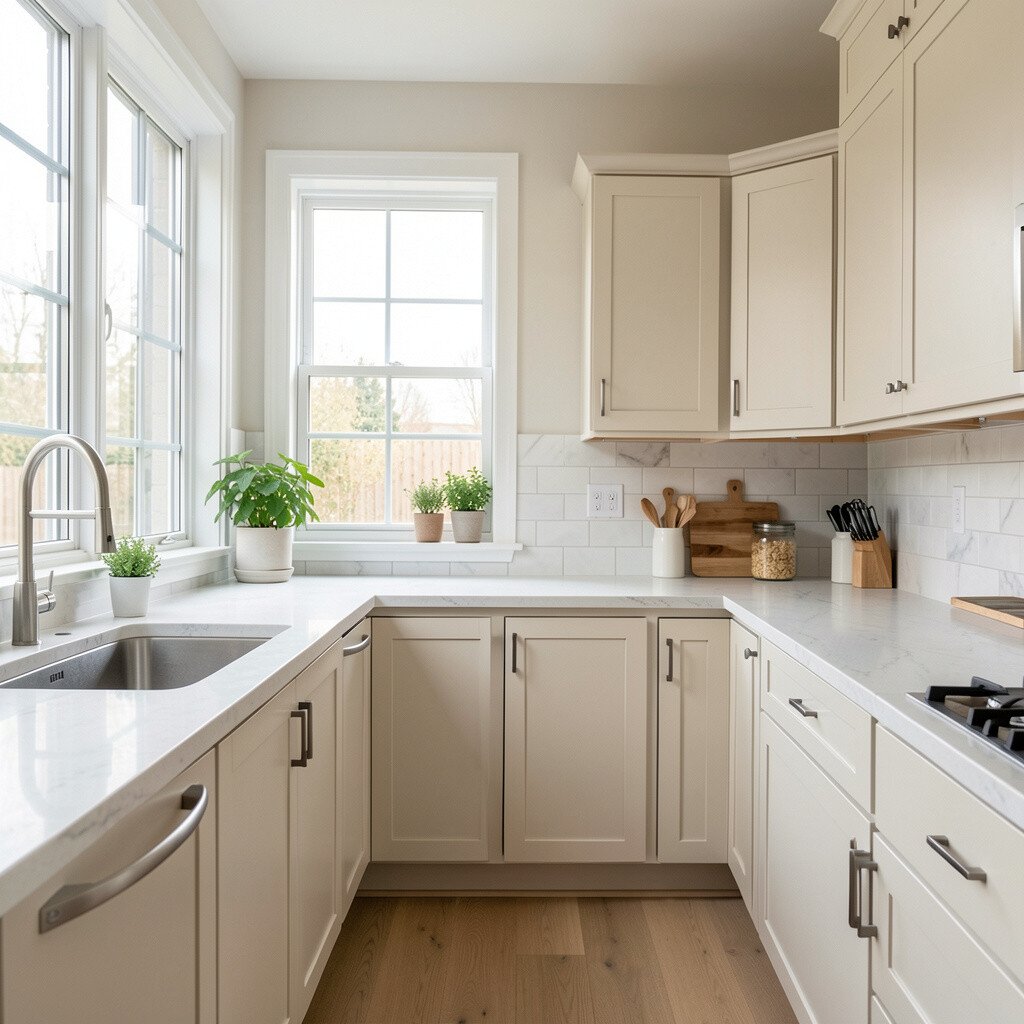
Look at your window at different times of day, not just when you move in. Notice where the glare lands on your counter and where shadows collect near the sink.
Soft morning light can make dishes easier to rinse, but harsh afternoon sun can cause reflections on shiny faucets. If you love a bright look, choose materials that handle glare well, like matte stone or satin finishes. Position the main prep zone so your eyes stay comfortable, especially when you’re chopping or reading a recipe.
2. Treat the Window Like a Helper, Not a Wall
Treat the Window Like a Helper, Not a Wall
A window kitchen feels special because you get a view while you work. When you place the right tasks under it, the space becomes more than pretty.
Try using the window area for tasks that match natural light, like washing produce, sorting herbs, or setting up dough for proofing. You can also add a slim ledge for a cutting board so you get a clear working spot without blocking the view.
That simple alignment helps you save steps, since your ingredients stay near where you already need good light.
3. Measure the Window Twice, Then Measure Again in Real Life
Measure the Window Twice, Then Measure Again in Real Life
Bring a tape measure into your daily routine and picture your body at the counter. The distance from the sill to your usual countertop height matters more than most people think.
Account for how window trim sits, how much it swings or opens, and whether a blind or curtain will hang in the way of cabinet doors. If you plan to mount anything on the wall, like a shelf or a curtain rod, check that you won’t hit the window crank or hardware.
When you get measurements right, you avoid the frustrating moment of ordering cabinets that look fine on paper but feel wrong when you stand there.
4. Choose Materials That Handle Sun, Steam, and Splashes
Choose Materials That Handle Sun, Steam, and Splashes
Window kitchens live at the edge of weather, because sun, humidity, and occasional splashes all reach that area. Sun can fade light fabrics and warm up certain finishes, while steam rises from cooking and bathing the space in moisture.
Pick durable, cleanable surfaces near the window so you don’t feel like you’re constantly protecting everything. A countertop with a sealed finish helps with wipe-downs, and a backsplash that resists water makes long days of cooking easier to manage.
5. Plan for Radiators, Vents, and Any Hidden Heat Changes
Plan for Radiators, Vents, and Any Hidden Heat Changes
If your window is near a radiator, vent, or duct, you’ll want to understand how heat moves. Warm air patterns can affect cabinet doors, window coverings, and even how some finishes age.
Keep airflow in mind when you design lower cabinets or add doors below the window. You may need small clearance gaps behind panels or a layout that avoids trapping heat against the wall.
It’s one of those details that feels boring until you notice condensation, stubborn smells, or windows that never fully dry.
6. Window Coverings Should Fit Your Hands, Not Just Your Style
Window Coverings Should Fit Your Hands, Not Just Your Style
A beautiful curtain can become annoying if it always brushes your groceries or gets in your way at sink height. Choose coverings that open and close smoothly, even when you’re busy with wet hands.
Roller shades, pull-down blinds, or layered sheer-and-blocking setups can give you privacy and comfort without making the window feel crowded. If your kitchen runs sunny, a glare-reducing option can make food prep feel calmer and more readable.
Personal comfort goes a long way, so pick something that you’ll actually use every day, not something you just admire.
7. Don’t Block the View With Cabinets That Feel Too Heavy
Don’t Block the View With Cabinets That Feel Too Heavy
Window kitchens look airy when the design keeps the line of sight open. If you fill every inch with tall cabinets, the space can feel cramped even with lots of light.
Use a mix of open shelving, shallower cabinets, and a clear countertop zone so the window still feels like the star. Floating shelves can hold daily items like bowls and spices, while closed storage hides clutter so your counter stays calm.
8. Make Space for a Landing Zone Where Your Hands Naturally Rest
Make Space for a Landing Zone Where Your Hands Naturally Rest
Think about how you actually cook, not how a photo looks. You need a nearby place to set down a knife, rest a cutting board, hold a bowl, and wipe your hands.
When the window sits above or near your prep area, you can create a practical landing zone that makes the workflow feel smooth. A narrow pull-out shelf or a slim counter extension can give you just enough room to stop juggling items between stove, sink, and fridge.
9. Sink Placement Can Change Everything About Cleanliness
Sink Placement Can Change Everything About Cleanliness
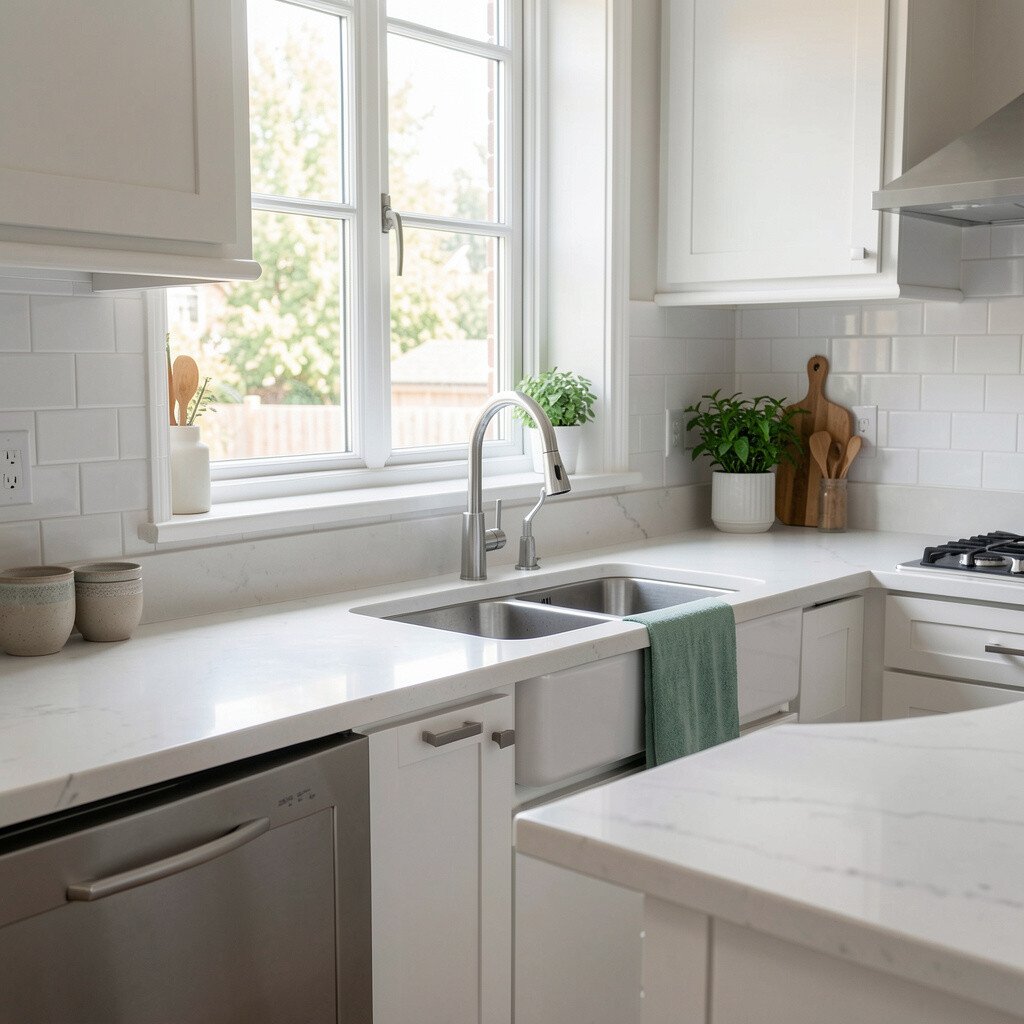
A sink under a window can be delightful because you get daylight while you wash dishes. It also makes rinsing feel less tedious, since the view gives you a mental break.
But you need to plan the faucet carefully so it doesn’t splash the window area. A faucet with a good reach and a spray pattern that stays controlled can reduce mess on the sill and surrounding wall.
If the window opens outward, check the clearance so you don’t bump it while washing pans. Pair your sink with a backsplash and easy-to-wipe materials so everyday water spots don’t become a big chore.
10. Think About Privacy and Safety When the Window Faces Busy Spaces
Think About Privacy and Safety When the Window Faces Busy Spaces
Even if you love the light, privacy matters when people can see inside. A kitchen window facing a street or neighbor’s yard can make you feel exposed while you cook.
Use window films, textured glass options, or adjustable coverings that still let brightness in. This keeps your space comfortable without turning it into a dark room, and it can support the current trend of “soft privacy” that looks nice while doing its job.
11. Use a Backward Plan for Outlets, Cords, and Tech
Use a Backward Plan for Outlets, Cords, and Tech
In many window kitchens, outlets end up forgotten until you’re holding an appliance cord. That’s when you realize a countertop near the window needs power for a kettle, toaster, or charging station for phones.
Place outlets so cords don’t hang across wet areas or block cabinet doors when you open them. If you plan a coffee corner, consider a dedicated power spot hidden near the backsplash so you can keep the counter tidy.
Smart home devices and small speakers also need planning, and choosing positions early helps your setup look intentional, not patched together.
12. Treat Storage Like a Flow, Not a Stack
Treat Storage Like a Flow, Not a Stack
A window can make storage choices feel more visible, so clutter stands out faster. That means your storage system should match your habits.
Put frequently used items near the window zone if it’s where you prep food, and store bulky gear closer to the stove or pantry. Drawer dividers, spice organizers, and pull-out trays make it easier to keep things in order, even when the counter is sunny and on display.
13. Build the Final Look With Personal Details That Still Work
Build the Final Look With Personal Details That Still Work
Personal style can be practical, especially in a window kitchen where the details get noticed. A small tray for oils and vinegars, a vase of fresh herbs, or a custom stencil on the backsplash can bring warmth without chaos.
Current trends lean toward natural textures, like warm wood tones and soft neutral palettes, because they pair beautifully with daylight. Cost-wise, you can get a high-end feel without spending everything at once by focusing your budget on the surfaces people touch most, like the countertop and faucet.
Upgrade lighting under cabinets, add a peel-and-stick backsplash upgrade if you’re testing styles, and tailor the window shelf or ledge to your daily routine. When the design reflects how you live, the window kitchen becomes uniquely yours every single day.