Concrete stairs look calm, solid, and quietly stylish. When done right, they make a home feel crisp from the moment you step inside.
Here are minimalist concrete stair ideas that balance beauty, safety, and everyday practicality. Each one brings a different mood, so you can match your space without overcomplicating the design.
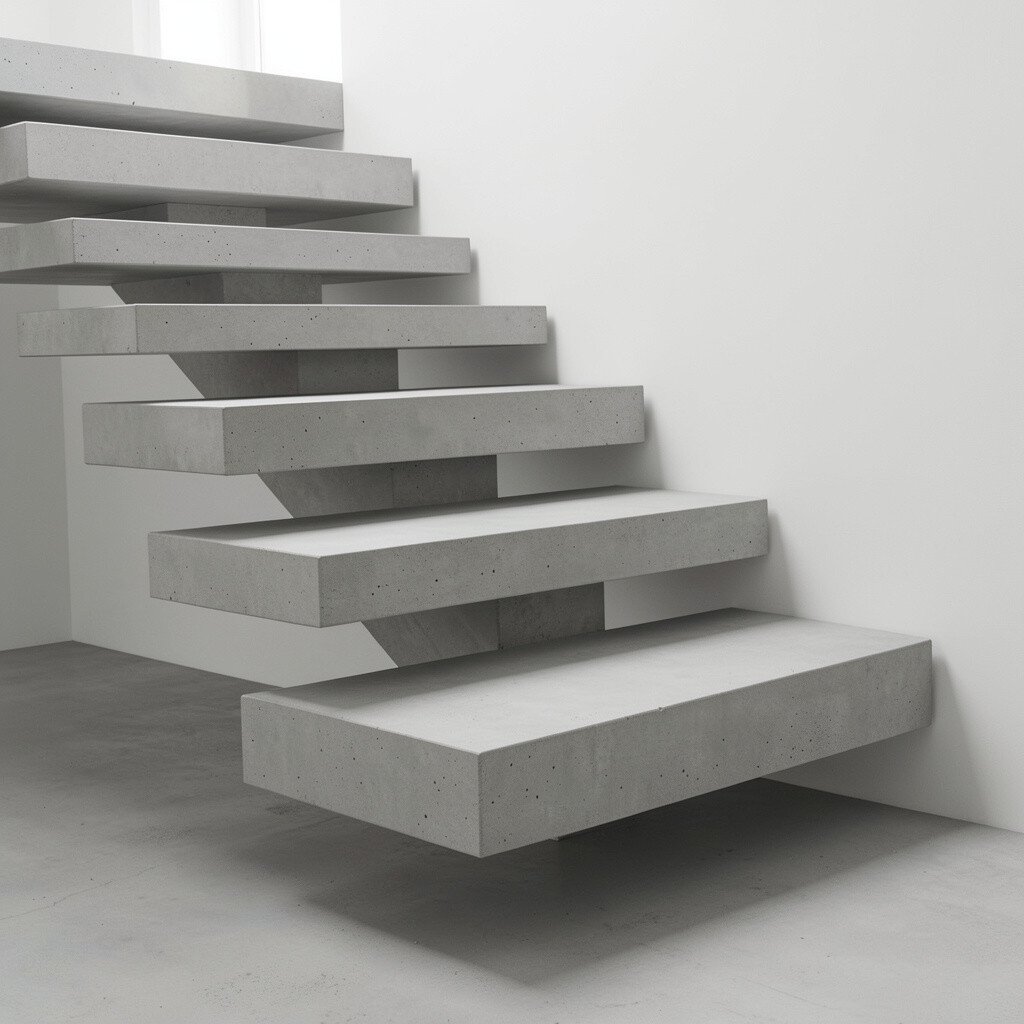
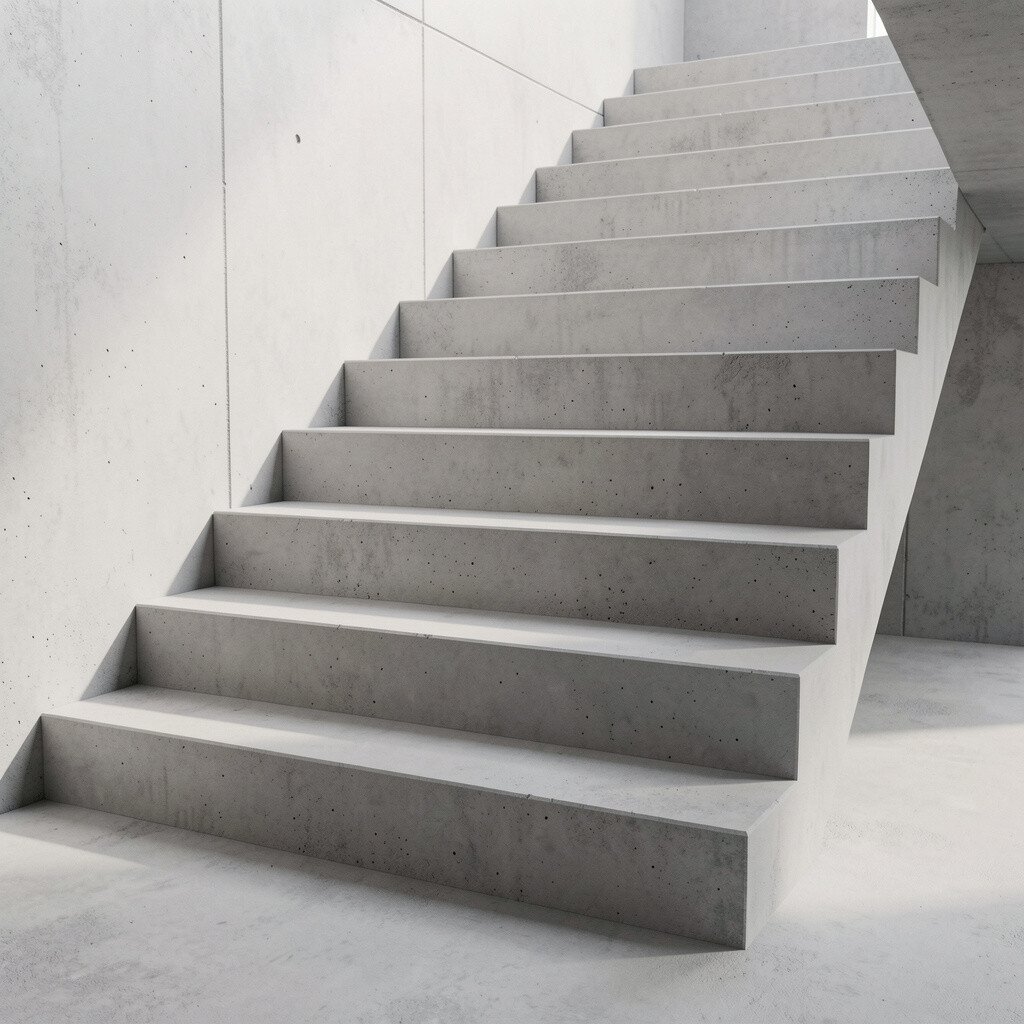
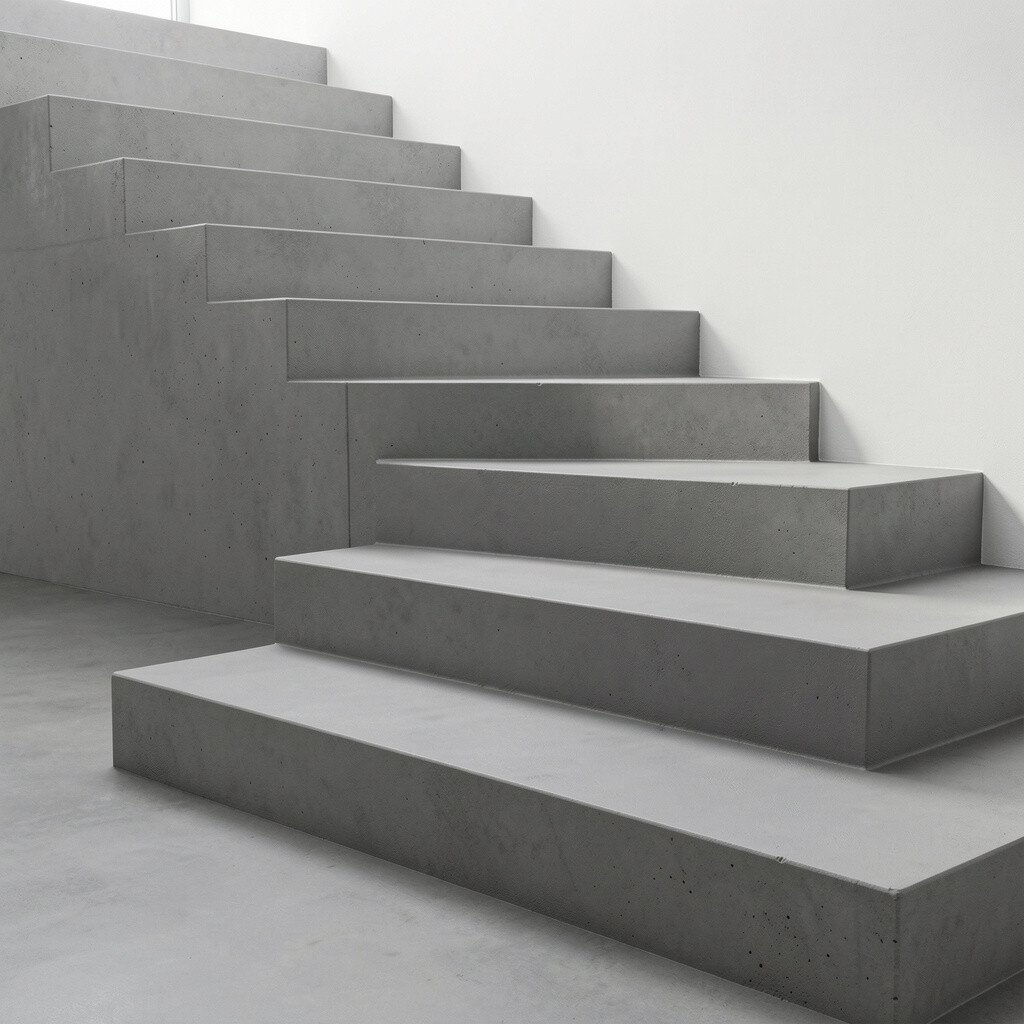
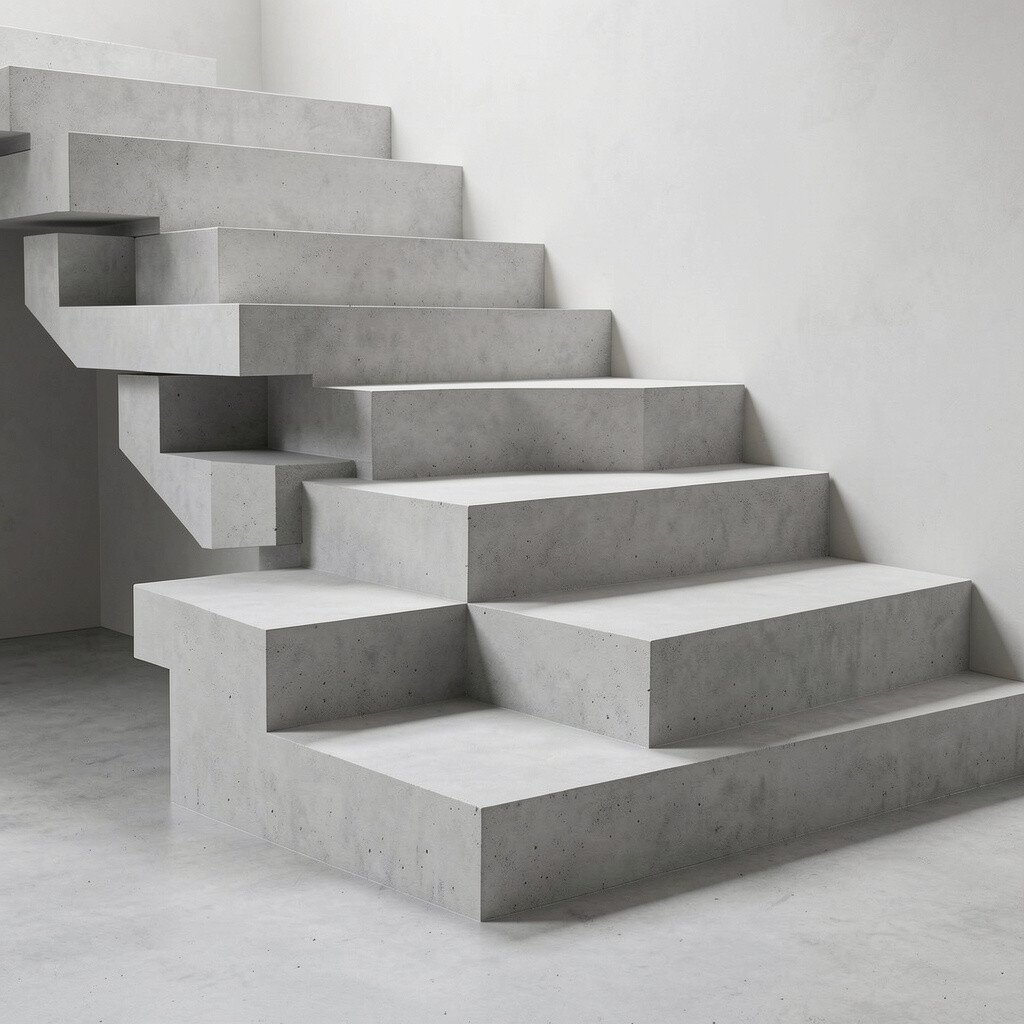
Picture a staircase where each step feels like it’s hovering, with smooth edges and tight lines. The concrete surface stays clean and uniform, so the whole run reads as one steady block.
This style can make small spaces feel bigger because the visual weight looks lighter. You can keep the risers very minimal or even open for extra air and a modern feel.
2. Warmth With Light Wood Accents
Warmth With Light Wood Accents
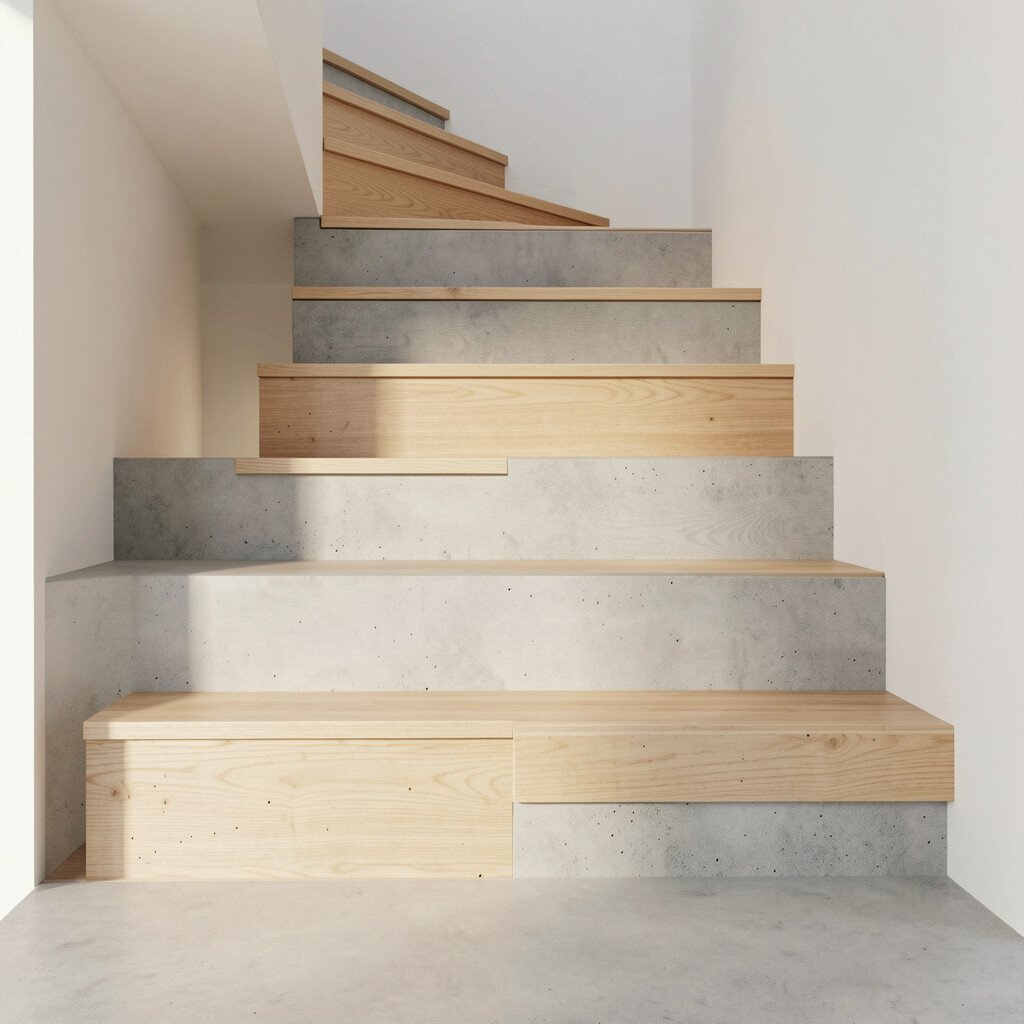
Imagine crisp concrete steps paired with a slim wood handrail and matching trim at the edges. The contrast between cool gray and warm grain feels welcoming without losing the minimalist vibe.
You get a strong, durable stair surface while adding grip where your hand naturally lands. A wood cap can also reduce the cold feel of bare concrete during mornings and evenings.
To personalize, choose a wood tone that matches your floors or furniture, like oak for airy rooms or walnut for a deeper look. It’s also smart to use a finish that resists scratches, since handrails take daily wear.
3. The Gallery Stair With Shadow Gaps
The Gallery Stair With Shadow Gaps
Close your eyes and picture slim shadow lines between each stair, like thin lines of light. Those gaps turn the steps into a subtle display, almost like wall art made of concrete.
The clean separation helps hide tiny imperfections from installation and keeps the stair plan looking sharp. It also makes lighting more effective because light washes across the steps instead of flattening them.
For a practical upgrade, pair shadow gaps with low-profile LED strips tucked along the sides. If you want a calmer look, keep the lights warm and soft rather than bright and bluish.
4. Textured Concrete For Grip Without Bulk
Textured Concrete For Grip Without Bulk
Some concrete looks sleek at first glance, then reveals a gentle texture as you get closer. Think of fine speckles or a micro-trowel finish that catches the light but still feels steady underfoot.
This is a smart choice when you care about safety, especially in homes with kids or frequent visitors. You can keep the design minimalist while improving traction on polished or lightly sealed surfaces.
5. Straight Run With Crisp Miters
Straight Run With Crisp Miters
A straight staircase can still feel exciting when every edge is clean and every corner is precise. With sharp miters and consistent tread widths, the stairs look engineered and modern.
People often underestimate how calming a straight run feels, because it’s easy to follow and simple to read. That clarity can help daily movement, from carrying groceries to moving furniture.
To personalize, decide on the exact tread depth you want and match it to how your family walks. Even subtle changes can make the stairs feel more natural and less cramped.
6. Minimal Landing With Built-In Bench Depth
Minimal Landing With Built-In Bench Depth
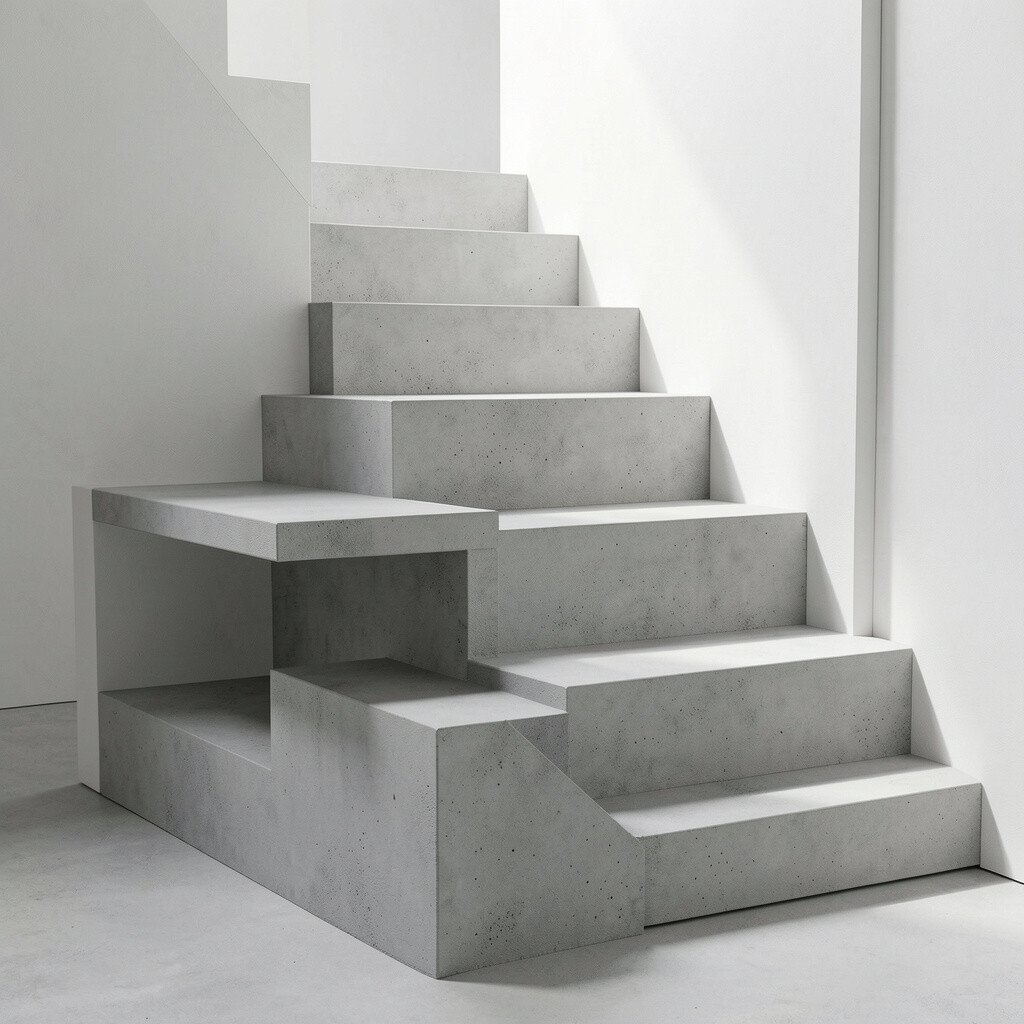
Picture a landing that doubles as a quiet pause, with the concrete continuing in a smooth, level plane. If you frame part of the landing like a shallow bench, the stair area becomes more usable without adding clutter.
This approach helps you add function where people usually store nothing. A wider landing can also make turning easier for moving items and can reduce the feeling of tight corners.
7. Narrow Treads With High-Contrast Lines
Narrow Treads With High-Contrast Lines
Some minimalist stairs use slim treads, creating a graphic rhythm that feels almost like typography. The high-contrast look comes from pairing darker treads with lighter walls or vice versa.
This design can help you fit a staircase into a tighter layout while still keeping it visually bold. It’s also a good choice for modern interiors that already use strong lines in cabinets and window frames.
Be practical about comfort by choosing a tread finish that doesn’t feel slippery. If you go narrower, consider adding a subtle edge reveal so your foot placement feels more guided.
8. Concrete Steps With Thin Steel Stringers
Concrete Steps With Thin Steel Stringers
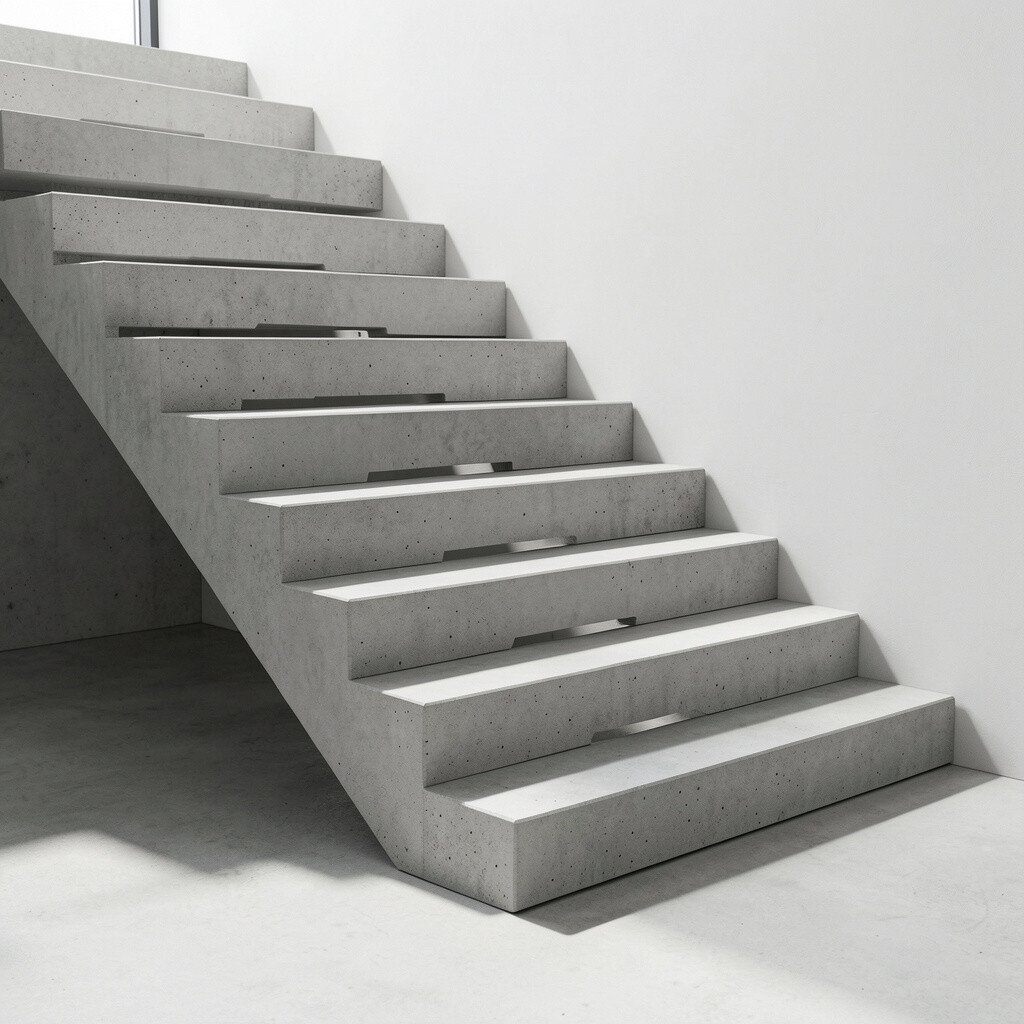
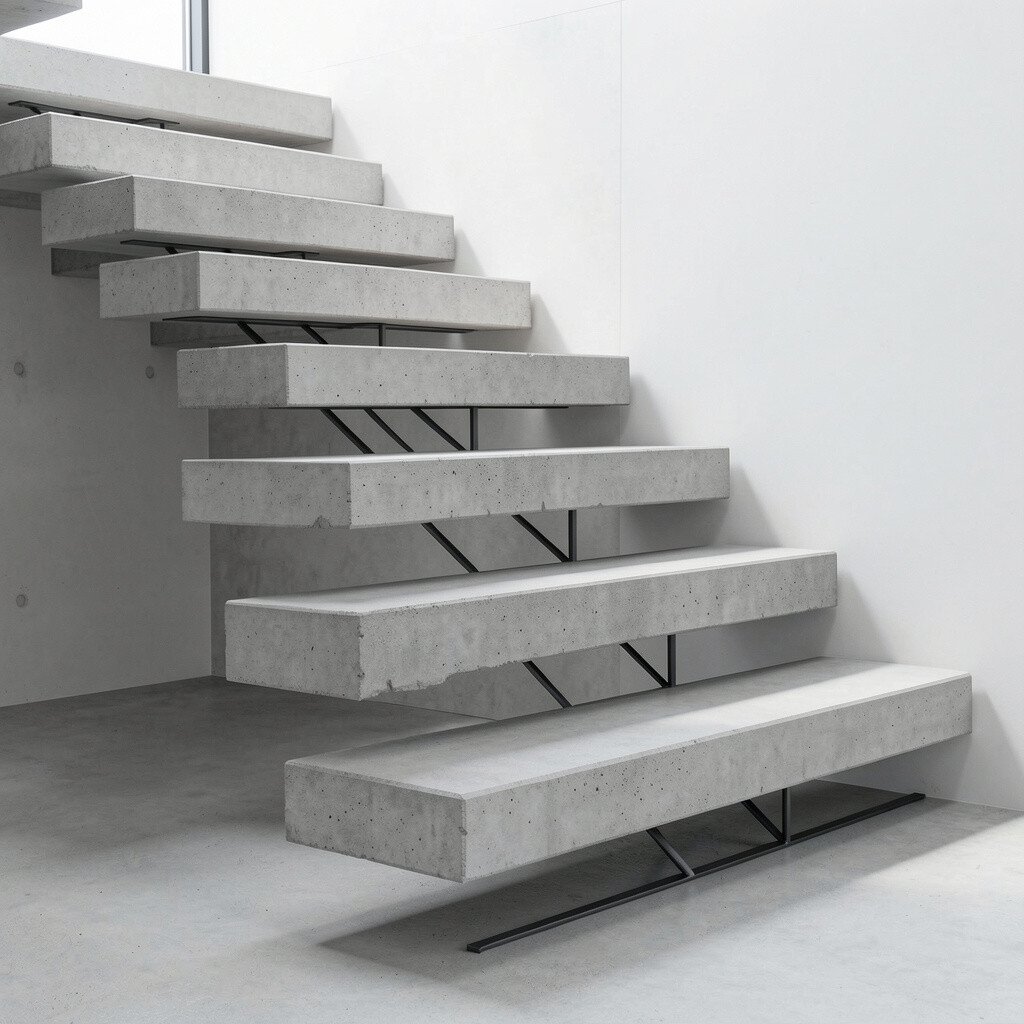
Imagine concrete treads supported by slim steel lines that almost disappear at first glance. The steel adds strength and a crisp, industrial edge while the concrete keeps the warmth grounded.
You get a lighter visual profile compared to bulky supports, which helps the space feel modern and open. It’s a popular look in current interiors because it blends materials instead of relying on one surface.
9. Monochrome Stairs With Matte Sealer
Monochrome Stairs With Matte Sealer
Matte concrete can look velvety and calm, like a soft stone surface under indoor light. When the entire staircase shares one uniform tone, the whole stairway feels cohesive and minimal.
This finish hides small scuffs better than glossy coatings, which makes maintenance easier over time. It also supports a clean look with fewer reflections, so your lighting design can stay the star.
10. Concrete Steps With Embedded Linear Lighting
Concrete Steps With Embedded Linear Lighting
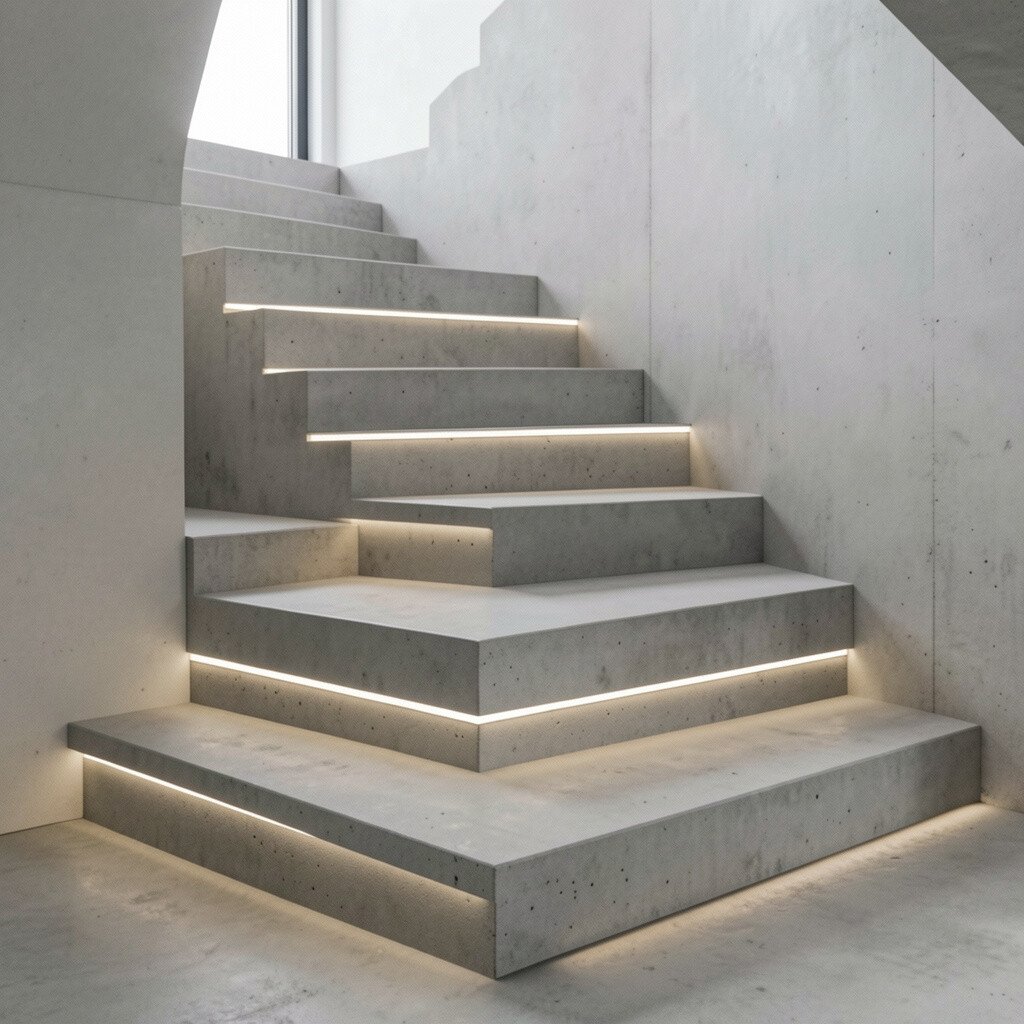
Think of a staircase where light seems to rise from the steps themselves. Embedded channels create thin beams that outline each tread without covering the concrete in bulky fixtures.
Good lighting improves safety by showing tread edges clearly at night. It also makes the stairs feel like a design feature, not just a path between floors.
For personalization, choose where the lighting sits so the glow matches your home’s vibe. Warm light makes the stairway feel cozy, while cooler light can feel more gallery-like.
11. Curved Edge Stair With Soft Minimalism
Curved Edge Stair With Soft Minimalism
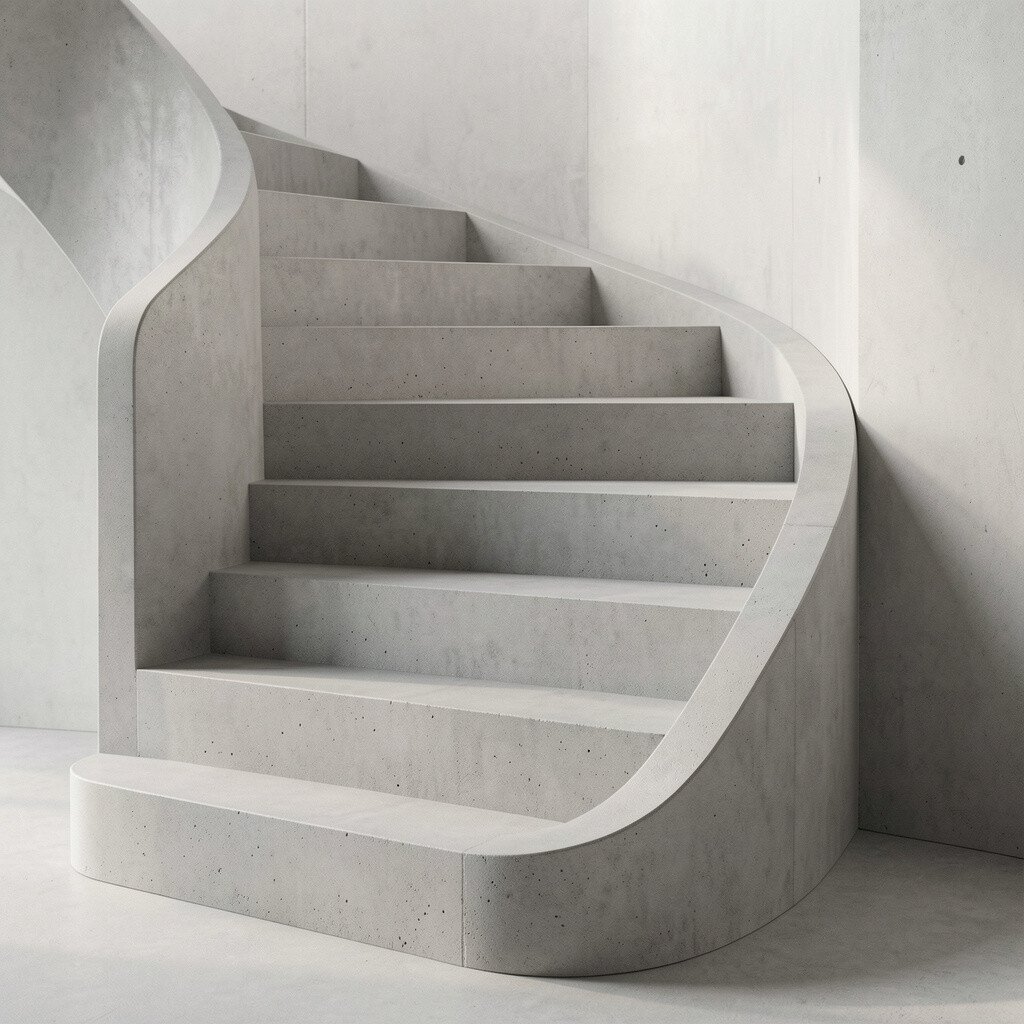
Not every minimalist staircase has to be boxy. A gentle radius along the edges can soften the look while still keeping the lines simple and modern.
This design feels friendly and can reduce sharp visual angles in an entryway. It’s especially effective when your interior uses rounded furniture, like circular tables or arched doorways.
12. Single-Color Concrete With Edge Chamfer Detail
Single-Color Concrete With Edge Chamfer Detail
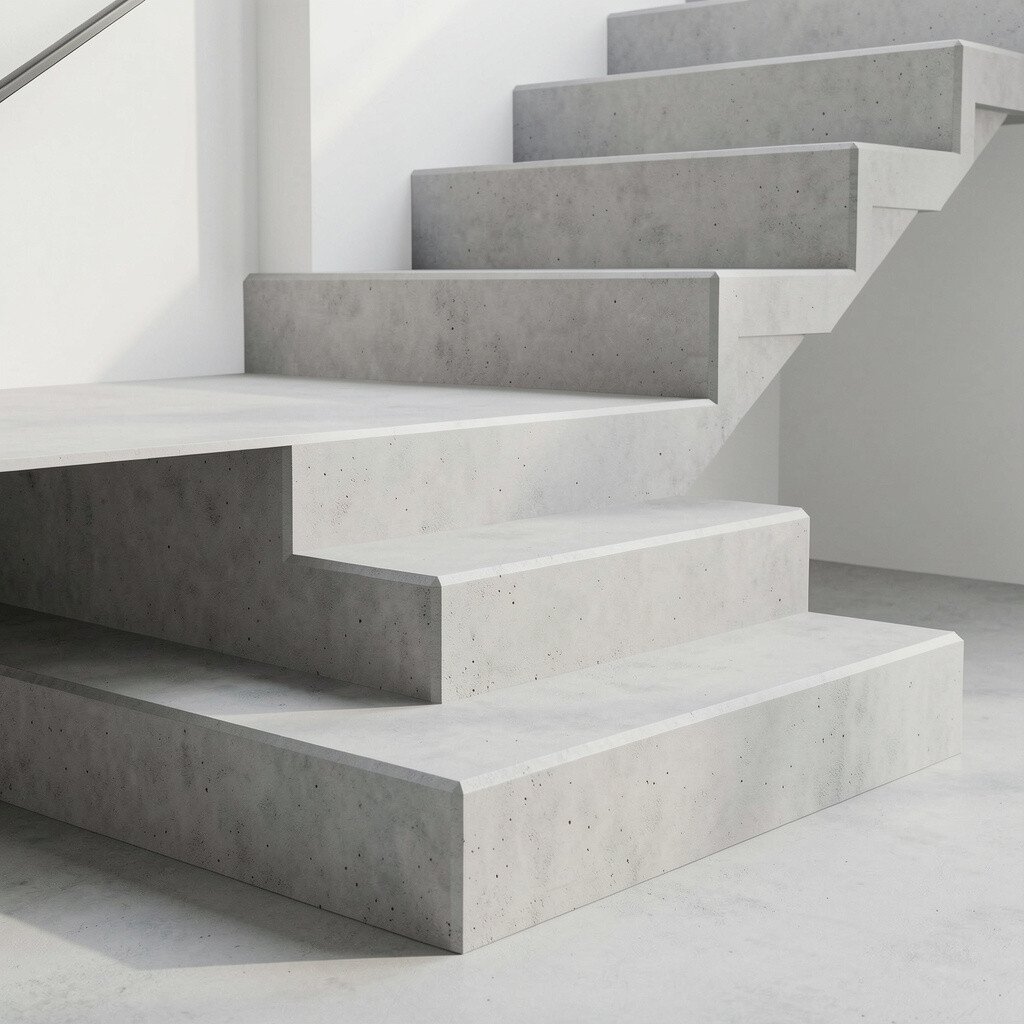
Picture stairs with a single concrete color, finished so the treads look smooth and continuous. A fine chamfer along the edges adds a subtle highlight that makes the steps look carefully crafted.
The chamfer detail adds depth without making the design busy. It also helps reduce chipping over time because the edge is shaped to handle small knocks better.
If you want to personalize, match the chamfer width to your lighting and wall color. A slightly wider chamfer can look more dramatic in brighter spaces.
13. Recessed Riser Niches For Storage Silence
Recessed Riser Niches For Storage Silence
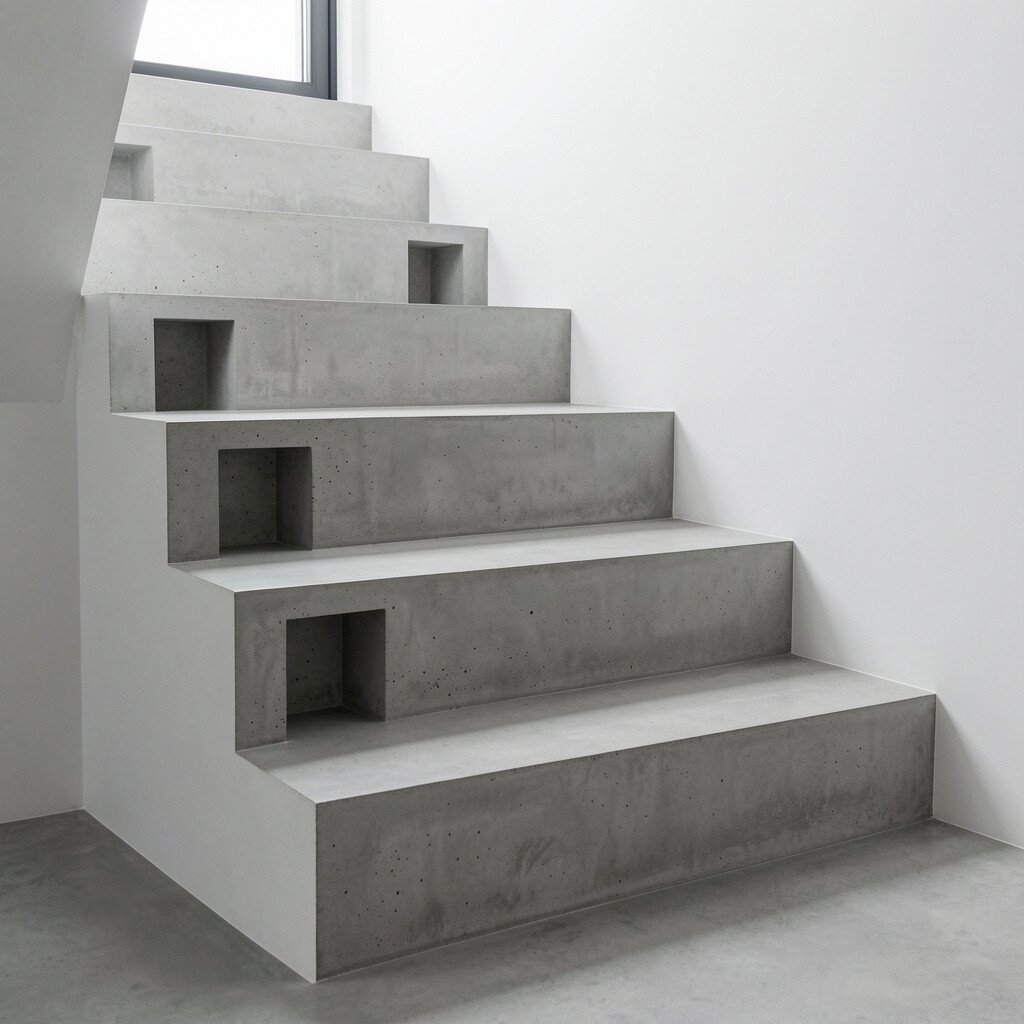
Imagine shallow recesses in the risers that hold small essentials while staying mostly hidden. The concrete stays minimalist because the “storage” sits inside the stair geometry.
This can make daily life easier by giving a home to items like shoe polish, small planters, or extra hand towels near a bathroom level. It also helps keep the surrounding hallway clear.
For practical planning, measure what fits comfortably and choose materials that won’t stain easily. Use a sealant designed for concrete and wipe-clean surfaces so the niches stay neat.
14. Concrete With Exposed Aggregate Accent Bands
Concrete With Exposed Aggregate Accent Bands
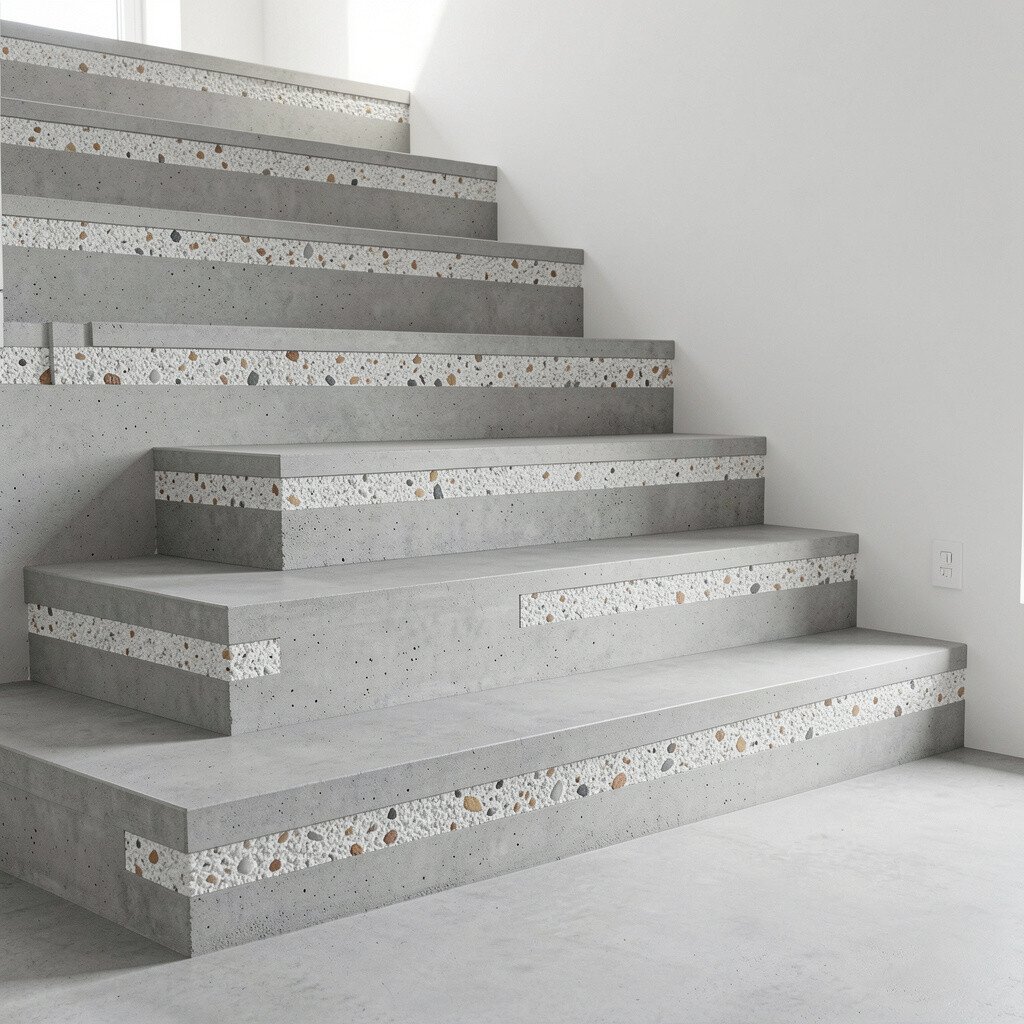
Here’s a minimalist twist that feels natural and tactile. Most of the stair stays smooth, then a thin band reveals exposed aggregate for a textured, stone-like accent.
The contrast gives the staircase character without turning it into a busy pattern. It’s also a great way to add uniqueness if you want concrete that looks different from your neighbors’ same-gray look.
15. Whitewashed Concrete For Bright Modern Interiors
Whitewashed Concrete For Bright Modern Interiors
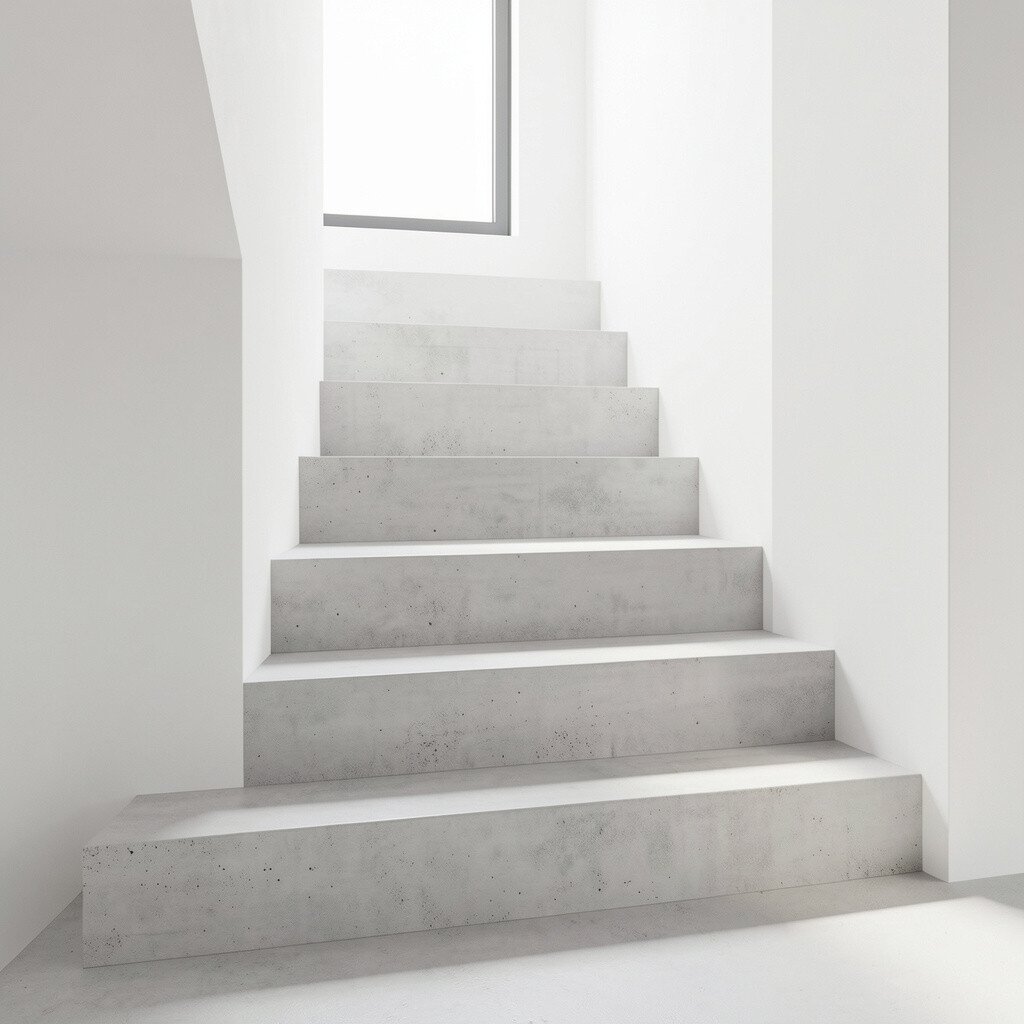
Whitewashed concrete stairs bring a light, airy mood that pairs well with clean modern decor. The surface can look like soft stone, with faint variations that still feel controlled.
This style helps bounce daylight around the room, which can make hallways and entryways feel more open. It’s also a strong choice when you want a minimalist look that feels less industrial.
For cost and upkeep, plan for sealing and regular cleaning to keep the finish looking fresh. If you live with heavy foot traffic, ask installers about wear-resistant sealers.
16. Staircase As A Single Continuous Monolith Wall
Staircase As A Single Continuous Monolith Wall
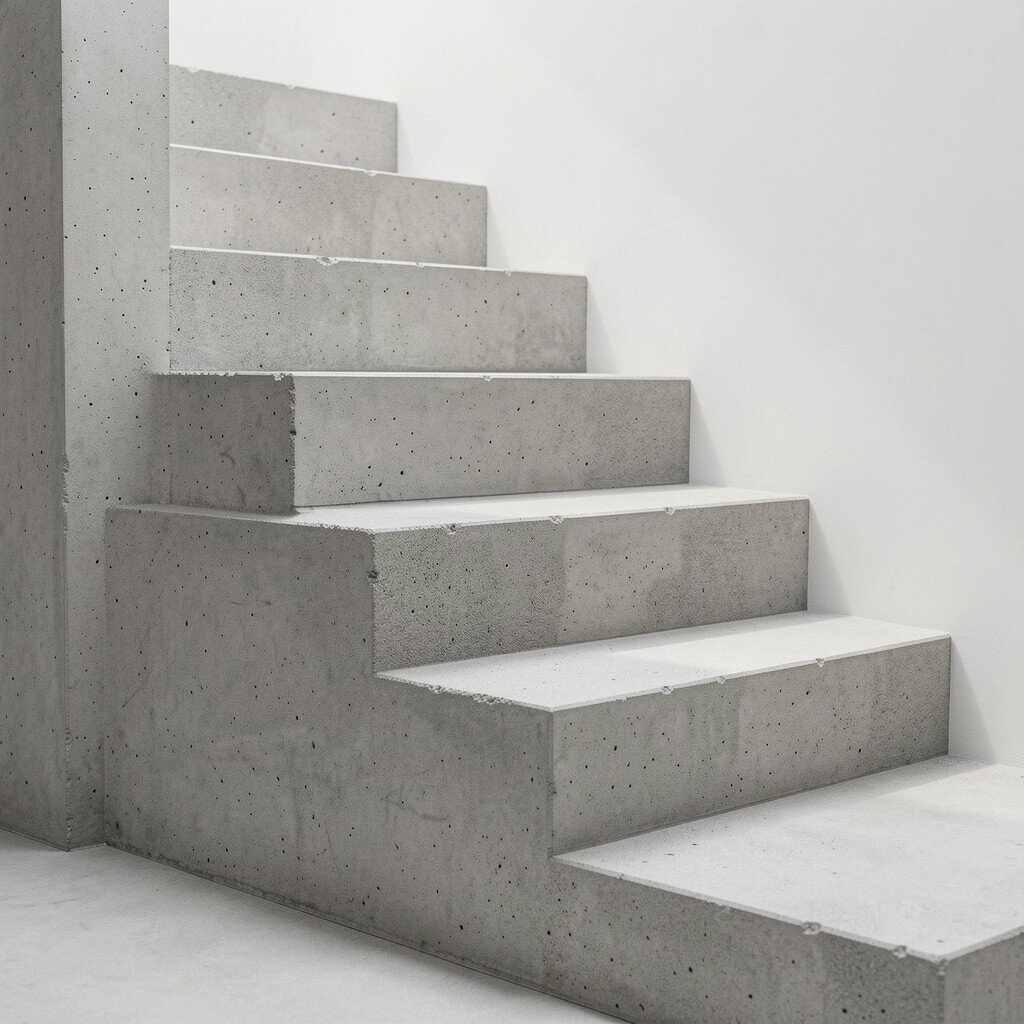
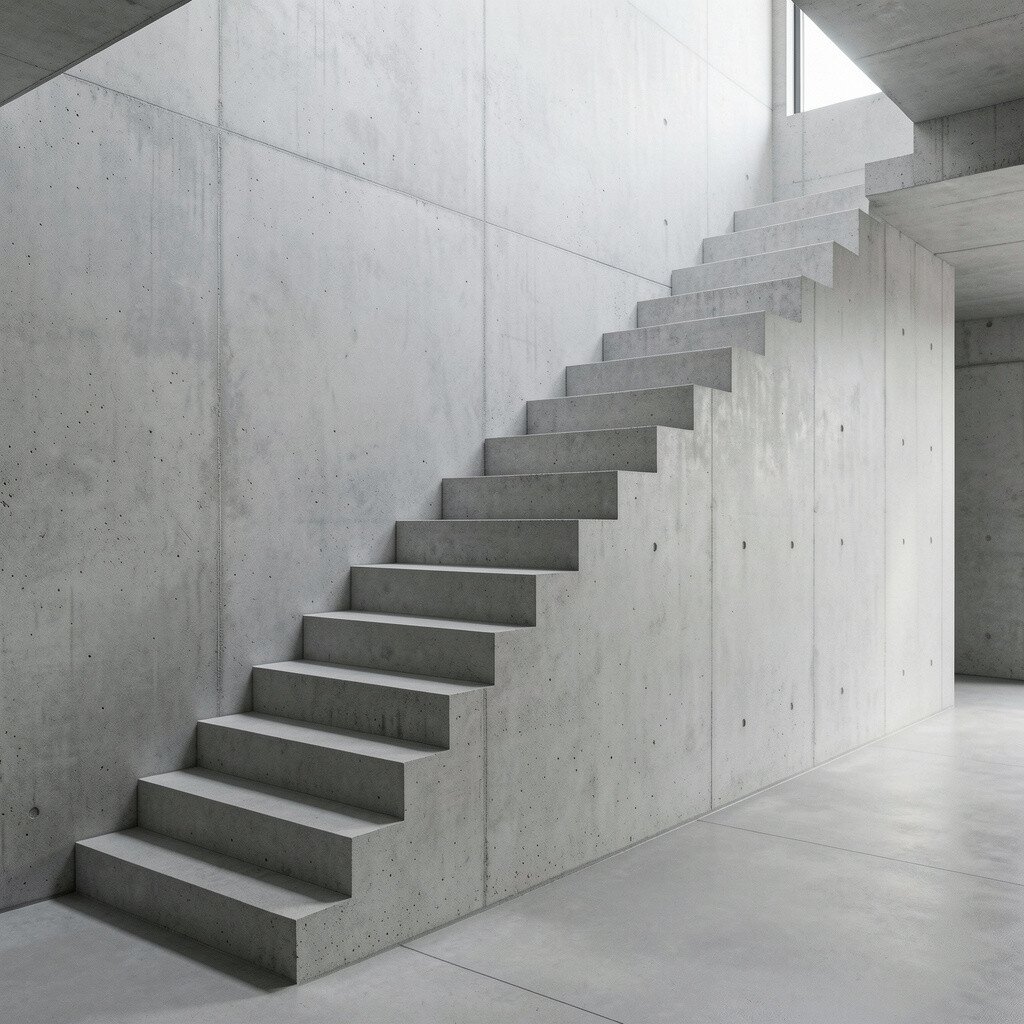
Picture the stairs integrated with a tall concrete wall that rises alongside the steps. The wall and treads feel like one continuous form, creating a bold but calm visual anchor.
This design can reduce the need for extra railings or decorative elements because the geometry is doing the work. It also works beautifully in open-concept homes where you want zoning without walls.
17. Minimal Concrete Steps With Floating Handrail Track
Minimal Concrete Steps With Floating Handrail Track
Imagine a handrail mounted on a slim track so it seems to float above the wall. The concrete remains smooth and quiet, while the rail becomes a thin line of guidance.
This can make the stair feel cleaner because you don’t need bulky posts at every point. It also helps visually align the stair with other modern details, like cabinet pulls and window frames.
To personalize, choose a rail finish that matches your hardware, like brushed metal or matte black. You’ll also want to ensure the track is installed securely for daily safety and steady grip.
18. Split-Level Steps With Clear Visual Rhythm
Split-Level Steps With Clear Visual Rhythm
Some minimalist stairs feel more dynamic through a split-level layout where movement changes direction gradually. The steps form a clear rhythm, so each tread feels intentional rather than random.
This can be helpful in homes where floor levels shift slightly or where you want a smoother transition into a loft area. The design can also add interest to otherwise plain walls.
For practical installation, plan the layout carefully so the spacing supports comfortable walking. It helps to test the stride pattern before finalizing finishes, especially if multiple family members use the stairs daily.
19. Concrete Stairs With Integral Slip-Resistant Strips
Concrete Stairs With Integral Slip-Resistant Strips
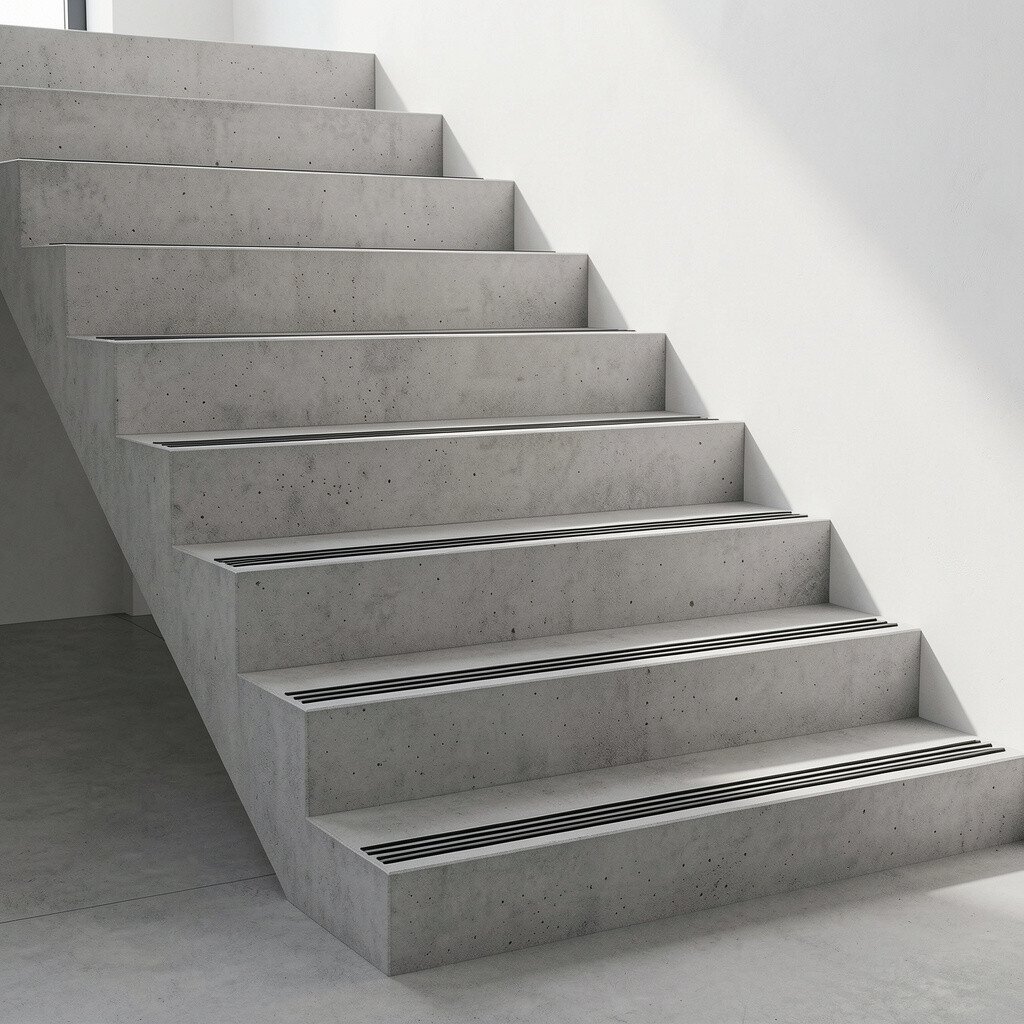
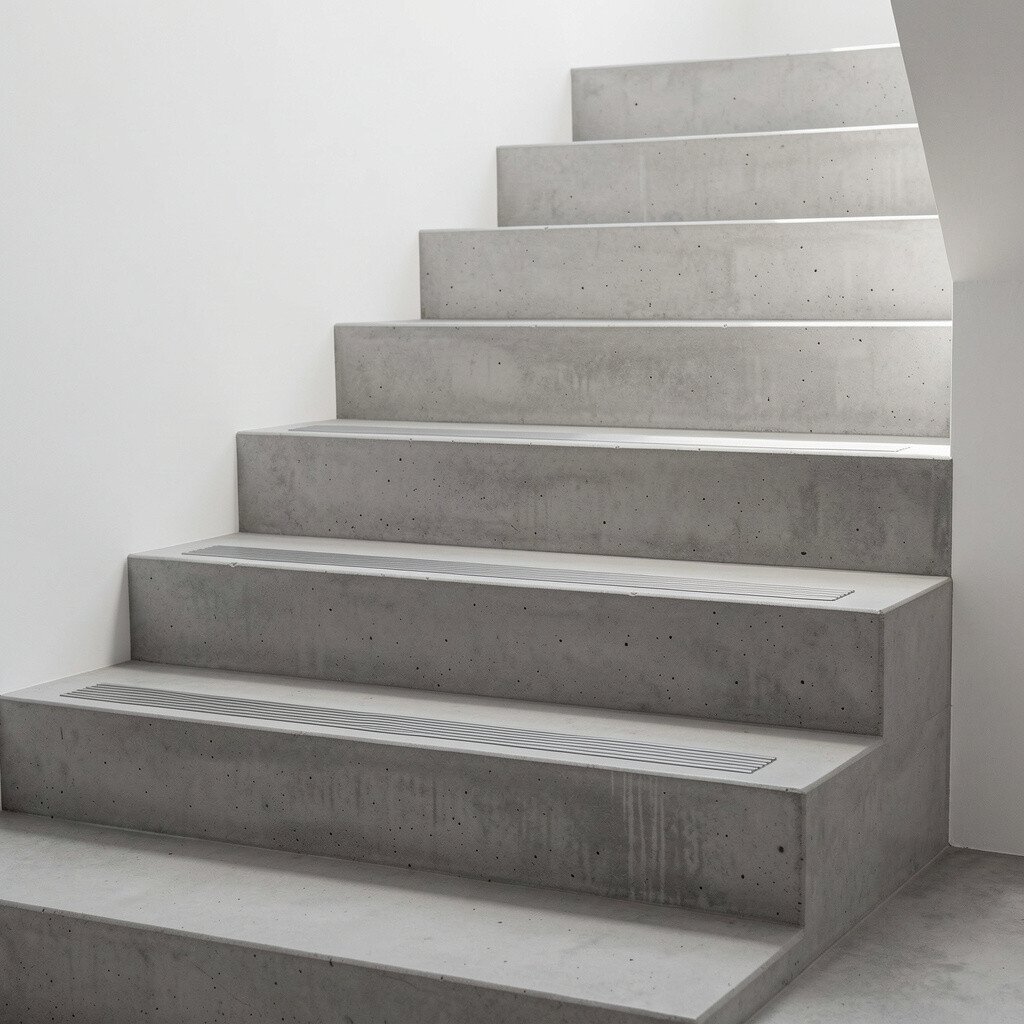
Think of a stair surface that stays minimalist but includes subtle slip-resistant strips right at the tread edges. The strips can be the same color family, so they don’t look like add-ons.
This is one of the most practical upgrades you can choose, especially with polished concrete that can feel slick. It improves safety without forcing you into thicker treads or bulky nonslip mats.
If you want personalization, ask for the strip placement so it follows your walking habits. Many homeowners find that adding grip only where feet land most often keeps the look clean.
20. Stained Concrete With Subtle Gray-Blue Depth
Stained Concrete With Subtle Gray-Blue Depth
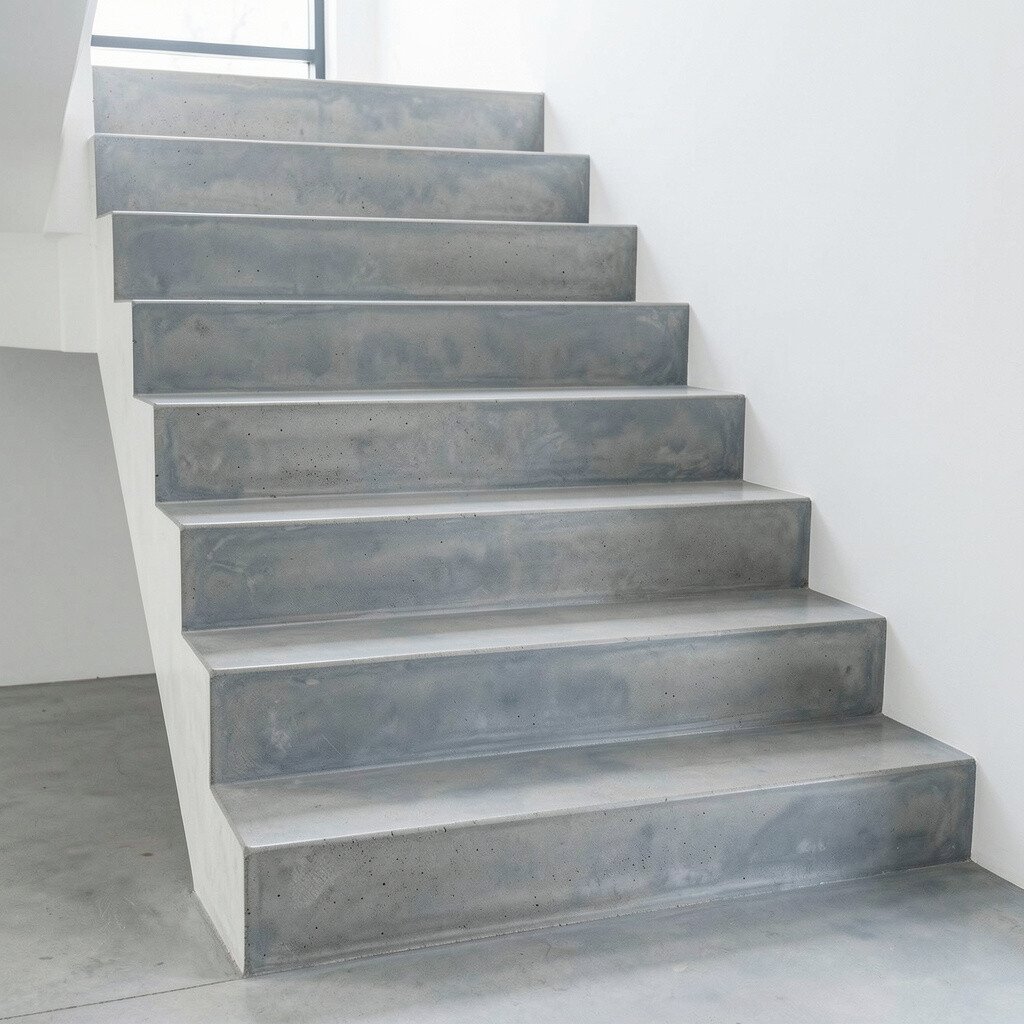
Not all concrete needs to look pure gray. A stained finish with gray-blue depth can create a quiet color shift that feels modern, calm, and slightly artistic.
This kind of staining adds uniqueness because every batch develops its own tone under lighting. It also pairs well with minimalist interiors that use cool whites, sleek metals, and simple textiles.
For cost considerations, staining and sealing can add to the project budget, but it often reduces the need for covering the surface later. To keep the finish looking crisp, plan for gentle cleaning and resealing based on your daily traffic.