Coat closets can feel like a mystery bag if you do not give them a plan. A little structure turns the space into something calm, neat, and genuinely useful.
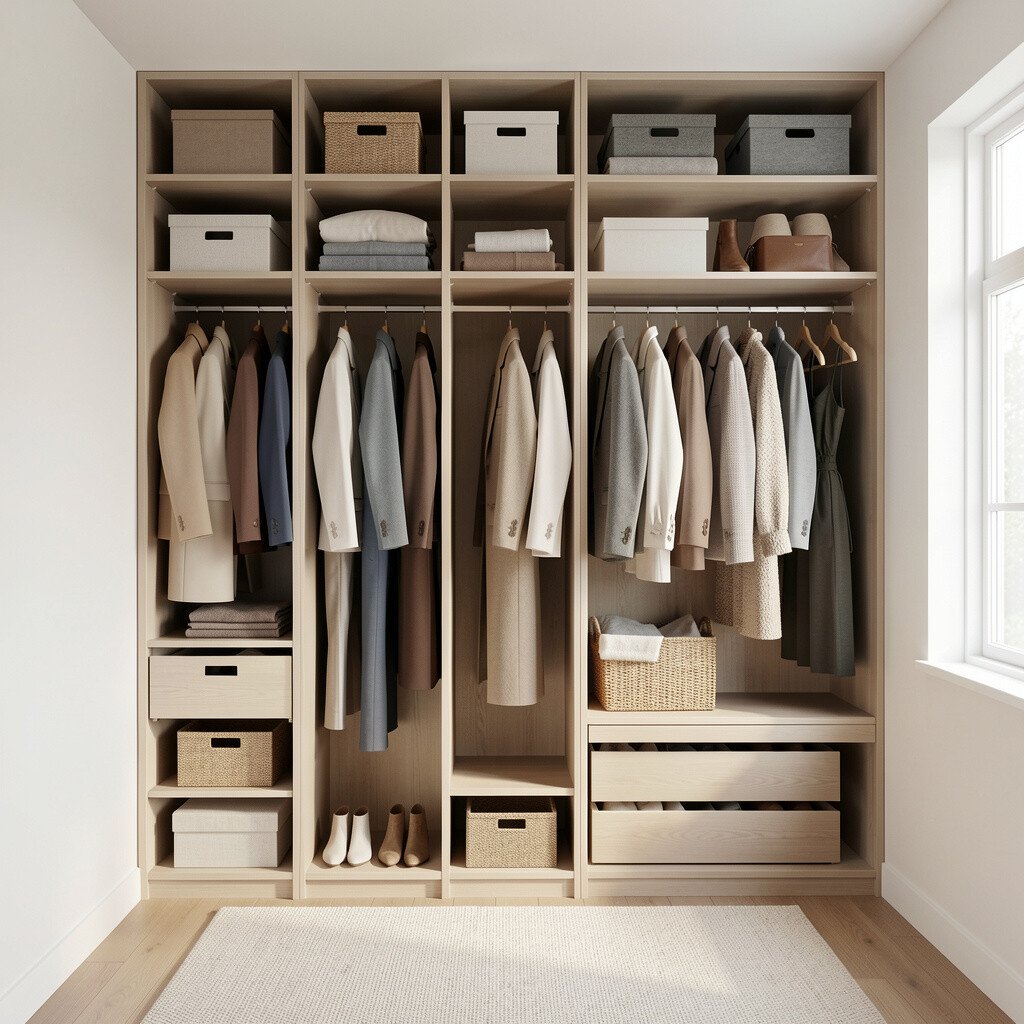
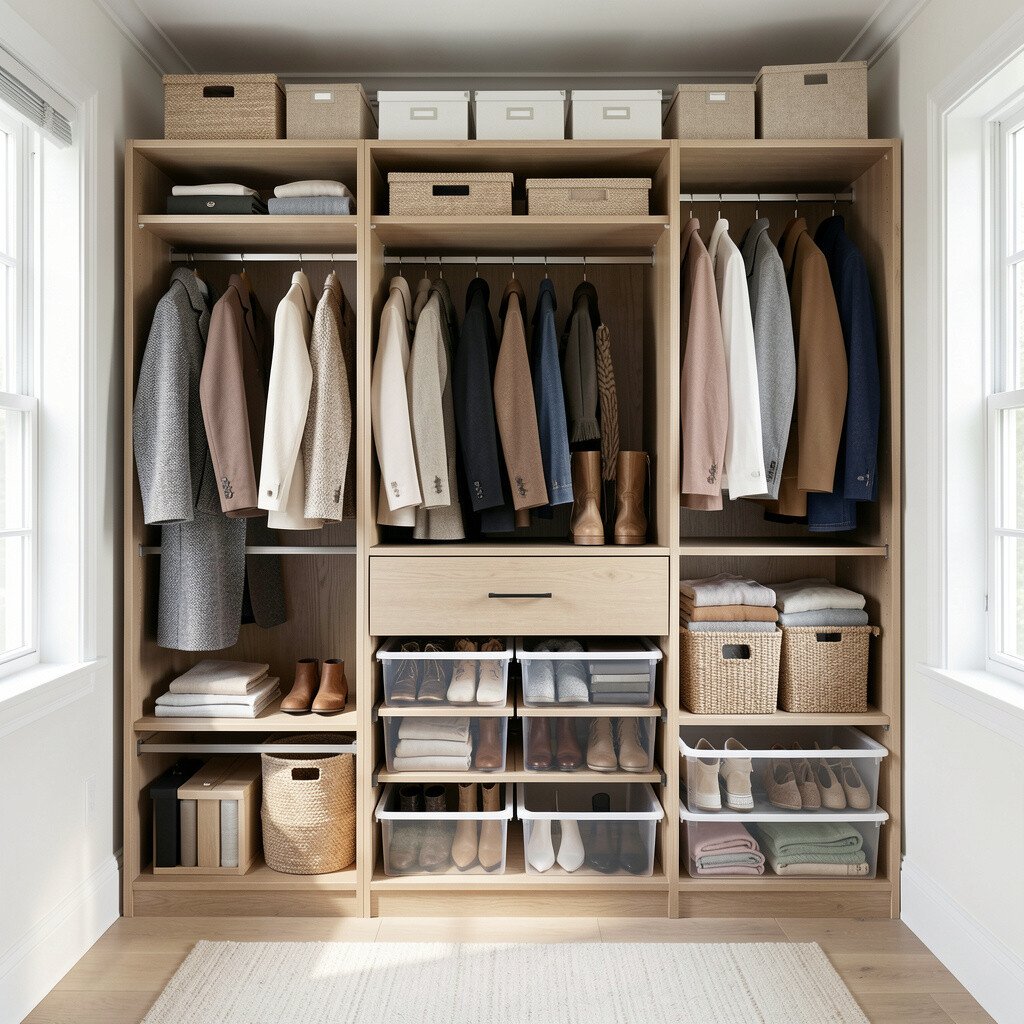
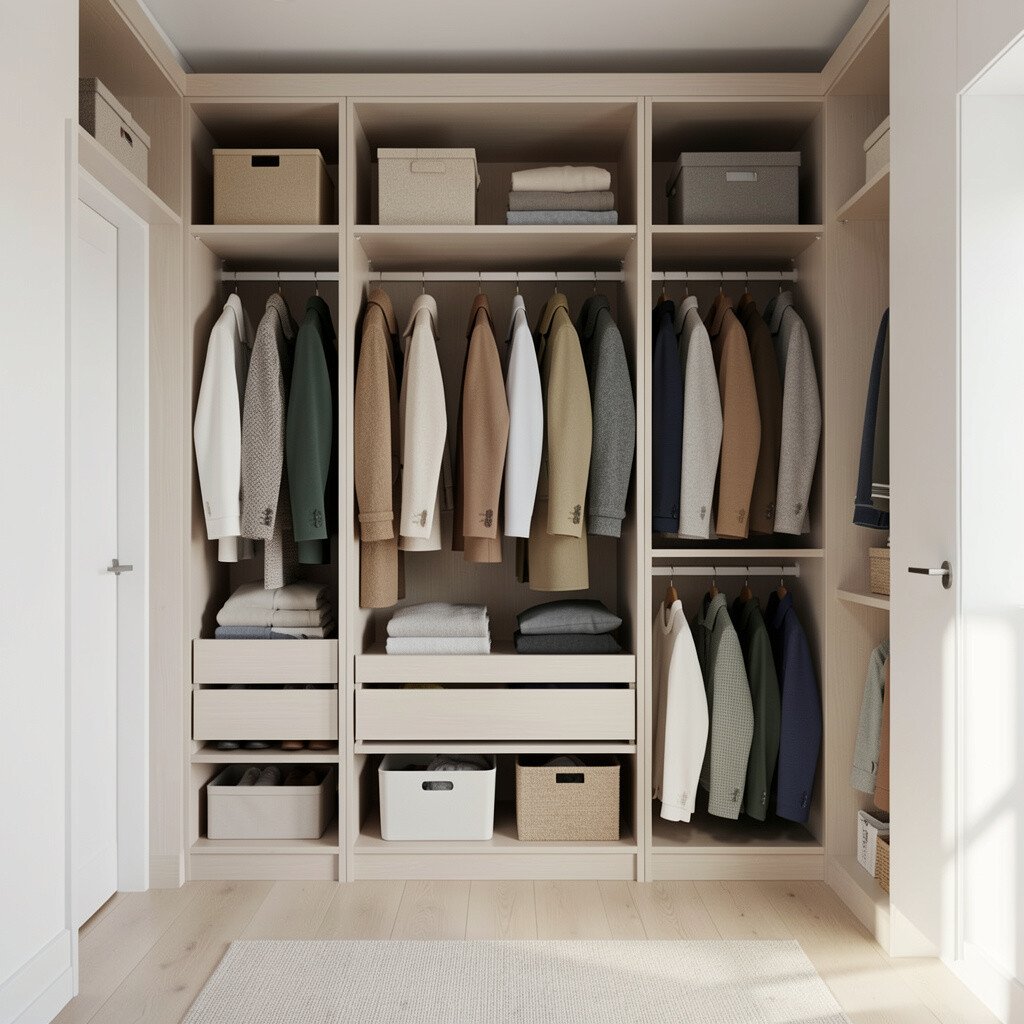
Start by picturing how you dress on a busy morning, then give that routine a home in your closet. Use a wide stretch of hanging space for everyday coats, hoodies, and jackets, so you can grab what you need without digging.
Choose a simple visual order by day type, like work looks on one side and weekend outerwear on the other. Add slim hangers for lightweight pieces and a few sturdy hangers for heavier coats to keep everything looking tidy. Labeling is optional, but a small piece of tape on the inside of a shelf can help you stay consistent when seasons change.
2. Add Double Rods for Vertical Space
Add Double Rods for Vertical Space
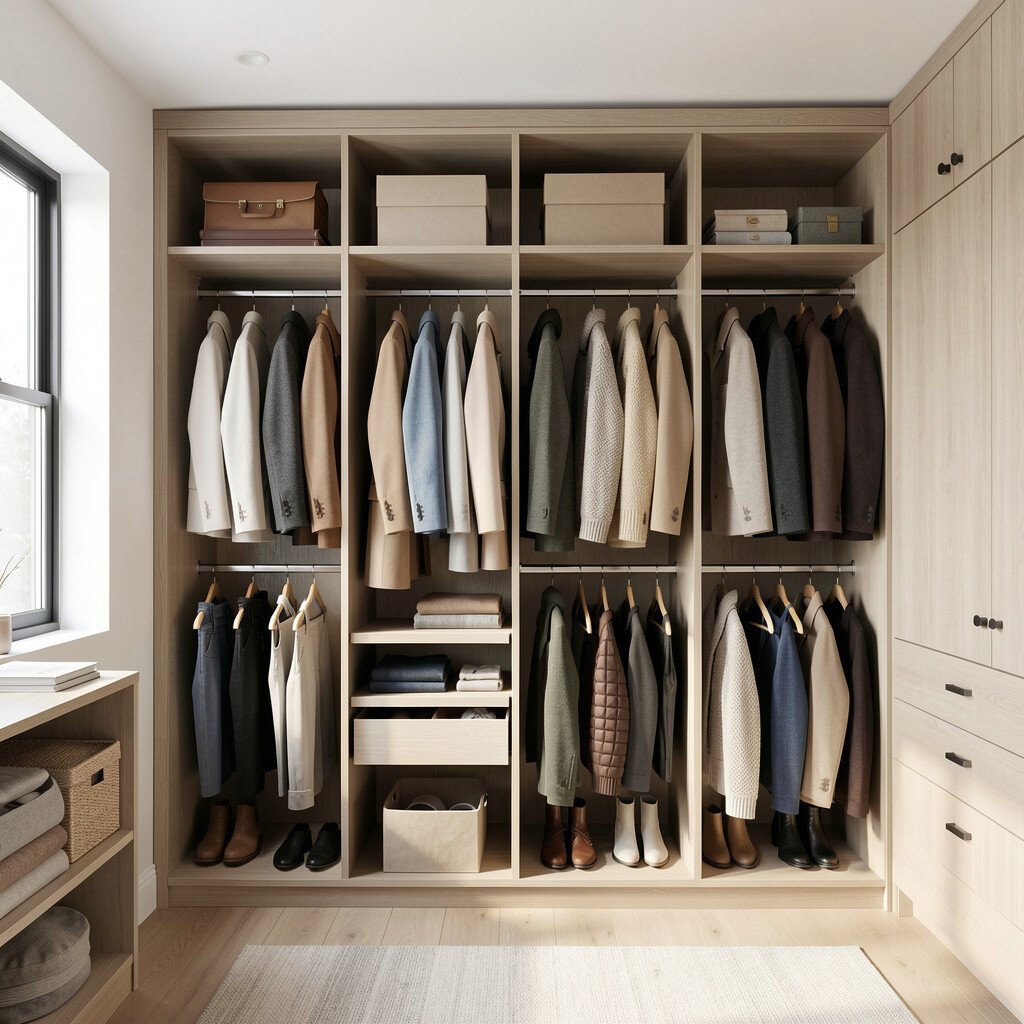
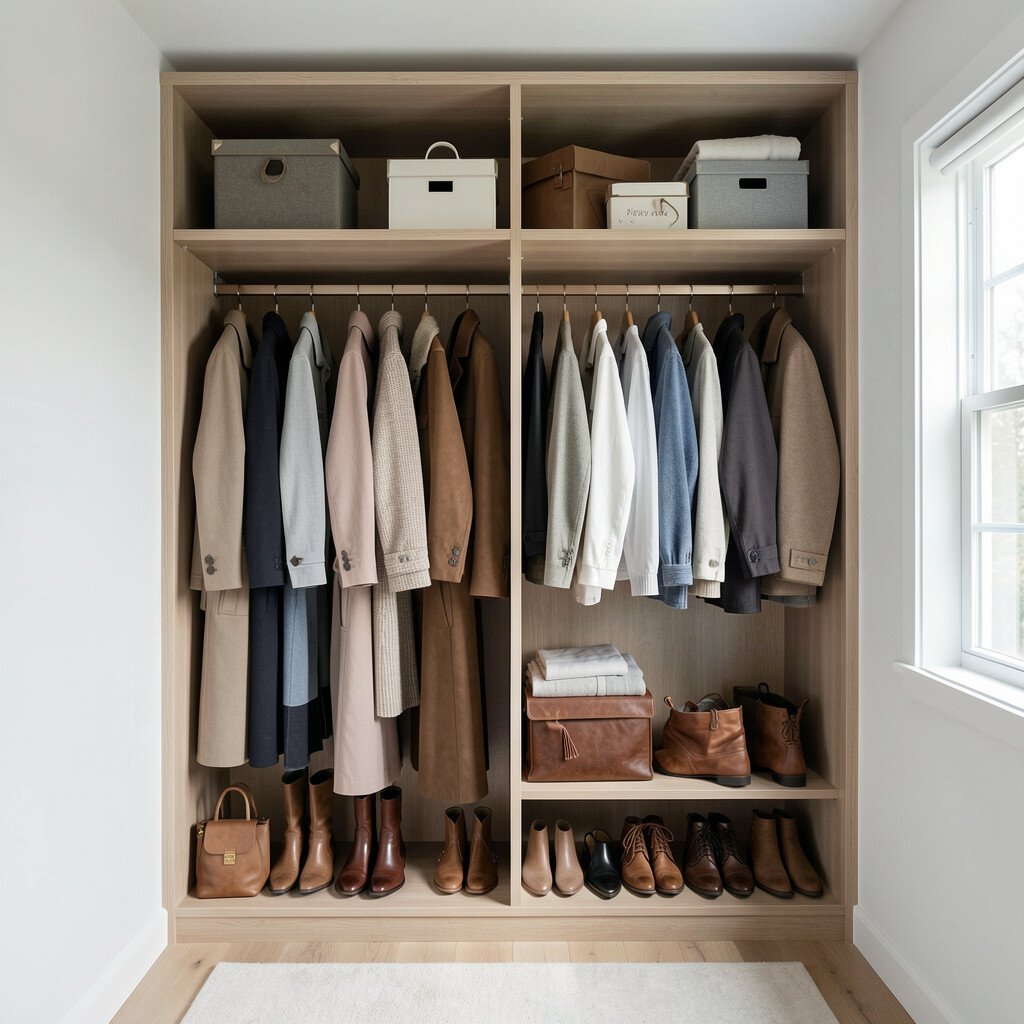
If your closet has real height, use it so your hanging area does not shrink every time the weather flips. A double-rod setup lets you keep long coats at the top while shorter jackets and layers sit lower and easy to reach.
When you install the rods, measure the clearance you need for coat length and for hangers so nothing brushes the next bar. Keep the top rod for bulkier items, and use the lower rod for everyday pieces that you grab often. This arrangement makes mornings faster and helps you spot what is missing before you run out.
For cost, you can start with a basic adjustable rack and upgrade later if you want a more polished look. Pick a finish that matches your existing hardware, and consider using matching hooks so the whole closet looks planned. If you have kids, reserve the lower area for them so they can put items away without help.
3. Use a Shoe Wall or Slatted Shelf Insert
Use a Shoe Wall or Slatted Shelf Insert
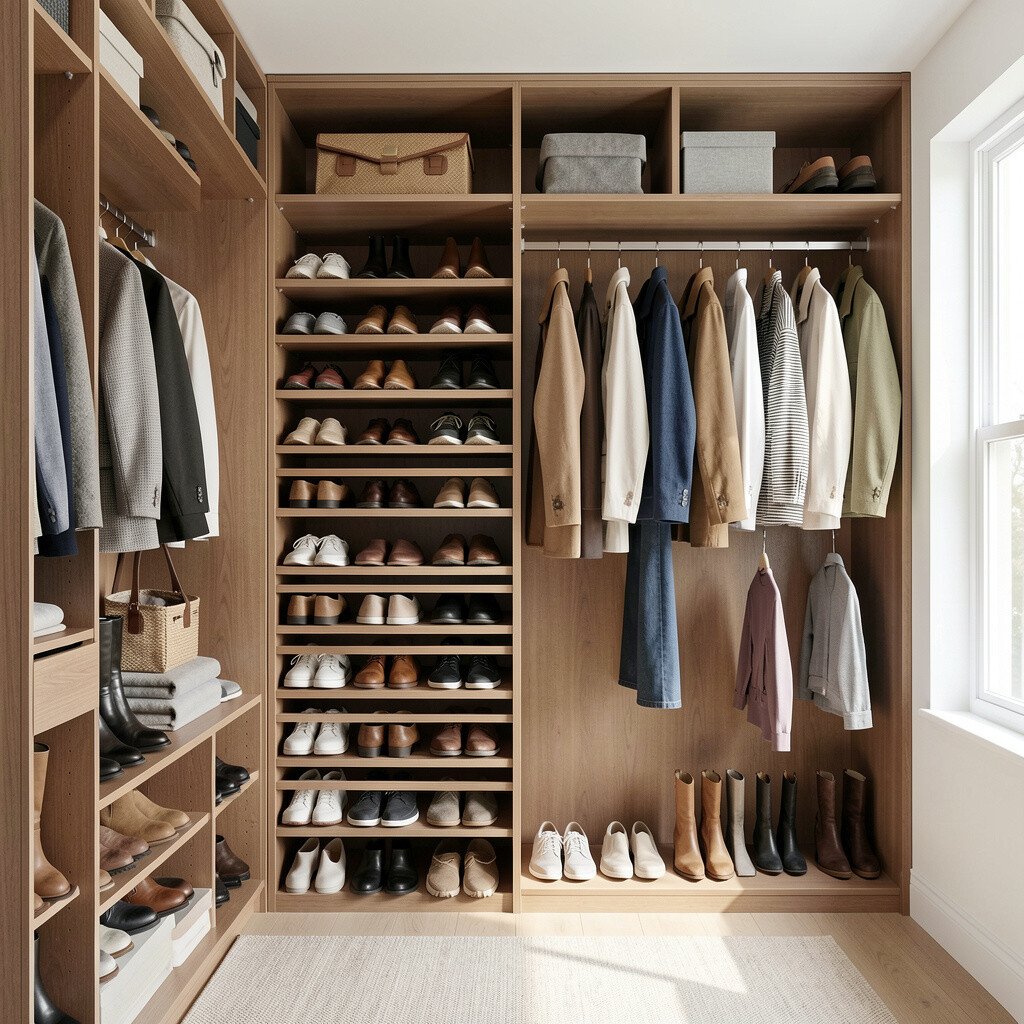
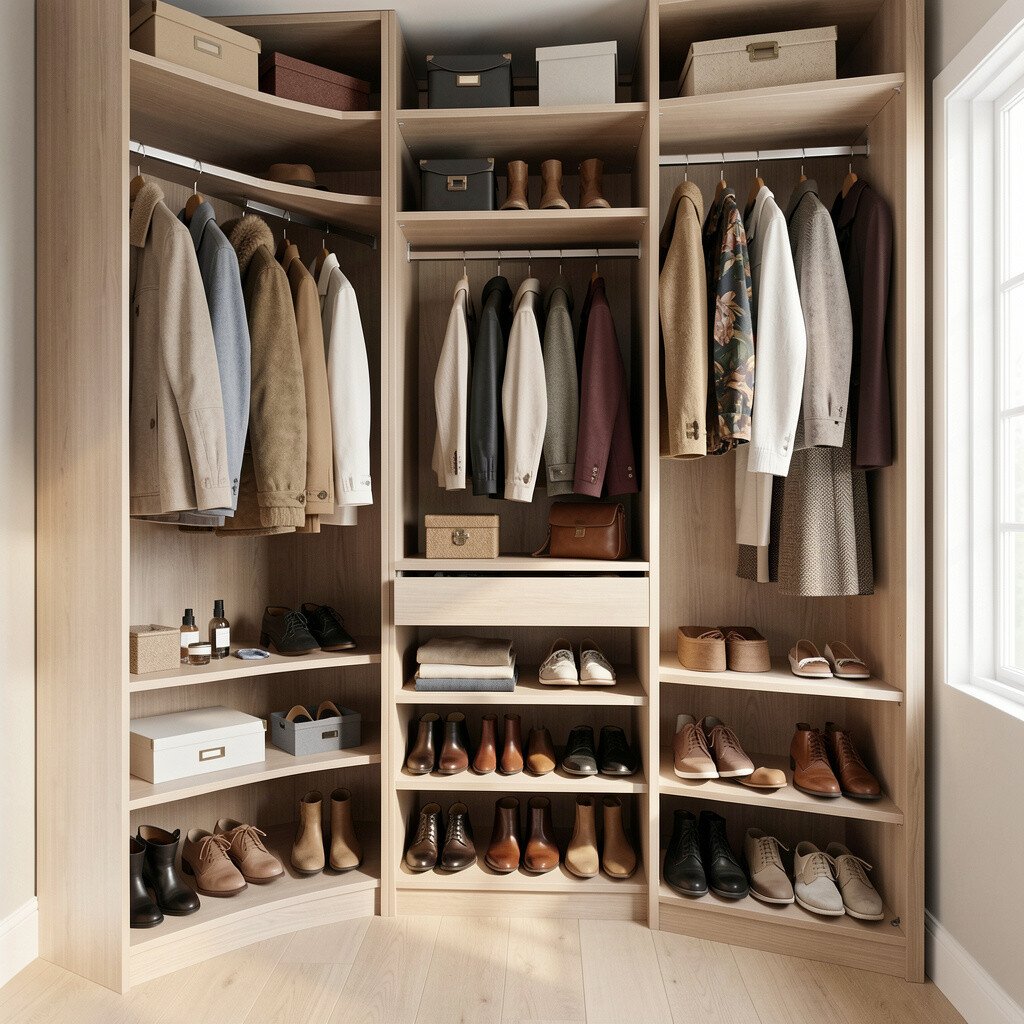
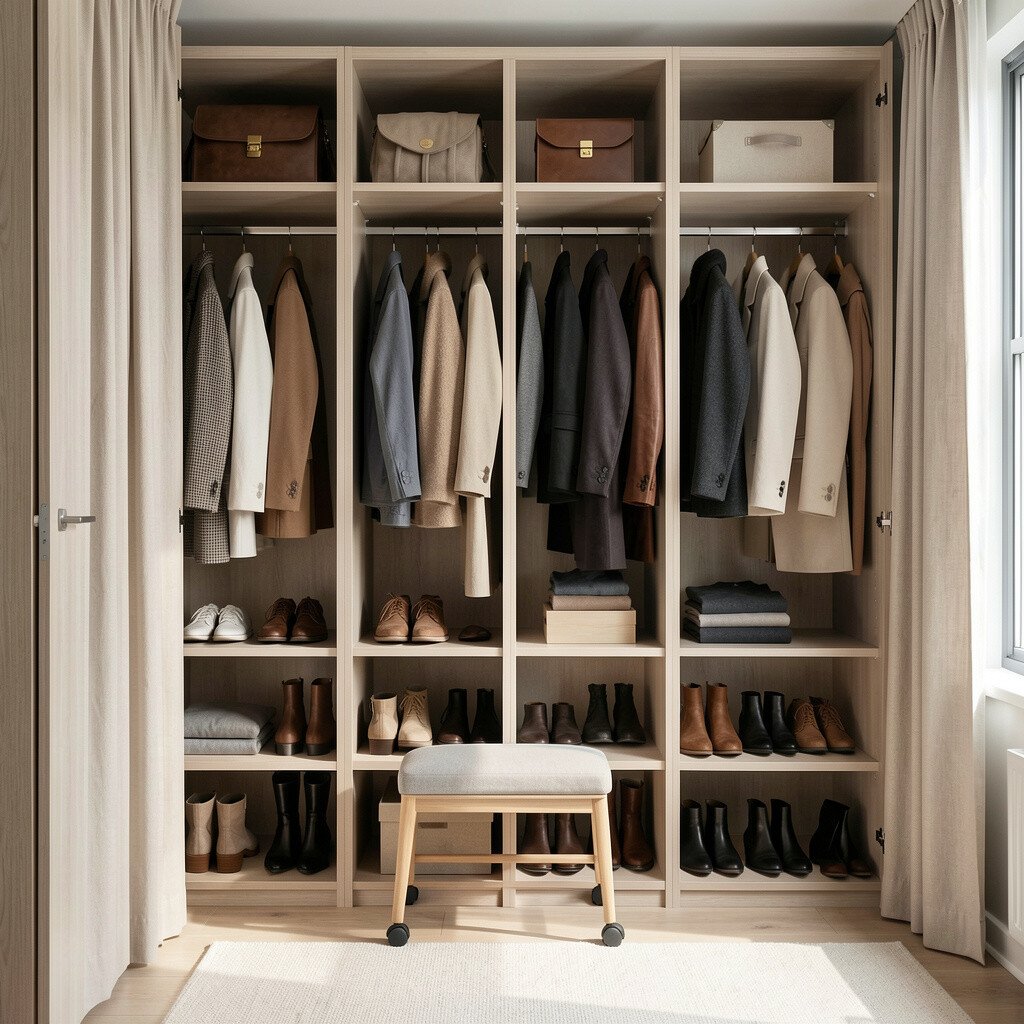
Instead of tossing shoes on the floor, make them part of the closet system. A shoe wall or slatted shelf insert creates clean rows that look neat and are much easier to keep dust-free.
Slide shoes in pairs by family member, then keep boots separate from sneakers so you can find the right pair quickly. Add a small fabric divider if you need to protect suede or keep tall boots from rubbing. This keeps your floor clear and makes the closet feel larger than it is.
For personalization, choose a color pattern for the bins or the shelf liners to match your room vibe. If you like a current trend, look for modular organizers that can expand as your shoe collection grows. You can often find budget-friendly inserts that clip in place, which saves time and avoids extra tools.
4. Install a Full-Length Mirror on the Back Wall
Install a Full-Length Mirror on the Back Wall
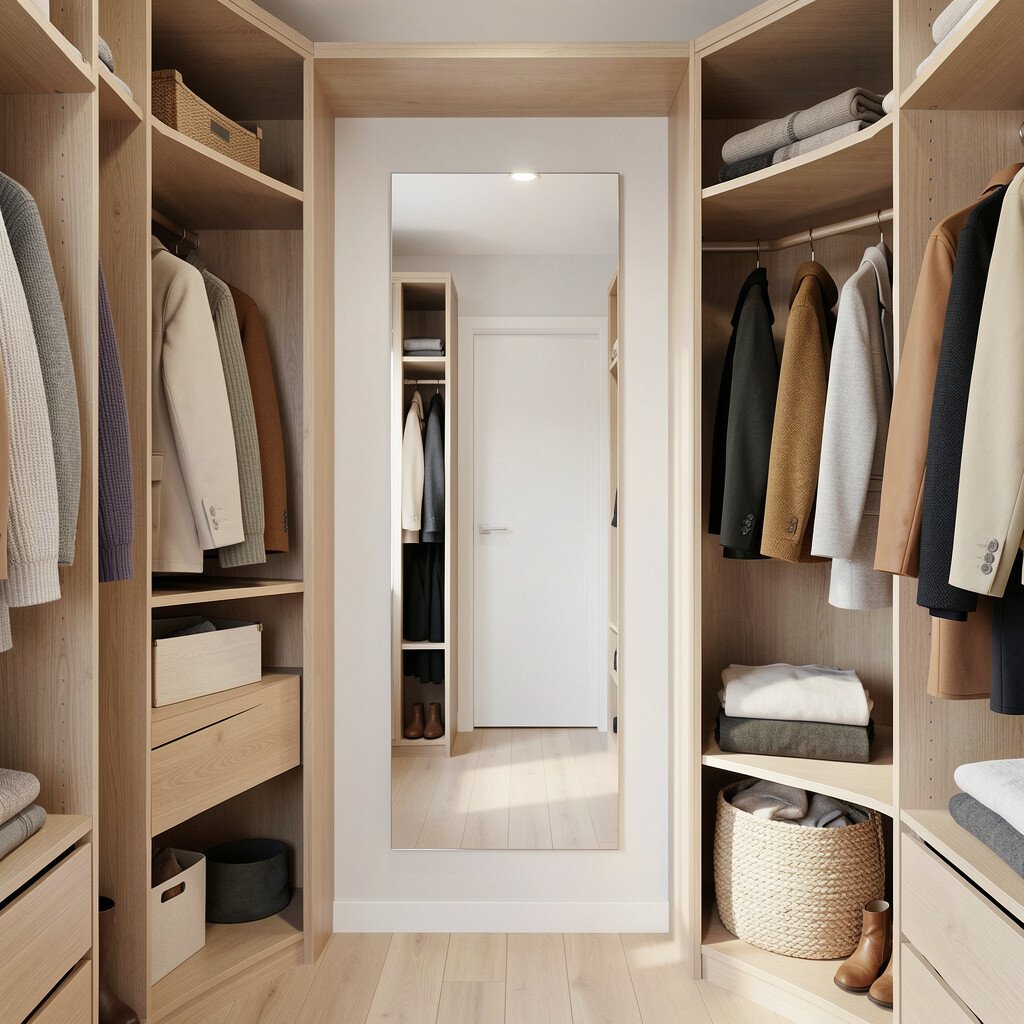
A mirror inside a coat closet makes the space feel brighter and gives you a quick check before you head out. When you face the closet, you also gain a better view of what is hanging and what is stored on shelves.
Try placing it on the inside of the door or on the back wall so it does not take up precious walking space. Use a simple frame or a frameless option for a clean look, and wipe it down now and then to keep it clear. This small upgrade also turns the closet into a mini dressing spot, which is extra handy when you rush.
5. Add Clear Bins for Seasonal Accessories
Add Clear Bins for Seasonal Accessories
Keep scarves, hats, gloves, and small extras from turning into a tangled drawer by using clear bins. When you can see the contents at a glance, you will stop opening multiple containers just to find one item.
Group accessories by type and season, like warm hats and gloves in cold months and lighter scarves for milder weather. Place the bins on mid-level shelves where you can reach them without a step stool. Use labels only if they help you, and consider color-coded lids if you prefer a more playful look.
Clear storage is a popular choice right now because it makes closets look organized without feeling overly strict. For cost, you can begin with a handful of bins and expand as you find deals. Personalize by adding small fabric tags or by choosing bin shapes that match your closet’s style.
6. Build a Folded-Layer Shelf for Sweaters and Blankets
Build a Folded-Layer Shelf for Sweaters and Blankets
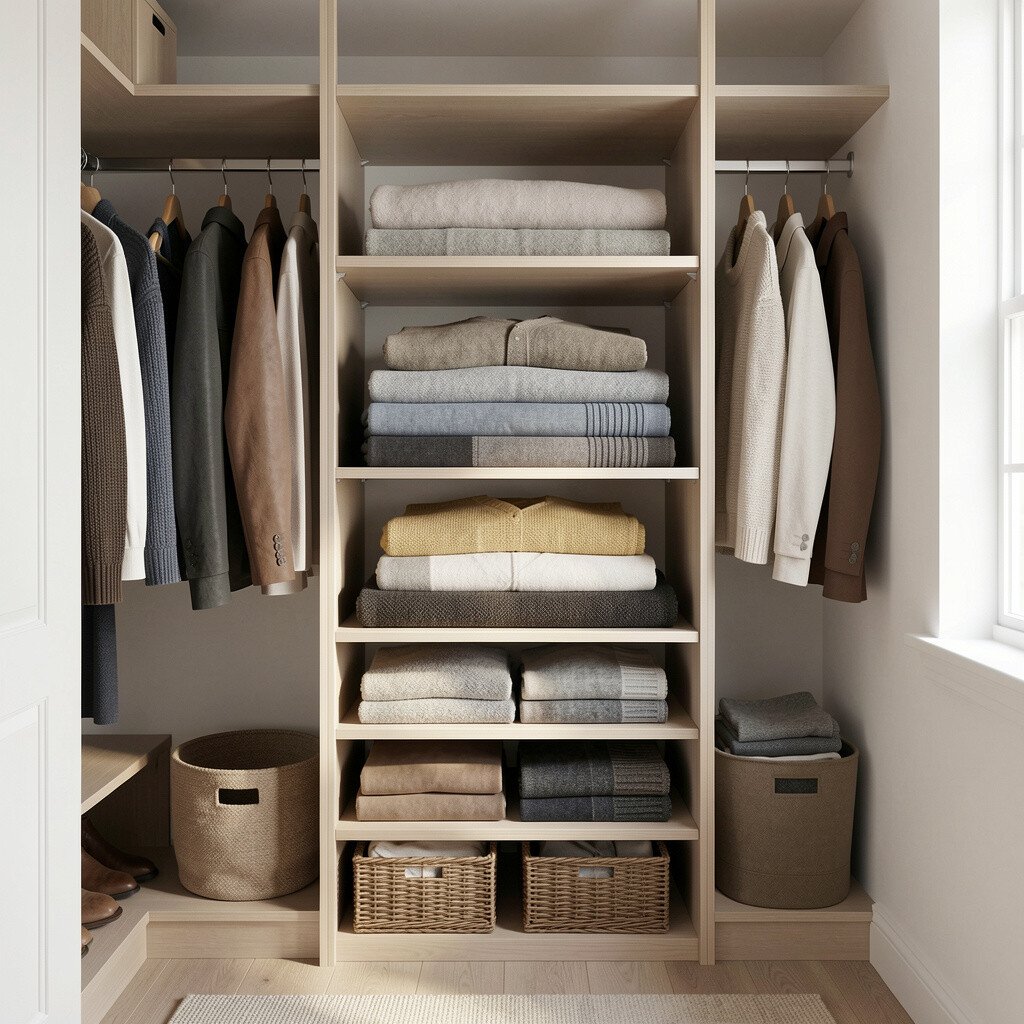
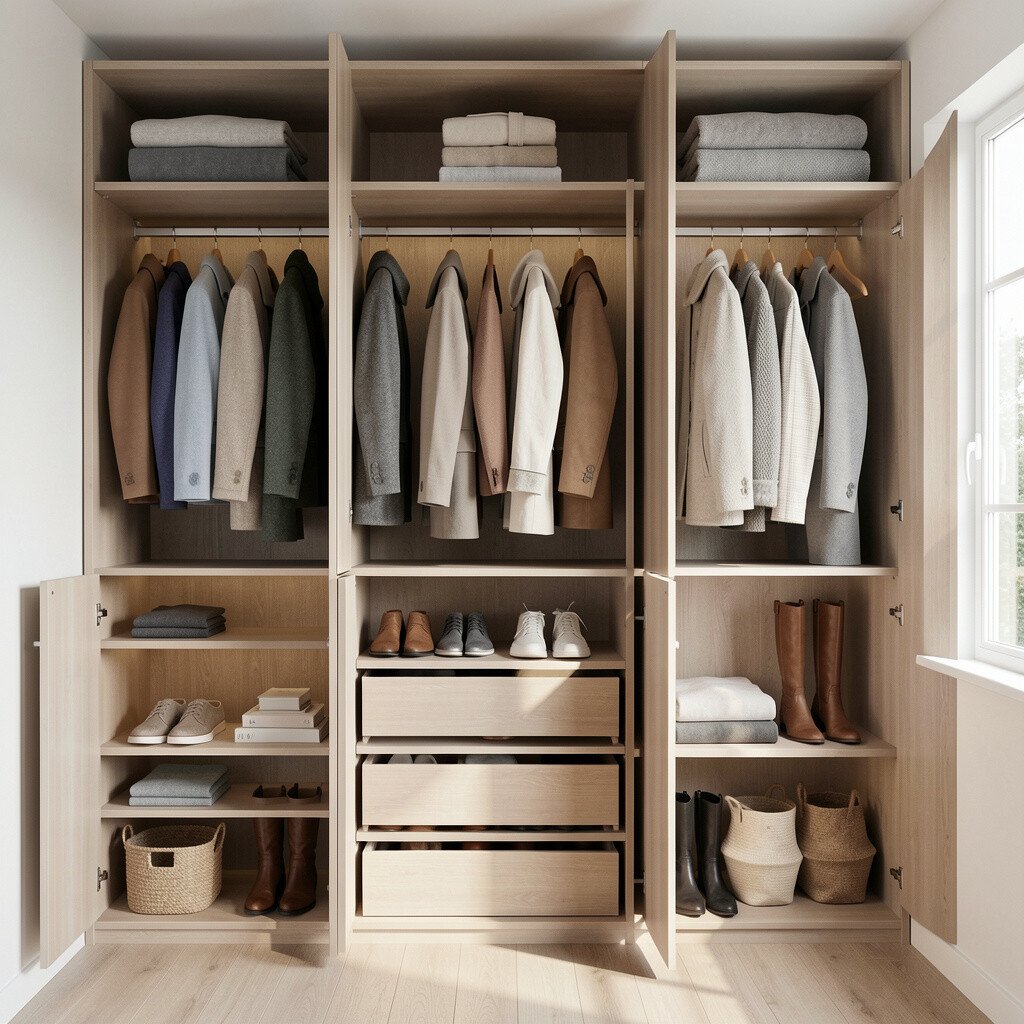
Coat closets are not only for hanging, so give folded items a dedicated spot. A shelf for sweaters and warm layers keeps bulky fabrics from crowding hanging space.
Use shelf dividers to separate stacks by type, like everyday sweaters versus bulky winter knits. Fold in a consistent method so the top edges line up, which makes the closet look neat and makes grab-and-go easier. If you store a travel blanket or extra throw, reserve a lower shelf so it stays protected and out of sight.
To keep costs reasonable, you can start with adjustable shelves and add dividers as you go. A current trend is using slim shelf organizers that do not take up extra depth, which works well in deeper closets. Personalize by choosing a soft shelf liner in a color you love, so the closet feels cozy, not cold.
7. Create a Dedicated Hook Spot for Bags and Umbrellas
Create a Dedicated Hook Spot for Bags and Umbrellas
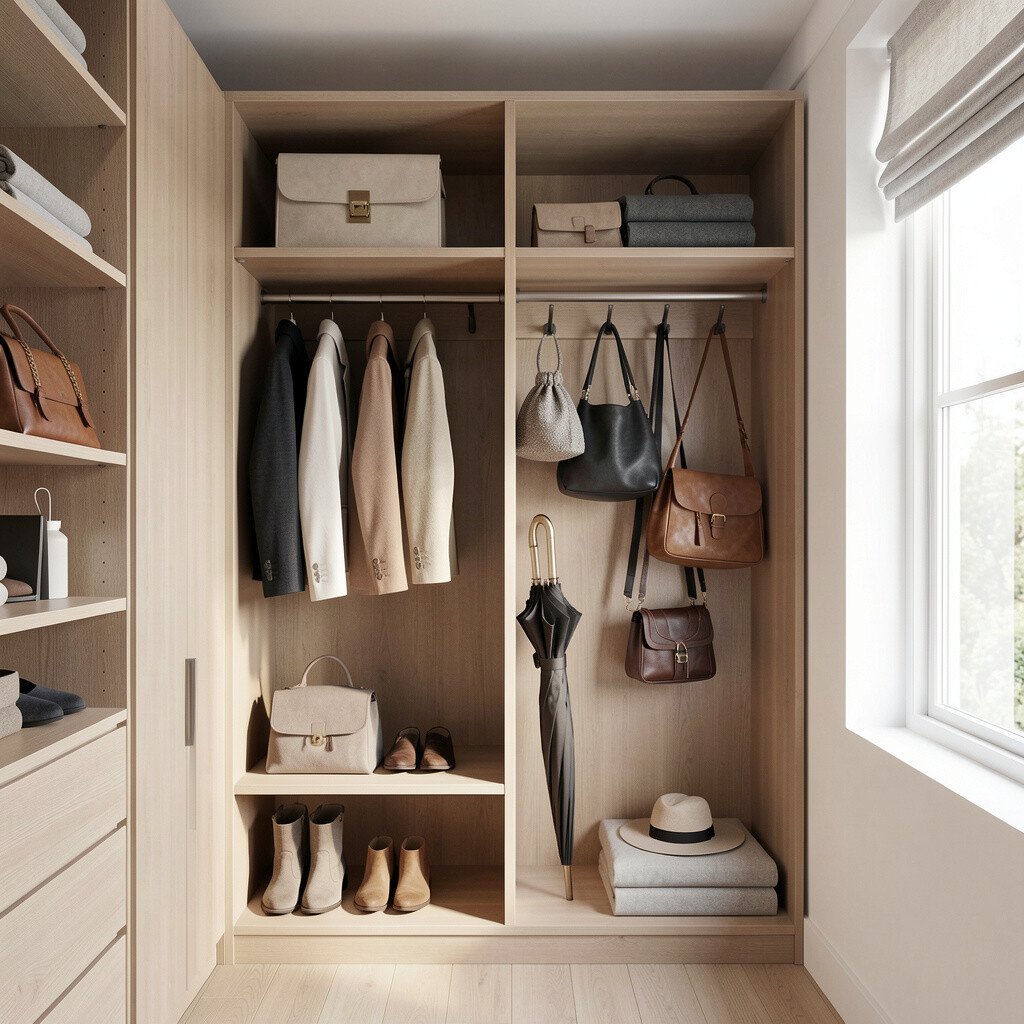
When umbrellas and everyday bags have no home, they end up leaning everywhere. Give them a hook zone so they hang neatly and dry properly after rainy days.
Pick hooks that match the weight you expect, then place them at a reachable height for daily use. If you often carry crossbody bags, add a couple of hooks that support their straps without bending them. This also protects your coat shoulders, since bags will not slide off and press into jackets.
8. Add a Lower Shelf for Detailing and Shoe Care
Add a Lower Shelf for Detailing and Shoe Care
A spacious coat closet can handle more than clothing, especially if you keep small care tools in one place. Store shoe polish, lint rollers, boot cleaners, and spare boot laces on a lower shelf where they stay contained.
Use a shallow tray or a small basket so items do not scatter when you reach for them. Keep the most used products on the top of the shelf, and put refills behind them so you do not lose track of what you need. This saves time, keeps mess away from your main coats, and gives you a tidy routine for quick fixes.
If you want a practical twist, store a small microfiber cloth with each product group. Many people are leaning into “ready-to-go” organization lately, and this fits that idea nicely. For personalization, choose a container style that matches your bins above so the closet feels like one system.
9. Use Color Cues to Separate Families or Categories
Use Color Cues to Separate Families or Categories
Color cues make a big difference when multiple people use the same closet. If everyone owns coats, scarves, and hats, use gentle color bands or fabric ties so items do not mix up during busy seasons.
You can place a color-coded hanger for each person or use small colored tabs on the shelf edges for categories. This creates a visual rhythm in the closet that feels calm, not chaotic. It also reduces the “where is it” moment, because you can spot the right items fast.
For cost, colored hangers and simple shelf tabs are usually affordable and easy to find. If you like a modern look, choose muted tones so the closet stays elegant even with multiple color cues. Personalize by picking colors that match each person’s wardrobe so the system feels natural.
10. Add a Small Bench or Rolling Seat for Easy Putting On
Add a Small Bench or Rolling Seat for Easy Putting On
A bench is one of those upgrades you do once and immediately wonder how you lived without. It gives you a comfy spot to sit while you put on boots, adjust laces, or smooth a scarf.
Place the bench near the hanging zone and under a section of shelf so it does not block access. Choose a seat height that feels right for you, and add a cushion cover you can wipe clean. A bench also creates a place to store a bag of essentials, like spare gloves, so your coat closet becomes a true command center.
11. Install a Boot Rack That Keeps Pairs Upright
Install a Boot Rack That Keeps Pairs Upright
Boots can take over a closet because they are tall and awkward to store. A boot rack that keeps pairs upright protects their shape and stops them from collapsing onto other items.
Look for a rack with adjustable slots so you can fit different boot heights without squeezing. Place rain boots together and keep dress boots in a separate section so you do not scuff delicate materials by accident. This kind of setup also makes it easier to see what you have, which helps you choose outfits faster.
Many people prefer metal or sturdy plastic racks because they are easy to clean and hold up well over time. If you are working on a budget, search for simple racks that can be anchored to the wall or sit securely on the floor. Personalize with boot trays underneath for moisture control, especially if you live where wet weather is common.
12. Add a Top Shelf for Rarely Used Items
Add a Top Shelf for Rarely Used Items
Use the highest shelf for items you only reach for now and then, like holiday coats, special occasion scarves, or extra seasonal hats. Storing these up high frees the middle area for everyday items you need quickly.
Keep the top shelf organized with lidded bins or sturdy storage boxes to protect from dust. Use a few smaller containers inside a larger bin so pieces stay together, like matching hat and scarf sets. If you keep winter gear, rotate it at the start of each season so you always know what is fresh.
For personalization, choose bins with fabric textures or cohesive colors so the closet still looks inviting even when you cannot see the top shelf fully. A current trend is using “seasonal staging,” where you stage items by readiness rather than by perfect symmetry. Costs can stay low if you use what you already own and add lids only when needed.
13. Create a Photo-Like Layout with Clear Zones
Create a Photo-Like Layout with Clear Zones
A coat closet feels easiest to maintain when it looks like a simple plan, not a pile of items. Think of it like a photo layout, where each zone has a purpose and a consistent spot.
Set up zones for hanging coats, folded layers, accessories, shoes, and small supplies, then keep the layout steady from month to month. When something new comes in, return it to the same zone right away so the system does not drift. This helps you stay organized without relying on memory or last-minute cleanup.
You can personalize the look by choosing matching organizers, coordinating hanger styles, or using one calm color palette across bins. For cost, start with the changes that create the biggest visual impact, like hanging order and clear bins, then build from there. If you love current organization trends, focus on visual clarity and easy access, because those are the features that actually get used every single day.