The wall looks like a calm skyline of storybook scenes, with rounded rooftops, tiny windows, and characters peeking out from each “building.” You can paint simple silhouettes or use removable murals so the theme stays flexible. It gives children a friendly visual map for making up stories and placing new characters where they belong.
Use pocket-style display strips to swap story pages, picture prompts, or mini character cards. Keep a small “story starter” set nearby so kids can pick one prompt without waiting. This design supports language growth, sequencing, and imagination while also making the wall feel alive instead of plain.
2. Color and Shape Parking Lot
Color and Shape Parking Lot
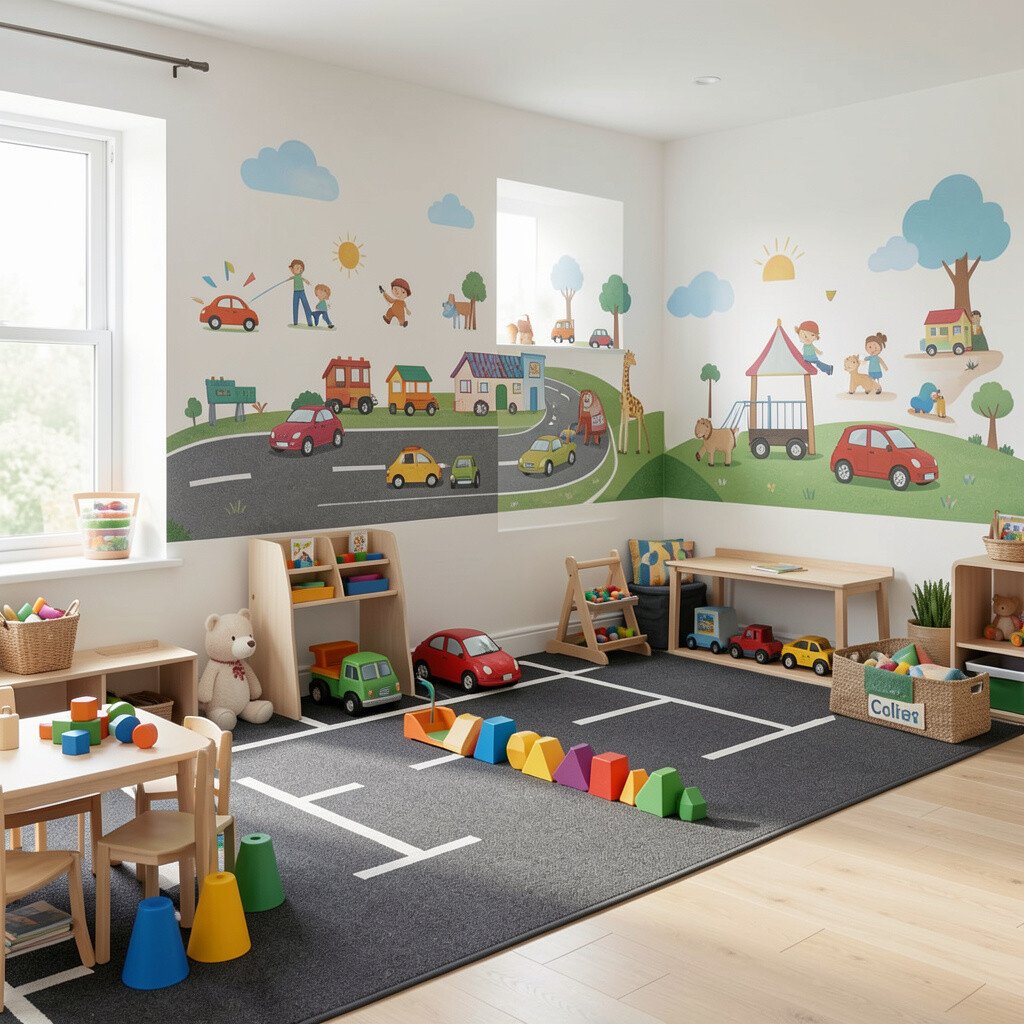
Think of your wall as a bright parking lot for shapes, with painted roads, labeled zones, and little stop signs made from paper or craft foam. Each zone can match a color family, so kids naturally notice connections as they play. It feels playful and structured at the same time, which helps many children focus.
Add magnetic or velcro-friendly cutouts for triangles, circles, squares, and rectangles, then let kids “park” each piece in the right spot. Change the stations as skills grow, such as adding size lanes or patterned “express lanes.” This keeps learning active and gives you quick ways to personalize by using your child’s favorite colors and themes.
If you want to stay within a budget, start with painted roads and a small set of reusable shapes, then expand over time. Current trends lean toward flexible learning materials that move with the child, and this wall fits that style perfectly.
3. Nature Leaf Inquiry Board
Nature Leaf Inquiry Board
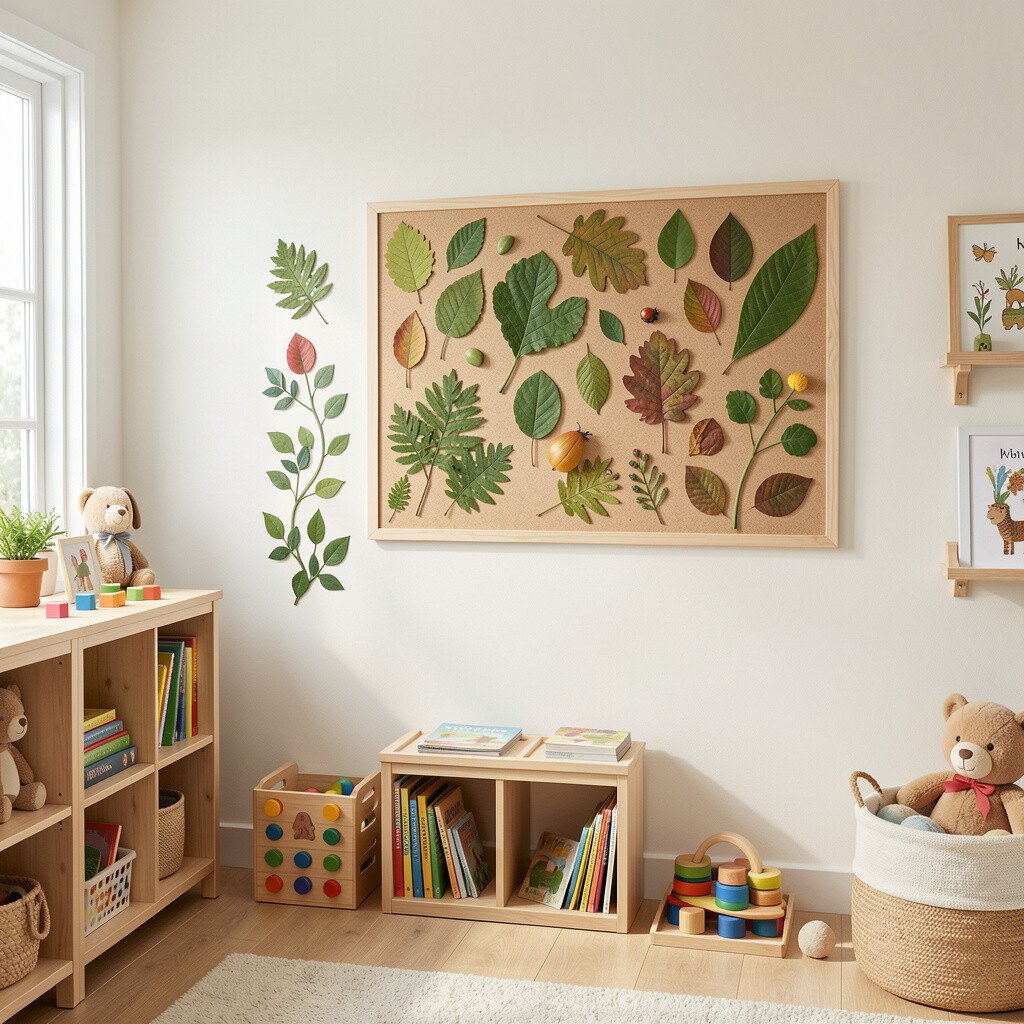
Cover a section of the wall with a soft green background and then add leaf outlines in different sizes, with veins sketched like tidy lines. You can hang real dried leaves in clear sleeves or use printed leaf cards for a neat, long-lasting look. Kids love the “real-ish” feel, and it makes science talk feel casual instead of formal.
Include a small pocket for “I noticed” notes where kids can tuck in drawings of what they saw on walks. Add a clip line for seasonal items so the display changes with time. When children compare shapes, textures, and patterns, they practice observation, vocabulary, and early classification.
For cost control, print leaf templates at home and laminate them with easy laminating sheets. Personalize by using your local tree leaf shapes, since kids often light up when the wall reflects their neighborhood.
4. Alphabet Garden Planters
Alphabet Garden Planters
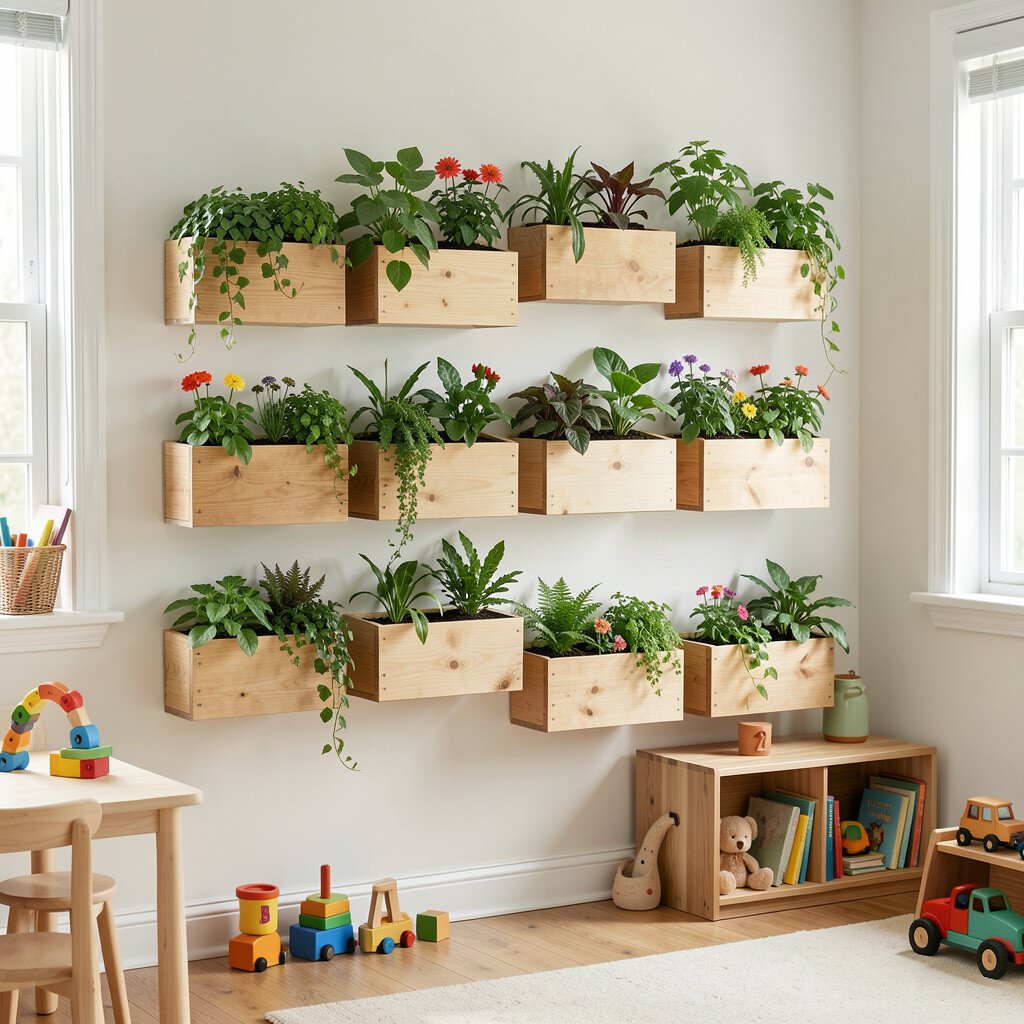
Imagine a row of tall, friendly planters painted across the wall, each one holding a letter and a tiny “plant” made from paper leaves. Some planters can be deep blue, others sunny yellow, so the wall feels cheerful. Kids can reach up, change the letters, and build new word ideas right where they play.
Make the planters functional by adding magnetic letters, foam letters, or velcro-backed ones for quick swapping. Add picture cards under each letter so children connect sounds to real objects, like A for apple or B for boat. This design supports early literacy while keeping attention on hands-on play instead of worksheets.
Build a vertical “weather” wall element that looks like a thermometer, with a color gradient from cool to warm. Add simple icons for clouds, sun, rain, and wind so kids can match the day’s weather at a glance. It turns everyday observations into something visible and fun.
Let children place a small marker on the scale each morning, then add a sentence strip they can finish with a picture choice. You can keep the strip short so it stays doable, like “Today feels ___” with emotion or temperature pictures. This supports speaking skills, routines, and social learning as siblings and caregivers talk about the day.
To keep costs low, paint the base yourself and use printed icons with lamination for durability. Personalize by adding your own weather symbols and seasonal extras, such as snowflakes in winter or breezy wave icons in summer.
6. Marble Run Math Gallery
Marble Run Math Gallery
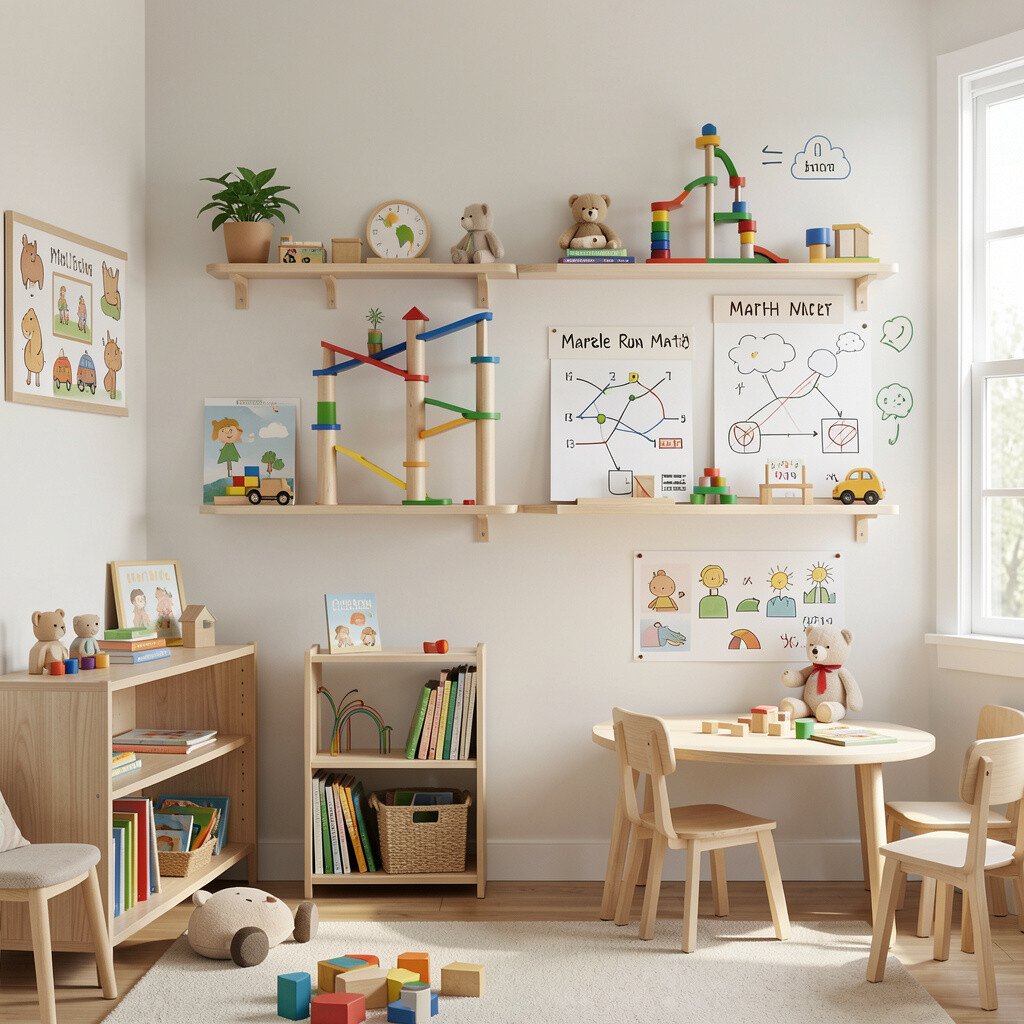
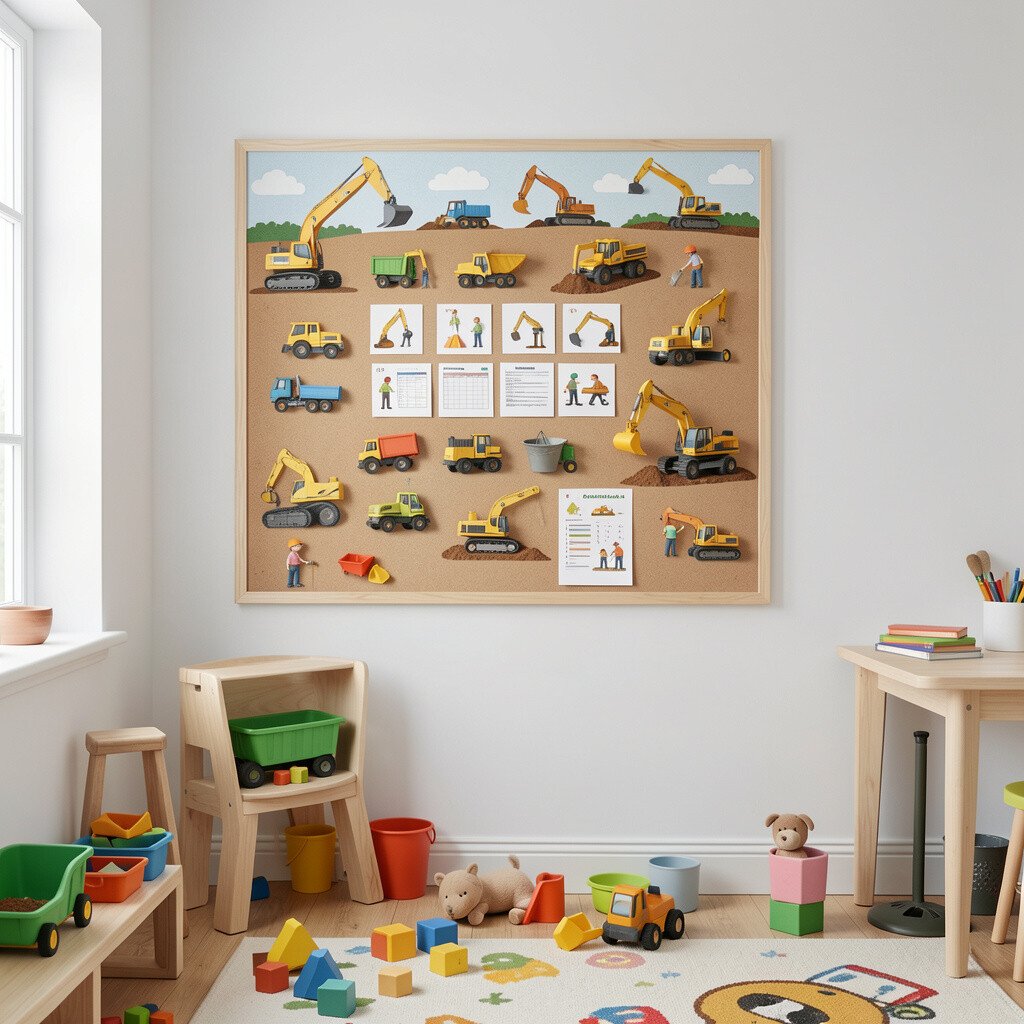
Paint the wall with bold pathways and add a few simple marble track pieces mounted safely at a low height. Each path can end with a number card, a pattern card, or a “finish” goal. When kids set marbles into motion, the wall becomes a playful math gallery.
Use modular panels so you can swap in new themes like even and odd, counting, or simple addition. You can also place wipe-clean spots for quick practice, then return to the marble play. This design strengthens spatial reasoning, cause and effect thinking, and patience as children test and retry.
7. Music Rhythm Ribbon Wall
Music Rhythm Ribbon Wall
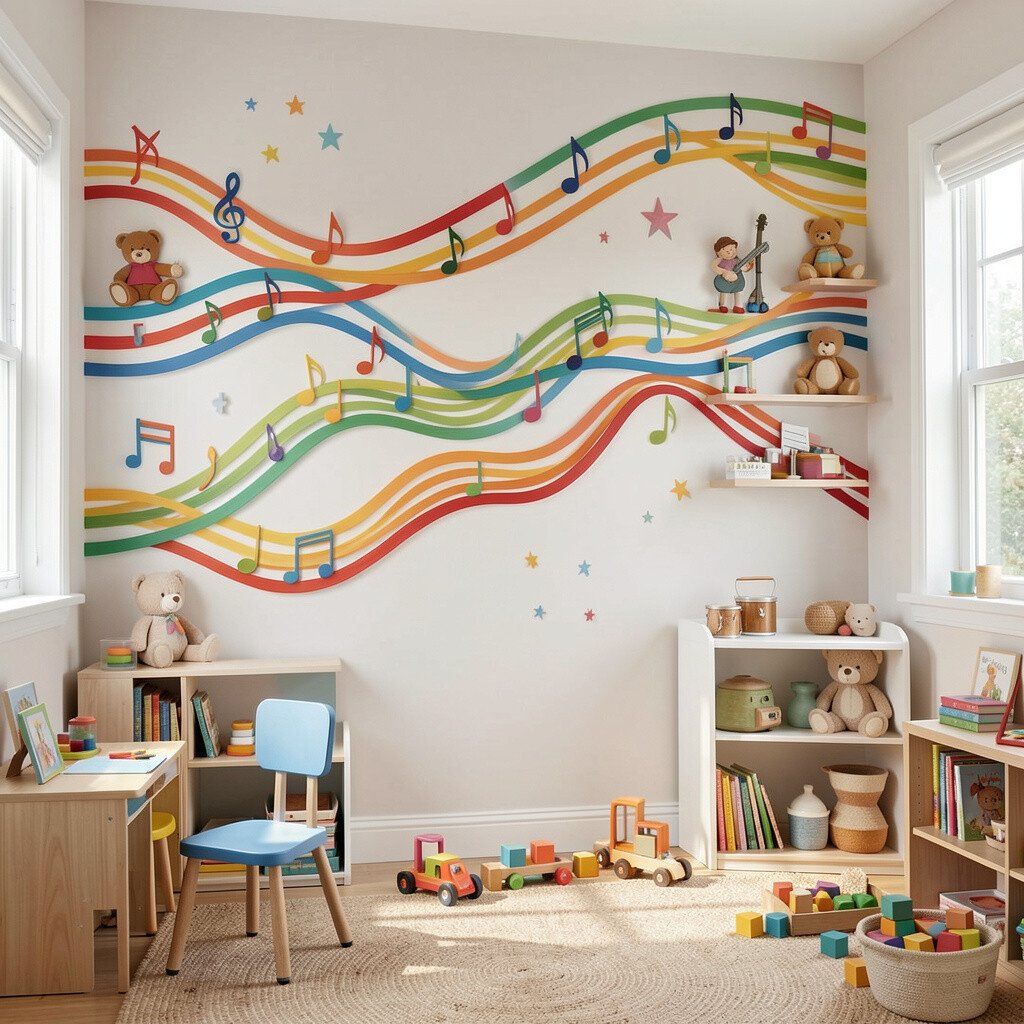
Create a wall strip of long, colorful ribbons that looks like a rhythm band line, with small drums or note symbols at spaced intervals. Kids can tap, slide, or attach rhythm cards to match beats. It feels like a stage, and that sense of performance makes learning more exciting.
Choose simple instruments for the activity, such as rhythm sticks, small shakers, or clapping games, and connect them to what they see on the wall. Keep a set of easy cards that show patterns like slow-fast, fast-fast, or tap-tap-rest. The result is a strong boost for timing, listening, and memory, especially for kids who learn best through movement.
For practical setup, mount the ribbons with strong hooks and use lightweight card holders. If you want a trendy look, go for muted colors with one bold accent, since many playrooms are leaning toward modern calming palettes right now.
8. Building Blocks Blueprint Wall
Building Blocks Blueprint Wall
Turn one wall into a “blueprint” zone with faint grid lines and big shapes like squares, rectangles, and circles in friendly colors. Add outlines of structures, such as towers, bridges, and tunnels, where kids can place block clusters. It looks like an engineer’s studio, but it still feels like play.
Use small picture templates behind clear bins so kids can match what they build to what they see. Add a few labeled challenge cards that show a house layout or a bridge curve. This strengthens problem-solving, planning, and fine-motor control while keeping the wall useful for daily building.
9. Construction Site Feelings Board
Construction Site Feelings Board
Design a wall scene that resembles a construction site, but instead of only tools, it includes feelings signs like calm, excited, worried, and proud. Build the site with bright caution stripes and soft, rounded shapes so it stays welcoming. When kids see their feelings represented visually, they often feel safer naming emotions.
Add a pocket for “what I need” cards with choices like quiet time, a hug, a movement break, or help from an adult. Encourage kids to place a magnet on the feeling that matches the moment. This supports emotional regulation and communication, which can reduce meltdowns and help kids get support faster.
Personalize it by using the words your family actually uses and adding a custom character card that matches your child. If you are keeping costs down, start with printed signs and magnets, then add foam tool shapes later.
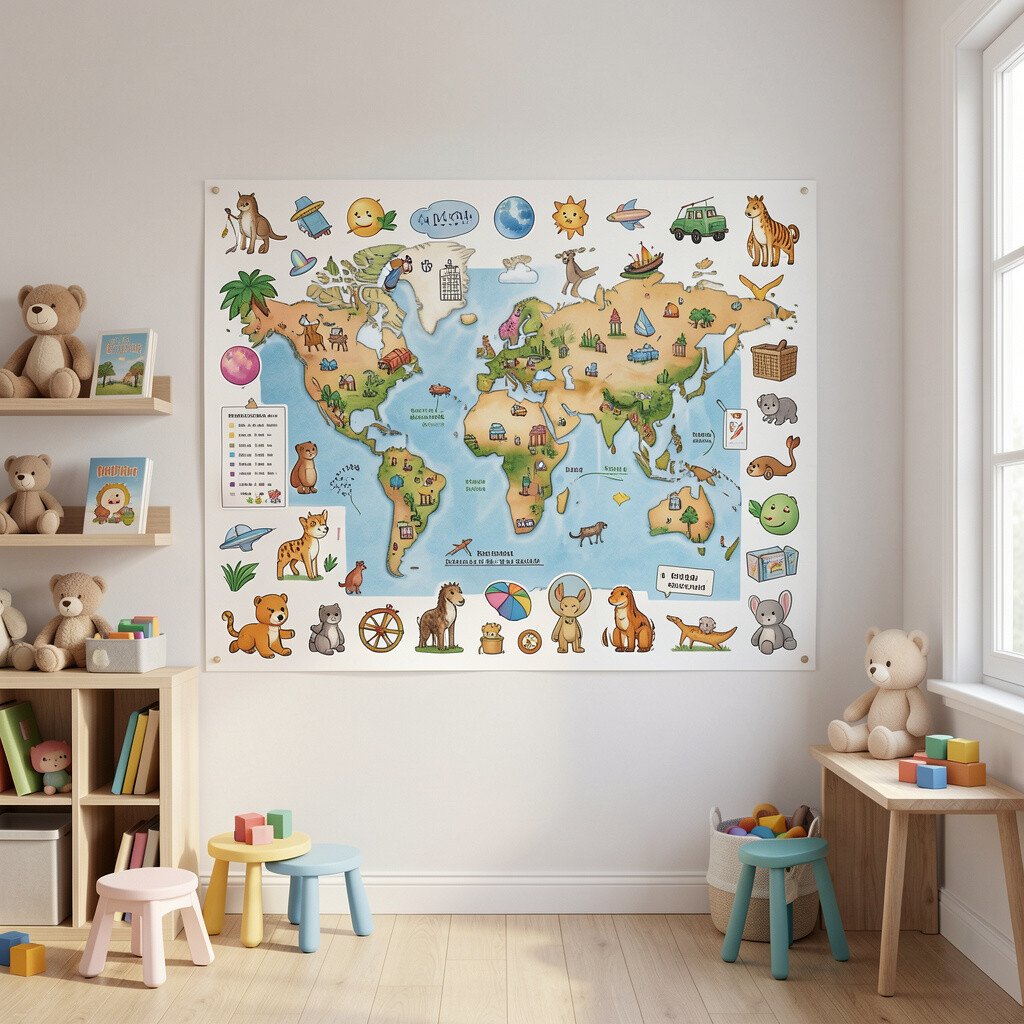
10. World Map Story Patches
World Map Story Patches
Cover part of the wall with a soft world map background and then add patch-like corners where children can place “story travel” pieces. Use removable fabric patches or velcro-backed cards shaped like landmarks, animals, or foods. It gives a sense of journey while still fitting neatly into a playroom.
Let kids build a “trip” by choosing three patches, then tell a short story about who they travel with and what they bring. You can also connect the wall to books you read, such as adding a patch after finishing a chapter. This supports narrative skills and curiosity about geography without turning learning into homework.
If you want a budget-friendly version, print simple landmark silhouettes and reuse the same patch shapes with different pictures. Current trends favor flexible displays that can change often, and patch systems make that easy.
11. Shapes in the Clouds Cloudline
Shapes in the Clouds Cloudline
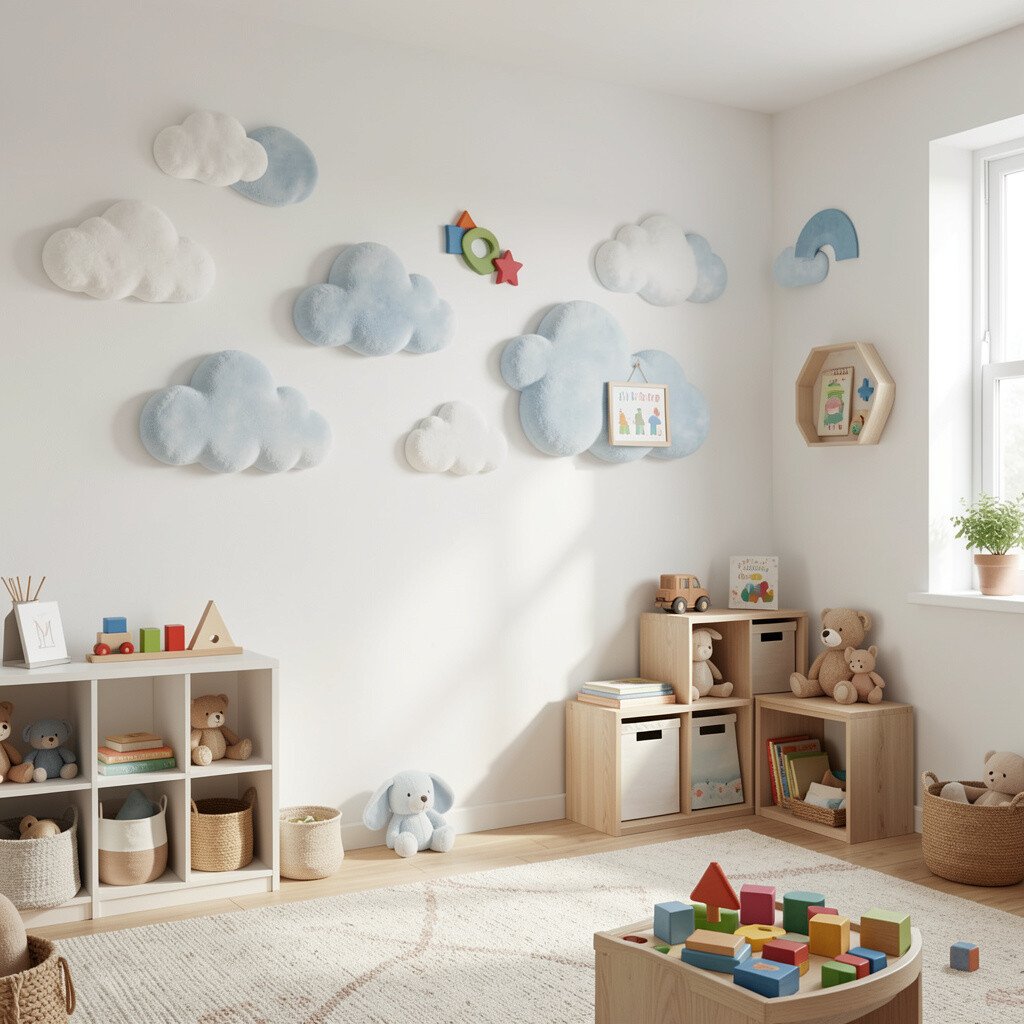
Paint fluffy cloud bands across the wall and place each cloud like a “home” for a single shape. Some clouds can hold circles, others triangles, squares, or rectangles, and each cloud can match a color. Kids love the softness, and it makes pattern play feel gentle instead of strict.
Add velcro-backed shape pieces that children move from cloud to cloud, then add a matching picture under each cloud for real-world context. A simple set might pair a circle with a coin, a triangle with a slice of pizza, and a rectangle with a door. This improves visual discrimination and helps children remember shape names through repeated play.
12. Tangram Trail Wall
Tangram Trail Wall
Turn one wall section into a bold tangram trail with outlines shaped like the seven classic pieces. You can trace the tangrams and then paint a trail that leads from one puzzle spot to the next. It looks like a mini adventure course, and kids naturally want to “complete the trail.”
Make the pieces tactile by using foam tangrams, magnetic tangram sets, or sturdy laminated pieces with smooth edges. Offer a few puzzle challenge cards at child height, then let them recreate the shapes in their own way. This design supports spatial reasoning, geometry awareness, and persistence as kids try again when pieces do not fit.
For practicality, keep pieces in a labeled bin that matches each color outline on the wall. Personalize by printing puzzle cards with themes your child loves, such as dinosaurs or space helmets, so the learning feels like their own world.
13. Mini Maker Lab Tool Letters
Mini Maker Lab Tool Letters
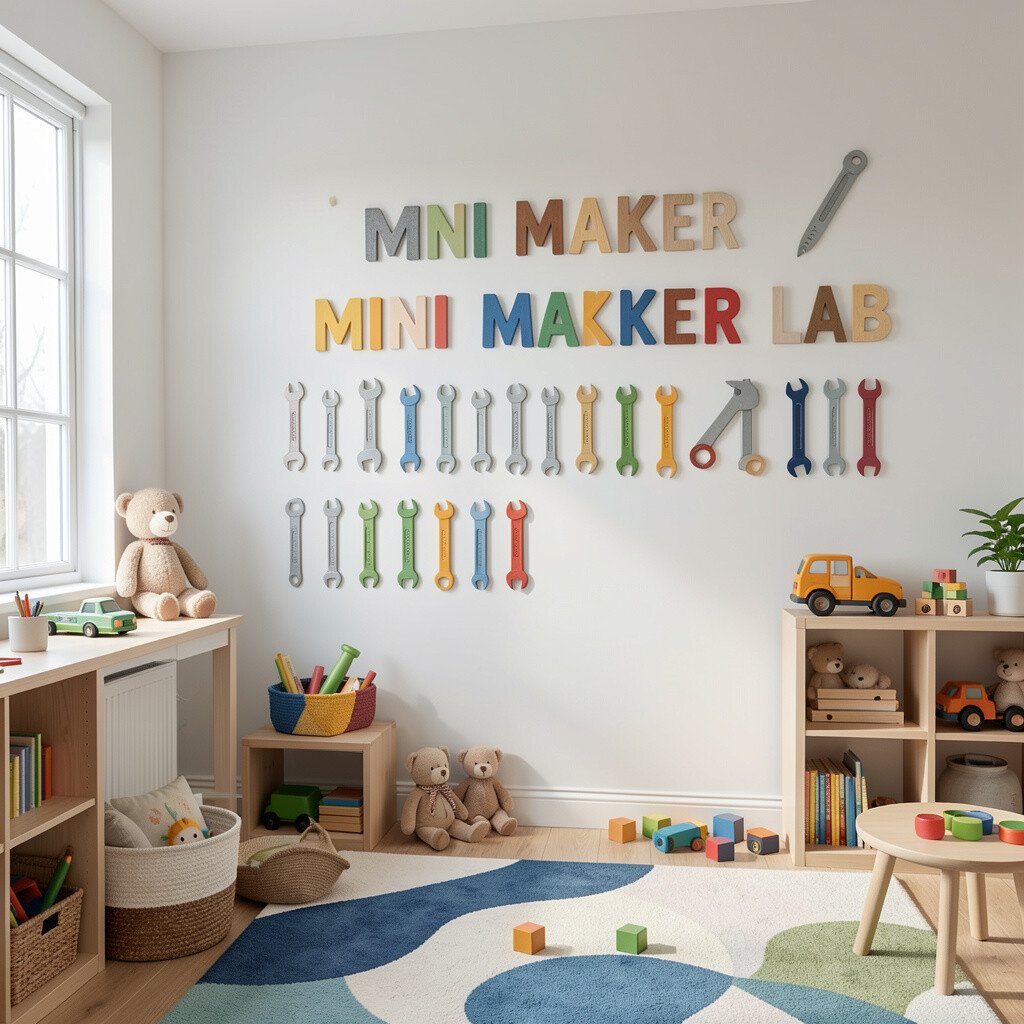
Create a maker lab wall with tool silhouettes that hold letters, like a wrench for W, a hammer for H, and a screwdriver for S. Add small labels with symbols only, or keep the text minimal so kids can learn by matching pictures and sounds. The visuals feel strong and interesting, and they invite kids to build, not just look.
Include a low shelf with safe, child-sized tools for pretend play and then connect those tools to the wall letters. When children pretend to “fix” things, they can also place letter cards to spell simple words like “fix,” “mine,” or “help.” This boosts phonics, letter recognition, and confidence during imaginative play.
For cost considerations, start with a painted tool outline set and add letter cards later as your child grows. This type of display also matches current maker-style play trends, where hands-on building is built right into the environment.
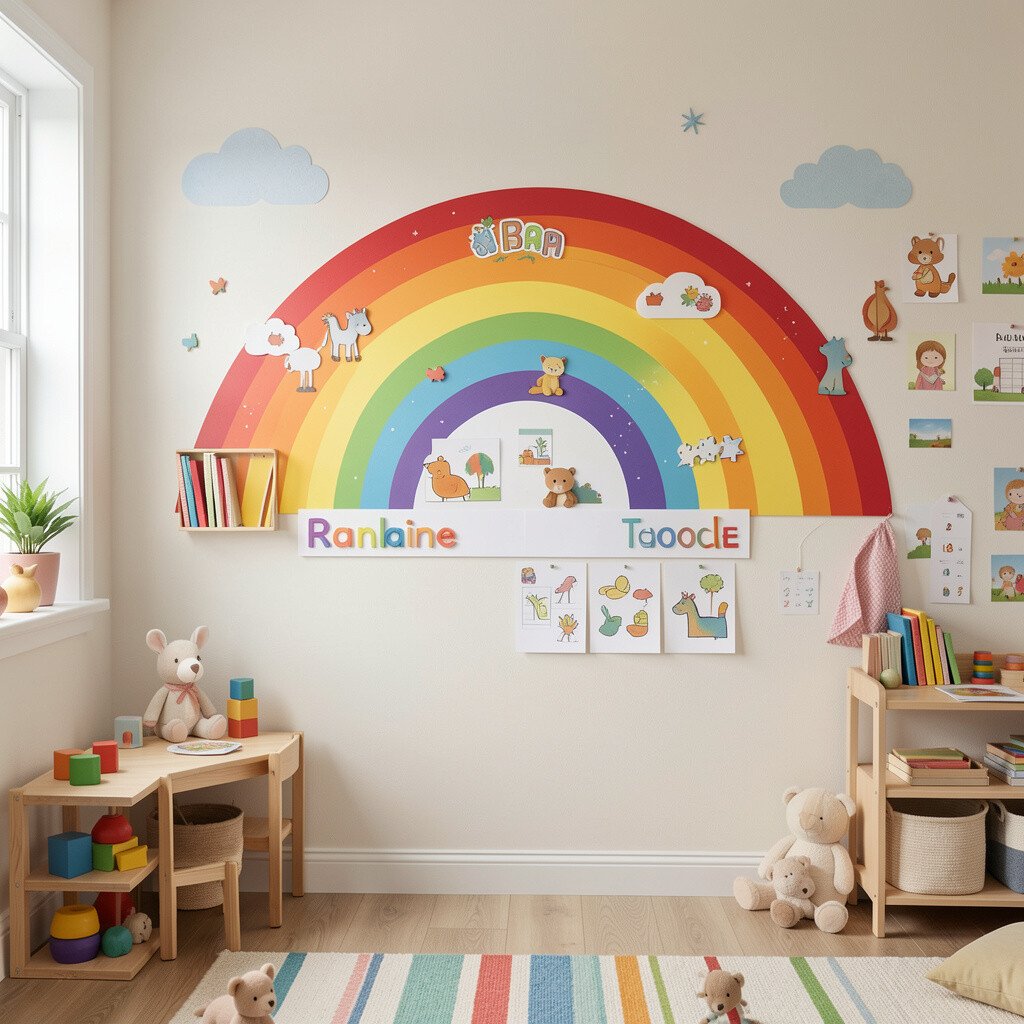
Design a rainbow that doubles as a routine choice board, with each color holding an activity icon like play, read, tidy, snack, or rest. Kids can move magnetic tokens to show what comes next in their day. It keeps routines clear while still letting children feel in charge.
Use icons that match your family’s actual rhythm and include a “break” option for busy days. If a child struggles with transitions, the visible sequence can reduce power struggles and make expectations feel predictable. This supports executive function and communication, especially when you use gentle, consistent language.
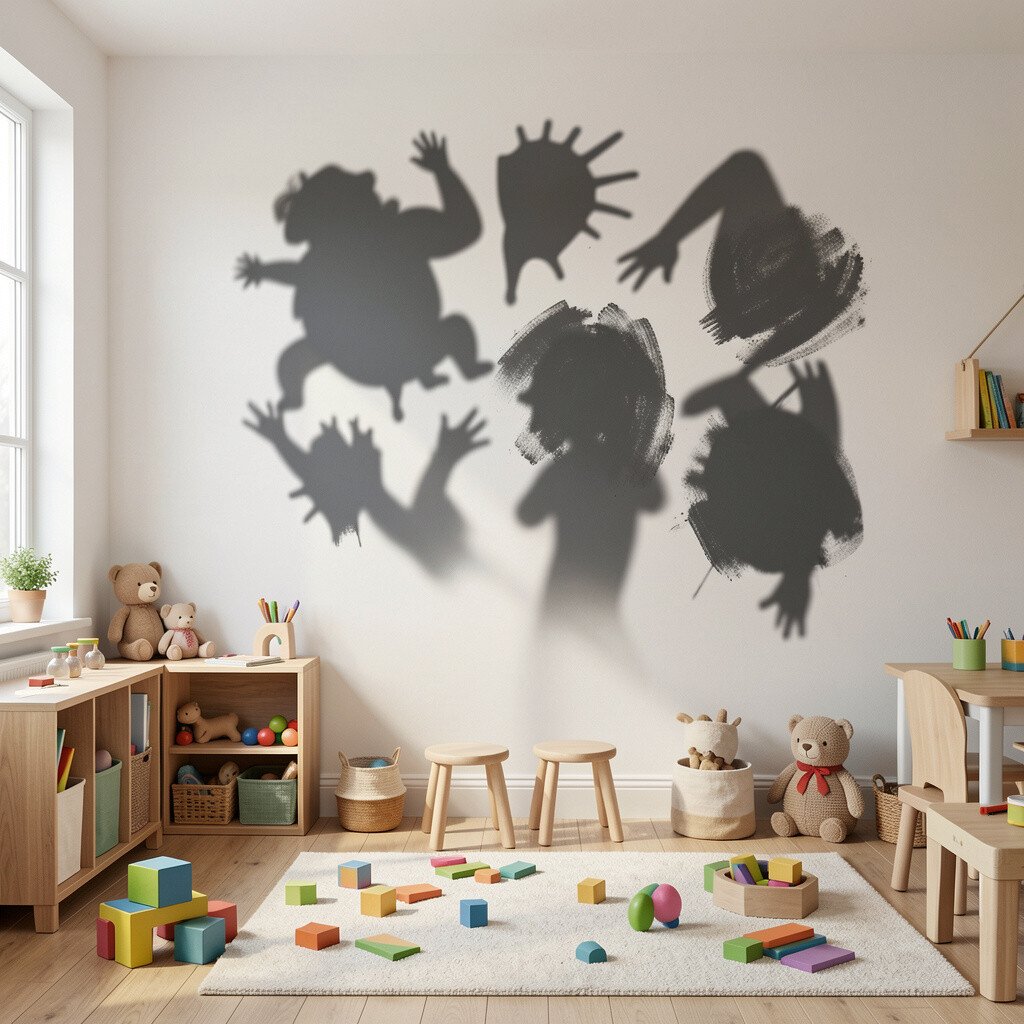
15. Giant Shadow Painting Shapes
Giant Shadow Painting Shapes
Make a playful wall that looks like giant stencil shapes, and add a “shadow play” strip where kids can trace silhouettes. You can use light-colored paint on a darker background so outlines stand out clearly. The wall becomes a creative studio for drawing, cutting, and storytelling.
Offer tracing cards in the same shapes so kids can make their own versions, then add a simple “finish line” where they glue or tape their final art. This design encourages fine-motor practice, creativity, and self-expression while giving kids a repeatable process that feels safe. Personalize by adding shapes connected to your child’s interests, like hearts for kindness, stars for space, or waves for ocean love.
If you are mindful of cost, paint the base once and reuse a set of stencil templates. Trends in playrooms often focus on open-ended art stations, and this wall can anchor that style beautifully.
16. Reusable Sticker Quest Map
Reusable Sticker Quest Map
Turn a wall into a quest map where each location is a small circle with a label icon, such as books, blocks, puzzles, or outdoor play. Kids place reusable stickers or magnets to mark completed activities, turning daily habits into a game. It looks colorful, and it also makes progress feel visible and rewarding.
Use themes to keep it engaging, like “space school” for science weeks or “castle camp” for reading time. Add a few “bonus quests” for kindness actions, such as sharing a toy or using calm words, so the wall celebrates character building too. This boosts motivation, routine follow-through, and positive behavior reinforcement.
To manage costs, choose reusable sticker sheets or magnet icons rather than single-use stickers. Personalize by letting your child design one new “location” each month, which makes the wall feel truly theirs.
17. Magnetic Poetry Word Wall Scenes
Magnetic Poetry Word Wall Scenes
Build a wall scene with big frames, like windows, doors, and picture borders, then place magnetic strips behind them for word building. Each frame can hold a part of speech card set, such as action words, color words, or character words. Kids can mix phrases and rearrange them until the sentence feels right.
Make it practical by keeping word choices limited at first, then expanding as their skills improve. Pair the word wall with a small writing option using wipe-clean markers so children can copy a sentence for longer play. This supports literacy, vocabulary growth, and storytelling while staying playful through visual arrangement.
For cost, start with a single theme set and print additional cards as needed, then laminate for durability. A current trend in classrooms and home learning is focusing on flexible language play, and this wall fits that exactly.