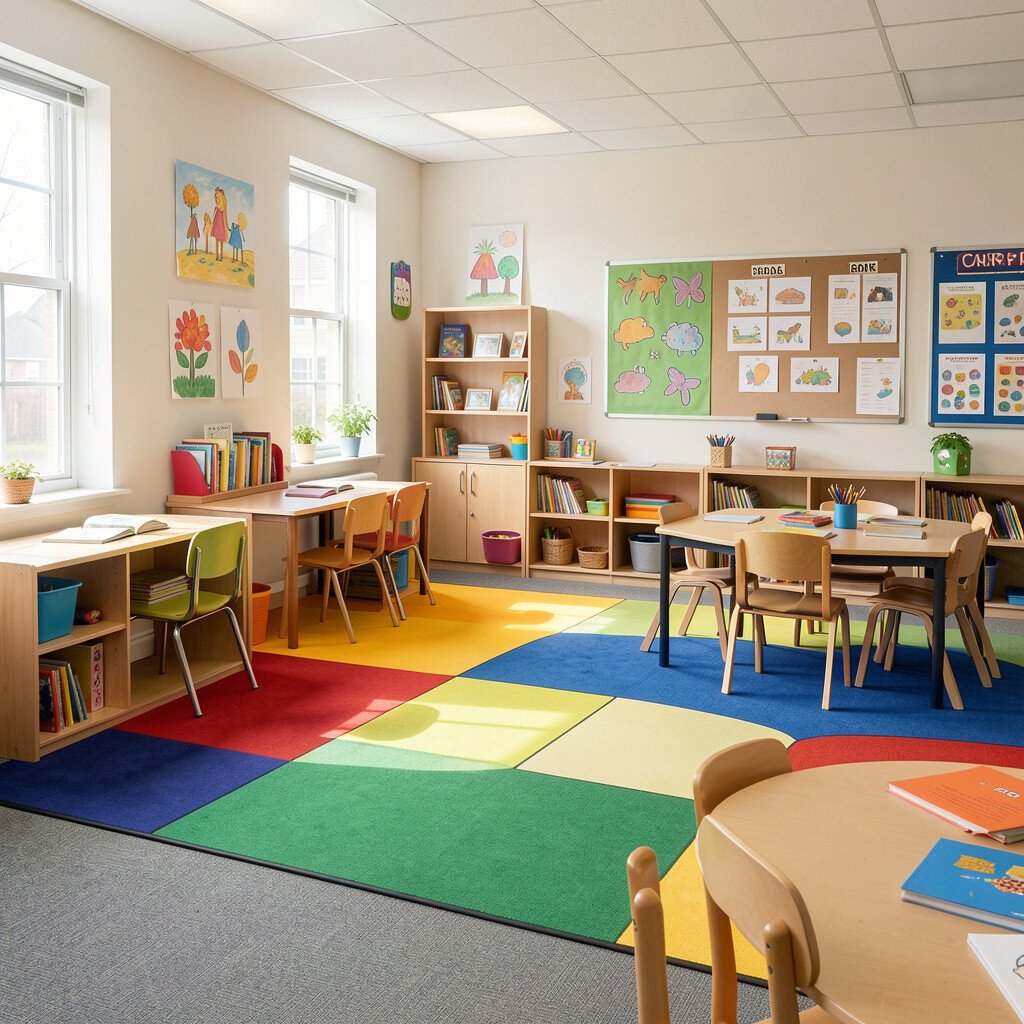
Separate your room into color-blocked areas so students immediately understand space and purpose. Pick two or three paint-friendly tones and keep them consistent across corners, shelving, and anchor charts.
Visually, the room starts to feel organized yet playful, like a set of learning “mini stages.” Students often move more calmly when each area looks intentional.
To make it practical, use painter’s tape for crisp edges and choose washable paint or removable wall decals. Personalize by letting each class name the zones and add simple student-made symbols in coordinating colors.
2. Gallery Wall With Rotating Student Art
Gallery Wall With Rotating Student Art
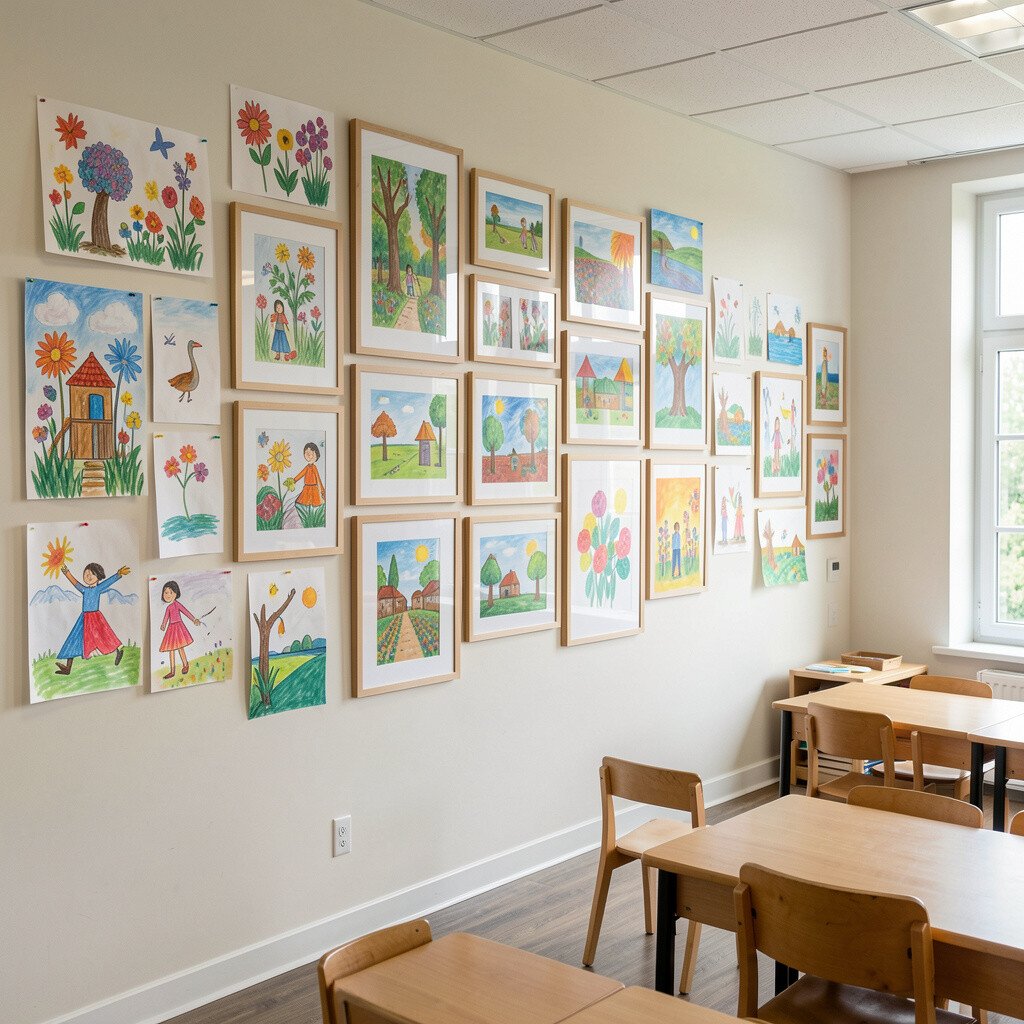
Create a gallery wall using frames or poster strips that let you swap artwork often. The sight of smiling faces and varied creations makes the room feel alive.
Students feel proud when their work sits at eye level, and that pride can boost effort during future projects. It also helps classmates notice details, patterns, and techniques in each piece.
For a simple setup, use a single display system with clear pockets or clip frames. Keep costs low by using thrifted frames, then repainting them to match your classroom colors.
3. Hand-Drawn Timeline That Moves
Hand-Drawn Timeline That Moves
Turn your classroom timeline into something that can change by drawing a long path on butcher paper or on a poster board. Each new unit gets a new stop along the path, with little icons and student labels.
As the timeline grows, it becomes a visual map of learning progress, not just a static line. That moving feeling helps students see how ideas connect over time.
Use a washable marker and small Velcro dots so you can rearrange pieces quickly. Personalize it by letting students design the stops with icons tied to their interests, like space, animals, sports, or music.
When you keep the materials simple, it stays budget-friendly and easy to store. The trend of maker-style visuals also fits well, because students can add to the display instead of only viewing it.
4. Nature-Inspired Corner With Real Textures
Nature-Inspired Corner With Real Textures
Build a small corner that celebrates nature by adding baskets of leaves, smooth stones, seed pods, and pressed textures. A soft rug or neutral mat helps everything look calm and inviting.
Seeing real textures supports hands-on learning and helps students slow down to observe carefully. It is especially helpful for science, writing, and art lessons.
To keep it practical, label containers with simple words or pictures and rotate the materials seasonally. Consider adding one “mystery texture” each week so students practice describing what they feel using clear language.
5. DIY Classroom Compass for Behavior and Goals
DIY Classroom Compass for Behavior and Goals
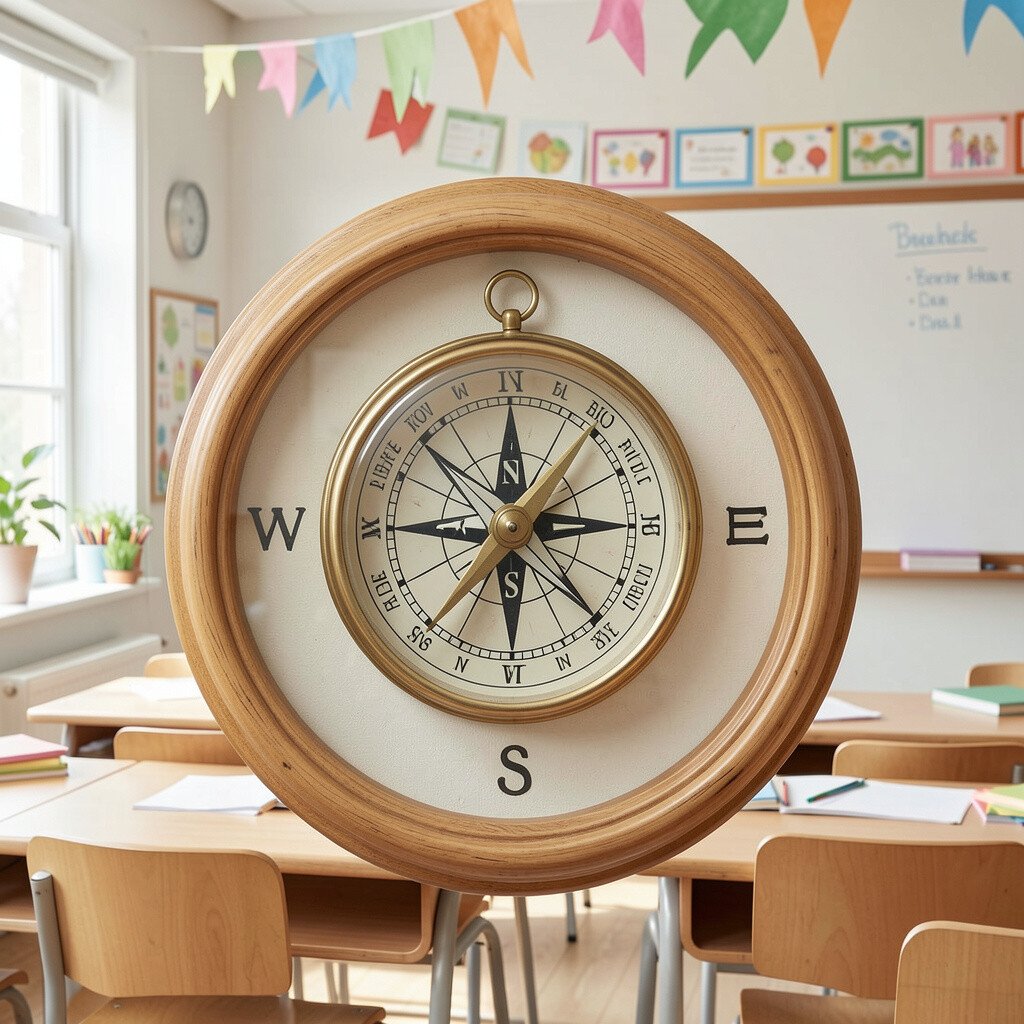
Draw a big compass on a bulletin board or on a poster, then use it to guide daily goals. Place words like ready, respectful, and focused around the compass points in student-friendly language.
Visually, it feels like a shared mission, which can motivate students without sounding like a rule poster. Students also get a clear picture of what “good day” looks like.
For practical use, move a small marker card to show the current focus of the day. Personalize it by letting students add tiny drawings at each compass point that match the class values.
6. Colorful Word Wall With Choice-Based Writing Prompts
Colorful Word Wall With Choice-Based Writing Prompts
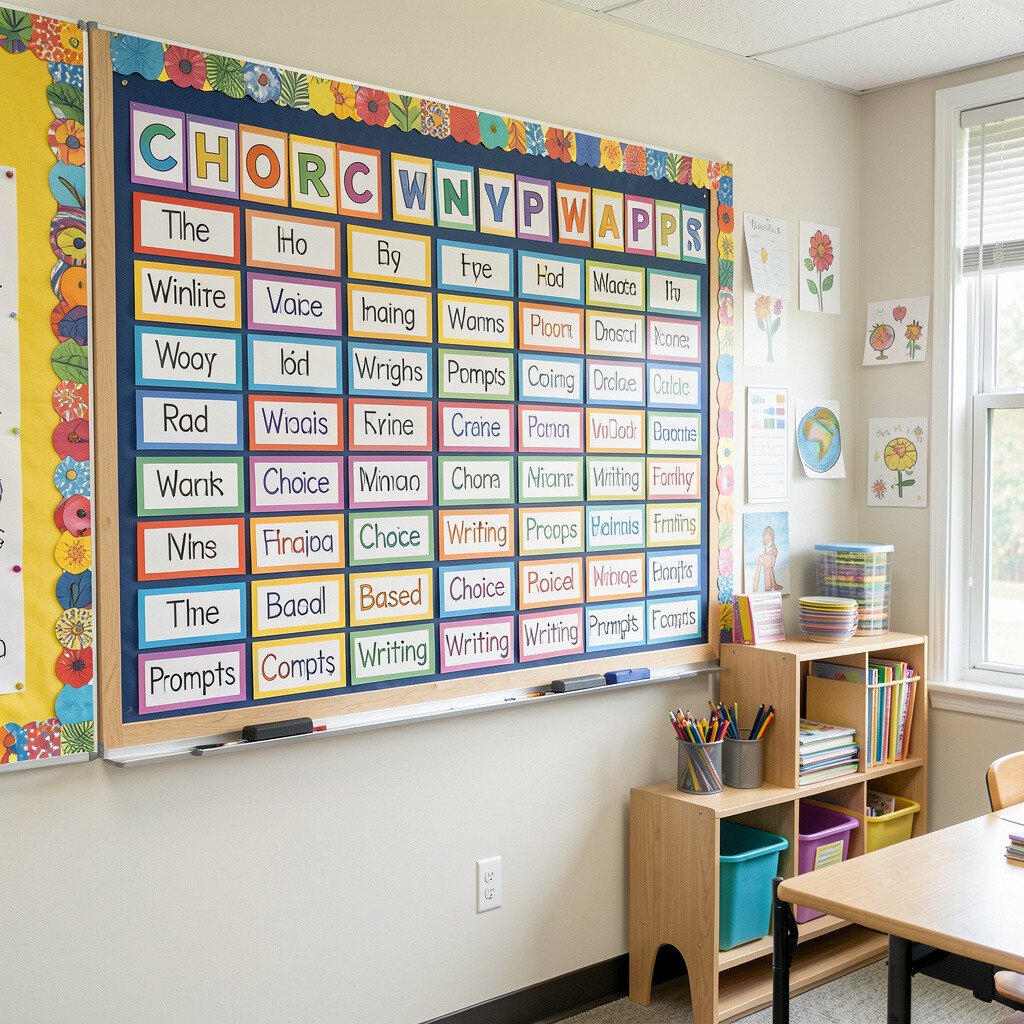
Set up a word wall using bright cardstock and soft backgrounds, then attach small prompt cards under key words. Students can choose a prompt and copy words into their own sentences.
When the wall is vibrant and interactive, vocabulary feels like a tool instead of a chore. It supports writing practice because students see how words fit together naturally.
Use pockets or Velcro so prompt cards can change by week, which keeps the display fresh. Keep costs low with paper scraps and markers, and reuse card sets from year to year.
7. Sky Mural With Cloud Pocket Notes
Sky Mural With Cloud Pocket Notes
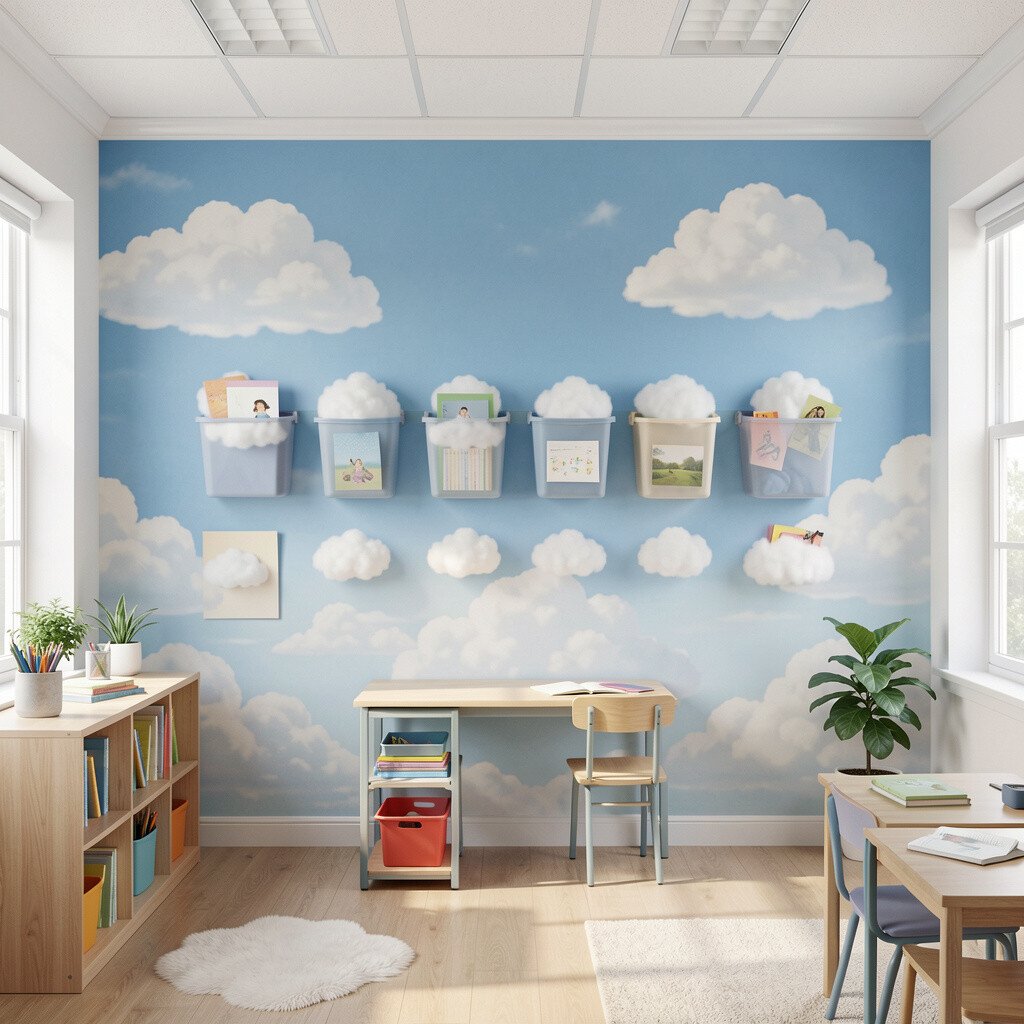
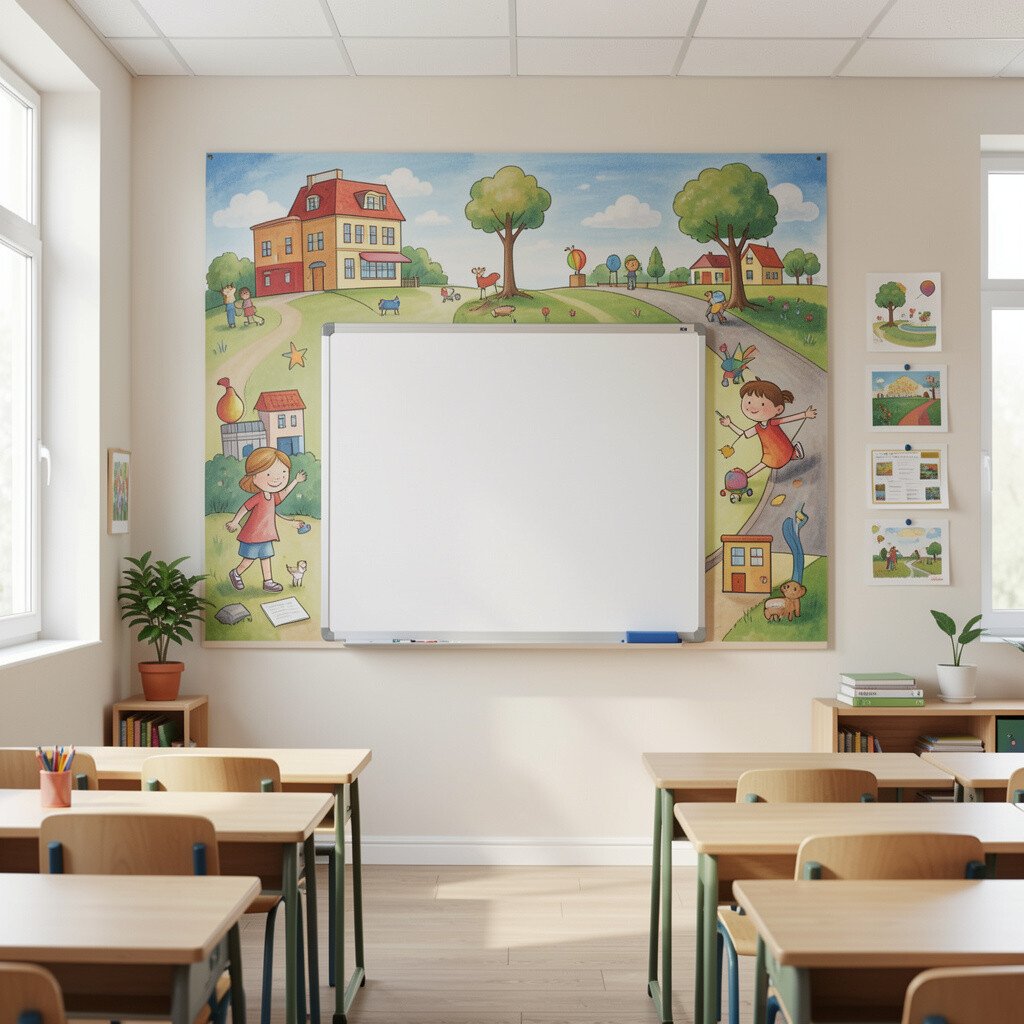
Paint or paper-craft a sky mural on one wall and add cottony “cloud pockets” made from felt. Each cloud can hold short notes, questions, or kind messages.
The visual calm of the sky helps students feel safe, while the pockets invite participation in a gentle way. It turns communication into something creative and low-pressure.
Use letter-sized note cards and add a simple system for students to grab one prompt when they finish work. Personalize by letting students draw tiny weather symbols on the cloud edges that match classroom moods.
To stay practical, choose durable felt or pre-made pocket sheets and store them flat. Many teachers also follow the trend of “micro-messages,” and this mural makes that idea easy and fun.
8. Mosaic Nameplates With Student Fingerprint Patterns
Mosaic Nameplates With Student Fingerprint Patterns
Design nameplates that look like mini mosaics by combining colored paper squares with fingerprint dots or swirls. The result feels personal because every student contributes their own mark.
Seeing names in such a playful style helps students connect faster and remember each other with less awkwardness. It also gives you an instant art portfolio for the first weeks of school.
For practicality, use pre-cut square paper and glue sticks, then let each student choose a small palette. Cost considerations are friendly since most materials come from basic craft supplies and recycled paper.
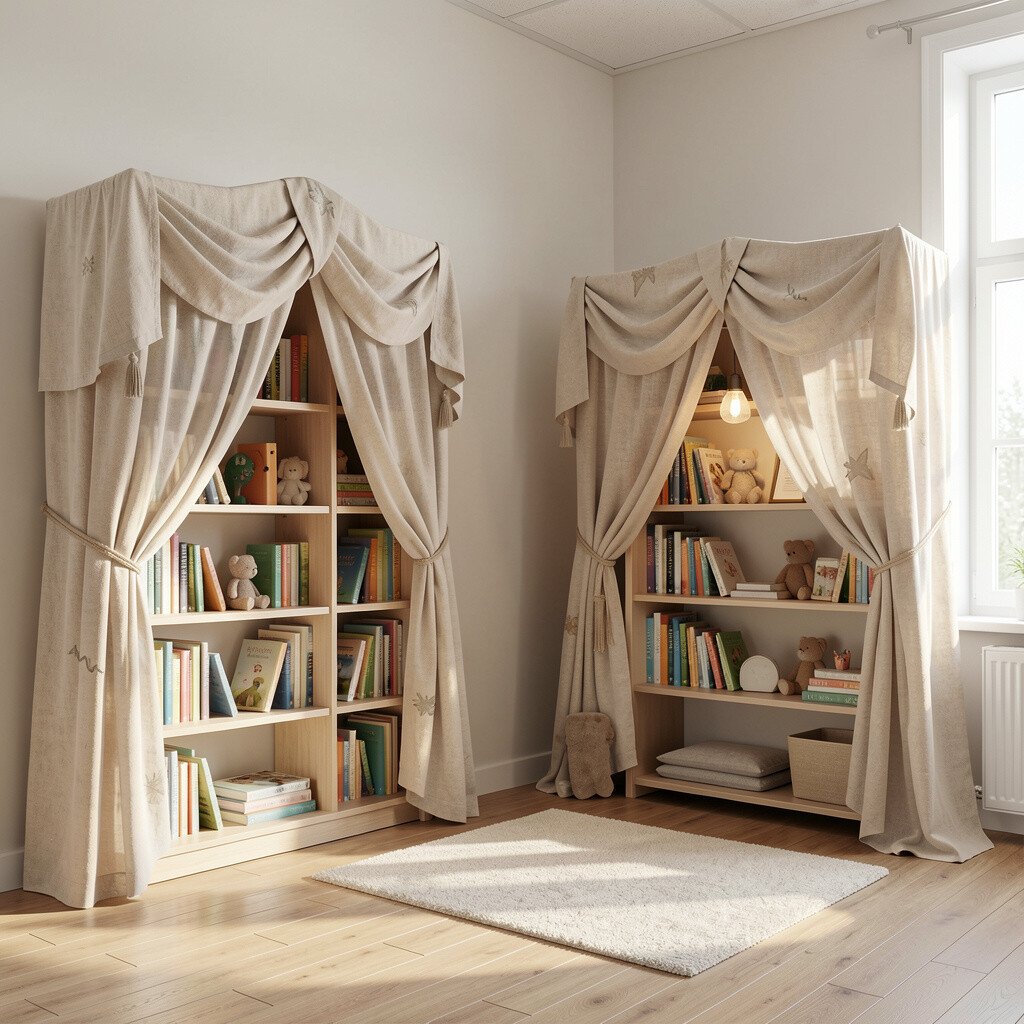
Create a book nook using an open shelf, a small curtain, and a cozy fabric backdrop. Add soft lighting like a clip-on lamp or battery fairy lights for an inviting glow.
A visual nook signals that reading is a special activity, not just downtime. Students are more likely to browse books when the space feels comforting and designed.
Make it practical by keeping the books visible with clear labels and using bins for easy reshelving. Personalize the theme by tying it to current class stories, seasons, or cultures represented in your community.
If budget is tight, use string lights from past holidays and swap fabric covers often. This kind of cozy design is a current trend because it supports attention, slow thinking, and choice reading.
10. Shape and Pattern Tiles for Daily Math Warmups
Shape and Pattern Tiles for Daily Math Warmups
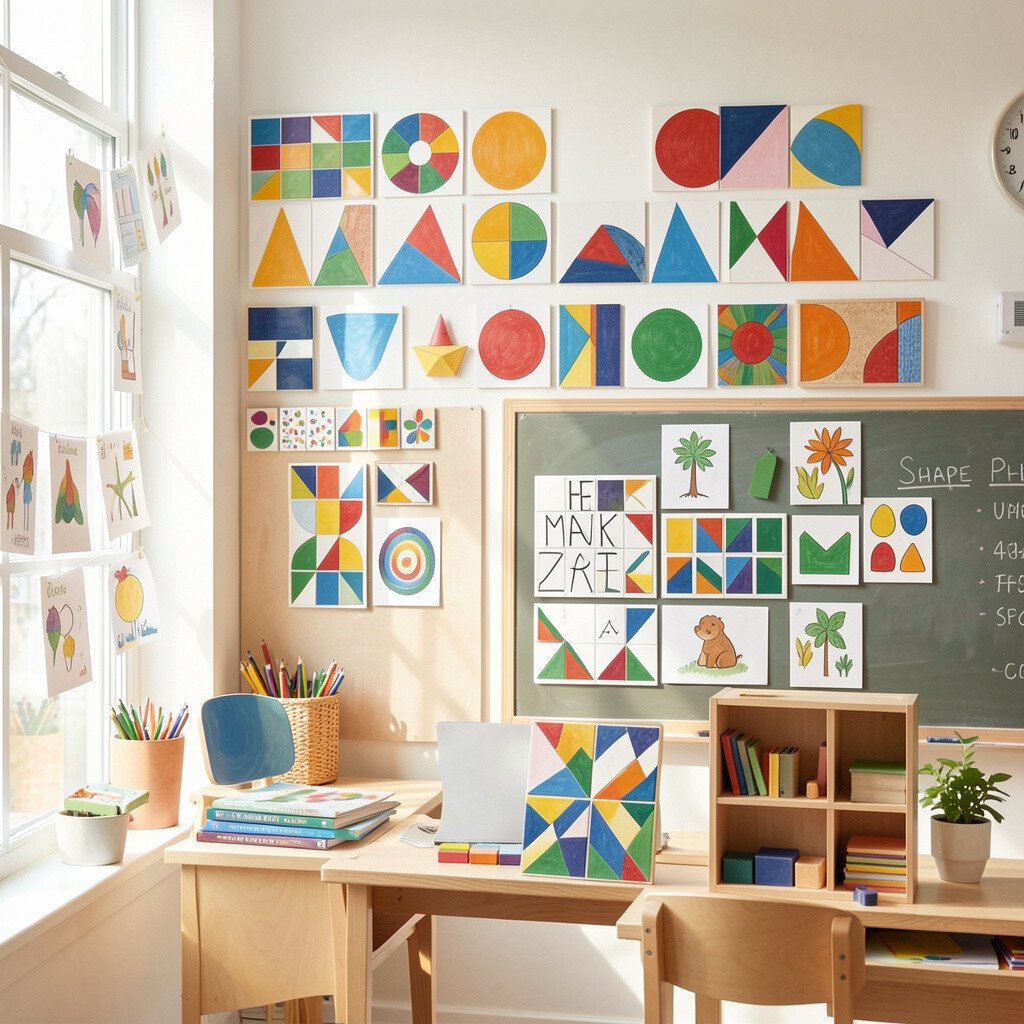
Hang a “tile station” on the wall with foam shapes, pattern strips, or reusable magnetic pieces. Students can arrange them for warmups and quick problem solving.
The colorful pieces make math feel hands-on, which helps many learners understand without feeling rushed. It also supports focus because students can see their thinking take shape.
Use a simple tray system with labeled bins so cleanup stays quick. Personalize it by adding student-designed patterns as examples, including shapes they chose from past projects.
For cost control, start with a small set and expand over time using craft foam and card stock. Keep the tiles durable by choosing washable, sturdy materials that survive daily use.
11. Art-Style Display of Class Rules as Promises
Art-Style Display of Class Rules as Promises
Instead of listing rules, create art-style “promises” using student handwriting and drawings. For example, use posters that show what “kind words” looks like in real moments.
When expectations look like creative promises, students often respond with less pushback. The room feels warmer, and behavior guidance becomes more human.
Make the promises practical by keeping them short, visible, and easy to practice during transitions. Personalize it by asking students to draw one example each, then compile their work into a unified set.
12. Student-Led Weather Station With Visual Instruments
Student-Led Weather Station With Visual Instruments
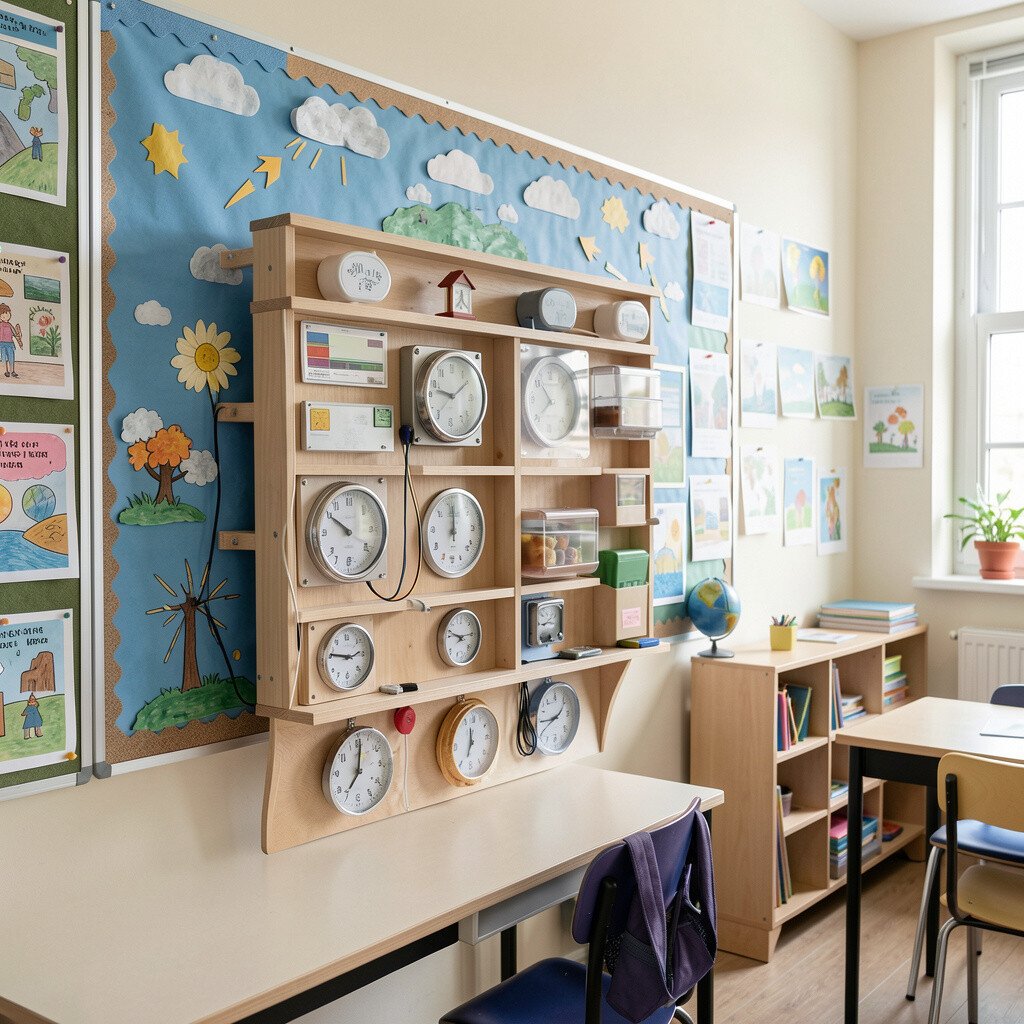
Build a weather station that looks like an art exhibit, complete with colorful thermometer cards, a rain gauge cover, and cloud charts. Use hand-drawn icons to represent temperature changes and daily sky descriptions.
Students enjoy watching the visuals update, and that excitement can support daily science routines. It also encourages accurate observation because learners can compare what they predicted with what they saw.
For practical tips, place materials at the front so students can update the station in under a minute. Keep costs low by using recycled jars, printable labels, and durable chart paper.
13. Wordless Comic Wall for Storytelling Skills
Wordless Comic Wall for Storytelling Skills
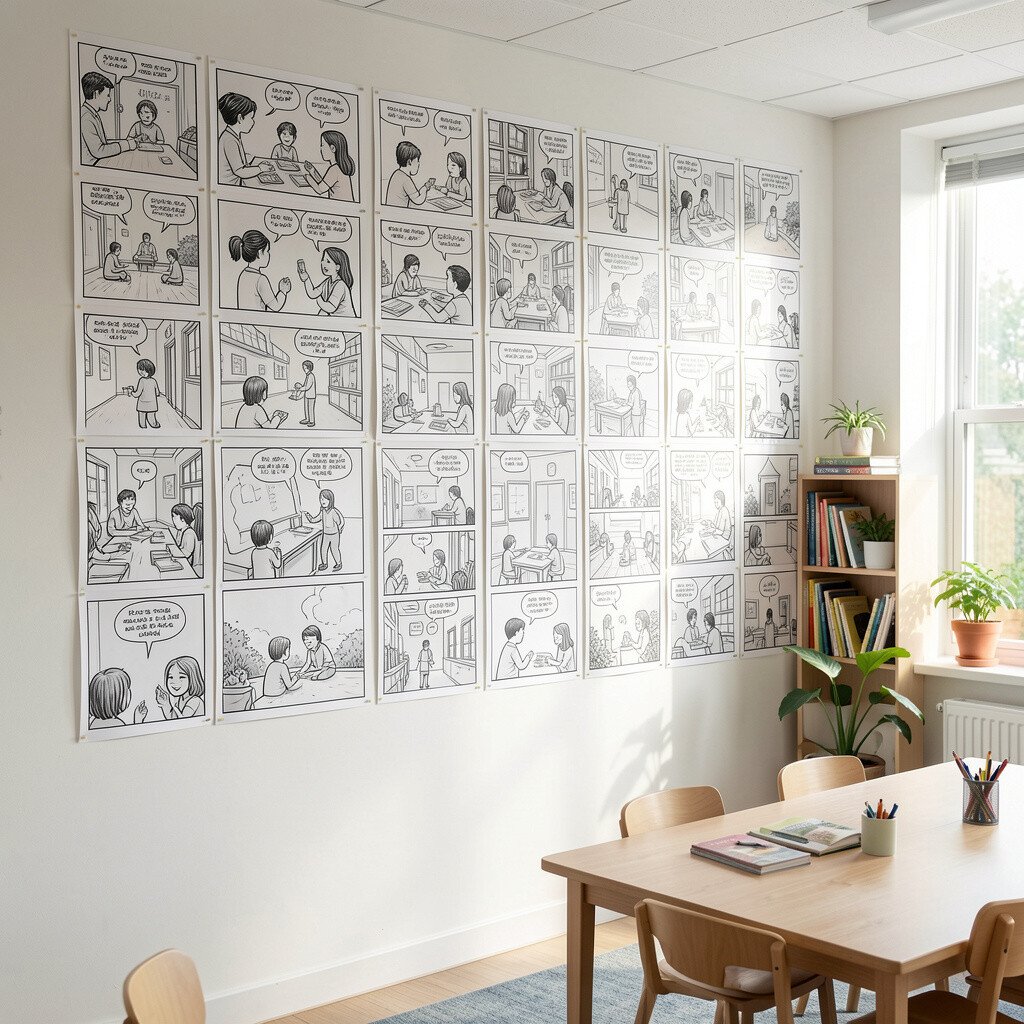
Create a wordless comic wall using a grid of panels that students can fill with drawings and sequence choices. Each week, a panel set changes so the story stays fresh.
This visual storytelling practice helps students build narrative structure without worrying about wording right away. It supports language development, creative thinking, and confidence for new writers.
Use simple dry-erase markers on laminated panels or put blank comic cards in a pocket folder system. Personalize by letting students add characters based on class interests, like robots, dragons, or real-world heroes.
To keep it practical, add a quick rule for how many panels students can complete during a single session. The trend of multimodal learning fits perfectly because art and literacy work together on the same wall.
14. Scrapbook Scrap Bar for Fast Creative Refills
Scrapbook Scrap Bar for Fast Creative Refills
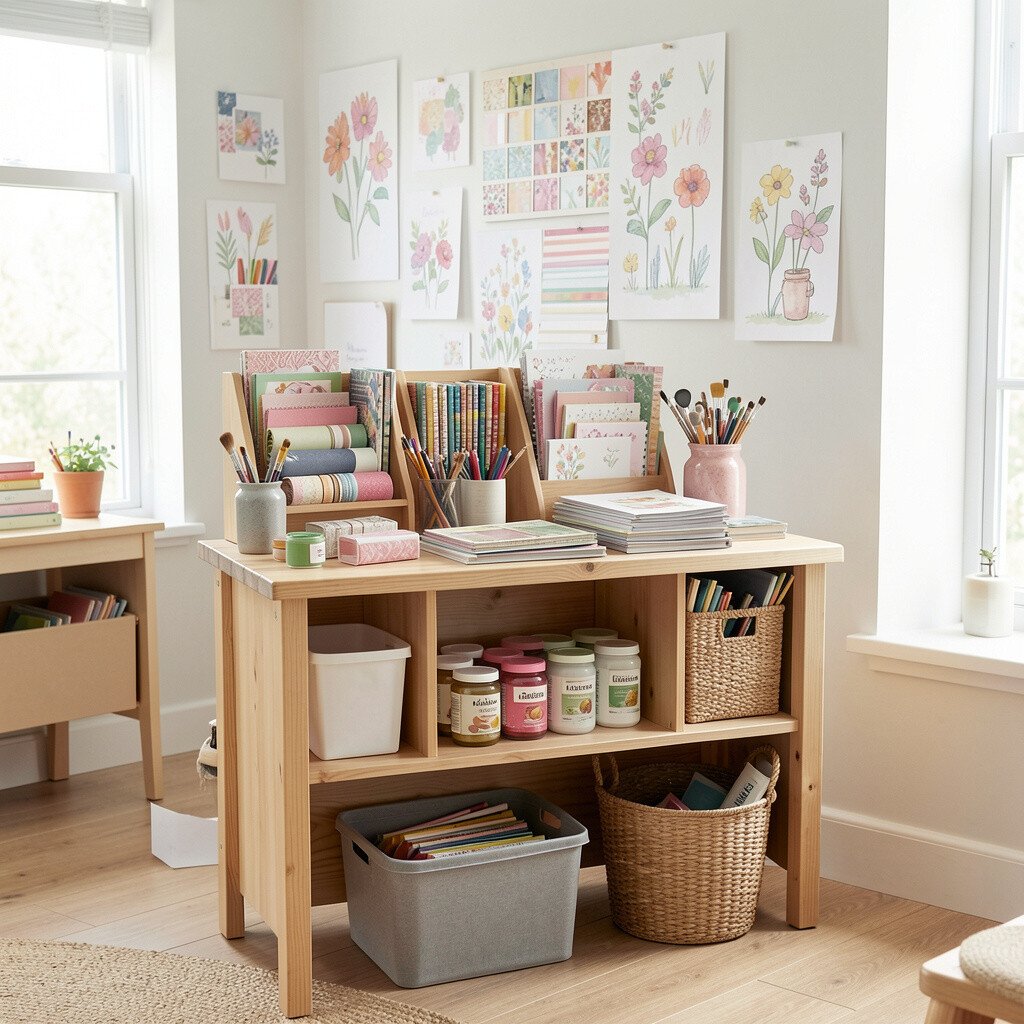
Set up a “scrap bar” along a wall or in a rolling drawer where students can grab small art pieces. Include options like patterned paper strips, stickers, old book pages, yarn bits, and tissue shapes.
This makes art accessible every day, not only during planned projects. Students can turn tiny ideas into finished pieces, which builds momentum and creative stamina.
For practical use, sort scraps by size and color, and restock weekly so the supply stays tidy. Personalize the bar by adding a small section tied to current lessons, like shapes for geometry or symbols for writing prompts.
Cost considerations are excellent here because scraps are often free or recycled. Many classrooms are using “grab-and-go creation” stations now, and a scrap bar is one of the easiest versions to run.
15. Interactive Timeline of Classroom Questions
Interactive Timeline of Classroom Questions
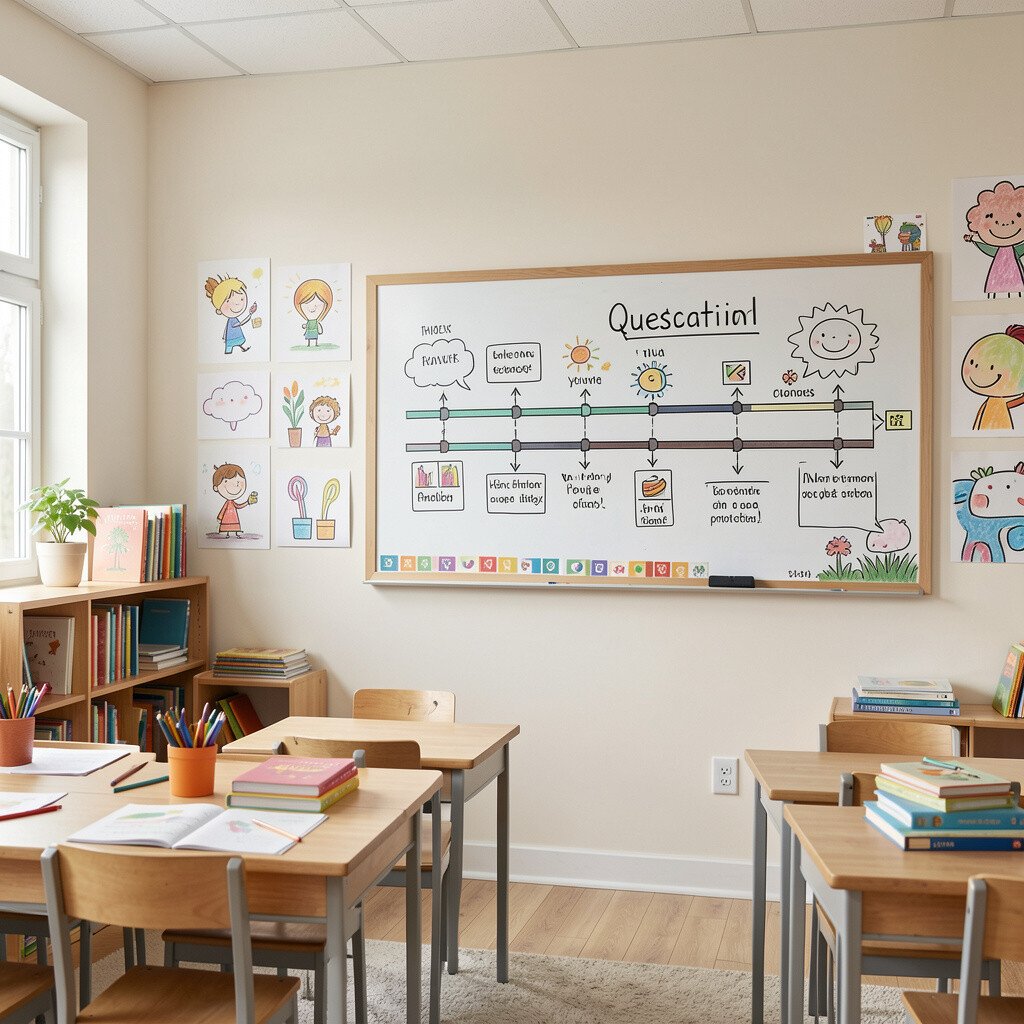
Make a question timeline where each unit begins with a class question and ends with updated answers. Use ribbon, string, or moving clips so the timeline shifts as students learn.
This helps students feel that their curiosity is part of real learning, not something separate from schoolwork. It also supports metacognition because students revisit what they thought before.
Use index cards for questions and small paper circles for answers, then attach them to the timeline with clips. Personalize by inviting students to draw a tiny picture that represents each new answer.
16. Mural-Style Classroom Signature Board
Mural-Style Classroom Signature Board
Create a signature board that looks like a mural, where students add one small piece of themselves each term. Use a large canvas or paper sheet and include spots for drawings, handprints, favorite words, and mini-self portraits.
Visually, it becomes a living record of growth, effort, and community. Students also benefit because the board makes progress feel visible and shared.
For practical planning, divide the board into sections labeled by time period so it stays organized. Keep cost low with canvas scraps, thick paper, and washable markers, then reuse the layout in future years.
To personalize, let students pick a style for their piece, like comic, watercolor, or doodle patterns. This mural trend pairs well with growth mindset learning because it celebrates the story behind the art.