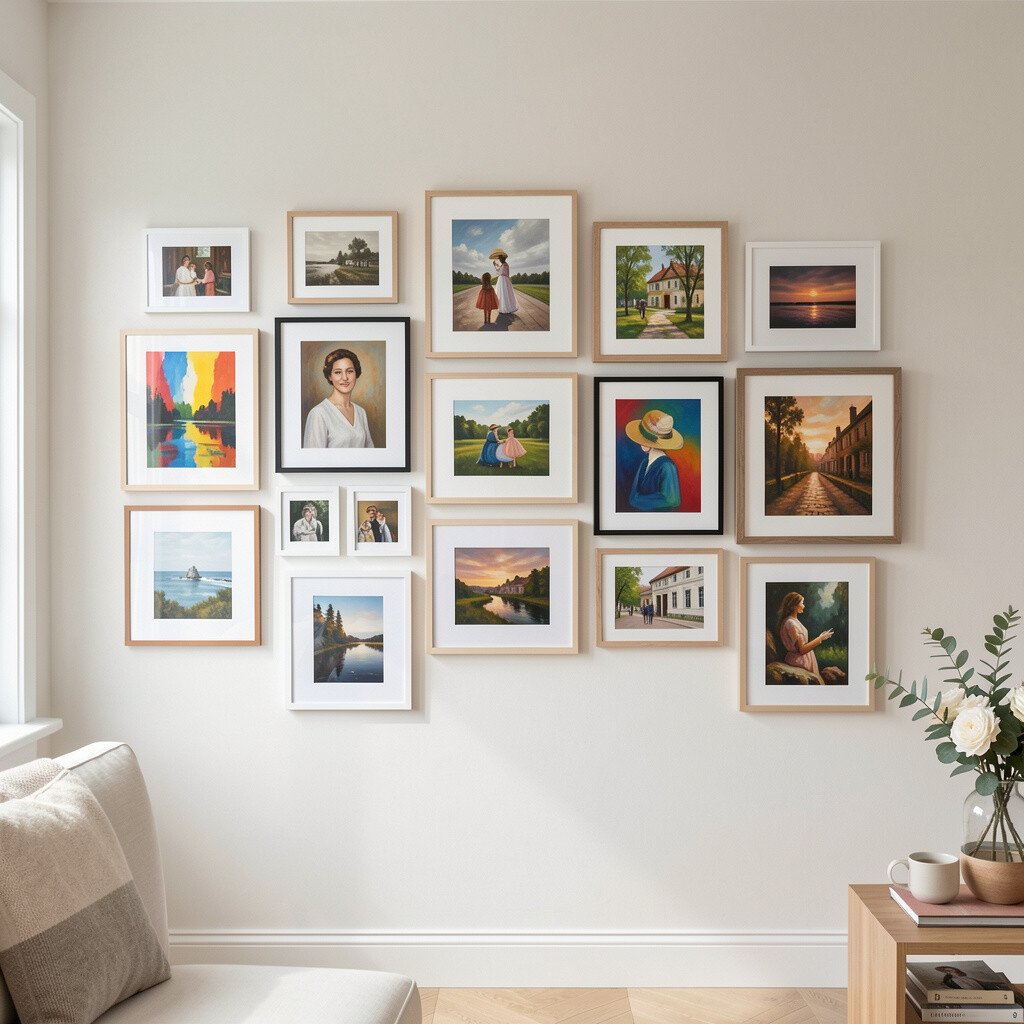
A gallery wall does not need to be perfect to look amazing. Choose art pieces that share a color family, like warm reds and oranges or cool blues and greens, and arrange them with breathing space.
As you step back, the wall starts to guide your eyes like a slow parade. You can swap prints over time, keep your favorites close, and enjoy how the wall looks different in morning light versus evening lamps. If you want it to stay fresh, rotate one small piece every month and watch your taste grow.
2. Picture-Ledge With Rotating Mini Exhibits
Picture-Ledge With Rotating Mini Exhibits
Picture ledges turn a wall into a tiny museum you control. Lay out small paintings, sketchbooks, and framed photos on the ledge, then switch items when you finish a new piece.
This setup helps you practice making decisions because you are always arranging something. It is also budget-friendly since you can use simple frames, thrift finds, and paper prints, then upgrade only what you love.
For a clean look, keep backgrounds consistent by using similar card stock or matte paper behind items. Try a theme like “faces,” “birds,” or “the color green” so each change feels intentional rather than random.
3. Fabric and Tapestry Wall With Soft Texture
Fabric and Tapestry Wall With Soft Texture
Hanging fabric on a wall adds warmth you can feel with your eyes. Draped scarves, a quilt, or a tapestry can make a room feel calmer and more inviting.
Textile creates a cozy backdrop for art lovers because it softens sound and makes nearby frames stand out. It also gives you an easy way to personalize without drilling a lot, especially if you use a curtain rod or tension system.
Go for current trends like fiber art, macramé styles, and mixed textures that mix smooth and knotted surfaces. If you want a practical start, use one larger tapestry as the anchor and add two or three small framed pieces around it.
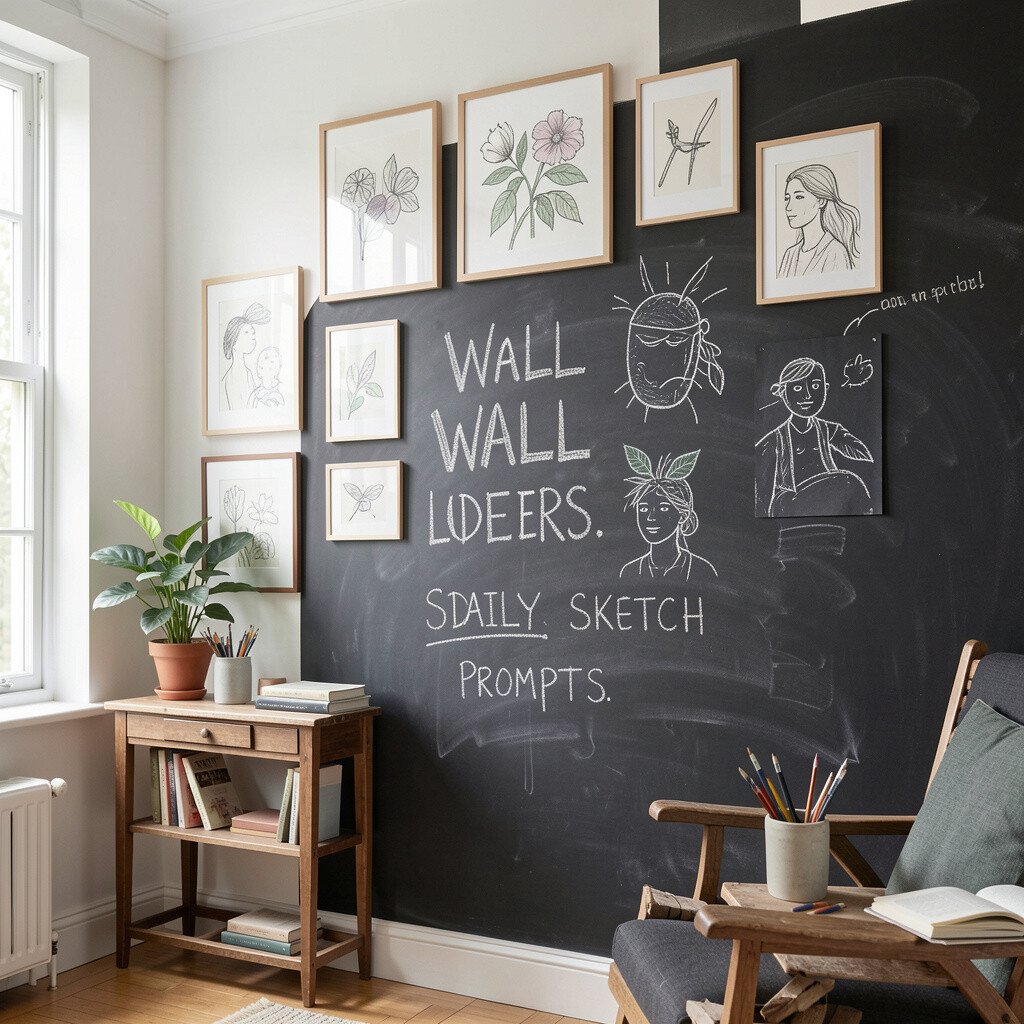
4. Chalkboard Wall for Daily Sketch Prompts
Chalkboard Wall for Daily Sketch Prompts
A chalkboard wall invites quick marks when inspiration shows up unexpectedly. You can write a daily prompt, draw small doodles, or outline a new idea without committing to paint or paper.
The benefit is instant creativity because you do not have to find the right supplies each time. Plus, erasing is part of the fun, so your wall becomes a living sketchbook that keeps moving.
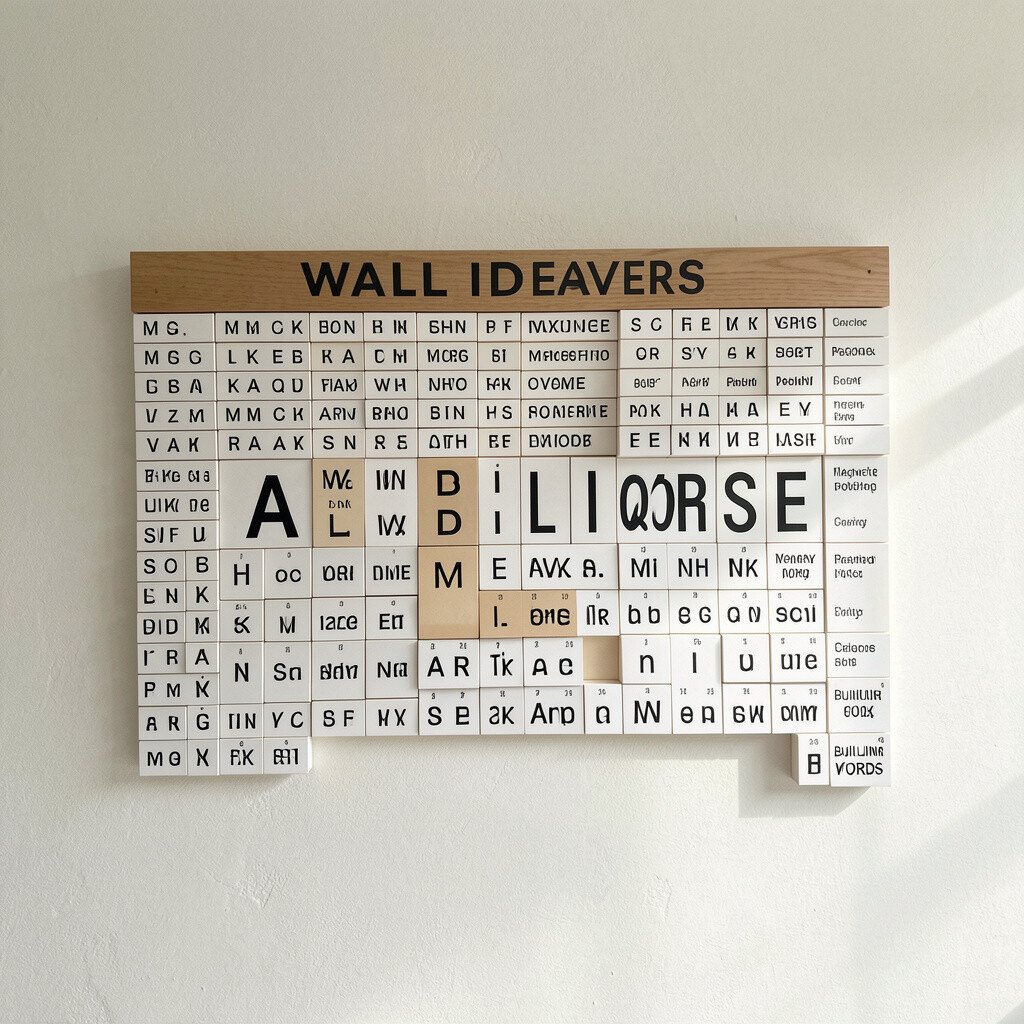
5. Magnetic Poetry for Art Building Words
Magnetic Poetry for Art Building Words
Magnetic boards can turn a blank wall into a creative playground. Use metal frames, magnetic sheets, or a clean steel panel and arrange words, symbols, and letters that you cut out yourself.
This style is playful and unique because it mixes language with visual art. It also helps you practice composition by placing words like shapes, then changing their size and spacing until the layout feels right.
For personalization, use words tied to your life, like favorite colors, places you love, or names of people who inspire you. If you enjoy current trends, pair the magnetic pieces with minimal black-and-white prints for a modern look that stays tidy.
6. Artist’s Scrapbook Wall With Mail and Ticket Collage
Artist’s Scrapbook Wall With Mail and Ticket Collage
Your memories deserve wall space too. Build a collage wall using ticket stubs, postcards, printed photos, and small scraps of paper, then seal it under clear film if you want it to last.
Collage helps you notice patterns because you are grouping bits that share color, theme, or time. It is also great for beginners since you can start small and build slowly.
Try practical steps like laying everything on the floor first, using painter’s tape to test placement, and keeping a simple grid so the wall does not feel chaotic. For cost control, use free printouts, old magazines, and packaging materials that already have texture.
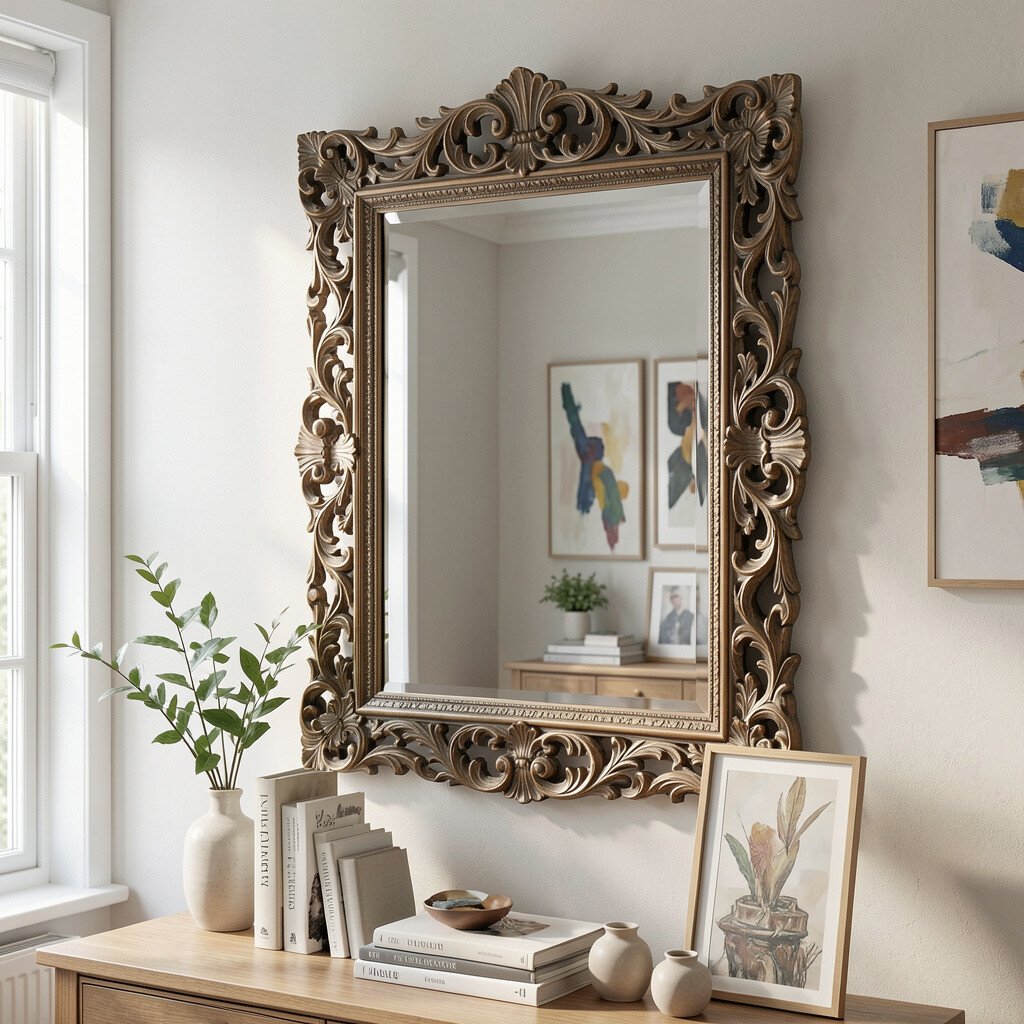
7. Statement Mirror With an Artful Frame
Statement Mirror With an Artful Frame
A mirror is like a bonus window, and a special frame turns it into wall art. Choose a frame with bold lines, carved wood, or a modern metal finish so it feels curated rather than plain.
This idea boosts brightness and makes your room look bigger, which helps your art space feel more lively. It also gives you a place to check your own setup, like whether you are aiming for symmetry or a softer, off-center look.
For personalization, decorate the frame with paint, gold leaf accents, or small mosaic tiles. A trend-friendly approach is to use mixed materials, like combining wood with simple metal details, so it looks current without trying too hard.
When budget is tight, look for mirrors at thrift stores and refinish them with sandpaper, primer, and your favorite color.
8. Shadowbox Wall for 3D Curiosities
Shadowbox Wall for D Curiosities
Shadowboxes make your wall feel deep because they show objects instead of only flat pictures. Store found items like vintage buttons, tiny sculptures, sea glass, or little art toys behind clear glass.
The benefit is that every box becomes a mini story, and those stories add personality to your space. You can also rotate themes, like “things from summer,” “stationery finds,” or “museum treasures,” so the wall keeps changing.
Use practical spacing by grouping shadowboxes in pairs or clusters, then leave a little blank space between groups. If you want a uniqueness boost, choose varied depths so shadows look different across the day.
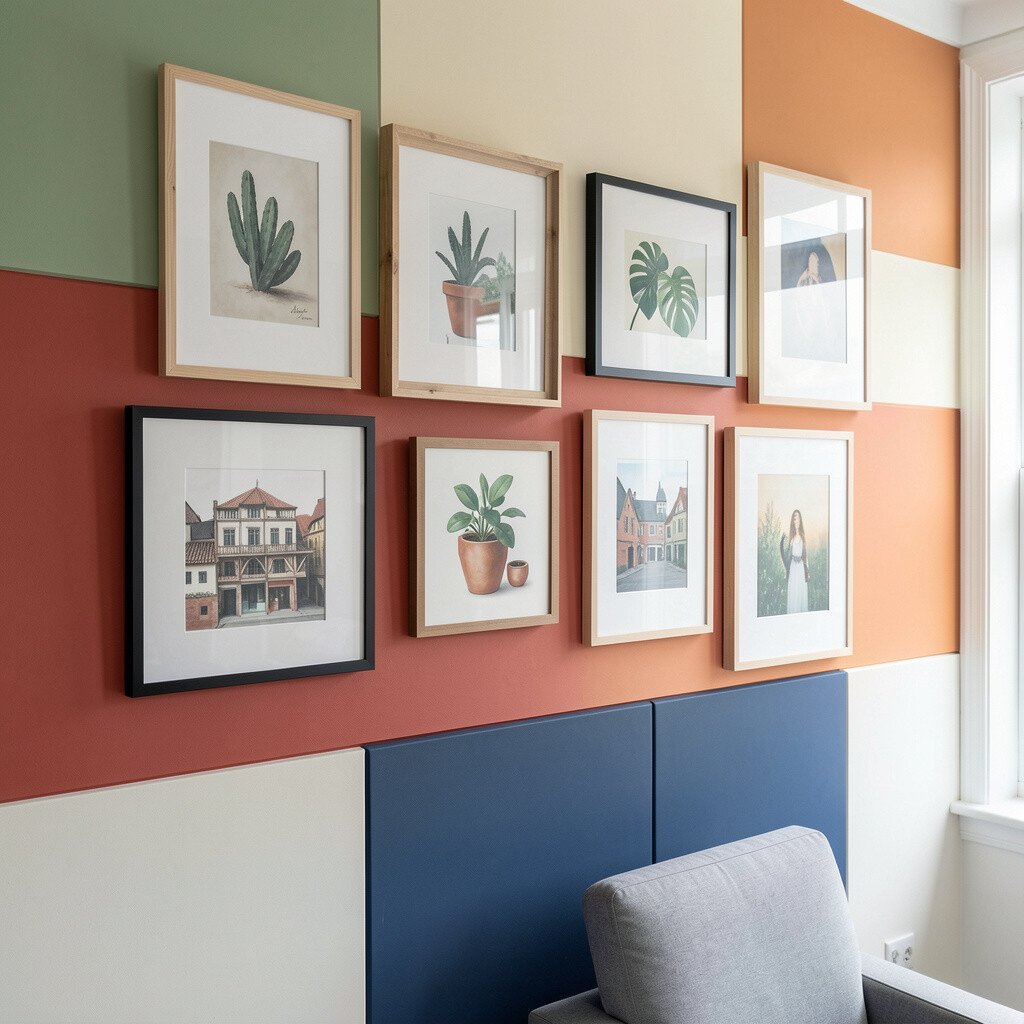
9. Color-Blocked Wall With Paint and Framed Edges
Color-Blocked Wall With Paint and Framed Edges
Painting a color-blocked wall can make your art look louder in the best way. Pick two or three colors that feel like your favorite outfit, then add frames that match the block colors.
This method helps you organize the space without needing many pieces. It also gives you a strong background, so even simple sketches or prints stand out clearly.
Start practical by masking with painter’s tape, using a level to keep lines straight, and testing small paint samples on the wall first. Keep cost in mind by using leftover interior paint from friends, building a mini paint kit, or focusing on one accent wall if you want to spend less.
Right now, many rooms use bold yet calm color combos, like muted terracotta with cream, so try a softer palette if you like a cozy vibe.
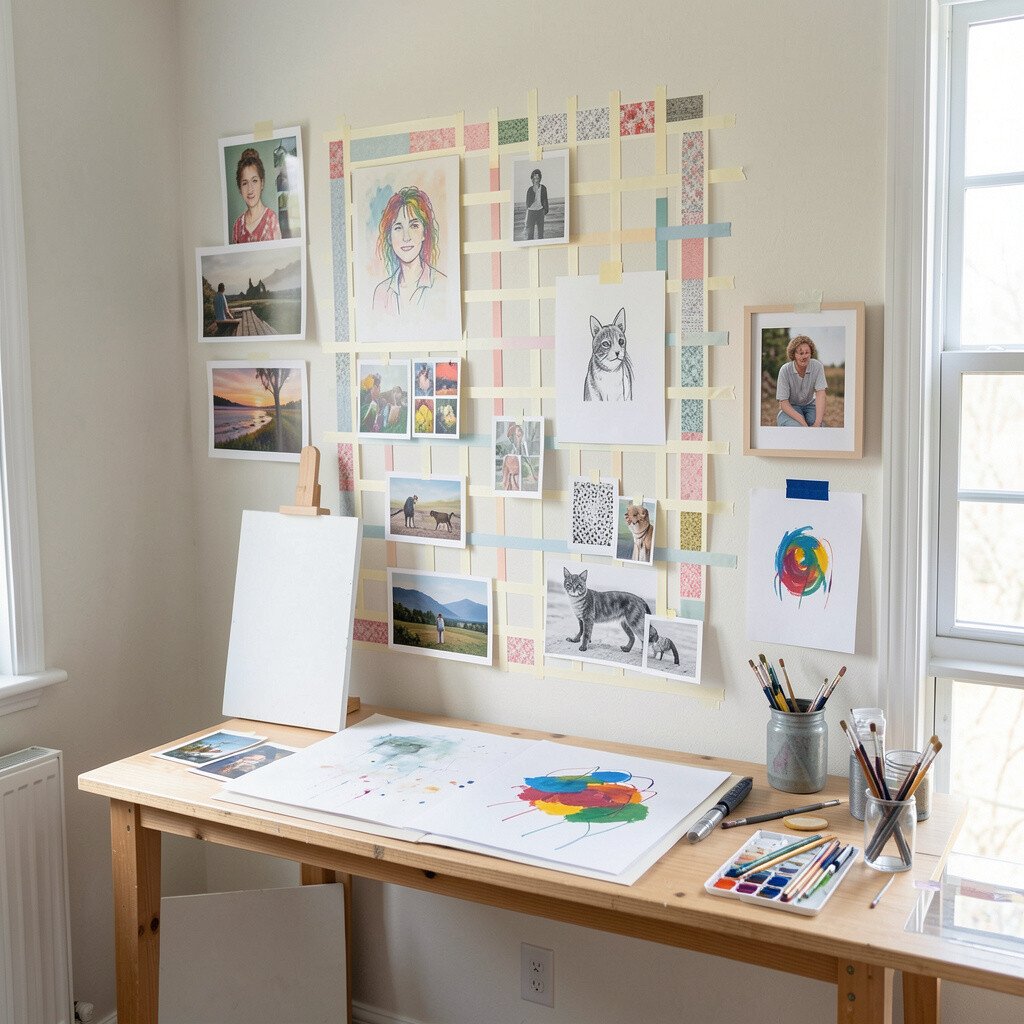
Washi tape can turn a wall into a flexible art desk. Create a neat grid, a set of rectangles, or even curved lines, then pin or tape small sketches right onto the pattern.
This approach is unique because it feels airy and changes fast. You can reposition pieces as your style grows, and the tape keeps edges crisp without messy paint.
For practical use, keep tape widths consistent and press the edges firmly so it does not curl. If you want personalization, draw small icons in the empty spaces, like stars, hearts, or tiny frames, using a black marker on top of the tape.
11. Wall of Personal Photos in Mixed Styles
Wall of Personal Photos in Mixed Styles
Personal photos can be art when you treat them like design. Mix frames, sizes, and orientations, but keep a consistent finish like matte black or warm wood.
This setup is welcoming because your wall becomes a timeline of what you care about. It also gives you a daily visual reminder that supports creativity through comfort and familiarity.
Try a practical rule: include some blank space and avoid cramming everything at once. For cost, print photos from home, use frame duplicates from thrift shops, and upgrade later only the pieces that feel truly special.
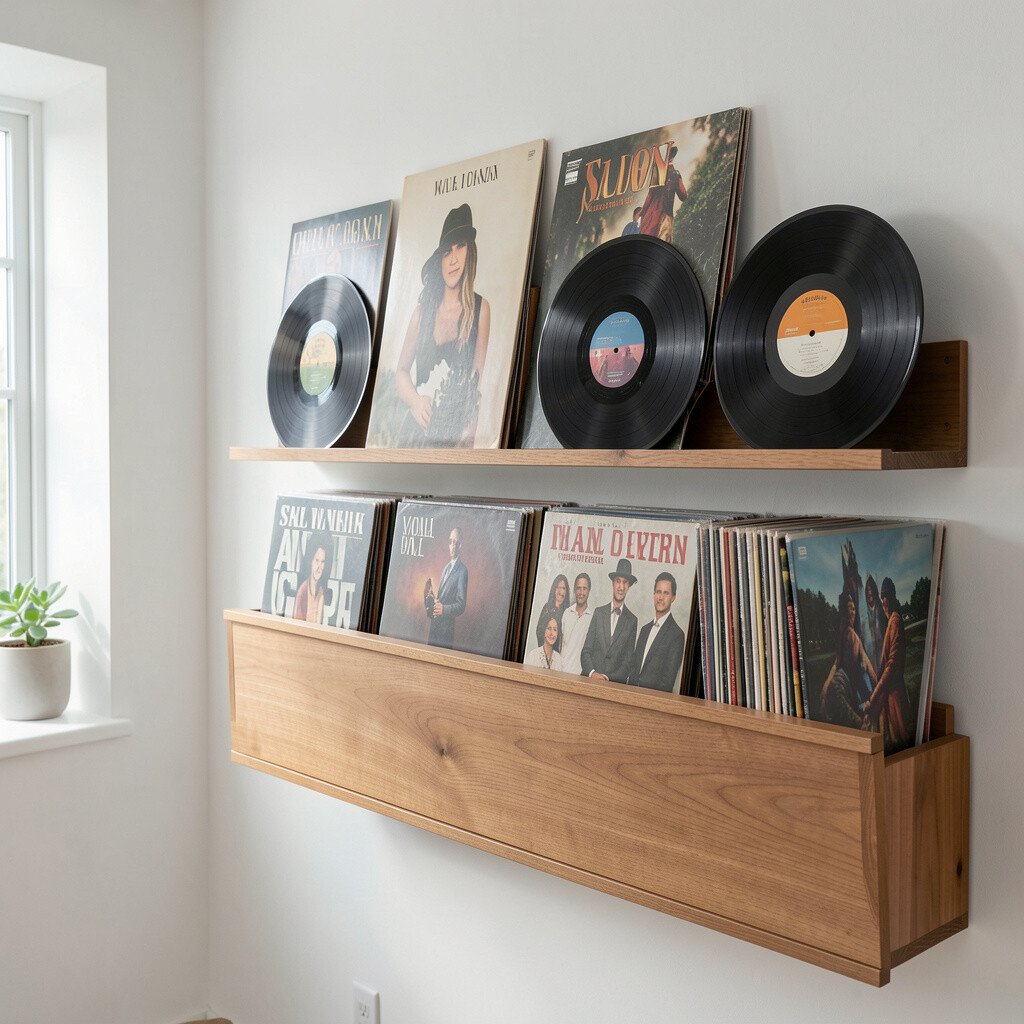
12. Vinyl Record Display With Album-Cover Curating
Vinyl Record Display With Album-Cover Curating
Turning a music display into wall art adds rhythm to your space. Frame a few favorite album covers, or mount records in a clean grid that shows color and typography.
Visual benefits show up fast because bold cover designs create a lively backdrop for your other art. You also get a unique conversation starter that reflects your taste without saying a single word.
To keep it practical, rotate a small selection and store the rest neatly so the wall does not get too cluttered. Pick one trend that matches your vibe, like minimal monochrome covers or vintage-style typography, then build from there.
For personalization, add small handwritten notes under a few covers, like why that album sparks your creativity.
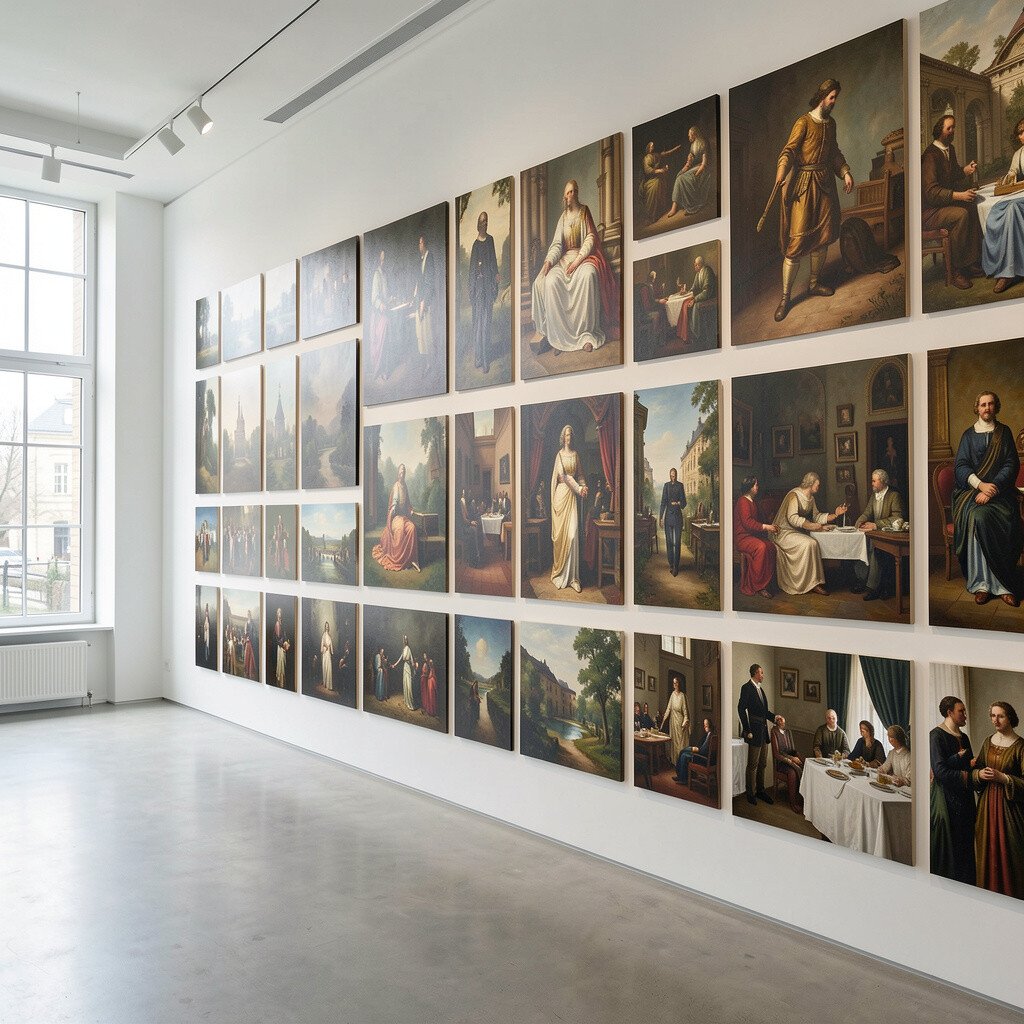
13. Large-Scale Print Wall With Museum-Style Spacing
Large-Scale Print Wall With Museum-Style Spacing
One big print can make a room feel like an art gallery. Choose a single statement piece, then place it at a comfortable viewing height and surround it with a calm, uncluttered layout.
This idea benefits art lovers because it teaches your eyes how to focus. With fewer competing items, you can see details better and feel more connected to the artwork.
For practical tips, use a mat border for a professional look, measure wall space carefully, and use a sturdy hanging system for heavier frames. Keep cost considerations simple by buying one higher-quality print instead of many smaller pieces, then complement it with inexpensive frames for balance.
14. Living Wall With Botanical Prints and Real Plants
Living Wall With Botanical Prints and Real Plants
A living wall blends calm nature with your art habit. Mix botanical prints, pressed-leaf art, and a few real plants so the wall feels fresh and personal.
Plants offer benefits like a softer mood and a sense of renewal, especially if you work on creative projects. Real greenery also adds dimension, and it makes nearby art feel more intentional.
To keep it practical, choose plants that match your light, use simple planters with matching colors, and keep water habits in mind near artwork. For uniqueness, pair modern line-art prints with a single bold print that has vibrant color, so the wall stays interesting without getting messy.
This is a current look too, since more people are mixing “botanical meets gallery” styles in home decor.
15. Wraparound Artist’s Timeline for Ongoing Projects
Wraparound Artist’s Timeline for Ongoing Projects
Create a timeline wall that tracks your art journey. Use a strip layout, from left to right, with photos of your work, dates, and small notes about what you tried.
This idea is motivating because it turns progress into something you can see. It also helps you remember lessons, like which colors you used first or what style you were practicing.
For personalization, include sketches in the margins, add swatches of paint, and attach tiny scraps from materials you used. Keep cost friendly by using printable templates, binder clips, and inexpensive frames for photos.
16. Patterned Wallpaper or Peel-and-Stick Backdrop for Frames
Patterned Wallpaper or Peel-and-Stick Backdrop for Frames
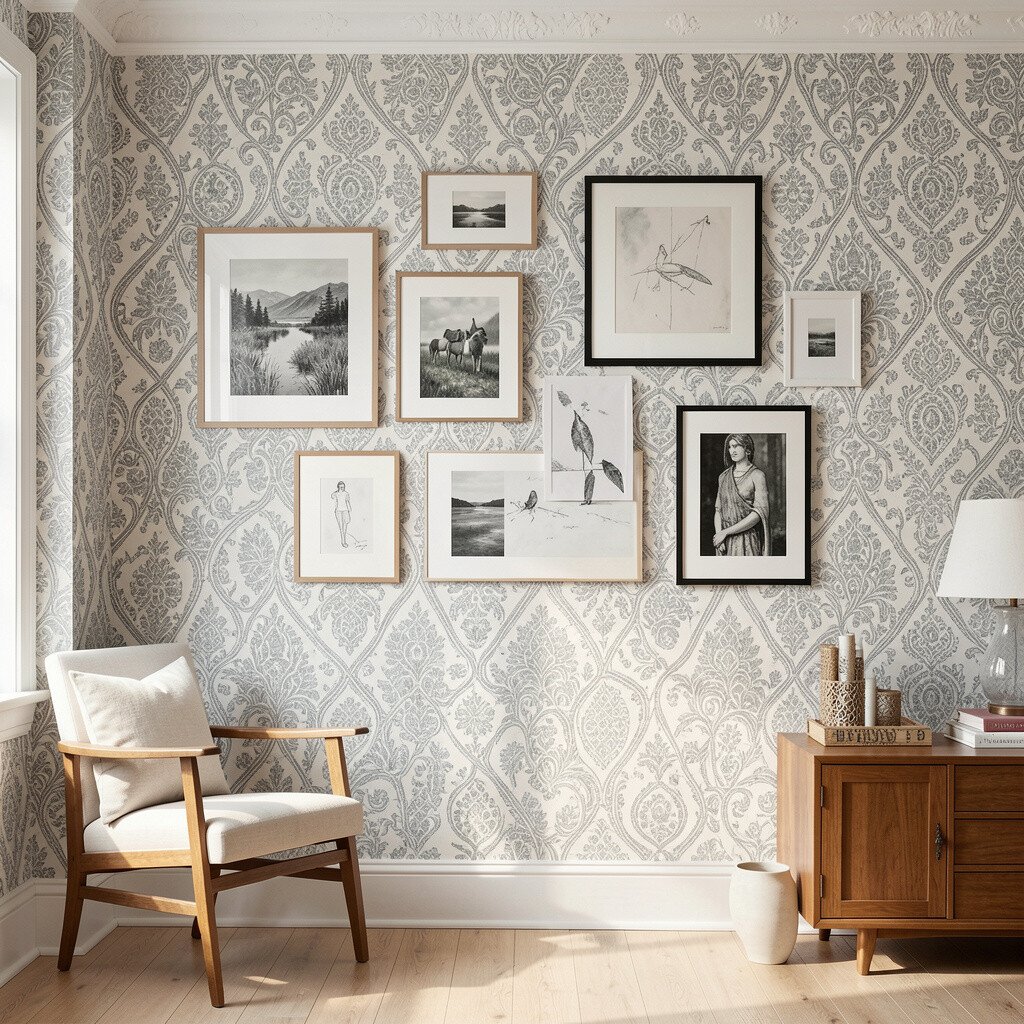
A patterned backdrop makes framed art feel like it belongs on a stage. Peel-and-stick wallpaper, simple murals, or textured contact paper can create a dramatic background without long projects.
This benefits you because the art wall looks finished even when you change prints often. It also supports uniqueness since the pattern adds character that you cannot easily buy in a plain frame arrangement.
Keep it practical by choosing a pattern that does not fight your artwork, and limit the wallpaper to one feature wall. For cost, go with removable options and try small sample rolls first, then commit only when you feel confident.
Right now, many trends lean into organic patterns like leaves, soft dots, and subtle lines, so pick one that feels calm rather than busy.
17. Hanging Installation With Fabric Clips and Twine
Hanging Installation With Fabric Clips and Twine
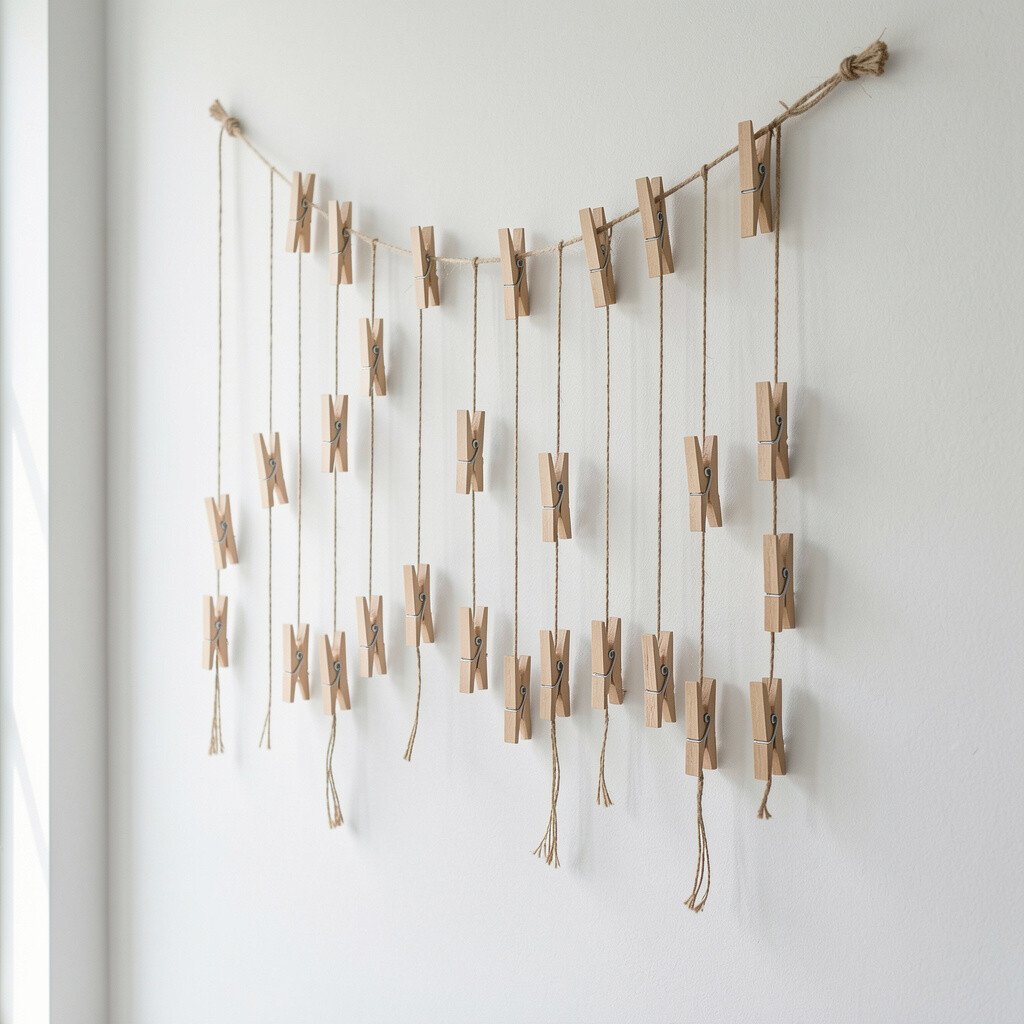
A hanging installation adds motion to your wall, even when nothing is moving. Stretch twine across a wall, then clip on art cards, small fabric pieces, or lightweight prints using fabric clothespins.
This setup is unique because it looks like a personal studio line, where new ideas can arrive and hang out. It also makes swapping artwork easy, so your wall stays active instead of fixed.
For practical tips, use a pencil to mark anchor points, keep the twine level, and choose clips that match your decor. To personalize, hang a few pieces lower for a layered effect, and include one “in progress” area where you place sketches before they get framed.
18. 3D Wall Tiles for Raised Texture Art
D Wall Tiles for Raised Texture Art
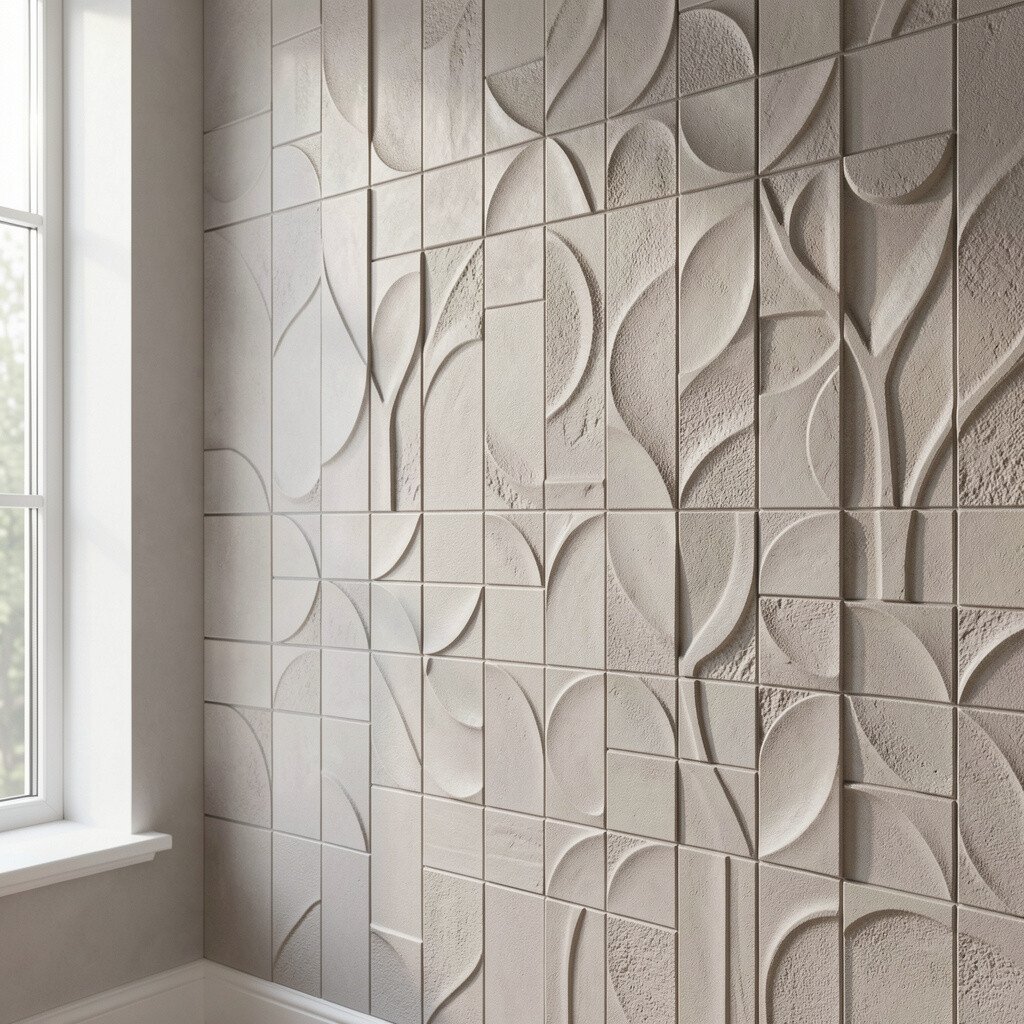
Raised texture can make art feel more physical. Install simple 3D tiles, acoustic foam tiles, or decorative panel squares, then place framed pieces around them.
The benefit is tactile interest, which can make even simple prints look richer. It also helps your wall catch light differently, creating gentle shadows that change throughout the day.
For uniqueness, mix tile colors in a subtle way, like warm white with sandy beige, and pair the texture with clean, minimal frames. Keep cost in mind by choosing peel-and-stick foam panels first, then upgrade to sturdier materials later if you love the look.
Many current interiors use texture-forward surfaces, so this idea fits right in while still letting your personal art be the star.
19. Art Library Wall With Shelves for Books and Sketch Supplies
Art Library Wall With Shelves for Books and Sketch Supplies
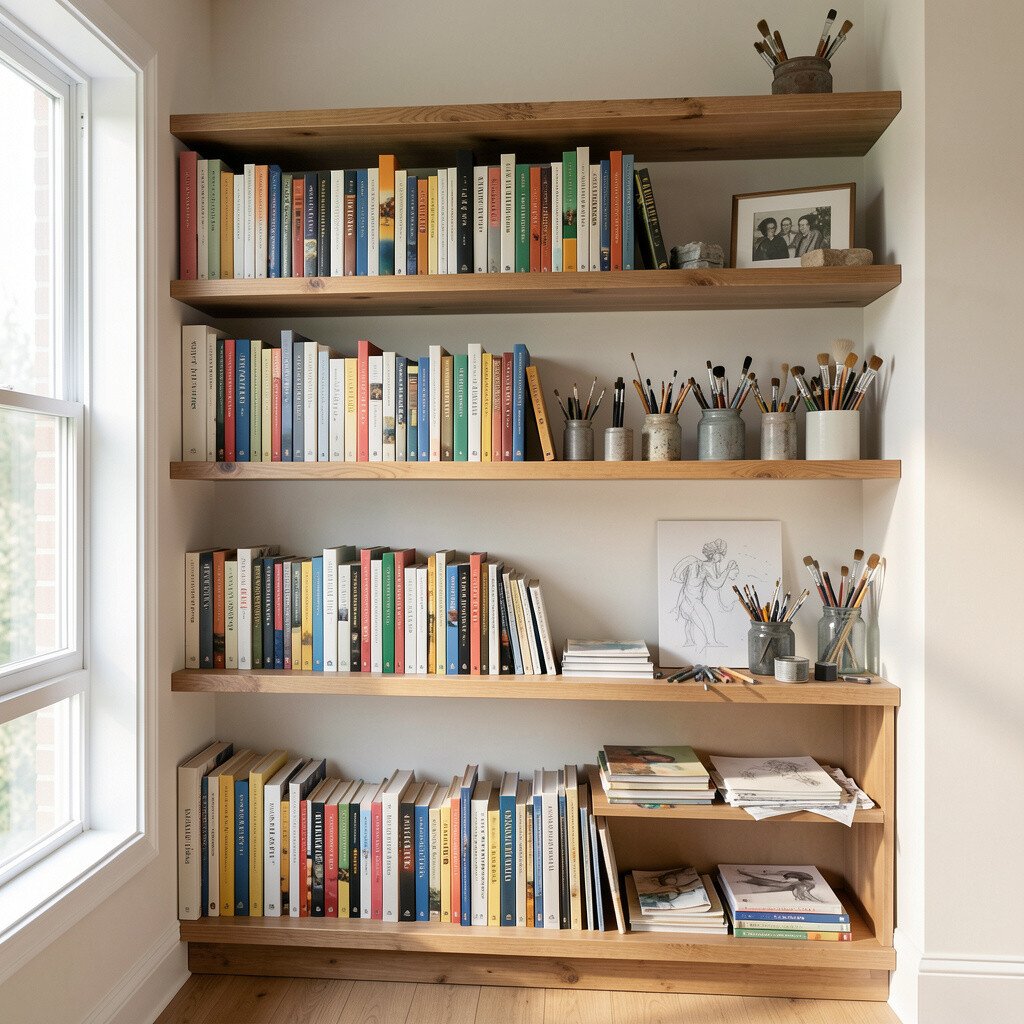
An art library wall turns creativity into something you can reach in seconds. Add shelves for art books, sketchbooks, and supplies, then intermix a few framed covers or prints for visual balance.
This benefits you because a well-stacked shelf makes creating feel easier and more inviting. When your tools are visible, you are more likely to start a project on a whim.
For personalization, choose a color rhythm, like alternating warm and cool spines, and leave a small empty space so the shelf breathes. Cost considerations are simple here since you can start with thrifted shelves and inexpensive book placeholders, then keep adding as you find favorites.
To match current trends, consider open shelving with a slightly lived-in look, where notebooks and small objects look curated rather than hidden away.