21+ Kindergarten Friendship Activities To Build Strong Bonds
Kindergarten friendship can feel like a tiny universe where everyone is learning the same big skills at once. A well-chosen activity can turn “I don’t know” into “We can do this together.”
These ideas are simple, playful, and ready for real classrooms and homes. They help children notice each other, practice kindness, and feel safe while they play.
Print or write each child’s name on a big card and add a small star sticker that matches a child-chosen theme. As children decorate, you can gently prompt them to look at someone else’s star and smile.
Pairing smiles builds social comfort because kids learn that being seen is safe. A quick share after the activity helps them practice listening and friendly eye contact.
2. Kindness Scavenger Hunt Around the Room
Kindness Scavenger Hunt Around the Room
Create a simple scavenger list on paper where each item is a kind action, not a toy. Children search for partners who can do the action together, like “high-five with two hands” or “hold the door for a friend.”
You will see bright faces when the “targets” are actions they can actually do. This activity strengthens cooperation because children meet goals by working with classmates instead of working alone.
Keep directions short and use clear visuals like picture cards. Let children personalize the “missions” by picking one kindness action they want to include, and choose low-cost materials you already have.
3. Build-a-Friend Block Town With Roles
Build-a-Friend Block Town With Roles
Give each group a pile of blocks and a soft “role” like Builder, Tidy Helper, or Grown-Up Reporter. The visual is colorful towers rising while kids pass blocks and trade ideas without grabbing.
Roles reduce confusion and keep turn-taking steady during busy play. Kids practice patience when they wait for their role moment, and they learn that teamwork makes bigger structures.
Try using a small timer for role switches so the flow stays calm. For personalization, let children name their town and add one symbol from home, like a tiny sticker of something they love.
4. Feelings Mirror: Draw and Name Our Expressions
Feelings Mirror: Draw and Name Our Expressions
Provide mirrors or paper “mirror faces” and ask children to copy a feeling expression. Then invite them to show the same feeling on their friend’s face using careful, gentle guidance.
When kids can name emotions, arguments become easier to solve. The visual comparison of faces helps children connect actions to feelings, which is a key friendship skill.
5. Music Pairs With Friendly Freeze
Music Pairs With Friendly Freeze
Play short music clips and have children move around the space. When the music stops, they must find a partner and freeze in a shared pose like side-by-side stepping.
This keeps energy playful while practicing safe closeness and respectful touch. It also supports social timing because children learn to read signals quickly.
Choose songs with clear starts and stops, and keep pairs flexible so everyone gets multiple partners. For cost, use a phone or speaker and let children take turns pressing the music button.
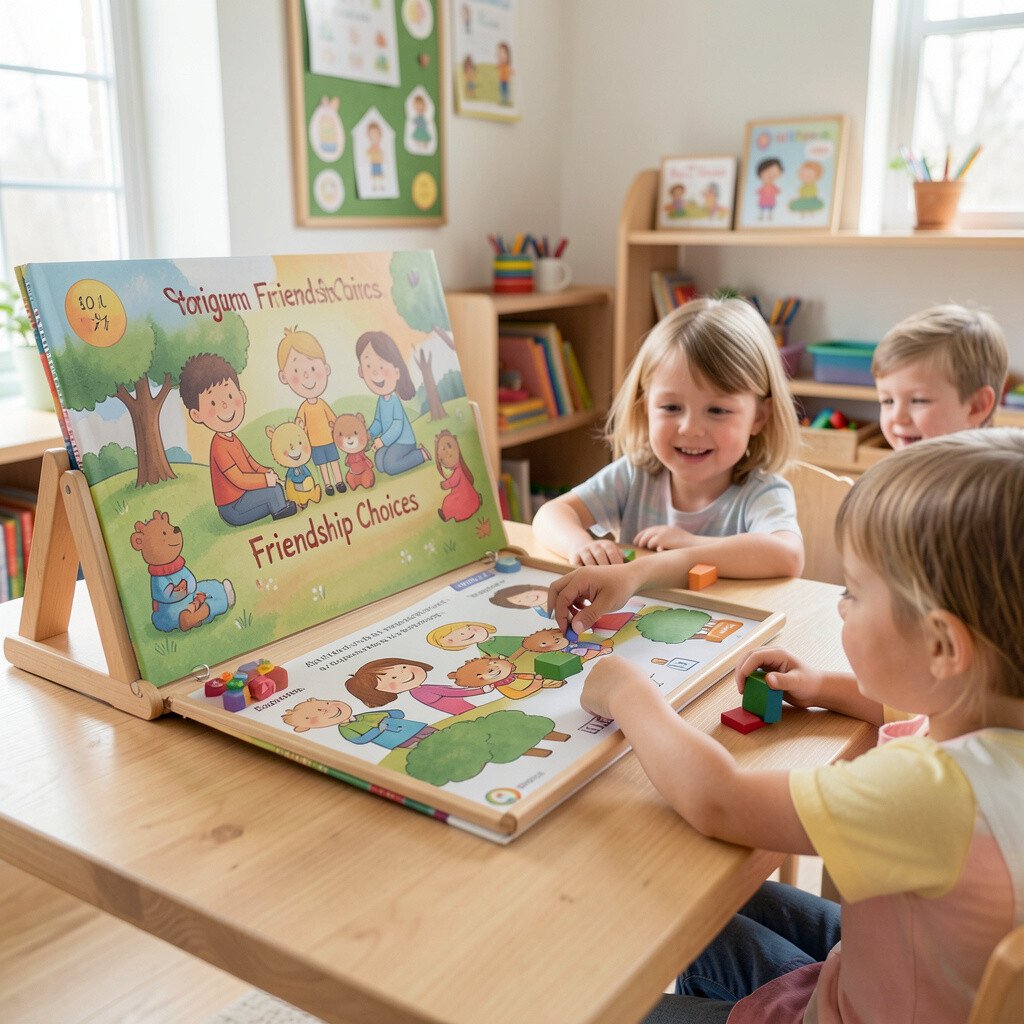
6. Storytime Friendship Choices
Storytime Friendship Choices
Select a short picture book about sharing, helping, or including someone new. Pause and ask children to vote with hand signals for what the characters should do next.
The shared choices create a natural conversation where kids feel heard. It strengthens friendships because children practice empathy by thinking about how others might feel.
To keep it practical, use simple multiple choices shown with pictures. Personalize by letting each child bring one drawing that matches their favorite scene, then pin it up for later discussion.
7. Parachute Friendship: Gentle Group Waves
Parachute Friendship: Gentle Group Waves
Use a parachute or a large sheet to create big group waves and soft bouncing. Children hold the edge and learn to watch each other so the motion stays smooth.
Working in sync builds trust since every person affects the outcome. Kids also practice patience because they must wait for group cues instead of rushing.
8. Thank-You Hearts for Unexpected Helpers
Thank-You Hearts for Unexpected Helpers
Give each child paper to cut into heart shapes and write or draw a thank-you to someone. You can encourage gratitude after small moments, like lending a pencil or sharing a crayon.
The sweet visual of hearts across the classroom creates warm motivation for kindness. Gratitude helps friendships grow because children notice helpful behavior and feel valued.
Keep the language simple by modeling sentences and using a few starter prompts on picture cards. For personalization, let them choose colors that match their mood for the day.
9. Buddy Breathing: Calm in Partner Circles
Buddy Breathing: Calm in Partner Circles
Pair children up and sit facing each other inside a drawn circle on the floor. Lead them through slow breathing together while they watch a shared pretend “bubble” rise.
This shared calm reduces conflict and helps kids reset when feelings get big. Partner focus also builds trust because they practice doing the same safe routine at the same time.
Use short scripts and friendly gestures so younger learners can copy easily. For cost, use painter’s tape for circles and keep extra visuals like cards with smiling faces.
If a child struggles, assign a “support buddy” who can guide softly without taking over.
10. Sibling-Style Team Relay With Gentle Rules
Sibling-Style Team Relay With Gentle Rules
Create a relay where children carry lightweight items like beanbags or soft scarves to a spot. Teach “gentle legs” and “slow hands” so they move carefully and pass smoothly to a friend.
Relays make teamwork exciting while still practicing self-control. Kids learn that speed matters less than cooperation, especially when they must pass successfully.
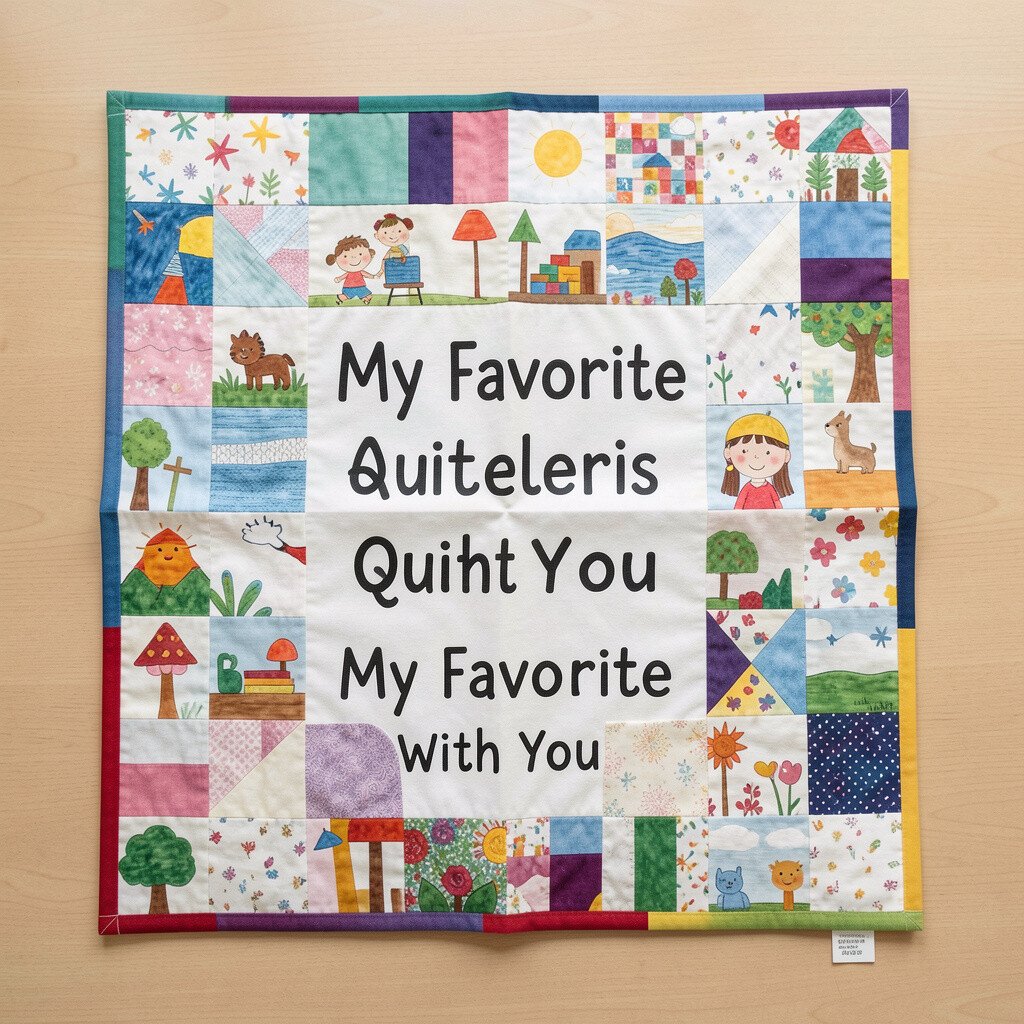
11. Friendship Quilt Squares With “My Favorite With You”
Friendship Quilt Squares With “My Favorite With You”
Give each child a fabric square or paper square with a simple prompt drawn as pictures. They add a drawing of a favorite play idea, then add one sticker that shows who they might play it with.
The visual quilt becomes a living map of who connects with whom. It supports inclusion because children can look at the quilt and pick a playmate based on shared interests.
For personalization, allow children to add a tiny “how I like to play” sign using magnets or simple symbols. Keep costs low by using scrap fabric, paper, and safe glue, then display the quilt in a community corner.
12. Two-Person Yoga: Partner Stretch Poses
Two-Person Yoga: Partner Stretch Poses
Guide children into simple partner stretches like back-to-back statue or gentle shoulder squeeze. They practice matching pace, which is easier than trying to coordinate alone.
Yoga together improves self-regulation and reduces impulsive behavior during transitions. It also builds respect, because friends learn to communicate through gentle touch and space.
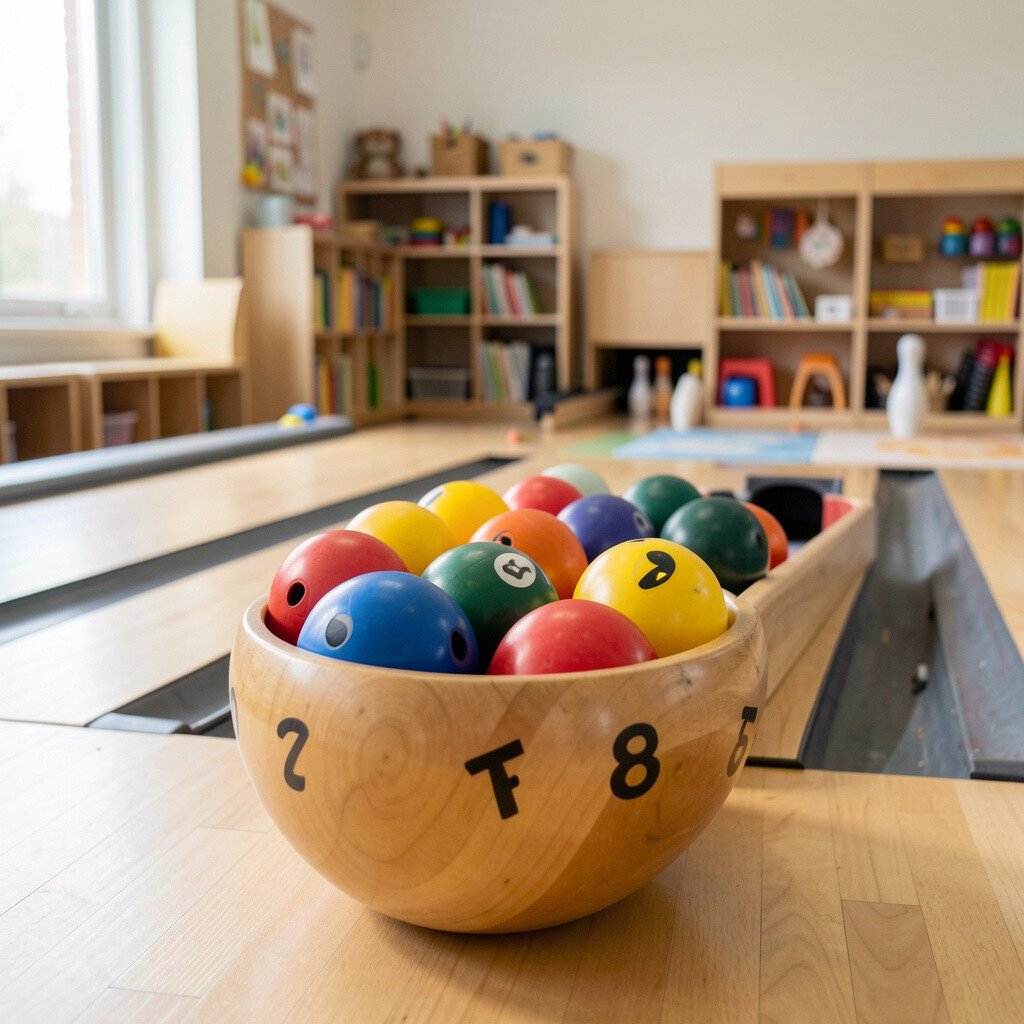
13. Gratitude Bowling With Kind Messages
Gratitude Bowling With Kind Messages
Set up easy “pins” using plastic bottles and give kids a beanbag to knock them over gently. Before each turn, have them choose a card with a kind message to read to a friend.
Even a small game supports friendship because children practice giving compliments out loud. The visual of message cards tied to each throw makes kindness feel connected to fun play.
For cost, reuse bottles and print a few message cards that you can rotate. Personalize by letting children draw their own message card once they show they can handle the task responsibly.
Give a large sheet paper on the floor and divide it into sections using taped lines. Two or three children sit together and work on one mural while you encourage them to add lines that match across the tape.
Shared art helps children see that their marks connect with someone else’s marks. It builds belonging because the final picture looks better when everyone contributes.
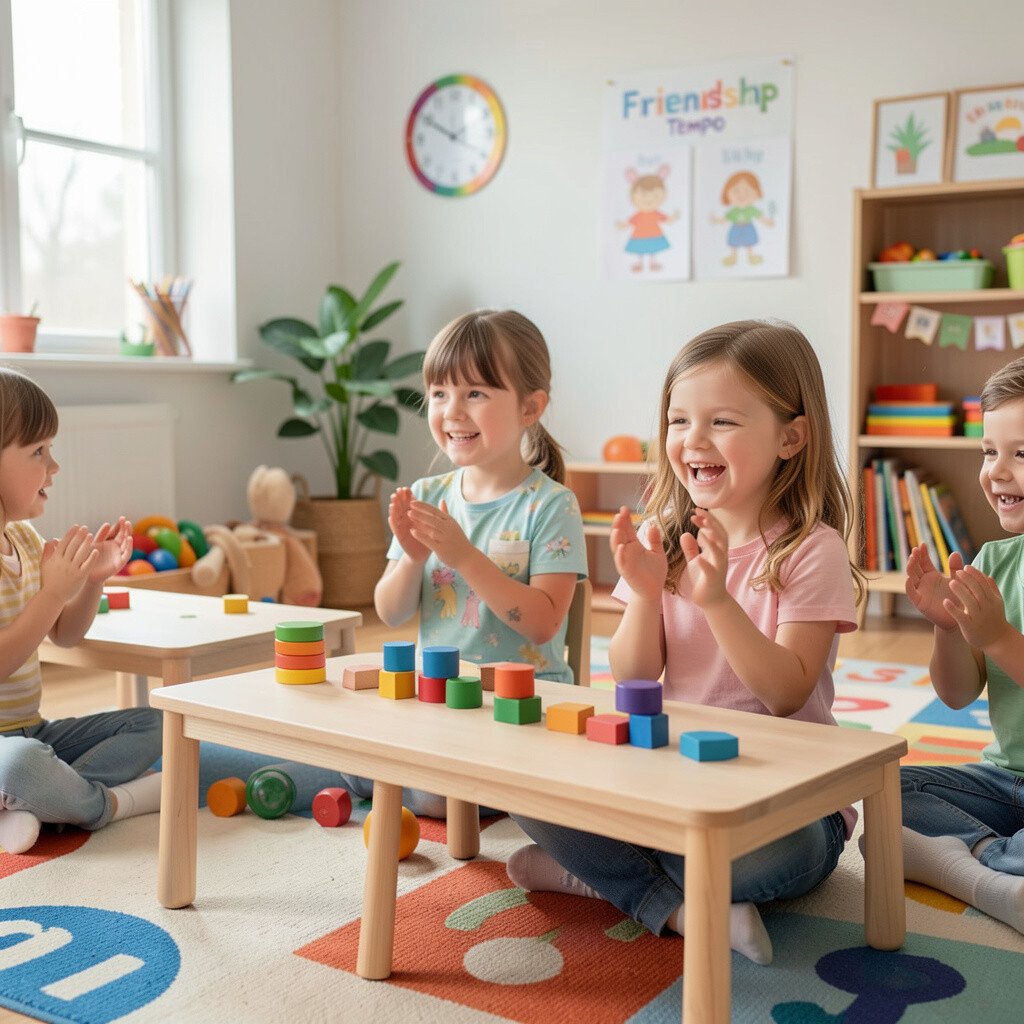
15. Friendship Tempo: Clap, Say, and Pass the Beat
Friendship Tempo: Clap, Say, and Pass the Beat
Start a simple rhythm routine where children clap a pattern, say their partner’s name, and then pass the beat to the next pair. You can show the beat using big hand motions so it feels like play, not a test.
This routine builds name recognition and listening skills in a friendly way. It also supports confidence because every child gets a turn to lead.
Keep it practical by using a consistent clap pattern and limiting the number of beats. Personalize by letting children choose from a few rhythms, such as slow claps or quick taps, based on their favorite style.
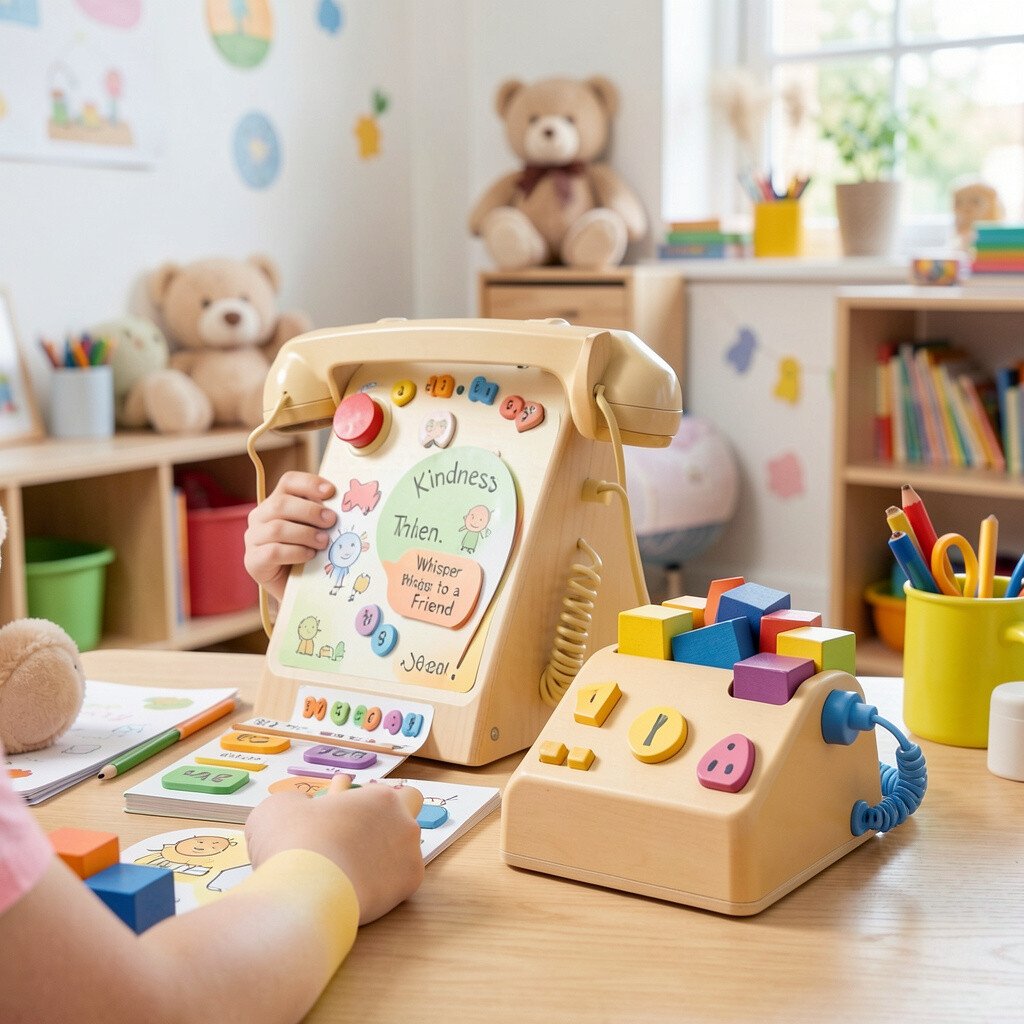
16. The Kindness Telephone: Whisper to a Friend
The Kindness Telephone: Whisper to a Friend
Use a pretend “telephone” made from a paper roll and have children whisper a kind sentence to their partner. They can say, “I like your smile” or “Thank you for sharing,” and then the listener repeats the message with a happy voice.
Hearing kind words repeated strengthens memory and encourages positive talk. The activity also helps children practice speaking clearly while staying respectful.
17. Friendship Weather: Choose a Role in the Storm
Friendship Weather: Choose a Role in the Storm
Make simple “weather cards” showing calm, excited, worried, and angry. When children pick a card, they act as a role in a pretend play moment and suggest one gentle action to help everyone feel safer.
The visual cards make feelings easy to talk about, even when emotions are complicated. Kids build friendship skills because they learn how to offer help during stress, not just during fun times.
Keep directions grounded by using short scenarios like losing a toy or waiting in line. Personalize by letting children add drawings of what helps them, such as a hug, quiet words, or a deep breath picture.
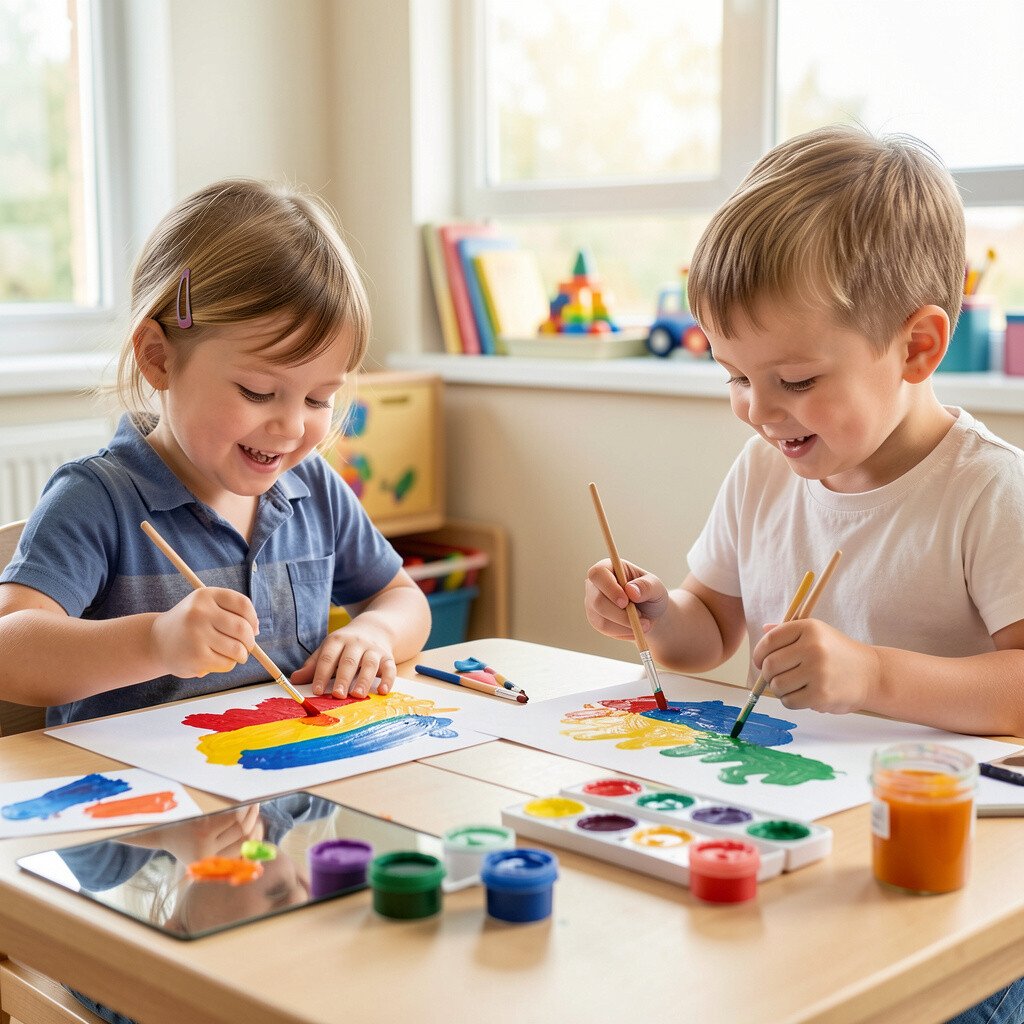
18. Partner Painting With Mirror Colors
Partner Painting With Mirror Colors
Set out paper and two colors of paint for each pair, then have children paint “mirror” designs on opposite sides. They take turns switching which side gets painted, so both friends contribute without stepping over each other.
This improves turn-taking and cooperative planning because the design only works when partners match ideas. The visual symmetry can spark laughter and pride, which helps children feel proud of their friendship.
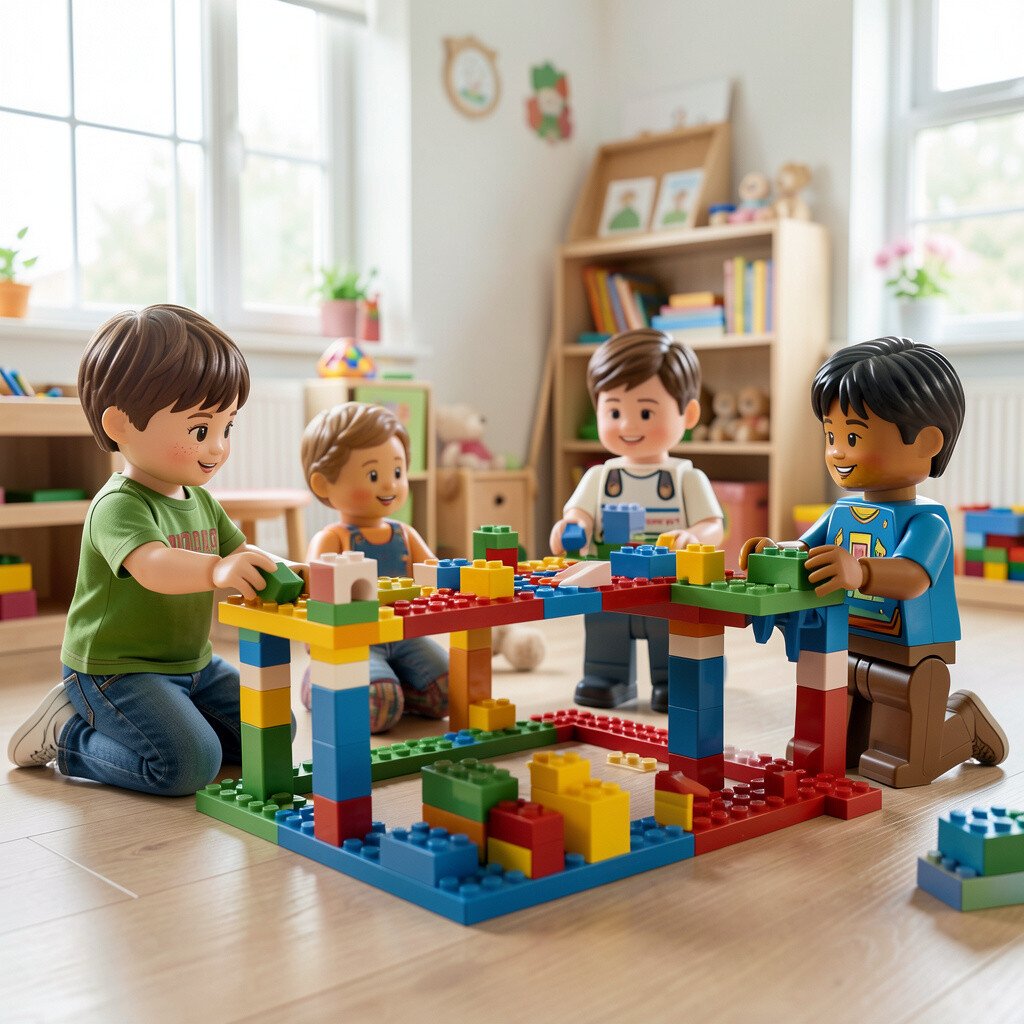
19. LEGO-Style Cooperation Challenges With Constraints
LEGO-Style Cooperation Challenges With Constraints
Use building toys or blocks and give a shared goal like making a bridge that holds a small ball. Add one constraint, such as only two children can use certain pieces at a time, so coordination is required.
Constraints create a clear reason to talk and negotiate, which is a core friendship skill. Kids learn to communicate needs and ideas instead of competing for control.
For practical setup, prepare piece baskets ahead of time and keep the goal achievable in a short session. Personalize by letting partners choose a theme, like a “rescue bridge” or “rocket home,” based on what they love.
20. Friend Finder Bingo With Action Squares
Friend Finder Bingo With Action Squares
Create a bingo card with pictures of friendly actions, like “shares a crayon” or “invites someone to play.” Children ask classmates to do an action with them and then mark the square when it happens.
This activity turns social connection into a game, which matches how kindergarten minds learn best. It also increases positive interactions because kids keep moving toward friendly behavior.
To avoid pressure, encourage friendly participation without forcing anyone to complete every square. Personalize the bingo pictures to match your classroom routines, such as lining up kindly or using “excuse me” at the door.
21. Inclusion Circle: Trade Seats With Kind Prompts
Inclusion Circle: Trade Seats With Kind Prompts
Place chairs in a circle and begin with a child in the center who is the “seat helper.” The group trades seats after you say a kind prompt, like “someone who helped today” or “someone who likes building with blocks.”
The visual of rotating seats helps children practice noticing each other’s strengths. It strengthens friendships because everyone gets a chance to be the focus in a positive way.
Keep prompts age-appropriate and avoid anything that could embarrass a child. For personalization, ask children to suggest prompts that celebrate harmless interests like drawing, animals, or music.
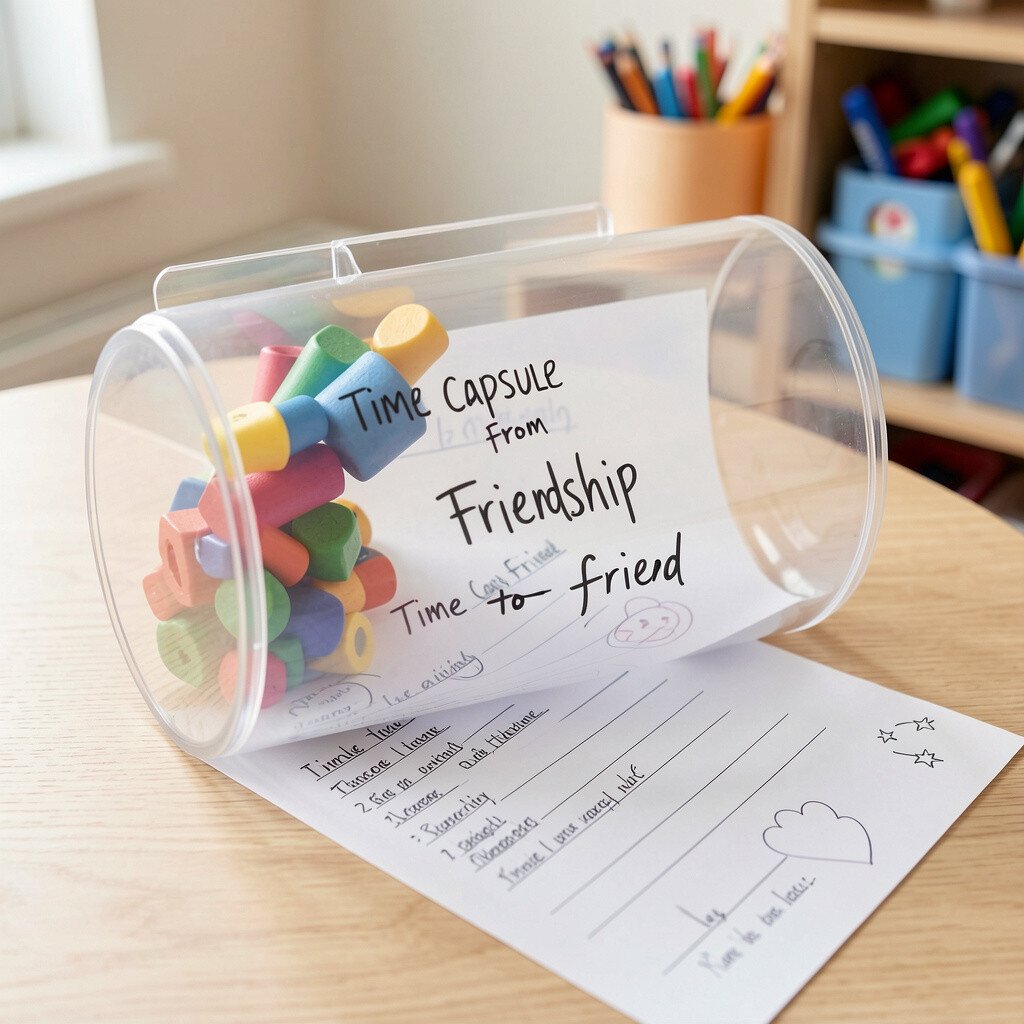
22. Time Capsule Letters From Friend to Friend
Time Capsule Letters From Friend to Friend
Have children draw a short letter picture to a friend, such as a stick figure holding hands or a heart with a shared activity. They place the letter into a box labeled with the friend’s name so it feels like a secret gift.
This builds long-term warmth because children anticipate receiving kindness later. It also strengthens writing confidence through pictures and simple marks, not perfection.
Choose low-cost supplies like envelopes, stickers, and scrap paper, and set a small timeline to open the letters. Personalize by letting children include a small “future play plan” drawing, such as “We will build a castle together,” matching current trends of imaginative play and social storytelling.