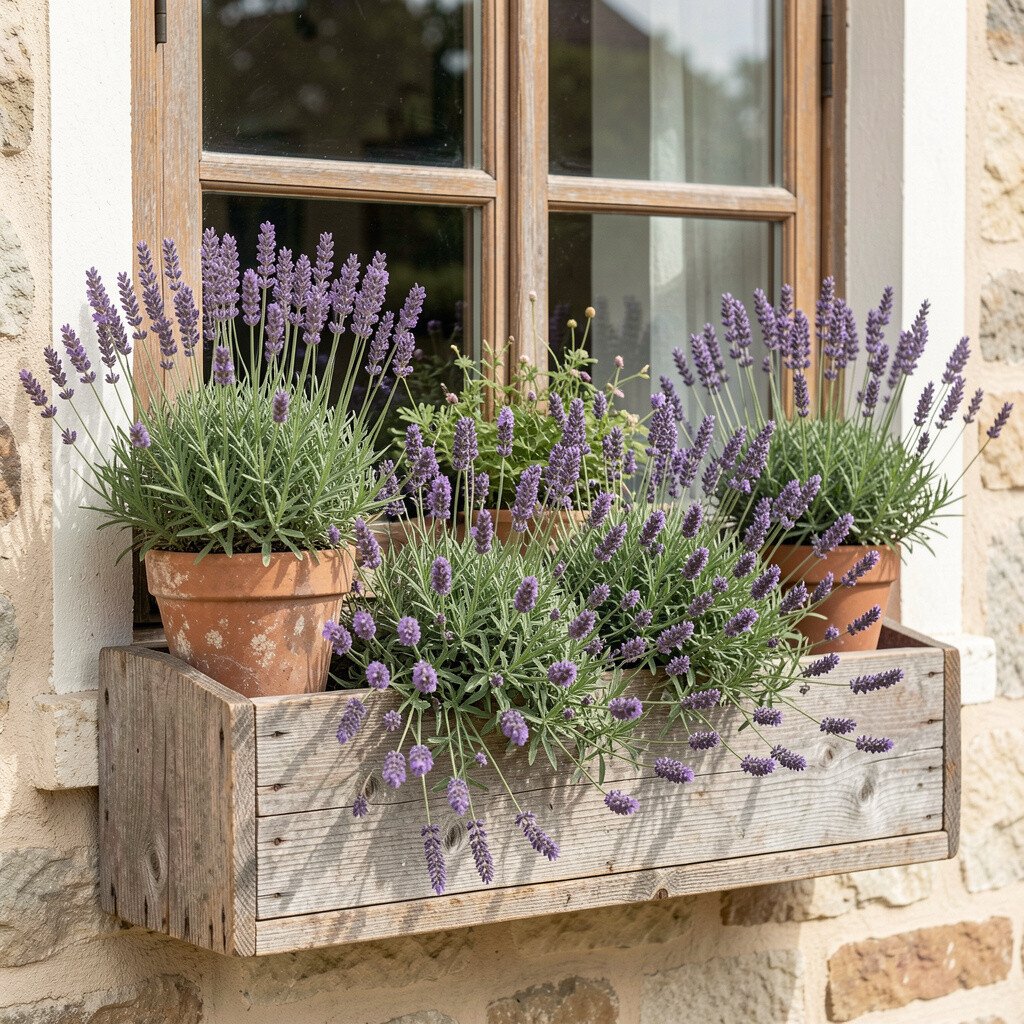
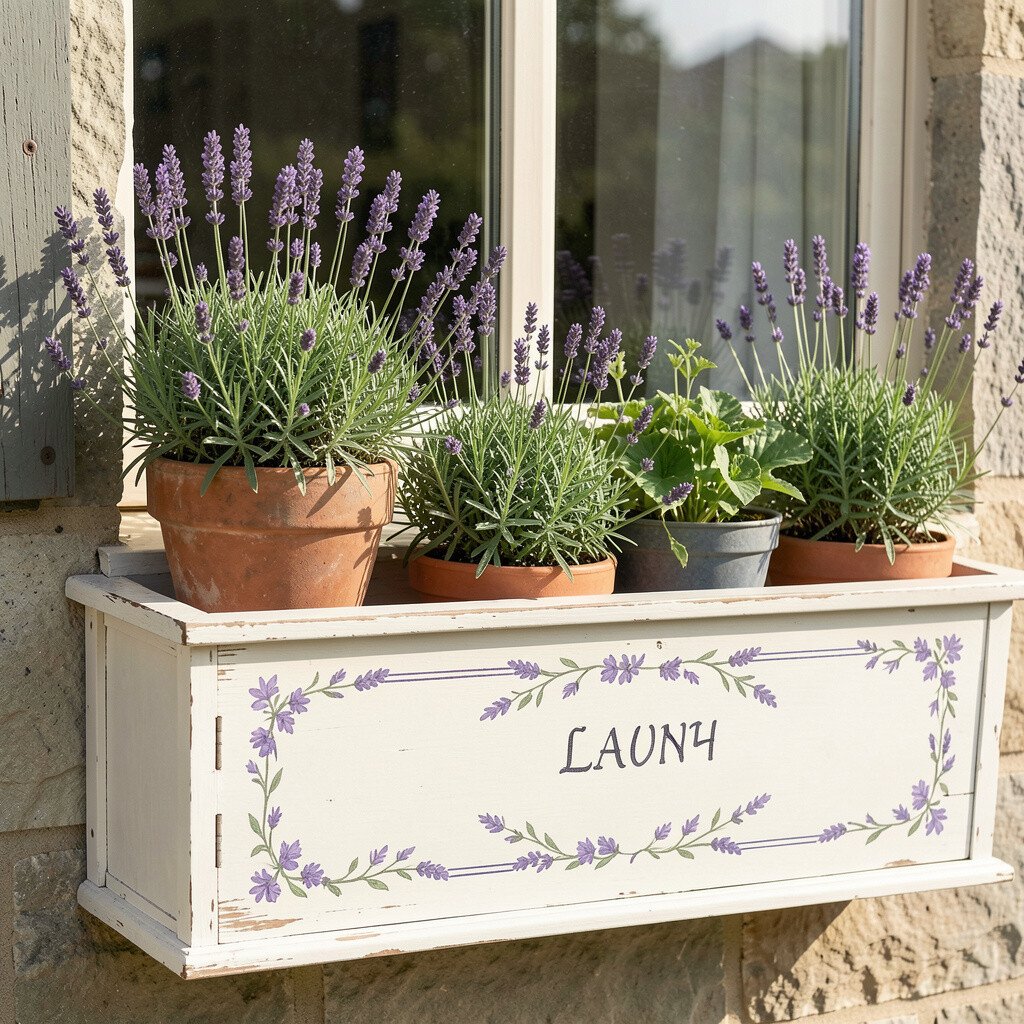
You can picture a long, weathered planter sitting under the window, paint faded like a favorite book cover. Lavender drapes over the edge in soft purple waves, and the whole space looks lived-in and warm.
Choose untreated cedar or reclaimed wood so it matches farmhouse style without feeling too “new.” Line the inside with burlap or landscape fabric to protect the wood, then add a gravel layer for drainage. Water deeply, but only when the top inch of soil feels dry, because lavender prefers not to stay soggy.
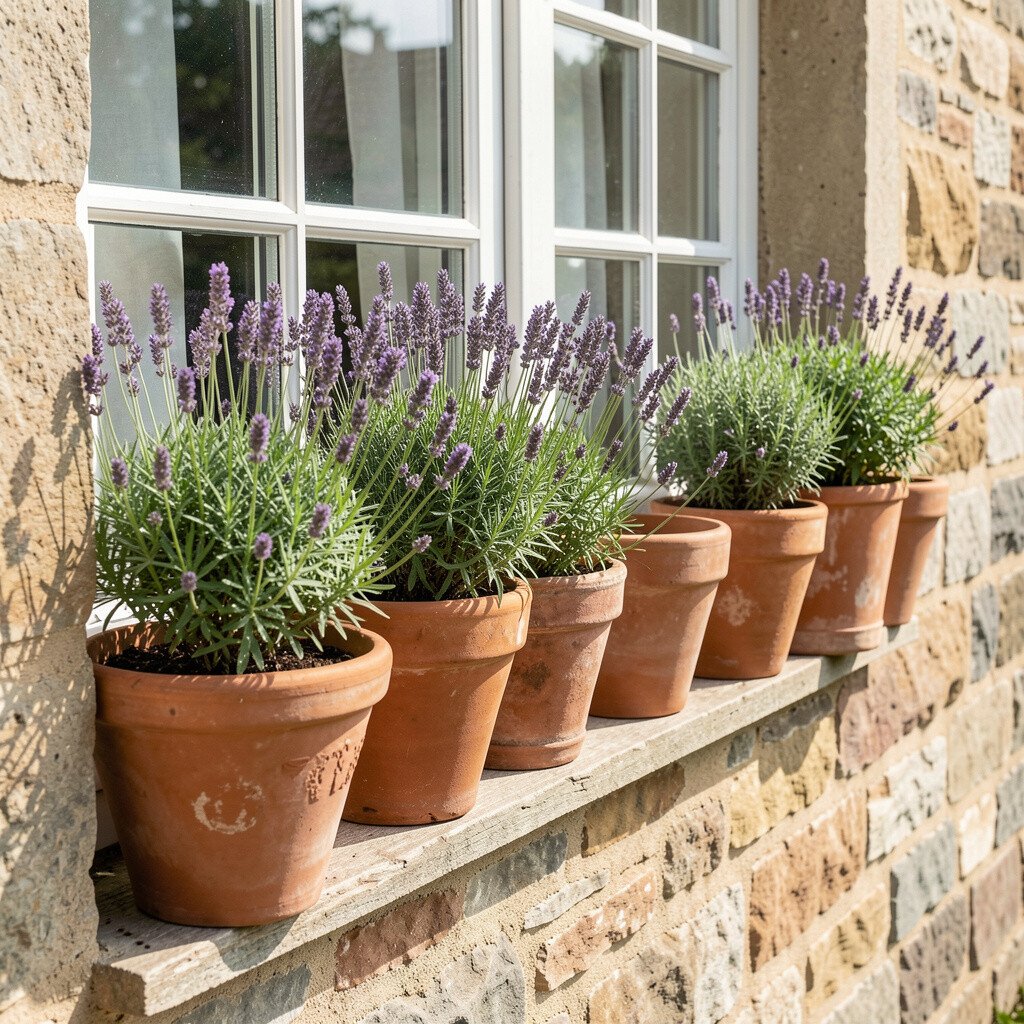
2. Terracotta Pots Rowed Along the Sill
Terracotta Pots Rowed Along the Sill
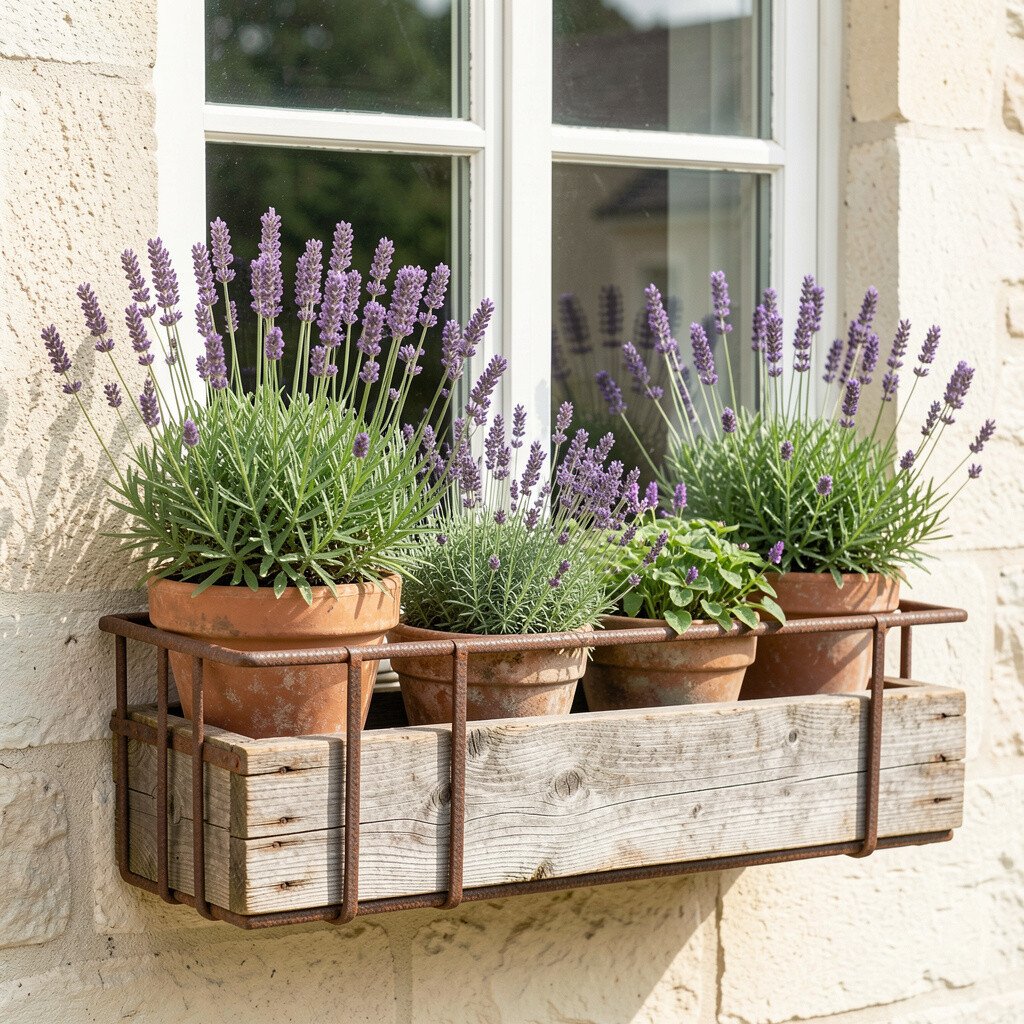
Imagine several rustic terracotta pots lined up like tiny homes for pollinators. The warm orange-brown tones look natural against white trim, and lavender pops with bright, calming color.
Pick pots with drainage holes and use a potting mix that stays light, with added grit or perlite. Keep the tallest pot near the center so the arrangement feels balanced, and trim lavender lightly after blooms to encourage fresh growth.
For personalization, tie a simple twine bow around each pot and vary the pot heights slightly. If you’re on a budget, look for mismatched pots at yard sales, then clean them and use the same pot feet or saucers for a matched look.
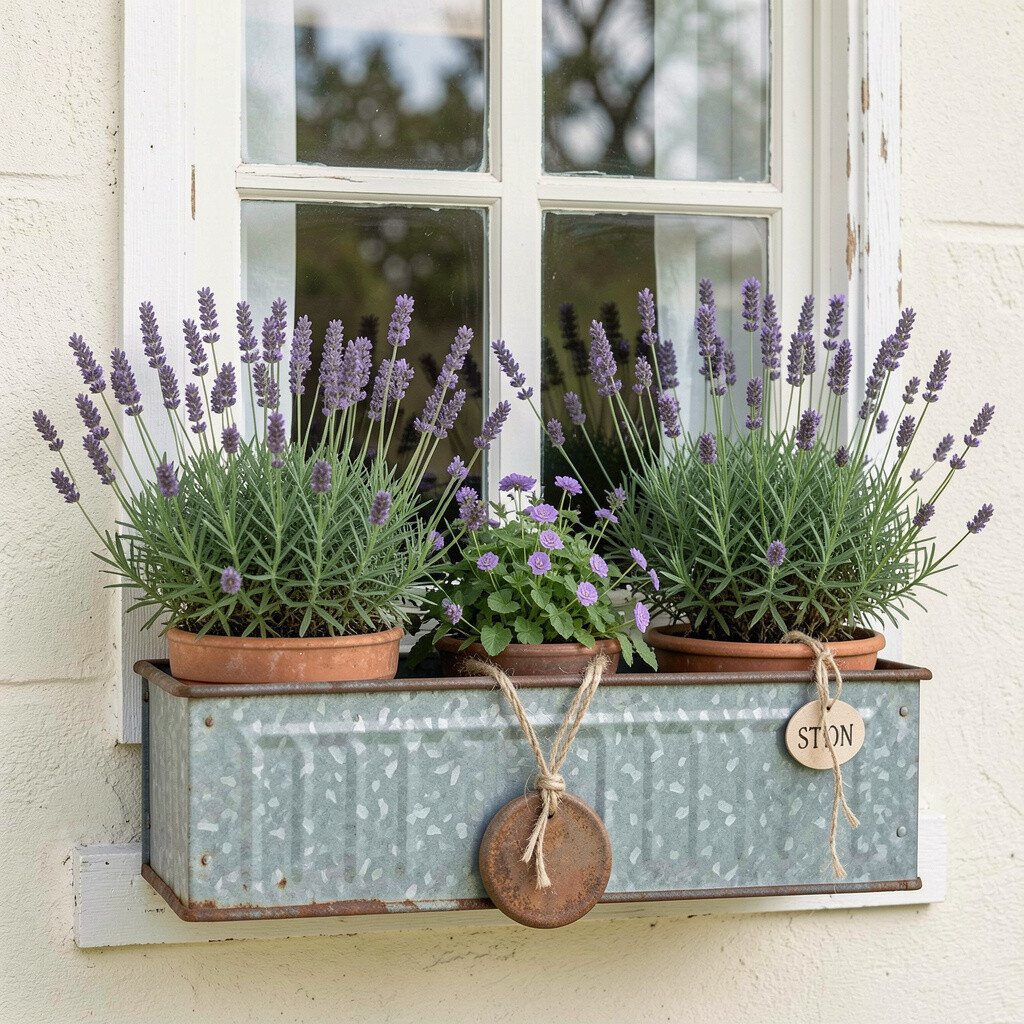
3. Galvanized Window Planter With Stoneware Charm
Galvanized Window Planter With Stoneware Charm
A galvanized trough under the window looks crisp at first glance, then turns cozy when you pair it with stoneware accents. You get that farm feel through the cool metal shine and the hearty, handmade look of the pots.
Use a trough planter for the main lavender, and place small stoneware pots with herbs at the edges for variety. Add mulch-like topping such as fine gravel or pea gravel to keep moisture steady and reduce weeds.
To keep it practical, check the drainage holes before planting and avoid water pooling in the metal. When heat rises, water in the morning so leaves stay dry, and rotate the arrangement halfway through the season if one side gets more sun.
If you want a unique touch, stamp or paint tiny date tags on twine and hang them from the pots. This makes the window feel like a small garden journal without any extra clutter.
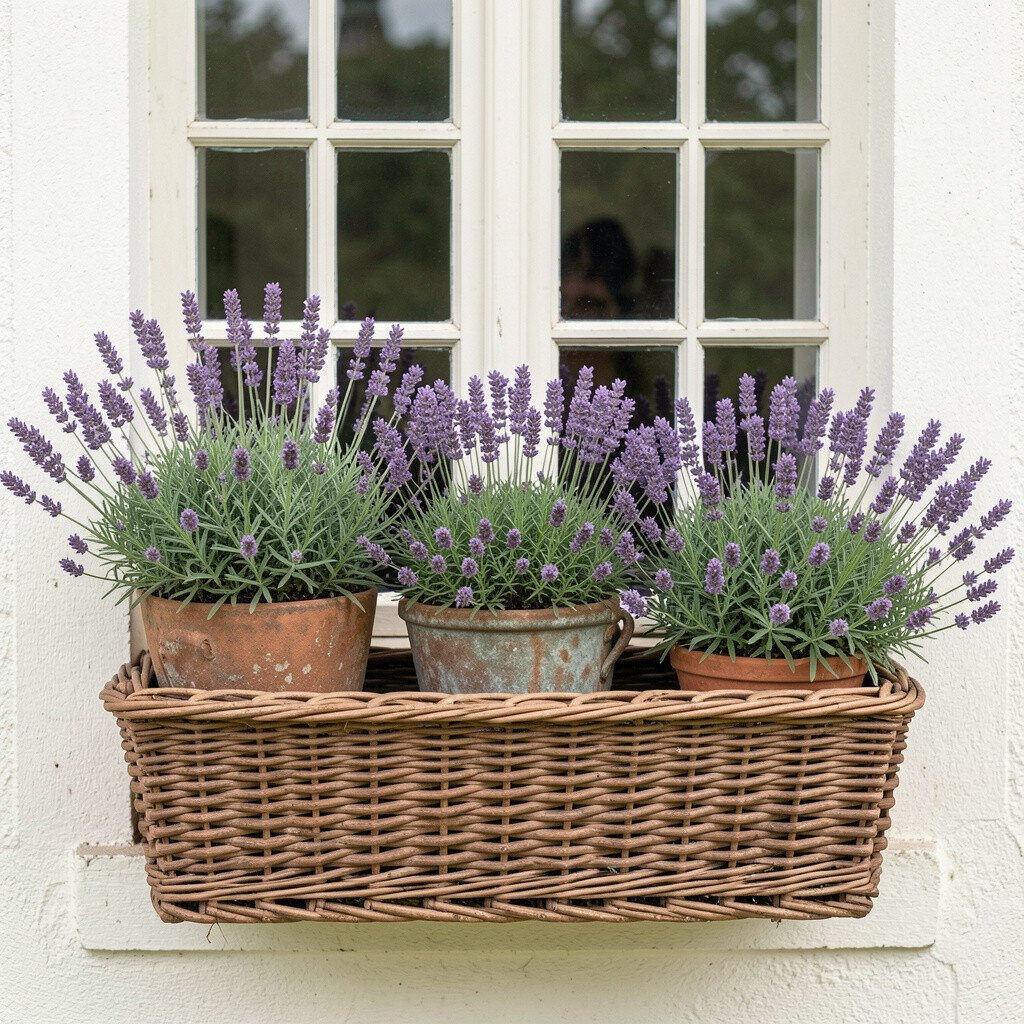
4. Wicker Basket Window Box With Lavender Clusters
Wicker Basket Window Box With Lavender Clusters
Wicker brings softness to farmhouse windows, especially when lavender clusters spill gently over the rim. The woven texture looks lovely in daylight, and it makes the purple blooms feel even more airy.
Because wicker dries quickly, use a liner and make sure the soil mix holds moisture without getting heavy. Combine potting soil with sand or perlite, then mist lightly only when the liner feels dry.
For a practical setup, attach the basket securely so wind doesn’t tip it, and place a drip tray below the window ledge. Trim spent flowers often, and you’ll get a longer blooming season with less leggy growth.
5. Rustic Metal Pipe Window Box Rails With Pots
Rustic Metal Pipe Window Box Rails With Pots
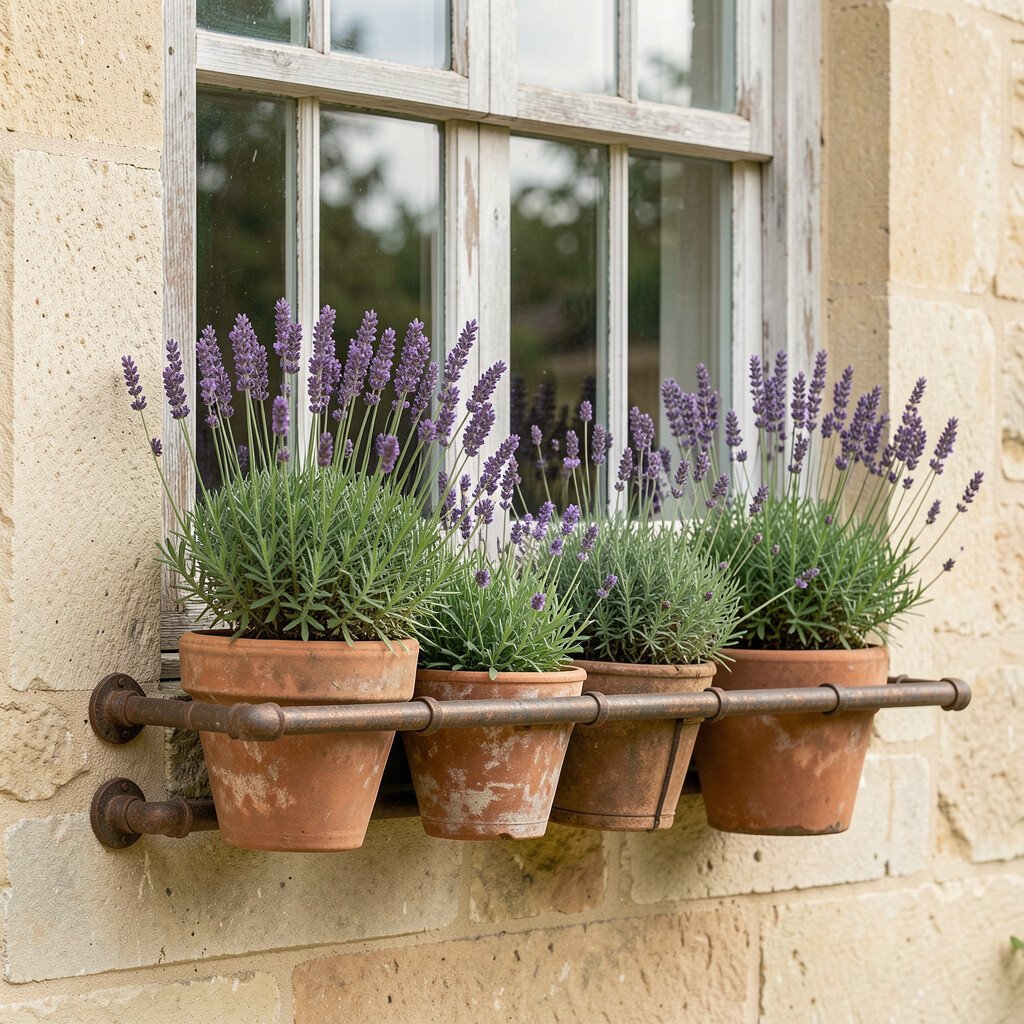
If you like the look of old farm equipment, pipe rails can make your window feel like it belongs on a homestead. Hang or mount small planters along the pipes, and plant lavender in the center where it can grow without crowding.
The metal texture contrasts nicely with the dusty purples, and it also helps the plants get good airflow. Use weather-resistant brackets and keep the planters lined so water runs cleanly into a tray.
For easy care, group pots with similar watering needs and label them with small tags tied to twine. When a pot dries faster, move it slightly closer to the brightest area and adjust your watering schedule.
6. Distressed Ladder-Style Window Planter With Lavender
Distressed Ladder-Style Window Planter With Lavender
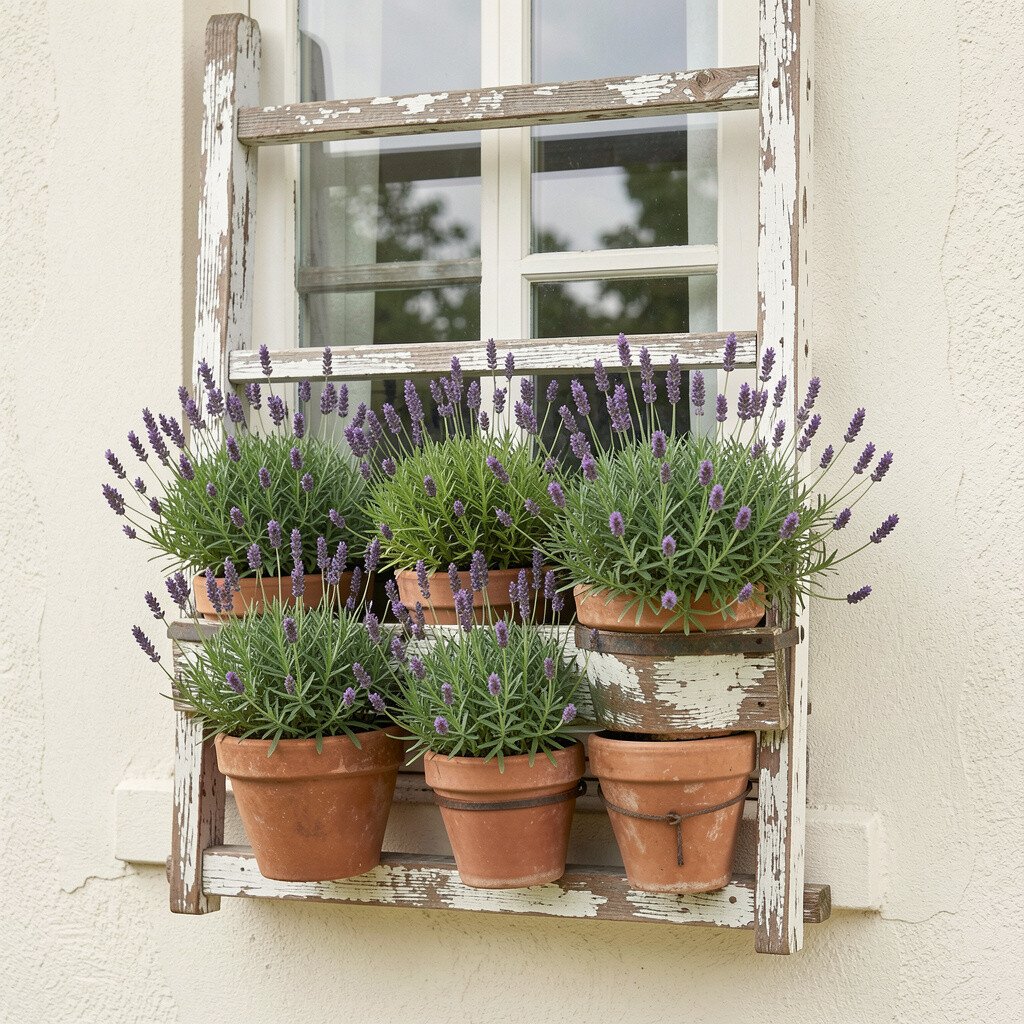
A ladder-style planter lets you play with height, and lavender looks amazing cascading from the upper steps. The design feels rustic and architectural, so even one plant can create a wow moment.
Mount the ladder near the window, then use sturdy planters that fit each rung opening. Line the compartments with fabric and fill them with well-draining soil so water doesn’t trap inside the wood frames.
For practical tips, secure the ladder firmly and check stability after heavy rain. Trim lavender into tidy mounds so the top doesn’t get too wild and block the view.
7. Reclaimed Drawer Window Box With Lavender Lines
Reclaimed Drawer Window Box With Lavender Lines
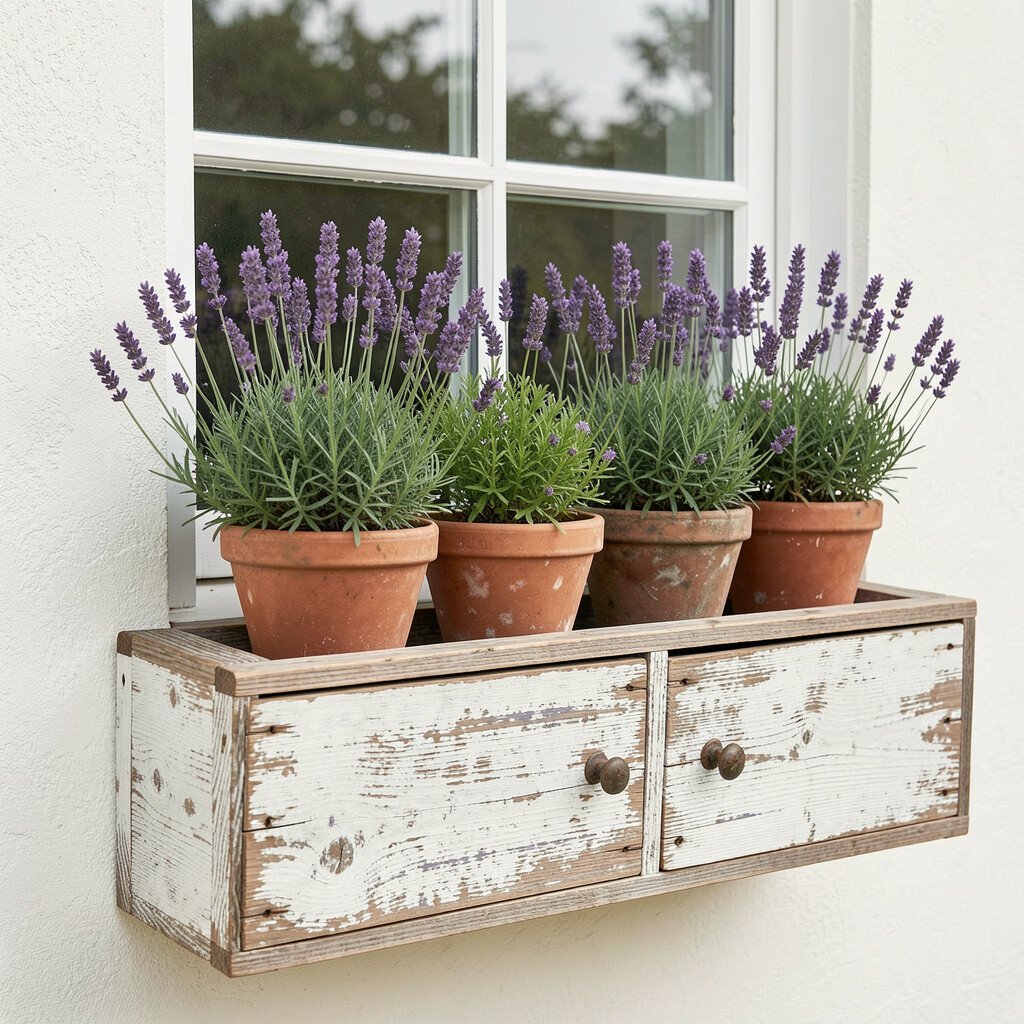
Old wooden drawers make an unforgettable window planter when you convert them into raised planters. Picture a drawer with dark grain and worn edges, holding lavender in straight, tidy lines like rows from a tiny garden.
This idea is unique because it blends farmhouse storage with living color, and it keeps the planting depth consistent. Add drainage by drilling holes at the bottom, then elevate the drawer on short feet so water can escape.
To make it practical, use a fast-draining mix and keep watering steady but not frequent. If your drawer is shallow, choose smaller lavender varieties and top-dress with fine gravel to reduce splashback.
For cost considerations, scavenging drawers from thrift stores can be cheaper than buying a new planter set. Finish the drawer with a light stain or wax so it matches your window trim.
8. Copper Trough Window Box With Lavender And Herbs
Copper Trough Window Box With Lavender And Herbs
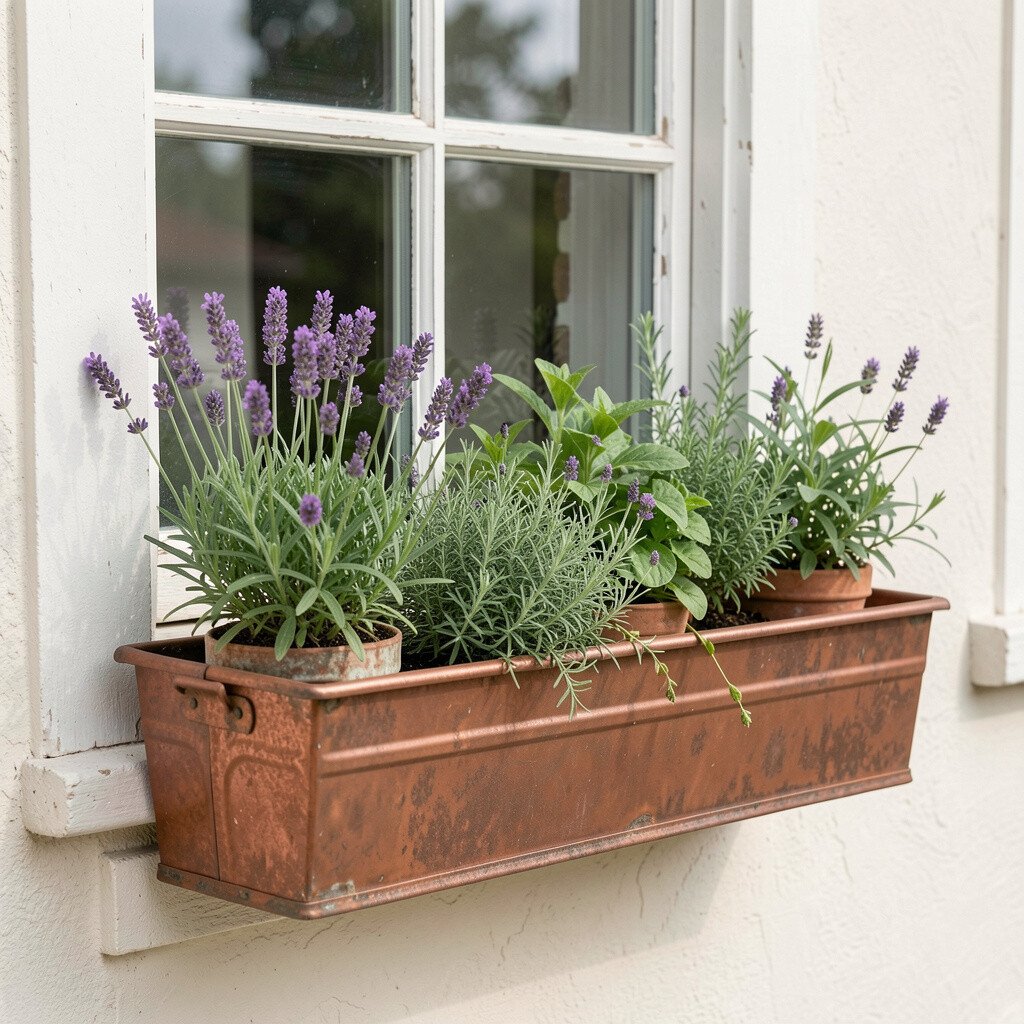
Copper feels rich and warm, and it changes as it weathers, giving your window planter personality over time. When lavender and soft green herbs share the trough, the whole display looks like a small farmhouse kitchen garden.
The best benefit here is versatility, because you get fragrance from lavender and everyday flavor from herbs like rosemary or thyme. Use a copper trough or copper-look container, then line the inside with a barrier so soil doesn’t damage the metal.
For practical care, choose a soil blend that drains well and water only when the surface dries. In hot weather, keep the roots cooler by adding a gravel top dressing and placing a windbreak panel if your window area gets gusty.
To personalize, tuck a small wooden spoon stake or hand-cut tag into the herbs. This makes the arrangement feel curated without needing extra décor.
9. French Country Rectangle Box With Lavender Border
French Country Rectangle Box With Lavender Border
A clean rectangular window box can still feel rustic if the finish is soft and worn. Plant lavender along the outside edges like a border, and fill the middle with complementary greens for a gentle, tidy look.
This layout gives you the benefit of full visual impact from both inside and outside the home. Use a box with drainage holes, add compost sparingly, and keep the lavender from being drowned by too much rich soil.
For uniqueness, choose a muted paint color like dusty blue or off-white instead of bright glossy colors. Add small twigs or dried seed heads for winter interest, but remove them before spring to prevent hiding pests.
If cost matters, you can reuse an old window box frame and repaint it. A couple of good coats plus a liner can make it look like a store-bought piece for less money.
10. Stone Block Window Box Base With Lightweight Planters
Stone Block Window Box Base With Lightweight Planters
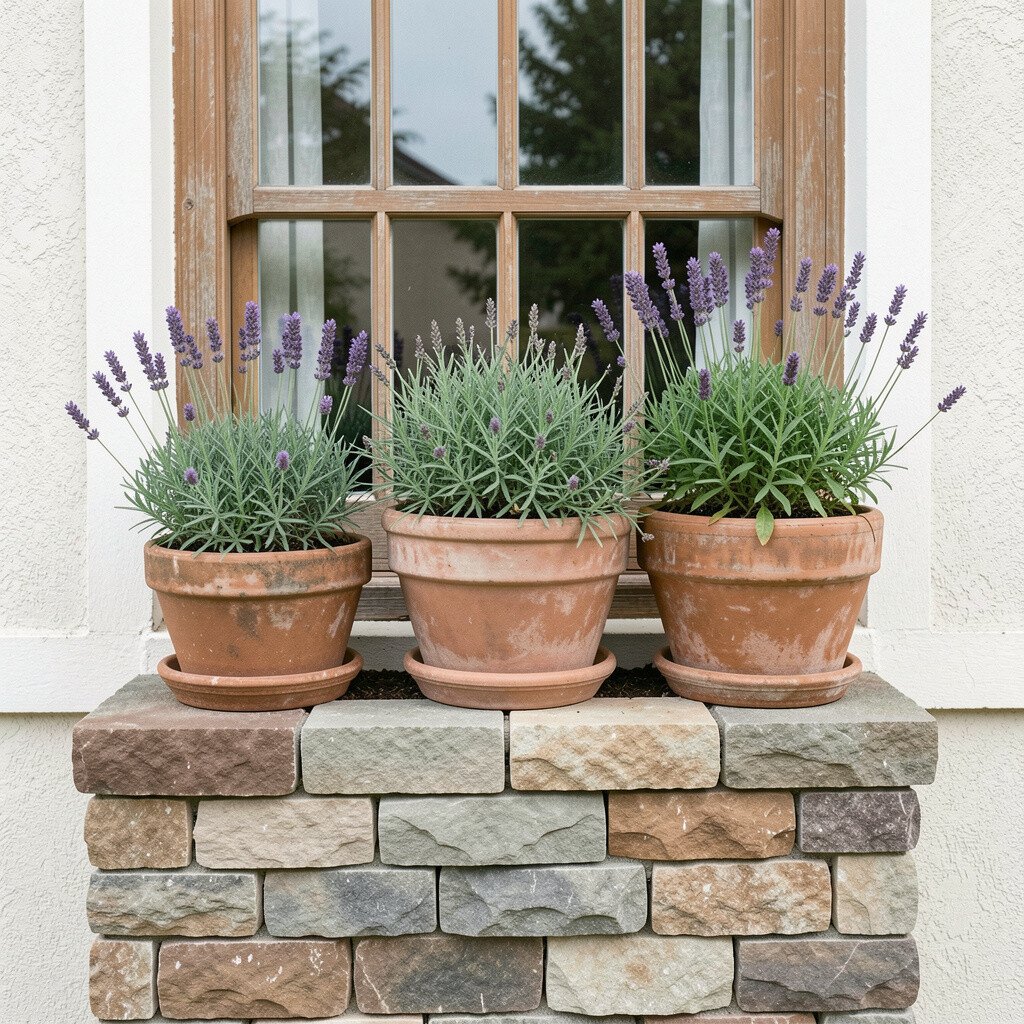
Stone block bases make a window feel grounded, like it belongs to a cozy farmhouse porch. Pair the stone look with lightweight planters that hold lavender well, and you’ll get a sturdy look without heavy lifting.
For practical setup, place a weatherproof tray between the stone surface and planter to keep water from staining. Use planters that can drain freely, and ensure the root zone has enough airflow so lavender stays healthy.
This style also helps with cost control, since you can use faux stone blocks or leftover pavers for the base. A little planning goes far, like measuring your window area so the block doesn’t crowd the walkway or block light.
Personalize it by painting a single line of white or using a small metal tag that matches your door hardware. The details make it feel intentional even if the materials are simple.
11. Rustic Rope-Hung Window Boxes With Mini Lavender Pots
Rustic Rope-Hung Window Boxes With Mini Lavender Pots
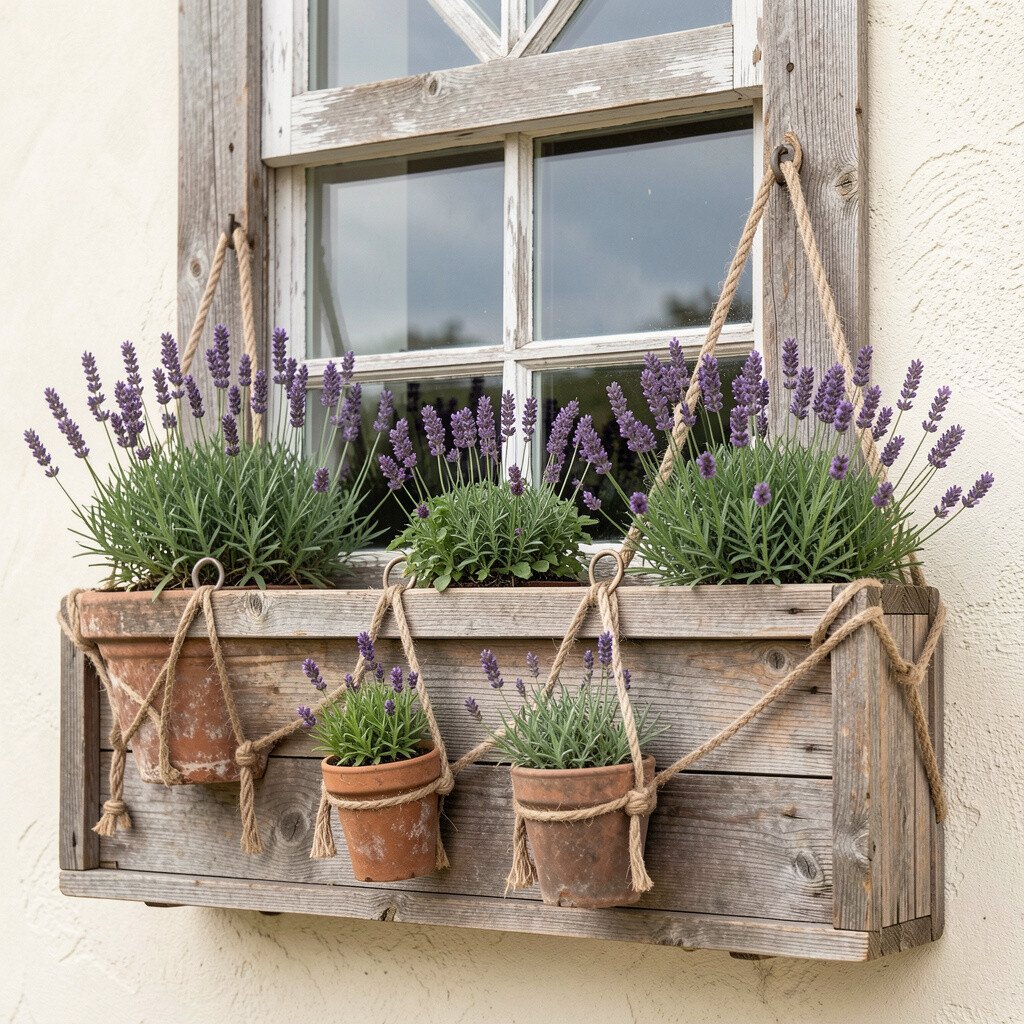
Rope-hung planters add a playful farmhouse feel, and they look especially charming in front of tall windows. When you cluster mini lavender pots inside a larger rustic box, the display feels full but still neat.
This method is unique because it brings movement and texture, and it can work when you can’t drill permanent brackets. Use strong jute or hemp rope, and tie it so the box stays level, not tilted toward the window.
For benefits and care, keeping pots separate makes it easier to swap out a plant if it struggles. Water each pot individually to avoid flooding, and check drainage daily during the first couple of weeks after planting.
Cost considerations are friendly here because rope and basic hooks are usually cheaper than elaborate hardware. If you want personalization, wrap the rope with small wooden beads at the knots for a subtle rustic accent.
12. Handmade Ceramic Window Planters With Textured Glaze
Handmade Ceramic Window Planters With Textured Glaze
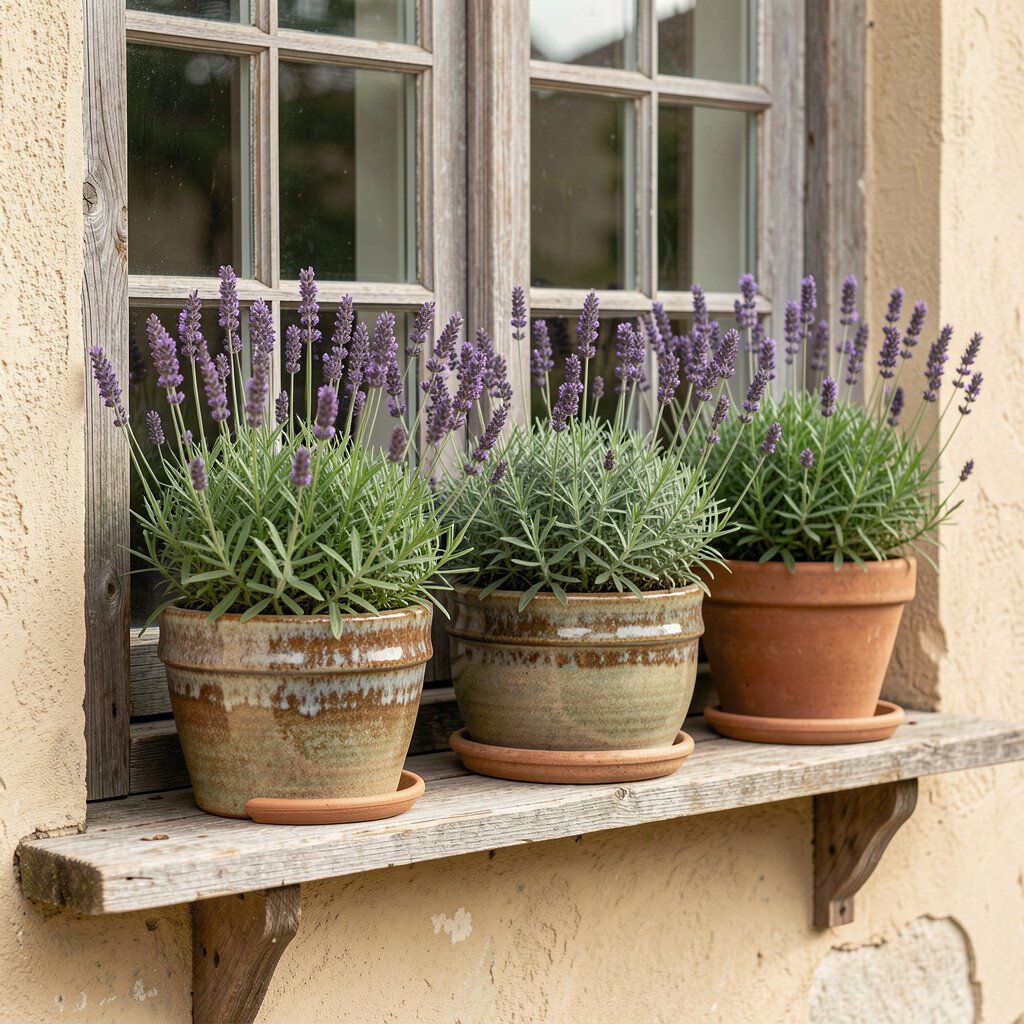
Handmade ceramic planters bring warmth and individuality, especially when the glaze has speckles or a matte finish. Lavender in textured pots looks like it belongs in an artisan market booth, but it still works as everyday décor.
Choose planters with drainage holes and use a saucer that catches excess water without pooling. Ceramic is great for stable growing conditions, but the soil can dry at a normal pace, so check moisture regularly.
For practical tips, mix in grit to help drainage and reduce root stress. Trim lavender into rounded shapes so it fills the pot opening and stays tidy against the window line.
13. Rustic Window Box With Rebar Edges And Lavender Border Pots
Rustic Window Box With Rebar Edges And Lavender Border Pots
A window box with rebar-style edges gives a strong, farmhouse-industrial twist while still letting lavender feel soft. The contrast between sturdy metal and delicate purple blooms makes the whole setup look bold yet calming.
For the best results, plant lavender in the main box and place smaller border pots at the ends, so you get a layered look from every angle. This style also brings a practical benefit because metal edges can resist warping and weathering better than thin wood.
Personalize it by painting the interior rim with a thin coat of heat-safe, outdoor paint in a color that matches your front door. Keep costs in mind by starting with a simple base box and adding only a few decorative rebar accents or metal brackets.
When caring for lavender, avoid soaking the whole structure at once, and instead water slowly so the root zone absorbs moisture. Mulch with fine gravel and prune after bloom, and you’ll keep the display looking fresh season after season.