21+ Homeschool Room Displays For Bright Learning Spaces
A bright homeschool room can make everyday learning feel like a daily celebration. Small display choices help ideas stay visible, organized, and exciting.
When you match what your child loves with smart display planning, the room starts working like a friendly learning partner.
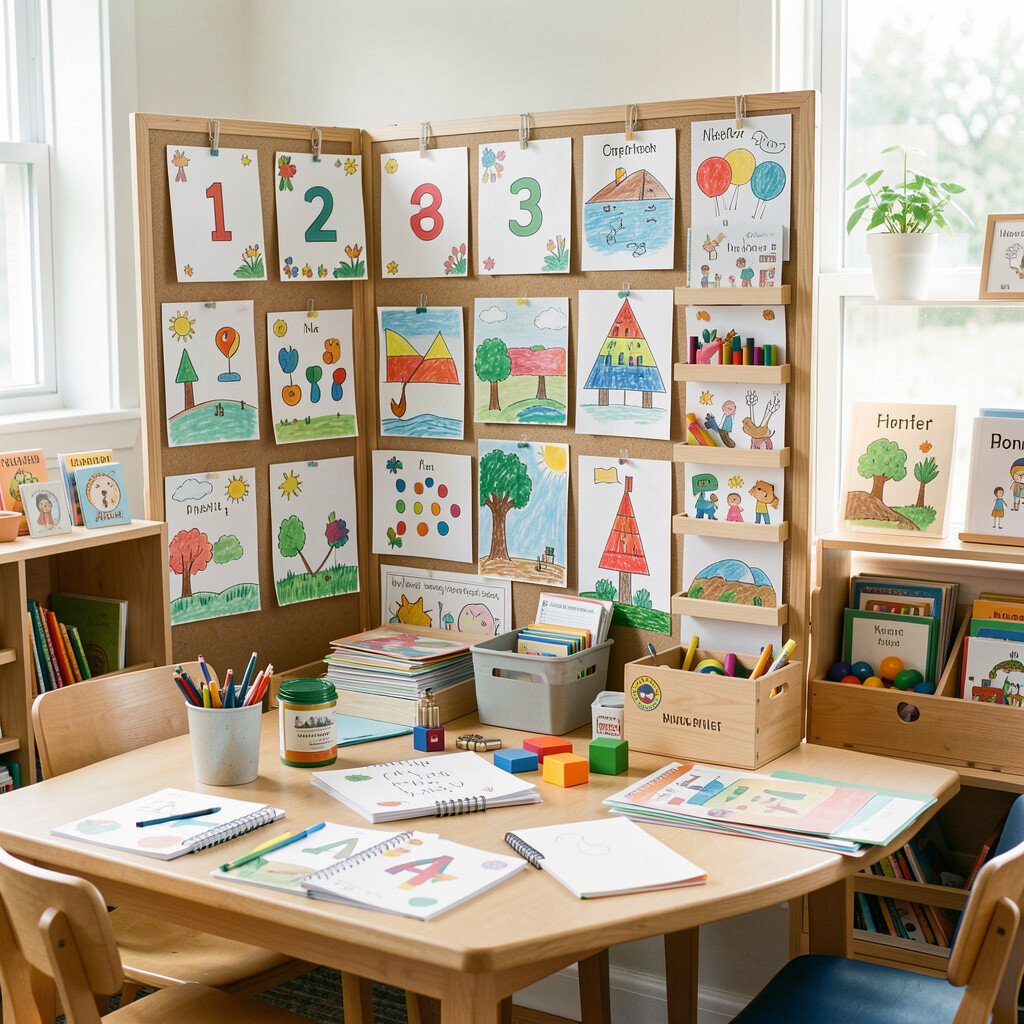
Turn your wall into a rotating art gallery where drawings, writing samples, and photo-backed projects can shine. Use bright frames or clipboards so new work can be swapped in without stress.
Choose a simple color theme, like warm wood tones or a cheerful mix of pastels, so the room looks calm even when it’s full of creations. Place the display at eye level and add a few labeled pockets for completed work that can be kept for later. Let your child point to pieces and tell the “story behind it” during tidy-up time, so the wall becomes part of learning.
2. Labeled Storage With Color-Coded Bins
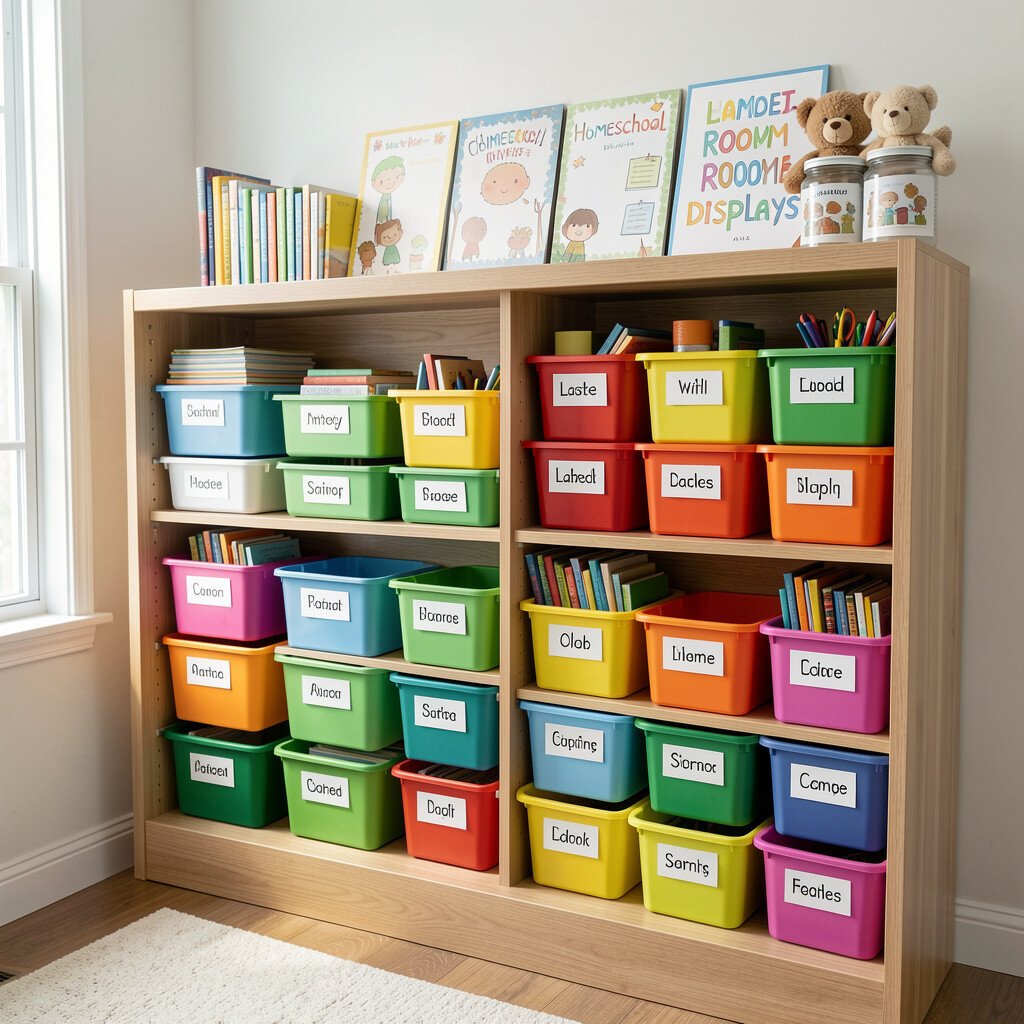
Labeled Storage With Color-Coded Bins
In a homeschool space, clear storage helps kids find materials faster and spend more time doing. Use colored bins for subjects, like blue for reading or green for science, then pair each bin with simple labels.
Arrange the bins at reachable heights and keep a small tray on top for daily supplies. When everything has a home, your room stays tidy even on busy days.
To personalize, let your child choose two favorite colors for the system and put their name tag on the bins. For cost, start with a few bins and add more when you finish a unit, rather than buying everything at once. Recent trends favor “visible organization,” so items look neat instead of hidden away.
3. Math Visuals Corner With Number Stories
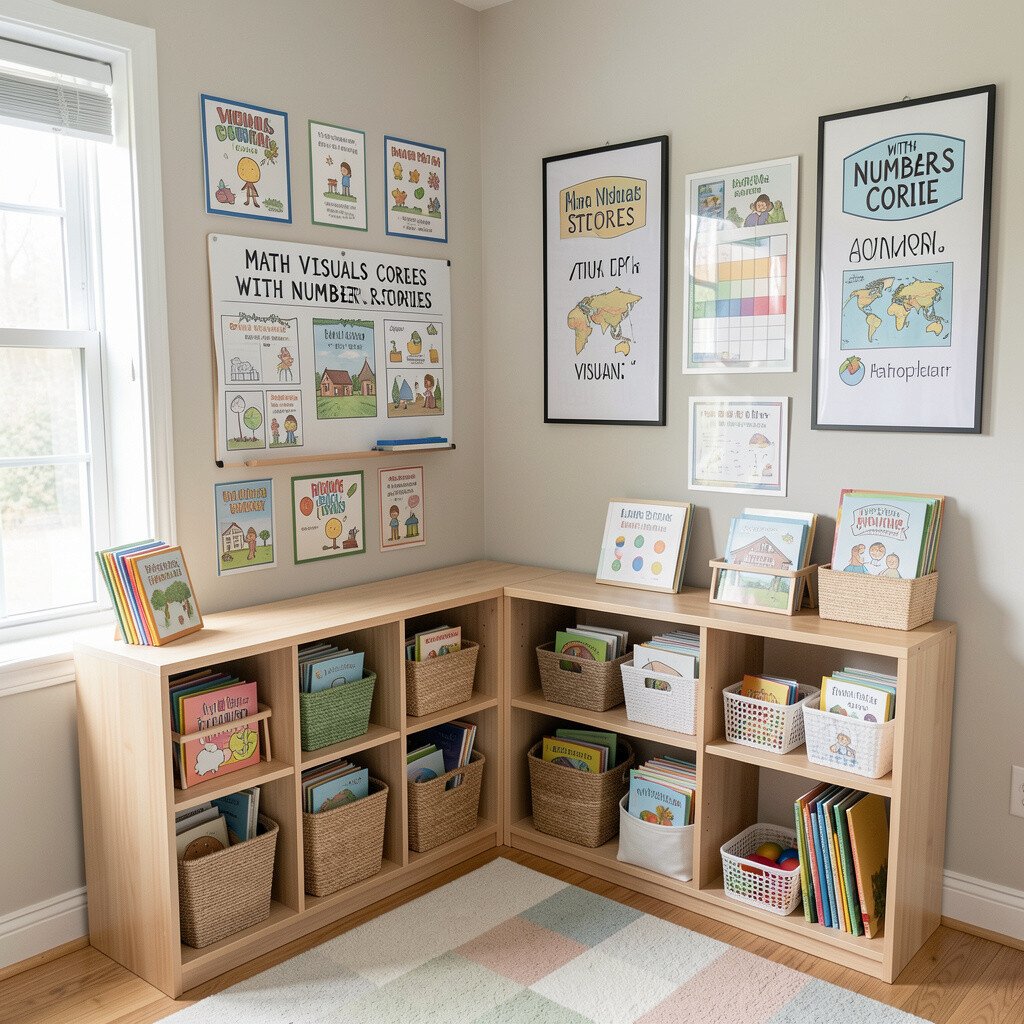
Math Visuals Corner With Number Stories
Create a mini math display where numbers feel friendly instead of intimidating. Hang a number line, fraction circles, and quick problem examples on a bulletin board or magnetic board.
Use visual cues like dot patterns and simple word problems with bold examples to support different learning styles. Add a small pocket labeled for “math wins,” where students drop completed practice sheets or challenge cards.
Try using erasable markers on a whiteboard so you can change the visuals for each lesson. This keeps the corner fresh and helps you reuse the same space week after week. Over time, you’ll notice students reaching for the board during independent work, which builds confidence.
4. Reading Ladder With Book Logs and Cover Stars
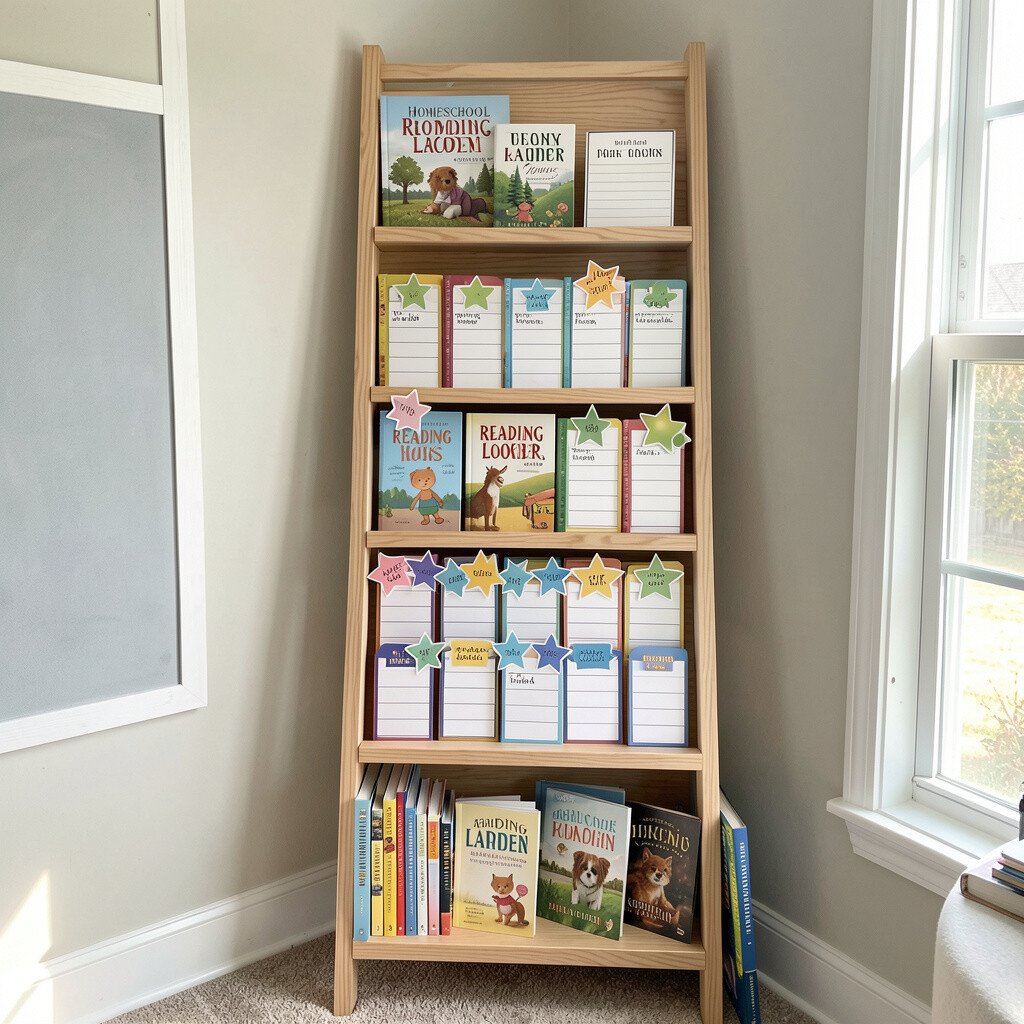
Reading Ladder With Book Logs and Cover Stars
A reading ladder display makes progress feel real without turning it into a scary challenge. Use a tall paper ladder, a wooden ladder shelf, or even removable tape rungs to show reading milestones.
Place book covers or printouts on each rung and let your child add a sticker after finishing. Keep a simple book log card nearby for quick notes, like favorite character, best part, or one question they have.
5. Weather and Seasons Board With Daily Updates
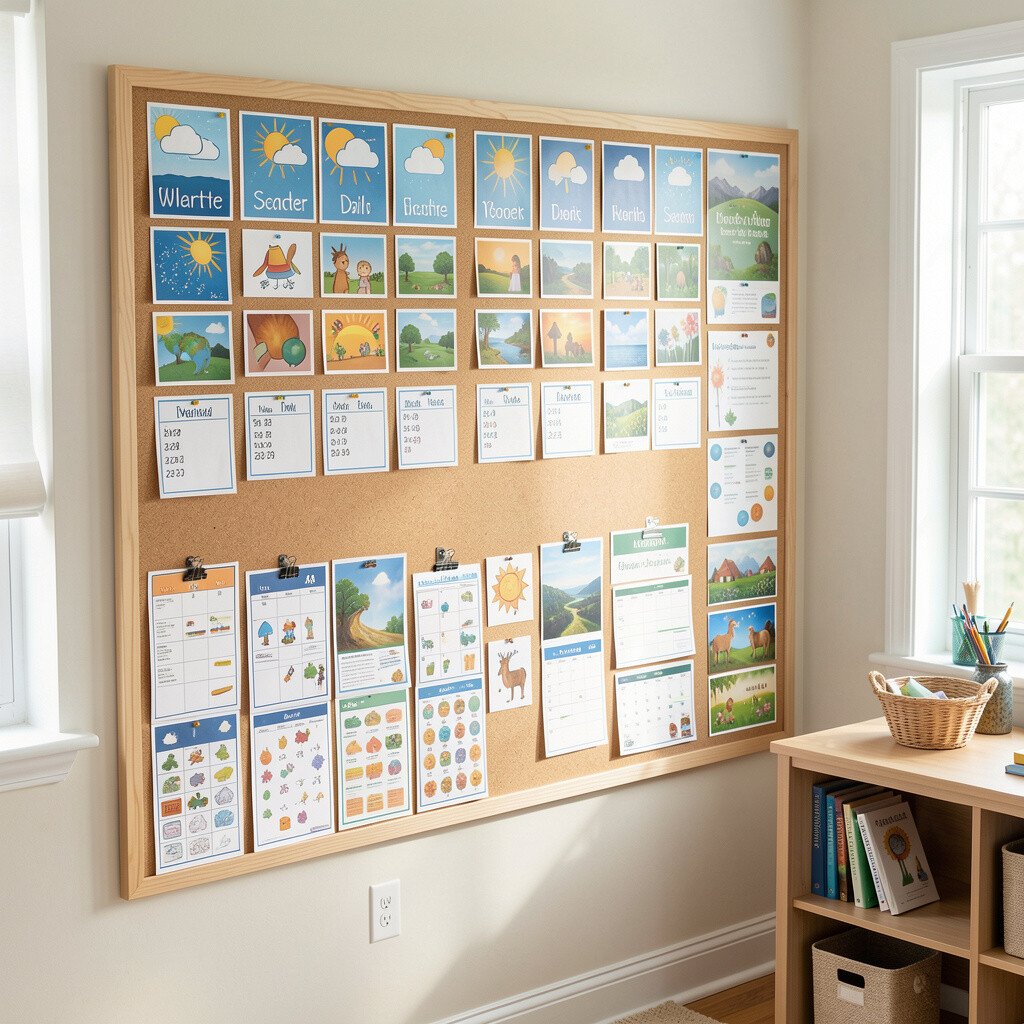
Weather and Seasons Board With Daily Updates
A weather display adds motion and curiosity to the room. Use a board with a large weather icon chart, a small thermometer strip, and a rotating season wheel.
Each morning, your child can move a magnet or marker to match the sky outside. For practical planning, include a tiny “weather journal” pocket for a few sentences about what they notice.
To personalize, add illustrations your child makes from previous observations, like a sunny day or rainy cloud shapes. For current trends, many families use hands-on tracking like magnets and wheels, which keeps kids engaged without extra apps. If you want to save money, print weather icons for free from educational sites and laminate them for durability.
6. Timeline Wall for History and Story Threads
Timeline Wall for History and Story Threads
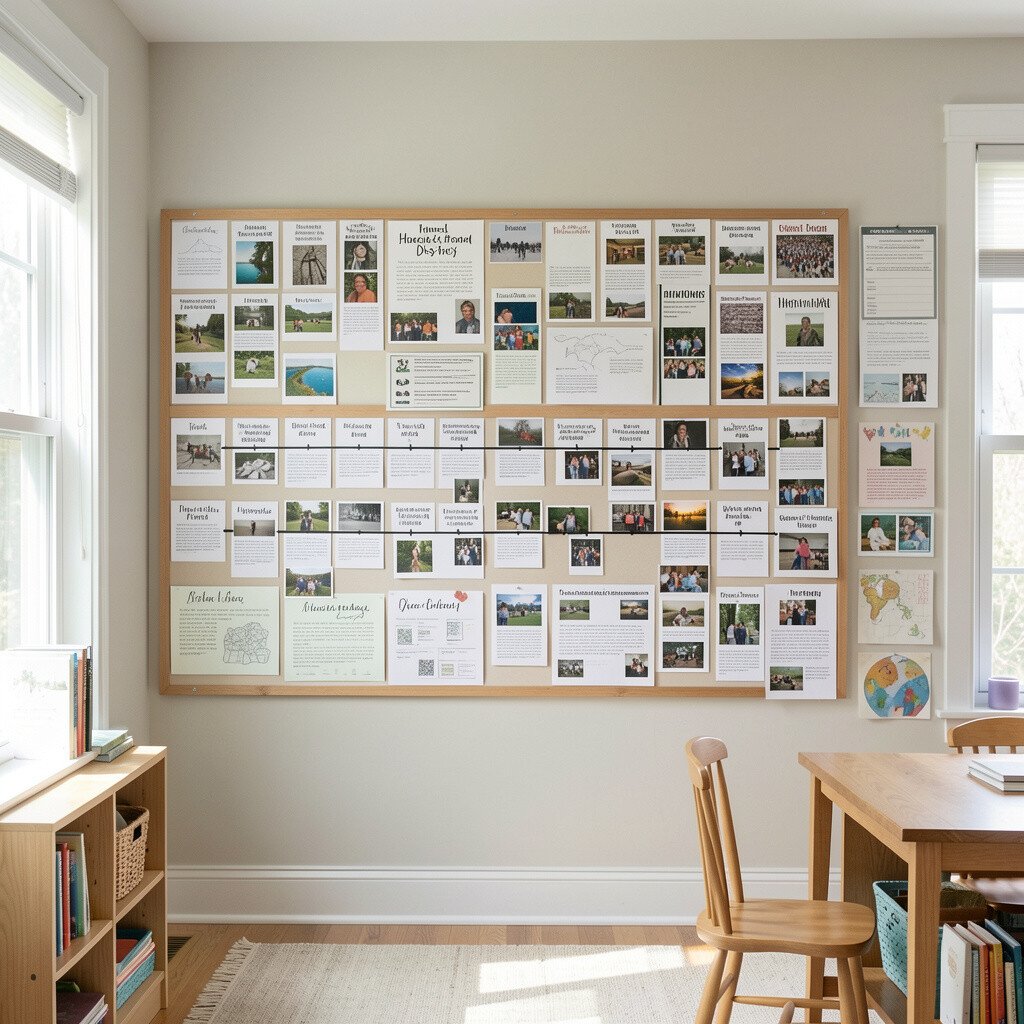
A timeline wall helps children see connections between events and stories. Choose a long strip of paper on the wall, a cork board, or a magnetic strip system, then mark eras with simple headings.
Include images, short captions, and a few “what changed?” prompts so the timeline feels interactive. Add small picture cards or cutout maps that you can rearrange as you learn.
When personalization matters, let your child add a favorite artifact sketch or a drawing of a historical place. It’s also budget-friendly, since you can create most timeline pieces from printer-friendly images and student-created drawings.
7. Science Lab Display With Question Prompts
Science Lab Display With Question Prompts
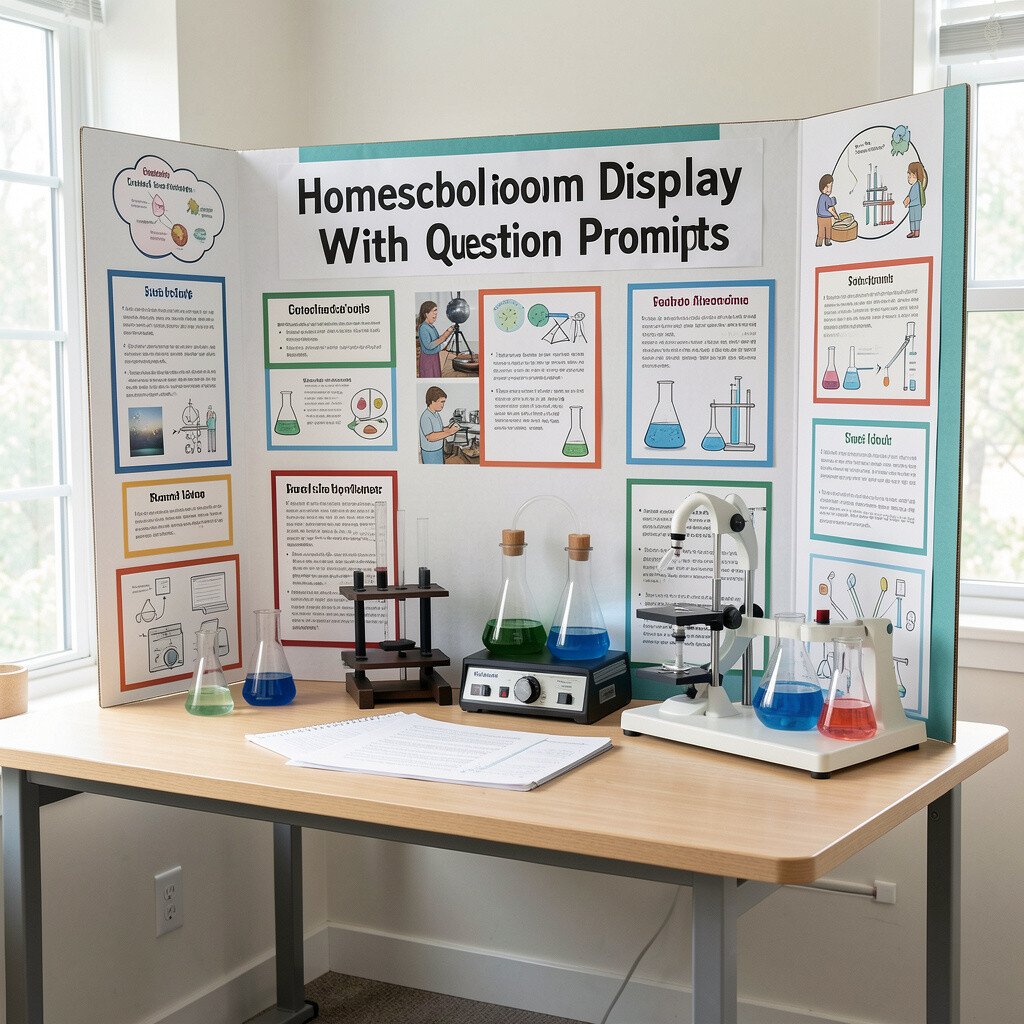
Make your science area feel like a real lab by posting questions where kids can see them. Use a board with experiment steps, safety reminders, and a “what do you predict?” magnet strip.
Include a rotating set of science posters showing the same topic in different ways, like stages of the moon or states of matter diagrams. When kids can read the visuals during hands-on time, learning sticks faster.
To keep it practical, store frequently used tools in labeled jars and tape their “where it goes” spots on the shelf. For cost, try using used display boards from craft stores and fill them with your own printed charts. Many homeschoolers now favor interactive prompts like magnets and fill-in charts because they reduce clutter and raise participation.
8. Student Study Goals Board With Check-In Rituals
Student Study Goals Board With Check-In Rituals
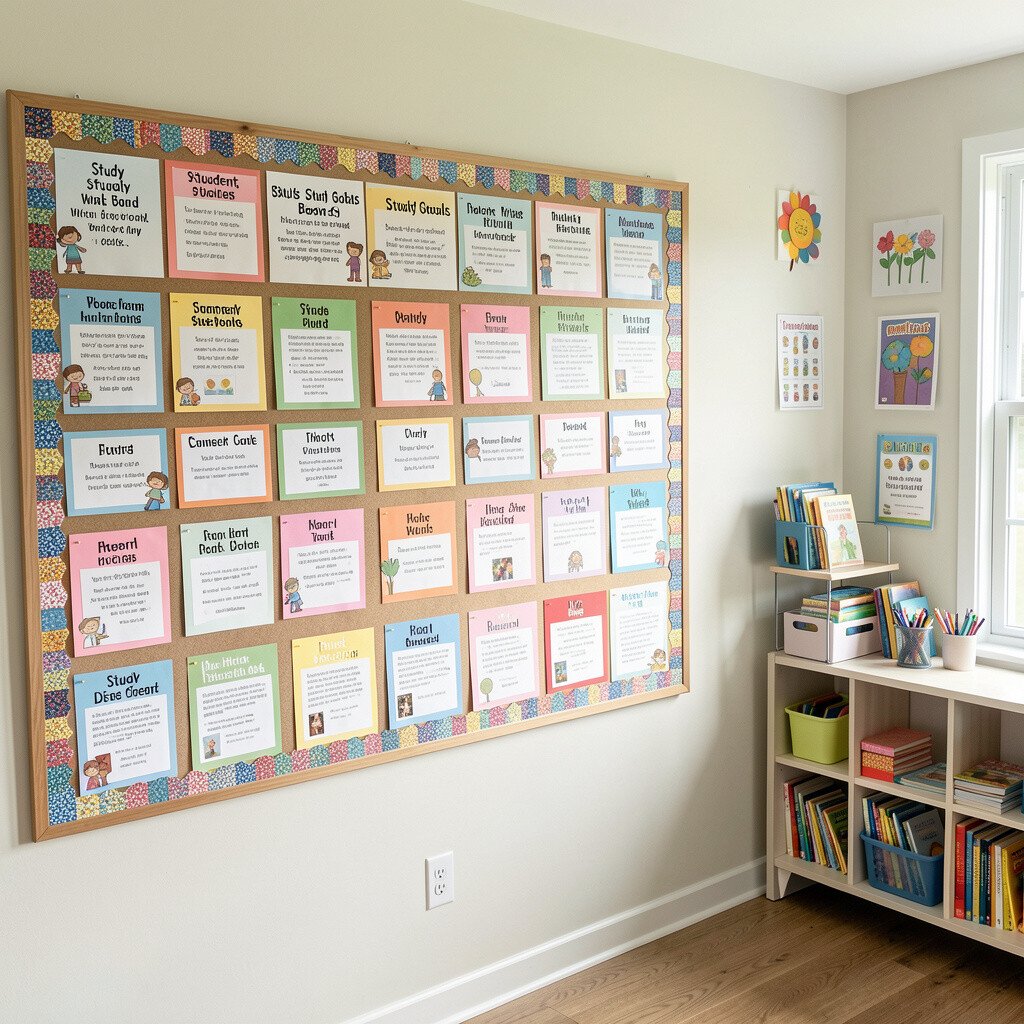
A goals board helps kids understand what they’re working on and why it matters. Use a simple weekly chart with checkboxes, and write short goals in kid-friendly language.
Keep it positive by including a “one thing I learned” box and a “help I might ask for” line. Let your child choose one goal icon, like a pencil or star, so the board feels personal and encouraging.
9. Vocabulary Word Wall With Picture Support
Vocabulary Word Wall With Picture Support
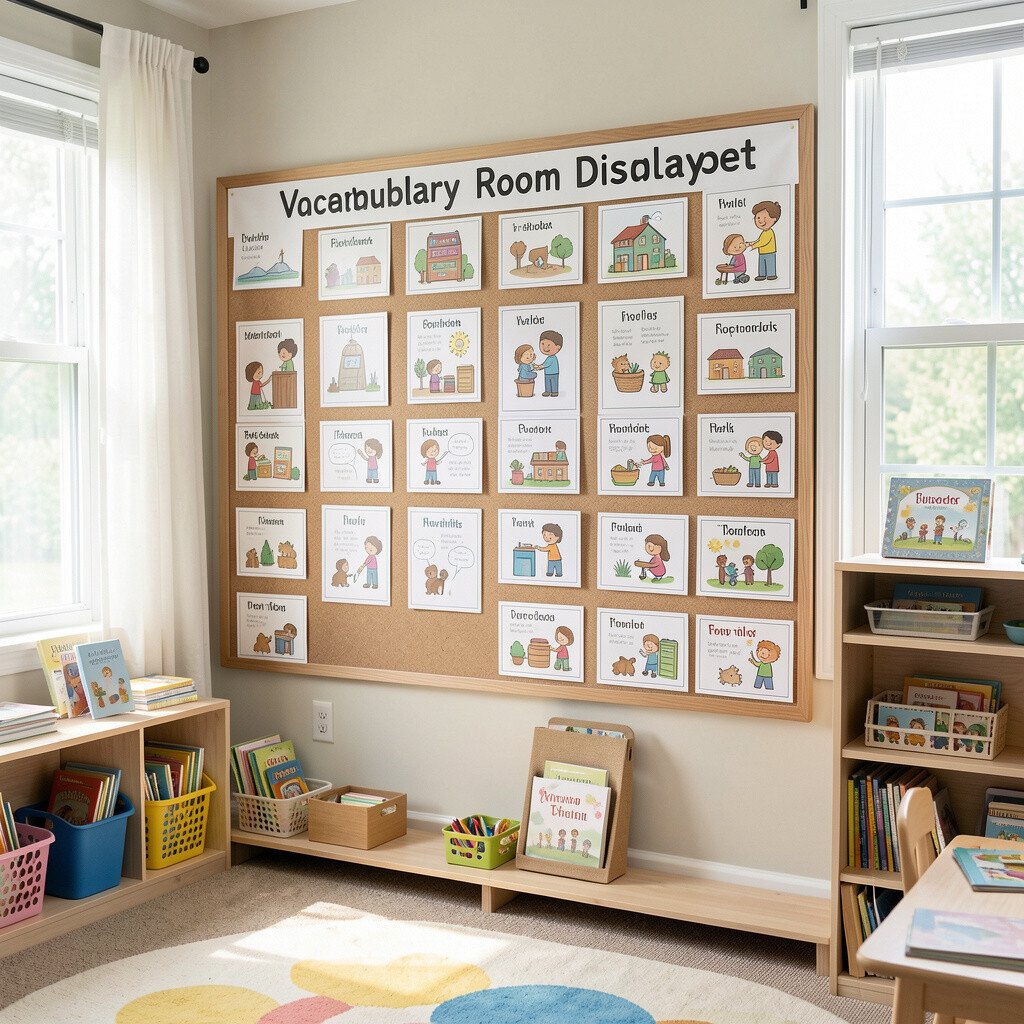
A word wall turns new vocabulary into something kids can practice right away. Choose a manageable set of words for the current unit, and display each word with a matching picture or small drawing.
Use sturdy cardstock and add a pocket for “use it in a sentence” note cards. When the room shows the words clearly, kids can refer to them during writing, spelling, and discussions.
For personalization, ask your child to draw their own mini image for each word and add it beneath the word. If you want a cost-friendly approach, create the first set using index cards and replace cards as needed. Current trends lean toward visual language supports, especially for younger learners and language growth, because pictures reduce confusion.
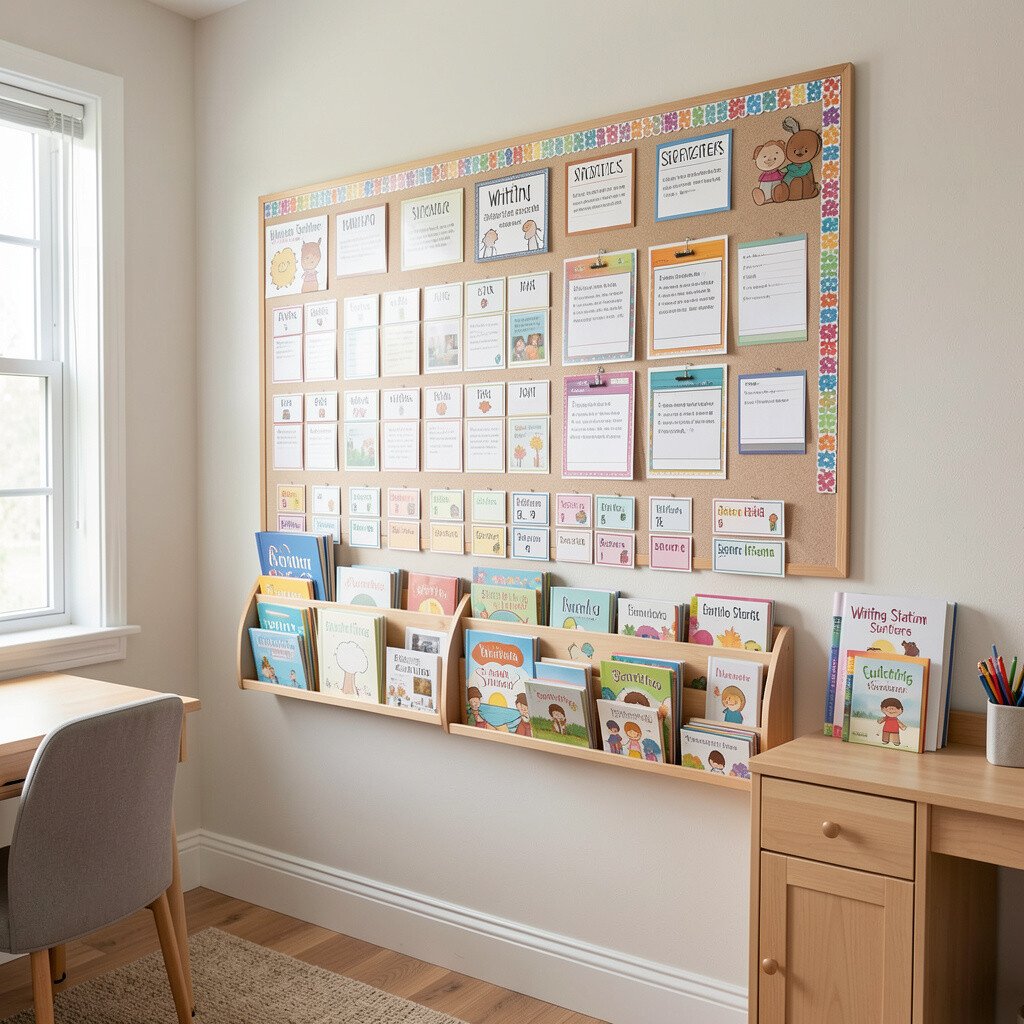
10. Writing Station Wall With Sentence Starters
Writing Station Wall With Sentence Starters
Set up a writing station display that helps kids begin without staring at a blank page. Hang a sheet of sentence starters with simple examples for opinions, stories, and explanations.
Include a “check your work” strip with reminders like capital letters, end punctuation, and reread for sense. Place a small bin with themed writing prompts so you can switch topics quickly.
Personalize by adding your child’s favorite topics, like space stories or animal facts, directly on the prompt cards. For cost, print a single starter page and laminate it, then use dry-erase markers for daily updates. Many families now use flexible writing walls because they save time and keep the station inviting.
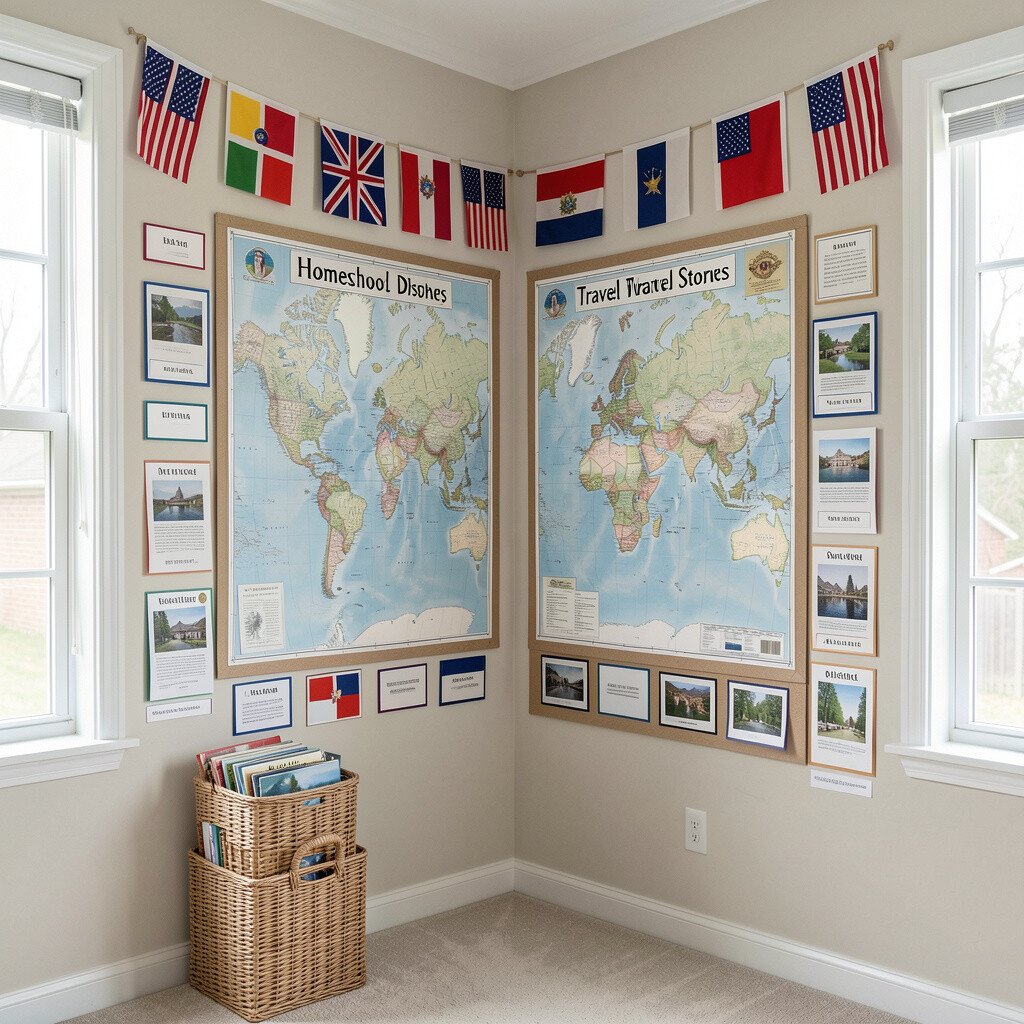
11. Map Corner With Flags, Labels, and Travel Stories
Map Corner With Flags, Labels, and Travel Stories
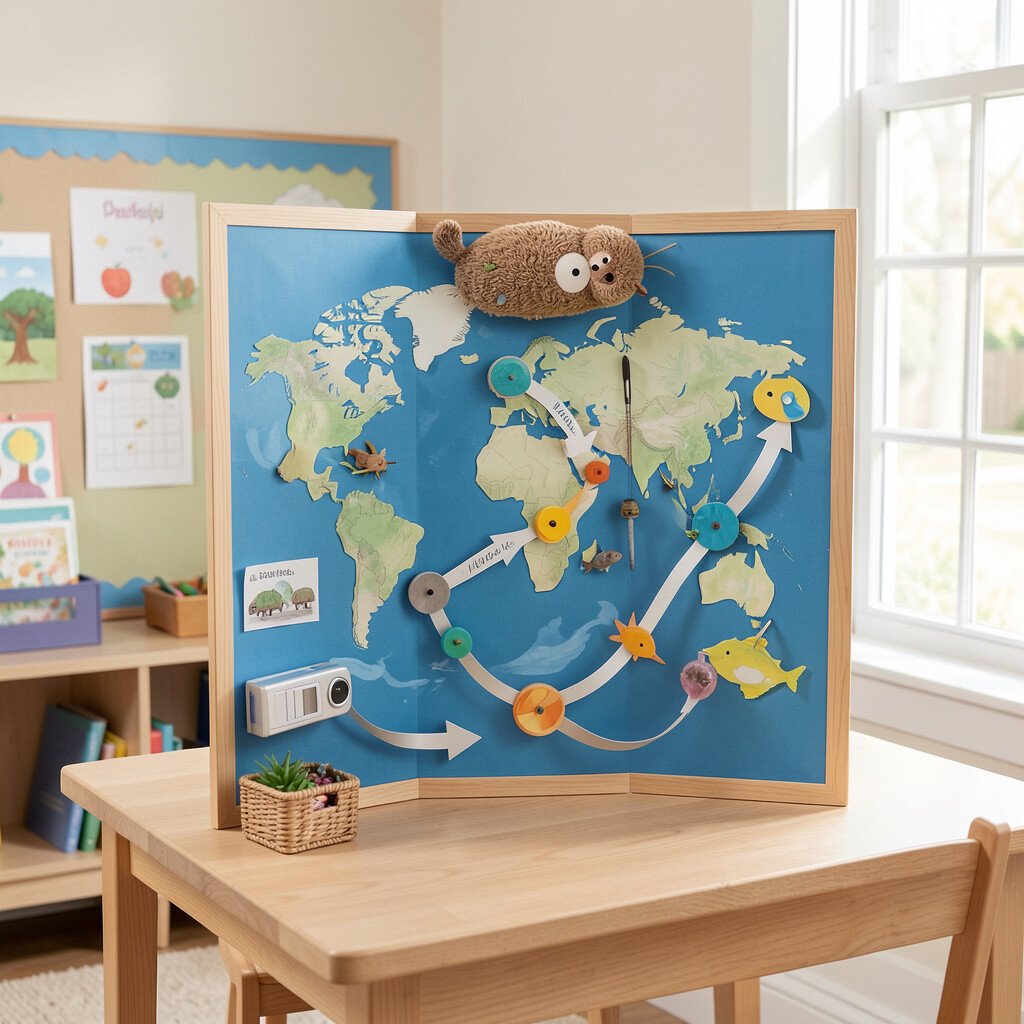
A map corner makes geography feel alive. Use a large world map print on the wall and add removable flags, sticky notes, or small magnetic markers for places you’re learning.
Include a “travel story” card set where your child writes a short paragraph imagining they visited. When maps are visible, kids naturally bring up new place facts during reading and science.
To personalize, let your child pick a flag style that matches their interests, like ocean-themed colors or space designs. Consider cost by printing one big map and reusing magnets for different units. A popular current trend is hands-on geography with moveable pieces, since it builds engagement better than static posters.
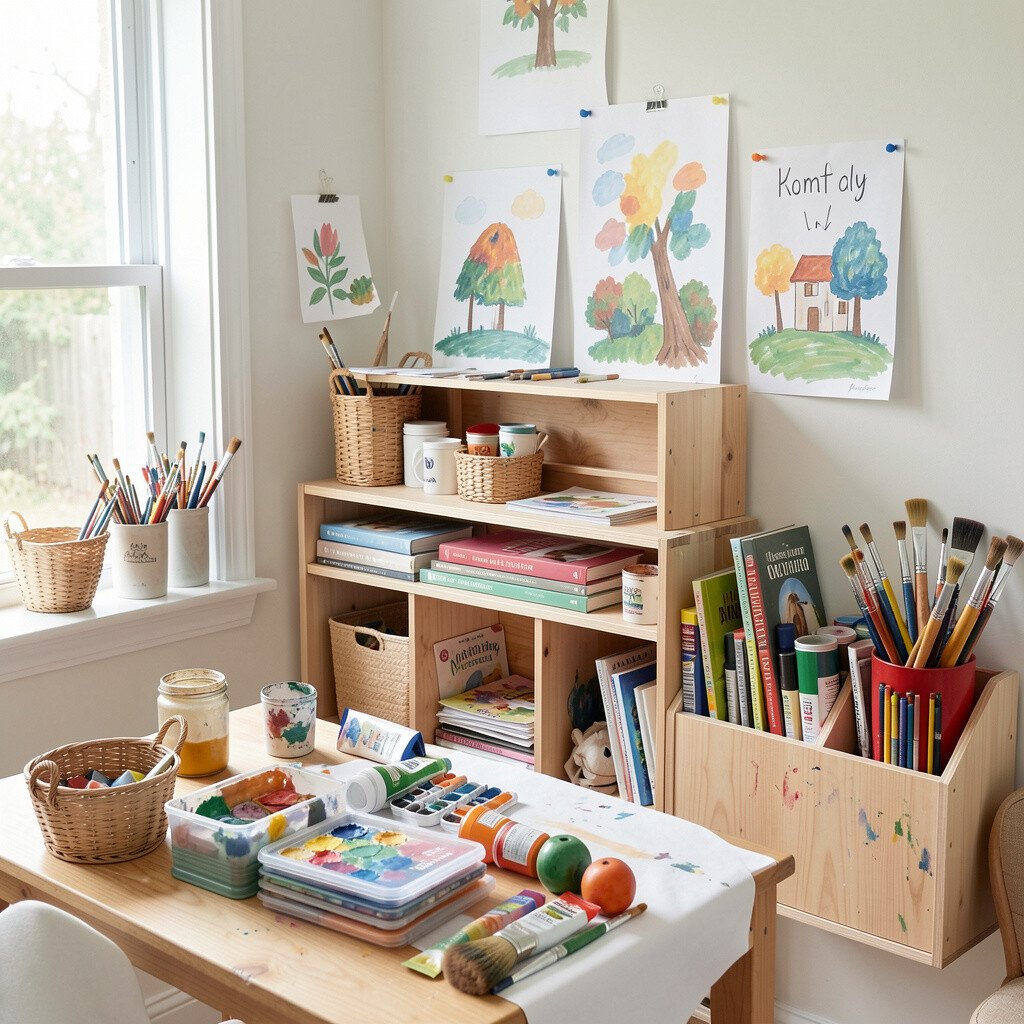
12. Art Supplies Timeline With Creative Reuse Prompts
Art Supplies Timeline With Creative Reuse Prompts
Keep creativity tidy by displaying art supplies and reuse prompts in one place. Use a shelf or hanging organizer, then add a small board with “what to make with this” ideas.
For example, post prompts like turn scrap paper into collage shapes or use old containers for sorting trays. This makes it easier to choose activities when your child feels stuck or bored.
Personalize with a small “artist of the week” spot that features one drawing or craft photo. For cost, use jars, boxes, and peg rails you already have, then print prompts for free and laminate them. Many modern homeschool spaces emphasize low-waste creativity, so reuse prompts fit right in and keep budgets comfortable.
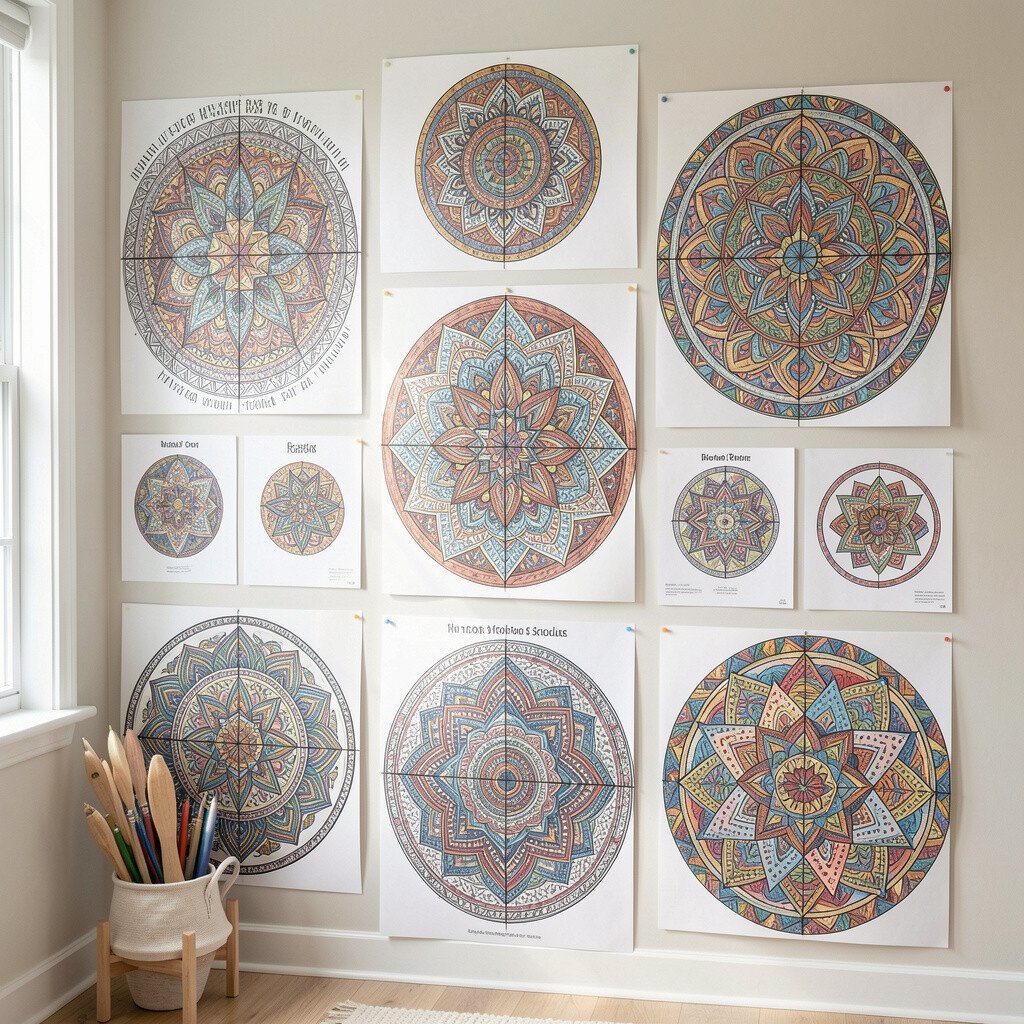
13. Mandalas of Focus With Rotation Schedules
Mandalas of Focus With Rotation Schedules
Create a visual rotation system that helps kids stay on track. Make a simple display showing learning stations, like reading, math practice, and hands-on work, each with a clear icon.
When it’s time to switch, kids move a marker to the next station on the board. This reduces arguments and supports independence during busy parts of the day.
Personalize the icons by drawing them together, and add a “favorite job” icon for the station your child enjoys most. For cost, you can make the display from poster board and self-adhesive magnets or Velcro dots. Current trends in learning spaces focus on clear routines, since visual schedules help reduce stress for both kids and caregivers.
14. Climate and Water Cycle Display With Moveable Parts
Climate and Water Cycle Display With Moveable Parts
A water cycle display feels magical when kids can move each step. Use a diagram with a few magnets or paper flaps that represent evaporation, condensation, and precipitation.
Place a small note above it with “what happens next?” so the child can predict and check. When the diagram is interactive, science learning becomes more than reading a poster.
To personalize, invite your child to add a favorite ocean or cloud drawing in the corner. If you want a budget option, print the cycle steps, cut them out, and attach magnets to cheap craft circles. This hands-on approach matches current trends that favor tactile learning and quick setup activities.
15. Calm Corner With Growth Mindset Posters
Calm Corner With Growth Mindset Posters
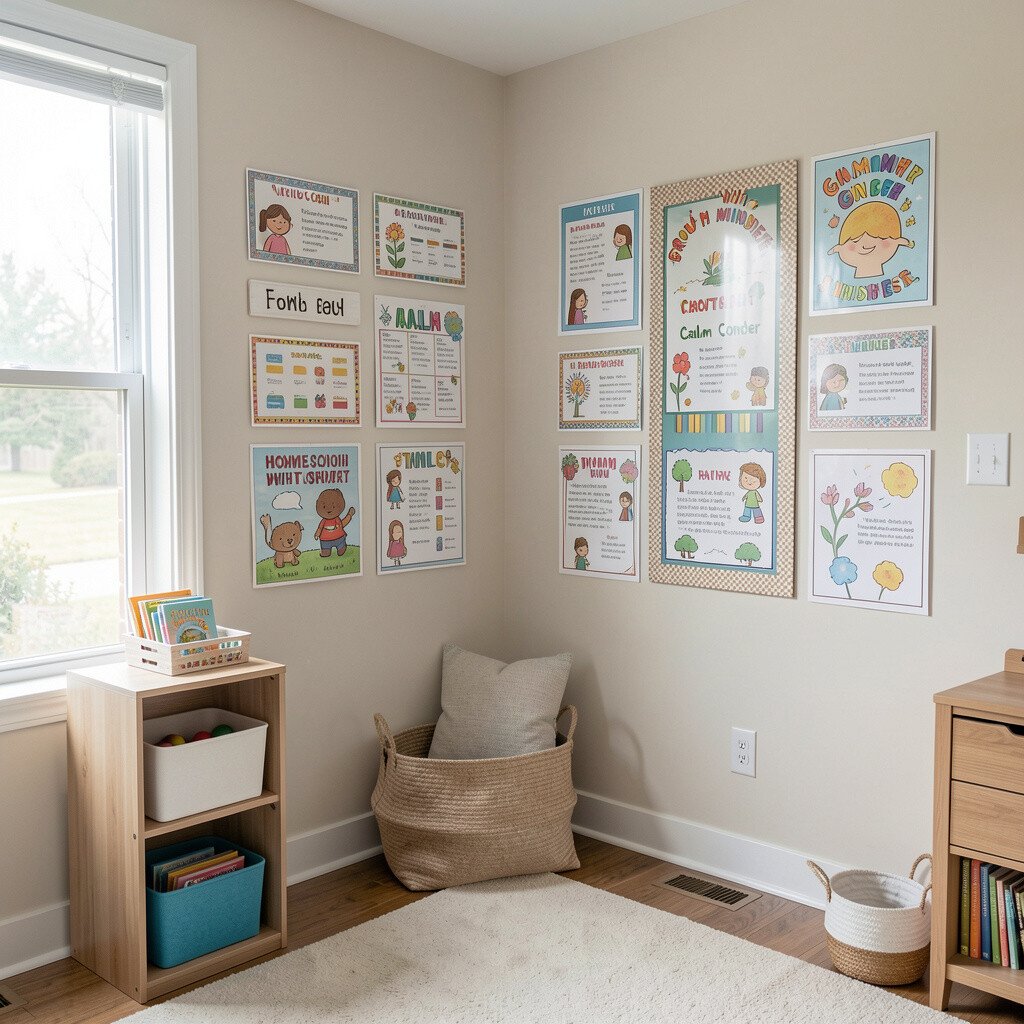
A calm corner needs gentle visual reminders, not loud motivational quotes. Use soft colors and simple posters that show coping steps like breathing, stretching, or asking for help.
Add a small “try again” sign and a feelings chart where your child can pick how they’re doing. These displays support emotional regulation and make learning feel safer.
Personalize the posters with your child’s name and a few phrases you both use at home. For cost, choose printables you already like and mount them with reusable clips or frames. Many homeschool families now pair academic displays with wellbeing visuals because a regulated mind learns better.
16. Book Spine Display for Motivation and Choice
Book Spine Display for Motivation and Choice
Display books like a mini library by facing book spines outward. Use a small shelf, a rolling cart, or even a crate with dividers so your child can browse easily.
Change the selection based on the weekly topics, and include a mix of read-alouds, independent books, and leveled series. When books are visible, reading becomes a natural choice instead of a chore.
To personalize, label shelves with your child’s nickname for each category, like “My Mighty Stories” or “Fact Fun.” For cost, rotate books you already own and borrow the rest from your library or swap groups. This approach aligns with current trends in home libraries that focus on choice, not just storage.
17. Calendar Board With Daily Time and Event Highlights
Calendar Board With Daily Time and Event Highlights
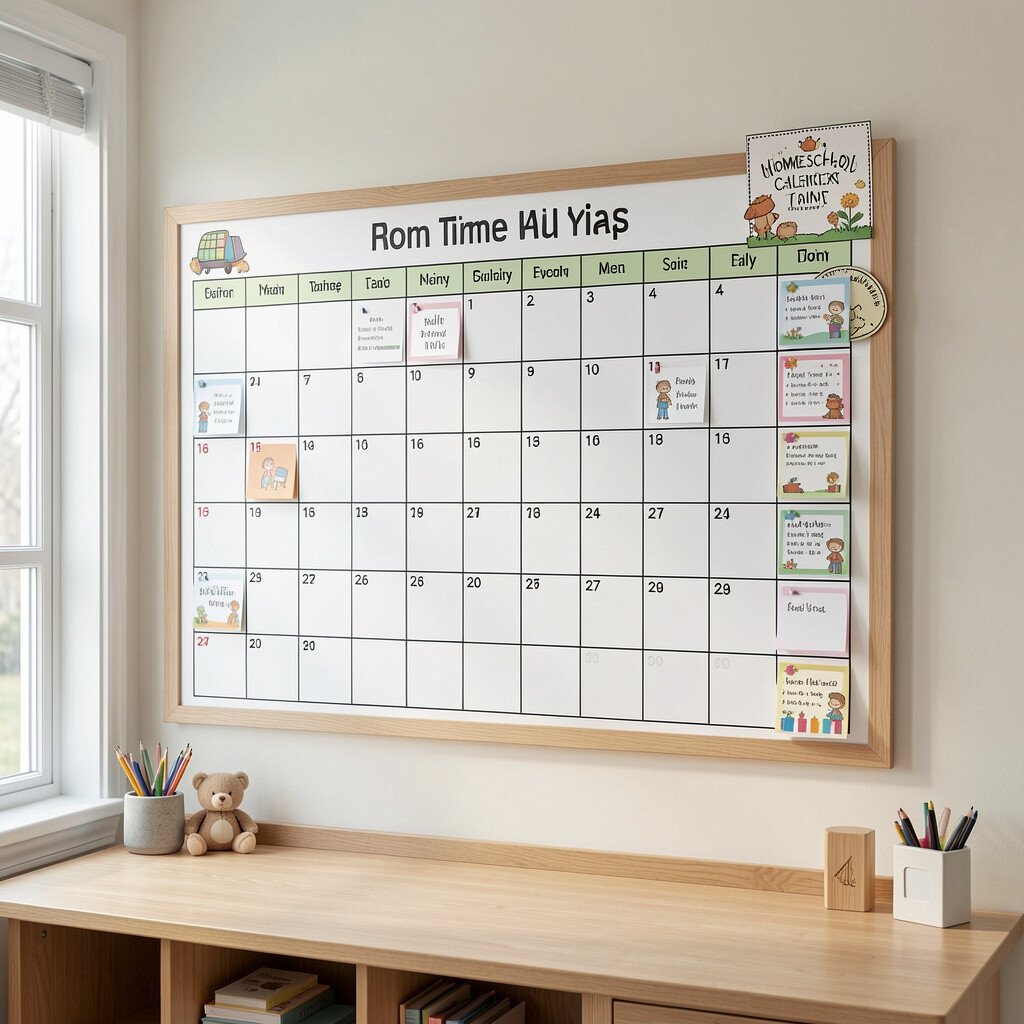
A calendar board brings structure to the day without making it feel rigid. Use a wall calendar and add event magnets for field trips, art days, and special lessons.
Include a simple time strip with icons for morning meeting, work time, and read-aloud so kids know what comes next. When students can see the schedule, transitions get smoother.
Personalize by letting your child place the first-day sticker each month or choose one seasonal theme color for headings. For cost, start with one main calendar and add decorations using printable icons. Many current homeschooling schedules use icon-led calendars because children respond quickly to visuals.
18. Handwriting and Spelling Practice Wall With Templates
Handwriting and Spelling Practice Wall With Templates
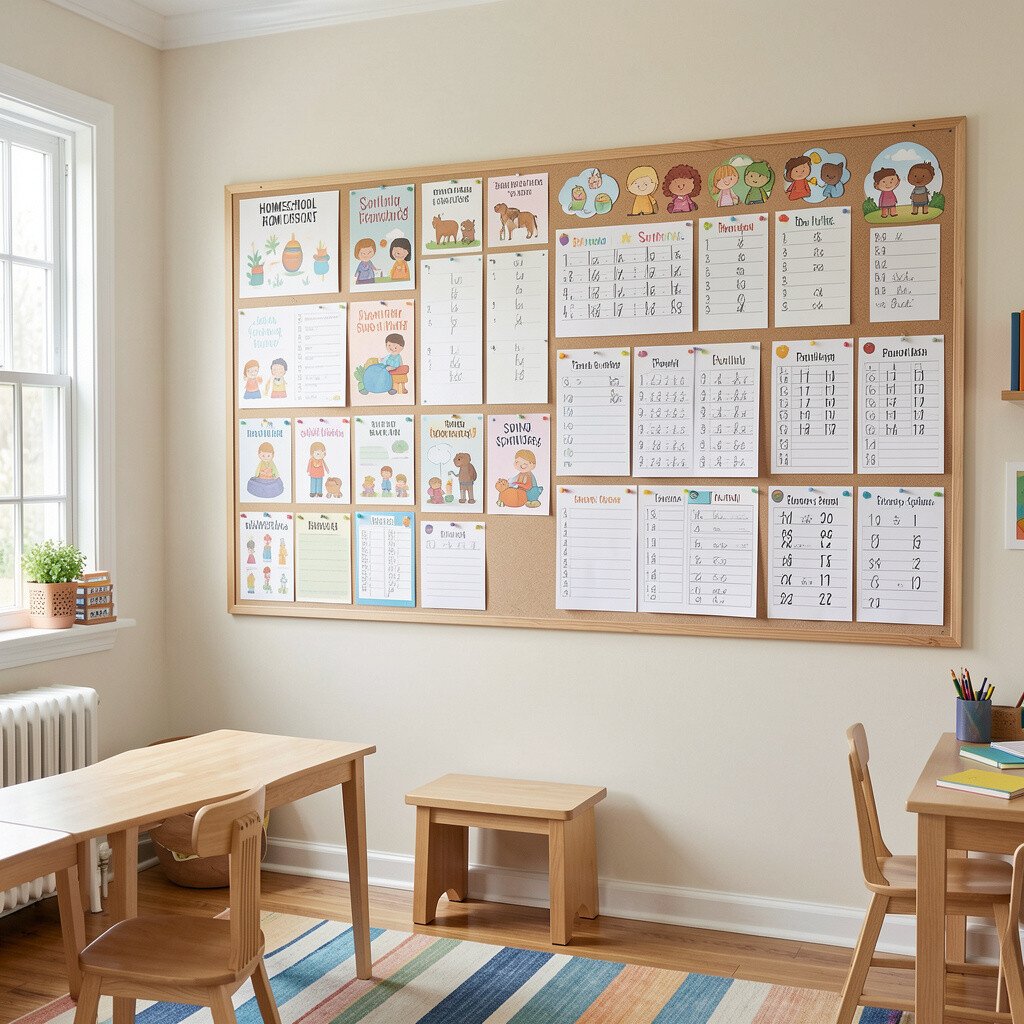
Turn handwriting and spelling practice into a visible routine by posting templates and reference guides. Use a board with letter formation arrows, simple spelling rules, and a list of words your child is currently working on.
Place a dry-erase mini slate or clipboard station directly under the display so kids can copy without hunting for materials. A clear guide reduces mistakes and makes practice feel less frustrating.
Personalize by adding your child’s best letter example at the top of the board. For cost, print templates once, laminate them, and update them by swapping pages. Many homeschool classrooms now use reference walls because they promote independence and consistent technique.
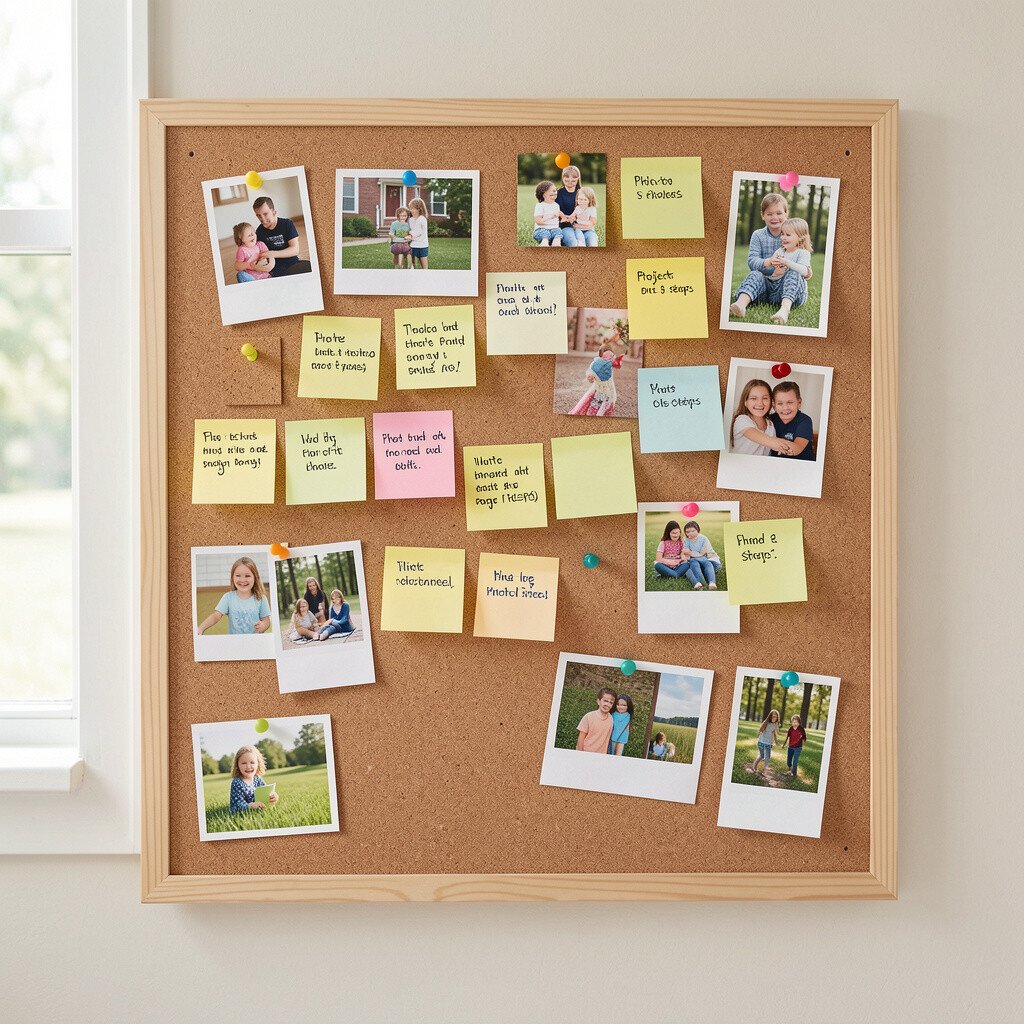
19. Project Pinboard With Sticky Notes and Photo Steps
Project Pinboard With Sticky Notes and Photo Steps
A project pinboard keeps learning visible across the week. Use a cork board or felt board and add sticky notes, photos, and tiny “step completed” check marks.
When you’re working on a science model, writing unit, or craft, hang a small sequence showing what’s next. This helps kids remember their plan and also helps you see where support is needed.
To personalize, let your child add a small drawing for each completed step and place it beside the notes. For cost, cork boards can be thrifted, and felt boards can be made from fabric and a simple backing board. Current trends favor photo-based progress tracking because it builds pride and motivates continued effort.
20. Number Crafts Display With Hands-On Math Models
Number Crafts Display With Hands-On Math Models
Math gets easier when it has a “hands-on” look. Display number crafts like ten frames, counting towers, and place value cards where kids can grab them when needed.
Use clear bins with labeled dividers so finished models don’t mix with supplies. When your child sees their work displayed, they’re more likely to use it for practice.
Personalize by letting your child choose where each craft goes and what color ribbon or label they use. For cost, use paper, cardboard, and free printables first, then add sturdier materials as you notice what lasts. A popular trend is keeping manipulatives accessible instead of storing them out of sight because it supports frequent practice.
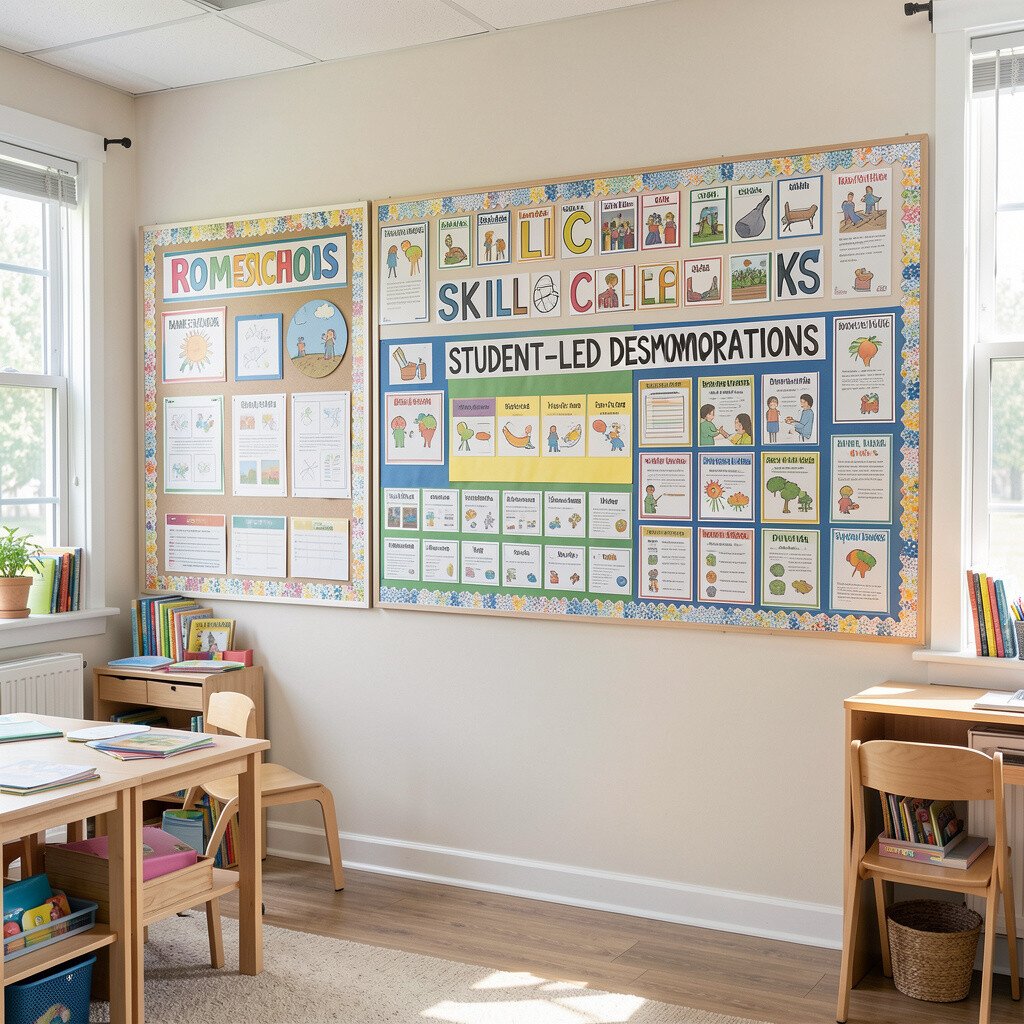
21. Skill Check Wall With Student-Led Demonstrations
Skill Check Wall With Student-Led Demonstrations
Encourage confidence with a wall where students can show what they can do. Post a list of skills and add photo examples or short “how I did it” notes from the learner.
When it’s time for practice, your child can compare their work to the example and try again. This makes growth feel real and turns the room into a learning mirror.
Personalize by using your child’s handwriting for a few steps and keep a small “ask me” card where they can request help. For cost, print a few example photos and reuse frames or folders. Many families now focus on student-led demonstrations because they build ownership and reduce passive learning.
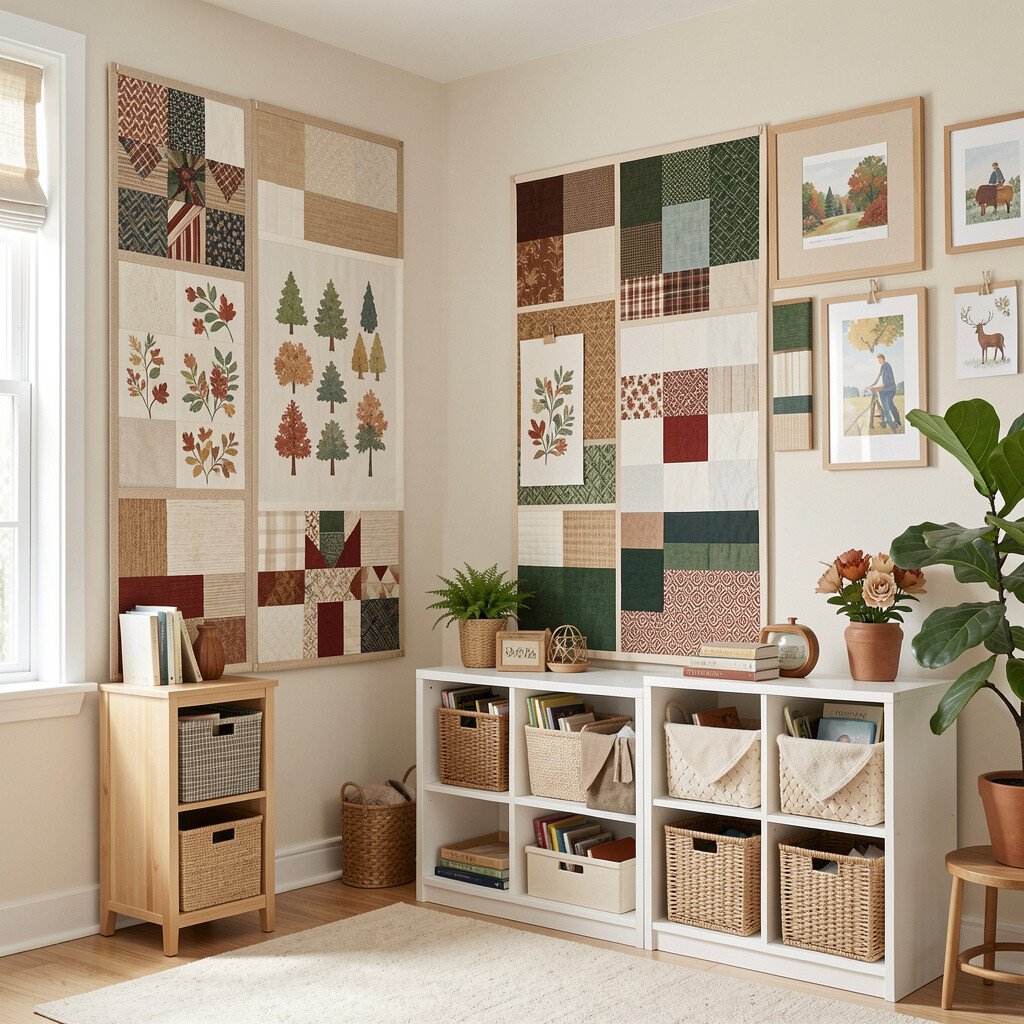
22. Seasonal Themes With Rotating Color and Texture Mixes
Seasonal Themes With Rotating Color and Texture Mixes
Seasonal displays keep the room fresh without needing a total makeover. Choose a theme, like autumn leaves, winter stars, or spring blossoms, then update a few key areas such as the reading corner and the weather board.
Use texture for extra interest, like felt, paper garlands, or simple fabric banners, and tie them to what you’re studying. When your room matches the season, kids feel the learning rhythm in a fun way.
Personalize by letting your child pick one seasonal piece each month and help place it on the shelf. For cost, rotate decorations you already have and add only a few new items each season. Current trends favor flexible, reusable decor because it reduces waste and keeps budgets steady.