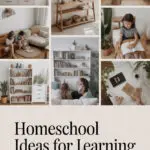
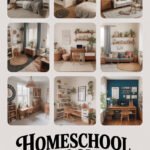
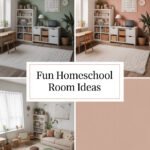
The room where learning happens can also be the room where your mind rests. With a few small changes, schooling can feel softer, steadier, and more friendly.
Calm is not about being silent all day. It’s about building a space that helps kids focus, breathe easier, and feel safe enough to try.
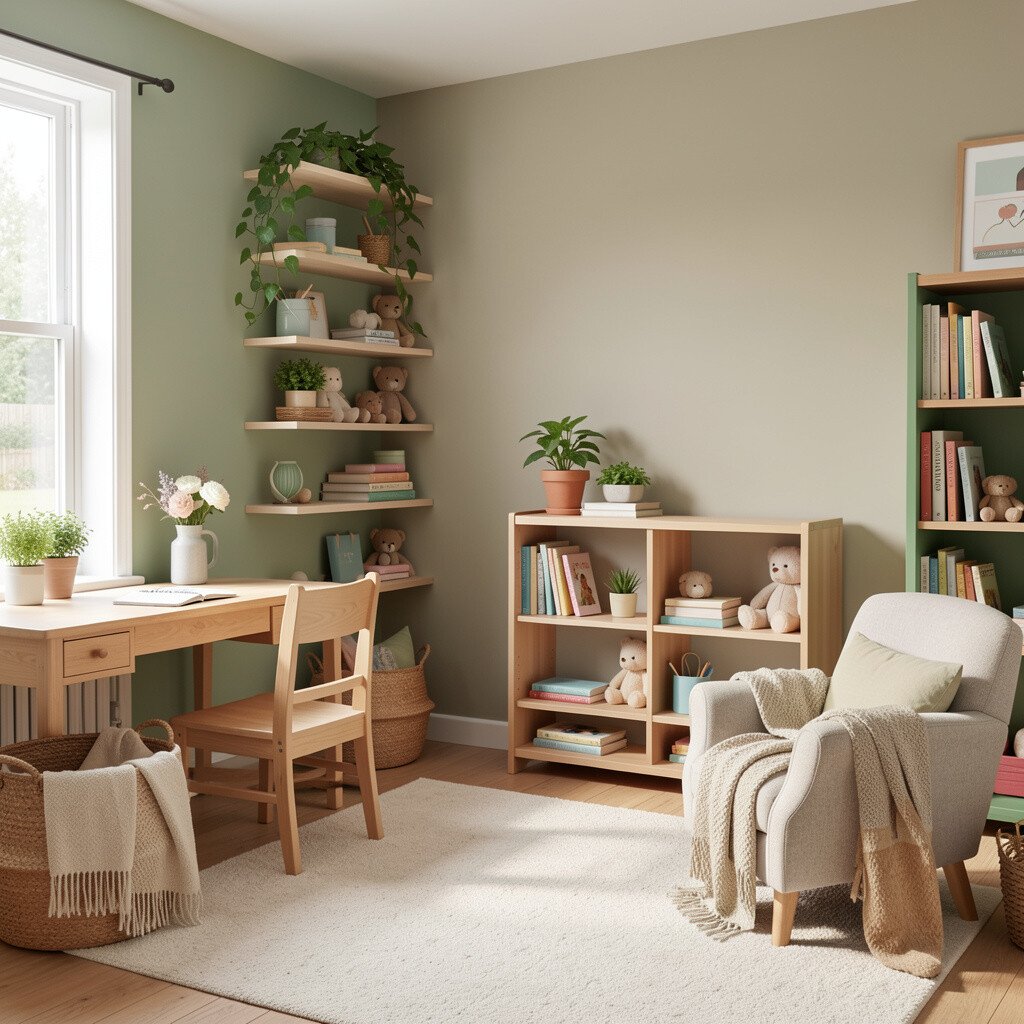
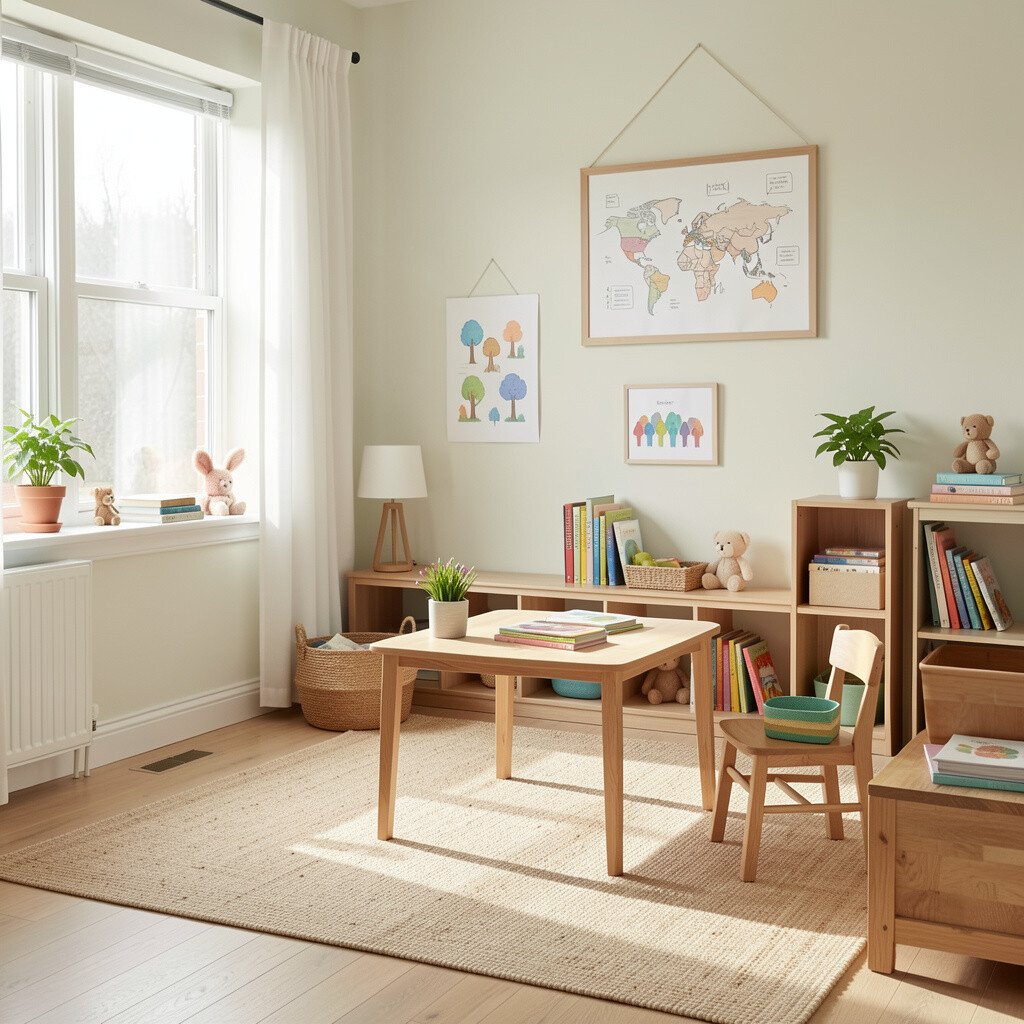
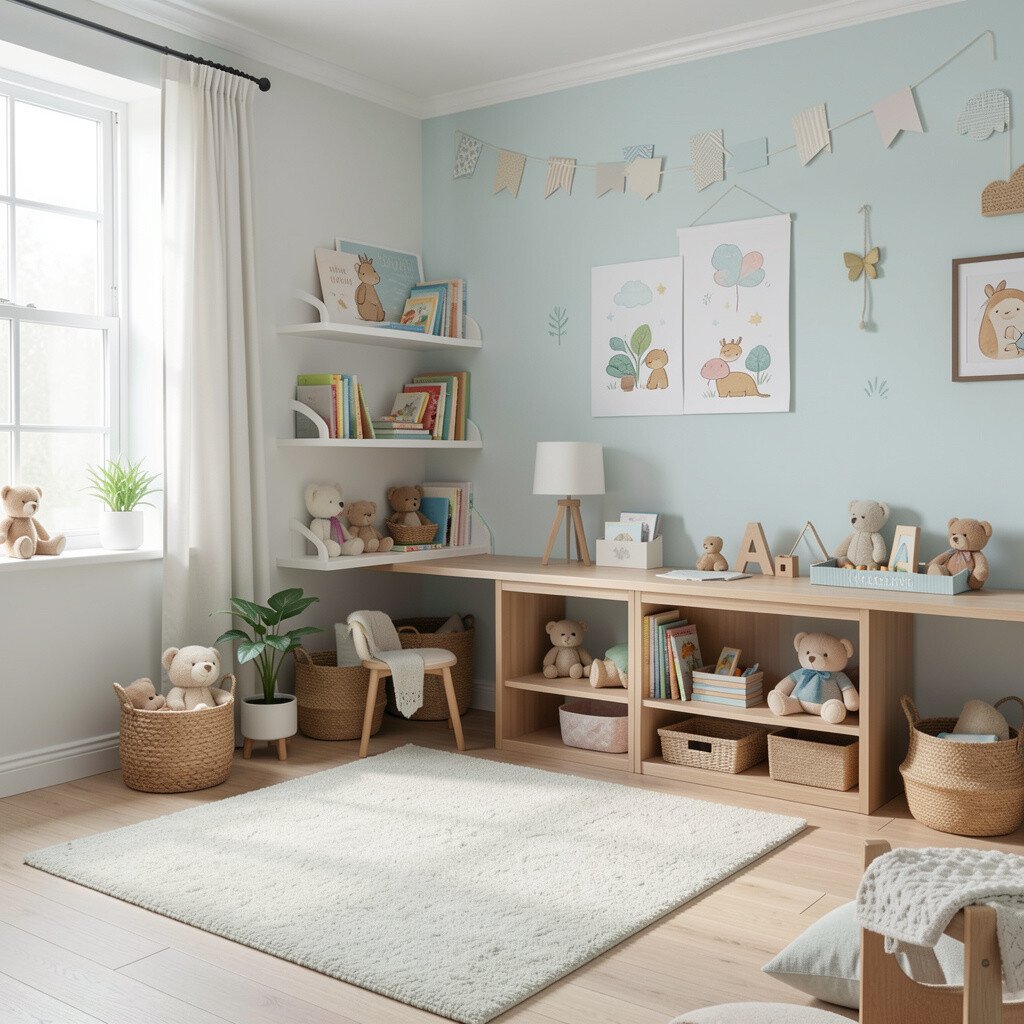
Choose wall paint, curtains, or removable wall decals in warm neutrals and muted colors. Soft beige, pale sage, and gentle sky tones tend to keep the room from feeling too loud.
When the background is calmer, your eyes relax, and your brain has an easier time noticing what matters. To personalize, match small accents like pencil cups and chair cushions to each child’s favorite color family.
2. Add Light That Feels Like a Comfortable Glow
Add Light That Feels Like a Comfortable Glow
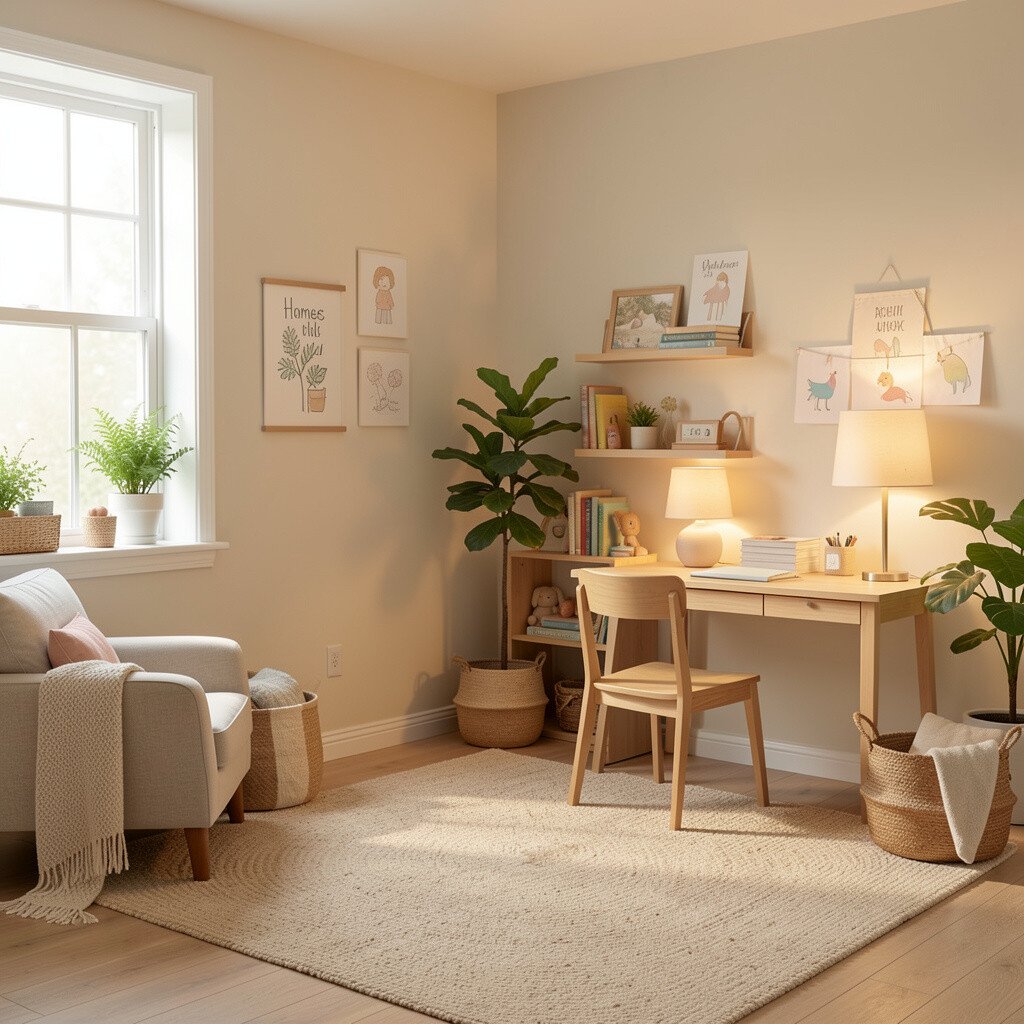
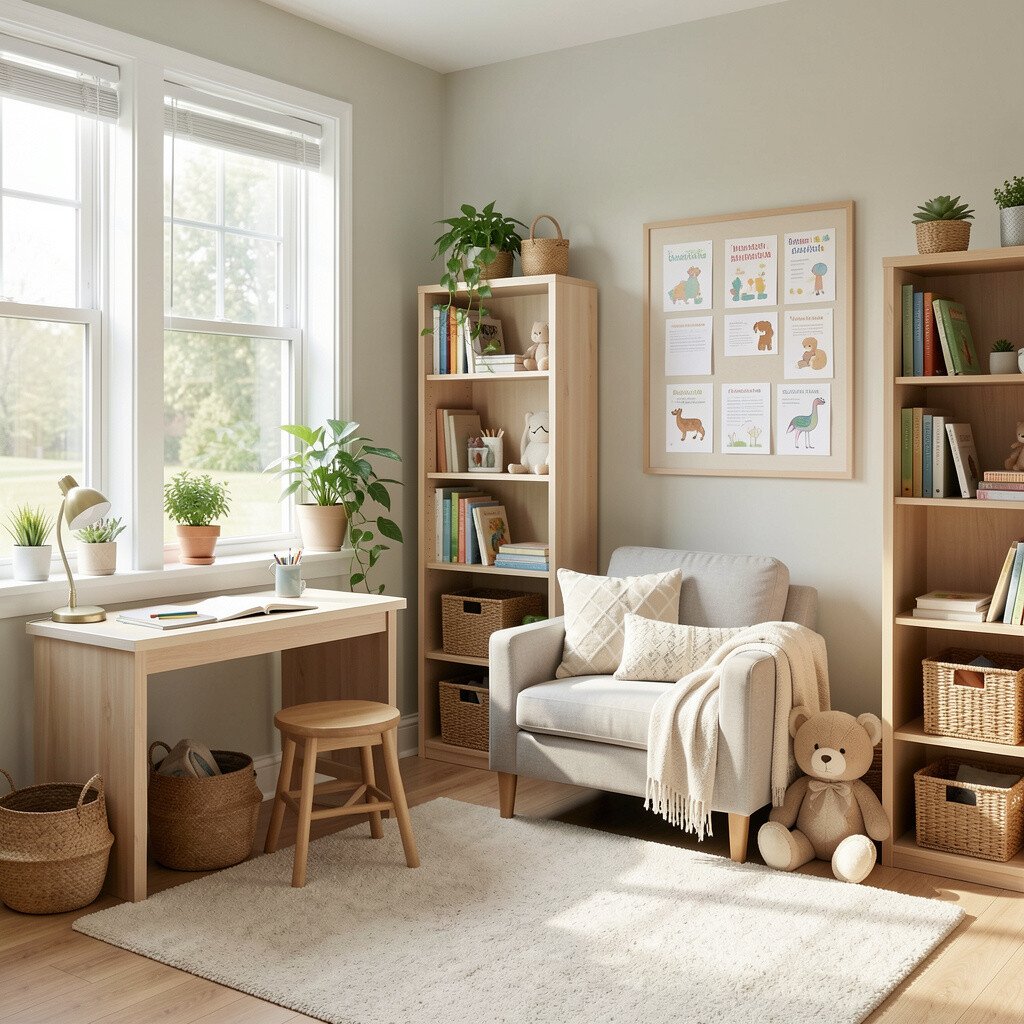
Use a mix of daylight and soft lamps so mornings and afternoons both feel inviting. Sheer curtains can soften harsh beams and reduce glare on desks.
Warm bulbs in lamps can make evenings feel steadier while kids finish worksheets or read. If you can, place tasks near a window and use a desk lamp with a shade so light lands where it’s needed.
Many families now use dimmable LED bulbs because they help create different moods without changing the whole room. Try a low-light setting for reading time and a brighter setting for math practice.
3. Design a Cozy Reading Nook With Layers
Design a Cozy Reading Nook With Layers
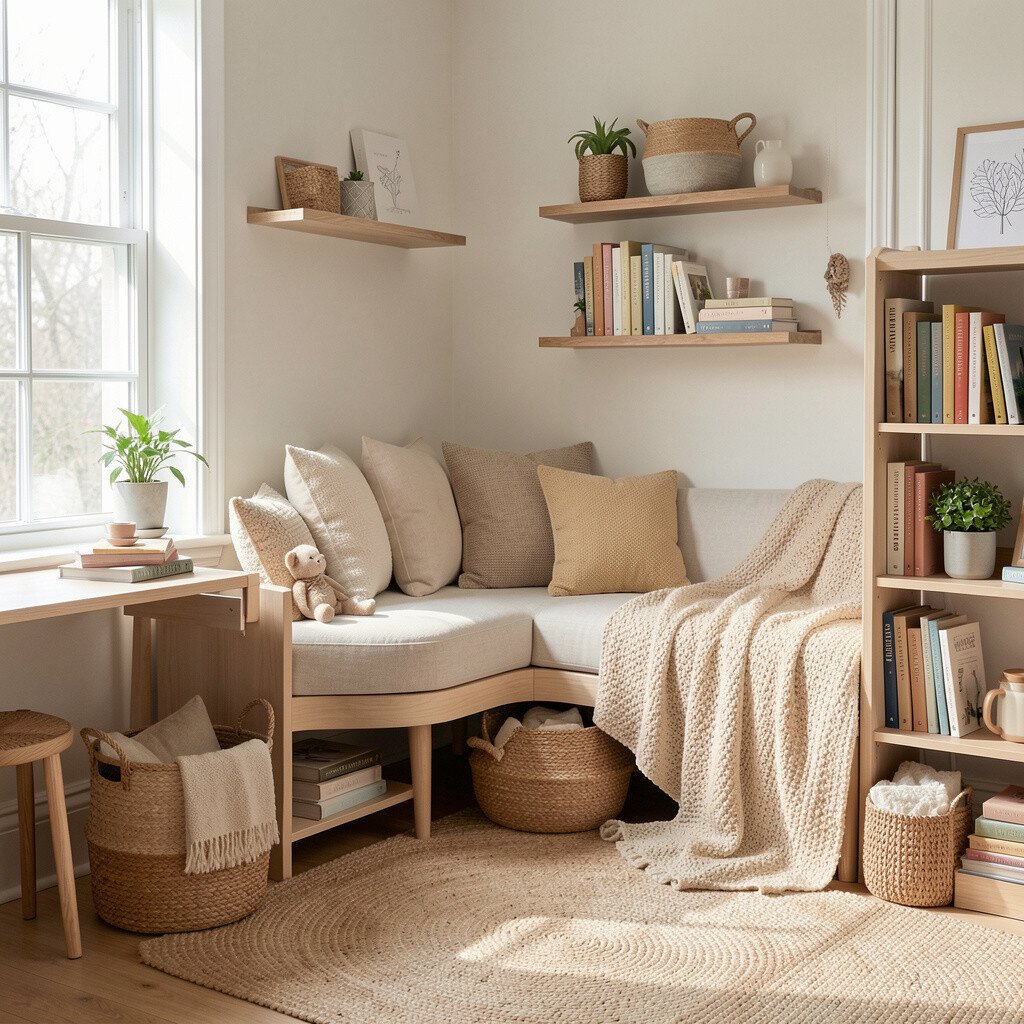
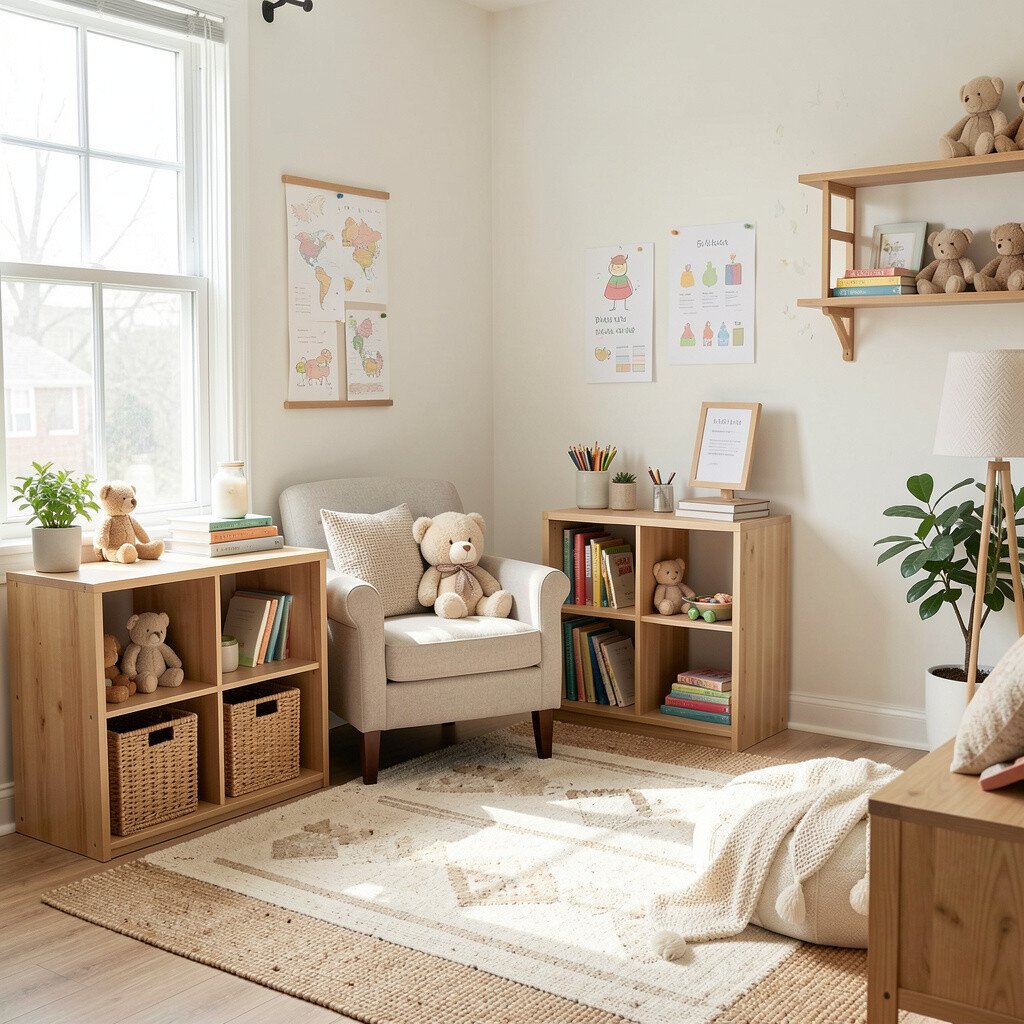
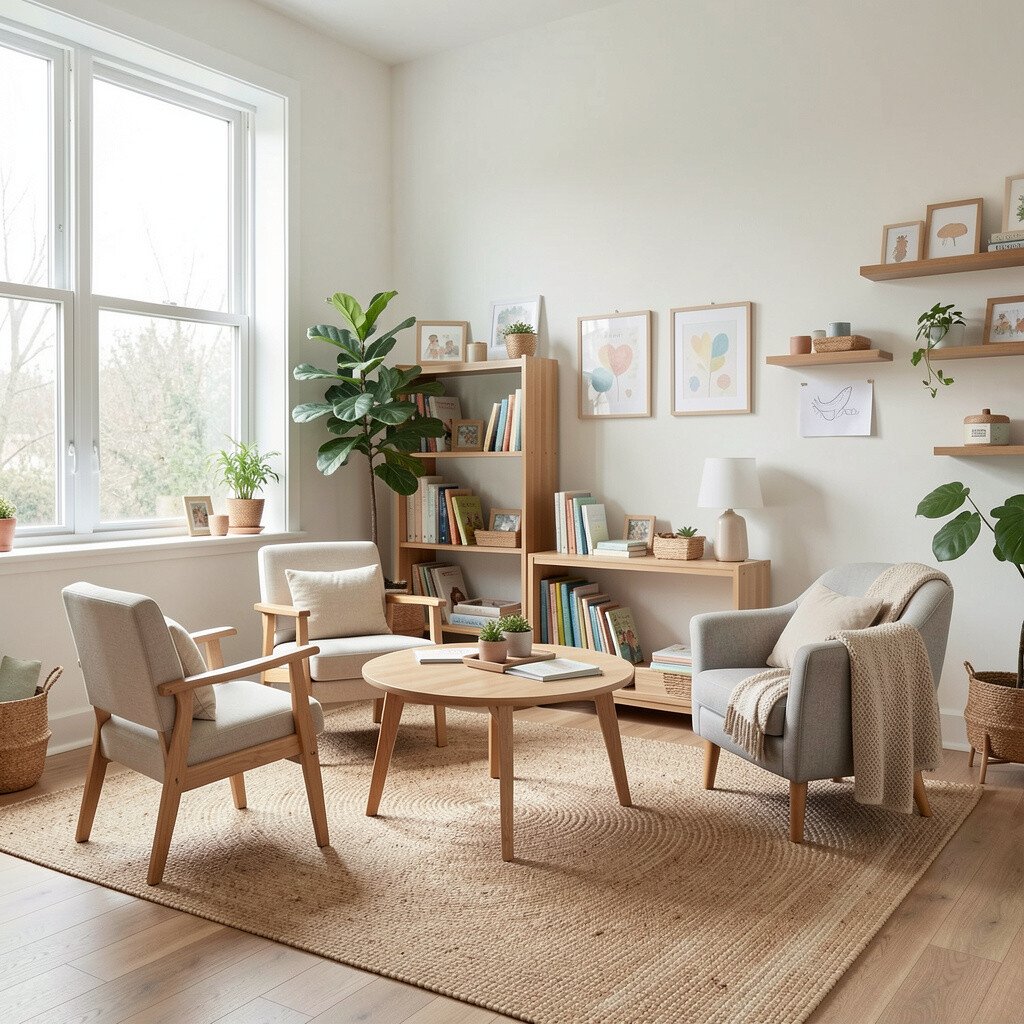
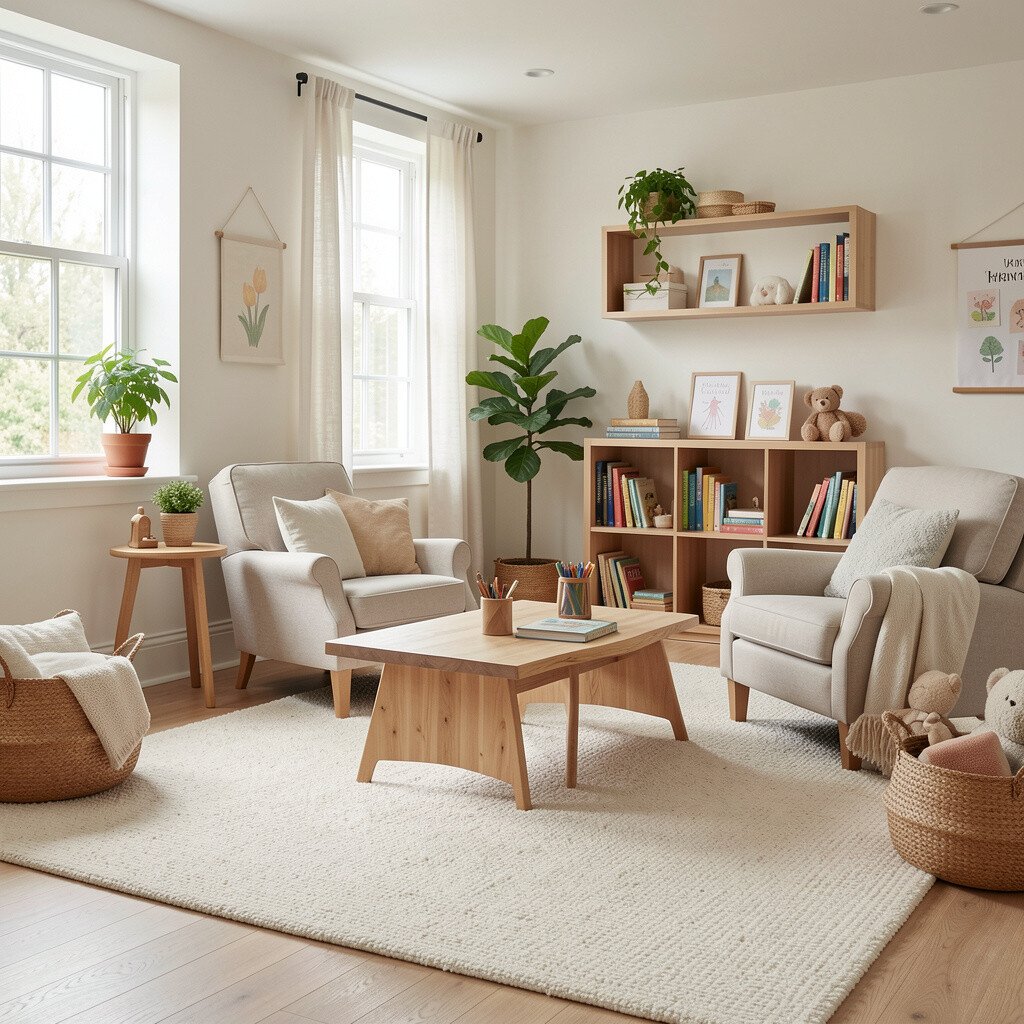
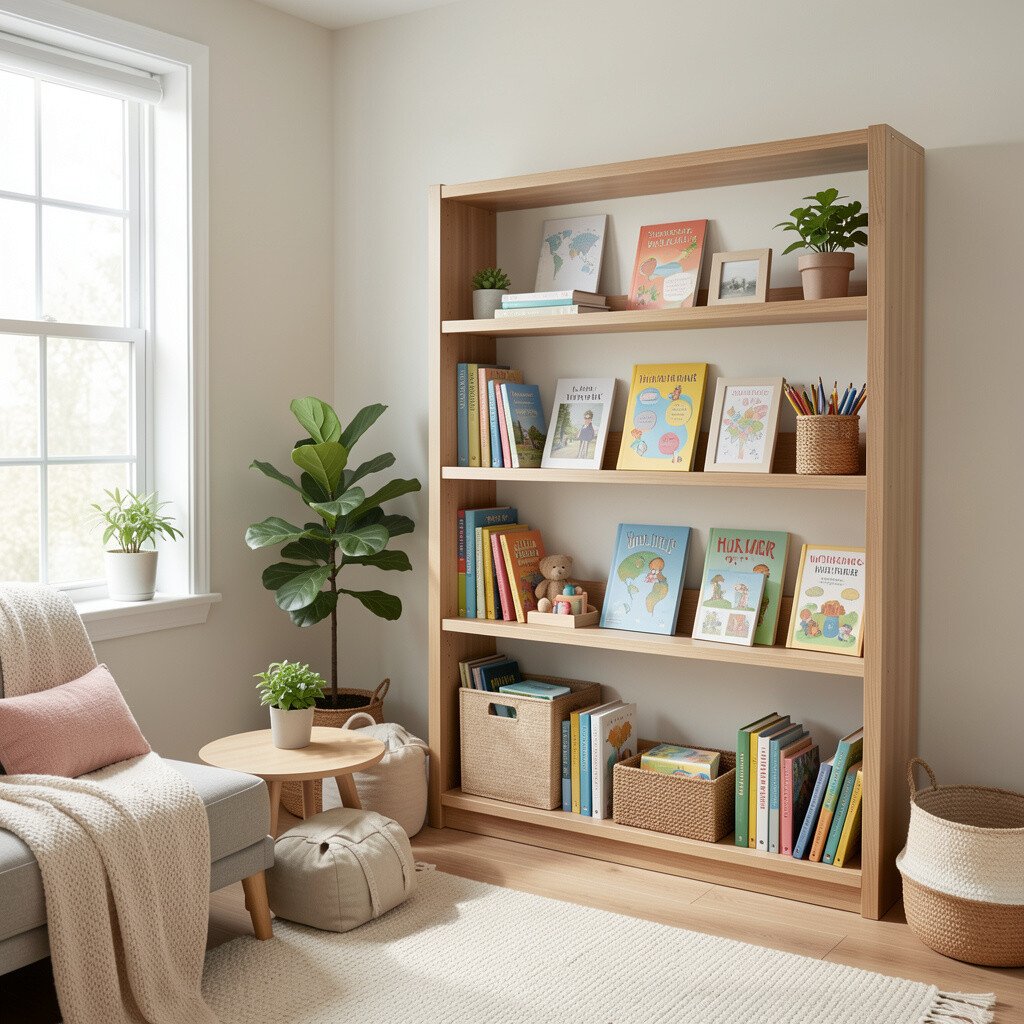
Build a small spot that looks different from the rest of the room, like a rug corner with pillows and a small bookshelf nearby. A reading nook invites slower pacing, which can lower restlessness.
Use a plush throw, a floor cushion, and a basket for favorite books so kids can choose quickly and stay calm. The moment they see their choices ready, transitions become smoother.
You can personalize with theme colors, like ocean blues for one child and earth tones for another, while keeping everything tied together. For cost, consider thrifted cushions, hand-me-down rugs, and a small ladder shelf instead of expensive built-ins.
Arrange the room so children can tell where to read, write, build, and take breaks. Visual separation reduces arguing and helps kids feel organized without extra talking.
Use rugs, low bookshelves, or folding screens as boundaries, even if the space is small. Keep the quiet zone near soft light and the active zone closer to open floor.
5. Use Storage That Hides the Busy Stuff
Use Storage That Hides the Busy Stuff
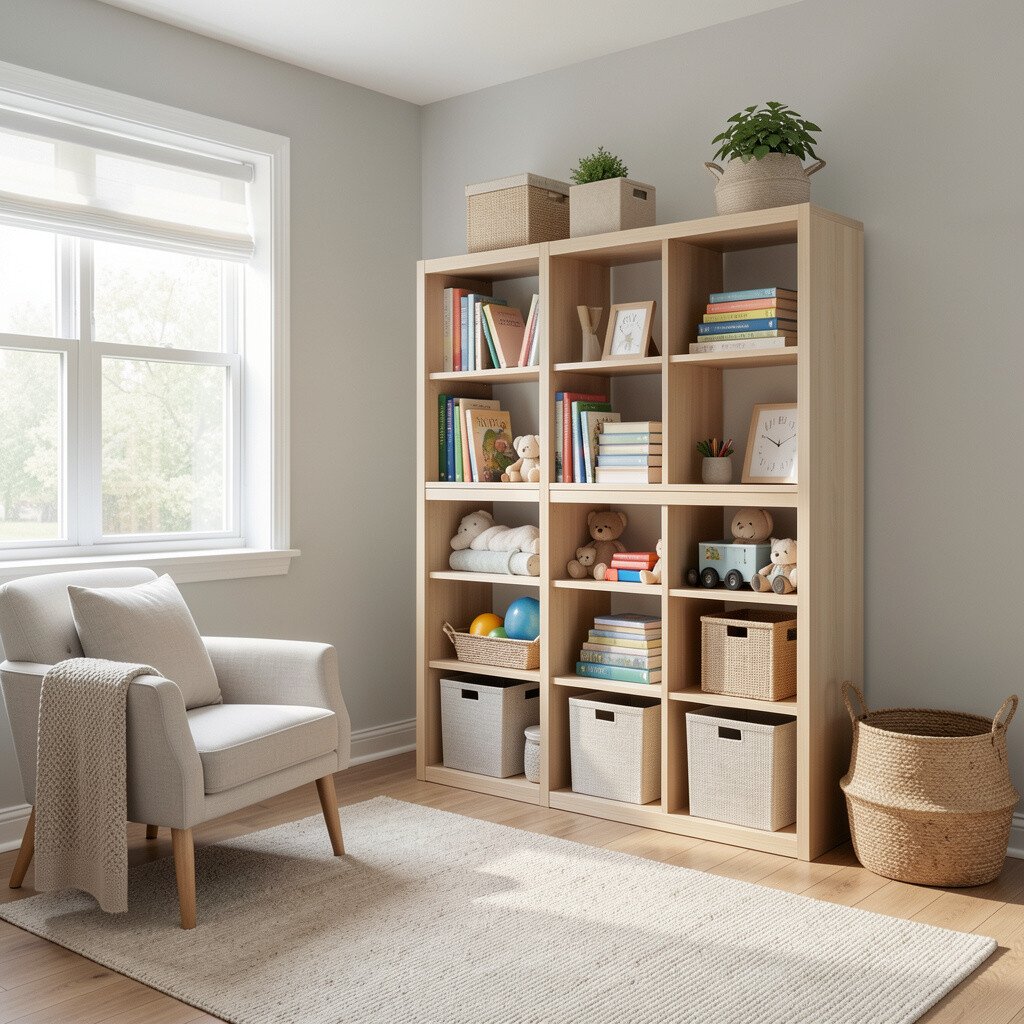
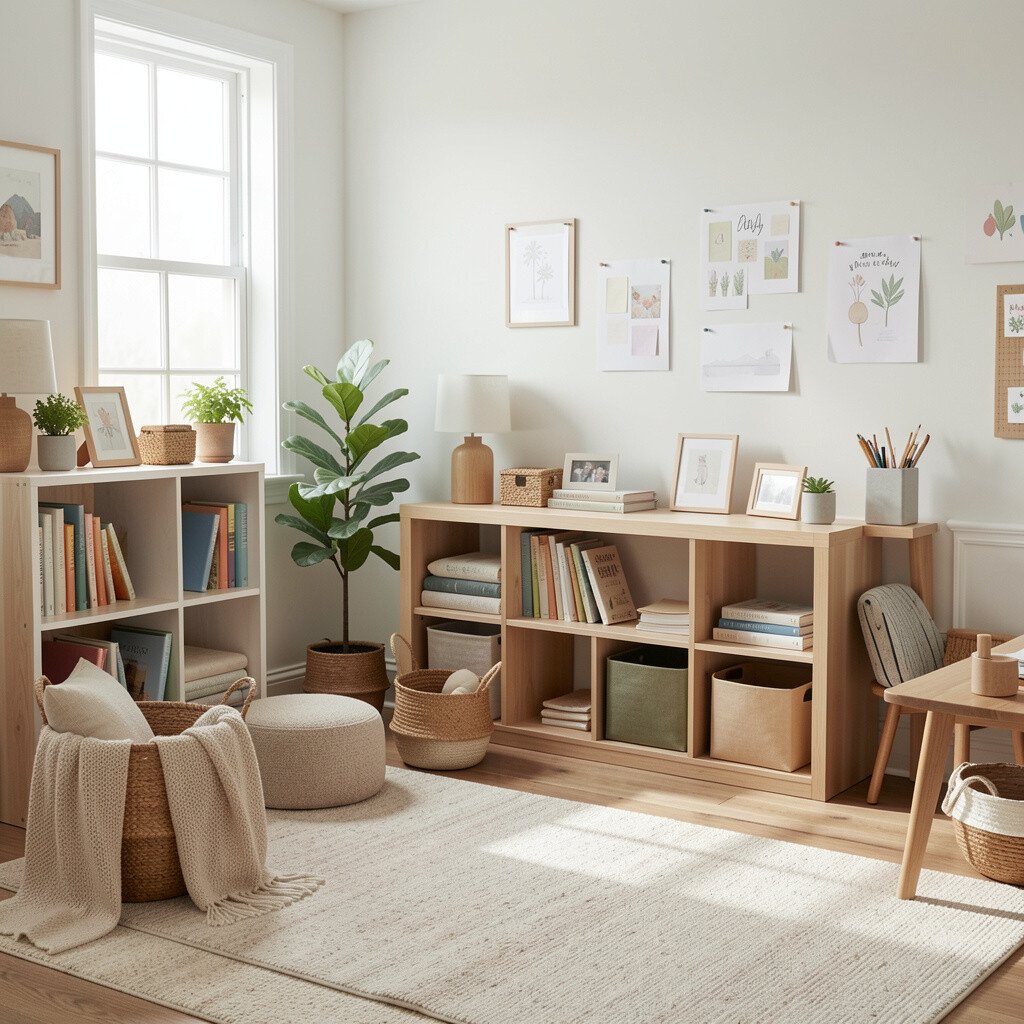
Pick baskets, bins, and labeled drawers so supplies are easy to reach but not always on display. Fewer visible items means fewer distractions and less clutter stress for everyone.
Clear bins are helpful for quick sorting, but you can mix them with closed storage for calmer moments. A simple rule is to keep only the daily materials out on open shelves, and tuck extras away.
To personalize, let each child have a container that matches their artwork or favorite pattern. This also keeps cleanup from turning into a battle because kids know exactly where things go.
6. Choose a Desk Setup That Supports Good Posture
Choose a Desk Setup That Supports Good Posture
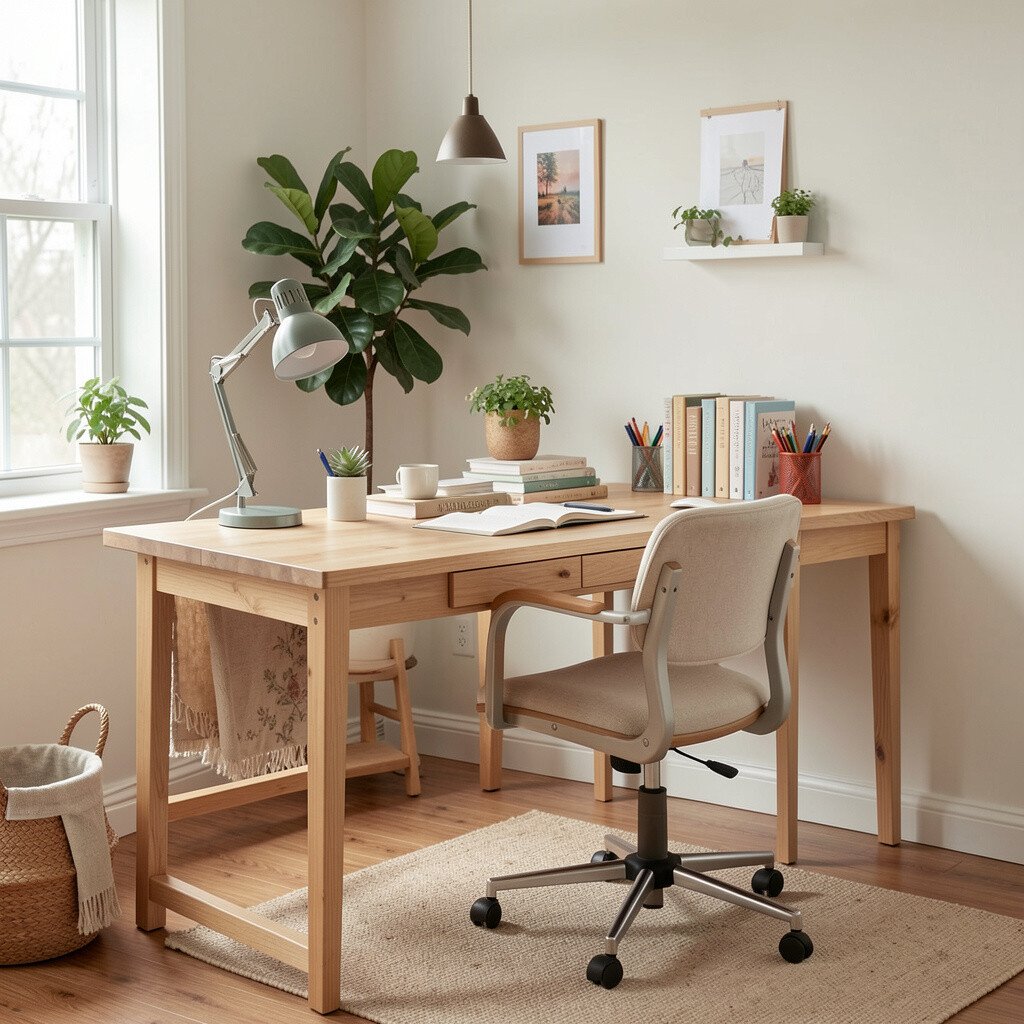
A comfortable seating height and desk height can reduce fidgeting and help kids feel secure. When feet can rest on the floor and backs have support, frustration drops.
Use an ergonomic chair if you can, or add a simple seat cushion and footrest. A lap desk can work well for younger kids, and a sturdy desk with a light stand can help older students.
7. Make Breaks Part of the Routine With a Soft Reset Spot
Make Breaks Part of the Routine With a Soft Reset Spot
Create a small break area with a calm chair, a sensory box, and a timer kids can see. A consistent reset space helps children recover faster and return to work ready to try again.
Try including a fidget tool, a stress ball, and a comfort item like a small stuffed animal. The goal is to give them a gentle way to manage big feelings without leaving the room.
You can personalize the sensory box based on your child’s needs, such as textured cards for touch or calming scent-free wipes for grounding. For cost, use simple containers you already own and rotate items weekly so you don’t need new purchases.
8. Hang Art and Charts That Encourage Without Overwhelm
Hang Art and Charts That Encourage Without Overwhelm
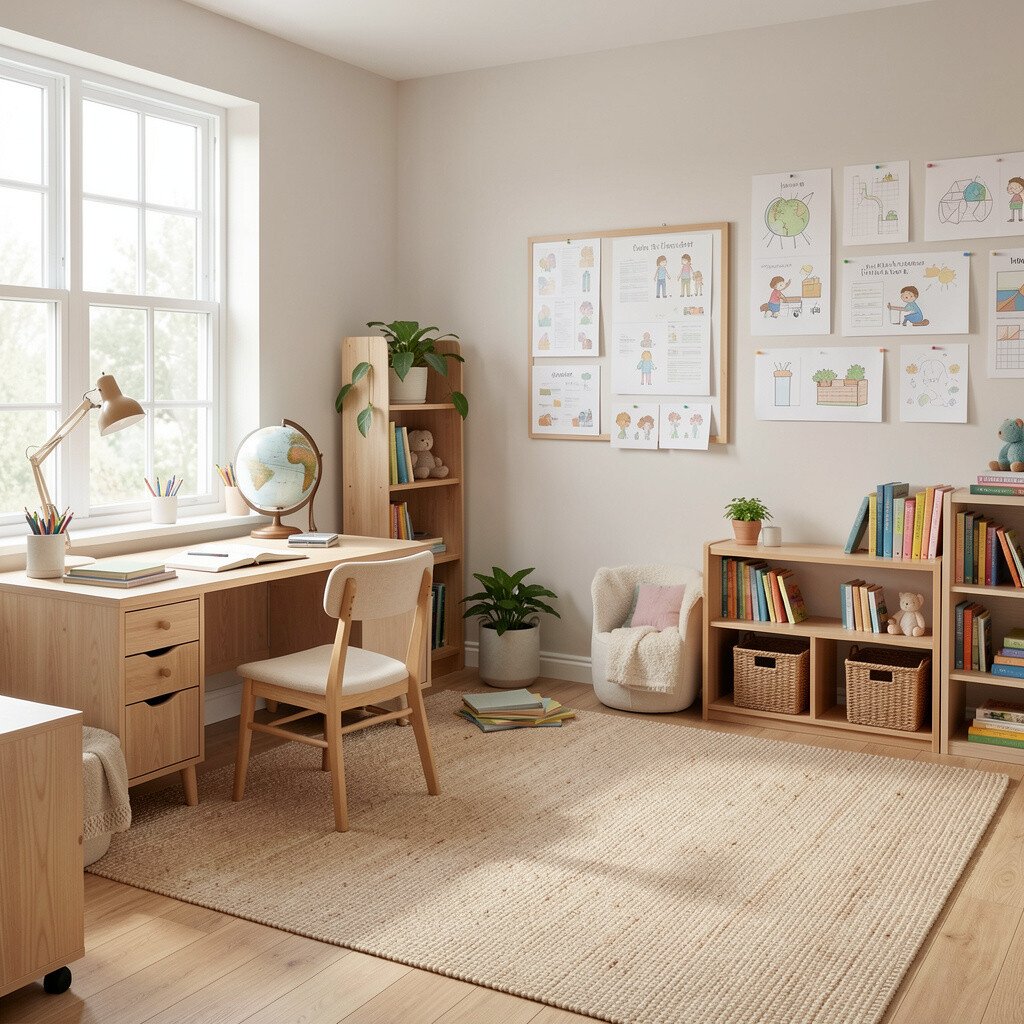
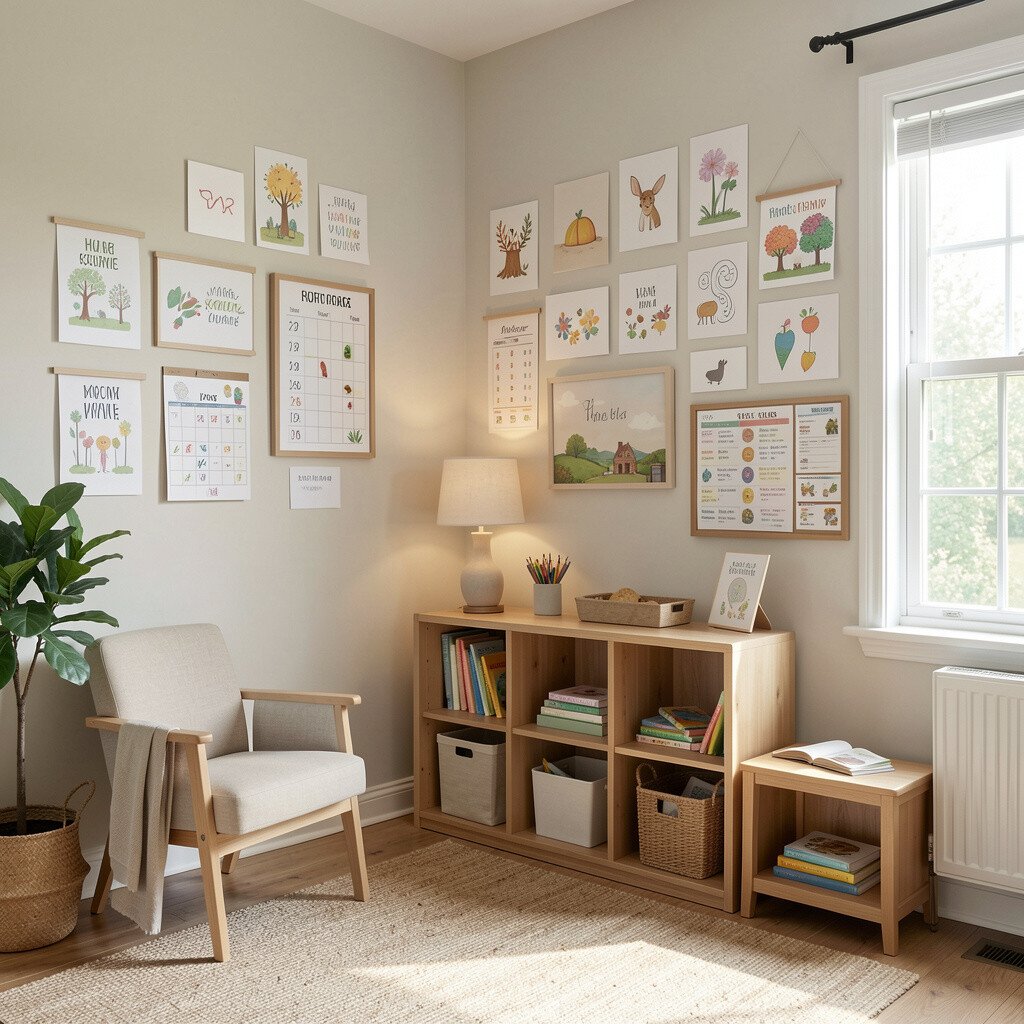
Choose a few meaningful visuals, like a small calendar strip, a handwriting reminder, and a motivation poster. When kids can glance at support tools, they spend less time asking for help.
Use calm fonts and simple layouts, and keep the wall space from turning into a notice board. A good rule is to rotate visuals monthly so the room stays fresh without feeling busy.
9. Bring Nature Indoors With Plants That Fit Your Lifestyle
Bring Nature Indoors With Plants That Fit Your Lifestyle
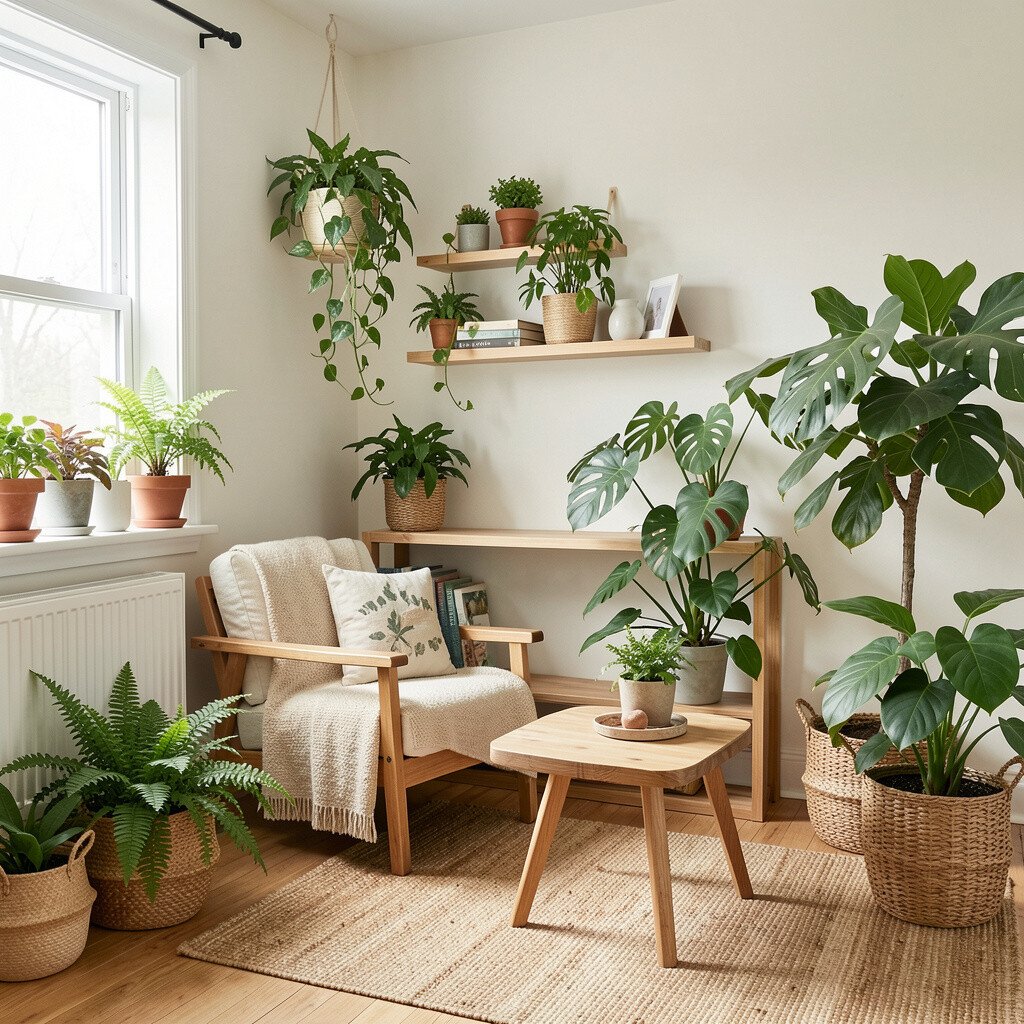
Adding one or two easy plants can make the room feel alive and soothing. Even simple greenery can support focus because it offers a relaxing visual background.
Pick hardy options like pothos, snake plants, or low-light herbs so maintenance stays realistic. Place them where kids can see them during breaks, which turns waiting time into a calm moment.
Personalize with decorative pots in calming colors and let kids help water using a small measuring cup. For cost, check local plant swaps, thrift stores, or propagation from friends.
10. Use Music and Sound Tools in a Gentle, Practical Way
Use Music and Sound Tools in a Gentle, Practical Way
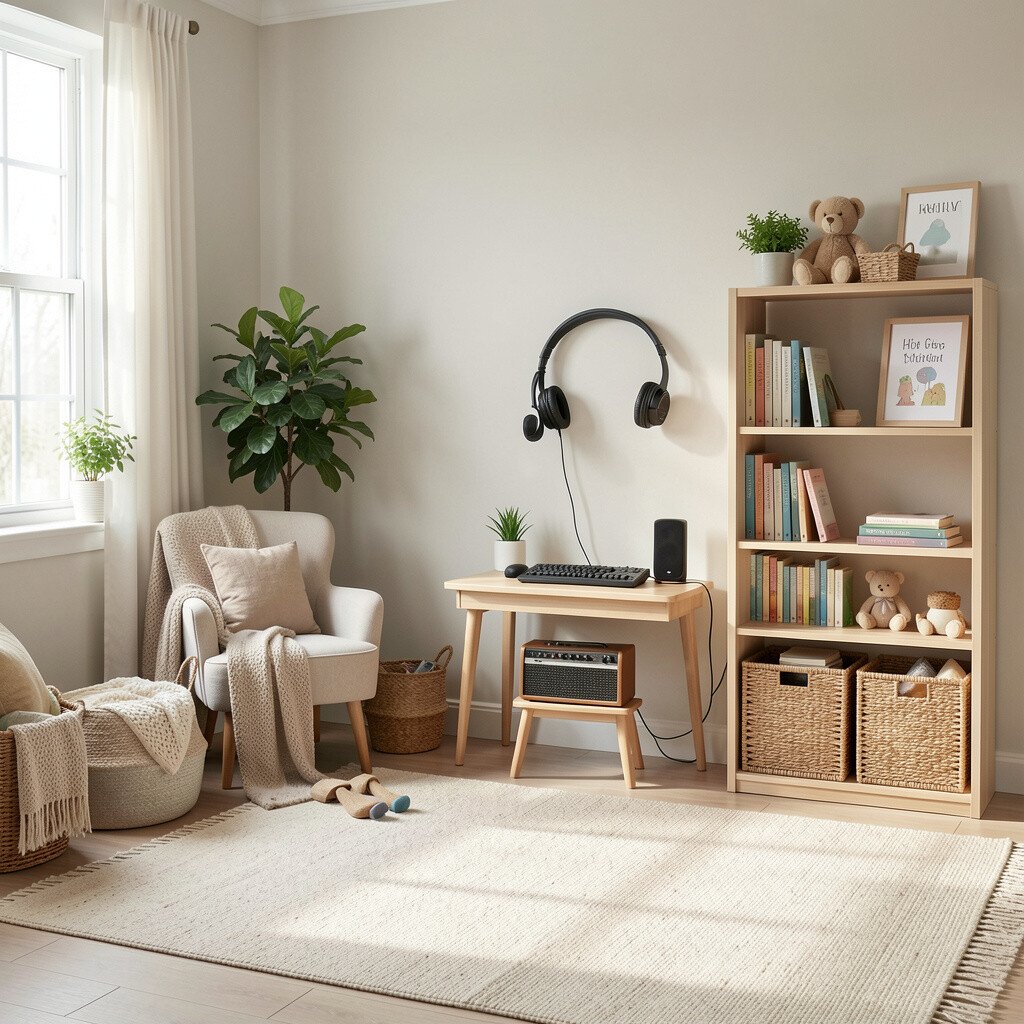
Many homeschool families use soft background music to steady the pace of learning. Instrumental playlists or nature sounds can lower distractions and reduce the “chaos energy” that builds when things get loud.
You can also try noise-reducing headphones during independent work, especially for kids who get overstimulated. Keep sound low enough that voices remain comfortable, and test what works on different days.
11. Add a Calming Texture Station for Hands and Eyes
Add a Calming Texture Station for Hands and Eyes
Create a small table or shelf section with tactile materials like fabric swatches, smooth stones, or sensory cards. Texture can help some learners calm their bodies while keeping their attention active.
Include visual calming tools too, like a gentle light box or patterned paper for tracing. Kids can use these during transitions, such as after lunch before writing starts.
Personalize the station for your child’s preferences, like using winter textures for one season or earthy colors for another. For cost, many supplies can come from craft stores, dollar bins, or leftover home items.
12. Make Seating Choices That Allow Small Movement
Make Seating Choices That Allow Small Movement
Not every student needs to sit still, and that’s okay. Giving safe movement options can reduce restlessness and help kids keep a steady mood.
Try alternatives like a balance ball chair, a wobble cushion, or a floor seat with a support pillow. If you use movement seating, set clear expectations so it stays supportive and not distracting.
13. Organize Supplies Into a Routine-Friendly Launch Pad
Organize Supplies Into a Routine-Friendly Launch Pad
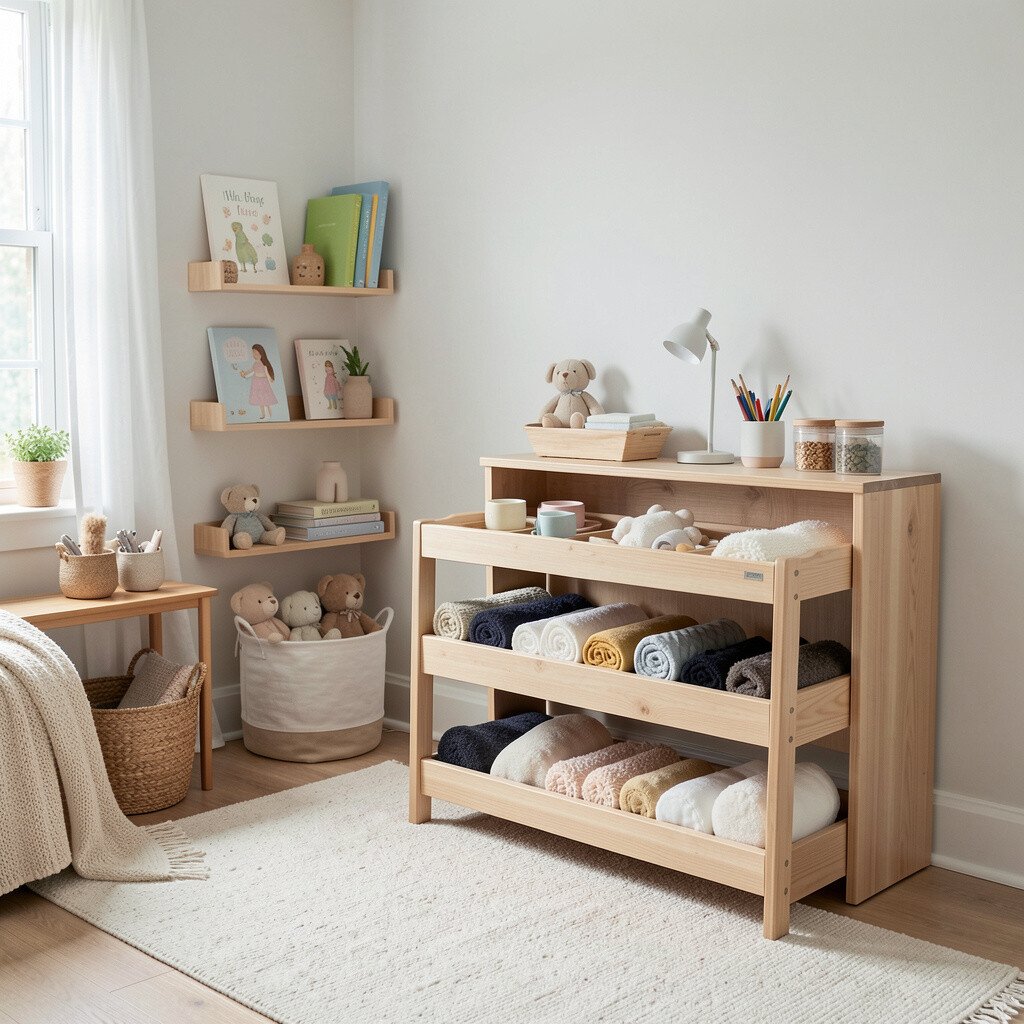
Set up a “ready to start” area where supplies are arranged in the order children need. When everything is easy to grab, the room feels calmer and less chaotic.
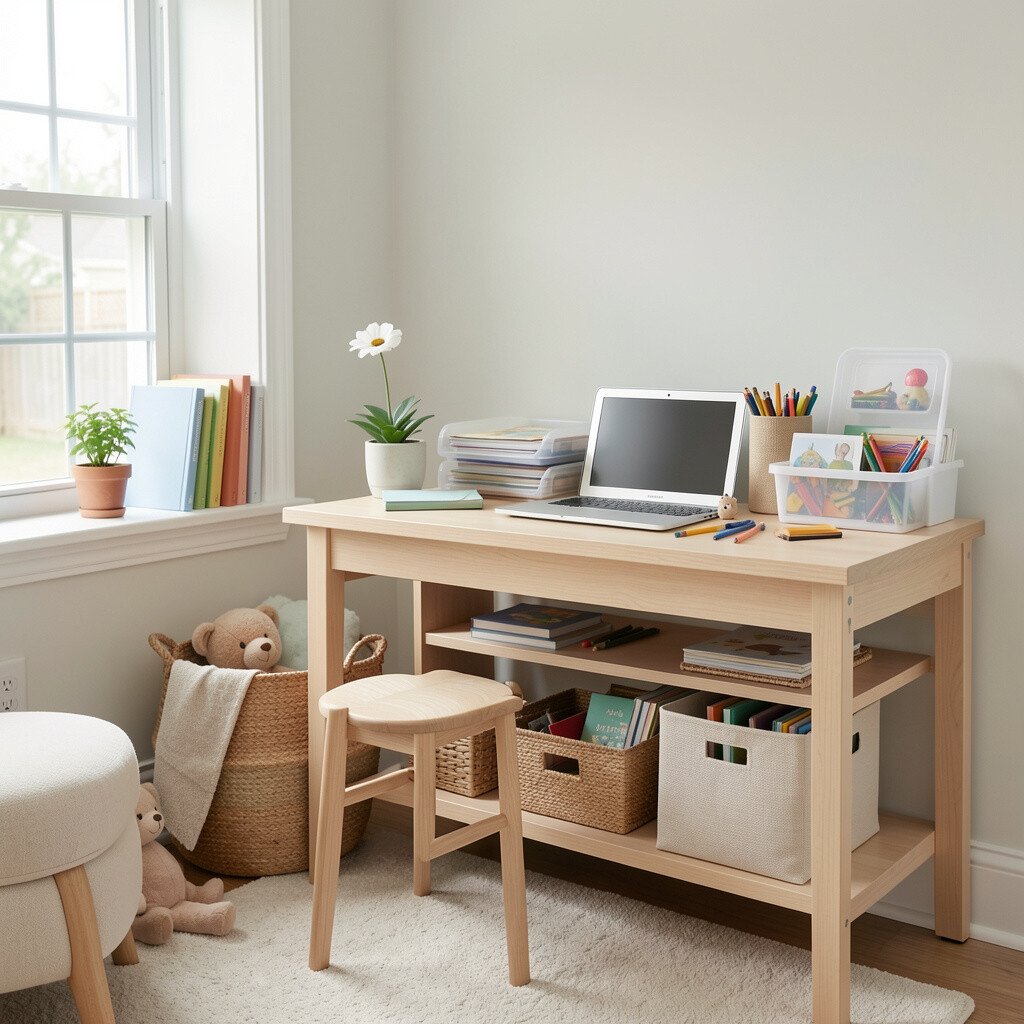
Use a simple tray for daily materials like pencils, erasers, rulers, and writing prompts. You can even include a small bin for finished work so kids see what’s done and what’s next.
To personalize, choose tray colors that match each child’s learning style and rotate prompts based on the week’s themes. For cost, consider shallow storage organizers that fit in closets and can be reused as needs change.
14. Keep Colorful Things Off the “Focus Path”
Keep Colorful Things Off the “Focus Path”
If the most colorful items sit right in front of where kids look while writing, their eyes can bounce around. A calmer focus path helps reading and writing feel more steady.
Place bright bins on side shelves, and keep desk surfaces mostly neutral. You can still add fun, just give it a home that doesn’t pull attention from the task.
15. Choose a Floor That Makes the Room Feel Soft and Safe
Choose a Floor That Makes the Room Feel Soft and Safe
A comfortable floor matters more than people expect, especially for younger learners who sit or kneel often. Rugs add warmth, cushion, and visual calm when chosen in muted patterns.
For budget, choose one quality rug for the main learning zone and use smaller mats near the reading nook. If you have hardwood, add a large washable rug with a non-slip backing so it stays safe.
Personalize with a subtle pattern that fits your home style, like soft stripes or tiny dots, and keep it easy to clean. Many families today prefer machine-washable rugs because homeschool days can get messy in the best ways.
16. Use Clear Expectations Through Visual Reminders
Use Clear Expectations Through Visual Reminders
Instead of lots of verbal reminders, place a few simple visuals where kids can see them. Visual expectations help kids know the next step, which can lower frustration.
Try a small chart for morning flow, a checklist for workstation setup, and a reminder for where to put completed work. Keep the language kid-friendly and short so it doesn’t feel heavy.
17. Add a Display Shelf for Work That Feels Worthwhile
Add a Display Shelf for Work That Feels Worthwhile
Create a place where finished projects can be shown without cluttering every surface. When kids see their work cared for, motivation often grows naturally.
Use a cork board with a few pinned pieces, a rotating gallery frame, or a simple wire display with clips. To keep the room calm, display only a small set at a time and swap items regularly.
Personalize by letting each child choose what gets displayed based on effort, not just neatness. For cost, repurpose old frames, use leftover wood trim, or build a small shelf from inexpensive materials.
18. Control Clutter With a Small Daily Reset Ritual
Control Clutter With a Small Daily Reset Ritual
A short cleanup routine can make the room feel peaceful before lessons even begin. When the space resets every day, kids spend less time searching and more time learning.
Try a two-step rhythm like “supplies back first” and “papers into folders next,” so the process is predictable. Use a calm voice and make it part of the schedule, not a sudden surprise.
To personalize, turn cleanup into a friendly game, like matching items to their color baskets. Families using timers often find cleanup goes faster because kids can see the end.
19. Choose Desk Tools That Reduce Paper Chaos
Choose Desk Tools That Reduce Paper Chaos
Paper clutter can create stress, even when lessons are going well. By using tidy tool choices, you can keep tasks organized and reduce last-minute panic.
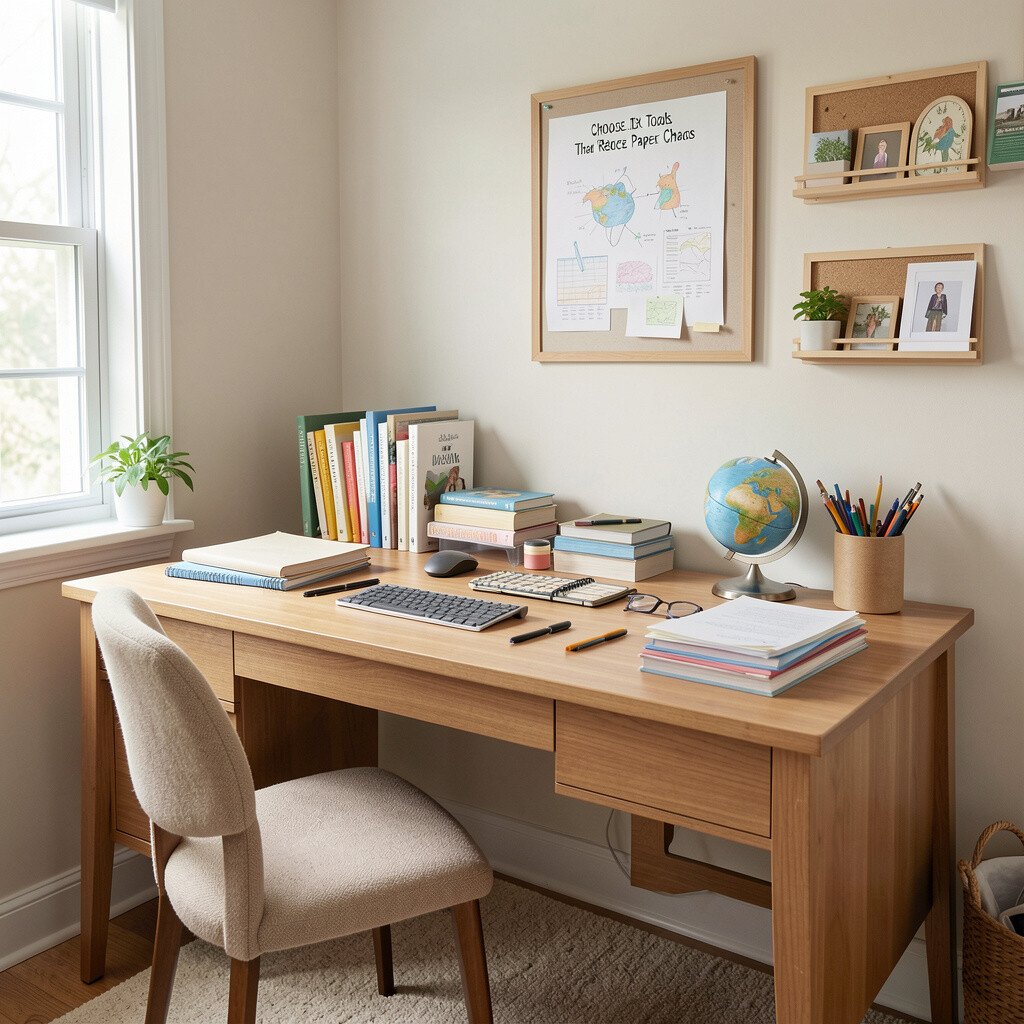
Use document trays, folders for each subject, and a clear pouch for small supplies like scissors and glue sticks. A rolling cart can also help because it moves supplies without dragging them across the whole room.
Personalize the system by letting each child decorate their folder cover with their own style. For cost, you can start with a few essential organizers and expand only when you notice repeated mess patterns.
20. Personalize With a Calm Theme Kids Actually Love
Personalize With a Calm Theme Kids Actually Love
A room feels calmer when it reflects your family’s personality, not just a generic idea of “perfect learning.” Themes can be comforting when they’re consistent and not too busy.
Choose something soothing like a “morning garden” theme, a “cozy cabin” theme, or a “space calm” theme with dark blue accents and soft star patterns. Add a small set of matching items across the room, such as book labels, pillow covers, and wall art, so the space feels like it belongs to you.
Current trends often favor flexible, rental-friendly decor, like peel-and-stick wall panels and removable wallpaper samples. That makes it easier to adjust the theme as your kids grow, without spending a lot or committing to permanent changes.