19+ Rustic Kitchen Bulletin Boards Adorned With Herbs For Your Home
The kitchen can feel cozier when your ideas have a home of their own. With rustic bulletin boards dressed in herbs, your walls start doing double duty.
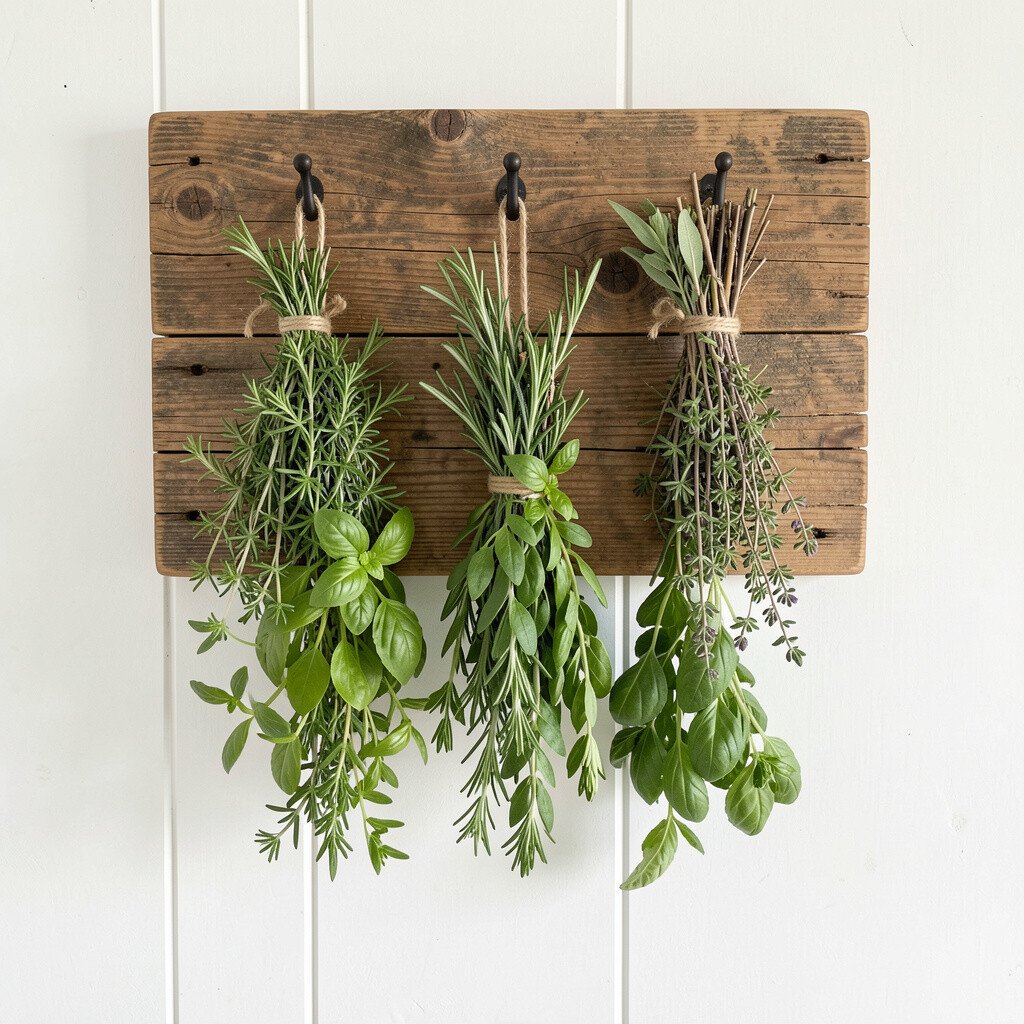
Picture a weathered plank board with a soft, warm grain that looks right at home over the kitchen counter. Small iron hooks hold sprigs of rosemary and thyme, and the whole display smells faintly green when you pass by.
This style keeps the look natural and uncluttered while giving you a steady place for recipes, grocery lists, and simple reminders. To make it practical, attach a cork or burlap backing so pins go in easily, then swap herb bundles when they dry out. For personalization, choose herbs that match your cooking habits, like basil for pasta nights or sage for cozy roasts.
2. Corkboard Backed With Linen and a Thyme Wreath
Corkboard Backed With Linen and a Thyme Wreath
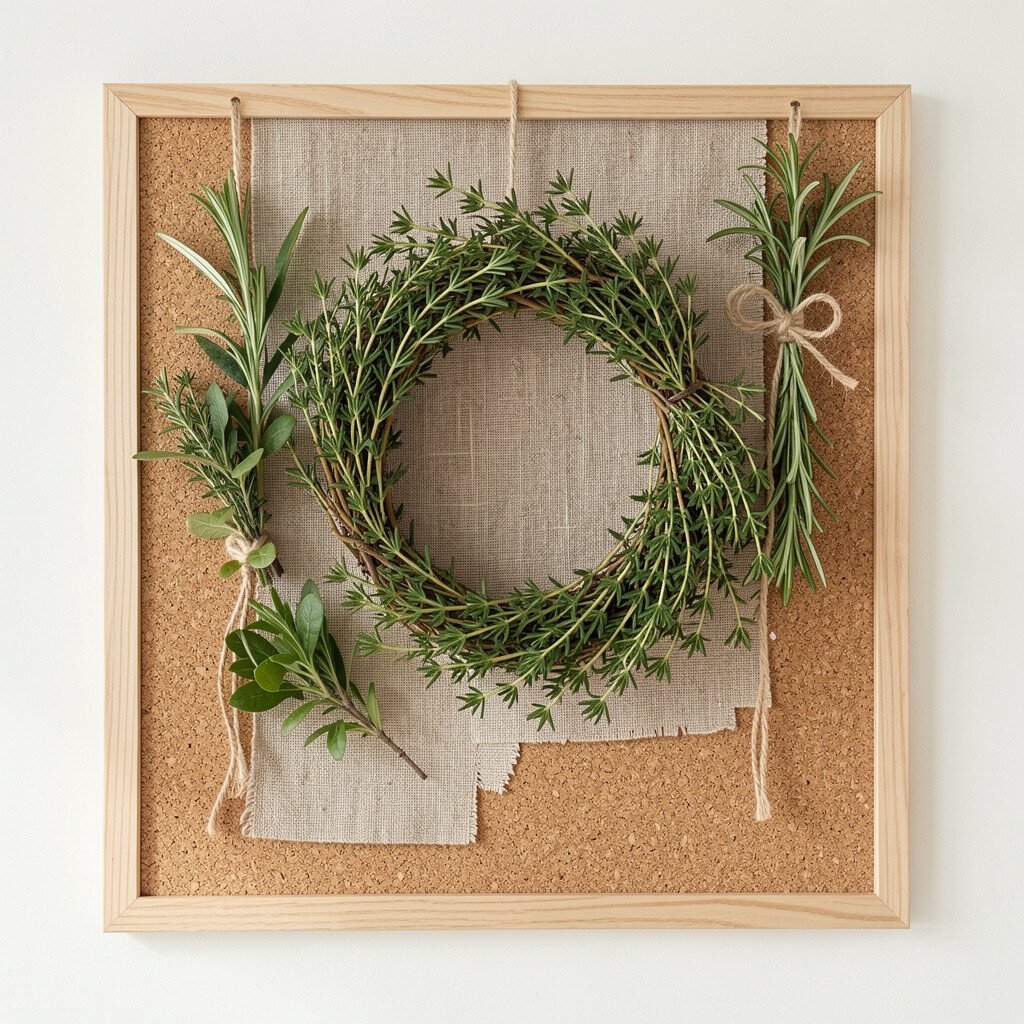
A corkboard framed in linen looks soft and steady, like a gentle farmhouse blanket. A small wreath of thyme sits along the top edge, and the pin-friendly surface makes planning feel effortless.
Using linen as the frame adds texture that makes the board stand out without getting loud. For current trends, people are loving “warm neutral” kitchens, and this board fits right into that mood.
To keep it tidy, use herb clips or short twine ties so the wreath stays in place when you add papers. If you want a cost-friendly build, buy a basic cork sheet, wrap it in linen, and add only a fresh or faux thyme wreath to finish the look.
3. Farmhouse Slat Board With Dried Lavender Strips
Farmhouse Slat Board With Dried Lavender Strips
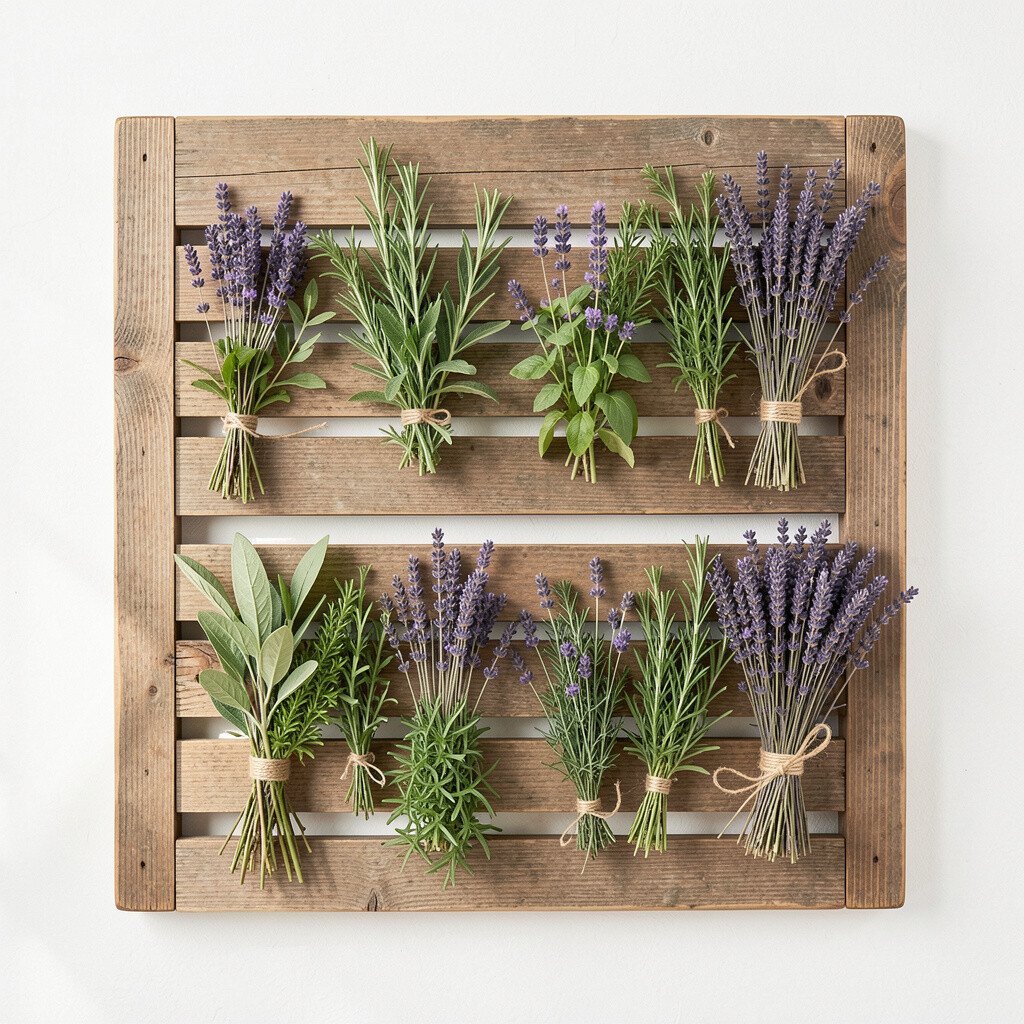
Think of a rustic slat board with evenly spaced wood lines, giving your kitchen wall a gentle rhythm. Along the sides, dried lavender strips tuck in like natural bookmarks, adding a calm color shift.
This setup is great for benefits you can feel day to day, because the slots let you pin light cards without digging around for the perfect spot. Use it to organize weekly menus, meal prep notes, and kids’ snack plans in one steady location.
For uniqueness, mix real dried lavender with small sprigs of oregano so the board feels layered, not matchy. Add a thin wire basket under the board for small seed packets or twine, and you’ll keep everything close at hand.
4. Rustic Ladder-Frame Board With Basil Corners
Rustic Ladder-Frame Board With Basil Corners
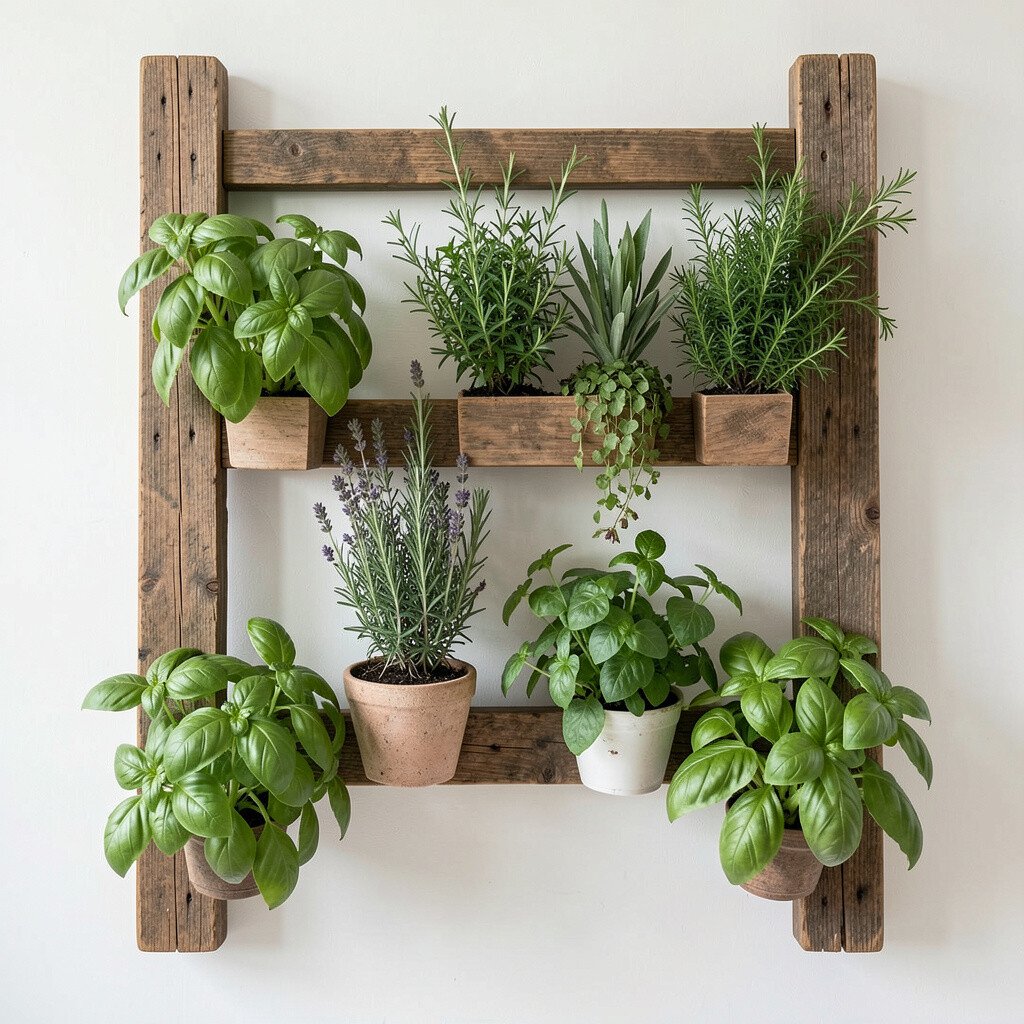
Imagine a compact ladder-style frame mounted on the wall, with a board surface sitting between two wooden rails. At each top corner, basil leaves appear as pressed cutouts or tiny potted accents that make the whole piece feel alive.
This design brings a playful farmhouse look and helps you keep notes visible from across the room. It also works well in tight spaces since a ladder frame takes up less wall area than wide boards.
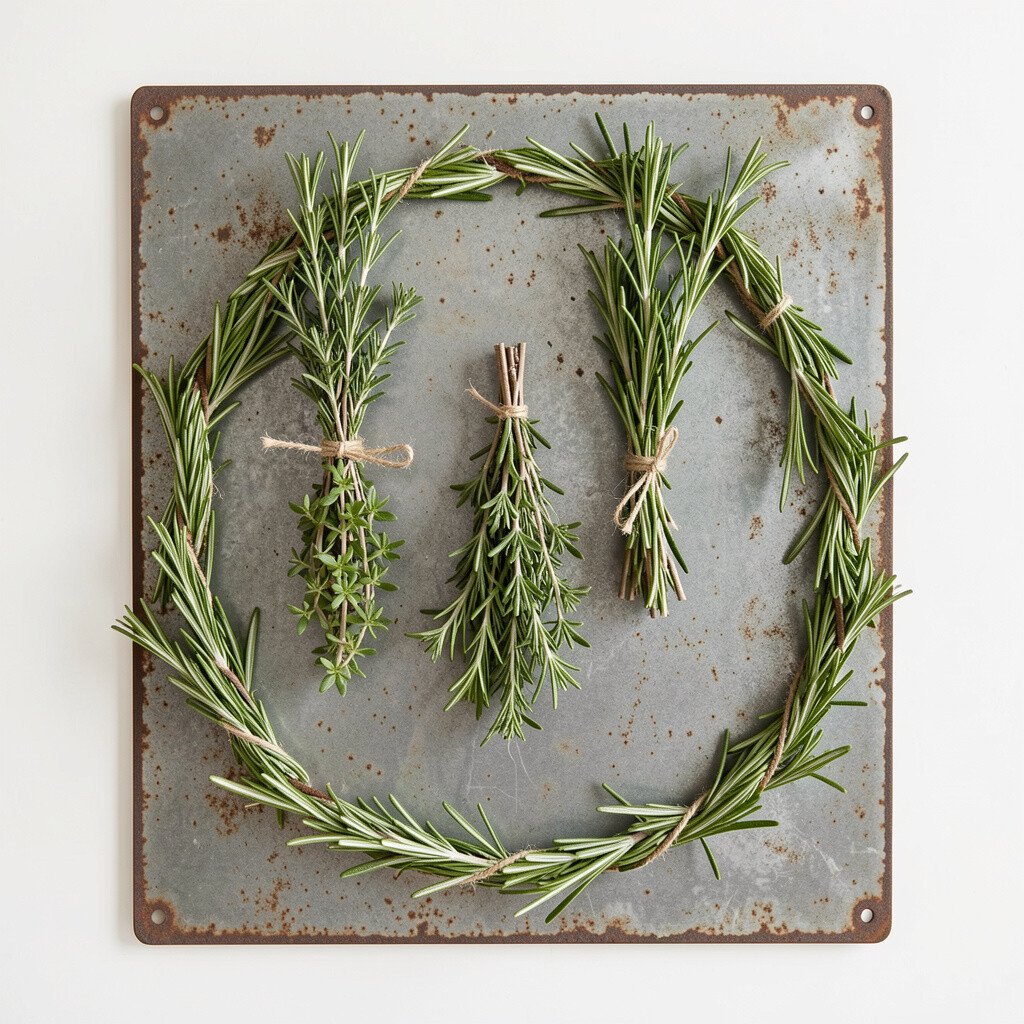
A brushed metal sheet covered with a soft cork layer creates a modern-rustic blend that still feels cozy. A rosemary twist garland drapes across the top edge, and when the kitchen warms up, it releases a subtle scent.
Metal gives you a smooth surface that holds pins securely when paired with cork, making it feel tidy and durable. If you like practical organization, use small magnets under the cork layer for metal utensils lists or closing announcements.
For cost considerations, you can start with a thrifted metal sheet or a used baking rack and add only the cork layer and garland. Keep personalization easy by swapping the garland seasonally, like rosemary for winter and thyme for spring.
6. Repurposed Shutter Board With Sage Leaves and Twine
Repurposed Shutter Board With Sage Leaves and Twine
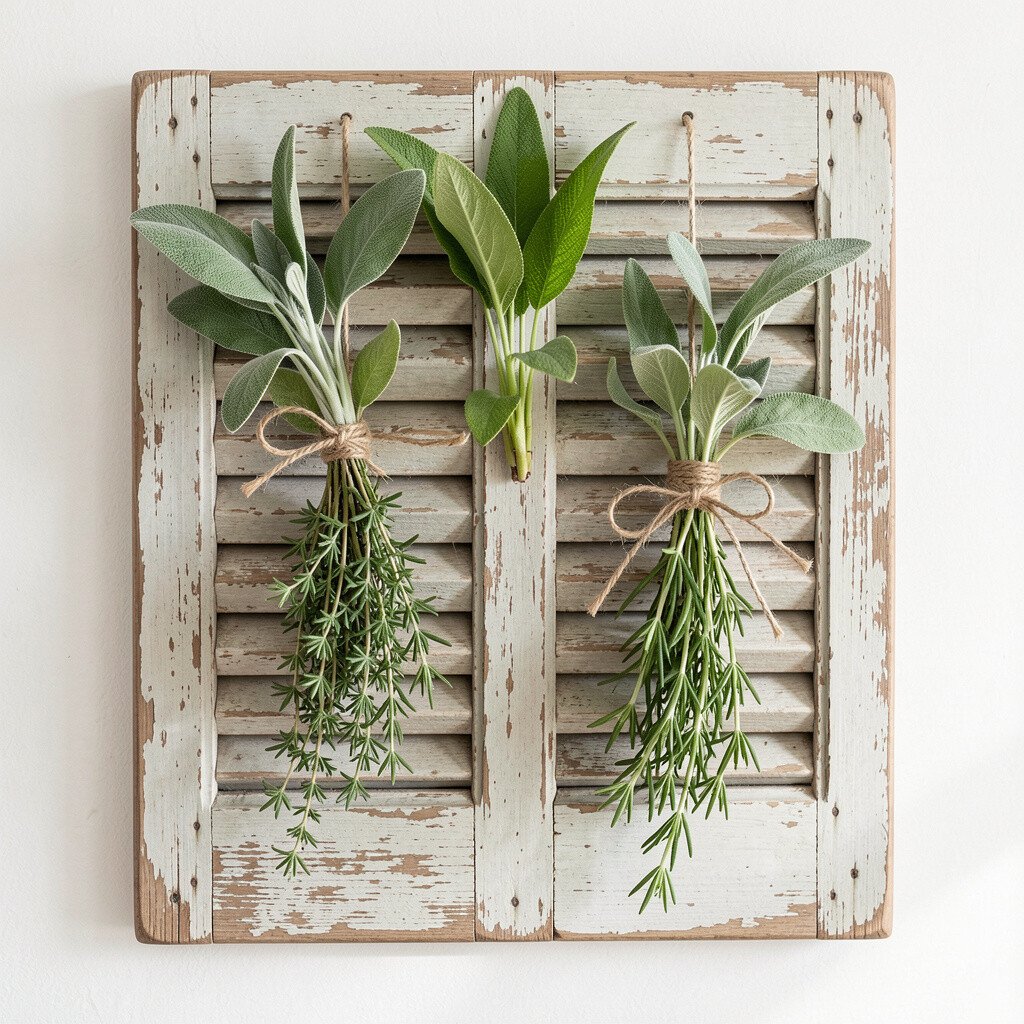
A pair of repurposed window shutters can become a charming bulletin board with natural charm. When you attach sage leaves in clusters and add twine to hold smaller cards, the whole piece feels like it was found on a market day.
This style offers uniqueness because the shutter slats create shadow lines, making pinned notes look like they’re floating. For benefits, you get a sturdy frame that can handle frequent updates without looking worn out.
To make it actionable, mount the shutter with a slight tilt so papers don’t slide and use a cork insert inside the slats. If you’re working with a budget, sand and seal thrifted shutters, then focus spending on the herbs and finishing touches.
7. Woven Basket Board With Herb-Stamped Notes
Woven Basket Board With Herb-Stamped Notes
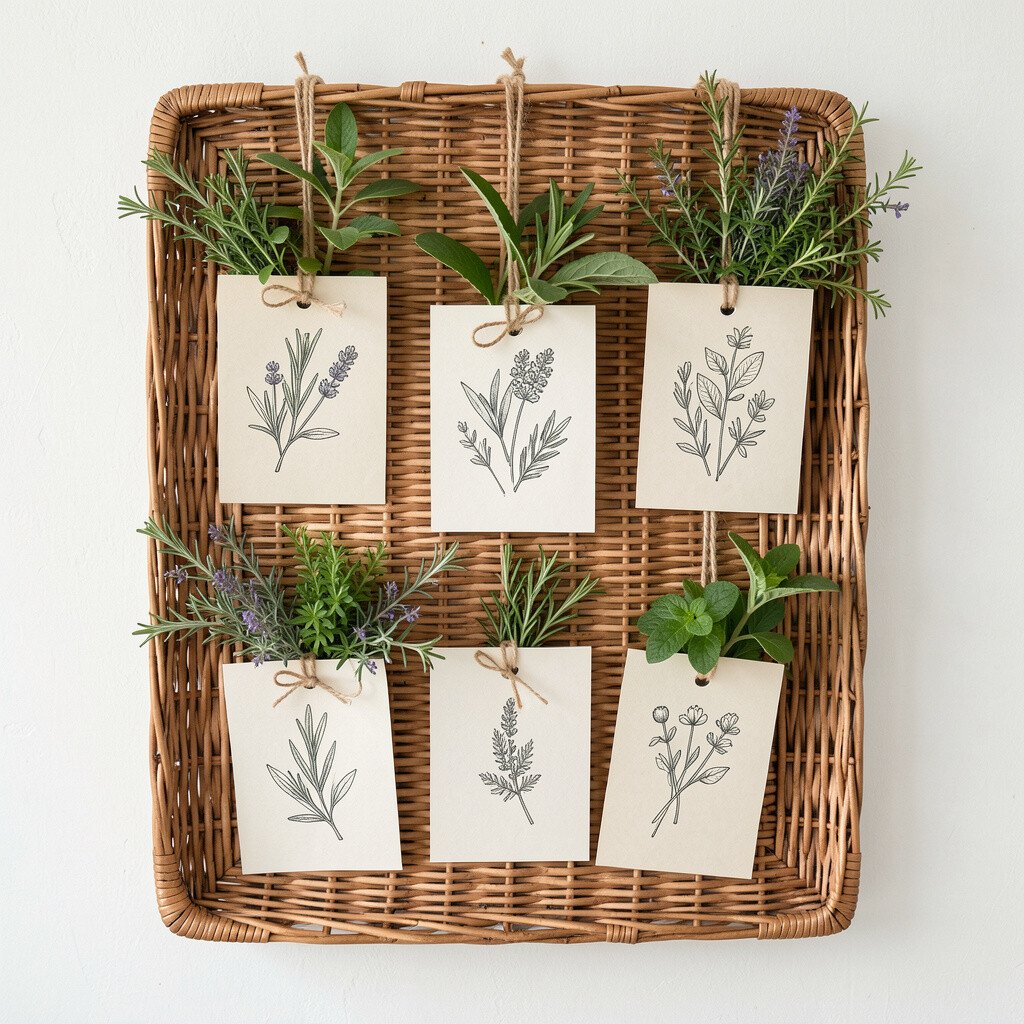
A woven basket texture behind a cork or fabric insert gives you a warm, handmade feel that’s perfect for a rustic kitchen. On the front, you can place herb-stamped note cards that look like little garden treasures.
This board helps your family stay organized because the pinned cards stand out clearly against the woven background. It’s also a fun way to add personalization since you can design your own herb stamps for a coordinated set.
Try practical tips like using thick pins so the woven layers stay secure, and keep a small jar of pens nearby for quick writing. For a trend in many homes, handmade paper and earthy textures are showing up everywhere, and this piece fits that mood nicely.
8. Sliding-Panel Board With Mint on the Side Rails
Sliding-Panel Board With Mint on the Side Rails
A sliding-panel bulletin board sounds clever, and it really is when you want your notes to feel neat and controlled. Side rails dressed with mint cuttings or faux mint sprigs bring a fresh green look that feels bright in the morning.
The benefit here is simple access since you can shift panels slightly to reach what you need, without removing everything. Keep it practical by labeling common sections with small cards and using weather-sealed adhesive strips for easy upkeep.
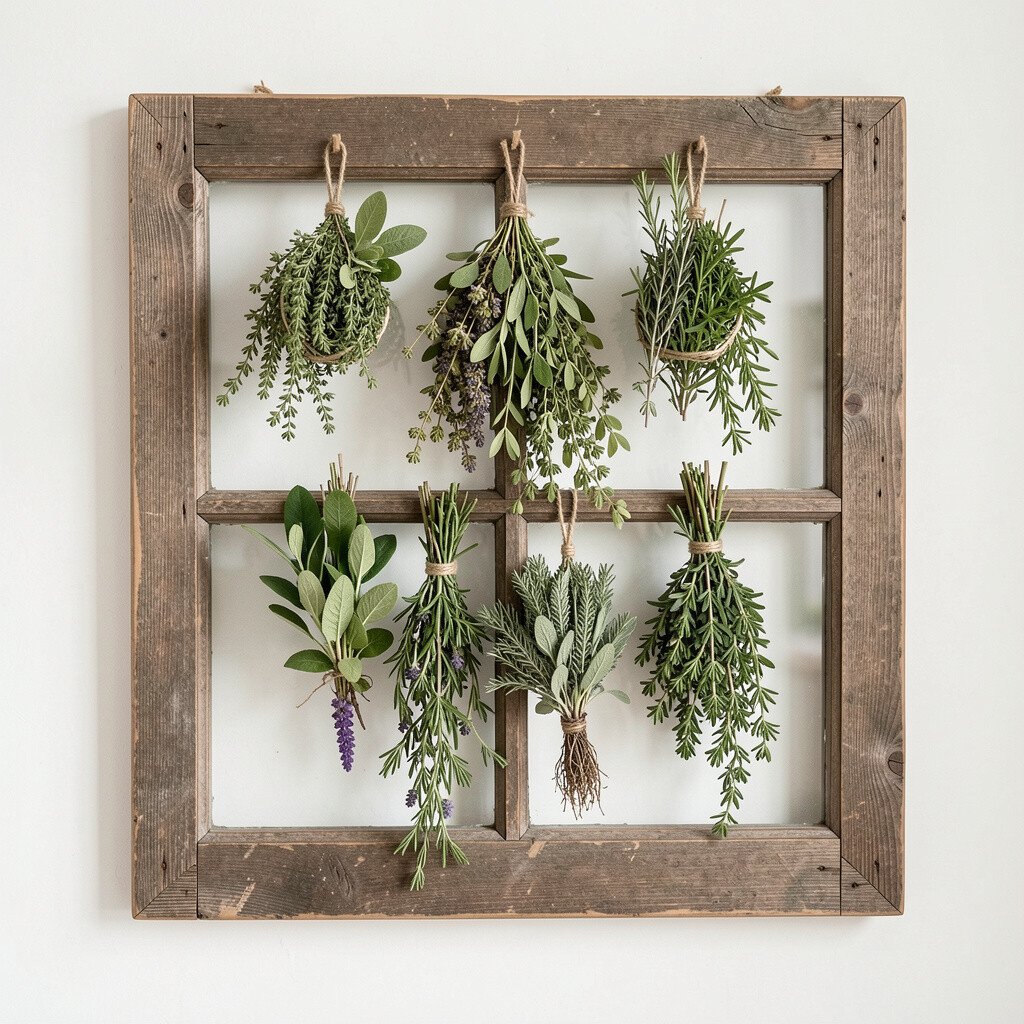
9. Rustic Window Frame Board With Dried Oregano Loops
Rustic Window Frame Board With Dried Oregano Loops
A wooden window frame bulletin board feels timeless, like it belongs in a farmhouse photo. Inside the frame, cork and fabric hold your papers, while dried oregano loops hang like tiny garlands.
This design creates strong visual impact because the window shape naturally draws the eye to your notes. As a practical perk, you can clip a ribbon line across the center to hang short menus or coupons.
For personalization ideas, use paint to match your kitchen cabinets, then keep the herb loops in a single color family for a calm look. If you’re thinking about cost, check for window frames at salvage shops and add new cork only where needed.
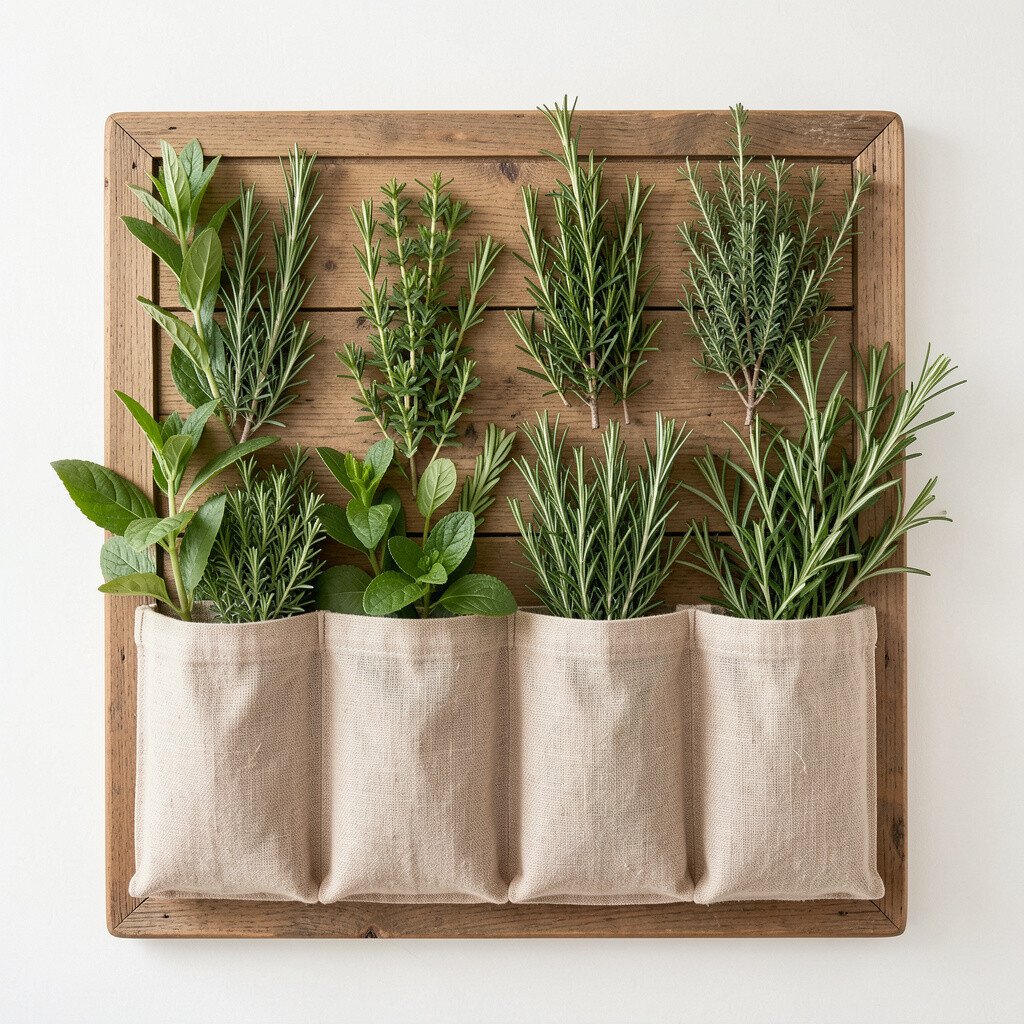
10. Plantation-Style Board With Two-Tone Herbs and Linen Pockets
Plantation-Style Board With Two-Tone Herbs and Linen Pockets
A plantation-style board with a tall, structured frame gives your kitchen a strong focal point. Linen pockets across the surface hold herb sprigs or small envelopes, and the two-tone palette keeps everything from feeling busy.
You’ll enjoy benefits like easy sorting, because envelopes keep loose papers from fluttering around. For uniqueness, mix herb visuals with fabric pockets so the board feels like a storage and display mix.
To stay actionable, label pockets with dates using small handwriting and keep a tiny pencil clipped to the frame. For cost considerations, fabric pockets are inexpensive, so you can spend more on a higher-quality frame or a nicer cork backing.
11. Weathered Pallet Board With Potted Chives Along the Edge
Weathered Pallet Board With Potted Chives Along the Edge
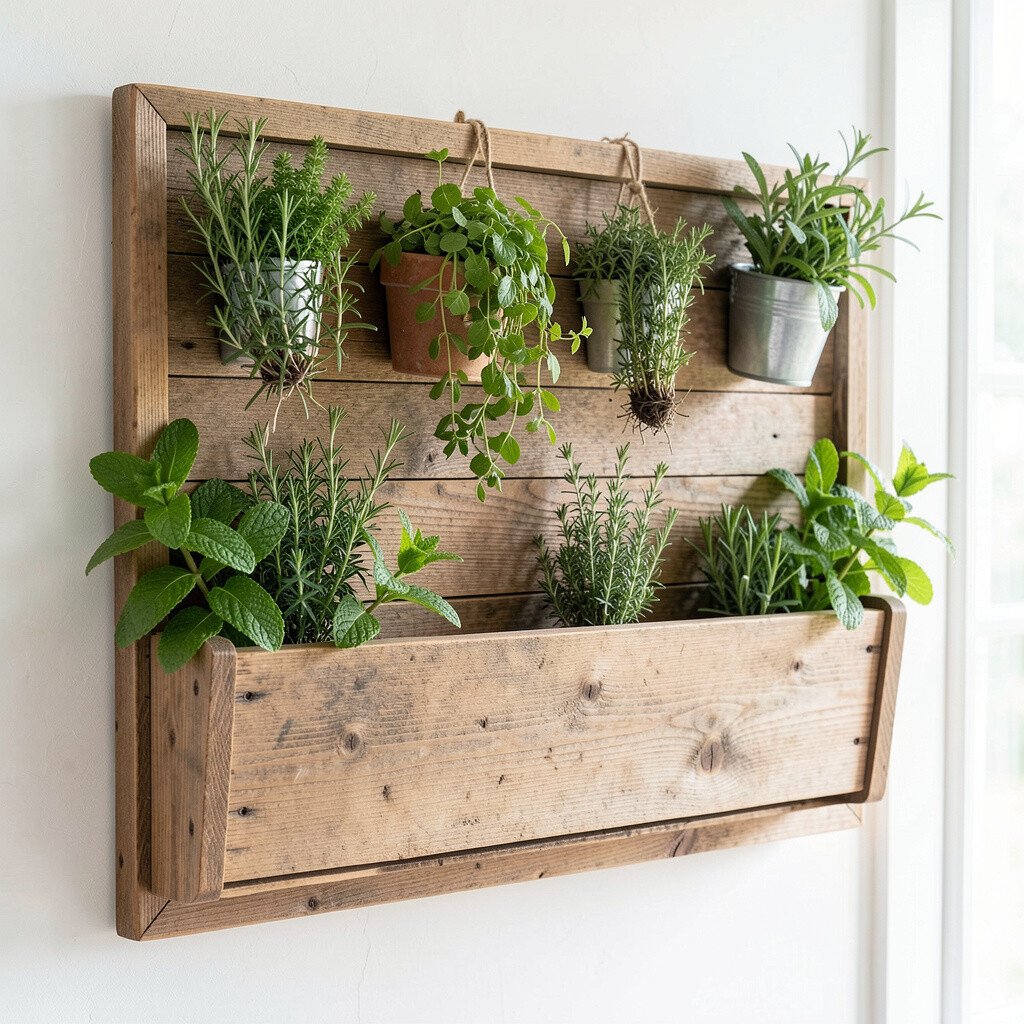
A pallet board looks rugged in the best way, with plank textures that make every pin feel grounded. Along the edge, potted chives in small planters add a bright green line that looks fresh even when you don’t cook.
This setup brings benefits you can notice quickly because chives grow fairly reliably and add a practical touch. For tips, mount planters securely with sturdy brackets and keep watering simple by using a tray beneath the pots.
To personalize, place a small chalk marker near the base so you can jot down what needs harvesting. If you want to keep costs in check, use salvaged pallets and only buy the planter inserts and herb starts.
12. Burlap Tension Board With Rosemary Braid Divider
Burlap Tension Board With Rosemary Braid Divider
A burlap tension board stretched over a frame looks soft and rustic, like a cozy backdrop for daily notes. A rosemary braid divider crosses the top or center, giving the display a clear direction without blocking anything important.
This style helps your home feel warm because burlap absorbs visual noise and makes pinned papers look tidy. For a practical tip, add a thin cork sheet behind the burlap where you plan to pin most often, so pins don’t tear the fabric.
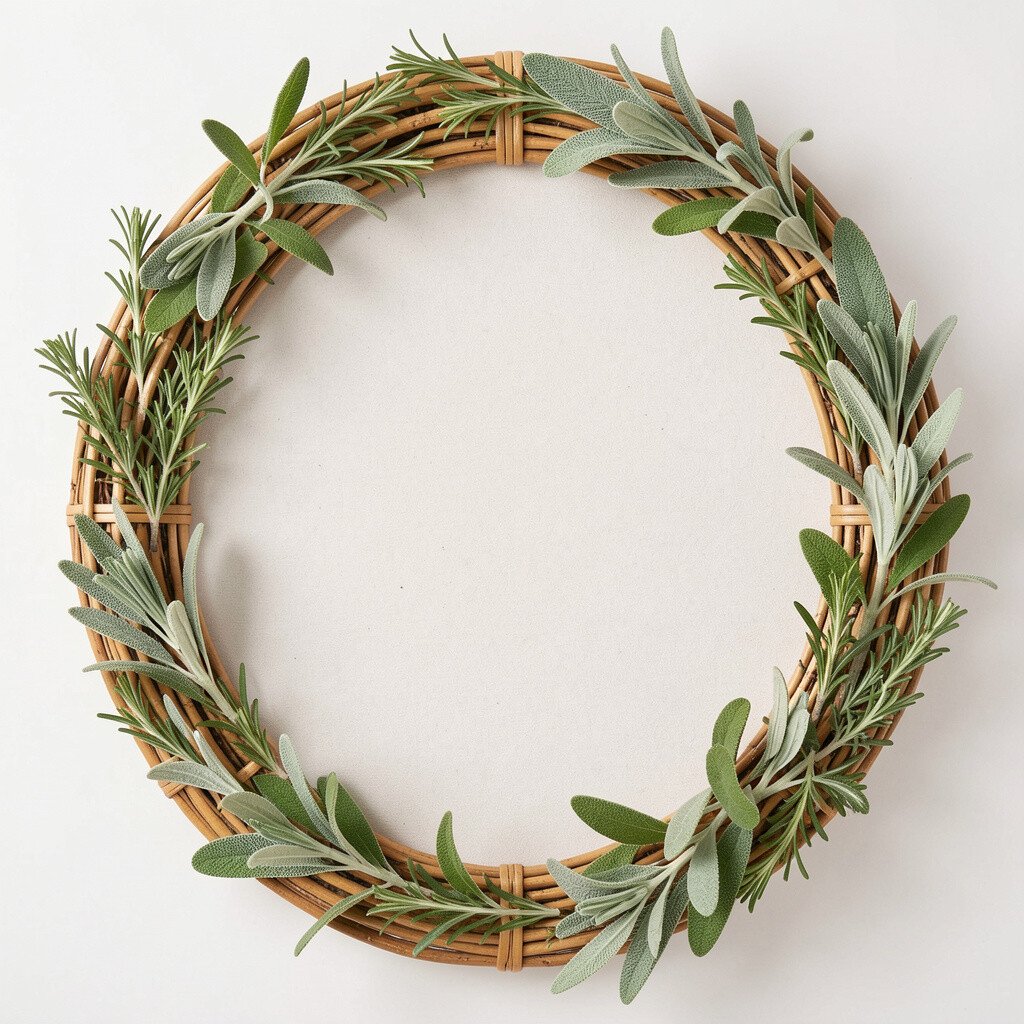
13. Oval Willow Frame Board With Sage Sprigs in the Border
Oval Willow Frame Board With Sage Sprigs in the Border
An oval willow frame feels gentle and organic, wrapping your bulletin space like a wreath. Sage sprigs tucked into the border add a muted green tone that works beautifully with natural wood and warm lighting.
You get uniqueness because willow shapes feel softer than straight wood, and your kitchen notes look extra charming inside the curve. For personalization, hang the board at eye level for easy posting and use a small string of twinkling lights if your kitchen lacks warmth at night.
For cost considerations, willow frames can be found at craft stores and yard sales, and you can keep the rest simple with cork backing and a few sage sprigs. Keep the herb look consistent by drying sprigs and spritzing lightly with a natural preservative spray made for dried florals.
14. Chalkboard Panel With Herb-Covered Cloth Clips
Chalkboard Panel With Herb-Covered Cloth Clips
A chalkboard panel framed in wood gives you the freedom to write daily updates and share quick reminders. On the sides and corners, herb-covered cloth clips hold photos, coupons, and recipe cards with a soft rustic touch.
This board is practical because chalk writing stays readable, and cloth clips make it easy to switch what’s displayed. For trends, homeowners love combining functional writing with styled decor, and this layout feels both organized and artistic.
To personalize, write meal themes or seasonal messages in different chalk colors, then keep herbs matched to the season, like basil for summer and thyme for fall. If you’re watching cost, use an inexpensive chalkboard and spend on only the cloth clips and a sturdy frame.
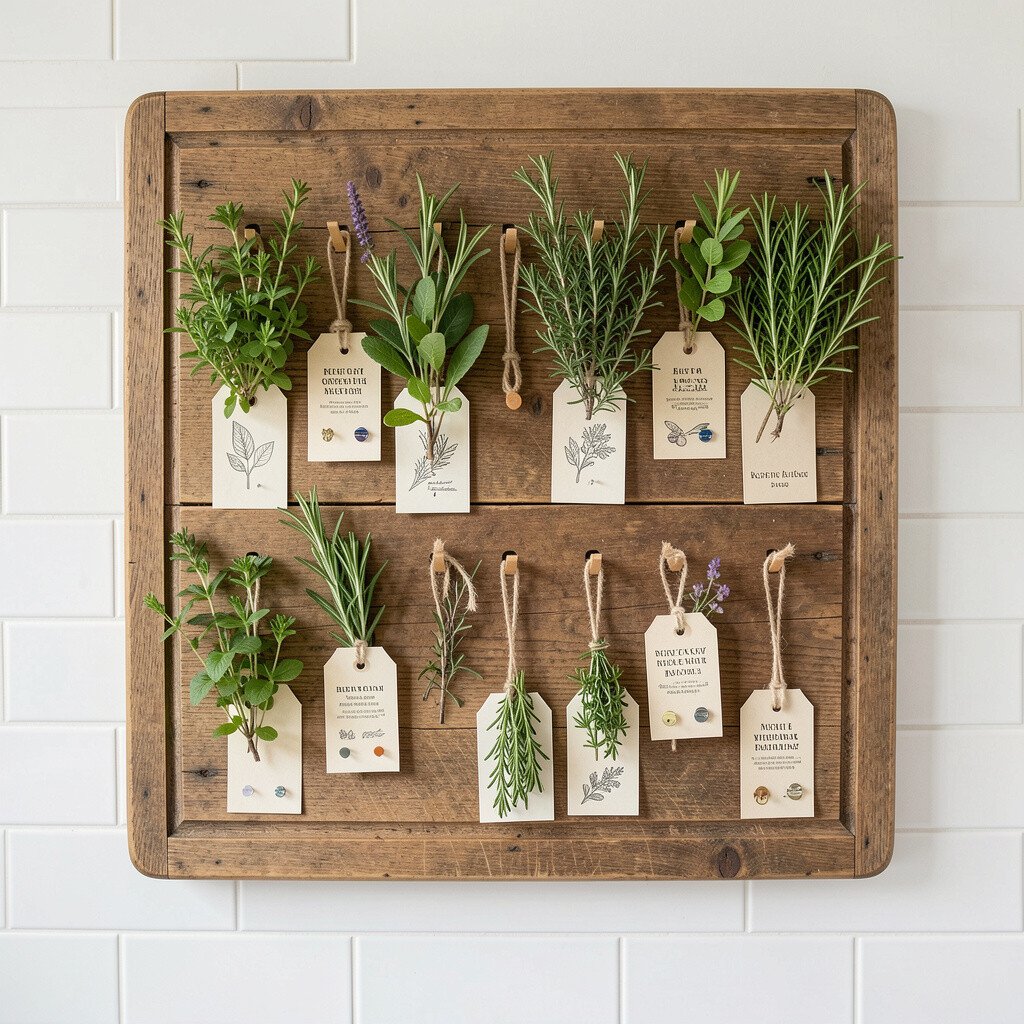
15. Rustic Cutting Board Display With Herb Tags and Pins
Rustic Cutting Board Display With Herb Tags and Pins
A large rustic cutting board mounted on the wall becomes a charming bulletin board when you add pin-friendly strips. Herb tags tied to small twine pieces make each pinned item feel like part of a kitchen story.
This design offers benefits because cutting boards already have a sturdy structure, so it can handle frequent updates. Use practical tips like sealing the board with food-safe wax and placing a cork strip where you pin most papers.
For uniqueness, add herb tags with names like “basil” or “sage,” written in your own handwriting for a personal feel. If you want cost control, hunt for mismatched boards at thrift stores and make the layout intentional rather than perfect.
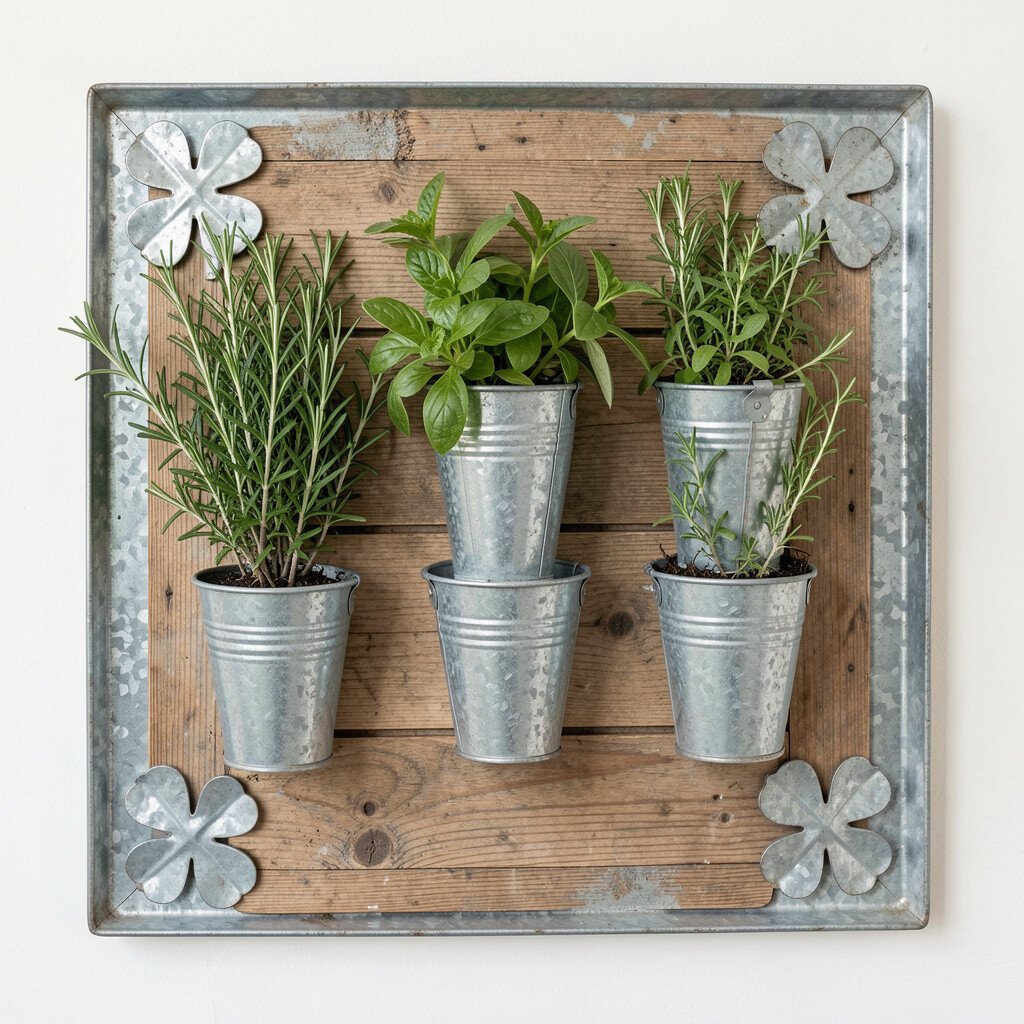
16. Galvanized Tin and Wood Board With Clover-Leaf Accents
Galvanized Tin and Wood Board With Clover-Leaf Accents
A galvanized tin center surrounded by wood gives a clean rustic look that still feels warm. Clover-leaf accents tucked near the corners add a playful herbal vibe that’s different from the usual rosemary-only style.
This combination provides benefits like durability and easy cleaning, since tin holds up well to kitchen humidity. For practical tips, attach tin to a wood backing so pins have a stable surface and papers stay flat.
To personalize, choose a clover or herb theme that matches your backsplash colors, and keep the accents small so notes remain the focus. Cost considerations are usually friendly because tin can be sourced cheaply, especially from vintage storage bins or craft sections.
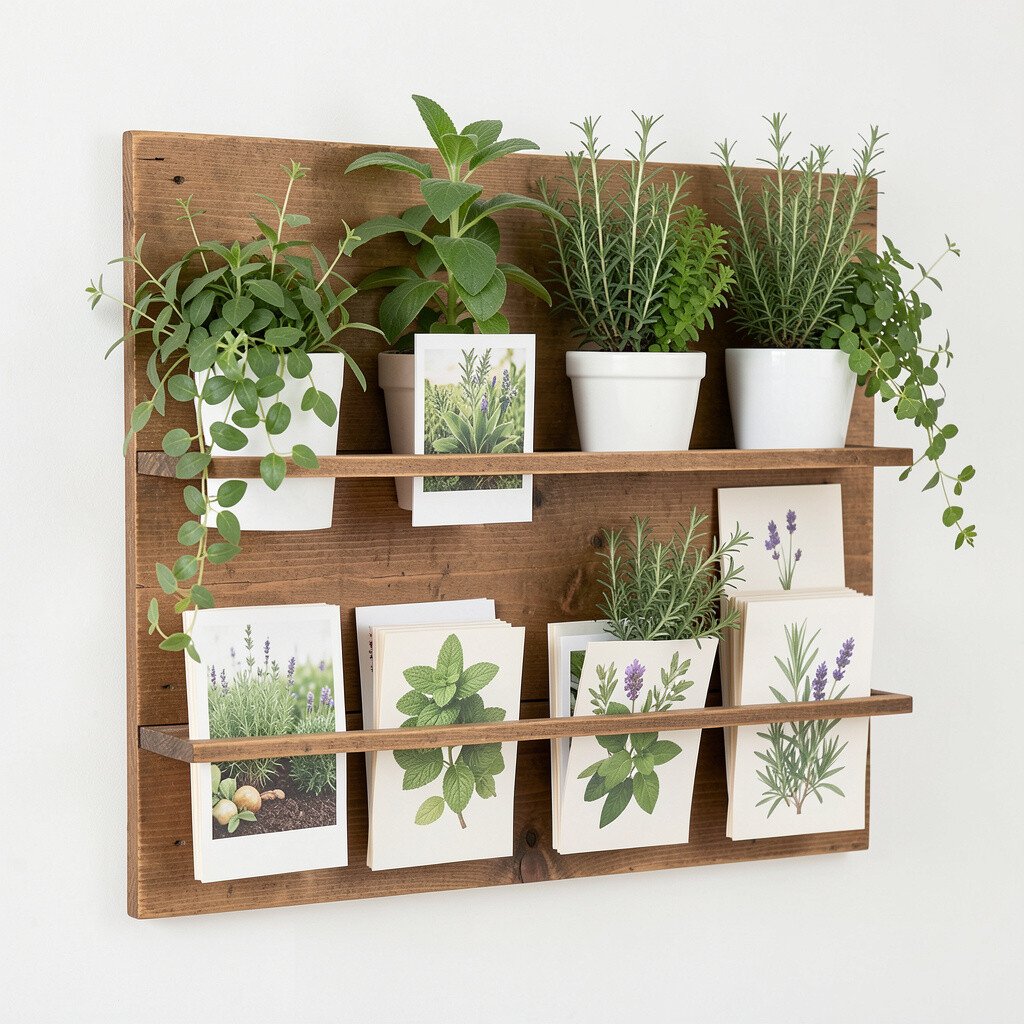
17. Wooden Picture-Ledge Board With Herb Pocket Pages
Wooden Picture-Ledge Board With Herb Pocket Pages
A picture-ledge board mounted at kitchen height gives you a comfortable way to swap note cards without fuss. Herb pocket pages tucked into small fabric holders create a layered look, like a mini herb book for your daily plans.
This design helps with organization because each pocket keeps papers from curling and losing their place. For uniqueness, combine pocket pages with a simple herb illustration on card stock so you get a consistent theme across the whole board.
To make it actionable, keep a stack of blank pocket pages in a drawer so you can refill quickly. For cost considerations, you can make pockets from scrap fabric and only buy cork or backing where you need pin support.
18. Slate Board With Herb-Pressed Corner Medallions
Slate Board With Herb-Pressed Corner Medallions
A slate bulletin board brings a classy rustic feel, with a dark surface that makes pinned notes look bold. In the corners, herb-pressed medallions of dried leaves add gentle texture and a natural, vintage charm.
This style has benefits beyond looks, because slate surfaces often resist staining better than lighter boards. Practical tips include using weather-sealed mounting hardware and keeping a small brush nearby to wipe away chalk smudges if you write with it.
For personalization, match the herb medallions to what grows best in your area or what you actually use in meals. If cost is a concern, choose a smaller slate panel and build up interest with larger herbs on the corners.
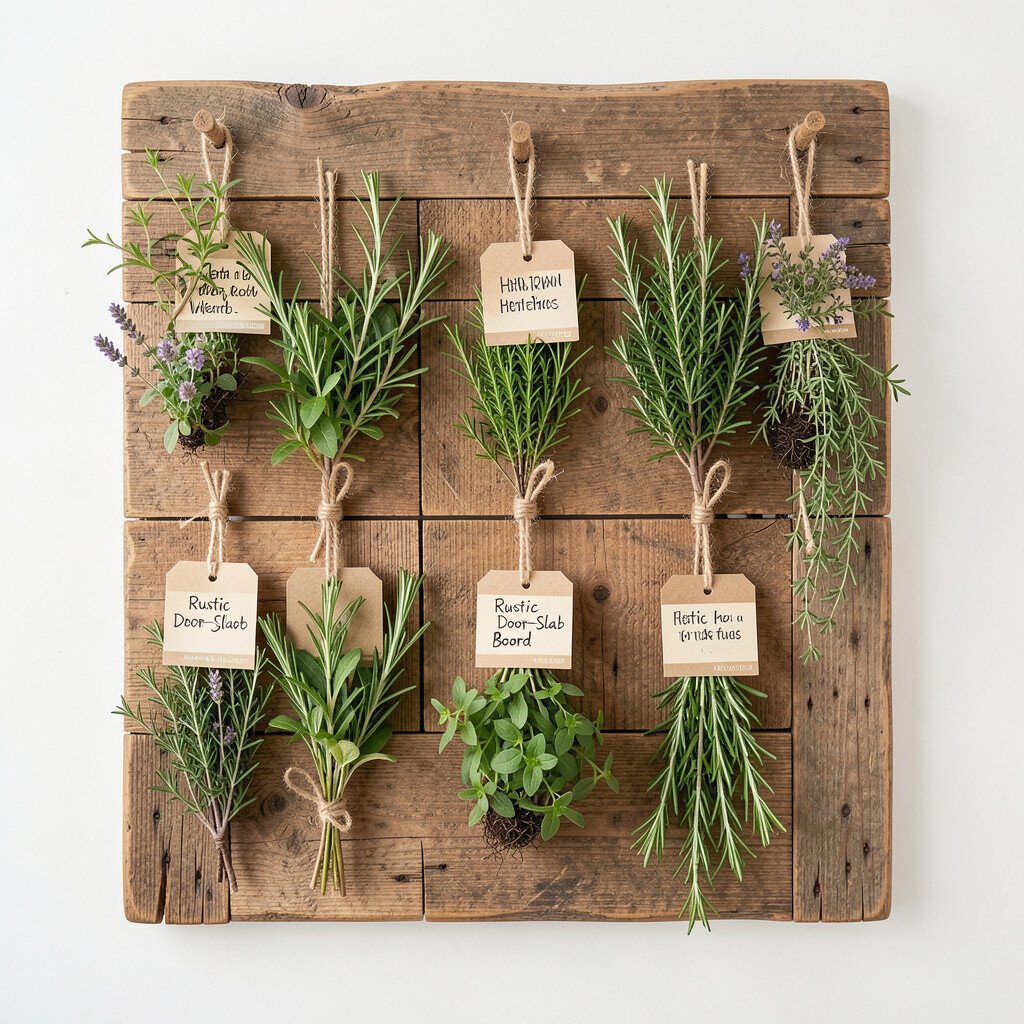
19. Rustic Door-Slab Board With Hanging Herb Tags
Rustic Door-Slab Board With Hanging Herb Tags
A salvaged door slab used as a bulletin board makes a strong, grounded statement on your kitchen wall. Hanging herb tags sway slightly as you move around the room, and they add a cozy “always lived-in” vibe.
This approach is unique because the slab’s natural edges and worn marks become part of the design, not flaws. For practical tips, mount it securely with strong anchors and use a mixture of cork and fabric patches so pins hold for different paper weights.
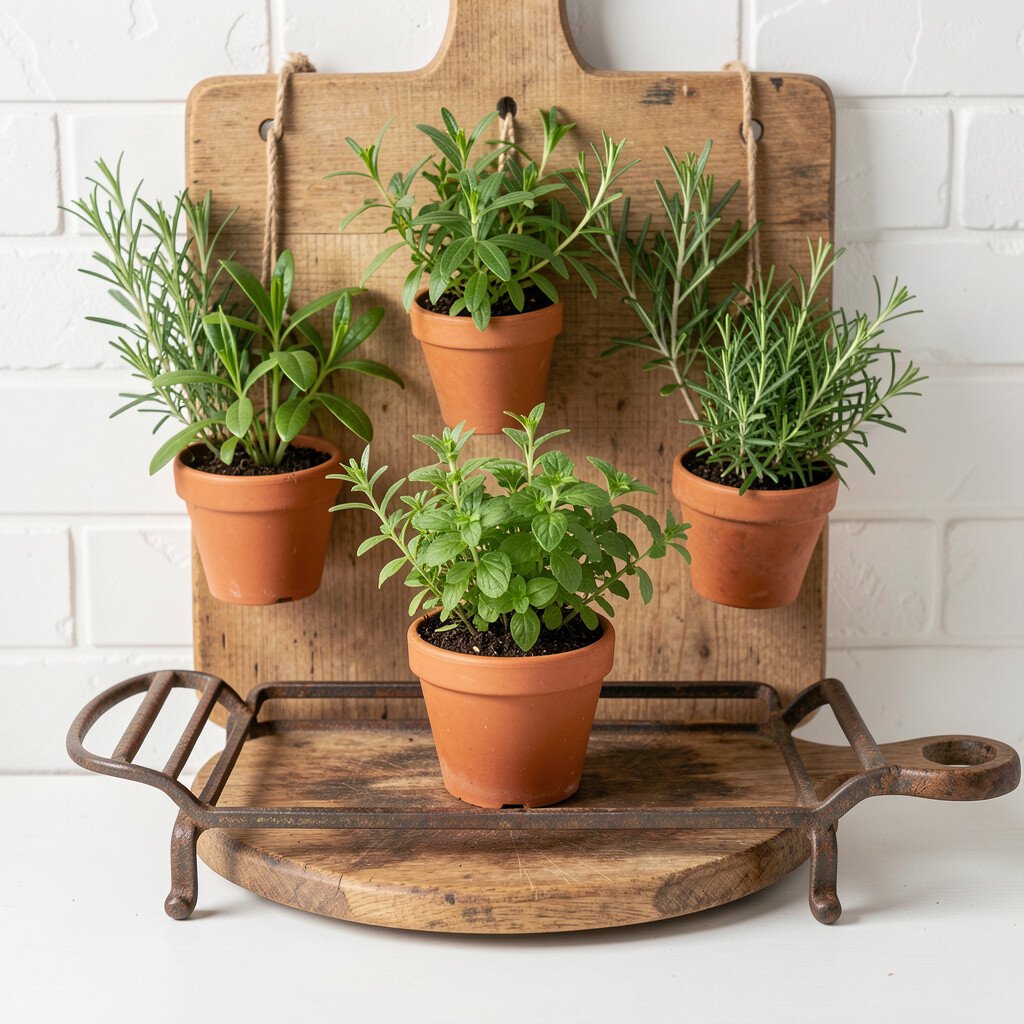
20. Vintage Trivet Board With Mini Potted Herb Center
Vintage Trivet Board With Mini Potted Herb Center
A vintage trivet pattern under a cork or fabric surface makes the bulletin board feel like a functional antique with personality. In the center sits a mini potted herb, such as thyme or parsley, and it gives the whole display a fresh, kitchen-ready look.
This style offers benefits like easy rotation since you can swap the herb pot when it grows out or when you change seasons. For personalization, choose pots that match your dishware or paint them in a calm neutral shade for a coordinated feel.
If you’re thinking about cost, trivets can be inexpensive at flea markets and online, and the herb plants are often affordable at local shops. Keep it actionable by using a drip tray and checking the soil lightly so your board stays pretty and your herb stays healthy.