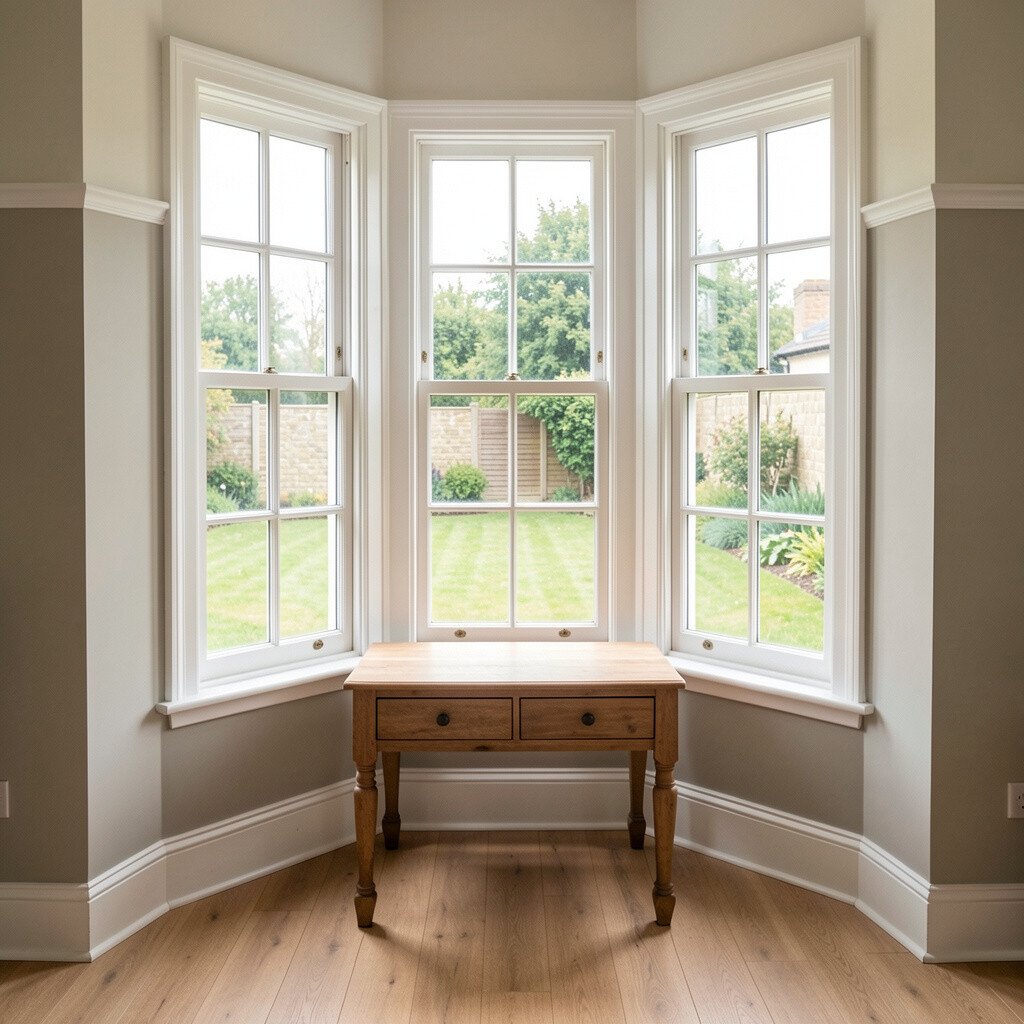
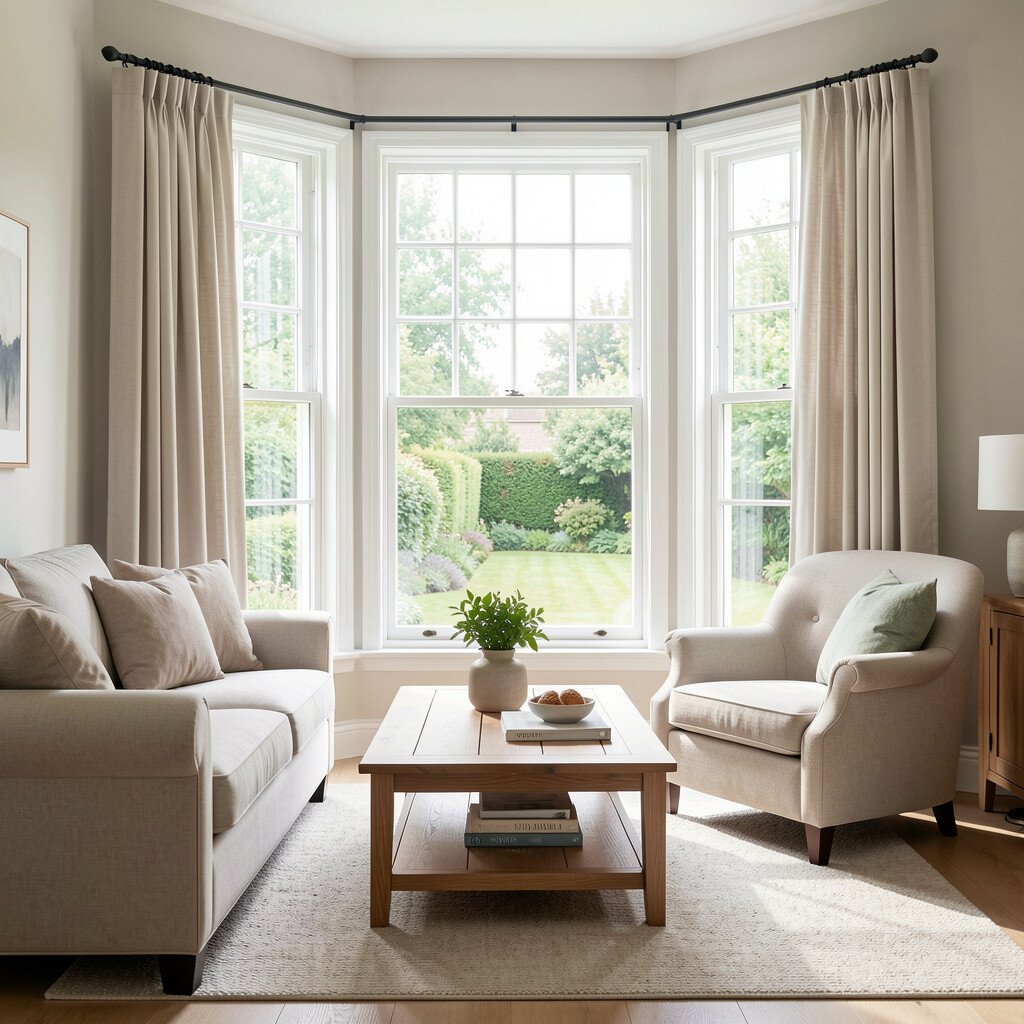
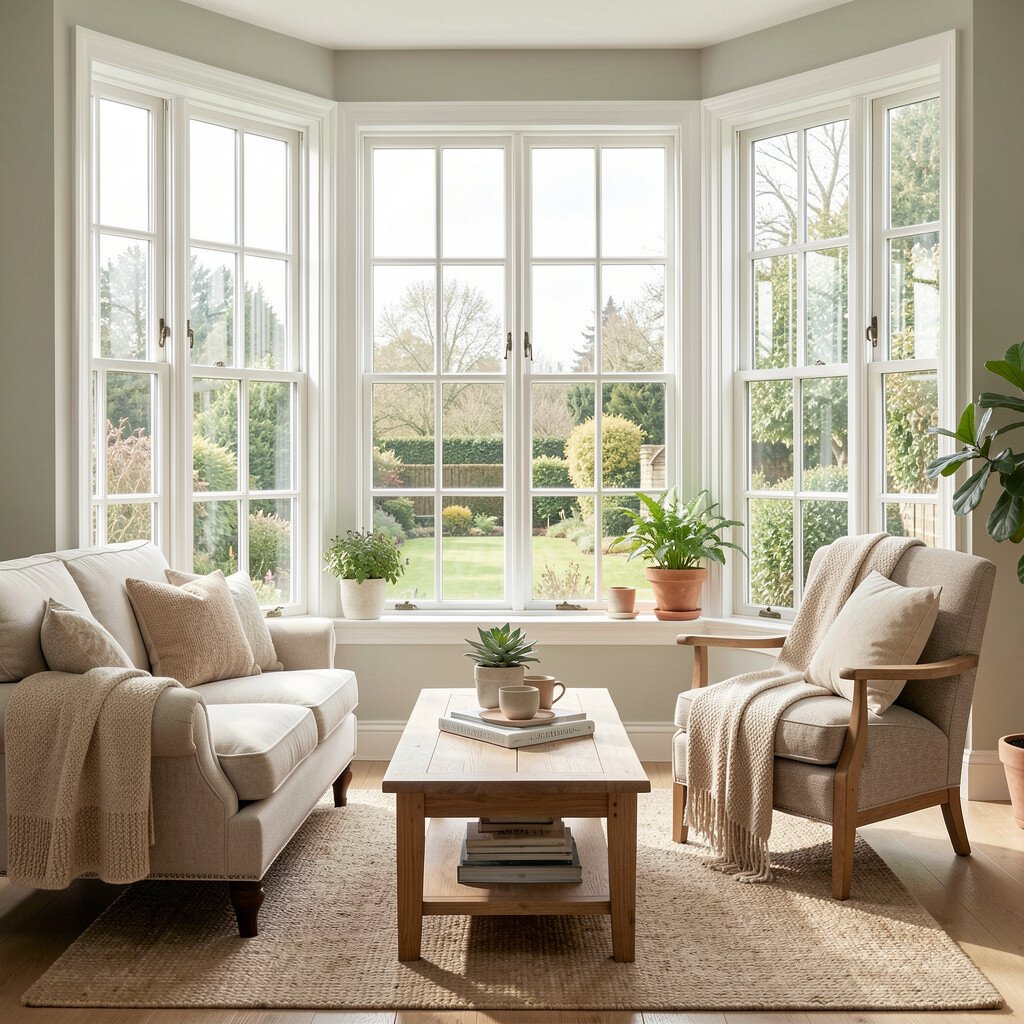
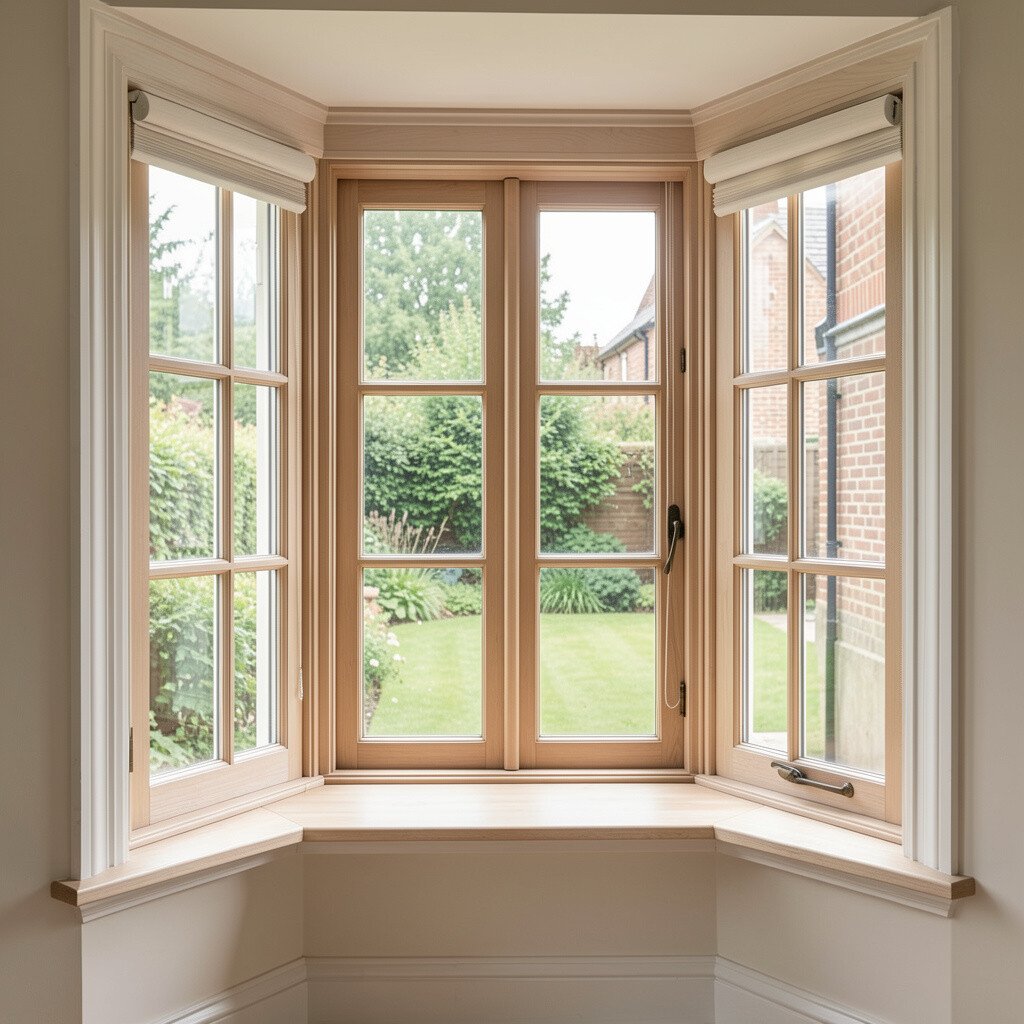
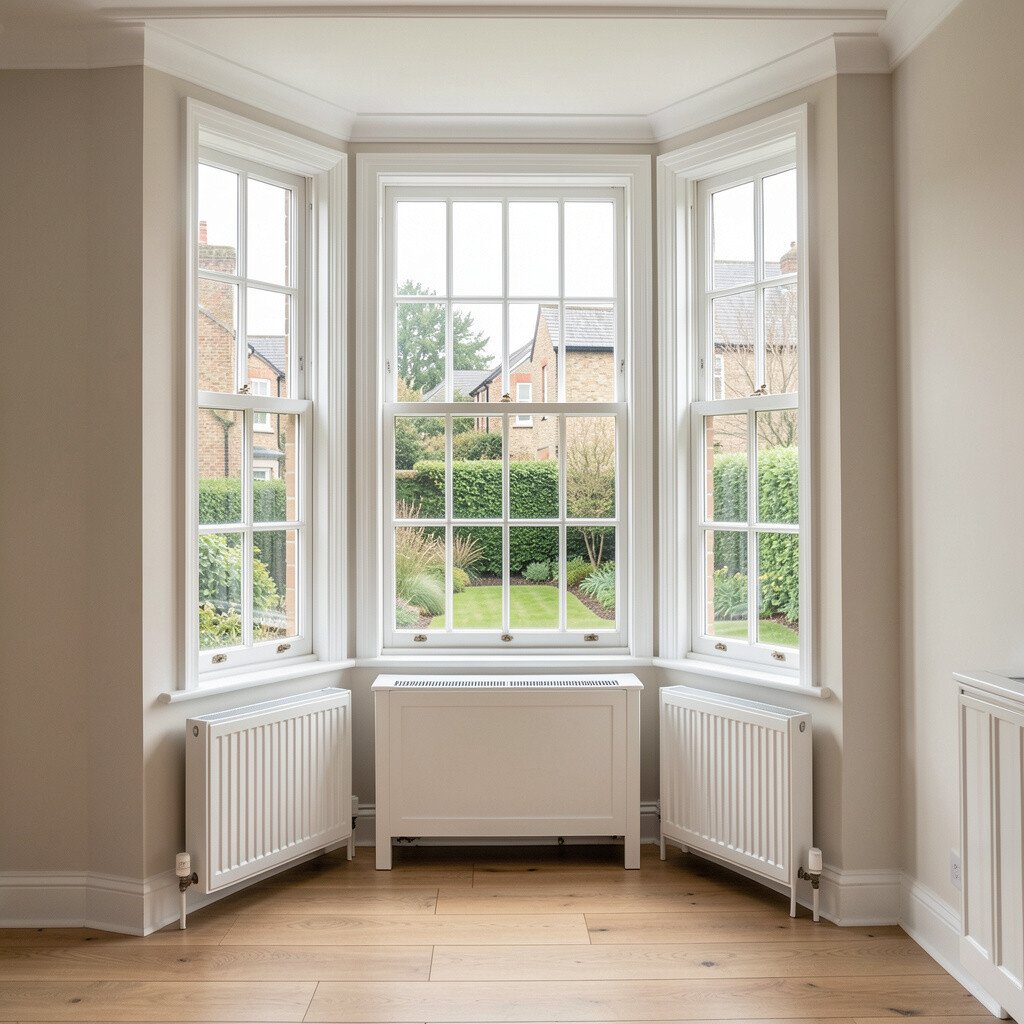
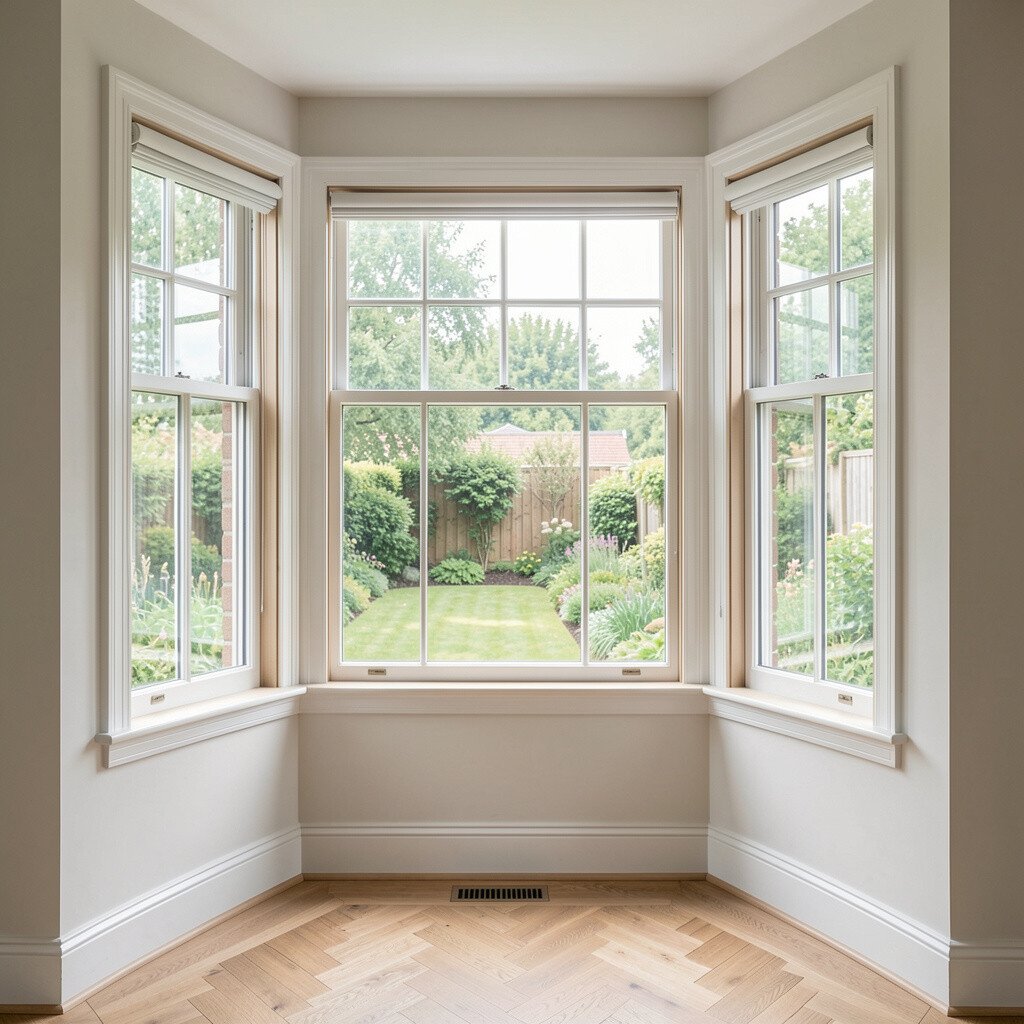
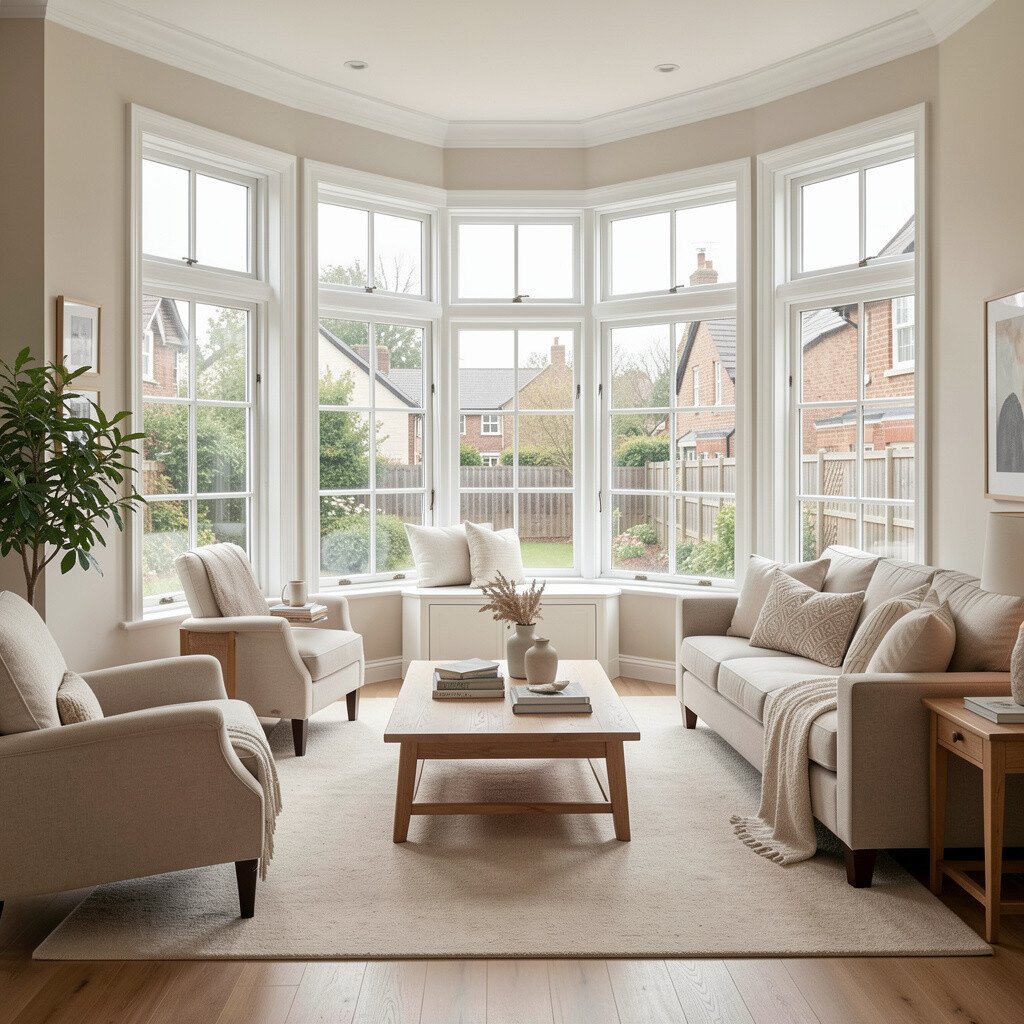
You can’t treat a bay window like a regular wall. Those angled sections change how light hits and how sightlines move through the room.
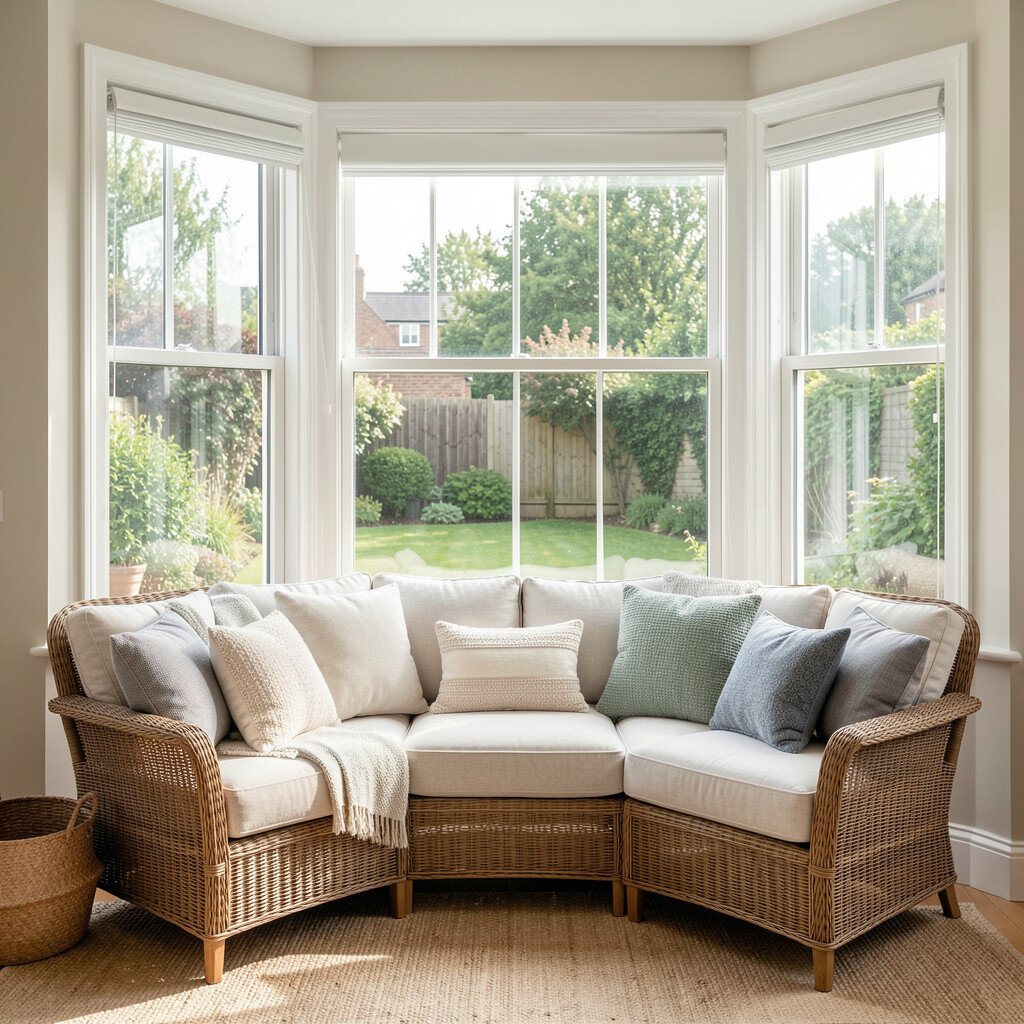
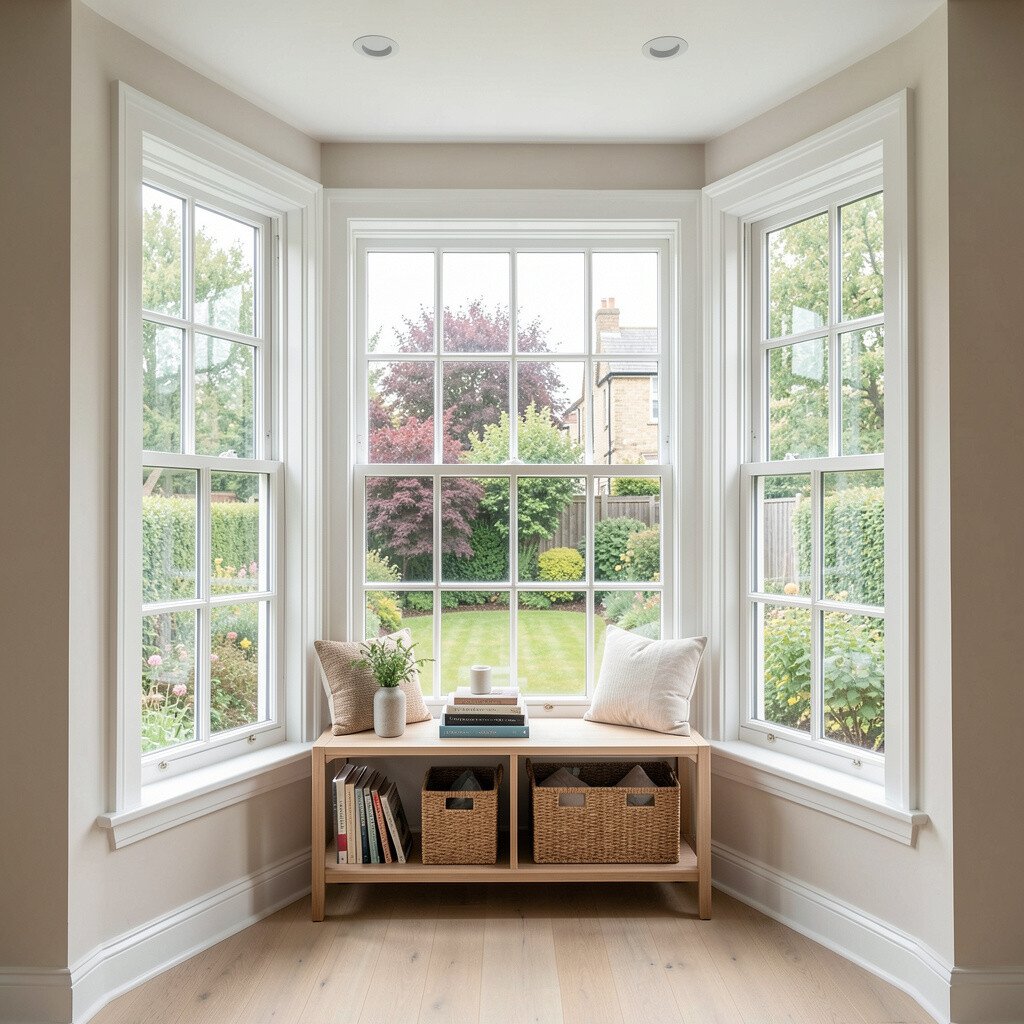
Choose furniture that follows the bay’s natural curve instead of fighting it. A properly fitted chair, a low bench, or a snug table can make the area feel custom and effortless.
2. Blocking the light with oversized pieces
Blocking the light with oversized pieces
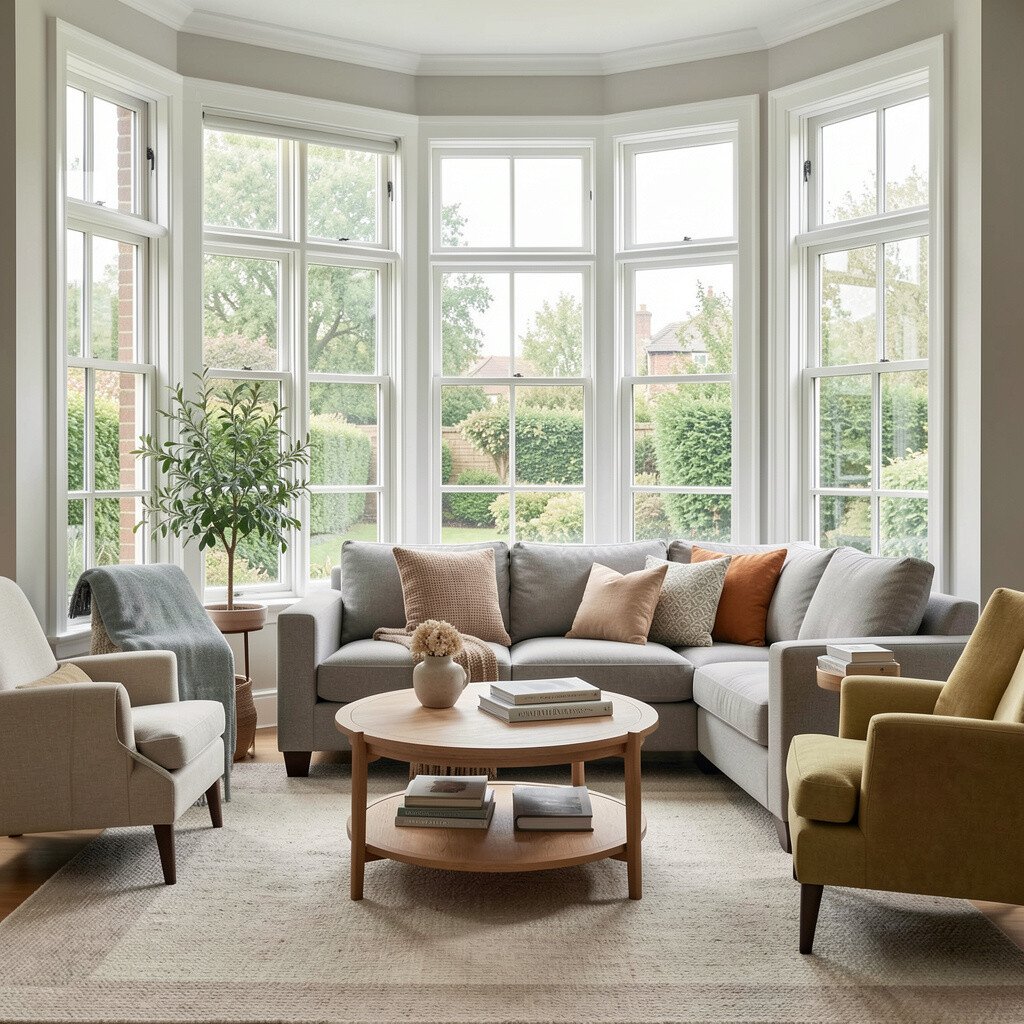
It’s tempting to fill every corner, but bay windows already do a lot of work. Heavy furniture placed too close can make the room feel dim, even on sunny days.
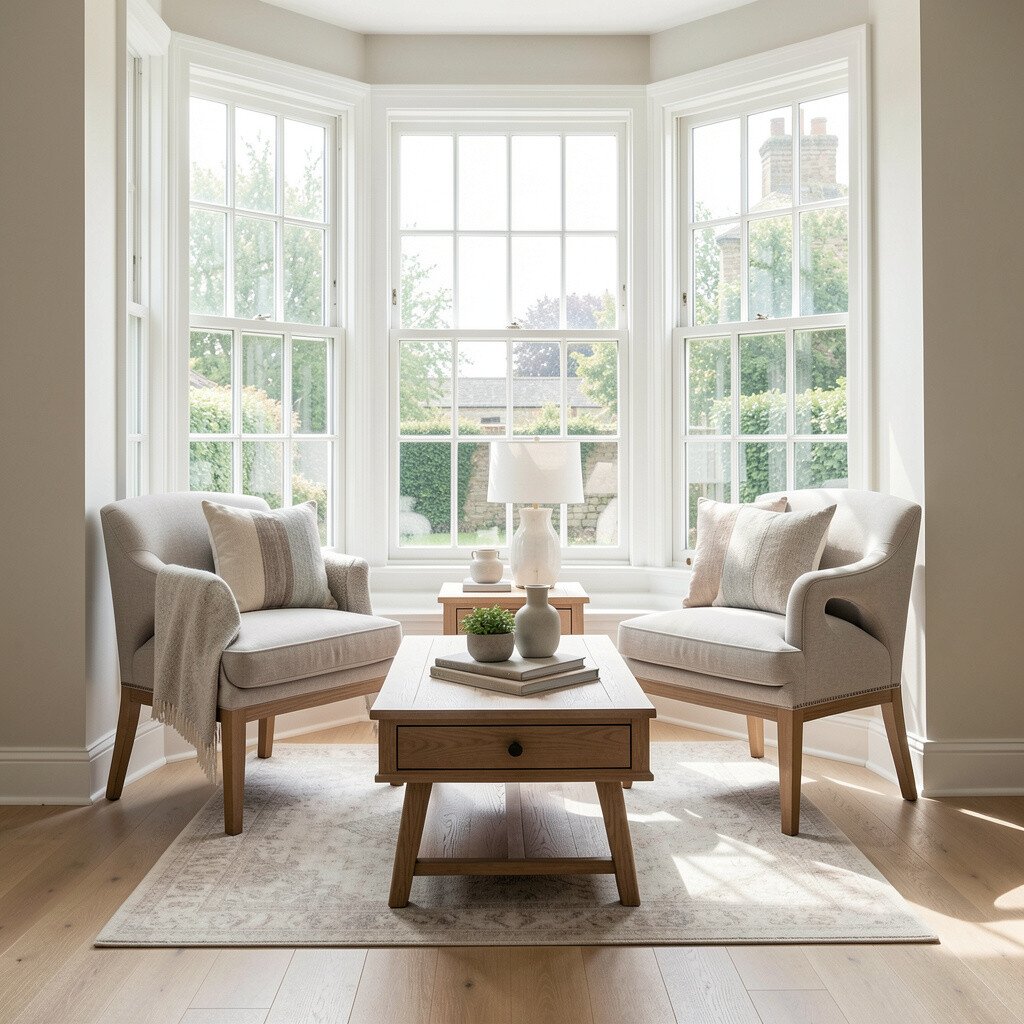
Try measuring the space and leaving a clear path to the window. Slim silhouettes, lighter colors, and furniture with legs help the light move while still giving you comfort.
When you shop, visualize the view from the doorway and from the couch. If the furniture makes the bay window look boxed in, scale it down.
3. Choosing cushions and fabrics that don’t handle real life
Choosing cushions and fabrics that don’t handle real life
Bay window seating gets used more than people expect. Sunlight fades colors, and spills happen faster in cozy spots.
Pick fabrics that feel soft but are practical, like tightly woven blends or performance textiles. Removable covers are a simple upgrade that keeps your furniture looking fresh.
For a warm look, choose neutral bases with one or two richer accents. That way, you still get personality without worrying every day about wear.
4. Forgetting about window trim, radiators, and vents
Forgetting about window trim, radiators, and vents
Many bays have details that matter, like trim profiles, radiator placement, or air vents. If furniture sits too tight, it can block airflow or scrape against molding.
Plan for a little breathing room and check clearances before you commit. Measure again after you account for the thickness of upholstery and any skirted furniture.
5. Buying one-size-fits-everything styles
Buying one-size-fits-everything styles
Bay windows are unique, and so should your furniture. Generic pieces can look like they were placed there by accident.
Consider custom sizing or adjustable options that match your angles. Even small changes, like swapping legs or choosing a different depth, can make a big difference.
A coordinated set that mirrors the bay’s shape can look more expensive than it is. That’s one of the best ways to get a tailored vibe without overspending.
6. Using the wrong height for seating and surfaces
Using the wrong height for seating and surfaces
Height affects how relaxed and functional a bay window feels. If seats are too high, feet dangle awkwardly, and if they’re too low, you end up leaning forward.
For a reading nook, aim for comfortable seat height and add a small side table at a matching level. For a window bench, make sure there’s room for cushions to sit neatly without crowding the glass.
7. Skipping storage when the bay would be perfect for it
Skipping storage when the bay would be perfect for it
Bay windows often become clutter magnets because they invite blankets, books, and daily items. It’s easy to pile things near a cozy spot and forget to bring order back.
Choose furniture with hidden storage, like a lift-top bench or drawers beneath a seating platform. Storage keeps the bay looking tidy and also makes the space feel more “finished.”
Think about what you actually use every day and store it nearby. That small choice boosts convenience and makes the bay feel more personal.
8. Picking colors that fight the room instead of supporting it
Picking colors that fight the room instead of supporting it
A bay window can bring in strong light, which can reveal true colors in a way other walls don’t. That means a color that looks good elsewhere may look harsh in the bay.
Match furniture tones to your room’s main palette and bring in warmth through pillows or throws. If your floors are dark, consider lighter upholstery to prevent the bay area from feeling heavy.
For a fresh trend look, many people are mixing warm neutrals with a single deep accent. It makes the bay feel modern while still cozy and welcoming.
9. Overcrowding the bay with too many decorative items
Overcrowding the bay with too many decorative items
Bay windows look best when there’s breathing space between furniture and decor. When everything is piled on, the area can feel busy instead of calm.
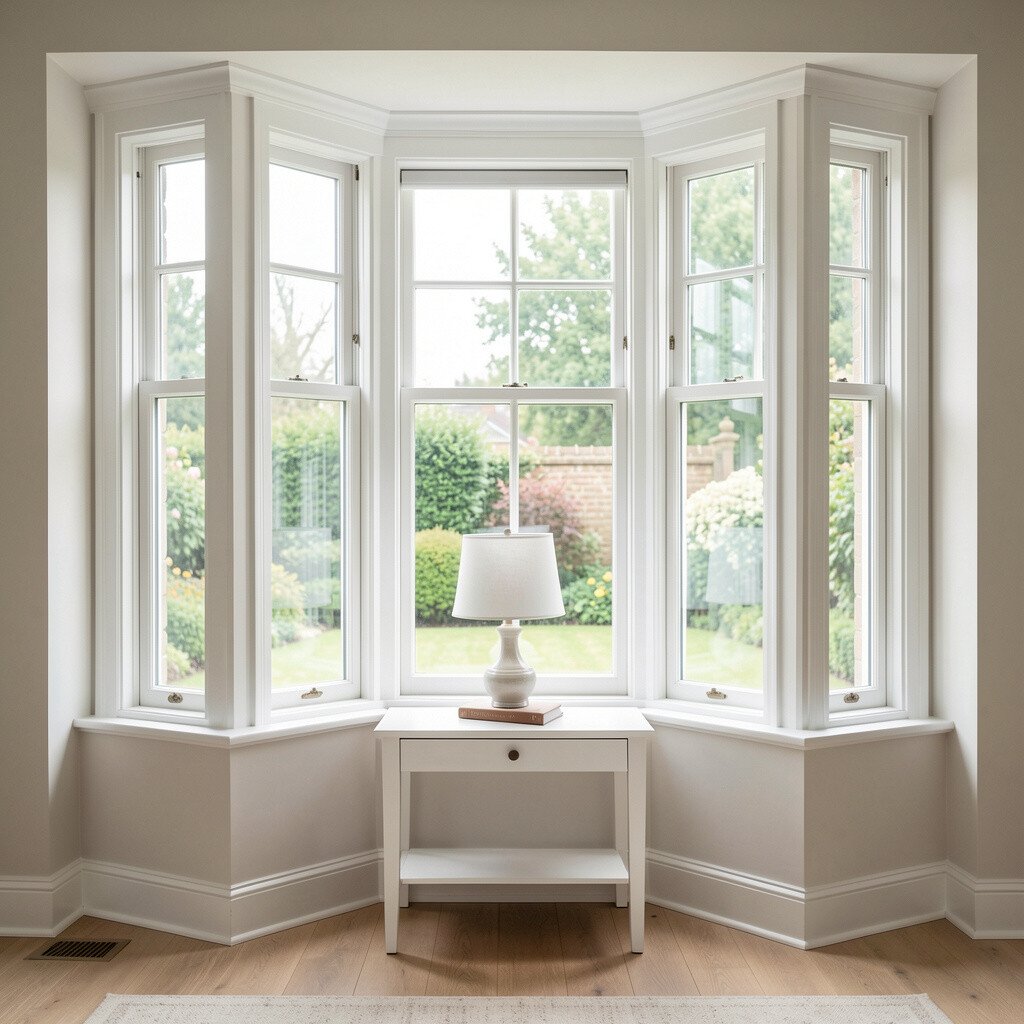
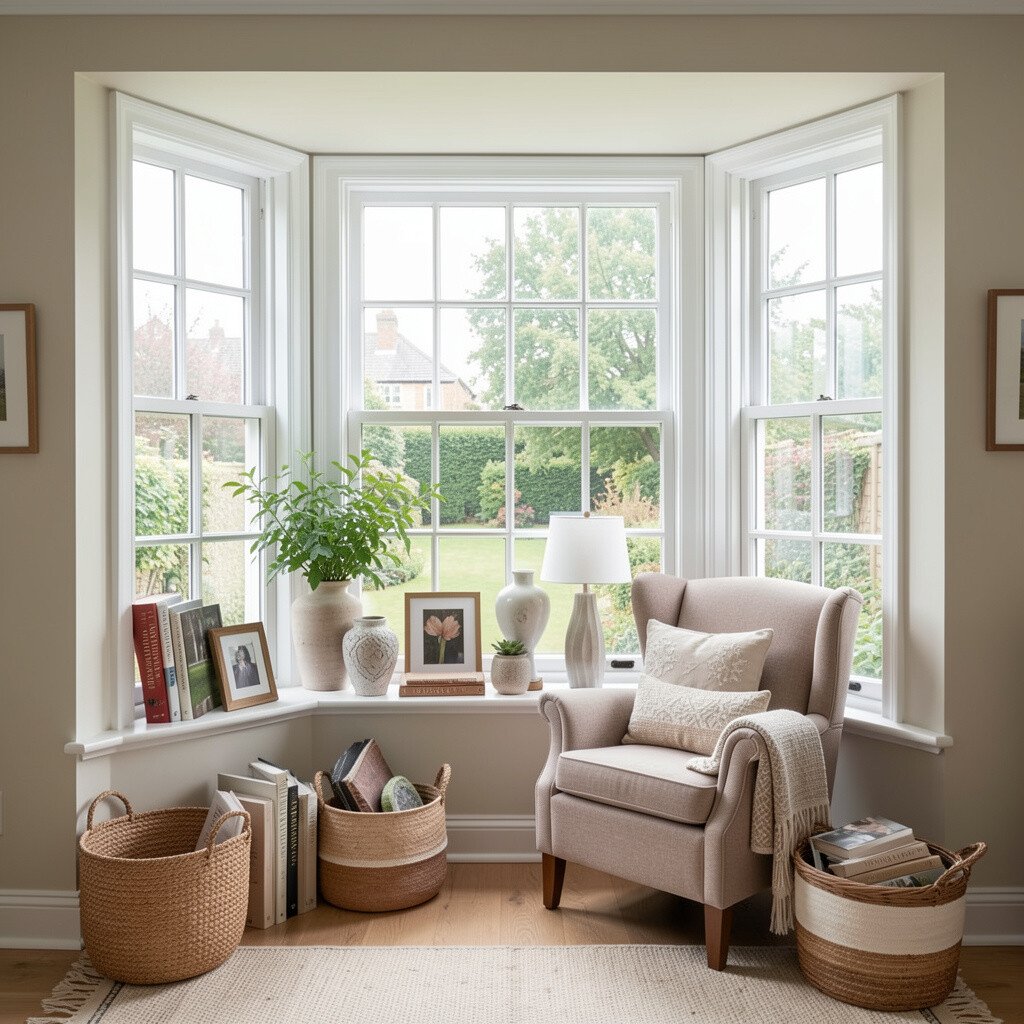
Limit your styling to a few intentional pieces, like a lamp, a small tray, and one plant. Let the window be the star and use decor to support it rather than compete.
If you love collections, rotate them seasonally. A simple switch keeps the bay window exciting without turning it into a cluttered shelf.
10. Choosing chairs that swivel the wrong way or don’t fit the flow
Choosing chairs that swivel the wrong way or don’t fit the flow
Furniture placement is not just about looks; it’s about how you move. A chair that swivels toward the wrong corner can make everyday tasks feel awkward.
Place seating so you can comfortably face the room, not only the window. A good orientation makes conversation easier and helps you enjoy the bay even when you aren’t reading.
Test the walk path first, especially if the bay sits near an entry or hallway. Small adjustments can turn a tight space into a smooth, natural flow.
11. Ignoring rug size and placement over the bay area
Ignoring rug size and placement over the bay area
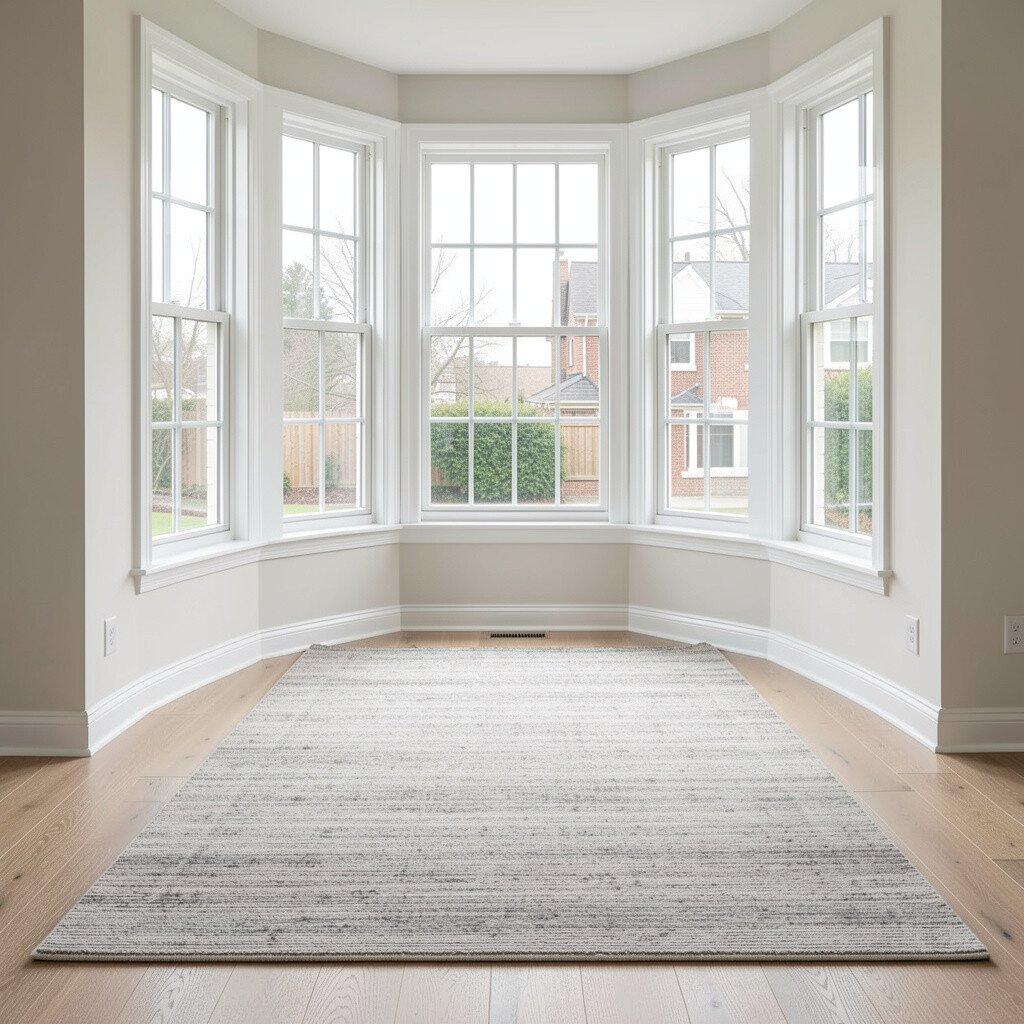
A rug can either anchor the bay or make it feel disconnected from the rest of the room. Many people use a rug that’s too small, so the furniture looks like it’s floating.
Make sure the rug extends under the front legs of seating, not just the center area. When the bay is partially raised or has a step, align the rug edges so they don’t stop abruptly.
For current interior trends, many homeowners are choosing textured rugs with subtle patterns. The texture hides wear and adds warmth that looks great in bright window light.
12. Forgetting that curtains need a furniture-friendly plan
Forgetting that curtains need a furniture-friendly plan
Curtains can look amazing, but they also need space around furniture. If curtains bunch against a bench, chair, or table, the whole setup starts to feel messy.
Keep furniture at a comfortable distance so fabric hangs naturally. If you like dramatic window dressing, choose hardware that allows curtains to move freely without rubbing.
For a cozy look, add a valance or layered panels, but coordinate the colors with your upholstery. That gentle match makes the bay area feel designed rather than accidental.
13. Overlooking the need for a proper side table or surface
Overlooking the need for a proper side table or surface
Bay seating is perfect for drinks, books, and small lamps, but it can feel incomplete without a surface. People often place a chair there and forget the essentials.
Use a side table that matches the bay’s scale, or consider a slim console that sits close to the window. A small tray can also help you switch between reading time and everyday use.
If you like clean lines, choose a metal or glass top that won’t visually block the light. It keeps the bay airy while still giving you practical function.
14. Choosing lighting that looks nice but doesn’t work well
Choosing lighting that looks nice but doesn’t work well
Soft daylight is great, but evening comfort needs the right lighting. Many bay setups look pretty in photos and feel too dim when you’re actually relaxing.
Place a lamp or sconce where it supports reading and creates warmth across the bay seating. A small floor lamp can work beautifully if it doesn’t crowd the window space.
Use bulbs with a warm temperature for that cozy glow people want. The bay window becomes an inviting corner instead of a bright daytime space that shuts down at night.
15. Buying furniture without thinking about seasonal changes
Buying furniture without thinking about seasonal changes
Rugs, throws, and cushion covers can change the entire mood of the bay. If your furniture is set in one fixed style, it may feel less flexible when seasons shift.
Pick furniture with neutral bases so you can refresh with textiles and color. Swap out cushion covers and add different throws to match cooler or warmer months.
People are also leaning into seasonal styling that feels personal rather than “perfect.” That means you can keep your favorite fabrics and just adjust the accents around them.
16. Neglecting scale: depth, width, and the feel of spacing
Neglecting scale: depth, width, and the feel of spacing
Scale is what decides whether a bay window feels cozy or cramped. Even if something fits on paper, it may feel crowded once the room is lived in.
Check the depth of chairs and benches, especially near the window where the angles reduce usable space. Leave room to stand comfortably and to move around the seating without bumping corners.
17. Treating the bay like a dead-end instead of a focal moment
Treating the bay like a dead-end instead of a focal moment
Bay windows naturally pull your eyes, so the furniture should respond to that attention. When you place items without a clear purpose, the bay can feel like leftover space.
Create a focal setup, such as a reading chair facing inward, a bench with a styled cushion arrangement, or a small dining nook if the bay supports it. The right focal point makes the bay feel intentional and gives the room a stronger personality.
Don’t be afraid to make it your signature spot. Unique furniture shapes, a statement pillow, or a distinct lamp can turn a simple bay into a memorable feature.
18. Forgetting to budget for finishing details and upgrades
Forgetting to budget for finishing details and upgrades
Furniture cost is rarely the whole story, especially in a bay window where customization helps. Upholstery, cushions, hardware, rugs, and curtains can add up faster than expected.
Plan a realistic budget that includes accessories you’ll need to make the furniture look complete. If you want the “high-end” look, investing in quality cushions and properly sized textiles often gives the biggest payoff.
When money is tighter, prioritize what touches daily life first. Cushions, storage solutions, and lighting usually improve comfort right away, while decor upgrades can come gradually.
19. Choosing a layout that ignores how you actually use the space
Choosing a layout that ignores how you actually use the space
Your bay window should fit your routines, not just your taste. If you rarely sit there, a large seating plan may be wasted space.
Think about what you do most in that room, like reading, working, enjoying morning coffee, or playing with kids. Then match furniture roles to your lifestyle so the bay becomes useful every day.
Personalize the area with small touches that feel natural, such as a favorite throw, a book stack, or a plant that loves bright light. When the setup matches your habits, it stays inviting and never feels like a chore.