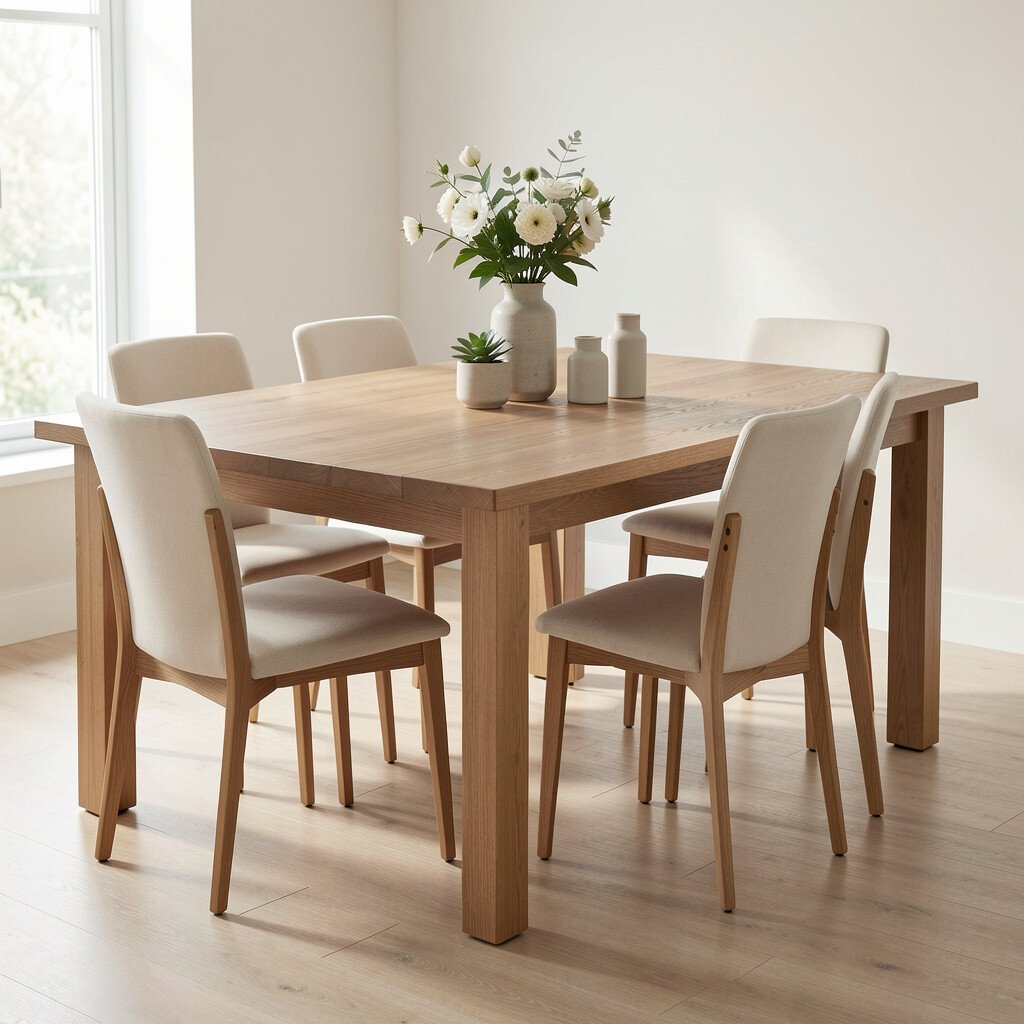
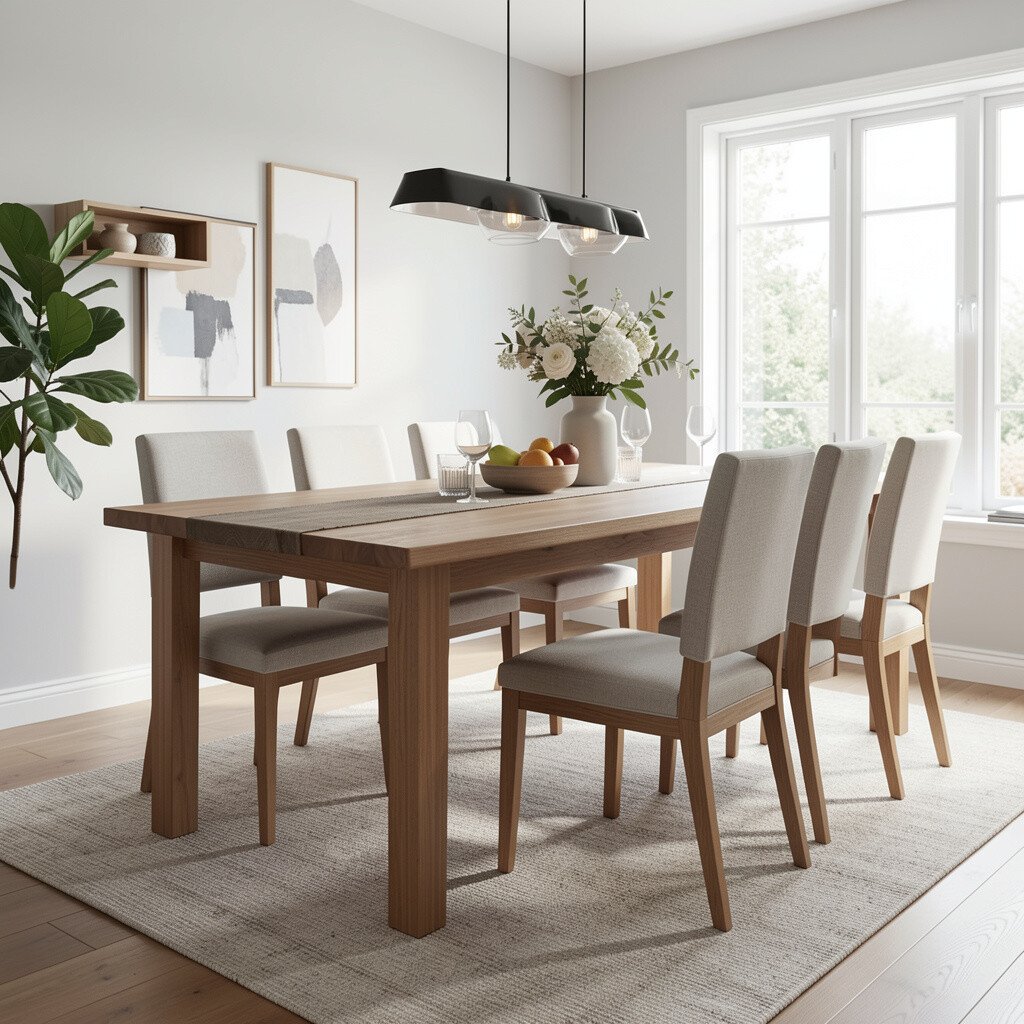
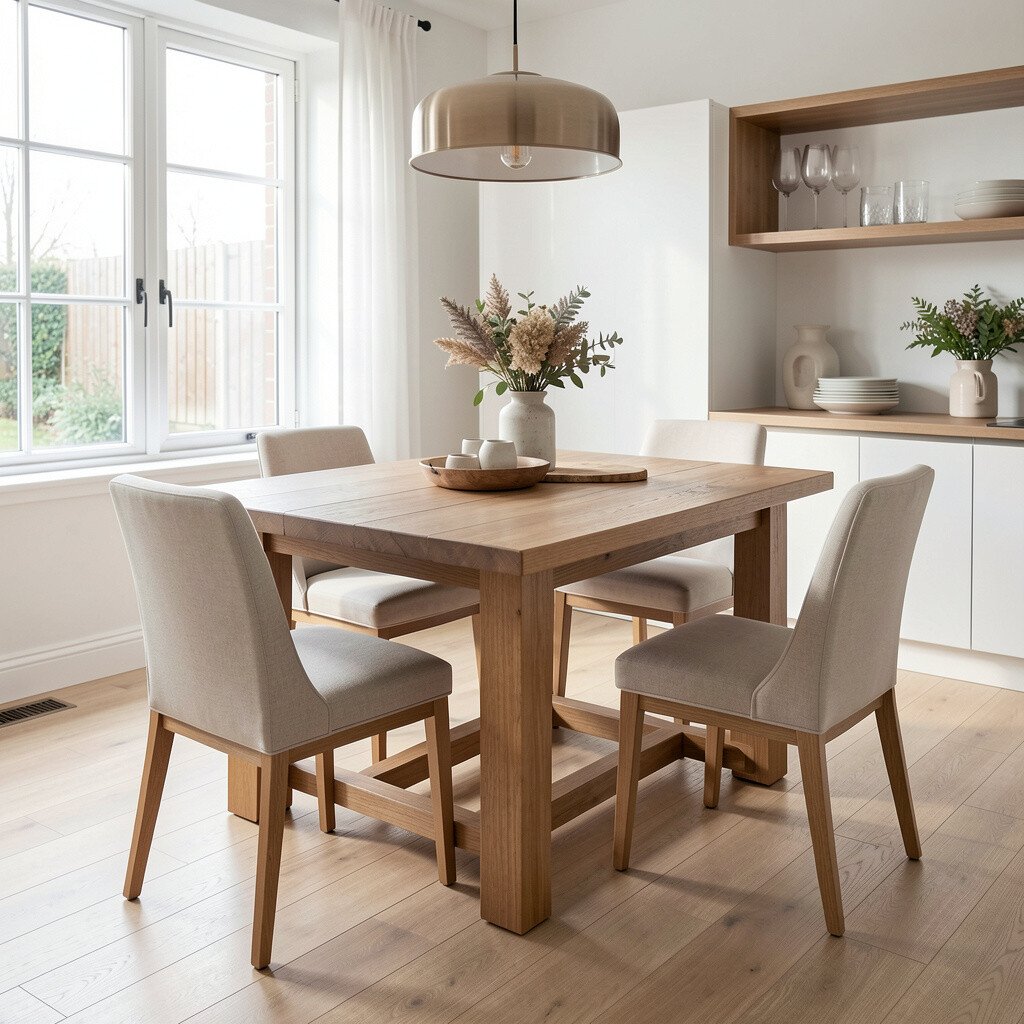
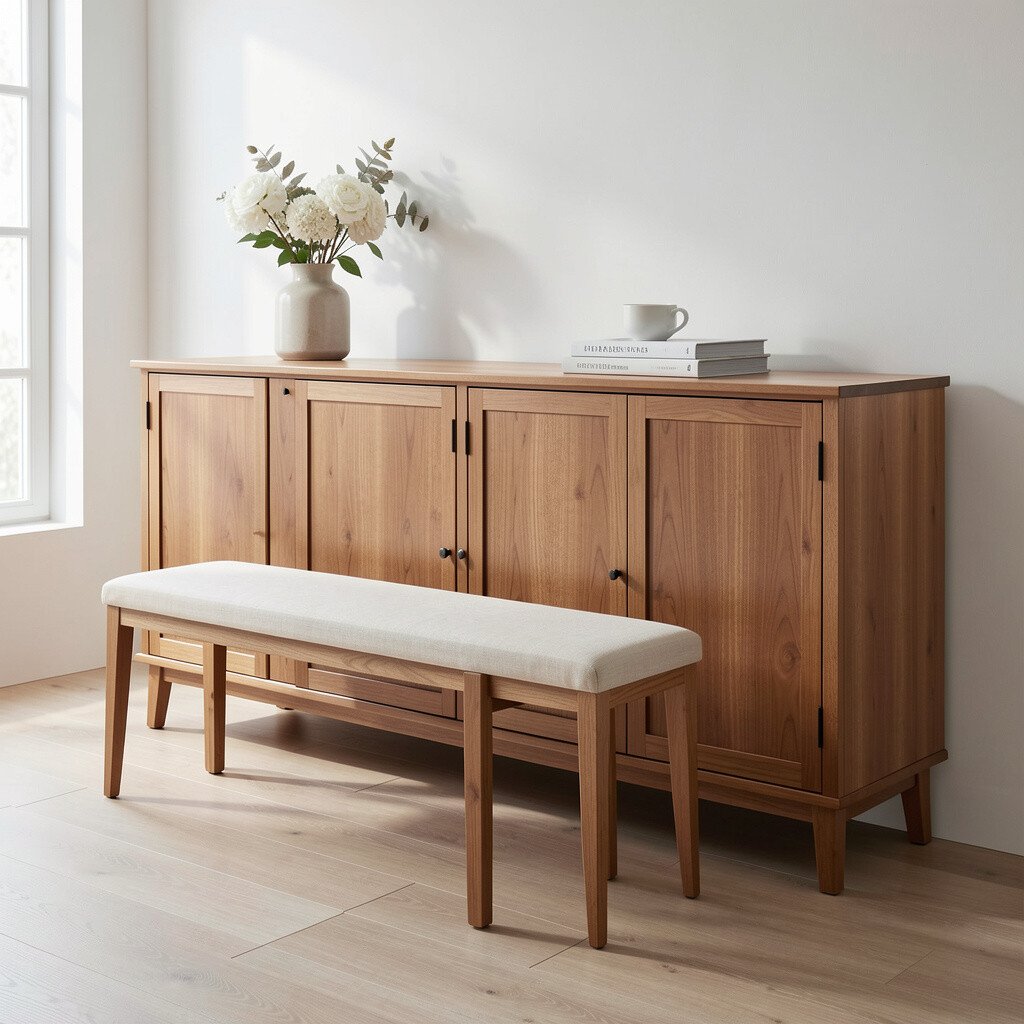
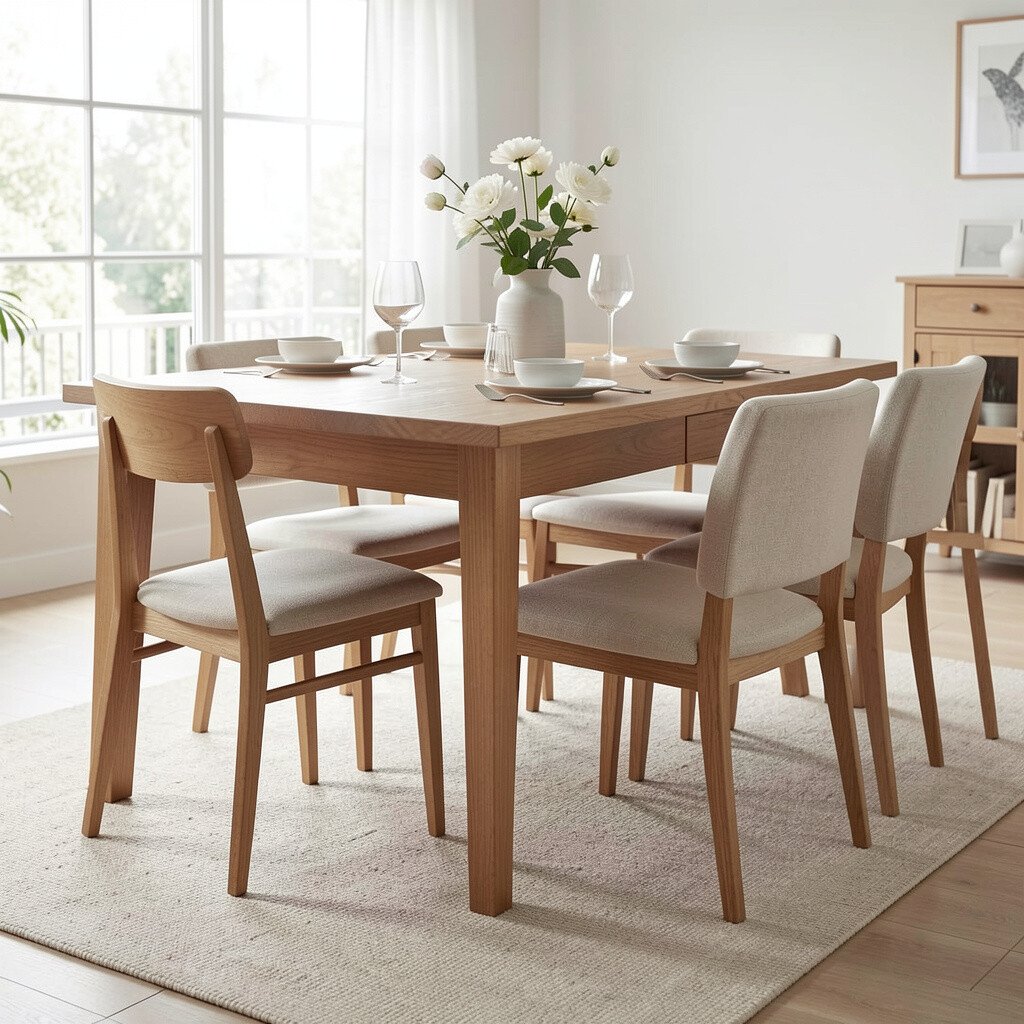
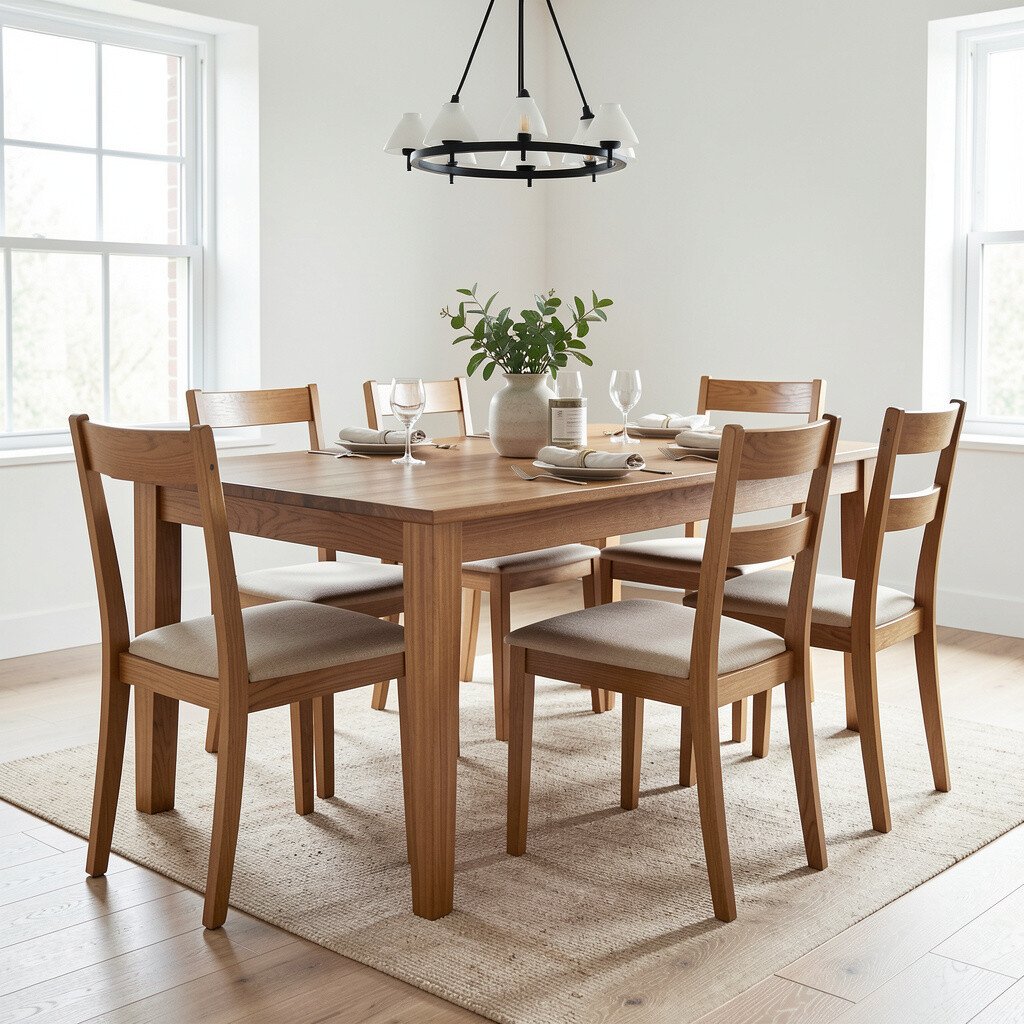
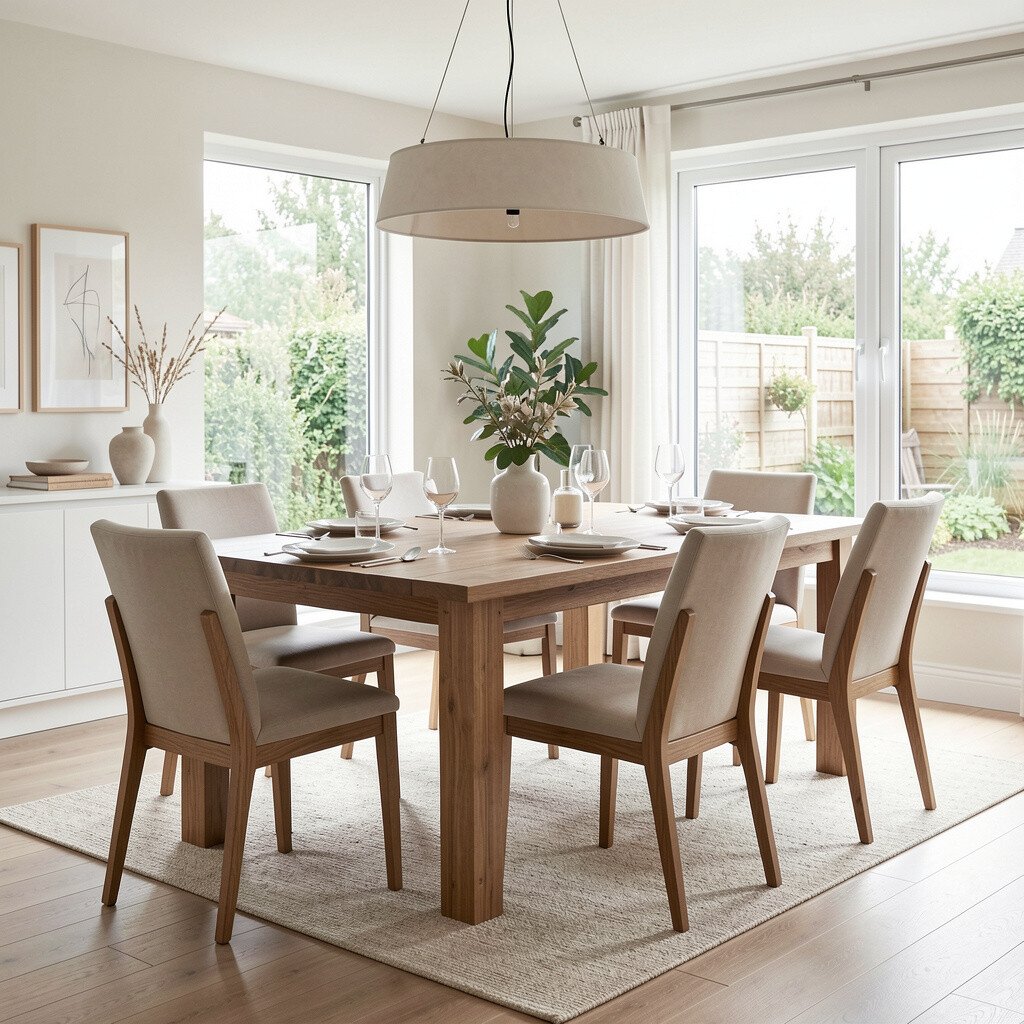
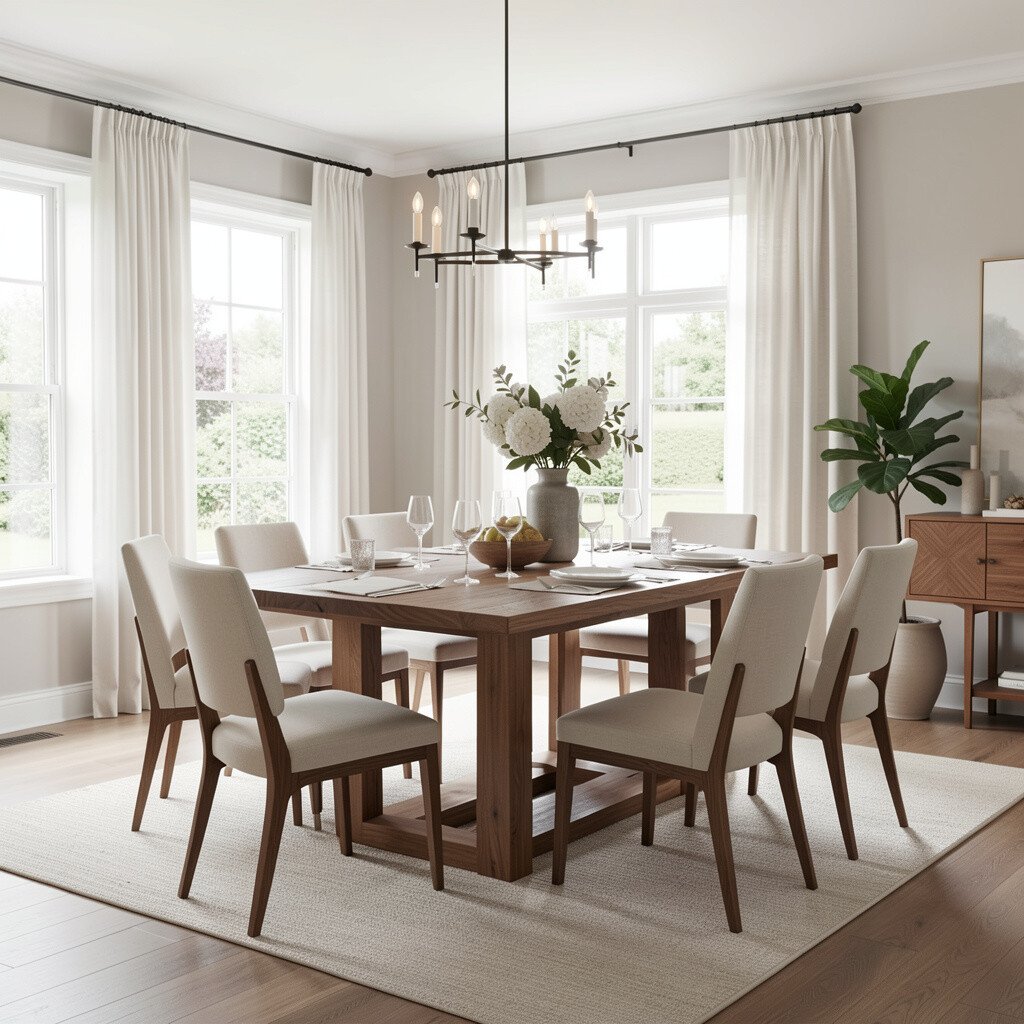
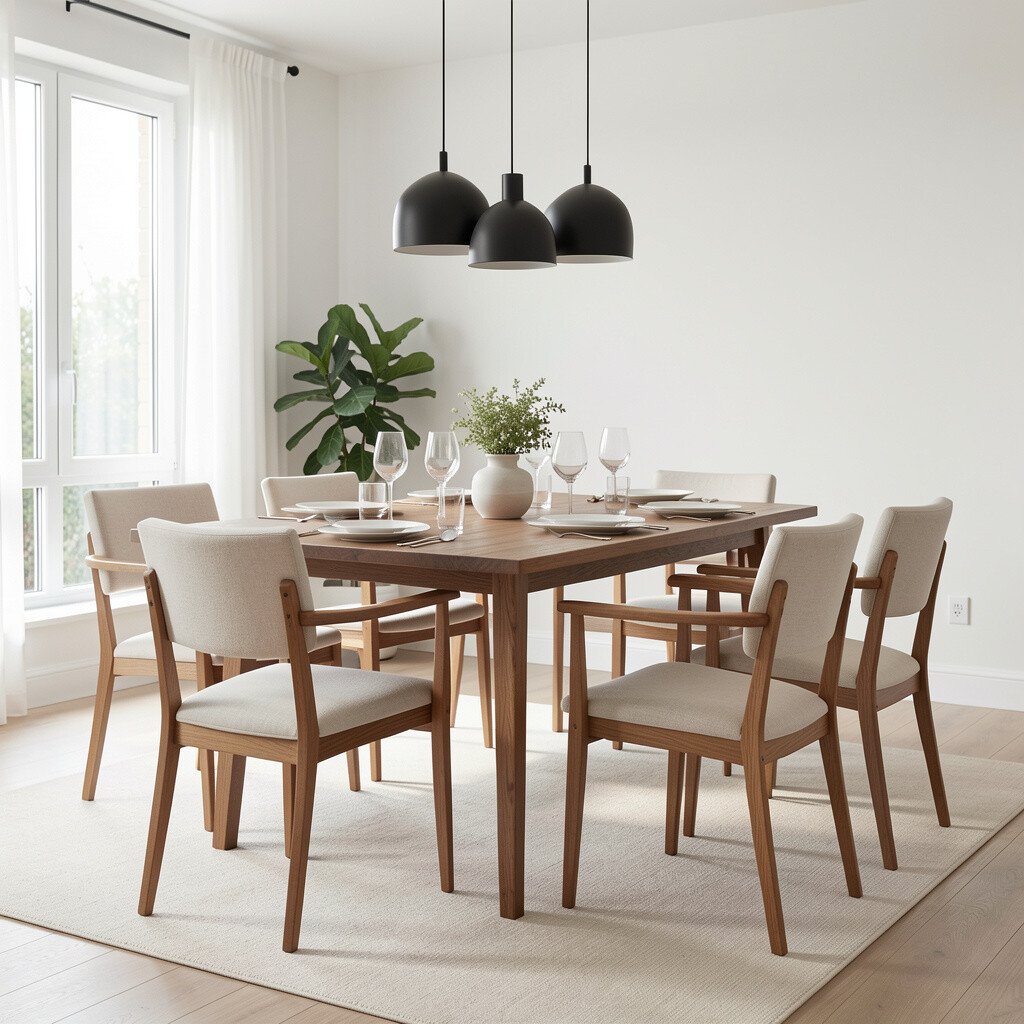
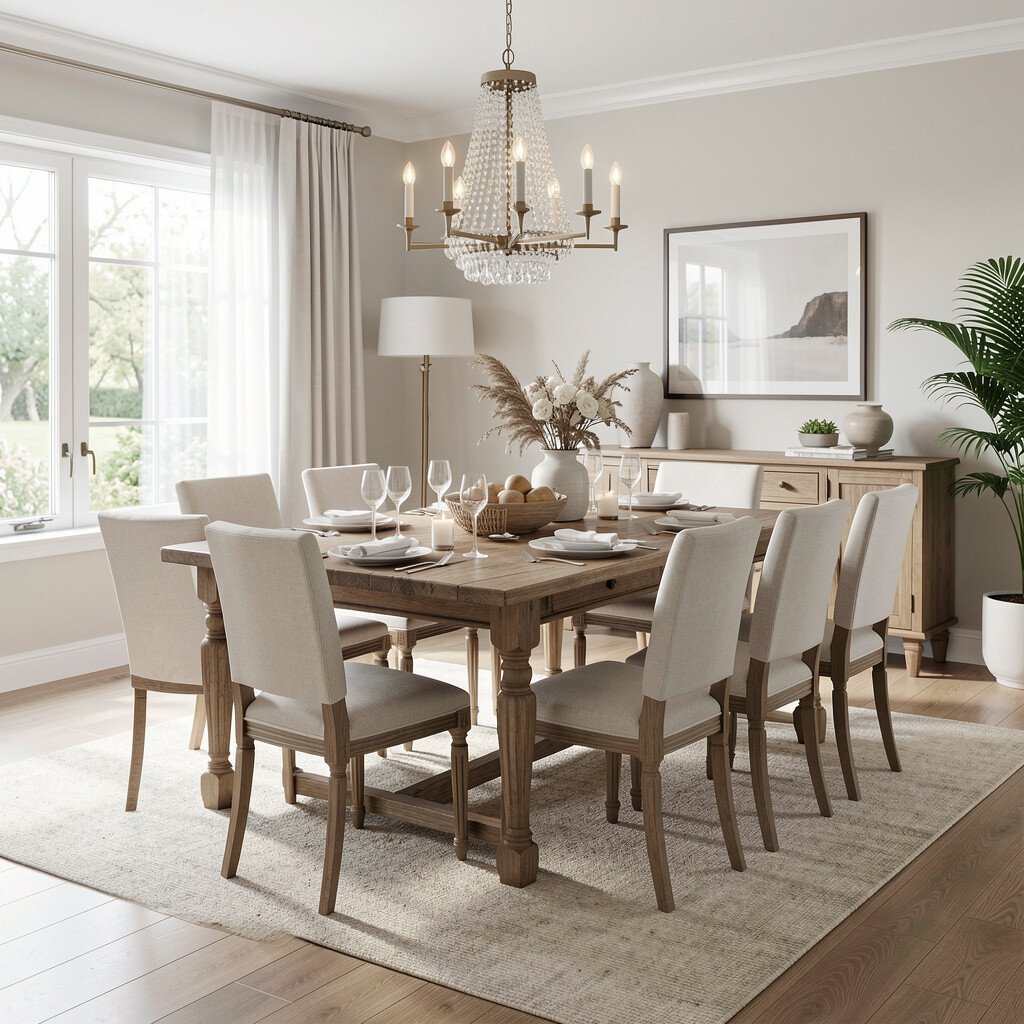
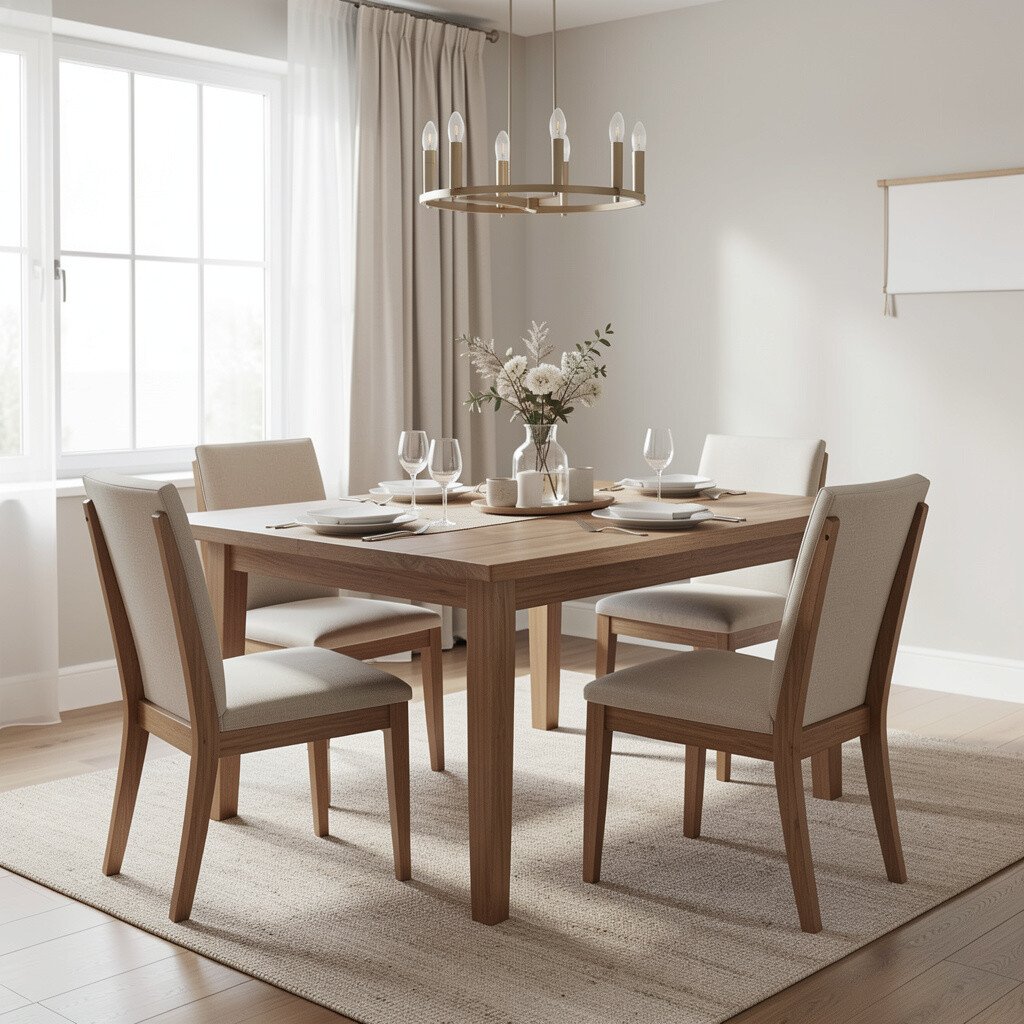
Measuring only the room size is a common slip that leads to overcrowding. You need to think about walkways, door swings, and where chairs will slide when pulled out.
Try laying out masking tape on your floor to mark table and chair positions before you buy anything. This helps you see the visual balance and makes the benefits obvious, like easier movement and more comfort. When your layout matches your lifestyle, conversations flow and the room feels welcoming instead of tight.
2. Choosing a Table Size Without Testing Chair Pull-Out
Choosing a Table Size Without Testing Chair Pull-Out
A table might look perfect in a showroom, but real chairs add extra space demands. If you cannot pull a chair out comfortably, you will avoid sitting for long dinners.
Check the chair depth and allow room for your guests to stand up without bumping elbows. This simple practicality saves you from wasted spending and frustration. A good size gives you a smoother routine for family meals and gatherings.
Account for uneven floors too, because wobbly chairs make any meal feel stressful. If you often host, consider how many chairs you can fit while keeping a relaxed, open feel. A layout that works in real life gives the uniqueness of a space that adapts to you.
3. Forgetting the Comfort of the Seat Height
Forgetting the Comfort of the Seat Height
Seat height that is slightly off can make eating feel awkward right away. It changes how your legs rest and whether your posture looks natural.
Match the chair height to the table height so diners do not have to reach or hunch. This improves comfort, and it also makes the whole setting look better. People notice details they can feel, like how effortlessly everyone sits down and leans in.
If you have taller family members, test with a couple of chairs at your actual table height. Choosing chairs with supportive backs can also add comfort without taking much space. The best part is that you can personalize the look with cushions, fabrics, or slim chair profiles that still feel cozy.
4. Buying Style First and Function Second
Buying Style First and Function Second
A gorgeous dining set can still disappoint if it is hard to live with. The visual appeal matters, but so does how the pieces handle everyday messes and frequent use.
Look for finishes that resist fingerprints and wipe clean without harsh effort. Durable materials give you the benefit of more time enjoying meals instead of constant cleaning. When your style and function line up, your dining area feels uniquely “yours” every day.
5. Choosing Materials Without Considering Daily Life
Choosing Materials Without Considering Daily Life
Some materials look amazing at first, then show scratches, stains, or fading quickly. If you have kids, pets, or even just a busy schedule, you need materials that keep up.
Solid wood, quality veneers, and performance fabrics can balance beauty and practicality. This kind of choice supports long-term cost thinking because you avoid replacement too soon. You can still go for current trends like light wood tones or warm modern finishes, just pick versions that fit your lifestyle.
Think about sun exposure near windows, since UV can change colors over time. If your room gets bright, look for finishes made for everyday light. Choosing wisely gives you uniqueness and helps your dining furniture age gracefully.
6. Not Planning for Storage Needs
Not Planning for Storage Needs
Dining rooms often collect items that need a home, like placemats, serving bowls, and holiday extras. When you ignore storage, clutter sneaks in and steals the calm feeling.
A buffet, sideboard, or cabinet can hide small daily messes and protect tableware. This benefit is real because it keeps your space looking tidy when guests arrive. You can personalize storage too, using drawers for utensils and open shelves for decorative pieces.
7. Overlooking the Height of Sideboards and Benches
Overlooking the Height of Sideboards and Benches
It is easy to focus on table and chairs and forget that benches and sideboards affect the whole room. If a bench is too tall or too short, it can feel awkward and visually unbalanced.
Before choosing, compare sightlines from where you normally sit and stand. The right height makes the room feel cohesive and gives a comfortable flow during meals. It also helps with cost considerations, since you will not need to replace oversized pieces later.
Pay attention to how much clearance you have for doors, drawers, and traffic paths. A bench placed well can create a unique, cozy look, especially in modern farmhouse or Scandinavian styles. When proportions work, even simple dinners look styled.
8. Choosing Chairs Without Checking Back Support
Choosing Chairs Without Checking Back Support
Chairs that look slim can still feel uncomfortable for long dinners. Back support affects comfort, and it also changes how people relax at the table.
Test the chair by sitting for a moment, not just by looking at the shape. A chair with supportive curves helps guests stay comfortable, which is one of the biggest benefits. If you prefer a lighter feel, you can choose breathable upholstery or supportive slatted designs.
9. Skipping the Seat Material Test
Skipping the Seat Material Test
Seat fabric and padding can be a dealmaker or a dealbreaker. Some seats look plush but flatten quickly, while others feel too firm for everyday use.
Look for upholstery that feels comfortable and also bounces back after you stand up. This practical approach protects your purchase and keeps the furniture feeling fresh. You can match current trends like neutral bouclé or rich velvet, but choose fabric that suits your household habits.
If you love the look of leather, check how it handles heat and spills. Many families like performance leather and easy-clean coatings for day-to-day life. Choosing seat materials with intention gives uniqueness without sacrificing comfort.
Round, rectangular, and oval tables each create different movement patterns in a room. A shape that does not fit your traffic flow can make the space feel awkward.
Rectangular tables can work beautifully in long rooms, while round tables encourage conversation and shared eye contact. The benefit is that the right shape makes daily life easier, like serving and passing dishes. Consider how your entryway and kitchen connection guide where people naturally walk.
11. Buying the Same Color as Everything Else
Buying the Same Color as Everything Else
When every piece matches too closely, the dining area can feel flat and overly plain. Visual variety matters, especially in spaces with neutral walls and floors.
Mix warm and cool tones thoughtfully, like pairing a light wood table with chairs in a darker stain or fabric. This adds uniqueness and makes the room feel designed rather than accidental. If you worry about color mistakes, choose one strong tone and keep the rest calm.
You can also add personalization with runners, centerpiece trays, and seasonal napkins. These small updates let you refresh the look without replacing furniture. That also supports smarter cost planning over time.
12. Overlooking the Weight and Stability of the Pieces
Overlooking the Weight and Stability of the Pieces
A dining set should feel solid when you move around it. If a table wobbles or a chair shifts easily, every meal becomes slightly harder.
Check for sturdy legs, strong joinery, and firm chair frames before you commit. Stability is a benefit you feel immediately, especially when someone stands up or leans in. It is also a practical cost choice because well-built furniture holds up longer.
13. Choosing Finishes That Do Not Match Your Cleaning Habits
Choosing Finishes That Do Not Match Your Cleaning Habits
Some finishes are more sensitive than they seem, and they can show water marks or scuffs quickly. Picking a finish without thinking about how you clean can cause extra work.
If you prefer quick wipe-downs, choose finishes that resist stains and allow gentle cleaning. This keeps your dining area looking fresh with less effort, which is a real daily benefit. You can still get trendy looks like matte black hardware or soft satin wood, just be sure it fits your routine.
Try testing care products on a small hidden spot when possible. It is a simple step that can prevent visible damage. Personalization also matters here, because your furniture should match the way you actually live, not just how you imagine it.
14. Forgetting About Lighting Over the Dining Area
Forgetting About Lighting Over the Dining Area
Lighting can make a wooden table look warm or dull depending on what is above it. If you choose dining furniture without thinking about light, the color may not feel right at night.
Consider how pendant lights, chandeliers, and wall lamps affect glare and shadows. The benefit is that the dining space feels inviting for evening meals and celebrations. You can highlight textures, like a wood grain or upholstered chairs, by aligning lighting with your furniture style.
15. Selecting Oversized Décor That Confuses the View
Selecting Oversized Décor That Confuses the View
Large centerpieces and bulky wall items can visually compete with your dining set. The result is a room that feels crowded even when the furniture size is correct.
Choose décor that supports the table, not overwhelms it, and scale items to the surface area. This helps the space feel balanced and adds a clear, comfortable visual focus. A smaller tray, slender vase, or seasonal arrangement can personalize your dining table without stealing attention.
If your table has strong lines, keep décor simple to let its uniqueness shine. If your chairs have standout shapes, avoid loud patterns everywhere else. This kind of styling keeps costs lower too, because you can swap accessories instead of replacing furniture.
16. Ignoring Fabric Pattern Scale and the Room’s Size
Ignoring Fabric Pattern Scale and the Room’s Size
Printed upholstery can look stunning, but pattern scale matters a lot in a dining space. If the pattern is too bold for the room size, it can feel busy.
Pick patterns that match the scale of your table and chairs, especially if your space is smaller. This visual balance is a benefit because the room stays calm and easy to enjoy. For personalization, you can choose subtle texture or micro-patterns and still create a stylish look.
17. Overpaying for Features You Will Not Use
Overpaying for Features You Will Not Use
Some dining furniture includes extra features that sound great but never get used. Extending tables or special inserts can cost more than you need.
Think about your real habits, like how often you host and whether you truly rearrange layouts. This cost consideration prevents you from buying upgrades that do not match your lifestyle. It also keeps your budget flexible for comfort items like better chairs or durable upholstery.
If you need flexibility, consider practical options like storage benches or dining tables with simple extensions. Those can support your goals without expensive complexity. The best choices feel effortless because they fit your schedule, not because they came with extra parts.
18. Skipping Warranty and Replacement Plan Thinking
Skipping Warranty and Replacement Plan Thinking
Even well-made furniture can need repairs over time, especially chairs and table finishes. Avoiding warranty details can lead to surprise costs later.
Check how the manufacturer handles repairs and whether parts are easy to replace. This benefit gives peace of mind and helps protect your investment. When you plan ahead, you can personalize your furniture confidently, knowing you can maintain it.
Consider the long-term care too, like how to fix small scratches or refresh upholstery. A practical maintenance mindset helps furniture stay beautiful for years. You also avoid the stress of last-minute replacements that rarely match the rest of your dining set.
19. Choosing Furniture Styles That Clash With the Rest of Your Home
Choosing Furniture Styles That Clash With the Rest of Your Home
A dining set should not feel like it belongs in a different universe. When the style clashes, the room can look mismatched even if each piece is high quality.
Match key visual cues like wood tone, metal color, and overall shape language across your home. This makes the dining area feel cohesive and adds uniqueness without looking forced. You can still create personality with accent colors, but keep the base materials aligned.
20. Buying Without Considering Future Needs
Buying Without Considering Future Needs
People change, and so do households, tastes, and daily routines. Dining furniture should be ready for life updates, not trapped in one moment.
Think about future hosting, family growth, and possible moving plans. Choosing flexible seating and a table that fits multiple setups gives a practical benefit. It also supports cost thinking because adaptable furniture can delay replacement and reduce future shopping stress.
If you expect to evolve your style, choose timeless base lines and personalize with removable cushions and seasonal table styling. This approach keeps the look fresh without risky big purchases. Your dining area becomes a living space that grows with you while staying comfortable and visually inviting.