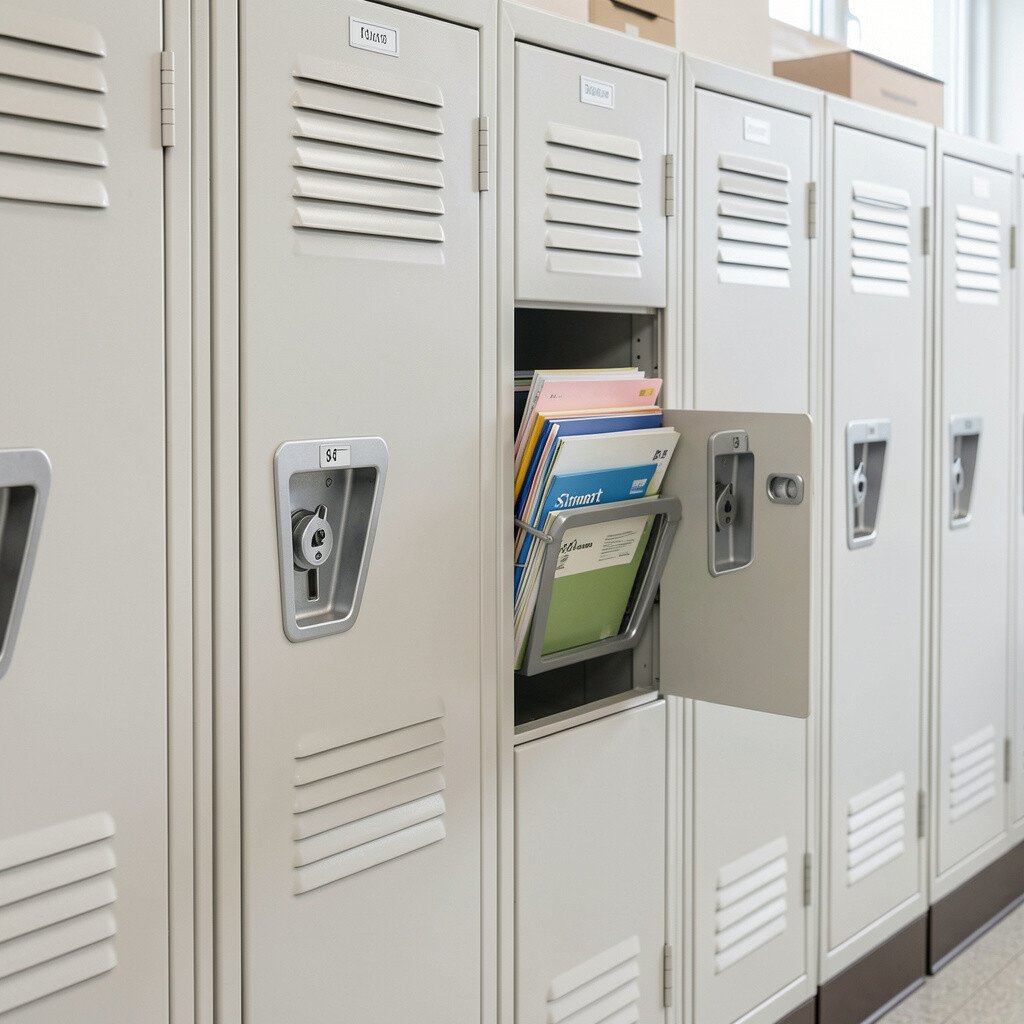
Pick a color theme and let it guide how you pack your locker. When you open the door, the colors should instantly tell you where things belong.
Use colored folders, sleeves, or label stickers to match each class. Try grouping like with like so math items sit together and science items don’t mix with homework. You can even coordinate your locker with what you already use in binders to keep everything consistent.
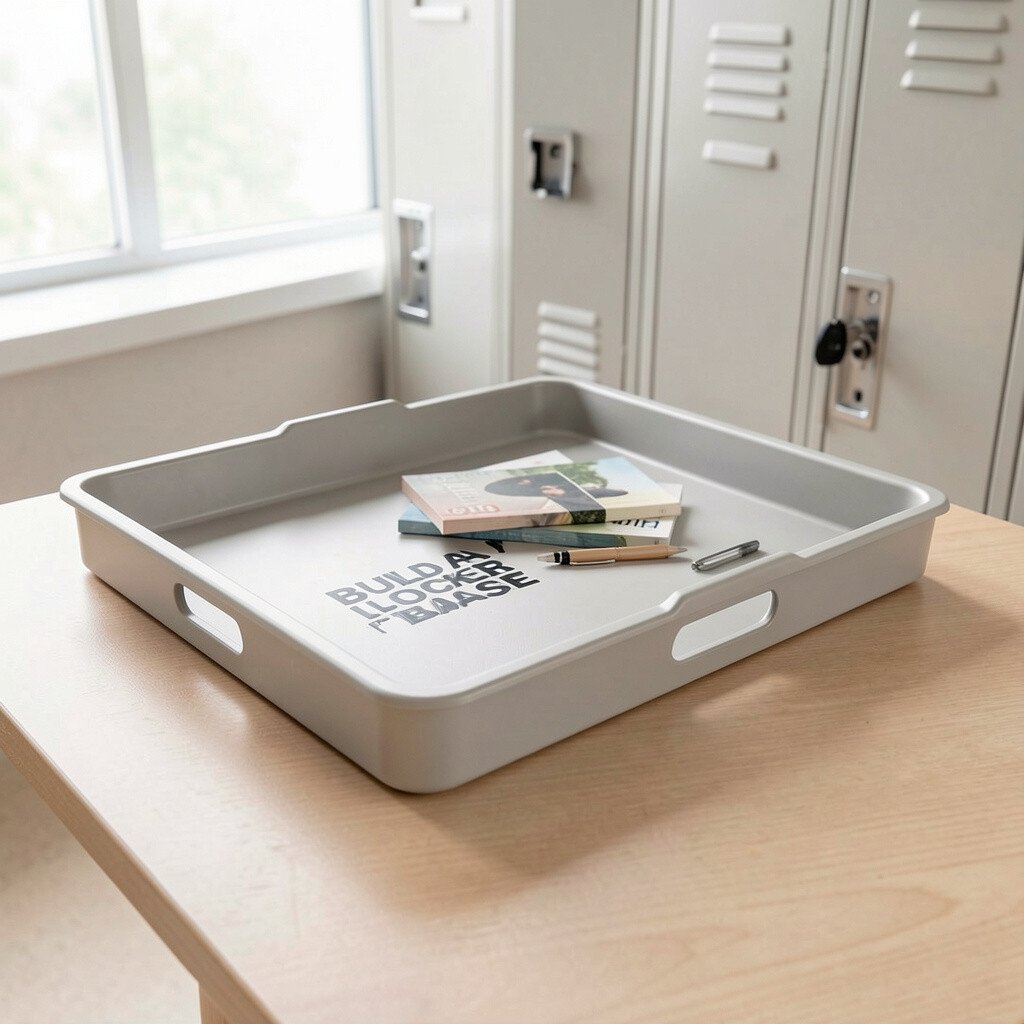
2. Build a Locker “Home Base” Tray
Build a Locker “Home Base” Tray
Choose a small tray, like a shallow bin or organizer tray, and place it at the bottom or back of your locker. Keep it as the one spot that always holds your daily essentials.
Use it for a wallet or ID pouch, earbuds, a pen holder, and a small snack container. Keep it tidy by returning items to the tray every time you switch classes, not only at the end of the day.
If you want it to feel extra personal, wrap the tray in contact paper or add a cute sticker border. A stable home base reduces the time spent searching, and it also helps you stop leaving things on shelves.
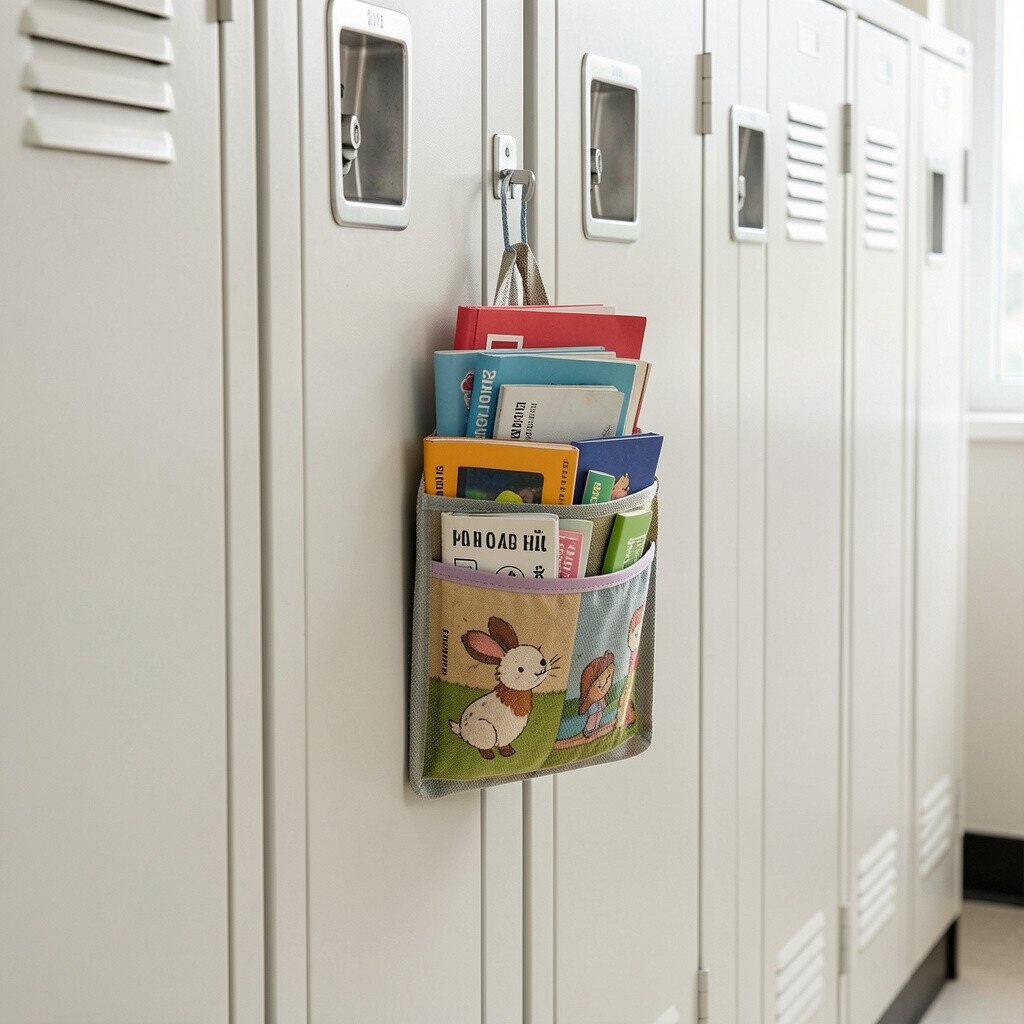
3. Hang a Pocket Organizer on the Door
Hang a Pocket Organizer on the Door
Install an over-the-door pocket organizer so small items have a clear spot. You’ll love how quickly you can grab what you need without digging through stacks.
Use the top pockets for things you reach for often, like a planner, pens, and a calculator. Put less-used items lower down so your daily routine stays smooth. This is especially helpful in lockers that are too narrow for big organizers.
For personalization, choose a pocket organizer in a color that matches your backpack or your favorite subject. Many students are switching to door organizers now because they save shelf space and make the layout visible at a glance.
To keep costs low, look for multipacks at school supply stores or online deals, then use only the pockets you need.
4. Use a Two-Section System for Homework
Use a Two-Section System for Homework
Set up two sections in your locker for schoolwork so you never mix finished tasks with what’s due. A simple divider works, or you can use two folders labeled by your own method.
Put completed homework into one side and upcoming work into the other so your next stop is always clear. When you empty your backpack, place items right away so the pile never grows into chaos.
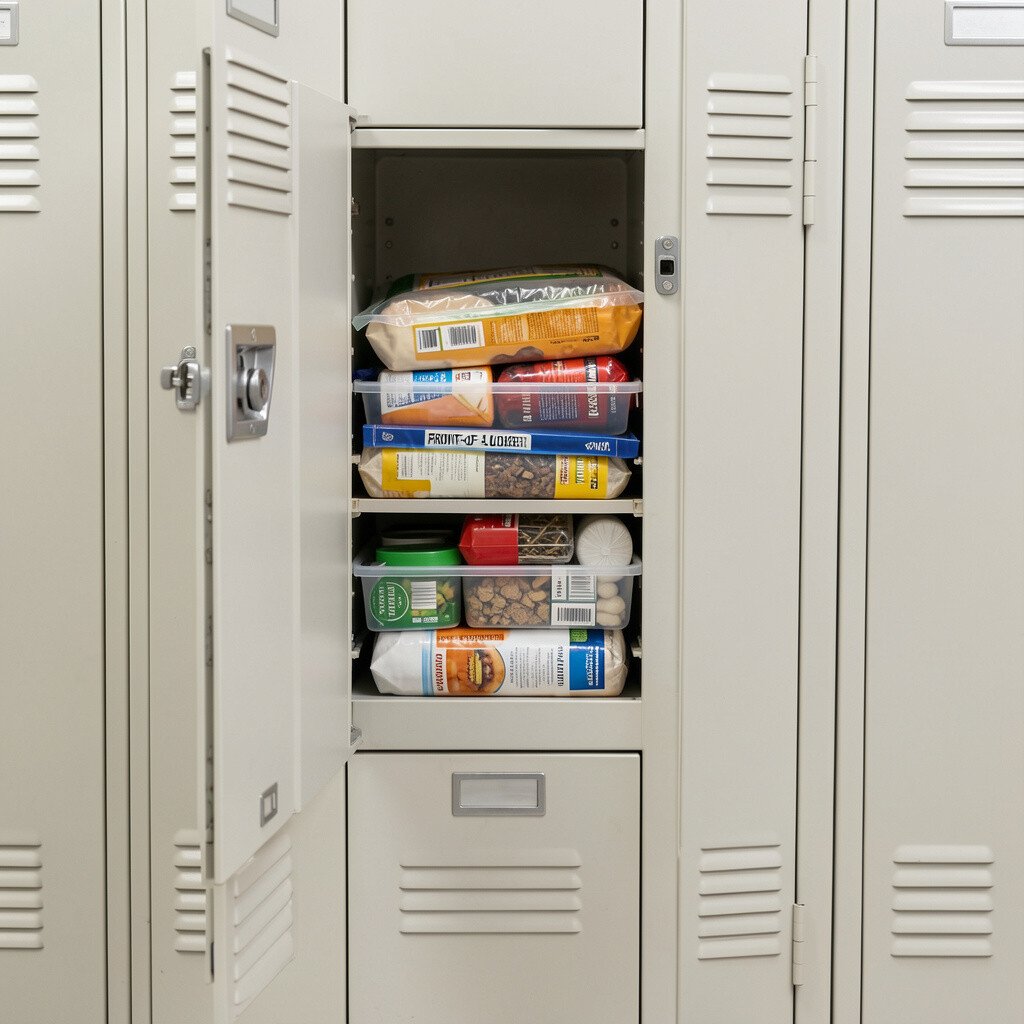
5. Create a “Front-of-Locker” Survival Stack
Create a “Front-of-Locker” Survival Stack
Keep your most urgent items close to the door so you can grab them even when you’re in a rush. Think of it like a survival stack that stays ready for the day ahead.
Use a small book stand, a stackable tray, or even a thick folder as a front layer. Add your planner, the day’s study material, and any needed permission slips so you don’t forget key papers.
This approach helps you stay calm because you’re not hunting in the back. It also makes your locker feel organized in seconds, which boosts motivation when the school day starts heavy.
For cost-friendly setups, reuse items you already own and add a divider only if your shelves are messy.
6. Add a Smart File Folder Rotation
Add a Smart File Folder Rotation
Rotate folders so your locker stays fresh instead of becoming a museum of old papers. When the grading period changes, pull out the folder you won’t need and replace it with a new one.
Store finished sheets in a single “done” folder, then swap them out monthly or each term. This keeps your locker from getting thick and heavy, and it also prevents lost work.
To make it feel unique, use printed folder covers, theme stickers, or a favorite school mascot design. Students who use rotation systems often say they waste less time because the locker stays relevant to today’s classes.
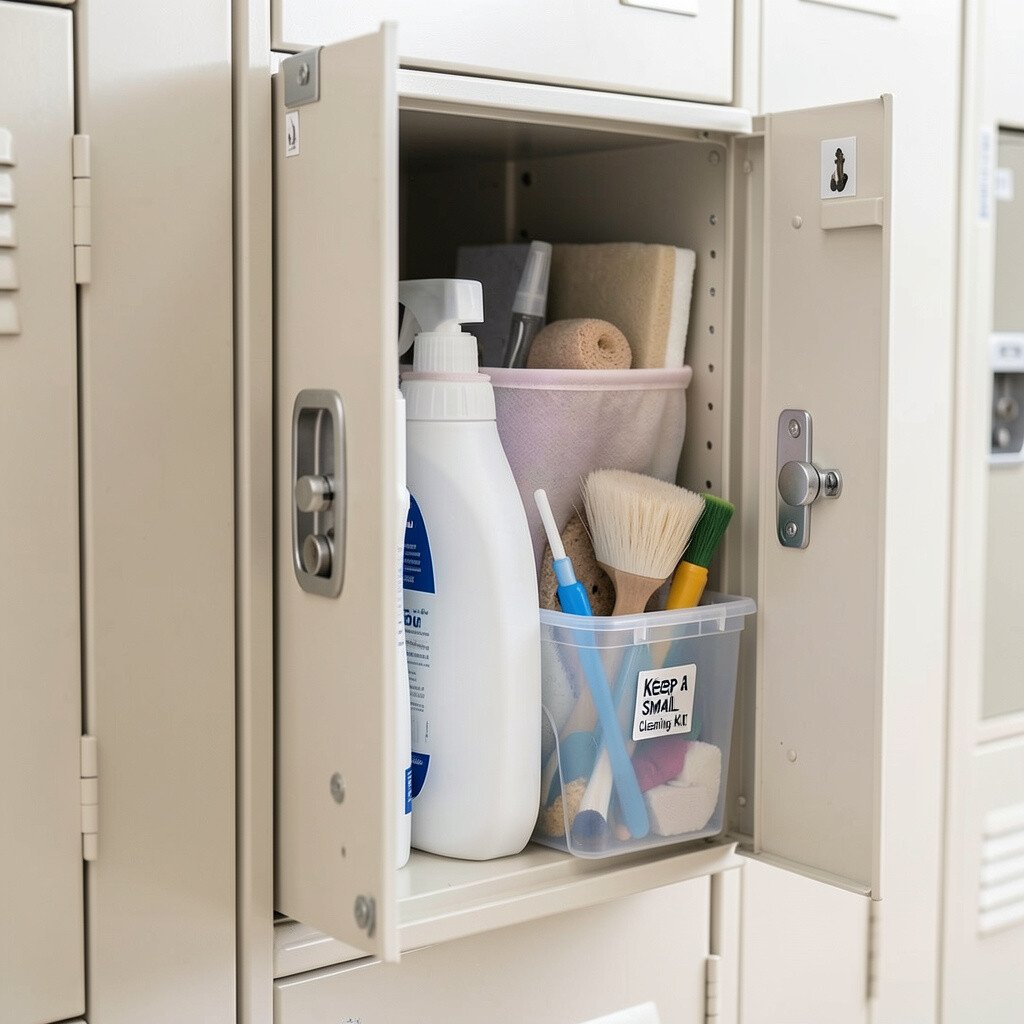
7. Keep a Small Cleaning Kit
Keep a Small Cleaning Kit
A clean locker looks better and feels easier to use, so keep a mini cleaning kit. Choose a small zip pouch with wipes, a microfiber cloth, and a tiny trash bag.
After lunch rushes or rainy days, a quick wipe keeps sticky residue from turning into grime. Put the pouch on a side shelf or inside a door pocket so you can grab it fast without searching.
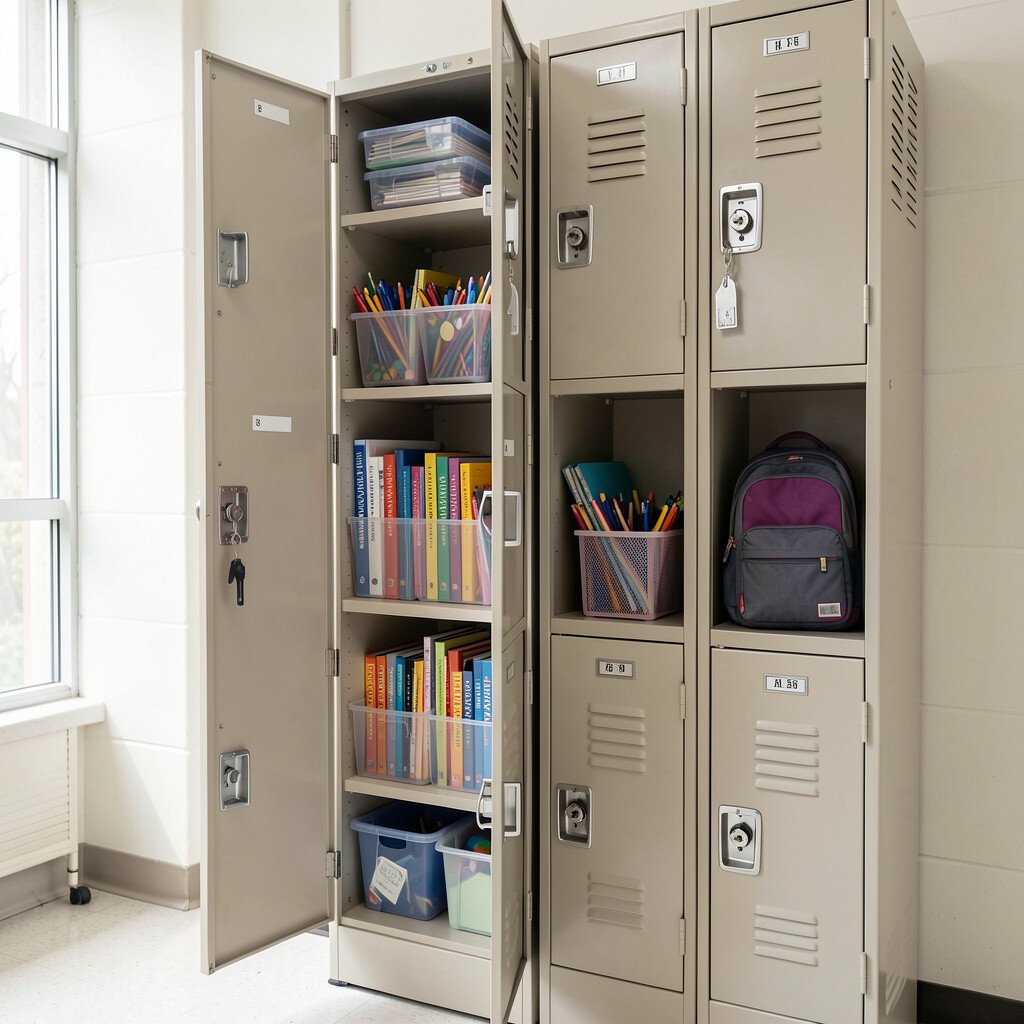
8. Separate School Supplies by Type
Separate School Supplies by Type
Group supplies so you can find them without thinking. Use a pencil pouch, a small organizer cup, and a dedicated spot for tape or markers.
Store pens and pencils in one place, highlighters in another, and sticky notes in a pocket so small items don’t wander. When everything has a category, you stop replacing things you already own.
For personalization, pick supply colors that match your mood or your favorite subject palette. This also supports current trends toward “grab-and-go” organization where students keep everyday items at eye level.
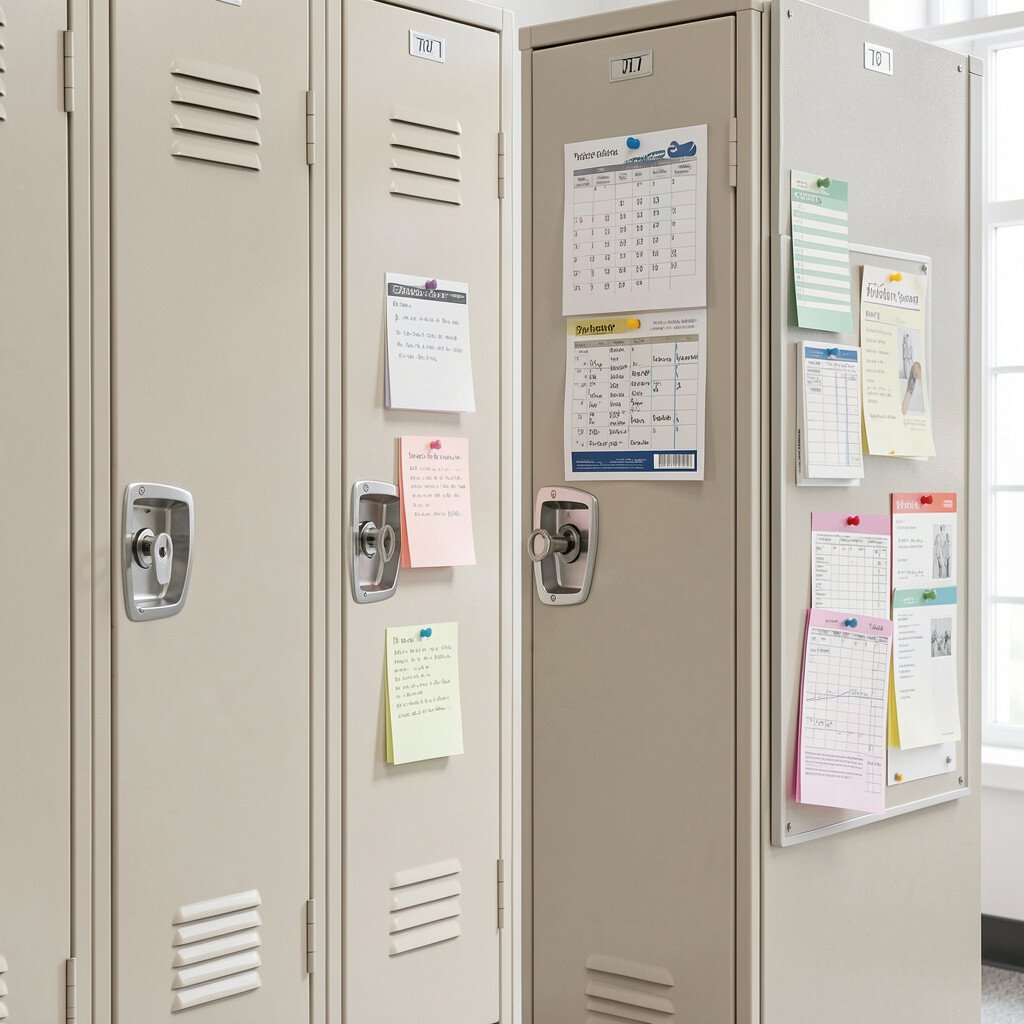
9. Try a Magnetic System for Notes and Schedules
Try a Magnetic System for Notes and Schedules
Use a magnetic whiteboard sheet or magnetic organizer strips if your locker door allows it. You can pin your daily schedule, reminders, or a quick to-do list where you’ll see it every time.
Keep it simple with a small weekly calendar layout, plus one or two habit reminders. When you update it regularly, you reduce the stress of forgetting deadlines.
Make it feel special with fun magnets, a photo you’re proud of, or a small inspirational quote. This trend is popular because it makes your locker active, not just storage, and it cuts down on paper pileups.
Cost-wise, you can start with a small magnetic board and upgrade later if you find it truly helps.
10. Use a Shoe Bag for Bulky Gear
Use a Shoe Bag for Bulky Gear
If you carry sports gear, slippers, or extra layers, a shoe bag can be a lifesaver. It keeps bulky items contained and stops them from mixing with textbooks.
Hang the bag near the back or on the door hook so it stays out of the way. Choose breathable material if possible so smells don’t get trapped.
Personalize it by adding a name tag, a team logo, or a keychain that makes it easy to spot. This setup is unique because it acts like a mobile storage pocket that you can remove before games or after school.
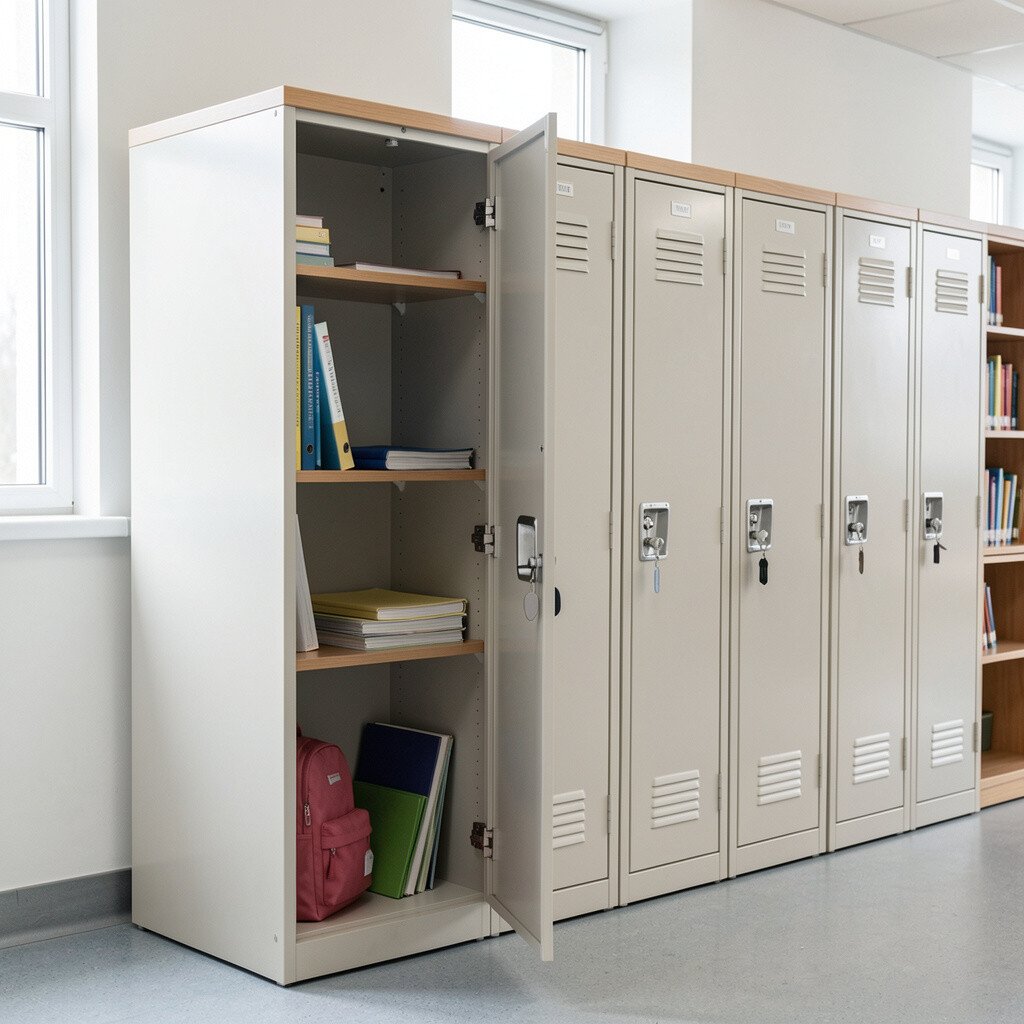
11. Plan Your Shelf Layout for Easy Access
Plan Your Shelf Layout for Easy Access
Think about what you use most and place it where your hand naturally reaches. Put daily items on the middle shelf and keep heavier or bulkier stuff on the bottom.
Keep your top shelf for lighter items, like spare folders or a light jacket, so you’re not juggling weight at face level. This layout reduces shoulder strain and makes it easier to stay organized in a hurry.
To personalize, arrange items in a pattern you like, such as matching folder spines facing forward. Many students are using “line-of-sight” layouts now because they help you maintain order without constant reshuffling.
12. Make Your Locker Reflect Your Study Style
Make Your Locker Reflect Your Study Style
Your locker should match how you learn, not just how you store. If you love visual notes, add a small board or sticky note pad where you’ll see it.
If you prefer digital planning, keep a charging cable and a small notebook for quick handwritten reminders. When your setup supports your actual routine, you’ll use it more and keep it cleaner.
Choose one or two signature touches, like a theme color, a photo, or a mini organizer with your favorite pattern. Even if you keep it simple, personalization makes the locker feel like yours, and that makes it easier to maintain.
For a budget-friendly approach, start with reusable items and add only one new organizer piece at a time until everything clicks.