12+ Hidden Appliance Storage Ideas For A Tidy Kitchen
Your kitchen can look calm and clean even when appliances are always in use. A few clever hiding spots keep counters free and make cooking feel easier.
With some planning, you can tuck bulky tools away while still keeping them reachable. The trick is choosing storage that fits your space, your habits, and your style.
1. Cabinet Pull-Out Lifts for Small Counter Appliances
Cabinet Pull-Out Lifts for Small Counter Appliances
A pull-out lift inside a cabinet lets you slide small appliances out only when you need them. You’ll see the appliance face-up on a smooth tray, and the cabinet door hides everything the moment you close it.
This setup keeps your counter clear and helps you avoid stacking devices in messy piles. For practical use, measure appliance height and allow a little extra clearance for cords and vents.
2. Toe-Kick Drawer Storage Behind the Dishwasher and Fridge
Toe-Kick Drawer Storage Behind the Dishwasher and Fridge
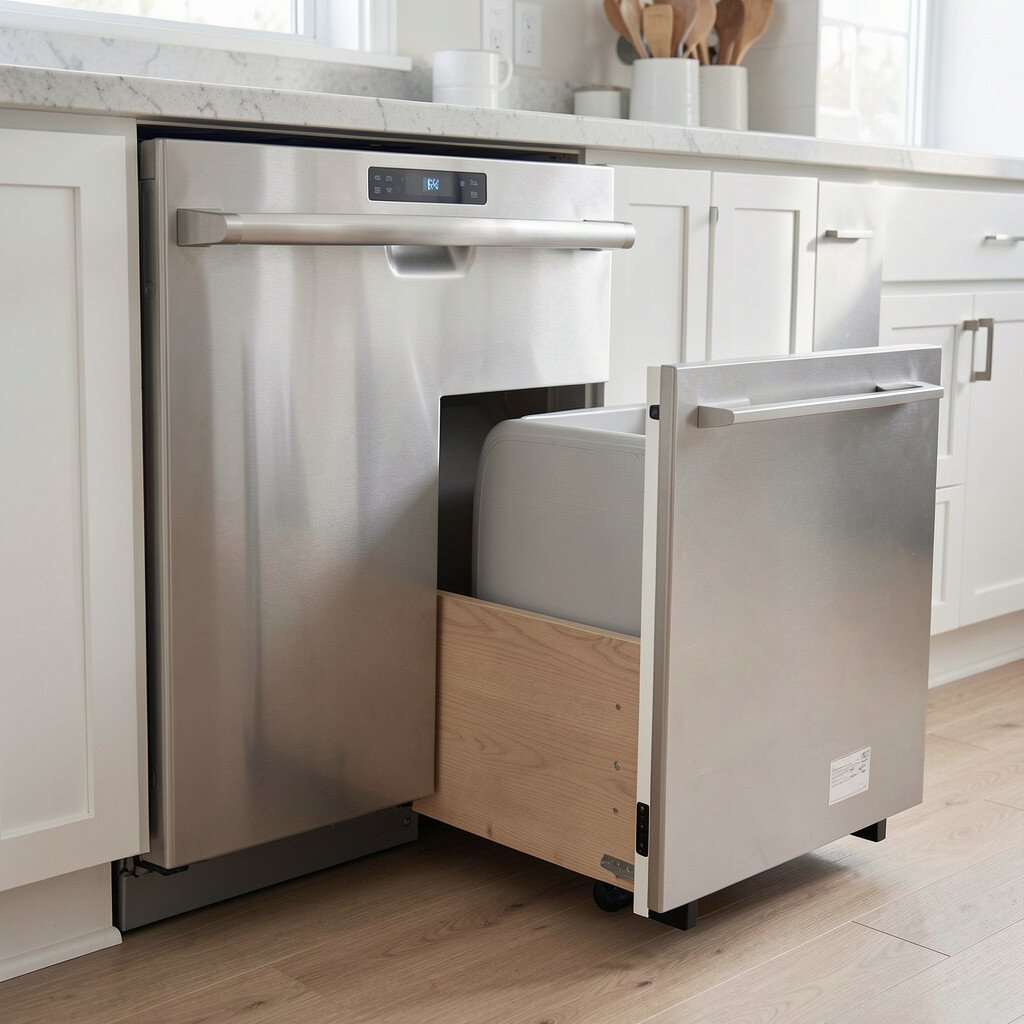
A toe-kick drawer is a sneaky place to store flat, quick-grab items like toaster attachments, extra filters, or narrow tools. When you open your cabinet kick panel, you get a shallow drawer that slides out with a satisfying click.
This kind of hidden storage protects small parts from dust while keeping them close to the work zone. Choose smooth slides and keep the drawer deep enough for items to lie flat.
If you rent, look for an adjustable insert kit so you can set it up without damage. For personalization, match the drawer finish to your cabinet hardware so it blends in.
3. Pantry Door Rails for Hanging Blender Jars and Lids
Pantry Door Rails for Hanging Blender Jars and Lids
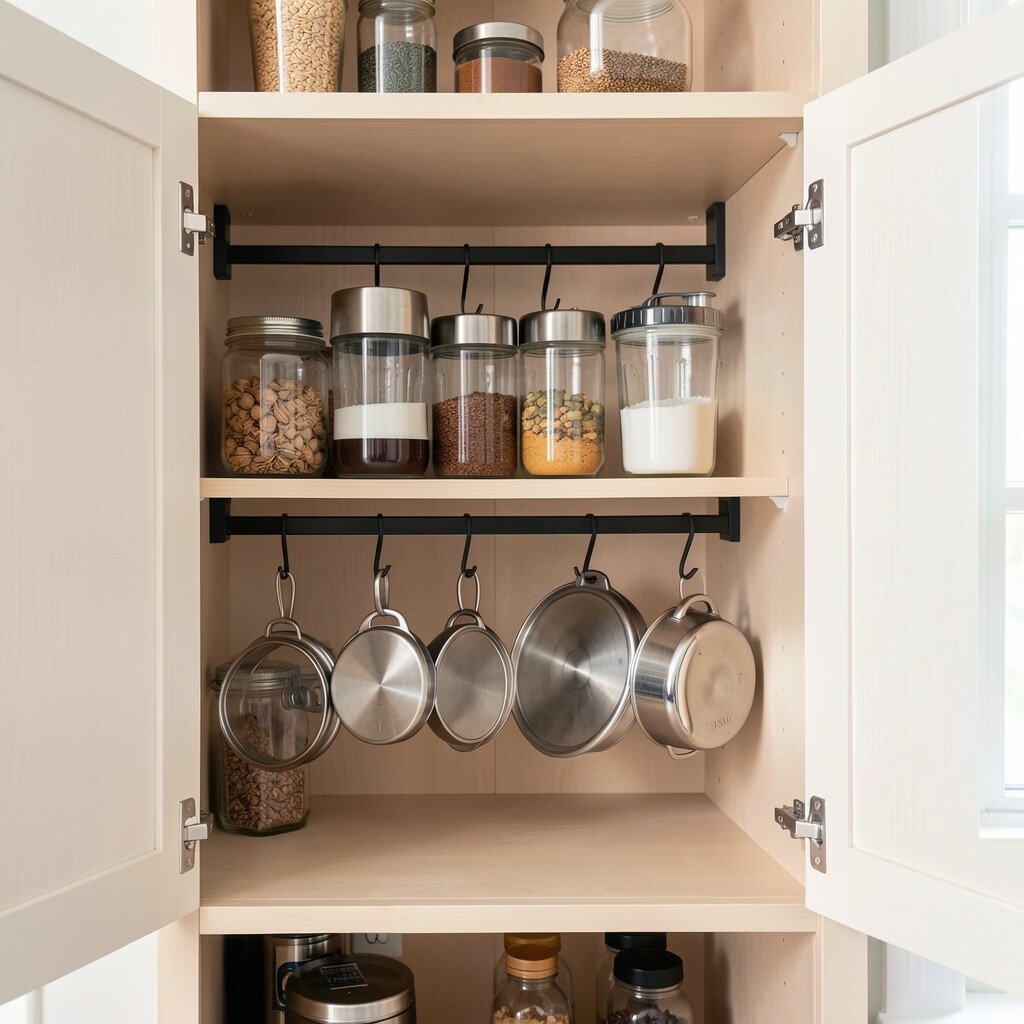
Inside a pantry door, rail hooks can hold blender jars, lids, and even measuring cups. Close the door and it looks like a simple pantry, but the moment you open it your tools are lined up neatly.
Good organization cuts down on time spent hunting for parts during busy mornings. Use a rail with adjustable spacing so different jar sizes can share the same system.
You can also add small silicone bumpers to prevent glass from tapping against metal. A trend many people like right now is building “part stations,” so you grab a whole set instead of mixing pieces later.
4. Built-In Appliance Garage With a Lift-Up Front
Built-In Appliance Garage With a Lift-Up Front
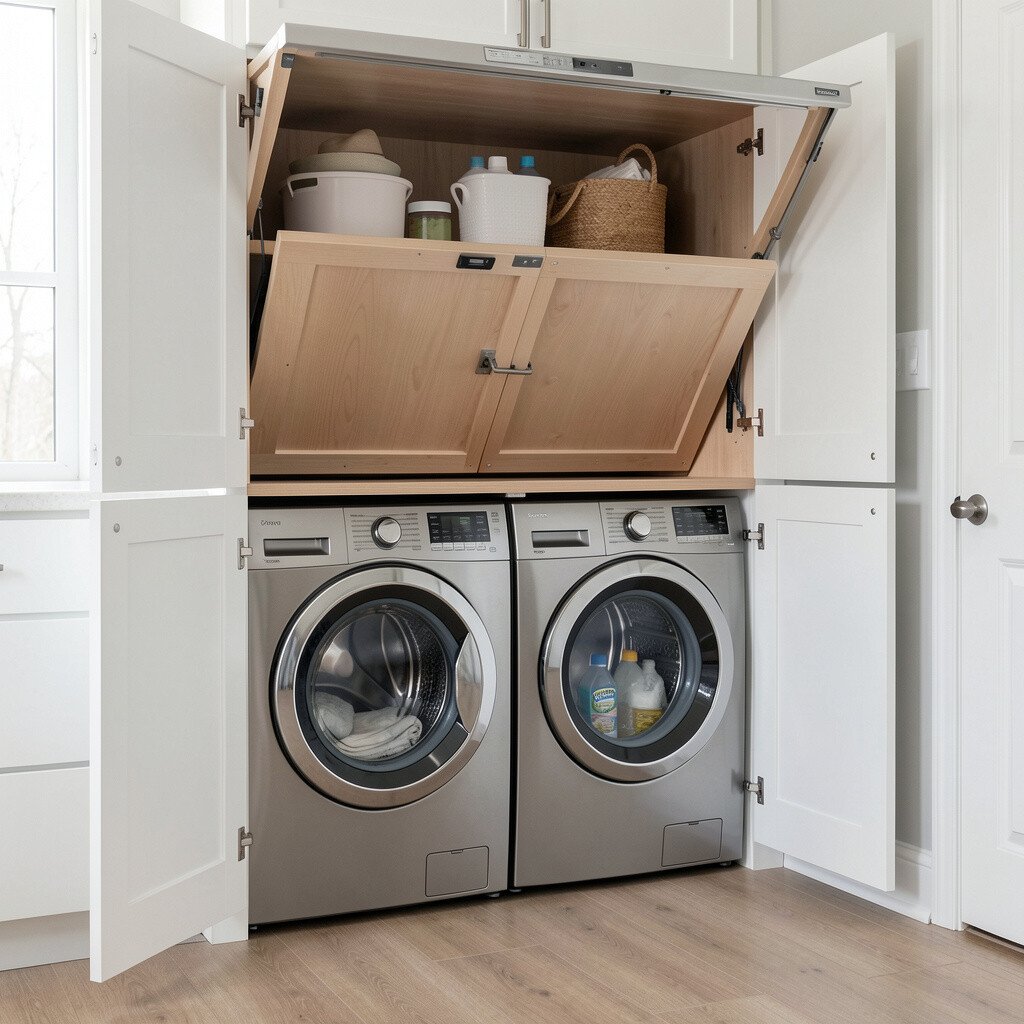
An appliance garage built into cabinetry hides bulky tools behind a lift-up front panel. From the hallway it looks like plain cabinet storage, but inside you can park your coffee maker or mixer like it belongs there.
This keeps the countertop calm and reduces the chance that appliances collect clutter. For the best fit, plan airflow and leave breathing room around vents so heat doesn’t build up.
5. Wall Niche With a Sliding Door for the Toaster and Griddle
Wall Niche With a Sliding Door for the Toaster and Griddle
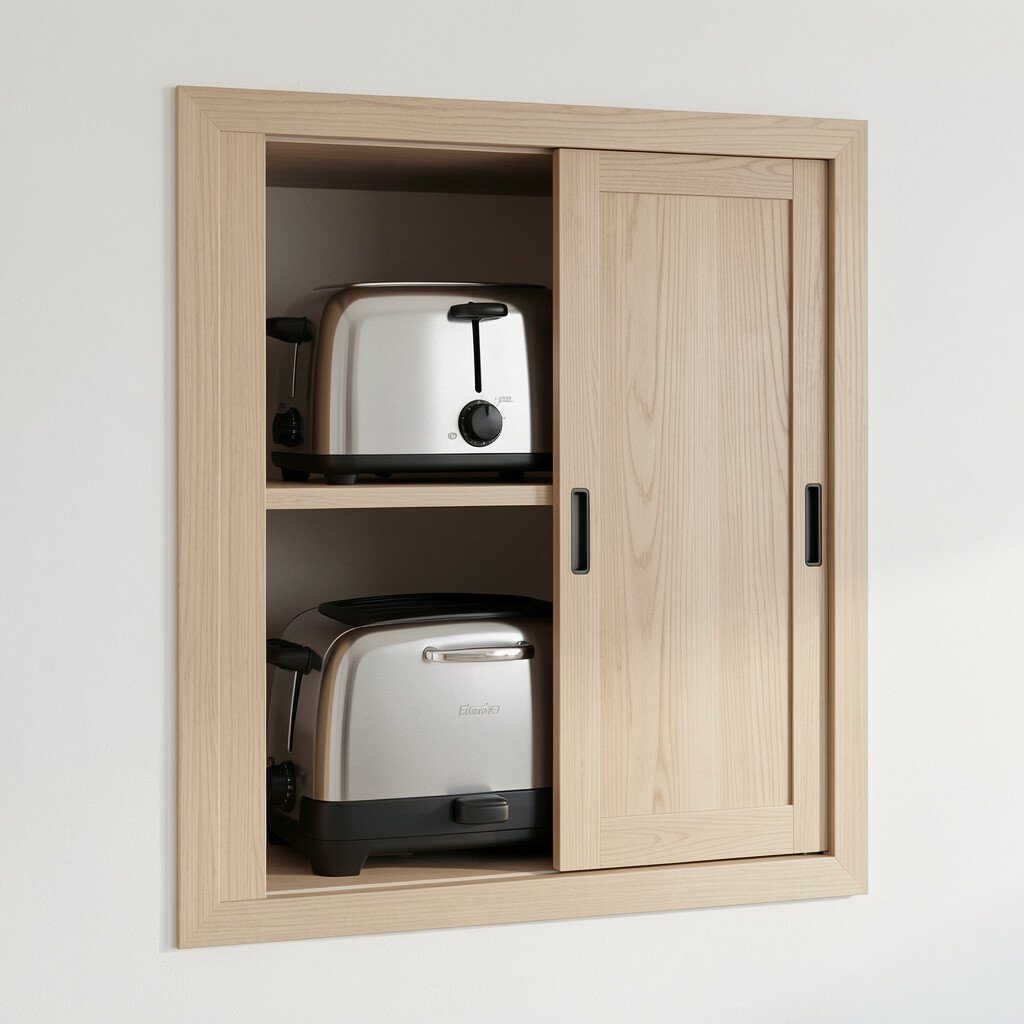
A recessed wall niche is perfect for a toaster, a small griddle, or a compact press. Add a sliding door and you’ll get a smooth, hidden look that still lets you pull the unit out quickly.
You’ll enjoy a tidy surface because the appliance disappears the second breakfast ends. When you measure, think about cord routing and keep a small gap so the door can slide without rubbing.
To make it feel personal, paint the niche back panel a warm tone that matches your backsplash. Many kitchens today lean into color accents, so this small spot can add character without clutter.
6. Under-Counter Pull-Out Trays for Coffee Gear and Filters
Under-Counter Pull-Out Trays for Coffee Gear and Filters
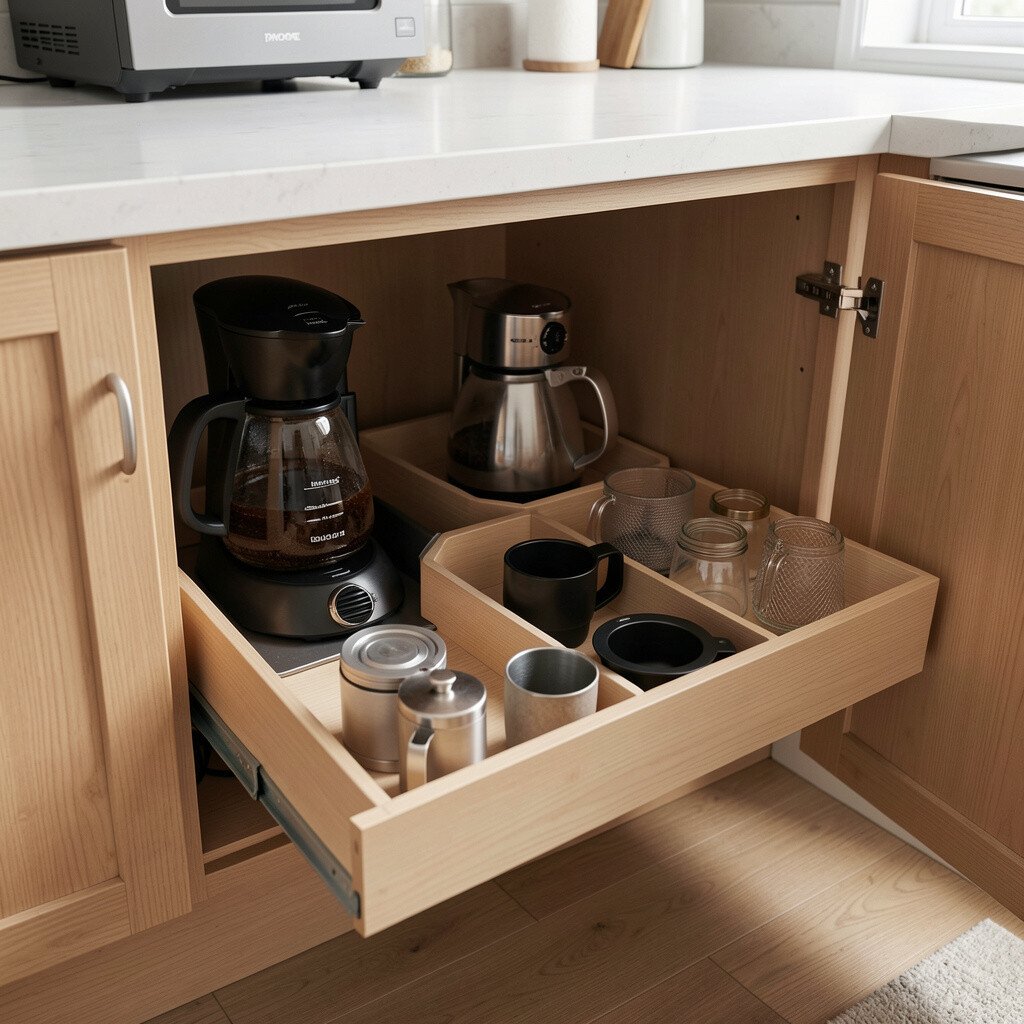
Under the counter, pull-out trays can hold coffee gear like filters, cups, and scoops. When the tray slides back in, it feels like your kitchen has a built-in “work pocket” that vanishes from sight.
This method keeps tiny items from spreading across counters and drawers. Use dividers on the tray so everything has its own spot and you can refill in seconds.
If you’re on a tighter budget, repurpose a cookie sheet or shallow metal organizer as the tray base. For a modern trend, choose matte black or brushed steel finishes that match current appliance colors.
7. Refrigerator Side Cabinet for the Ice Maker Bin and Accessories
Refrigerator Side Cabinet for the Ice Maker Bin and Accessories
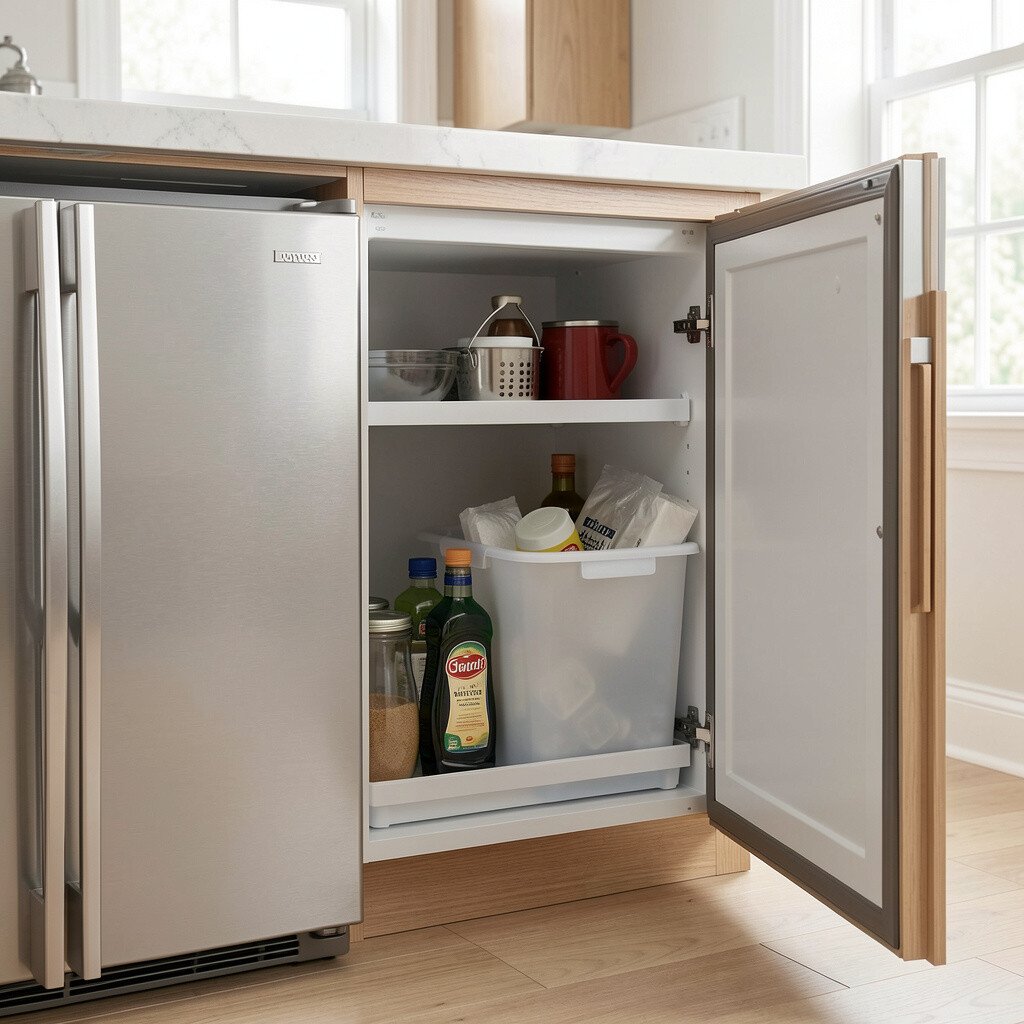
Some refrigerators leave awkward side space where extra items slowly pile up. A narrow cabinet beside the fridge can store ice maker accessories, spare water filters, and cleaning wipes.
You’ll benefit from having related items in one place without blocking fridge doors. Build the shelves with adjustable heights so you can fit different brands of filters over time.
For uniqueness, add a small label-free sticker with icons you can recognize quickly. This also helps family members return items the right way when your kitchen becomes busy.
8. Roll-Top Cabinet for Blenders, Immersion Tools, and Hand Mixers
Roll-Top Cabinet for Blenders, Immersion Tools, and Hand Mixers
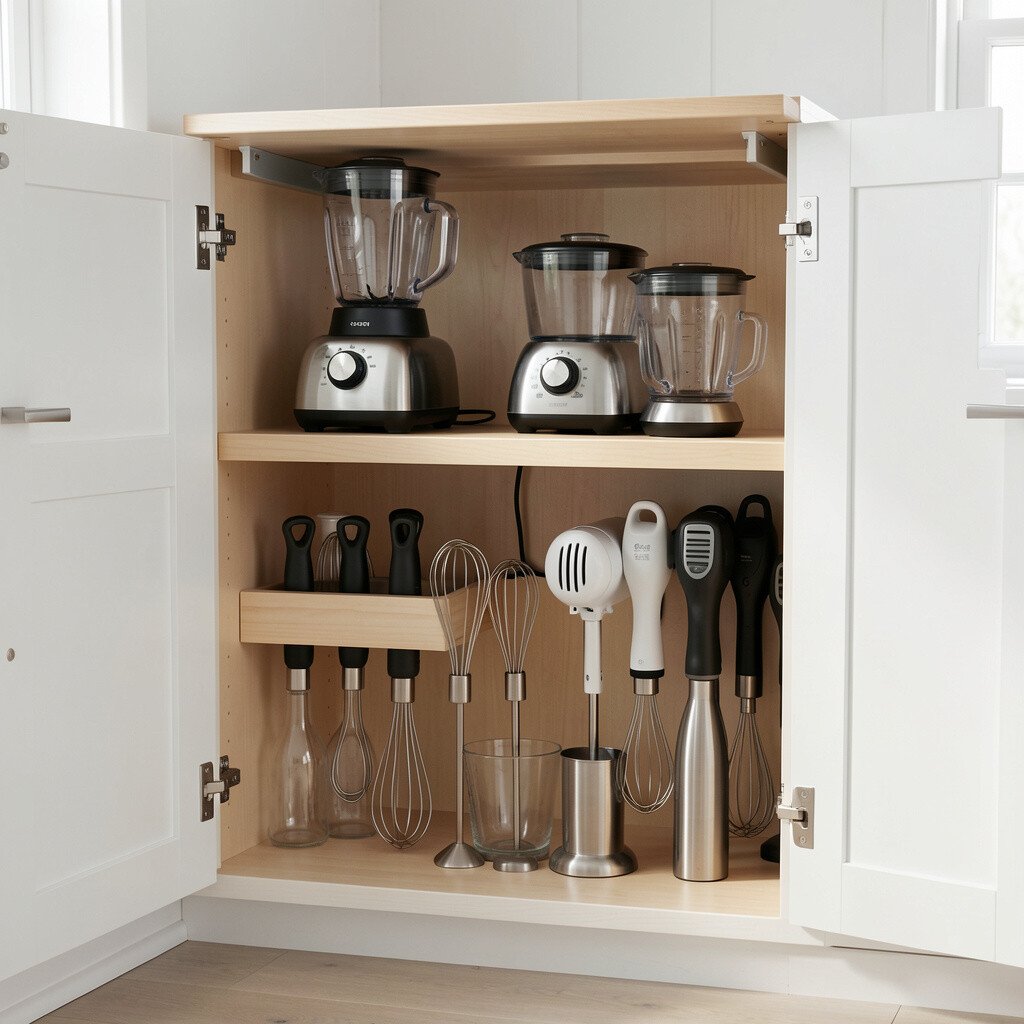
A roll-top cabinet can hide frequently used appliances while still letting you access them fast. You’ll see a neat, low-profile opening when you roll the top up, and everything stays out of sight when it’s down.
This keeps greasy splatter and fingerprints from spreading because appliances aren’t living on the open counter. Choose a smooth, durable finish so the top rolls quietly and doesn’t snag on cords.
9. Hinged Corner Shelves That Fold Appliances Into the Room’s Edges
Hinged Corner Shelves That Fold Appliances Into the Room’s Edges
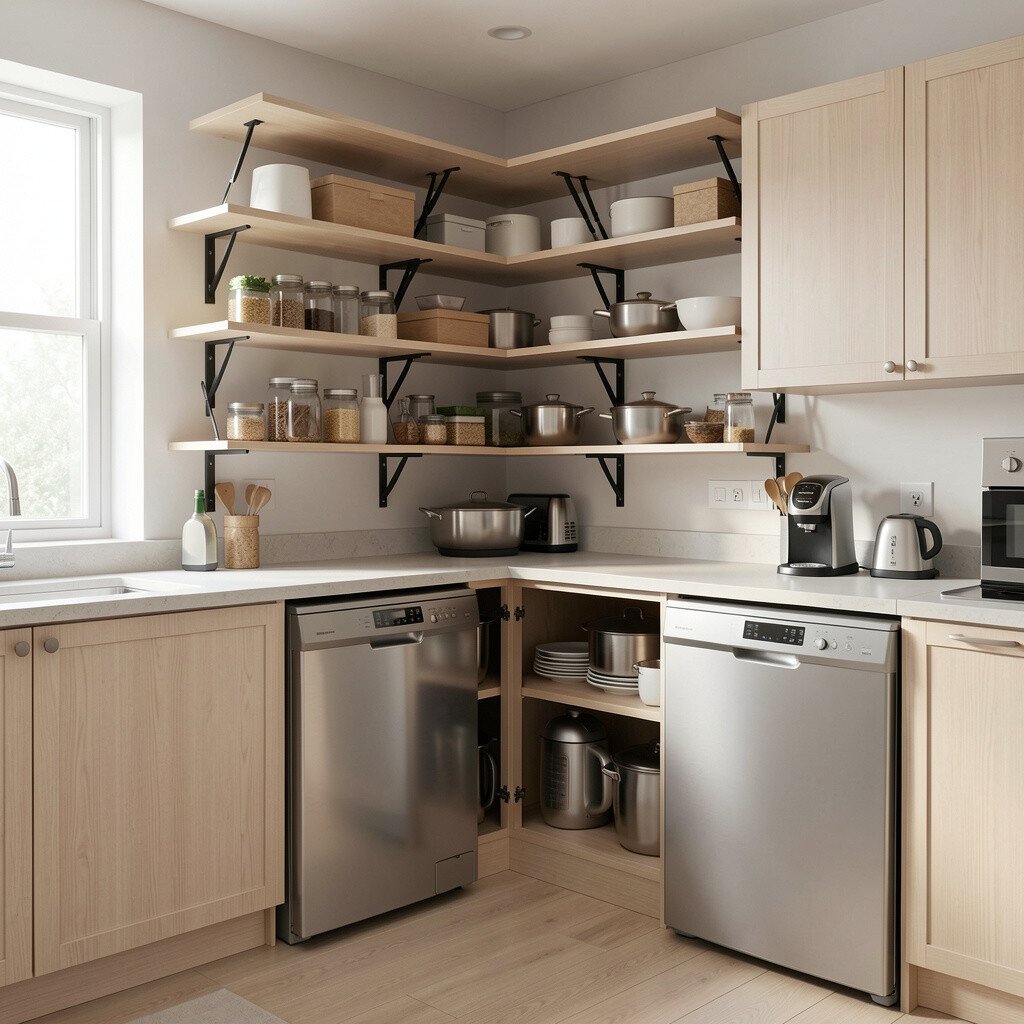
Corner spaces are tricky, but hinged shelves can turn dead corners into smart appliance zones. When closed, the cabinet face looks tidy; when opened, the shelf swings out to present the appliance at an angle you can reach.
These fold-out shelves reduce wasted space and make it easier to keep counter clutter under control. Plan the swing so it won’t bump cabinet doors, and add soft-close hinges for a calm feel.
To personalize, stain the wood to match your existing cabinets and add a small tray mat so small drips don’t stain. It’s a nice touch that makes the hidden space feel intentional.
10. Tall Larder Pull-Out for the Air Fryer and Baking Tools
Tall Larder Pull-Out for the Air Fryer and Baking Tools
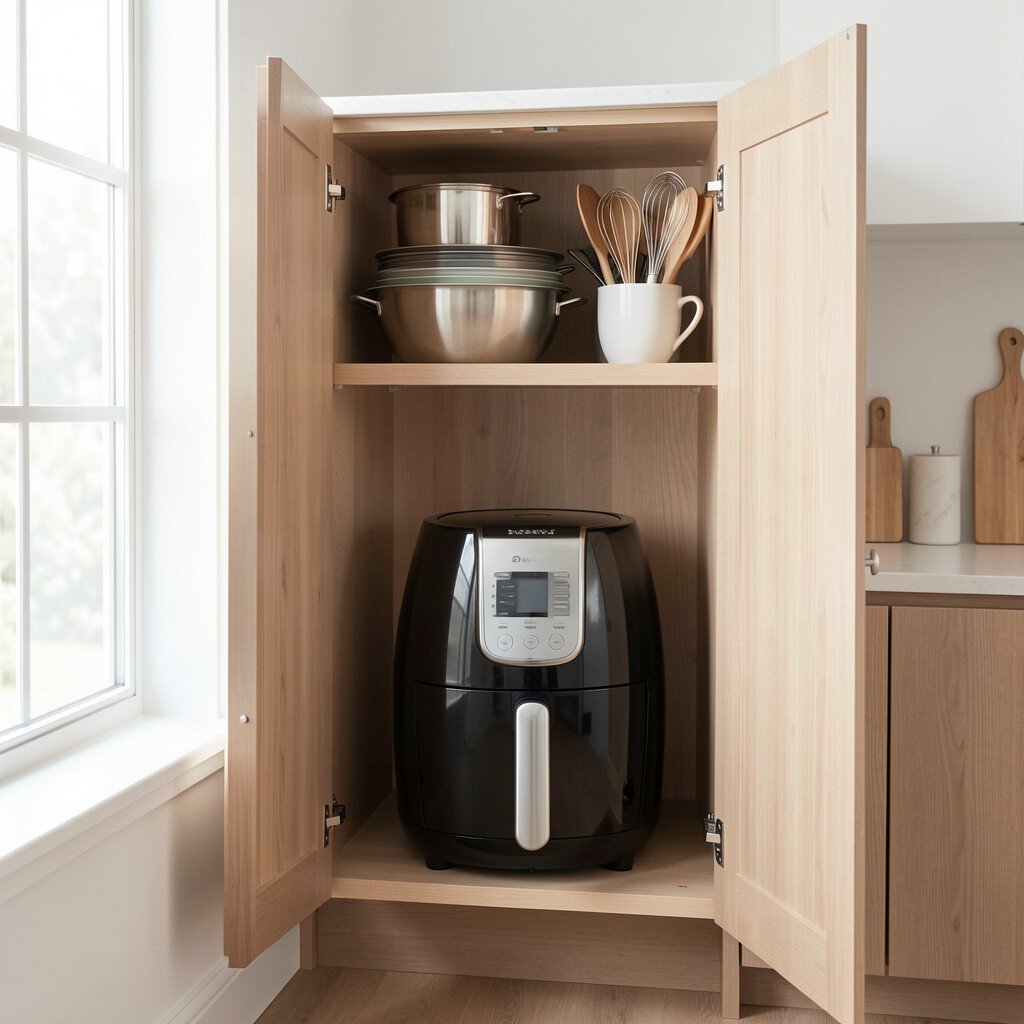
A tall pull-out larder can store your air fryer, baking sheet stack, and accessories in one vertical lane. With the drawer extended, you’ll see everything aligned, and when it retracts, the kitchen looks instantly smoother.
This gives you “appliance-first” storage, which is great because air fryers usually need a dedicated spot. Add slide-out shelves with built-in stops so heavy items don’t drift out when you pull.
For cost considerations, you can start with a simpler rolling rack system and upgrade later to custom cabinetry. Many homeowners now mix off-the-shelf racks with tailored finishes to keep the budget sensible.
11. Drawer-Within-a-Drawer for Cord Storage and Quick-Grab Accessories
Drawer-Within-a-Drawer for Cord Storage and Quick-Grab Accessories
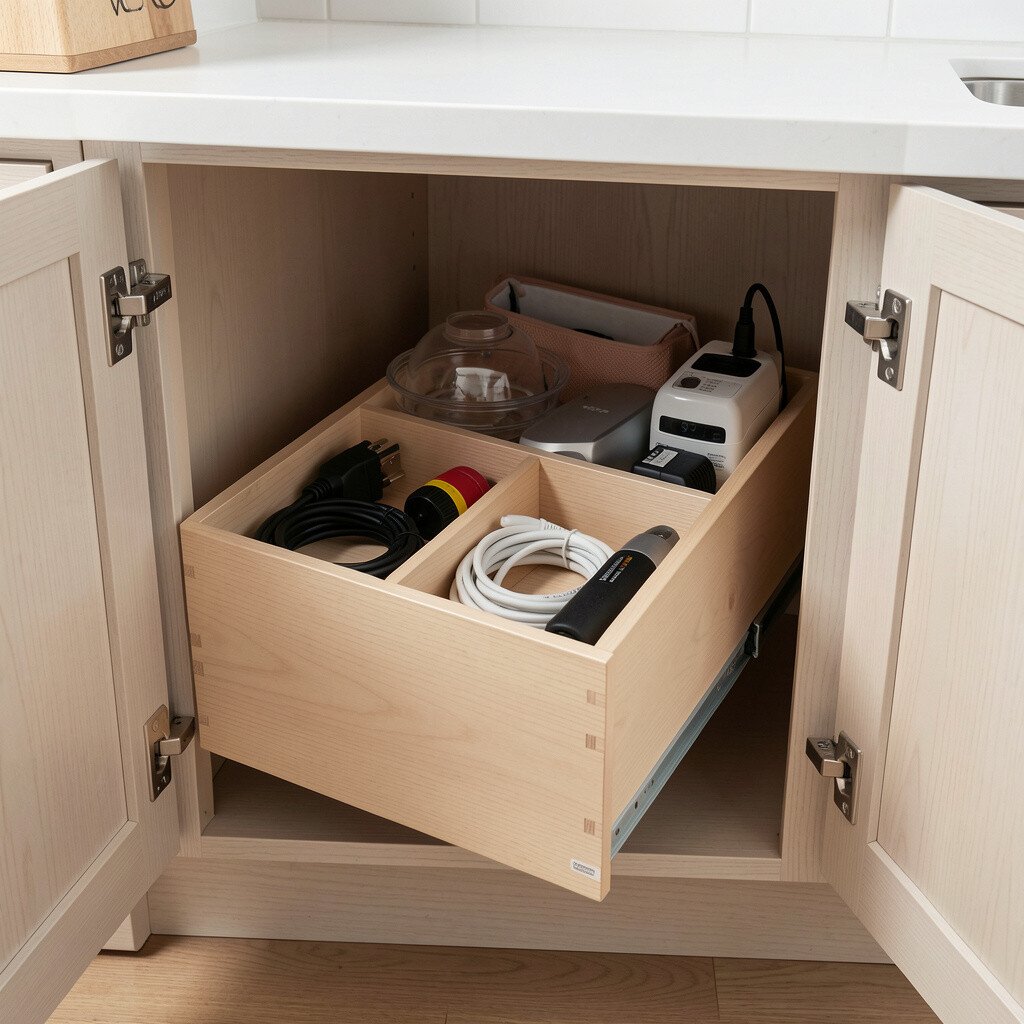
Some appliances leave cords that turn storage into a tangled mess. A drawer-within-a-drawer can hold cord wraps, extra attachments, and small accessories so nothing droops on the counter.
You’ll keep the kitchen safer and easier to clean because cords are not stretched across outlets. Use a shallow organizer insert so the cord coil stays neat and the accessories don’t slide around.
For personalization, choose cord labels or color-coded ties that match your utensil theme. It feels surprisingly satisfying to open a drawer and see everything ready for the next cooking moment.
12. Magnetic Side Panels for Induction Cooktop Tools and Metal Attachments
Magnetic Side Panels for Induction Cooktop Tools and Metal Attachments
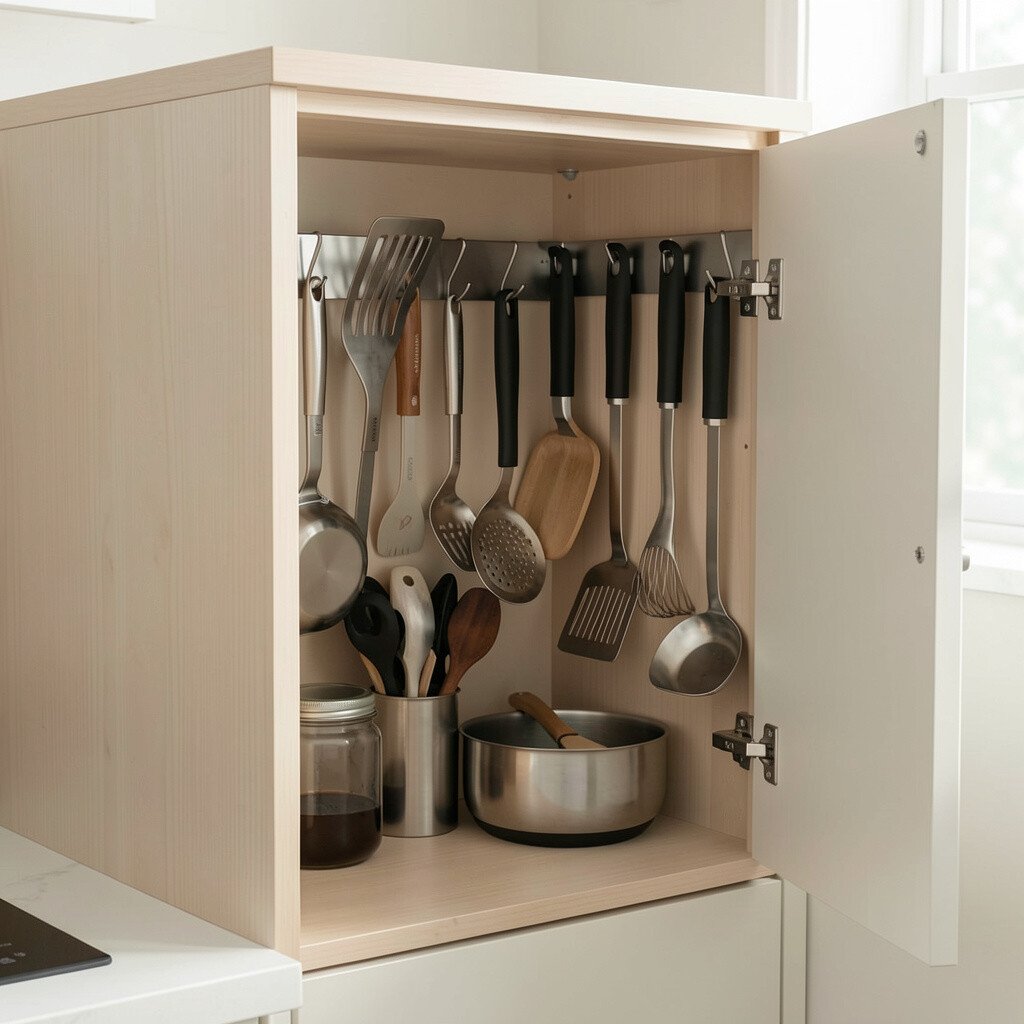
Along the side of a cabinet or near the cooktop, magnetic panels can store metal tools like griddle scrapers and measuring cups with metal handles. When the panel is flush to the cabinet, it looks like a clean wall feature rather than a storage clutter zone.
This method clears drawer space and helps you grab tools without opening multiple cabinets. Make sure the magnets are strong enough for heavier items and position them so they don’t interfere with doors.
If your kitchen is more minimalist, use a slim magnetic strip for a sleek look. Current trends favor hidden functionality, and this gives you that clean vibe while keeping tools always in reach.
13. Under-Storage Cabinet Roof Shelving for Stand Mixer Bowls and Pasta Tools
Under-Storage Cabinet Roof Shelving for Stand Mixer Bowls and Pasta Tools
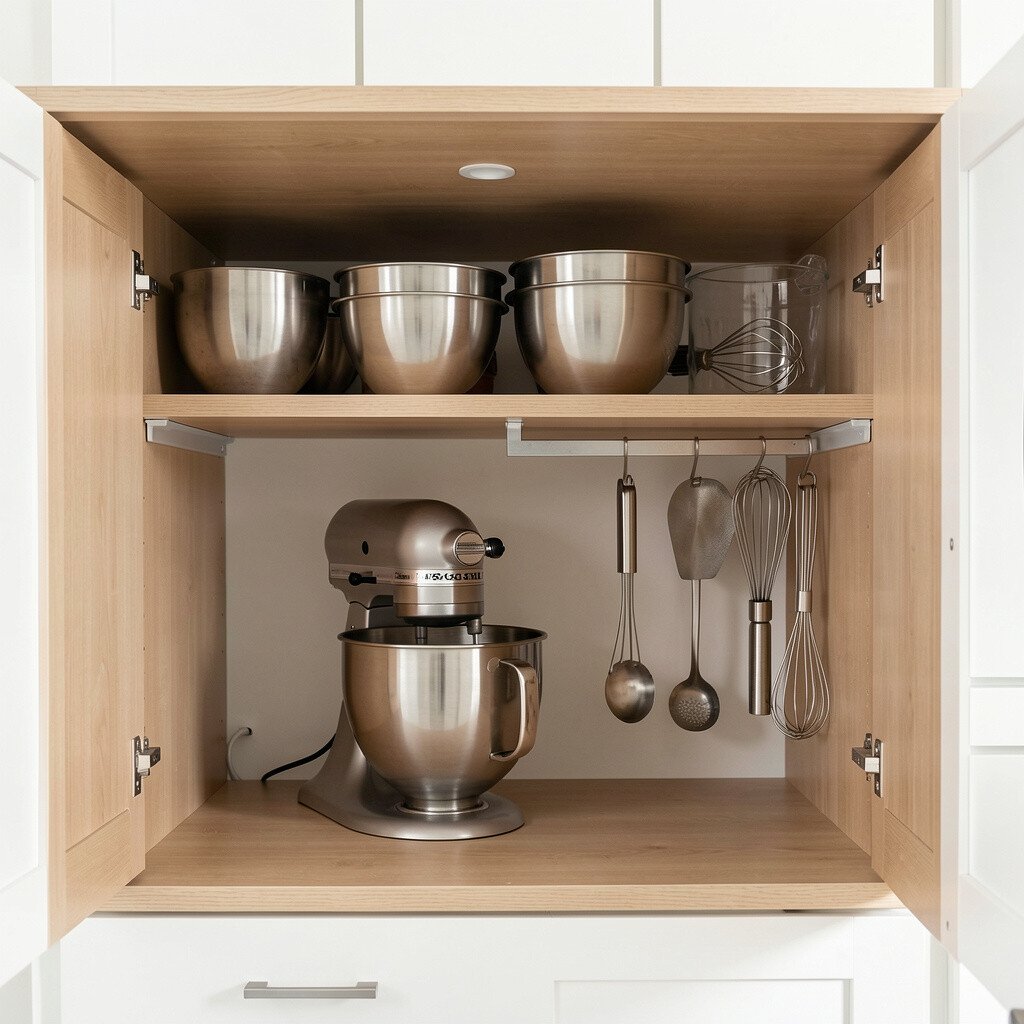
High cabinet roofs beneath wall cabinets can be used for stand mixer bowls, pasta attachments, and rarely used accessories. You’ll see a polished cabinet front, but inside the shelves you can store items up high where they don’t steal valuable counter space.
This is ideal for bulky pieces that don’t need daily use. Add pull-down shelf hardware if you want an easier reach, and use shelf edges to keep containers from sliding.
When you personalize, group accessories by “project” so pasta tools live together and baking bowls stay together. A practical trick is to keep lids and small parts inside the same bowl or container so you never have to hunt for mismatched pieces again.