Your space can feel calm when everything has a simple home. A few color choices can do more work than you expect.
When you match bins to categories you actually use every day, tidying turns into a quick routine. It also makes it easier for anyone in your home to put things back where they belong.
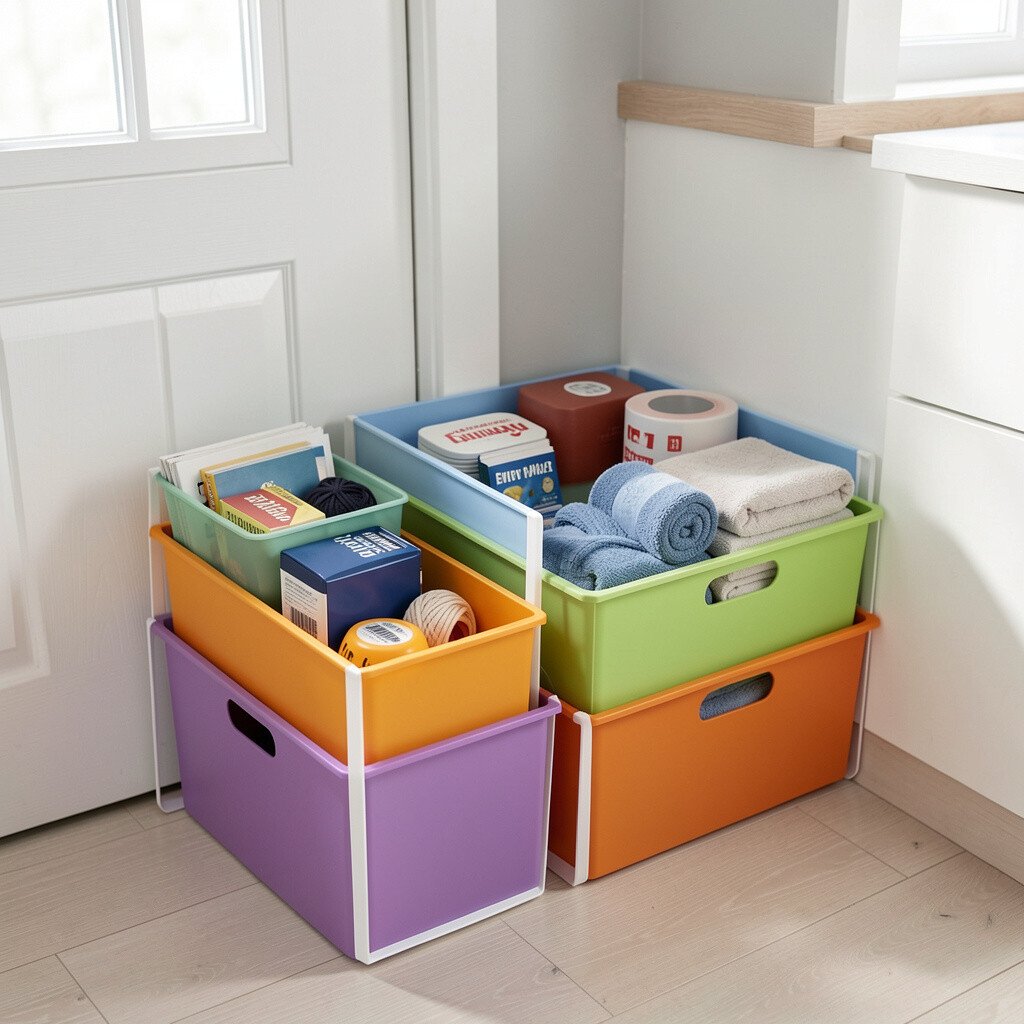
The entryway is where clutter collects first, so color-coded bins here can feel like a friendly traffic light for your stuff. Picture a small cluster of bins near the door, each one in a distinct shade that stands out when you drop your bag, keys, and loose items.
Choose a bin color for “daily carry” items like keys and wallets, and keep it within easy reach. You will save time because you can spot the right bin instantly, even when you are rushing. For personalization, let each person in the home have their own color so returning items feels natural.
2. Laundry and Sorting Corner
Laundry and Sorting Corner
Visualize a tidy row of bins by your laundry area, each color quietly naming a job. One bin might be soft blue for whites, another bright green for colors, and a deeper shade for darks that look dramatic in the light.
Clear sorting reduces the chance of accidental color mixing, and it helps you keep loads moving. If you add a matching color to the hamper or bag you already use, your brain learns the system fast. For practical tips, use labels on the front, and keep lids optional if you need quick grab-and-go access.
Many people are pairing bins with simple app reminders or laundry schedules, which makes the whole system feel modern. When you pick durable plastic or washable fabric bins, the cost stays reasonable and the setup lasts through busy weeks.
3. Kids’ Small Toy Stations
Kids’ Small Toy Stations
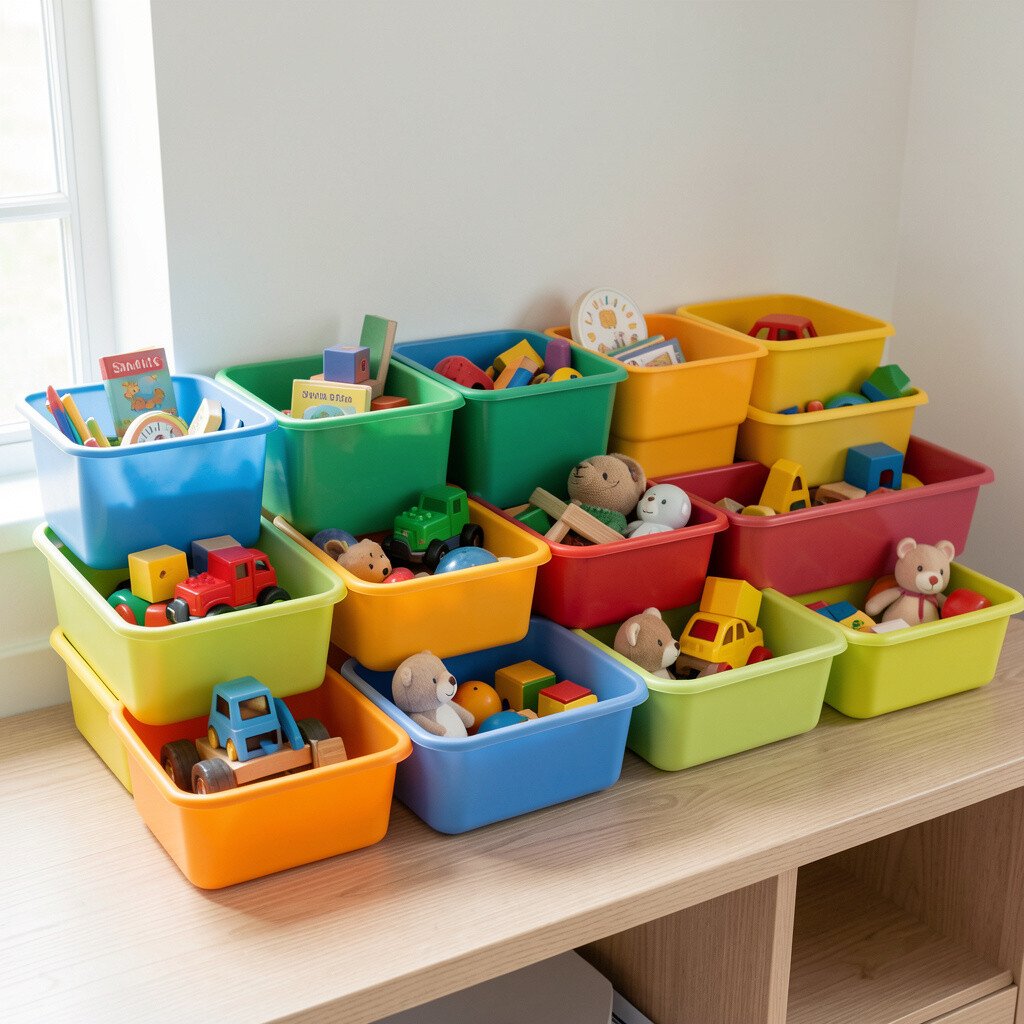
Imagine a shelf where toys are separated by color, with each bin holding a recognizable type of play. Red bins feel like building energy, yellow bins look cheerful for cars or blocks, and teal bins can hold pretend items that need their own space.
Kids benefit because cleanup becomes less of a chore and more of a game of matching colors. It also means you spend less time hunting for the one piece that always hides at the bottom. Make it unique by choosing bin colors that fit your room theme, like ocean blues for a playroom or warm oranges for a sunny space.
For personalization ideas, let kids pick one color each and rotate what goes inside during the seasons. In current home trends, many families use “zones” instead of strict rules, so you can place bins at kid height and let them decide which bin their toy belongs in.
If you want to manage cost, start with fewer bins and add more when you see what your child actually uses most.
4. Closet Accessory Drawer Replacement
Closet Accessory Drawer Replacement
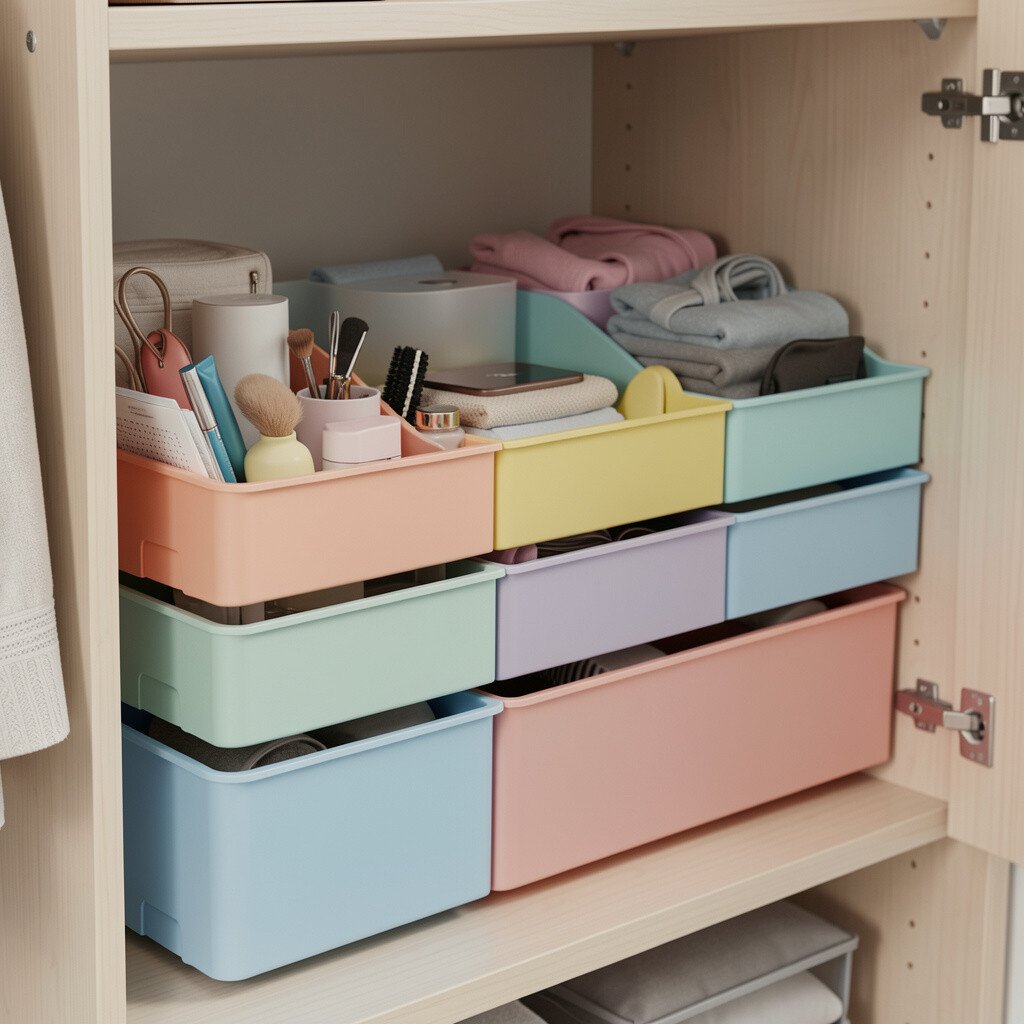
Picture your closet with bins instead of scattered piles of scarves, belts, and hats. Color-coded bins tucked on a shelf create a neat rainbow that you can scan in seconds.
This setup helps you avoid pulling out everything just to find one accessory. It also keeps fabrics safer from tangling and reduces wear. Consider using soft fabric bins for delicate items, and match bin colors to your wardrobe palette for a calm, coordinated look.
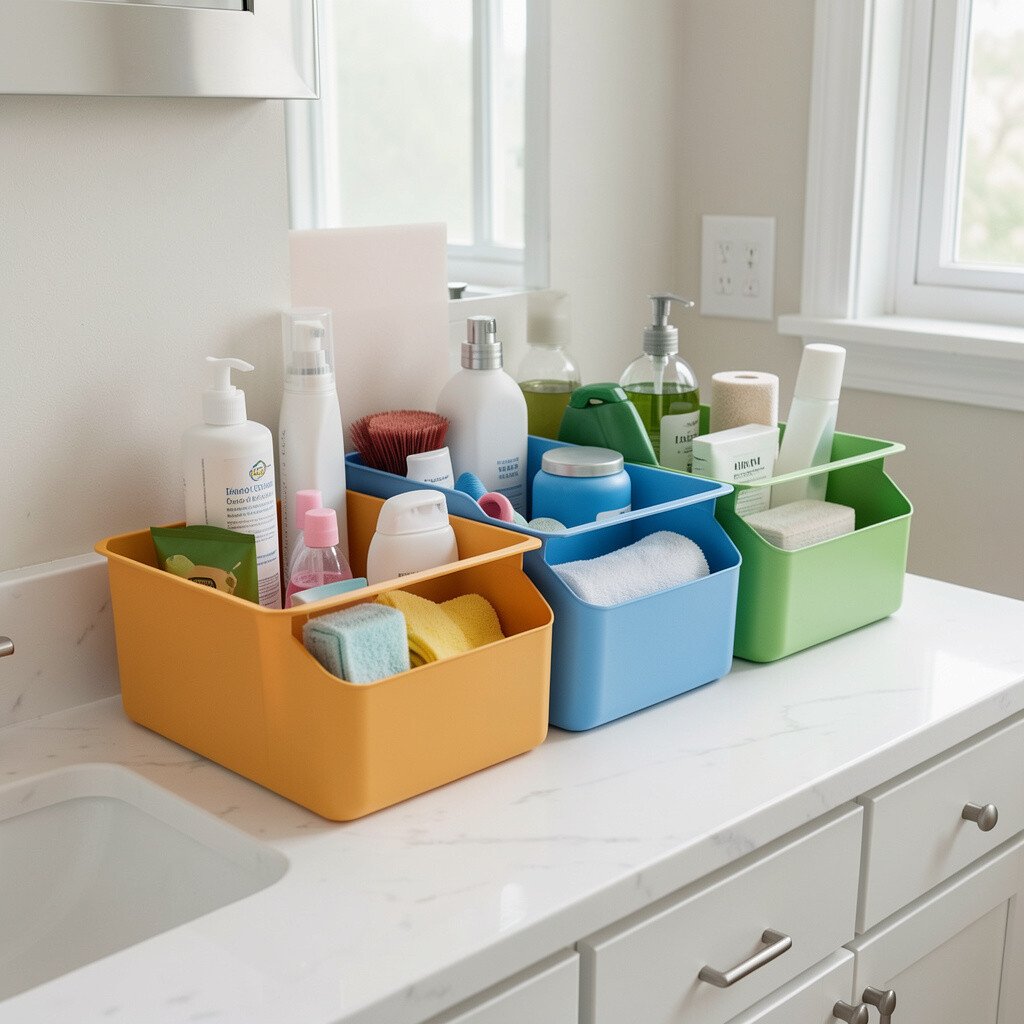
Think about a bathroom counter that looks clean because a few color bins quietly hold the extras out of sight. A mint bin for daily items, a peach bin for hair tools, and a cool gray bin for backups can make the space feel instantly calmer.
You will benefit because you stop letting small items multiply across the sink and ledges. Everything has a visual anchor, and your hands know where to reach without thinking. For practical tips, place bins inside a cabinet or on a low shelf, and use shallow bins so you can see what is inside.
Many people are choosing sleek, stackable styles now because they save floor space and look good in modern bathrooms. If you are watching cost, measure first and buy bins that fit your cabinet width so you avoid wasted purchases.
6. Kitchen Pantry Snack Wall
Kitchen Pantry Snack Wall
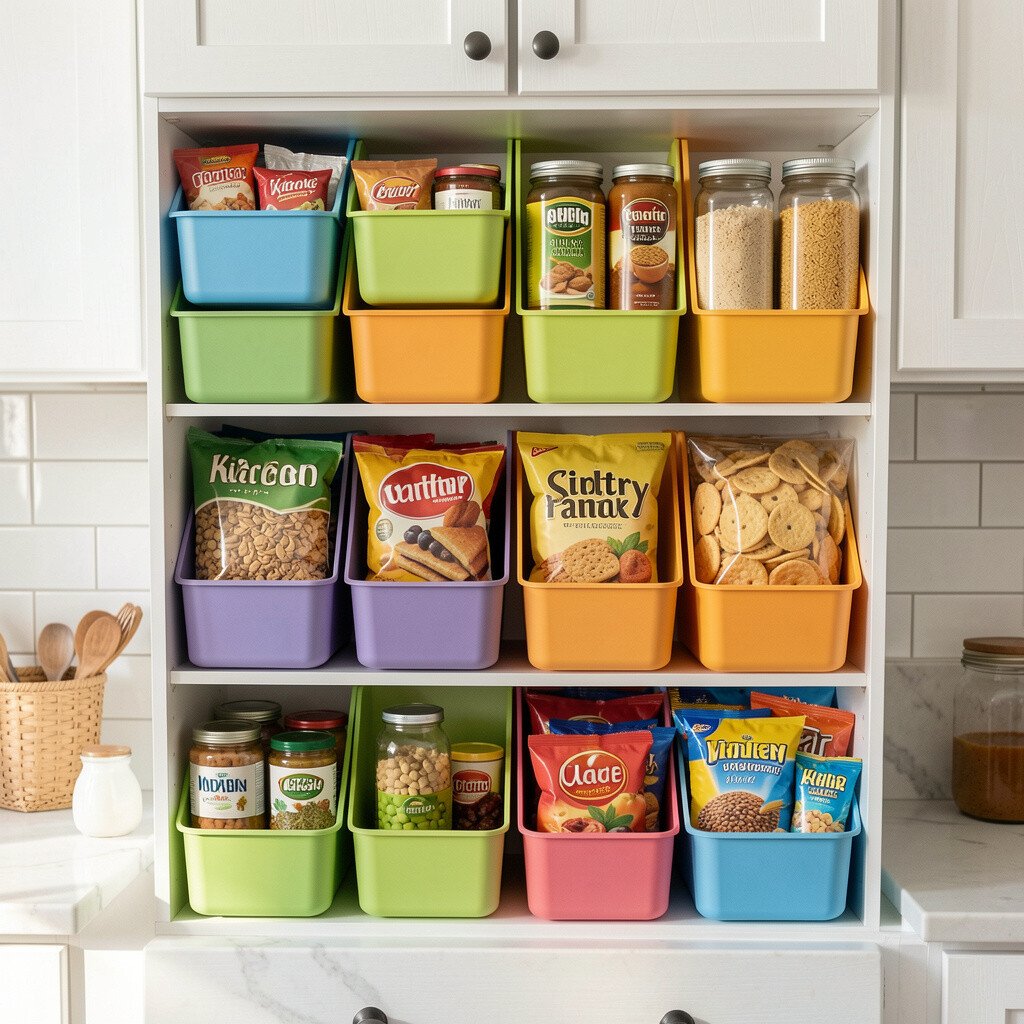
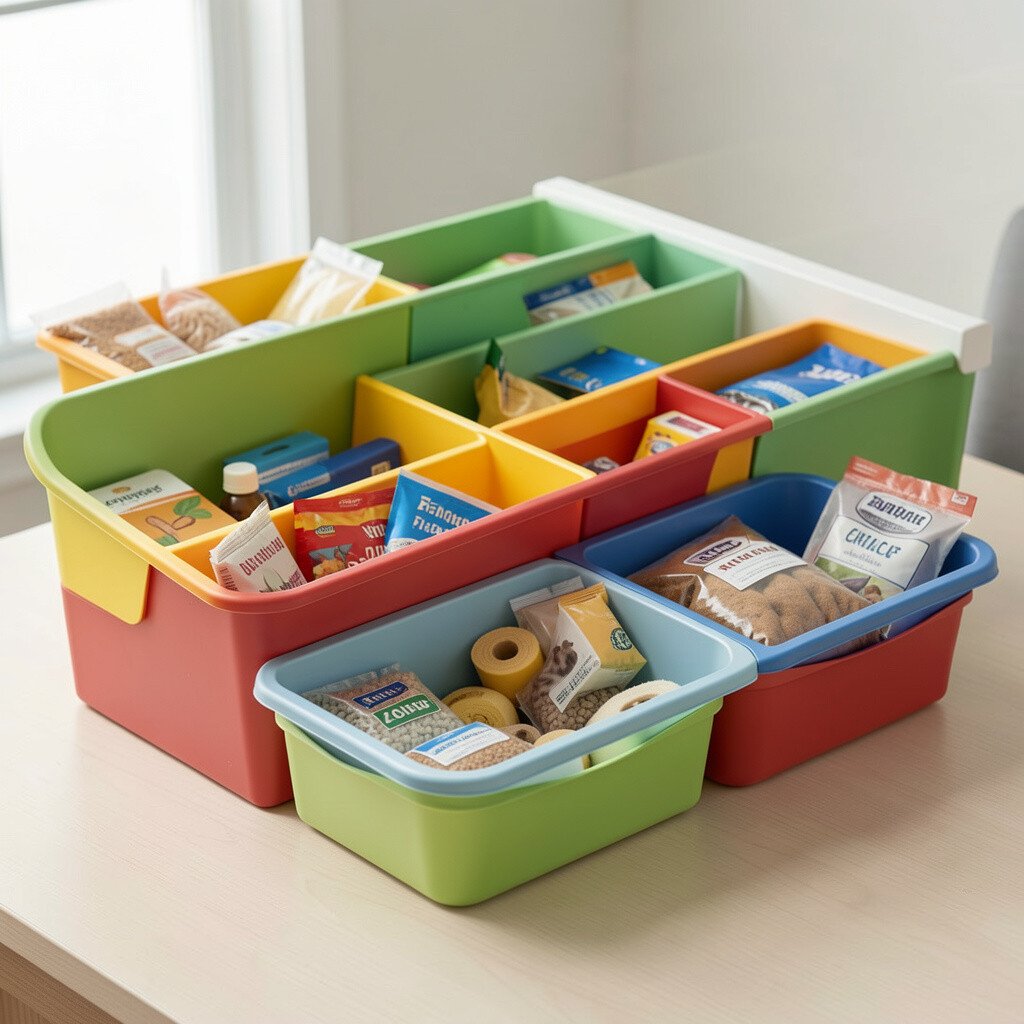
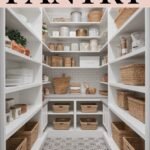
Imagine walking into your kitchen and seeing a neat “snack wall” of colored bins that makes grabbing food feel organized. A warm amber bin can hold breakfast bars, a sunny yellow bin can store crackers, and a green bin can keep granola or nuts sorted.
This kind of setup helps you track what you have, so you do not buy duplicates as often. Color also makes it faster to pick the right snack for kids, guests, or your own routine. Personalize by using colors that match the jars you already own, and keep the bins at eye level so you do not have to hunt.
In current trends, people are leaning into pantry visibility, where you can see options without clutter. If you want a cost-friendly approach, start with a few bins for the most-used snacks and expand only when the system feels strong.
7. Office Paper and Stationery Sort
Office Paper and Stationery Sort
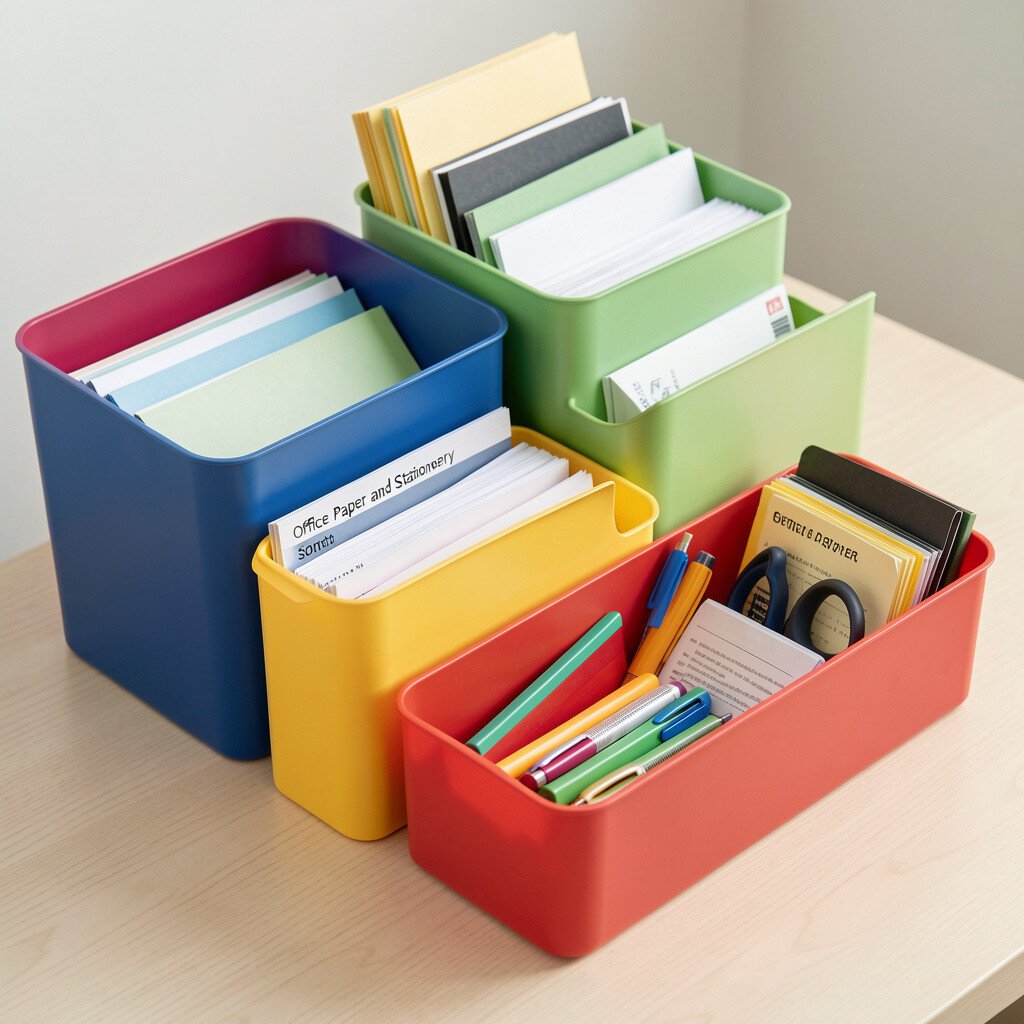
Picture your desk area with bins that make paper chaos feel like it has rules. Bright labels can be helpful, but color also works like a gentle guide, with navy bins for documents and bright orange for everyday stationery.
Using color-coded bins for stationery prevents the “paper pile” effect and keeps your mind clear. You will benefit from quick retrieval when you need forms, sticky notes, or pens right away. For practical tips, choose bins with dividers or insert organizers so small items do not mix.
Uniqueness matters here, so pick a palette that matches your home office mood, like calm blues for focus or energizing reds for creativity. Many people are using low-cost plastic bins with transparent sides now because they look neat and feel practical.
8. Charging Cables and Tech Gear
Charging Cables and Tech Gear
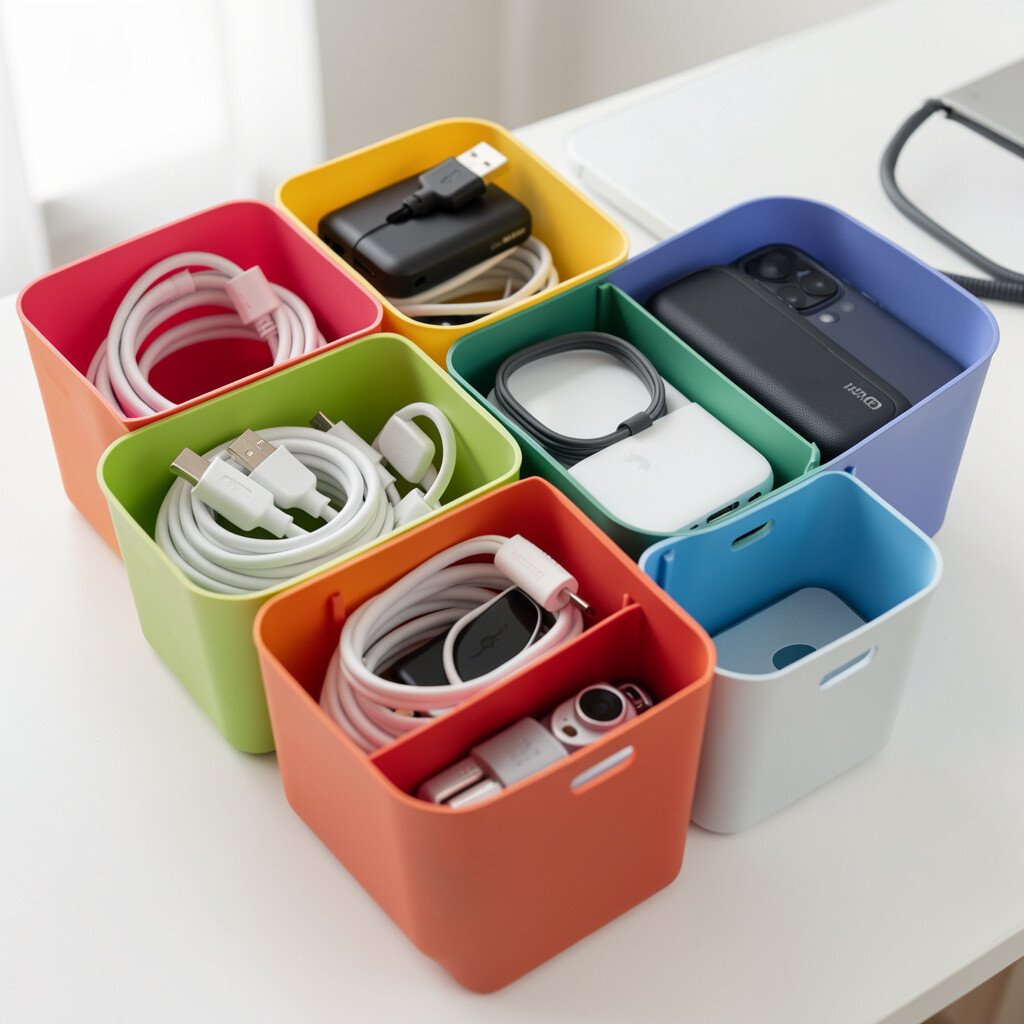
Visualize a drawer or wall organizer where every cable has a color-coded home. A teal bin could hold phone chargers, a dark gray bin could hold laptop cords, and a light purple bin could store headphones and adapters.
This reduces daily stress because you stop rummaging for the right cord at the last second. It also protects your devices since cables stay untangled and easier to handle. For personalization, add a color for each person, especially if multiple phones or tablets live in the same space.
Current trends include “tech stations” and cable management accessories, and bins fit perfectly because they keep the setup flexible. For cost considerations, buy smaller bins first and upgrade to stackable units if your tech grows over time.
If you want to keep it visually clean, store power strips and bulky adapters in one sturdy bin rather than many small ones.
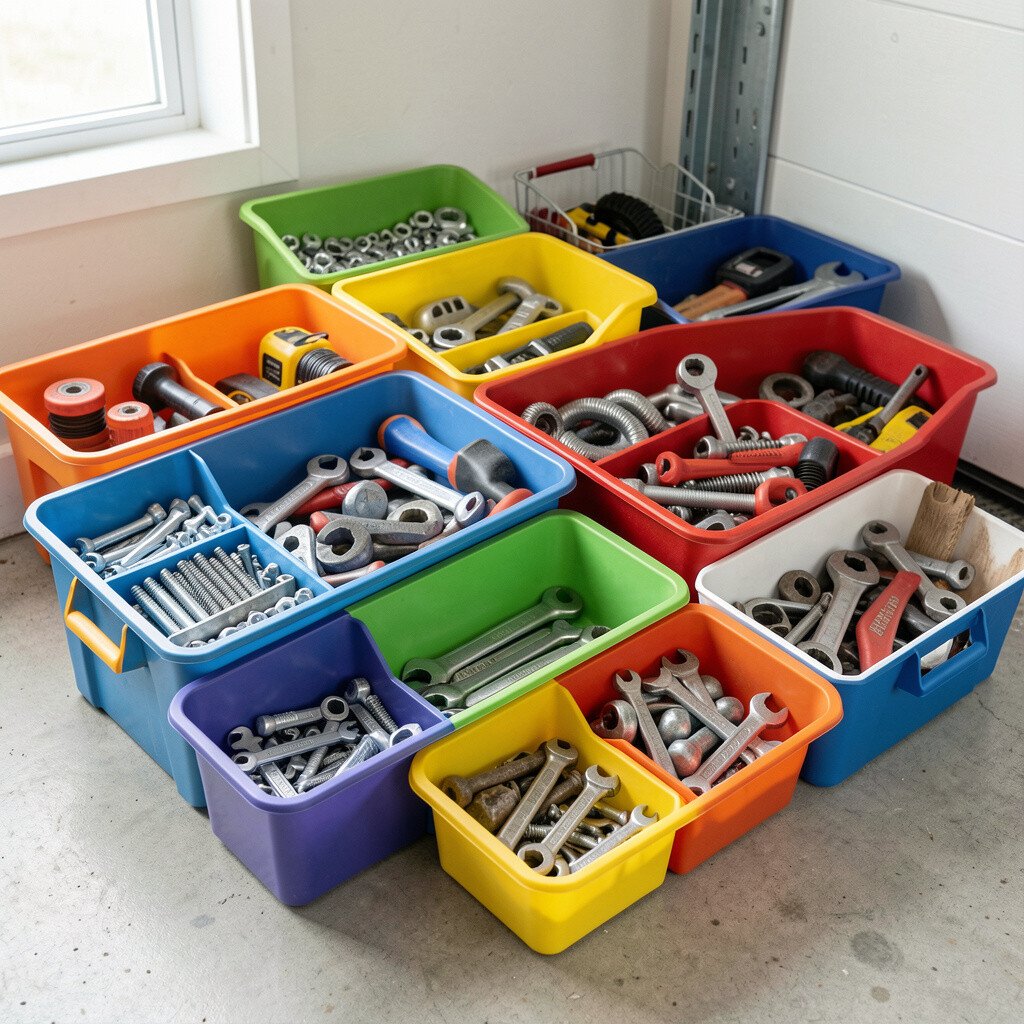
Think of your garage as a place with clear lanes, not random leftovers. Color-coded bins can hold screws, nails, and small parts in a way that looks organized even at a glance.
When you store hardware by type, projects move faster because you can find what you need without opening every container. It also prevents rusty bits from mixing together and turning into a messy pile. Make it unique by choosing colors that match the tool handles you already own, so the system feels personal and intuitive.
Practical tips include using small refillable containers inside each bin for the pieces you use most, and labeling the outside for quick scanning. Many people are now using clear bins with color bands because they combine visibility with order. If cost is a concern, focus on the most used categories first, like nails, screws, and wall anchors.
10. Craft Supplies With Seasonal Color Themes
Craft Supplies With Seasonal Color Themes
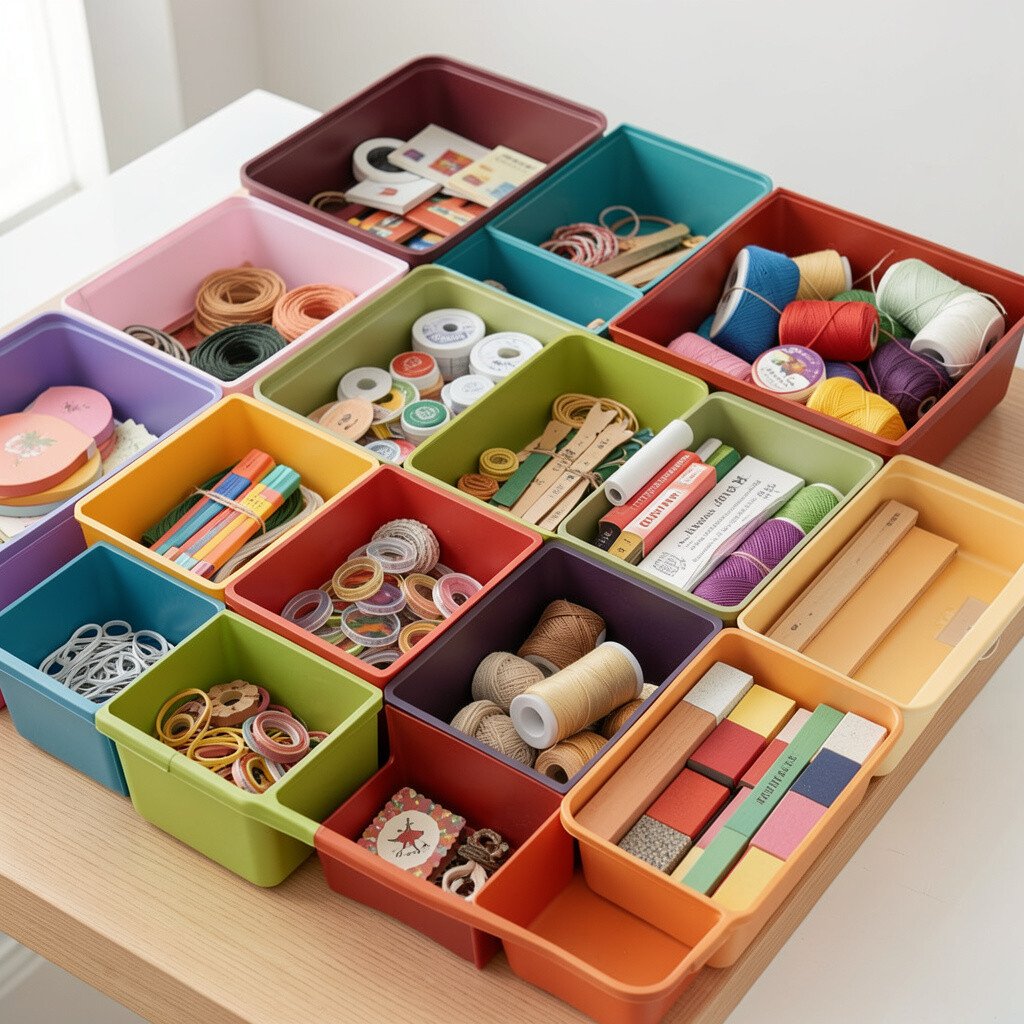
Picture bins tucked into a craft shelf, each one ready for a different creative moment. A pink bin can store paper, a bright green bin can hold stickers, and a deep blue bin can carry markers and pens that need careful organization.
This setup supports creative momentum because you can grab a full set quickly instead of searching across drawers. You will also reduce the “everything is mixed” feeling that slows down making projects. For personalization, rotate bin contents by season, so summer art has its own colors and winter projects feel special.
Current trends show people embracing maker spaces at home, and color-coded storage helps the area stay welcoming. If you want to keep costs steady, choose a few larger bins for big materials and smaller ones only for messy items like beads or tape.
To make it actionable, keep a small bin for “in progress” crafts so the shelf never turns into a permanent work graveyard.
11. Linen Closet for Towels and Sheets
Linen Closet for Towels and Sheets
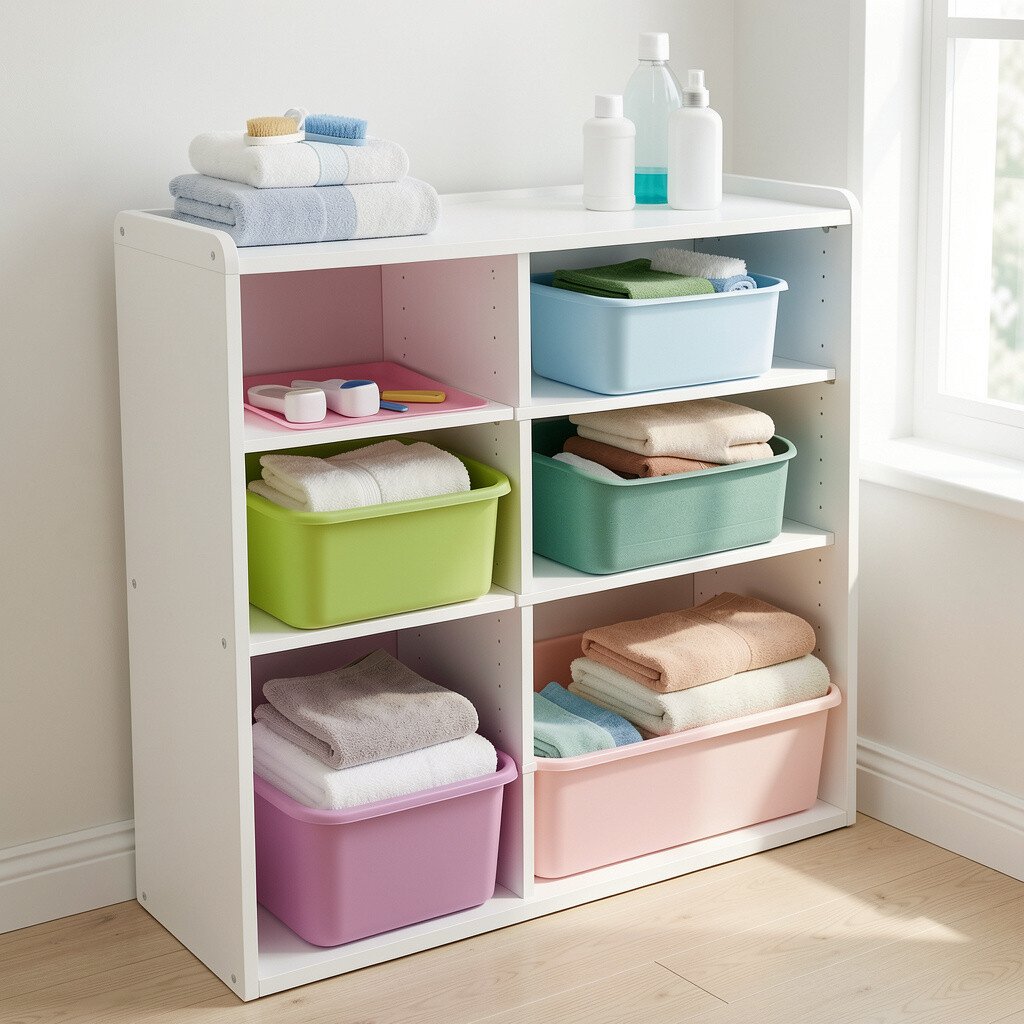
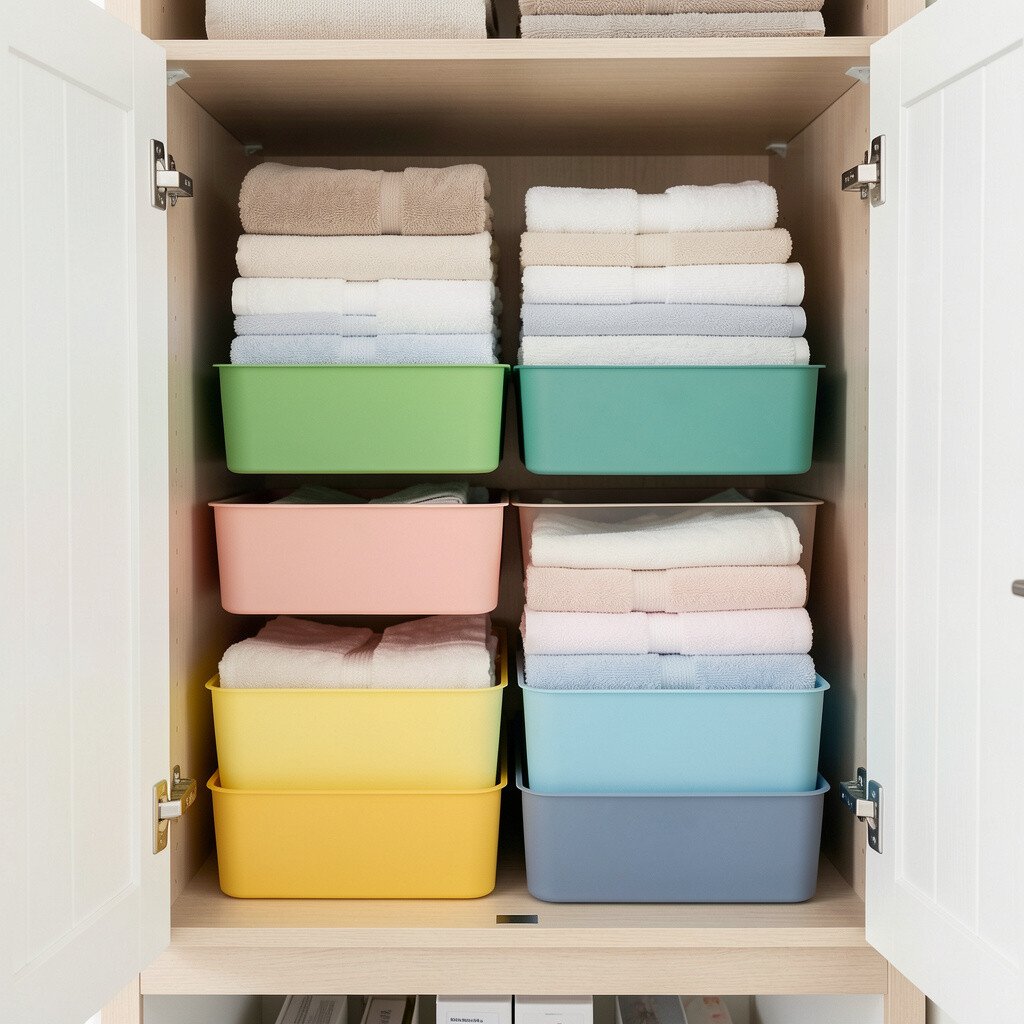
Imagine opening your linen closet and seeing neatly grouped colors rather than a mixed stack of folded fabric. Light blue bins for towels, warm gray bins for sheets, and a brighter color for extra blankets create an easy visual map.
Color helps you keep track of what is clean, what is spare, and what you use most during busy weeks. You will benefit from faster laundry habits because the bin you need is obvious. For practical tips, fold items consistently and store them so the top layer shows what is inside.
Uniqueness can come from matching bin colors to your bedding palette, which makes the closet feel like part of the room design. For cost considerations, start with bins for the items you pull most often and add more only when you notice a gap in the system.
12. Pet Supplies With Quick-Grab Color Zones
Pet Supplies With Quick-Grab Color Zones
Picture your pet area with bins that keep food, treats, and grooming tools from taking over shelves. A green bin can hold treats, a yellow bin can store grooming tools, and a neutral bin can handle poop bags or cleaning items.
This helps because you can grab everything in one trip, especially when you are on a schedule. It also keeps items fresh since many bins prevent unwanted mess. For personalization, choose colors based on your pet personality, like playful bright shades for a curious puppy or calmer tones for a relaxed cat.
Practical tips include using airtight options for dry treats and adding a small scoop holder so it stays near the bin. Many pet owners are using “home base” stations now, and color-coded bins fit the trend perfectly by making routines feel simpler.
13. Seasonal Decor and Holiday Storage
Seasonal Decor and Holiday Storage
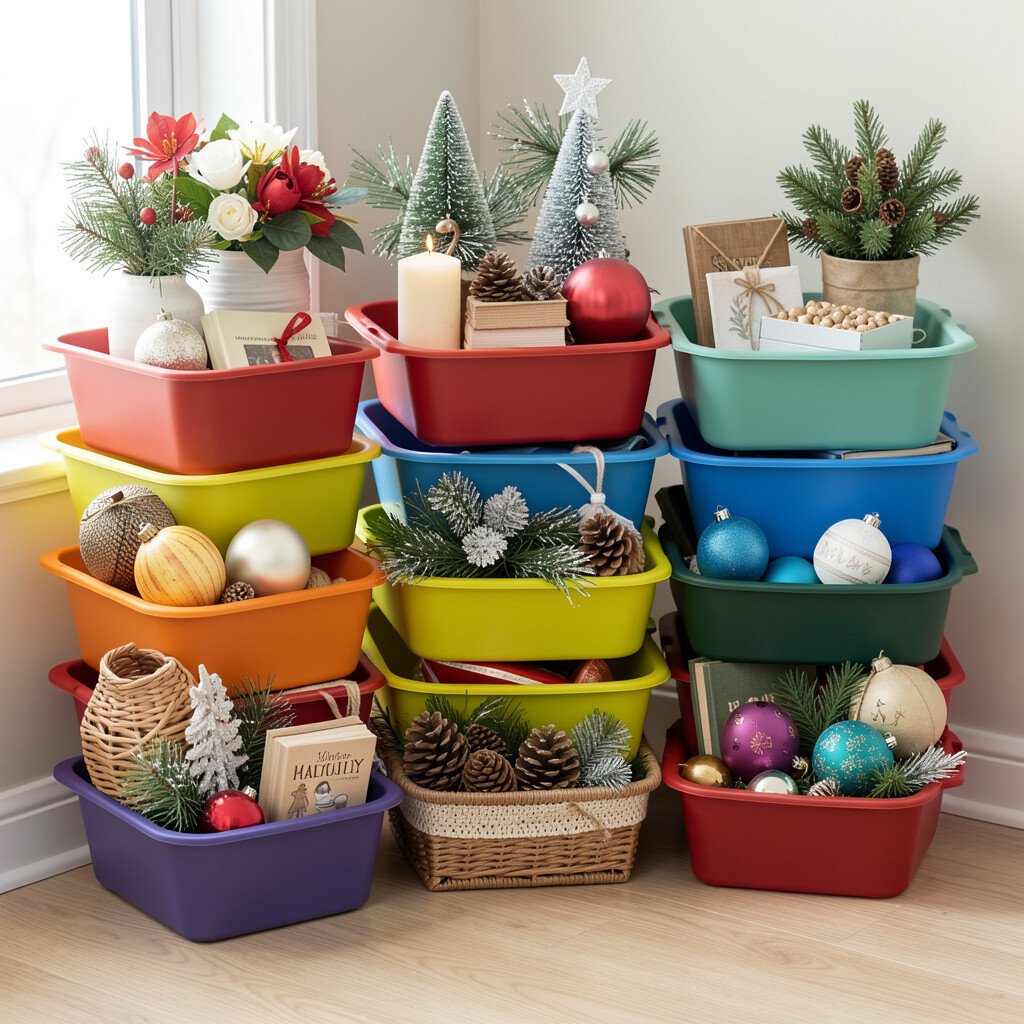
Think of holiday clutter becoming manageable because bins are color-coded and grouped by theme. Red bins can hold ornaments, gold bins can store lights or candles, and white bins can keep winter décor in a calm, neat stack.
You will benefit by reducing the time it takes to get ready each season. Color makes it easier to grab the right items and put them away without second-guessing. For practical tips, store bins with clear lids and keep them at the same height each time, so you learn the layout quickly.
Uniqueness comes from choosing colors that match your decorations, making storage feel like an extension of your style. For cost considerations, prioritize sturdy bins for breakable items and use fabric bins for lightweight décor.
If you want to keep it fresh, label bins with short phrases in a handwriting style you like, and update them as you add new décor.
14. Medication and First Aid Readiness
Medication and First Aid Readiness
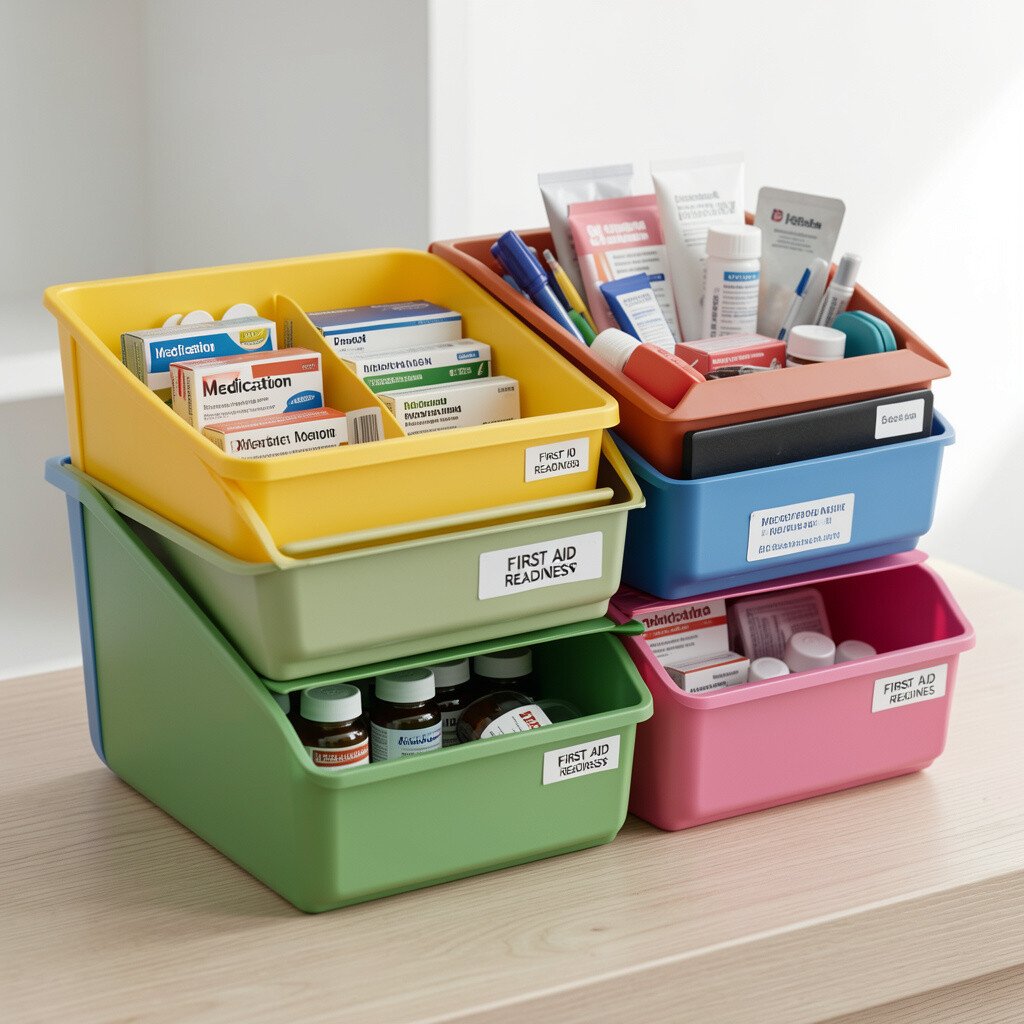
Imagine a small cabinet where first aid supplies are not scattered, but grouped into calm, color-coded sections. A soft blue bin can hold bandages, a clear purple bin can store ointments, and a neutral bin can hold tools like scissors or tweezers.
This setup benefits you by making help easy to find during stressful moments. It can also reduce missed items because each bin has a clear purpose and a predictable spot. For practical tips, keep items in separate compartments inside the bin so loose items do not mix.
For personalization, use colors that feel soothing to you, because your mind likes calm cues. Current trends favor “at a glance” home organization, so using a well-lit cabinet with colored bins fits right in, as long as you keep safety and privacy in mind.
15. Books, Magazines, and Reading Bins
Books, Magazines, and Reading Bins
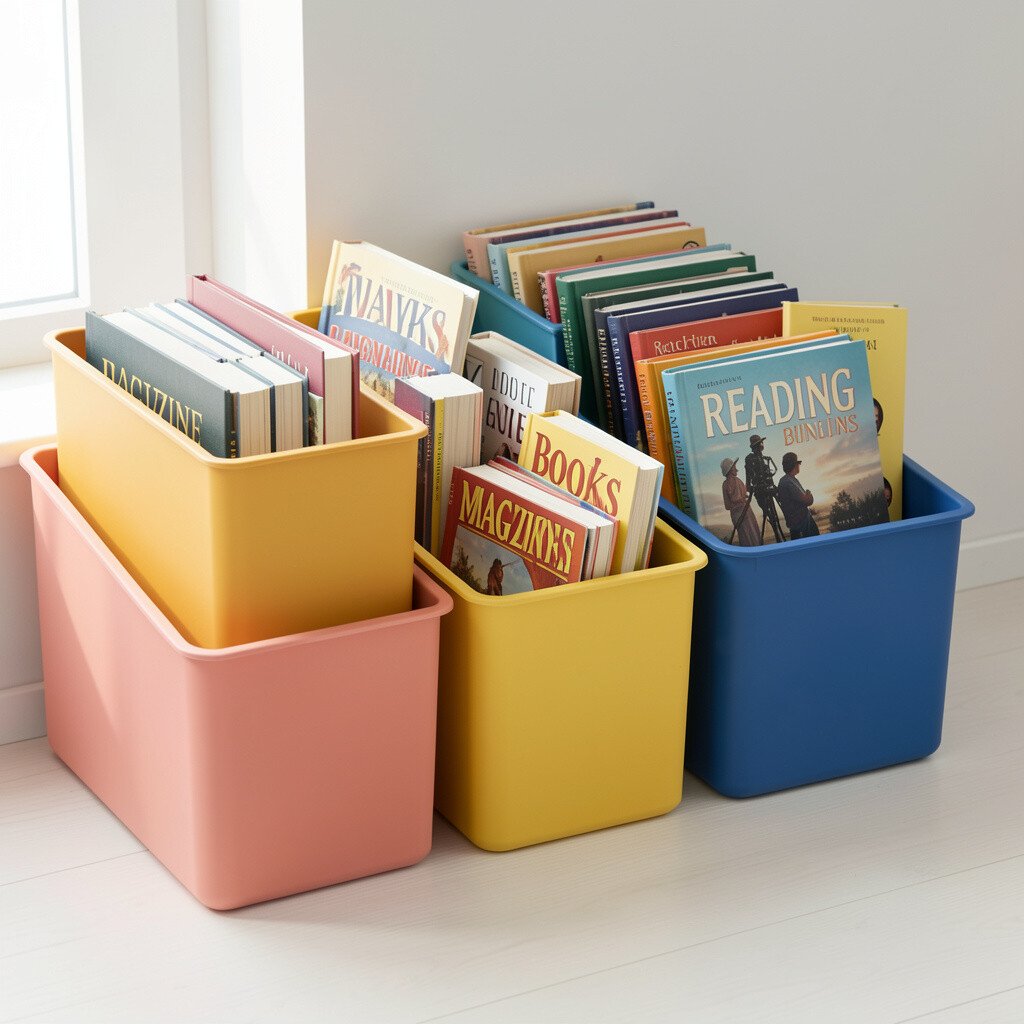
Picture a living room shelf where books and magazines look intentional instead of piled. Using different colored bins for genres or reading types creates a clean visual rhythm, like a green bin for nonfiction and a red bin for favorites.
This helps you actually enjoy reading more because you can find the right mood quickly. It also prevents magazines from spreading across tables and floors. Practical tips include storing magazines in one color bin so you can recycle them at the right time without sorting every issue.
Personalize by adding bin colors that match room accents, so the organization feels like décor. For cost considerations, start with a few bins for the most active reading categories, then add more once you learn which colors work for your habits.
16. Family Mail and Paper Management
Family Mail and Paper Management
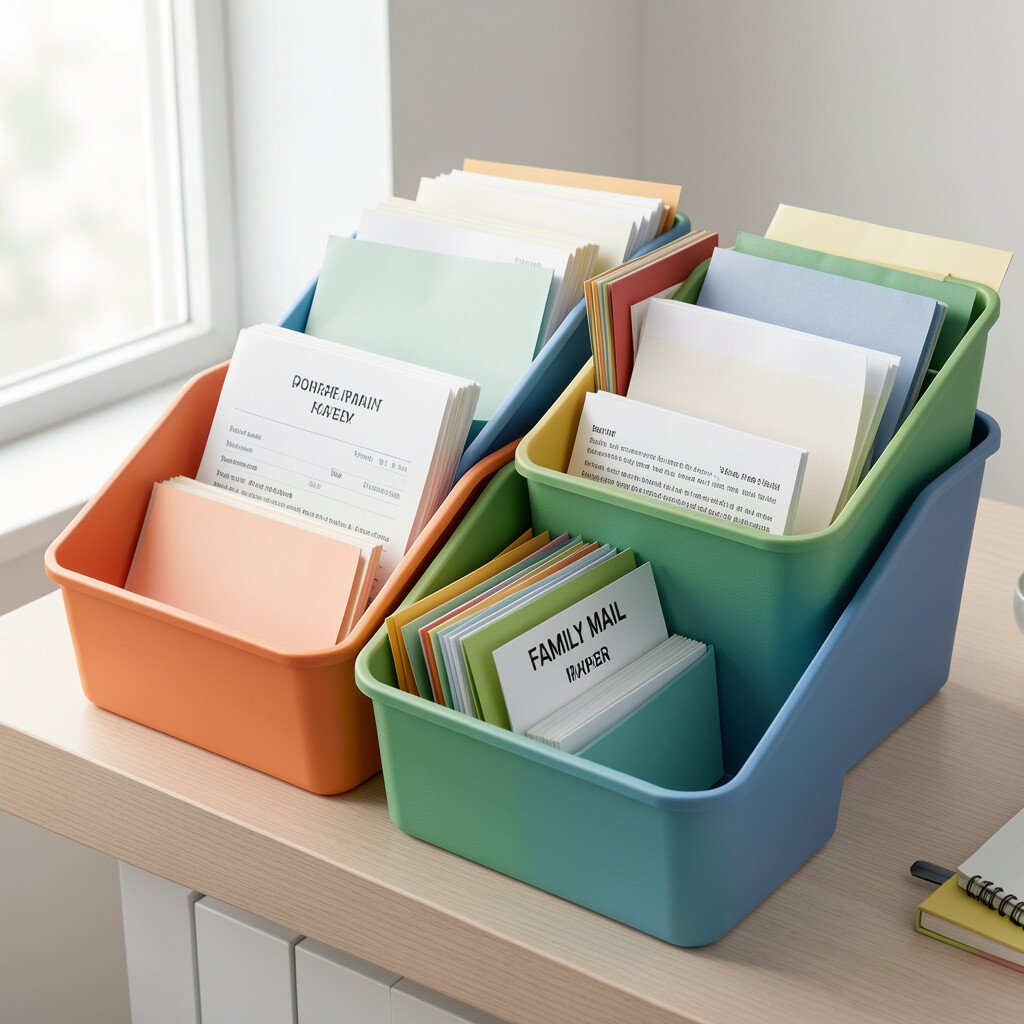
Visualize a home entry station where mail does not sit on counters, because it immediately goes to a color-coded bin. A bright orange bin can hold action-needed papers, a teal bin can store newsletters, and a dark green bin can keep items that need to be filed later.
This keeps paperwork from taking over your space and reduces last-minute stress. You will benefit because every day has a simple step that takes only a moment. For practical tips, place the bins in a consistent spot and empty the action bin at a regular time so it never overflows.
Uniqueness shows up when you match bin colors to your family’s routine, like using one color for school papers and another for work documents. In current organization trends, people are pairing color systems with simple schedules, so the bins become part of a calm daily workflow rather than just storage.
If you want to manage cost, choose bins that stack or reuse containers you already own, then add color with spray paint bands or removable labels.