12+ Inviting Garden Cafe With Rustic Tables Ideas To Try
The air smells like herbs, and every table feels like a small invitation. Soon you’ll want to sit down, sip something warm, and stay a little longer.
Rustic tables fit garden cafes in a way that feels easy, cozy, and real. With the right details, your space can look charming and work smoothly for guests.
Place a few short rustic barrel sections as center tables, then top them with sturdy boards so cups and plates feel steady. The wood tones will blend naturally with greenery and make the whole cafe look cared for.
Arrange herb planters right in the centers so guests can smell mint, basil, or thyme while they eat. This creates a fresh vibe and gives you ingredients you can use for simple menu touches like herb butter or infused lemon drinks.
To keep it practical, use food-safe sealant on any surfaces that touch dining items. For personalization, mix planter heights so taller stems catch the light and shorter ones stay neat.
2. Mismatched Wooden Seats and Single-Tree Table Bases
Mismatched Wooden Seats and Single-Tree Table Bases
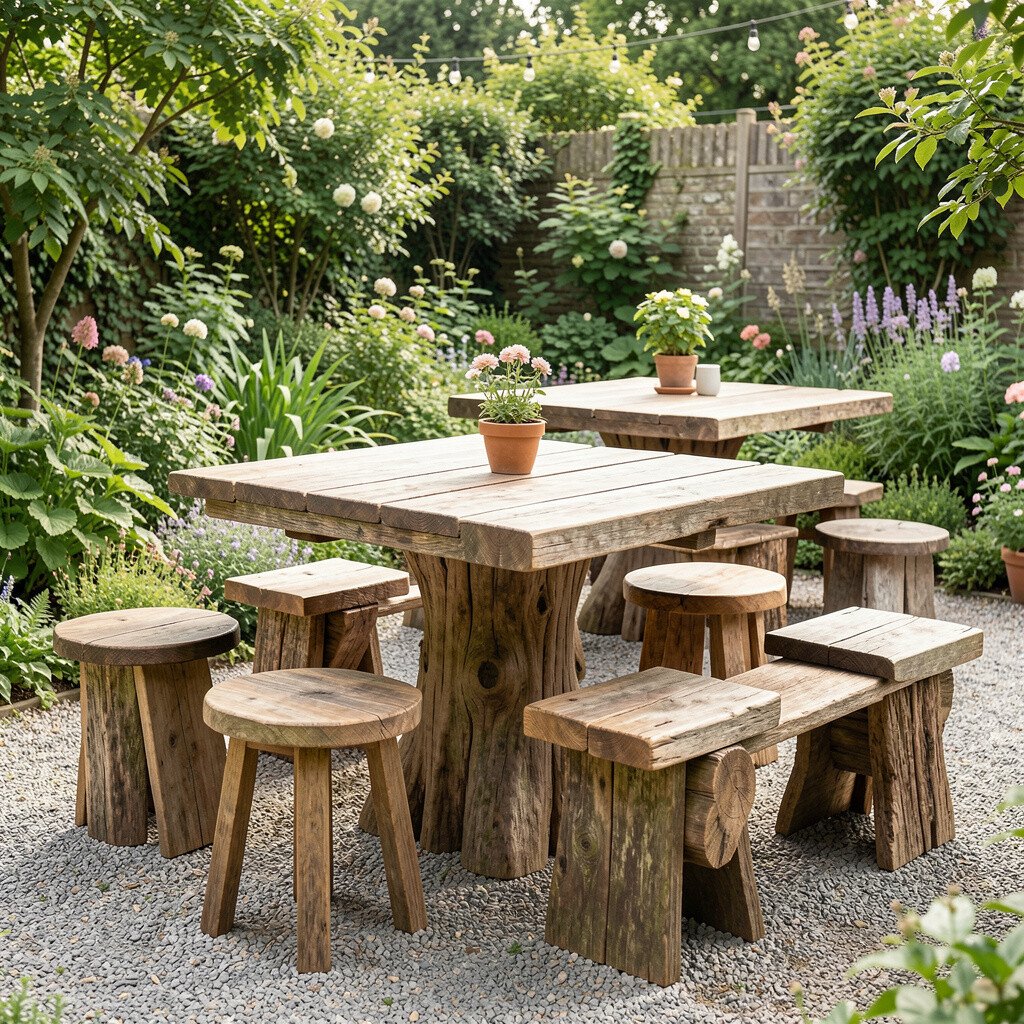
Use one strong live-edge or tree-stump table base, then pair it with mismatched wooden chairs that look handmade. The uneven shapes add character, and the garden background makes every table feel like a photo-worthy spot.
When guests see different chairs in the same space, it feels welcoming instead of formal. This also helps with flow, since lighter chairs are easier to move for groups.
If you want it to last, sand down rough edges and add a clear protective finish that can handle outdoor weather. For cost considerations, start with two standout chairs and build the set over time using local thrift stores or salvage yards.
3. Weathered Plank Tables With Linens That Match the Sky
Weathered Plank Tables With Linens That Match the Sky
Pick long, weathered plank tables and dress them with lightweight linens in soft blue, dusty sage, or warm cream. The contrast between rough wood and smooth fabric looks calm and inviting.
Guests love how linens make a rustic setting feel comfortable without feeling fancy. It also protects the wood, which helps you keep tables looking good through busy weekends.
Choose machine-washable table runners and use clips to keep them from sliding on breezy days. To personalize, add small fabric napkins tied with twine in seasonal colors.
For practical upkeep, use coasters for anything hot or wet and refresh the finish on planks once or twice a year. This is a simple way to keep the cafe looking current while still staying rustic.
4. Slatted Bench Tables With Hanging Glasses for Straws
Slatted Bench Tables With Hanging Glasses for Straws
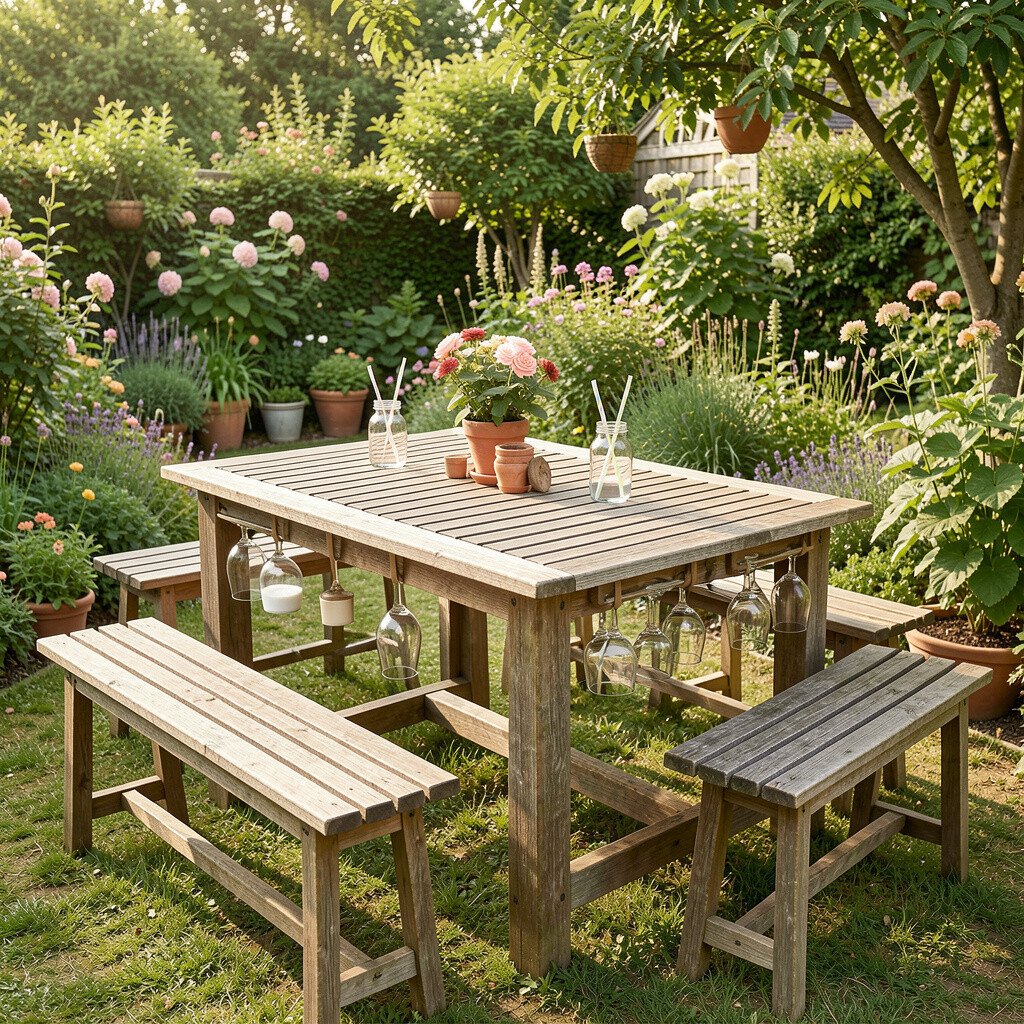
Build wide slatted benches and pair them with matching rustic tables so groups can sit close together. Under the shade of garden trees, this setup feels like a friendly neighborhood hangout.
Add a small hanging rail with glass tumblers for straws, spoons, and tiny stir sticks. It looks charming, keeps items visible, and saves you from constant back-and-forth with the supply shelf.
5. Woven Wicker Accents on Rustic Farmhouse Tables
Woven Wicker Accents on Rustic Farmhouse Tables
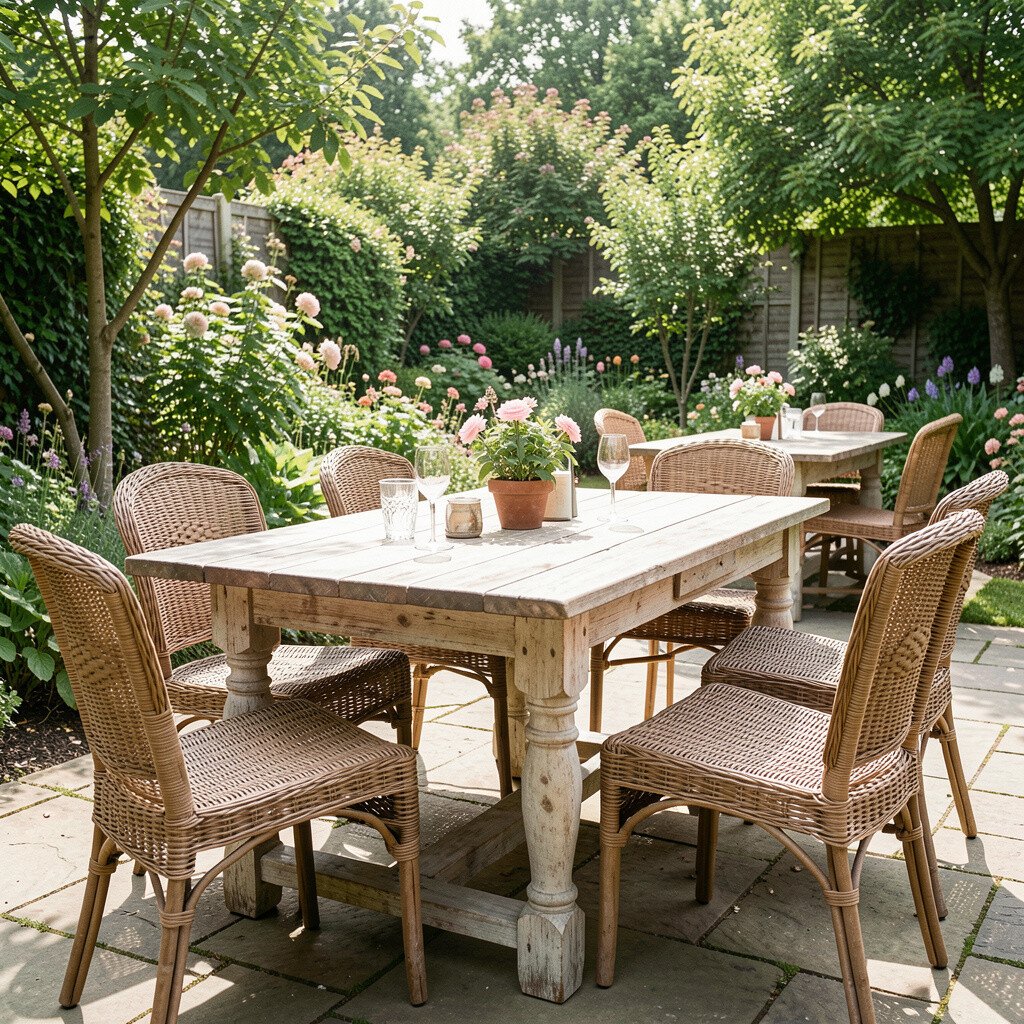
Use farmhouse-style rustic tables, then add woven wicker trays and coaster sets to soften the look. The texture feels natural next to plants, and the warm tones make the cafe feel cozy even on cooler evenings.
Wicker accents also make serving easier because you can carry multiple items at once on a tray. Guests get a neat, organized vibe, and they’ll notice how thoughtfully everything is arranged.
For personalization, place a small woven basket at each setting with a folded menu card and a sprig of rosemary. If you’re watching cost, choose a few statement pieces first, then rotate smaller accents as your menu changes.
6. Repurposed Door Tables With Small Herb Shelves
Repurposed Door Tables With Small Herb Shelves
Turn old doors into statement cafe tables by mounting them on sturdy legs and sealing the surface well. The wood grain and hardware marks can become the “story” of your setup.
To make it practical, add small herb shelves beneath or along the side so you can store garnish and fresh stems. This adds uniqueness and helps you keep ingredients within reach during service.
For personalization, paint only the legs in a muted tone while leaving the door top naturally weathered. A light sanding and clear sealant keep the surface smooth and safe for plates and cups.
7. Candlelit Lantern Rows Along the Table Edge
Candlelit Lantern Rows Along the Table Edge
Set lanterns along the edge of each rustic table, spacing them so they glow without blocking sightlines. The warm light makes the garden look magical and turns dinner into an experience.
Lantern lighting gives guests a cozy mood, and it helps kids and adults find their seats easily. When the light is consistent, staff can keep serving without feeling rushed.
8. Round Rustic Dining Tables With Vertical Planter Stands
Round Rustic Dining Tables With Vertical Planter Stands
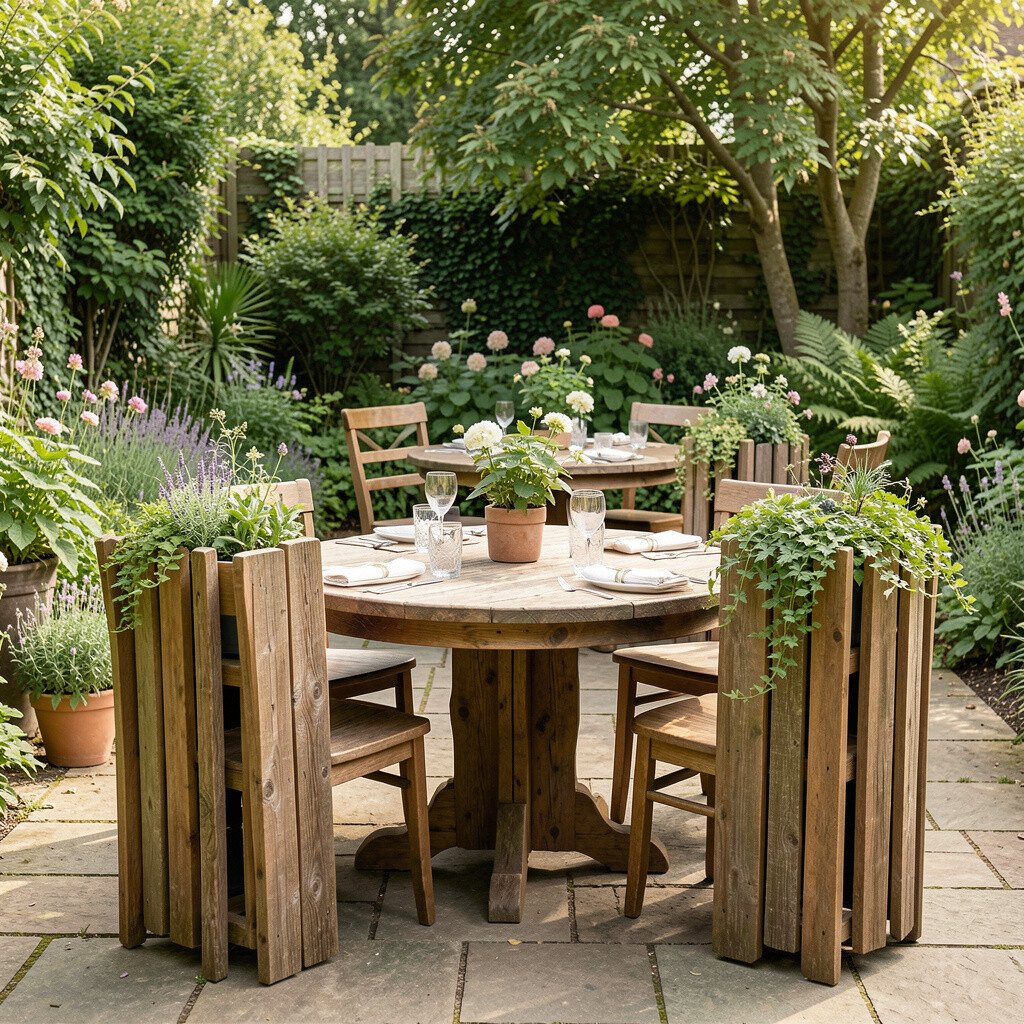
Choose round rustic dining tables so conversation flows naturally, especially in a garden path layout. Round surfaces also help cups and plates feel stable when foot traffic passes nearby.
Add vertical planter stands in the center area, using tiered containers or a simple stand that holds trailing greens. This makes each table feel unique while giving guests a pretty focal point.
Use simple plant varieties that handle outdoor conditions well, like hardy herbs or small flowering mixes. To personalize, swap plant colors with the season, such as bright summer blooms or autumn-toned greens.
For cost considerations, reuse planters you already own and focus your budget on one strong stand per table. Over time, you can adjust plant combinations without replacing the entire display.
9. Rustic Chalkboard Menus With Wood-Frame Table Stands
Rustic Chalkboard Menus With Wood-Frame Table Stands
Use chalkboard menus in simple wood frames and set them at each table on a small stand. Guests can read items easily, and the rustic frame matches the table style perfectly.
This setup reduces questions during busy times because guests can check ingredients or drink options right away. It also makes the cafe feel personal, since the board can match your weekly theme or seasonal ingredients.
Write in clear, bold chalk lettering and wipe boards clean between service days. For personalization, draw small leaf icons or doodles around popular items to create a friendly feel.
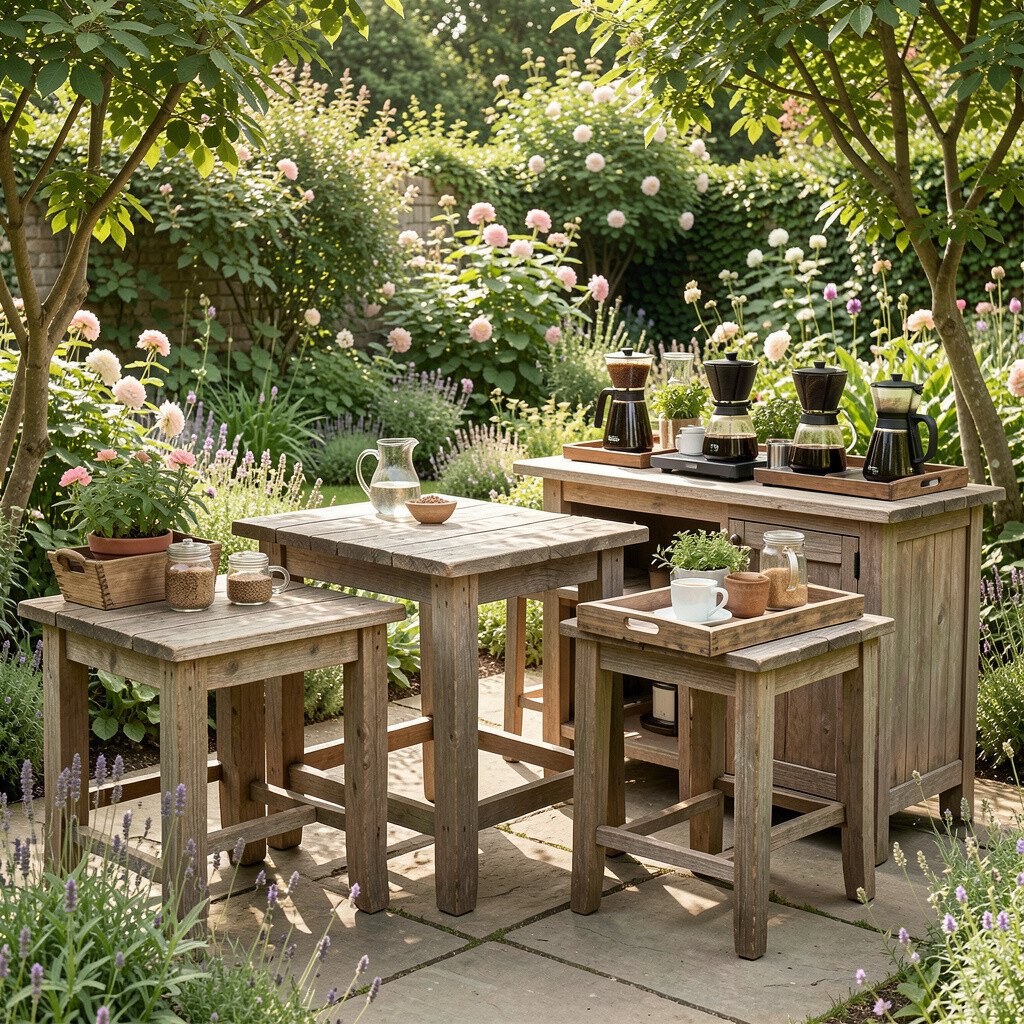
10. Coffee Service Stations With Rustic Side Tables and Trays
Coffee Service Stations With Rustic Side Tables and Trays
Create a coffee service area using rustic side tables paired with sturdy trays and labeled containers. Even if the garden is busy, guests will feel comfortable walking up and ordering at their own pace.
Try arranging items from light to dark, such as sweeteners and milk options, so the station looks neat. This helps staff move faster because everything has a clear place.
11. Tabletop Moss Terrariums With Tiny Place Cards
Tabletop Moss Terrariums With Tiny Place Cards
Top rustic tables with small moss terrariums that hold tiny plants and cute place cards. The mini garden look feels fresh, and it turns an ordinary table into something memorable.
These terrariums also help with personalization because each one can carry a different plant or color accent. Guests love finding their name on the card, and it makes groups feel included.
Keep it practical by using lightweight terrarium inserts and sturdy bases that won’t tip over. For cost considerations, use inexpensive moss and small cuttings from your yard, then seal only the outer surfaces to protect the table.
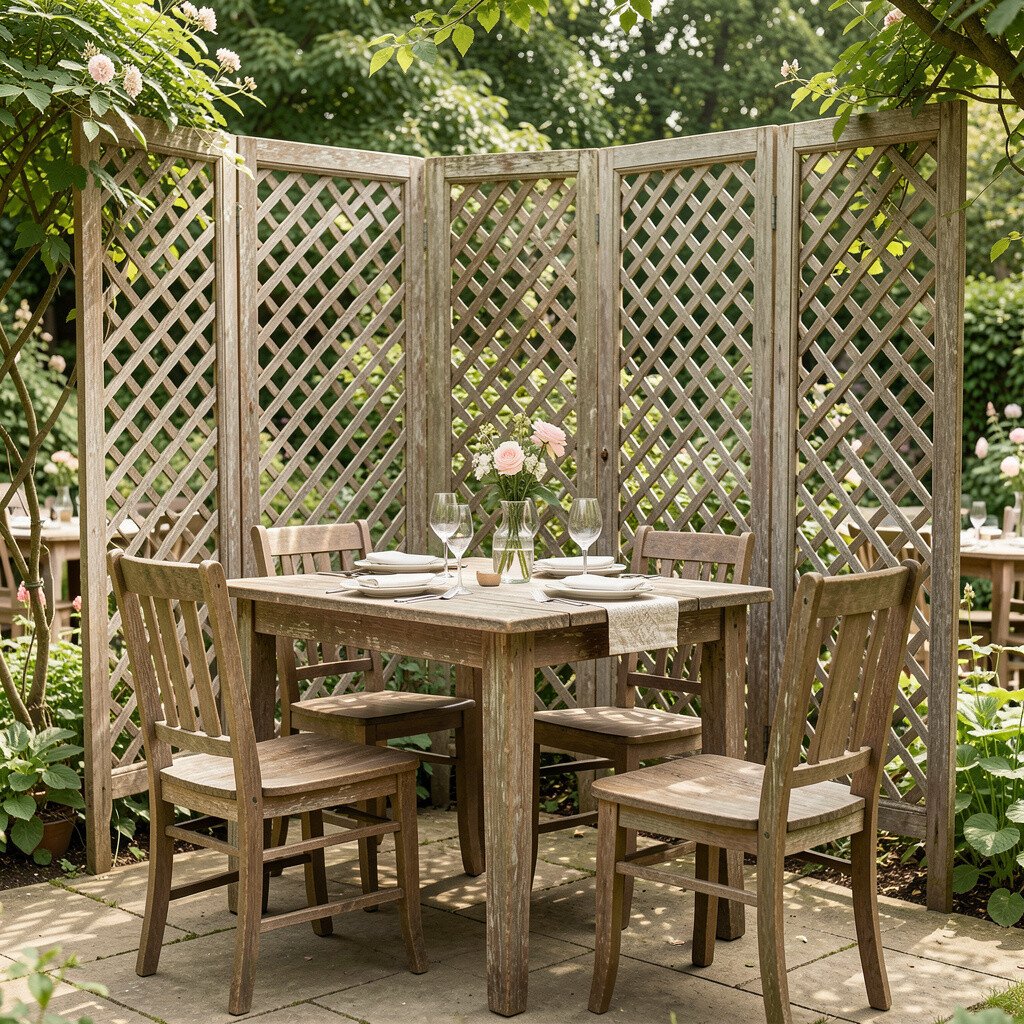
12. Old Lattice Panels as Table Backdrops for Extra Depth
Old Lattice Panels as Table Backdrops for Extra Depth
Lean or mount old lattice panels behind dining areas so your rustic tables have a textured backdrop. The pattern adds depth to photos and makes seating zones feel distinct in a larger garden.
Add small string lights or hanging herbs on the lattice to keep the look layered and inviting. This matches current trends toward cozy micro-zones, where guests feel like they’ve found their own little corner.
For practical setup, anchor the lattice securely so it stays steady in wind. Personalize the look by choosing one repeating ribbon color or one flower type for a clean, coordinated style.
If you’re mindful of cost, use salvaged lattice pieces and focus on lighting and table styling for the biggest visual impact.
13. Seasonal Fruit Crates as Display Tables for Treats
Seasonal Fruit Crates as Display Tables for Treats
Stack rustic fruit crates as small display tables beside your main dining tables. Fill them with seasonal fruit, homemade pastries, or wrapped snacks for an easy grab-and-go feel.
The crates add uniqueness because each one has its own wear marks and wood character. Guests enjoy seeing what’s fresh, and it makes the cafe look active and lively.
To keep it safe and clean, line crate interiors with food-grade liners or washable trays. For personalization, add handwritten labels with ingredient notes and use matching twine for a consistent look.
When thinking about cost, start with one or two crate displays and rotate what you put in them as your menu changes. This keeps your garden cafe feeling current without spending a lot every time.