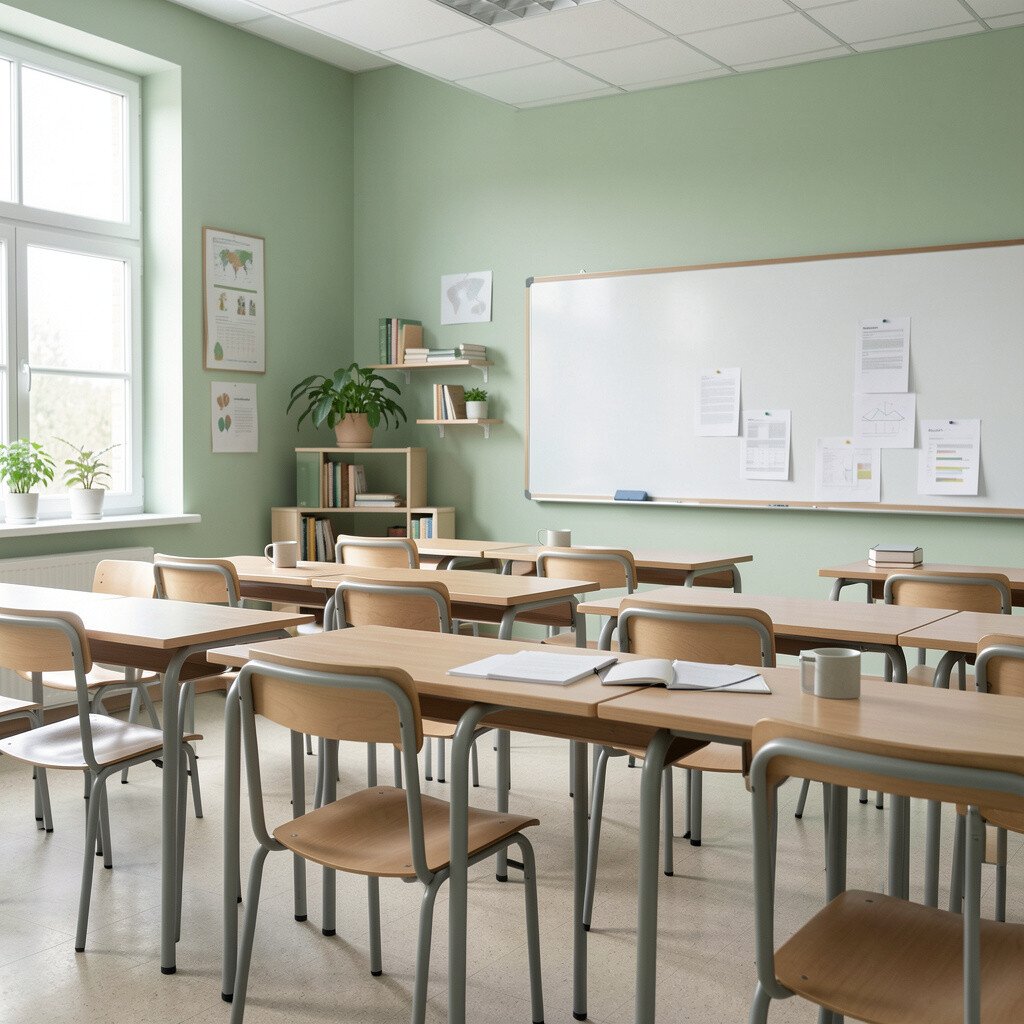
Picture your room wrapped in muted sage, like the inside of a shaded garden. Desks look brighter because harsh colors are gone.
This theme supports focus by lowering visual noise and helping students feel safe. Keep posters simple and place them in the same spots every day so students know where to look.
2. Warm Neutrals With Light Wood Lines
Warm Neutrals With Light Wood Lines
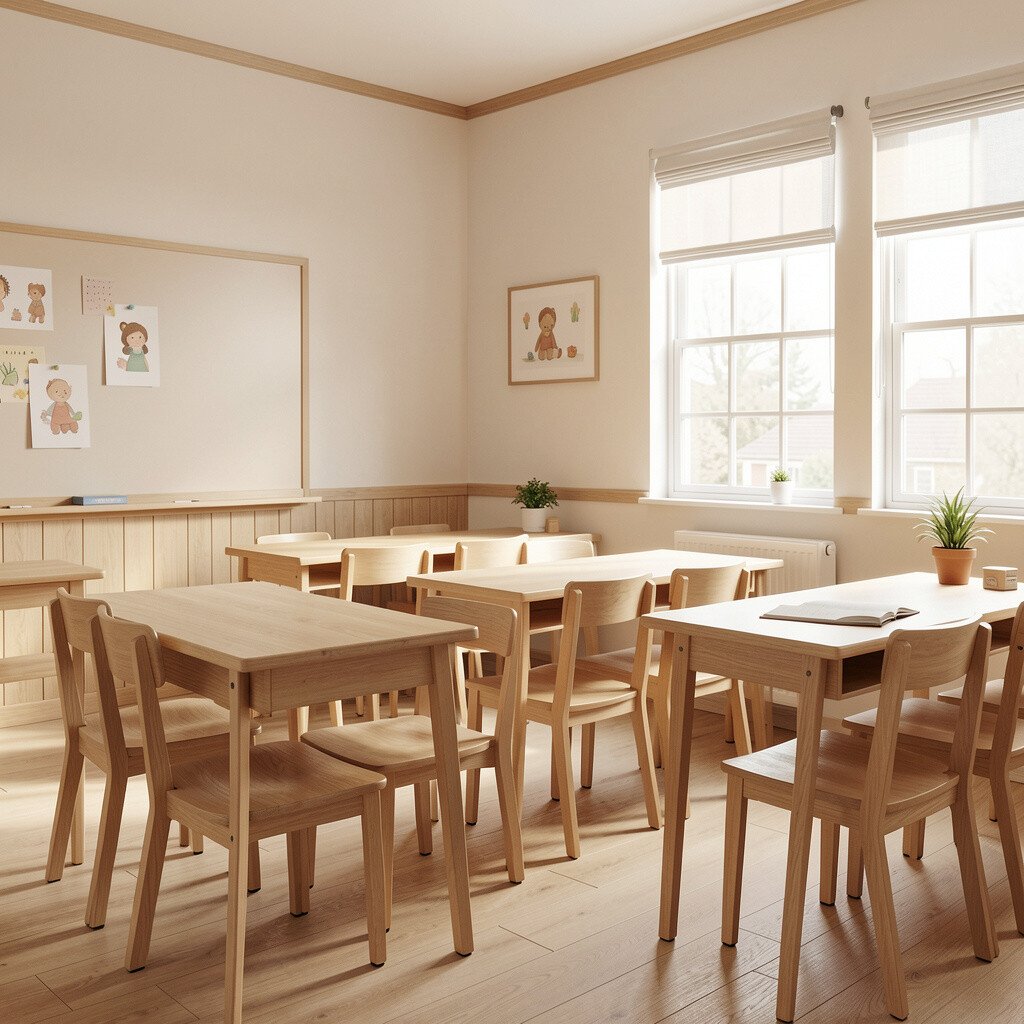
Imagine beige walls paired with light wood shelving and smooth, matte surfaces. The room feels tidy even when it’s busy.
Neutral tones help many learners stay on task because the eye doesn’t bounce around. Choose a few consistent textures, like cork, fabric bins, or woven baskets, to make organization feel natural.
For practical use, label shelves with small icons rather than lots of words. Personalize by letting students pick one small item for a shared station, like a mini desk plant or a patterned pencil cup, without turning it into clutter.
3. Ocean Blues for Steady Attention
Ocean Blues for Steady Attention
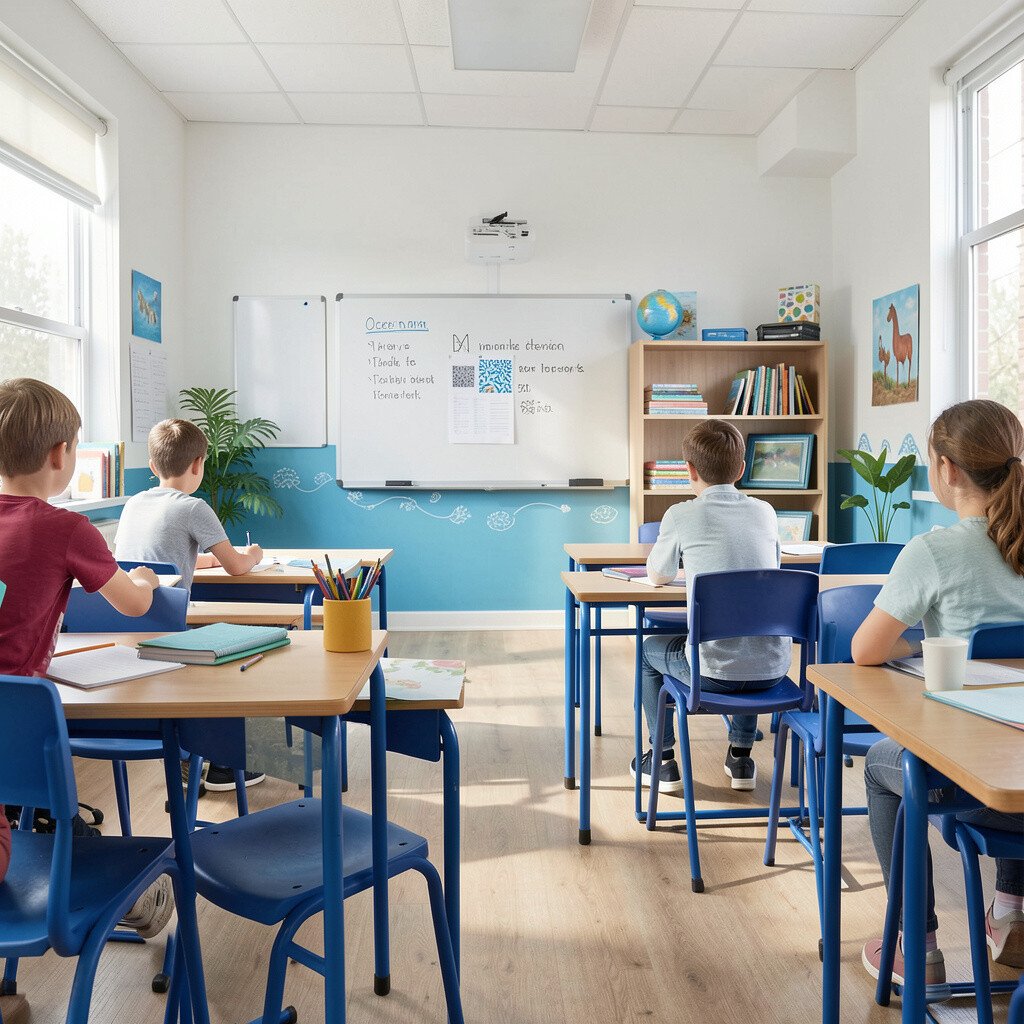
Think of classroom corners that resemble a quiet shoreline with soft ocean blues. Curved bulletin borders and wave-like patterns guide the eye gently.
This theme can help students concentrate because blue tones often feel cooling and focused. Use a single “center line” color across the room, then match folder colors to that palette.
Try low-contrast decor so the learning areas stay bold. Students can personalize with small marine-themed name tags that are the same size and style.
Cost is usually friendly because you can start with printed borders, a few curtain panels, and labeled containers. A current trend is using calming gradients in digital slides and printed anchors, so your visuals look modern without being loud.
4. Minimal White Space and Clear Zones
Minimal White Space and Clear Zones
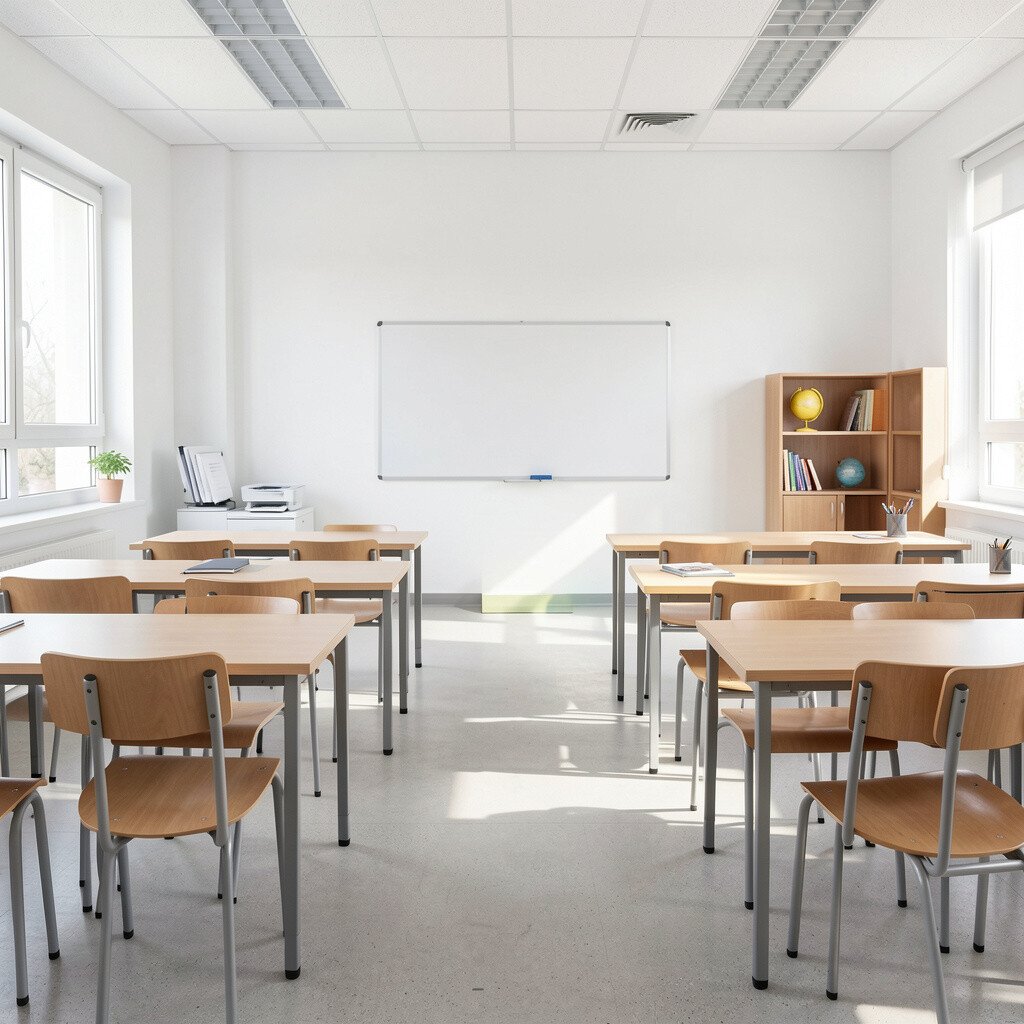
See a room where walls are mostly clean, with plenty of breathing room. Work areas feel obvious because every space has a purpose.
This approach reduces distraction by letting students focus on the one thing that matters right now. Use a simple zoning system such as a wall for announcements, a wall for student work, and a wall for reference charts.
5. Blackboard Style With Chalk-Like Accents
Blackboard Style With Chalk-Like Accents
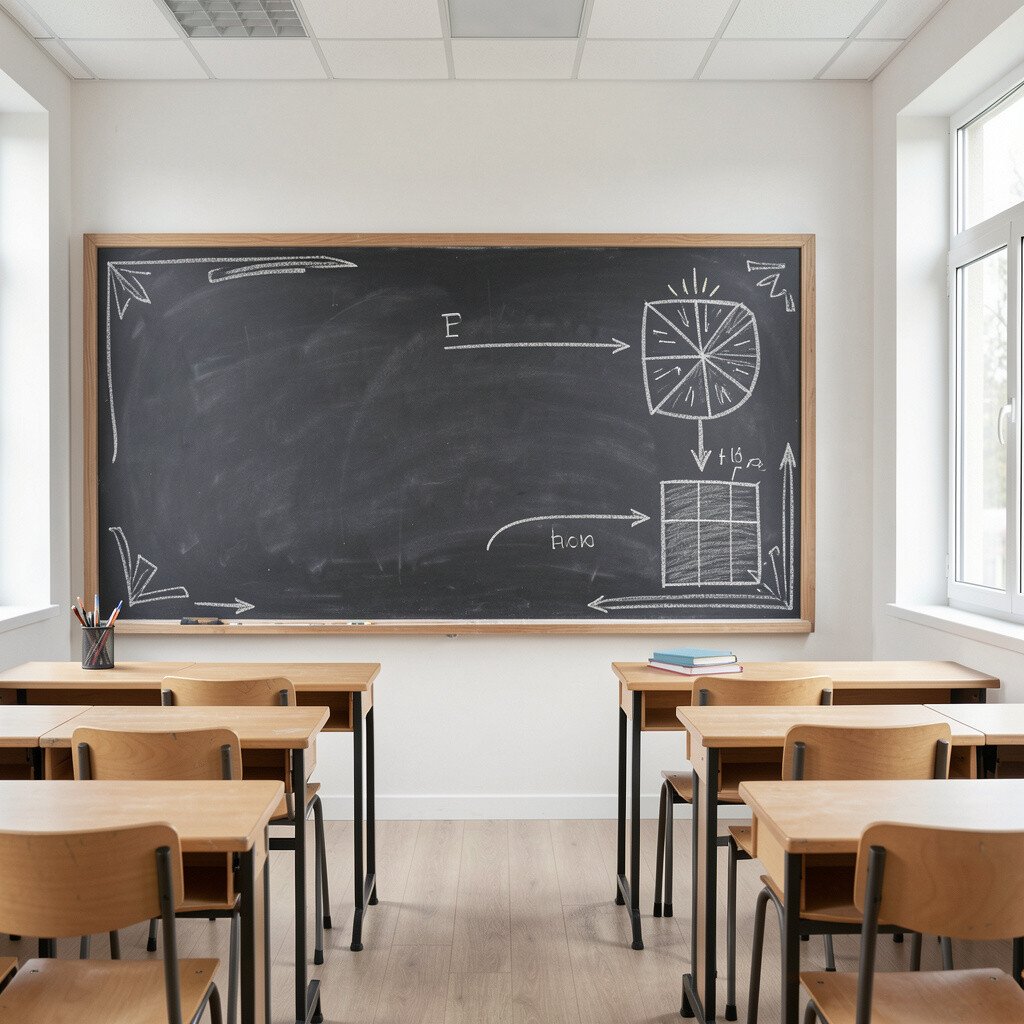
Visualize a classroom that uses chalkboard textures in a few strong spots, like the main writing wall. The look feels classic, practical, and focused.
Chalk-like accents can boost engagement because students are drawn to writing spaces. Keep most displays typed and calm, but use chalkboard material for weekly goals or daily schedules.
Personalize by allowing students to create one small chalk-style label for their station, such as “reading tools” or “science notebook.” Costs stay manageable if you use chalkboard contact paper or a small panel instead of covering everything.
6. Gallery-Like Frames for Student Work
Gallery-Like Frames for Student Work
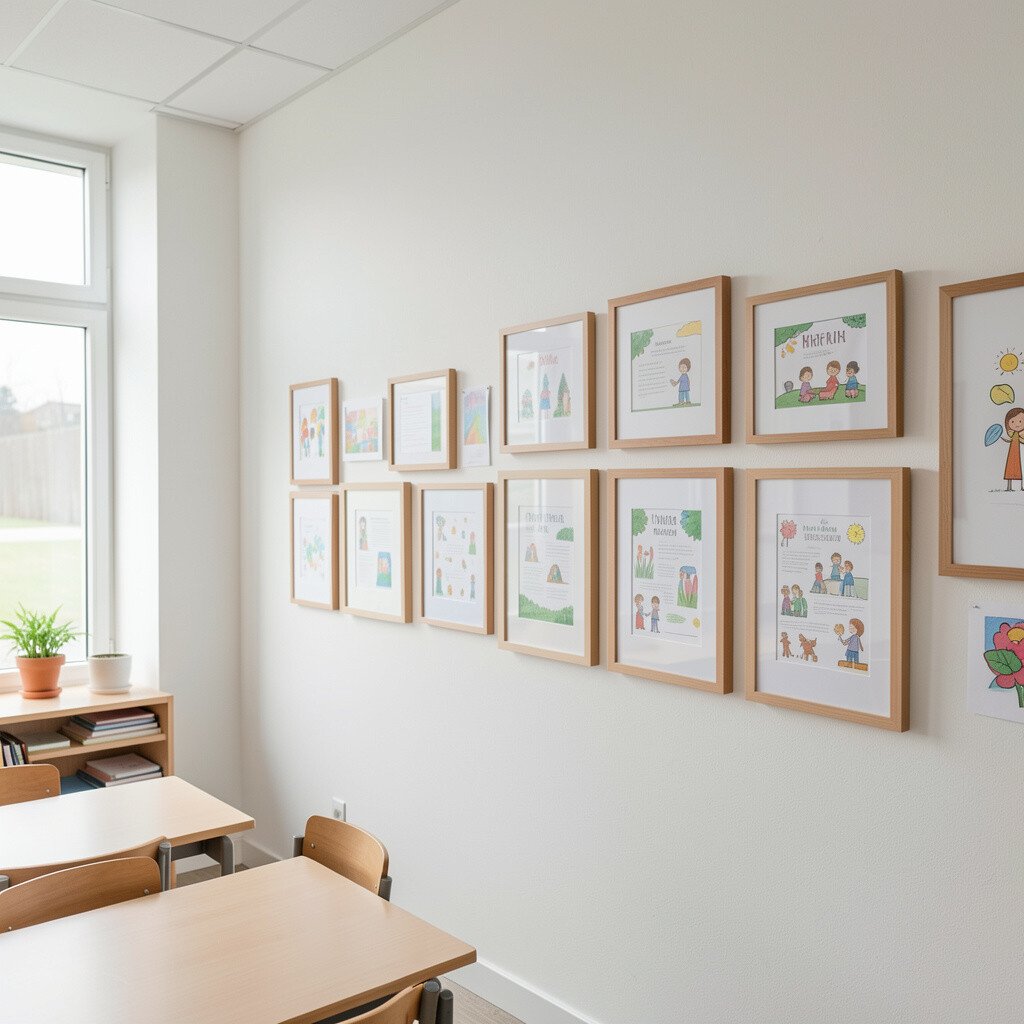
Imagine your classroom like a small museum, with student work placed inside consistent frames. The room looks orderly because everything has the same “home.”
This theme helps students pay attention because the eye knows where to find learning updates. Rotate displays on a schedule so walls never become a messy pile of papers.
For practical tips, use matching frame sizes and keep only a few pieces at a time. Personalize by letting each group choose one theme for their corner, like “nature science” or “story scenes,” while the framing system stays the same.
7. Library Quiet With Soft Reading Corners
Library Quiet With Soft Reading Corners
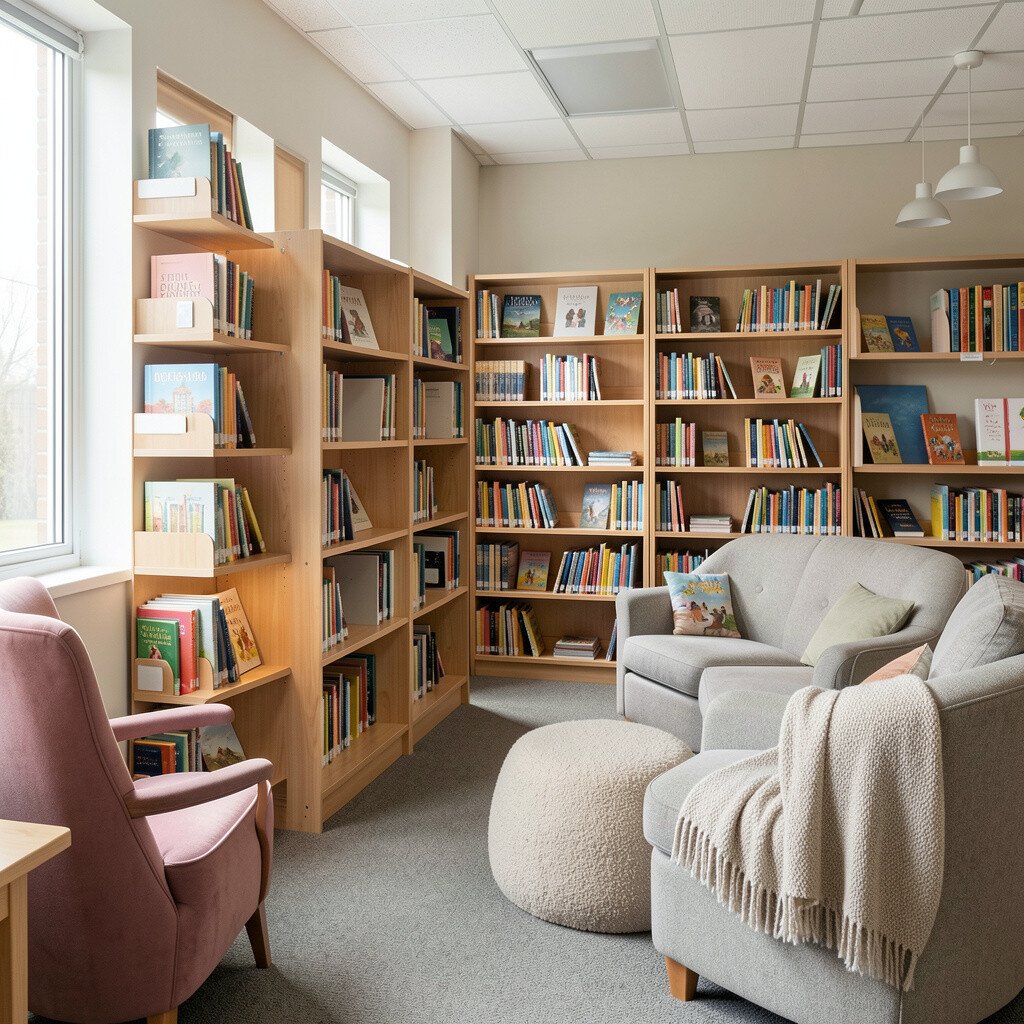
Picture cozy, low-pressure reading spots with warm lighting and a clear path between them. Beanbags, floor cushions, or a small rocking chair make the space feel welcoming.
This theme supports focused learning by giving students a calm place to reset. Keep reading materials sorted and easy to reach so students don’t drift searching.
Try using color-coded book bins that match your classroom wall palette. Let students personalize by choosing a bookmark design or a personal reading goal card that sits in the same slot each week.
8. Earthy Brick and Clay for Real-World Energy
Earthy Brick and Clay for Real-World Energy
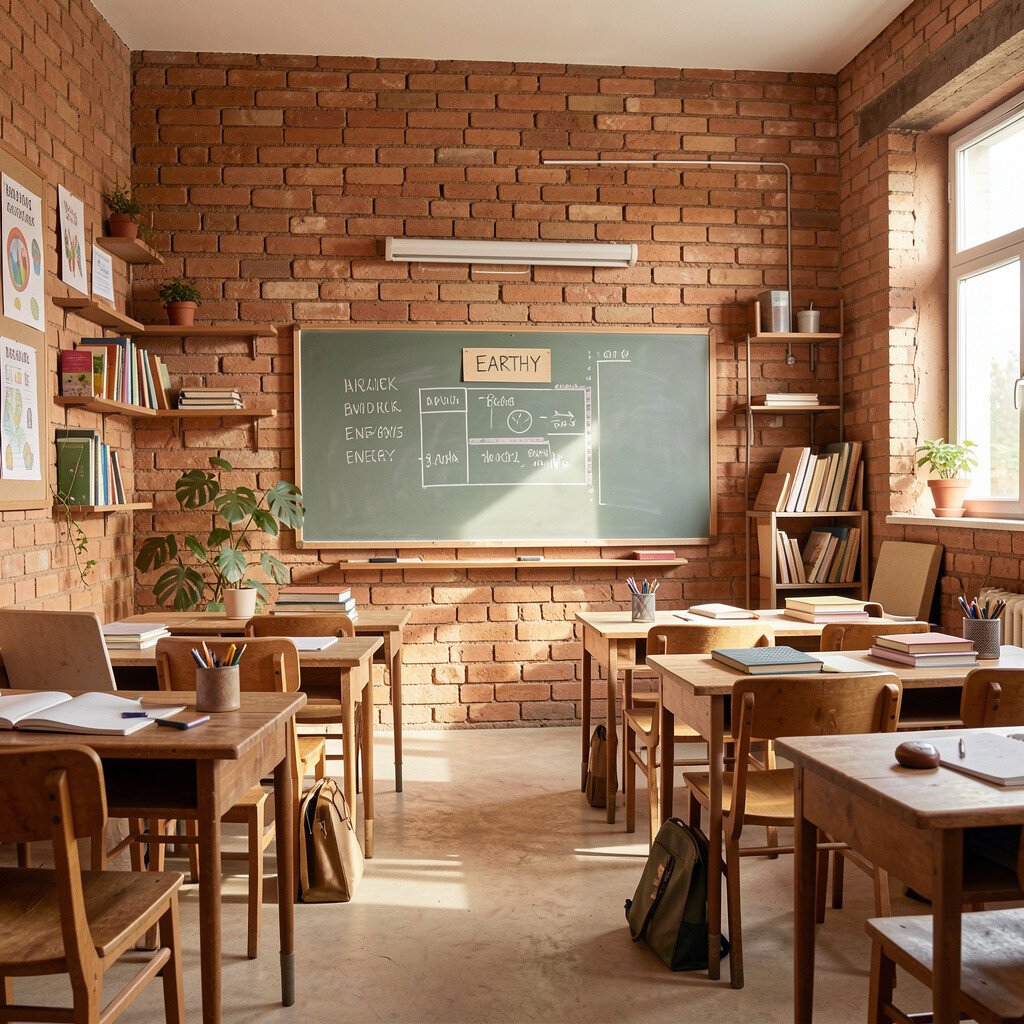
Think of muted terracotta, gentle brick patterns, and clay-colored accents around the room. The walls feel grounded and warm, like a workshop.
This theme can boost motivation because it feels practical and connected to real life. Use it in small areas such as a writing wall, a science center, or a supply backdrop, not everywhere.
9. Space Station Logic and Dark Mode Calm
Space Station Logic and Dark Mode Calm
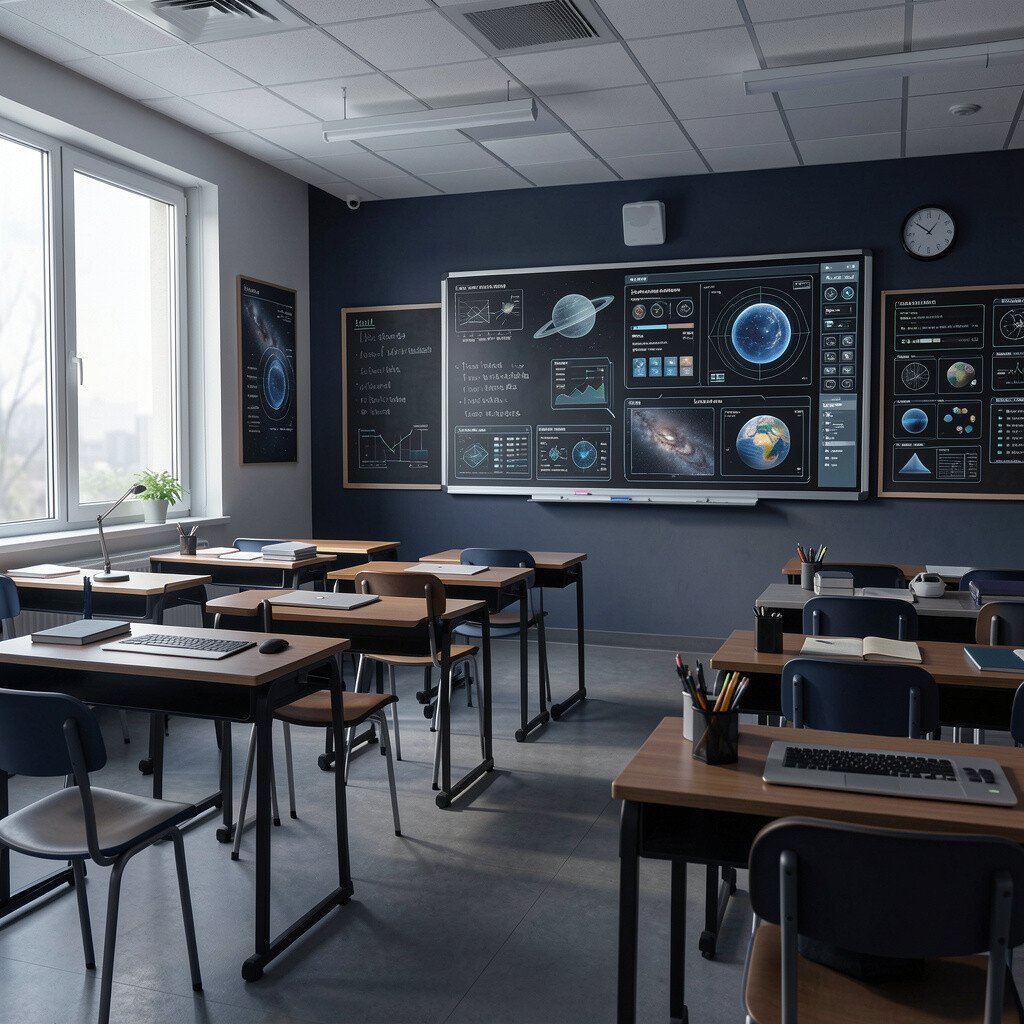
Visualize a “space station” style with deep navy backgrounds and bright, clean labels. Stars are kept subtle, like tiny specks rather than big flashy graphics.
This theme can support focus by creating a strong contrast for instructions while keeping the overall look quiet. Use dark mode visuals for digital slides and print directions, then add bright colors only to highlight key steps.
Practical tip: keep directions in short lines and in consistent positions, like top-right corners or center headers. Personalize by letting students add a small “mission badge” to their notebook cover, using the same shape each time.
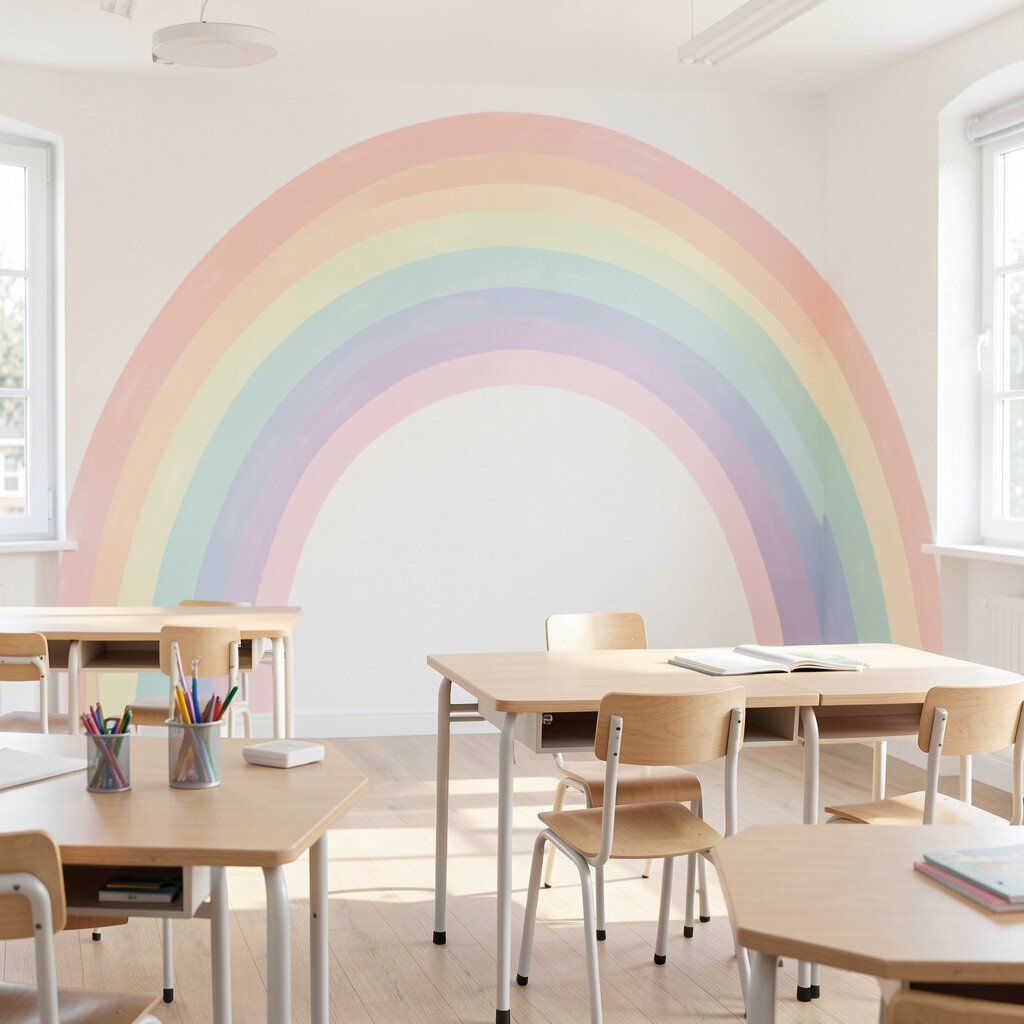
Imagine pastel rainbow bands running along the edges of bulletin boards and desks. The colors feel light, not loud.
This theme helps organization because students can quickly match colors to places, like papers to folders. Use only a few colors at once and keep text dark for readability.
For practical tips, make your classroom calendar and station labels follow the same pastel scheme. Personalize by giving each student a single color for their supplies, then keep everything else neutral.
11. Monochrome Black, White, and One Accent Color
Monochrome Black, White, and One Accent Color
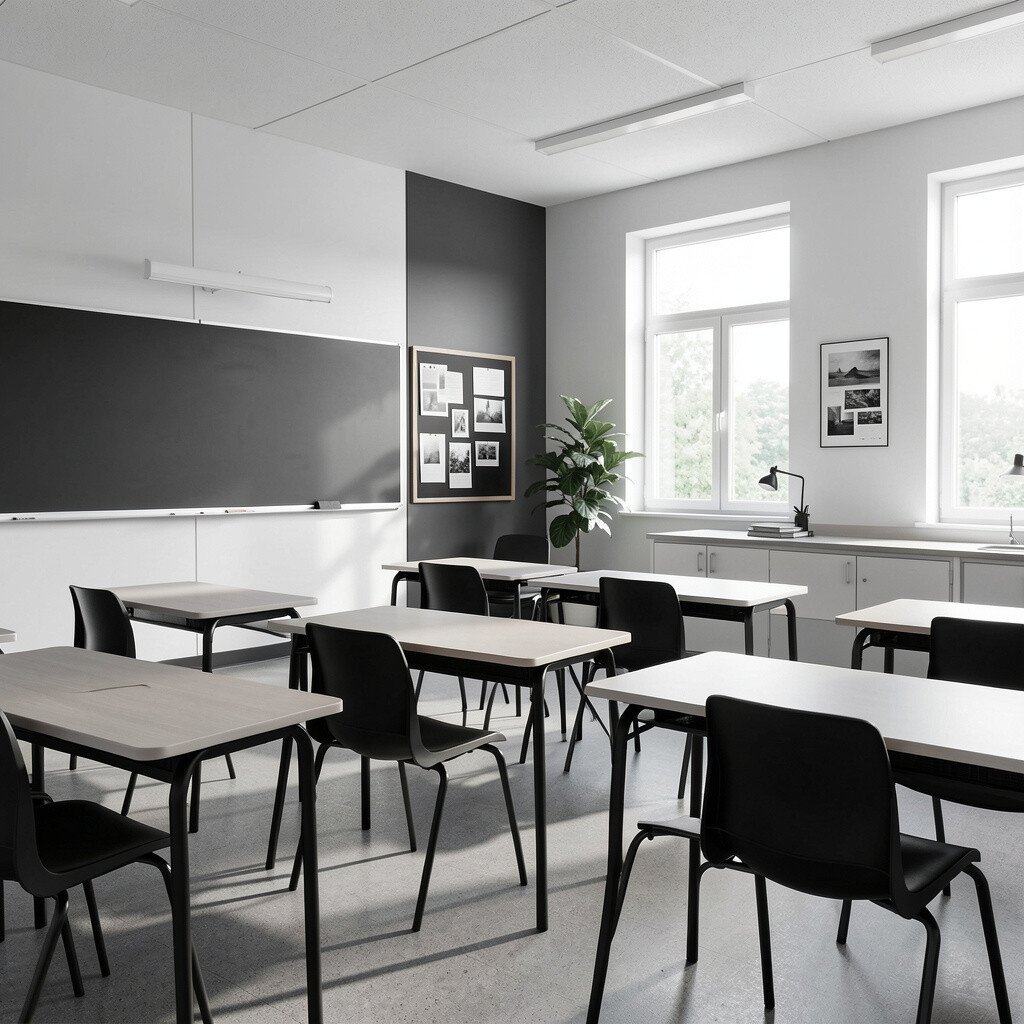
Picture a room designed with clean black-and-white visuals, then one accent color that pops. It feels sharp, like a simple design poster.
This theme reduces distraction because most elements stay quiet, while one color guides attention. Pick your accent carefully, such as teal or gold, and use it only for important directions and key labels.
Try printing charts and schedules in black-and-white with the accent used as a highlighter. Personalize by letting students choose a small accent sticker for their notebook, but keep the sticker style consistent across the class.
Cost considerations are usually low because black-and-white printouts and basic borders work well. A current trend is using limited palettes in classroom slides, so students see the same style across screens.
12. Nature Prints With a Single “Green Thread”
Nature Prints With a Single “Green Thread”
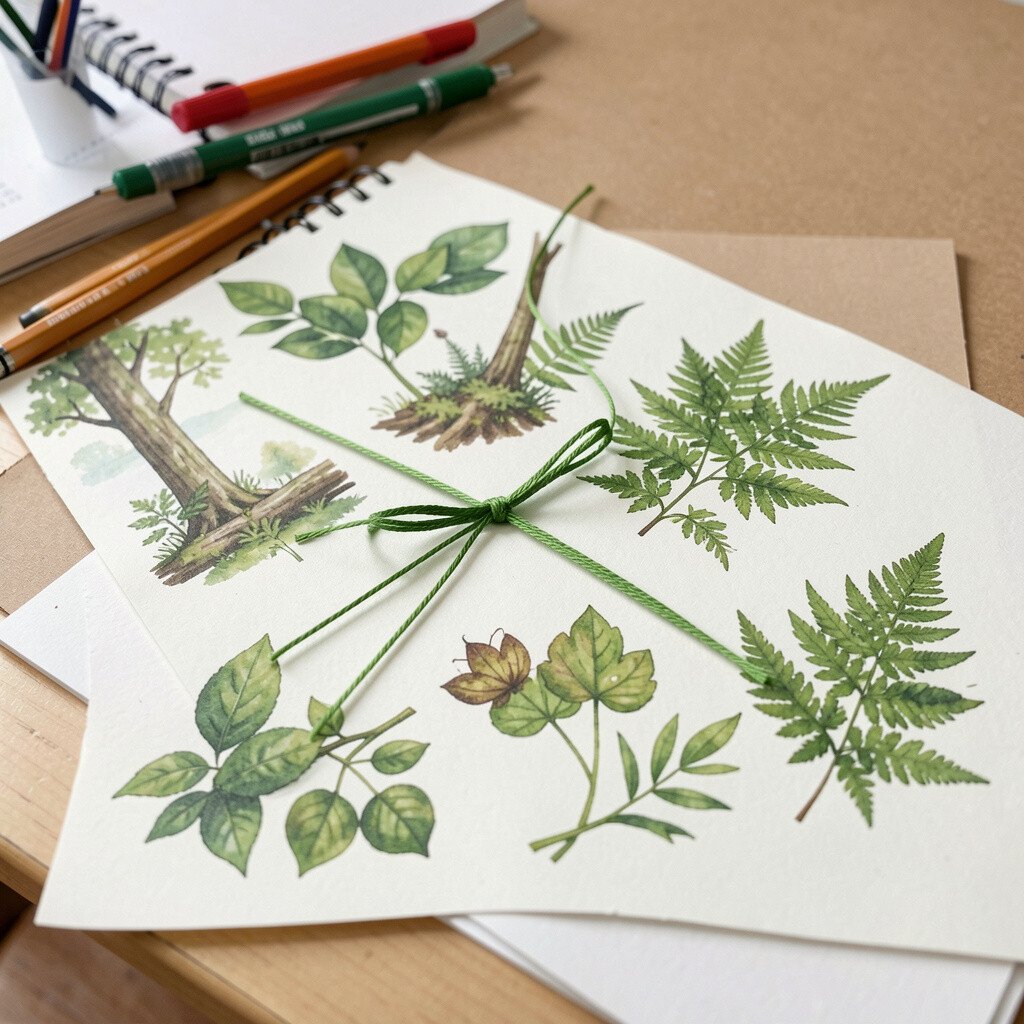
Imagine soft leaf prints on a single wall panel and plain backgrounds everywhere else. There’s a clear nature vibe without overwhelming patterns.
This theme supports focus because nature visuals can feel calming while still adding warmth. Use one “green thread” across the room, such as the same shade for labels, bins, and anchor charts.
Practical tip: choose repeating leaf shapes rather than detailed scenes, since simple patterns keep attention on work. Personalize by letting students create leaf rubbings or small cut-paper leaves for a shared display that grows over time.
13. Tech Clean With Light Grey and Blue Labels
Tech Clean With Light Grey and Blue Labels
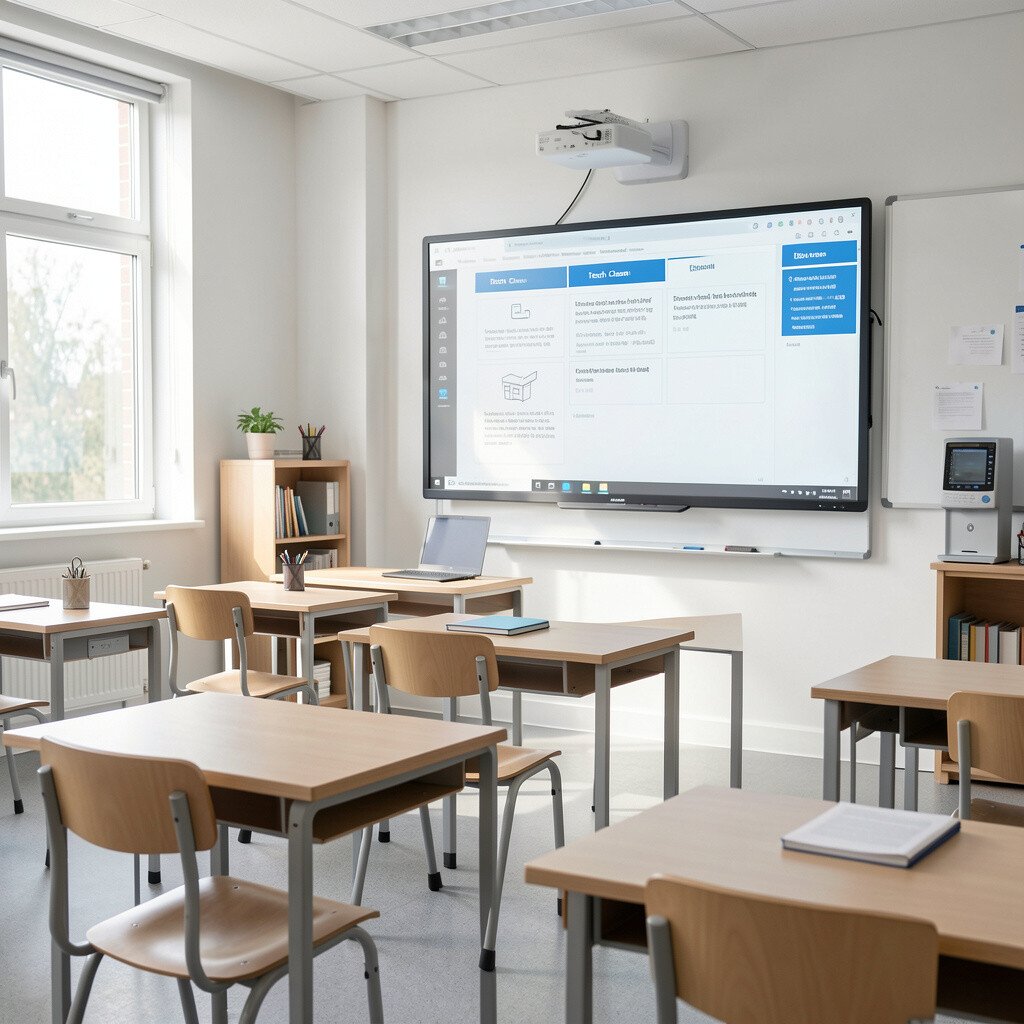
Picture a tech-themed room that looks like a modern interface, with light grey surfaces and clean blue label bars. The overall vibe is tidy, bright, and efficient.
This theme can improve focus because it makes directions easy to find and easy to scan. Use consistent icons for tasks, such as a pencil for writing, a book for reading, and a magnifying glass for research.
For practical tips, keep digital displays minimal and show one step at a time. Personalize by letting students set a custom color for their timer or progress marker, but keep it within the same label palette.
Cost is often reasonable since you can print label sheets and use reusable vinyl icons. A current trend is “no clutter tech,” where screens show clean dashboards rather than busy animations.
14. Storybook Hearth With Cozy, Predictable Corners
Storybook Hearth With Cozy, Predictable Corners
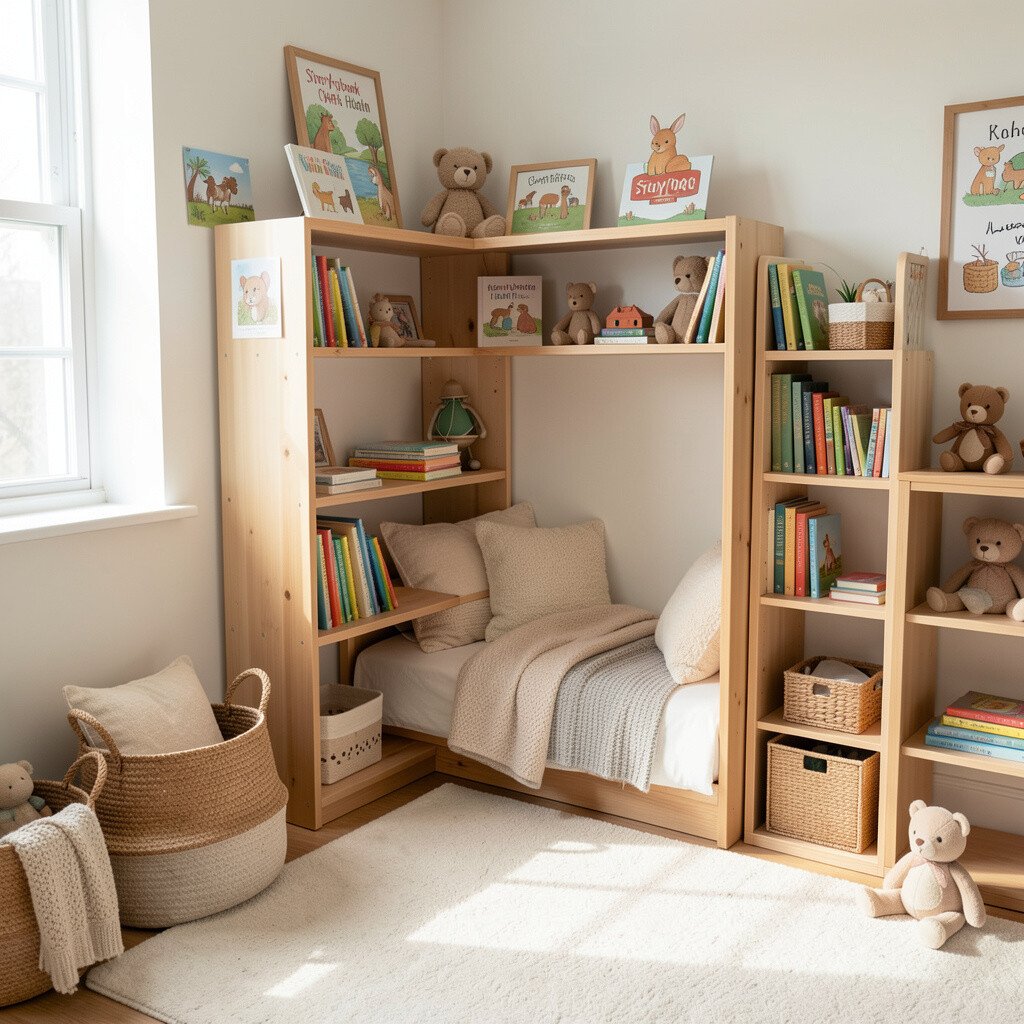
Imagine a classroom that feels like a warm reading lodge with soft patterns and steady layout. The decor looks like it belongs to a calm story.
This theme supports focus by pairing comfort with structure. Use themed bookmarks, gentle fabric accents, and consistent shelf homes so students always know where things go.
Try a simple routine like “open hearth time,” where the class gathers at a specific spot for directions. Personalize with character cards on desk bins, using the same size and color system to prevent visual chaos.
15. Sport Sidelines With Clear Rules and Boundaries
Sport Sidelines With Clear Rules and Boundaries
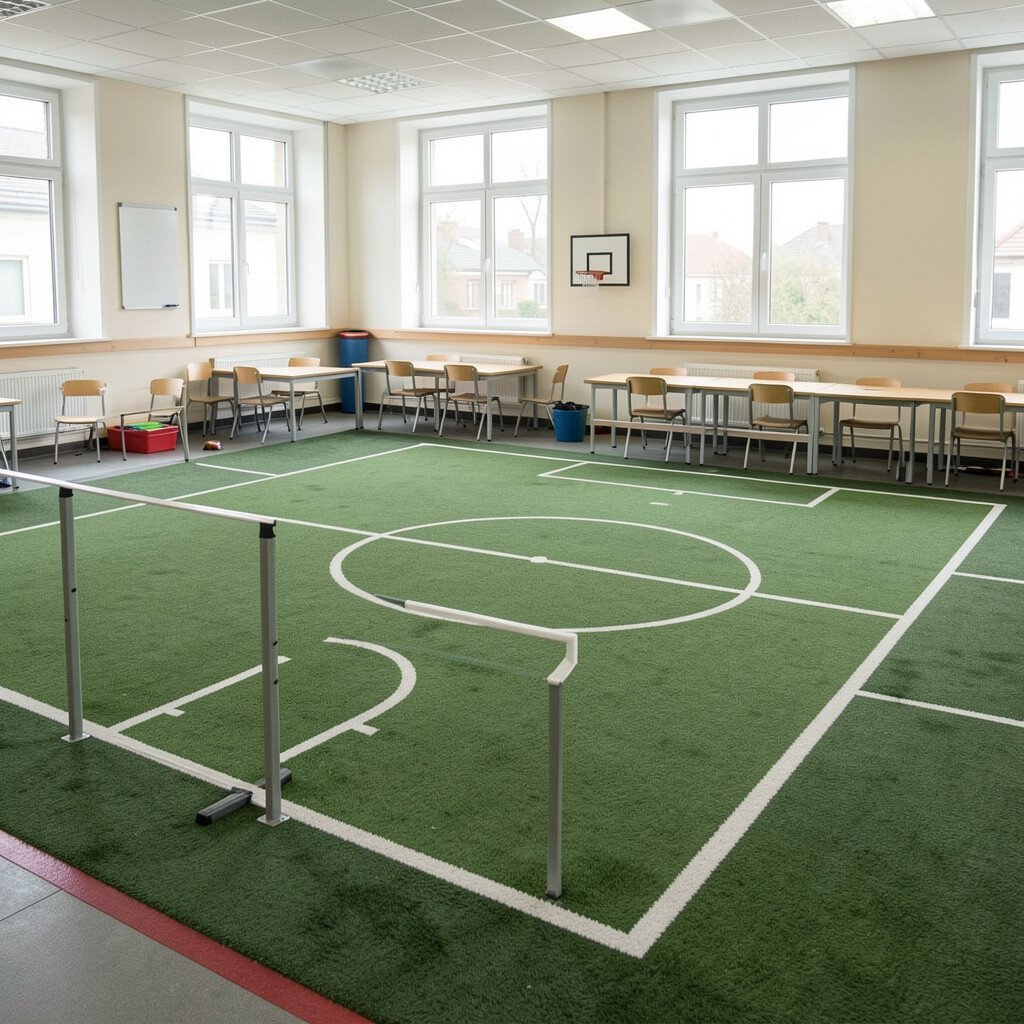
Picture a “game day” setup with clean lines, boundary tape, and posters that feel like friendly rules. The room looks organized like a practice area.
This theme can help students stay on task because it emphasizes clear boundaries for movement and materials. Use line-based directions, such as arrows showing where supplies belong and where notebooks should be placed.
Practical tip: keep behavior expectations in calm language paired with visual cues. Personalize by letting students pick a small team-color token for their participation tracker, while keeping the rest of the room neutral.
Cost considerations are simple since you can use reusable tape, print rule cards, and store supplies in matching bins. A current trend is using gamified routines, but keeping the visuals clean so the “score” never distracts from learning.
16. Art Studio Steps With Organized Tool Stations
Art Studio Steps With Organized Tool Stations
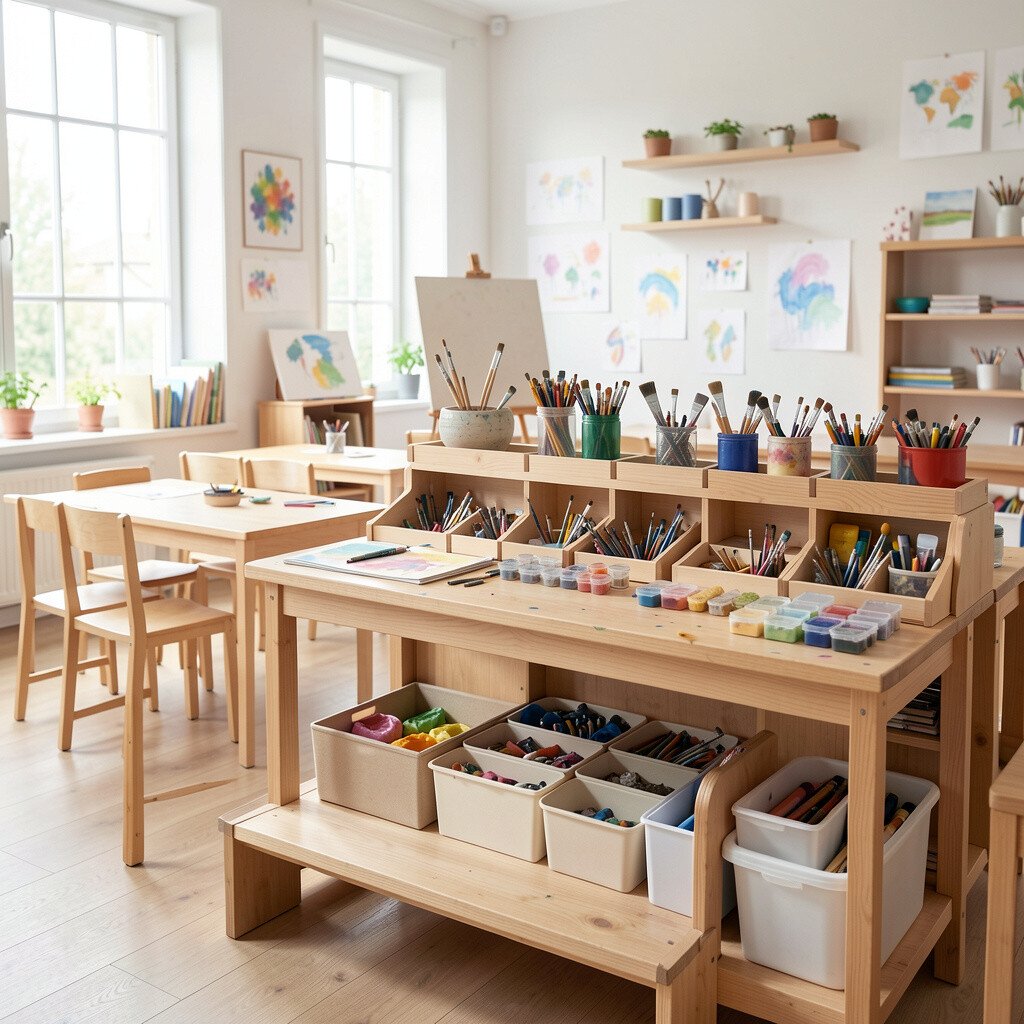
Imagine an art studio that has everything in its place, with neatly labeled stations and tidy trays. The room feels creative, but the systems are clear.
This theme supports focus because students can grab what they need without wandering. Use tray organizers for common supplies and keep only one kind of tool out at a time.
Practical tips include color-coded categories and a single “return route” for materials, like left-to-right bin placement. Personalize by letting students design their own tool label cards, but print them in a consistent format so walls stay calm.
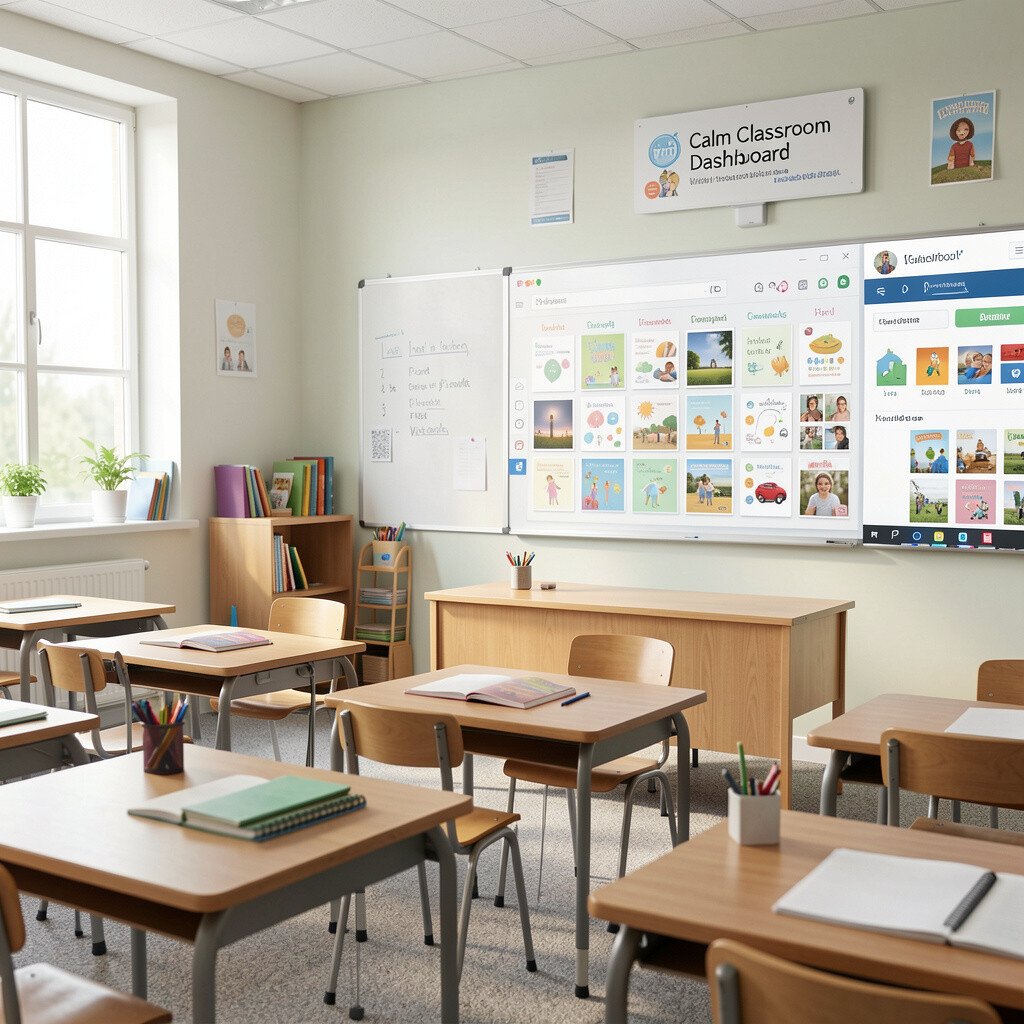
17. Calm Classroom Dashboard With Consistent Visual Systems
Calm Classroom Dashboard With Consistent Visual Systems
Picture a room where everything important is part of one clear system, like a dashboard for the day. Schedules, expectations, and references all share the same style.
This theme reduces distraction because students don’t waste time figuring out where things are. Use large headings, consistent fonts, and simple icons so the brain recognizes patterns quickly.
Practical tips include keeping directions in the same corner and using the same folder colors for subjects. Personalize by letting students choose a small cover color for their binder or a custom icon for their homework pocket.
Cost is usually controlled because you can print and laminate a few key pages and reuse them for years. A current trend is “system-first classrooms,” where visuals help students think and plan without adding extra decoration.